07 Aug 14:15
by Alexander A. Green
Complex cellular logic computation using ribocomputing devices
Nature 548, 7665 (2017). doi:10.1038/nature23271
Authors: Alexander A. Green, Jongmin Kim, Duo Ma, Pamela A. Silver, James J. Collins & Peng Yin
Synthetic biology aims to develop engineering-driven approaches to the programming of cellular functions that could yield transformative technologies. Synthetic gene circuits that combine DNA, protein, and RNA components have demonstrated a range of functions such as bistability, oscillation, feedback, and logic capabilities. However, it remains challenging to scale up these circuits owing to the limited number of designable, orthogonal, high-performance parts, the empirical and often tedious composition rules, and the requirements for substantial resources for encoding and operation. Here, we report a strategy for constructing RNA-only nanodevices to evaluate complex logic in living cells. Our ‘ribocomputing’ systems are composed of de-novo-designed parts and operate through predictable and designable base-pairing rules, allowing the effective in silico design of computing devices with prescribed configurations and functions in complex cellular environments. These devices operate at the post-transcriptional level and use an extended RNA transcript to co-localize all circuit sensing, computation, signal transduction, and output elements in the same self-assembled molecular complex, which reduces diffusion-mediated signal losses, lowers metabolic cost, and improves circuit reliability. We demonstrate that ribocomputing devices in Escherichia coli can evaluate two-input logic with a dynamic range up to 900-fold and scale them to four-input AND, six-input OR, and a complex 12-input expression (A1 AND A2 AND NOT A1*) OR (B1 AND B2 AND NOT B2*) OR (C1 AND C2) OR (D1 AND D2) OR (E1 AND E2). Successful operation of ribocomputing devices based on programmable RNA interactions suggests that systems employing the same design principles could be implemented in other host organisms or in extracellular settings.
05 Aug 13:42
by Young-Shin Park, Jaehoon Lim, Nikolay S. Makarov and Victor I. Klimov

Nano Letters
DOI: 10.1021/acs.nanolett.7b02438

03 Aug 09:05
by Rachel Won
View from... SPP8: The rise of plasmonic metasurfaces
Nature Photonics, Published online: 1 August 2017; doi:10.1038/nphoton.2017.136
Ultrathin, versatile, integrated optical devices and high-speed optical information processing could be the upcoming real-world opportunities of plasmonic metasurfaces.
02 Aug 19:47
by Steven T. Bramwell
Nature Physics 13, 820 (2017).
doi:10.1038/nphys4229
Author: Steven T. Bramwell
Assigning dimensions to physical quantities is not just for practicality. Steven T. Bramwell reflects on the deeper physical connotations of it all.

27 Jul 21:22
by Gerwin Osnabrugge
Gerwin Osnabrugge, Roarke Horstmeyer, Ioannis N. Papadopoulos, Benjamin Judkewitz, Ivo M. Vellekoop
The optical memory effect is a well-known type of tilt/tilt wave correlation that is observed in coherent fields, allowing control over scattered light through thin and diffusive materials. Here we show that the optical memory effect is a special case of a more general class of combined shift/tilt ... [Optica 4, 886-892 (2017)]
27 Jul 21:19
by F. Riboli, F. Uccheddu, G. Monaco, N. Caselli, F. Intonti, M. Gurioli, and S. E. Skipetrov
Author(s): F. Riboli, F. Uccheddu, G. Monaco, N. Caselli, F. Intonti, M. Gurioli, and S. E. Skipetrov
The frequency correlations of local density of states of a material are linked to its microscopic features.

[Phys. Rev. Lett. 119, 043902] Published Tue Jul 25, 2017
20 Jul 09:17
by Young-Sik Ra, Clément Jacquard, Adrien Dufour, Claude Fabre, and Nicolas Treps
Author(s): Young-Sik Ra, Clément Jacquard, Adrien Dufour, Claude Fabre, and Nicolas Treps
A mode-selective nonlinear optics technique is used to extract a single photon from multimode light, a key operation for hybrid optical quantum information processing.
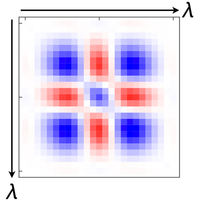
[Phys. Rev. X 7, 031012] Published Wed Jul 19, 2017
19 Jul 16:13
by Pierre Türschmann, Nir Rotenberg, Jan Renger, Irina Harder, Olga Lohse, Tobias Utikal, Stephan Götzinger and Vahid Sandoghdar

Nano Letters
DOI: 10.1021/acs.nanolett.7b02033

19 Jul 16:11
by G. Di Martino, V. A. Turek, A. Lombardi, I. Szabó, B. de Nijs, A. Kuhn, E. Rosta and J. J. Baumberg

Nano Letters
DOI: 10.1021/acs.nanolett.7b01676

19 Jul 15:35
by Philipp Ambichl, Andre Brandstötter, Julian Böhm, Matthias Kühmayer, Ulrich Kuhl, and Stefan Rotter
Author(s): Philipp Ambichl, Andre Brandstötter, Julian Böhm, Matthias Kühmayer, Ulrich Kuhl, and Stefan Rotter
We introduce a wave front shaping protocol for focusing inside disordered media based on a generalization of the established Wigner-Smith time-delay operator. The key ingredient for our approach is the scattering (or transmission) matrix of the medium and its derivative with respect to the position ...
[Phys. Rev. Lett. 119, 033903] Published Tue Jul 18, 2017
17 Jul 20:34
| Piled Higher
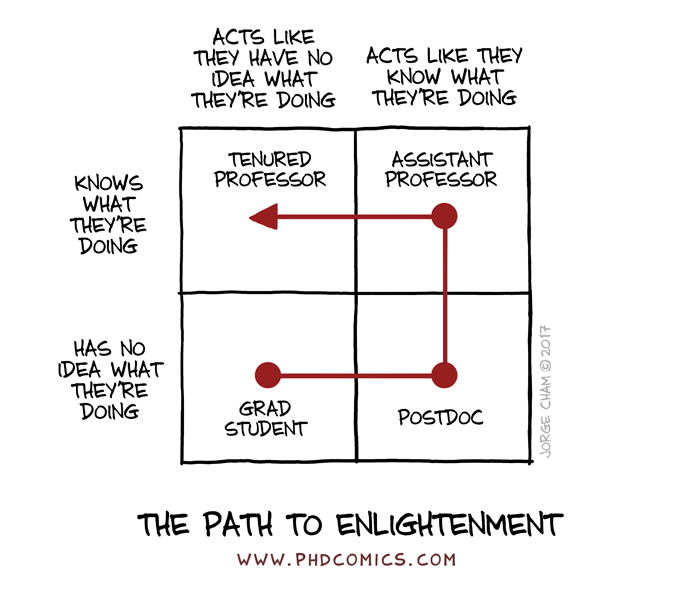
& Deeper by Jorge
Cham |
|
www.phdcomics.com
|
 |
|
|
14 Jul 21:42
by J. Perczel, J. Borregaard, D. E. Chang, H. Pichler, S. F. Yelin, P. Zoller, and M. D. Lukin
Author(s): J. Perczel, J. Borregaard, D. E. Chang, H. Pichler, S. F. Yelin, P. Zoller, and M. D. Lukin
A proposed platform for studying topological effects in quantum optical systems involves 2D atomic emitter arrays in optical lattices.

[Phys. Rev. Lett. 119, 023603] Published Fri Jul 14, 2017
14 Jul 21:38
by Denis G. Baranov
Denis G. Baranov, Dmitry A. Zuev, Sergey I. Lepeshov, Oleg V. Kotov, Alexander E. Krasnok, Andrey B. Evlyukhin, Boris N. Chichkov
All-dielectric nanophotonics is an exciting and rapidly developing area of nano-optics that utilizes the resonant behavior of high-index low-loss dielectric nanoparticles to enhance light–matter interaction at the nanoscale. When experimental implementation of a specific all-dielectric ... [Optica 4, 814-825 (2017)]
11 Jul 20:28
by Musib, M., Wang, F., Tarselli, M. A., Yoho, R., Yu, K.-H., Andres, R. M., Greenwald, N. F., Pan, X., Lee, C.-H., Zhang, J., Dutton-Regester, K., Johnston, J. W., Sharafeldin, I. M.
11 Jul 20:28
by Service, R. F.
07 Jul 16:16
by Hiroshi Imada, Kuniyuki Miwa, Miyabi Imai-Imada, Shota Kawahara, Kensuke Kimura, and Yousoo Kim
Author(s): Hiroshi Imada, Kuniyuki Miwa, Miyabi Imai-Imada, Shota Kawahara, Kensuke Kimura, and Yousoo Kim
We investigate the near-field interaction between an isolated free-base phthalocyanine molecule and a plasmon localized in the gap between an NaCl-covered Ag(111) surface and the tip apex of a scanning tunneling microscope. When the tip is located in the close proximity of the molecule, asymmetric d...
[Phys. Rev. Lett. 119, 013901] Published Wed Jul 05, 2017
07 Jul 16:15
by Kexiu Rong, Chengwei Sun, Kebin Shi, Qihuang Gong and Jianjun Chen

ACS Photonics
DOI: 10.1021/acsphotonics.7b00363
04 Jul 13:41
by Elisa Bindini, Guillaume Naudin, Marco Faustini, David Grosso and Cédric Boissière

The Journal of Physical Chemistry C
DOI: 10.1021/acs.jpcc.7b02530

30 Jun 14:42
by Faegheh Hajizadeh
Faegheh Hajizadeh, Lei Shao, Daniel Andrén, Peter Johansson, Halina Rubinsztein-Dunlop, Mikael Käll
Gold nanorods can be optically trapped in aqueous solution and forced to rotate at kilohertz rates by circularly polarized laser light. This enables detailed investigations of local environmental parameters and processes, such as medium viscosity and nanoparticle–molecule reactions. Future ... [Optica 4, 746-751 (2017)]
29 Jun 09:39
by Xuetao Gan, Hannah Clevenson and Dirk Englund

ACS Photonics
DOI: 10.1021/acsphotonics.7b00030
29 Jun 09:25
by Tzach Jaffe, Ofir Sorias, Lior Gal, Rafi Kalish and Meir Orenstein

Nano Letters
DOI: 10.1021/acs.nanolett.7b01088

24 Jun 19:19
by Nishan Mann and Stephen Hughes
Author(s): Nishan Mann and Stephen Hughes
We introduce a new coupled mode theory to model nonlinear Schrödinger equations for counterpropagating Bloch modes that include disorder-induced multiple scattering effects on nonlinear soliton propagation in photonic crystal waveguides. We also derive subunit-cell coupling coefficients and use thes...
[Phys. Rev. Lett. 118, 253901] Published Thu Jun 22, 2017
23 Jun 14:44
by Yakir Aharonov, Eliahu Cohen, Fabrizio Colombo, Tomer Landsberger, Irene Sabadini, Daniele C. Struppa, Jeff Tollaksen
Feynman stated that the double-slit experiment “…has in it the heart of quantum mechanics. In reality, it contains the only mystery” and that “nobody can give you a deeper explanation of this phenomenon than I have given; that is, a description of it” [Feynman R, Leighton R, Sands M (1965)...
23 Jun 10:05
by Tsakmakidis, K. L., Shen, L., Schulz, S. A., Zheng, X., Upham, J., Deng, X., Altug, H., Vakakis, A. F., Boyd, R. W.
A century-old tenet in physics and engineering asserts that any type of system, having bandwidth , can interact with a wave over only a constrained time period t inversely proportional to the bandwidth (t· ~ 2). This law severely limits the generic capabilities of all types of resonant and wave-guiding systems in photonics, cavity quantum electrodynamics and optomechanics, acoustics, continuum mechanics, and atomic and optical physics but is thought to be completely fundamental, arising from basic Fourier reciprocity. We propose that this "fundamental" limit can be overcome in systems where Lorentz reciprocity is broken. As a system becomes more asymmetric in its transport properties, the degree to which the limit can be surpassed becomes greater. By way of example, we theoretically demonstrate how, in an astutely designed magnetized semiconductor heterostructure, the above limit can be exceeded by orders of magnitude by using realistic material parameters. Our findings revise prevailing paradigms for linear, time-invariant resonant systems, challenging the doctrine that high-quality resonances must invariably be narrowband and providing the possibility of developing devices with unprecedentedly high time-bandwidth performance.
22 Jun 13:07
by Manuel Peter, Andre Hildebrandt, Christian Schlickriede, Kimia Gharib, Thomas Zentgraf, Jens Förstner and Stefan Linden

Nano Letters
DOI: 10.1021/acs.nanolett.7b00966

21 Jun 21:05
by Peter Geisler, Enno Krauss, Gary Razinskas and Bert Hecht

ACS Photonics
DOI: 10.1021/acsphotonics.7b00292
21 Jun 21:04
by Xiaofei Wu, Ping Jiang, Gary Razinskas, Yongheng Huo, Hongyi Zhang, Martin Kamp, Armando Rastelli, Oliver G. Schmidt, Bert Hecht, Klas Lindfors and Markus Lippitz

Nano Letters
DOI: 10.1021/acs.nanolett.7b01284

13 Jun 07:59
by Yichen Shen
Nature Photonics.
doi:10.1038/nphoton.2017.93
Authors: Yichen Shen, Nicholas C. Harris, Scott Skirlo, Mihika Prabhu, Tom Baehr-Jones, Michael Hochberg, Xin Sun, Shijie Zhao, Hugo Larochelle, Dirk Englund & Marin Soljačić
08 Jun 08:09
by Tao Ding, Rohit Chikkaraddy, Jan Mertens and Jeremy J. Baumberg

ACS Photonics
DOI: 10.1021/acsphotonics.6b01000