Amaury Badon, A. Claude Boccara, Geoffroy Lerosey, Mathias Fink, Alexandre Aubry
Optical microscopy offers a unique insight of biological structures with a sub-micrometer resolution and a minimum invasiveness. However, the inhomogeneities of the specimen itself can induce multiple scattering of light and optical aberrations which limit the observation to depths close to the ... [Opt. Express 25, 28914-28934 (2017)]
Riccardo Sapienza
Shared posts
08 Nov 22:27


Nanoantenna–Microcavity Hybrids with Highly Cooperative Plasmonic–Photonic Coupling
by Jui-Nung Liu, Qinglan Huang, Keng-Ku Liu, Srikanth Singamaneni and Brian T. Cunningham

Nano Letters
DOI: 10.1021/acs.nanolett.7b03519
06 Nov 13:39


Open Resonator Electric Spaser
by Bobo Liu, Weiren Zhu, Sarath D. Gunapala, Mark I. Stockman and Malin Premaratne

ACS Nano
DOI: 10.1021/acsnano.7b06735
06 Nov 13:27

Operating Quantum States in Single Magnetic Molecules: Implementation of Grover’s Quantum Algorithm
by C. Godfrin, A. Ferhat, R. Ballou, S. Klyatskaya, M. Ruben, W. Wernsdorfer, and F. Balestro
Author(s): C. Godfrin, A. Ferhat, R. Ballou, S. Klyatskaya, M. Ruben, W. Wernsdorfer, and F. Balestro
Grover’s algorithm, which finds an element in an unsorted list, has been implemented using a nuclear spin in a single-molecule magnet.

[Phys. Rev. Lett. 119, 187702] Published Thu Nov 02, 2017
03 Nov 19:57
Femtosecond laser reshaping yields gold nanorods with ultranarrow surface plasmon resonances
by Gonzalez-Rubio, G., Diaz-Nunez, P., Rivera, A., Prada, A., Tardajos, G., Gonzalez-Izquierdo, J., Banares, L., Llombart, P., Macdowell, L. G., Alcolea Palafox, M., Liz-Marzan, L. M., Pena-Rodriguez, O., Guerrero-Martinez, A.
The irradiation of gold nanorod colloids with a femtosecond laser can be tuned to induce controlled nanorod reshaping, yielding colloids with exceptionally narrow localized surface plasmon resonance bands. The process relies on a regime characterized by a gentle multishot reduction of the aspect ratio, whereas the rod shape and volume are barely affected. Successful reshaping can only occur within a narrow window of the heat dissipation rate: Low cooling rates lead to drastic morphological changes, and fast cooling has nearly no effect. Hence, a delicate balance must be achieved between irradiation fluence and surface density of the surfactant on the nanorods. This perfection process is appealing because it provides a simple, fast, reproducible, and scalable route toward gold nanorods with an optical response of exceptional quality, near the theoretical limit.
03 Nov 10:36

Electrically Driven Unidirectional Optical Nanoantennas
by Surya Prakash Gurunarayanan, Niels Verellen, Vyacheslav S. Zharinov, Finub James Shirley, Victor V. Moshchalkov, Marc Heyns, Joris Van de Vondel, Iuliana P. Radu and Pol Van Dorpe

Nano Letters
DOI: 10.1021/acs.nanolett.7b03312
02 Nov 16:25
Single-Photon Quantum Contextuality on a Chip
by Andrea Crespi, Marco Bentivegna, Ioannis Pitsios, Davide Rusca, Davide Poderini, Gonzalo Carvacho, Vincenzo D’Ambrosio, Adán Cabello, Fabio Sciarrino and Roberto Osellame

ACS Photonics
DOI: 10.1021/acsphotonics.7b00793
02 Nov 16:24
Functional Meta-Optics and Nanophotonics Govern by Mie Resonances
by Sergey Kruk and Yuri Kivshar

ACS Photonics
DOI: 10.1021/acsphotonics.7b01038
02 Nov 16:24
Impact of Strong Scattering Resonances on Ballistic and Diffusive Wave Transport
by Tallon, Benoit; Brunet, Thomas; Page, John H.
Title: Impact of Strong Scattering Resonances on Ballistic and Diffusive Wave Transport
Author(s): Tallon, Benoit; Brunet, Thomas; Page, John H.
Source: PHYSICAL REVIEW LETTERS, 119 (16): OCT 19 2017
Document Type: Article
Author(s): Tallon, Benoit; Brunet, Thomas; Page, John H.
Source: PHYSICAL REVIEW LETTERS, 119 (16): OCT 19 2017
Document Type: Article
02 Nov 16:23

Disorder-Induced Topological State Transition in Photonic Metamaterials
by Changxu Liu, Wenlong Gao, Biao Yang, and Shuang Zhang
Author(s): Changxu Liu, Wenlong Gao, Biao Yang, and Shuang Zhang
A topological hybrid state consisting of a robust surface state in the presence of moderate randomness is predicted in metamaterials, which may allow for the development of a random unidirectional laser.

[Phys. Rev. Lett. 119, 183901] Published Wed Nov 01, 2017
Sonny Rhim likes this
02 Nov 16:21

Near-Field Mapping of Optical Fabry–Perot Modes in All-Dielectric Nanoantennas
by Aleksandr Yu. Frolov, Niels Verellen, Jiaqi Li, Xuezhi Zheng, Hanna Paddubrouskaya, Denitza Denkova, Maxim R. Shcherbakov, Guy A. E. Vandenbosch, Vladimir I. Panov, Pol Van Dorpe, Andrey A. Fedyanin and Victor V. Moshchalkov

Nano Letters
DOI: 10.1021/acs.nanolett.7b03624
02 Nov 16:21
Enhancing photon correlations through plasmonic strong coupling
by R. Sáez-Blázquez
R. Sáez-Blázquez, J. Feist, A. I. Fernández-Domínguez, F. J. García-Vidal
There is an increasing scientific and technological interest in the design and implementation of nanoscale sources of quantum light. Here, we investigate the quantum statistics of the light scattered from a plasmonic nanocavity coupled to a mesoscopic ensemble of emitters under low coherent ... [Optica 4, 1363-1367 (2017)]
There is an increasing scientific and technological interest in the design and implementation of nanoscale sources of quantum light. Here, we investigate the quantum statistics of the light scattered from a plasmonic nanocavity coupled to a mesoscopic ensemble of emitters under low coherent ... [Optica 4, 1363-1367 (2017)]
02 Nov 16:20
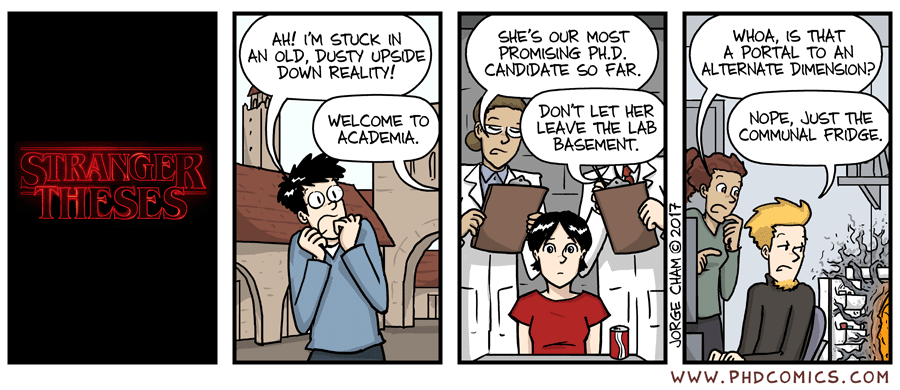
11/01/17 PHD comic: 'Stranger Theses'
| Piled Higher & Deeper by Jorge Cham |
www.phdcomics.com
|
|
 |
||
|
title:
"Stranger Theses" - originally published
11/1/2017
For the latest news in PHD Comics, CLICK HERE! |
||
Roslyn , Smilingface4ever and 2 others like this
02 Nov 15:45
Suppressed Quenching and Strong-Coupling of Purcell-Enhanced Single-Molecule Emission in Plasmonic Nanocavities
by Nuttawut Kongsuwan, Angela Demetriadou, Rohit Chikkaraddy, Felix Benz, Vladimir A. Turek, Ulrich F. Keyser, Jeremy J. Baumberg and Ortwin Hess

ACS Photonics
DOI: 10.1021/acsphotonics.7b00668
27 Oct 20:31
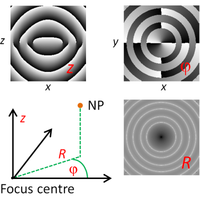
Background-Free 3D Nanometric Localization and Sub-nm Asymmetry Detection of Single Plasmonic Nanoparticles by Four-Wave Mixing Interferometry with Optical Vortices
by George Zoriniants, Francesco Masia, Naya Giannakopoulou, Wolfgang Langbein, and Paola Borri
Author(s): George Zoriniants, Francesco Masia, Naya Giannakopoulou, Wolfgang Langbein, and Paola Borri
Despite many advances, rapid, precise 3D tracking of nanoscale particles in a complex environment remains challenging. A new technique based on four-wave mixing interferometry not only precisely tracks a gold nanoparticle but also is sensitive to particle asymmetry and orientation.
[Phys. Rev. X 7, 041022] Published Fri Oct 27, 2017
27 Oct 08:19
Dipole-Aligned Energy Transfer between Excitons in Two-Dimensional Transition Metal Dichalcogenide and Organic Semiconductor
by Jie Gu, Xiao Liu, Erh-chen Lin, Yi-Hsien Lee, Stephen R. Forrest and Vinod M. Menon

ACS Photonics
DOI: 10.1021/acsphotonics.7b00730
Hi likes this
27 Oct 08:18
Photostable Molecules on Chip: Integrated Sources of Nonclassical Light
by P. Lombardi, A. P. Ovvyan, S. Pazzagli, G. Mazzamuto, G. Kewes, O. Neitzke, N. Gruhler, O. Benson, W. H. P. Pernice, F. S. Cataliotti and C. Toninelli

ACS Photonics
DOI: 10.1021/acsphotonics.7b00521
27 Oct 08:13

Dynamical Tuning of Nanowire Lasing Spectra
by Maximilian Zapf, Robert Röder, Karl Winkler, Lisa Kaden, Johannes Greil, Marcel Wille, Marius Grundmann, Rüdiger Schmidt-Grund, Alois Lugstein and Carsten Ronning

Nano Letters
DOI: 10.1021/acs.nanolett.7b02589
27 Oct 08:06
What is consciousness, and could machines have it?
by Dehaene, S., Lau, H., Kouider, S.
The controversial question of whether machines may ever be conscious must be based on a careful consideration of how consciousness arises in the only physical system that undoubtedly possesses it: the human brain. We suggest that the word "consciousness" conflates two different types of information-processing computations in the brain: the selection of information for global broadcasting, thus making it flexibly available for computation and report (C1, consciousness in the first sense), and the self-monitoring of those computations, leading to a subjective sense of certainty or error (C2, consciousness in the second sense). We argue that despite their recent successes, current machines are still mostly implementing computations that reflect unconscious processing (C0) in the human brain. We review the psychological and neural science of unconscious (C0) and conscious computations (C1 and C2) and outline how they may inspire novel machine architectures.
27 Oct 07:14

Emergent Bistability and Switching in a Nonequilibrium Crystal
by Guram Gogia and Justin C. Burton
Author(s): Guram Gogia and Justin C. Burton
Bistable switching between a crystalline condensed state and a gaslike excited state is demonstrated in a system of charged microparticles.

[Phys. Rev. Lett. 119, 178004] Published Thu Oct 26, 2017
26 Oct 11:05
Disorder-induced localization of excitability in an array of coupled lasers
by M. Lamperti and A. M. Perego
Author(s): M. Lamperti and A. M. Perego
We report on the localization of excitability induced by disorder in an array of coupled semiconductor lasers with a saturable absorber. Through numerical simulations we show that the exponential localization of excitable waves occurs if a certain critical amount of randomness is present in the coup...
[Phys. Rev. A 96, 041803(R)] Published Mon Oct 23, 2017
26 Oct 11:05
Imaging through a thin scattering layer and jointly retrieving the point-spread-function using phase-diversity
by Tengfei Wu
Tengfei Wu, Jonathan Dong, Xiaopeng Shao, Sylvain Gigan
Recently introduced angular-memory-effect based techniques enable non-invasive imaging of objects hidden behind thin scattering layers. However, both the speckle-correlation and the bispectrum analysis are based on the statistical average of large amounts of speckle grains, which determines that ... [Opt. Express 25, 27182-27194 (2017)]
Recently introduced angular-memory-effect based techniques enable non-invasive imaging of objects hidden behind thin scattering layers. However, both the speckle-correlation and the bispectrum analysis are based on the statistical average of large amounts of speckle grains, which determines that ... [Opt. Express 25, 27182-27194 (2017)]
23 Oct 11:33
Complete coherent control of silicon vacancies in diamond nanopillars containing single defect centers
by Jingyuan Linda Zhang
Jingyuan Linda Zhang, Konstantinos G. Lagoudakis, Yan-Kai Tzeng, Constantin Dory, Marina Radulaski, Yousif Kelaita, Kevin A. Fischer, Shuo Sun, Zhi-Xun Shen, Nicholas A. Melosh, Steven Chu, Jelena Vučković
Arrays of identical and individually addressable qubits lay the foundation for the creation of scalable quantum hardware such as quantum processors and repeaters. Silicon-vacancy (SiV) centers in diamond offer excellent physical properties such as low inhomogeneous broadening, fast photon emission, ... [Optica 4, 1317-1321 (2017)]
Arrays of identical and individually addressable qubits lay the foundation for the creation of scalable quantum hardware such as quantum processors and repeaters. Silicon-vacancy (SiV) centers in diamond offer excellent physical properties such as low inhomogeneous broadening, fast photon emission, ... [Optica 4, 1317-1321 (2017)]
23 Oct 11:31
Impact of Strong Scattering Resonances on Ballistic and Diffusive Wave Transport
by Benoit Tallon, Thomas Brunet, and John H. Page
Author(s): Benoit Tallon, Thomas Brunet, and John H. Page
The strong impact of scattering resonances on all the key transport parameters of classical waves in disordered media is demonstrated through ultrasonic experiments on monodisperse emulsions. Through accurate measurements of both ballistic and diffusive transport over a wide range of frequencies, we...
[Phys. Rev. Lett. 119, 164301] Published Thu Oct 19, 2017
Jacopo.bertolotti likes this
23 Oct 11:31
Replica Symmetry Breaking in the Photonic Ferromagneticlike Spontaneous Mode-Locking Phase of a Multimode Nd:YAG Laser
by André L. Moura, Pablo I. R. Pincheira, Albert S. Reyna, Ernesto P. Raposo, Anderson S. L. Gomes, and Cid B. de Araújo
Author(s): André L. Moura, Pablo I. R. Pincheira, Albert S. Reyna, Ernesto P. Raposo, Anderson S. L. Gomes, and Cid B. de Araújo
We demonstrate the replica symmetry breaking (RSB) phenomenon in the spontaneous mode-locking regime of a multimode Q-switched Nd:YAG laser. The underlying mechanism is quite distinct from that of the RSB recently observed in random lasers. Here, there is no random medium and the phase is not glassy...
[Phys. Rev. Lett. 119, 163902] Published Fri Oct 20, 2017
17 Oct 08:27

GW170817: Observation of Gravitational Waves from a Binary Neutron Star Inspiral
by B. P. Abbott et al. (LIGO Scientific Collaboration and Virgo Collaboration)
Author(s): B. P. Abbott et al. (LIGO Scientific Collaboration and Virgo Collaboration)
For the first time, researchers have detected both light and gravitational waves from the same event in space.

[Phys. Rev. Lett. 119, 161101] Published Mon Oct 16, 2017
15 Oct 20:09

Light Microscopy at Maximal Precision
by Matthew Bierbaum, Brian D. Leahy, Alexander A. Alemi, Itai Cohen, and James P. Sethna
Author(s): Matthew Bierbaum, Brian D. Leahy, Alexander A. Alemi, Itai Cohen, and James P. Sethna
A theoretical model of light spreading and scattering improves accuracy precision of position and size measurements made with an optical microscope by as much as 100 times.
[Phys. Rev. X 7, 041007] Published Fri Oct 13, 2017
15 Oct 20:08
Temporal recompression through a scattering medium via a broadband transmission matrix
by Mickael Mounaix
Mickael Mounaix, Hilton B. de Aguiar, Sylvain Gigan
The transmission matrix is a unique tool to control light through a scattering medium. A monochromatic transmission matrix does not allow temporal control of broadband light. Conversely, measuring multiple transmission matrices with spectral resolution allows fine temporal control when a pulse is ... [Optica 4, 1289-1292 (2017)]
The transmission matrix is a unique tool to control light through a scattering medium. A monochromatic transmission matrix does not allow temporal control of broadband light. Conversely, measuring multiple transmission matrices with spectral resolution allows fine temporal control when a pulse is ... [Optica 4, 1289-1292 (2017)]
11 Oct 18:05

Bypassing the Kohn-Sham equations with machine learning
by Felix Brockherde
Bypassing the Kohn-Sham equations with machine learning
Nature Communications, Published online: 11 October 2017; doi:10.1038/s41467-017-00839-3
Machine learning allows electronic structure calculations to access larger system sizes and, in dynamical simulations, longer time scales. Here, the authors perform such a simulation using a machine-learned density functional that avoids direct solution of the Kohn-Sham equations.
Sonny Rhim likes this
11 Oct 13:17
Highly sensitive wavelength-scale amorphous hybrid plasmonic detectors
by Yiwen Su
Yiwen Su, Charles Lin, PoHan Chang, Amr S. Helmy
Hybrid integration of plasmonics and Si photonics is a promising architecture for global microprocessor interconnects. To this end, practical plasmonic devices should provide not only athermal, broadband operation over a wavelength-scale footprint, but also support non-intrusive integration with ... [Optica 4, 1259-1262 (2017)]
Hybrid integration of plasmonics and Si photonics is a promising architecture for global microprocessor interconnects. To this end, practical plasmonic devices should provide not only athermal, broadband operation over a wavelength-scale footprint, but also support non-intrusive integration with ... [Optica 4, 1259-1262 (2017)]