NEW YORK (AP) — Attention, word nerds: This is your bonus round, courtesy of Merriam-Webster.
Read More →Shared posts
07 Feb 14:43

Ghosting, Shade, Microaggression Among New Words On Merriam-Webster Website
by LEANNE ITALIE
06 Feb 22:45
 2016 was a disproportionately good year for documentary. Films like I Am Not Your Negro, 13th and O.J.: Made In America lead the conversation on race in America. Docs like Weiner and Tower arrived in an eerily timely fashion to collide with real-world political conversation in thoughtful, productive ways. Some, like Negro and Tower, pushed the form itself while they were at it - but none accomplished as much in this arena as Kirsten Johnson's Cameraperson. A film comprised entirely of outtakes - short snippets of unused footage from other, longer documentaries - Cameraperson could be maddening if it didn't quickly, and decisively, become sublime. Of course, the calibre of the outtakes matters. (One can imagine other filmmakers watching this and tearing up their camera...


Now on Blu-ray: Kirsten Johnson's CAMERAPERSON Is One Of Criterion's Strongest Discs
Matthew ConnorOoooh I didn't know this was coming to Criterion!! I saw this at the Brattle a few weeks ago and I hate using words like "life-changing" but it kind of was. See it see it see it.
2016 was a disproportionately good year for documentary. Films like I Am Not Your Negro, 13th and O.J.: Made In America lead the conversation on race in America. Docs like Weiner and Tower arrived in an eerily timely fashion to collide with real-world political conversation in thoughtful, productive ways. Some, like Negro and Tower, pushed the form itself while they were at it - but none accomplished as much in this arena as Kirsten Johnson's Cameraperson. A film comprised entirely of outtakes - short snippets of unused footage from other, longer documentaries - Cameraperson could be maddening if it didn't quickly, and decisively, become sublime. Of course, the calibre of the outtakes matters. (One can imagine other filmmakers watching this and tearing up their camera...
[Read the whole post on screenanarchy.com...]
Christal likes this
04 Feb 19:13
A Good Rule of Thumb: Don’t Listen to the Advice of Capital One Executives about Protest
by Erik Loomis
Matthew ConnorThis is SO GOOD. I'm fucking sick of hearing "X is just a distraction to keep you from noticing they're doing Y." Come on. We are all glued to our phones. I can pay attention to the Muslim ban and the NSC executive order at the same time. A Muslim woman and her two children being detained for 20 hours without food at an airport is not a "distraction" from a bigger issue, for fuck's sake.

I am highly dismayed that this Jake Fuentes piece decrying the protests over the immigration ban got so much play on social media today. Fuentes, an executive for Capital One (a biographical note pulled out of the piece in the last hour fwiw), thinks that instead of protesting, we should just be rational and hope for the best. Evidently he doesn’t live in the United States. And being an executive at a giant bank, he really doesn’t. But I guess if you get profiled in a Forbes 30 Under 30: Finance special photo shoot, what you say gets taken seriously.
Anyway, let’s look inside.
A legitimate argument can be made for the former: a relatively extreme and inexperienced administration was just put in place, and they haven’t yet figured out the nuances of government. But a few of the events in the past 72 hours —the intentional inclusion of green card holders in the immigration order, the DHS defiance of a federal judge, and the timing of Trump’s shakeup of the National Security Council — have pointed to a larger story. Even worse, if that larger story is true, if the source of this week’s actions is a play to consolidate power, it’s going really well so far. And that’s because mostly everyone — including those in protests shutting down airports over the weekend— are playing right into the administration’s hand.
Say what? How does that even make sense? Playing into the administration’s hand? I guess if the point of the administration is to end democracy and create a situation leading to massive arrest and imprisonment of political opponents, maybe it is. But more on that in a minute.
Fuentes then goes on to craft a fantasy narrative where Bannon (let’s stop even pretending Trump actually matters here except as a mouthpiece) rolls this out even though he doesn’t really care about it that much, identifies the traitors, runs a couple of less shocking things through without as much media attention, show that the judicial branch is weak, etc. He has no idea if this is actually true or not. It’s not because of course Bannon openly wants an all-white America except for enough black people to clean houses and Mexicans to pick crops if they have no right to stay in the country. Anyway, all of this evidently tests the nation’s willingness to capitulate to fascism and somehow we aren’t supposed to respond to that. OK.
Assuming this narrative is true (again, I have no idea what the administration intends), the “resistance” is playing right into Trump’s playbook. The most vocal politicians could be seen at rallies, close to the headlines. The protests themselves did exactly what they were intended to: dominate the news cycle and channel opposition anger towards a relatively insignificant piece of the puzzle. I’m not saying that green card holders should be stuck in airports — far from it. I’m saying there might be a much larger picture here, and the immigration ban is a distraction.
No. You know what this is? A rich guy saying that the plight of Muslims and Latinos don’t matter as much as whatever his issues are. The basic, fundamental definition of what it means to be an America and the core values of the United States are not something to be taken lightly. The immigration ban is a distraction from nothing. It’s the front line in the war for the soul of the United States.
But now we get into the meat:
First, stop believing that protests alone do much good. Protests galvanize groups and display strong opposition, but they’re not sufficient. Not only are they relatively ineffective at changing policy, they’re also falsely cathartic to those protesting. Protestors get all kinds of feel-good that they’re among fellow believers and standing up for what’s right, and they go home feeling like they’ve done their part. Even if protestors gain mild, symbolic concessions, the fact that their anger has an outlet is useful to the other side. Do protest, but be very wary of going home feeling like you’ve done your job. You haven’t.
The story of liberalism over the last 30 years has been an attempt to play respectability politics. Protests are for fat union guys with out of fashion mustaches, for vegan hippies, and for anarchists. They aren’t for respectable people. None of those people come to the cocktail parties and dinners I host where we just couldn’t understand how those people could vote for George W. Bush! People have disdained protest in favor of being rational, of having science on your side, of having the facts, of showing up to vote, of being happy with the steady pace of change even if some were being left behind. Protest is simply not respectable.
But that doesn’t work anymore, if it ever did. What has happened in the last 3 months and especially in the last 2 weeks is that a lot of liberals have come to realize this. They are going out on the street for the first time in their life. I can’t tell you about how Facebook posts or protest signs I’ve seen that say something like “I don’t protest but now I have to” or something of this nature. This change is an unabashed good. But the temptation to retreat from the streets and back into our homes is very strong and powerful, especially for a lot of liberals who don’t want to be associated with mass movement politics.
If we let these challenges about the efficacy of protest go without refutation, that’s exactly what will happen. No, protest didn’t force Trump to cave. But if we don’t protest, we have nothing. This is a far more compelling understanding of what protest politics do. At the very least, it creates a resistance, gets people politicized, gives a backbone to judges and politicians, and helps us not feel alone. I guess Fuentes can roll around in bags of cash for that. But not me and not you.
So what does Fuentes think we should do?
Second, pay journalists to watch for the head fake. That’s their job. Become a paying subscriber to news outlets, then actively ask them to more deeply cover moves like the NSC shakeup. We can no longer breathlessly focus media attention on easy stories like the immigration ban. The real story is much more nuanced and boring — until it’s not.
Ha ha ha ha ha ha. Oh, the media! Well, I’m sure The New York Times will set Trump straight!
Third, popular attention must focus less on whether we agree with what the government is doing, and more on whether the system of checks and balances we have in place is working. It is a much bigger deal that the DHS felt they could ignore a federal court than that Trump signed an EO blocking green card holders in the first place. It is a much bigger deal that Trump removed a permanent military presence from the NSC than that he issued a temporary stay on immigration. The immigration ban may be more viscerally upsetting, but the other moves are potentially far more dangerous.
Guess what? These things are all related. Sorry that people in the streets make you uncomfortable. And sorry that fighting for the human rights of my Muslim friends is important. I recognize that you are a rich guy and so we should listen to you instead. Next time the U.S. decides to return to 19th century standards of racism, I will check with you first before I figure out what is important.
And now for the punchline:
Once again, I’m desperately hoping that none of this narrative is actually true, and that we merely have a well-intentioned administration with some execution problems. I’m also hoping and praying that the structure of our democracy is resilient even to the most sophisticated attacks. I’m hoping that the better angels of our nature will prevail. But with each passing day, the evidence tilts more in the other direction.
Becoming an NPR supporter will no doubt tilt the balance back.


03 Feb 19:06

PPP Poll: Forty Percent Of Voters Would Support Impeaching Trump
by Matt Shuham
Matthew Connorlol
Forty percent of voters would support the impeachment of President Donald Trump, up from 35 percent who favored impeachment a week ago, according to a survey released Thursday by the Democratic-leaning firm Public Policy Polling.
Read More →
03 Feb 14:29
[GUEST POST] The International Refugee Assistance Project
by Scott Alexander
[This is a guest post by Elizabeth Van Nostrand of Aceso Under Glass.]
How do you judge the effectiveness of preparing for something that might never happen? Consider emergency room capacity; if you have enough space and staff to deal with a diphtheria epidemic, it will seem wasted during the 99% of the time there isn’t one. But this is false economy; during a crisis the extra reserve may be the difference between disruption and disaster.
Whatever the staff of the ACLU was doing on Friday morning, it wasn’t as important as what they did Friday afternoon, after Trump banned legal immigrants from reentering the country, even if they were in flight. If you just evaluated the effectiveness of their Friday morning work, you’d miss that they were also holding the capacity to respond to Trump’s order as quickly as they did. That speed mattered – not just to residents being badgered into giving up their green cards, but because it demonstrated to Trump and America that the consequences of violating the Constitution are severe and immediate. Once the crisis hit, it became easy to see how everything that went into preparing for it was high leverage – which was why people donated $20,000,000 over the weekend.
But the ACLU didn’t act alone. One partner was the International Refugee Assistance Project, founded by Becca Heller. While in Jordan on an internship, Heller talked to Iraqi refugees there whose applications to emigrate to the US had been denied; they had given up because there was no way to appeal Homeland Security decisions. But rejected applicants can effectively appeal by asking that DHS “reconsider” their application. Using case law from asylum decisions, Becca filed requests to reconsider on behalf of these Iraqi refugees. Back home, she began recruiting other Yale law students, then students at other law schools. As her organization grew in scope, it effected some at-the-margins policy work as well. A notable win here was using FOIA to force the DHS to release their refugee decision manual. Last year IRAP received a grant from the Open Philanthropy Project to increase the extent of their policy work.
The majority of IRAP’s day to day work involves processing appeals for individual refugees whose requests to resettle in the U.S. were denied. Their staff manages a team of volunteer law students and lawyers who pour hours into interviewing clients, investigating cases, collecting documents to prove refugee status, and writing appeals. This aspect of their work isn’t glamorous. It’s not arguing before the Supreme Court to establish rights people didn’t have a week before. It’s tracking down proof that someone is from the country they say they are, when 95% of record-keeping institutions in the country have been blown up and the procedure for getting a passport is to find Mr. Big Beard’s stall in the market and give him some money. It’s very ground-level work that makes an enormous difference in the lives of individual immigrants. But each person helped in this way represents the investment of many, many hours from lawyers and law students; if you were analyzing their effectiveness, they’d probably score poorly relative to AMF (especially if you included the value of in kind donations of time from skilled individuals). Where they did advocacy work, it was relatively quiet and uncontroversial.
And then Trump issued executive order “PROTECTING THE NATION FROM FOREIGN TERRORIST ENTRY INTO THE UNITED STATES”
Under American law, an arbitrary person can’t challenge a government policy or decision in court. You have to have standing, meaning you personally are hurt by the action. And to be represented by a lawyer, you have to say “I am represented by this lawyer,” which normally isn’t a problem, unless you’re being held incommunicado and no one knows where you are. There are ways around this, but they’re time consuming.
IRAP’s ground level work meant that when Trump’s order went out, it took them approximately four seconds to create a list of extremely sympathetic/photogenic immigrants who would be caught at airports that day, for some of whom they were already the legal representative of record. It took another six seconds to find even more photogenic supporters of those immigrants who were willing to loudly support them in media interviews. Veterans are Not Fucking Around when it comes to their translators.
IRAP doesn’t have a long history of challenging the federal government the way the ACLU does. But by partnering with the ACLU (with its very strong history of challenging the federal government), the National Immigration Law Center (extensive knowledge of immigration policy) and Yale Law School (I don’t know, cheap labor from students? Money?), they were able to launch the strongest possible campaign to force Trump to keep promises we made as a country.
Also, for someone whose organization spends most of its time on individual cases, Becca Heller sure is good at publicly nailing the government to the wall. I want her on this team just so she can keep going on TV and talking over congresspeople who she deems insufficiently proactive.
Ultimately I think the part where Trump flat out ignored the judicial branch is more important than changes to immigration (although I would like to see us expand immigration), and the ACLU is best positioned to fight constitutional battles. But the ACLU will need similar assistance from ground-level organizations for the next fight too, and they just got twenty million dollars. Yale Law School needs your money even less. IRAP, by contrast, has an annual budget of $2 million. I exhausted my charity budget at the beginning of the year on my personal cause area, Third World poverty, but my ability to continue giving is dependent on the United States having a functional government and economy. I am genuinely afraid Trump will destroy both of those. I’m donating $100 to IRAP to support the upcoming legal fight, and as a retroactive bonus for building this capacity before most of us knew how much it was needed.
I encourage others to donate to IRAP, or to find similar small charities doing ground level work.
02 Feb 23:29
Happy Black History Month!
by Scott Lemieux
Matthew ConnorFUCK THIS

The Trump administration wants to revamp and rename a U.S. government program designed to counter all violent ideologies so that it focuses solely on Islamist extremism, five people briefed on the matter told Reuters.
The program, “Countering Violent Extremism,” or CVE, would be changed to “Countering Islamic Extremism” or “Countering Radical Islamic Extremism,” the sources said, and would no longer target groups such as white supremacists who have also carried out bombings and shootings in the United States.
Such a change would reflect Trump’s election campaign rhetoric and criticism of former President Barack Obama for being weak in the fight against Islamic State and for refusing to use the phrase “radical Islam” in describing it. Islamic State has claimed responsibility for attacks on civilians in several countries.
In retrospect, one could argue that Trump calling for innocent African-Americans to be lynched was even more important that Hillary Clinton’s email server management.
This is the stuff that feels like Redemption—the federal government taking a deliberate blind eye to organized white supremacists.
— Jamelle Bouie (@jbouie) February 2, 2017
We already had Quebec. When do we see the next Charleston? Who is the next Dylan Roof, inspired by the kinds of forces fanned by Bannon?
— Jamelle Bouie (@jbouie) February 2, 2017
01 Feb 12:21


This Friday, Stand with Bandcamp in Support of Immigrants/Basic Human Values
by Editorial

Like 98% of U.S. citizens (including the President), I am the descendant of immigrants—my great-grandparents came to America from Russia and Lithuania as teenagers and worked in sweatshops until they were able to afford to bring the rest of their families over. Most everyone you speak to in this country has a similar story to tell, because we are, in fact, a nation of immigrants, bound together by a shared belief in justice, equality, and the freedom to pursue a better life. In this context, last week’s Executive Order barring immigrants and refugees from seven Middle Eastern countries from entering the United States is not simply immoral, it violates the very spirit and foundation of America.
Contrary to the assertions of the current administration, the order will not make us safer (an opinion shared by the State Department and many members of Congress including prominent Republicans). Christian religious leaders have denounced both the ban, as well as the exception prioritizing Christian immigrants, as inhumane. It is an unequivocal moral wrong, a cynical attempt to sow division among the American people, and is in direct opposition to the principles of a country where the tenet of religious freedom is written directly into the Constitution. This is not who we are, and it is not what we believe in. We at Bandcamp oppose the ban wholeheartedly, and extend our support to those whose lives have been upended.
And so all day this Friday, February 3rd (starting at 12:01am Pacific Time), for any purchase you make on Bandcamp, we will be donating 100% of our share of the proceeds to the American Civil Liberties Union, who are working tirelessly to combat these discriminatory and unconstitutional actions.
As another way of showing solidarity with the immigrants and refugees from the seven banned countries—as well as those impacted by the construction of the Mexican border wall—we’ve compiled a list of albums made by artists from the affected countries (Bandcamp may be incorporated in the United States, but we host artists from every corner of the world). We believe that knowledge and empathy are crucial weapons against fear and intolerance. We hope that, as you listen to these albums, you’ll not only discover some great new artists, but will also gain a further appreciation and understanding for the way music transcends all borders, and remember that, even in the darkest of times, there is more that unites us than divides us.
— Ethan Diamond, Bandcamp Founder & CEO
Mexico
A dreamy pair of tracks from this Mexico City darkwave duo. “Las paredes” keeps the pace of a racing heart; a ticking drum machine and synth harmonics push forward interwoven heavenly vocal melodies and luxe, washed-out ribbons of guitar. “Olvida” is made for the slow sway of the goth club floor. —Jes Skolnik
Fierce raw punk with the kind of clattering d-beat that sounds like it’s going to topple over and into itself at any point; its sonic precarity makes it feel all the more urgent. Rippling vocal delay, buzzsaw guitars, a blur of bass: the band says this is a demo (their debut LP came out in 2014), but it sounds better-recorded and more energetic than some official albums we’ve heard recently. The harsh howl near the end of “Muerte en la ciudad” will make the hair on your arms stand straight up. —Jes Skolnik
Syria
A mournful electrified Syrian oud cries alone on stage, joined eventually by another before the powerful and equally mournful voice of Omar Souleyman joins them on “Mawal Hejaz,” the opening track of Haflat Gharbia: The Western Concerts. Western ears may already be familiar with Souleyman’s electro-infused Syrian folk-pop. Souleyman began his career as a singer for wedding parties in northeastern Syria and gained fame throughout the country and the rest of the Arab world through distribution of live recordings on tapes and CDs, eventually reaching a global audience. This album captures the best moments of his live shows between 2009 and 2011, culminating in a groundbreaking performance at the Glastonbury festival. —Ally-Jane Grossan
There’s no shortage of Syrian metal—in fact a crowdfunding campaign recently reached its goal to make a documentary about the scene. Theoria is Syria’s best example of atmospheric black metal, echoing the languid, yet punishing, tempo of their American and European counterparts (the band cites Chaos Moon, Cloudkicker, Darkspace, and Lunar Aurora as influences). Based in the northern Syrian city of Aleppo, the two members (identified as Ahmad and Besher) previously released death metal as Crescent Moon but on Mantra, their debut as Theoria (released by French label Antiq), the guitar sound becomes elegant and the vocals less guttural. —Ally-Jane Grossan
Iraq
One of the more prolific Iraqi artists on Bandcamp, the Erbil-based Wirephobia has over 40 releases of discordant, experimental noise, including several split singles with other noise artists from around the globe. “Kurdistan” is one of his more accessible releases (although those with sensitive ears should still be wary of turning up the volume), featuring samples of Middle Eastern music that drop suddenly into wells of harsh and crackling noise. It was released as an 8-track cartridge and a very limited edition 12-inch by Rochester, New York-based noise label Useless Prick. —Mariana Timony
If you like your metal ultra-raw and super fast, you’re going to love Dark Phantom, Iraq’s first thrash band. Their backstory is as intense as their music. Started in 2007 as a way to express both their love of metal and their feelings about the shitty situation in their home city of Bagdhad, the band struggled to achieve their dreams as a result of the Iraq war, with members frequently having to go into hiding for their own safety. It took until 2016 for their pummeling, brutal debut Nation of Dogs to makes its debut. As a metal record, it slays. As a testament of the band’s will to survive, it is a powerful paean to the human spirit. Dark Phantom’s bio puts it best: “Music itself means life.” —Mariana Timony
Iran
Akvan, named for a Zoroastrian demon who represents the concept of “evil mind” or “evil intention,” blends atmospheric black metal and traditional Iranian folk music to gorgeous, seamless, and unique effect. This is music both deeply visceral and deeply hypnotic. The lyrics pull from classic texts like the Shanameh (“Book of Kings”), the epic poetic retelling of Iranian history that is Iran’s answer to the Mahabharata. Be on the lookout, as we’ve got an interview with Akvan coming in the next few weeks you won’t want to miss. —Jes Skolnik
Tehran’s Arsha Samsaminia enlists a global cast of luminaries from the contemporary classical world, including the Stockholm Saxophone Quartet, Japanese violinist Ken Aiso (who studied in London at the Royal Academy of Music and currently resides in L.A.), the Georgian Tbilisi Contemporary Ensemble (conducted by pianist Nino Jvania), and Italian pianist Andrea Dindo, to play a set of his new compositions. Full of space and ambience, these elegant works are haunting, particularly “Disabling a Bomb Inside the Piano,” which is as tense, delicate, and evocative as its name would suggest.—Jes Skolnik
Libya
Awal Akalin from the Tripoli desert blues outfit Chaco puts the genre’s hypnotic style on full, riveting display. The recording sounds like it’s taken from a live performance: there’s chatter between the songs and a few false starts, but all of that only adds to the album’s electric feel. The band works up to a steady groove quickly and stays there: the guitars in the title track loop and dart like needlepoint work; “Emari N Yala” is carried along by jubilant gang vocals, guitars and percussion swaying gently—almost imperceptibly—beneath the euphoric shouts. The mood throughout is warm and relaxed—“Aholaghin Ere Yaglan” even has some bent-string riffing that wouldn’t be out of place on an American blues record. The songs on Awal Akalin are always in motion: beautiful, serene and hypnotic. —J. Edward Keyes
Proof that video games know no borders, Tripoli’s DJ Strike has assembled a brief EP full of skull-crushing dubstep remixes and covers of beloved console music. What makes the collection work is Strike’s giddy sense of humor: the moment in “Luigi’s Mansion Dubstep Mix” when the classic EDM “drop” is introduced with the heroic cry, “Mario!” is worth the (low) price of admission in and of itself. But there are other unlikely high points: “Donkey Kong Country 2 Sticker Brush Remix” becomes an emotional slice of synth balladry that wouldn’t be out of place on the Twin Peaks soundtrack, while the drum-and-bassy take on the Legend of Zelda theme augments chiptune’s Lite Brite bleeps with frantically scurrying rhythms. —J. Edward Keyes
Sudan
K E R M A—the debut release from Sudanese musician Sufyvn—feels connected to the Los Angeles beat scene, even if the artist himself is more than 8,500 miles away. Combining glitchy synthetics and obscure Sudanese samples, K E R M A plays like something you’d hear on Stones Throw or Alpha Pup, setting a contemplative mood. “Places,” with its string loop and stuttering percussion, evokes a 1990s jazz-rap hybrid. “Ashrinkall” is remarkably festive, employing a hazy soundscape suited for the dance floor. Dance floors in Africa and the United States. — Marcus J. Moore
The world needs to dance. I don’t mean a casual two-step with overpriced liquor in your hand. I mean a flat-out, “shake your ass ‘till you forget where you are” kind of night. Enter Gory, a North Kurdufan producer, whose newest project here is a EP mixes scant electronic soul and ambient house music. The compositions are dark and hypnotic, full of bleak tinges. In a good way, these sounds pull from nostalgic Quiet Storm R&B without reinventing the past. — Marcus J. Moore
Yemen
❖’s 2013 EP is just four songs long, but what impresses is the way it’s able to create a distinct mood in such a short period of time. Its songs are built from weatherbeaten synth tones that crackle and pop—as much distortion as they are melody. On opener “i x u,” a scuffed-up, blown-out synth line is stretched out across depth-charge bass tones, clawing its way from the song’s beginning to its end. The mood continues on “n æ o “; the beats thump like an android heartbeat as sandpapered electronics wax and wane. There’s much this approach could suggest: the triumph of beauty, no matter how battered; the existence of peace in a grinding post-industrial landscape. But in the end, that kind of speculation is almost beside the point. ❖ has created a small world with their music. The best option is to close your eyes and disappear inside it.—J. Edward Keyes
Somalia
Sahra Halgan’s music speaks directly to the old and new, blending traditional Somali songs with Afropop. Much like her previous work, her latest album Faransiskiyo Somaliland partially speaks to her own experience as a refugee of Somaliland. She addresses the ups and downs of fellow natives, and creates music that debunks widespread hate and violence. Send Donald the Bandcamp link. — Marcus J. Moore
Christal likes this
01 Feb 00:36

Massachusetts Joins Suit Against Trump Travel Ban, With GOP Guv’s Support
by Matt Shuham
Matthew ConnorI love Maura Healey!! Also, hey look, Governor Ham Sandwich got out from under his desk.
Massachusetts Attorney General Maura Healey announced Tuesday that her office is joining a lawsuit challenging President Donald Trump's executive order on immigration, with the support of the state's Republican governor.
Read More →
31 Jan 01:39

Mystery Convoy Of 'Military' Vehicles Flying 'Trump' Flag Spotted In Kentucky
by Esme Cribb
Matthew Connor......
A convoy of military vehicles flying a "Trump" flag was caught on video driving through Louisville, Kentucky, on Sunday.
Read More →
26 Jan 18:36
Is Our Democrats Learning?
by Erik Loomis
Matthew ConnorFucking Democrats, voting for the CIA nom that wants to re-open the door to torture. WHY. Ugh looks like I've got 15 more phone calls to make today.

With the exception of Kirsten Gillibrand, evidently not. She is the only senator to vote against all three of Trump’s cabinet appointments. Yesterday, 15 Senate Democrats voted to confirm Mike Pompeo, a noted pro-torture Islamphobe. This is pathetic. Why? Why would Chuck Schumer vote for Pompeo? Why would Sheldon Whitehouse do this, of all people? What does anyone get out of this? Do they legitimately think these are good choices? Do they think that this will mean Republicans will take Democratic voices seriously? No, of course not. It’s that even Schumer doesn’t understand the rules of the game, even after 8 years of fireeating extremism.
On the other hand, Gillibrand is running for president in 2020 and she is going to have an excellent message for Democratic primary voters: “I voted against every single person Donald Trump nominated for his Cabinet.” And that’s a pretty compelling message. That no one else seems to understand what is going to play in 2018 and 2020 is more than a little dispiriting. But hey, I’m sure a few Democratic votes for Betsy DeVos and Tom Price will totally get Manchin and Heitkamp legit home state cred!
26 Jan 01:13
Trumpland, MA: Trumpkin starts screaming at Dunkin' Donuts workers in Malden
by adamg
Matthew ConnorThe fucking cruelty of it all is really just wearing me down.
NBC Boston reports on a Saturday incident in which a Proud 'Murrican in Malden decided to scream at a couple of Dunkin' Donuts workers that "Trump is here go back home!" Another woman in turn started screaming at her to shut the frick up and go home herself.
25 Jan 22:31
Is Our Democrats Learning, Part the Zillionith
by Erik Loomis

Even the supposedly best Democrats are completely clueless in how to resist Trump.
Sens. Sherrod Brown (D-Ohio) and Elizabeth Warren (D-Mass.) announced Tuesday that they will vote to confirm retired neurosurgeon Ben Carson as the nation’s next secretary of Housing and Urban Development.
Brown said he would give Carson, President Donald Trump’s pick to lead the department, “the benefit of the doubt” based on assurances he’d received from Carson that he would address issues such as lead hazards, fair housing and homelessness.
“Dr. Carson is not the nominee I would have chosen to lead HUD, due both to his lack of experience and his often troubling public statements over the last three years,” Brown, the ranking member of the Senate Banking Committee, said in a statement. “But despite my reservations, and my disagreements with some of his positions, I will give Dr. Carson the benefit of the doubt based on commitments he has made to me in person and to this committee.”
Brown added that Carson had promised to uphold the housing rights of LGBTQ individuals and work to bolster housing in the president’s proposed infrastructure plan.
“I will do everything in my power to hold Dr. Carson accountable for making good on his promises,” the Ohio senator said.
Warren, for her part, also expressed “concerns about Dr. Carson’s inexperience in the field and his comments on poverty and government dependency,” but said she was reassured by the promises Carson made in written questions to the committee.
The senators’ decision to support Carson, who has never held public office, comes as a surprise. As two of the most prominent progressive voices in the country, Brown and Warren mounted a pointed inquiry into Carson’s views on public housing and the minimum wage during his confirmation hearing last week.
Lest we forget, Ben Carson has absolutely zero qualifications. He doesn’t even really know what this agency does. He was chosen because Emperor Tangerine believes that this is the black person agency. There was talk that Democrats would fight to resist at least some of these nominees. It’s now pretty clear that they are all probably going to be confirmed and probably all with Democratic votes. This is just pathetic.
Moreover, what does this accomplish? It’s pretty bad when random National Park Service employees understand more about how to resist Trump than Democrats in Congress. They just don’t get it. Except Kirsten Gillibrand, which is why I increasingly think she’s the frontrunner for 2020. Even both of my home state senators voted to confirm Mike Pompeo. Even though Jack Reed is so far up the Beltway security world that this is more disappointing than shocking, why would Sheldon Whitehouse do this? At least Whitehouse has some listening sessions this week for Rhode Islanders so we can ask him what the hell he is thinking. Chuck Schumer claims the real fight is going to be over the Supreme Court. We’ll see. Color me skeptical that Democrats have really learned anything from the last 8 years.
No doubt McConnell and Ryan are laughing over this opposition. The Democratic Party is the perfect opposition party if you are a Republican. A bunch of words but you know you can bully them into submission with very little effort. And the march to the New Gilded Age continues unabated.
25 Jan 04:13


David Brooks explains women
by humanizingthevacuum
Matthew Connor"THe Chainsmokers’ “Closer” was #1 most of fall 2016." looooooooooool

Over the weekend David Brooks assembled sounds into phonemes that after hours of cogitation settled into sentence structures. Let’s look at them together:
The women’s marches were a phenomenal success and an important cultural moment. Most everybody came back uplifted and empowered. Many said they felt hopeful for the first time since Election Day. But these marches can never be an effective opposition to Donald Trump.
Virginia, there is no Santa Clause. I thought you should know.”
In the first place, this movement focuses on the wrong issues. Of course, many marchers came with broad anti-Trump agendas, but they were marching under the conventional structure in which the central issues were clear. As The Washington Post reported, they were “reproductive rights, equal pay, affordable health care, action on climate change.”
These are all important matters, and they tend to be voting issues for many upper-middle-class voters in university towns and coastal cities. But this is 2017. Ethnic populism is rising around the world. The crucial problems today concern the way technology and globalization are decimating jobs and tearing the social fabric; the way migration is redefining nation-states; the way the post-World War II order is increasingly being rejected as a means to keep the peace.
So people in Kenosha don’t worry about reproductive rights, equal pay, and health care – they’re so special that, unlike confirmed East Coaster David Brooks, they worry about other things that sound liek the first series of things that East Coast people worry about.
Sometimes social change happens through grass-roots movements — the civil rights movement. But most of the time change happens through political parties: The New Deal, the Great Society, the Reagan Revolution. Change happens when people run for office, amass coalitions of interest groups, engage in the messy practice of politics.
Without the discipline of party politics, social movements devolve into mere feeling, especially in our age of expressive individualism.
Here is the central tenet of High Brookism: the elites he purports to dismiss are the only ones smart and connected enough to lead the rabble. Don’t kid yourselves: the “Reagan Revolution” made the list because he knows as well as I do that the Heritage Foundation and other think tanks coordinated those spontaneous Tea Party rallies in 2009 and 2010.
Instead, the marches offered the pink hats, an anti-Trump movement built, oddly, around Planned Parenthood, and lots of signs with the word “pussy” in them. The definition of America is up for grabs. Our fundamental institutions have been exposed as shockingly hollow. But the marches couldn’t escape the language and tropes of identity politics.
David, don’t lie. It’s “pussy” that offended you.
Soon after the Trump victory, Prof. Mark Lilla of Columbia wrote a piece on how identity politics was dooming progressive chances. Times readers loved that piece and it vaulted to the top of the most-read charts.
THe Chainsmokers’ “Closer” was #1 most of fall 2016.
Sure enough, if you live in blue America, the marches carpeted your Facebook feed. But The Times’s Julie Bosman was in Niles, Mich., where many women had never heard of the marches, and if they had, I suspect, they would not have felt at home at one.
Guess he missed news about rallies in Boise, deep blue Wichita, elite Jonesborough, Tennessee, and identity politics-riven Anchorage.
I loathed Trump’s inaugural: It offered a zero-sum, ethnically pure, backward-looking brutalistic nationalism. But it was a coherent vision, and he is rallying a true and fervent love of our home.
“Despite my inability to speak English, I hope Trump invites me to the White House once in a while like the last president did.”
If the anti-Trump forces are to have a chance, they have to offer a better nationalism, with diversity cohering around a central mission, building a nation that balances the dynamism of capitalism with biblical morality.
The march didn’t come close. Hint: The musical “Hamilton” is a lot closer.
Hep cat David Brooks goes to the theater, in case you assume he’s one of those mouth-breathing red staters who are all straight and love a cool glass of neurotoxin-laden water.
Bartender! I’ll have what he’s having. Make it a double.
25 Jan 00:59

Watch This: Steve Buscemi made his screen debut in an early milestone of queer cinema
by Scott MacDonald
Matthew ConnorI LOVE THIS MOVIE. Saw it for the first time last year and it is now an instant fave. I have the DVD, come over and watch it sometime would ya
One week a month, Watch This offers movie recommendations inspired by the week’s new releases or premieres. This week: With Sundance in full swing, we’re looking back at some of the best directorial debuts that premiered at the festival.
Parting Glances (1986)
Bill Sherwood’s New York‒set Parting Glances is chiefly remembered as the first movie of any consequence to tackle the AIDS crisis. True enough, but the tone of the movie couldn’t be further from Longtime Companion, Philadelphia, or the many other earnest AIDS pictures that followed. It is, more than anything, a party movie, with a sprawling cast of characters, a fresh scene to explore, some classic Bronski Beat tunes, and an infectious eagerness to fit as much life as it can into its 24-hour time frame. Accordingly, it feels like the first major gay movie made for gay people.
At the picture’s ...
24 Jan 19:01


Everything is Terrific: The Bandcamp 2016 Year in Review
by Ethan Diamond
Matthew ConnorYAY go Bandcamp

And now some genuinely great news in an otherwise unremarkable week: every aspect of Bandcamp’s business was up in 2016. Digital album sales grew 20%, tracks 23%, and merch 34%. Growth in physical sales was led by vinyl, which was up 48%, and further boosted by CDs (up 14%) and cassettes (up 58%). Every single one of these numbers represents an acceleration over last year’s growth. Hundreds of thousands of artists joined Bandcamp in 2016, more than 2,000 independent labels came on board (like Dischord, Merge, and Dualtone), and the rate of fan signups tripled. Fans have now paid artists nearly $200 million using Bandcamp, and they buy a record every three seconds, 24 hours a day, 365 days a year.
The record business overall did not fare as well. According to Nielsen, it grew 3% in the U.S. in 2016, while sales of digital albums fell 20%, tracks were down 25%, and physical albums dropped 14%. These declines are not at all surprising given the industry-wide push toward subscription music rental offerings, and indeed as the year came to a close, those services reached a combined 100 million paying subscribers. This milestone is being celebrated by some, but it is not good news for the vast majority of artists, and poses some serious problems for fans, labels, and music as an art form.
As more people subscribe to music rental services, the already paltry rates paid to artists are going down (and no, artists don’t necessarily make it up in volume). But it’s not only artists who are struggling. The companies built solely around subscription music rental continue to struggle as well. Some say the model is simply broken. The success of Netflix is often used as a counterargument, but the music business is not the movie business.
Longer term, if subscription music rental can’t work as a standalone business, then it will only exist as a service offered by corporate behemoths to draw customers into the parts of their businesses where they do make money, like selling phones, service plans, or merchandise. And when the distribution of an entire art form is controlled by just two or three nation-state-sized companies, artists and labels will have even less leverage than they do now to set fair rates, the music promoted to fans will be controlled by a small handful of gatekeepers, and more and more artists will be hit with the one-two punch of lower rates and less exposure. The net effect for music as a whole is worrisome.
Bandcamp provides an alternative to all of this because we feel strongly that an alternative needs to exist. The fact that we continue to grow, and that that growth is accelerating, tells us that many of you agree. We’ll therefore continue to build on a model that compensates artists fairly and puts them in control of their data, gives fans all the convenience of streaming plus the benefits of ownership and still allows them to directly support the artists they love, and works as a standalone business that’s 100% focused on music (we just had our 17th straight profitable quarter, while also increasing our staff by 43% last year). Impending thermonuclear apocalypse notwithstanding, we are incredibly enthusiastic about 2017. At least two of the half dozen things we’ll launch this year will astound you, and one may even cause you to make an unexpected vacation detour. We can’t wait. Thank you for being a part of it!
P.S. Don’t miss Bandcamp Daily’s Best of 2016.
20 Jan 20:43
MBTA to add service for women's march tomorrow
by adamg
MassDOT says the T will provide more frequent service on subway lines and more coaches on commuter lines tomorrow to get people to and from the Women's March for America, which starts from the Common at 11 a.m.
Blue Line riders, however, should allow more time than they usually would to get to the Common because that line will terminate at State for maintenance work between there and Bowdoin.
18 Jan 20:48


Timber Timbre's 'Sewer Blues' Is A Grim Take On America's Future
by Robin Hilton
Matthew ConnorNEW TIMBER TIMBRE!!!
The Canadian band is back with a new album called Sincerely, Future Pollution, a record heavily shaped by 2016's political upheaval. The first single is a dark, brooding take on the state of America.
(Image credit: Caroline Desilets/Courtesy of the artist)
18 Jan 20:11

Away with Words: Celia Rowlson-Hall’s "Ma"
by Michael Sicinski
Matthew ConnorCelia went to high school with me at NCSA and was a pal; really glad to see her getting some attention for her lovely work. (She also was the choreographer on last year's film The Fits, which is really great and streamable on Amazon Prime.)
Pregnancy and childbirth are intensely physical events. Despite their bodily primacy, these experiences are freighted with various significations, running the gamut from the woman-centered skill sets of midwifery to the all-too-frequent scaremongering and misinformation of anti-choice politics. This is not surprising since bodies have their semiotic dimension. Everything has meaning. However, the fact that these human events are unavoidably located on and in the female body—a body whose very generative capacity has historically made it an object of fear—seems to produce an excess of verbiage, a lot of it denigrating or punitive. And often this discussion leaves little room for other knowledges—the haptic, the gestural, the somatic.
So what if, for a brief moment, we observed silence?
To be clear, silence is no solution to political aggression against women. The more persistent the braying of misogynist forces who claim to know best, the louder the protests must be, from women and their allies. But silence can be a strategic weapon. It can refocus our attention on aspects of experience that can only be understood imprecisely through language. Ironically, silence demands different, more intense forms of listening.
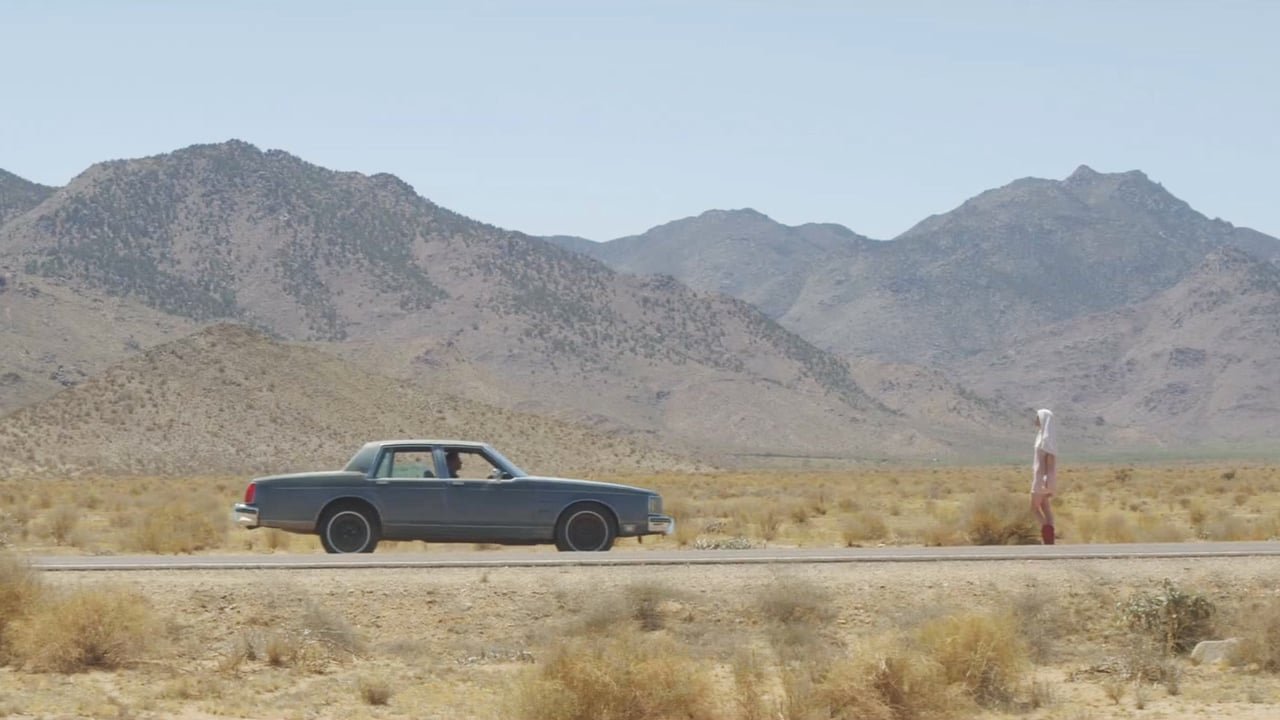
Celia Rowlson-Hall’s film Ma (2015) is a film that centers on physicality. In particular it is about movement as an extension of thought, as palpable engagement with the material world. In fact, it is about bringing spiritual matters back down to earth. We are to understand that Ma (Rowlson-Hall) is a wandering mother-to-be, dusty and abandoned in the Nevada desert. Over time it is intimated that she is a symbolic stand-in for the Virgin Mary.
While wandering desperately in the middle of a two-lane highway, she is nearly hit by Daniel (Andrew Pastides), a young man in a car. He stops for her, she rides on his hood, and the two repair to a roadside motel. He is her Joseph; the two strike up a relationship of nudges, gestures, and inconclusive flirtations. Over the course of Ma, the mother is assaulted by a group of men in various costumes. Their violence is as thoroughgoing as it is casual. In addition to having their way with Ma, they possess the capability of breaking down the motel room set. They can break out of a destroy her diegetic world.
In other words, they can warp Ma’s tenuous reality. For his part, Daniel eventually betrays Ma, who then sets out on her own, reaching the “promised land” of Las Vegas’ outskirts, where she finds a sparsely appointed mansion that serves as a kind of sorority house for showgirls. Ma gives birth in this ambiguously feminized space. But she is not exactly home. Slipping out the back, she abandons her progeny and heads back into the desert, her assigned role complete.
A summary of plot points will not convey the most compelling aspects any film worth considering. But this is particularly the case with Ma, for a number of reasons. It is, first, a film of interstices and vignettes, loosely assembled and given to digression. Rowlson-Hall began her filmmaking career with a series of short works, and she retains an elasticity here between self-contained units of expression and gestures that expand across the broader trajectory of the feature film. What’s more, as a dancer and choreographer, she permits herself moments of brash display, such as a channel-surfing sequence in which Ma abruptly shape-shifts into each and every being overheard on the TV. These moments stand out all the more since much of her dance-work emphasizes ordinary as well as unusual movements.
Ma uses filmic space to explore the signifying power of bodies and the objects around them. The ride on the car hood, for instance, is a funny gag. But as Ma and Daniel drive through the golden, sun-beaten desert, the image of a half-dressed woman atop a slate blue 1950s automobile, winding into the dusty hills, takes on an awkward imagistic power, somewhere between anachronism and dystopian futurity. We are introduced to Ma first as lost, then as a kind of confused hood ornament. From this point on, we will come to know Ma as someone caught between the identities foisted upon her (sometimes violently), and those she herself develops as she struggles to define her own subjectivity.
The extended sequence in the motel room is a fascinating study in attenuated desire and self-realization, with objects and setting playing a vital part in this process. First of all, Ma, her clothing in tatters, dons some of Daniel’s extra clothes. In men’s underwear and a button-down, Ma’s androgyny becomes more pronounced, and as Rowlson-Hall plays it, Ma wavers between inchoate desire for Daniel (flirting, rolling around) and pre-adolescent parallel play, undefined by gender division (building a fort out of the bedsheets, jumping on the bed). The space of the motel room itself is played like an instrument, or occupied like a womb. This is a place where Ma feels safe, and she cannot read Daniel’s mounting frustration.
Several things are happening at once. Rowlson-Hall is implementing a body-centered, phenomenological performance style, one that is thematically appropriate to her inquiry into the idea of the virgin birth, and the pregnant / childbearing body more generally. As she moves around and through the various locales of Ma, Rowlson-Hall generates space with her body, in the chiasm between it and the surfaces of objects. But she is also combining this focus on the body-as-locus with a task-oriented form of dance and movement.
Although Rowlson-Hall’s work is generally associated with the popular and vernacular forms seen in her music video choreography, in Ma she is also drawing on the smaller, more localized approaches we typically associate with experimental dance-work: the task-oriented gestures of Yvonne Rainer and Steve Paxton; the prop-based theatrics of Pina Bausch; as well as the bodily frankness and halted motility of Anna Teresa de Keersmaeker.
What’s more, the performer-director is also applying these methods as a means to explore both the maternal body and the creation of queer spaces. These are highly provocative, original moves. It is not typical for cinema to operate primarily as a space for gesture and task, or as a phenomenological exploration of tactility and touch. It is certainly not common for cinema to explore such physical matters without a firm grounding in plot to normalize the activity onscreen. There are particular film artists who worked outside the mainstream of cinematic production, such as Maya Deren and Sidney Peterson, who foregrounded these tactile and spatial relations, but this is a very limited line of inquiry.
The artist whose work can serve as a primary point of comparison with Rowlson-Hall’s work is, unsurprisingly, a dancer. By turning to cinema, Yvonne Rainer adapted and expanded her figural and object-oriented work in movement to include spaces defined by the camera and its spectator, along with loose, often ballet-like narrative themes. The temporal stasis of Trio A (1966) evolved into the fragmented narrative lurches of Lives of Performers (1972) and Film About a Woman Who… (1974). Rainer’s film work has been explicitly feminist from the start, and although she began addressing gay and lesbian themes with Privilege (1990), her work has always cultivated queer space, in the sense that gender fluidity is a basic presumption, and ordinary environments (domestic interiors in particular) are continually articulated against their presumed cisheteronormative functions.
This returns us to Ma. The motel room thrives as a queer space but also a space of conflicted sexual energy. Where Ma’s androgyny and fluidity is given free expression, Daniel is ambivalent about his ambivalence. He is excited by Ma’s butch look, her childlike playfulness, and the overall sexual uncertainty that she engenders. But then, he panics; rather than riding the long-cresting wave of sexual discovery with Ma, he sneaks out to the car, furiously jerks off, and eventually hooks up with the conventionally feminine / female motel clerk Misti (Amy Seimetz). This sends Ma back to the larger group who assaulted her, and in time this group dismantles the set completely. (They end up dragging souvenir objects through the desert, wandering like the dining party in Buñuel’s Discreet Charm of the Bourgeoisie.)
These experiences have turned Ma into a man, at least momentarily, and the results are not pretty. She sexually assaults a motel maid (Michelle Perks) in front of the woman’s young son. This is just before Ma sets off to find the McMansion in the Nevada foothills, where she will temporarily settle into the Matthew Barneyesque showgirl palace. But this ostensible transformation of Ma’s body, at the very moment that Daniel has definitively ruptured their shared space (and he has decisively rejected her androgynous body) speaks, finally, to Rowlson-Hall’s unsparing consideration of Mary and the Immaculate Conception.
Like all physical acts in Ma, the rape of the maid is stylized. Ma, in Daniel’s clothes, forces the woman’s face into her crotch. The act echoes the equally stylized rapes that Ma has undergone earlier in the film, and much like Ma during those moments, the maid is disturbed but not as obviously traumatized as one might reasonably expect. This repetition leads to a disturbing but unsurprising conclusion: in Ma’s world, women expect rape. This explains the state in which we meet Ma—half-dressed, clothing ripped, covered in dirt. The child she is bearing is one for which a man’s violence is responsible. However, much as a father used to refuse to give his “bastard child” a name, patriarchal violence has disavowed its child. More precisely, in order to redeem this child, His Name must be made the Lord.
And the mother’s body must be erased, and silenced. As I said before, the idea of silence as a tool of resistance should not be overstated. But a silence like Rowland-Hall’s, a silence that speaks, shows us how the body can articulate the material realities, the tactile and affective maternal experiences, that language might only approximate. Ma is a complex artwork that engages with movement and space to suggest a cinematic form of body-talk, a language of resistant gesture and queer-feminist transformation.
17 Jan 20:29
Shorter North Dakota Republicans: “Kill the Hippies and the Indians!”
by Erik Loomis
Matthew Connor>:|

Republican lawmakers in North Dakota are taking aim at protesters with a handful of bills that would make another pipeline protest far more dangerous.
The oil-friendly legislature argues that its constituents are frustrated over the protests, which led federal authorities to halt construction of the $3.8-billion Dakota Access Pipeline as thousands of protesters braved cold weather and violence for months.
A bill that state GOP Rep. Keith Kempenich introduced would exempt drivers from liability if they accidentally hit a pedestrian, according to the Bismarck Tribune. House Bill 1203 was written up in direct response to groups of protesters blocking roadways, Kempenich told the paper. He claims protesters were seen jumping out in front of vehicles.
“It’s shifting the burden of proof from the motor vehicle driver to the pedestrian,” Kempenich said. “They’re intentionally putting themselves in danger.”
He admits that the law might be used in cases that don’t involve protests. But a few casualties of justice are apparently worth it; his bill would mitigate instances when panicked drivers might have accidentally “punched the accelerator rather than the brakes” as protesters blocked the roads.
That should go well. White people being able to kill Native Americans without the threat of punishment. Well, that’s a new event in American history!
14 Jan 17:55
Jackson vows fight for little guy against corporate fatcats and City Hall distractions
by adamg
Matthew ConnorI like the cut of his jib, and I fucking loathe Marty Walsh. What do y'all think?
Tito Jackson today formally launched his campaign for mayor of Boston, promising a campaign against gentrifiers, rich companies seeking taxpayer handouts and a City Hall that seems stuck on bread-and-circus catastrophes like the Olympics and the IndyCar races.
At his campaign announcement outside Dudley Square's Haley House Cafe, the District 7 city councilor vowed to fight for extra money for education, to target tax breaks at small and entpreneurial companies that he said are the true engine of the Boston economy and to oppose any future tax handouts to large companies such as GE, whom he said should already be more than happy to move to the greatest city in America, or a future "that is not just for some of us, but for all of us."
Jackson vowed to be a mayor who "spends as much time uptown as in downtown," and who has "the backbone" to fight proposals like the Olympics, and who will insist local construction jobs go to Boston residents, "who don't have New Hampshire license plates."
Jackson, 41, the son of a 13-year-old who had him after she was raped and gave him up for adoption, said he grew up with his adoptive parents in a Grove Hall where neighbors looked out for each other and helped each other out. He said one neighbor gave him his first job - working on the man's ice-cream truck, even though, Jackson joked, he probably ate more ice cream than he sold.
But today, that Boston is "at a crossroads," he said, noting one study that showed Boston had the highest level of income inequality of any major American city. "The middle class stands in the balance. ... From Roxbury to West Roxbury, from South Boston to East Boston, from Dorchester to the North End, in both Chinatown and Charlestown, the struggle is real."
"Across the city, gentrification has become a neighborhood norm, said. "We seem to be judging our success by the number of million-dollar condos, skyscrapers, and publicly funded helipads that are being built, rather than the mobility of our families and the percentage of them that are managing to escape poverty."
Jackson, a councilor since 2011, said a city that brought in $115 million more in tax revenue from new development last year should not be choking schools and forcing seventh and eighth-graders to ride an unreliable MBTA rather than providing yellow buses for them. It should be funding world-class schools - and helping out small businesses, long-time residents being priced out of their homes and men and women getting out of prison who need to find a place to live and work. "They are not looking for a handout, they are looking for a hand up."
Jackson, who actively worked to elect Marty Walsh four years ago, said he grew disappointed in the mayor over his handling of such things as Boston 2024, IndyCar and pushing for a $276-million incentive for GE that includes tax breaks, a promise to restore the Northern Avenue Bridge and construction of a public helipad. "That is not the Boston I grew up in." Boston, he said, is already world class and should stop pursuing unreleastic, expensive projects as if it weren't.
Although Jackson sidestepped a question on whether he would try to rip up the overall GE package as mayor, he vowed to fight construction of a publicly funded helipad - if GE wants a helipad badly enough, it can build one on its own, he said.
He said the "Boston is a great city," one that attracts companies without such large incentives: "I believe we overshot that bid," he said. "This is a company that should want to come to Boston because of the talent we have," and because of the area's colleges. He said that the GE deal could ultimately wind up doing nothing for Boston because the city already has a short of the types of high-tech workers the company needs, so it might just end up hiring away workers from other local companies, rather than creating new opportunities for residents who don't have such skills. And a city where he said shootings are on the increase should be devoting more attention to public safety and health than the needs of a giant corporation.
Jackson returned a couple times to education. He was critical of the mayor's decision to use just $18 million in extra development revenue to plug a $40-million hole in the BPS budget, saying it forced larger special-needs classes and prevented even Boston Latin School from offering eighth-grade science classes. He praised the more than 3,000 students he said walked out of class last year to protest cuts. "They stood up and they said enough is enough."
During his speech, Jackson cited everybody and everyone from the Bible, Frederick Douglass and the Boston city seal, whose motto reads, in Latin, "God be with us as he was with our fathers." He said he'd add "mothers" to that - and that he would also work to end a continuing gender gap in area wages.
08 Jan 16:42

Newswire: Claire Denis puts sci-fi project on hold to explore love with Juliette Binoche
by William Hughes
Matthew ConnorDisappointed that we have to wait longer for the sci-fi project, but OMG Denis does Barthes??? Sign me UP
Fans of celebrated, genre-spanning director Claire Denis will have to wait a bit to see her tackle the far reaches of space. According to The Playlist, Denis has put her previously announced science fiction feature High Life—which she was working on with English author Zadie Smith and installation artist Oliafur Eliasson—on hold, in favor of a new romance film with French cinema mainstays Juliette Binoche and Gerard Depardieu.
Dark Glasses is based on (and takes its name from) Roland Barthes’ classic A Lover’s Discourse, a collection of musings and sketches of romantic entanglement. Denis’ film will actually be the second time in recent years that Barthes’ book has been given the cinematic treatment; an adaptation of the book, developed as a romantic anthology, came out inHong Kong in 2010. Glasses is expected to film some time this year, at which point Denis—whose other films include modern ...

02 Jan 19:04
The 2016 Popjustice Readers’ Poll – THE RESULTS!
by Popjustice
Matthew ConnorAs always, I find all of this hilarious & mostly accurate. My favorite thing this time: "Triumph of the Year - 3. Aspects of Ariana Grande"
One thing we all learned in 2016 was that democracy is a valuable, powerful institution as long as votes go the way you want.
With that in mind brace yourself for the results of the 2016 Popjustice Readers’ Poll, which represents the crunching of numbers relating to over 2000 completed forms.
Here we go…
Best single

1. Ariana Grande — ‘Into You’
2. Beyoncé – ‘Formation’
3. Dua Lipa – ‘Hotter Than Hell’
4. Sia feat Sean Paul – ‘Cheap Thrills’
5. Fifth Harmony – ‘Work From Home’
6. The 1975 – ‘Somebody Else’
7. Lady Gaga – ‘Million Reasons’
8. Little Mix – ‘Shout Out To My Ex’
9. Rihanna – ‘Kiss It Better’
10. Zayn – ‘Pillowtalk’
Notes: Can we talk now about the ‘Into You’ outro? CHRIST ALIVE! This is a space where most songs would just chuck in a final regular chorus – with ‘Into You’ you get the chorus taken apart and reassembled right before your eyes.
Best album
 1. Beyoncé – ‘Lemonade’
2. Rihanna — ‘Anti’
3. Lady Gaga – ‘Joanne’
4. Britney Spears – ‘Glory’
5. Shura – ‘Nothing’s Real’
6. Sia – ‘This Is Acting’
7. Tove Lo – ‘Ladywood’
8. Zayn – ‘Mind Of Mine’
9. The 1975 – ‘I Like It When You Etc’
10. Little Mix – ‘Glory Days’
Notes: Finally some recognition for underappreciated pop singer Beyoncé. Watch out for this promising talent in 2017 – something tells us she’s going to do pretty well!
Worst single

1. Calum Scott – ‘Dancing On My Own’
2. Justin Timberlake – ‘Can’t Stop The Feeling!’
3. Lady Gaga – ‘Perfect Illusion’
4. Lukas Graham – ‘7 Years’
5. Chainsmokers – ‘Closer’
6. Meghan Trainor – ‘Me Too’
7. James Arthur – ‘Say You Won’t Let Go’
8. Drake – ‘One Dance’
9. Shawn Mendes – ‘Treat You Better’
10. Bruno Mars – ’24K Magic’
Notes: It’s heartening here to see Justin Timberlake’s half-arsed Trolls tune getting some attention. It’s quite an achievement, isn’t it: a song about fun that sounds like not one person had any fun at all during its creation.
Worst album

1. Meghan Trainor – ‘Thank You’
2. Charlie Puth – ‘Nine Track Mind’
3. Britney Spears – ‘Glory’
4. Lady Gaga – ‘Joanne’
5. Tove Lo – ‘Ladywood’
6. Zayn – ‘Mind Of Mine’
7. Drake – ‘Views’
8. James Arthur – ‘Back From The Edge’
9. Beyoncé — ‘Lemonade’
10. Fifth Harmony – ‘7/27’
Notes: In years gone by this poll’s Worst Album category was a little strange — back when you generally had to pay to hear an album, or at least make the effort to illegally download it, votes would either be for artists people just didn’t like (and whose albums they hadn’t actually heard), or for disappointing albums by artists people DID like. A disappointing album’s a bit different from a bad album, isn’t it? Anyway thanks to the streaming era it really is now possible for all of us to get a measure of an album at a cost of £0.00 (roughly $0.00), meaning that this year’s Worst Album category is probably the most accurate to date. Gaga’s inclusion is likely something to do with the ‘disappointing’ factor and James Arthur’s mainly there because people don’t like him, but it’s hard to argue with Meghan Trainor’s position.
Best video

1. Beyoncé – ‘Formation’
2. Beyoncé — ‘Hold Up’
3. Britney Spears feat Tinashe — ‘Slumber Party’
4. Beyoncé — ‘Sorry’
5. Fifth Harmony – ‘Work From Home’
6. Shura – ‘What’s It Gonna Be?’
7. Sia – ‘The Greatest’
8. Charli XCX – ‘After The Afterparty’
9. Petite Meller – ‘The Flute’
10. Solange – ‘Cranes In The Sky’
Notes: There are some extreme health and safety violations in a number of these videos and we’d like to see this slapdash approach tightened up in 2017. If we accept that popstars are role models then we can’t just have them standing on cars or wandering around building sites holding hammers like big cocks.
Worst video

1. Britney Spears – ‘Make Me’
2. Meghan Trainor – ‘Me Too’
3. Taylor Swift – ‘New Romantics’
4. Lady Gaga – ‘Perfect Illusion’
5. Ariana Grande – ‘Into You’
6. Fifth Harmony – ‘That’s My Girl’
7. Justin Timberlake – ‘Can’t Stop The Feeling!’
8. Meghan Trainor – ‘No’
9. Ariana Grande – ‘Dangerous Woman’
10. Zayn – ‘Pillowtalk’
Notes: A few on the list are here simply because they don’t do justice to excellent tunes but as for the rest, it’s interesting to imagine three things. First, imagine the original treatment, and imagine how bad the others must have been. Second, imagine how much these videos cost. Third, just think how many people saw the treatments, were present at the shoots, gave feedback on various edits and then finally approved these videos. Absolutely incredible.
Most absurd use of major label cash

1. Charlie Puth
2. Nathan Sykes
3. Frank Ocean’s carpentry masterclass
4. Meghan Trainor
5. Britney’s scrapped ‘Make Me’ video
6. Lady Gaga’s ‘Dive Bar tour’
7. Tropical house
8. Rag’n’Bone Man
9. Anti release strategy
10. M.O
Notes: YOU CAN’T HANDLE THE PUTH.
Act most likely to share the fact that they’ve won this category with a large number of followers

1. Years & Years
2. Little Mix
3. Demi Lovato
4. Lady Gaga
5. Charli XCX
6. Jessie J
7. The 1975
8. Zara Larsson
9. Nathan Sykes
10. Dua Lipa
Notes: It’s a shame Little Mix didn’t win because that would have probably got a bit more “social” “traction”.
Major artist with disappointing music most at odds with ability to achieve better

1. Lady Gaga
2. Little Mix
3. Tove Lo
4. Rihanna
5. Mollie King
6. Zara Larsson
7. Justin Timberlake
8. Britney Spears
9. Gwen Stefani
10. Charli XCX
Notes: Some harsh truths dotted around in this list BUT HAS ANYONE NOTICED THAT ‘JOANNE’ IS ACTUALLY REALLY GOOD??
Artist most likely to have voted for Brexit

1. Gary Barlow
2. Liam Payne
3. Sam Smith
4. Kate Bush
5. James Arthur
6. Taylor Swift
7. Kanye West
8. Geri Halliwell
9. Calum Scott
10. Olly Murs
Notes: We bet Barlow did bloody vote Leave too, which is ironic considering his intimate knowledge of the destruction, misery and years of rebuilding that tend to follow one party’s abrupt departure from a perfectly functional group.
Disaster of the year
1. Calum Scott
2. Sam Smith’s Oscars moment
3. ‘Joanne’
4. Streaming fucking up the charts
5. The Chainsmokers
6. James Arthur’s return
7. Tropical house
8. The X Factor
9. Fergie
10. Neil leaving Clean Bandit (?!)
Notes: A susprisingly low placing here for Tropical House. It’s almost as if people actually quite like it and don’t see what all the moaning is about.
Triumph of the year

1. ‘Lemonade’
2. Beyoncébowl
3. Aspects of Ariana Grande
4. Assorted references to ‘Lush Life”s continued success
5. Britney’s ‘return to form’
6. Adele at Glastonbury
7. Various references to Justin Bieber’s penis
8. Little Mix knocking off James Arthur
9. Sia’s first US Number One
10. Pet Shop Boys at Royal Opera House
Notes: No votes in this category for Cruz Beckham’s Christmas single.
Comeback of the year

1. Craig David
2. Britney
3. All Saints
4. Busted
5. JoJo
6. Melanie C
7. Rihanna
8. Sean Paul
9. Rick Astley
10. James Arthur
Notes: We had lunch with Craig David over the summer. Went to quite a nice restaurant and were worried he’d be all like “ooh only a glass of water and a bit of lettuce for me please”, as he’s all muscular now isn’t he? But he just kept ordering food. Plates and plates of food. There, it’s fair to say, is a man who’s loving life. Most of the best popstars are ones who’ve stared The Dumper full on in the face at some point in their career. Well, they give the best interviews anyway. And probably eat bigger lunches.
Best new act to properly get going in 2016

1. Dua Lipa
2. Shura
3. Zara Larsson
4. Christine & The Queens
5. Anne-Marie
6. Dagny
7. Alessia Cara
8. MØ
9. DNCE
10. Petite Meller
Notes: Dua Lipa started the year on the BBC Sound poll longlist; she ended it on the Brits Critics’ Choice shortlist. ‘One in the eye’ for anyone who says pop music’s slowing down. Look at it go! WHOOOSH – careers exploding at the speed of light.
Most ridiculous recording artist

1. Meghan Trainor
2. Lady Gaga
3. Robbie Williams
4. Kanye West
5. Cruz Beckham
6. The Chainsmokers
7. Mariah Carey
8. Honey G
9. Sean Paul
10. Halsey
Notes: FINALLY some recognition for Cruz Beckham.
Best radio station

1. Radio 1
2. ‘Spotify’
3. Capital
4. ‘None of them’
5. Kiss
6. Beats 1
7. Heat
8. Z100
9. Radio 2
10. Heart
Notes: It’s probably fair to say this Top 10 represents something of a ‘watershed moment’.
Best DJ (on the radio)

1. Annie Mac
2. Clara Amfo
3. Greg James
4. Nick Grimshaw
5. Scott Mills
6. Charli XCX
7. Marvin Humes
8. Emma Bunton
9. Lauren Laverne
10. Pete Allison
Notes: (Charli XCX counts because she has a show on Beats 1.)
Best TV show with music as some sort of central focus

1. Empire
2. Eurovision
3. ‘None of them’ / ‘Are there any’ / etc
4. Crazy Ex-Girlfriend
5. Songs Of Praise
6. Nashville
7. The Voice
8. The X Factor
9. RuPaul’s Drag Race
10. The Get Down
Notes: Another great year for The X Factor.
Best cover version

1. Rihanna – ‘Same Ol’ Mistakes’
2. Little Mix – ‘Ugly Heart’
3. Lorde – ‘Life On Mars’
4. Betty Who – ‘I Love You Always Forever’
5. Craig David – ‘Love Yourself’
6. Christine & The Queens – ‘Sorry’
7. Laura Mvula – ‘Ready Or Not’
8. Say Lou Lou – ‘Stayin’ Alive’
9. Vérité – ‘Somebody Else’
10. MNEK – ‘Don’t Stop Me Now’
Notes: So many votes for Little Mix’s ‘cover’ in this category.
Worst cover version

1. Calum Scott – ‘Dancing On My Own’
2. Jonas Blue feat Dakota – ‘Fast Car’
3. David Guetta – ‘Would I Lie To You?’
4. Little Mix – ‘Ugly Heart’
5. Betty Who – ‘I Love You Always Forever’
6. ‘Anything tropical’
7. Assorted Conor Maynard covers
8. Emily Middlemas – ‘Toxic’
9. Kings Of Leon – ‘Hands To Myself’
10. Jessie J – ‘Can’t Take My Eyes Off You’
Notes: And there are Little Mix again.
Best streaming service

1. Spotify
2. YouTube
3. SoundCloud
4. Apple Music
5. Deezer
6. ‘None’ / ‘I don’t bother with them’ / etc
7. Bandcamp
8. Tidal
9. Amazon
10. ‘Microsoft Groove Music’ (‽)
Notes: 2017 will almost certainly be Tidal’s year.
Newish act most likely to save pop in 2017

1. Dua Lipa
2. Muna
3. Maggie Rogers
4. Raye
5. Anne-Marie
6. Saara Aalto
7. Dagny
8. Allie X
9. Tkay Maidza
10. Astrid S
Notes: At first glance you look at this Top 10 and you think, “hm, not many men here”. And then you remember Rag’n’Bone Man and you think, “alright, fair play”.
Established act most likely to return and save pop in 2017

1. Lorde
2. Katy Perry
3. Charli XCX
4. Robyn
5. Sky Ferreira
6. Marina & The Diamonds
7. Years & Years
8. Taylor Swift
9. Harry Styles
10. Lana Del Rey
Notes: CORRECT CORRECT CORRECT CORRECT CORRECT CORRECT CORRECT maybe CORRECT CORRECT.
Least controversial popstar

1. Carly Rae Jepsen
2. Kylie Minogue
3. Adele
4. Ellie Goulding
5. Jess Glynne
6. Emeli Sandé
7. Niall Horan
8. Birdy
9. Louisa Johnson
10. Shawn Mendes
Notes: If you think Jeppo lacks controversy we suggest you examine photographs of her hair at Brighton Pride.
Best use of social media by popstar or pop-related entity

1. Zara Larsson
2. Katy Perry
3. Cher
4. Britney Spears (with most voters making specific reference to Instagram)
5. Olly Alexander
6. Lily Allen
7. Clare Maguire
8. James Blunt
9. The 1975
10. Rihanna
Notes: In summary, it generally helps if you have something to say and the ability to say it.
Songmaking writer/producer/collective of the year

1. Justin Tranter and Julia Michaels
2. Max Martin
3. Mark Ronson
4. Bloodpop
5. Greg Kurstin
6. Dev Hynes
7. MNEK
8. Savan Kotecha
9. Sia
10. Sophie
Notes: Wait until you hear Julia Michaels’ first single ‘Issues’. It’s coming quite soon and it’s ‘quite the toe-tapper’.
Most annoying online fanbase

1. ‘All of them’
2. Beliebers
3. Harmonizers
4. Britney Army
5. Directioners
6. Beyhive
7. Monsters
8. Madonna fans
9. Swifties
10. Mixers
Notes: Another year, another opportunity to marvel at the fact that Madonna hasn’t named her fanbase, while the fanbase hasn’t even named itself. That seems to indicate restraint and respect from both sides, in a way, doesn’t it?
Had it, lost it in 2016

1. Lady Gaga
2. Robbie Williams
3. Gwen Stefani
4. Taylor Swift
5. Kanye West
6. Emeli Sandé
7. Calvin Harris
8. Little Mix
9. Rihanna
10. Frank Ocean
Notes: Say what you like about Robbie’s album (at least that way there’d be some sort of recognition that it had actually been released), but we need more popstars who can chuck “‘ave it like an oligarch” into their songs.
Didn’t have it, found it in 2016

1. The 1975
2. Ariana Grande
3. Lady Gaga
4. Zayn
5. The Chainsmokers
6. Fifth Harmony
7. Clean Bandit
8. Britney Spears
9. Childish Gambino
10. Clare Maguire
Notes: This had to be The 1975 didn’t it?
Popstar with whom you would most like to tenderly make love as part of a rewarding relationship

1. Nick Jonas
2. Rihanna
3. Zayn
4. Olly Alexander
5. Marina & The Diamonds
6. Shawn Mendes
7. Dua Lipa
8. Calvin Harris
9. Harry Styles
10. Beyoncé
Notes: The thing with Shawn Mendes though, surely, is that there’s every danger he’d keep an acoustic guitar near the bed.
Most deluded artist

1. Justin Bieber
2. Lady Gaga
3. Meghan Trainor
4. Taylor Swift
5. Halsey
6. Kanye West
7. The Chainsmokers
8. Demi Lovato
9. Azealia Banks
10. Drake
Notes: Be real for a minute – if you had hair as good as Justin Bieber’s, you’d probably be pretty pleased with yourself too.
Least deluded artist

1. Adele
2. Carly Rae Jepsen
3. Rihanna
4. Kelly Clarkson
5. JoJo
6. Sia
7. Olly Alexander
8. Lorde
9. Zara Larsson
10. Charli XCX
Notes: Relatability is a funny thing, isn’t it? Supposedly relatable artists are all vastly more talented, or stylish, or funny, or attractive, or clever than we are. And yet we say “oh look at Adele, with her brilliant voice and her songwriting talent and her sense of humour and her effortless charisma – she’s just like us”. JUST LIKE WHO? WHO ARE THE PEOPLE WHO RELATE TO ADELE ON THOSE TERMS?
Act we should send to Eurovision in 2017

1. Little Mix
2. Clean Bandit
3. GEM
4. Mollie King
5. Charli XCX
6. Fleur East
7. Dua Lipa
8. Louisa Johnson
9. Honey G
10. Saraa Aalto
Notes: If you boil this ‘vote broth’ down to the sludge of acts who’d actually say yes to doing it, we’re looking at GEM in first place followed by Mollie, probably Fleur then Louisa Johnson. GEM would be quite funny, but at the same time very sad. It might well be for the best if we just decide to give it all a miss this year.
Worst partnership between brand and pop act

1. Samsung / Rihanna
2. Apple / Taylor Swift
3. EE / Britney
4. Adidas / Rita Ora
5. Orange Theory Fitness / Britney
6. Cornetto / Little Mix
7. Bud Light / Lady Gaga
8. Pantene / Ellie Goulding
9. McDonald’s / Little Mix
10. Müller / Nicole Scherzinger
Notes: Sadly voting had closed by the time Paris Hilton announced her partnership with Lidl. Related: imagine if 2017 throws up a song as good as ‘Stars Are Blind’. IMAGINE.
Group most likely to split or ‘take a year off’ in 2017

1. Fifth Harmony
2. Clean Bandit
3. GEM
4. Busted
5. The Vamps
6. Coldplay
7. All Saints
8. M.O
9. GRL
10. 5 Seconds Of Summer
Notes: Most of these votes came in before the band when completely tits up in the final weeks of 2016. What does the future hold for Fifth Harmony? We’re saying The Departed Member releases an album no better – but no worse – than Nicole Scherzinger’s eventual debut; it will contain one song far better than anything Fifth Harmony have ever released, but three songs far worse than anything Firth Harmony have ever released. As for The Remaining Four, there’ll be a brand new song in the spring to show everyone they’re still a strong, united, tight unit, prior to another member leaving in June.
Social Media Arsehole Of The Year

1. Donald Trump
2. Azealia Banks
3. Justin Bieber
4. Piers Morgan
5. The Chainsmokers
6. Taylor Swift
7. Kanye West
8. Nigel Farage
9. Steve Brookstein
10. ‘Everyone’
Notes: We were thinking of taking out the non-pop ones but then we thought: actually let’s just keep them in.
Total bellend of the year

1. Donald Trump
2. Honey G
3. Justin Bieber
4. Azealia Banks
5. Dr Luke
6. Taylor Swift
7. Kanye West
8. Calum Scott
9. Nigel Farage
10. Sam Smith
Notes: Well at least it’s good news for James Arthur.
Total hero of the year

1. Beyoncé
2. Carly Rae Jepsen
3. Karen Kwak
4. Zara Larsson
5. Lady Gaga
6. Madonna
7. Rihanna
8. Olly Alexander
9. Craig David
10. Ariana Grande
Notes: Good showing here for Karen Kwak, the A&R exec responsible for the Britney album being significantly better than a Britney album had any right to be in 2016, and far better than anybody else connected with the project would have bothered making it.
And that brings it to a close. Thanks everyone for voting – we’ll see you in 2017!
The post The 2016 Popjustice Readers’ Poll – THE RESULTS! appeared first on Popjustice.
Christal likes this
14 Dec 15:34

Newswire: The Academy disqualifies scores for Arrival, Manchester By The Sea, and Silence
by Esther Zuckerman
Matthew ConnorHot Take: Jóhann Jóhannsson is WILDLY overrated. This sucks for the three women composers shut out, though; film scoring is still very much a boys' club. Every year the Academy's arbitrary disqualifications in this category are thoroughly baffling. Like people aren't going to realize that Handel's Messiah is not original to the film....??
The scores for Arrival, Manchester By The Sea, and Silence won’t be getting Oscar nominations this year because the Academy Of Motion Picture Arts And Sciences disqualified them all, according to a report in Variety.
This seems most egregious in the case of Jóhann Jóhannsson, whose music for Arrival has already earned recognition in the form of nods from the Critics Choice Awards and the Golden Globes. However, the movie prominently features Max Richter’s “On The Nature Of Daylight” at its beginning and end. Essentially, the Academy figured that voters wouldn’t realize that piece—which differs wildly in tone from the alien sounds that color the rest of the film—wasn’t the work of Jóhannsson. Thus, it was deemed unable to compete because of a rule, which states that: “A score shall not be eligible it has been diluted by the use of pre-existing music, or ...
Sarah likes this
09 Dec 18:06

Great Job, Internet!: Ben Stein to finally bore you to sleep on purpose with his economics talk
by Joe Blevins
In John Hughes’ Ferris Bueller’s Day Off, supernaturally dull economics teacher Ben Stein bored his teenage students into a state of catatonia with his endless, droning lecture about the Hawley-Smoot Tariff Act Of 1930. Now, Stein is ready to provide the same service for the users of a subscription-based meditation app called Calm, only this time he’s actively trying to put people to sleep. This week, after months of beta-testing, Calm is launching a new feature called “Sleep Stories.” Described as “bedtime stories for adults,” these are pleasant but deliberately uninteresting texts (think: essays by Scottish-American naturalist John Muir) read aloud in calming, soothing voices. It’s intended to put grown-ups to sleep, the way Goodnight Moon supposedly does for small children.
And now, Calm has broken out the heavy weaponry in its war against wakefulness: Stein himself, who will read in his trademark monotone from Adam Smith ...
07 Dec 01:11
The Atrium Kids
Matthew Connor:) :) :)
Welcome back listeners! On this week’s episode: Kenneth Frank and Rory lose their minds over the show’s brand new theme song! They also celebrate the birth of our nation’s one true leader, provide valuable fashion insight, and talk wisdom teeth troubles. Finally, a gentle but stern reminder (tirade?) that Black Lives Matter. Enjoy!
hey tumblr, i started a podcast! my husband made the theme song and it’s great! it would mean so much to me if you gave it a listen.
05 Dec 21:21
Boston's economic success leading to failure as region falls further behind on building housing for low and middle-income families
by adamg
An annual housing report card by the Boston Foundation and the Dukakis Center at Northeastern University highlights the dark clouds over the region's economic boom: Poverty rates are growing as the cost of living increases due to housing prices - yet the region is failing to keep up with growing demand for housing, at least for people below the highest income brackets.
For the third year in a row, real average wages have increased and by the end of 2015 were 5.4 percent higher than in 2009. Unfortunately, however, wage growth has been highly unequal, with the bottom 20 percent of jobholders experiencing nearly a 5 percent decline in their hourly wage since 2009 while those in the 80th percentile of the wage distribution received nearly all of the gains.
Waiting lists for family housing vouchers are growing, families are spending longer periods of time in shelters, and those who have vouchers remain in the same or similar demographic communities, reducing access to employment networks and educational opportunities that are more likely to lead to economic mobility. All of our findings - combined with the real cost of living in Greater Boston - bear out the conclusion that the number of families marginalized by the housing market will only climb unless we find more appropriate and effective policies and fund these interventions at all levels of government.
29 Nov 23:30

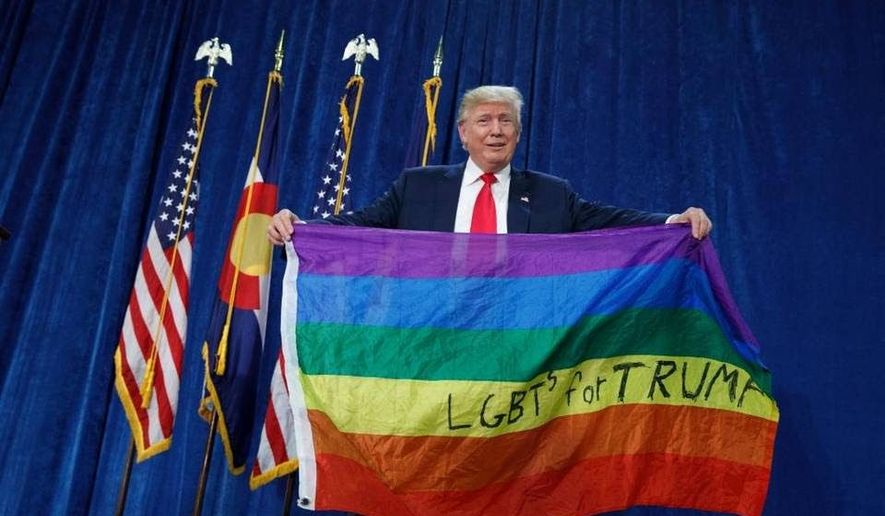
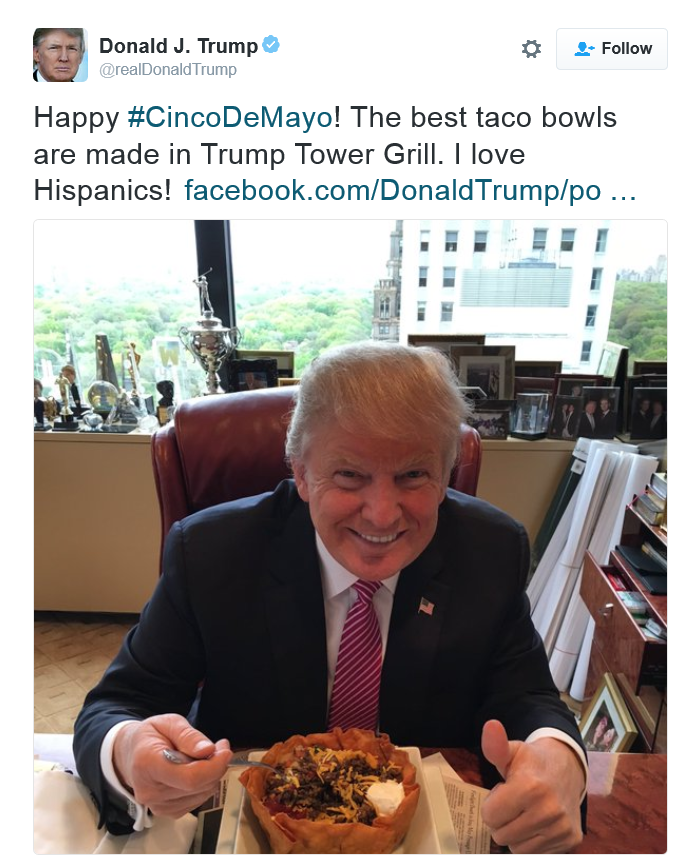
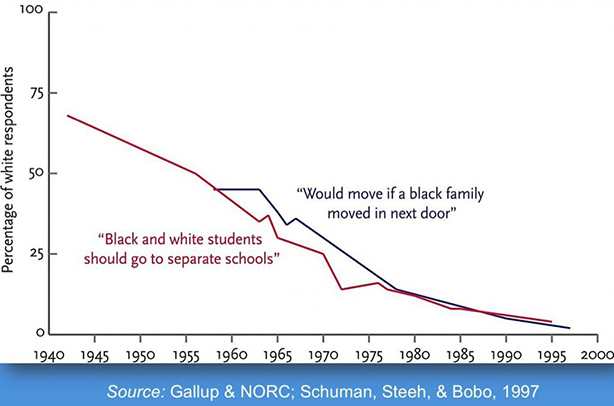
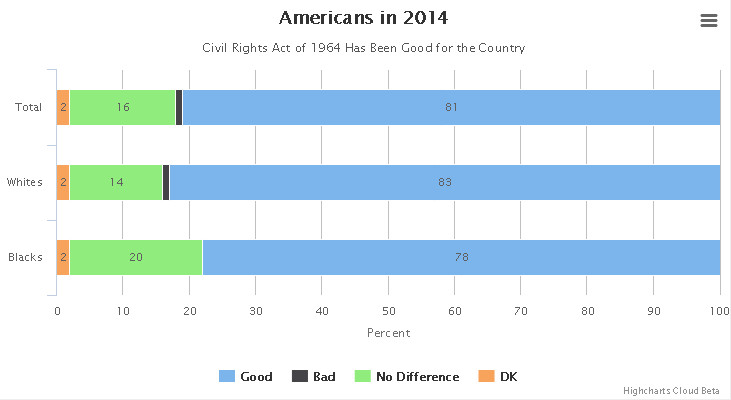
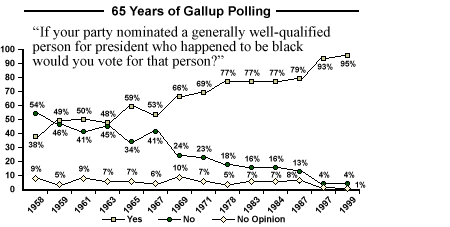
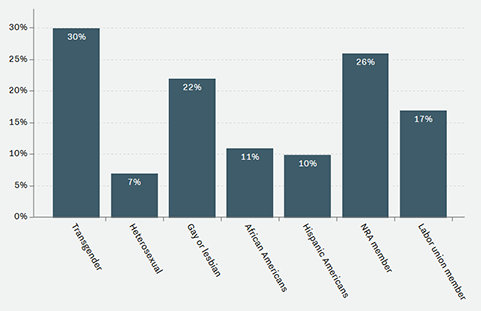
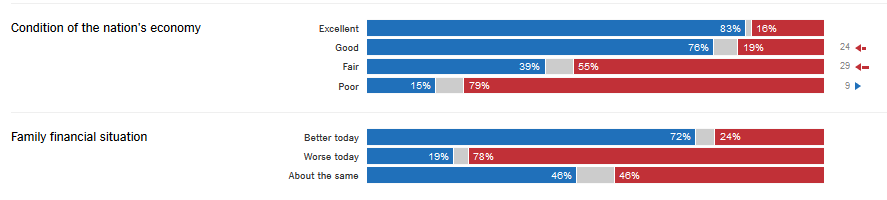

You Are Still Crying Wolf
by Scott Alexander
Matthew ConnorSorry for sharing a super long read with Tr*mp's ugly face in it, but I'm really curious what y'all think of this. There is plenty in here I disagree with (Tr*mp holding a rainbow flag doesn't really change the fact that he said he would sign FADA into law, so...), and the extended Atlantis stuff made my eyes go back in my head, but I'm interested in what all you smarties think!
[Content warning: hate crimes, Trump, racism. I have turned off comments to keep out bad people who might be attracted by this sort of thing. Avoid sharing in places where this will attract the wrong kind of attention, as per your best judgment. Please don’t interpret anything in this article to mean that Trump is not super terrible]
[Epistemic status: A reduction of a complicated issue to only 8000 words, because nobody would read it if it were longer. I think this is true but incomplete. I do not deny that Trump is being divisive and abusing identity politics in more subtle ways. I will try to discuss missing parts at more length later.]
I.
A New York Times article from last September that went viral only recently: Crying Wolf, Then Confronting Trump. It asks whether Democrats have “cried wolf” so many times that nobody believes them anymore. And so:
When “honorable and decent men” like McCain and Romney “are reflexively dubbed racists simply for opposing Democratic policies, the result is a G.O.P. electorate that doesn’t listen to admonitions when the genuine article is in their midst”.
I have a different perspective. Back in October 2015, I wrote that the picture of Trump as “the white power candidate” and “the first openly white supremacist candidate to have a shot at the Presidency in the modern era” was overblown. I said that “the media narrative that Trump is doing some kind of special appeal-to-white-voters voodoo is unsupported by any polling data”, and predicted that:
If Trump were the Republican nominee, he could probably count on equal or greater support from minorities as Romney or McCain before him.
Now the votes are in, and Trump got greater support from minorities than Romney or McCain before him. You can read the Washington Post article, Trump Got More Votes From People Of Color Than Romney Did, or look at the raw data (source)
Trump made gains among blacks. He made gains among Latinos. He made gains among Asians. The only major racial group where he didn’t get a gain of greater than 5% was white people. I want to repeat that: the group where Trump’s message resonated least over what we would predict from a generic Republican was the white population.
Nor was there some surge in white turnout. I don’t think we have official numbers yet, but by eyeballing what data we have it looks very much like whites turned out in equal or lesser numbers this year than in 2012, 2008, and so on. [EDIT: see counterpoint, countercounterpoint]
The media responded to all of this freely available data with articles like White Flight From Reality: Inside The Racist Panic That Fueled Donald Trump’s Victory and Make No Mistake: Donald Trump’s Win Represents A Racist “Whitelash”.
I stick to my thesis from October 2015. There is no evidence that Donald Trump is more racist than any past Republican candidate (or any other 70 year old white guy, for that matter). All this stuff about how he’s “the candidate of the KKK” and “the vanguard of a new white supremacist movement” is made up. It’s a catastrophic distraction from the dozens of other undeniable problems with Trump that could have convinced voters to abandon him. That it came to dominate the election cycle should be considered a horrifying indictment of our political discourse, in the same way that it would be a horrifying indictment of our political discourse if the entire Republican campaign had been based around the theory that Hillary Clinton was a secret Satanist. Yes, calling Romney a racist was crying wolf. But you are still crying wolf.
I avoided pushing this point any more since last October because I didn’t want to look like I was supporting Trump, or accidentally convince anyone else to support Trump. I think Trump’s election is a disaster. He has no plan, he’s dangerously trigger-happy, and his unilateralism threatens aid to developing countries, one of the most effective ways we currently help other people. I thought and still think a Trump presidency will be a disaster.
But since we’re past the point where we can prevent it, I want to present my case.
I realize that all of this is going to make me sound like a crazy person and put me completely at odds with every respectable thinker in the media, but luckily, being a crazy person at odds with every respectable thinker in the media has been a pretty good ticket to predictive accuracy lately, so whatever.
II.
First, I want to go over Donald Trump’s official, explicit campaign message. Yes, it’s possible for candidates’ secret feelings to differ from their explicit messages, but the things they say every single day and put on their website and include in their speeches are still worth going over to see what image they want to project.
Trump’s official message has been the same vague feel-good pro-diversity rhetoric as any other politician. Here’s Trump on African Americans:
It is my highest and greatest hope that the Republican Party can be the home in the future and forevermore for African-Americans and the African-American vote because I will produce, and I will get others to produce, and we know for a fact it doesn’t work with the Democrats and it certainly doesn’t work with Hillary.
When I am President, I will work to ensure that all of our kids are treated equally, and protected equally. Every action I take, I will ask myself: does this make life better for young Americans in Baltimore, Chicago, Detroit, Ferguson who have as much of a right to live out their dreams as any other child in America?
African-American citizens have sacrificed so much for this nation. They have fought and died in every war since the Revolution, and from the pews and the picket lines they have lifted up the conscience of our country in the long march for Civil Rights. Yet, too many African-Americans have been left behind.
No group in America has been more harmed by Hillary Clinton’s policies than African-Americans. No group. No group. If Hillary Clinton’s goal was to inflict pain on the African-American community, she could not have done a better job. It’s a disgrace. Tonight, I am asking for the vote of every African-American citizen in this country who wants a better future.
And at the end of four years I guarantee that I will get over 95% of the African-American vote. I promise you. Because I will produce for the inner-cities and I will produce for the African-Americans.
America must reject the bigotry of Hillary Clinton who sees communities of color only as votes, not as human beings worthy of a better future.
On Hispanics:
I have just landed having returned from a very important and special meeting with the President of Mexico…we discussed the great contributions of Mexican-American citizens to our two countries, my love for the people of Mexico, and the close friendship between our two nations.
I employ thousands and thousands of Hispanics. I love the people. They’re great workers. They’re fantastic people and they want legal immigration. I’ll take jobs back from China, I’ll take jobs back from Japan. The Hispanics are going to get those jobs, and they’re going to love Trump.
On his campaign:
It’s a movement comprised of Americans from all races, religions, backgrounds and beliefs who want and expect our government to serve the people, and serve the people it will.
Trump’s campaign photos are consistent with a desire to present the same message:
This wasn’t a scripted appearance forced by his campaign staff. According to the Washington Times:
Trump walked on stage in Greeley, Colorado to a large cheering crowd when he spotted a rainbow flag in the audience. As the music blasted through the speakers, Mr. Trump pointed to a supporter as if to ask if he could see his flag and then motioned for a campaign worker to help retrieve the LGBT symbol of equality from the attendee.Within seconds, Mr. Trump was walking around the platform with the rainbow flag in his hands and moments later unfurled it in full display. You could see a huge smile on Mr. Trump’s face as he walked to both sides of the stage to proudly hold up the rainbow flag announcing support from the gay and lesbian community.
Trump campaign spokesman Jason Miller told me, “Mr. Trump is campaigning to be President for ALL Americans and was proud to carry the ‘LGBT for Trump‘ rainbow flag on stage in Greeley, CO yesterday.
This is just a tiny representative sample, but the rest is very similar. Trump has gone from campaign stop to campaign stop talking about how much he likes and respects minorities and wants to fight for them.
And if you believe he’s lying, fine. Yet I notice that people accusing Trump of racism use the word “openly” like a tic. He’s never just “racist” or “white supremacist”. He’s always “openly racist” and “openly white supremacist”. Trump is openly racist, openly racist, openly racist, openly racist, openly racist, openly racist, openly racist. Trump is running on pure white supremacy, has thrown off the last pretense that his campaign is not about bigotry, has the slogan Make American Openly White Supremacist Again, is an openly white supremacist nominee, etc, etc, etc. And I’ve seen a few dozen articles like this where people say that “the bright side of a Trump victory is that finally America admitted its racism out in the open so nobody can pretend it’s not there anymore.”
This, I think, is the first level of crying wolf. What if, one day, there is a candidate who hates black people so much that he doesn’t go on a campaign stop to a traditionally black church in Detroit, talk about all of the contributions black people have made to America, promise to fight for black people, and say that his campaign is about opposing racism in all its forms? What if there’s a candidate who does something more like, say, go to a KKK meeting and say that black people are inferior and only whites are real Americans?
We might want to use words like “openly racist” or “openly white supremacist” to describe him. And at that point, nobody will listen, because we wasted “openly white supremacist” on the guy who tweets pictures of himself eating a taco on Cinco de Mayo while saying “I love Hispanics!”
III.
A rundown of some contrary talking points:
1. Is Trump getting a lot of his support from white supremacist organizations?
No, because there are not enough organized white supremacists to make up “a lot” of anyone’s support.
According to Wikipedia on KKK membership:
As of 2016, the Anti-Defamation League puts total Klan membership nationwide at around 3,000, while the Southern Poverty Law Center puts it at 6,000 members total
The KKK is really small. They could all stay in the same hotel with a bunch of free rooms left over. Or put another way: the entire membership of the KKK is less than the daily readership of this blog.
If you Google “trump KKK”, you get 14.8 million results. I know that Google’s list of results numbers isn’t very accurate. Yet even if they’re inflating the numbers by 1000x, and there were only about 14,000 news articles about the supposed Trump-KKK connection this election, there are still two to three articles about a Trump-KKK connection for every single Klansman in the world.
I don’t see any sign that there are other official white supremacy movements that are larger than the Klan, or even enough other small ones to substantially raise the estimate of people involved. David Duke called a big pan-white-supremacist meeting in New Orleans in 2005, and despite getting groups from across North America and Europe he was only able to muster 300 attendees (by comparison, NAACP conventions routinely get 10,000).
My guess is that the number of organized white supremacists in the country is in the very low five digits.
2. Is Trump getting a lot of his support from online white nationalists and the alt-right?
No, for the same reason.
The alt-right is mostly an online movement, which makes it hard to measure. The three main alt-right hubs I know of are /r/altright, Stormfront, and 4chan’s politics board.
The only one that displays clear user statistics is /r/altright, which says that there are about 5,000 registered accounts. The real number is probably less – some people change accounts, some people post once and disappear, and some non-white-nationalists probably go there to argue. But sure, let’s say that community has 5,000 members.
Stormfront’s user statistics say it gets about 30,000 visits/day, of which 60% are American. My own blog gets about 8,000 visits/day , and the measurable communities associated with it (the subreddit, people who follow my social media accounts) have between 2000 – 8000 followers. If this kind of thing scales, then it suggests about 10,000 people active in the Stormfront community.
4chan boasts about 1 million visits/day. About half seem to be American. Unclear how many go to the politics board and how many are just there for the anime and video games, but Wikipedia says that /b/ is the largest board with 30% of 4Chan’s traffic, so /pol/ must be less than that. If we assume /pol/ gets 20% of 4chan traffic, and that 50% of the people on /pol/ are serious alt-rightists and not dissenters or trolls, the same scaling factors give us about 25,000 – 50,000 American alt-rightists on 4Chan.
Taking into account the existence of some kind of long tail of alt-right websites, I still think the population of the online US alt-right is somewhere in the mid five-digits, maybe 50,000 or so.
50,000 is more than the 5,000 Klansmen. But it’s still 0.02% of the US population. It’s still about the same order of magnitude as the Nation of Islam, which has about 30,000 – 60,000 members, or the Church of Satan, which has about 20,000. It’s not quite at the level of the Hare Krishnas, who boast 100,000 US members. This is not a “voting bloc” in the sense of somebody it’s important to appeal to. It isn’t a “political force” (especially when it’s mostly, as per the 4chan stereotype, unemployed teenagers in their parents’ basements.)
So the mainstream narrative is that Trump is okay with alienating minorities (= 118 million people), whites who abhor racism and would never vote for a racist (if even 20% of whites, = 40 million people), most of the media, most business, and most foreign countries – in order to win the support of about 50,000 poorly organized and generally dysfunctional people, many of whom are too young to vote anyway.
Caring about who the KKK or the alt-right supports is a lot like caring about who Satanists support. It’s not something you would do if you wanted to understand real political forces. It’s only something you would do if you want to connect an opposing candidate to the most outrageous caricature of evil you can find on short notice.
3. Is Trump getting a lot of his support from people who wouldn’t join white nationalist groups, aren’t in the online alt-right, but still privately hold some kind of white supremacist position?
There are surprisingly few polls that just straight out ask a representative sample of the population “Are you white supremacist?”.
I can find a couple of polls that sort of get at this question in useful ways.
This poll from Gallup asks white Americans their support for school segregation and whether they would move out if a black family moved in next door. It declines from about 50% in 1960 to an amount too small to measure in the 1990s, maybe 1-2%, where it presumably remains today.
(this graph also seems relevant to the stories of how Trump’s father would try to keep blacks out of his majority-white real estate developments in the late 60s/early 70s – note that at that time 33% of white families would move out if a black person moved in next door)
Here’s a CBS News poll from 2014 asking Americans their opinion on the Civil Rights Act that legally prohibited discrimination. Once again, the number of whites who think it was a bad thing is too small to measure meaningfully, but looks like maybe 1-2%. Of note, whites were more convinced the Civil Rights Act was good than blacks were, though I guess it depends on the margin of error.
Another Gallup graph here, with the percent of people who would vs. wouldn’t vote for an otherwise-qualified black candidate for President. It goes from 54% in 1968 to 5% in 1999; later polls that aren’t included on the graph give numbers from 4% to 7%, which sounds probably within the margin of error.
This is a Vox poll asking how many people had favorable vs. unfavorable views of different groups. 11% admit to “somewhat unfavorable” or “very unfavorable” views of blacks, which sounds bad, except that 7% of people admit to unfavorable views of heterosexuals by the same definition. This makes me think “have an unfavorable view about this group” is not a very high bar. If we restrict true “white supremacists” to those who have only “very unfavorable” views of blacks, this is 3%, well in line with our other sources.
(of note, 1% of respondents had “never heard of” blacks. Um…)
Maybe a better way of looking for racists: David Duke ran for Senate in Louisiana this year. He came in seventh with 58,000 votes (3%). Multiplied over 50 states, that would suggest 2.5 million people who would vote for a leading white supremacist. On the other hand, Louisiana is one of the most racist states (for example, Slate’s investigation found that it led the US in percent of racist tweets) and one expects Duke would have had more trouble in eg Vermont. Adjusting for racism level as measured in tweets, it looks like there would be about 1 million Duke voters in a nationwide contest. That’s a little less than 1% of voters.
So our different ways of defining “open white supremacist”, even for definitions of “open” so vague they include admitting it on anonymous surveys, suggest maybe 1-2%, 1-2%, 4-7%, 3-11%, and 1-3%.
But doesn’t this still mean there are some white supremacists? Isn’t this still really important?
I mean, kind of. But remember that 4% of Americans believe that lizardmen control all major governments. And 5% of Obama voters believe that Obama is the Antichrist. The white supremacist vote is about the same as the lizardmen-control-everything vote, or the Obama-is-the-Antichrist-but-I-support-him-anyway vote.
(and most of these people are in Solid South red states and don’t matter in the electoral calculus anyway.)
4. Aren’t there a lot of voters who, although not willing to vote for David Duke or even willing to express negative feelings about black people on a poll, still have implicit racist feelings, the kind where they’re nervous when they see a black guy on a deserted street at night?
Probably. And this is why I am talking about crying wolf. If you wanted to worry about the voter with subconscious racist attitudes carefully hidden even from themselves, you shouldn’t have used the words “openly white supremacist KKK supporter” like a verbal tic.
5. But even if Donald Trump isn’t openly white supremacist, didn’t he get an endorsement from KKK leader David Duke? Didn’t he refuse to reject that endorsement? Doesn’t that mean that he secretly wants to court the white supremacist vote?
The answer is no on all counts.
No, Donald Trump did not get an endorsement from KKK leader David Duke. Duke has spoken out in favor of Trump, but refused to give a formal endorsement. You can read the explanation straight from the horse’s mouth at davidduke.com: “The ZioMedia Lies: I Have Not Endorsed Donald Trump” (content warning: exactly what you would expect). If you don’t want that site in your browser history, you can read the same story at The International Business Times.
No, Donald Trump did not refuse to reject the endorsement. From Politico.com:
Donald Trump says he isn’t interested in the endorsement of David Duke, the anti-Semitic former Ku Klux Klan leader who praised the GOP presidential hopeful earlier this week on his radio show.“I don’t need his endorsement; I certainly wouldn’t want his endorsement,” Trump said during an interview with Bloomberg’s Mark Halperin and John Heilemann. He added: “I don’t need anyone’s endorsement.”
Asked whether he would repudiate the endorsement, Trump said “Sure, I would if that would make you feel better.”
From Washington Post:
ABC NEWS: “So, are you prepared right now to make a clear and unequivocal statement renouncing the support of all white supremacists?”
TRUMP: “Of course, I am. I mean, there’s nobody that’s done so much for equality as I have. You take a look at Palm Beach, Florida, I built the Mar-a-Lago Club, totally open to everybody; a club that frankly set a new standard in clubs and a new standard in Palm Beach and I’ve gotten great credit for it. That is totally open to everybody. So, of course, I am.”
From CNN:
“David Duke is a bad person, who I disavowed on numerous occasions over the years,” Trump said on MSNBC’s “Morning Joe.”“I disavowed him. I disavowed the KKK,” Trump added. “Do you want me to do it again for the 12th time? I disavowed him in the past, I disavow him now.”
The concern comes from a single interview February 28, where Trump was asked to renounce support from David Duke and the KKK, where he gave a non-answer:
“I have to look at the group. I mean, I don’t know what group you’re talking about,” Trump said. “You wouldn’t want me to condemn a group that I know nothing about. I’d have to look. If you would send me a list of the groups, I will do research on them and certainly I would disavow if I thought there was something wrong. You may have groups in there that are totally fine — it would be very unfair. So give me a list of the groups and I’ll let you know.”
This is pretty bad. But the next day Trump was saying that of course he denounced the KKK and blaming a “bad earpiece” for not being able to understand what the interviewer was saying.
Trump’s bad earpiece explanation doesn’t hold water – he repeated the name “David Duke” in his answer, so he obviously heard it. And his claim that he didn’t know who David Duke was doesn’t make sense – he’s mentioned Duke before in various contexts.
But it’s actually worth taking a look at those contexts. In 2000, Trump was already considering running for President. His friend Jesse Ventura suggested he seek the Presidential nomination of Ross Perot’s Reform Party. Trump agreed and started putting together a small campaign (interesting historical trivia: he wanted Oprah Winfrey as a running mate). But after some infighting in the Reform Party, Ventura was kicked out in favor of a faction led by populist Pat Buchanan, who had some support from David Duke. Trump closed his presidential bid, saying: “The Reform Party now includes a Klansman, Mr. Duke, a neo-Nazi, Mr. Buchanan, and a communist, Ms. Fulani. This is not company I wish to keep.” Later he continued to condemn the party, saying “You’ve got David Duke just joined — a bigot, a racist, a problem. I mean, this is not exactly the people you want in your party.”
So we have Trump – who loudly condemned Duke before February 28th, and who loudly condemned Duke after February 28th – saying on February 28th that he wanted to “look into” who David Duke was before refusing his (non-existent) endorsement. I’m not super sure what’s going on. It’s possible he wanted to check to see whether it was politically advantageous to officially reject it, which I agree is itself pretty creepy.
But notice that the evidence on the side of Trump being against David Duke includes twenty years of unambiguous statements to that effect. And the evidence of Trump not being against David Duke includes one statement along the lines of “I don’t know who he is but I’ll look into it” on an interview one time which he later blamed on a bad earpiece and said he totally disavowed.
This gets back to my doubts about “dog whistles”. Dog whistling seems to be the theory that if you want to know what someone really believes, you have to throw away decades of consistent statements supporting the side of an issue that everyone else in the world supports, and instead pay attention only to one weird out-of-character non-statement which implies he supports a totally taboo position which is perhaps literally the most unpopular thing it is possible to think.
And then you have to imagine some of the most brilliant rhetoricians and persuaders in the world are calculating that it’s worth risking exposure this taboo belief in order to win support from a tiny group with five-digit membership whose support nobody wants, by sending a secret message, which inevitably every single media outlet in the world instantly picks up on and makes the focus of all their coverage for the rest of the election.
Finally, no, none of this suggests that Donald Trump is courting the white supremacist vote. Anybody can endorse anybody with or without their consent. Did you know that the head of the US Communist Party endorsed Hillary, and Hillary never (as far as I know) “renounced” their endorsement? Does that mean Hillary is a Communist? Did you know that a leader of a murderous black supremacist cult supported Donald Trump and Trump said that he “loved” him? Does that mean Trump is a black supremacist? The only time this weird “X endorsed Y, that means Y must support X” thing is brought out, is in favor of the media narrative painting Trump to be a racist.
This, to me, is another form of crying wolf. One day you might have a candidate who openly courts the KKK, in the sense of having a campaign platform saying “I like the KKK and value their support”, speaking at Klan meetings, et cetera. And instead, you’ve wasted the phrase “openly courts the KKK” on somebody with a twenty year history of loudly condemning the KKK, plus one weird interview where he said he didn’t know anything about it, then changed his mind the next day and said he hates them.
6. What about Trump’s “drugs and crime” speech about Mexicans?
Trump said that:
When Mexico sends its people, they’re not sending their best. They’re not sending you. They’re sending people that have lots of problems, and they’re bringing those problems with us. They’re bringing drugs. They’re bringing crime. Their rapists. And some, I assume, are good people.
Note how totally non-racist this statement is. I’m serious. It’s anti-illegal-immigrant. But in terms of race, it’s saying Latinos (like every race) include both good and bad people, and the bad people are the ones coming over here. It suggests a picture of Mexicans as including some of the best people – but those generally aren’t the ones who are coming illegally.
Compare to eg Bill Clinton’s 1996 platform (all emphasis mine):
We cannot tolerate illegal immigration and we must stop it. For years before Bill Clinton became President, Washington talked tough but failed to act. In 1992, our borders might as well not have existed. The border was under-patrolled, and what patrols there were, were under-equipped. Drugs flowed freely. Illegal immigration was rampant. Criminal immigrants, deported after committing crimes in America, returned the very next day to commit crimes again. President Clinton is making our border a place where the law is respected and drugs and illegal immigrants are turned away.
Or John McCain in 2008:
Border security is essential to national security. In an age of terrorism, drug cartels, and criminal gangs, allowing millions of unidentified persons to enter and remain in this country poses grave risks to the sovereignty of the United States and the security of its people.
Trump’s platform contains similar language – and, like all past platforms, also contains language praising legal immigrants:
Just as immigrant labor helped build our country in the past, today’s legal immigrants are making vital contributions in every aspect of national life. Their industry and commitment to American values strengthens our economy, enriches our culture, and enables us to better understand and more effectively compete with the rest of the world.We are particularly grateful to the thousands of new legal immigrants, many of them not yet citizens, who are serving in the Armed Forces and among first responders. Their patriotism should encourage all to embrace the newcomers legally among us, assist their journey to full citizenship, and help their communities avoid isolation from the mainstream of society. We are also thankful for the many legal immigrants who continue to contribute to American society.
When Democrats and Republicans alike over the last twenty years say that we are a nation of immigrants but that illegal immigrants threaten our security, or may be criminals or drug pushers, they’re met with yawns. When Trump says exactly the same thing, he’s Literally the KKK.
7. What about the border wall? Doesn’t that mean Trump must hate Mexicans?
As multiple sources point out, both Hillary and Obama voted for the Secure Fence Act of 2006, which put up a 700 mile fence along the US-Mexican border. Politifact says that Hillary and Obama wanted a 700 mile fence but Trump wants a 1000 mile wall, so these are totally different. But really? Support a 700 mile fence, and you’re the champion of diversity and all that is right in the world; support a 1000 mile wall and there’s no possible explanation besides white nationalism?
8. Isn’t Trump anti-immigrant?
He’s at least anti-undocumented immigrant, which is close to being anti-immigrant. And while one can argue that “anti-immigrant” is different than “racist”, I would agree that probably nobody cares that much about British or German immigrants, suggesting that some racial element is involved.
But I think when Trump voters talk about “globalists”, they’re pointing at how they model this very differently from the people they criticize.
In one model, immigration is a right. You need a very strong reason to take it away from anybody, and such decisions should be carefully inspected to make sure no one is losing the right unfairly. It’s like a store: everyone should be allowed to come in and shop and if a manager refused someone entry then they better have a darned good reason.
In another, immigration is a privilege which members of a community extend at their pleasure to other people whom they think would be a good fit for their community. It’s like a home: you can invite your friends to come live with you, but if someone gives you a vague bad feeling or seems like a good person who’s just incompatible with your current lifestyle, you have the right not to invite them and it would be criminal for them to barge in anyway.
It looks like many Clinton supporters believe in the first model, and many Trump supporters in the second model. I think this ties into deeper differences – Clinton supporters are more atomized and individualist, Trump supporters stronger believers in culture and community.
In the second model, the community gets to decide how many immigrants come in and on what terms. Most of the Trump supporters I know are happy to let in a reasonable amount, but they get very angry when people who weren’t invited or approved by the community come in anyway and insist that everyone else make way for them.
Calling this “open white supremacy” seems like those libertarians who call public buses Communism, except if “Communism” got worn out on the euphemism treadmill and they started calling public buses “overt Soviet-style Stalinism”.
9. Don’t Trump voters oppose the Emancipation Proclamation that freed the slaves?
This was in New York Times, Vox, Huffington Post, Time, et cetera. It’s very misleading. See Snopes for full explanation.
10. Isn’t Trump anti-Semitic?
I feel like an attempt to avoid crying wolf might reserve that term for people who didn’t win an Israeli poll on what candidate would best represent Israel’s interests, or doesn’t have a child who converted to Judaism, or hasn’t won various awards from the American Jewish community for his contributions to Israel and American Judaism, or wasn’t the grand marshal of a Salute To Israel Parade, or…
11. Don’t we know that Trump voters are motivated by racism because somebody checked and likelihood of being a Trump voter doesn’t correlate with some statistic or other supposedly measuring economic anxiety?
Although economic issues are only one part of Trump voters’ concerns, they certainly are a part. You just have to look in the right places. See also:
12. Don’t we know that Trump voters are motivated by racism because despite all the stuff about economic anxiety, rich people were more likely to vote Trump than poor people?
I keep hearing stuff like this, and aside from the object-level question, I think it’s important to note the way in which this kind of thing makes racism the null hypothesis. “You say it’s X, but you can’t prove it, so it’s racism”.
Anyway, in this particular case, there’s a simple answer. Yes, Republicans are traditionally the party of the rich. What’s different about this election is that far more poor people voted Republican than usual, and far more rich people voted Democrat than usual.
Poor people were 16 percentage points more likely to vote Republican this election than last time around, but rich people (well, the richest bracket NYT got data about) were 9 percentage points more likely to vote Democrat. This is consistent with economic anxiety playing a big role.
13. Doesn’t Trump want to ban (or “extreme vet”, or whatever) Muslims entering the country?
Yes, and this is awful.
But why do he (and his supporters) want to ban/vet Muslims, and not Hindus or Kenyans, even though most Muslims are white(ish) and most Hindus and Kenyans aren’t? Trump and his supporters are concerned about terrorism, probably since the San Bernardino shooting and Pulse nightclub massacre dominated headlines this election season.
You can argue that he and his supporters are biased for caring more about terrorism than about furniture-related injuries, which kill several times more Americans than terrorists do each year. But do you see how there’s a difference between “cognitive bias that makes you unreasonably afraid” versus “white supremacy”?
I agree that this is getting into murky territory and that a better answer here would be to deconstruct the word “racism” into a lot of very heterogenous parts, one of which means exactly this sort of thing. But as I pointed out in Part 4, a lot of these accusations shy away from the word “racism” precisely because it’s an ambiguous thing with many heterogenous parts, some of which are understandable and resemble the sort of thing normal-but-flawed human beings might think. Now they say “KKK white nationalism” or “overt white supremacy”. These terms are powerful exactly because they do not permit the gradations of meaning which this subject demands.
Let me say this for the millionth time. I’m not saying Trump doesn’t have some racist attitudes and policies. I am saying that talk of “entire campaign built around white supremacy” and “the white power candidate” is deliberate and dangerous exaggeration. Lots of people (and not just whites!) are hasty to generalize from “ISIS is scary” to “I am scared of all Muslims”. This needs to be called out and fought, but it needs to be done in an understanding way, not with cries of “KKK WHITE SUPREMACY!”
14. Haven’t there been hundreds of incidents of Trump-related hate crimes?
This isn’t a criticism of Trump per se (he’s demanded that his supporters avoid hate crimes), but it seems relevant to the general tenor of the campaign.
SPLC said they have 300 such hate incidents, although their definition of “hate incident” includes things like “someone overheard a racist comment in someone else’s private conversation, then challenged them about it and got laughed at”. Let’s take that number at face value (though see here)
If 47% of America supports Trump (= the percent of vote he got extrapolated to assume non-voters feel the same way), there are 150,000,000 Trump supporters. That means there has been one hate incident per 500,000 Trump supporters.
But aren’t there probably lots of incidents that haven’t been reported to SLPC? Maybe. Maybe there’s two unreported attacks for every reported one, which means that the total is one per 150,000 Trump supporters. Or maybe there are ten unreported attacks for every reported one, which means that the total is one per 45,000 Trump supporters. Since nobody has any idea about this, it seems weird to draw conclusions from it.
Oh, also, I looked on right-wing sites to see if there are complaints of harassment and attacks by Hillary supporters, and there are. Among the stories I was able to confirm on moderately trustworthy news sites that had investigated them somewhat (a higher standard than the SLPC holds their reports to) are ones about how Hillary supporters have beaten up people for wearing Trump hats, screamed encouragement as a mob beat up a man who they thought voted Trump, knocked over elderly people, beaten up a high school girl for supporting Trump on Instagram, defaced monuments with graffiti saying “DIE WHITES DIE”, advocated raping Melania Trump, kicked a black homeless woman who was holding a Trump sign, attacked a pregnant woman stuck in her car, with a baseball bat, screamed at children who vote Trump in a mock school election, etc, etc, etc.
But please, keep talking about how somebody finding a swastika scrawled in a school bathroom means that every single Trump supporter is scum and Trump’s whole campaign was based on hatred.
15. Don’t we know that Trump supports racist violence because, when some of his supporters beat up a Latino man, he just said they were “passionate”?
All those protests above? The anti-Trump protests that have resulted in a lot of violence and property damage and arrests? With people chanting “KILL TRUMP” and all that?
When Trump was asked for comment, he tweeted “Love the fact that the small groups of protesters last night have passion for our great country”.
I have no idea how his mind works and am frankly boggled by all of this, but calling violent protesters “passionate” just seems to be a thing of his.
16. But didn’t Trump…
Whatever bizarre, divisive, ill-advised, and revolting thing you’re about to mention, the answer is probably yes.
This is equally true on race-related and non-race-related issues. People ask “How could Trump believe the wacky conspiracy theory that Obama was born in Kenya, if he wasn’t racist?” I don’t know. How could Trump believe the wacky conspiracy theory that vaccines cause autism? How could Trump believe the wacky conspiracy theory that the Clintons killed Vince Foster? How could Trump believe the wacky conspiracy theory that Ted Cruz’s father shot JFK?
Trump will apparently believe anything for any reason, especially about his political opponents. If Clinton had been black but Obama white, we’d be hearing that the Vince Foster conspiracy theory proves Trump’s bigotry, and the birtherism was just harmless wackiness.
Likewise, how could Trump insult a Mexican judge just for being Mexican? I don’t know. How could Trump insult a disabled reporter just for being disabled? How could Trump insult John McCain just for being a beloved war hero? Every single person who’s opposed him, Trump has insulted in various offensive ways, including 140 separate incidents of him calling someone “dopey” or “dummy” on Twitter, and you expect him to hold his mouth just because the guy is a Mexican?
I don’t think people appreciate how weird this guy is. His weird way of speaking. His catchphrases like “haters and losers!” or “Sad!”. His tendency to avoid perfectly reasonable questions in favor of meandering tangents about Mar-a-Lago. The ability to bait him into saying basically anything just by telling him people who don’t like him think he shouldn’t.
If you insist that Trump would have to be racist to say or do whatever awful thing he just said or did, you are giving him too much credit. Trump is just randomly and bizarrely terrible. Sometimes his random and bizarre terribleness is about white people, and then we laugh it off. Sometimes it’s about minorities, and then we interpret it as racism.
17. Isn’t this a lot of special pleading? Like, sure, you can make up various non-racist explanations for every single racist-sounding thing Trump says, and say a lot of it is just coincidence or Trump being inexplicably weird, but eventually the coincidences start adding up. You have to look at this kind of thing in context.
I actually disagree with this really strongly and this point deserves a post of its own because it’s really important. But let me try to briefly explain what I mean.
Suppose you’re talking to one of those ancient-Atlantean secrets-of-the-Pyramids people. They give you various pieces of evidence for their latest crazy theory, such as (and all of these are true):
1. The latitude of the Great Pyramid matches the speed of light in a vacuum to five decimal places.
2. Famous prophet Edgar Cayce, who predicted a lot of stuff with uncanny accuracy, said he had seen ancient Atlanteans building the Pyramid in a vision.
3. There are hieroglyphs near the pyramid that look a lot like pictures of helicopters.
4. In his dialogue Critias, Plato relayed a tradition of secret knowledge describing a 9,000-year-old Atlantean civilization.
5. The Egyptian pyramids look a lot like the Mesoamerican pyramids, and the Mesoamerican name for the ancient home of civilization is “Aztlan”
6. There’s an underwater road in the Caribbean, whose discovery Edgar Cayce predicted, and which he said was built by Atlantis
7. There are underwater pyramids near the island of Yonaguni.
8. The Sphinx has apparent signs of water erosion, which would mean it has to be more than 10,000 years old.
She asks you, the reasonable and well-educated supporter of the archaeological consensus, to explain these facts. After looking through the literature, you come up with the following:
1. This is just a weird coincidence.
2. Prophecies have so many degrees of freedom that anyone who gets even a little lucky can sound “uncannily accurate”, and this is probably just what happened with Cayce, so who cares what he thinks?
3. Lots of things look like helicopters, so whatever.
4. Plato was probably lying, or maybe speaking in metaphors.
5. There are only so many ways to build big stone things, and “pyramid” is a natural form. The “Atlantis/Atzlan” thing is probably a coincidence.
6. Those are probably just rocks in the shape of a road, and Edgar Cayce just got lucky.
7. Those are probably just rocks in the shape of pyramids. But if they do turn out to be real, that area was submerged pretty recently under the consensus understanding of geology, so they might also just be pyramids built by a perfectly normal non-Atlantean civilization.
8. We still don’t understand everything about erosion, and there could be some reason why an object less than 10,000 years old could have erosion patterns typical of older objects.
I want you to read those last eight points from the view of an Atlantis believer, and realize that they sound really weaselly. They’re all “Yeah, but that’s probably a coincidence”, and “Look, we don’t know exactly why this thing happened, but it’s probably not Atlantis, so shut up.”
This is the natural pattern you get when challenging a false theory. The theory was built out of random noise and ad hoc misinterpretations, so the refutation will have to be “every one of your multiple superficially plausible points is random noise, or else it’s a misinterpretation for a different reason”.
If you believe in Atlantis, then each of the seven facts being true provides “context” in which to interpret the last one. Plato said there was an Atlantis that sunk underneath the sea, so of course we should explain the mysterious undersea ruins in that context. The logic is flawless, it’s just that you’re wrong about everything.
This is how I feel about demands that we interpret Trump’s statements “in context”, too.
IV.
Why am I harping on this?
I work in mental health. So far I have had two patients express Trump-related suicidal ideation. One of them ended up in the emergency room, although luckily both of them are now safe and well. I have heard secondhand of several more.
Like Snopes, I am not sure if the reports of eight transgender people committing suicide due to the election results are true or false. But if they’re true, it seems really relevant that Trump denounced North Carolina’s anti-transgender bathroom law, and proudly proclaimed he would let Caitlyn Jenner use whatever bathroom she wanted in Trump Tower, making him by far the most pro-transgender Republican president in history.
I notice news articles like Vox: Donald Trump’s Win Tells People Of Color They Aren’t Welcome In America. Or Salon’s If Trump Wins, Say Goodbye To Your Black Friends. MSN: Women Fear For Their Lives After Trump Victory.
Vox writes about the five-year-old child who asks “Is Donald Trump a bad person? Because I heard that if he becomes president, all the black and brown people have to leave and we’re going to become slaves.” The Star writes about a therapist called in for emergency counseling to help Muslim kids who think Trump is going to kill them. I have patients who are afraid to leave their homes.
Listen. Trump is going to be approximately as racist as every other American president. Maybe I’m wrong and he’ll be a bit more. Maybe he’ll surprise us and be a bit less. But most likely he’ll be about as racist as Ronald Reagan, who employed Holocaust denier Pat Buchanan as a senior advisor. Or about as racist as George Bush with his famous Willie Horton ad. Or about as racist as Bill “superpredator” Clinton, who took a photo op in front of a group of chained black men in the birthplace of the KKK. Or about as racist as Bush “doesn’t care about black people!” 43. He’ll have some scandals, people who want to see them as racist will see them as racist, people who don’t will dismiss them as meaningless, and nobody will end up in death camps. He probably won’t do a great job fighting to end voter suppression, or helping people caught in the criminal justice system, but I’m not sure that makes him too different from the average member of the Republican Congress we have already.
Since everyone has been wrong about everything lately, I’ve started thinking it’s more important than ever to make clear predictions and grade myself on them, so here are my predictions for the Trump administration:
1. Total hate crimes incidents as measured here will be not more than 125% of their 2015 value at any year during a Trump presidency, conditional on similar reporting methodology [confidence: 80%]
2. Total minority population of US citizens will increase throughout Trump’s presidency [confidence: 99%]
3. US Muslim population increases throughout Trump’s presidency [confidence: 95%]
4. Trump cabinet will be at least 10% minority [confidence: 90%], at least 20% minority [confidence: 70%], at least 30% minority [30%]. Here I’m defining “minority” to include nonwhites, Latinos, and LGBT people, though not women. Note that by this definition America as a whole is about 35% minority and Congress is about 15% minority.
5. Gay marriage will remain legal throughout a Trump presidency [confidence: 95%]
6. Race relations as perceived by blacks, as measured by this Gallup poll, will do better under Trump than they did under Obama (ie the change in race relations 2017-2021 will be less negative/more positive than the change 2009-2016) [confidence: 70%].
7. Neither Trump nor any of his officials (Cabinet, etc) will endorse the KKK, Stormfront, or explicit neo-Nazis publicly, refuse to back down, etc, and keep their job [confidence: 99%].
8. No large demographic group (> 1 million people) get forced to sign up for a “registry” [confidence: 95%]
9> No large demographic group gets sent to internment camps [confidence: 99%]
10. Number of deportations during Trump’s four years will not be greater than Obama’s 8 [confidence: 90%]
If you disagree with me, come up with a bet and see if I’ll take it.
And if you don’t, stop.
Stop fearmongering. Somewhere in America, there are still like three or four people who believe the media, and those people are cowering in their houses waiting for the death squads.
Stop crying wolf. God forbid, one day we might have somebody who doesn’t give speeches about how diversity makes this country great and how he wants to fight for minorities, who doesn’t pose holding a rainbow flag and state that he proudly supports transgender people, who doesn’t outperform his party among minority voters, who wasn’t the leader of the Salute to Israel Parade, and who doesn’t offer minorities major cabinet positions. And we won’t be able to call that guy an “openly white supremacist Nazi homophobe”, because we already wasted all those terms this year.
Stop talking about dog whistles. The kabbalistic similarities between “dog-whistling” and “wolf-crying” are too obvious to ignore.
Stop writing articles breathlessly following everything the KKK says. Stop writing several times more articles about the KKK than there are actual Klansmen. Remember that thing where Trump started out as a random joke, and then the media covered him way more than any other candidate because he was so outrageous, and gave him what was essentially free advertising, and then he became President-elect of the United States? Is the lesson you learned from this experience that you need 24-7 coverage of the Ku Klux Klan?
Stop using the words “white nationalist” to describe Trump. When you describe someone as a white nationalist, and then they win, people start thinking white nationalism won. People like winners. This was entirely an own-goal and the perception that white nationalism is now the winning team has 1% to do with Trump and 99% to do with his critics.
Stop responding to everyone who worries about Wall Street or globalism or the elite with “I THINK YOU MEAN JEWS. BECAUSE JEWS ARE THE ELITES. ALL ELITES AND GLOBALISTS ARE JEWS. IF YOU’RE WORRIED ABOUT THE ELITE, IT’S DEFINITELY JEWS YOU SHOULD BE WORRIED ABOUT. IF YOU FEEL SCREWED BY WALL STREET, THEN THE PEOPLE WHO SCREWED YOU WERE THE JEWS. IT’S THE JEWS WHO ARE DOING ALL THIS, MAKE SURE TO REMEMBER THAT. DEFINITELY TRANSLATE YOUR HATRED TOWARDS A VAGUE ESTABLISHMENT INTO HATRED OF JEWS, BECAUSE THEY’RE TOTALLY THE ONES YOU’RE THINKING OF.” This means you, Vox. Someday those three or four people who still believe the media are going to read this stuff and immediately join the Nazi Party, and nobody will be able to blame them.
Stop saying that being against crime is a dog whistle for racism. Have you ever met a crime victim? They don’t like crime. I work with people from a poor area, and a lot of them have been raped, or permanently disabled, or had people close to them murdered. You know what these people have in common? They don’t like crime When you say “the only reason someone could talk about law and order is that they secretly hate black people, because, y’know, all criminals are black”, not only are you an idiot, you’re a racist. Also, I judge you for not having read the polls saying that nonwhites are way more concerned about crime than white people are.
Stop turning everything into identity politics. The only thing the media has been able to do for the last five years is shout “IDENTITY POLITICS IDENTITY POLITICS IDENTITY POLITICS IDENTITY POLITICS IDENTITY POLITICS!” at everything, and then when the right wing finally says “Um, i…den-tity….poli-tics?” you freak out and figure that the only way they could have possibly learned that phrase is from the KKK.
Stop calling Trump voters racist. A metaphor: we have freedom of speech not because all speech is good, but because the temptation to ban speech is so great that, unless given a blanket prohibition, it would slide into universal censorship of any unpopular opinion. Likewise, I would recommend you stop calling Trump voters racist – not because none of them are, but because as soon as you give yourself that opportunity, it’s a slippery slope down to “anyone who disagrees with me on anything does so entirely out of raw seething hatred, and my entire outgroup is secret members of the KKK and so I am justified in considering them worthless human trash”. I’m not saying you’re teetering on the edge of that slope. I’m saying you’re way at the bottom, covered by dozens of feet of fallen rocks and snow. Also, I hear that accusing people of racism constantly for no reason is the best way to get them to vote for your candidate next time around. Assuming there is a next time.
Stop centering criticism of Donald Trump around this sort of stuff, and switch to literally anything else. Here is an incompetent thin-skinned ignorant boorish fraudulent omnihypocritical demagogue with no idea how to run a country, whose philosophy of governance basically boils down to “I’m going to win and not lose, details to be filled in later”, and all you can do is repeat, again and again, how he seems popular among weird Internet teenagers who post frog memes. In the middle of an emotionally incontinent reality TV show host getting his hand on the nuclear button, your chief complaint is that in the middle of a few dozen denunciations of the KKK, he once delayed denouncing the KKK for an entire 24 hours before going back to denouncing it again. When a guy who says outright that he won’t respect elections unless he wins them does, somehow, win an election, the headlines are how he once said he didn’t like globalists which means he must be anti-Semitic.
Stop making people suicidal. Stop telling people they’re going to be killed. Stop terrifying children. Stop giving racism free advertising. Stop trying to convince Americans that all the other Americans hate them. Stop. Stop. Stop.
26 Nov 12:17


Trump
by scottlong1980
Matthew ConnorScott Long is one of my favorite writers and I've been waiting for him to chime in. Lots to chew on here, as always. My favorite bit:
"The world is full. Capitalism has seized and commodified nearly all the land on earth, with the exception of Amazonia, some scattered areas of tribal or indigenous commons (now being stolen with the help of police and the World Bank), and a few national parks. The space for expansion is gone; what’s left is to battle over what’s already branded, owned. No coincidence, then, that the most powerful engine of the world economy will now be ruled by a real-estate magnate, whose only skill is stamping his personal brand on things, a grotesque version of private property as pure performance. No one is better qualified than this idiot to wage capitalism’s war over control of space, to defend its hard-thieved acres and squirrelled-away square feet, to keep the rents too damn high."
“Weeping,” a South African anti-apartheid song, sung by Vusi Mahlasela
Donald Trump was was not elected despite universal disbelief that it was possible. He was elected because of universal disbelief that it was possible. The most crucial factor in his resistible rise was the profound faith that it couldn’t happen here. I shared this; I was as punch-drunk as anybody by midnight Tuesday. But the blitheness had been almost everywhere; and what kind of unreal vision of the United States, and of our strange moment in history, did it show?
There are thousands of examples but I’ll restrict myself to the field of punditry. Back in February, Jonathan Chait — who now, accurately, says “Collaborating With Donald Trump Is Doomed to Fail” — wrote that liberals should “earnestly and patriotically support a Trump Republican nomination”
The first [reason], of course, is that he would almost certainly lose. Trump’s ability to stay atop the polls for months, even as critics predicted his demise, has given him an aura of voodoo magic that frightens some Democrats. But whatever wizardry Trump has used to defy the laws of political gravity has worked only within his party. Among the electorate as a whole, he is massively — indeed, historically — unpopular …
At that point, Trump was running 3.4 points behind Clinton in the Real Clear Politics polling average, not a number suggesting the ironclad historical inevitability of defeat. Come May, George Packer in the New Yorker wrote that “Democrats probably won’t need the votes of the white working class to win this year. Demographic trends favor the party, as does the bloated and hateful persona of the Republican choice.” When that appeared, Trump was 3.1 points behind, and gaining. And the day before the election, the New York Times devoted a long, detectably gleeful article to describing “Trump’s Last Stand,” painting the desperate “neediness and vulnerability of a once-boastful candidate now uncertain of victory.” Thirty-six hours later, the vulnerable loser was President-elect of the United States.
Too soon: Cover for New York Magazine‘s election issue (published October 31, 2016), by Barbara Kruger
The willful blindness, the willingness to treat a tiny and tenuous lead in unreliable polls as a promissory note for a future landslide, infected almost everybody — from journalists to diehard Democrats to disaffected non-voters to, possibly, Donald Trump himself. There was, clearly, a faith in the historical process, a belief that a country that elected Barack Obama twice had put itself on a certain course irreversibly. In fact, Dr. King’s overquoted assurance about how the arc of history bends might be valid for the longue durée, but it wasn’t a guide to betting on the elections of 1980, or 1994, or 2010. Even many right-wingers, though, saw Trump as far too radical a break from the going neoliberal consensus to have a chance. Then there was a very standard ignorance that people you don’t know might have a different take on things — thus the Times‘ Nick Kristof, completely unable to locate an actual Trump voter in the 10018 zip code, had to interview an imaginary one. Finally, there was a touching faith in the United States itself, in the goodness of its people and its institutions (“If you step outside the pall of the angry campaign rhetoric, you see that America’s institutions are generally quite strong,” David Brooks wrote, with Trump just six points down and rising). This was particularly poignant among the Left, often accused of hating America but in truth especially insistent that it could never go that wrong.
Which America, though? To call Trump a breach with the United States’ traditions is to lop half those traditions from the field of view.
“Through a Looking Glass Darkly” by Mr. Fish, 2013. (Please see comment below for some more information about the portrait’s source.)
Racism and rage are older than the Republic, and they’ve never been in hiding. They are only-sometimes-latent possibilities in American life, part of the permanent repertory of rhetorics that politicians and entertainers call upon, part of the cache of emotions for citizens to feel (and fear), constant forces waiting for circumstances to unleash them. The assumption that all this hatred shrank to inanition through some combination of Obama, Lena Dunham, and Will and Grace was self-defeating. Trump is not “unprecedented“; nor does he represent a past that, as Clinton kept saying, we “can’t go back” to. He’s part of us, then and now. In living memory, George Wallace struck nearly all the notes in the Trump octave, down to the strutting, preening, boorish machismo (his famous threat to give a recalcitrant judge “a barbed-wire enema” could have come out of Trump’s mouth). Wallace never made it near the Presidency. but he got 45 electoral votes. The man he helped make President, Richard Nixon, added to a subdued version of Wallace’s racism a deep paranoia, a passionate adoration of foreign dictators, and a profound reliance on the indigenous surveillance state. It’s hard to remember this now, but a lot of sensible Americans believed that the United States was careening toward fascist politics and authoritarian rule under the Divine Milhous in 1972 — and that only the Watergate scandal forestalled it. A good many on the Left have been comparing Trump to a “Third World dictator.” It’s an insult to a Third World that give rise to Thomas Sankara, to Nelson Mandela, to Salvador Allende, to Jawaharlal Nehru. (It also echoes Trump himself, who repeatedly said the United States was becoming a “Third World country.”) But it has a scrap of truth if you mean the kind of kleptomaniacal, deadly autocrats the democratic, idealistic US has inflicted on its hapless allies in the global South for decades. Trump’s corruption, his shadowy relations with an overweening foreign power, and his alliance with domestic security cadres like the FBI suggest a regime worthy of Cold-War Guatemala. And that’s not “un-American”; it’s of the Americas, of us. It’s our history, too.
I don’t underestimate Trump’s threat. Wallace was defeated by the limitations of his regional appeal, by a still-resilient Democratic Party, and by the need of a suburban bourgeoisie to take its racism in slightly more civil form. Nixon’s undoing was an opposition Congress. Trump faces none of these things. His lust for power is enormous. There’s very little to stop him — so much for those “American institutions.” The menace of fascist authoritarianism is very real. Trump is a perfect storm, where all the foulest impulses in the national life come together with no visible check or balance. There is a lot of talk now about the dangers of “normalizing” Trump, treating his Presidency as if it were business as usual. The real “normalization,” though, happened during the campaign: treating the daily life of the United States as though placidity, “conflict resolution,” and consensus were the way things always had been and should be. This is an insane thing to think about the country at any time, but particularly in a year when police violence was on full display, when Guantánamo was still a going concern, when just over the rainbow the state was killing people in Yemen, Syria, and Iraq. We only start to understand Trump when we see these horrors as the unwritten constitution of the “normal.”
The US left is now in crisis yet again, this time arguing whether Trump’s victory should be ascribed to racism tout simple or to rage at the impoverishment of the white working class. It’s an important argument so far as it informs the question What do we do next? But it’s useless when conducted on Facebook where everything turns into either-or. Racism is not an abstract entity separable from historical circumstances. It is extremely concrete; the pressure it exerts on individual bodies, individual lives, is drawn from specific and immediate conditions that rouse it, shape it, use it, and give it strength. There is a long history in the United States of politicians channeling economic powerlessness into racist fantasies of power; local caudillos such as Tom Watson, or Theodore Bilbo, or Frank Rizzo knew exactly how to work this in their neighborhoods, on their streets. It’s better, though not entirely exact, to think of racism through the metaphor of latency again: as a set of possibilities immanent in the United States, waiting for the particular junctures where they can become not just potential but actual, can feed on blood. These are possibilities immanent in people, also, in the repertory of dreams and delusions available to every white person (and probably to many people of color). If Donald Trump sets up his Muslim registry, I can indulge the fantasy of marching to City Hall and putting my name on it, preferably while flashbulbs explode like excited Valkyries. Or I can fantasize about informing on the undocumented Pakistani store clerk who shortchanged me. Both fantasies are dangerous, in very different ways. Neither has much to do with reality — Trump’s registry is likely to be a subtler thing, specific to immigrants in ways that will obviate white-savior illusions, and less reliant on pliant informers than on invisible electronic surveillance. My point is, though, that the reality of unrestrained state power in which more and more of us will live, will oblige us to examine ourselves unsparingly, with a cold eye toward our motives and our dreams. An inner moral rigor resists power even as it runs the risk of reproducing it; it is the only recourse when everything else calls out for compromise. Trumpism will work by universalizing mistrust. Part of the necessary response is to mistrust oneself.
“Go Back to Sleep, America, Nothing to See Here,” by Mr. Fish, 2016
But it’s not just personal. Economics counts, and a left that can’t address this isn’t a left. The financial crisis of 2007-2008 was probably the largest transfer of wealth from poor to rich in human history, a massive expropriation of the already-expropriated. We are still living with the consequences. (Despite all the pity accorded poor white people in the last week, the most acute suffering the collapse caused fell upon people of color. This doesn’t delegitimate the anger of the white working class, many of whose hopes and present realties were also destroyed. It does remind us again that racism divides capitalism’s victims not just from one another, but from reality.) What if, as Paul Rosenberg asks, Obama had taken even small steps toward tangible justice in his first year in office: prosecuting the culpable crooks in the financial industry, bailing out homeowners the way the Treasury did Wall Street, securing union rights instead of colluding in their destruction? Would the African-American as well as the white working class have felt a confidence that transcended the vicissitudes of identity politics, and turned out in sufficient numbers to defeat Trump? It’s not enough to say “We’ll never know.” People on the left know what is right. They shouldn’t allow the persistent sense that Obama is a decent man to derogate the certainty of what should have been done then, or to deflect from what has to happen now. Justice is not “normal” in the United States, but it needs to be.
“Dead End,” by Mr. Fish, 2016
We also need to scrap the palliative fiction that Trump’s populism, which turns economic fears into racist terror, is some sort of blow to neoliberalism or the “elites.” Divide and conquer is the classic strategy of capitalism in power, and that’s true whether the power rests with Ruhr industrialists or New York investment bankers. Trumpism is perfectly consistent with this. Fredric Jameson points out that “today, all politics is about real estate“:
Postmodern politics is essentially a matter of land grabs, on a local as well as a global scale. Whether you think of the question of Palestine, the settlements and the camps, or of the politics of raw materials and extraction; whether you think of ecology (and the rain forests) or the problems of federalism, citizenship, and immigration; or whether it is a question of gentrification in the great cities as well in the bidonvilles, the favelas and the townships and of course the movement of the landless — today everything is about land.
You can add Standing Rock, or Julius Malema; it’s absolutely true. The world is full. Capitalism has seized and commodified nearly all the land on earth, with the exception of Amazonia, some scattered areas of tribal or indigenous commons (now being stolen by police and the World Bank), and a few national parks. The space for expansion is gone; what’s left is to battle over what’s already branded, owned. No coincidence, then, that the most powerful engine of the world economy will now be ruled by a real-estate magnate, whose only skill is stamping his personal brand on things, a grotesque version of private property as pure performance. No one is better qualified than this idiot to wage capitalism’s war over control of space, to defend its hard-thieved acres and squirrelled-away square feet, to keep the rents too damn high.
Democracy in the United States was predicated, for its first two centuries or so, on land (once taken from its original users) being plentiful and cheap, and labor (at least in its free forms) scarce and expensive. These conditions slowly built a stable, somewhat contented working class who could bargain collectively, join the bourgeoisie, afford to own things. Since the 1960s, in the neoliberal ascendancy, there’s been an immense reversal. Land — or, more properly, space, whether farmland or a downtown loft — is in short supply and increasingly expensive. Meanwhile, there’s more than enough labor for the skewed new economy, and real wages have kept falling. This is how Trump made his indeterminate millions. It means an economy of massive inequality, misery, and hyperexploitation. It means the end of the apparent stability of the United States. The politics of such a lifeworld are inherently unstable. As Mike Davis has repeatedly shown, the burgeoning dispossessed will be a constant threat to the possessions of their dispossessors. The state will use more and more violence to protect the property of those who sustain it. Repression will become more and more continuous and constant; resistance will find fewer and fewer spaces to survive. Donald Trump is the ideal leader for this new world of walls and cowards. He is the ideal weapon.
We are in a violent new era, and we are not sure how to live. We will have to educate ourselves in many things we thought we knew. We will have to learn a different kind of speech: one that shocks but not mindlessly, one that has a purpose, one for those who are not our friends or our fellow believers. We will have to reach outside our arrogance and our need for comfort. We will have to relearn old lessons of patience, cunning, and endurance. We will have to humble ourselves before those who have fought this kind of fight before; suddenly, the lessons of Andijan or Mohamed Mahmoud Street may mean more to people in Seattle or Atlanta than they ever thought possible. For myself, I sit round thinking of Auden:
The stars are dead. The animals will not look.
We are left alone with our day, and the time is short, and
History to the defeated
May say Alas but cannot help nor pardon.
(“Spain,” 1937)
Or Brecht:
It takes a lot of things to change the world:
Anger and tenacity. Science and indignation,
The quick initiative, the long reflection,
The cold patience and the infinite perseverance,
The understanding of the particular case and the
understanding of the ensemble:
Only the lessons of reality can teach us to transform reality.
(“Einverständnis,” 1929)
Or:
If you like this blog, we’d be grateful if you’d pitch in:

20 Nov 01:00


Ah, Texas…
by humanizingthevacuum
Matthew ConnorI'm gonna try to keep this stuff to a minimum because I know we're all feeling beaten down, but... we are so fucked.

We live in a new political order, so prepare for more legislative mischief like the kind in Texas this week. For example, Senate Bill 92, which would overturn nondiscrimination ordinances protecting LGBT citizens in cities. The bill would prohibit cities or counties from passing laws barring discrimination “on the basis of sexual orientation or gender identity, or any other basis for legal protections not explicitly mentioned in state law,” according to the Texas Tribune.
Sen. Konni Burton introduced a bill on Thursday – which just so happened to be national Transgender Day of Remembrance – that would require public schools give parents “any general knowledge regarding the parent’s child possessed by an employee of the district” and records “relating to the child’s general physical, psychological or emotional well-being.”This may sound vague — and even harmless. But Burton has explicitly said this is a response to guidelines adopted by Fort Worth school district earlier this year, guidelines that banned staff from telling parents about their child’s transgender status. The rule was quickly extinguished by Lt. Gov. Dan Patrick, Texas’ leader in anti-LGBT policies.
If passed the bill would require elementary and high school teachers to narc on their students. Now, had Hillary Clinton won the electoral vote two weeks ago the Texas Senate would still have tried to pass this bill; but years later should opponents challenge its constitutionality the Clinton Justice Department might’ve filed friendly briefs before a Supreme Court with a non-Scalia on the bench. I….doubt Attorney General Sessions would’ve followed suit.
And the vice president-elect believed in gay conversion therapy.