Or maybe somebody just had to purge their purse right this second and couldn't wait until after she got off the Orange Line this afternoon. Whatever the reason, Sarah Noe says she wouldn't touch that toothbrush.
Happy Geography Awareness Week! Recognizing that "too many young Americans are unable to make effective decisions, understand geo-spatial issues, or even recognize their impacts as global citizens," National Geographic created this annual observance to "raise awareness to this dangerous deficiency in American education."
Ben Carson's presidential campaign inadvertently underscored this point Tuesday night, when it took to social media to share a map of the United States in which five New England states were placed in the wrong location. The campaign deleted the Twitter and Facebook posts Wednesday morning after media outlets and social media users pointed out the error.
Here's Carson's tweet from last night.
And here's a side-by-side comparison of the Carson campaign map with a map showing where the states actually belong.
As you can see, in Carson's map the states of Connecticut, Rhode Island, Massachusetts, New Hampshire and Maine are moved northeast by about 150 miles or so. Vermont and New York now have hundreds of miles of new beachfront property. Massachusetts shares a border with Canada. Maine straddles what is now the Gulf of Saint Lawrence.
Also, if you look closely at the mid-Atlantic area, you'll see that Virginia's portion of the Delmarva Peninsula is colored red to match Maryland, rather than gray with the rest of Virginia.
This is probably little more than a simple mishap by a graphic designer who's having a Really Bad Day. (The campaign did not respond to a request for comment.) But Carson's campaign has plenty of company when it comes to geography troubles. A study last year found that a majority of Americans couldn't place Ukraine on a map, for instance. And many of them were way, way off. Then there was the time CNN placed Hong Kong in Brazil during a newscast. Vox recently collected "27 hilariously bad maps that explain nothing."
A 2006 survey commissioned by National Geographic found that six in 10 young Americans couldn't find Iraq on a map of the Middle East, and half couldn't place New York on a map of the United States. Geographic literacy matters for "navigating the international economy or understanding the relationships among people and places that provide critical context for world events," the survey concluded.
"The United States lags behind the rest of the world in both the quality and quantity of every aspect of geography education," National Geographic writes in its Geography Awareness Week materials.
I know it's easy to be like "oh silly Republicans," but for real, Ted Cruz is sharing the stage with someone who literally said, that very day, that gay people should be put to death. Shout it from the rooftops. (That said, "Don’t you dare carve happy faces on open, pusy sores" is about the funniest thing I've heard in a long time.)
A right-wing pastor held a rally in Iowa, arguing that the Bible requires the death penalty for homosexuality. Three GOP presidential candidates were there.
Britney Spears, the singer, recently recorded some vocals in a studio environment and has ‘taken to Twitter’ the share the news of said recording with the world.
Here’s how she did it:
JUST finished recording some vox. LOVE this song. It makes ME smile, and I hope it will make you smile too… #B9
As you can also see, Britney is calling her new album ‘#B9’.
B9 is another name for folic acid or folate. B9 can help stop diarrhoea which is great news for loose-bowelled Britney fans. Toxicity risk is low, however, which is a shame because ‘Toxic’ was a pretty good song.
Food supplement manufacturers often use the term folate for something different from “pure” folic acid: in chemistry, folate refers to the deprotonated ion, and folic acid to the neutral molecule—which both coexist in water. The International Union of Pure and Applied Chemistry and the International Union of Biochemistry and Molecular Biology state that folate and folic acid are the preferred synonyms for pteroylglutamate and pteroylglutamic acid, respectively.
Folate indicates a collection of “folates” that is not chemically well-characterized, including other members of the family of pteroylglutamates, or mixtures of them, having various levels of reduction of the pteridine ring, one-carbon substitutions and different numbers of glutamate residues.
Folic acid is synthetically produced, and used in fortified foods and supplements on the theory that it is converted into folate. However, folic acid is a synthetic oxidized form, not significantly found in fresh natural foods. To be used it must be converted to tetrahydrofolate (tetrahydrofolic acid) by dihydrofolate reductase (DHFR). Increasing evidence suggests that this process may be slow in humans.
Vitamin B9 is essential for numerous bodily functions. Humans cannot synthesize folates de novo; therefore, folic acid has to be supplied through the diet to meet their daily requirements. The human body needs folate to synthesize DNA, repair DNA, and methylate DNA as well as to act as a cofactor in certain biological reactions. It is especially important in aiding rapid cell division and growth, such as in infancy and pregnancy. Children and adults both require folate to produce healthy red blood cells and prevent anemia.
Folate and folic acid derive their names from the Latin word folium, which means “leaf”. Folates occur naturally in many foods and, among plants, are especially plentiful in dark green leafy vegetables.
A lack of dietary folates can lead to folate deficiency. A complete lack of dietary folate takes months before deficiency develops as normal individuals have about 500–20,000 micrograms ( µg) of folate in body stores. This deficiency can result in many health problems, the most notable one being neural tube defects in developing embryos—a relatively rare birth defect affecting 300,000 (0.2%) births globally each year. Common symptoms of folate deficiency include diarrhea, macrocytic anemia with weakness or shortness of breath, nerve damage with weakness and limb numbness (peripheral neuropathy), pregnancy complications, mental confusion, forgetfulness or other cognitive deficits, mental depression, sore or swollen tongue, peptic or mouth ulcers, headaches, heart palpitations, irritability, and behavioral disorders. Low levels of folate can also lead to homocysteine accumulation. Low levels of folate have been associated with specific cancers. However, it is not clear whether consuming recommended (or higher) amounts of folic acid—from foods or in supplements—can lower cancer risk in some people.
The MBTA reports workers busy upgrading the Blue Line platform at Government Center recently
Made an interesting discovery in a small, hollow section of concrete that was poured more than sixty years ago. What you see in the photo was found rolled up in a ball. Despite these ghoulish garments, the work at Government Center Station remains on schedule, with the re-opening set for the spring.
A spokesman says the masks were attached to the costumes and adds:
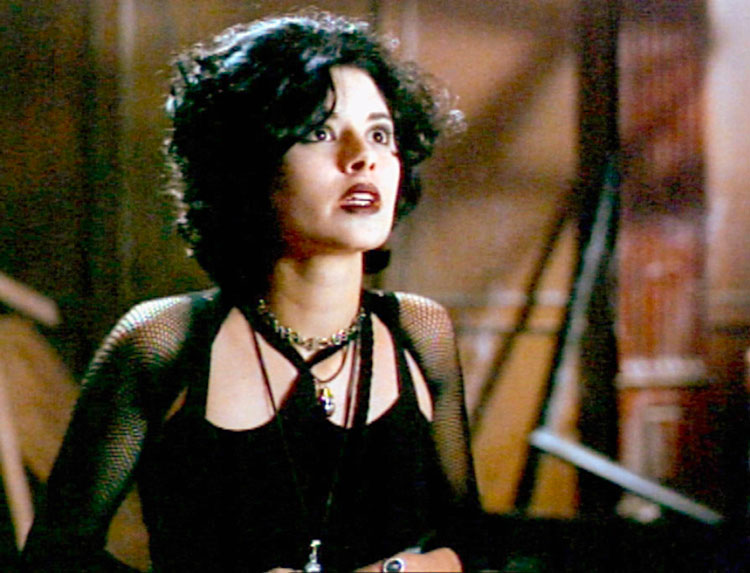
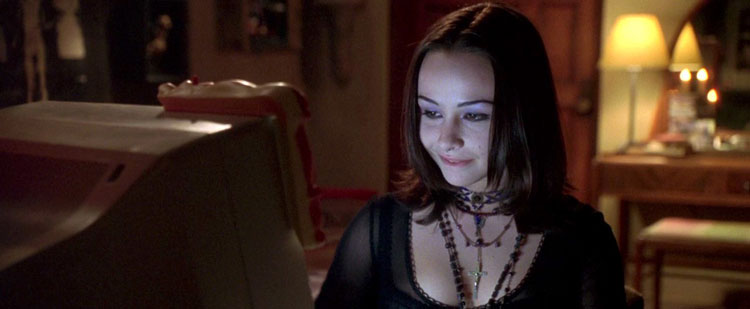
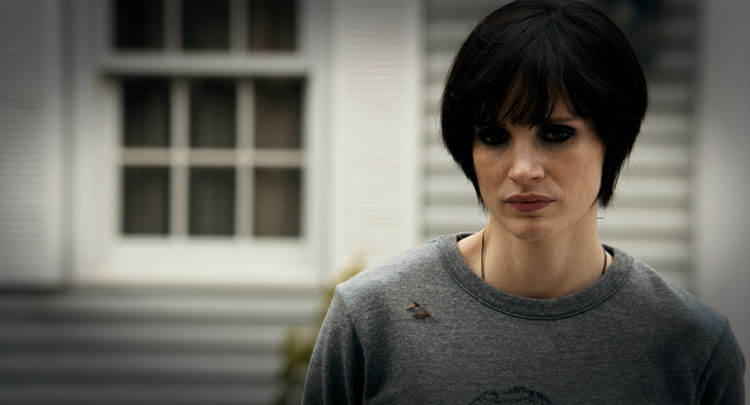
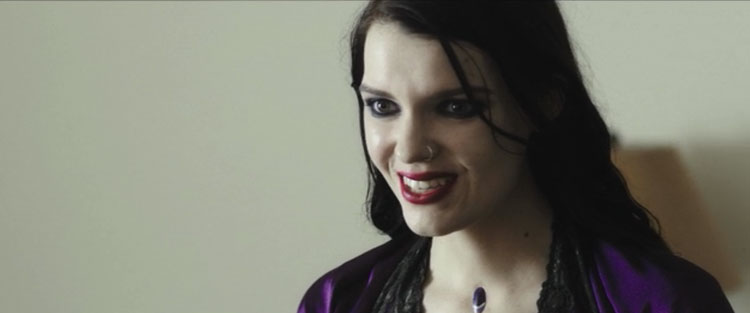
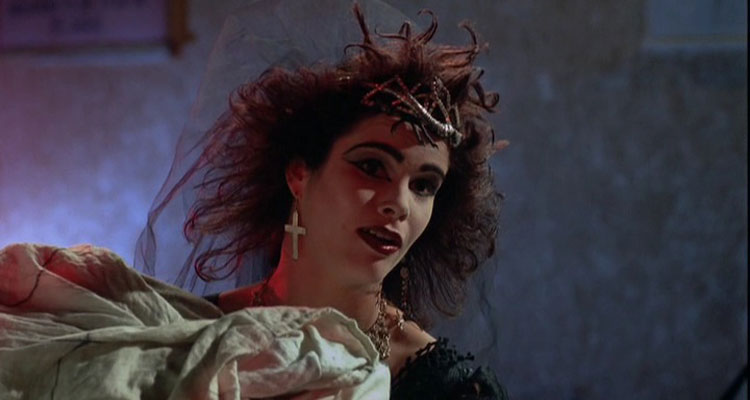
Don't you just love these scrappy, sassy gals? What, with their pale pale skin and their chokers and lace and fishnettery and their dark lips and their kohl-smeared eyes (the blackest eyes...the Devil's eyes!). You follow in their wake, desperately hoping they'll take notice of you, desperately terrified they'll take notice of you. You'll join a coven, sneer at the squares, whatever it takes to win their approval. You'll tell them you stole that bottle of Wet n Wild Black Creme nail polish from Walgreens when really all it took was a sideways glance from the lady restocking the L'Eggs pantyhose for you to scurry to the counter and dig a dollar seven in change from the bottom of your bag. You'll never be one of the goth chicks, but they'll let you think you are long enough for you to get in trouble, and you know the trouble is coming but you don't care. Once in a blood moon they make it to the end of the movie, emerging victorious from the chaos that they likely created, and come morning they're gone. That bottle of Black Creme sits on your bureau so long the color separates; you think about giving it a go, just to be a bit weird on a whim, but the cap won't turn. You put it back on the bureau top and tell yourself you'll throw it away soon, soon.
Anyway, goth chicks in horror movies are pretty great.
by Joshua Alston, Mike D'Angelo, A.A. Dowd, Jesse Hassenger, Danny King, Alex McCown, Benjamin Mercer, Josh Modell, Noel Murray, Nathan Rabin, Kiva Reardon, Katie Rife, Nick Schager, Cameron Scheetz, Ignatiy Vishnevetsky, Nick Wanserski
For those who want ideas of things to watch this Halloween,this is a pretty good list! (I'd stay away from Martyrs and Babadook, though!)
Ask horror-movie buffs to name their favorite decade for the genre, and you’ll likely receive a variety of answers. The ’30s had several of Universal’s classic roster of monsters. The ’40s had Val Lewton. The ’70s had zombies, and giant sharks, and Texas chain saw massacres. (The ’70s is a good choice.) But at the risk of speculating wildly, it seems safe to assume that not too many hypothetical fans would single out the current or previous decade as horror’s finest. Classics take time to solidify, reputations take a minute to build, and hindsight is 20/20. Plus, you know, Uwe Boll.
But looking over the 25 films ranked below, all of which opened in the United States sometime before today and after January 1, 2000, it’s possible to imagine a future when the turn of the new millennium will be thought as a renaissance period ...
SMOKE OUT MY EARS. I am fucking sick of the this city's attitude toward musicians. You know how many homeless buskers I see on the Common? You want to charge them $40? For fucking what? This bullshit is fucking sickening.
City Councilors Sal LaMattina and Bill Linehan want to require street performers to buy $40 annual licenses for the right to perform on Boston streets.
The city council tomorrow considers their request for a hearing on a proposed ordinance that would require street performers to wear their permits - and to show them to inquiring police officers and to stay at least 100 feet away from elementary schools and hospitals - and at least 50 feet away from other buskers.
The measure would require members of groups to buy individual permits - up to a maximum of $160 per group.
The proposed regulation would also let police or the city DPW ban performers who receive five "noncriminal dispositions" in a year.
The city has not regulated street performers since 2006, when it agreed to give up a permitting system to settle a First Amendment suit filed by Community Arts Advocates. The stipulation that settled the case did call for "reasonable time, place and manner restrictions of the expressive rights of street performers and their audiences" in Downtown Crossing.
The hearing request states:
Street performers enhance the character of the city and the City of Boston seeks to encourage street performers while maintaining the reasonable expectations of residents to the enjoyment of peace and quiet in their homes as well as the ability of businesses to conduct their services uninterrupted.
It is in the interest of the City of Boston to reasonably regulate street performers in order to balance the interests of performers with those of the residents and businesses of the city.
LaMattina represents the North End; Linehan represents downtown.
The council's regular Wednesday meeting begins at noon in its fifth-floor chambers in City Hall.
The Australian streaming service, Stan, has started production on a new six-part mini-series based on Greg Mclean's horror franchise Wolf Creek (I think it's definitely a franchise now). In a press release, the service revealed the full cast as well as the plot details. It was also revealed that Greg McLean, who wrote and directed the original films, will also return for this mini-series.
John Jarratt returns as the series baddy along with Lucy Fry (“Vampire Academy”), Deborah Mailman (“Offspring”), Dustin Clare (“Strike Back”), Miranda Tapsell (“Redfern Now”), Richard Cawthorne (“Catching Milat”), Jake Ryan (“Wentworth”), and Jessica Tovey (“Wonderland”).
Jonathan Glazer + Mica Levi is seriously the greatest combination ever
Britain’s Channel 4—best known in the US as the original home of cult items like The IT Crowd, Spaced, and Garth Marenghi’s Darkplace, and at home as a tide pool of reality shows and imported American TV—is in the middle of a large-scale rebranding effort. Part of that involves crafting new ident bumpers to run during the channel’s commercial breaks, and the task has fallen to none other than Jonathan Glazer, director of such crowd-pleasers as Under The Skin, Birth, and the greatest goddamn chocolate bar commercial ever made.
Unsurprisingly, the results are mesmerizingly opaque and more than a little creepy. Scored by Glazer’s Under The Skin collaborator, Mica Levi, the four new bumpers—which began airing on September 29th—re-imagine the pieces of Channel 4’s iconic nine-block logo as everything from crystal shards in a Matthew Barney-esque cave ceremony to synthetic blocks ...
There is an elaborate system of punishment and reward governing the courageous moles tunneling beneath Stonehenge. Or so said Tom Waits in a 1988 interview with journalist Chris Roberts from Rock's Backpages.
The interview, conducted in a London studio shortly after the release of Waits' concert film Big Time, was recently unearthed and expertly animated by Patrick Smith for PBS' Blank on Blank series, which gives lost interviews from famous faces the cartoon treatment.
In addition to the specifics of mole bureaucracy, Waits delves into the finer points of laughing at funeral, how to dress for a career in show business and what it means to be "big time":
I don't know what the big time is, really, except that it's probably some terrible place that you can't get out of. Or that you fall from and break all your bones. Or try to go further and burn up.
If you're going to take advice from just one curmudgeonly, animated, outlandish, gravely voice from the past, it should be 1988 Tom Waits.
A savings account can be a powerful thing, especially for someone struggling to make ends meet. A little extra money on the side—even the tiniest of sums—can be a life-preserving cushion in the case of an unexpected injury, illness, or sudden unemployment. Building a financial base can also be a ticket out of poverty for families long relegated to economic hardship.
In Maine, though, the governor has fired up a debate about whether an individual can have a bit of money in the bank and still need governmental assistance. Starting as early as Nov. 1, Maine is going to limit the financial assets of welfare recipients, effectively discouraging them from saving money.
The state will place a $5,000 cap on the savings and other assets of residents enrolled in the Supplement Nutrition Assistance Program (SNAP). Those whose bank accounts, secondary vehicles and homes, and other assets considered non-essential by the government, exceed the limit will no longer be eligible to participate in the food stamp program. An individual's primary home and vehicle won't count toward the limit.
The thinking, according to the Gov. Paul LePage's office, is simple: People shouldn't be allowed to take money from the government if they don't need to. "Most Mainers would agree that before someone receives taxpayer-funded welfare benefits, they should sell non-essential assets and use their savings,” LePage said in a written statement.
"What people see, what they're concerned about these days, is the abuse of the welfare system," added David Sorensen, who is the director of media relations and policy research for Maine's Department of Health and Human Services. "Well, it's an abuse to enroll in the system when you've got $5,000 in the bank."
But the unintended consequences of asset tests, like the one soon to be implemented in Maine, can be crippling, according to a growing pool of people who oppose such requirements. They argue that impoverished Americans, hoping to break from the cycle of poverty, are instead further bound by it. Many in Maine, struggling to make ends meet, will no longer put money aside, since doing so could jeopardize their ability to eat.
"There's a reason most states have moved away from asset tests," said Ezra Levin, who is the associate director of the Corporation for Enterprise Development, a nonprofit organization that fights poverty. Levin specializes in tax and asset-building policies, and is highly critical of LePage's plan. "The tests are counterproductive. They don't help people become self-sufficient. They actually do just the opposite."
Up until 1996, federal assistance programs were more preoccupied with providing indefinite income support than lifting families out of poverty. That year, President Clinton signed the 'Personal Responsibility and Work Opportunity Reconciliation Act,' which effectively flipped the goal around. But many quirks about the programs, including their reliance on asset tests, weren't reconsidered along with their central purpose.
Today, asset tests have become unpopular. Increasingly, they have been viewed as inhibitors to self-sufficiency—people need to build a safety net, in the form of savings or assets, before they can transition away from government aid.
Only a handful of states, including Michigan, Wyoming, and Virginia, still require that food stamp recipients pass such exams. The rest—36 in all—have chosen to drop them in recent years. Most recently, Pennsylvania shed the practice.
Levin is not alone in his disapproval of the Maine governor's plan. Amy Fried, who teaches political science at the University of Maine, penned an opinion piece for local newspaper Bangor Daily News on Tuesday, detailing how the policy will hurt low income students hoping to save for college. Rachel Black, who is a senior policy analyst for New America, a Washington, D.C.-based think tank, told the Portland Press Herald last month that the legislation is "antithetical to the idea of promoting self-sufficiency."
Perhaps the most poignant criticism comes from an investigation published in 2013 by the Deseret News. The piece chronicles the struggles of Melissa and Jimmy, a couple living on food stamps. They saved money to ween themselves off of the program, but were forced off too soon, thanks to asset limits. They had no choice but to spend some of their savings so they could afford to eat.
"It felt like a no-win situation," Melissa told the Deseret News. "We were being forced to choose between what is good for our family in the long term and what our kids need right now."
Sorensen acknowledges that the forthcoming legislation has met ample disapproval. He says the governor's office expects the criticism to grow louder as the mechanics are implemented. But he believes the governor's plan is more careful than many realize.
"We're not penalizing anyone for having an IRA account or a 401K," he said. "We don't include personal items either, as some have people have suggested. The truth is that we're not actually being very strict about this."
Sorensen points to the fact that the USDA's default limit for bank accounts is $2,250, less than half the cap that will be implemented in Maine, as evidence of the program's leniency (though the default limit is neither binding nor adhered to by many states anymore). He also notes that it only applies to people without dependents (i.e. children).
But that's less generous than it sounds, says Levin. "Just because someone doesn't have officially registered dependents doesn't mean there aren't people who depend on them," he said.
Currently, a household of one can earn no more than $1,276 of gross income per month in order to receive food stamps. That same household can qualify for up to $194 dollars a month, or fewer than $7 dollars day, as part of SNAP, according to the Department of Agriculture. It doesn't take much math to figure out that neither that kind of income nor the daily food allowance affords any kind of lavish lifestyle.
"If someone manages to save money while earning next to nothing, why would we punish them for it?" Levin said. "Why would we discourage sound financial practices?"
The number of welfare recipients has shot up in Maine in recent years, largely thanks to the recession, but there is little evidence to suggest there is rampant abuse of the system. Studies have, in fact, suggested that the opposite is true. Only a tiny fraction of welfare recipients have enough in their bank accounts to fail the sort of asset test soon to be implemented in Maine.
Gov. LePage's policy is part of what Levin calls a long history of complicating the plight of the poor in America. The problem, he says, is that there's so much focus on people who don't deserve support that the people who do are made to suffer.
"Normally it's Republicans who support programs that create incentives for poor people to save," Levin says. "The crux of conservative thinking around welfare is that people shouldn't grow dependent, but this policy does exactly that."
LePage says asset tests are necessary if his state is going to rein in a system he believes has grown too large for its own good. "What the governor is doing is breaking the cycle of generational dependency," Sorensen said. "Our goal here in Maine is to change the culture, and change the expectations of the system."
Janet Smith, a grassroots activist in Maine who helps impoverished communities with financial capability and asset building, sees only irony in that statement. "One of the few ways to break out of generational poverty is to build assets, to save money," she says. "The governor is effectively closing that window."
Poverty involves a complex web of sacrifices that policymakers aren't always privy to, she says. To demonstrate that disconnect, Smith tells the story of a man she once worked with, who couldn't afford to live on a street that was regularly plowed during the winters—which are long in Maine. Each day, he was forced to use a beat-up snowmobile to get from his home to his car, an unconventional but necessary step. From there he drove to work. And at day's end, the process repeated itself, in opposite order.
"I'm not saying SNAP recipients need snowmobiles," Smith says. "What I'm saying is that we're focusing on the wrong things."
Sam Smith’s appropriately cinematic and dramatic James Bond theme has arrived. “Writing’s On The Wall” is now available for both streaming and download, and will serve as the theme to Spectre, the Bond film that drops November 6 in the U.S. Like almost all of his Bond theme predecessors, Smith has used the opportunity to produce a track that’s both epic in scale and fairly ominous, with Smith’s haunting falsetto standing in stark contrast to the music’s lush backing. What results is a track that’s incredibly Bond-sounding—if that’s a thing—and fairly enchanting.
UGH. We'll shut down the government so people stop killing babies. Meanwhile...
Tens of millions of vulnerable Americans would lose their food stamps benefits if Republicans bent on defunding Planned Parenthood force the second government shutdown of the Obama era next week, the United States Department of Agriculture (USDA) warned on Tuesday.
Unlike the 2013 shutdown when cash reserves allowed Supplemental Nutrition Assistance Program (SNAP) benefits to be disbursed as normal, “USDA will not have the funding necessary for SNAP benefits in October and will be forced to stop providing benefits within the first several days of October,” a spokeswoman told the Associated Press. The agency notified state SNAP administrators on Friday that they should not begin the process of doling out October’s food stamps dollars this week as they normally would.
Without a deal, funding for normal government operations will run out at the end of September. In response to the news that a shutdown would cut off food stamps to as many as 45 million people, Senate Agriculture Committee Chairman Pat Roberts (R-KS) issued a statement saying the way to avoid a shutdown is for Democrats to get on board with cutting off federal funding for women’s healthcare. “The best way to ensure SNAP recipients receive needed support is to vote for the [continuing resolution],” Roberts told the Huffington Post. “I’m prepared to do so, and if members are worried about SNAP funding, they should too.”
The funding measure Roberts referenced would zero out federal funds to Planned Parenthood, the national women’s health organization that’s been smeared by pro-life activists as improperly profiting off the sale of aborted fetal tissue. Many of Roberts’ House colleagues have pledged to shut down the government if the group doesn’t have its funding cut off. State lawmakers in some parts of the country have already moved to restrict the group’s ability to provide a wide range of health services to low-income women who depend on Planned Parenthood clinics. In a quarter of all the counties where the group has a presence, the clinics are the only source of affordable contraceptive services for women of little means.
The 2013 government shutdown caused disruptions in a variety of federal services including the job training programs that unemployed people rely on to fulfill the eligibility requirements of SNAP. But the money for food itself was able to continue flowing because the USDA had sufficient cash in reserve to put the appropriate funds on peoples’ cards. That isn’t the case this time, lawmakers briefed by the agency say.
Cutting off SNAP would mean shooting the U.S. economy in the foot. The benefits more than pay for themselves, generating close to two dollars of economic activity for every dollar of benefits doled out by the USDA. Plugging up the flow of money from the federal government to low-income families to the grocery stores where they shop would have ripple effects on businesses and on tax revenue for public coffers.
The timing of the possible shutdown would exacerbate that natural chain of harmful knock-on effects. Most SNAP beneficiaries have already spent down their full monthly benefit by about midway through any given month. That cycle puts a crunch on grocery stores as well, distorting the hours they can sensibly schedule workers to be in the store and shifting how they stock their shelves. The USDA’s early warning about SNAP being cut off may have some political ramifications in the Congressional tussle over government funding, but it also serves as a more practical heads-up to the economic ecosystem surrounding the food stamps program.
Hey, the "Happy Birthday" song is no longer a cash cow for Warner Brothers! I don't know why this makes me so happy, but it does.
At long last, the nonsensical "Happy Birthday" copyright has been struck down, the Los Angeles Times reports. Judge George H. King's opinion can be read here. Stravinsky testifies in Memories and Commentaries that he was unaware of the tune's copyrighted status when he used it in his tribute to Pierre Monteux: "I must have assumed this melody to be in the category of folk music ... or, at least, to be very old and dim in origin." Evidently, he was not pursued for royalties, perhaps because he used only the melody and not the words.
And all it takes is for another music venue to die. Boston Restaurant Talk reports Copperfield's in the Fenway will be shutting down by year's end to make way for a Tilted Kilt, which is sort of like Hooter's, except the servers wear what look like remnants from a tartan-factory explosion, rather than T-shirts and shorts.
The novella scared the crap out of me as a kid, so it will always hold a place in my heart. I love the movie, even though the tacked-on ending is goofy. I'm cautiously optimistic about this, but it kinda seems like it has the potential to be a Walking Dead-like slog where a small group of survivors sit around and bicker for a season until a monster shows up and eats your fave in the finale. ANYWAY we'll see.
Stephen King's "The Mist" is being developed as a TV series by Scream producers Dimension Television and writer Christia Torpe, creator of a Danish show called Rita.
King has given his blessing to this adaptation of “The Mist,” as he did with Frank Darabont's amazing adaptation from 2007.
Form the release:
Using the book and movie as influences, the series will tell an original story about a seemingly innocuous mist that seeps into a small town but contains limitless havoc. From psychological terrors to otherworldly creatures, the mist causes the town residents’ darkest demons to appear forcing them to battle the supernatural event and, more importantly, each other.
“The terror and drama in Stephen King‘s novella are so vast that we [Continued ...]
Homosexuality was long derided as a mental disorder — and being transgender often still is — but a new study suggests that it might be more likely that it’s actually homophobia that is a sign of mental disorder.
Researchers working with the Italian Society of Andrology and Sexual Medicine evaluated the mental health of 560 Italian University students to see what connections could be found between their psychological traits and their propensity for homophobia. Indeed, they found that aspects of psychoticism and immature defense mechanisms were significant predictors for homophobic attitudes.
“We found that psychoticism represented an important risk factor for homophobia, demonstrating that pathologic personality traits are involved in homophobic attitudes,” the study explains. Psychoticism embodies various characteristics, but above all, “severe psychopathologic conditions, such as delusion, isolation, and interpersonal alienation, but also hostility and anger.” Homophobia could be partially linked by “pathologic trait of personality,” meaning that various disorders of relationship and thought could be predictive of homophobia.
Immature defense mechanisms similarly predicted homophobic attitudes. These are coping mechanisms activated during states of distress and anxiety and include behaviors like projection, acting out, isolation, denial, passive aggressiveness, and displacement. “Our data revealed that immature defense mechanisms predict homophobia, highlighting that a negative attitude toward homosexuals is influenced once again by dysfunctional aspects of personality.”
While these aggressive personality traits were linked with homophobia, depression had the opposite effect. “Subjects with depression have a lower risk to develop homophobic behavior,” in part because it seems they were less likely to “perceive external reality as a threat and project their anger.”
The study also found that gender was a significant predictor of homophobia. “Men are more homophobic than women,” and in particular, they demonstrated a tendency toward more negative attitudes and “a major risk of aggressive behavior or acting out toward homosexuals.”
Speaking to Medical Daily, lead researcher Dr. Emmanuele A. Jannini suggested, “After discussing for centuries if homosexuality is to be considered a disease, for the first time we demonstrated that the real disease to be cured is homophobia, associated with potentially severe psychopathologies.”
A fucked up Christmas movie from the Trick 'r Treat guy, starring Adam Scott & Toni Colette, SIGN ME UP
Drawing from European folklore, Krampus looks set to redefine Christmas. The first trailer establishes a typical holiday gathering of family and friends, 12 people locked in a house in the dead of winter. But this year, St. Nick is nowhere to be seen. Instead, the mythological creature Krampus has come to life and seeks to establish a new, nasty, possibly annual event of mayhem. Coming from Michael Dougherty, who gave Halloween stories a fresh spin in Trick 'r Treat, I'm hoping for something delightfully weird. The cast is a good indicator, with Adam Scott, Toni Colette, Allison Tolman (who broke out in TV's Fargo), and David Koechner on board. Take a look at the trailer below and let me know if I'm nuts for my positive anticipation on...
Asked to define their sexuality on a scale ranging from "completely heterosexual" to "completely homosexual," roughly one-third of younger Americans chose something other than completely straight. That's according to a new YouGov survey on sexual identity released last week.
The survey posed the following question: "Please try to place your sexuality on a scale of 0 to 6, where 0 is completely heterosexual and 6 is completely homosexual." This is known as the Kinsey Scale, named after the famed researcher of human sexuality. Thirty-one percent of millennials placed themselves somewhere other than 0 on the scale, with another four percent not sure how they'd define themselves.
By contrast, 86 percent of baby boomers and a similar percentage of seniors called themselves "completely heterosexual." There was a sharp political divide on the question, as well: One-quarter of Democrats identified as something other than completely straight, compared with only nine percent of Republicans.
But digging further, the survey found that there's a lot of variations in what it means to be "straight," too. A separate group of questions asked respondents to group themselves into familiar sexual categories: straight, gay, bisexual, other. The surveyors then asked some follow-up questions of the 89 percent who called themselves "straight" in this classification scheme.
Asked if it was conceivable that they could be attracted to a person of the same sex "if the right person came along at the right time," 16 percent of "straight" Americans said it was "not impossible," 7 percent said "maybe," and 4 percent said they could "definitely" be attracted to somebody of the same sex.
Seventy-four percent of men said they could "absolutely not" be attracted to somebody of the same sex, compared with 59 percent of women. Not even half of millennials — 49 percent — answered "absolutely not" to the same-sex attraction question, compared with 78 percent of seniors. Similarly, Democrats (32 percent) were considerably more likely to be open to same-sex attraction than Republicans (14 percent).
In addition to the attraction question, researchers asked self-identified straights if they could see themselves having a sexual experience with someone of the same sex, or even have a same-sex relationship. Groups gave affirmative responses similar to their responses on the attraction question.
These numbers may partially explain why Americans tend to drastically overestimate the number of gays and lesbians in the population. A May Gallup survey showed that on average Americans thought that roughly one-quarter of the population was gay or lesbian — in reality, only about four percent actively call themselves lesbian, gay, bisexual or transgender.
YouGov's new numbers suggest that these categories matter less now than ever. Only a quarter of seniors in the survey agreed that human sexuality is a continuous scale, not a black-and-white binary. But more than half of millennials said the same.
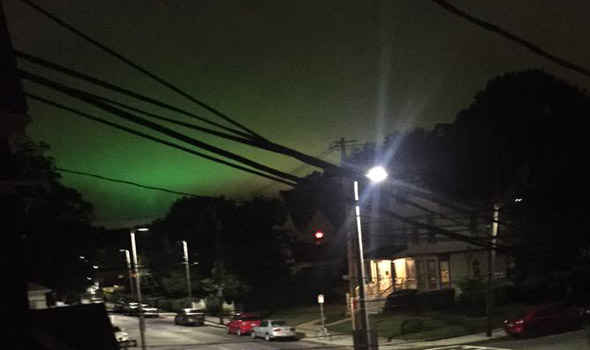
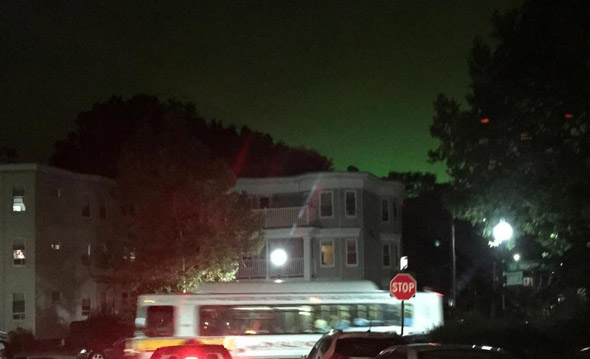
Julia Roberto found the source - seems Boston College has invested in lots of green spotlights for its football stadium:
So turn on zillions of lumens worth of green light on a foggy night and you get as close as some of us will ever be to an aurora. Of course, some might wonder why BC felt compelled to buy all those green lights. Does the answer lie in experiments in their biology department?
I feel super self-conscious about this whenever I'm at a show, and usually end up standing in an awkward, uncomfortable position to make me shorter. I try to be aware of it, but like, no, I also don't think I should have to always stand against the back wall at every concert. I got bad eyes! Plus if I've waited outside the Goldfrapp show for two hours then damn right I'm gonna get right in the front :X
Anyway, sorry shorties.
We get a lot of mail at NPR Music, and alongside the mammoth box someone used to ship us a single bottle of beer is a slew of smart questions about how music fits into our lives. This time around: thoughts on tall folks at concerts.
Stephanie B. writes via Facebook: I was recently at a show of the unseated variety when, to my dismay, a very tall and wide chap with a head boasting the approximate dimensions of a cereal box stationed himself directly in front of me. I spent the whole (crowded) show craning to one side or another so that my view was not entirely obstructed. I wished this gentleman to be banned from concert-going forever, or at least to be forced to view the show from the back row of every venue. My question is: What obligation does the big/tall person have to his or her fellow concertgoers with regard to obstructing the view?
Just look at those tall dudes in the front, waving their arms. Crouch down!
iStockphoto.com
[Before we get started, a quick note: If you have any questions you'd love to see answered in The Good Listener, email Stephen Thompson at goodlistener@npr.org! We're always looking for column ideas.]
Just about every live show hosts its share of nuisances, from the constellation of cell phones held aloft to loud talkers to the guy who supposes no one will notice if he stands around belching out massive vape-clouds. (Note to Vape Guy: We know it's you. Knock it off.) But the mere act of being tall isn't, in and of itself, one born of hostility or a lack of consideration. Cereal-box-headedness is a result of nature, so I'd encourage you to cut him and his gigantic head some slack. #notallgiants, etc.
That said, nothing makes a concertgoer feel put-upon more quickly than standing still and minding your own business as a towering wall erects itself in front of you. And, of course, it's far worse when said wall appears to lack consideration or even awareness — it makes the shorter person feel disregarded, invisible, ignored. To answer your question, I think tall people do indeed have a social obligation to minimize the obstruction they create; to avoid front rows, stand against walls (or, even better, in front of pillars), and otherwise forfeit premium positioning between band and audience. I'm only medium-tall myself, and I try to remain aware of who's behind me, widen my stance, make room for shorter people in front of me, and otherwise avoid scenarios where fans' enjoyment of a concert might be diminished by my presence.
Now, remember that some circumstances create an awkward conundrum for tall folks: A 6'8" person on a date with a 4'8" person is going to have a tricky time balancing companionship with courtesy, perhaps by employing a wall- or pillar-based strategy. And, more to the point, everyone's gotta stand somewhere, you know? Tall people situating themselves near the back of a crowded room are doing their best, and needn't have shade thrown in their direction by those behind them. (They create enough shade on their own! Get it? Shade? I'll show myself out.)
Really, the obligation tall people face is the same obligation faced by everyone else: to do everything they can to be good and courteous neighbors, whether that means situating yourself to accommodate shorter people, pocketing your cell phone, holding conversations until intermission, or saving the vape rig for the walk home. As unwritten rules go, "Do no harm" holds true as much at concerts as it does elsewhere else in life.
Got a music-related question you want answered? Leave it in the comments, drop us an email at goodlistener@npr.org, or tweet @idislikestephen.
Remember when we warned you that members of 'N Sync and The Backstreet Boys were joining forces on a post-apocalyptic zombie flick called Dead 7? Well, it's actually happening and here are the pictures to prove it.
Below you'll find the first images of some of "the boys" in costume on the set of Nick Carter’s directorial debut (you read that right, he wrote and is directing the film).
Synopsis:
Dead 7 tells the story of a ragtag band of gunslingers operating during a post-apocalyptic zombie plague.
Look for (or don't) Dead 7 (via The Asylum and Syfy) in the summer of 2016.
You're welcome.
Head to Quiet Earth to see the stills.
Recommended Release: Z Nation
This is fascinating and upsetting (especially because they fucking had to throw in Dan Savage's useless opinion at the end). Like on the surface, yeah, cheaters suck, but uh.... Anyway 2015 continues to be really scary in weirdly unexpected ways.
On Tuesday, hackers revealed the personal information of millions of users of infidelity site Ashley Madison. The hackers, who go by Impact Team, stole the user database back in July and demanded Ashley Madison, as well as sister site Established Men, be taken offline; failure to comply, they threatened, would result in the release of user data.
In a statement released with that data, which went online with a note that said “Time’s Up!”, Impact Team said Avid Life Media, the Toronto-based company that owns both sites, had “failed”: “We have explained the fraud, deceit and stupidity of ALM, and their members. Now everyone gets to see their data.”
The data dump is 9.7 gigabytes in size and allegedly contains over 35 million email addresses. That’s 33 million accounts — names, addresses, and every single credit card transaction those users made from the past seven years. It could be a fake, but Ashley Madison confirmed a “criminal intrusion” last month, and someusers have claimed to spot their own accounts in the leak.
Ashley Madison’s statement, posted Tuesday to its media site, reports that the company is “actively monitoring and investigating this situation to determine the validity of any information posted online,” citing an ongoing investigation with Canadian law enforcement that has been underway since the July attack. It goes on:
This event is not an act of hacktivism, it is an act of criminality. It is an illegal action against the individual members of AshleyMadison.com, as well as any freethinking people who choose to engage in fully lawful online activities. The criminal, or criminals, involved in this act have appointed themselves as the moral judge, juror, and executioner, seeing fit to impose a personal notion of virtue on all of society. We will not sit idly by and allow these thieves to force their personal ideology on citizens around the world. We are continuing to fully cooperate with law enforcement to seek to hold the guilty parties accountable to the strictest measures of the law.
The personal user information, while released, is still in raw form and lives on the dark web, accessible through the Tor browser only, so we’re not quite at the stage of anybody being able to Google the name of their spouse and be confronted with an Ashley Madison account. But 4chan users — you may remember them from their role in leaking images from the celebrity photo hack — are reportedly in the process of digging through that data and posting what they find online. So that ability for even the techno-novices to search and destroy the privacy of whomever they choose is likely not far away.
How much will this hack cost the individuals it exposes? It’s likely unquantifiable. The personal cost, even in a best-case adultery scenario — a spouse-sanctioned extra-marital affair — is impossible to measure.
After all, these names will live, as all digital paraphernalia does (even the kind that is designed to burn itself after reading), for an internet eternity. This information, once public, could come up in every future job interview, every background check. And that’s just the professional realm; what about kids Googling their parents, or vice versa? And what about public figures; should this information, illegally acquired but readily available, be fair game in media interviews?
The Impact Team notice that accompanied the leak told outed users to direct their outrage at Avid Life Media, “Then move on with your life. Learn your lesson and make amends. Embarrassing now, but you’ll get over it.” Really? Can you “get over” a scarlet letter that the internet tattoos on you?
Now is probably a good time to allow for the fact that the founder of Ashley Madison, Noel Biderman, does not exactly have the most endearing public image on the planet. Ashley Madison’s slogan: “Life is short. Have an affair.” It is very, very easy to sit back and watch karma work its magic on people who thought they could get away with having their wedding cake and eating it too.
There’s an element of glee at this Ashley Madison hack, the idea that the cheaters are getting what they deserve. Bookies are in on the action, taking bets for “who might be nabbed for a naughty night under the sheets.” Like everyone in the world can be sorted “victims” and “people who deserve whatever’s coming to them.”
The Ashley Madison hack is the latest high-profile attack on private user data, a series that will, someday, be grouped together in history books. The Sony hack, the celebrity photo hack, the hack of government computers just last month that exposed 21.5 million people, the hack of Target that cost as many as 110 million people their consumer data. We know it is impossible to traverse the internet without leaving behind a trail of personal information, like Hansel and Gretel’s bread crumbs. Even the experts cannot hide the intimate details of their lives from the internet.
The victims of that first trio of hacks — Sony, celebrity, Ashley Madison — are all entities that, historically, we as a society feel entitled to judge: Hollywood power brokers, women behaving in a sexual way, adulterers. But the fundamental narrative here, for every digital hack, is the same: They relied on a technological infrastructure to protect their personal information, that infrastructure failed them, and it is they — not the infrastructure, but the individuals who were failed — who will have to live with the potentially life-upending fallout.
There are plenty of people who respond to this new normal with a tossed off, “I don’t care, I don’t have anything to hide.” This is absurd on so many levels, the most obvious being, surely you do not want anyone on Earth to know your social security number, credit card information, home address, et. cetera. The digital landscape forces us into a binary: Privacy or exposure. And since our internet overlords have deemed privacy “no longer a social norm,” online citizens don’t have much of a choice at all. The negotiation becomes one between staying off the internet entirely or accepting that anything there is to know about you can be known by anyone. And not just everything, but everything, all at once.
The idea of having “nothing to hide” also relies on the assumption that your definition of “nothing” aligns with society’s ideas about what is and is not acceptable behavior. Which brings us back to Ashley Madison.
Maybe you don’t think there’s anything wrong, for instance, with belonging to Ashley Madison. Because you have your reasons, because your marriage is no one else’s business — because, as Dan Savage argues, “sometimes a discreet affair saves a marriage that should be saved.” — but that doesn’t mean you (a) want everyone with an IP address to know what you’re up to or (b) that you can control how that private choice will be perceived in public, or that you can protect yourself against a judgment with which you very well may not agree.
It’s all very, “First they came for the naked female celebrities, and I didn’t speak up, because I wasn’t a naked female celebrity. Then they came for the cheaters…”
As Kashmir Hill writes at Fusion, “With each big hack… I keep thinking it is going to be the momentous event that makes us rethink privacy in the digital age.”
What is going to be the watershed hack? Or did we already miss it?






 The Australian streaming service, Stan, has started production on a new six-part mini-series based on Greg Mclean's horror franchise Wolf Creek (I think it's definitely a franchise now). In a press release, the service revealed the full cast as well as the plot details. It was also revealed that Greg McLean, who wrote and directed the original films, will also return for this mini-series.
9())


 Stephen King's "The Mist" is being developed as a TV series by Scream producers Dimension Television and writer Christia Torpe, creator of a Danish show called Rita.


 Drawing from European folklore, Krampus looks set to redefine Christmas. The first trailer establishes a typical holiday gathering of family and friends, 12 people locked in a house in the dead of winter. But this year, St. Nick is nowhere to be seen. Instead, the mythological creature Krampus has come to life and seeks to establish a new, nasty, possibly annual event of mayhem. Coming from Michael Dougherty, who gave Halloween stories a fresh spin in Trick 'r Treat, I'm hoping for something delightfully weird. The cast is a good indicator, with Adam Scott, Toni Colette, Allison Tolman (who broke out in TV's Fargo), and David Koechner on board. Take a look at the trailer below and let me know if I'm nuts for my positive anticipation on...



 iStockphoto.com
9())
 Remember when we warned you that members of 'N Sync and The Backstreet Boys were joining forces on a post-apocalyptic zombie flick called Dead 7? Well, it's actually happening and here are the pictures to prove it.


