This post is not about the overt verbal harassment, physical assault, abuse and rape that happens to women at technology events all the…
Shared posts
14 Nov 22:19


Obama’s Iran-Contra Moment
by Andrew Sullivan
Listening closely to the president’s noontime presser, I couldn’t help but be reminded of Ronald Reagan’s famous address to the nation in March 1987. Reagan had been caught in a lie – his declaration that he had never traded arms for hostages in his attempt to reach out to Iran (yes, neocons – he was trying to reach out to Iran!). For months, he languished as investigations revealed that he had indeed done such a thing, and his credibility – long his strong point – was at stake. Here’s the address:
The most famous line – addressing his clear statement to the American people that he “did not trade arms for hostages” – was the following:
My heart and my best intentions still tell me that’s true. But the facts and the evidence tell me it is not.
Today, Obama said something very similar about his statement that “if you like your plan, you can keep it, period.” I love the guy, as I loved Reagan, even though I have not exactly held back when I thought he was screwing things up. And the yawning discrepancy between that unequivocal statement and the “facts and the evidence” of the cancellation of individual market insurance policies these past few weeks was startling, to say the least. Had I misjudged the man? Had he unequivocally peddled a focus-group line that he perfectly well knew was untrue, in order to overcome resistance to healthcare reform? Was he a bullshitter – or something worse, a liar?
As I heard him today, he explained it this way. He says he was focused on the large majority of Americans who get their insurance policies through their employer. And for them, the statement is true, even though, of course, insurance policies are fluid and subject to change. What he ignored was the 5 percent of people in the individual market, whose plans did not meet the standards of the ACA. He said he believed that the grandfather clause would help the majority of those people and that those whose policies could be canceled would see, once the website was up and running, that they now had access to better plans at a similar cost. He also says he believed that the constant churn in the individual market – which cancels or changes policies dramatically and unpredictably all the time – would make cancellations due to the ACA seem like business as usual. He now says he realizes his statement was wrong and irresponsible but that he didn’t fully grasp that at the time, as focused as he was on the 95 percent, and as he believed the grandfather clause would help the rest.
So the key question remains: Is this plausible?
I can’t answer that for you. But it was to me, just as it was plausible to me that Reagan basically did not absorb the full consequences of what he was doing in the Iran-Contra affair, and so lied without really meaning to lie. I think that’s what Obama is trying to say as well: he lied without really meaning to lie. In both cases, the two presidents had to come clean at some point in a very messy situation. Many dismissed the Reagan line as hooey, and a further deception. I didn’t and still don’t. But the important fact is that both Reagan and Obama took ultimate responsibility for the de facto deception. “It’s on me,” the president said today. Reagan, of course, couldn’t do much to redress it, except cooperate in investigations. Obama has offered a temporary administrative fix for a year to retroactively make his promise valid, while retaining the core of the ACA.
The other difference? Reagan had a better grasp of theater. His speech was intimate, direct, and his confession not mediated by a journalist or a press conference. Obama – under acute pressure from the Congress – had to act quickly. But in my view, his mea culpa would have been better served by exactly the kind of personal televised address that Reagan made. Americans are ready to forgive presidents who cop to their mistakes. To break through the chatter, Obama should, in my view, have used the Reagan approach – and still can, of course.
But some other context. Obama’s approval ratings have tumbled because of this credibility gap. They have declined, in Gallup’s measurement, from 45 percent approval to 41 percent in a few weeks. What people forget is that Reagan’s slide was much more dramatic. His approval rating collapsed from 63 percent to 47 percent in one month. That’s the biggest collapse in approval for any president since Gallup began polling. And after that, Reagan came back to the historical average approval rating for all presidents, which is where Obama now is as well. That dotted line is the average for all presidents:

Obama now is where Reagan was – but sooner in his second term. But Obama, unlike Reagan, can still do something tangible to improve his position: he can make the ACA work and he should soon begin to make a much more aggressive, positive case for the reform. He has an administrative task right now. But he must soon also engage in a critical political task: to get off the defensive and onto the offensive; to make the case for the good things the ACA can do, and is doing; to remind people of the radical uncertainty of the past, and to demand that the Republicans offer more than just cynical, partisan spitballs to address the unfair, unjust and grotesquely inefficient mess that the ACA was designed to reform. That was the gist of his presser today. It needs to become a stump-speech. He needs to get out of his White House administrative mode as soon as he gets a grip on the reform, and launch a campaign mode against a return to the wild west of the past in healthcare and to expose the Republicans as cynical, opportunist critics who refuse to offer any alternative and any constructive reform.
But soon he needs to channel the core argument of this presser into a face-to-face talk with Americans. He needs to be as crisp and candid as Reagan was:
“I screwed up. I’m sorry. I didn’t think it was a lie, but it was. And I’ve changed the law to address the false promise. Now let’s make this reform work.”
Yes, he can.
14 Nov 22:19


We’re Gayer And More Homophobic Than We Think
by Andrew Sullivan
That’s what Cass Sunstein concludes after looking at new research:
When people are assured of anonymity, it turns out, a lot more of them will acknowledge that they have had same-sex experiences and that they don’t entirely identify as heterosexual. But it also turns out that when people are assured of anonymity, they will show significantly higher rates of anti-gay sentiment. These results suggest that recent surveys have been understating, at least to some degree, two different things: the current level of same-sex activity and the current level of opposition to gay rights.
Consider one study of 2,500 people involving a standard “best practices” survey and an anonymous “veiled” survey:
In the best practices survey, 11 percent of the population said that they didn’t consider themselves to be heterosexual. In the veiled report, that number jumped to almost 19 percent – an increase of 65 percent.
Did participants believe that discrimination on the basis of sexual orientation should be illegal? In the standard survey, only about 14 percent said no. That number increased to 25 percent in the veiled report.
In best practices, only 16 percent of participants said they would be uncomfortable having a manager at work who was lesbian, gay, bisexual or transgender (LGBT for short). The number jumped to 27 percent in the veiled report.
However, there’s one more reason to think the kids are fine:
The effect of assuring anonymity varied significantly across demographic groups. The veiled survey had no effect on the answers of young people to questions about their sexual orientation, apparently because social norms don’t much discourage young people from revealing the truth.

14 Nov 18:18


Vi Hart: cramming G+ into YouTube has made comments even worse, I'm leaving
by Cory Doctorow
Google has changed the commenting system on YouTube so that you need to be a Google Plus user to post; the new system uses algorithms to promote some comments above others, and has the perverse effect of making trolls more visible. Vi Hart, the incomparable math-vlogger (and a regular favorite around here) describes how Google's decision to double down on its flagging Facebook-alike G+ service by ramming YouTube users into it has made her lose faith in the service: now her regular, good commenters comments hover at the bottom of the pile, while hateful trolls whose messages generate a lot of replies are judged "good" by G+ and promoted to the top.
The promise of G+ in the beginning was that making people use their real names would incentivize them to behave themselves. It's abundantly clear now that there are more than enough people who are willing to be jerks under their real names. In the meantime, people who have good reason not to post under their own names -- vulnerable people, whistleblowers, others -- are now fully on display to those sociopaths who are only too happy to press the attack with or without anonymity.
Now even discussion is curated by Google, rewarding those who talk often, and promoting hateful inflammatory comments because they provoke responses. Taking all the collected data and computational power of Google and using it to optimally encourage people to watch advertisements and argue with each other is, in this author’s opinion, brazenly unethical. We can only hope that everything that’s happened in the last year has been unintentional and that Larry Page will have some sort of epiphany, pull out before the transformation is complete, and start putting the company’s energy into doing good things again, as in a heartwarming vampire holiday tale.
As for me, I’ll continue posting on my own RSS-enabled site and making my videos available as torrents, and maybe I’ll follow in the footsteps of the many other prominent YouTubers who are moving discussion of their videos off YouTube.
Google+ YouTube Integration: Kind of Like Twilight, Except In This Version When +Cullen Drinks BellaTube’s Blood They Both Become Mortal, But +Cullen Is Still An Abusive Creep, Also It Is Still Bad (via Waxy) 
    
|
14 Nov 00:33

Haiti should not be the model for America’s future
by Fred Clark
Right-wing Christianists tend to reject SNAP or unemployment insurance or Obamacare or Social Security, Medicare, Medicaid, WIC, foreign humanitarian aid, public education, the CDC, the NIH, the FDA, TEFAP, LIHEAP, and HUD, saying “let the churches handle it.”
I appreciate that the main purpose of this slogan is internal — it’s something they say to prevent themselves from listening and hearing, not something they’ve thought through or that they really expect to be persuasive to those back in reality.
As a slogan, then, it’s main function is no different from singing “Lalalalala” with your fingers in your ears. It doesn’t really matter what you sing with your fingers in your ears, just as long as you sing it loudly enough that it drowns out the noise of any inconvenient facts, contexts or people. ” So in that sense, “let the churches do it” or “let the private sector handle it” works just as well as “Lalalalala.”
But I wish that we could somehow, for just a moment, invite them to take their own slogan seriously.
What would it mean to do what they’re suggesting? What would it look like if we took government out of the picture, “liberating” health care, education and assistance for the poor from the hands of government and leaving it entirely up to the free market and to churches and private charities?
As it happens, this is not a hypothetical question. We know precisely what this would look like because we have a model of precisely this kind of society: Haiti.
Haiti, one year after the earthquake. Photo by Mario Tama via Bag News Notes. (Click for link.)
Haiti is exactly the kind of society these folks are clamoring for. It’s a picture of just exactly what they want for America’s future.
Haiti is, in a sense, an even purer form of this model. Here in America, after all, the private sector and private charities are still bound by government rules and regulations, so even if America’s government retreated from health, education and welfare, it would still “interfere” by enforcing all those rules about fraud, safety, liability, etc. There’s little such government interference in Haiti, where the private sector and private charities compete in freewheeling freedom. (“The Haitian government doesn’t even know how many NGOs are operating within its borders,” report Kathie Klarreich and Linda Polman. “No one does.”)
American government also interferes by instituting all kinds of infrastructure and by artificially enforcing legal order through its police function. Those forms of government interference are far less intrusive in Haitian society.
Haiti is also a sterling example of what it looks like when the binary notion of undifferentiated, exclusive public/private responsibility is put into practice. It settles our ongoing “debate” over the relationship between government and civil society. Some say government support is essential for the institutions of civil society — schools, businesses, hospitals, clinics, voluntary associations, families, clubs, libraries, etc. — to thrive. Others say the government is only interfering — that it should just get out of the way and “let the churches do it” or “let the private sector and the free market” deal with it. Haiti shows us what the latter idea looks like in practice.
Thousands of NGOs in Haiti have spent millions of dollars trying to build civil society as a colony — unfettered by government, detached from government, apart from and in lieu of government. How’s that going?
When someone says “let the churches handle” all aid to the poor and the hungry, or “get the government out of education,” or “let the free market reign in the health care system,” what that person is really saying is “be more like Haiti.”
I don’t see that as utopia. I do not want to see America remade in the image of Haiti’s Colony of NGOs. I want to see Haiti liberated from this libertarian colonialism, this nightmare of smaller government.
14 Nov 00:32


It’s So Personal, Ctd
by Andrew Sullivan
A reader writes:
You guys ran a series of personal abortion stories at one point. New York Magazine has done something similar with poignant stories coupled with stark photography. Some of the comments are even more poignant than the articles.
Here’s Dana from Colorado:
After Dr. Tiller was killed, I watched the man I didn’t know would become my doctor talking on the news, rubbed my belly, and wondered how anyone could possibly have a late-term abortion. A month later, I understood. During the 29-week ultrasound, the ventricles in the brain were enlarged. There aren’t adjectives to describe how I felt when we learned a few weeks later her neurological system wasn’t formed. It’s not that I didn’t want an imperfect child; even if we had all the interventions, she’d have seizures 70 percent of the time, never suck or breathe.
And Rachel from West Virginia:
I have schizoaffective disorder.
I’m fine on my meds, but I was scared I might hurt a child like my parents hurt me. When I started understanding my family’s history of mental illness, my husband and I said, “Okay, let’s stop the cycle of abuse and not have kids.” When I found out I was pregnant, I just started sobbing. The doctor slipped me some cards for clinics in different states. She couldn’t be pro-choice publicly—we live in a very religious area in West Virginia—but she knew that I couldn’t keep taking my meds during a pregnancy. …
“Wonderful” is a weird word to use, but inside the clinic was wonderful. There was a sensation of finally being able to breathe.
13 Nov 23:32

UK to Get Driverless Taxis. Heathrow Already Has Them. Man, NYC/JFK Sucks

[Image via Podcars]
Milton Keynes sounds like the name of someone your cousin married for his money, but in fact it's a large town in Buckinghamshire, 50 miles northwest of London. With a population of over 200,000, it can be considered urban, and the area is about to become more well-known, perhaps even famous. Because in 2015 it will start deploying driverless taxis, also called PRTs, for Personal Rapid Transit.
In actuality the electricity-operated PRTs are less like taxis and more like surface-going, two-person subway cars that travel directly from point A to point B, without making undesired stops. Routes, it seems, will be fixed, with the town's central train station serving as a hub, and areas of service expected to include the local shopping mall and particular office buildings.
PRTs are not without precedent in the UK; London Heathrow has been running them since 2011 to ferry passengers between terminals, and the things recharge themselves. Check out how they operate, and don't be put off by this video's silly beginning, as the entire thing is pretty informative:
(more...)
13 Nov 22:46


The ACA Is Worse Than This?
by Andrew Sullivan

Last week, Ezra Klein argued that Americans with individual market health insurance are more dissatisfied with their plans because the insurance “doesn’t cover them when it’s most necessary.” Barro counters:
I suspect the higher levels of dissatisfaction come from a different source, one that has different policy implications: Unlike people on Medicare, Medicaid and employer-based insurance, people who buy coverage in the individual market know exactly how much they’re paying for it. A plan that you would only rate “fair” when you have to pay $5,000 for it might merit an “excellent” if its apparent cost to you were only $1,000.
Almost all of us should be dissatisfied with our health plans, because the American health care system involves paying twice as much as people in other rich countries do to achieve similar health outcomes. People who buy in the individual market are especially likely to understand how expensive American health care is.
It’s worth remembering that private healthcare in the US is one of the most inefficient industries on the planet. This is what has long frustrated me by GOP defense of it (with a little trivial tinkering, like tort reform). Since when are Republicans supposed to celebrate grotesque inefficiency, poor outcomes, and fathomless waste?
(Chart from Jonathan Cohn)
Mishri.someshwar likes this
13 Nov 22:11


Jack Kirby's Eternals vs. Ridley Scott's Alien
by Mark Frauenfelder
 Peter Bebergal points out the uncanny similarity between this panel from Jack Kirby's The Eternals #1 (1976) and the fossilized "space jockey" in Ridley Scott's Alien (1979). I have a feeling Kirby was inspired by the Mayan space jockey image that Erich von Däniken touted as proof of alien visitation in his crackpot science classic, Chariots of the Gods (1968)
|
|
13 Nov 18:49
On Richard Cohen's gag reflex
by Rob Beschizza
Yesterday, Washington Post sinecurist Richard Cohen wrote that "conventional" Americans "gag" at interracial marriages. His editor, Fred Hiatt, offered a squirmy apology, but Cohen himself is 'hurt' by accusations of racism. To those who see Cohen's critics as suffering from a 'reading comprehension' problem--Cohen's a Tea Party critic, don't 'cha know!--The Atlantic senior editor Ta-Nehisi Coates has a powerful explanation of why this is not so. Think Progress gathers the columnist's long history of racist, sexist and homophobic commentary into one convenient location. Alex Pareene, meanwhile, assails Cohen's post-facto clarifications: "He thinks he is defending himself, but he is actually directly contradicting the thing he wrote."


|
|
13 Nov 18:48
Why is a corn-based agriculture system problematic? Look at the numbers
by Maggie Koerth-Baker
The average Iowa farm has the potential to feed 14 people per acre, writes Jon Foley at Ensia. But planted with nothing but corn — and with almost all of that corn going to ethanol production and the feeding of animals — the same land can only feed 3 people per acre. Corn isn't a bad plant. But the corn system is a big problem. 


|
|
13 Nov 18:48
The last Jew in Afghanistan
by Maggie Koerth-Baker
Reuters has an absolutely fascinating profile of Zabulon Simintov, the last known Jewish person living in the entire country of Afghanistan. There were several thousand Jewish people in Afghanistan at the turn of the 20th century, but most of them (including Simintov's wife and daughters) eventually moved to Israel. 


|
|
13 Nov 17:40


Wonkblog: Wonkbook: Uh-oh. Obamacare may not be fixed by Dec. 1st
by Ezra Klein, Evan Soltas
Welcome to Wonkbook, Ezra Klein and Evan Soltas's morning policy news primer. To subscribe by e-mail, click here. Send comments, criticism, or ideas to Wonkbook at Gmail dot com. To read more by Ezra and his team, go to Wonkblog.

On October 25th, Jeff Zients, the White House official tasked with managing the HealthCare.gov rescue effort, made a promise. "By the end of November, HealthCare.gov will work smoothly for the vast majority of users," he told reporters.
"The administration is obviously putting its neck on the line here," wrote Jon Chait. "If it fails to hit the deadline, all political hell will break loose."
Axe? Meet neck.
Amy Goldstein, Juliet Eilperin, and Lena Sun report that "software problems with the federal online health insurance marketplace, especially in handling high volumes, are proving so stubborn that the system is unlikely to work fully by the end of the month as the White House has promised, according to an official with knowledge of the project."
Officially, the White House denies that the Web site will still be buggy for most users come December 1st. And if there's been a delay in the timetable, no one told President Obama, who said, as recently as a week ago, that "by the end of this month, we anticipate that [the Web site] is going to be working the way it is supposed to.”
It's likely that no one knows for sure whether the Web site will be repaired by the end of the month. This isn't a linear process. It could be that one line of broken code is identified, fixed, and ends up instantly resolving huge problems. Or it could be that the repairs take much longer than the White House expected. But everything I've heard backs up the pessimists.
Blowing through the December 1st deadline obviously creates huge political problems for the White House. But does it create correspondingly huge policy problems for the law?
The answer depends on two things. First, does the White House's evident inability to repair the Web site in a timely fashion (or even, at this point, an untimely fashion) lead congressional Democrats to panic and support bills -- like a yearlong delay in the individual mandate -- that make it harder for the law to succeed even once its digital infrastructure is fixed?
The second question, of course, is how far off-schedule the White House really is. If HealthCare.gov is working smoothly for the majority of users on December 1st but it only works smoothly for the "vast majority" of users on December 15th, that won't matter much. If the Web site remains more or less unusable into 2014, that's obviously a much bigger problem for the law.
But because there's so little visibility into the process, no one really knows. And the White House, thus far, has not been a particularly credible guide.
Wonkbook's Number of the Day: 275,000. That's the number of people who are being "reinvited" by email to sign up on Healthcare.gov by the Centers for Medicare and Medicaid Services.
Wonkbook's Quotation of the Day: "They were the ones who heard the promise, if you like what you’ve got you can keep it," former president Bill Clinton said of people who are now receiving cancellation letters from insurers. "I personally believe, even if it takes a change in the law, the president should honor the commitment the federal government made to these people and let them keep what they got."
Wonkbook's Graph of the Day: Where your state's name came from.
Wonkbook's Top 5 Stories: (1) reforms, by definition, must change things; (2) Yellen's hearing is tomorrow; (3) who killed immigration reform; (4) nuclear option can't launch; and (5) how a green economy emerges.
1. Top story: What Bill Clinton wants from Obamacare isn't even possible
Obamacare disapproval hits new high as Obama hits new low. "President Obama's approval rating has hit a new low, according to a third pollster. The Quinnipiac University poll shows just 39 percent of Americans now approve of Obama's job performance, compared with 54 percent who disapprove. The drop in Obama's fortunes appears directly tied to the rough rollout of his health care law, which has become significantly more unpopular since the Obamacare exchanges Web site went live on Oct. 1...The poll is the first to show a significant increase in opposition to Obamacare since the exchanges were launched." Aaron Blake in The Washington Post.
@freddoso: If Landrieu's bill became law, the exchanges would be rubble. No one could buy insurance. They'd have to repeal the rest, even over a veto
Healthcare.gov unlikely to be fully functional by deadline. "Software problems with the federal online health insurance marketplace, especially in handling high volumes, are proving so stubborn that the system is unlikely to work fully by the end of the month as the White House has promised, according to an official with knowledge of the project. The insurance exchange is balking when more than 20,000 to 30,000 people attempt to use it at the same time — about half its intended capacity, said the official, who spoke on the condition of anonymity to disclose internal information. And CGI Federal, the main contractor that built the site, has succeeded in repairing only about six of every 10 of the defects it has addressed so far." Amy Goldstein, Juliet Eilperin and Lena H. Sun in The Washington Post.
The making of an Obamacare management failure. "In the days after HealthCare.gov went live, White House chief of staff Denis McDonough quietly dispatched Jeff Zients, a favorite West Wing fixer, to assess the operation and report back. When Zients did, President Barack Obama learned the project was in worse shape than suspected — riddled with coding problems, management issues and communication gaps, according to a senior administration official. It was only then that Obama and his top aides realized the extent of what they didn’t know." Carrie Budoff Borwn in Politico.
Bill Clinton identifies 3 big problems with the Obamacare rollout. "In an interview with the new magazine Ozy published Tuesday, former president Bill Clinton identified three problems with the fall rollout of the Affordable Care Act, "only two of which the administration can fix."...Obama needs to deliver on his promise that the new law would not force Americans to change their insurance plans, Clinton said. "They were the ones who heard the promise, if you like what you’ve got you can keep it," he said, referring to people who are now receiving cancellation letters from insurers. "I personally believe, even if it takes a change in the law, the president should honor the commitment the federal government made to these people and let them keep what they got."" Juliet Eilperin in The Washington Post.
Watch: Ozy's interview here.
Why did Obama promise people could keep their health insurance? Blame Bill Clinton. "The irony of Bill Clinton coming out to advise that Obamacare be changed — somehow — to let everyone keep their current plans is that he's the reason Obama made the disastrous promise in the first place. Veterans of the effort to pass Clinton's health-care plan believed that their core mistake was producing a plan that upended the insurance arrangements of almost every American...In the aftermath of Clinton's failure, health-care reformers swung far to the other side. Rather than building a plan in which almost everyone lost their insurance, they began trying to build plans in which almost no one lost their insurance — and selling them under the promise that literally no one would. That promise, as the Obama administration is now learning, went too far." Ezra Klein in The Washington Post.
@JohnJHarwood: If filing Bill Clinton's call for WH/Congress to change ACA to let ppl keep old health plans, it goes in IRRELEVANT/MEANINGLESS folder
White House tech team missed Healthcare.gov alert. "[N]either the SWAT team nor other measures Mr. Obama introduced to overhaul government technology prevented the HealthCare.gov site from becoming a high-profile government technology failure. White House technology executives failed to recognize the severity of the problems and lacked the authority to fix them, say people involved in the process. One particular missed signal: In March, a federal website flagged the project as high-risk, but that didn't trigger any special intervention." Gautham Nagesh in The Wall Street Journal.
In January, expect rate shock, part 2. "That’s when millions of Americans who select health insurance plans on the new marketplaces may realize that their new insurance plans don’t pay the bills right away. They come with high deductibles and co-pays. In recent weeks, many people have focused on the monthly cost of buying a health insurance plan in the insurance marketplace. What I’m talking about is different: The out-of-pocket costs they may face when they go to use that new policy." Charles Ornstein in ProPublica.
Q-and-A: Wonkblog's Sarah Kliff took questions on Reddit yesterday, and she rocked. Go read her answers to Redditors. The Washington Post.
Watch: Harold Pollack and Aaron Carroll talk about Obamacare. Healthinsurance.org.
Explainer: Everything you need to know about the risk of a health-insurance 'death spiral.' Matthew O'Brien in The Atlantic.
275,000 to be invited to try HealthCare.gov again. "Those people were “stuck” in the open enrollment process on the ObamaCare website after it first launched Oct. 1, the Centers for Medicare and Medicaid Services revealed Tuesday. CMS began sending out the email notices on Tuesday, now that issues related to creating accounts on the site have been resolved. The quarter of a million people who previously failed to create accounts will receive invitations back to the site." Rebecca Shabad in The Hill.
@igorbobic: True story: If Obamacare enrollment numbers are lower than 50K, Obama has to resign
It’s not quite time to freak out over Obamacare’s enrollment number. "Some of this apparent calm could simply be the deliberate optimism of the health care law's advocates. But, putting aside any such bias, we can still make a case that the health law's debut is not a complete disaster. First, we can compare the rollout to that of the Massachusetts health care law, which had 123 enrollees sign up during the first month of coverage. That ended up accounting for 0.3 percent of first-year enrollment. If we tally up 40,000 enrollees in the federal marketplace --and another 49,000 in the state exchanges, as counted by consulting firm Avalere Health --that works out to about 1.2 percent of the 7 million people the Congressional Budget Office has projected will sign up on the exchange in 2014." Sarah Kliff in The Washington Post.
New York reports 50,000 healthcare enrollees. "Nearly 50,000 people in New York have enrolled in ObamaCare since the insurance marketplace launched on Oct. 1, according to the state’s health department. Nearly 200,000 New Yorkers have completed the full application process, the department says. Those are the largest figures reported by any state so far but includes people who have enrolled or applied for expanded Medicaid under ObamaCare." Rebecca Shabad in The Hill.
@Noahpinion: Obamacare is the most complained-about website since Quartz fixed the up-scrolling thing.
...And in California, one million policies could be cancelled. "More than 1 million cancellation notices have been sent to Californians as the Affordable Care Act begins allowing individuals to buy insurance through exchanges, [state Insurance Commissioner Dave] Jones said. The federal law requires policies to offer minimum levels of coverage, forcing companies to terminate many existing plans" The Associated Press.
Republicans' anti-Obamacare playbook leaks. "The memo obtained by CQ Roll Call, titled “House Republican Playbook: Because of Obamacare I Lost My Insurance,” is a manual for House Republicans on how to highlight the recent issues with the health care law and how to best “communicate in your district about the disastrous Obamacare rollout.” Of particular interest to Republicans is the president’s oft-repeated line that “if you like you health insurance, you can keep it.”" Matt Fuller in CQ Roll Call.
Primary source: Read the playbook.
...And here's the RNC's new line of ads about Obamacare. "The Republican National Committee on Tuesday released a new round of comical Web ads attacking President Obama’s healthcare law. The Web ads targeting young people play on the old PC vs. Mac ads — featuring a bumbling, disheveled actor named ObamaCare and his friend. The group released an earlier round of similar ads late last month." Mario Trujillo in The Hill.
House Republicans back new constitutional challenge to ObamaCare. "Forty House Republicans filed a brief last week in support of a legal challenge against ObamaCare that argues the law imposes billions of dollars in new taxes but did not originate in the House, as tax bills must under the Constitution. Rep. Trent Franks (R-Ariz.) spearheaded the effort by filing a "friend of the court" brief on Friday with the U.S. Court of Appeals for the D.C. Circuit. That brief argued that ObamaCare violated the Origination Clause of the Constitution, which holds that all bills for raising revenue "shall originate in the House."" Pete Kasperowicz in The Hill.
Darrell Issa is loving this mess. "[W]ith the troubled rollout of the health care law, the administration has offered Mr. Issa his richest target yet. And he is running with it...The barrage of claims and counterclaims that has emerged — as Mr. Issa and others selectively leak an array of investigation documents, including those that discuss allegations that the health care site might be vulnerable to cyberattacks — has some experts worried that the investigations themselves could cause lasting damage to the health care effort, even once the insurance exchange is fixed." Eric Lipton and Sheryl Gay Stolberg in The New York Times.
Continuing our now-regular section, "meanwhile in health policy": A new strategy to cut heart risk. "The current strategy of reducing a person's heart-attack risk by lowering cholesterol to specific targets is being jettisoned under new clinical guidelines unveiled Tuesday that mark the biggest shift in cardiovascular-disease prevention in nearly three decades. The change could more than double the number of Americans who qualify for treatment with the cholesterol-cutting drugs known as statins." Ron Winslow in The Wall Street Journal.
...Once they start sharing notes with patients, docs don't want to stop. "Not one of the 105 primary care doctors elected to stop providing access to notes after the experimental period ended, and 99 percent of the 13,564 patients wanted to keep with the program of seeing their notes long past when the pilot was over...[P]atients with access to notes written by their doctors in an initiative called OpenNotes felt more in control of their care and reported a better understanding of their medical issues, improved recall of their care plan and were more likely to take their medications as prescribed." Diana Manos in Government Health IT.
COHN: Clinton is wrong about how Obamacare works. "Bill Clinton has been one of Obamacare’s most effective advocates—the "Secretary of Explaining Things," as President Obama famously called him. But in a new interview already getting attention and sure to get more, Clinton didn't explain things very well. He made a statement that's likely to create some misimpressions about the possibilities of health care reform, while giving the administration and its allies yet another political headache. But maybe it's also an opportunity to have a serious conversation about the law's tradeoffs—the one that should have happened a while ago." Jonathan Cohn in The New Republic.
BEUTLER: GOP about to hurt itself again!: New ploy to kill Obamacare will blow up. "Starting on Jan. 1, votes to repeal Obamacare will become votes to take health insurance away from a lot of people. Just how many people will depend on when the votes take place (assuming they take place at all), and when Healthcare.gov is finally up and running. But repeal votes will cease to be abstractions. They’ll be deeply relevant to hundreds of thousands of people." Brian Beutler in Salon.
JENKINS: Obamacare questions nobody asked. "You tout the Affordable Care Act as a triumph over special interests, but the stock prices of the insurance industry have enjoyed a huge run-up. Isn't this because your program, boiled down, just throws more tax dollars at an unreformed health-care system that every analyst, including you, says spends resources inefficiently?" Holman W. Jenkins Jr. in The Wall Street Journal.
Music recommendations interlude: Little River Band, "Help Is On Its Way," 1977.
Top opinion
WARSH: Where does Yellen stand? "The president nominated Janet Yellen, a friend and former colleague, to be the next chairman of the Federal Reserve. I expect she will marshal her strong intellect, meticulous preparation and ample experience to lead the central bank successfully. In the coming weeks and months, financial-market participants will try to gauge whether the change in personnel at the Fed means a change in policy. In particular, they will seek to divine whether Ms. Yellen's views on quantitative easing will lead to still more asset purchases and a longer period of near-zero interest rates." Kevin Warsh in The Wall Street Journal.
NOCERA: Unlearning gun violence. "In 1995, an epidemiologist named Gary Slutkin returned to the United States from Africa where he had spent the previous decade helping Africans stem the spread of diseases...Once back in Chicago, however, friends kept telling him about the epidemic of violence in inner-city neighborhoods. As he began to study the problem he came to the view that gun violence in poor neighborhoods did indeed resemble the epidemics he had treated in Africa. Maps that charted gun violence showed clustering." Joe Nocera in The New York Times.
PORTER: Rethinking the rise in inequality. "[There is] new vigor to a critique, mostly by thinkers on the left of the political spectrum, that challenges the idea that educational disparities are a main driver of economic inequality. “It is absolutely clear that educational wage differentials have not driven wage inequality over the last 15 years,” said Lawrence Mishel, who heads the Economic Policy Institute, a liberal-leaning center for economic policy analysis. “Wage inequality has grown a lot over the last 15 years and the educational wage premium has changed little.”" Eduardo Porter in The New York Times.
WILKINSON: Why Warren won't split Democrats. "I'm having a hard time following the crackup narrative for two reasons: consolidation and fear. The most important challenge facing the Democratic Party isn't figuring out how to rectify rising entitlement spending and recurring budget deficits in the face of Republican opposition to taxes. (That can wait.) It is to sustain the Affordable Care Act. Every other task pales in comparison. If Obamacare fails, the Democratic Party fails, and the philosophy that drives it -- collective action by the national government to advance the common good -- takes a brutal hit." Francis Wilkinson in Bloomberg.
KLEIN: No, gagging over interracial marriage is not the ‘conventional view.’ " I think that Cohen is using "conventional views" to mean "culturally conservative views." But insofar as "conventional" means "based on or in accordance with what is generally done or believed," acceptance of interracial marriage is overwhelmingly conventional. A July poll from Gallup finds that 87 percent of Americans approve -- up from 4 percent in 1959." Ezra Klein in The Washington Post.
SUNSTEIN: How people lie about gay sex and homophobia. "Social theorists, above all Duke University’s Timur Kuran, have drawn attention to the phenomenon of “preference falsification.” The basic idea is that when people speak in public, they aren’t always truthful about their preferences. What they say is different from what they really think...When people are assured of anonymity, it turns out, a lot more of them will acknowledge that they have had same-sex experiences and that they don’t entirely identify as heterosexual. But it also turns out that when people are assured of anonymity, they will show significantly higher rates of anti-gay sentiment." Cass R. Sunstein in Bloomberg.
Money money money interlude: The highest-paid federal employee's name is "Electron." No, we're not making this up. (h/t health wonk Adrianna McIntyre)
2. Yellen's hearing is tomorrow. Wonkbook gets you ready.
A helpful note: Yellen's hearing before the Senate Banking Committee begins at 10 a.m. EST.
To Yellen, the Fed's dual mandate is a real thing. "When senators question Janet Yellen on Thursday during her confirmation hearing to be the next leader of the Federal Reserve, she will likely turn their attention to the central bank's "dual mandate" of maximum employment and stable prices. Ms. Yellen has made this mandate the centerpiece of her argument for the Fed's unconventional easy-money programs aimed at spurring a stronger economic recovery and lowering unemployment, a point her recent comments suggest she will seek to reinforce." Victoria McGrane and Kristina Peterson in The Wall Street Journal.
One of her challenges: Teaching investors that forward guidance counts for something. "Ms. Yellen, the Fed’s vice chairwoman since 2010, has been a key architect of the push to more fully explain to the public the Fed’s actions, its reasoning and its plans. The theory is that the Fed can exert greater influence over investors, by enlisting them to hold down longer-term interest rates at a time when the Fed has cut short-term rates practically as low as they can go, by detailing an itinerary rather than sending occasional postcards. She is widely expected to double down on this strategy, assuming she is confirmed as chairwoman." Binyamin Appelbaum in The New York Times.
It looks like the economy might actually recover in 2014. But will it? "There has been a common thread in mainstream economic forecasting lately. It goes like this: "Yes, 2013 has been rough. But growth should pick up in 2014." The latest example is from the OECD, the organization of leading developed nations that on Tuesday projected improvement just around the corner, as its index of leading indicators rose. The same story shows up in almost any mainstream forecasters' estimates." Neil Irwin in The Washington Post.
Elizabeth Warren challenges Obama to break up 'too-big-to-fail' Wall Street banks. "Senator Elizabeth Warren cemented her growing reputation as a darling of the political left on Tuesday with a wide-ranging speech challenging the Obama administration to take on Wall Street and break up its biggest banks..."We have got to get back to running this country for American families, not for its largest financial institutions," said Warren, who said the issue was an indictment of how little had changed since the 2008 banking crash...In her speech to the Roosevelt Institute and Americans for Financial Reform, Warren did not mention wider political ambitions but focused on proposed legislation launched over the summer with Republican John McCain to break up large banks and build on the 2010 Dodd-Frank reforms." Dan Roberts in The Guardian.
House stalls momentum for trade pacts. "[T]he White House is now facing new hurdles closer to home, with nearly half of the members of the House signing letters or otherwise signaling their opposition to granting so-called fast-track authority that would make any agreement immune to a Senate filibuster and not subject to amendment. No major trade pact has been approved by Congress in recent decades without such authority. Two new House letters with about 170 signatories in total — the latest and strongest iteration of long-simmering opposition to fast-track authority and to the trade deal more broadly — have been disclosed just a week before international negotiators are to meet in Salt Lake City for another round of talks." Annie Lowrey in The New York Times.
Gas prices drop, relieving consumers at the pump. "U.S. gasoline prices have fallen to their lowest level in nearly 33 months amid a boom in domestic oil drilling, leaving consumers with some extra disposable income just in time for the holiday-shopping season. Tuesday's national average price of $3.18 a gallon—26 cents below a year ago—was the lowest since Feb. 22, 2011...Gasoline futures have fallen by 16% since late August." Ann Zimmerman, Neil Shah, and Brett Philbin in The Wall Street Journal.
This is wonderful interlude: The periodic table of storytelling.
3. Who killed immigration reform?
Longread: How immigration reform died. "Rep. Luis Guti rrez’s phone was ringing. It was President Obama’s chief of staff. Guti rrez (D-Ill.) was part of a bipartisan group of lawmakers in the middle of May that was on the cusp of a breakthrough agreement on immigration reform. Denis McDonough told Guti rrez that Obama opposed a key concession that Democratic negotiators had made to House Republicans." Russell Berman in The Hill.
That may be why immigration reformers are changing their approach. "Dwindling prospects for a sweeping congressional immigration bill have some supporters pivoting to a more confrontational approach, while at least one industry is looking for a backup plan if a broader deal fails. New ads from the AFL-CIO and Service Employees International Union take a sharper tone toward Republicans, particularly those vulnerable to Democratic challengers next year, over House inaction on immigration bills." Laura Meckler and Kristina Peterson in The Wall Street Journal.
This is so great interlude: A diary of a sad cat.
4. Nuclear option can't launch
Republican senators block another nominee for D.C. court. "Senate Republicans blocked the nomination of another federal judge Tuesday in a drama that has prevented President Barack Obama from filling court and administration vacancies. Cornelia 'Nina' Pillard, a nominee for the U.S. Court of Appeals for the District of Columbia Circuit, failed to win the 60 votes necessary to clear a procedural hurdle, garnering just 56 votes. Republicans this year have opposed three of four Obama nominees to the appeals court, including Ms. Pillard" Patrick O'Connor in The Wall Street Journal.
But Sen. Reid lacks the votes to go nuclear. "Senate Majority Leader Harry Reid (D-Nev.) is short of the 50 votes he would need to advance President Obama’s stalled judicial nominees via the “nuclear option,” according to sources who have advocated for filibuster reform. Reid is feeling pressure from labor unions and liberal advocacy groups to consider changing Senate rules after Republicans filibustered two of President Obama’s nominees to the D.C. Circuit Court of Appeals, the nation’s second most powerful court." Alexander Bolton in The Hill.
Philosophy interlude: This is your brain on moral problems.
5. How green energy rewires the economy
A recharging industry rises. "The only consensus is that the more opportunities there are to recharge, the better the sales of vehicles that can generally go fewer than 100 miles between plug-ins. Not surprisingly, the chief executive of a company that has bought up thousands of high-voltage devices thinks they are the best way to recharge. The CarCharging Group, based in Miami, has quietly purchased four companies with networks of chargers, 13,430 in all." Matthew L. Wald in The New York Times.
The inequality of climate change. "Typhoon Haiyan has left an estimated 10,000 dead and hundreds of thousands homeless in the Philippines. And it has once again underscored for many development experts a cruel truth about climate change: It will hit the world’s poorest the hardest. “No nation will be immune to the impacts of climate change,” said a major World Bank report on the issue last year. “However, the distribution of impacts is likely to be inherently unequal and tilted against many of the world’s poorest regions, which have the least economic, institutional, scientific and technical capacity to cope and adapt.”" Annie Lowrey in The New York Times.
Changing the global food narrative. "While we often hear that population growth, and the need to feed 9 billion people by 2050, is the driving issue for agriculture in the coming decades, the math doesn’t add up...So where does the “twice as much” idea come from? Mostly from assumptions about changing diets, not population growth alone. In fact, ecologist David Tilman, a friend of mine, and his colleagues have shown that changes in diet will likely be the dominant driver of future food demand." Jonathan Foley in Ensia.
Reading material interlude: The best sentences Wonkblog read today.
Wonkblog Roundup
Can Newscorp survive without Fox? Lydia DePillis.
It’s not just Lululemon and Abercrombie: Stocking plus sizes isn’t popular. Lydia DePillis.
It looks like the economy might actually recover in 2014. But will it? Neil Irwin.
Why did Obama promise people could keep their health insurance? Blame Bill Clinton. Ezra Klein.
What a deadly typhoon in the Philippines can tell us about climate adaptation. Brad Plumer.
The U.S. Airways-American Airlines merger is a go. Here’s why it maybe shouldn’t be. Steven Pearlstein.
It’s not quite time to freak out over Obamacare’s enrollment number. Sarah Kliff.
No, gagging over interracial marriage is not the ‘conventional view.’ Ezra Klein.
Et Cetera
Hawaii is 15th state to legalize gay marriage. Reid Wilson in The Washington Post.
Congress’s approval rating hits new low: 9 percent. Aaron Blake in The Washington Post.
Got tips, additions, or comments? E-mail me.
Wonkbook is produced with help from Michelle Williams.
|
|
12 Nov 23:02


Vindication!
by Josh Marshall
Okay, so while it looked like a troop of militia types showed up to menace a group of gun control supporting moms, a new photo provided by the militia types themselves shows a friendly enough group of crazy people with paramilitary weaponry in a strip mall parking lot for some reason. Which is pretty much normal behavior.
12 Nov 20:57


Wonkblog: No, gagging over interracial marriage is not the ‘conventional view’
by Ezra Klein
In his column Tuesday, Richard Cohen explores the more reactionary edge of Iowa's Republican blogosphere. "Today’s GOP is not racist, as Harry Belafonte alleged about the tea party, but it is deeply troubled," he writes, "about the expansion of government, about immigration, about secularism, about the mainstreaming of what used to be the avant-garde. People with conventional views must repress a gag reflex when considering the mayor-elect of New York — a white man married to a black woman and with two biracial children."
Given the context of the column, I think that Cohen is using "conventional views" to mean "culturally conservative views." But insofar as "conventional" means "based on or in accordance with what is generally done or believed," acceptance of interracial marriage is overwhelmingly conventional. A July poll from Gallup finds that 87 percent of Americans approve -- up from 4 percent in 1959.

The numbers don't vary much by region, or even all that much by age:

And note that the current president of the United States is the biracial child of a white woman married to a black man. America has come a long way.
|
|
Abrayeh likes this
12 Nov 18:12


Washington Post columnist on "repressing gag reflex" at interracial marriage
by Rob Beschizza
 The Washington Post's Richard Cohen has a reputation for saying weird, confusing things about race. For example, one recent column suggested that it took until very recently for him to realize why slavery was bad. For those who wondered if this was a) parochial cluelessness run amok or b) racism tentatively speaking its mind, your answer is now in.

Cohen is vile, the way it's evasively projected onto "conventional" people is vile, and it's damning that the Post would choose to publish this. 
|
|
Matthew.w.stephan likes this
12 Nov 17:51
flavorcountry: thislandislando: diamondstodemons: NASA...
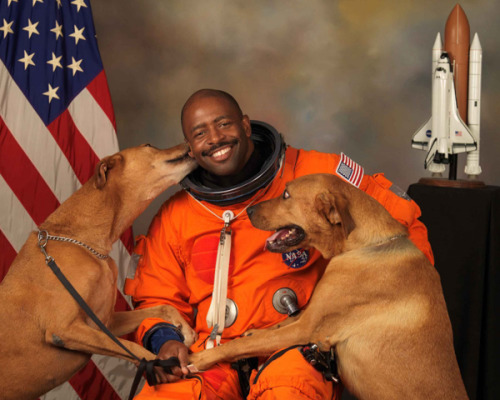
NASA astronaut Leland D Melvin with his dogs Jake and Scout
Fuck. All. Other. Photos.
Whoa. I just did a little research on this guy. Fact: he played in the NFL in the 80s, became an aerospace research engineer immediately thereafter, and then went into fucking space 20 years later. Where’s that sports movie, Hollywood?
I need to get Chompsky into all my author photos stat
12 Nov 17:51
The Confusion of Iran Hawks
by Daniel Larison
Zephyr DearThat Krauthammer quote...
Charles Krauthammer has one of his typical insights on Iran:
The only way Iran would ever give up nukes — ever — is if the regime has a sense that it is threatened. That is the only thing that would stop them.
This is a useful quote, since it sums up very quickly Iran hawks’ complete misunderstanding of why Iran might want to have a nuclear weapon in the first place. The Iranian regime’s chief and overriding interest is in its own preservation. The more that Iranian leaders believe that they are being targeted for regime change and the more threatened they feel, the greater their interest in acquiring nuclear weapons will be. This is why Ryan Crocker recommended that the U.S. formally disavow any intention to overthrow the regime in order to reassure Iran’s leaders that they can compromise on the nuclear issue without jeopardizing their survival.
If Iranian leaders assume that pressure on the nuclear issue is just a means to achieving regime change, they will be less inclined to agree to a deal and will be completely uninterested in honoring it. As I was saying last week, the difficulty is not in convincing Iran’s government that the U.S. is willing to strike at them, but in reassuring them that the U.S. isn’t out to get them no matter they do. Iran hawks seem to have a strange idea that other nations respond to coercion and threats differently than Americans do, which is why they rely so heavily on these things for their preferred policies. It should be obvious that all nations respond negatively to persistent hostility and threats of attack, and the more that the U.S. has emphasized this in its dealings with the Iran the harder it has made resolving the nuclear issue.
12 Nov 00:01

Get Ready for Three Years of This
by Josh Marshall
Sen. Inhofe (R-OK): I hold Christie responsible for Obama's reelection.
This is one of the many reasons why I believe the Christie thing is just not ever going to happen.
11 Nov 23:03



Pink fairy armadillo that fits in your hand
by David Pescovitz
This is a rarely-seen "pink fairy" armadillo that lives in western central Argentina. Chlamyphorus truncatus, the tiniest armadillo species on the planet, spends almost all of its time underground, making it hard for researchers to determine whether it's endangered or just very elusive. Scientists at Mendoza, Argentina's CONICET research center recently had the opportunity to study one in captivity and discovered that the animal doesn't "swim" through sand as previously suspected but rather "digs and then it backs up and compacts the sand with its butt plate.” (Science News)
|
|
Matthew.w.stephan likes this
11 Nov 18:29
4 years ago: Evangelicals and immigration
by Fred Clark
November 11, 2009, here on slacktivist: Evangelicals and immigration
On the one hand, you’ve got your religious evangelicals. They’re born-again Christians who go to church twice every Sunday, read their daily devotions, try not to say “geez” because that’s almost just as bad as swearing, feel guilty that they haven’t done more to witness to you because they genuinely don’t want you to go to Hell, and they just really Lord they just really just pray, Lord, all the time that, Lord, Jesus would just really just guide their daily lives.
We’re talking about Ned Flanders. Nice folks. I like them a lot. I mean, I wouldn’t want them designing the science curriculum for my kids’ school, and I almost never vote for the same people they vote for, but those things aren’t these folks’ main focus. They’re mainly about serving Jesus as their personal Lord and savior and trying to get others to do the same.
On the other hand, you’ve got your political evangelicals. On paper, these people look very similar to the Ned Flanders types. The difference is what they regard as paramount, as most important. For your political evangelicals, who you vote for and what is taught in science class is all that really matters. They may go to the same church as Ned, and they may attend just as often, but when push comes to shove that religious stuff isn’t nearly as important to them as the pride and power of politics.
For a quick and easy illustration of the difference between these two groups, ask either one about immigration policy.
11 Nov 18:13


Get A Rush On: King Arthur’s Gold Now Out
by John Walker

Soldat creators, Transhuman Design, have finally got King Arthur’s Gold out of alpha and onto Steam, heralding the official release. Looking like a cross between Terraria, Ace Of Spades, and a fever dream about some chickens. The launch trailer is a rather pleasant watch.
11 Nov 18:08
How Not to Compare the Xbox One and PS4
by Jamie Madigan
Zephyr DearBoth consoles sound terrible :|
Oh man. Everybody, the Xbox One and Playstation 4 consoles are launching within a matter of days, at least where I live. But like most people who don’t string their hammocks up between two money trees, I can really only afford to buy one this year.
But which one? I know that I myself tried to prepare for this decision by listing the features of each console in two columns: one titled “Reasons to buy a PS4″ and the other “Reasons to buy an Xbone.”1 Maybe you’ve done something similar, even if you’ve got a column on there for “Buy new PC instead, you console babies.”
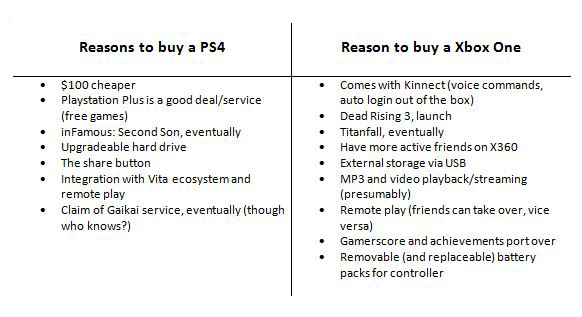
But there are pitfalls to this kind of approach, because it makes us susceptible to certain biases and errors in logic. I thought it would be interesting to highlight a couple to help you make your last minute deliberations.
One: The Justification Effect
Let’s start with a simple thought exercise. Think of five types of chips.2 Any kind of chips –potato chips, corn chips, tortilla chips, whatever. Now, rank order those chips in terms of your preference. Done? Great. NOW, turn to the person on your left and explain your rankings. Tell this probably bewildered person why you put Doritos above Pringles and Ruffles above Fritos or whatever.
Congratulations, you’ve probably just fallen prey to the kind of error in judgement in thinking that may reduce the quality of your your decision about which console to buy.
Researchers Timothy Wilson and Jonathan Schooler were interested in whether or not this kind of introspection and explanation process could affect the quality of decisions people make when choosing among various alternatives.3 They gave subjects five different kinds of jam, asked them to taste each one, and then had them rank them. The researchers then compared those rankings with objective ratings of quality from a Consumer Reports study where professional food tasters ranked the same foodstuffs.
Wilson and Schooler had half their subjects explain their jam rankings in great detail, and those people went on about things like aroma, spreadability, and chunkiness. But compared to a control group that just ranked the jams without being forced to think too much about it, those in the “explain yourself” group made ratings that were further off from the professional tasters at Consumer Reports. They were, the researchers argued, less accurate ratings.

Why? Because the subjects started focusing on factors that didn’t really matter. Smucker’s had more chunks of fruit in it, so it gets a higher rating. Wait, what? Is chunkiness really important for jam? Doesn’t matter; it sounds plausible so it got factored in.
And that’s the key point: when asked to think about and justify our preferences, we kick off a search for possible reasons that are both salient (that is, obvious) and easy to communicate. The fact that some of these reasons might not make sense for us in our particular circumstances can get shoved to the sidelines if it makes it easier to explain our otherwise unexplainable preferences. Thus those of us pondering which console to buy and trying to lengthen that that two-column list may put “Remote play with PS Vita” down in the PS4′s favor even though we don’t own a PS Vita and don’t think we’ll ever buy one. Or maybe you’ll put down “Gamerscore ports over” under the “Reasons to Boy an Xbone” column even though just five minutes before starting the process you’d have said you don’t care at all about gamerscores.
Why? Because those are salient and easy to communicate reasons that make your introspection and justification tasks easier, even though they won’t improve the quality of your decision.4 How do you combat this? Think carefully about everything you put on that list in terms of whether it’s really a benefit to you or not, then strike it if not. For myself, I mitigated this potential error by weighting each console feature as a big, medium, or small reason to buy. This let me keep them on the list, but also let me compare options more realistically.
Two: The Misuse of Missing Information Effect
Most of the decisions we make involve some amount of uncertainty, and backing a player in the console wars is no exception. We don’t always have certain information available, or if it is out there we have to go through some effort to track it down. But be careful, because we tend to pursue and overvalue information that really should be useless to us –just because we went to the trouble of getting it.
Researchers Anthony Bastardi and Eldar Shafir were interested in how decision-makers would value information that they had to wait to get.5 In a series of experiments they had people pretend to be in various roles such as a college admissions officer, a student registering for a class, a bank loan officer, or just an average Joe shopping for some new electronics. Half of the subjects –the ones in the control group– were given a complete set of information to make their decision. For example, in one study they read this:
Imagine that you are on the admissions committee of Princeton University. You are reviewing the file of an applicant who plays varsity soccer, has supportive letters of recommendation, and is editor of the school newspaper. The applicant has a combined SAT score of 1250 and a high school average of B. Do you…
a) accept the applicant?
b) reject the applicant?
The other half of the subjects, though, were in the “uncertainty condition.” They had most of the same info, but with this difference at the end:
You have two conflicting reports of the applicant’s high school average grade. The guidance counselor’s report indicates a B average, while the school office reported an A average. The school has notified you that the records are being checked, and that you will be informed within a few days which of the averages is the correct one. Do you…
a) accept the applicant?
b) reject the applicant?
c) wait for clarification from the applicant’s school before deciding?
Unsurprisingly, most study participants opted to wait for clarification and it turned out that the average grade was a B. This made the candidate’s profile identical to the one that those in the control group, except that subjects in the uncertainty condition had to imagine waiting a few days to get one missing piece.
What happened? Some of those in the uncertainty condition ended up putting more weight on the average grade data point, and the group rejected the candidate about 10% more often as a result. Across several other experiments the researchers found evidence that when information is missing and then made available, we put more emphasis on it while making decisions. You think “Hell, I went through the trouble of getting this information, I’d better use it.” And in doing so, we calibrate wrongly and overvalue it.
So don’t do this with the new consoles. Say that after hearing the news about how the PS4 won’t act as a DLNA server and won’t play or stream music from your network, you wonder if the Xbone will. That information isn’t readily available, so you have to wait for the information to come out a few days later in a FAQ from Microsoft or from reviews in the press. You’re might very well overvalue that feature in your decision.

Or let’s take another example. Imagine that the cross-platform Call of Duty: Ghosts is on your must-buy list, so you’ll be getting it on whatever console you guy. But the reviews on the Xbone version of that game are under embargo for a week longer than those for the PS4.6 When the PS4 reviewer mentions frame rate dips, you wonder if that’s as big a problem on the Xbone but you can’t find out. You have to wait a week for that version’s reviews to come out, and as a result you may overvalue frame rate as a criteria against which to judge that version of the game and the console, relative to other factors.
So be careful when you have to wait for or work for information. Think about each piece individually and either discard it if it’s irrelevant or weight it appropriately. Or, better yet, wait until most of the information is available –such as after launch and after press embargoes– before putting on your thinking cap.
So there you have it: common errors in judgement that may specifically arise because you made bulleted lists comparing the new consoles from Sony and Microsoft. It’s good that we think carefully and base our decisions on hard data, but brains don’t always work how we expect them to.
That said, though, I have to ask: which are you going to buy? Or, if you are from the future, which did you buy? And how did you make that decision?


11 Nov 05:38

commiepinkofag: Homosexuality Legitimate Alternative Deathstyle...
Homosexuality Legitimate Alternative Deathstyle | Dick Hafer
Conservative/Republican nutter and cartoonist, Dick Hafer presents a looney tale of the perils of sodomy, including golden showers, fisting, and the downfall of humanity!
Illustrated ‘FACTS’ of the Homosexual Agenda!
11 Nov 05:27
Class DISMISSED
by Justin Pierce
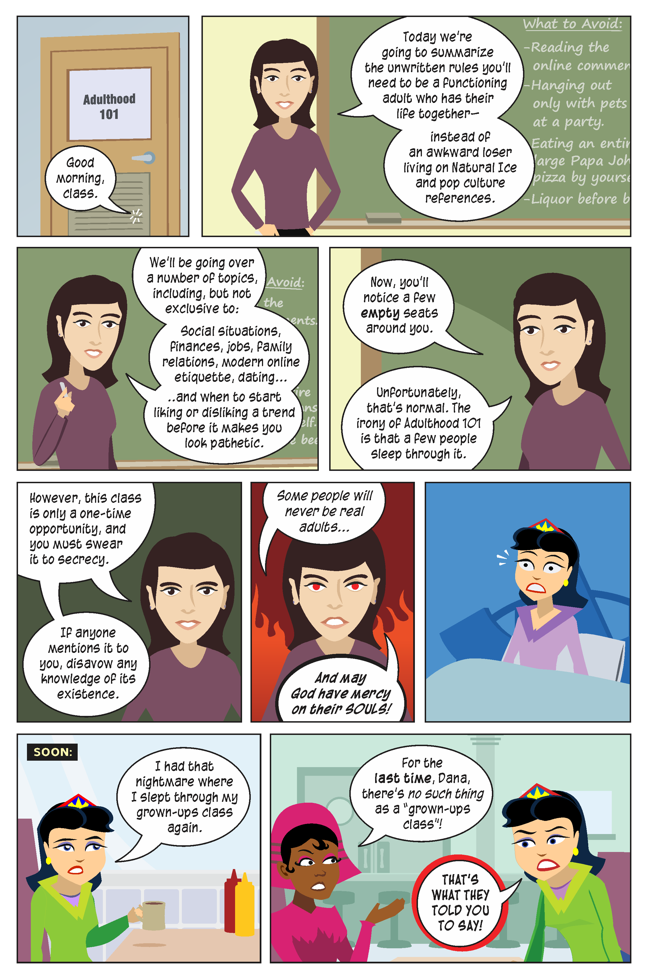
Sometimes making the background spontaneously combust is all part of being an adult.
Roslyn , Snipergirl and 5 others like this
11 Nov 05:25
hot blizzcon news
by kris

08 Nov 22:53
“Script Diary”
by Scott
The last thing I do before I type FADE IN is create a Word file which I call Script Diary.
I come to the diary to start every writing session. I visit it when I get stuck. I return to it when I hit on a story revelation. Day after day, I use my script diary to chronicle the page-writing part of the process.
At the start of a writing session, I note the date and time in the script diary, then get my fingers and brain loosened up by typing up my thoughts about the scene I am about to tackle. I’ll remind myself what type of scene it is, which characters are participating in it, what each of their agendas is, who is playing what story function for that scene, how the scene relates to the overall plot, what the central point of the scene is, and so on. As I’m doing that, normally lines of dialogue pop to mind and I’ll put those down — so in essence I’m pre-drafting the scene, and can take that sketch to my script file and use it to write the actual scene.
I also use the script diary to track my emotional connection to the story. For instance, I may be worried about whether the scene I’m about to write will work or not. I may be concerned that one of the characters doesn’t feel quite right. If I’m stuck, I use the diary as a place to express my fears about the story; in fact, if I’m really stuck, I’ll ‘ask’ the characters, right there in my diary, to talk to me, show me what they want or need.
There’s something else that very cool about a script diary: when you’re done with the project, you’ve got this journal of the entire writing process. You can go back to see and feel the actual moments where you found a breakthrough, where you busted through a story block, where your characters spoke to you.
Script Diary.
Try it. Could be just the thing you need to power up your writing.
“The Quest” has entered Week 17! And so did Go On Your Own Quest, an opportunity for anyone to follow the structure of “The Quest” to dig into screenwriting theory [Core - 8 weeks], figure out your story [Prep - 6 weeks], and write a first draft [Pages - 10 weeks]. It’s a 24-week immersion in the screenwriting process and you can do it here – for free!
Today and every Monday through Friday for 10 weeks, I’ll use this slot to post something inspirational as GOYOQ participants pound out their first drafts.
Why not use the structure of this 24-week workshop to Go On Your Own Quest? That was an idea that gathered energy among many members of the GITS community which I described here.
For more information on Go On Your Own Quest, go here.
08 Nov 22:51

Watch as Tony Swatton, Blacksmith to the Gods, Makes Thor's Hammer

Thor's mighty hammer, Mjölnir, was forged from magic metal in a workshop of the gods, right? Well, not this latest one; it was TIG-welded out of chromoly steel in a workshop in Burbank.

Tony Swatton is a California-based master blacksmith who runs an unusual roster of employees, with a "Warlock of Animal Fibers" working alongside conventional machinists and swordsmiths. Swatton's Sword & Stone operation creates custom armor, weapons and props for Hollywood; if you need an historically accurate medeival broadsword, an anodized 14th-Century suit of armor or a silver Valkyrie's circlet with an agate centerpiece, S&S is your spot.
While they were not the ones contracted to make the version of Thor's hammer used in the forthcoming movie, Swatton & co. took it upon themselves to make a convincing replica as a testament of their skills. (Every week they make a new mythical weapon, and this week Mjölnir's number was up.) Watch as they turn chromoly, aluminum, leather and a rod of allthread into a lead-shot filled 250-pound beast, and use it to smite some of Thor's worst enemies like a lava lamp, a soda can and a watermelon:
(more...)