Dear Lifehacker,
I'm not an insomniac or anything, but sometimes I just can't fall asleep. Is there anything I can do to help the process along?

    
|
Dear Lifehacker,
I'm not an insomniac or anything, but sometimes I just can't fall asleep. Is there anything I can do to help the process along?
|
|

Secret menus are not so secret , but they do let you order some interesting foods, like the Subway Old Cut , the Chipotle Quesarito , and bread-free items at Panera Bread . They can even save you money, as this "Poor man's Big Mac" trick for McDonald's secret menu shows.

|
|

Drugs. It's a difficult subject to navigate with your kids. Stories about drugs are all over the news, kids talk about them with each other, and popular media portray them as everything from liberating to devastating. So, how are you supposed to approach such a large and controversial topic with your children?

|
|

Life is all about change. Some changes you plan for and welcome with open arms. Others find you, whether you're ready or not—with an emphasis on the not. Whether it's the nuisance of a flooded basement or the devastation of a death in the family, it's hard to be 100% prepared—both emotionally and financially—for some of life's unexpected events.

|
|
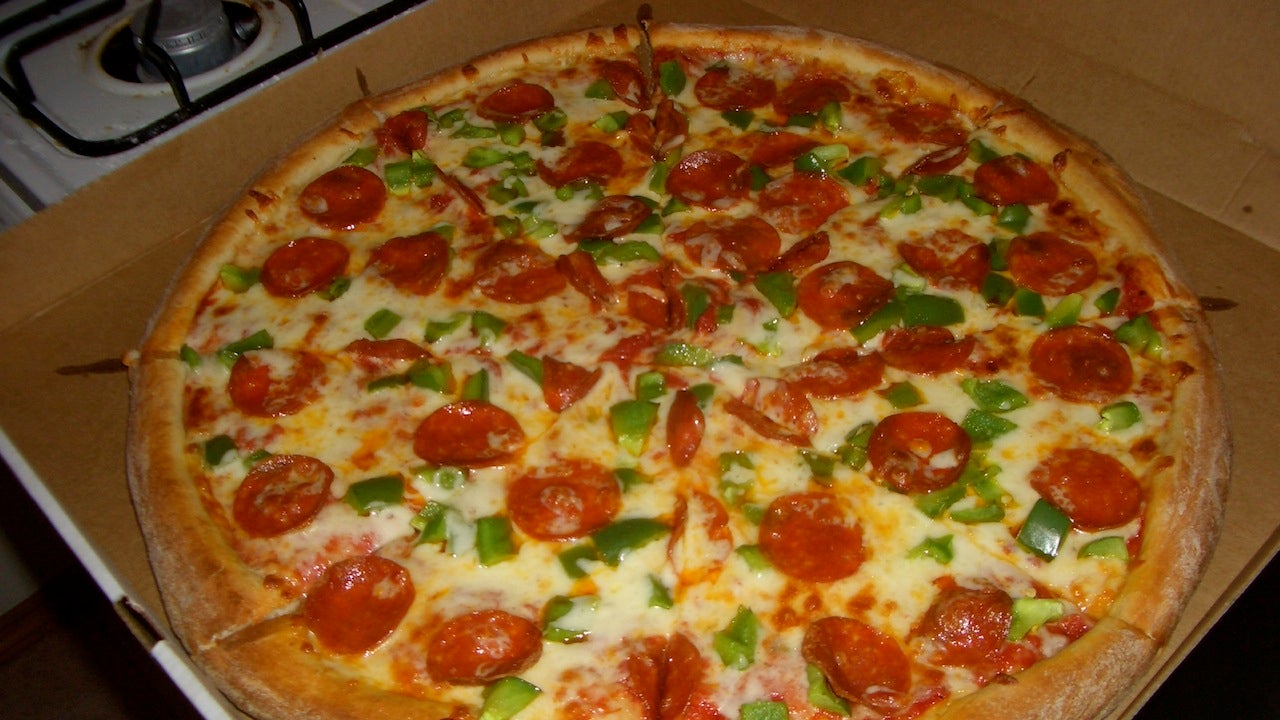
Most of us tend to order a pizza based on the amount we plan to eat—and there's nothing wrong with that—but if you're trying to make your dollar stretch as far as it can, your best bet is to just order the biggest one you can buy. Why? The increase in size to cost always comes out in your favor. Here's why.

|
|
The San Francisco Chronicle reports on foodservice companies that use tablet/smartphone payment systems and are setting things up so that the customer has to confirm that he doesn’t want to leave a tip.
It’s similar to a format that many taxi operators have used since they transitioned to accepting credit cards. The payment screen will suggest multiple tiers of a tip (say 10%, 15%, or 20%), or allow a customer to enter in a custom tip. Some systems also have a “no tip” or “tip in cash” option, but vendors hope that customers will go for the easy choice of just picking one of the suggested percentages.
The power of the tip suggestion was made clear last year when payment service Square tweaked its checkout procedure. Before the change, there was one screen that asked for a tip followed by a signature screen. Then Square tried to consolidate those screens, putting both the tip and signature on the same page. This change also defaulted to no-tip, meaning customers could just skip right past that section of the screen, then sign and be done with their order.
“As soon as that happened, we noticed we weren’t getting any tips,” said the operator of a San Francisco food truck. “It clearly wasn’t working.”
Facing a backlash from vendors, Square quickly re-tweaked its settings so that the vendor had the choice between the one- or two-page process.
Although Square says that some vendors like the expediency offered by the single-screen checkout, the percentage of its vendors’ transactions that include a tip had increased from 38% to nearly 50% in a year, with the average customer leaving a 17% tip.
Another food truck owner uses PayPal Here to accept customers’ credit card payments. He used to run the system from inside the truck, swiping cards for customers and asking if they wanted to leave a tip. But then he put the process in the customers’ hands with an iPad mounted on truck’s exterior. Since then, tips have at least doubled, says the owner.
Vendors tell the Chronicle that the combination of the power of suggestion — putting the idea of the tip in the customer’s mind — and the ease-of-use — taking all the math out of the process — has resulted in more and bigger tips.
“The easier you make the behavior, the more likely it is to occur,” says Nir Eyal, a Stanford Graduate School of Business lecturer.
It also means that take-out orders — which most consumers don’t tip on, or only leave nominal tips for — are now a center of tip revenue for restaurants with these payment systems.
“It’s not something you’d traditionally tip a lot for,” explains an employee at one SF sandwich shop. “It’s crazy. We’re just pushing in these orders, la-di-dah, and people are like, ‘Sure, you deserve a $5 tip on a two-sandwich order.’ “

For the seventh year in a row, Walmart received the lowest score on the ASCI rankings of department and discount retailers. With a score of only 71, Walmart was at least 10 points behind category leaders Nordstrom and Dillard’s.
Since those two retailers are significantly more “high-end” than Walmart, one might conclude that customer satisfaction is tied to the price of goods being sold. But stores like Kohl’s and Dollar General received top marks in the ACSI survey, demonstrating that you need not charge top-dollar to have happy customers. Meanwhile, Macy’s received a below-average score of 75, putting it only slightly above Walmart in the list.
“[This] suggests that discounting is not necessarily associated with weak customer satisfaction, nor is high-end retailing a guarantee of the opposite,” writes ACSI about its retail results.
THE NOT-SO-SUPER SUPERMARKET
Since ACSI began including Walmart in its supermarket rankings in 2004, the store has had the lowest score each year — and 2013 was no different.
That said, Walmart’s score of 72 in the latest survey is tied for its best-ever result, though it was still 14 points below industry leader Publix (which has had the highest score for 20 years running) and six points behind the industry average of 78.
“A decade of low customer satisfaction ratings demonstrates that low price does not does compensate for quality,” writes ACSI in its report, “neither in merchandise nor in service.”
ACSI’s average for smaller grocery stores resulted in a score of 81, beating out every brand name on the list except Publix, including Kroger, Safeway, Winn-Dixie, and even Whole Foods, which failed to beat the industry average for the first time in since 2009.
For both the retail and supermarket categories, “Speed of checkout” was the category in which stores fared the worst, meaning retailers could probably make customers a lot happier just by opening up a few more checkout lines.
On the opposite end of the scale, customers seem to be generally pleased with the convenience of store locations and their hours of operation. That will be an interesting figure to watch over the coming years as retailers face increased competition from online merchants. If stores are closed or hours are cut, will it bother customers or will they not notice because they will be getting those purchases elsewhere?

In a ruling that reverses the case of man who was ticketed in January 2012 for looking at his iPhone 4 to check a map while stuck in traffic, a state appeals court in California says it’s okay for drivers to read maps on their phones while behind the wheel. He’d been challenging a $165 ticket.
That ticket challenge worked its way through the state’s legal system, all the way to the 5th District Court of Appeal, which ruled in the man’s favor on Thursday, reports the Associated Press.
It’s illegal to use phones while driving in California, but that’s not the right the man said he’s fighting for. He doesn’t want people distracted while cruising, texting or checking Facebook. He just wanted the law rewritten for police officers so they can do their jobs.
“We’re distracted all the time,” he said. “If our distractions cause us to drive erratically, we should be arrested for driving erratically.”
In his case, his car was at a stop due to road work. He picked up his phone to see if he could figure out an alternate route out of the mess — something anyone who hates traffic jams would do, and who loves a traffic jam? But a California Highway Patrol officer on a motorcycle saw him on his phone and issued a ticket.
He challenged the case in traffic court, then appealed in a county superior court and lost again. But he moved up to the appellate court with the help of a law firm that offered him free help.
And this time, the appellate judges were on his side: The ruling says that while the law prohibits people from yapping on cellphones without a hands-free device, it could’ve been more clear. It doesn’t apply to people looking at a map, only to those “listening and talking” on cellphones.
You also can’t text while drive in California, which is another law entirely.
From here, it’ll be up to the state attorney general’s office to challenge the ruling or not, and bring it up to the California Supreme Court. That body doesn’t let just any case be heard, so it could be tricky. The AG’s office is reviewing the ruling, a spokesman said.
The man will also recoup his $165 fine, and hopes that legislators will now tweak the spotty law.
“They’re going to have to do something,” he said. “I just hope they take a look at the big picture.”
California court: Drivers can read cellphone maps [Associated Press]


From the 2013 Frontline story on Emeritus and the assisted living industry. You can watch the whole thing here.
According to ProPublica’s A.C. Thompson, Emeritus has been the subject of a joint investigation by the Justice Department and the inspector general for the Department of Health and Human Services for more than a year. Investigators are reportedly looking into allegations of improper Medicaid billing and other issues.
Sources tell Thompson that company lawyers have instructed employees to “not feel compelled to provide answers, documents, or information to any government investigator or agent,” telling them they “may politely decline to answer,” or refer agents to the Emeritus legal department.
That said, the e-mail to employees did ask them to be truthful with any answers they did provide to investigators.
A rep for the company confirmed the existence of the investigation but deemed it a routine civil probe and said Emeritus has been cooperating fully.
Emeritus has previously paid $1.86 million to settle allegations of Medicaid billing fraud in Texas, where authorities claimed the company “routinely submitted false claims to the Texas Medicaid program” for 11 facilities in the state. Emeritus did not admit to any wrongdoing in the settlement.
Medicaid/Medicare also only accounts for about 14% of total revenue for Emeritus, though that still adds up to more than $250 million a year.
Consumer advocates tell ProPublica that, as in the Texas case, it is usually state authorities that investigate Medicaid billing concerns, which raises the question of why federal investigators are involved.
Only last week, Emeritus announced a proposed $2.8 billion merger with Tennessee-based Brookdale Senior Living. If the merger is approved, the combined company would operate some 1,100 facilities in the U.S., housing more than 100,000 seniors. The merged business would also take the Brookdale name, which did not receive the high-profile spanking given to Emeritus in the wake of the Frontline episode.

Without resorting to Google, Wikipedia, or asking your day-trading co-worker, take the quiz below to see if you know what business each of these ten Fortune 500 companies is in.
Take Our Survey
In the debate over whether or not to approve the merger between Comcast and Time Warner Cable, there has been a lot of in-depth discussion of market share, divestments, fiber competition, and all sorts of other things the average cable subscriber doesn’t concern herself with because she has better things to do. What’s at risk of being overlooked is that Comcast is just a horrible company that really doesn’t care about its many millions of customers who have no other choice.
That’s why everyone at the Dept. of Justice and the FCC should put on their headphones (yes… right now; it’s a Friday afternoon so don’t look at me like that) and watch this Funny Or Die PSA that reminds us all — in very NSFW language — that Comcast just doesn’t give a, well… you know.

John needed a lot of blank DVDs to start a project, so he ordered some up from OfficeMax. He regrets that decision now. While his package came addressed to the correct name, the DVDs arrived smashed up after bouncing around loose in the box. John actually longs for the comical overpackaging that Amazon’s Stupid Shipping Gang is known for.
“Oh, how I wish I had used Amazon and been subjected to their incessant need to ship your packages so they arrive undamaged,” he wrote to Consumerist wistfully.

He was able to get the order exchanged, but couldn’t specifically request that OfficeMax maybe throw in some air pillows this time.

All we consumers ask for is a little balance, shippers. Is that too much to ask?


If you need a kid-friendly light (or just a fun portable, sturdy, and functional lantern) for any room in your house, this DIY lantern jar uses a CFL bulb, the parts from a disposable camera, some wire, and a AA battery. Best of all, it's fun to build, and a primer for some basic electronics hacking.

|
|

Your relationship with your doctor is one of the most important you have. Still, visiting the doctor can often be kind of a hassle. There's a lot of information to process, protocols and insurance to deal with, and let's face it: if you're spending time at the doctor's office, you're not always at your best. Here's what a doctor advises to help things go their smoothest.

|
|
 If you're like us, the keys to your life are kept within Gmail's walls. Make sure they're safe by following a few simple guidelines. The web apps experts at Stack Exchange offer a few must-follow tips.

|
|

Over time, dishwashers stop cleaning as well as they used to and need a bit of a cleaning. The Kitchn points to two parts of your dishwasher, the trap and the seals, that might be in need of a little care.

|
|
Imagine you've just finished interviewing with several employers. Out of all of the interviews, you received one job offer. It wasn't exactly what you wanted. Do you accept it?

|
|
Dear Lifehacker,
I know you guys aren't big fans of cable, but I'm about to get my internet hooked up and the company is offering me a TV package. I do like to watch plenty of TV and even some sports. Should I at least consider cable? I'm worried Netflix and Hulu won't be enough.

|
|

We like goals. Having goals to reach towards is healthy and it keeps you on the right track. However, those events or statuses we reach towards are only milestones. As astronaut and space's first intergalactic rock star Chris Hadfield explains, the finish line isn't the most important part of the journey.

|
|
 Commentary has been flying nonstop since Comcast announced its plan to buy Time Warner Cable. If the buyout goes through, there will be enormous repercussions in the TV and broadband industries, both for competitors and for consumers. Before the legal filings and federal approvals and consumer chaos all begin in March, though, it’s worth taking a step back to look at why this merger is being proposed, and why it’s happening now.
Why does Comcast want to buy Time Warner Cable?
Comcast is putting $45 billion into this deal. That’s a lot of money, even for a company as large as Comcast. (In comparison, they spent less than $17 billion to buy out NBCUniversal.) For such a large cost, Comcast must see a large potential gain.
From one perspective, the benefits are crystal clear:

Fully interactive map at Mashable. Red is Comcast; blue is Time Warner Cable.
If the TWC purchase goes through without any major hitches, Comcast will be the dominant pay TV and broadband internet carrier down the entire East Coast from Maine to Florida, including all of the densely populated and lucrative markets in the northeast corridor. Comcast would also pick up Los Angeles and several of the biggest cities in Texas, as the above map from Mashable shows.
Comcast currently boasts roughly 20 million residential subscribers; TWC has approximately another 11 million. For $45 billion, Comcast can effectively increase its reach by a solid 50%, overwhelmingly dominate the competition, and instantly expand into states where they currently have no presence.
Some market analysts feel that financially speaking, the purchase is less than ideal for Comcast. But although the acquisition could cost the company some revenue in the short run, an immediate jump from 20 million to 30 million customers is clearly a situation with enormous potential for Comcast to make more money in the future.
Comcast gains economies of scale through expanding: as the press release points out, buying TWC will “generate significant cost savings and other efficiencies” for Comcast. The sheer size of the combined company would give it particular clout in negotiations with content providers to drop Comcast’s costs for access to networks and programming.
So why does Time Warner Cable want to let Comcast buy them?
At first glance, Time Warner Cable seems to be enjoying the best years in the company’s history. Since being spun off from Time Warner into a separate entity in 2009, the company’s been going nowhere but up. Their stock prices have gone from $26 and change in March 2009 to over $135 on the day before the Comcast merger was announced.
Despite the currently rosy finances, though, the long-term outlook for TWC is much less bright. The company itself is not currently well-poised for future growth, as executives might say. In fact, analysts looking at TWC since 2009 feel that the company has been subject to a series of unfortunate management events. They’re losing subscribers by the bucketful, with no sign of a let-up.
Why are the numbers dropping at TWC? Well for starters, a large percentage of their customers hate them. Passionately.
Time Warner Cable serves New York City and Los Angeles, the two biggest cities and media markets in the country, and it doesn’t do it well in either one. When CEO Rob Marcus stepped into the role on January 1, he stressed the importance of customer service, and that is indeed a place where TWC needs to improve: they rank at or near the bottom of customer satisfaction surveys for their phone, cable TV, and broadband subscribers.
Not only do TWC’s customers hate having to call in for anything, but they also hate paying lots of money for services that feel distinctly behind the times. Time Warner Cable has been slow to roll out offerings that other companies have leapt into, like cloud-based TV services, and Reuters writes that as of December 2013 the company had still not fully converted from analog to digital cable (a move Comcast began in 2008, and has since completed). Their broadband internet connection speeds and reliability have also lagged.
Public fights over content cost them more customers, like the 300,000 who fled or opted not to sign up in the wake of their battle with CBS last fall. High-profile problems like L.A. residents losing signal during the Super Bowl don’t help.
In the face of all that hostility from their customer base, it’s unsurprising that consumers jump to the competition when they have the option. As Reuters reported in December, as soon as Verizon FiOS became a TV and broadband option in New York, consumers started ditching TWC in record numbers. An analyst speaking with Reuters estimated that Time Warner Cable in New York City lost a whopping 45% of their subscribers to Verizon since 2008.
So while Time Warner Cable has been a good bet for investors in the last five years, without intervention from another company, the next five could be a different story altogether. And as for why TWC took Comcast’s deal and not Charter’s earlier offer? $45 billion is a lot more money than $37 billion, and the reported $60 million going to TWC’s management probably doesn’t hurt either.
Time Warner Cable isn’t on the brink of imminent failure, and doesn’t need a buyout to survive. TWC does need a new direction, though. Rob Marcus only took over the CEO position at the company last month; it’s too early to tell if his stated commitments to improving the company’s infrastructure and customer service could come to fruition. If the union with Comcast is approved, we’ll never find out.
Likewise, Comcast is doing just fine on its own, and doesn’t need TWC’s assets in its pocket to continue its growth. Buying out those assets, though, will certainly help the company find its “cost savings and other efficiencies.” Those cost savings could end up cutting consumers’ cable bills… but they’re just as likely to end up as bigger profits to line investors’ and executives’ pockets.

Identity theft is nothing new. Thieves have been using stolen identities to take out loans and run-up lines of credit, but in recent years thieves have taken to using stolen identities to obtain fraudulent tax refunds, the National Consumers League reports in a recent scam alert.
Generally, tax season identity scams work in two ways: scammers use a stolen Social Security number to file the tax return, or they use the stolen identity to obtain a job. In both cases consumers aren’t likely to discover the problem until much later.
Most consumers who fall victim to tax-time fraud find out when the IRS declines to process a legitimate tax return because a fraudulent one has already been filed in their name.
According to the Federal Trade Commission, nearly half of all identity theft complaints stem from tax-related ID theft. Approximately 1.1 million suspicious tax returns were identified in 2011. Those suspicious returns totaled $3.6 billion in possible fraudulent refunds.
Tax season is also a time when scam artists prey on consumers looking to stay in the good graces of the IRS.
In one possible scenario a scammer will call claiming to be with the IRS and threaten fines or lawsuits if a victim doesn’t immediately wire fund to pay back taxes. The NCL says consumers should simply hang up on these callers.
In the case of an actual tax issue, the IRS will send a notice or letter. The agency will not initiate contact with consumers through email, text messages, or social media.
The NCL urges consumers who think they may have been affected by tax ID theft, or who receive notice from the IRS about a potential return problem, should take the following steps:
For more information and answers to tax season questions visit Consumerist’s Tax Dad:
Ask Tax Dad: Disabled Veterans, Commuting Actors, And Depreciating Dishwashers
Ask Tax Dad: Invasion Of The Dependent Relatives
Ask Tax Dad: How Do I E-File? What’s A Deduction, Anyway?
Ask Tax Dad: Micro-Business, Rental Home, Deadbeat Ex, And Government Shutdown
Ask Tax Dad: Send Us Your Questions For Consumerist’s Tax Columnist
Tax time open season for ID thieves and IRS impersonators [National Consumers League]


(NPR)
Sure, most of us could probably calculate the size of different pizzas, but did it ever occur to you to do this kind of math?
This whole project started when NPR’s Quoctrung Bui was out to lunch with an engineer, and learned that a twelve-inch pizza is, in terms of area, more than twice as big as an eight-inch pizza. What? That’s how the Pizza Calculator was born. Using data from food-ordering site GrubHub/Seamless, the dynamic graph calculates the price per square inch of various sizes of pizza based on data from across the country. You’ll have to go to NPR’s site to use it, though.
You shouldn’t always get the bigger pizza, though. A bigger pizza isn’t a better deal if you don’t want that much pizza in the first place, or if you don’t have a refrigerator handy.
74,476 Reasons You Should Always Get The Bigger Pizza [NPR] (Thanks, Amy!)

Prince William County crime report Washington Post Prince William County. These were among incidents reported by Prince William County police. For information, call 703-792-7245. In this picture provided by the Vatican newspaper L'Osservatore Romano, 19-month ... and more » |