
Don't know a ristretto from an espressino? Want to mix up your coffee options to include more uncommon drinks (some with names like the "dead eye" and "long black")? Then here's an infographic worthy of posting in your kitchen .

Don't know a ristretto from an espressino? Want to mix up your coffee options to include more uncommon drinks (some with names like the "dead eye" and "long black")? Then here's an infographic worthy of posting in your kitchen .
If your freezer stopped working for some time while you were on vacation, you'll want to know, since your food might have harmful bacteria. Find out by keeping half a bottle of frozen juice upside down.


Selling a computer, smartphone, or tablet should be as easy as wiping all your personal data off of it and handing it over to the buyer, but sometimes there are little hidden authentication things you might forget about. From iTunes to the Kindle app, here's everything you need to deauthenticate before you sell your device.


Not all the money advice you read necessarily applies to your personality—different types of people need to utilize different strategies. Whether you're too much of a perfectionist, a procrastinator, or a stockpiler of needless paperwork, here are four strategies to deal with your money persona.

Many bank fees are unnecessary—and often outrageous, possibly costing over $700 a year depending on your usage. WalletHub compared 25 of the biggest banks to find the most and least affordable checking accounts.

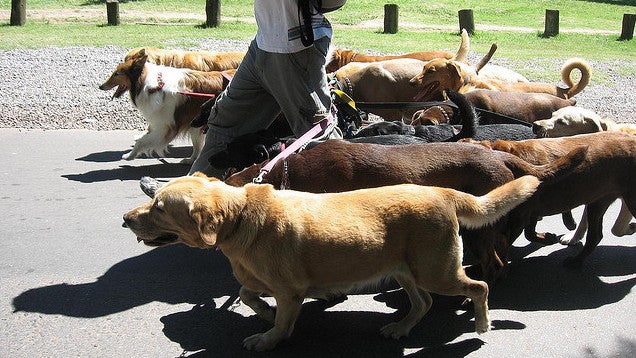
Some people like the gym, but there are plenty of people who don't. If you'd rather avoid the gym membership and scary equipment, get an active side gig to stay fit.

Banks get a pretty bad rap for a lot of well-deserved reasons. Credit Unions are an attractive alternative , but that doesn't mean you're guaranteed an easy life. Here are some of the biggest problems with credit unions, as well as how to fix them.

 “A Petsmart adoption clinic ended in tragedy” is a sentence that I never expected to write. That’s what happened after a terrible altercation at a Petsmart store in Georgia, where a customer stabbed a homeless pit bull, claiming that she attacked his own dog.
Clara the pit bull had spent almost half of her life looking for a new home and in foster care at a boarding kennel. She wasn’t great with other dogs, and the Newnan-Coweta Humane Society, the group caring for her, was looking for a home where she would be the only dog. The problem with pet adoption clinics, especially clinics at pet stores, is that people who are there tend to already have a pet. They started a Facebook page, where she attracted thousands of fans, but no adopters. Clara hadn’t done well at clinics in the past, so it’s not clear why she was there on Sunday.
Who started the altercation at the Petsmart? It isn’t clear, but the Newnan Times-Herald pieced together what happened from eyewitness accounts and reports from the rescue.
Everyone agrees that the man who stabbed Clara had his own small dog, a West Highland Terrier, and may have been visiting the Banfield vet clinic. The terrier and the pit bull may have exchanged barks earlier, and weren’t friendly. Some witnesses say that the stabbing suspect was complaining about the pit bull’s existence even before it encountered his dog, saying things like, “If you bring that f***ing pit bull near me I’m going to stab it.”
The pit bull broke loose from her handler while outside for a bathroom break, and ran back inside the door. Witnesses agree that the dog took hold of the smaller dog’s ear with her mouth, but the question is whether she thought it was a fun game or was out to injure the smaller dog.
While volunteers tried to separate the two dogs, the man got out a pocketknife and stabbed the pit bull multiple times. Fortunately, there was a vet clinic only steps away, but Clara’s injuries were too severe, and she was euthanized.
The rescue volunteer who cared for Clara wrote a tribute to her, describing the dog as a “joyful, loving girl.”
She taught me how to enjoy the moment, appreciate a cool shady spot on a hot summer day and gave unconditional love. She was the world’s happiest homeless dog and she will always live in my heart.
Clicks for Clara [Facebook]
Update: Stabbed Dog Had Broken Away From Handler [Newnan Times-Herald]

How do you simulate disapproval? Study participants took part in a simulated car-shopping experience for a Toyota vehicle. Some participants began their shopping experience with being looked up and down in a disapproving way by an actor posing as a dealership employee.
Did this experience turn potential customers away from the brand? Nope. They ended up even more willing to make a purchase of the imaginary car, offering on average $7,000 more for it than members of the control group did.
While this car-buying example used a mid-range brand, Toyota, the higher-priced and more aspirational the brand that rejects a person, the more willing they were to spend money to prove the perceived slight wrong.
However, researchers also found that consumers weren’t as responsive to rejection from a downmarket brand: it’s when rejection goes against the way we wish to see ourselves that we pull out our credit cards out of spite.
Eyeing that pricey handbag? Prepare to be insulted [NBC]
October 2014 [Journal of Consumer Research]

Okay, Consumerists, did you get your Halloween cards addressed two weeks ago like marketers wanted you to? Good! Put those aside for the next seven weeks or so, because it’s time for your next occasion that requires cards: Thanksgiving.

“But Consumerist, Thanksgiving isn’t for another three months! I haven’t even bought all of my decorations!” you say. It’s not marketers’ problem that you’re behind. Get with the program, imaginary person.
Reader Randy spotted these cards at CVS, and the chain’s card section comes from Hallmark.
These cards do have a real purpose, other than forcing us to spend $2 for a piece of cardstock and some glitter. Sending a card might make you feel more connected to distant loved ones, especially if you’re living far away and want to feel closer to that person.
Nah, it’s probably just the thing where they want us to spend $2.

The St. Louis Post-Dispatch reports that health care systems are ditching their in-house payment plans and teaming up with banks to offer patients interest-free loans to pay their medical bills – even if they have no way of repaying the loan.
Back in March, SSM Health Care, which operates in Missouri, Illinois, Oklahoma and Wisconsin, partnered with Commerce Bank to offer interest-free loans with three- and five-year terms to make it easier for consumers to pay their ever-increasing deductibles.
The program, for which Commerce receives a fee for servicing the loans, doesn’t require a credit check and won’t deny loans even if the patient doesn’t have the ability to pay.
Consumers with a hospital bill of more than $300 are eligible for the program. But only patients with a balance of $7,000 or more for hospital services are eligible for a five-year term loan.
While there is no monthly minimum payment requirement, the first payment must be $300. If the consumer stops paying or defaults SSM would be responsible for collecting the debt.
So far, the program between SSM and Commerce has lent $6.5 million to about 4,000 patients.
“The need for something like this has always existed,” Paul Sahney, vice president of revenue management for SSM tells the Post-Dispatch. “Out-of-pocket costs, which is the deductible, co-pay, will continue to rise very significantly over the next five years.”
In the past, SSM worked out payment plans with consumers, but Sahney says the hospitals were not equipped to effectively manage monthly payments and that turning to banks made more sense.
Additionally, officials say the new partnership won’t just help consumers. Saheny says the hope is that SSM will be able to drive down its own debt through the partnership with Commerce.
Hospitals look for new ways to collect unpaid medical bills [The St. Louis Post-Dispatch]


(See full map at FastCo Design)
FastCoDesign worked up a map with a food industry analytics firm, combing 88,000 menus with 59 million food items to find out which ingredients and kinds of food make each state distinct.
The interactive map shows the top 5 food terms in each state, with each “score” coming from the difference between the percentage of menus that include that item and how often it appears on menus around the U.s.
So for example, while cheddar cheese is beloved in Wisconsin and is unsurprisingly included on 56% of menus in the Cheesehead state, it’s pretty popular elsewhere, showing up on 36% of menus countrywide. That gives it a only a 16% distinctiveness edge, if you want to call it that.
On the other hand, for example, the green chile is king in New Mexico, where it pops up on 52% of menus, but only appears on 2% of menus elsewhere.
It’s a fun interactive, even if just to see how widely adored and loved ranch dressing really is across the country. Mmm, with melted cheddar cheese, maybe…
The Weirdest Eating Patterns Of Each U.S. State [FastCoDesign]

This makes no sense, but packaging is a big part of how our fallible brains perceive a product. Ryan Reis, the executive in charge of Miller’s brands, told Bloomberg Businessweek that people keep telling him that the beer tastes different. It doesn’t: it is exactly the same beer that you bought last year when it was in a blue can. The only difference is that the packaging itself is a throwback to the ’80s.
For many consumers, even those who weren’t of drinking age in the ’80s, the can itself brings back fond memories. (It reminds me of block parties during my childhood, when many of my neighbors worked for Miller until the nearby brewery closed, and got free cases as a job perk.) Consumers in the key beer-buying demographic, men ages 21 to 30 or so, may not remember this can design, but the aesthetic of the early ’80s is inexplicably cool again.
In fact, that’s how the redesign came about in the first place. Miller teamed up with the film “Anchorman 2,” and put Miller Lite in the old-school cans as part of a 10-week promotion. The film eventually went to DVD, but sales of Miller Lite increased, so the company stuck with the older design that worked, eventually building an ad campaign about how theirs was the first light beer on the market.

Now the company will expand the white-label branding to taps in bars and glass bottles of Miller Lite. That initial sales boost is now fading, but the company can now build their marketing around what was supposed to be a brief promo. “You’re welcome,” Ron Burgundy says.
Miller Lite Brings Back Its White Label, Possibly Also Its Mojo [Bloomberg Businessweek]

 Starbucks is once again making headlines for an employee’s reaction to a customer with a service dog. And once again the coffee shop seems to be in the wrong – and apologizing.
According to the Democrat & Chronicle, a 24-year-old New York woman was denied service at a local Starbucks on Sunday because her service dog was not wearing anything identifying him as a service animal.
The woman says she stopped at the coffee shop after taking a long walk with her dog, Zero, but was quickly met with resistance.
A YouTube video of the incident shows the woman asking the Starbucks employee if she was being refused access because of her service dog.
The employee can be heard replying, “No, I’m not. I’m telling you that you cannot come in with your service dog.”
When the woman once again asks if she’s being denied service because of her service dog, the employee says he sees “no proof that that’s a service dog.”
The Americans with Disabilities Act (ADA) does not specify that a service animal wear any kind of identifiable collar or vest.
The woman says her service dog, Zero, helps her cope with memory issues stemming from a traumatic brain injury she suffered two years ago in a crash between a bus and the ambulance she was working on as an emergency responder.
On Monday, Starbucks officials said they were trying to reach out to the woman to apologize for the incident.
“It’s unfortunate that this happened,” the spokeswoman tells the Democrat & Chronicle. “[She] did have an experience that’s absolutely inconsistent with our values and our service animal policy.”
According to the spokeswoman, Starbucks trains employees at hiring to simply ask if an animal is a service animal and to welcome customers who say yes without further questions.
Starbucks to apologize to customer with service dog [Democrat & Chronicle]

Brian Krebs (who else?) is reporting that he had heard from insiders at multiple banks that Home Depot could be the source for a batch of stolen card numbers that recently went on sale on the black market.
A rep for the retailer confirmed that Home Depot is “looking into some unusual activity” and “working with our banking partners and law enforcement to investigate.”
“[W]e are aggressively gathering facts at this point while working to protect customers,” said the rep. “If we confirm that a breach has a occurred, we will make sure customers are notified immediately. Right now, for security reasons it would be inappropriate for us to speculate further but we will provide further information as soon as possible.”
Krebs says the breach may have involved all 2,200 Home Depot stores in the U.S. He also reports that there are indicators that the people behind this breach are the same ones responsible for hacks at other businesses, including Target, Sally Beauty and P.F. Chang’s.
For what it’s worth — and this may be a complete coincidence — I shopped at Home Depot last week and then on Saturday morning someone tried to use the same card to charge $60 to a sketchy online shop selling some Dr. Oz-touted herbal cure. Luckily, my bank flagged this charge as fraudulent and I didn’t have to file a claim. Of course, I am now waiting for a replacement card…

W*USA 9 |
Suspects wanted in Va. mob assault W*USA 9 The Manassas City Police is looking for four suspects, who assaulted two teens on August 30, in the area of Confederate Trail in Manassas. Loading… Post to Facebook. Suspects wanted in Va. mob assault The Manassas City Police is looking for four ... |
There's no shortage of daily deals sites on the web , but the original site that started it all, Woot, was picked up by Amazon in 2010 and hardly resembles its former self. That's why the founder of Woot is starting a new, simpler, one-deal-per-day site launching today: Meh.


How do you balance the necessity of highly secure passwords with the utility of easily recalling them all? The only secure password is one that you can't remember, but there are times when you can't use a password manager and need to rely on your memory.

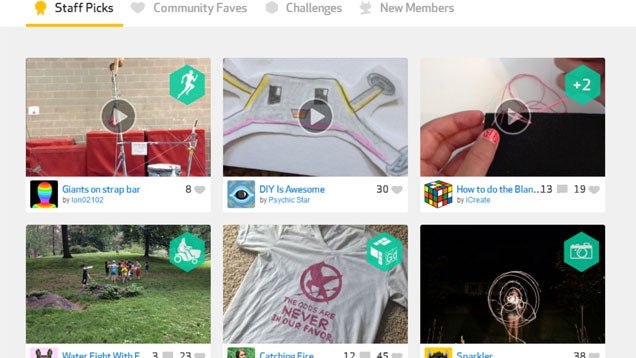
Kids are crafty, natural tinkerers. Now they can join a community of like-minded other youths in sharing their creations, taking on new projects, and acquiring new skills at DIY.org.


(Thames Water)
Getting that clean feeling down below and improperly tossing cooking fats has led to this new behemoth, a fatty, congealed garbage berg that formed under a 262-foot stretch of sewer under a Londom road, officials with Thames Water say.
That meant workers had to get down there and break up the congealed blockage of disgustingness using high powered jets of water, in order to prevent the sewer from overflowing peoples’ toilets.
“We have 108,000km of sewers, and that’s a lot of pipe to keep clear. We spend £12 million a year tackling blockages, most of them formed because people have tipped cooking fats down the drain and wet wipes down the loo,” says Dave Dennis, Thames Water sewer operations manager.
“The sewers serve an important purpose – they are not an abyss for household rubbish. Fat goes down the drain easily enough, but when it hits the cold sewers, it hardens into disgusting ‘fatbergs’ that block pipes.”
Wet wipes love fat, and the two stick together as often as they can, snowballing into fatberg form, grabbing tennis balls and bits of wood, whatever it can subsume, and backing everything up.
It’s not just our neighbors across the pond who aren’t into the whole wet wipes + fat combo — city sewer workers in the United States are also trying to spread the word about what can and can’t go down the drain.
Fatberg strikes Shepherd’s Bush [Thames Water]

The entire hill will be filled in after the museum’s board of directors voted over the weekend, despite a surge in attendance at the Kentucky establishment, reports the Associated Press.
Officials had been toying with the idea of keeping the sinkhole open, complete with a smashed up sports car inside as a sort of memorial for the cars that fell in that day. Attendance shot up 66% and the money was pouring in. Heck there’s even a live webcam of the hole.
But keeping it open would cost quite a pretty penny in order to keep the attraction safe, so the board changed course.
“We really wanted to preserve a portion of the hole so that guests for years to come could see a little bit of what it was like, but after receiving more detailed pricing, the cost outweighs the benefit,” said museum Executive Director Wendell Strode. “It just wasn’t practical to do it.”
Visitors will be able to see the hole through a Plexiglas wall when repairs started in November, but that area will be sealed off otherwise. Guess they’ll have to find another hole to fill the hole left by that hole. Or something.
Corvette Museum to completely fill in sinkhole [Associated Press]

Butter futures are at an all-time high, reports Bloomberg, and consumption is projected to rise 0.8% in 2014. That number marks its second-highest since 1965, with shipments up 42% in the first six months of this year already.
But the problem is, there isn’t enough butter getting made to keep prices low for consumers — not as much milk was produced this year as analysts thought, which means all the makers of dairy products have to fight for what milk there is.
“Ultimately, there’s good demand for cream-based products that’s tightening up the market,” Dave Kurzawski, a Chicago-based senior broker at INTL FCStone Inc., told Bloomberg. “We haven’t had a tremendous amount of milk to deal with either, and the quality of fat in milk has gone down.”
Our appetite for cheese could be to blame as well, explains Cameron Thraen, Ph.D., Ohio State University dairy marketing and policy specialist tells the Scranton Times-Tribune.
“Milk follows money,” he said.
Milk gets made into whichever product is the most expensive, he says, which recently, was cheese. When cheese costed more than $2.20 per pound, cheese makers went nuts and bought up all the milk. Butter competitors then had to shell out more money for what milk they could get, and pass it on to the consumer.
There’s some good news in all this buttery sadness: Once all the stores are stocked up with butter for the holiday season, when Americans will need it slathered over all manner of traditional meals, prices should go back down again.
Butter Prices Reach All-Time High Amid Smaller Stockpiles [Bloomberg]
No margarine for error with butter prices at all-time high [Scranton Times-Tribune]


While having too few ideas is what most people complain about, it can also be difficult to keep on track when you have too many ideas floating around. If you're losing focus, try thinking less about things and just executing an idea.


When you're in a foreign country, dealing with a different currency makes it tricky to quickly tell how much something costs. By remembering the price of everyday staples, you can easily check the relative expense of other items.

We've talked about the positive benefits of playing video games before, and this video from ASAP Science explains why video games—in moderation—can help boost cognitive function.


Ever wished you could go back and talk to your younger self when you were just starting your career? While you can't go back in a time, you can pay it forward. Hindsight is 20/20—and some of the best insights come from past experiences.

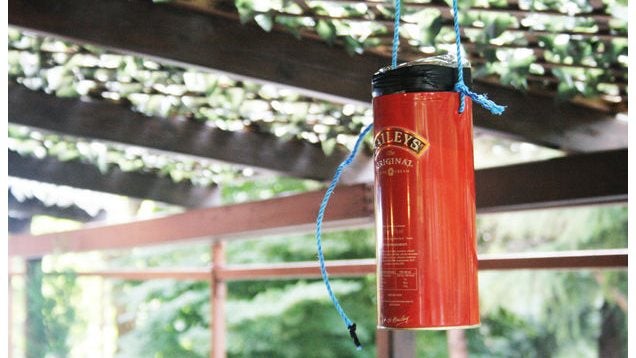
No one wants to be eaten alive by mosquitoes, but there's no need to resort to harsh chemicals to keep them at arm's length. Instructables user Dartorso has a solution in the form of a trap you can easily make from a plastic bottle and a few other tools.


