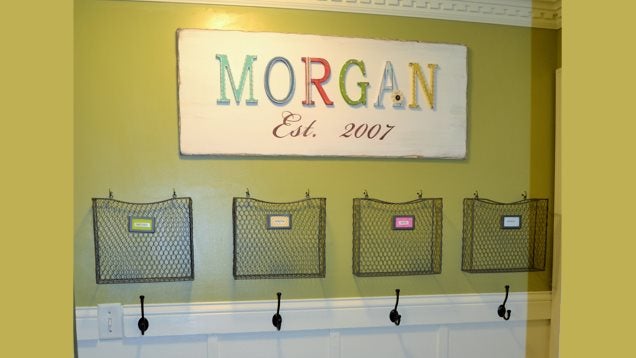
When rushing out of the front door, it's easy to forget the things you need to take with you. Create a family command center in the hall and you'll have a place to stash the things you need to remember.

When rushing out of the front door, it's easy to forget the things you need to take with you. Create a family command center in the hall and you'll have a place to stash the things you need to remember.
When you think of AAA, you probably think of towing. Turns out, a AAA membership also gets you discounts, financial services, and other perks. Here's why you might consider a membership if you don't have one already.

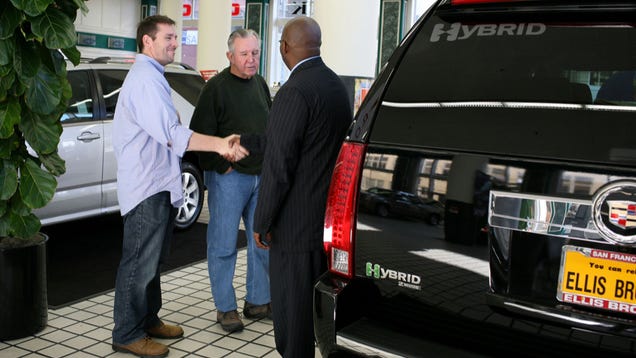
I always recommend that car-shoppers do their negotiations away from the dealership, preferably by email. However, shopping this way isn't always easy and you will eventually have to visit the dealership. If you need one last card to play you can use the CSI (Customer Service Index) or "survey" as extra leverage.


Handing someone your business card does not mean you will be added to their contacts. After all, digital contacts are available on every device, which makes it easy for others to get in touch with you. Here's how to go beyond paper cards and get into someone's real contacts list.


If you've ever been outdoors in the summer, you know bugs are annoying. Commercial repellents have DEET, a chemical some people want to avoid. Try this recipe for inexpensive bug spray.

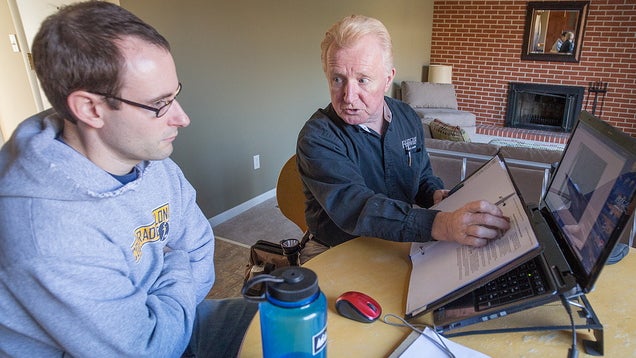
We've discussed some great tips to avoid buyer turn-off when you prep your home for sale. Don't forget the simple things a home inspector might look for.


When learning a new skill, especially later in life, we expect it to come quickly. After all, we're adults, right? Approaching learning with humility may be a better approach.


You don't need a ton of time or even effort to upgrade your outdoor space. In fact, in an hour or less you could complete a project that will further turn your backyard or balcony into an impressive oasis. Here are 10+ such projects to consider.


Just like your kitchen trash can, a garbage disposal starts to stink if you don't clean it regularly. After all, it's got garbage in it. Used coffee grounds along with some other kitchen ingredients makes cleaning a snap.


No matter what method you use to make popcorn, you always seem to end up with a few kernels that didn't pop. Soaking the kernels overnight in water can help them pop the second time around.

Wasps are unfriendly guests pretty much everywhere. Over at Household Hacker, they recommend using a brown grocery sack to trick wasps into staying away.

If you want the tastiest, juiciest, most tender BBQ for your gatherings, YouTube series It's Okay To Be Smart explains how slow cooking with smoke is the best way to go.


Dogs are terrified of fireworks. How can you enjoy the Fourth of July while also being sensitive to your canine companions' needs? We reached out to a group of dog scientists to get some answers. Here's what they had to say.


Buying any car, new or used, is a risk. Machines are not perfect, things break/malfunction and sometimes need repair. That is why I try to steer people into "Certified Pre-Owned" vehicles whenever possible. But what is a CPO car and when is it a good deal?


With July 4th just around the corner, summer's really starting to heat up for a lot of us. If you plan on spending a lot of time outside this weekend, it's good to keep an eye out for heat-related illness. The New York Times describes what to watch out for.

Being persuasive is often a function of being (or at least appearing) trustworthy. The more people trust you, the more likely they are to listen to your words and do what you want. For that purpose, the HAIL method can guide you.


If you're looking for a new job, either because you're unemployed or want something better, time is money, and you don't want to waste it. Idealist Careers suggests the 20-20-60 approach: 20% of your time on job boards, another 20% courting recruiters or hiring managers directly, and 60% networking with people who can help your search.


Body hackery can be surprisingly low-tech, especially if you're trying to hijack any person with a sweet tooth. There are a bunch of foods that chefs are using to hack your tastes buds into thinking their food tastes better, or at least sweeter, than it is.

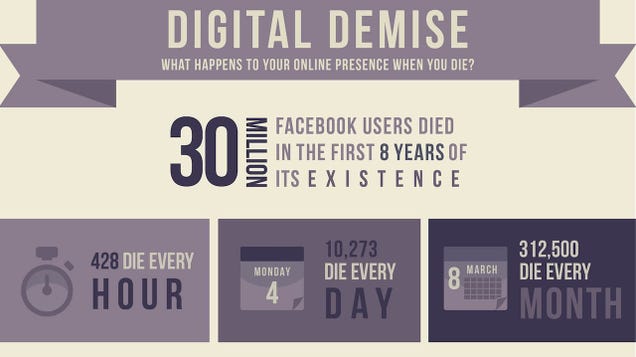
None of us like to think about our death or the death of a loved one, but death is one thing it's important to prepare for. When it comes, you don't want to be stuck trying to get into a loved one's Gmail or Facebook account to shut things down. This graphic shows you what you're in for, and what you—or your loved ones—should have ready.


You've probably seen someone drowning in movies, but chances are, that's not what drowning really looks like . The Art of Manliness has put together a great infographic to help you learn to spot actual victims.

Prince William County community calendar, Aug. 31-Sept. 6, 2014 Washington Post Dale City farmers market, 8 a.m.-1 p.m., Dale City Commuter Lot, (behind Center Plaza Shopping Center), Dale Boulevard. Free. 703-670-7112, Ext. 227, or www.pwcparks.org. Bird Walk, the guided tour will include a variety of habitats. Bring binoculars ... and more » |

A handful of companies, including the Weed Bus Club, have popped up in Washington to provide visitors with a place to smoke while touring Seattle.
The idea for these weed wagons apparently arose out of a response to laws against smoking pot in public. One company, the Weed Bus Club, markets itself as providing an easy way to check out Seattle’s licensed marijuana retailers while also enjoying their products.
“We save you the effort of researching the shops by driving you straight there, and then you can smoke right on the bus!” reads the company’s site.
But the Washington Utilities and Transportation Commission is making its stance very clear on this issue, notifying the charter and excursion bus operators in the state that “the consumption or use of marijuana products on their vehicles by passengers or drivers is prohibited by state law.”
The commission also reminded these charter operators that “failure to comply with the law will result in the cancellation of their state-issued operating permit.”


(БРАТСТВО)
We’ve heard stories in the past of stolen cars turning up years after they go missing, and joyfully reunited with the owners who thought they had lost their beloved rides forever. But what happens if your insurance company has already paid you for that stolen car — is there any way to keep it if you find it again?
That’s the situation facing a Consumerist reader I’ll call Jeff, which isn’t his real name. A classic car handed down to him by his father, who died while Jeff was in high school, was stolen in Atlanta in January 2012.
He writes that it he reported it stolen, but held onto the title as long as his insurance company, State Farm, would let him, before it revoked the lost car claim offer.
His complaint doesn’t lie with that process — he says State Farm was great, and he asked them to notify him if it was ever recovered, so he could try to buy it at auction.
Cut to a few weeks ago, when Jeff says he became convinced he’d spotted his car on the Internet while looking for a good deal on one like he used to have. The car in question was listed as a different year than his, but had many distinguishing features that he says belongs to the model year he used to own.
While he’s convinced it’s his, and says he’s ready to provide evidence from his mechanic, he hasn’t seen the car in person, so he can’t be sure.
And because he’s a good consumer, he’s not about to try and buy the vehicle himself, as he would then be responsible for buying stolen property if it turns out that the car is his.
He’s now stuck waiting while the Atlanta police department and its Miami counterparts look into his suspicions — a process that he initiated in early July, with not much to show for it.
But, he says, State Farm tells him it’s not in the business of vehicle recovery, and the best they could do if the car is discovered to be his stolen car, would be possibly to alert him as to which salvage yard his car would go to.
We reached out to State Farm, which confirmed that in a situation like the one above — though we didn’t ask for comment on this specific scenario — sending the vehicle to salvage is the likely outcome:
If State Farm had issued payment for the value of the vehicle in accordance with the policy and state regulations prior to being recovered, State Farm would retain possession of the vehicle and process the vehicle as “salvage” in accordance with the applicable insurance laws and regulations.
As for those “applicable insurance laws and regulations,” according to a representative of Georgia’s Office of Insurance and Safety Fire Commissioner when contacted by Consumerist, under state code, yes, it must be sold for salvage.
We also reached out to Florida officials, thought it would seem that the laws of the state where the insurance policy was purchased, Georgia, would apply in this situation.
“Even still, I feel like State Farm could request that the salvage yard work with me; I don’t want it back for free but I’m also not a car dealer and it would be heartbreaking to see it go up for auction and me not be able to afford it,” Jeff explains.
So is there any hope for Jeff that State Farm might intercede for him? That remains to be seen.
For now, Jeff is still waiting to hear back from both the local police in Miami and in Georgia, where he lives. Let’s all cross our fingers and hope that if it does turn out to be his car, that State Farm finds a way to reunite him with it. You know, out of the goodness of their hearts.

Purchasing tickets to see your favorite musician in concert or to cheer on the hometown team should be a relatively pain-free, if not exciting, experience. But with the onset of new technology and less-than-truthful resellers, a shadow of deception can cloud consumers’ ticket buying decisions.
The National Consumers League issued a Live Event Ticket Buying Guide to make sure fans are aware of the latest anti-consumer practices getting in the way of rocking-out in the arena.
Like many other aspects of consumers’ lives, event ticketing is nudging buyers to go paperless. So instead of a printed ticket, the customer shows their photo ID and the credit card used to make the purchase.
While this means not having to worry about running out of toner or leaving your tickets at home, it sometimes means that the tickets are non-transferrable, or transferrable after paying a fee. So if something comes up and you can’t attend, you can’t easily sell or give away your tickets.
Additionally, if you’re one of the U.S. growing number of unbanked consumers who don’t have a credit card, you’re pretty much out of luck when it comes to these types of events, which include recent concerts by Arcade Fire, Eric Church and Garth Brooks.
Occasionally, tickets for events sell out more quickly than consumers can snap them up.
In this case, concert and event-goers often turn to resale sites such as Ticketmaster’s TicketExchange or StubHub. While these sites may provide a viable option for ticket-less consumers, some may be setting arbitrary minimum prices for tickets which could end up costing consumers significantly more without even realizing it.
For example, NCL reports that Buffalo Bills TicketExchange sets its price floor at face value. A pre-season game against the Detroit Lions a ticket in Section 139 with a face value of $58 can only be listed on TicketExchange for $58. However, other resale sites were found to be selling tickets for as low as $3.
Another concern is that some resale sites are trying to trick consumers into believing they are purchasing tickets for face value through the box office or official primary ticket seller when that is simply not the case.
Such shady sites are known to use website ads, venue pictures and descriptions such as “official” tickets to persuade consumers to purchase tickets.
While federal and state regulators have cracked down of these deceptive practices, they are still used and the NCL warns consumers to double-check the sites’ validity.
To ensure you’re getting the best bang for your buck when it comes to upcoming concerts and sporting events NCL provides several tips for consumers:
Practical guide to buying live event and sports tickets [National Consumers League]


(jayRaz)
The Wall Street Journal’s Digits blog reports that Google is planning to officially allow pre-teens to have their own Gmail and YouTube accounts.
Of course, the only thing stopping some 10-year-old kid from creating her own account right now is the untarnished honesty inherent in all children. If they had it in them to lie to a computer screen about their age, they would have unfettered access to most of what’s on the Internet.
And so Google’s idea appears to be of the “if you can’t beat ‘em, at least give ‘em an honest way to create an account” variety. These accounts would reportedly be set up by parents for their kids, and then give the parents control over those accounts. For example, an already in development YouTube for kids would let parents moderate the sorts of content seen by their spawn.
The bigger concern, at least from a legal standpoint, is what information Google and its pals could collect about kid account-holders. The Children’s Online Privacy Protection Act (COPPA) limits the data that can be collected about pre-teen users. The law requires that parents be advised about what info is gathered and that parents give their consent for this collection.
In 2012, the Federal Trade Commission updated COPPA rules to close a loophole that had allowed web plugins to collect data about underage users.
Sources tell Digits that Google’s idea is that parents are currently helping their kids get around the company’s regulations by setting up accounts with fake ages, so why not have a way that lets them set up these accounts without having to lie?
One could argue that it’s a risky move on Google’s part, as the company is not liable for COPPA violations if a user lies about their age. By releasing a version that explicitly allows pre-teens to have accounts, the web giant may be opening itself up to a large number of COPPA-related concerns that it currently doesn’t have to worry about.
It’s difficult to divine any ulterior motive that Google might have in launching these under-13 accounts. If/when the company rolls them out, we’ll be better able to see what exactly it is asking parents to agree to when setting up accounts for their youngsters.
Until then, please take part in our completely unscientific poll:

 When people ask me why I moved from NYC back to Philadelphia a few years ago, I usually just show them my mortgage statement — or the fact that I can even afford a mortgage at all — as evidence of the lower cost of living. Now I have a map that shows how much further my money goes here in Pennsylvania than it did in New York… and which also makes me think that maybe I should move to Mississippi.
Using data from the Bureau of Economic Analysis, the Tax Foundation put together the above map illustrating the buying power of $100 in each of the 50 states and the District of Columbia.
The good news is that a majority of states are getting at least the full value for their $100, with 15 states seeing that cash worth at least $110. Most of these states are from the Appalachians west to the plains states.
One hundred bucks go the furthest in Mississippi ($115.74), Arkansas ($114.16), Missouri ($113.51), Alabama (113.51), and South Dakota ($113.38)
Then there are the states where your money just doesn’t go as far as it could. With the exception of PA, every state up the coast from Virginia to New Hampshire comes in below the $100 line, with D.C. ($84.60) providing the least bang for folks’ buck.
The state with the lowest value for your $100 is Hawaii ($85.32), followed by New York ($86.66), New Jersey ($87.64), and California ($88.57).
[via WaPo]

