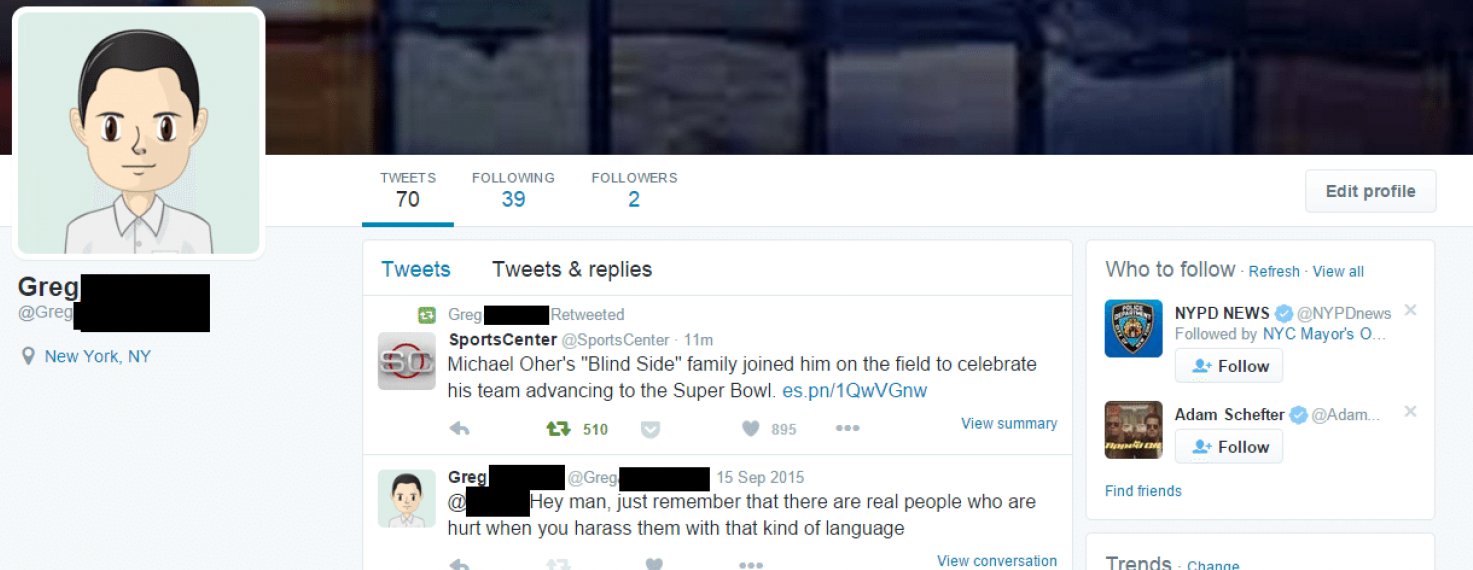
NYU PhD candidate Kevin Munger made a set of four male-seeming twitterbots that attempted to "socially sanction" white Twitter users who habitually used racial epithets (he reasons that these two characteristics are a good proxy for harassment): the bots could be white or black (that is, have names that have been experimentally shown to be associated with "whiteness" or "blackness") and could have 2 followers or 500 of them.
(more…)
In 1995, Italian novelist and philosopher Umberto Eco wrote a piece for The New York Review of Books on fascism.1 As part of the article, Eco listed 14 features of what he called Ur-Fascism or Eternal Fascism. He began the list with this caveat:
These features cannot be organized into a system; many of them contradict each other, and are also typical of other kinds of despotism or fanaticism. But it is enough that one of them be present to allow fascism to coagulate around it.
Here’s an abbreviated version of Eco’s list:
1. The cult of tradition. “One has only to look at the syllabus of every fascist movement to find the major traditionalist thinkers. The Nazi gnosis was nourished by traditionalist, syncretistic, occult elements.”
2. The rejection of modernism. “The Enlightenment, the Age of Reason, is seen as the beginning of modern depravity. In this sense Ur-Fascism can be defined as irrationalism.”
3. The cult of action for action’s sake. “Action being beautiful in itself, it must be taken before, or without, any previous reflection. Thinking is a form of emasculation.”
4. Disagreement is treason. “The critical spirit makes distinctions, and to distinguish is a sign of modernism. In modern culture the scientific community praises disagreement as a way to improve knowledge.”
5. Fear of difference. “The first appeal of a fascist or prematurely fascist movement is an appeal against the intruders. Thus Ur-Fascism is racist by definition.”
6. Appeal to social frustration. “One of the most typical features of the historical fascism was the appeal to a frustrated middle class, a class suffering from an economic crisis or feelings of political humiliation, and frightened by the pressure of lower social groups.”
7. The obsession with a plot. “The followers must feel besieged. The easiest way to solve the plot is the appeal to xenophobia.”
8. The humiliation by the wealth and force of their enemies. “By a continuous shifting of rhetorical focus, the enemies are at the same time too strong and too weak.”
9. Pacifism is trafficking with the enemy. “For Ur-Fascism there is no struggle for life but, rather, life is lived for struggle.”
10. Contempt for the weak. “Elitism is a typical aspect of any reactionary ideology.”
11. Everybody is educated to become a hero. “In Ur-Fascist ideology, heroism is the norm. This cult of heroism is strictly linked with the cult of death.”
12. Machismo and weaponry. “Machismo implies both disdain for women and intolerance and condemnation of nonstandard sexual habits, from chastity to homosexuality.”
13. Selective populism. “There is in our future a TV or Internet populism, in which the emotional response of a selected group of citizens can be presented and accepted as the Voice of the People.”
14. Ur-Fascism speaks Newspeak. “All the Nazi or Fascist schoolbooks made use of an impoverished vocabulary, and an elementary syntax, in order to limit the instruments for complex and critical reasoning.”
I found this list via Paul Bausch, Blogger co-inventor and long-time MetaFilter developer, who writes:
You know, we have a strong history of opposing authoritarianism. I’d like to believe that opposition is like an immune system response that kicks in.
It difficult to look at Eco’s list and not see parallels between it and the incoming Trump administration.2 We must resist. Disagree. Be modern. Improve knowledge. Welcome outsiders. Protect the weak. Reject xenophobia. Welcome difference. At the end of his piece, Eco quotes Franklin Roosevelt saying during a radio address on the “need for continuous liberal government”:
I venture the challenging statement that if American democracy ceases to move forward as a living force, seeking day and night by peaceful means to better the lot of our citizens, fascism will grow in strength in our land.
And Eco himself adds: “Freedom and liberation are an unending task.”
You’re probably going to be hearing that word a lot in the coming months, so before we get to Eco’s list, here’s a quick dictionary definition of fascism: “an authoritarian and nationalistic right-wing system of government and social organization”. That’s imprecise as hell, but “authoritarian” and “nationalistic” are components you’ll always see associated with fascism. ↩
As an exercise as you read through the list, think about statements and policies made by Trump and his team that reflect each point. As I said, it is not difficult.↩
“Companies like Google and Facebook have 67 days to minimize their data collection and retention before Trump is sworn in. That’s 67 days during which they can take a hard, close look at how much of their data they actually need to do their jobs, and how much they’re storing because hard drives are cheap and someone might have a cool idea down the line somewhere.
Dutch governments used their registers to record the homes of ethnic minorities in its border; these files could have been used by the Nazis to figure out which doors to break down. That’s why, on 27 March 1943, the Dutch resistance set fire to the municipal records hall, why the firefighters who responded made sure that they kept watering the building long after the fire was out, destroying any records that survived.
The Federal Communications Commission has deleted every important item from Thursday’s monthly meeting after Republicans in Congress warned the agency not to move forward on any major issues before Donald Trump’s inauguration as president.
Over the last 24 hours, influential Republicans in both the Senate and the House sent letters to FCC Chairman Tom Wheeler essentially telling him to cease work on the remaining big-ticket items on his agenda.
“I strongly urge the FCC to avoid directing its attention and resources in the coming months to complex, partisan, or otherwise controversial items that the new Congress and new Administration will have an interest in reviewing,” wrote Sen. John Thune, the South Dakota Republican who chairs the Senate Commerce Committee.
The FCC’s move to delete several items from Thursday’s agenda amounts to an acknowledgement that Wheeler’s tenure as the nation’s top communications regulator, a period marked by a variety of pro-consumer reforms, is coming to an end. Trump will nominate a new FCC chairman after he is inaugurated on January 20.
“In light of the congressional letters we received, we have revised the meeting agenda,” a FCC spokesperson told Motherboard in an emailed statement.
Thune cited precedent from 2008, when Democratic lawmakers made a similar request of the then-Republican controlled FCC, which complied, according to Thune.
As a practical matter, the remaining major items on Wheeler’s agenda, including a plan to break the cable industry’s stranglehold on the video “set-top box” market, are now dead. Wheeler’s plan, which would have saved consumers billions of dollars annually, was vehemently opposed by Big Cable and Hollywood.
In a statement, Gene Kimmelman, president and CEO of DC-based digital rights group Public Knowledge, urged Trump and his transition team to “move quickly to stop cable monopolies and media giants from ripping consumers off to the tune of almost $15 billion dollars per year with outrageous cable box fees.”
“These outrageous cable box rental fees have dogged consumers for decades thanks to powerful Washington insiders and cable lobbyists,” Kimmelman wrote in a letter to Trump. “We urge you to join with millions of Americans to get the FCC to unlock the box, a proposal that benefits all Americans.”
That may be wishful thinking. Tech policy experts expect Trump’s FCC to be much more sympathetic to the views and wishes of cable and phone giants like Comcast, Verizon and AT&T. Republican FCC Commissioner Ajit Pai, whose name has been circulated among tech policy insiders as a potential candidate for the top job, has been an outspoken critic of the agency’s proposed set-top box reform.
The FCC is, however, expected to complete work on a major spectrum auction designed to free up airwaves for wireless companies.
In a letter on Tuesday, Craig Aaron, president and CEO of DC-based public interest group Free Press, told his organization’s supporters that a Trump administration “represents an existential threat to an open internet and to an adversarial press. It threatens our fundamental human rights to speak freely, organize in our communities, protest in the streets, and govern ourselves.”
“We will fight any rollback and defend your rights to speak, assemble and organize,” Aaron vowed. “We will challenge officials, go to court, take to the streets, do whatever it takes. We will fight back.”
Among the items deleted from Thursday's FCC meeting agenda was a vote on price caps for so-called “Business Data Services,” which are specialized communications networks that serve businesses and institutions like hospitals, libraries and schools. Another item would have expanded the availability of “video described” programming for blind and visually-impaired people.
Separately on Wednesday, Gigi Sohn, a longtime consumer champion who served at the FCC for three years as Counselor to Chairman Wheeler, announced that she is leaving the agency at the end of the year. Sohn is credited by many public interest advocates with helping to push Wheeler to adopt a more pro-consumer stance on issues like net neutrality that will define his legacy—a legacy that is now at risk as Republicans prepare to take over the FCC.
The proliferation of fake news across the internet, especially on Facebook, has become one of the major talking points in the wake of the shocking result of the 2016 US presidential election (with some arguing fake news helped elect President Donald Trump). Regardless, it seems to be getting harder and harder to discern the difference between trustworthy journalism and fake content created for the sake of a click—but it’s not at all impossible.
Melissa Zimdars, an assistant professor of communication & media at Merrimack College, started a list of websites known to have published articles with false information as a way to help her students learn about journalism and media literacy. Thanks to the magic of Google Documents, it's now accessible to anyone with an internet connection. Read the entire public document here (via Gennady Kolker).
The growing guide is meant to be an educational tool for combating fake news. The list includes nearly 150 websites Zimdars and her students have called out for the potential for spreading misinformation, including those masquerading as real media outlets (such as MSNBC.com.co and abcnews.com.co), those that are complete satire (The Onion, ClickHole) and those with a baiting or heavily biased tone (Upworthy, Crooks and Liars, InfoWars).
Bad web design, headlines that incite an emotional reaction, ALL CAPS ANYTHING, and community-section bloggers posting under the banner of news outlets are a few tells for fake news.
Zimdars writes that her antidote for fake news is to read or listen to a variety of sources and be widely informed, naming The New York Times, The Washington Post, The Boston Globe and The Wall Street Journal as some of her go-to, trustworthy news outlets. But even these sometime “rely on particular media frames to report stories and select stories based on different notions of newsworthiness.” All media should be consumed with a critical eye — and when fake news is capable of shaping so much, it’s never been a more important lesson.
Get six of our favorite Motherboard stories every day by signing up for our newsletter.
I en låt med den österbottniska poporkestern Vasas flora och fauna hittar man raden ”Man har knappast levt om man inte har en prick i nåt register när man dör”. I fotbollslaget Real Madrid hittar du mittbacken Pepe. Vad har det med Audi och Kakan Hermanson att göra? Typ allt.
Först några ord om den moderate lokalpolitikern Delmon Haffo, som skapades i ett laboratorium genom att man doppade en 4chan-gymnasist i trollsås. Syftet var att göra internetmoderater coola, men eftersom det inte går, så blev det en otroligt solkig och deprimerande alt-right-figur av det istället.
Audis försök att göra… jag vet inte ens, något, genom att betala Kakan, var lika omöjligt. Har du ett bilmärke för femtiofyraåriga dubbelparkerare i Gant-kläder som tror att global uppvärmning är en myt, är det en dålig idé att använda deras totala motsats.
Pepe är antagligen en habil fotbollsspelare. Jag vet inte. Allt jag vet om Pepe är detta: Han är en lismande jävla skithög. Han sparkar ner folk till höger och vänster. Och överdriver och filmar så att det blir direkt parodiskt, när han får chansen. Typ någon passerar honom och snuddar knappt märkbart vid hans arm och han reagerar som om han blivit skjuten med k-pist och samtidigt fått en slägga i magen. För en betraktare framstår han som direkt förståndshandikappad.
Delmon Haffo spelar politik exakt som Pepe spelar fotboll. Fast inte precis i politikens Real Madrid. (Även om både marängerna i Real och Delmons äggpolare på twitter har ganska tydliga band till fascismen.)
Jag skiter väl i både Audi och Kakan. Men det som hände mellan dom är en del i samma berättelse som internetmoderaterna. En berättelse där spelad indignation inte leder till kroppsbestraffningar och landsförvisning, som det borde. För alla är Pepe, alla vill vara en förståndshandikappad mittback. Det är idealet. Det är där vi är.
Och att någon, som Kakan, har en prick i nåt register, blir ett skäl att överreagera, snarare än att tänka ”jaha någon som sagt superdumma saker på internet och sen gått vidare, då kan vi människor ändå vara flerdimensionella”.
Metaforiskt sitter vi i en Audi på väg mot en framtid utan själ, utan smuts, defekter, misstag eller erfarenheter. Jag hoppas innerligt att vi krockar och dör.
Jag har läst flera skribenter skriva följande: Skälet till att Trump vann i USA och att SD går som tåget i Sverige, är att vänstern har slutat vara relevant för arbetarklassen, i synnerhet den på landsbygden. Det är en bra teori, eftersom den fyller precis dom luckor som ska fyllas för att vänstern ska kunna klandras för högerns framgångar. Det är en bra teori, eftersom man framstår som inkännande och reflekterande när man för fram den.
Vänstern, sägs det, har slutat prata om klass. Den har slutat lyssna på vad det innebär, att leva med stadigt krympande resurser, både ekonomiskt och i termer av inflytande och upplevd makt över sin egen situation. Vänstern, heter det, pratar bara om köttfria måndagar, separatistiska syjuntor och QTBH-certifierade dagis.
Lite förenklat: Det är bögarnas fel.
I texten ovanför är vänstern inte vänster. Den är snarare det man kallar för GAL (Grön, Alternativ, Liberal) och står i opposition till det man kallar TAN (Traditionellt, Auktoritärt, Nationalistiskt). Det innebär att vänstern i berättelsen ovan, inkluderar libertarianer och centerpartister, sida vid sida med elallergiska miljöpartister, vänsterpartister – och helt vanliga sossar.
Vilket i sin tur gör att högern, om man vill använda den termen som motsats, representeras av Alice Teodorescu, Ebba Busch-Thor och Jimmie Åkeson. Och eftersom grunden i analysen ovan, är att det är vänstern som varit tondöv, innebär det att att högern har sagt som det är – och inte har något eget ansvar.
Analysen är skenbart empatisk – men cynisk. Det sägs att vi måste ta vanliga människors oro på allvar. Och ofta när det sägs, kanske alltid, så är det just arbetarklassen, i synnerhet på landsbygden, som det pratas om. Som vore dom automatiska representanter för både vanliga människor och dom som oroar sig.
Sant är detta: Det finns människor, även i Sverige, som förlorar på globaliseringen. Men sant är också detta: Ingen av dessa människor är fastlåst. Vänstern kan prata sig blå i ansiktet om klass och skatter och rättvisa, men vad spelar det för roll ens. Dom som verkligen håller tyst är liberalerna. Då menar jag inte alliansen-partiet eller Expressens ledarredaktion, utan dom liberala som en del av GAL, enligt ovan.
Det saknas helt enkelt en linje i svensk politik och debatt som handlar om det fina med förändring och att människan är kapabel.
Alla tjugoåriga män utan jobb eller utbildning i glesbygdssverige. Det klart man kan omfördela i deras favör. Men om den där oron inte är en oro, utan istället en ovilja till förändring, då blir ju omfördelningen bara ett sätt att kedja fast dom. Då blir att lyssna på vanliga människor detsamma som att sanktionera ett specifikt sätt att leva.
Framför allt har du inte adresserat problemet från textens inledning. Jag tror nämligen inte att folk röstar på SD för att dom bor på landet, eller för att dom har det knapert. Jag tror dom gör det, för att dom är rädda för nya saker. Det kan vara jämlik snöröjning eller invandrare i mataffären.
Jag hoppas därför att nästa politiska projekt handlar om rörelse. Att få möjligheterna att förändras. Avfolkningen är en rörelse, så omfamna den. Och uppmuntra motrörelser. Invandring är en rörelse, utbildning en annan. Bruket la ner, men det gör webbyråer också.
Det låter som en utopi.
Men kom ihåg att vi faktiskt lyckades riva Slussen.
The most reported story of the century started in 2015 and went something like this: Donald Trump will drop out after he gets bored. Donald Trump isn’t real. Donald Trump has a ceiling. Donald Trump might win the ideology-driven primaries, but the electorate will reject him. Donald Trump, unlike his much more experienced opponent Hillary Clinton, isn’t qualified to be president.
Now Donald Trump is the upset winner, the “Dewey Defeats Truman” headliner of 2016, and one postmortem after another has sought to explain this shocking turn of events. One compelling line of argument was that Trump’s supporters were lurking in plain sight. These individuals were crying and screaming for attention in online forums such as Facebook, Reddit, and 4chan. Were their rebel yells, then, an early indication of the apparent wave of voter enthusiasm that would propel Trump to victory?
“Absolutely yes, because we were around working counter-signals and red-pilling members of those J.D. Vance hillbilly enclaves way before any of you in the mainstream media caught up,” said Ohio native Metacom Berg, an alt-right supporter I had previously profiled during the Republican National Convention. “This was a long, immersive experience, as I and others like me were embedded with alt-right social media groups that had tens of thousands of members, mostly college-age people who had never voted before but would vote in an election where the margins were, what—fifty thousand votes in a couple Rust Belt states?”
Berg may not have been shocked by this turn of events, but Susie Meister, a researcher who studies modern evangelical religion in the context of social media, most assuredly was. Meister, who hosts The Brain Candy Podcast and has a PhD in religious studies, admits she was stunned to learn how literally evangelicals took oft-repeated terms such as “holy war” and “savior.”
“For years, I saw these words appearing in online comments and heard them used in everyday conversation, which made sense because their leaders were constantly telling them Christians were being persecuted,” she told Motherboard. “What I didn’t account for is that after our nation’s economic collapse and even more profoundly after the legalization of gay marriage, they now had concrete evidence that their ‘religious freedom,’ as they see it, was being revoked and compromised, so they got scared in a way they hadn’t before.”
That fear, Meister believes, led them to throw their support behind an unsavory candidate who promised that he would undo these radical changes, his angry rhetoric echoing language they had heard for decades in regard to the marginalization of Christianity. “It didn’t matter to them that he didn’t reflect their values as long as he promised to protect them from liberalism,” she added.
Anthony Comegna, a historian at the Cato Institute, urges caution before rushing to label Trump’s victory as unprecedented or revolutionary. “We’re a proud and blustery people, but we aren’t the revolutionaries we like to think we are because we don’t have the stomach for it,” he wrote in an e-mail. “People still love to grumble and rumble, which we saw plenty of in the 19th century, too. Americans have always been convinced that their New Israel is under constant threat, so they have to cling to their guns, their private property domains, and their divinely-inspired Constitution.”
Comegna, who studies radical classical liberalism in the 19th century, takes a longer view and sees nothing exceptional about Trump’s victory in 2016. “I think we got the nominees we did—two crony-capitalist elites we could barely even choose between—because people have been so complacent for so long, comfortable in having secured democracy the world over. Of course, in reality the US is just another lumbering statist empire shielded by nationalist mysticism. Maybe the ‘alts’ have convinced enough people that they should be upset with how things are going, but I doubt it.”
Whitney Phillips, an assistant professor at Mercer University and author of This is Why We Can’t Have Nice Things: Mapping the Relationship Between Online Trolling and Mainstream Culture, is also hesitant to accord any pride of place for Trump’s victory to the ‘alt-right’ or other angry online commenters. “It might be tempting to say that the enthusiasm we thought was trolling was actual enthusiasm, but who knows? There’s no data either way, as Slate noted recently, and without that there’s no way to know what was real and what was not,” she said.
Phillips cautioned against making blanket statements, as many pundits already have, about how online commenters somehow “caused” Trump, because no two online forums are alike. “Platform affordances matter; assessing these behaviors on Facebook is different than assessing them on 4chan [because] the norms of the group in question, coupled with where they are communicating, are major pieces of the puzzle.”
Journalist Carl Beijer analyzed Edison exit polling data and concluded that, contrary to the notion that Trump was propelled to victory by a wave of enthusiasm, the election of 2016 was actually marked by extreme levels of voter apathy. Trump, he wrote on his blog, prevailed because he “managed to stem his losses among men, the poor, and millennials—and among boomers and voters of color he actually improved the GOP's numbers” while Hillary Clinton “lost voters in every demographic across the board.”
But for Trump’s most fervent supporters, such nuanced explanations are unavailing. “Trump found those extra votes that he needed, and he found them right where he needed them,” Metacom Berg said. “I was networked with hundreds of thousands of people, and he got those extra votes—and you’re going to tell me we didn’t help make that narrow difference?”
Polished metal and obsidian mirrors have existed from ancient times, and because of this, historians have usually passed over the introduction of the glass mirror as if it was just another variation on an old theme. But the development of glass mirrors marks a crucial shift, for they allowed people to see themselves properly for the first time, with all their unique expressions and characteristics. Polished metal mirrors of copper or bronze were very inefficient by comparison, reflecting only about 20 percent of the light; and even silver mirrors had to be exceptionally smooth to give any meaningful reflection. These were also prohibitively expensive: most medieval people would only have glimpsed their faces darkly, reflected in a pool of water.
What an odd thing, to not actually know what your face looks like, and yet for most of human history, that was the case. Also interesting that the rise of glass mirrors led to an increase of commissioned painted portraits:
People’s ability to appreciate their unique appearance led to a huge rise in the number of portraits commissioned, especially in the Low Countries and Italy. While almost all the oil paintings that survive from the fourteenth century are of a religious nature, the few exceptions are portraits. This trend toward portraiture grew in the fifteenth century, and came to dominate nonreligious art. As important men increasingly commissioned artists to create their likenesses, the more those likenesses were viewed, encouraging other people to have their portraits painted.
Steven Johnson discussed glass mirrors in the opening chapter of his book How We Got To Now.
At the exact moment that the glass lens was allowing us to extend our vision to the stars or microscopic cells, glass mirrors were allowing us to see ourselves for the first time. It set in motion a reorientation of society that was more subtle, but no less transformative, than the reorientation of our place in the universe that the telescope engendered. “The most powerful prince in the world created a vast hall of mirrors, and the mirror spread from one room to another in the bourgeois household,” Lewis Mumford writes in his Technics and Civilization. “Self-consciousness, introspection, mirror-conversation developed with the new object itself.”
Social conventions as well as property rights and other legal customs began to revolve around the individual rather than the older, more collective units: the family, the tribe, the city, the kingdom. People began writing about their interior lives with far more scrutiny. Hamlet ruminated onstage; the novel emerged as a dominant form of storytelling, probing the inner mental lives of its characters with an unrivaled depth. Entering a novel, particularly a first-person narrative, was a kind of conceptual parlor trick: it let you swim through the consciousness, the thoughts and emotions, of other people more effectively than any aesthetic form yet invented. The psychological novel, in a sense, is the kind of story you start wanting to hear once you begin spending meaningful hours of your life staring at yourself in the mirror.
If glass mirrors helped bring about such a shift in society, I wonder how society is shifting with the ability, only over the past 10-15 years or so, for people to instantly share their inner thoughts and selfies with friends, family, and even strangers many times every day? Is this more “seeing ourselves clearly” (individualism) or is the ability to allow others to see us clearly so frequently steering us back toward collectivism? Or somewhere else entirely?
We run on 6-week budgets for most major product work at Basecamp. It’s not that everything has to done in that time, but the self-imposed constraint makes us try. It’s not a deadline, mind you, but a budget. Deadlines are just excuses for death marches (fixed scope, fixed time). Screw deadlines.
Budgets, on the other hand, instruct us to keep quality high but scope variable. When making decisions on how to fit within budget, we decide to write less software. Fewer features, fewer settings, fewer wouldn’t-it-be-cool-if’s.
Nothing brings clarity to the discussion like “well, there’s only 3 weeks left: We can either do A and B, but not C. Or just C. Which would you rather?”. It moves the debates out of the we-really-ought-to realm. That’s the realm free of compromise and trade-offs. That’s the realm of bloated, late software.
This might make it sound easy to ship great software on time, but of course it’s not. Because like any good constraint, it hurts when its working. We have to kill our darlings all the time. Features, settings, considerations that we really think are important have to be cut constantly. When something you believe to be important doesn’t make it, it hurts.
But it’s also the right thing to do. We’ve proven that time and time again. Things we thought were terribly important in the heat of the argument frequently turns out not to matter at all. And above all, the discipline and the habit of shipping software every six weeks (or thereabouts) is worth some real sacrifice.
We’ve run other intervals in the past, and we sometimes do when circumstances warrant. Our standard used to be two months, but we’d still go a week or two over budget with that schedule. And it’s not clear that the software we shipped was appreciably better. Now we only run on 8-week cycles over the Summer when we work four days a week instead of five.
Shipping software on a budget rather than on a deadline or When It’s Done is a key component to how we’ve written and released so much with such a small team for so long. It’s probably been the most helpful general concept we’ve adopted from agile development. It doesn’t even require a big process, a backlog, or a stand-up meeting. But it will occasionally hurt. That’s when you know it’s working.
På tunnelbanan i morse var det som att alla talade om Trump. Samtal som rymde långa tystnader innan de bytte ämne. Damerna bredvid mig: “Jag begriper inte vad som hände med världen, fram tills för sådär åtta-tio år sedan verkade ju allt bara bli bättre och nu…”
Sen det globala krisutbrottet 2008 har vi inte haft någon ekonomisk “återhämtning” som inte gått hand i hand med en politisk och militär “återhämtning” i ordets bokstavliga, reaktionära bemärkelse. En eskalation som framför allt visat sig i form av nationalism, islamism och antifeminism. Valrörelser och valresultat spelar där en inte oviktig roll, inte alls bara (eller ens främst) genom att de resulterar i maktskiften, utan som distraktioner och gränsförskjutare.
Begreppet “extremism” var aldrig lyckat, eftersom det hänger upp allt på ett föreställt mittfält vilket rör sig över tid, men nu går det verkligen inte att urskilja något politiskt mittfält, inte på övernationell nivå, ens om man försöker frysa tiden. När den svenska regeringen väl etablerat kontakter med Trumps administration kommer det bli väldigt svårt för samma regering att utdefiniera de aktörer som går ens hälften så långt som Trump gjorde i valrörelsen.
Det här är ett sånt där inlägg som inte gör anspråk på att lägga till någonting, bara kopiera in text från olika håll för att fixera en bild att tänka vidare från.
Nej, jag tänker inte röra vid diskussionen om varför Trump vann, åtminstone inte på ett halvår eller så. Inte heller vid diskussionen om vilken politik han (eller folket som han tillsätter) faktiskt kommer att föra i USA. Men det är ändå omöjligt att inte se den möjliga kedjereaktionen, som skapar stor entusiasm på Europas yttre högerflank. Den formulerades i korthet av fascisten Kent Ekeroth (SD):
Österrikiska presidentvalet i december
Franska presidentvalet våren 2017
Holländska parlamentsvalet 2017
Tyska parlamentsvalet hösten 2017
SD 2018
En mer utförlig skräckprognos formuleras av forskaren Tobias Hübinette:
Högerpopulismens och extremhögerns perfekta (och reaktionära) storm är nu och kommer med stor sannolikhet att pågå för överskådlig framtid:
8/11 2016: Donald Trump erhåller över 50% i USA och väljs till president.
4/12 2016: Norbert Hofer erhåller över 50% i Österrike och väljs till president.
15/3 2017: Partij voor de Vrijheid erhåller 25% i Nederländerna.
april-maj 2017: Marine Le Pen erhåller över 40% i Frankrike och kommer tvåa i presidentvalet.
juni 2017: Front National erhåller 25% i Frankrike.
11/7 2017: Fremskrittspartiet erhåller 25% i Norge.
augusti-oktober 2017: Alternative für Deutschland erhåller 20% i Tyskland och väljs in i förbundsdagen.
9/9 2018: Sverigedemokraterna erhåller 25% i Sverige.
september 2018: Freiheitliche Partei Österreichs erhåller 30% i Österrike.
april 2019: Perussuomalaiset erhåller 25% i Finland.
juni 2019: Dansk Folkeparti erhåller 30% i Danmark.
juni 2019: De högerextrema och högerpopulistiska partierna erhåller mellan 15-35% i de olika medlemsstaterna i EU-valet och sammanlagt 10-tals miljoner röster runtom i Europa: 25% i Bulgarien, 30% i Danmark, 15% i Estland, 30% i Frankrike, 20% i Grekland, 25% i Nederländerna, 25% i Storbritannien, 25% i Tyskland, 25% i Ungern o s v.
oktober 2019: Schweizerische Volkspartei erhåller 35% i Schweiz.
o s v o s v o s v
Detta är inte förutbestämt, men det är heller ingen omöjlighet. Väldigt mycket hänger såklart på när nästa storkris bryter ut i världsekonomin och hur den slår mot just Europa. Samt på hur offensivt Ryssland kommer att agera. Ännu ett skräckscenario signerat Kjell Häglund:
Trump kommer att försöka genomföra en rad fascistiska åtgärder, var så säkra. Det kommer att kännas en hel del Putin över honom. Han kommer att inskränka mediers frihet, bland annat genom att försöka införa mkt hårdare förtalslagar.
Han kommer att godkänna Rysslands olagliga annektering av Krim. Han kommer att ställa omöjliga betalningskrav på många Natoländer. Han kommer att lyfta sanktionerna mot Ryssland. Han kommer att liera sig med Putin i all utrikespolitik. Och Putin kommer inte ens att invänta de lyfta sanktionerna innan han invaderar Baltikum. Hotet mot Sverige har inte varit större i modern tid. Hotet mot Gotland är konkret. Jag har alltid varit pacifist, under större delen av mitt liv praktiskt taget velat lägga ner försvaret – nu är jag nog för en snabb upprustning.
Han kommer att låta USA lämna klimatuppgörelsen – har redan aviserat att han ska dra in utlovade 100 miljarder dollar.
Muslimer, svarta och hispanics kommer att få ett helvete. Som UK efter Brexit fast värre. Glöm de utlovade insatserna i “inner cities”. Den satsningen görs på en polisstat i stället. USA kommer att bli djupt delat och förbittrat. Den politiska atmosfären kommer att bli uppskrämd och misstänksam.
En stor, avgörande fråga jag ställer mig: hur kommer senat och kongress att agera? Moståndet från Demokrater kommer att bli mycket högljutt – men verkningslöst. Kan koalitioner mot Trump bildas? Hur kommer Trump att kunna bemöta sådana? Olika former av utrensningar kommer att bli vanliga under Trump.
Are liberals even capable of learning through experience? The same kind of feigned chock when Bush was elected and then re-elected.
Liberals don’t understand that there is no internal limit to horror in the world. Always secretly believe: ‘I cannot get worse than this’
And then of course, since this belief stops them from organizing, it does get worse, because it can and nothing is stopping the world.
But of course, now we might have Trump, ‘I cannot get worse than this’. No reason to organize, just wait for next election.
Ett par analyser jag är nyfiken på men ännu inte hunnit läsa kommer från ChrimethInc och Insurgent Notes
Doctor Strange director Scott Derrickson had a problem with bringing the magic of the Sorcerer Supreme to the big screen—namely, he didn’t know how he should do it. Should Strange mutter incantations? Use a wand like Harry Potter? He found the answer, surprisingly, on YouTube, in the videos of a dancer who goes by JayFunk.
“I think that magic tends to be something where you cast a spell and then the camera sits back and you watch something happen,” Derrickson told Vulture. “I didn’t want it to be that. I wanted it to be in the action, I wanted it to be more organic.” He also wanted it to be more physical, which is when one of his producers introduced him to JayFunk’s music videos.
“[JayFunk’s] one of the world’s best tutters,” Derrickson said, referring to a style of street dance that involves intricate hand movements. “He does these amazing things with his fingers, go look him up on YouTube. We hired him to do all the choreography [of the spells], so he taught Tilda and Benedict and Mads. It’s very specific and very deliberate and super-cool.”
Stars Benedict Cumberbatch and Tilda Swinton both agree with the sentiment:
And so, if you see Doctor Strange, every elaborate spell has been designed by JayFunk to match the needs of the story. Derrickson discussed one specific example.
“I gave the mandala to [J-Funk] and I said, ‘I need gestures that will last this amount of time to build this,’” Derrickson continues. “So we talked about, ‘Okay, so she’ll do this and then this part will appear and she’ll do this and then this part will appear and then she’ll spin this part.’ It was all very detailed and designed and he was awesome. I’m really glad we used him.”
John William Waterhouses välkända häxa (1886); karta över ett möjligt utfall av operation Sjölejon
Visste du att det var häxor som räddade Storbritannien från Hitler?
Berättelsen har nått oss från Gerald Gardner, häxkonstens uppfinnare ... Eller jag menar naturligtvis upptäckare; jo, för han sade sig ha hittat en häx-församling (coven) med folk som inte bara utövade häxeri, utan som gjort det kontinuerligt sedan förkristen tid. Och deras främsta dokumenterade *host* storverk var när de 1940 slog tillbaka Hitlers invasion operation Seelöwe medelst magi.
Gardner would reveal little about the coven and its members, although claimed that in August 1940, during the midst of the Second World War, they performed a ritual known as Operation Cone of Power which they hoped would influence the High Command of Nazi Germany and prevent them from invading Britain. This magical ritual, Gardner claimed, took place inside the Forest, and involved the Witches raising a Cone of Power which they directed toward Germany and focused on sending the message into the minds of the German leaders that they would not be able to cross the English Channel.
Att Gardner avslöjade det hela först efter kriget är en sak. En annan är huruvida hans "New Forest coven" någonsin existerade. Om den, mot förmodan, var något mer än ett kreativt påhitt för att sälja in hans häxreligion wicca, så var den knappast mycket äldre än några år.
Ett förslag är att NFC fanns på riktigt och var ett feministiskt nyhedniskt utskott av den scout-liknande rörelsen Order of Woodcraft Chivalry. Den verkar nästan lika intressant som Kibbo Kift, med lika delar hemslöjd, scouting och new age: "a camping, hiking and handicraft group with ambitions to bring world peace". En annan organisation från samma tid hette Camp Fire Girls, den verkar också ha blandat friskt i vad som närmast kan beskrivas som brittisk völkischer.
Vad sjölejonet beträffar så var den sommaren och hösten 1940 något som många på ömse sidor kanalen (och havet) förväntade sig. Att brittiska medborgare som trodde sig ha magiska krafter skulle försöka använda dessa för att påverka verkligheten är just vad man kan förvänta sig. Varför den aldrig förverkligades, och hur stora chanser den i så fall haft, diskuteras livligt i insatta kretsar än idag. En stor anledning utgjordes av anfallet österut sommaren 1941; Sovjet sågs som en en viktigare och mycket större fiende.
While Westworld has mainly captivated its viewers with its seemingly limitless mysteries (although the occasional orgy scene hasn’t hurt), the show’s real strength is in its characters, and the fabulous actors portraying them. And no one the show is more captivating than Sir Anthony Hopkins as Dr. Robert Ford.
To demonstrate this, Nerdwriter dissects a scene from episode four that plays out between Ford and the Westworld park’s operations lead, Theresa Cullen (Sidse Babett Knudsen). Hopkins’ pacing is exquisite, particularly when it comes to showing Ford’s emotions. Throughout the conversation, he shifts easily between charm, condescension, and menace. Even his pauses—which are measured and poignant—slowly reveal his god complex, intimidating Theresa.
Hopkins’ secret is, apparently, obsessive study. Nerdwriter notes that the actor is known to read scripts hundreds of times until their recitation becomes automatic, allowing him to immerse himself so deeply in the role that he’s able to tweak moments on the fly.
Regardless of whether or not the show ever answers its many, many mysteries—and how satisfying those answers might or might not be—Westworld will remain a stupendous vehicle for some very talented actors.
A simple, effective piece of advice from Jason Fried
A couple of years ago, Jason Fried gave me the simplest, most effective advice I’ve ever received:
It seems so obvious, something you’ve probably heard before: it never hurts to ask. But when you actually put that advice into practice, the results are rather amazing.
In 2014 we sponsored a project management conference. As sponsors we got all the usual promotion: our logo on some slides, some tweets, email callouts, etc.
We wanted to get the most out of our sponsorship, so Jason encouraged me to get creative with what we could do. Here’s what I said:
Jason completely agreed, but I couldn’t think of a good way to pull this off. How could we clearly announce who we were and give them a sense of our friendly personalities? 😁
Aha, what a great idea — that would accomplish exactly what we wanted!
But…stage time wasn’t part of any sponsorship package they offered. And as one of the world’s worst negotiators, I was hesitant to ask for something outside of the existing options. 😶
But I needed to learn. I got over myself. I sent an email to the organizers asking nicely and explaining why it was so important to us.
You can probably guess what happened next. We got our stage time. The organizers were happy to accommodate us. It wasn’t a big deal at all.
And from that one success, I burned Jason’s advice into my brain: it never hurts to ask.
Since then, I’ve had plenty of success with Jason’s advice. Yet I’m still fascinated by how well it works.
Last week I was reminded how simple and powerful “just asking” can be.
I’m a big fan of The Practical Dev, and I figured the article might be of interest to their audience. But how could I get them to share it?
I remembered Jason’s advice — it never hurts to ask. So that’s exactly what I did. I sent them a link to my article and politely asked if they’d consider sharing it. A couple of hours later they were nice enough to do so. Success!
Perhaps unsurprisingly, this advice can also apply to product design.
In the Basecamp 3 Android app we recently added a “what’s new” dialog. This lets customers know what new features we added, but also gives us a chance to ask for their review.
Any idea when we started asking for reviews? 😏
I fully admit I was skeptical that a simple “rate us” button would have any impact our ratings.
Wow, I couldn’t have been more wrong. Our positive ratings and reviews skyrocketed! 🚀
Once again Jason’s advice held true — all we had to do was ask for reviews, and people were happy to do it.
I can’t tell you how many times “it never hurts to ask” has turned out positively for me. Even if I don’t end up getting what I hoped for, it’s still nice to know that I at least asked. Nobody gets offended or upset by reasonable requests. ¯\_(ツ)_/¯
I think this comes down to one fundamental truth: people want to help you.
Sure, not everyone is super generous. But as a rule I think most people try to be. If you ask for something in a nice, humble, and confident manner, they’ll try to find a way to help you.
So the next time you want something, remember: it never hurts to ask!
If you liked this article, I’d really appreciate if you click the heart button down below. And if there’s anything I can help you with, just ask!
We’ve been hard at work making Basecamp 3 and its Android app the best way to run your projects and small business. Won’t you give them a try? 😀
It never hurts to ask was originally published in Signal v. Noise on Medium, where people are continuing the conversation by highlighting and responding to this story.
Detailing Know Your Company’s most unusual business model… that works! We’ll go behind the scenes and share the numbers to show you exactly how we’ve done it.
“Can I ask you a weird question, Claire?”
“Sure,” I reply.
“How do you make any money?”
I get asked this question fairly often. People hear about the pricing model for our software, Know Your Company, and they’re a bit perplexed.
We charge $100 per employee, one-time, for life. That’s it. So if you’ve got 20 employees, it’s $2,000. You pay that once and that’s it. No recurring costs, maintenance fees, etc. The only time you ever pay again is if you hire someone new. Then it’s $100 for that new person.
It’s weird, I’ll admit. With software, you typically see a subscription-based pricing model. Say, $5 per user per month. Or maybe just $100 per month for unlimited usage.
To most, a one-time, per-person fee sounds like we may be leaving money on the table.
Why would we ever price something this way? Does it work?
We’re now two-and-a-half years into running Know Your Company as our own separate company (we spun off from Basecamp in December 2013) and I want to share the answers to those questions. Here’s the nitty gritty on the reasoning behind our business model and how it’s been going. Read on and I’ll share our revenue numbers, customer retention numbers, etc.
First off, why did we price the software this way?
The biggest reason we went with one-time pricing, versus a subscription model, is because it best aligns with the value we’re trying to create.
I believe that a business owner should get feedback from an employee for the entire time that she or he is at the company. Not just for a few weeks or months — but for how ever many years an employee is with you.
A subscription model doesn’t encourage this. It’s easy to go for a few months using a product, paying, say, $50 a month, and then turn it off. In the case of Know Your Company, it’d be even easier. It’d be convenient to get a piece of feedback you don’t particularly like, and say, “Ahh I don’t need to hear this right now,” and turn off Know Your Company.
But for me, that’s not good enough. If you’re truly invested in creating the best environment for your employees, you’re getting feedback from your employees for life. Our pricing model encourages CEOs to start to see getting feedback in this way.
Our one-time pricing model also brings an advantage a subscription model doesn’t have: It encourages a high commitment from CEOs when they use the product. When you’re putting in $3,000 one-time upfront, versus $30/month or $300/month, you’ve got some skin in the game. So now you’re more determined to see that value returned to you on the other end.
As a result, CEOs put more energy behind Know Your Company when they roll it out. They talk it up to their employees, and they act on the feedback that comes from the software. Know Your Company becomes an initiative, a program — not just another web app they’re playing around with. And these CEOs see meaningful outcomes in their company because of it. For us, it’s been extraordinarily helpful that our pricing model helps influence the outcomes we want our customers to have.
So do we make money doing this? Let’s pull back the curtain on our numbers…
Since becoming our own standalone company in January 2014, we’ve generated $712,076.64 in revenue. We’re profitable — our average monthly profit margins are at a healthy 30%.
More than 200 companies have purchased our product, and 12,000+ employees use Know Your Company every day in more than 15 different countries across the world.
We do this all as a two-person company. It’s just me as the CEO, and our programmer, Matt De Leon.
We’ve never taken a cent of funding from outside investors. When we spun off from Basecamp a few years back, they didn’t give us any cash or team members — just the product and the existing customer base the product had acquired at that point.
Our customers are companies who typically have between 25 and 75 employees. The average size is 31 employees. Our smallest customer has six employees, and our biggest has 380 employees. (They were at around 70 employees when they first started using Know Your Company.) The industries of companies range across the board — from software to retail to hotels to ad agencies to nonprofits. We even work with a few churches.
The biggest surprise though: where our revenue has come from. Last year, 70% of our revenue came from existing customers adding new employees to the system, as their companies have grown. About 50 new employees were added every week by existing customers. The remaining 30% of our revenue resulted from new companies signing up for Know Your Company.
In other words, 70% of our revenue in 2015 was “recurring.” That’s more than two-thirds of our revenue generated off a business model where we’ve got one-time pricing per user.
So while the pricing model doesn’t inherently feel like there is a recurring component — there is. And it’s directly tied to the value that we’re creating for our customers. We’re supporting them as they grow and become more successful.
How this one-time pricing model has been helpful for us
Over the past two and half years, we’ve built a solid, profitable, bootstrapped company with just a two-person team. And our pricing model has absolutely enabled that.
I didn’t realize it when we started, but our pricing model has played a large role in helping us become profitable as a bootstrapped company early on and continue to stay profitable.
Our one-time pricing has allowed us to see cash a lot sooner than if we were operating on a monthly subscription pricing model. As a bootstrapped company, cash flow is the lifeline we depend on. On average, an initial $3,100 invoice is paid out to us the first week a new customer comes onboard. That’s significant. With a subscription model, how many months would we have to wait until we see that same $3,100?
Some might argue, though, while we’re able to capture a large portion of cash upfront, we’re missing out on the entire lifetime value that a monthly subscription model would capture. I initially had concerns about this, myself. However, the math proves something different.
For us with our current one-time pricing model, the average lifetime value of a customer is about $4,600 per customer. Companies add an average of 15 employees to our software during the time they use Know Your Company. The average amount of time a customer stays with us is 19 months.
To attain that same average lifetime value of $4,600 with a subscription model (let’s say we were to charge $5 per employee per month), we‘d need a customer to stay with us for about 30 months.
Thirty months is a much longer time than 19 months. And while I’d love for a customer to stick with us for two-and-a-half years, right now the average customer uses us for one year and seven months. Plus, with a one-time model, we see 67% of that lifetime value upfront. No waiting on our end required.
In fact, this one-time pricing model is what has gotten us to profitability so quickly as a bootstrapped company. We became profitable during our first month of running Know Your Company as a separate company because of this pricing model.
Allowing us to capture a larger chunk of the lifetime value upfront has also afforded us to take our time. We’re not in a rush to scoop up as many customers as we possibly can, regardless of whether we’re a good fit for them or not. Rather, we can focus on taking on customers we believe we can actually help, ensuring we’re truly solving their problem and serving them well.
Our one-time pricing model gives us room to treat each customer with thoughtfulness and personal care. Whether that’s sharing data on the best questions to ask employees, providing questions that other CEOs have asked through Know Your Company, or adding them to a Basecamp Project where there are hundreds of other customer CEOs — we’re able to pour ourselves into making sure our customers get the most out of Know Your Company. And these investments for our customers have paid off. Last year, we had a 98% retention rate. (Unfortunately, we had one company decide to stop using the product.)
This isn’t to say that a subscription model and solving your customers’ problems are mutually exclusive. Instead, I just want to share how for us, a business that’s getting off the ground, trying to get its legs under it, this is something that’s worked well.
It’s still not easy
Let’s be clear: A one-time pricing model doesn’t make everything easier. Running a business is still tremendously hard for us, even with this pricing model.
While we can capture a large chunk of lifetime value upfront, we still run a very, very lean business in order to be profitable. One of the ways I try to reduce overhead is that I don’t pay office rent. Basecamp is kind enough to let me work out of their office a few days a week over in the West Loop in Chicago, free of charge. I use a table in a conference room they don’t use very often, and I try to minimize getting in anyone’s way. It’s generous of them and an arrangement for which I’m grateful. You might be able to propose something similar and borrow an unused table at a friend’s office. (It never hurts to ask.) Or, you can always work from home to save on office rent — which is what I do about 50% of the time.
Another way I’ve reduced overhead is that I’ve only hired one other person (Matt, our programmer, who I mentioned earlier). Perhaps we could afford to bring on another person, be it part-time or full-time. But I’m highly cognizant of the costs — in salary dollars, and also in time and training. I’ve watched fellow friends who are business owners hire too quickly, and I’ve seen the strain that puts on the business. Get too big too fast, and it’s hard to rewind.
It’s also taken us an arduous, painstaking two-and-half years to hit $700K in cumulative revenue. Up until two months ago when we moved to self-signup, if a business owner was interested in purchasing Know Your Company, she or he had to do a 30-minute in-person demo with me via GoToMeeting, Skype, or WebEx. Not a demo with a salesperson — but with me, every time. In fact, I’ve done almost 500 of these in-person demos over the course of two-and-a-half years!
Every single Know Your Company product feature we shipped was conceptualized, designed and engineered by Matt and me. Every single article written, marketing site redesign, social media push, conference talk (I’ve spoken at more than 30 conferences, CEO groups, company events, etc.), and conference partnership was something the two of us executed. All the support requests, account setup, account management, invoicing, billing for 200+ companies with 12,000+ employees in 15 countries — were handled by just two people.
Matt and I have pushed ourselves to do everything we can as a two-person team, ever mindful of staying profitable each month. And we’re still wary about bringing someone else on board. When we do, we want it to be measured and truly, truly needed. (We only recently brought on a part-time data intern for the summer.) Yet it works for us.
I prefer our slow, intentional, in-control growth. It gives me the time, focus, and energy to feel we are doing right by our customers, creating the best product possible, and building company that lasts for the long haul. (My goal is to run Know Your Company for the next 10, 20 years, if I can!) And our pricing model supports that.
As a two-person company, with more than 200 customers, $700K in cumulative revenue, less than three-years-old, profitable, and bootstrapped… I’m proud of how far we’ve come.
Plus, with our recent move to self-signup, things are looking up, more than ever. Last month, we had our biggest month of sales to date… and we’re on pace to hit $1 million in cumulative revenue by the end of the year (fingers crossed!).
Will it work for you?
Who’s to say that this exact pricing structure will work for your business.
But here’s what I will say: if you focus on helping your customers get the outcomes they want and keeping your overhead low, there’s a clear path to profitability.
What matters less is if the pricing model you’ve decided on is “popular” or not for your industry. Who cares if the way you price something or the way you sell something or the way you run your business is unconventional. Who cares if people are saying to you, “Can I ask you a weird question?”
What’s most important is that you’re running a business on your own terms and providing real value to people by making some aspect of their lives better.
I hope by sharing our numbers — and making ourselves a bit naked — it’ll help you reach your own conclusions as to whether this one-time pricing — or another model — is something that will work for you.
So, to anyone out there who’s starting a business and trying to figure out how to make money and have an impact on others: Charge people what you think it’s worth, do what you can with what you have, and focus on doing a really damn good job.
Was this post interesting or helpful to your business? If so, please click the ❤ below to let me know or say hi on Twitter (@cjlew23)! I’m happy to share more behind-the-scenes of how we run our two-person bootstrapped software company, if that’s something you’re intrigued about.
I upplysta förvirrade kretsar cirkulerar en text som sägs vara en nyckel till förståelsen av vår samtid. Den ska ha varit ett brev från en Illuminati-höjdare till en annan och beskriver, oerhört kortfattat, tre världskrig som behövs för att Den Stora Konspirationen ska fullbordas. Brevet påstås här och var ha förvarats på British Library (f.d. British Museum Library) fram till 1920-talet, då det försvann.
(Spoiler: Brevet är ett påhitt av senare datum.)
Det påstådda brevets författare ska ha varit Albert Pike. Utöver diverse andra knäck, bland annat en ovanlig och kort militär karriär (efter några månader som general greps han för ordervägran och förräderi) var han framför allt frimurare. Brevets mottagare ska ha varit Giuseppe Mazzini, en italiensk politiker och debattör. Framför allt kämpade han för ett enat Italien, något som ju realiserades 1871. Om han någonsin var frimurare är högst osäkert.
Vad skulle då Pike ha att säga Mazzini?
The First World War must be brought about in order to permit the Illuminati to overthrow the power of the Czars in Russia and of making that country a fortress of atheistic Communism. The divergences caused by the "agentur" [agenter] of the Illuminati between the British and Germanic Empires will be used to foment this war. At the end of the war, Communism will be built and used in order to destroy the other governments and in order to weaken the religions.
Illuminati var 1871 minnet av en liten och kortlivad bajersk orden ca 100 år tidigare. Det är först de senaste åren som den har blivit en stor grej i konspirations-världen. Kommunismen som modernt begrepp fick spridning i och med 1848 års kommunistiska manifest men själva rörelsen var inte i närheten av vad den skulle bli några decennier senare. Att tsardömet var på fallrepet var däremot en ganska vanlig uppfattning. Vidare var fiendskapen mellan Storbritannien och det nybildade Tyskland 1871 inte alls självklar. Tyskland hade nyligen besegrat den brittiska ärkefienden Frankrike, härskades av i princip samma familj, och kom på det hela taget väl överens med varandra.
Allt sådant kan naturligtvis viftas bort med hänvisning till Den Stora Konspirationen.
The Second World War must be fomented by taking advantage of the differences between the Fascists and the political Zionists. This war must be brought about so that Nazism is destroyed and that the political Zionism be strong enough to institute a sovereign state of Israel in Palestine. During the Second World War, International Communism must become strong enough in order to balance Christendom, which would be then restrained and held in check until the time when we would need it for the final social cataclysm.
Här tillskrivs Pike (minst) tre anakronistiska begrepp: Fascism, sionism och nazism. I Italien kunde man tala om fasci i slutet av 1800-talet men då avsågs något helt annat än det parti Mussolini grundade 1919; ordet sionism myntades av Nathan Birnbaum 1886, den moderna rörelsen bildades 1897; ordet nationalsocialism finns belagt sedan 1860-talet men förkortningen nazism om NSDAP (bildat 1920) först på 1930-talet.
I den sista meningen nämns kristendomen. Vi kommer att återkomma till den.
The Third World War must be fomented by taking advantage of the differences caused by the "agentur" of the "Illuminati" between the political Zionists and the leaders of Islamic World. The war must be conducted in such a way that Islam (the Moslem Arabic World) and political Zionism (the State of Israel) mutually destroy each other.
Nu börjar det likna något: En profetia om något som ännu inte har hänt! Att den muslimska arabvärlden skulle bli något att räkna med fanns 1871 inte på kartan, på något som helst sätt; för att räkna ut det krävs inte bara illuminatisk makt utan direkt övernaturliga förmågor. Vilket faktiskt inte är så malplacerat som man kan tro.
Meanwhile the other nations, once more divided on this issue will be constrained to fight to the point of complete physical, moral, spiritual and economical exhaustion ... We shall unleash the Nihilists and the atheists, and we shall provoke a formidable social cataclysm which in all its horror will show clearly to the nations the effect of absolute atheism, origin of savagery and of the most bloody turmoil.
Bland alla anakronismer så fick man till nihilisterna någorlunda. Det som idag är en allmän etikett à la optimist, pessimist, cyklist eller humanist, var på den här tiden en antiauktoritär rörelse i Ryssland. Den kombinationen har alltid varit riskabel och nihilisterna slogs omsider ner.
Then everywhere, the citizens, obliged to defend themselves against the world minority of revolutionaries, will exterminate those destroyers of civilization, and the multitude, disillusioned with Christianity, whose deistic spirits will from that moment be without compass or direction, anxious for an ideal, but without knowing where to render its adoration, will receive the true light through the universal manifestation of the pure doctrine of Lucifer, brought finally out in the public view.
Nu ... Blev det ännu mer speciellt. Massornas "deistiska andar" skulle kunna tolkas som en liknelse men kan lika gärna vara bokstavligt menat. Fast det där med Lucifer och hans rena doktrin och så vidare ... Vad är det här för text egentligen?
This manifestation will result from the general reactionary movement which will follow the destruction of Christianity and atheism, both conquered and exterminated at the same time.
För att sammanfatta så är Pikes brev om de tre världskrigen inte bara en uppenbar förfalskning utan även ett inlägg från de som hävdar att Den Stora Konspirationen är satanistisk. Denna vinkling har inte vunnit särskilt många konspirationister i Sverige, där de som tar Djävulen på allvar är ännu färre än de som tar Gud på allvar. I USA är grejen desto större, så klart; övriga länder känner jag inte till.
Om nu texten inte är från 1871 (vilket den inte är), när skrevs den, av vem och varför?
I konspirationistiska kretsar är det populärt att uppge källor; även om källorna är värdelösa, eller inte ens påstår det man påstår att de påstår, så nämner man dem åtminstone. Så folk inte ska tro att man hittar på saker och ting ... Genom att följa hänvisningarna, och faktiskt läsa dem, fann Keelan Balderson att "Pikes brev", den text som återges ovan, formulerades av William Guy Carr i böcker som Pawns in the Game (1955) och Satan: Prince of this world (1959). Carr påstod inte att han citerade en befintlig text eller ens att han sett brevet själv. Den källa han angav var den chilenske kardinalen José María Caro Rodríguez och hans synnerligen frimurar-kritiska El misterio de la masoniera, Frimurarnas mysterier (på engelska The Mystery of Freemasonry Unveiled). När man läser vad kardinalen skriver så ser man att inte heller han sett brevet själv, utan bara återger vad han hört ... Om någon fortfarande ids hänga med så är kardinalens uppgivna källa Domencio Margiotta, "förmodad frimurare" (WP.fr). Denne skrev en bok där Pikes djävulsdyrkan tas upp men som fortfarande inte hänvisar till ett faktiskt brev som Margiotta tagit del av.
At this point the trail of sources stop. In short there is no primary source for the “letter”. It does not exist and has not been directly quoted from or reproduced by any author. The earliest book that makes reference to a "letter" by Pike is Le Diable au XIXème Siècle by "Docteur Bataille". This just so happens to be the pseudonym of self professed hoaxer from the 1890s called Léo Taxil.
- Keelan Balderson
Taxil är idag tämligen bortglömd men var något av sin tids ärketroll. Hans Taxil hoax har en egen artikel på WP och gick, för att sammanfatta rejält, ut på att frimurarna var satanister. Han tog sedan tillbaka påståendena, vilket givetvis inte spelade minsta roll.
Idag är det väl ingen som bryr sig om sådant på allvar? Eftersom frimurarna är lika ute som Satan. Men om man istället tar upp Illuminati, som fortfarande är heta i genren, så blir gensvaret ett annat. Det är därför som Carrs text cirkulerar. Även om en och annan konspirationsteoretiker, som gärna svamlar om Rockefeller, "eliten", globalister och v-rldsj-den, inplanterade chip och Trilateral Commission, chemtrails och Georgia Guidestones, och så vidare och så vidare, stannar upp ett ögonblick när Lucifer nämns; för gudar och djävlar tagna på allvar är inte mainstream inom svensk konspirationism. Eller kosher, om man så vill.
För övrigt är det naturligtvis så, att varje invändning, utan undantag, kan viftas bort med hänvisning till Den Stora Konspirationen. För att tas på allvar av konspirations-tomtarna så måste man vara en av dem; det är det enda kravet, nödvändigt och tillräckligt.
Utgångspunkten för analysen av "brevet" var Keelan Balderson: Albert Pike's 3 World War Letters Hoax, WideShut.co.uk 4 juni 2011; jag är inte tvärsäker på sajten eller personen i övrigt men åtminstone denna artikel var bra.
The Citizens Advertising Takeover Service replaced 68 adverts in Clapham Common tube station with pictures of cats. Organisers say they hope the pictures will help people think differently about the world around them. Credit: CatsnotAds.org
The Clapham Common Tube station in London is currently covered in cats, and for the most part it’s just as straightforward as it may seem. A project known as the Citizens Advertising Takeover Service (or CATS), took over 68 advertisements in the station as a way to bring cute imagery into the daily vision of passersby, while momentarily ceasing the onslaught of continuous advertising faced during daily commutes, and life. CATS secured the money to finance the project through a Kickstarter campaign six months ago, and in the end raised £23,000.
Started by Glimpse, CATS is the first project by the collective who hopes to bring about social change via creative campaigns. Many of the cats Glimpse photographed for the 68 advertisements are stray cats from two rescue charities, Battersea Dogs & Cats Home, and Cats Protection. You can learn more about the two organizations on Glimpse’s website. (via Laughing Squid, PetaPixel)
A £1 billion project to lay one of the world’s largest subsea power cables, connecting Scotland and England, has led to a historic wartime discovery which could finally help solve one of WWI’s strangest naval mysteries.
Apropå ubåtar ... (Jfr dagens datum). Kraftbolaget är påtagligt stolt över det fina fyndet, med all rätt; av den lågupplösta sonarbilden att döma ser den gamla kejserliga ubåten ut att vara i gott skick efter nästan ett sekel i u-läge. Men vad är det där med "havsmonster"..?
Under interrogation, the captain is reported to have said that the submarine had surfaced the night before to recharge the batteries and had been attacked by a large sea creature that had damaged the vessel and left it unable to submerge. The crew had fired their sidearms at the creature.
Se, det var en saga! Vad mer kan man säga? Spekulera i om besättningen hallucinerade eller försökte att driva med britterna? Kanske det var något okänt undervapen, eller rentav något faktiskt djur..?
Eller så ställer man den givna frågan: Är historien sann? Inte den om havsmonstret, utan den om kaptenen som berättar om havsmonstret?
Scott David Hamilton hörde historien häromåret, blev nyfiken och började gräva. Efter att ha följd tråden av källhänvisningar så kom han till en klassiker (vilket ingalunda har med trovärdighet att göra): James B. Sweeneys Sea Monsters: A Collection of Eyewitness Accounts från 1977. Han gör en intressant observation som gäller för många verk inom såväl kryptozoologi som relaterade fält:
The book contains two kinds of sea monster stories. First, there are the classic stories. Anyone who’s read In the Wake of Sea-Serpents will know them. Valhalla [båt inblandad i en episod 1905], Daedalus [dito 1848], Gloucester Harbor [Gloucester, Massachusetts, 1817], etc. When Sweeney talks about them he usually cites a source, but not always. (And worth mentioning, all the pictures are carefully credited.)
Then there are the other stories. I’ll call them the non-classic stories. Though most of them include direct quotes from participants, no sources are given. Most of them involve some sort of direct contact with the sea monster, often attacks on people or ships. A surprising number of them include a word for a ship in another language, translated in parenthesis. Almost all of the non-classic stories are not very credible. One in particular violates known geo-politics, history, biology, and linguistics.
So what’s going on here? There are really two possibilities. Either Sweeney had access to some source of sea monster stories that I’m not aware of, or he made all the non-classic stories up. And considering how many of the non-classic stories include details that would be of interest to a retired expert on naval history, which is what Sweeney was when he wrote this book, I’m going to guess Sweeney just made them up.
Om kapten Krech 1918 verkligen sade det som tillskrivits honom så borde det finnas betydligt äldre belägg för det än från 1977. Om Scott har rätt i sin förmodan så finns inte några sådana.
Detta är en av de vanligaste förklaringarna av fantastiska händelser: De är påhitt, inte av de som sägs ha upplevt dem utan av de som tillskriver andra påståenden de aldrig gjort.
Fin bonusbild: Inte UB 85 men UB 86 närmast kameran, en annan ubåt i samma klass (jag vet inte vad den bortre heter). Dessa två sänktes under kriget, troligen inte under strid men på väg till skroten, vilket skulle förklara avsaknaden av beväpning. De spolades upp nära Falmouth 1921.
Google parent Alphabet’s decision to put the brakes on its superfast fiber-based internet service represents a disappointing setback for one of the Silicon Valley titan’s most ambitious “moonshots.”
In a corporate blog post earlier this week, Craig Barratt, CEO of Google Access, the Alphabet division that operates Google Fiber, announced that he is stepping down from his role as the company makes “changes to focus our business and product strategy.”
Barratt said that while the tech giant will continue to operate Google Fiber in the cities where it has promised to do so, work is being “paused” in the cities where it hasn’t committed to operating the service. And about nine percent of Google Access’s 1500 employees, or approximately 130 workers, are being let go, according to published reports.
Barratt stressed that Alphabet remains committed to its vision of connecting more people to “superfast and abundant internet.” But for now, the company is clearly scaling back its once lofty ambitions to introduce wired gigabit internet service from coast to coast in an effort to offer consumers an alternative to mostly slower, mostly costlier services delivered by the likes of Comcast, Charter and AT&T.
For consumers hoping to break free from the tyranny of these cable and telecom incumbents, which wield monopoly or duopoly power in many parts of the country, this development is sure to be a major bummer. For executives at the nation’s dominant cable and phone companies, however, the news is sure to be greeted with cackles of delight and no small amount of schadenfreude.
What does Google Fiber’s “pause” mean for you?
If you live in the following cities, rest easy, because Google Fiber will continue to be available: Atlanta, GA; Austin, TX; Charlotte, NC; Kansas City in MO and KS; Nashville, TN; Provo, UT; Salt Lake City, UT; and North Carolina’s Triangle region.
But for folks in some of the nation’s largest urban areas, you’re out of luck, at least for now. These include Los Angeles, CA; Chicago, IL; Phoenix, AZ; Portland, OR; San Diego, CA; San Jose, CA; Dallas, TX; Jacksonville, FL; Oklahoma City, OK; and Tampa, FL.
“We’re ever grateful to these cities for their ongoing partnership and patience, and we’re confident we’ll have an opportunity to resume our partnership discussions once we’ve advanced our technologies and solutions,” Barratt wrote. One of those technologies is wireless internet service, which is why Alphabet recently bought Webpass, a company that delivers “last-mile” high-speed wireless signals to buildings in several cities.
So what happened to Google Fiber?
For one thing, building out a brand new wireline communications network from scratch is costly, difficult work. Permits must be obtained, partnerships with local governments must be struck, and obstacles thrown up by incumbent ISPs and their allies in statehouses must be overcome. Then there’s the small matter of actually building out the network—laying fiber in the ground, or stringing fiber on utility poles—which is an expensive, labor-intensive, and time-consuming endeavor.
"I suspect the sheer economics of broad scale access deployments finally became too much for them," Jan Dawson, an analyst with Jackdaw Research, told Bloomberg. "Ultimately, most of the reasons Google got into this in the first place have either been achieved or been demonstrated to be unrealistic."
Then there’s the changing nature of Alphabet itself. As the Silicon Valley search giant (and its top executives) have matured, and as the company’s once-torrid growth-rate has slowed, its ambitions have returned to Earth, in some cases literally. Gone are the heady days when Google’s co-founders, Larry Page and Sergey Brin, entertained outlandish dreams of building space elevators, for example. (As far back as 2014, that project was put in a “deep freeze.”)
Gone are the heady days when Google’s co-founders, Larry Page and Sergey Brin, entertained outlandish dreams of building space elevators.
Meanwhile, Alphabet is under increasing pressure from Wall Street to rein in the costs associated with its more fantastical moonshots. Alphabet’s moonshot bets, which include its secretive X R&D lab, lost a whopping $859 million in the second quarter of 2016. Google Glass, the company’s high-tech eyewear project, failed to live up to expectations and has gone into hibernation. And earlier this year, Alphabet reportedly put its Boston Dynamics robotics division up for sale.
In 2015, Alphabet poached former Morgan Stanley executive Ruth Porat to be its new chief financial officer, and while Porat has publicly insisted that the company remains committed to Google Fiber, there can be little doubt that project’s “pause” is, at least in part, a consequence of her mandate to bring more financial discipline to the company.
One thing seems clear: Alphabet's decision to halt its fiber expansion increases the urgency for cities and municipalities around the country to build community broadband networks if they want faster, cheaper alternatives to the dominant internet service providers. It appears increasingly likely that Google Fiber won’t save you, people, so maybe it’s time to take matters into your own hands.
Correction: This story was updated after publication to clarify that all of Alphabet's moonshots lost $859 million, rather than the X lab on its own.
Get six of our favorite Motherboard stories every day by signing up for our newsletter.
by George Dvorsky on Gizmodo, shared by Adam Clark Estes to io9
A group advocating AIDS research marches down Fifth Avenue during the 14th annual Lesbian and Gay Pride parade in New York, June 27, 1983.(Image: AP/Mario Suriani)
The origin of the AIDS pandemic has been reconstructed in unprecedented detail, showing the disease jumped from the Caribbean to New York City around 1970. The new study subsequently clears the name of Gaétan Dugas, a French-Canadian flight attendant long-thought to be “Patient Zero.”
By combining genetic and historical evidence, researchers from the University of Arizona have confirmed that the human immunodeficiency virus (HIV-1) spread to New York City in the early 1970s, triggering the subsequent North American pandemic. It wouldn’t be until the early 1980s that scientists finally isolated and recognized the disease, which has gone on to kill an estimated 35 million people worldwide.
Geneticist Michael Worobey and colleagues reached this conclusion after sequencing eight genomes from serum samples originally collected in the US back in the 1970s. Analysis shows that AIDS was already genetically diverse during this decade, and that it likely sprung from a pre-existing Caribbean epidemic.
Gaétan Dugas, the French-Canadian flight attendent long thought to be HIV’s “Patient Zero.” Genetic evidence has now dispelled this myth. (Image: Wikimedia)
Importantly, this research shows that Gaétan Dugas, the French-Canadian flight attendant known as “Patient Zero,” is not the person responsible for introducing the disease to North America. Worobey and his colleagues were able to obtain and analyze a sample of the HIV that infected Dugas, showing that it was typical of US strains at the time, and not the root source of the disease from which HIV began to spread. Dugas, who died in 1984 from complications related to AIDS, is now believed to be part of a cluster of gay men who traveled frequently, and who were sexually active during this critical stage in the disease’s history.
A new technique developed by the researchers called RNA jackhammering allowed the researchers to take more than 2,000 serum samples collected from American men between 1978 and 1979 and recover near full-length viral RNA genome sequences, even though the samples had degraded over time. The resulting genetic “snapshot” tells the story of how HIV went from an obscure pathogen to a global scourge.
Originating in Africa, the disease spread to the Caribbean, and from there to the United States. It went unnoticed until it percolated in New York City—a critical hub for the AIDS epidemic. The disease eventually made its way to San Francisco, where AIDS patients were first recognized in 1981.
“In New York City, the virus encountered a population that was like dry tinder, causing the epidemic to burn hotter and faster and infecting enough people that it grabs the world’s attention for the first time,” explained Worobey in a statement. “That information is stamped into the RNA of the virus from 1970.”
The new analysis shows that the outbreaks in California that first alerted people to the disease were actually offshoots of the earlier outbreak that first appeared in New York City.
Gurkmeja, kokosolja och andra naturmedel hjälper mot Alzheimers. Det påstår en rad hälsokostbutiker som SVT Nyheter besökt med dold kamera. Påståendena bryter mot lagen.
Ifall någon missat det: Hälsokostaffärer är kvackarapotek. Där saluförs allt möjligt jox mot alla möjliga krämpor och besvär. Evidens? Sånt tjafs ... De menar ju bara väl.
- Jag hör ju hur de svarar, det är ju inget elakt, de försöker ju hjälpa människor, men de förstår inte lagstiftningen ... Vi måste ta hand om det här själva internt och börja utbilda vår personal så att de förstår det här.
På vilket man kan svara att personalen har den utbildning som arbetsgivaren kräver av dem: att kränga vad som helst mot vad som helst. Om kraven skulle ställas högre så vore det en helt annan verksamhet.
- Än så länge får vi inte säga det men jag gör så här ... - Du nickar! - Ja, absolut.
Just gurkmeja mot Alzheimers var inte det allra bästa exemplet. Följande länk letades snabbt upp:
Linköpingforskare kan nu visa att kurkumin, det ämne som gör gurkmeja gult, har positiva effekter på Alzheimers sjukdom hos bananflugor.
Genant; för bananflugor är inte människor, en korrekt artikel kan skämmas av en klickvänlig rubrik, och få nyhetskanaler är utan skuld.
I nästa reportage skulle det vara intressant att se motsvarande undersökning göras på apotek. Där är sannerligen få utan skuld. Och även om sådant förvisso förekom även före avregleringen så är dagens apotek på väg ner mot hälsokostbutikernas nivå, nu som för fem år sedan:
Så tappade hon plötsligt leendet, såg mig rakt i ögonen och sade med låg röst och eftertryck: "Okej. Jag skäms. Jag står faktiskt här och skäms."
- Cecilia Verdinelli i GP, 20 september 2011, återgiven i bloggposten Farmaceuten som skämdes
1. It was good…better than the trailers indicated it would be.
2. LOL to all the whiny man-babies who boycotted and trashed it because of the all-female main cast. If there was anything wrong with the film, it had nothing to do with the leads.
3. Kate McKinnon was flat-out amazing, a revelation. I could watch 20 more minutes of her outtakes.
Staten har precis gett Stampen, cellulosa-månglarnas Petterson & Bendel, 350 miljoner kronor som tack för att dom har skött sitt företag sämre än Christer Petterson skulle skött vaktandet av ett paket cigg, några stesolid och en kvarting Explorer.
Sånt som stater gör, tänker jag. Lätt att bli hemmablind! Det finns antagligen ett lika uselt företag i någon bransch i Mzuzu, som den malawiska staten går in och pröjsar för. Kanske ett åkeri som istället för att frakta saker kastar bajskorvar på gamla och skadade. Eller en yoghurtmanufaktur som inte gör yoghurt längre utan bara eldar upp pengar i en kamin av gjutjärn.
Vi vet inte.
Förlåt, det var inte det jag tänkte skriva om, jag råkade bara se nån som delade en grej om Stampen. Mitt attention span these days alltså. Som en jävla golden retriever. Det jag skulle skriva handlar om matematik som etik.
Så här: Medias och människors relation till Sverigedemokraterna förändras i takt med att fler säger sig vilja rösta på dom. Vi pratar om ett parti som för mindre än trettio år sedan startades av folk som tyckte nazism var prima virke. Eller om man så vill – som redan då var lika positiva till nazister som bokmässan är idag.
När dom hade 2% av rösterna kallades dom, naturligt nog för rasister (på samma sätt som spadar då kallades för spadar), liksom dom där två procenten av rasistiska väljare. Nu när dom ligger på 17% i opinionsmätningarna, pratar somliga borgerliga politiker och somliga borgerliga tyckare i pressen, om att man måste prata med SD, inte demonisera dom, inte kalla deras väljare för rasister osv osv.
Den enda skillnaden skillnaden i sak är procenttalens storlek. Men etiken hos nämnda grupper har förändrats i lika stor grad. Rätt knäppt eller?
Ställ två troll i ett hörn på en after work hos SvDs ledargäng och dom är två troll i ett hörn. Ställ sjutton troll och dom är några som Ivar Arpi och Per Gudmundson står och konverserar belevat med med och ba ”hmm, intressant det där du berättar om att ni byter bort era ungar mot människorbarn och samlar guld på hög och spricker i solen, verkligen”. Finns det ett absolut tal när moderata väljare går från att se rasister som rasister och börjar se dom som helsköna lirare och samarbetspartner? Antagligen. Är det nio, tolv eller femton?
Vi vet inte.
Exemplet kan för övrigt även flyttas ut i provinserna, till tidningen Göteborgsposten. En del av Stampen, det sämsta jävla åkeriet i Mzuzu.
Daily Show writer Daniel Radosh's son came home from school with a permission slip that he'd have to sign before the kid could read Ray Bradbury's novel Fahrenheit 451, which is widely believed to be an anti-censorship book (Bradbury himself insisted that this was wrong, and that the book was actually about the evils of television).
(more…)
German artists Tarek Mawad and Friedrich van Schoor, aka 3hund, create beautiful works that juxtapose light forms with nature. Their latest, Lucid, is a hypnotic journey to remote places. All effects were done in-camera and not added in post: (more…)
The 1970s produced acclaimed horror films like The Texas Chainsaw Massacre, The Exorcist, Jaws, Carrie, and Halloween. But the decade also unleashed cinematic oddities galore, most of which were low-budget entries that gleefully pushed the boundaries of good taste. You say “cult movie”—we say “essential.”
1) The Abominable Dr. Phibes (1971)
Vincent Price plays an organist mangled by a car accident who’s driven mad with grief after his wife’s operating-table death. He sets out to exact revenge on the doctors he deems responsible—using, as one does, the 10 biblical plagues outlined in the Old Testament as inspiration. This campy, 1920s-set black comedy, which has a delightful time with its outrageous murder scenes, was an unexpected hit for B-movie titans American International Pictures and spawned a sequel, Dr. Phibes Rides Again, in 1972—the same year Price had his memorable guest spot as a tiki-obsessed archaeologist on The Brady Bunch.
2) Alice, Sweet Alice (1976)
A killer on the loose is scary enough, but the terror is amplified when said killer wears a freakish mask. This proto-slasher movie is most remembered today for featuring a very young Brooke Shields (tragically strangled at her First Communion; religion is a major theme throughout). But if you watch Alice, Sweet Alice, there’s no way you’re getting this image out of your head:
3) The Asphyx (1973)
This tale follows a Victorian-era man who realizes his primitive camera has captured images of the shrieking spirit that comes to take the soul of a person who is about to die (and drives them insane just before they do). He becomes obsessed with capturing his own personal “asphyx,” so that he can become immortal. The best part for modern audiences is that the spirit looks like Slimer.
3) The Baby (1973)
A social worker discovers her new clients have a bizarre secret: the baby of the family, whose name is “Baby,” is actually a grown man who hasn’t been allowed to develop mentally past infancy. There is no other movie like The Baby, an unforgettable mash-up of kitschy melodrama, the never-not-unsettling sight of adult male flailing around in a playpen, and psychological horror.
4) Bad Ronald (1974)
After a high school outcast accidentally kills a classmate, his smothering mother (Planet of the Apes’ Kim Hunter) stashes him in a secret room so he won’t get caught. A solid plan... until Mom suddenly dies. But Ronald continues to lurk within the walls of the house, even after a new family moves in, and becomes the creepiest peeper of all time. This movie’s sheer insanity level means we had to include it here, though it was actually a made-for-TV production.
5) The Corpse Grinders (1971)
Classic schlockfest (with one of the greatest titles ever) about sickos whose plan to make cat food out of human meat has the unfortunate side effect of turning the cats into flesh-crazed fiends. Beloved cult-movie director Ted V. Mikels sadly passed away earlier this month, leaving behind a cinematic legacy that also includes 1968's The Astro-Zombies and 1973's The Doll Squad.
6) Count Yorga, Vampire (1970)
This racy-for-its-time American International Pictures release gets major weirdness cred for taking its story cues (seductive cult leader surrounded by fawning chicks) from the then-very-recent Manson murders... if Manson was a vampire, that is.
7) Day of the Animals (1977)
The raging success of Jaws unleashed an avalanche of horror movies about rampaging wildlife. Day of the Animals takes an ecological approach, imagining that the thinning ozone layer turns animals into kill-crazy beasts at high altitudes. This includes human animals, like a villainous Leslie Nielsen, who dies (shirtless, in the rain) while fighting a super hyphy grizzly bear.
8) Devil Times Five (1974)
Because sometimes, little kids who barge your ritzy ski chalet aren’t in the mood for hot chocolate. They’re in the mood for murder, and they aren’t afraid to get awfully creative with their technique. Kind of regretting keeping a fish tank full of piranhas, now, aren’t you?
9) The Devil’s Rain (1975)
Robert Fuest, director of The Abominable Dr. Phibes, returns to this list with this Satanic delight about a family cursed by a devoted servant of the Dark Lord. William Shatner plays the hero and Ernest Borgnine plays the red-robed villain, while John Travolta makes his film debut in a very small role. Other than Borgnine, the most memorable part of this cheese-fest is when the title event manifests onscreen, and everybody’s face melts. It’s spectacularly nuts.
10) Eaten Alive (1977)
Tobe Hooper followed up The Texas Chainsaw Massacre with this story of a sleazy motel owner and his pet crocodile, the latter of whom eagerly gobbles up any guests or interlopers who need silencing. The cast includes Massacre’s lone survivor, Marilyn Burns, future Freddy Krueger Robert Englund, and future Real Housewife Kyle Richards (the year before she appeared in Halloween).
11) Empire of the Ants (1977)
“Joan Collins fights giant, mutated ants” should be the only words you need to hear to inspire you to watch this Bert I. Gordon extravaganza.
12) Food of the Gods (1976)
Like Empire of the Ants, this Mister B.I.G. production is very, very loosely based on H.G. Wells. This time, instead of just ants, the puny humans are besieged by oversized chickens, rats, wasps, and worms, who are all also pissed off..
13) Frightmare (1974)
British exploitation director Pete Walker made this story about a family that closes ranks around its bloodthirsty cannibal of a matriarch. It’s the kind of movie that was so proud of its pearl-clutching reviews that it ran excerpts from them on its poster:
14) God Told Me To (1976)
To complete the sentence begun by the title, “God told me to commit mass murder because he spoke through a cult leader who is actually part-alien and has an unbelievable connection to the NYPD detective who’s on the case.” Director Larry Cohen makes the list again just below, for a very different movie that’s also eye-poppingly peculiar.
15) House (1977)
Maybe the most bonkers haunted-house movie ever, the Japanese-made House(Hausu) went largely unseen stateside until a revival release in 2009; in 2010, it got the Criterion treatment. It’s no longer rare, but it’s still cuckoo as can be.
16) It’s Alive (1974)
Director Larry Cohen’s second notch on this list is to mark this nightmarish yarn about a seemingly normal couple who give birth to a mutant baby monster. (Seriously, The Omen’s Damien has got nothing on this thing.) The teeny menace was created by effects make-up whiz Rick Baker, who’d go on to win seven Oscars for his work on films like Men in Black and The Wolfman.
17) Killdozer! (1974)
Here’s another made-for-TV movie—but it’s the only movie ever about a bulldozer that goes on a killing spree after it’s possessed by strange forces emanating from an alien meteorite. Yes. This is a real movie.
18) Night of the Lepus (1972)
Another nature-strikes-back flick, but this time, it’s KILLER BUNNY RABBITS. This is a good one to watch at Easter, and/or as part of a double-feature with Monty Python and the Holy Grail.
19) Patrick (1978)
Just because a man’s in a coma doesn’t mean he can’t still use his psychokinetic powers to control what’s happening around him. Why—he can even commit murder from the comfortable slumber of his hospital bed!
20) Psychomania (1973)
Members of a biker gang who wear skull helmets and call themselves “The Living Dead” decide to start really talking the talk, committing suicide one by one so they can come back as undead soldiers of Satan. Psychomania is especially notable for its psychedelic rock soundtrack by John Cameron, including the trippy jam that plays over the opening credits, inluded above.
21) Shriek of the Mutilated (1974)
Sometimes a Yeti movie isn’t just a Yeti movie—it’s so much more. Such is the case of this magnificently-titled movie that looks like it was made for about $20 and yet—without giving away the last-act twist—goes for the gusto in ways other Z-movies would never dare.
22) Sugar Hill (1974)
The best blaxploitation-gangster-zombie movie ever made, because it’s the only blaxploitation-gangster-zombie movie ever made. It’s also a cautionary tale about not pissing off the only woman in the neighborhood who can assemble an army of undead whenever she needs to wreak vengeance on somebody.
23) The Thing With Two Heads (1972)
Baker also worked on this movie, which answers the immortal question: What would happen if a head transplant went awry and a racist white man (Ray Milland) woke up with the head of a black man (Rosey Grier) grafted next to his? Cinematic magic happens, is the answer.
24) Trog (1970)
Joan Crawford plays a scientist who discovers the missing link is alive and well and answers to “Trog,” short for “troglodyte.” Predictably, the creature doesn’t mesh well with the modern world. This very strange film marked the final on-screen appearance for Crawford; at the time, she probably had some regrets, but today Trog lives on as a wonderful curiosity.
25) Tourist Trap (1979)
Chuck Connors is best-known for starring on TV’s The Rifleman—except by those who’ve witnessed his performance in this lurid tale of a man who turns real people into mannequins for his ghoulish roadside attraction.
26) Werewolves on Wheels (1971)
What’s scarier than an outlaw biker gang? How about... an outlaw biker gang of Satan-worshiping werewolves?
27) The Werewolf of Washington (1973)
In this horror/comedy/satire, a Washington insider (Dean Stockwell) is bitten by a wolf while on assignment in Eastern Europe, and returns home to learn he’s no longer himself whenever there’s a full moon. If you’re looking for something spooky to lighten the mood in the weeks leading up to Halloween and the election, look no further.
28) The Wicker Man (1973)
The best pagan horror movie ever has more or less crossed over from the cult realm and become an actual classic, but that doesn’t mean it’s not strange as hell. It has many distinctive elements—folksy soundtrack, eerie atmospherics, Christopher Lee’s performance (and snappy wardrobe), that shocking-no-matter-how-often-you’ve-seen-it ending—that make it just so weirdly wonderful.
29) Willard (1971)
Just a simple tale of a young man with a very special connection to his own personal rat army. The movie was such an oddball hit that its ringleader rodent got his own sequel, 1972's Ben. (The 2003 remake, starring Crispin Glover, is also quite entertaining.)
30) The Wizard of Gore (1970)
Speaking of movies that got Crispin Glover-centric remakes... this later entry in the late, great Herschell Gordon Lewis’ filmography is about magician Montag the Magnificent, whose gruesome on-stage tricks only appear to be illusions. Instead, the horrible acts he commits upon hypnotized audience volunteers actually come to pass once they’ve left his show.
Given that his performances include guillotines, swords, drills, and chainsaws, you can imagine how messy this gets. The movie tries to have fun with mindfuckery in its last act, but by then it’s already achieved what it’s set out to do, and more—no splatter movie before or since has ever captured the act of pawing through bloody intestines with such unbridled joy. Three cheers for the Godfather of Gore.
The months-long espionage campaign against US political targets allegedly orchestrated by hackers working for the Russian government hinged on a simple, yet effective, hacker trick: booby-trapped emails.
In fact, one in two people click on phishing links, according to some estimates. And, of course, some look more credible than others.
For example, you probably wouldn’t click on this email I got a few weeks ago, even if it contained the name of your mother, as it’s the case here.
Last week, the journalists who work for the independent investigative project Bellingcat received a series of messages that looked like legit Google security alert emails. They didn’t click on them, but would you have been able to spot that they were malicious?
This one used Google’s own style and look for a security alert. To a distracted or untrained eye, there would be no difference between this and the real thing. Imagine you get this in the middle of the day, while you’re stressed at work. Would you have clicked on it? Would have spotted that the hackers misspelled “Montain View” and “Amphithaetre”?
The hackers actually used three different types of phishing attempts, in an attempt to fool the targets. All of them prompted the would-be victims to change their passwords, and enter them in a website under the control of the hackers.
Ask yourself: would you have clicked on these emails?
Luckily, if you’re worried about phishing emails like that, and you don’t trust yourself, there’s an easy way to make these attacks much harder to pull off. Turn on two-factor authentication on Gmail or your webmail provider of choice (and do it for your social media accounts too).
With two-factor or two-step authentication, even if you click on a booby-trapped link and then give up your password to the hackers, they still can’t get in, unless they have hacked your phone too or have control of the phone network—something not all hackers can do.
Jigsaw, the Google-owned tech incubator and think tank—until recently known as Google Ideas—has been working over the past year to develop a new program it hopes can use a combination of Google’s search advertising algorithms and YouTube’s video platform to target aspiring ISIS recruits and ultimately dissuade them from joining the group’s cult of apocalyptic violence. The program, which Jigsaw calls the Redirect Method and plans to launch in a new phase this month, places advertising alongside results for any keywords and phrases that Jigsaw has determined people attracted to ISIS commonly search for. Those ads link to Arabic- and English-language YouTube channels that pull together preexisting videos Jigsaw believes can effectively undo ISIS’s brainwashing—clips like testimonials from former extremists, imams denouncing ISIS’s corruption of Islam, and surreptitiously filmed clips inside the group’s dysfunctional caliphate in Northern Syria and Iraq.
“This came out of an observation that there’s a lot of online demand for ISIS material, but there are also a lot of credible organic voices online debunking their narratives,” says Yasmin Green, Jigsaw’s head of research and development. “The Redirect Method is at its heart a targeted advertising campaign: Let’s take these individuals who are vulnerable to ISIS’ recruitment messaging and instead show them information that refutes it.”
The results, in a pilot project Jigsaw ran early this year, were surprisingly effective: Over the course of about two months, more than 300,000 people were drawn to the anti-ISIS YouTube channels. Searchers actually clicked on Jigsaw’s three or four times more often than a typical ad campaign. Those who clicked spent more than twice as long viewing the most effective playlists than the best estimates of how long people view YouTube as a whole. And this month, along with the London-based startup Moonshot Countering Violent Extremism and the US-based Gen Next Foundation, Jigsaw plans to relaunch the program in a second phase that will focus its method on North American extremists, applying the method to both potential ISIS recruits and violent white supremacists.
[TL/DR: Google is editing search results for ideological purposes]
Lennart Nyberg sålde webbutiken Ink Club till ICA för en halv miljard. Han ser ut som om en isländsk ungdomsförfattare, i Marbella, off-season, cyklat in i en entreprenör som håller inspirationsföreläsningar.
Nu är han fälld i tingsrätten för en annan webbutik, kallad Designers Revolt, som har sålt kopierad design, som det står i rapporteringen. Han är dömd till 18 månaders fängelse och att betala femtio miljoner spänn till typ Arne Jakobsens fattiga änkebarn som inte har kunnat äta annat än hårt bröd på flera år nu.
Gråt mig en flod, Danmark.
I Sverige gäller det upphovsrättsliga skyddet för brukskonst (som t ex designmöbler) i sjuttio år efter designerns död. Alltså, du ritar en stol när du är fyrtio, lever tills du är åttio – och designen är skyddad i 110 år. Det är, precis som Ice Cube beskriver sig själv i Straight outta Compton,crazy as fuck.
Dock har flera i mitt Facebookflöde kommenterat domen (som än alltså bara är i tingsrätten) triumfatoriskt, och skrivit något trött om att det är fult att kopiera (eller nåt, jag har inte ens orkat läsa inläggen).
Rimligare hade varit att stolen skyddades i trettio år från att den satts i produktion. Alltså, du ritar den när du är fyrtio, får pröjs till du är sjuttio och sen är det bra med det.
Din version fortsätter att vara originalet och kan produceras i evig tid. Men andra kan göra versioner som avviker från ditt original, antingen genom att välja billigare material, eller genom att helt enkelt ta mindre betalt för den. Du ska vara ganska dålig på produktion och logistik och inköp, om du inte kan förvalta ett försprång från ett trettioårigt monopol.
Och man kan såklart inte stjäla design från någon som är död. Jakobsens änkebarn får helt enkelt göra något själva. Såhär femtio år efter hans död kanske det är på tiden. Det duger inte att ha ett samhälle där folk med Carl-Philips begåvning får cashen från folk med Sigvards begåvning.