unruly icosa


Read more of this story at Slashdot.

MattalystFar brighter, far better contrast, flexible, AND they've solved the thermal issues? On the one hand, that's an incredible achievement if it pans out, but on the other, it's good enough that the last few urban surfaces not yet covered by LCDs might be soon.
Read more of this story at Slashdot.

MattalystIt continues to be hilarious to me how much more space is being devoted to bendy iPhones than to what's possibly the most dangerous vulnerability ever found.
Also, a mandatory question every time a major new vulnerability is found is whether it was previously in the NSA's bag of 0-day tricks, and if so, how long they've known about it?

Mattalyst"On the other side, Mr. Obama’s Persian Gulf allies, whom he has pointed to as crucial to the credibility of the air campaign, have expressed displeasure with the United States’ reluctance to go after Mr. Assad directly."
Yes, what could go wrong when you bomb both sides in a stalemated civil war that's already decimated the nation? Even if - as is more likely - we don't do that, there is no realistic alternative to ISIL in Syra. We aren't creating space for anyone more palatable (plausible in Iraq) or contributing to a future Syria more to our liking, we're simply killing.


Don’t worry, Cthulhu is still fast asleep and no one has heard from the Kraken for centuries. This nightmarish maw is the beak of a female colossal squid, one that weighed 770 lbs (350 kg), measured nearly 11.5 feet long ( 3.5 m) and was recently dissected by scientists during a live webcast from the Museum of New Zealand Te Papa Tongarewa in Wellington, New Zealand. The squid was found by Captain John Bennett and his crew in Antarctic waters back in December 2013. She’s only the second intact colossal squid specimen ever recovered, providing an extraordinary opportunity for scientists to learn more about this mysterious species.
The squid’s eyes measured nearly 14 inches in diameter. The better to see you with, my dear. She also had three hearts, all the better to love you to tiny, bite-size pieces.
Click here for additional images, courtesy of the Museum of New Zealand Te Papa Tongarewa. Learn more about the colossal squid here.

What feminism encourages women to do according to Pat Robertson (Found here; For a related post, click here http://christiannightmares.tumblr.com/post/87430605216/female-christian-special-agents-know-how-to)
MattalystJesus.
:strip_icc(1)/https%3A%2F%2Fs3.amazonaws.com%2Fpolicymic-images%2Frkdjtkrnky1udeit2txdcgsoafqcmkcy68vp3jh39jlk2fttjtd3wws4g2nnil3h.jpg)

The British Museum is one of the world's most iconic collections of artefacts and art from thousands of years of human history - and now it wants to recreate itself in Minecraft as part of a debate on the relationship between the public and art collections in the Digital Age.

MattalystMechanical stimulation of paralyzed bodies, huh? So now, that'd probably work on recently dead bodies, wouldn't it?
Controlled by software, paralyzed rats walk and climb stairs.
It’s a strange sight: a paralyzed rat walking on its hind legs in a precise cadence, all controlled by a computer.
They wear camouflaged uniforms, bearing military-style insignia. They ride helicopters over the forests of Mendocino County, Calif., on the state's north coast, equipped with firearms, where they cut down illegal marijuana. But they aren't the army. They aren't even the police. They are Lear Asset Management, a private security firm that is attracting a lot of attention for the work it's doing -- and even perhaps some work it hasn't done
KCBS in San Francisco described them as "mysterious men dropping from helicopters to chop down" pot plants. Rumors swirl in the area's marijuana community about heavily armed men choppering onto their private land and cutting down their marijuana plants without identifying themselves or answering questions about who they are. Lear has become a boogeyman of sorts for a certain population in northern California.
But they aren't hiding. Paul Trouette, Lear Asset Management's 55-year-old founder, spoke with TPM for more than 30 minutes earlier this week to describe what his company does and why they do it. They see themselves filling a void that law enforcement cannot. Trouette at one point invoked the Pinkertons -- the private detective agency notorious for, among other things, violently busting unions and chasing Wild West outlaws -- to demonstrate the historical precedent for what they're now doing in this county of 88,000 on the edge of the California Redwoods.
"Law enforcement just doesn't have the means to take care of it any longer," Trouette told TPM. The 2011 murder of Fort Bragg, Calif. city councilman Jere Melo by an illegal trespasser tending poppy plants as Melo patrolled private land for a timber company made a big impression on Trouette, he said. Lear was incorporated the same year, and the company has worked with a non-profit founded in Melo's memory.
"That's when the hole began to be filled in my understanding of how to put together a cohesive, legal, organized private security firm that is now dealing with these types of issues," Trouette said, explaining that he sees Lear "on the cutting edge of citizens becoming involved in their communities and utilizing their legal rights to affect positive change in their communities."

Paul Trouette, right, before a marijuana clean-up project. Image via Jere Melo Foundation.
Lear has already assumed a quasi-law enforcement role on at least one occasion. In June 2013, Lear was scouting an illegal marijuana grow on private land in rural Mendocino County when it encountered two individuals who were trespassing. They detained the men, one of whom was armed with a handgun, and called the police, who then arrested the men for possessing firearms and methamphetamine, the Willits News reported.
It is probably no surprise then that Trouette described his relationship with the county sheriff as "strained at times." In a phone interview with TPM, Mendocino County Sheriff Tom Allman seemed a little uncomfortable with having armed contractors operating in his jurisdiction. But he said he hadn't been given any evidence that Lear had infringed on marijuana growers' rights -- though he would be quick to investigate if he was. Trouette asserted that his team had only ever conducted marijuana raids on private land where they'd been hired to work.
"I will go out of my way to investigate anybody's who's doing vigilante work in the name of trying to make the world a better place," Allman said. "But I can't open an investigation until somebody says I'm the victim of a crime."
Marijuana eradication is only about 10 percent of Lear's work, Trouette said, which also includes environmental clean-up and more traditional private security like guarding construction sites. But regardless, he isn't worried about infringing on official authority and clearly holds a broad view of what private citizens are allowed to do under state and federal law. At one point, for example, he said that private citizens aren't restricted by the Fourth Amendment, which covers illegal searches and seizures, in the same way that law enforcement officers are.
"It's very clear in the penal code that citizens and private persons have an enormous amount of authority under the penal code and also sometimes even more authority where they're not subject to the Fourth Amendment restrictions," he continued. "You can witness a felony or a misdemeanor or any public nuisance, in your presence, and you have the ability to affect that arrest. And go to the point where the use of force is equal to the force used in the person that you're arresting."
That worldview might stem from his background. Trouette has a family history of military and law enforcement service through his father, grandfather and uncles, he said, though he worked in private investing before founding Lear in 2011. (He repeatedly asked TPM to be discreet with personal details of his life and refused to discuss his family situation, citing the nature of his work).
History plays a significant role in how Trouette understands his work -- and ignorance of it and the law, he believes, is why Lear is quickly becoming a fountain of conspiracy theories for the area's pot farmers.
"Those theories are rooted I think in ignorance of the laws of the state," he said. "If one studies the laws of the state, they'll understand that private security or private policing has been around for a couple hundred years. Since 1850, you know, the old Pinkerton agents."
It could also be an byproduct of how Lear and Trouette present themselves. A widely circulated online video, produced in tandem with the Jere Melo Foundation, shows the group in its natural habitat. They are decked out in their military-style fatigues and armed. They ride into the woods to clean up a former marijuana grow site on land owned by the Mendocino Redwood Company. The soundtrack is reminiscent of an action movie. On an increasingly notorious Lear brochure, the employees look like soldiers and are shown dropping out of helicopters. Some of the employees' faces are scrubbed in order to protect their anonymity.
The company employs at any given time between 15 to 30 employees made up of former military and federal law enforcement types, Trouette said, and he takes the perceived dangers it brings seriously. In the video, Trouette explains the need for the employees to be armed -- and this was produced by the group founded in honor of the murdered city councilman who helped shape Trouette's understanding of Lear's work -- but he says they haven't needed to exchange fire yet.
"The more times you work in these fields, the more there is potential for those bad situations," he told TPM. "That could happen any day. There are a lot of people out in the rural areas who have criminal activities."
But that conduct has its own serious risks. Sheriff Allman was adamant that he didn't want to be seen as criticizing Trouette. "I'm not going to say anything negative about his business," the sheriff told TPM, adding that he supports the property rights of private land owners who want to hire a company like Lear. But then he described his greatest fear knowing that a firm like Trouette's is working in the same area as his own officers: "Friendly fire."
"Let me tell you what keeps me awake. If a citizen calls up and says, 'Listen, there's men with long guns and camouflage green that look like policemen that are cutting my marijuana down.' And my dispatcher goes, 'Oh my gosh, it's not us,'" he said. "What we're going to do is we're going to send cops with guns to this location where we think there's a marijuana ripoff. Honestly, what could possibly go wrong here? A lot more things are going to go wrong than are going to go right."
Lear's self-presentation also complicates any effort to separate fact from fiction in the rumors about Lear -- "vigilantes going around the hills," as Ellen Komp, deputy director of the California branch of the pro-pot National Organization for the Reform of Marijuana Laws, described the stories to TPM. The group presents a tough and serious facade, and it has performed dozens of projects. It's a real business and Trouette's full-time job. But it also appears to overstate, at least to some degree, its relationship with the law enforcement community -- though Trouette told TPM that many authorities are "in total support" of Lear's work.
In that infamous Lear brochure, the company boasts that it works with state and federal law enforcement agencies like the Drug Enforcement Agency and the Bureau of Land Management. The DEA, BLM and U.S. Forest Service told TPM that they did not have any contracts with the company. The California Department of Fish and Wildlife said that a $78,000 grant that they awarded to a non-profit of which Trouette is a member -- the Mendocino County Black Tail Association -- was used to hire Lear for environmental clean-up. (Trouette has said there was nothing untoward about his non-profit using a state grant to hire his for-profit company because he abstained from the vote on the grant.)
Patrick Foy, a spokesman for the state department, told TPM that the agency was looking into the situation "to make sure (Trouette) is not working outside the scope of our contracted grant arrangement."
Trouette explained to TPM that when the brochure says that Lear "works with" those agencies, it generally means that they are "sharing information, intelligence" with them. "We don't contract with them," he said. "We work with them collaboratively."
Gabriel Chin, a law professor at the University of California-Davis, told TPM that the scope and exact nature of Lear's work was unlike what he had heard of other security firms doing and Trouette himself said he believed that they were "unique" in California. But the general concept is familiar, dating back to the Pinkertons and others of their ilk, Chin said.
And as actual law enforcement is stretched thinner and thinner, Chin said it shouldn't be a surprise if more private entities turn to firms like Lear -- though it does raise serious questions.
"For decades, we've had private security for various sorts of situations and the basic reason for that is that you can't always just call 9-1-1 and have police respond, even if what you're talking about is a crime," he said. "The worry, of course, is that if they're not careful, if they do go to the wrong place, that there could be violence, unnecessary violence. The worry is that they're not law enforcement officers and that they might encounter people and violate their rights in some way, or intimidate them or assault or harm them in an effort to protect themselves."
For his part, Trouette seems aware of at least some of these challenges. He said he had set up a meeting with the local marijuana growers association to explain his company's work. While the relationship with actual law enforcement is clearly imperfect -- Trouette himself acknowledged there are a lot of "type-A personalities" involved -- both he and Allman stressed the need for them to work well together to avoid the kind of "friendly fire" situation that Allman described to TPM.
So Trouette is becoming public relations-conscious. He initially declined to speak with KCBS for the first story that brought Lear national attention. But he has since spoken with Time magazine as well as TPM at length in an effort to shed the mystique of his firm's operations.
"We're really concerned about being painted in the right light," he said. "There has been some really wacko stuff."
Lead image via Lear Asset Management.


Hilariously tweaked covers of creepy kids’ books (Found at Boing Boing; For more info, click here; For a related post, click here http://christiannightmares.tumblr.com/post/79842406849/dont-make-me-go-back-mommy-an-insanely-creepy)


Fantastic illustrations by Los Angeles based Alex Chechik:


Alex Chechik: Website
Updated with State Police info.
Matt Marra walked out of his dentist's office in Davis Square around 10:45 a.m. and right into a scene out of The Town - except this time the good guys won: A squadron of cops in armor taking down two guys they seemed to have known would be coming out of the Rockland Trust branch:
There was unmarked white van that the team poured out of right outside the bank as soon as guys came out.

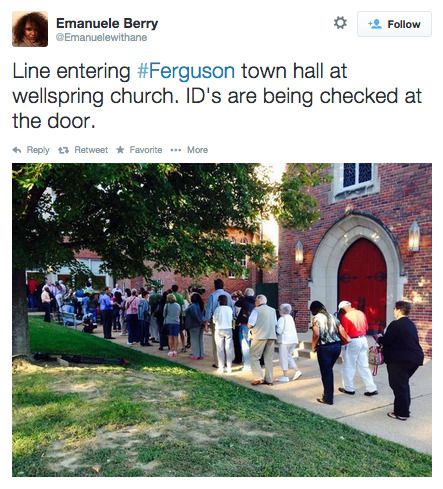
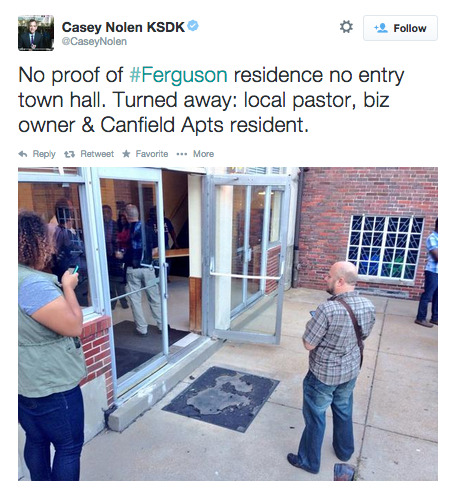
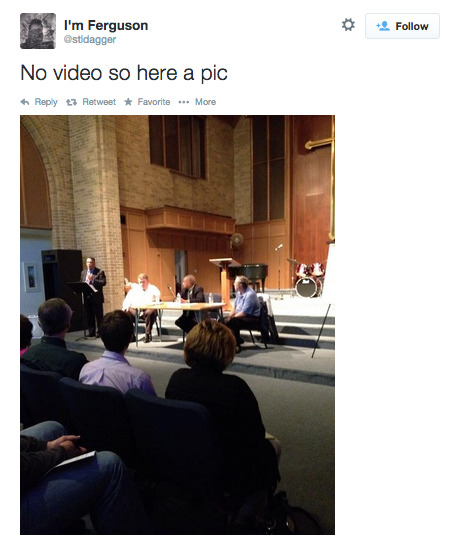
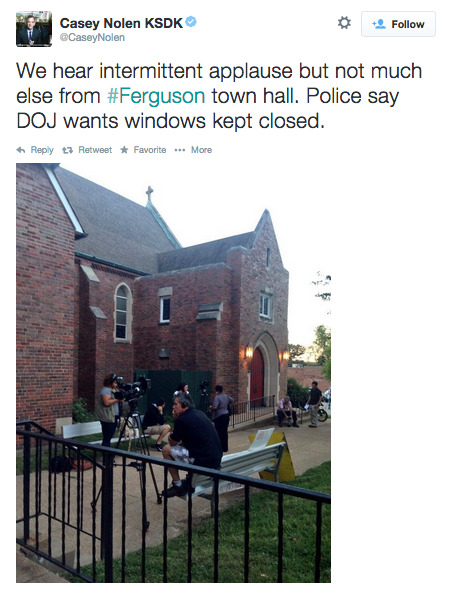
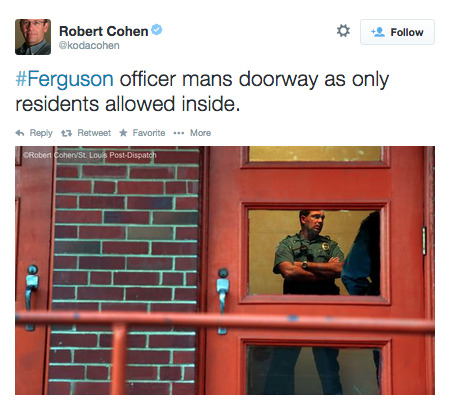
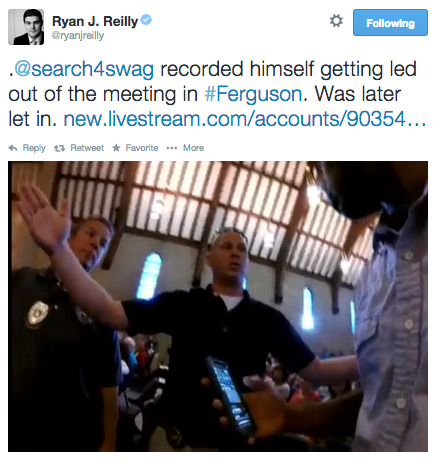
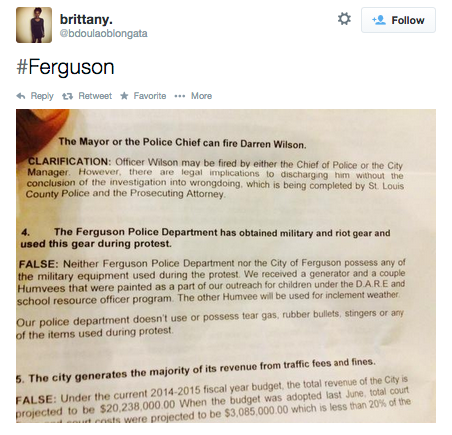
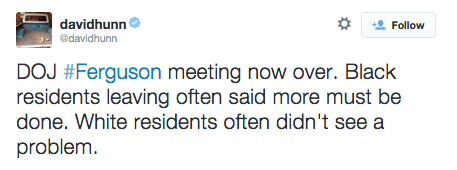

Can’t stop, won’t stop (9.22): Updates from tonight’s town hall are slow coming due to the virtual media black out, but it seems like the name of tonight’s game was “Pass the Buck.” Hard to heal when no one’s willing to take responsibility for their wrongs. #staywoke #farfromover
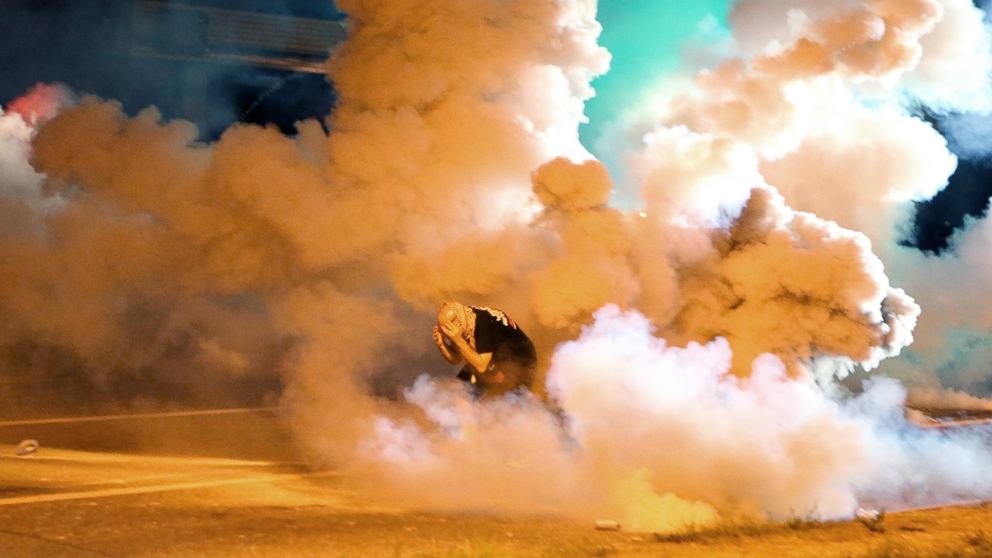
okay but how can they even begin to deny having military gear when there are literally hundreds of pictures of cannisters and riot gear???
I MEAN…
is this some semantic-based loophole?!
"Our police department doesn’t use or possess tear gas, rubber bullets, stingers, or any of the items used during protest."
So are they admitting those items were used during the protests? Or are they saying “we don’t use them during protests [but we didn’t consider those times protests]”
Like what in the holy fuck is happening?
MattalystThat's...close to the worst thing for a major bug to be found in.

UPDATE, 9/25: The Bash vulnerability, now dubbed by some as "Shellshock," has been reportedly found in use by an active exploit against Web servers. Additionally, the initial patch for the vulnerability was incomplete and still allows for attacks to succeed, according to a new CERT alert. See Ars' latest report for further details, our initial report is below.
A security vulnerability in the GNU Bourne Again Shell (Bash), the command-line shell used in many Linux and Unix operating systems, could leave systems running those operating systems open to exploitation by specially crafted attacks. “This issue is especially dangerous as there are many possible ways Bash can be called by an application,” a Red Hat security advisory warned.
The bug, discovered by Stephane Schazelas, is related to how Bash processes environmental variables passed by the operating system or by a program calling a Bash-based script. If Bash has been configured as the default system shell, it can be used by network–based attackers against servers and other Unix and Linux devices via Web requests, secure shell, telnet sessions, or other programs that use Bash to execute scripts.
Read 8 remaining paragraphs | Comments
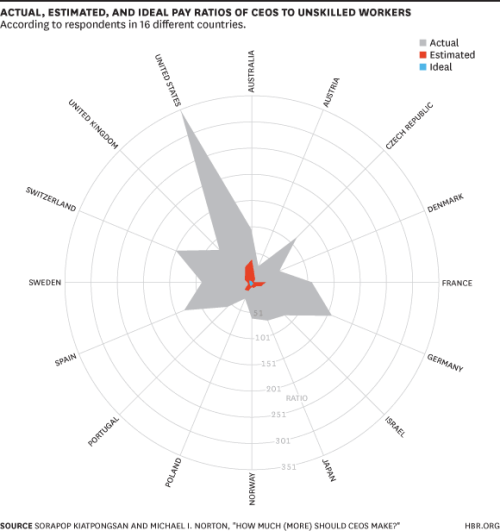
*That red stuff is what people still think economic reality is and the gray stuff is the actual reality. Americans, not even in the contest

Double Fine is pleased to announce that, along with the console exclusive PlayStation 4 and Vita versions of Grim Fandango, Manny will also reap once again on PC, Mac, and Linux!
And that’s not all, folks! All versions will be launching simultaneously, so everyone can play on day one and not have to worry about those spoilers you’ve been successfully avoiding for the past fifteen years. (Pro-tip: stay off Twitter.)
But hopefully, after all those years of patience, you can hold out just a BIT longer.

:strip_icc(1)/https%3A%2F%2Fs3.amazonaws.com%2Fpolicymic-images%2Fth2i29who3thshk1zf9h3wshgrsrxl9zfkbxf8j9fs2xcf8mkc5b594nnsn16hg0.jpg)
Korean recording artist Hitchhiker's new music video is pretty crazy. #seapunk meets #ababa. This bizarre CGI creation is making the viral rounds, and for good reason. Below, here's an equally mysterious video on Hitchhiker's origins. Read the rest
MattalystCotard's is totally fascinating, and it's probably the direction my mind would break if I were psychotic.

One morning, Esme Weijun Wang woke up dead. Wang, a California-based writer, shook her husband and shared the news.
Im dead, she said. And youre dead, and Daphne is dead, but now I get to do it over again. Dont you see? I have a second chance. I can do better now.
Esm was suffering from Cotards Delusion, a rare psychosis in which she believed that she was dead. Her delusion persisted for months and, throughout the ordeal, she remained more or less convinced that she and her loved ones had died. Her beating heart and her thinking mind felt like illusions—Esm swore that she was in heaven or, some days, in hell.
And then she wrote about it. In Perdition Days, she describes her delusion while she is still suffering from it, and the result is a haunting, touching (and sometimes humorous) take on mental illness. I caught up with Esm about what its like to be perfectly alive but swear you're dead, and how you ever find the time to write about it.
MOTHERBOARD: So last summer you thought you were dead.
Esm: Just to clarify, it was last winter that I thought I was dead.
Ah, right. How did it come on?
I think it began back in November 2013, when I went to my husband and started telling him about how I had died and that I was in heaven, but that it was OK because I was getting a second chance to do everything over again.
An interesting thing about delusions is their ability to be very logical in some ways. Id worked out this whole scenario, based on a time when I had actually fainted in an airplane on a flight from England. In my delusion, I believed that I had died on that plane, and so I was in heaven.
That was one phase of the delusion. But then it turned pretty hellish.

Photo courtesy Esme Weijun Wang
What happened?
I started believing that I was in hell.
At times, when my level of insight was relatively high, I would believe that I was dead and in hell, but that there was still a small chance that I was not—so I should go to the doctor and take my pills. But the worst of it was when I had pretty much no insight and just found it absolutely torturous. Its interesting, looking back, that I never considered suicide during that time. And theres a reason for that: theres no reason to commit suicide if youre already dead.
And while you were experiencing this, you were writing an essay?
Yes. At the time, I was having symptoms of catatonic psychosis, which often meant that I couldnt do much except lie in bed. But there were times when I was able to use my iPad. I have this distinct memory of opening up EverNote, and tapping in the words that ended up basically being my essay, Perdition Days.
The experience of writing this story was actually helpful to me because storytelling and words are really the way I keep things together.
Perdition Days was not the first time you've written about your personal struggles with mental health. Is it difficult to write about something so personal?
Its funny that you ask that, because I just published a very short piece on my website a couple of hours ago, and I have been feeling very vulnerable about it
In general, I feel pretty comfortable writing about mental health issues; at least since I decided to publicly write about my mental health struggles in around 2012. I think it helps people. I really appreciate the emails and letters that Ive gotten from people who have read things that Ive written. It encourages me to write more and help other people.

Photo courtesy Esme Weijun Wang
And you have. You actually wrote a book, Light Gets In, about living with schizoaffective disorder.
I self-published that book when I was at a writing residency earlier this year. It is composed of short pieces that are essentially embellished blog posts. I am also working on a much bigger project, which is a book of essays about schizophrenia.
In Perdition Days, one reader commented that you, "write wonderfully about the horror." Are you worried that some readers will turn to your work out of morbid curiosity, rather than focusing on the plight of those struggling with very real mental health challenges?
Well, I must point out that there are several incredibly awful articles already out there on the internet about Cotards Delusion, with titles like, real life reverse zombie disorder. If my essay somehow glamorizes Cotards, I hope its to a lesser degree than those articles.
I think when I approach writing about mental health struggles, especially when its something inherently fascinating like Cotards, I try to be honest and include both the funny things that can happen and the really awful things that can happen.
The funny things that can happen?
Sure! For people who havent read the essay, theres a moment where Im watching an Adam Sandler movie and James Taylor has a cameo. And when James Taylor comes out I have this very clear, uninhibited thought: I cant believe that Im dead and James Taylor is still alive. I was quite horrified about this for a while.
And now, you're free of Cotard's. How did it all end?
The way that the delusion ended is so incredibly boring. I dont even know exactly when it ended. One day, I was singing a song about my dog, Daphne—as I am wont to do—and the song was about how I believed in my dog. My husband turned to me and asked, Do you? Do you really believe in Daphne?
And I realized that I did.
MattalystYessssss, this is next on my to-play list.