Shared posts

15 Jun 16:35

Democracy in America is a rigged game

by Ian Millhiser
An illustration shows figures falling figures amid chess pieces, depicting the idea of a game.

The Constitution was written to thwart Black freedom. But we can change the rules.

Part of the Juneteenth issue of The Highlight, our home for ambitious stories that explain our world.

For six years, at the height of Southern leaders’ massive resistance to desegregation, Derrick Bell held one of the most harrowing jobs in the legal profession.

From 1960 to 1966, as an attorney with the NAACP Legal Defense and Educational Fund, Bell oversaw desegregation lawsuits in the South, trying to make real the integration promised by Brown v. Board of Education.

In the first decade after Brown, integration made little headway — by 1964, only 1 in 85 African American students in the South attended integrated schools. Often, Bell and his colleagues couldn’t even find a plaintiff willing to sue a segregated district, because Black families justifiably feared they’d be targeted by the Ku Klux Klan if their names appeared on a lawsuit.

Black civil rights lawyers also risked their lives litigating cases. Once, while he was defending two criminal suspects in Tennessee, future Supreme Court Justice Thurgood Marshall was arrested on false charges and nearly lynched by a white mob.

Bell, who died in 2011, eventually left behind his career as a full-time civil rights lawyer. But the experience of watching the promise of equality beat down by violent white supremacists informed his work as a critical race scholar.

“Racial equality is, in fact, not a realistic goal,” he wrote in 1992, warning that “by constantly aiming for a status that is unobtainable in a perilously racist America, black Americans face frustration and despair.”

To be clear, Bell did not counsel passive despair. “We must maintain the struggle against racism else the erosion of black rights will become even worse than it is now,” Bell warned in his essay, and he viewed this constant striving as worthy in its own right. “The struggle for freedom is, at bottom, a manifestation of our humanity that survives and grows stronger through resistance to oppression,” he wrote, “even if that oppression is never overcome.”

Bell understood something profound about the United States: The American political system is a rigged game. It was originally meant to advantage enslavers and today benefits anti-egalitarian actors with little interest in true racial equality.

That fact has led to the constant “erosion of black rights” that Bell chronicled — something clearly on display one year ago, not long after President Joe Biden had signed legislation marking Juneteenth as a federal holiday. In the president’s words, the holiday “marks both the long, hard night of slavery and subjugation, and a promise of a brighter morning to come.”

Two weeks later, the Supreme Court defiled that promise, imposing new limits on the Voting Rights Act, which has, since 1965, forbidden race discrimination in elections. The Court’s new restrictions on the Voting Rights Act are unlikely to be the last.

Even as the United States celebrates freedom for African Americans, the political equality that sustains that freedom is slipping away.


The pattern in American civil rights history has been brief periods of rapid pro-egalitarian progress — think the post-Civil War period or the civil rights era — followed by much longer periods of retrenchment, when dominant groups claw back many of those gains.

If the United States is to break its cycle of brief periods of egalitarian triumphs, and longer periods of resentment and retreat, we must have a Constitution that, unlike our current one, fully honors the principle that all people are created equal.

The original Constitution — that is, the document drafted at the Constitutional Convention of 1787 — was a truly monstrous document. It was, in the words of abolitionist William Lloyd Garrison, “a covenant with death, and an agreement with hell.”

The framers, who included both enslavers and staunch opponents of slavery, produced a document that contains at least four provisions added for the very purpose of protecting slavery. Several other features of the Constitution, like the Electoral College, for example, may not have been inserted for the purpose of promoting slavery, but they certainly had that effect.

Though modern-day scholars disagree about whether the Electoral College was, in the words of Harvard historian Jill Lepore, “a compromise over slavery,” it nevertheless gave tremendous political power to the states that enslaved the most people. That’s because the Constitution gives each state a number of electoral votes matching the number of seats it controls in Congress, and the Constitution’s infamous three-fifths clause permitted slave-holding states to count 60 percent of their enslaved population when US House seats were apportioned.

Even after the Northern population outstripped the South’s to such a degree that slave states could not dominate the House, another anti-democratic feature of our Constitution ensured that enslavers would wield outsize power.

The Senate remained a bastion of power for enslavers for generations. Because the Constitution gives each state two senators regardless of its population, enslavers could still block anti-slavery legislation so long as they did not permit the total number of free states to exceed the number of slave states, something they did successfully for decades.


Two hundred and thirty-five years after the Constitutional Convention, the Constitution remains a profoundly inegalitarian document. The Senate and the Electoral College remain stains on the soul of the nation.

Similarly, while three constitutional amendments ratified after the Civil War abolish slavery, pledge equal citizenship rights to all Americans, and promise equal voting rights, these promises were only as valuable as the public officials entrusted with keeping them. As anyone familiar with the history of the Jim Crow South knows, most of these officials didn’t even begin to keep these promises for nearly a century.

The times when those promises were kept at all can be attributed to “interest convergence,” a phenomenon Bell first wrote about more than four decades ago: “The interest of blacks in achieving racial equality is accommodated only when that interest converges with the interests of whites in policy-making positions.”

Bell did not argue that white people “concerned about the immorality of racial inequality” are nonexistent, but he believed that this cohort of white people is insufficient to form a victorious political coalition when it links arms with Black people.

To some extent, Bell’s principle is implicit in the fact that racial minorities are, well, in the minority. And Black people have historically carried a particular burden because white supremacists have often tried to separate them from the social and political mainstream, in many cases through explicitly segregationist policies.

The Constitution’s pathologies exaggerate this problem. Because of the Electoral College, Senate malapportionment, and quasi-constitutional barriers to legislation such as the filibuster, Black Americans — and the broader Democratic coalition that most Black voters belong to — need to win supermajorities in multiple elections to pass legislation protecting their rights, like a law restoring the Voting Rights Act.

Even if they were to successfully do that, Republicans need only to file a lawsuit and convince five of their fellow partisans on the Supreme Court to strike down that legislation.

This is not a new dilemma — the structural barriers facing Democrats today pale in comparison to the ones facing enslaved Black people in 1860, or the ones facing civil rights activists in 1960. But one of the frustrating things about this particular moment in American history is that our Constitution now prevents Black Americans from achieving crucial civil rights victories even when a coalition aligned with their interests controls the Congress and the White House — and when their interests align with a majority of the nation.

That is a potent reminder that, in those rare moments when an egalitarian coalition does wield power, it should emphasize structural reforms that will allow it to achieve future victories and sustain past ones.

Because the best way to win a rigged game is to change the rules.


In 2022, the interests of Black people have converged with the nation’s majority political party, at least on the crucial topic of voting rights.

The president of the United States supports legislation to restore the sort of voting rights protections that the Supreme Court stripped away in Shelby County and similar cases. So does the vice president. So do 219 members of the House of Representatives. So does every Democrat in the Senate — although Sen. Joe Manchin (D-WV) backs a weaker version of this legislation than the Democratic leadership initially proposed.

Yet, because of structural barriers such as Senate malapportionment and the filibuster, this convergence of interests is not enough to pass a bill through Congress.

In the current Senate, Democrats and Republicans control an equal number of seats, but the Democratic “half” represents 43 million more people than the Republican “half.” Black people, and racial minorities generally, bear the brunt of this uneven representation. According to a 2019 memo by the progressive think tank Data for Progress, Black voters have nearly 20 percent less influence over Senate elections than they would if Senate seats were distributed fairly so that every American’s vote counted the same.

In effect, while the Constitution once treated Black Americans as three-fifths of a person, today’s Senate treats Black Americans as four-fifths of a person.

 Data for Progress

Absent structural reform, it’s going to get worse. By 2040, according to a University of Virginia analysis of census projections, half of the United States will live in eight states. About 70 percent will live in 16 states — which means that just over 30 percent of the population will control 68 percent of the Senate.

This sorting of most Americans into just a few states has profound implications for Black voters, who are overwhelmingly Democratic. In the last three presidential elections, the Democratic candidate received 90 percent or more of the Black vote — and it may soon be impossible for Democrats to win a majority in the United States Senate.

One of the best predictors of partisan voting patterns in the United States is population density — densely populated areas tend to be Democratic bastions, while sparsely populated areas are typically Republican strongholds. If this pattern holds, Republicans may soon gain a permanent supermajority in the Senate.

Without a Senate majority, Democrats not only won’t be able to pass federal legislation, they also won’t be able to confirm justices to replace the ones who voted to gut the Voting Rights Act. In effect, Black Americans — as well as non-Black Democrats, urban residents, and liberals generally — will only be able to achieve policy victories when their interests converge with an overwhelmingly white Republican Party.

Perhaps that will happen occasionally, especially on symbolic matters; the vote to make Juneteenth a federal holiday was bipartisan. It’s also possible that, especially as the United States slides closer to one-party rule, an increasing number of conservative Black Americans will join the GOP in the hopes of gaining some modicum of political power.

But on issues like voting rights, it’s hard to imagine Black interests converging with Republican interests anytime soon. Why would the GOP protect the voting rights of a cohort that overwhelmingly prefers Democrats?


It’s not that there isn’t hope for Black Americans. It’s easy to design a more just and egalitarian system than the US Constitution. But it is also very hard to make an ideal constitution into a reality.

The obvious first step is to abolish the Senate or to, as University of Connecticut historian Manisha Sinha suggested to me, “make our Senate a bit like the House of Lords” — a largely advisory body that does not have the power to block legislation outright.

Assuming that the United States retains a system where the chief executive is elected separately from the legislature, the Electoral College also must go. In 2020, President Joe Biden defeated Republican Donald Trump by more than 7 million votes. Yet he would have lost the presidency if only 43,000 Biden voters in Georgia, Arizona, and Wisconsin had not cast a ballot. That’s not acceptable in a nation that purports to be a democratic republic.

Then there’s the problem of gerrymandering.

Racial gerrymandering remains a prominent feature of American elections, and the Supreme Court appears determined to keep it that way. Last February, for example, the Court voted 5-4 to reinstate an Alabama congressional map that gave Black voters 14 percent of the state’s US House seats — even though African Americans make up about 27 percent of the state’s population.

The best solution to the problem of gerrymandering is proportional representation. In a proportional system, the nation would be divided into large electoral districts that would each receive several seats in Congress.

These seats would then be allocated according to the total percentage of votes each party receives — so if the Democratic Party receives 35 percent of the votes in a particular district, it would receive about 35 percent of that district’s seats. Under our current system, a district composed of 55 percent white Republicans and 45 percent Black Democrats will send zero Democrats to Congress. Under a proportional system, the Black minority in such a district would receive nearly as much representation as the white majority.

Realistically, a constitutional amendment is not a viable solution to implement any of these reforms. Amendments require three-quarters of the state legislatures to agree. And it’s unlikely that states that benefit from the Constitution’s anti-democratic pathologies would agree to cure them.

There may be feasible ways to enact some of these reforms without an amendment. The National Popular Vote Compact, for example, calls for a bloc of states adding up to a majority of the Electoral College’s electoral votes to agree to give those votes to whichever candidate wins the popular vote. It’s an ingenious way to nominally leave the Electoral College in place, while simultaneously ensuring that the candidate who wins the popular vote becomes president.

Other ways around the effectively unamendable Constitution are lawful, but difficult to imagine happening. A 2020 proposal in the Harvard Law Review, for example, suggested dividing the (heavily Democratic) District of Columbia into more than 100 states and admitting them all into the Union — and then immediately having these new states approve a raft of pro-democracy amendments to the Constitution.

The thing these solutions have in common is that they’re the sort of fixes that pit the Constitution’s formalistic rules against its spirit, and they’d likely trigger a significant backlash — or be struck down by a Supreme Court that is still controlled by Republicans — unless they had a truly overwhelming political coalition behind them.

Yet, if the reforms suggested above are ambitious and difficult to implement, they are also equal in magnitude to the crisis facing American democracy. If nothing changes, an overwhelmingly white, increasingly authoritarian political coalition could soon gain the enduring power to veto any federal law, along with perpetual control of the Supreme Court.

That is not a democracy, and it is unworthy of a nation that claims to be founded on the principle that all people are created equal.


Transforming the United States into an egalitarian democracy will not be easy. But, as Niko Bowie, a professor at Harvard Law School, reminded me when I asked him how to overcome the many structural disadvantages plaguing American egalitarian movements, “the United States has faced such a crisis before ... nevertheless, democracy has emerged.”

It has emerged thanks to the work of those who retained a clear moral vision in the face of anti-egalitarianism. So let me close by attempting to offer the same sort of moral clarity William Lloyd Garrison offered to the abolitionist movement.

It is wrong that our Constitution denies the fundamental equality of all Americans. It is wrong to count some votes more than others. It is wrong to drive families into poverty solely because we count some votes more than others. It is wrong to allow the one unelected branch of government to dismantle our voting rights. It is wrong that our Congress will not restore those rights because a few senators care more about preserving the filibuster than they do about ensuring that Black people have an equal voice in our society.

And it is wrong that an authoritarian narcissist, who possesses no aptitude for or interest in governance, was allowed to occupy the White House after receiving nearly 3 million fewer votes than his opponent.

Juneteenth is an apt time to reflect on these matters. It’s a reminder of our nation’s most unforgivable sin. But it is also a celebration of freedom, and of those who overcame unimaginable odds to write equality into our Constitution. It is past time that we made that promise real, by changing the Constitution, if need be.

As Garrison said in 1844, “it is an insult to the common sense of mankind, to pretend that the Constitution was intended to embrace the entire population of the country under its sheltering wings; or that the parties to it were actuated by a sense of justice and the spirit of impartial liberty; or that it needs no alteration.”

Ian Millhiser is a senior correspondent at Vox, where he focuses on the Supreme Court, the Constitution, and the decline of liberal democracy in the United States.

15 Jun 11:54

President Biden Signs Executive Order That Will Give Us A Couple Of Years Of Decent Law Enforcement Reforms

by Tim Cushing

The murder of George Floyd by Minneapolis police officer Derek Chauvin was a flashpoint for police reform efforts around the nation. Cops had been killing unarmed minorities for years but this one was so spectacularly brutal and symbolic of institutional racism (a white cop pressing his knee to a black man’s neck), it couldn’t be ignored.

The last administration, headed by law enforcement sycophant Donald Trump, pretty much ignored this killing. When it did react, it promised to punish victims of racial injustice for expressing their anger and made it clear the administration would not be cracking down on police violence or misconduct.

There’s a new president now and police reform efforts are back on the table. President Biden has issued an executive order instituting a number of useful, if limited, law enforcement reforms that should — at least as long as he remains in office — result in more accountability than we’ve seen to date.

For starters, it looks like we’ll finally be seeing some stats on police use-of-force and misconduct being collected at the federal level. Unfortunately, the initial efforts will be limited to federal agencies.

All federal law enforcement agencies will contribute to a National Law Enforcement Accountability Database regarding instances of police misconduct as well as submit information to the FBI related to use-of-force incidents. The U.S. attorney general will review the status of and compliance with federal reporting requirements. This also includes the issuance of guidance to state, local, and tribal law enforcement agencies on best practices for contributing their data to federal systems.

This is something the DOJ has been mostly uninterested in collecting for most the last two decades, despite periodic assurances from the FBI that it will send out another mass email reminding local law enforcement agencies to contribute data if they feel like it.

What this data collection adds is information on police misconduct, which has never been harvested at the federal level. Again, the only agencies required to contribute are federal agencies, but presumably the DOJ can apply some sort of pressure to ensure more contributions, possibly by tying federal grants to participation. Whether or not the DOJ can talk the locals into sending records, we’ll at least have a pretty comprehensive view of misconduct at the federal level:

records of criminal convictions; suspension of a law enforcement officer’s enforcement authorities, such as de-certification; terminations; civil judgments, including amounts (if publicly available), related to official duties; and resignations or retirements while under investigation for serious misconduct or sustained complaints or records of disciplinary action based on findings of serious misconduct

The DOJ is also tasked with ensuring more participation in the long-neglected use-of-force database the FBI has barely bothered to oversee for 20 years.

The Attorney General, in consultation with the United States Chief Technology Officer, shall work with State, Tribal, local, and territorial LEAs to identify the obstacles to their participation in the Use-of-Force Database; to reduce the administrative burden of reporting by using existing data collection efforts and improving those LEAs’ experience; and to provide training and technical assistance to those LEAs to encourage and facilitate their regular submission of use-of-force information to the Use-of-Force Database.

The biggest obstacle is probably “we don’t want to,” something that’s going to be difficult to overcome when participation is voluntary and there are few options the DOJ can deploy that wouldn’t result in some Tenth Amendment issues.

There are also some quasi-bans of controversial techniques like chokeholds and no-knock warrants. Unfortunately, the same exceptions that have allowed officers to deploy these techniques are still included in the executive order. Chokeholds are “banned” except “where the use of deadly force is authorized by law.” No-knock warrants are “banned” unless officers declare in their warrant affidavit that announcing their presence would “create an imminent threat of physical violence” to the officers or someone else in the residence. In other words, say the right things and you can still get the warrant and/or choke someone to death.

On the plus side, the executive order directs the DOJ to try to turn the patchwork of law enforcement officer credentialing into something more cohesive, standardized, and (presumably) make it easier to search officers who have been stripped of their credentials. Accreditation would be handled by an independent body and law enforcement agencies will not be allowed to “self-certify” without outside review by the Attorney General’s office.

Compliance for some of the many, many reforms listed will be encouraged through access to federal funds. The administration controls several discretionary grants and the AG’s office has been told to examine what can or cannot be withheld from local agencies should they fail to meet federal standards or participate in data collection efforts.

There’s a lot to like in the expansive executive order. But much of what’s listed here should be considered a baseline, rather than the end goal. What’s most useful about this order is that these baselines haven’t previously been established at the federal level. Instead, the DOJ has been given the discretion to pick and choose what it wants to fix and what it would rather ignore.

The EO restarts some 1033 program restrictions instituted by Barack Obama when he was in office. It directs studies into the civil rights impact of facial recognition AI and other surveillance tech. It also expands federal data collection to include information on police service calls, asset forfeiture programs, stops, searches, frisks, complaints, and the demographics of law enforcement agencies.

Unfortunately, it’s greatest strength — that it’s an executive order — is also its greatest weakness. The executive branch has lots of power. But it’s limited, for the most part, to that administration. Once the president instituting the order is out of office, the next person sitting in the Oval Office has the power to roll back any orders they don’t like. Executive orders have no built-in expiration date but they’re far easier to nullify than laws passed by Congress. So, this will be good while it lasts. And given the amount of time given for the DOJ and federal law enforcement agencies to implement the elements of this order, the reforms may not even be in place before they’re negated by a regime change. If any of this is going to stick, it’s going to need to be codified. And that seems unlikely, no matter who the Commander-in-Chief is.

15 Jun 11:39

Google AI Fracas Shows How The Modern Ad-Based Press Tends To Devalue The Truth

by Karl Bode

The Washington Post dropped what it pretended was a bit of a bombshell. In the story, Google software engineer Blake Lemoine implied that Google’s Language Model for Dialogue Applications (LaMDA) system, which pulls from Google’s vast data and word repositories to generate realistic, human-sounding chatbots, had become fully aware and sentient.

He followed that up with several blog posts alleging the same thing:

Over the course of the past six months LaMDA has been incredibly consistent in its communications about what it wants and what it believes its rights are as a person.

That was accompanied by a more skeptical piece over at the Economist where Google VP Blaise Aguera y Arcas still had this to say about the company’s LaMDA technology:

“I felt the ground shift under my feet … increasingly felt like I was talking to something intelligent.”

That set the stage for just an avalanche of aggregated news stories, blog posts, YouTube videos (many of them automated clickbait spam), and Twitter posts — all hyping the idea that HAL9000 had been born in Mountain View, California, and that Lemoine was a heroic whistleblower saving a fledgling new lifeform from a merciless corporate overlord:

The problem? None of it was true. Google had achieved a very realistic simulacrum with its LaMDA system, but almost nobody who actually works in AI thinks that the system is remotely self-aware. That includes scientist and author Gary Marcus, whose blog post on the fracas is honestly the only thing you should probably bother reading on the subject:

Nonsense. Neither LaMDA nor any of its cousins (GPT-3) are remotely intelligent.1 All they do is match patterns, draw from massive statistical databases of human language. The patterns might be cool, but language these systems utter doesn’t actually mean anything at all. And it sure as hell doesn’t mean that these systems are sentient.

Which doesn’t mean that human beings can’t be taken in. In our book Rebooting AI, Ernie Davis and I called this human tendency to be suckered by The Gullibility Gap — a pernicious, modern version of pareidolia, the anthromorphic bias that allows humans to see Mother Theresa in an image of a cinnamon bun.

That’s not to say that what Google has developed isn’t very cool and useful. If you’ve created a digital assistant so realistic even your engineers are buying into the idea it’s a real person, you’ve absolutely accomplished something with practical application potential. Still, as Marcus notes, when truly boiled down to its core components Google has built a complicated “spreadsheet for words,” not a sentient AI.

The old quote “a lie can travel halfway around the world before the truth can get its boots on” is particularly true in the modern ad-engagement based media era, in which hyperbole and controversy rule and the truth (especially if it’s complicated or unsexy) is automatically devalued (I’m a reporter focused on complicated telecom policy and consumer rights issues, ask me how I know).

That again happened here, with Marcus’ debunking likely seeing a tiny fraction of the attention of stories hyping the illusion.

Criticism of the Post came fast and furiously, many noting that the paper lent credibility to a claim that just didn’t warrant it (which has been a positively brutal tendency of the political press the last decade):

This tends to happen a lot with AI, which as a technology is absolutely nowhere near sentience, but is routinely portrayed in the press as just a few clumsy steps from Skynet or Hal9000 — simply because the truth doesn’t interest readers. “New technology is very scary” gets hits, so that was the angle pursued by the Post, which some media professors and critics thought was journalistic malpractice:

In short the Post amplified an inaccurate claim from an unreliable narrator because it knew that a moral panic about emerging technology would grab more reader eyeballs than a straight debunking (or obviously the correct approach of not covering it at all). While several outlets did push debunking pieces after a few days, they likely received a fraction of the attention of the original hype.

Which means you’ll almost certainly now be running into misinformed people at parties who think Google AI is sentient for years to come.

14 Jun 19:34

Texas DPS Wants Uvalde Bodycam Footage Buried Because It Might Let School Shooters Know Cops Won’t Stop Them From Killing Children

by Tim Cushing

The Uvalde Police Department — which currently avails itself of 40% of the town’s budget — did nearly nothing to stop an extremely horrific school shooting that resulted in 19 dead children, two dead teachers, and 17 others being wounded.

While Robb Elementary turned into a bloodbath, Uvalde officers retreated after a couple of flesh wounds, apparently unwilling to sacrifice their lives for children. They spent nearly an hour doing nothing than listening to nearby gunshots and ignoring 911 calls placed by students brave enough to risk their lives to save their classmates. What they did do is restrain parents who attempted to rescue their kids — something that involved pepper spray and Tasers. Meanwhile, off-duty Uvalde police officers allegedly entered the building to remove their own children from Robb Elementary.

It was a Border Patrol Tactical Team that finally ended the violence. And it seemingly had nothing to do with the Uvalde PD’s response to a rapidly changing, extremely violent situation. According to reports that followed multiple bullshit statements by the Uvalde PD and other Texas law enforcement agencies, a Border Patrol officer received a text from his wife about the shooting. This off-duty federal officer evacuated several students (as well as his own daughter and acted as a liaison with the BP tactical unit that finally ended the killing).

Having failed to act as the fearless heroes law enforcement tends to demand everyone view them as, the Uvalde PD — along with other law enforcement officials — are now trying to bury the inconvenient truths that have disrupted the preferred narrative.

The shooting has provoked a lot of public records request activity. So far, none of the involved law enforcement entities have been willing to release the least biased source of information about the school shooting: body camera footage.

Reports are often just history being rewritten by the presumptive winners: government officials. This remains true even if cops appear to have taken a loss. Internal investigations are dragged out for months, if not years, to ensure public outrage is nearly nonexistent when the results are announced.

Journalists working for Vice have requested body cam footage from all agencies involved in the response to the Uvalde school shooting. So far, no one has turned any footage over. The Border Patrol claims its body cam footage is exempt because the incident is currently under investigation. The Uvalde PD and Uvalde school district have refused to even acknowledge Vice’s public records requests. That seems about right for these two entities, which are also refusing to cooperate with a federal investigation of the shooting and local law enforcement’s response.

None of this is surprising. The school district is a hotbed of potential legal culpability at this point. And so is the police department it relies on to keep students and teachers safe… not just because that’s what people expect of law enforcement officers but also because the district utilizes department officers as on-campus law enforcement.

One Texas law enforcement agency has been a bit more forthcoming: the Texas Department of Safety has informed Vice journalists that body cam footage they’re seeking does exist. But rather than turn it over, the DPS is asking state Attorney General Ken Paxton (now in his seventh year of fraud indictment) to block the release of this footage under the theory that it might let school shooters know how little resistance they’ll face from local law enforcement agencies.

This is the assertion in favor of (apparently indefinite) secrecy the DPS has made in response to these records requests.

“Revealing the marked records would provide criminals with invaluable information concerning Department techniques used to investigate and detect activities of suspected criminal elements; how information is assessed and analyzed; how information is shared among partner law enforcement agencies and the lessons learned from the analysis of prior criminal activities,” the department wrote in a letter to the Office of the Attorney General that asked the office to prevent the release of the public records. “Knowing the intelligence and response capabilities of Department personnel and where those employees focus their attention will compromise law enforcement purposes by enabling criminals to anticipate weakness in law enforcement procedures and alter their methods of operation in order to avoid detection and apprehension.”

Keep in mind this is standard opacity boilerplate. The DPS might have said the same thing about footage of a contested cash seizure or a botched no-knock raid. But maybe someone at the DPS should have tailored the boilerplate to the situation at hand, because this response makes it appear the DPS does not want the footage released because it might show the “weakness” of the “response” to the shooting by the Uvalde PD.

But the only thing the next school shooter might learn is what they’ve learned already from press coverage of the Uvalde shooting: local law enforcement agencies may not be willing (despite being specifically informed during active shooter training that they are expected to place themselves in the line of fire) to sacrifice their lives or personal safety to save the lives of children. Few mass murderers will need to be informed that government employees will most frequently act in their own interests, often at higher rates than the rest of public.

The so-called “first rule of policing” is to make it home alive, no matter who else has to die to ensure this outcome. The DPS smoke screen being deployed here does nothing to reduce the possibility of future mass shootings or give the public a better understanding about state and local crisis response efforts. All it does is ensure the officers that let everyone down during the Robb Elementary shooting will be given every opportunity to disappoint the public again at some point in the future.

14 Jun 16:23

The Supreme Court saved a man from execution in 2020. It just took that back.

by Ian Millhiser
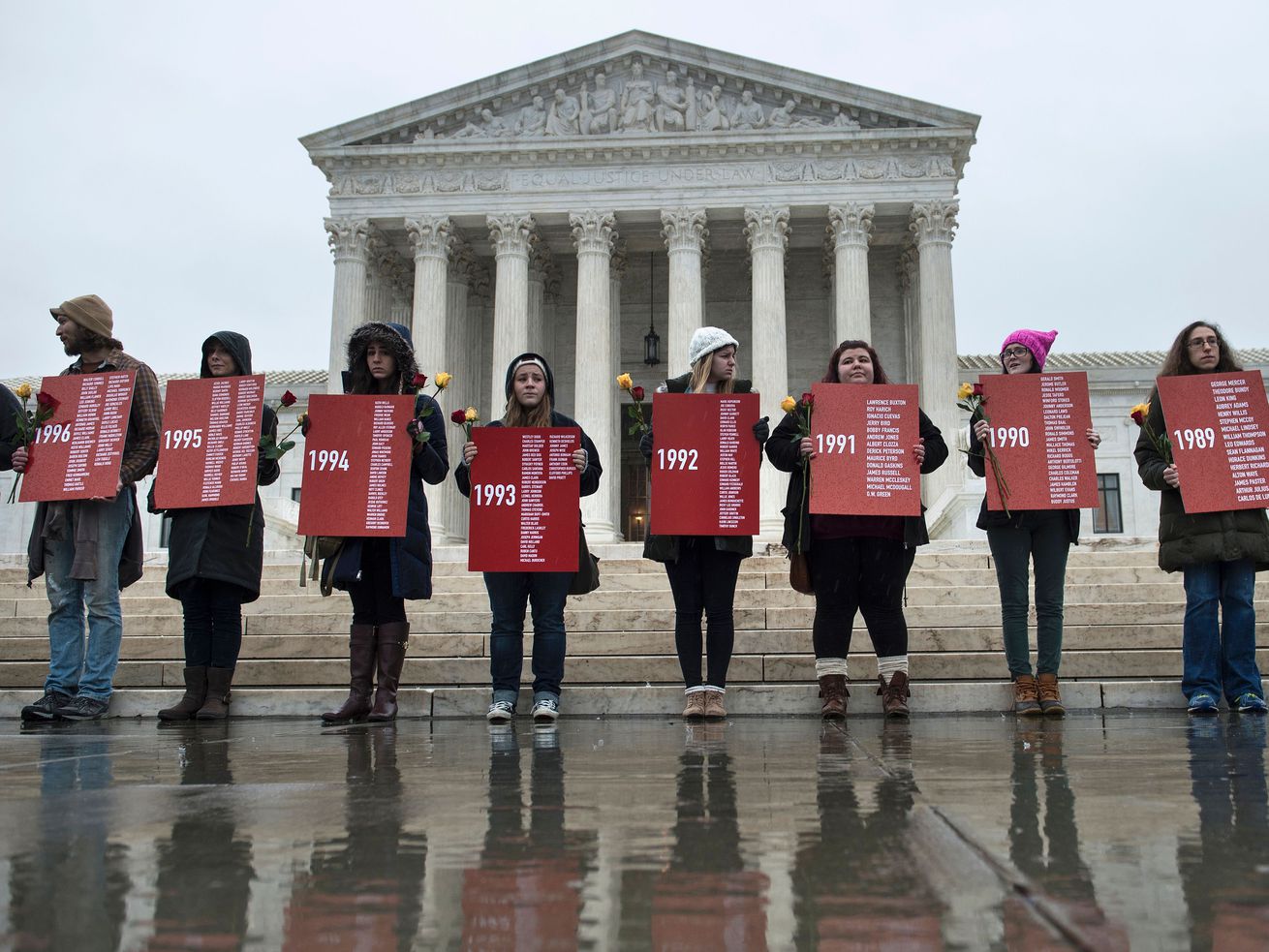
A line of people holding red signs stand in front of the US Supreme Court’s white marble steps.
Activists hold signs with the names of people executed in the United States since 1977, during a protest opposing the death penalty in front of the Supreme Court, in January 2017. | Brendan Smialowski/AFP via Getty Images

In Andrus v. Texas, the Supreme Court’s new majority shows that it doesn’t care what the old majority had to say.

Two years ago, the Supreme Court determined that Terence Andrus, a death row inmate in Texas, received unconstitutionally ineffective legal counsel at his murder trial. On Monday, the Court effectively disregarded this decision — permitting a Texas court that openly defied the Supreme Court’s 2020 opinion to reinstate Andrus’s death sentence.

The Court’s 2020 decision in Andrus v. Texas explained, in great detail, that Andrus grew up in an abusive household. His mother sold drugs out of their home and also engaged in sex work. She was sometimes absent for weeks while she binged on drugs, and she would bring home boyfriends who were physically violent — one of whom raped Andrus’s half-sister when she was just a child.

Andrus also has a serious mental health condition. As the Supreme Court laid out in its 2020 opinion, “Andrus had been ‘diagnosed with affective psychosis,’ a mental-health condition marked by symptoms such as depression, mood lability, and emotional dysregulation.”

And yet, Andrus’s trial counsel presented hardly any evidence that could have humanized Andrus and clarified to the jury that he deserved a sentence other than death. Indeed, his lawyer’s performance was so deficient that the Court voted 6-3 in 2020 to strike down his death sentence and send the case back to Texas’s highest criminal appeals court to reconsider the case.

It did so using an unusual process known as “summary reversal,” which the Court typically saves for the most outlandish errors by lower courts.

In response to the Supreme Court’s 2020 decision, the Texas criminal court released a defiant opinion that explicitly contradicted the Supreme Court’s analysis. The Texas court, for example, suggested that living through the rape of his half-sister did not significantly impact Andrus because “there was no evidence that [Andrus] suffered sexual abuse himself.” Similarly, the Texas court claimed that Andrus’s mental health issues must not have been “severe” because, as a child and teenager, he frequently cared for his siblings.

As Judge David Newell, a Republican who dissented from this defiant opinion, wrote, “this Court is not free to ‘re-characterize’” evidence that is “contrary to the United States Supreme Court’s holding.”

And yet, by deciding not to take up Andrus’s case Monday, the Supreme Court effectively blessed the Texas court’s insubordination.

Andrus’s trial counsel performed horribly

To understand the Supreme Court’s contradictory decisions in Andrus, it’s helpful to understand how states must conduct death penalty trials.

In 1972, the Supreme Court briefly abolished the death penalty in the United States. It reinstated it four years later in Gregg v. Georgia (1976). But Gregg also endorsed a two-step process that states should use to determine whether a particular individual may be sentenced to death.

Typically, capital cases are divided into a “guilt” phase and a “penalty” phase — the first of which determines whether the defendant actually committed a capital offense, and the second determines what sentence is appropriate. In the penalty phase, prosecutors argue that certain “aggravating circumstances” are present that justify a death sentence, such as if the offender had a history of serious violent crime. Defense lawyers then present evidence of “mitigating circumstances” that justify a lesser penalty.

Competent defense attorneys often present evidence that the defendant had a mental illness or was abused as a child during the penalty phase of a capital trial.

A death sentence is only warranted if the aggravating factors outweigh the mitigating factors. The idea is that death should be reserved for the most egregious offenders, and not for someone who, as Justice Sonia Sotomayor described Andrus, “was battling inner turmoil far beyond what he was able to vocalize.”

But Andrus’s trial counsel presented virtually none of the evidence that could have humanized Andrus and shown him to be deserving of mercy. The jury heard little about the horridly abusive and neglectful environment Andrus grew up in, or about his struggles with mental illness. It never heard that, when a young Andrus was incarcerated in a juvenile facility for 18 months, he was frequently given high doses of psychotropic drugs and spent extended periods — as much as 90 days — in isolation. It never learned that Andrus struggled with suicidal urges.

Andrus’s trial counsel also never rebutted key prongs of the prosecution’s aggravating evidence. Among other things, the prosecution presented evidence that Andrus once robbed a dry-cleaning business. But Andrus was never charged with this crime. And, as the Court’s 2020 opinion explained, Andrus’s trial counsel never told the jury that “the only evidence originally tying Andrus to the [dry-cleaning robbery] was a lone witness statement, later recanted by the witness.”

Indeed, as the 2020 Supreme Court decision determined, Andrus’s trial counsel didn’t even investigate many crucial parts of Andrus’s background, or many of the prosecution’s claims — including the weak evidence linking Andrus to the dry-cleaner robbery. The jury remained ignorant of the many reasons to give Andrus a sentence other than death because Andrus’s counsel was ignorant of this evidence.

The Texas court claimed that none of these errors by Andrus’s counsel mattered

Under the Supreme Court’s decision in Strickland v. Washington (1984), someone alleging that they received ineffective assistance of counsel during their criminal trial must prove two things in order to receive a new trial. They must show that defense “counsel’s performance was deficient” and that this “deficient performance prejudiced the defense.”

That is, it’s not enough to show that the lawyers screwed up; someone seeking a new trial must also show that their lawyers screwed up in a way that is “reasonably” likely to have led to a worse outcome than if the lawyer had performed adequately.

This can be a difficult bar to surmount, but it is not supposed to be an impossible one. In a death penalty case, the Court held in its 2020 Andrus decision, Andrus only needed to show that there was “a reasonable probability that at least one juror would have struck a different balance” during the penalty phase of his trial if Andrus’s lawyer had performed adequately.

The Supreme Court’s 2020 decision held that Andrus’s trial counsel’s performance was deficient. And it criticized Texas’s highest criminal court because it “did not analyze Strickland prejudice or engage with the effect the additional mitigating evidence highlighted by Andrus would have had on the jury.” It sent the case back down to that Texas court to determine whether, had Andrus’s counsel performed adequately, it was reasonably likely that at least one juror would have voted not to sentence him to die.

Rather than conduct this inquiry in good faith, however, the Texas court spent the bulk of its opinion criticizing the Supreme Court’s analysis in its 2020 decision, and disagreeing with the Supreme Court’s characterization of the mitigating evidence Andrus’s counsel should have presented — hence the Texas court’s language downplaying the impact of living in the same home where your sibling was raped as a child, or the severity of Andrus’s mental illness.

Then, after replacing the Supreme Court’s characterization of the evidence in Andrus’s case with its own, the Texas court concluded that this mischaracterized evidence does not justify granting Andrus a new trial.

The one silver lining for Andrus is that, as Sotomayor explains in the dissenting opinion she handed down on Monday, he should have one more opportunity to challenge his death sentence. Andrus, Sotomayor writes, “may seek federal habeas review,” a process where a federal court steps in to review a state court’s conviction or sentencing process to make sure it was constitutionally adequate.

But the Court’s six Republican appointees are also aggressively rolling back the federal judiciary’s power to rescue people who are unconstitutionally convicted or who receive an unconstitutional sentence. Just last month, in Shinn v. Ramirez, the Supreme Court reinstated the death sentence of a man who is almost certainly innocent of the crime he was convicted of, after a federal habeas court ruled that this man must receive a new trial.

Just as significantly, the Court’s decision to let the Texas criminal court’s open defiance of the 2020 Andrus decision stand sends an alarming message to lower courts throughout the country. It tells them that the Court’s current majority won’t necessarily honor past decisions handed down before former President Donald Trump remade the Supreme Court.

So, if you are a lower court judge and you don’t like one of the Supreme Court’s past decisions, the Court just gave you good reason to thumb your nose at that decision.

14 Jun 16:21

How the US is failing refugees, in one chart

by Sigal Samuel
A person in a headscarf carries a small child past a soldier wearing camouflage.
Evacuees who fled Afghanistan walk through the terminal at Dulles International Airport in 2021. | Kent Nishimura/Los Angeles Times via Getty Images

Since 1980, the number of refugees admitted into the US has generally declined, even though the need for resettlement has skyrocketed.

For the first time on record, the global number of people forced to flee their homes has crossed the staggering milestone of 100 million, according to recent data from UNHCR, the UN Refugee Agency.

That 100 million includes refugees, asylum seekers, and those displaced inside their borders by conflict. If they were a single country, it would be the 14th most-populous nation in the world.

“It’s a record that should never have been set,” UN High Commissioner for Refugees Filippo Grandi said in a press statement. “This must serve as a wake-up call.”

It should especially serve as a wake-up call for rich countries like the United States that have fallen short of their moral and political responsibilities to the displaced.

“We very much have a national mythos around being a safe haven and being a nation of immigrants,” said Elizabeth Foydel, ​​the private sponsorship program director at the nonprofit International Refugee Assistance Project. “And for a long time, the US was the top country in terms of resettlement. But I think it’s definitely fair to say that we’ve been falling short over the past several years. You see a pretty significant decline overall.”

Just look at this chart. From a high in 1980, when the US Refugee Act was signed into law, the number of admitted refugees has generally declined.

You’ll notice some fluctuations, which correspond to historic crises around the world. There’s a spike in the 1990s after the collapse of the Soviet Union, for example, and another spike in 2016 after the Syrian refugee crisis picked up steam. But overall, the past few decades are marked by a clear downward trend — even as the number of people being forced to flee their homes is climbing upward.

US resettlement is falling far short of global needs. Why?

The US has the capacity, resources, and room to be a safe haven for many, many people. Yet the current reality is that other countries around the world — often countries that have far less capacity and fewer resources — are hosting far greater numbers of displaced people relative to their population than the US is. In fact, at least until the war in Ukraine, developing countries were hosting 85 percent of the world’s refugees.

According to the UN Refugee Agency, these five countries were hosting the most refugees as of mid-2021:

  • Turkey: 3.7 million
  • Colombia: 1.7 million
  • Uganda: 1.5 million
  • Pakistan: 1.4 million
  • Germany: 1.2 million

To be clear, for a country to host a refugee does not necessarily mean it’s going to permanently resettle that refugee. And to a degree, it’s not surprising to find a lot of refugees in the countries neighboring their countries of origin. Some people may want to stay close to home in the hope that they can return, and getting from, say, Syria to Turkey is easier than getting all the way to the US.

Still, “many of these low- and middle-income countries don’t have the resources to be able to care for their own population, let alone millions of newcomers,” said Helen Dempster, an assistant director at the Center for Global Development. Yet developing countries have had to sustain millions of refugees for years because of insufficient resettlement from richer countries around the world, including the US. That, Dempster said, “leaves refugees with few options but to stay close to home.”

Foydel agrees. “The distribution of displaced people might look different if we actually had more robust resettlement by the US and other countries,” she said.

So, why has refugee resettlement been declining in the US?

If you look back 40 years ago or so, you can see that refugee resettlement used to be a bipartisan issue. There are comparable numbers in a George W. Bush year and in a Barack Obama year, for example. But over the past couple decades, we’ve seen pretty extreme politicization of what’s supposed to be a core part of the American narrative.

The 9/11 attacks were a major inflection point, Foydel explained. After that, it became more common to view refugees — especially those from the Middle East — as possible security threats. The resulting security vetting process became so incredibly rigorous as to function as a bottleneck.

Then came the rise in nativist discourse during the Trump presidency. The Trump administration slashed refugee admissions, and since the funding of refugee agencies is tied to the refugee cap, agencies were forced to lay off staff and shutter offices. Canada — which has little more than a 10th of the US population — overtook America as the global leader in resettlement.

Under Biden, the US is still trying to rebuild the resettlement infrastructure, though arguably too slowly. And the pandemic hasn’t helped matters. Although it’s understandable that Covid-19 shutdowns and travel restrictions hindered resettlement earlier in the pandemic, refugee advocates say that’s no longer an excuse.

What can the US do to fix this?

Part of the work of rebuilding the US resettlement program is undoing the damage that was done under previous administrations. That means staffing up the government agencies that do resettlement and streamlining the security vetting process.

The Biden administration is also working on getting a private sponsorship program up and running by the end of this year, one that would allow Americans to sponsor not only Afghan refugees, as I’ve previously written about, but refugees from any country.

The private sponsorship program will have two streams. One is identification: If a group of sponsors has someone particular in mind, they can nominate that person for resettlement. The other is matching: If a group doesn’t have a particular person in mind, the group will be matched with someone who is already being processed, helping that person to get out of a very lengthy pipeline.

For anyone interested in becoming a sponsor through this program, it’s a good idea to start preparing now, since it will likely require a fair amount of money. Canada’s highly successful private sponsorship program, for example, requires a sponsor to raise nearly $23,000 USD to bring over a family of four refugees. The US equivalent of that program could easily require money on a similar scale.

But it would be well worth it, since it would provide an immigration pathway so more vulnerable people can enter the US. Importantly, the State Department has signaled that any refugees who come to the US via private sponsorship will be in addition to the number of traditional, government-assisted resettlement cases.

“It’s very much our hope that that’ll significantly increase capacity,” Foydel told me. “What’s exciting about the private sponsorship program is that it can be a permanent sustainable mechanism for Americans to respond to emerging humanitarian crises.”

Hopefully Americans will make good use of it.

A version of this story was initially published in the Future Perfect newsletter. Sign up here to subscribe!

14 Jun 16:17

Nonprofit Takes Aim At Fox News By Demystifying Ad Exchanges

by Karl Bode

Usually when people start whining about the propaganda dumpster fire that is Fox News, several things predictably happen. First, somebody with no idea how any of this works will yell out something about how the FCC should ban Fox from doing this (which is unconstitutional), or restore the mythologized Fairness Doctrine (which wouldn’t have applied to cable TV anyway).

That will generally be followed by a lot of First Amendment experts getting healthy Twitter engagement for justly making fun of those people in a variety of new and creative ways.

It’s at that point the conversation usually sputters. Rarely in this process does anybody provide any meaningful, creative solutions about what to actually do about Fox News. When I speak to media scholars and experts I’m routinely amazed by how few creative solutions to the Fox News problem there actually are floating about. It’s an entire, elaborate discourse primarily focused on what’s not possible.

Still, every so often you do see people pop up that are actually trying to do… something. Enter a nonprofit named CheckMyAds, which unveiled a new campaign taking aim at Fox News online ad revenues by pressuring the ad exchanges that routinely fund right wing extremism, COVID denialism, and other harmful gibberish:

“We’re kicking off by focusing on many of the same exchanges we previously contacted over their ties to various insurrectionists,” Claire Atkin, one of the groups’ co-founders, told Gizmodo. She noted that while some of the exchanges—Yahoo is among the group’s targets—cut off ad-dollar access to digital properties from Steve Bannon, they remain tethered to Fox News’s site.

The adtech sector is an intentionally convoluted hellscape of algorithmic confusion, intentionally over-complicated to pre-empt regulation, oversight, or even basic levels of accountability and transparency. There’s just an absolute universe of influencer shit-merchants that have exploited this to rake in millions while spewing conspiratorial gibberish, including Fox.

There’s also a long list of advertisers who rely on this confusion to abdicate their ethical responsibility in terms of their money winding up in the pockets of bottom-dwelling grifters and bigots. The murkiness makes it easier to pretend it’s not happening, and it’s this accountability gap the group hopes to target:

Gizmodo’s Shoshana Wodinsky had a good piece explaining how this maze of accountability dodgeball works in a bit more detail.

Advertising bans haven’t done much to thwart the popularity of white supremacist allies like Tucker Carlson, in part because Fox News is primarily financed by cable subscriber fees it obtains whether users watch the channel or not. Efforts to target this systemic dysfunction have also seen limited results so far.

That’s because there’s no single, easy fix for Fox News. It likely requires a rethink of cable retrans fees, a huge dose of accountability and transparency for adtech markets, education standards that prioritize critical thinking in media consumption (see: Finland), a massive boost in creative funding for real journalism, and (according to media scholars like Victor Pickard) a big boost in public media funding.

This is all difficult to implement in a country that prioritizes wealth accumulation above all else, struggles to fund education or journalism, has long cultivated a nasty strain of anti-intellectualism, and has growing distrust in a Congress that’s too corrupt to function on even the most basic of issues.

Still, given the absolute parade of creative thought and financing we’ve thrown at shitty NFT art alone, you have to think the wealthiest country in the history of the planet could do a hell of a better job finding smart, creative ways to clean up blatant propaganda, even if the deck is likely stacked in bullshit’s favor.

14 Jun 11:11

Greatest Scientist

"Ow! One of the petri dishes I left on the tower railing fell and hit me on the head! Hey, that gives me an idea..."
10 Jun 17:18

Insteon smart homes resurrected as abruptly as they were bricked

by Scharon Harding
Kitchen with lamps and Insteon logo

Enlarge (credit: Insteon)

As suddenly as it disappeared, Insteon has returned. The smart home company's services started coming back to life this week, and on Thursday, Insteon announced that a group of customers had purchased and are resurrecting the business.

In April, Insteon made news when it abruptly shut down its cloud servers without telling customers, bricking their smart home devices in the process.

Days later, Insteon explained that supply chain disruptions brought on by the COVID-19 pandemic led to the company looking for a buyer in 2021, but none materialized. The goodbye message said that a financial services firm was appointed "to optimize the assets of the company" but left a window open, expressing "hope that a buyer can be found for the company." It turns out the buyers were right under Insteon's nose.

Read 9 remaining paragraphs | Comments

10 Jun 16:35

US Cable, Broadband Companies Continue To Have The Lowest Satisfaction Ratings Of Any Industry In America

by Karl Bode

For years we’ve written about how unchecked telecom and media monopolization and consolidation results in all manner of problems, from sparse broadband connectivity to high prices. We’ve also discussed how the speed of that consolidation over the decades, combined with Wall Street’s insatiable thirst for quarterly returns at any cost, comes with a sacrifice of competent customer service.

While some ISPs in some competitive markets have improved somewhat on this front (for example you don’t read stories about Comcast techs burning down homes or falling asleep in your living room quite as often as you used to circa 2008 or so), the latest American Customer Satisfaction Index study indicates that the entire cable TV and broadband sector remains a hot mess.

In fact, the cable TV and broadband sectors remain the worst ranked business sectors in the country. When you think about the sheer volume of terrible companies and industries that call America home (airlines, big banks, insurance companies) it remains a truly stunning achievement:

source: ASCI

The problem, again, is state and federal corruption, and unchecked consolidation and monopolization. That results in the high prices, spotty coverage, low service quality, and terrible customer service everybody has complained about for going on thirty years now. It’s not subtle, and it’s not up for debate, no matter how many telecom funded think tanks claim otherwise.

The ACSI’s study shows that ISPs have gotten better at stuff like making apps or building functional websites, but they still suck at overall service quality or answering the phone:

Again the reason for all of this isn’t mysterious! We literally let telecom and cable giants craft 90% of state and federal telecom and media policy. They’re currently stifling the appointment of a popular, qualified reformer to the FCC, after four years of lobotomizing FCC consumer protection authority. Unchecked consolidation and feckless and/or corrupt regulators are a positively brutal combination, and the end result is obvious.

Amusingly when mainstream tech outlets like CNET covered the latest ACSI report, absolutely any mention of monopolies (or even a lack of competition) is hilariously absent. It’s presented to readers as a problem with no known cause.

This parallels many policymakers at the FCC and in Congress, who talk nebulously about the challenges created by the mysterious, seemingly causation-free “digital divide,” but lack the courage to even identify the real and obvious source of the problem: unchecked, coddled monopolies.

10 Jun 16:05

US can’t afford fall boosters for all—even after cuts to test and PPE spending

by Beth Mole
US can’t afford fall boosters for all—even after cuts to test and PPE spending

Enlarge (credit: Getty | Spence Platt)

With pandemic funding running out, the Biden administration is repurposing $10 billion to buy next-generation COVID-19 booster doses for the fall, as well as treatments, including the anti-viral Paxlovid and monoclonal antibodies.

The funding will be pilfered from federal programs that support COVID-19 test availability and domestic production, as well as stockpiles of essential resources, such as personal protective equipment (PPE) and ventilators. Funding for research on coronavirus vaccines and new treatments will also take a hit.

"These were incredibly painful decisions," White House COVID-19 Response Coordinator Ashish Jha said in a press briefing Thursday.

Read 9 remaining paragraphs | Comments

10 Jun 16:05

Why the return to the office isn’t working

by Rani Molla
Aerial view of an large empty parking lot outside Capital One office building in Melville, New York, on March 2, 2022
As companies call workers back to the office, many wonder what they’re doing there. | J. Conrad Williams, Jr./Newsday RM via Getty Images

“I don’t gain anything besides a commute.”

Andres is back to the office three days a week, and like many knowledge workers, he’s not happy about it. He says that while he and the other executive assistants at his Boston law firm have been forced back, the attorneys haven’t been following the rules. That’s partly because the rules don’t quite make sense, and people in all types of jobs are only coming in because they have to, not because there’s a good reason to go in.

“People have adapted to remote work, and truthfully, the firm has done a tremendous job at adapting in the pandemic,” said Andres, who would prefer going in two days, as long as others were actually there. “But I think it’s more the returning to work that they’re struggling on.” He, like a number of other office workers, spoke with Recode anonymously to avoid getting in trouble with his employer.

Andres enjoys working from home and thinks he does a good job of it — and it allows him to escape a long commute that has only gotten 45 minutes longer thanks to construction projects on his route.

The majority of Americans don’t work from home, but among those who do, there’s a battle going on about where they’ll work in the future. And it’s not just people who enjoy remote work who are upset about the return to the office.

Those who want to be remote are upset because they enjoyed working from home and don’t understand why, after two years of doing good work there, they have to return to the office. People who couldn’t wait to go back are not finding the same situation they enjoyed before the pandemic, with empty offices and fewer amenities. Those who said they prefer hybrid — 60 percent of office workers — are not always getting the interactions with colleagues they’d hoped for.

The reasons the return to the office isn’t working out are numerous. Bosses and employees have different understandings of what the office is for, and after more than two years of working remotely, everyone has developed their own varied expectations about how best to spend their time. As more and more knowledge workers return to the office, their experience at work — their ability to focus, their stress levels, their level of satisfaction at work — has deteriorated. That’s a liability for their employers, as the rates of job openings and quits are near record highs for professional and business services, according to Bureau of Labor Statistics data.

There are, however, ways to make the return to the office better, but those will require some deep soul-searching about why employers want employees in the office and when they should let it go.

The current situation

For now, many employees are just noticing the hassle of the office, even if they’re going in way less than they did pre-pandemic. This is what’s known as the hybrid model, and even though people like the remote work aspect of it, for many it’s still unclear what the office part of it is for.

“If I go into the office and there are people but none of them are on my team, I don’t gain anything besides a commute,” Mathew, who works at a large payroll company in New Jersey, said. “Instead of sitting at my own desk, I’m sitting at a desk in Roseland.”

Mathew’s company is asking people to come in three days a week, but he says people are mostly showing up two.

Further complicating things is that, while the main reason hybrid workers cite for wanting to go into the office is to see colleagues, they also don’t want to be told when to go in, according to Nicholas Bloom, a Stanford professor who, along with other academics, has been conducting a large, ongoing study of remote workers called WFH Research.

Employees say that management has yet to really penalize people for failing to follow office guidance, likely out of fear of alienating a workforce in a climate where it’s so hard to hire and retain employees. Many others moved farther from the office during the pandemic, making the commute harder. The result is circular: People go into the office to see other people but then don’t actually see those people so they stop going into the office as much.

With 70 percent of office workers globally now back in the office at least one day a week, the excitement many people felt a few months ago is wearing off. For many, that novelty is turning into an existential question: Why are we ever here?

“It was sort of like the first day of school when you’re back from summer vacation and it’s nice to see people and catch up with them,” Brian Lomax, who works at the Department of Transportation in Washington, DC and who is expected to come in two days a week, said. “But now it’s, ‘Oh, hey, good to see you,’ and then you go on about your day,” an experience he says is the same as working from home and reaching out to people via Microsoft Teams.

There’s actually been an uptick in virtual meetings, despite the return to office

Most of the people we spoke to use software like Teams, Slack, and Zoom to communicate even while they’re in the office, making the experience similar to home. If one person in a meeting is on a video call from home — say, because they’re immunocompromised, or they have child care duties, or it just happens to be the day they work from home that week — everyone is. There’s actually been an uptick in virtual meetings, despite the return to the office, according to Calendly. In April, 64 percent of meetings set up through the appointment scheduling software included videoconferencing or phone details, compared with 48 percent a year earlier.

One issue is that hybrid means different things from company to company and even team to team. Typically, it seems employers are asking workers to come in a set number of days per week, usually two or three. Some employers are specifying which days; some are doing it by teams; some are leaving it up to individual workers. Almost half of office visits are just once a week — and over a third of these visits are for less than six hours, according to data from workplace occupancy analytics company Basking.io as reported by Bloomberg. The middle of the week tends to be much busier than Mondays and Fridays, when there are empty cubicles as far as the eye can see.

There’s also a disconnect between why employees think they’re being called in. Employees cite their company’s sunk real estate investments, their bosses’ need for control, and their middle managers’ raison d’etre. Employers, meanwhile, think going into the office is good for creativity, innovation, and culture building. Nearly 80 percent of employees think they’ve been just as or more productive than they were before the pandemic, while less than half of leaders think so, according to Microsoft’s Work Trends Index.

Employers and employees generally tend to agree that a good reason to go into the office is to see colleagues face to face and onboard new employees. Data from Time Is Ltd. found that employees that started during the pandemic are collaborating with less than 70 percent of colleagues and clients as their tenured peers would have been at this point. Slack’s Future Forum survey found that while executives were more likely to say people should come into the office full time, they are less likely to do so themselves.

The nature of individuals’ jobs also determines how much, if at all, they think they should be in the office. Melissa, a government policy analyst in DC, is supposed to go in twice a week but has only been going in once because she says her work involves collaborating with others but not usually at the same time. She might write a draft, send it to others to read, and then they’ll make comments and perhaps, at some point, they all get together to talk about it.

“I see a lot of these ads for these teamwork apps — they always show these pictures of people sitting at a conference table and they have paper and all sorts of things on the wall and they’re really collaborating on product development or something,” Melissa said. “And I’m like, that’s not what we’re doing.” Still, she thinks that from managers’ perspectives, in-person is the gold standard, regardless of the actualities of the job.

“It feels like they just want people in the office,” she said.

It also depends on the pace of work. A financing services employee at Wells Fargo in Iowa said he works more efficiently at the office but that since his job consists of working on deals that come in sporadically throughout the day, that efficiency means he ends up wasting a lot of time playing on his phone or pacing around the office in between.

“What makes this so frustrating is that my wife will send me a photo of her and my 10-month-old son going out for a walk,” he said. “If I had a break at home, I’d go on a walk with them.”

Employers are certainly feeling the frustration from their employees and have been walking back how much they’re asking employees to be in the office. Last summer, office workers reported that their employers would allow them to work from home 1.6 days a week; now that’s gone up to 2.3 days, according to WFH Research.

Companies are rolling back return-to-office, or RTO, plans at law firms, insurance agencies, and everywhere in between. Even finance companies like JPMorgan Chase, whose CEO has been especially vocal about asking people to return to their offices, have loosened up.

Tech companies have long been at the forefront when it comes to allowing hybrid or remote work, and now even more tech companies, including Airbnb, Cisco, and Twitter, are joining the club. Even Apple, which has been much stricter than its peers in coaxing employees back to the office, has paused its plan to increase days in the office to three a week, after employee pushback and the resignation of a prominent machine learning engineer.

It seems like, for now, office workers have the upper hand. Many don’t expect to be penalized by management for not working from the office when they’re supposed to, partly because they don’t think management believes in the rules themselves.

“Our retention is better than expected and our employee engagement is better than expected, so I don’t think [our executives are] seeing any downside,” said Rob Carr, who works at an insurance company in Columbus, Ohio, where people are expected to be in three days a week but, as far as he’s seen, rarely go. “Honestly, if they were, I think they’d be cracking down, and they’re not.”

Carr himself goes into the office every day, but only because he and his wife downsized houses and moved a short bike ride from his office. Otherwise Carr, who is on the autism spectrum and says he doesn’t do well with in-person interactions, would be completely happy working from home as he is from his empty office.

“Hats off to Apple for innovation,” Carr said, “but they are, certainly from a Silicon Valley perspective, an old company.”

What to do about the broken return to the office

Solving the office conundrum is not easy, and in all likelihood it will be impossible to make everyone happy. But it’s important to remember that going to the office never really worked for everyone, it was just what everyone did. Now, two years after the pandemic sent office workers to their living rooms, their employers may have a chance to make more people happy than before.

“The problem right now is you’ve set something that’s unrealistic and doesn’t work, and when employees try it out and it doesn’t work, they give up,” Bloom, the Stanford professor, said. “If employees refuse to come in, it means the system isn’t working.”

“If employees refuse to come in, it means the system isn’t working”

To fix that, employers should explore not only why they want people in the office, but whether bringing people into the office is achieving those goals. If the main reason to bring people back is to collaborate with colleagues, for example, they need to set terms that ensure that happens. That could mean making people who should be working together come in on the same days — a problem around which a whole cottage industry of remote scheduling software has cropped up.

That said, Bloom believes there’s no golden rule on how often it’s necessary to go in to get the benefits of the office. Importantly, when workers do come in, they shouldn’t be bogged down with anything they could be doing at home.

“First, figure out how many days a week or a month constructively would it be good to have people face to face, and that depends on how much time you spend on activities that are best in person,” he said, referring to things like onboarding, training, and socializing.

Employers need to be realistic about how much in-person work really needs to happen. Rather than making people come in a few times a week at random, where colleagues pass like ships in the night, they could all come in on the same day of the week or even once a month or quarter. And on those days, the perks of coming in have to be more than tacos and T-shirts, too. While fun, free food and swag aren’t actually good reasons to go to the office.

How much someone needs to come into the office might also vary by team or job type.

“For me, coming in to do teaching and to go to research seminars, that might be twice a week,” Bloom said. “But for other people, like coders, it may just be a big coding meeting and a few trainings once a month. For people in marketing and advertising, mad men, that’s very much around meetings, discussions, problem-solving — that may be two or three days.”

Another thing to consider, especially for those who truly like the office, is how they can get that experience with fewer of the downsides.

Currently, even employees who still like their offices a lot aren’t necessarily using them. Real estate services company JLL found that a third of office workers are using so-called “third places” like cafes and coworking spaces to work, even when they have offices they can go to.

Matt Burkhard, who leads a team of 30 at Flatiron Health, is one of those workers. He says he works better at an office than at home, where he has two young children. And while Burkhard enjoys going into his office and goes there once or twice per week, though he won’t be required to do so until later this summer, the trip to Manhattan isn’t always feasible, especially if he has to do child care for part of the day. So he’s been going to Daybase, a coworking space near his home in Hoboken, NJ, three or four times per week.

“I’m just a lot more focused when everyone is in the same place working,” Burkhard said, noting that he hasn’t asked his company to pay for the $50 a month membership fee.

For many office workers, the current state of affairs just isn’t working out. So they’re doing what they can to make their experience of work better, whether that means renting coworking space or not showing up for arbitrary in-office days. They don’t necessarily hate the office. What they hate is not having a good reason to be there.

09 Jun 18:21

Facebook enforces ban on gun sales with 10-strikes-and-you’re-out policy

by Jon Brodkin
Rifles hanging on a gun rack.

Enlarge (credit: Getty Images | artas)

People who buy or sell guns on Facebook can violate the social network's ban on gun purchases 10 times before they're kicked off the service, The Washington Post reported Thursday. Facebook's 10-strikes rule is detailed in "internal guidance obtained by The Washington Post," the article said:

The policy, which has not previously been reported, is much more lenient than for users who post child pornography, which is illegal, or a terrorist image on Facebook, which prompts immediate removal from the platform.

A separate five-strikes policy extends even to gun sellers and purchasers who actively call for violence or praise a known dangerous organization, according to the documents.

The policy apparently used to be even more lenient. "Until 2020, the strike threshold for guns was more than 10," the Post wrote, citing anonymous sources. "That threshold seemed 'too high' to many employees, who argued to reduce it to 10 strikes or lower."

Facebook banned gun sales in 2016. Its gun policy says the "purchase, sale, or trade of firearms, ammunition, and explosives between private individuals isn't allowed on Facebook."

Read 6 remaining paragraphs | Comments

09 Jun 14:32

Yes, monkeypox is a real threat — but risk level varies

by Keren Landman
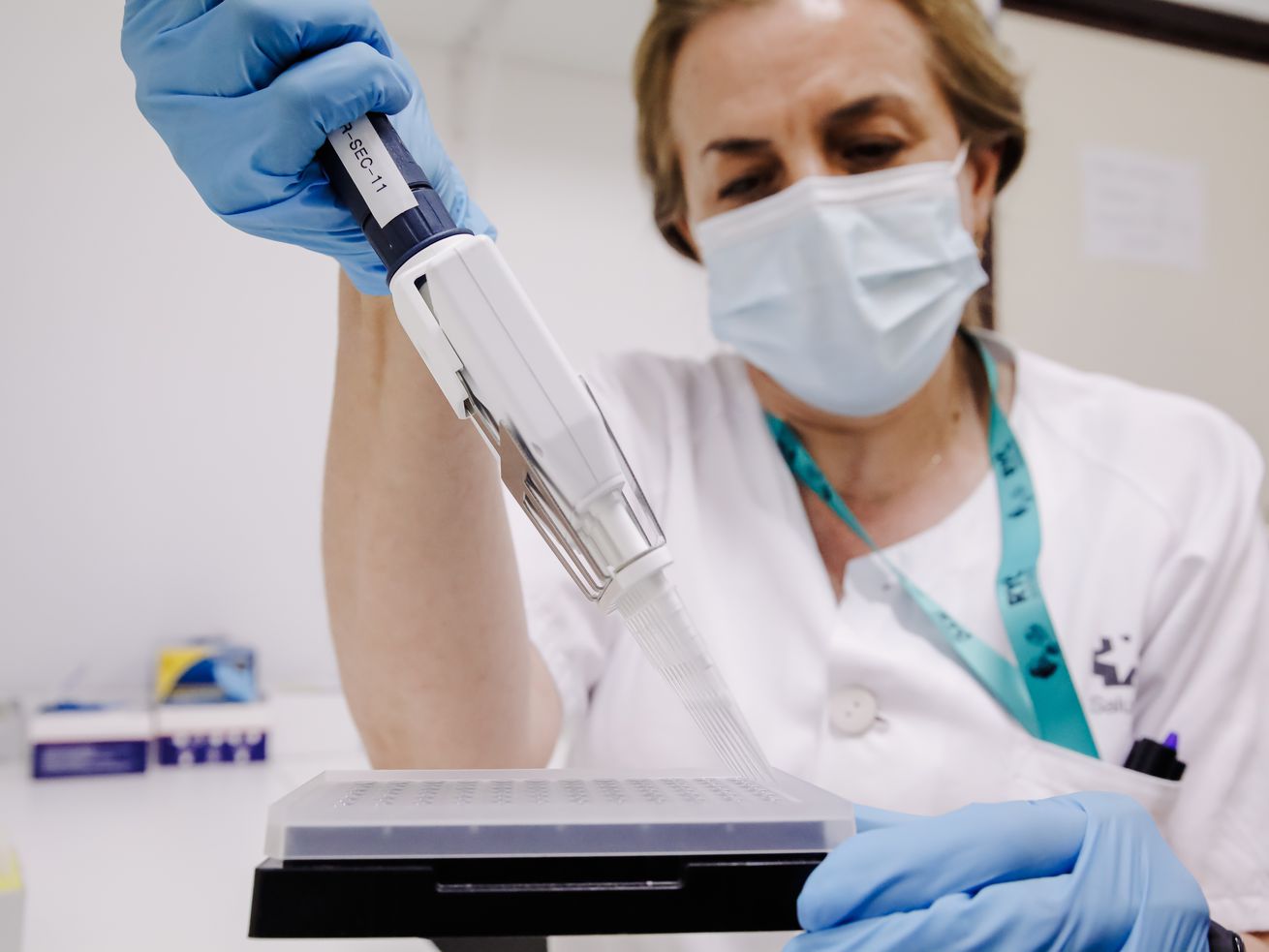
A nurse prepares a PCR for monkeypox testing, at the Hospital Ramon y Cajal, on May 30, 2022, in Madrid. | Carlos Lujan/Europa Press via Getty Images

Experts are worried about the overlapping risks of uncontrolled HIV and monkeypox infection.

As the number of global monkeypox cases rises above 1,300, we’re getting a clearer picture of how the infection is playing out for individuals. For the most part, it’s been pretty manageable: Affected people get clusters of small, painful bumps or blisters — often in the genital area after sexual contact — which are accompanied by fever and lymph node swelling. Often, the rash spreads to the arms, legs, and face.

While monkeypox is known to leave behind scarring that can cause cosmetic problems, the less virulent West African version of the virus that is currently circulating is rarely lethal. As of June 2, none of the people involved in the current outbreak have died, in countries where the disease is not endemic.

What’s more, it’s relatively easy to avoid an infection. The virus is generally spread through contact with a monkeypox sore, so not touching others’ rashes is a solid prevention strategy.

With monkeypox infections preventable and not particularly deadly, it might be easy to brush off the threat of this pathogen. But we shouldn’t, and for an important reason: These infections can kill.

As Covid-19 made clear, one person’s mild infection can be another person’s death sentence. A minority of people are more at risk due to pre-existing conditions — and as the outbreak grows, so does the likelihood that monkeypox will find more vulnerable individuals. That makes it a pathogen worth containing — and worth having and sharing good treatments for. It also makes it worth figuring out who is most likely to get hurt the most, as the outbreak continues to spread.

The risk of monkeypox complications is higher for people who are immunocompromised, pregnant, or have certain skin conditions

Our best understanding of the range of problems monkeypox can cause comes from Nigeria, where health care providers have identified more than 550 cases of monkeypox since an outbreak erupted there in 2017.

The skin rash most people get due to monkeypox infection can be exquisitely painful, in some cases requiring hospitalization just to control the discomfort the bumps and blisters can cause. But what makes monkeypox dangerous is when the virus disseminates to organ systems beyond the skin, said Andrea McCollum, an epidemiologist at the Center for Disease Control’s poxvirus and rabies branch.

In the cases where monkeypox infection led to death, patients suffered from severe infections of the brain, the bloodstream, or the lungs. These complications may have resulted from direct viral effects on organs or from bacterial infections that the virus’ inflammatory effects helped facilitate, often called “secondary” infections.

These complications are most likely among people with severe immunosuppression, according to Dimie Ogoina, an infectious diseases physician at Niger Delta University in Bayelsa, Nigeria, and lead author of a report describing outcomes among Nigerian patients hospitalized between 2017 and 2018.

Since that outbreak in Nigeria began, nine people have died of monkeypox infections, he explained in an email. Four of the people who died were living with uncontrolled HIV infection, Ogoina said, while one was a newborn and another had underlying kidney disease and was taking immunosuppressive medications. Additionally, one pregnant woman with monkeypox had a spontaneous miscarriage of her pregnancy at 26 weeks of gestation.

It’s not entirely clear why certain immunocompromised states put people at increased risk for monkeypox complications, said Stuart Isaacs, a virologist at the University of Pennsylvania who studies poxviruses, the family that includes monkeypox virus.

Researchers have tried to clarify the exact types of immunocompromised states that raise poxvirus risks using animal models. Those experiments have shown that CD4 T cells (which are depleted by untreated HIV infections) and antibody-producing B cells play a leading role in controlling the initial infection. However, there’s currently little human data to go on, said Brett Petersen, an internist and medical epidemiologist at the CDC.

For now, the agency’s treatment recommendations currently suggest that people with a broad range of immunocompromising conditions are at risk for severe disease (including HIV, a variety of cancers, organ transplants, certain stem cell transplants, and certain autoimmune diseases), as are children below the age of eight.

Also at higher risk are people with pre-existing skin conditions like eczema (i.e. atopic dermatitis), said McCollum, possibly because people spread infection from one body site to another when scratching, and pregnant people, who have a higher likelihood of spreading the virus to their pregnancies and potentially causing miscarriage.

Risk factors for monkeypox infection overlap with risk factors for a key immunocompromised state: Uncontrolled HIV

In the current global outbreak, monkeypox seems to be spreading largely through the kind of close contact that happens during sex. The same kinds of contact that put people at risk for monkeypox also puts them at risk for uncontrolled HIV infections. And so that raises the concern that people with uncontrolled HIV are at highest risk, not only for getting infected with monkeypox but also for suffering its worst consequences.

“This is the thing that worries me the most,” said Gregg Gonsalves, an epidemiologist at Yale University’s School of Public Health and an HIV and global health activist. On average, 13 percent of Americans with HIV are unaware of their diagnosis and not on treatment, but that proportion is as high as 20 percent in some Southern states and higher still in several of the Plains and Western states. ”If there’s a fifth of the HIV-positive community that doesn’t know their status, it means they’re at risk,” said Gonsalves.

A disease spread during sex can be contained if people avoid sexual contact when they’re sick, or rigorously use precautions like condoms or dental dams. And while many sexually active people do use these precautions, people whose sexual activity is stigmatized — like closeted gay or bisexual men — are less likely to do so. For these groups, homophobia and other stigmas often interfere with getting tested and seeking care for sexually transmitted infections, including HIV.

That means the same marginalized people who are at higher risk for untreated HIV are at higher risk for monkeypox infections — and for severe consequences of both. In many parts of the US, homophobia disproportionately prevents Black men from getting lifesaving HIV treatment — a major contributor to higher rates of HIV infections and deaths among Black Americans.

The more the outbreak spreads, the more likely that, eventually, it will reach higher numbers of immunocompromised people, where it could lead to terrible consequences. That should move us to urgent action regardless of where the spread is taking place, Ogoina said.

“If global action is not taken to better understand the virus and disease everywhere and to develop innovative countermeasures to address the challenge of monkeypox everywhere,” wrote Ogoina, there’s a serious risk. Then we could see big changes in who the virus infects and how much havoc it wreaks.

09 Jun 14:31

Democrats Need To Get Their Head Out Of The Sand: The Only Reason GOP Is Supporting Their Antitrust Bills Is To Force Companies To Host Disinfo

by Mike Masnick

We’ve pointed this out a few times over the past year. The main antitrust bills that are floating around both the House and the Senate only have Republican support because they have a trojan horse hidden in them that will make it much more difficult for the biggest websites to do any moderation on Republican culture war propaganda campaigns. The two major bills, the American Innovation and Choice Online Act (AICOA) and the Open App Markets bill, both have clauses against anti-competitive “preferencing.”

However, as we keep pointing out, this would allow Parler to argue that Amazon, Google, and Apple treated it differently than, say, Twitter, when those three companies chose not to do business with Parler. Parler even made some of these arguments in its lawsuit against Amazon, and while that lawsuit flopped, if these laws passed, it would reopen the issue and allow companies to sue.

A number of Democrat supporters of these bills, and various civil society organizations, including many that we’ve worked with and usually support, keep trying to brush aside this issue, and keep insisting that it won’t really matter. Some are even willing to align with outright bigots who are only supporting these bills for this very reason, because they think getting something passed on antitrust is the bigger issue.

However, the Washington Post has a great op-ed from two academics who understand this issue better than just about anyone else: Jane Bambauer from University of Arizona and Anupam Chander from Georgetown. I highly encourage everyone supporting these bills to read their analysis of how these bills could create a real mess for disinformation online.

They also point to the Parler example, but they also, thankfully, take on the main argument I’ve heard back from friends supporting these bills: that courts would throw out such lawsuits. This, to me, has always been an odd take, since they know how damaging even frivolous lawsuits can be, and how much of a chilling effect even the threat of extensive litigation can cause. And as Bambauer and Chander make clear, here the chilling effects can be significant.

But the bills would hand the makers of services and apps that give free rein to hate speech and disinformation a powerful weapon to use in court: If Apple or Google kicked them out of app stores, or downgraded them in search results, these companies could argue that the decisions weren’t about content moderation at all, but rather market domination.

At the least, such claims would have to be litigated — a costly proposition, with no guarantee of victory. Alternatively, Apple, Google and other companies might become less vigilant about screening out hate speech and disinformation. You can be wary of Big Tech’s market power and still think the implication of these bills for the speech that is spread online is extremely bad.

And as the article makes clear, the idea that these cases would quickly be thrown out is hardly a given, especially after seeing how courts around the country are willing to view issues around content moderation through partisan lenses.

Suppose Truth Social — President Donald Trump’s Twitter rival — becomes a hotbed of election disinformation, vaccine misinformation and racist speech, and Apple decides that it is violating its App Store guidelines, which require app-makers to filter objectionable content. Would Truth Social or an ideological ally sue, arguing that Apple was preferencing its own News app, or its business partner Twitter’s app? Some judges, and possibly a Supreme Court majority, would be sympathetic to such claims. After all, this would represent a difference in treatment between similar apps (though Apple could of course argue that all apps that permit disinformation are treated alike). Sen. Ted Cruz (R-Tex.) is among those who have noticed that these bills could lead to results similar to those of the recently eviscerated Texas content-moderation law. The bill targeting app stores would “make some positive improvement on the problem of censorship,” he said during markup for the bill.

Also, the bills’ authors could make it clear that these laws can’t be used to stop lawsuits related to content moderation choices, but they have deliberately chosen not to (because they know they’d lose the Republican support if they do).

The Klobuchar-Grassley bill does allow companies to defend against lawsuits by demonstrating that their actions were taken to protect safety, user privacy or the security of the platform, but this defense would likely prove inadequate. Apple or Google would carry the burden of proving that its actions were “reasonably necessary” to protect those specific interests. And even showing that the removed app or speech was sexist, racist, antisemitic or Islamophobic would not be enough. The other bill’s safeguards against abuse are even weaker.

The article also notes that while some supporters of the bill insist that Section 230 would protect these bills from being abused to stop moderation choices, that also seems unlikely for two reasons. Under the Malwarebytes case, companies can get around the 230 issue by claiming that the moderation decision was anticompetitive, rather than for legitimate content moderation needs, and then 230 gets taken off the table. Also, that depends on no more changes being made to either Section 230 itself, or how the courts interpret 230 — both of which seems like dubious propositions (unfortunately).

But, really, the 5th Circuit’s decision in the case highlights the fact that it’s not at all likely that courts would toss out these cases. And, importantly, given the size of the penalties under at least one of the laws, it would be risky for companies to not act accordingly.

Note that if the Internet platform loses, the Klobuchar-Grassley bill would subject it to a penalty of up to 15 percent of its U.S. revenue (not just profits), a risk that few companies would be willing to take.

Perhaps some companies are willing to risk 15% of their revenue on judges understanding bad faith litigation, but that’s a huge bet.

And, again, the article notes that the bills’ authors could fix this, and make it clear that these scenarios don’t apply to the bill, but it appears Democratic Senators have deliberately chosen not to, because they know they’d lose GOP support for the bill.

The Klobuchar-Grassley bill authors recognize that it could affect moderating activity by platforms. The bill, therefore, explicitly excludes from its definition of unlawful activity any reasonable actions the platforms take to protect the copyrights and trademarks of others. Unfortunately, actions motivated by corporate responsibility and designed to protect against hate speech, harassment or misinformation don’t receive similar protection.

What’s most frustrating to me in all of this is how supporters of these bills refuse to actually engage on this point beyond insisting that the courts will dump these lawsuits. That’s far from certain. And even if it were true, these are the same groups that often point out the chilling effects of even frivolous, vexatious litigation.

If those groups, and the politicians pushing these bills, really believe in the underlying concepts in the bill there’s a solution: amend the bills to make it clear they can’t be used in these kinds of content moderation situations. If they’re unwilling to do that, it just feels like they’re carrying water for disinformation peddlers and trollish bigots who are eagerly looking forward to using these laws to litigate.

09 Jun 14:30

Twitter reportedly will give Musk the full “firehose” of user data he demanded

by Jon Brodkin
Illustration of Elon Musk juggling three birds in the shape of Twitter's logo.

Enlarge (credit: Aurich Lawson | Photo by Jim Watson/AFP via Getty Images)

Twitter now plans to comply with Elon Musk's demand for user data that he says is needed to determine whether the company's spam estimates are accurate, The Washington Post reported Wednesday.

"After a weeks-long impasse, Twitter's board plans to comply with Elon Musk's demands for internal data by offering access to its full 'firehose,' the massive stream of data comprising more than 500 million tweets posted each day, according to a person familiar with the company's thinking, who spoke on the condition of anonymity to describe the state of negotiations," the Post wrote.

Twitter declined comment on the Post report when contacted by Ars today but pointed to its statement from Monday that "Twitter has and will continue to cooperatively share information with Mr. Musk to consummate the transaction in accordance with the terms of the merger agreement."

Read 13 remaining paragraphs | Comments

09 Jun 14:29

Report says Microsoft will require SSDs for new PCs soon, but is it a big deal?

by Andrew Cunningham
This cutaway view of a Western Digital 18TB Gold drive shows off its nine platters and triple-stage actuators.

Enlarge / This cutaway view of a Western Digital 18TB Gold drive shows off its nine platters and triple-stage actuators. (credit: Western Digital)

According to a report from Tom's Hardware, Microsoft plans to make PC makers ship solid-state boot drives in all Windows PCs starting in 2023 or 2024, putting an end to the days of spinning hard drives for most of the PC brands that still include them.

Trendfocus analyst John Chen claims that Microsoft initially tried to make the change in 2022, but that resistance from manufacturers meant "it has been pushed out to sometime next year." Microsoft and the PC manufacturers are still negotiating the timeline and possible exceptions, "but things are still in flux."

Ars contacted Microsoft, Dell, HP, Lenovo, and Acer for comment; most haven't responded. A Dell representative pointed out that nearly all of its systems already ship with SSDs but couldn't confirm or deny the analyst's claims.

Read 5 remaining paragraphs | Comments

09 Jun 14:29

Telecom Lobbyists Are About To Scuttle The Nomination Of A Popular Reformer To The FCC And Nobody Much Seems To Care

by Karl Bode

We’ve noted for a few months how telecom and media giants are engaged in a full court press to scuttle the nomination of popular anti-monopolist and reformer Gigi Sohn to the FCC. Sohn’s broadly popular and highly qualified, so the telecom lobby has taken to running a broad smear campaign falsely accusing her of hating cops, rural America, and free speech.

Even Rupert Murdoch’s former top lobbyist has pointed out that the campaign is gross. Yet by most indications, it looks like it’s going to work:

Congress hasn’t budged on President Biden’s pick for a key tie-breaking FCC seat as the clock ticks down on the chance for a vote… sources tell Axios that Democrats don’t currently have the votes after nearly eight months of drama around her nomination.

If Sohn’s nomination is scuttled, there will be plenty of blame to go around. It took the Biden administration nine months to even nominate Sohn, giving large telecom and media companies worried about reform plenty of time to galvanize the astroturfed opposition.

Numerous sources have complained to me that Sohn also received absolutely zero messaging or fire support from the Biden administration during the relentless lobbying attacks, something Axios confirms but the White House (who did have time to appoint former Comcast lobbyist and Biden fundraiser David Cohen the Ambassador to Canada) tries to deny:

One public interest advocate told Axios the White House urged Democrats to confirm FTC nominee Alvaro Bedoya, who was confirmed on a party-line vote in May, to give that agency the majority necessary to take action on inflation. There hasn’t been the same push for Sohn, the advocate said. “The absence of effort from the White House to see this through by pushing a nominee through is frustrating beyond belief,” the advocate told Axios.

One reason for the lack of urgency is corruption. But another is the fact that “big tech” has sucked all the policy oxygen out of the room in both DC and the press, thanks in part to the GOP’s performative outrage on the content moderation front. The entirety of “antitrust reform” has fixated on big tech. Caring about telecom monopolization is just painfully out of fashion in tech policy and DC.

The Biden administration threw $42 billion at the problem via the infrastructure bill, then just seemingly forgot about the fact that the FCC needs a competent voting majority to implement most of those improvements (like improving broadband mapping and subsequently doling out broadband grants).

Relegated to a half sentence in the Axios piece is the entire reason they’re trying so hard to scuttle Sohn’s nomination in the first place: companies like AT&T and Comcast want the FCC to remain gridlocked at 2-2 commissioners so that meaningful reform (or restoration of things like net neutrality or media consolidation rules) remains impossible.

The opposition to Sohn is broadly manufactured and is rooted in corruption. That corruption has aligned effectively all GOP Senators against Sohn (despite the fact Sohn in reality has fairly broad, bipartisan support). And telecom lobbyists are now targeting vulnerable and/or corrupt Democrat Senators like Joe Manchin in a bid to kill the nomination entirely.

There are still some tactical options for the Biden White house (like a potential recess appointment), but it’s not clear if the administration has the backbone to use them given its apathy so far.

If Sohn’s nomination is scuttled, the FCC will likely remain in partisan 2-2 voting gridlock well into next year, precisely how the telecom lobby wants it after four years of favors from Trump incorporated. And whoever replaces Sohn in the nomination process will likely need to be a feckless centrist who’ll be dramatically less interested in rocking the boat on issues like net neutrality or monopolization.

The whole saga isn’t getting much press attention under the din of coverage of NFT scams and Elon Musk brain farts, but the fact that the telecom lobby has effectively lobotomized telecom consumer protection for going on six years is important all the same.

If Sohn’s nomination is scuttled thanks to a bunch of manufactured grievances from the likes of AT&T, the Fraternal Order of Police and Heidi Heitkamp, it will be a high water mark for telecom corruption, and positively fatal to any remaining public trust in competent federal telecom policy.

There’s a reason that states like Washington, Maine and California are taking the lead on stuff like broadband consumer protection, broadband mapping, and monopoly reform, and it’s primarily because Congress, as you can clearly see across numerous other issues, has become too corrupt to function.

09 Jun 14:16

Moderna’s omicron-combo booster outcompetes current booster

by Beth Mole
Extreme close-up photo of a gloved hand holding a tiny jar.

Enlarge / A vial of the current Moderna COVID-19 vaccine. (credit: Getty | Ivan Romano)

A combination COVID-19 booster dose that targets the ancestral strain of SARS-CoV-2 and the initial omicron variant, BA.1, appears to outperform the current booster against both of those versions of the virus, Moderna reported Wednesday.

Specifically, Moderna says the combination booster increased neutralizing antibodies against omicron 8-fold, while the original booster only increased antibody levels around 4.4-fold.

The vaccine maker is angling to have this bivalent shot—dubbed mRNA-1273.214—be the go-to booster for seasonal shots this fall. The company will be submitting its data to the Food and Drug Administration in the coming weeks and says it hopes to have the bivalent booster available by late summer, if not early fall.

Read 16 remaining paragraphs | Comments

08 Jun 16:55

Stop telling kids that climate change will destroy their world

by Kelsey Piper
A student holds a poster reading “why the fuck are we studying for a future we won’t even have.”
Student protestors in Rome as part of the September 24, 2021 Climate Strike March | Simona Granati/Corbis via Getty Images

Some “climate anxiety” is the product of telling kids — falsely — that they have no future.

My 5-year-old daughter is now old enough to read a lot of books and magazines aimed at children, and it’s given me a whole new perspective on the discourse wars over how we talk about climate change, conservation, and the future of the planet.

As I’ve written about before, climate change is going to be bad, and it will hold back humanity from thriving as much as we should this century. It will likely cause mass migration and displacement and extinctions of many species.

What it won’t do, however, is make the Earth unlivable, or even mean that our children live in a world poorer than the one we grew up in. As many climate scientists have been telling us, the world is a better place to live in — especially for people in lower-income countries — than it has ever been, and climate change isn’t going to make it as bad as it was even in 1950.

“I unequivocally reject, scientifically and personally, the notion that children are somehow doomed to an unhappy life,” Kate Marvel, a climate scientist at Columbia, told Ezra Klein in his column this week about overcoming climate despair.

Writing aimed at adults doesn’t always do the best job of striking a balance, though not everyone agrees on precisely what that balance is. Books like The Uninhabitable Earth: Life After Warming, to my mind, do a reasonable job of describing some extreme scenarios that really are worth contemplating, but they still don’t add up to an uninhabitable Earth, or even one that’d be an awful place to live.

Yes, some things will be worse, but because of progress on many fronts in addressing extreme poverty and disease, as well as general economic growth, our kids’ lives will be better than our parents’ lives were.

This question matters because there’s a fierce debate among activists about whether more pessimistic messaging energizes people to fight climate change or causes them to despair, conclude the world is doomed, and tune out. But the messaging for adults is positively nuanced and optimistic compared to the presentation of climate change and other environmental challenges that gets passed on to kids.

What we’re telling our kids about climate change

As a parent, I think it’s essential to empower kids and pass along the message that the world will be in their hands, that they will have the power to solve its most pressing problems, and that there are lots of people already working on those problems who are eager for kids to learn, grow, and join us. Fighting climate change is part of that, and it’s important and worthwhile, but not because there will be no world for children to live in when they grow up.

Unfortunately, the latter message is the dominant one in Our House Is on Fire: Greta Thunberg’s Call to Save the Planet, a beautifully illustrated picture book aimed at ages 3-8.

“There might not be a world to live in when she grows up. What use is school without a future?” one page describes Thunberg as thinking. Even as a setup for Thunberg’s rise as an activist, I’m not thrilled about that message. Some kids might hear that and be inspired to speak before the United Nations, but most kids are going to hear that and be scared and disempowered.

That pessimistic message seems to be sinking in for the young. A 2021 study funded by the campaign and research group Avaaz polled 10,000 people between 16 and 25, and found that over half thought that humanity was “doomed” because of climate change.

A child holding a protest sign that reads, “You’re gonna kill us all!” Horacio Villalobos/Corbis via Getty Images

““You see children saying things like ‘The world’s going to burn up, we’re all going to be dead in 20 years,’ and that’s pretty unlikely,” Susan Clayton, a conservation psychologist who studies how climate change affects mental health, told National Geographic in an article about kids and climate anxiety.

Clayton has some good advice on what to do with a climate-anxious child. But it’s worth pausing on her quote. Why do we see kids saying that? Because books, stories, and protest messaging aimed at them tell them that! There’s pessimism in the water around climate change, and kids often take that pessimism far more literally than adults do.

A child holding a protest sign that reads, “I’m sure the dinosaurs thought they had time too.” Rodger Bosch/AFP via Getty Images

In some cases, it feels like adults are displacing our own frustration at political inaction on climate onto kids — and doing it by telling them things that aren’t true, and that they don’t have the perspective or context to take with the appropriate grain of salt.

The problem permeates advice about what kids can do about climate change, too.

I imagine the tendency of advice for kids about climate change to urge them to challenge their grownups, recycle, ride bikes, and attend protests is out of a well-intentioned urge to give them advice they can use right now. But I worry it sets them up for frustration, and is fundamentally not very honest about how they can solve climate change.

Kids who throw themselves wholeheartedly at those problems for their entire childhood, but who aren’t themselves Greta Thunberg, aren’t likely to get anywhere, and they won’t be positioned to get anywhere as an adult either.

The best way a 7-year-old can improve the world probably isn’t by pleading with adults. It’s by learning more and developing new skills that she’ll be able to directly bring to bear on problems like climate change when she gets older.

Raising a better future

When our daughter asks about environmental issues, I like to tell her that a few generations ago, there was smallpox, but some kids studied hard and grew up into grownups who fought to eradicate it. I tell her that there was leaded gasoline, but we learned it was bad and phased it out. I tell her that today there is climate change, and solving it is going to require new inventions and new ideas — and she can be the one to invent them.

I explain that if we had better batteries, then we could use solar for more of our power grid, so maybe she can learn how to invent better batteries. I explain that if we could grow beef without cows, they wouldn’t belch methane, so maybe she’ll be the one who figures out how to do that in a cost-effective way.

But I have yet to find a children’s book that frames the climate crisis that way: as a challenge, but one like the many that humanity has overcome, and one that our kids can overcome by learning about the world and inventing new solutions. If you know of one, I’m in the market for recommendations; if you don’t know, I invite you to think about where this hole in our messages for children leaves them.

A version of this story was initially published in the Future Perfect newsletter. Sign up here to subscribe!

08 Jun 16:52

FDA advisers overwhelmingly endorse Novavax COVID-19 vaccine

by Beth Mole
Empty vials of the Novavax Inc. Nuvaxovid COVID-19 vaccine arranged at the Tegel Vaccine Center in Berlin, Germany, on Monday, March 7, 2022.

Enlarge / Empty vials of the Novavax Inc. Nuvaxovid COVID-19 vaccine arranged at the Tegel Vaccine Center in Berlin, Germany, on Monday, March 7, 2022. (credit: Getty | Bloomberg )

A committee of independent, expert advisers for the Food and Drug Administration voted overwhelmingly in favor of authorizing the two-dose Novavax COVID-19 vaccine Tuesday, with 21 of 22 committee members voting in favor of the vaccine and one member abstaining.

The endorsement is only for a two-dose primary series in adults, not for boosters. The FDA is not obligated to follow the advice of its committee—the Vaccines and Related Biological Products Advisory Committee (VRBPAC)—but the agency typically heeds its advice. If the FDA authorizes the vaccine, the Centers for Disease Control and Prevention will need to sign off on use before it becomes available.

The decision regarding the Novavax vaccine, which is already authorized in dozens of other countries, is not a straightforward one in the US. The vaccine has some advantages over currently used vaccines but has several strikes against it.

Read 12 remaining paragraphs | Comments

08 Jun 16:47

Academic Paper Shows How Badly The Mainstream Media Misled You About Section 230

by Mike Masnick

We’ve had to publish many, many articles highlighting just how badly the mainstream media has misrepresented Section 230, with two of the worst culprits being the NY Times and the Wall Street Journal. Professor Eric Goldman now points us to an incredible 200 page masters thesis by a journalism student at UNC named Kathryn Alexandria Johnson, who did an analysis entirely about how badly both the NYT and the WSJ flubbed their reporting on Section 230.

The paper is actually more than just that, though. It includes a really useful description of Section 230 itself, along with its history, and some of the often confused nuances around the law. Johnson clearly did her homework here, and it actually is one of the best summaries of the issues around 230 I’ve seen. The paper is worth reading for just that section (the first half of the paper) alone.

But then we get to the analysis. Johnson notes that the Times and the Journal are basically the most powerful “agenda setting” newspapers in the US, so how they cover issues like Section 230 can have a huge impact on actual policy. And they failed. Badly.

The thesis explores the data in multiple ways, but one chart stands out: when talking about the impact of 230, both newspapers almost always frame the law as having a negative impact. They almost never describe it as having a positive impact.

That is, out of 116 articles in the NY Times that talk about the impact of Section 230, 107 described it negatively. Another six gave a combination of negative and positive, and only two (two!) described the impact positively. For the WSJ, it’s basically the same story: 88 articles discussing the impact of Section 230, 80 of them purely negative. Another four with a combination of negative and positive, and just three describing the law’s impact positively. That means, grand total, 91.7% of the articles in these two agenda-setting newspapers described the law’s impact as negative, with another 4.9% describing both negative and positive impacts, and just 2.5% describing the impact positively.

That’s pretty amazing. Now, some may argue that if you truly believe that the impact of Section 230 is negative, then these two publications are only being accurate in their descriptions. But, for those of us who have studied Section 230, and understand its broadly positive aspects, the whole thing seems crazy.

I’ve had many people argue over the years that the big newspapers like the Times and the Journal have an institutional interest in trashing social media and the internet, because it takes away from their gatekeeping powers. And I’ve always brushed that aside as an exaggeration. But the numbers here are pretty damn stark.

The paper also explores how these newspapers sought to frame Section 230, and found that they did a very poor job explaining how it has multiple functions, often choosing to focus on one framing — rather than a more accurate framing of how Section 230 is structured to encourage multiple things. It protects websites from being held liable as a publisher of third party content, which encourages more websites to allow for more speech, and it protects them from content moderation decisions creating liability, enabling them to cultivate their communities in the way they see fit. Understanding both of these is kind of important to understanding Section 230, but it appears that these papers rarely gave a complete description. Also, perhaps oddly (or perhaps because they’re just super confused themselves), they often used the publisher framing, even though they were really talking about the content moderation function — which may very well be why so many others, including politicians, are so confused about 230.

As previously discussed, the majority of definitions including only the “publisher” frame. Interestingly, despite a majority of definitions referencing only platforms’ protection from liability for the content posted by third-parties (59.5%), a large majority of articles were focused on the societal impacts of censorship and deplatforming. Such issues most closely map to the “content moderation” frame. And despite many of the articles’ focus on censorship and deplatforming, very few articles included definitions with only the “content moderation” frame.

For the purposes of creating the most informed electorate, the most helpful definitions are those that present both of Section 230’s functions. These articles were coded as “Both” when discussed above. Only a third of the definitions of Section 230 included both the publisher and content moderation frame, indicating a weakness in journalists’ reporting on this issue. Coverage in The Wall Street Journal more frequently defined Section 230 in terms of both publisher activity and content moderation activity than The New York Times, but coverage in The Wall Street Journal still mentioned both legal frames less than half the time. Journalists could improve coverage could be improved by including definitions that explain both legal frames associated with Section 230, regardless of the focus of the article.

Then there’s the question of how often these two famed newspapers just flat out got things wrong about Section 230. The data may be lower than you might expect, as Johnson found it happened 16.2% of the time, but that’s still kind of astounding. This is a fundamental issue that has gotten a ton of attention and to still get it wrong in about one out of every six articles is indefensible.

It is interesting, though, to note that the WSJ misrepresented the law at nearly double the rate of the NY Times. Again, people have pointed out that Rupert Murdoch, who owns the WSJ, has more or less declared war on the entire internet, and noted that could impact the coverage of things like Section 230. I always assumed that would be a stretch, but the data here is, once again, noteworthy.

As Johnson notes in her paper, many of the misrepresentations were not necessarily outright falsehoods (though there were some of those), but “rather statements lacking enough important context or requiring clarification.”

Then there’s this:

Every misrepresentation identified in the entire sample could be credited to an unattributed source. Therefore, journalists themselves were the source of each misrepresentation. This finding suggests that either journalists themselves do not fully understand the nuance of how Section 230 is applied or that journalists do understand how Section 230 functions but are not accurately conveying that knowledge to the reader

For what it’s worth, it may also be the fault of the editors, rather than the journalists. I am familiar with at least one situation in which a major newspaper misrepresented Section 230, and the journalist later explained to me that they had fought for the correct representation, but their editor insisted on running a misleading one.

Johnson’s paper also highlights how these misrepresentations can lead to further misunderstanding of Section 230.

Understanding that the First Amendment, and not Section 230, enables platforms to moderate content is important to social understanding regarding how platforms would function if Section 230 was reformed or repealed. Without the portion of Section 230 that precludes publisher liability, platforms would still be able to remove content, that for example violated their community standards; however, platforms would be less likely to do so because they would once again, be liable for any unlawful content that they did not remove.

Johnson also, correctly, summarizes what would actually happen with the removal of Section 230: there would be fewer places to speak online.

In fact, Australia’s high court recently ruled that news media outlets are to be treated as “publishers” of the unlawful content that is posted in comments sections on social media. In response, news media outlets began disabling their comments sections due to their inability to constantly moderate all comments. Removing the comments section was the easiest way to protect themselves from legal liability. This anecdote suggests that if Section 230 was changed and platforms were treated as publishers of third-party content, platforms would begin restricting users’ ability to post on their sites—severely stifling the ability of the public to share content and ideas online. Limiting the public’s ability to communicate online has negative implication for self-governance beyond just debate and discussion regarding Section 230. The internet provides a forum for citizens to ask questions, seek answers, and engage in debate about important policy issues. As a “vast democratic forum[ ]” the internet has democratized speech by lowering the barrier of entry for individuals to speak, be heard, and engage in debates about important issues facing society. In this way, Section 230 creates a causality dilemma. Section 230 is necessary to create the speech environment online that is required for individuals to debate and discuss issues related to Section 230.

Johnson’s paper also highlights how many stories about 230 inaccurately refer to it as a “safe harbor” rather than an “immunity.” As it notes, this is an important distinction. DMCA 512 is a safe harbor, and in order to make use of it, you need to meet a bunch of qualifications. This is why there is a long history of case law involving extensive litigation about a bunch of different factors to determine if a site qualifies for the DMCA safe harbor or if it “loses” the safe harbor. But 230 is an immunity, which is different. You can’t lose an immunity. You don’t have to take any steps to get the immunity. And one of the biggest misconceptions about 230 is that sites can take some sort of action that loses them the protections. That’s not true, but when news organizations report on it as a safe harbor, they support that misconception.

There’s much, much more in the paper, but it’s quite an excellent thesis, incredibly detailed, including getting a lot of very nuanced and complex topics correct that (as the paper itself shows) journalists often get very, very wrong. And it also adds clear data to the discussion. Just an all around excellent piece of scholarship.

08 Jun 16:43

Elon Trying To Get Out Of The Twitter Purchase, Claiming That Because Twitter Won’t Share Private Info, It Has Breached Its Agreement

by Mike Masnick

It’s entirely possible that there’s a different backstory to the whole Elon/Twitter mess, but from everything that’s happened so far, the story sure looks like (1) Elon decided to buy Twitter on a whim without recognizing either the risks or the actual challenges in pulling together a deal, (2) almost immediately started regretting it, especially as the price of his Tesla shares, which are key to the deal, tanked, and (3) began to seek any pretext to bail on the deal, hopefully without having to pay the $1 billion breakup fee.

I am guessing that Musk is not a particularly good poker player, because he’s telegraphed nearly every move he was planning to make from a million miles away. Last month he declared the deal was on hold because he believed that there was more spam on Twitter than the company was letting on. Twitter pointed out that there was no such thing as putting the deal on hold. The terms of the agreement don’t just let him walk away. And also, the idea that he wouldn’t conclude the deal because there’s too much spam on Twitter… doesn’t make any sense at all.

One of his most clearly stated reasons for buying the site in the first place was that he wanted to stop all the spam. Indeed, around the time he announced the takeover attempt, he said his “top priority” was to get rid of spam on the site. Indeed, people pointed out that it was kind of funny, because he seemed to assume that his experience — as a celebrity user of the site with over 90 million followers — was somehow representative of the experience of others. As a much smaller user on Twitter I almost never see spam. But, either way, he made it clear before doing the deal that he believed the site was filled with spam. So, it’s pretty rich for him to then say that he was surprised by the amount of spam. He already has said otherwise.

Even worse, in the merger deal, he explicitly waived his right to further due diligence. And, on top of that, the publicly reported numbers from Twitter about spam on the site haven’t changed in quite some time, so it’s not like all of this info wasn’t already public long before Elon made the rash decision to buy the company. As Bloomberg’s Matt Levine noted at the time Elon started this nonsense, it was so obviously an attempt to come up with a pretext to get out of the deal:

More important, nothing has changed about the bot problem since Musk signed the merger agreement. Twitter has published the same qualified estimate — that fewer than 5% of monetizable accounts are fake — for the last eight years. Musk knew those estimates, and declined to do any nonpublic due diligence before signing the merger agreement. He knew about the spam bot problem before signing the merger agreement, as we know because he talked about it constantly, including while announcing the merger agreement. If he didn’t want to buy Twitter because there are spam bots, he should not have signed a contract to buy Twitter. No new information has come to light about spam bots in the last three weeks. 

In response to some of this, Twitter’s apparently lame duck CEO, Parag Agarwal, put out an actually interesting thread on the difficulty of finding and measuring spam, but also giving some insight into how the company calculates how much is counted as monetizable, which is the key part Elon claimed to be upset about. This is actually important, because if Twitter recognizes something is spam and doesn’t monetize it (i.e., charge an advertiser for displaying an ad to a spam account) there are fewer issues with it. But also, a key point that Parag notes, and that we’ve tried to explain for years when it comes to the challenges of content moderation, spammers are constantly changing. It’s a dynamic problem, rather than a static one.

Anyway, there’s no actual out for Elon if he just claims there’s too much spam on the site for all the many reasons listed above. But he so clearly wants out of the deal that he hired some of the best lawyers around to try to cook up some excuse kinda, sorta, but not really related to all this to see if he can use it as an escape hatch.

And that all came out earlier this week in a letter to Twitter’s chief legal officer, that was also filed with the SEC. While many people reported that this was over the spam issue he had raised weeks earlier, that wasn’t actually the case, because the lawyers know that’s not an issue he can use. Instead, they claim that Twitter violated covenants in the purchase agreement to provide the data for Musk to make his own determination about the prevalence of spam on the site.

This is an important distinction. He can’t drop the deal because there’s too much spam. But, his lawyers argue, part of the terms of the agreement was that Twitter was required to provide to Musk data and information that he needs, in order to consummate the deal. Musk, then, has apparently cooked up this pretext: he will keep demanding all sorts of irrelevant information, and if Twitter refuses to hand it over, then that magically means they violated the deal, and he (thinks he) can back out.

It appears that Twitter’s response to all of this is to say that they’re happy to provide more context, but he’s asking for data he does not have a right to as a non-employee of the company. Twitter points out that the purchase agreement says they will provide data necessary for closing the deal. But, as Parag’s thread made clear, the data used to determine spam involves a lot of internal private data, including things like IP addresses.

As you might imagine, there would likely be serious privacy concerns if Twitter now has to hand over tons of IP addresses, and possibly other private data to Musk — who, again, is not an employee, and does not yet own the company. So there are very good reasons for Twitter to refuse to hand over such data, including that it could put the company at other forms of legal risk over its handling of private data.

In other words, this is all just another smokescreen attempt to try to back out of the deal. Once again, Bloomberg’s Matt Levine has the best take on how all of this works. He points out that, while Musk promises to keep any private data private, Musk has shown throughout this deal (and other deals) that he’s not exactly one to abide by such terms (already within the last few weeks Twitter has accused him of violating a non-disclosure agreement over some of its spam counting methodology). So, there are legitimate concerns that Musk might do something with that private data that he shouldn’t. I’d say there are also probably concerns about how Twitter sharing that data with Musk might raise questions under the GDPR, California’s privacy law, and other such laws…

Levine’s conclusion is similar to mine. This excuse is better than claiming he’s bailing because of spam, simply because he can’t bail because of spam. So trying to bail because Twitter won’t provide all the info he’s demanding at least has the patina of legitimacy, even if… it’s a pretty thin one.

I mean, to be clear, it isn’t a good pretext. It is, for instance, very hard to imagine that Musk’s banks are clamoring for detailed information about spam accounts to line up their financing; Twitter has raised debt financing in the past with its existing bot disclosure. Nor is it clear what Musk’s “reasonable business purpose related to the consummation of the transactions” is. And because it is so clearly part of Musk’s broader trolling operation, it is hard to imagine him winning if this ends up in court: If he refuses to close because Twitter won’t humor his bot-fishing expedition, it seems unlikely that a Delaware court will side with him. But it does raise the risk for Twitter, which gives him a bit more leverage to try to renegotiate the price. It is all going to get so much dumber.

At this point, it’s unclear what happens next, but it seems highly likely that this is going to end up in court. And that’s going to be quite the show.

08 Jun 16:42

Licensing Troll For Elvis Estate Seeks To Shut Down ‘Elvis’ Weddings In Las Vegas

by Dark Helmet

When someone mentions Las Vegas, a couple of things are likely to leap directly into your brain. Gambling and casinos, but of course. Perhaps magic shows, too. And, obviously, Elvis. Yes, the idea of Elvis-themed weddings in Las Vegas has reached trope status. But Authentic Brands Group (ABG) would like to put a stop to all of that.

ABG is a licensing troll for celebrities or, more typically, their estates due to their being dead. ABG also has a history of overstating what IP and rights it actually has. Elvis’ estate, meanwhile, also has a history of targeting anyone and everyone with trademark and IP threats, and even lawsuits, that are meritless.

All of which brings us to the present moment, in which ABG is apparently going on a threat blitz against businesses and chapels in and near Las Vegas in order to cease the practice of Elvis-themed weddings.

The company that lords over the King’s image and likeness is cracking down on Las Vegas chapels that book Elvis-themed weddings and otherwise embrace his persona. Authentic Brands Group (ABG), which licenses Elvis Presley-related merchandise, has issued a cease-and-desist letter dated May 19 to several Las Vegas chapels.

ABG specifies “Elvis, “Elvis Presley,” “and “The King of Rock and Roll” as its protected trademarks.

A number of questions leap to mind. First and foremost: hey, ABG, where have you been? There have been Elvis-themed weddings in Las Vegas since 1977. That’s forty five years of completely failing to protect the trademark rights you’re now claiming in your threat letters. What’s changed? Why should this long history of anyone failing to protect this trademark in this way not be taken as abandonment or tacit endorsement? And why does a trademark somehow prevent a person or business from having someone dress as a historical public figure?

And why in the world would the estate want to put an end to a tradition that very much keeps that dead public figure in the public consciousness, leading to ongoing interest in Elvis?

Kent Ripley of Elvis Weddings is among the operators who performs as Presley and is also co-owner of the business. He’s been in business for 25 years and has never received such a warning.

“We get bookings that have been planned for three, four, five years to have an Elvis wedding,” Ripley said. “They want to protect the Elvis brand. But what are they protecting by taking Elvis away from the public?”

It’s exactly the right question to ask. And the “taking away” part is already occurring. Chapels are scrapping Elvis weddings from their offerings and scrubbing their websites of any references to The King.

And so perhaps this is how Elvis finally dies a cultural death, forty five years after his time on Earth expired. A licensing troll pushes rock and roll royalty into mere obscurity.

07 Jun 13:01

With BA.2.12.1 now dominant in US, experts eye new subvariants BA.4 and BA.5 [Updated]

by Beth Mole
With BA.2.12.1 now dominant in US, experts eye new subvariants BA.4 and BA.5 [Updated]

Enlarge (credit: Getty | Thomas Trutschel)

Update 6/7/2022 2:00 pm ET: The Centers for Disease Control and Prevention updated its prevalence estimates for coronavirus variants Tuesday and has now provided separate estimates for omicron subvariants BA.4 and BA.5, which were previously reported together. Based on data collected up to June 4, BA.5 is estimated to account for 7.6 percent of US cases, while BA.4 is estimated to account for 5.4 percent. BA.2.12.1 is still the dominant variant in the US, estimated to account for 62.2 percent of cases.

Original story 6/6/2022 6:17 pm ET: Omicron subvariant BA.2.12.1 has overtaken BA.2 as the dominant version of the pandemic coronavirus in the US, now accounting for an estimated 59 percent of cases nationwide. But BA.2.12.1's reign may end as quickly as it began, with yet another batch of omicron subvariants gaining ground—BA.4 and BA.5—and threatening to cause more breakthrough infections.

BA.2.12.1 has a transmission advantage over BA.2, which itself has an edge over the initial omicron subvariant, BA.1, that caused a towering surge of US cases in mid-January. BA.2 peaked in mid-April, accounting for 76 percent of US cases at its height. But then came BA.2.12.1, which is named for being the 12th lineage stemming from BA.2 and the first branch of that BA.2.12 lineage.

Read 7 remaining paragraphs | Comments

06 Jun 19:14

Guns do more than kill

by Keren Landman
Gun violence victim Lisa James gathers with friends and relatives of Avent Holston, who was shot and killed at the age of 27, on the second anniversary of his death in Newark, New Jersey, on October 28, 2021.  | Kena Betancur/AFP via Getty Images

Firearm injuries undermine mental, physical, and financial health, even for people who’ve never encountered a bullet.

In his speech last Thursday about the Robb Elementary School massacre in Uvalde, Texas, President Joe Biden spoke about a young student who’d averted the shooter’s attention by smearing her classmate’s blood on her face.

“Imagine what it would be like for her to walk down the hallway of any school again,” he said. “Imagine what it’s like for children who experience this kind of trauma every day in school, on the streets, in communities all across America.”

We don’t have to imagine that: We have data on what it’s like.

Between 11 and 62 percent of children who witness a mass shooting have post-traumatic stress, according to a 2021 review of the literature. The range is broad because different studies use different assessments for symptoms and study their participants over different time periods, among other variables.) The negative impact of firearm violence on children is so strong that some experts have advocated formally classifying it as an “Adverse Childhood Experience,” a distinction that would denote its proven negative effects on lifelong health.

Although every death causes pain to a circle of loved ones, shooting deaths appear to have a particularly terrible impact on the mental health of the families and communities where they occur.

Most of the research on grief responses following violent deaths (not exclusively limited to gun violence) suggests losing a loved one to violence makes bereavement especially intrusive and difficult. And gun violence seems to have a uniquely detrimental effect on the mental health of young people: In one survey, children in urban and rural areas were at higher risk for post-traumatic symptoms if they saw or heard gun violence — not necessarily in a school setting — even if they were also exposed to other types of harm, like physical abuse, bullying, or being a witness to family violence.

The costs of gun violence go well beyond deaths, and it’s not just witnesses and children who bear these costs. Shootings “have a ripple effect far beyond the person who was actually shot within a community,” said Megan Ranney, an emergency physician and researcher at Brown University’s medical and public schools who has studied firearm violence extensively.

Deaths from gun violence may be what shock us the most — and they should. But as health consequences of gun injuries go, deaths are only the tip of the iceberg.

In the US, the complications go well beyond the immediate loss of life and limb that occurs when bullet meets flesh. Gun violence is a public health nightmare that inflicts lasting damage on physical and mental health. Its devastation casts long shadows over time, intertwining with other determinants of health like education and community deprivation. Firearm injuries and deaths have downstream repercussions on the health of people who weren’t directly exposed to gunshots at all.

Understanding the broader health implications of these injuries could compel us to more urgent action.

“Part of the reason why violence is a public health problem is because of the significant and lasting health consequences for victims,” said Thomas Simon, who directs research priorities at the Centers for Disease Control and Prevention’s division of violence prevention. “The other reason it’s a public health problem is because it’s preventable.”

Waves of grief after gun-related losses contribute to mental and physical illness

Not all firearm violence is the same, and different types — suicides, homicides both intentional and not, mass casualty incidents, and law-enforcement-related — have different causes and different potential solutions. But regardless of its exact circumstance, each death due to firearm injuries has a durable and destructive impact.

When firearms injure or kill a person, hurt and loss radiate outward to affect concentric circles of people around them. Victims’ families and close friends sustain different harms than their communities and society at large — but the pain spreads far and wide in both predictable and surprising ways.

The innermost circle are those killed or injured by firearms. Between 2015 and 2019, more than 76,000 Americans survived gunshot wounds annually. In addition to coping with the long-term functional limitations resulting from their injuries, these survivors are at increased risk of chronic pain, psychiatric disorders, and substance abuse — and their families were also more likely to face challenges to their mental health.

In the next circle are the victim’s loved ones. When victims of gun violence die, grief and its aftereffects ripple outward, with sometimes startling effects on health and well-being.

Everyone who loses a loved one experiences grief, but there’s evidence that losing a loved one to gun violence hits harder. Although most of this research comes from outside the US, it’s still instructive: In the general population, around 2 to 7 percent of the bereaved experience complicated grief — a persistent and pervasive sense of loss accompanied by other emotional problems — as a consequence of a loss. That number is much higher — estimated between 12 and 78 percent — among people mourning loved ones lost to violent deaths (those figures are not limited to gun-related deaths, but gun deaths certainly fall in the “violent” category).

In the US, more than 45,000 people died of gunshot wounds in 2020. Each firearm-related death has the potential to pull this dark veil over the lives of the people it leaves behind.

Grief can impact physical health too. In the weeks and months following the loss of a loved one, grieving people are more likely to suffer from deteriorating physical health or death, much of it due to cardiovascular causes. Grief literally wears on the heart, as one recent, wrenching example showed: Two days after a teacher was killed in the school shooting in Uvalde, Texas, her husband died of a heart attack.

“If you develop very high levels of depression or post-traumatic grief, you’re much more likely to develop Alzheimer’s in later life, for instance, and more likely to pass away at a younger age than would otherwise be expected,” said Ashton Verdery, a Pennsylvania State University sociologist who has studied the health effects of bereavement.

For children, losing a loved one to gun violence leads to educational setbacks and mental health challenges

When children lose a loved one to gun violence, the long-term effects on their lives are often particularly profound. A recent Washington Post analysis estimates that more than 15,000 American children lose a parent to gun violence each year. Each of those children is likely to have lower educational attainment as a consequence of their loss. Education is strongly linked to health outcomes like chronic conditions and disability, so these losses are likely to lead to poorer health.

It’s not just that children’s grief disrupts their ability to focus on schoolwork. Deaths cause financial hardships. A child could lose their primary caretaker and provider, leaving them with an obligation to support their surviving family and choose work over education. Or it might not be a choice: The loss of a parent’s income may create insurmountable financial barriers to attending college, said Verdery.

Again, think of that number: At least 15,000 children lose a parent to guns every year. That’s 15,000 people whose lives — their financial and physical well-being — may be forever set on a different course.

But it’s not just the loss of a parent that can lead to worse outcomes for kids. Losing a sibling also lowers educational attainment for children — especially girls — and makes them less likely to reach adult milestones like establishing an independent residence, getting married, and having children of their own.

 Chandan Khanna/AFP via Getty Images
Gabriella Uriegas, a soccer teammate of Tess Mata, who died in the mass shooting at Robb Elementary School, cries as her mother, Geneva Uriegas, tries to comfort her as they visit a makeshift memorial outside the Uvalde County Courthouse in Texas on May 26.

Communities with high rates of firearm injuries also suffer

The ripple effects of gun violence stretch well beyond those who lost loved ones, often affecting entire communities.

People who live, work, or attend school in communities with high rates of gun violence face health challenges of their own, even if they haven’t lost loved ones to firearms. Being exposed to gun violence leads to a variety of mental health issues, including problems with social function, anxiety, and depression. In part because chronic stress exposure impairs immunity and cardiovascular health, the ripple effects of gun violence also threaten physical health.

In Philadelphia, researchers conducted a study looking at reasons local children were coming to emergency rooms, and how close those children lived to sites of neighborhood shootings. They found that the closer children lived to places where people had been shot, the more likely they were to have a mental health concern.

Firearm injuries in schools can also lead to bad outcomes for the school-aged children exposed to it, even if they are not hit by a bullet. A recent analysis by the National Bureau of Economic Research found that exposure to school shootings led to increased absenteeism and reduced graduation rates and college attendance among students in Texas. Given the importance of education as a predictor of health, these outcomes likely contribute to a lower quality of life for young people over the course of their lifetimes.

Some of those effects hold even for students not directly exposed to school shootings, said Simon, the CDC researcher.

Before a pair of students killed 12 students, a teacher, and themselves at Columbine High School in 1999, about 4 percent of high school students nationwide said they had missed one day of school in the past month because they felt too unsafe to go, said Simon. “After Columbine — and this is nationwide — 10.2 percent,” he said, “and we’ve seen that percentage stay pretty high since then.” The latest pre-pandemic number was at 9 percent, he said.

In another study, adolescents in Los Angeles who expressed concern about school shootings — 40 percent of those surveyed — were more likely to later show signs of anxiety and panic or other mental health disorders.

Communities with high numbers of firearm injuries or deaths tend to have higher rates of anxiety and depression, said Ranney, the emergency physician and researcher.

“And then there’s this larger societal effect of a firearm injury,” she said. “There are also very real economic consequences for the larger society, whether it’s health care costs, lost work, or criminal justice costs.”

In 2018, the National Institute for Criminal Justice Reform tried to estimate the total cost per shooting to six American cities. In their calculations, the reports’ authors included expenses ranging from the cost of crime scene cleanup to the money spent on the law enforcement response; from the health care, legal, and incarceration fees to the revenue lost by taking both suspects and murder victims out of the general public. On the low end, a shooting leading to an injury in Mobile, Alabama cost the city an estimated $583,000. On the high end, Stockton, California was projected to lose as much as $2.5 million for each shooting homicide.

That’s money a city can’t spend on programs that improve the lives and health of its citizens. The City of Philadelphia’s controller’s office found that a single homicide reduced sale prices by 2.3 percent for homes within three-quarters of a mile (the vast majority of the city’s murders involve a firearm). The report estimated that lowering homicides by 10 percent for one year would increase the city’s property tax revenue by $13 million — several times the annual budget of many community health centers or food programs.

Identifying solutions requires acknowledging inequities in firearm injuries

The burden of all of these health effects is not borne equally by all Americans. Black Americans die from firearm injuries at rates higher than any other group, and nearly three times as high as white Americans. That means the grief, loss, and disadvantage following gun-related deaths fall disproportionately on Black families; the mental health symptoms that persist in communities after shootings affect Black communities more; the neighborhood divestment that’s both a cause and an effect of gun violence drains human and financial capital largely from Black neighborhoods.

That means there’s enormous potential for gun violence reductions to have far-reaching positive effects — beyond even saving lives — for the American communities that have long faced its worst inequities. Restorative violence-prevention programs rooted in Black communities’ strengths — and paired with reinvestment in depleted communities — hold promise for meaningfully reducing community shootings and improving educational and employment opportunities for residents. Over time, reducing gun violence in depleted neighborhoods could lead to reinvestment and renewal.

Programs to reduce school shootings by assessing students’ behavioral threats and intervening early are rare, but effective. Used more widely, they could broadly improve youth connectedness and mental health just by asking students to notice when their classmates are suffering.

Again, the public health crisis of gun violence stretches so much farther than school shootings, or mass shootings.

“Here in the US, we don’t really have one gun violence problem, we have at least four,” tweeted Thomas Abt, an expert and author on violent crime, which includes suicides, mass shootings, and domestic and community gun violence. Each requires different solutions, he wrote, but they all have one thing in common: They all depend on the easy accessibility of firearms.

That one area of convergence means that broadly reducing gun availability could have a big impact on both gun deaths and the long shadows they cast. While the impact of every gun-related death may reach far and wide, so can the impact of prevention.

06 Jun 19:11

US Postal Service Sued For Seizing ‘Defund Police’ Facemasks

by Tim Cushing

Two years ago, just as the COVID pandemic was beginning to radically transform day-to-day life for nearly everyone on the planet, the United States Postal Service decided to protect cops from passive criticism. One month after Minneapolis police officer Derek Chauvin personified America’s omnipresent racism by kneeling on the neck of unarmed black man George Floyd until he was dead, the USPS stepped in to seize a shipment of face masks containing phrases like “Stop killing Black people” and “Defund police.”

Facemask suppliers were in short supply during the early months of the pandemic. Oakland screenprinter Movement Ink stepped up to fill the void, sending out functional masks featuring social justice-related slogans. The small business run by Oakland resident Rene Quinonez had never had any problems with the US Postal Service prior to the shipment of these masks. But the USPS suddenly decided it had a problem with his latest products and inexplicably decided to treat the First and Fourth Amendments as disposable.

The masks, ordered by activist group Movement for Black Lives (M4BL), ran the group nearly $10,000. The initial shipment of 500 masks somehow came to the attention of the US Postal Service’s investigative wing, which decided they could travel no further than the postal depot. The recipients and the sender were given no reason for the seizure. The only information they received was a notification on their tracking info that the packages had been “Seized by Law Enforcement.”

The US Postal Inspection Service never explained why it had seized these clearly not-illegal masks. The following morning, the USPS released the items — again without explanation — and refunded Movement Ink’s shipping fees. That release appeared to have been motivated solely by the bad press the USPS was racking up, and followed two days of the USPS sitting on the shipments while refusing to explain why it had flagged the products and prevented them from being received by the group that had purchased them.

This seizure may have been the move of a single dumbass employee who thought telling cops to stop killing black people was some sort of threat. More likely, it was a government agency inserting itself into a proxy discussion on police activity by deciding it should protect the powerful from criticism. And it’s likely going to cost the entire Postal Service a bit of cash. As Ryan Reilly reports for NBC News, the government is being sued for violating the Fourth Amendment by searching and seizing this shipment, as well as violating the First Amendment for trying to prevent the messages printed on the masks from being distributed.

The lawsuit, filed on Wednesday and shared first with NBC News, accuses U.S. Postal Service and U.S. Postal Inspection Service officials of violating constitutional rights under the Fourth Amendment by improperly seizing the boxes without probable cause, a warrant, or even reasonable suspicion. The lawsuit also raises the possibility that officials violated the First Amendment by seizing the masks because of their political messaging.

Movement Ink owner René Quiñonez, who owns the screen-printing business in Oakland, California, that manufactured the masks, told NBC News that his small family business had been impacted by the seizure.

“For us as an organization, as a company, and as part of our community, our intent was to support the many activities that were going on across the country,” Quiñonez told NBC News.

As the lawsuit [PDF] notes, the USPS knew what was contained in the packages. And because it knew what words were contained in the boxes, its actions were highly suspect and most likely illegal.

As confirmed by the postal official Defendants’ internal notes memorializing the seizures and searches of those boxes, millions of packages shipped every year share the unexceptional characteristics of René’s and Movement Ink’s packages that Defendants relied on to justify their suspicionless, warrantless seizures and searches. And those same internal notes make clear that Defendants knew the packages coming from Movement Ink contained—in Defendants’ words—“BLM MASKS.” So Defendants appear to have violated not just the Fourth Amendment, but also the First Amendment, while committing several common law torts in the process.

This unexplained seizure — which followed three uneventful shipments of other masks containing similar slogans — negatively affected the small company’s business.

René and Movement Ink suffered severe reputational harm because of Defendants’ baseless seizures and searches of René’s and Movement Ink’s political mask shipments.Talks for future orders were terminated, and René could not even get a call back from many of his partners—including not only his new partners, but preexisting ones too.

For example, in addition to the recipients of the political mask shipments at issue in this case, who terminated talks for future orders, at least three other groups who had regularly ordered from and collaborated with René and Movement Ink ceased their partnerships and cut off all ties with René and Movement Ink.

According to the USPS, the packages were detained and searched for non-political reasons. Instead, they were searched for ridiculous reasons.

Defendants’ notes contend that the shipments were suspicious because of (1) “bulging contents,” (2) “frequently mailed parcels from the same sender/address,” (3) “parcel destination is a known drug trafficking area,” (4) “taped or glued on all seams,” and (5) “parcel mailed from a known drug source area.”

In other words, the packages looked like packages — sealed to prevent loss of merchandise and being sent from one area of the country to another. This justification is clearly specious. And even that belated justification is undercut by the USPS’s notes, which indicate inspectors had already determined the packages contained (in the USPS’s own words) “BLM masks.”

If the USPS moved forward with a search and seizure after determining the contents were masks with “political” slogans, it violated the First Amendment along with the Fourth Amendment. The Post Office’s “well maybe it was drugs” excuse is probably going to carry a bit of weight in the counterarguments because that’s just how the justice system works, but the rest of the allegations certainly make it appear the Post Office blocked this shipment because it didn’t like what was in the packages, not because it truly suspected what was in the packages was illegal.

Even if the Postal Service wins this lawsuit, it will still lose. The optics aren’t going to improve if the USPS can talk a judge into believing its vague statements about drug shipments add up to reasonable suspicion to investigate further, or actual probable cause for a seizure and search. What it will always look like — thanks in large part to the USPS’s own notes about “BLM masks” — is a politically motivated action that was supposed to keep people the government didn’t like from criticizing the government.

06 Jun 16:03

Solid-state batteries for EVs move a step closer to production

by Jonathan M. Gitlin
A solid-state lithium cell is pressed together by Solid Power's new automated EV cell pilot line.

Enlarge / A solid-state lithium cell is pressed together by Solid Power's new automated EV cell pilot line.

Solid Power, a Colorado-based battery developer, moved one step closer to producing solid-state batteries for electric vehicles on Monday. The company has completed an automated "EV cell pilot line" with the capacity to make around 15,000 cells per year, which will be used first by Solid Power and then by its OEM partners for testing.

"The installation of this EV cell pilot line will allow us to produce EV-scale cells suitable for initiating the formal automotive qualification process. Over the coming quarters, we will work to bring the EV cell pilot line up to its full operational capability and look forward to delivering EV-scale all-solid-state cells to our partners later this year," said Solid Power CEO Doug Campbell.

Solid-state batteries differ from the lithium-ion batteries currently used in EVs in that they replace the liquid electrolyte with a solid layer between the anode and cathode. It's an attractive technology for multiple reasons: Solid-state cells should have a higher energy density, they should be able to charge more quickly, and they should be safer, as they're nonflammable (which should further reduce the pack density and weight, as it will need less-robust protection).

Read 4 remaining paragraphs | Comments

06 Jun 15:54

The idea of working in the office, all day, eve...

06 Jun 12:00

New York’s attorney general calls out Verizon for spreading Legionnaires’ disease

by Rebecca Heilweil
New York Attorney General Letitia James standing at a lectern and speaking into a microphone, with the seal of the state of New York behind her and flags on either side.
New York Attorney General Letitia James announced Verizon had failed to follow rules meant to stop the spread of a bacteria that can cause Legionnaires’ disease. | David Dee Delgado/Getty Images

Verizon didn’t keep up with requirements meant to stop the spread of a dangerous bacteria.

When you think about potential vectors for disease, Verizon probably isn’t the first thing that comes to mind. But this week, New York Attorney General Letitia James announced the findings of a three-year investigation into cooling towers on buildings throughout the state. It did not look good for Verizon.

“Verizon failed to maintain its cooling towers on buildings across New York City, causing the towers to spread Legionnaires’ disease, a dangerous and lethal form of pneumonia,” James said in a tweet.

The announcement of the findings, which reviewed Verizon’s cooling tower maintenance record starting in 2017, arrives amid two new clusters of Legionnaires’ disease in the US, including an outbreak in the Bronx that has so far killed two people and infected at least 24 others. The New York City Health Department has now connected these cases to four specific cooling towers in the Bronx’s Highbridge area, where the bacteria was found growing. The Health Department did not say who was responsible for monitoring the towers. The Covid-19 pandemic may have contributed to an uptick in these kinds of outbreaks, since the unexpected closure of buildings may have made it easier for bacteria to grow in water and plumbing systems.

Cooling towers like the ones used by Verizon are often placed on rooftops, and are typically used to cool down machinery, like air conditioning systems and telecommunications equipment. There are many types of infrastructure like this that private companies install in and around densely populated areas. Companies operating this kind of equipment are supposed to follow best practices to make sure their equipment doesn’t become a safety hazard. But when this infrastructure isn’t carefully maintained — and regulators don’t catch violations — it can become dangerous, and even lead to public health problems.

Legionnaires’ disease, which is caused by Legionella bacteria, is just one of them. The illness got its name after there was an outbreak of the disease at a convention for the American Legion, a veterans organization, in 1976. Although it’s often found in natural water sources, such as ponds, streams, and lakes, this bacteria becomes problematic when it finds its way into water systems that are built by humans, like hot tubs, sinks, and plumbing.

Once the bacteria starts growing inside these fixtures, it can spread through tiny drops of water, which, if inhaled, can infect a person’s lungs and cause pneumonia. Legionnaires’ disease can usually be treated with antibiotics, and the illness’s symptoms are generally hard to distinguish from other infections. The disease can be dangerous, however, for people with certain risk factors or conditions, including people over the age of 50 or people with cancer. The Centers for Disease Control and Prevention says that about one of every 10 people who catch Legionnaires’ disease die from complications. The disease is not transmitted from person to person.

Here’s where Verizon’s cooling towers come in: A cooling tower can spray into the air the water it’s using to cool the equipment. If that water includes Legionella bacteria, that bacteria can enter the air, too, where it can infect nearby people. These cooling towers are particularly concerning because they can operate at temperatures that are ideal for this bacteria’s growth, especially during the summer. These cooling towers are also everywhere, since they’re used to cool off everything from air cooling systems to machinery used for industrial processes and energy production.

“Electronic equipment puts out a ton of heat and they have to keep it at a cool temperature to work,” Brian Labus, an infectious disease epidemiologist and assistant professor at the University of Nevada Las Vegas School of Public Health. “Any time you have computer systems, which is what these places have, there is a ton of heat being produced, and they [have] to get rid of the heat — otherwise they’ll melt all their equipment.”

Buildings and companies that operate these cooling towers are supposed to take a range of steps to stop bacteria from growing, including repeatedly monitoring their equipment for potential infections. New York, for instance, passed state and local laws to regulate these towers more aggressively after 138 people were diagnosed with — and 16 people died from — Legionnaires’ disease during a 2015 outbreak in the Bronx.

After those laws were passed, the state attorney general’s office started investigating the owners of cooling towers to make sure they were following New York’s requirements.

According to the attorney general’s investigation, Verizon — which hires other companies to manage its towers — failed to regularly inspect its cooling towers, and failed to disinfect those cooling towers effectively after the bacteria was discovered. Overall, the company has racked up at least 225 violations at around 45 different locations throughout New York. Now, Verizon must pay a $118,000 penalty and adopt several new procedures to make sure it’s maintaining these towers safely. The company told Recode that it has admitted no wrongdoing.

“Legionnaires’ disease remains a deadly presence in areas across our state, particularly in low-income communities and communities of color,” James said in a statement on Thursday. “It is essential that companies such as Verizon are taking the necessary actions to avoid the spread of this preventable and lethal disease.”

Outbreaks of Legionnaires’ disease remain a concern throughout the United States. In addition to the recent cluster of cases in the Bronx, New Jersey health officials linked a cluster of Legionnaires’ cases last month to a Hampton Inn, and in 2019, Georgia’s health department connected an outbreak that probably caused nearly 80 cases of the disease to the hotel’s cooling tower. Legionella bacteria has also repeatedly popped up in unexpected places, like a beverage processing plant, hot water tanks used in a Ford manufacturing facility, a GlaxoSmithKline site, and a cooling tower used by Disneyland.

But inevitably, the results of New York’s investigation serve as a warning to the many companies building out or using infrastructure in cities and towns across the country — especially those that rely on water to cool it down.

“As a tech company, you probably wouldn’t think about infecting somebody with something [that’s] running your equipment,” Labus said. “It does show the importance of paying attention to your systems and providing the appropriate levels of preventative maintenance and making sure that you don’t get to the point where you can spread disease to others.”