Shared posts

05 Jan 17:28

Long COVID stemmed from mild cases of COVID-19 in most people

by The Conversation
a woman waits for a bus wearing a medical mask

Enlarge / Symptoms of long COVID-19 include fatigue, shortness of breath, and cognitive issues. (credit: Getty Images / ArtistGNDphotography)

The Research Brief is a short take about interesting academic work.

The big idea

Even mild COVID-19 cases can have major and long-lasting effects on people’s health. That is one of the key findings from our recent multicountry study on long COVID-19—or long COVID—recently published in the Journal of the American Medical Association.

Long COVID is defined as the continuation or development of symptoms three months after the initial infection from SARS-CoV-2, the virus that causes COVID-19. These symptoms last for at least two months after onset with no other explanation.

Read 14 remaining paragraphs | Comments

04 Jan 19:19

Biden tries to end 2 years of deadlock at FCC by renominating Gigi Sohn

by Jon Brodkin
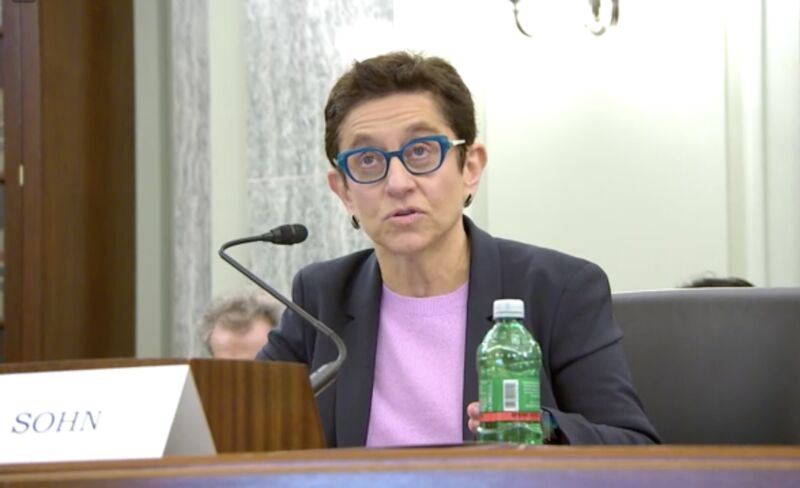
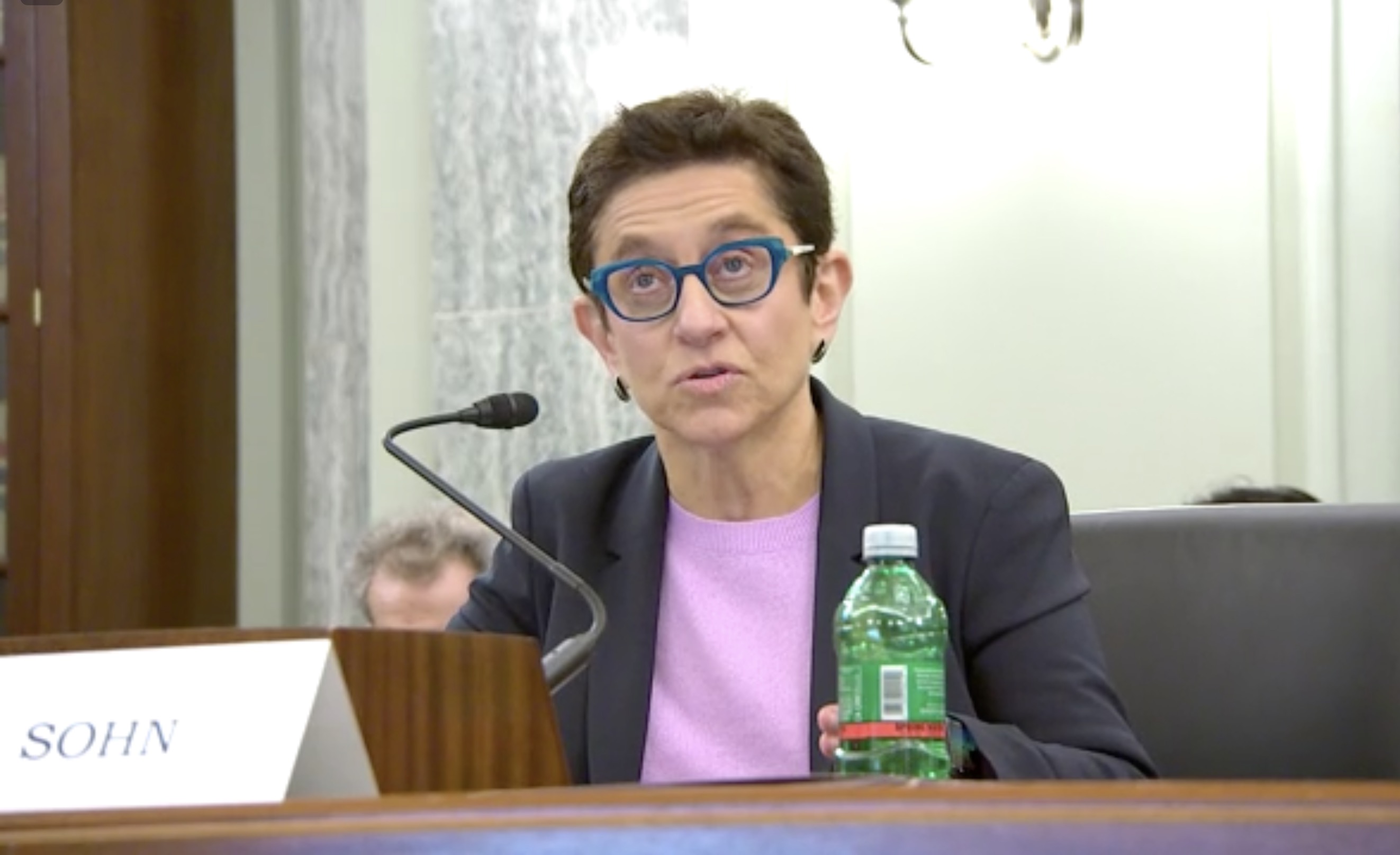
Gigi Sohn sitting and answering questions posted by US senators at a hearing.

Enlarge / Gigi Sohn answering questions on December 1, 2021, at a Senate Commerce Committee hearing on her nomination to the Federal Communications Commission. (credit: Senate Commerce Committee)

President Joe Biden yesterday renominated Gigi Sohn to the long-empty fifth spot on the Federal Communications Commission in hopes that the Senate will finally give Democrats a 3-2 FCC majority.

The FCC has been deadlocked with two Democrats and two Republicans for Biden's entire presidency so far. He first nominated Sohn, a longtime consumer advocate and former FCC official, on October 26, 2021.

The full Senate never voted on whether to confirm Sohn as an FCC commissioner. Republicans vocally opposed her, and Democratic leaders seemingly weren't able to line up support from more conservative party members such as Joe Manchin (D-W.Va.).

Read 11 remaining paragraphs | Comments

04 Jan 17:50

TSA’s Opt-In Facial Recognition Program Doesn’t Seem All That Optional In Real Life

by Tim Cushing

Nearly a half-decade ago, the DHS began rolling out biometric scanning at international airports. The early efforts targeted foreign travelers, but it was always clear the DHS (and its underling, the TSA) ultimately desired facial recognition tech to be the status quo in US airports.

The slow rollout that began with scanning foreigners’ faces was the DHS’s intellectually dishonest Overton window. It wasn’t an attempt to see what people would tolerate if routinely subjected to unproven tech. Instead, it was meant to show people would put up with almost anything if their only other option was abandoning their travel plans and expensive airline tickets.

Having proven nothing more than people are willing to be subjected to ever-expanding surveillance programs in exchange for freedom of movement, the TSA has moved forward with its biometric scanning. It has quietly expanded its facial recognition program to US citizens and residents on domestic flights at 16 airports.

At this point, the program is still opt-in. The TSA clearly wants it to be the default option for travelers, but at the moment, it is not forcing fliers to verify their identity via its facial recognition kiosks. That being said, it’s not exactly making it clear to travelers that they’re not required to participate in the program in order to board flights. The less obvious the options, the less likely it is that travelers will choose options the TSA doesn’t prefer.

A TSA rep (Jason Lim) spoken to by the Washington Post claimed travelers who opted to go the usual route — presenting their ID to TSA agents rather than utilizing the kiosks — would not be subjected to worse service simply because they opted out.

“None of this facial recognition technology is mandated,” said Lim. “Those who do not feel comfortable will still have to present their ID — but they can tell the officer that they do not want their photo taken, and the officer will turn off the live camera.” There are also supposed to be signs around informing you of your rights.

[…]

You should have no derogatory experience based on you exercising your right,” said Lim. If you suspect that has happened, the TSA says you should ask to speak to a manager.

Without a doubt, TSA agents have been apprised of these developments, as well as their obligation to provide the same level of (presumably subpar) service to travelers deciding to bypass the facial recognition kiosks. Memos, emails, posters, etc. have presumably been passed on to TSA employees, advising them of their options when travelers decide to utilize something other than the TSA’s preferred ID verification option.

But what the TSA says and what it does are two very different things, as traveler YK Hong notes on Mastodon. The TSA spokesperson says travelers will be treated equitably, no matter their personal decision. The boots on the ground say otherwise. This is from YK Hong’s Mastodon thread:

Coming out of the flight there was a row of kiosks for facial biometric capture. There were no people. Just kiosks. So I kept walking.

The next point of contact was the passport agents at their desks. Agent A asked me, “Did you take your photo at the kiosk?” I said, “No, I am opting out of biometric facial recognition.” And the agent asked, “Why?”

First off, the “why” doesn’t matter. The program is still opt-in, which means TSA agents should expect far more people to bypass the kiosks than utilize them. As the TSA spokesperson stated, face scanning is not mandatory. So, if someone does not do something that is not mandated, they should not face additional hassling from government employees.

But that’s what YK Hong experienced. They were clear on their rights and obligations. It was the TSA that seemed ill-informed about the facial recognition rollout. The agent who had no right to ask why YK Hong had decided not to utilize the kiosks received an answer:

“Because I don’t like it”

No reason was needed. And this reason was good enough, especially since YK Hong was under no obligation to explain their decision. The question was repeated by the agent, since he clearly wasn’t satisfied with the answer he had no right to demand. YK Hong reiterated their stance on the issue, stating they were opting out. The agent directed YK Hong to read a sign that basically said they could do exactly what they had already done.

The sign read: “U.S. citizens and select foreign nationals who are not required to provide biometrics and who wish to opt out of the new facial biometric process may simply notify a CBP officer, request a manual document check, and proceed with processing consistent with existing requirements for entry into the United States.”

That should have been the end of it. The TSA agent should have asked for YK Hong’s ID, compared it with the person standing in front of him, and allowed them to continue on through the airport. Instead, it became a whole thing involving three TSA agents, only one of which appeared to possess any amount of common sense.

The TSA has, since its inception, verified ID with physical documents. That it now has another option doesn’t mean the original option no longer exists. Hong’s experience suggests the soft rollout of facial recognition tech has somehow wiped the minds of TSA employees, forcing them to forget how things used to be done before the implementation of this unproven tech.

Then agent C arrived at the adjoining desk to begin work. And agent B said, pointing at me, “She doesn’t want to do the face scan. Which manager do I call?”

Agent C then said, “You don’t have to call anyone. Just look at her face and then compare it to her passport photo.”

And I said, “Yes, how it used to be done just a year ago.”

And agent B said, “You’re my first opt out.”

Then agent C said, you just have to enter on the screen why she doesn’t want it.” So again, I said, “I don’t like the repetitive image capture.”

Agent B said, “You’re losing the advantages of going through quickly.” I said, “That’s fine.” He shook his head.

Finally, after a lot of fumbling on their end, I was able to proceed through.

All very stupid. All very depressing. And all very par for the course when it comes to federal agencies in the national security business.

You can see why the DHS and TSA would love to nudge people towards (human) contactless verification. It allows everyone to blame the machines, rather than the employees, when something goes wrong. The TSA obviously doesn’t trust its agents to make judgment calls during ID verification. And agents clearly feel they should never be asked to use their better judgment while providing their particularly useless form of travel security. Making regular people interface with machines allows everyone (but travelers) to pretend any blown calls are out of their hands — an unfortunate turn of events that will always be greeted by official (and officious) shrugs of “what are you gonna do” by public servants.

Was this interaction worse than feeding your face to a machine? Indubitably. And, despite TSA statements otherwise, this is how the DHS and TSA want it to be. Any amount of friction that encourages people to do what the government prefers rather than what’s in their own best interest is a win for the DHS. The option of bypassing grumpy people in ill-fitting uniforms who are incapable of utilizing common sense is just too tempting for most travelers. The surveillance state wins. And the wheels are greased for mission creep. And all because the government performs routine tasks so poorly most people will do whatever it takes to avoid interacting with the people agencies have placed on the front lines.

04 Jan 12:58

Gigi Sohn’s FCC Future Looking Brighter As Biden Plans Renomination

by Karl Bode

Several sources familiar with the nomination process tell me that the Biden Administration is not only planning to re-nominate Gigi Sohn to the FCC in 2023, but that Sohn still has the full support of the Administration and of Biden personally.

At points in 2022 it wasn’t entirely clear that team Biden had the political backbone to continue one of the sleazier fights in modern policy history (this recent Verge breakdown is a great read if you need catching up). But this renomination puts that debate to rest, and the reconstituted Senate in the wake of Warnock’s win in Georgia suggests that Sohn should have a far more promising 2023.

The telecom and media industry used every dirty trick in the lobbying playbook in 2022 to prevent Sohn from getting the 50 Senate confirmation votes needed. The result: the longest delay in seating an FCC Commissioner in U.S. history, despite Sohn’s bipartisan popularity and experience.

That’s in stark contrast to the late 2020 nomination and seating of Trump FCC pick Nathan Simington, which took less than 30 days from start to finish despite Simington having virtually no telecom experience.

Unlike the bullrush approach used to nominate and promote reformer Lina Khan to the FTC, Sohn wasn’t even nominated by the Biden administration until October of 2021, nine months into his first term. I’m told by several sources there was some (baseless) concern by key advisors that the “controversy” surrounding Sohn’s nomination would interfere with efforts to get the infrastructure bill across the finish line.

The delayed nomination gave the telecom industry ample runway to develop a coordinated smear campaign (pushed through a variety of industry-linked nonprofits) falsely accusing Sohn of being a radical enemy of copsrural America, Hispanics, and free speech. The sleazy attacks were bipartisan, and included some help from former Democratic Senator Heidi Heitkamp.

The accusations were gibberish to anybody that actually knows Sohn, who in reality is popular across both sides of the aisle. But they functioned as intended: they provided the entire GOP with the flimsy rhetorical cover needed to do the telecom industry’s direct bidding. Which, contrary to a lot of pretense in the press and DC, is generally the position the GOP always takes on any issue of telecom and media policy (see: net neutrality, media consolidation, consumer rights, consumer privacy, etc.).

But the attacks provided the same flimsy cover for several key Senate Democrats, including Arizona Senator Mark Kelly, Nevada Senator Catherine Cortez Mastro, and West Virginia Senator Joe Manchin. Several sources tell me Kelly and Mastro will likely support Sohn with their contentious election battles in the rear-view mirror, though it’s equally likely Manchin will remain in stubborn, noncommittal opposition.

Enter Senator Rafael Warnock, whose election victory in Georgia should provide the 50 votes necessary to get over the hump… provided there’s no surprises. If Sohn backers can’t get Mastro and Kelly lined up, Sohn’s fate would require flipping a key Republican vote like Alaska Senator Lisa Murkowski.

The catch: with the renomination, the entire process needs to start over, meaning additional contentious hearings where GOP Senators get to pretend Sohn is an unhinged radical. If everything goes well, Sohn could still be seated by February or March. If everything doesn’t go well, and industry has its way, Sohn will face a gantlet of entirely new hearings where captured lawmakers push entirely new attacks.

That would give the Biden FCC a very short runway to push numerous policies (policies that can take up to 9 months to fully cook) ahead of the 2024 Presidential election. That means stuff like restoring net neutrality or media consolidation rules will likely be sidelined in favor of other more recent, politically safer priorities like improved broadband mapping, which looks to be an ugly mess in the making.

Again all of this dysfunction was by design: the telecom industry enjoyed a fully captured regulator for four years under Trump. Now, thanks to a few thousand dollars and some ethically-dodgy nonprofits, they successfully gridlocked the FCC for another two years.

That’s six straight years in which the nation’s top telecom and media regulator was either directly representing the interests of industry or mired in partisan gridlock because of industry lobbying. That’s six years of the FCC being unable to explore any policy considerations deemed even remotely controversial by industry giants and their GOP allies.

It may come as a surprise, but that’s not how healthy Democracies function. Holding telecom monopolies accountable has massive, bipartisan public appeal, yet corruption ensures it happens very rarely. So rarely, we can’t even field a fully staffed FCC because it might piss off Comcast.

Again, you’d be pretty hard pressed to find a more qualified and popular candidate to the FCC than Sohn. The problem is that unlike so many political DC animals, she’s an actual reformer genuinely interested in fixing problems. That’s a cardinal sin for telecom monopolies, who’d prefer to keep the FCC as feckless as humanly possible, for as long as humanly possible. Forever would be their preference.

03 Jan 23:17

Pornhub requires ID from Louisiana users to comply with state’s new porn law

by Jon Brodkin
Pornhub requires ID from Louisiana users to comply with state’s new porn law

Pornhub and other major porn sites owned by MindGeek now require Louisiana residents to verify their ages because of the state's new porn law that took effect on January 1, 2023.

"Louisiana law now requires us to put in place a process for verifying the age of users who connect to our site from Louisiana. The privacy and security of the Pornhub community is our priority, and we thank you for your cooperation," the Pornhub website tells Louisiana-based users when they try to access the website.

Pornhub owner MindGeek also operates Brazzers, YouPorn, and Redtube. All of those MindGeek sites now prompt Louisiana-based users to verify their age. Websites that violate the new state law could be found liable in civil lawsuits.

Read 14 remaining paragraphs | Comments

03 Jan 19:15

Names that are more dog or more human

by Nathan Yau

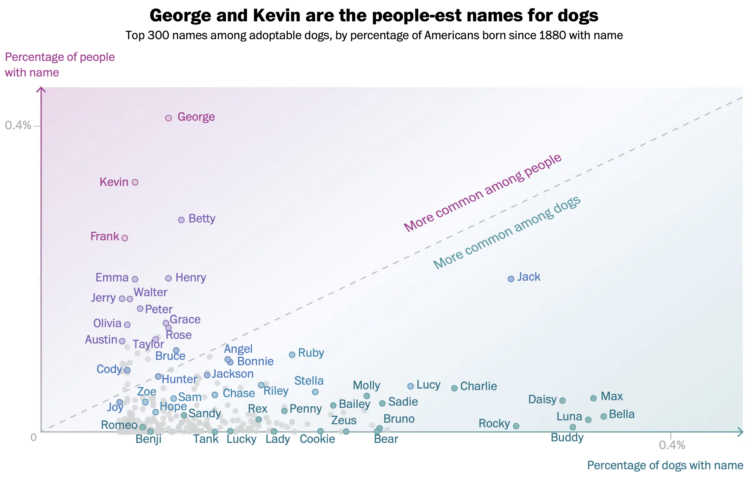
There appears to be a trend of using human names for pets. Alyssa Fowers and Chris Alcantara, for WP’s Department of Data, asked the natural questions that come after: “How human is your dog’s name? How doggy is your name?” Enter your own name or a dog’s name to see where it falls on the dog to human scale.

Tags: dogs, names, Washington Post

30 Dec 14:50

Arlington May Legalize “Missing Middle” Housing in 2023. Here’s What You Should Know.

by Damare Baker

If you’ve stepped foot in Arlington recently, you may have seen the phrase “missing middle housing” pop up—on pamphlets, on signs, and in op-eds. For the past few months, residents of the second-happiest place in the US have engaged in a bruising debate over whether the Arlington County Board should eliminate single-family zoning—i.e., set aside […]

The post Arlington May Legalize “Missing Middle” Housing in 2023. Here’s What You Should Know. first appeared on Washingtonian.

30 Dec 14:35

After Dumb Lobbying Delays And Ample Watering Down, NY Passes Landmark ‘Right To Repair’ Bill

by Karl Bode

New York State has finally passed a landmark “right to repair” bill proving American consumers some additional protection from repair monopolies. After some annoying delays created by lobbyists, New York State Governor Kathy Hochul signed the legislation on December 29.

The legislation gives New York consumers the right to fix their electronic devices themselves or have them repaired by an independent repair shop, instead of being forced to only obtain repairs through costly manufacturer repair programs. Groups like Consumer Reports were thrilled:

Marta Tellado, president and CEO of Consumer Reports, said, “This landmark law will save New Yorkers money, provide them with more convenient repair options, and cut down on waste. When your device is broken, you should have more options than a high-priced service or the landfill. The Digital Fair Repair Act will ensure that New York consumers have the choice to fix their own electronic products or have them fixed by a servicer they choose, including those independent of the manufacturer.

The final version of the bill enjoyed rare bipartisan support, passing the state assembly 147–2 and the senate 59–4. To make this happen, the bill doesn’t include vehicles, home appliances, farm equipment or medical devices — all sectors rife with obnoxious attempts to monopolize repair via DRM or by making diagnostics either expensive or impossible.

The final version of the bill stalled on Hochul’s desk as lobbyists attempted to weaken it further. With some success; according to Gothamist reporter Jon Campbell, the final bill strips away language requiring that manufacturers provide consumers, all “passwords, security codes, or materials to override security features,” as well as some additional intellectual property protections demanded by industry.

There are also some additional restrictions that force consumers to buy entire “repair assemblages” instead of being able to buy just the independent parts they need, which advocates say further undermines the law (imagine being forced to buy an entire computer motherboard when just a single component is broken):


It’s still a meaningful win, especially given the massive, well-funded, cross-industry opposition to the bill. Right to repair coalitions put it this way:

Repair supporters are justifiably upset that the law signed bears little resemblance to our original. The governor never made a statement of her intent, but it’s clear now that she never wanted the bill to include more than cell phones and laptops purchased at big box stores. At the same time, we know that lobbyists had her ear – and TechNet in particular has clearly had the most influence. But it still moves the ball forward so we’ll take our fight to the next level elsewhere.

So it’s nowhere near the landmark bill it professes to be, but it’s still a step forward. While it’s been a fairly dark decade for U.S. consumer rights, the “right to repair” movement’s shift from niche to mainstream continues to be one of the more promising trends in recent memory.

29 Dec 13:40

CRISPR’s quest to slay Donegal Amy

by WIRED
CRISPR’s quest to slay Donegal Amy

Enlarge (credit: Yasmin Monet Butcher/Jacqui Vanliew/Getty Images)

In the 5th century, in early medieval Ireland, Conall Gulban, an Irish king, gave his name to an area of land at the northwest tip of the Irish coast. His kingdom was called Tír Chonall, the “land of Conall”—or, today, Donegal.

Somewhere along the king’s descendant line, known as Cenél Conaill or “kindred of Conall,” it’s thought that a mistake arose in a scion’s genome—specifically, a mutation of a gene responsible for producing a protein called transthyretin (TTR). The genetic error resulted in the birth of a rare condition known as hereditary transthyretin (ATTR) amyloidosis.

Read 25 remaining paragraphs | Comments

29 Dec 13:40

Why hasn’t pandemic aid fraud become a bigger scandal?

by Andrew Prokop
Text of the CARES Act seen through the lens of a pair of glasses resting on the document.
Getty Images/iStockphoto

The scope of the fraud is staggering, but there are reasons the political impact has been muted.

The United States government’s historic spending on pandemic aid in 2020 and 2021 was accompanied by a historic amount of fraud and theft, with potentially hundreds of billions of dollars stolen.

Yet despite much excellent investigative reporting into Covid relief fraud and various government investigations into it, it’s never really risen to dominate the news agenda or made much of a political impact. It’s become the sort of issue that burbles on in the background, not a major scandal demanding everyone’s attention.

The Covid relief bills did an enormous amount of good, cushioning devastating economic blows from the abrupt halt to much in-person activity in 2020 and helping millions of people across the US. Still, I have been surprised that the high level of fraud hasn’t gotten at least a bit more attention, considering the staggering sums of money involved, and how much the right obsessed with overblown controversies over far smaller amounts of supposedly misspent funds in President Barack Obama’s stimulus law.

The main reason for the relatively muted reaction is likely that focusing on this doesn’t play to either party’s political advantage. Democrats and Republicans collaborated to pass the Covid relief bills at issue under President Donald Trump. And the specifics of the fraud don’t really fit with either party’s current top messaging priorities, with Democrats hesitant to demonize big-spending government aid programs, while Republicans are increasingly consumed by the domestic culture war.

How the fraud happened

As the federal and state governments tried to get pandemic relief funds out quickly to people and businesses who needed it in 2020, fraudsters and scammers pounced.

NBC News’s Ken Dilanian and Laura Strickler wrote in March that, per experts they consulted, pandemic fraud across three major relief programs could reach the $250 billion to $560 billion range (though no one really knows because the exact amount is difficult to estimate). The federal government approved about $5 trillion in total pandemic relief money, per the Washington Post.

Matthew Schneider, a former US attorney, told NBC that this was “the biggest fraud in a generation,” adding, “nothing like this has ever happened before.” And ProPublica’s Cezary Podkul wrote that the pandemic relief fraud “may turn out to be the biggest fraud wave in U.S. history.”

Some culprits were domestic, but much of the fraud was targeted internet crime from foreign scammers operating in countries such as Russia, China, and Nigeria. These included self-motivated hustlers just trying to pick up what they saw as easily available money, while others were more organized criminals. It turns out that when US government or state entities offer free money on the internet with minimal safeguards for identity verification, people will come along and try to take that money.

The main programs targeted included the expanded unemployment insurance benefits and the Paycheck Protection Program. Both of these were signed into law in the March 2020 CARES Act by Trump after being passed by a Democratic House and a Republican Senate. That means the Trump administration was in charge of the executive branch when much of the theft took place — though it was often antiquated state unemployment benefit systems that were specifically targeted. After President Biden took office in 2021, Democrats passed their own pandemic aid plan that extended the expanded unemployment insurance benefits several more months.

Why the politics are playing out this way

All of the above makes for a messy picture of political culpability. Republicans can’t frame this as a purely Democratic scandal when Trump signed the bill and was president while much of the theft happened. Democrats, for their part, helped craft the initial relief bill and extended it further under Biden. So that’s an incentive for both parties not to look too closely at what might have gone wrong. Unless, of course, some Republican with an incentive to make Trump look bad — like his possible 2024 presidential primary rival Ron DeSantis — decides to lay it at his feet.

Among Democrats, there’s likely a generalized fear that making too much about any fraud in government benefits will be used to discredit the use of government benefits to help people generally (harking back to the “welfare queen” attack from Ronald Reagan). Both mainstream and left Democrats were thrilled at the generosity of vastly expanded unemployment benefits, and hoped they could make these changes permanent in some form. Dwelling too much on all the money that was stolen would not be helpful here.

One would think, though, that it would be anti-spending Republicans who would typically make a big stink about an issue like this. And yet with the GOP increasingly fixated on the domestic culture war, the specifics of the pandemic relief fraud (money stolen by foreign hackers) don’t seem to fit too well with their current message.

This is evident in an amusing recent exchange on the pages of the Wall Street Journal. Rep. James Comer (R-KY), the incoming chair of the House Oversight Committee, wrote an op-ed on pandemic relief fraud, along with five other issues he plans to investigate. But his most specific concern was that some states and localities used pandemic relief funds for “electric buses and controversial ideologies.” In an earlier press release, his office claimed to find evidence that pandemic relief money funded “woke initiatives.”

American Enterprise Institute fellow Matt Weidinger responded to Comer’s op-ed with a letter to the Journal urging him to focus on the bigger fraud picture so it could be stopped from happening again. “Criminal gangs, including some based in Russia and China, used stolen identities to seize U.S. tax dollars on an industrial scale,” Weidinger wrote. This could be read as saying: Focus on the real issue, please, not just the culture war crap. We will see next year whether the GOP House majority listens.

Finally, and more broadly, there could well be a general feeling of leniency from both the political system and the public because this was an unprecedented situation, and many people who did need help got it — even if many scammers got some too. Some fraud was inevitable, and sure, this might be a lot. But haven’t the past few years been a lot for everyone?

28 Dec 12:33

Military device with biometric database of 2K people sold on eBay for $68

by Ashley Belanger
Soldier using biometric device

Enlarge / An American ISAF solider from team Apache of Task Force Geronimo, 4th Platoon Delaware of the United States Army, collects biometric information from an Afghan villager in the village of Mans Kalay in Sabari, Khost district on August 4, 2012. (credit: Jose Cabezas/Getty Images)

When a German security researcher, Matthias Marx, found a United States military device for sale on eBay—an instrument previously used to identify wanted individuals and known terrorists during the War in Afghanistan—Marx gambled a little and placed a low bid of $68.

He probably didn’t expect to win, since he offered less than half the seller’s asking price, $149.95. But win he did, and after that, he had an even bigger surprise coming, The New York Times reported. When the device arrived with a memory card still inside, Marx was shocked to realize he had unwittingly purchased the names, nationalities, photographs, fingerprints, and iris scans of 2,632 people whose biometric data had allegedly been scanned by US military.

The device allegedly stored not just personal identifiable information (PII) of seemingly suspicious persons, but also of US military members, people in Afghanistan who worked with the government, and ordinary people temporarily detained at military checkpoints. Most of the data came from residents of Afghanistan and Iraq.

Read 18 remaining paragraphs | Comments

28 Dec 12:32

ITC Blocks Import Of Apple Watches Based On Claimed Infringement… But The Patents Have Already Been Declared Invalid

by Mike Masnick

It’s been many, many years since we were regularly covering what we referred to as the ITC loophole in patent enforcement. The issue was that patent holders could get two totally separate at bats to try to force a company that was actually innovating to pay up over dubious patents. They could go to court, of course, by filing a patent lawsuit. But they could also go to the International Trade Commission, claiming infringement, and if the ITC agreed, it could ban the import of products it claimed was covered by that patent. While the ITC couldn’t force a company to pay fees for infringement like a federal court could, it was effectively just as bad, because once an import ban was in place (since most products are manufactured outside the US), the companies would be forced to negotiate a huge settlement just to keep their business going.

Thankfully, the worst parts of this “loophole” were at least somewhat limited a decade ago with the America Invents Act patent reform, which introduced the concept of the Inter Partes Review (IPR), in which anyone could petition the Patent Trial and Appeals Board (PTAB) to review a patent to determine if a mistake was made in the original granting. While that didn’t stop the use of the ITC, it created a more rapid path to invalidating a patent, which in theory was supposed to stop proceedings under the ITC. From the law:

The petitioner in an inter partes review of a claim in a patent under this chapter that results in a final written decision under section 318(a), or the real party in interest or privy of the petitioner, may not assert either in a civil action arising in whole or in part under section 1338 of title 28 or in a proceeding before the International Trade Commission under section 337 of the Tariff Act of 1930 that the claim is invalid on any ground that the petitioner raised or reasonably could have raised during that inter partes review.

Patent holders (mostly trolls, but practicing entities as well) have tried to kill the IPR process, but their efforts to get the Supreme Court to throw it out failed. Twice.

Anyway, the ITC loophole still exists, but is (thankfully) less potent.

However, it appears to have bitten Apple, and in the process demonstrated the serious problems with the system. A company named AliveCor claimed that Apple was infringing on three of its patents with certain Apple Watch features related to tracking heart rates. AliveCor filed its complaint with the ITC directly, seeking an injunction blocking the import of Apple Watches into the US. The patents in question are US Patents 10,638,941, 10,595,731, and 9,572,499.

In response, Apple initiated an IPR process, claiming that all three patents were invalid and should never have been granted. At the beginning of December, the PTAB ruled in Apple’s favor, finding all three patents to be invalid. For all three patents, Apple pointed to two earlier patents, referred to in the proceedings as the Shmueli invention and the Osorio invention. And with all three patents, the PTAB found that combining the ideas of Shmueli and Osorio would be an obvious thing for someone skilled in the art to do, rendering AliveCor’s patents invalid as obvious. Here’s part of one of the invalidations (though they’re all pretty similar):

For the reasons set forth above, we find that the combination of Shmueli and Osorio discloses or renders obvious the arrhythmia detection and confirmation recited in the challenged claims. We also find that one of ordinary skill in the art would have been motivated to combine the cited references with a reasonable expectation of success in arriving at the challenged claims. Patent Owner does not specifically challenge any other aspect of Petitioner’s showing with respect to Ground 1. Having reviewed the argument and evidence of record, we find that Petitioner has shown by a preponderance of the evidence that claims 1, 5, 7–9, 11, 12, 16, 18–20, 22, and 23 are unpatentable as obvious in view of Shmueli and Osorio.

So… the patents are invalid. In theory, that should kill the ITC process, but nope. As AliveCor noted in a press statement after the USPTO invalidated these patents, it apparently didn’t matter, as the ITC could still issue an injunction:

AliveCor is deeply disappointed and strongly disagrees with the decision by the PTAB and will appeal. The PTAB and ITC are two, separate independent bodies and will make their own separate independent decisions. We look forward to the separate Final Determination from the ITC expected December 12 and are cautiously optimistic based on the Initial Determination for AliveCor in June of this year.

And, indeed, last week (a few weeks later than expected) the ITC issued a final determination in favor of AliveCor, and issued an injunction that would block Apple from importing Apple Watches, though it has suspended the enforcement of the injunction while President Biden gets to review the ruling and while waiting for a “final resolution” from the PTAB on the validity of the patents.

Notice is hereby given that the U.S. International Trade Commission (“Commission”) has determined that there is a violation of section 337 in the above-captioned investigation. The Commission has further determined to issue a limited exclusion order and a cease and desist order and to set a bond in the amount of $2 per unit of covered articles imported or sold during the period of Presidential review. The enforcement of these orders, including the bond provision, is suspended pending final resolution of the U.S. Patent and Trademark Office, Patent Trial and Appeal Board’s (“PTAB”) Final Written Decisions finding the asserted patent claims unpatentable.

The Presidential review bit is important here, because when the ITC issues one of these injunctions, the President is actually allowed to step in and overturn the ruling. In fact, President Obama did exactly that in a similar scenario a decade ago after the ITC issued an injunction on iPhones and iPads over some Samsung patents.

One hopes that Biden will do the right thing and knock out this attempt at hindering basic innovation. Especially given that the USPTO has already found the patents invalid, even if AliveCor is appealing.

28 Dec 12:28

How to Evaluate a Nonprofit Before You Donate

by by Sophia Kovatch

by Sophia Kovatch

ProPublica is a nonprofit newsroom that investigates abuses of power. Sign up to receive our biggest stories as soon as they’re published.

Here’s what we’ll go through in this guide:

  • Why Should You Research a Nonprofit Before You Donate?
  • How to Find Out Where Charity Money Goes
  • How to Evaluate a Nonprofit’s Effectiveness
  • Questions to Ask Yourself Before Donating to a Nonprofit
Why Should You Research a Nonprofit Before You Donate?

In general, nonprofit organizations exist to further a social cause or provide a public benefit.

While many do, some don’t live up to the values and mission they claim.

How nonprofits spend their money may be different than what you expect. For instance, ProPublica has reported on how the Red Cross built just six homes after raising millions for Haiti disaster relief, how St. Jude Children’s Research Hospital keeps billions of dollars in reserves and how a nonprofit college spent more on marketing than financial aid.

Since nonprofits are required to file a document called a Form 990 with the IRS every year, you can check out a nonprofit’s finances for yourself with a few online resources. By taking the time to evaluate the charity before you donate, you can see how effective your donation will be and get peace of mind knowing it’s more likely that the organization effectively spends your donation and does what it says.

How to Find Out Where Charity Money Goes

Any organization with tax-exempt status that takes in over $50,000 per year has to file a Form 990. The annual report shows how a nonprofit spends its money.

Once the IRS makes the Form 990s public, you can find it in ProPublica’s Nonprofit Explorer, a Form 990 lookup tool. Search for a nonprofit by name or browse by state or type.

As of December 2022, the IRS is delayed in releasing nearly half a million tax records stretching back to 2020, according to a ProPublica review. That makes it difficult to see how charities are faring in the wake of the COVID-19 pandemic. Even when the IRS isn’t backlogged, Form 990s don’t provide insight into an organization’s current finances because the documents are typically filed many months after the end of an organization’s fiscal year. For larger organizations such as hospital systems, the wait can be even longer.

To find the most recent tax form for the charities you want to donate to, you can try looking on their websites or reaching out to the organizations to ask for it. Nonprofits are required to share their Form 990 upon request, but not every organization complies.

Form 990s are long and complex documents, but there are a few key things you can look for when researching a charity before you donate. Nonprofit Explorer summarizes these items and also provides the original Form 990 so you can examine it more closely.

IRS Status

Most nonprofits are so-called 501(c)(3) organizations — a reference to the portion of the IRS code that deems those organizations as exempt from certain federal and state taxes. Donations to those organizations are tax-deductible.

But not every nonprofit is a 501(c)(3). The IRS lists many types of nonprofit organizations, and not all of them have the same rules.

Some well-known nonprofit organizations are actually 501(c)(4)s, or “social welfare organizations,” according to the IRS. Donations to 501(c)(4) organizations generally are not tax-deductible, but the group can participate more freely in lobbying and advocacy. Many community-based groups and advocacy groups are categorized as 501(c)(4)s.

Some nonprofits are structured so you can donate to either a 501(c)(3) or a 501(c)(4). For example, you can donate to the ACLU, a 501(c)(4), to support its lobbying and advocacy activities, but you won’t be able to deduct it on your taxes. Or, you can make a tax-deductible donation to the ACLU Foundation, a 501(c)(3), to support litigation and public education initiatives.

If getting the tax deduction is important to you, confirm the nonprofit’s IRS tax status before donating.

You can find a charity’s IRS status in Box I of Form 990.

Program Spending

Most people donate to a nonprofit to support a specific program or service. If that’s the case for you, you’ll want to make sure the program you care about is prioritized when the organization budgets its money.

Understanding how nonprofits allocate money across programs is a good way to see how your donation will be spent. It’s also smart to figure out whether the organization made any recent major changes to its programs or mission.

You can find program spending information in Part III of Form 990. Some nonprofits include program descriptions in supplemental information at the end of the document.

Professional Fundraising

Fundraising is a critical source of cash for most nonprofits, and it’s common to have staff members who work on raising enough money for the organization to carry out its mission.

It’s not a problem for nonprofits to spend some money on their fundraising efforts. But it can be a problem when charities spend far more on professional fundraising than on the programs themselves.

You can see how much a nonprofit spends on professional fundraising in Part I, Line 16a of Form 990.

Executive Compensation

Nonprofits are required to disclose the names and salaries of the five highest-paid employees as well as other key staff and board members. Executive salaries at nonprofits are often heavily scrutinized, in part because of this public disclosure.

Like professional fundraising fees, a higher-than-expected number isn’t necessarily a problem. Nonprofits often compete for employees with for-profit companies, and so many try to pay what they believe to be market rates. High executive salaries can be an issue if they are disproportionate to program spending or aren’t comparable with organizations of similar size and complexity.

You can find executive compensation data in Part VII of Form 990.

Other Items to Look For on a Form 990

Program spending, fundraising fees and executive compensation are three key ways to assess a nonprofit. But you can dive even deeper into nonprofit finances if you know where to look on a Form 990.

Here’s where to find other nonprofit financial information that might interest you:

Employees and Voting Members

  • Number of employees: Part V, Line 2a
  • Number of voting members in governing body: Part VI, Line 1a
  • Number of independent voting members: Part VI, Line 1b
  • Individuals with over $100,000 in compensation: Part VII, Line 2

Ad Expenses

  • Amount spent on advertising and promotion: Part IX, Line 12a

Lobbying Activities

  • Participation in lobbying activities: Part IV, Line 4; Schedule C, Part II
  • Fees for lobbying services: Part IX, Line 11d

Business Relationship Disclosures

  • Business relationships of board members and their families: Part IV, Line 28; Schedule L, Part IV

Other Financial Health Metrics

  • Total functional expenses: Part IX, Line 25a
  • Total assets, beginning of year: Part X, Line 16a
  • Total assets, end of year: Part X, Line 16b
  • Net gain or loss on sale of assets: Part VIII, Line 7d
  • Total liabilities, beginning of year: Part X, Line 26a
  • Total liabilities, end of year: Part X, Line 26b
  • Investment income: Part VIII, Line 3
  • Total program service revenue: Part VIII, Line 2g
How to Evaluate a Nonprofit’s Effectiveness

Understanding where a nonprofit’s money goes is only part of evaluating an organization. It’s also important to understand the impact of the dollars spent on programs and services.

Check the nonprofit’s website and social media for information about its impact. Many nonprofits will release newsletters or impact statements about the work they’ve accomplished. You might also find testimonials from people they’ve helped in the past.

You can also use a charity review site to get additional information. Free online resources like Charity Navigator and BBB Wise Giving Alliance aggregate ratings and reviews for nonprofit organizations. They’re all a little different, but they generally rate nonprofits on transparency, finances and effectiveness.

Other Questions to Ask Before Donating to a Nonprofit

Here is a quick list of questions to ask yourself before you make a donation to a nonprofit:

  • Do you believe in the organization’s mission?
  • Does the nonprofit seem to live up to its mission? How do you know?
  • Can you find clear information about the impact of its work?
  • Does it spend the bulk of its money on programs?
  • Does it have a religious or political affiliation? If so, do you mind?
  • Is the website secure and up to date?
  • Is there anything about the nonprofit that concerns you?

28 Dec 12:28

Southwest flight cancellations

by Nathan Yau

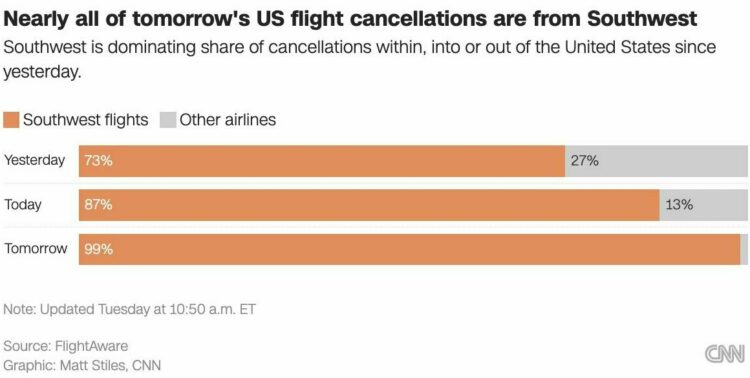
There were a lot of flight cancellations this week, but Southwest Airlines is on another level. This straightforward chart by Matt Stiles for CNN says it all.

Tags: CNN, flights, Southwest

27 Dec 18:40

Free PACER Access Heads To The Back Burner Again As Legislators Pull It From 2023 Budget Bill

by Tim Cushing

[INT: Midwestern living room, Christmas morning 2022]:

Children: Thanks for all of these consumer goods, Daddy. We know you mean well. But we just want to know whether we’ll ever see free access to federal courtroom documents in our lifetime.

Me: [long pause while stroking my magnificent beard] I don’t know, kids. I just don’t know.

[BELLS CHIME]

[ENTER STAGE RIGHT, a cloaked figure carrying a big book or something]: Let me show what life would be like if Breckin Meyer had never been born! [smoke effect]

Kids: Who?

Me: Whom.

Kids: Whom?

Cloaked figure: I’m sorry. I think I have the wrong address. Excuse me. [different smoke effect]

This dramatization of recent events omits or alters a few key details. I will correct those here:

  1. My children are in their late teens and have not called me “Daddy” for more than a decade.
  2. My children, despite their advanced age, have never accessed a federal court document, nor have they expressed any desire to do so.
  3. I don’t have a beard, magnificent or otherwise.
  4. Breckin Meyer is undoubtedly respected in his field.
  5. “Who” is the correct response.

Back to the issue at hand. PACER — the federal system for online access to court documents — is a Web 0.5 abomination. Despite collecting millions in fees every year, the system has not seen any serious upgrades to elevate it to the bare minimum web users expect… like utilizing a functional search system, or fixing its habit of incorrectly calculating “pages” to the point of being sued.

For years, legislators have attempted to make PACER access free. And it definitely should be. After all, taxpayers have already paid for the creation of the documents and dockets the US Courts system feels comfortable charging $0.10/page to access as though internet users were burning through toner cartridges with every PDF download or docket page served up online.

The obscene amount the federal court system collects from PACER users is supposed to be used to update online systems and, believe it or not, lower costs for PACER users. That has not happened. Instead, the federal judiciary has used this windfall to make things better for those who physically show up at courthouses, purchasing big screen TVs and comfy chairs for those watching and/or overseeing these proceedings. Left out of the equation are the millions of Americans who pay in but never see the court machinery pay out.

The only entity standing between us and free PACER access is the federal court system. It has been the only one to argue (without evidence) that it would cost taxpayers billions to give those same taxpayers free PACER access. Legislators have yet to surmount this single barrier, suggesting free access isn’t the priority they claim it is when they author bills. (To be fair, legislators have a lot of issues to address at any given time. To be less fair [but perhaps more honest], legislators don’t have to pay for their PACER access, which means allowing these bills to die doesn’t affect their personal bottom lines.)

The judiciary has claimed free access would require an offset of nearly $2 billion a year. Researchers and legislators took a look at these claims and called bullshit. In their estimation, free PACER access would only result in a net loss of a little over $1 million/year. Roughly a year later, the Congressional Budget Office announced its findings. The CBO concluded it would actually make the government money to give free access to millions of Americans while only charging fees to PACER “whales,” which tend to be large corporations engaged in litigation and/or trawling PACER to scour documents filed in federal court by their competitors.

Enacting the Open Courts Act would generate $175 million in net revenues over a decade, offsetting the $161 million in mandatory spending the bill would prompt

So, on one hand, we have a federal court system that truly loves buying TVs and couches with the money it’s supposed to be using to cut PACER costs for Americans. On the other, we have NGOs, legislators, First Amendment advocates, and members of the general public advocating for free PACER access. And we have a single, extremely self-interested party claiming it’s prohibitively expensive to serve up PDFs and search results in an era of dirt cheap storage and ubiquitous internet use.

Who would win?

Well, as Reuters reports, it would be the horse-sized duck, as personified by the US Courts system and legislators apparently unwilling to add a bill that would save the government money to the latest government spending bill.

U.S. lawmakers have left a proposal to make the federal judiciary’s PACER online court records system free out of a sprawling, $1.66 trillion spending measure unveiled on Tuesday, a setback for advocates as the current Congress nears its end.

Supporters of the Open Courts Act had been pushing to get the stalled, bipartisan legislation attached to the omnibus spending measure, which boosts overall spending on the judiciary by nearly 6% to $8.461 billion in fiscal year 2023.

Unfortunately, the Reuters report relies on “facts” delivered by the judiciary, which continues to insist it would cost millions to cede any ground to taxpayers. This self-serving estimate has been undercut repeatedly, and yet it somehow remains a reprinted talking point whenever free PACER access is up for debate. Reuters repeats it here, which does nothing but serve a judiciary that would rather rake in discretionary funds year after year, rather than increase the level of service it’s obligated to provide to the public.

I don’t know which legislators are to blame for this failure to push through an amendment that, at worst, would break even. But I’m going to blame somebody. This is unvarnished horseshit.

Rather than mandating changes to PACER, lawmakers in an accompanying explanatory statement said they would be expecting the judiciary to update them on its already-underway plans to modernize PACER and a related electronic case management system.

The US Courts system has had years to update PACER with the fees it collects. It hasn’t. All this statement says is that government business will continue as usual, which means PACER will still be an overpriced clusterfuck and that their constituents can expect to be charged ridiculous rates for PDF downloads for the foreseeable future.

There are several big issues the federal government needs to address. And maybe this one seems unimportant in that context. But to hold off on pushing this through reeks of laziness, if not cowardice. The US Courts system has yet to show it has any interest in improving PACER. And its math has been called into question multiple times. When a budget is passed, it makes sense to add efforts that may, at worst, break even. And legislators couldn’t even do that here.

PACER still sucks. It still costs too much. The system overseeing it is engaged in illegal use of PACER funds. But that’s the status quo legislators have decided to protect. I’m sorry, kids. For now, free PACER remains just as theoretical as a Breckin Meyer Golden Globes nomination.

27 Dec 12:36

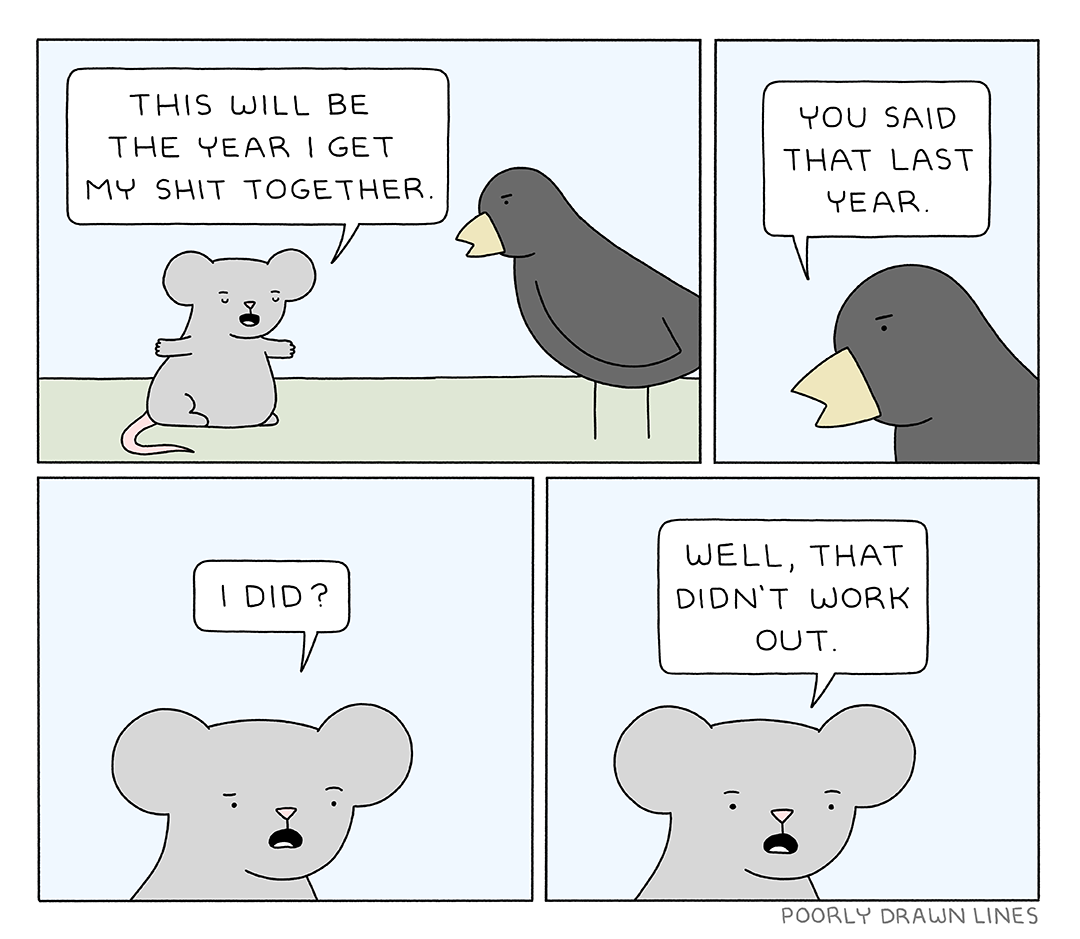
This Will Be the Year

by Reza
23 Dec 16:39

LastPass users: Your info and password vault data are now in hackers’ hands

by Dan Goodin
Calendar with words Time to change password. Password management.

Enlarge (credit: Getty Images)

LastPass, one of the leading password managers, said that hackers obtained a wealth of personal information belonging to its customers as well as encrypted and cryptographically hashed passwords and other data stored in customer vaults.

The revelation, posted on Thursday, represents a dramatic update to a breach LastPass disclosed in August. At the time, the company said that a threat actor gained unauthorized access through a single compromised developer account to portions of the password manager's development environment and "took portions of source code and some proprietary LastPass technical information." The company said at the time that customers’ master passwords, encrypted passwords, personal information, and other data stored in customer accounts weren't affected.

Sensitive data, both encrypted and not, copied

In Thursday’s update, the company said hackers accessed personal information and related metadata, including company names, end-user names, billing addresses, email addresses, telephone numbers, and IP addresses customers used to access LastPass services. The hackers also copied a backup of customer vault data that included unencrypted data such as website URLs and encrypted data fields such as website usernames and passwords, secure notes, and form-filled data.

Read 11 remaining paragraphs | Comments

20 Dec 19:53

FBI Private Sector Cyberthreat Reporting Database Hacked By Apparently Unreported Cyberthreat

by Tim Cushing

Is this irony? It kind of seems like it is. Maybe it isn’t. It could just be a coincidence. An extremely unfortunate, ironic coincidence.

Whatever it is, it doesn’t look good for the FBI, which encouraged pretty much every private company to register as reporting entities so the FBI could (theoretically, it appears) respond to reported security threats.

The FBI wants to be part of the cyber Pearl Harbor discussion. Here’s its latest contribution to that conversation, as first reported by Brian Krebs.

InfraGard, a program run by the U.S. Federal Bureau of Investigation (FBI) to build cyber and physical threat information sharing partnerships with the private sector, this week saw its database of contact information on more than 80,000 members go up for sale on an English-language cybercrime forum. Meanwhile, the hackers responsible are communicating directly with members through the InfraGard portal online — using a new account under the assumed identity of a financial industry CEO that was vetted by the FBI itself.

Trust, but don’t even bother verifying, I guess. That’s how they — and by “they,” I mean the hacker referring to themselves as “USDoD” — get you. A portal for private companies to report threats has been compromised using nothing more than credentials that have likely been floating around the web (dark or otherwise) for some time now.

USDoD said they gained access to the FBI’s InfraGard system by applying for a new account using the name, Social Security Number, date of birth  and other personal details of a chief executive officer at a company that was highly likely to be granted InfraGard membership.

The CEO in question — currently the head of a major U.S. financial corporation that has a direct impact on the creditworthiness of most Americans — told KrebsOnSecurity they were never contacted by the FBI seeking to vet an InfraGard application.

With access obtained, the breach began. USDoD “asked a friend” to create a script that would pull all available user data from the database, which apparently had no defensive methods in place to thwart the script, or any siloing in place to ensure one user’s approved access wouldn’t allow them to obtain other users’ information.

In an effort to increase collaboration between private sector contributors (if not the FBI itself, although there doesn’t appear to be any actual FBI data/communications included in the hacking haul), InfraGard acted as a quasi-social media hub to allow private companies to share info with each other. That connectivity apparently contributed to the easy exfiltration of data, albeit data of disputable value.

USDoD acknowledged that their $50,000 asking price for the InfraGard database may be a tad high, given that it is a fairly basic list of people who are already very security-conscious. Also, only about half of the user accounts contain an email address, and most of the other database fields — like Social Security Number and Date of Birth — are completely empty.

While the eventual sale of this data will put USDoD in the black, the ultimate end game may not be the easily-absconded-with user data. The hacker is taking full advantage of this impersonation to contact private sector participants in hopes of securing additional data and/or credentials usable for bigger and better data heists.

The FBI has responded to these reports with a no comment.

“This is an ongoing situation, and we are not able to provide any additional information at this time,” the FBI said in a written statement.

It’s a shame the FBI wasn’t aware of this before being contacted by people who don’t work for the FBI. If the agency wants the private sector to trust it with its threat reports and data, it needs to be ahead of things like this, rather than simply refusing to talk about incidents it should have been more proactive about.

But spending tax dollars on “cyber security furniture” only buys so much competence. While it’s essential private sector contributors are able to share information easily with each other, a breach like this will only encourage them to cut the FBI out of the loop. There are obviously more secure channels for communication about these issues. Allowing a hacker to make off with critical data suggests the FBI is not only failing to fully vet contributors to its cyber security marketplace of ideas, but failing to ensure the private companies it hires to provide solutions are capable of meeting the demands of the job.

19 Dec 18:21

Musk polls Twitter users on whether he should be CEO—57.5% want him to quit

by Jon Brodkin
Illustration of an Elon Musk bust surrounded by flags with the Twitter logo.

Enlarge (credit: Aurich Lawson)

Elon Musk polled Twitter users yesterday on whether he should remain as the company's CEO and claimed he would abide by the results. The poll concluded with 17.5 million votes, with a large majority urging Musk to step down.

"Should I step down as head of Twitter? I will abide by the results of this poll," Musk wrote. The "Yes" option was selected by 57.5 percent of poll respondents.

Musk hasn't confirmed whether he will actually step down. "The question is not finding a CEO, the question is finding a CEO who can keep Twitter alive," Musk wrote last night after posting the poll. "No one wants the job who can actually keep Twitter alive. There is no successor," he also wrote in response to a tweet speculating that he "already has the new CEO picked out."

Read 6 remaining paragraphs | Comments

17 Dec 12:43

Linux, Amazon, Meta, and Microsoft want to break the Google Maps monopoly

by Ron Amadeo
The Overture Maps logo.

Enlarge / The Overture Maps logo. (credit: Overture Maps Foundation)

Google Maps is getting some competition. The Linux Foundation has announced Overture Maps, a "new collaborative effort to develop interoperable open map data as a shared asset that can strengthen mapping services worldwide." It's an open source mapping effort that includes a list of heavy hitters: Amazon Web Services (AWS), Meta, Microsoft, and TomTom, with the foundation adding that the project is "open to all communities with a common interest in building open map data."

The Linux Foundation has a press release about the project and a new website for the Overture Maps Foundation. The press release outlined the scope of the project, which aims to deliver:

  • Collaborative Map Building: Overture aims to incorporate data from multiple sources including Overture Members, civic organizations, and open data sources.
  • Global Entity Reference System: Overture will simplify interoperability with a system that links entities from different data sets to the same real-world entities.
  • Quality Assurance Processes: Overture data will undergo validation to detect map errors, breakage, and vandalism to help ensure that map data can be used in production systems.
  • Structured Data Schema: Overture will define and drive adoption of a common, structured, and documented data schema to create an easy-to-use ecosystem of map data.

If you're saying, "Wait! isn't there already an open source map community out there?"  There is, and it's called "OpenStreetMap," the Wikipedia of maps that anyone can edit. The Overture press release says, "The project will seek to integrate with existing open map data from projects such as OpenStreetMap and city planning departments, along with new map data contributed by members and built using computer vision and AI/ML techniques to create a living digital record of the physical world."

Read 7 remaining paragraphs | Comments

17 Dec 12:43

Forget The Witcher and Superman: Henry Cavill to lead Warhammer 40K dream project

by Samuel Axon
Henry Cavill as Geralt from Netflix's <em>The Witcher</em> TV series.

Enlarge / Henry Cavill as Geralt from Netflix's The Witcher TV series. (credit: Netflix)

Amazon has signed a deal with Games Workshop to gain the intellectual property rights that will allow the tech and media giant to make films, TV series, and other content based on the popular Warhammer 40K franchise.

Warhammer 40K has been one of the most popular properties among gamers and others for almost 40 years. It started as a tabletop game but has also spawned numerous popular video games and books over the years.

This news might be interesting enough on its own, but fans of the franchise might also be interested to know that Henry Cavill—the actor who played Geralt in Netflix's The Witcher series and Superman in the Zack Snyder DC superhero films, among other things—is attached to the project as an actor and executive producer.

Read 6 remaining paragraphs | Comments

17 Dec 11:34

Let Go

by Reza
16 Dec 13:53

Google Nest and Android devices are now Matter controllers (for future devices)

by Kevin Purdy
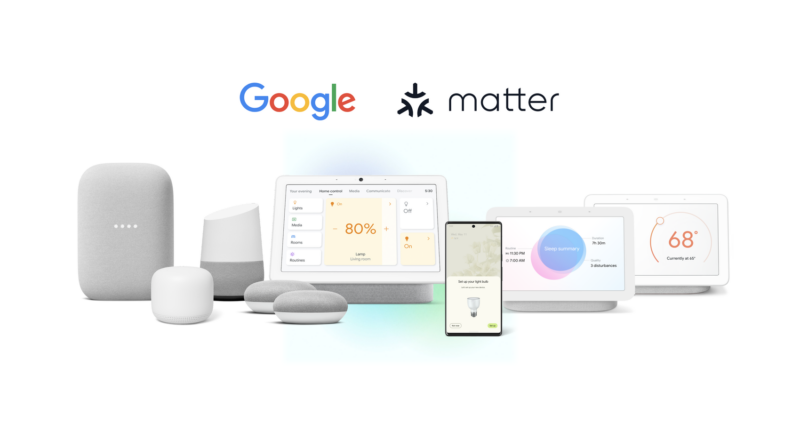
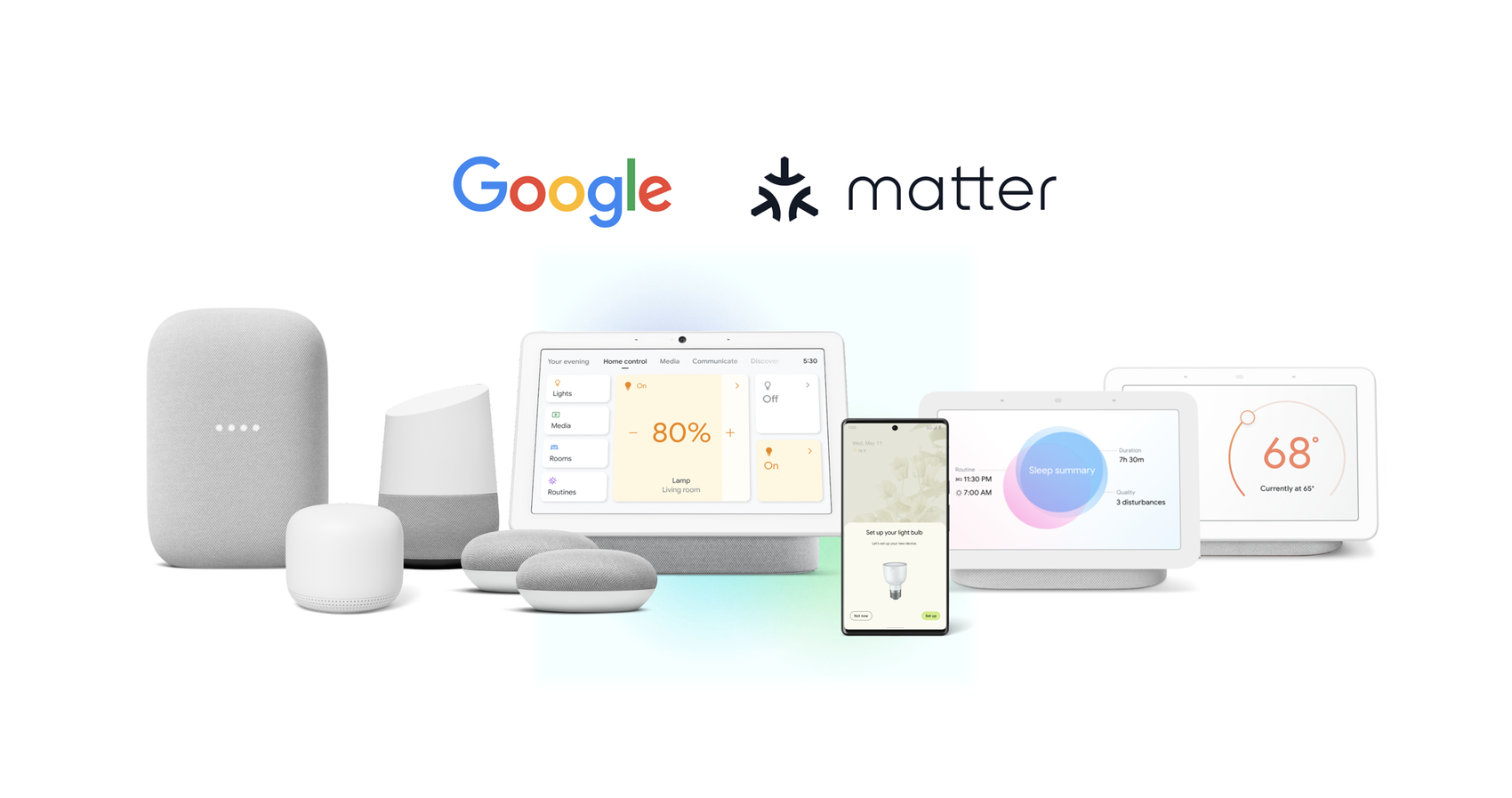
Google devices shown with a Matter logo

Enlarge / A whole bunch of Google devices, including Android phones, can now control Matter devices. Those devices will be here at some point, perhaps soon. (credit: Google)

The promise of Matter—the future where smart-home devices easily nestle into your home, regardless of what other devices or speakers you use—just got a bit closer today. Google announced that Nest and Android devices are Matter-enabled, allowing them to set up and control other Matter devices—that mostly don't exist yet.

If your Android device runs version 8.1 or higher and has Google Play Service 22.48.14 or newer, you can use it to pair a Matter-compatible device with other Matter products and controllers. In these early post-launch Matter days, that means you can pair a few Eve devices that got their Matter firmware update three days ago. Or you can wait on a few Nanoleaf bulbs, some Level smart locks, or whatever else is to come. Nest devices that have quietly received their latest firmware updates can now be used to control that same (quite limited) set of devices.

The appeal of the moment is that you could, technically, use an Android phone to put an Eve device onto your Matter network, then use an iOS Home app, Samsung's SmartThings, or an Alexa speaker (when those are updated in early 2023) to actually control that device. Alternatively, devices you brought onto the network with an iOS device could be controlled from a Google Nest Hub or speaker or other Nest device.

Read 3 remaining paragraphs | Comments

15 Dec 12:08

One home’s blackouts in Kyiv

by Nathan Yau

Volodymyr Agafonkin and his family live in Kyiv, Ukraine. He visualized when the power went out over the past two months:

As you can see, we spend 4–8 hours in blackout during a typical day. You can notice some stepping patterns in the data — this is our energy workers trying to stabilize the blackouts into some kind of schedule, although it’s often overridden due to emergency shutdowns. More blackouts happen in the evening time because of the increased load on the grid, with everyone getting home after work and cooking dinner. There’s usually no need for blackouts at night because people go to sleep, and the load falls sharply — that’s usually the time for us to charge devices, turn on the washing machine & dishwasher, and occasionally bake something nice in the oven.

Tags: blackout, electricity, Ukraine, Volodymyr Agafonkin

14 Dec 18:59

“Impossible” to track: China gives up on COVID case count amid explosive outbreak

by Beth Mole
This frame grab from AFPTV video footage shows people queueing outside a fever clinic amid the Covid-19 pandemic in Beijing on December 14, 2022.

Enlarge / This frame grab from AFPTV video footage shows people queueing outside a fever clinic amid the Covid-19 pandemic in Beijing on December 14, 2022. (credit: Getty | YUXUAN ZHANG/AFPTV/AFP)

Amid what appears to be an explosive outbreak of COVID-19, China on Wednesday said it would no longer report asymptomatic cases because they've become "impossible" to track after an end to mandatory testing.

The now-voluntary testing policy is part of an abrupt pivot away from the country's strict zero-COVID policy that drew widespread protests in recent weeks.

After years of keeping SARS-CoV-2 outbreaks largely at bay with various restrictions, mandatory isolations, quarantines, lockdowns, and extensive testing, China last week significantly eased its unpopular policy. The State Council announced on December 7 that residents would no longer be required to undergo frequent PCR tests for COVID-19. It also dropped the requirement to use digital health passes—personal QR codes that tracked an individual's movements and COVID-19 test results—for access to buildings and public transportation. And for the first time during the pandemic, the government also allowed people with mild or asymptomatic infections to isolate at home rather than in centralized facilities, which residents often criticized for being unsanitary and overcrowded.

Read 5 remaining paragraphs | Comments

14 Dec 18:35

Work

by Reza
14 Dec 17:41

Tesla rolls out Steam game support for newest vehicle models

by Kyle Orland
A car drives through a video game landscape in a heavily photoshopped image.

Enlarge / Drive through the Lands Between in style... (credit: Aurich Lawson / Tesla / FromSoft)

The newest models of Tesla's electric vehicles are now Steam-powered. And by that, of course, we mean the vehicles' central consoles can now access and play thousands of titles from Valve's popular Steam gaming platform.

The new addition, part of Tesla's 2022.44.25.1 "holiday update," is currently only available on the high-end "new" Model S and X vehicles Tesla released in 2022, each of which includes 16GB of onboard RAM (though CEO and founder Elon Musk promised in a tweet that a "retrofit" will be available for older models). The release notes for the update suggest that those vehicles should be able to run any game that has been Verified by Valve for play on the company's Steam Deck handheld.

The list of Verified games currently includes over 6,000 titles that run on the Deck through SteamOS, most using a compatibility layer to get Windows-coded games running on the Arch Linux-based system. We imagine the even more expansive list of games listed as "Playable" on Steam Deck will also work in these Teslas, though users may run into some specific interface headaches with such titles.

Read 5 remaining paragraphs | Comments

14 Dec 12:04

TikTok would be banned from US “for good” under bipartisan bill

by Ashley Belanger
TikTok would be banned from US “for good” under bipartisan bill

Enlarge (credit: Chesnot / Contributor | Getty Images Europe)

In September, President Joe Biden announced that TikTok would remain accessible in the US once a deal could be worked out to assuage national security concerns. At that time, Biden said it would take months for his administration to weigh all the potential risks involved in inking the deal. Among detractors of the brewing deal, Senator Marco Rubio (R-Fla.) and Congressman Mike Gallagher (R-Wis.) emerged, alleging in a Washington Post op-ed that any deal that Biden arranged with the Chinese-owned social media platform “would dangerously compromise national security.”

Now, Marco and Gallagher have teamed up with Congressman Raja Krishnamoorthi (D-Ill.) to introduce new bipartisan legislation in the Senate and House of Representatives, formally calling for a ban on TikTok. It’s the only way, lawmakers feel, that TikTok can truly be stopped from collecting sensitive data on Americans for the Chinese Communist Party (CCP) and censoring content to influence elections, sow discord, or potentially even "indoctrinate" users.

“The federal government has yet to take a single meaningful action to protect American users from the threat of TikTok,” Rubio said in a press release. “We know it’s used to manipulate feeds and influence elections. We know it answers to the People’s Republic of China. There is no more time to waste on meaningless negotiations with a CCP-puppet company. It is time to ban Beijing-controlled TikTok for good.”

Read 16 remaining paragraphs | Comments

13 Dec 20:38

Free PACER Would Pretty Much Be Free, Says CBO, Undercutting Federal Judiciary’s Ridiculous $2 Billion Estimate

by Tim Cushing

For years, attempts have been made to make access to federal court records free. To date, not one of these efforts have been successful. The federal judiciary likes its antiquated cash cow, raking in PACER fees meant to improve and free up (as in “free”) document access and redistributing the profit amongst itself, (illegally) blowing the funds on big screen TVs and furniture for those working at or with access to federal courthouses.

While PACER limps on in its pre-Web 1.0 state, millions of Americans are either unable or unwilling to pay librarian rates for the (lol) reproduction of PDFs at the absurd rate of $0.10/page. This page fee applies to searches (whether or not they’re successful) and docket listings, the latter of which only displays pixels on a screen.

Lawsuits and legislation have, so far, failed to give Americans free access to documents they’ve already paid for once with their tax dollars. The federal judiciary has been the main roadblock to free access, claiming (without facts in evidence) that this paywall is a necessary evil — the only thing keeping the US judiciary system from being repo’ed by… well, that’s not entirely clear.

The judiciary’s last major pushback came in late 2020. As bills made their way through Congress threatening free PACER use, federal judiciary officials made the ridiculous claim that free access would result in a multi-billion dollar loss. The judiciary claimed (again, without evidence) that it would cost $2 billion over five years if PACER access (for all but the most heavy users) was free. Then it asked for $7.65 billion to cover costs in 2021, despite giving no legitimate reason for this cash injection.

Either way, the federal judiciary should have been a few billion in the black every year for the next half-decade, even if PACER access was made free. Legislators unwilling to give the judiciary more money to grant the same amount of access pushed back. According to researchers working with legislators, the supposed $2 billion cost was actually far, far less: ~$2 million/year.

A bill that sailed through the House following this hilarious display of bad faith by the US court system quoted the Congressional Budget Office (CBO), which generated an estimate even lower than the $2 million/year originally stated by legislators.

On net, CBO estimates that enacting H.R 8235 would increase the deficit by $9 million over the 2021-2030 period.

A net loss of less than $1 million per year. So much for the billions claimed by the federal judiciary system.

And that finding has been sustained. More than sustained, actually. It’s been improved. It actually may make the government money to give free use to most PACER users while charging fees only to its heaviest users (mostly US corporations).

Making the federal judiciary’s online court records system known as PACER free under a pending bill in the U.S. Senate would not add to the federal deficit as initially presumed, but would actually cut it by $14 million over a decade, according to revised estimates from the Congressional Budget Office.

Enacting the Open Courts Act would generate $175 million in net revenues over a decade, offsetting the $161 million in mandatory spending the bill would prompt, according to new estimates by the CBO, Congress’ nonpartisan fiscal referee, released Wednesday by Democratic Senator Ron Wyden of Oregon, a bill sponsor.

From ~$400 million/year (US Court system estimate) to $2 million/year (2020 CBO estimate) to an actual cut in federal spending. It would seem the judiciary system should probably stop arguing against free PACER access before it makes any more profit. There’s looking a gift horse in the mouth, and there’s the federal judiciary, which not only looks a gift horse in the mouth, but insists the gift horse is too much of a burden on taxpayers to be accepted with a clear conscience before asking taxpayers to pay the return freight on the overpriced, underperforming gift horse.

But you can be sure the federal judiciary will continue to protest any changes to its horrible, overly expensive, barely functional webshittery it pretends would be worth $0.10/page even if it had any competition.

As Joe Patrice notes for his article on these findings for Above the Law, the system that’s supposed to serve the public always seems far more interested in serving itself. And if that means charging for things no one in the private sector charges for these days, so be it.

Hosting a document database in 2001 was a costly endeavor. Today, Google gives you that kind of storage for opening a Gmail account. The idea that it cost the court massive amounts of money to maintain PACER was either a lie or a symptom of the courts trying to keep an antiquated system afloat rather than transitioning to a modern approach. Or a bit of both. Or a bit of both and a vested interest in a slush fund.

The judiciary system will push back. That much is assured. But what’s more than painfully obvious at this point is that it’s just making stuff up. PACER should be free. And, according to these numbers, it would cost the government money to keep charging every user access fees.

13 Dec 18:49

We have a genuine fusion energy breakthrough

by Umair Irfan
Target chamber at the National Ignition Facility
Researchers at the National Ignition Facility at Lawrence Livermore National Laboratory announced that they have achieved ignition for fusion. | Umair Irfan/Vox

That fusion announcement is worth getting hyped about, but practical fusion is still a long way off.

Researchers at the National Ignition Facility in Livermore, California, home of the world’s most powerful laser, announced on Tuesday that they crossed the critical threshold in their pursuit of fusion power: getting more energy out of the reaction than they put in.

This is 1) a massive scientific advancement, and 2) still a long, long (long) way off from harnessing fusion, the reaction that powers the sun, as a viable source of abundant clean energy. On December 5, the team fired 192 laser beams at a tiny fuel pellet, producing slightly more energy than the lasers put in, “about 2 megajoules in, about 3 megajoules out,” said Marvin Adams, deputy administrator for defense programs at the National Nuclear Security Administration, at a press conference Tuesday.

To make fusion something that could actually produce electricity for the power grid, it can’t just inch over the ignition finish line; it has to blow past it. This announcement is an important incremental advance, but the breakthrough doesn’t go far enough to be of practical use. Because NIF itself is a research laboratory, its technology is not intended to produce power. So designing a fusion reactor to harness this new approach will be its own engineering challenge.

NIF is part of Lawrence Livermore National Laboratory, operated by the US Department of Energy. “This is what it looks like for America to lead, and we’re just getting started,” Energy Secretary Jennifer Granholm said on Tuesday.

The Financial Times first revealed on Sunday that a fusion breakthrough announcement was imminent.

Nuclear fusion refers to the reaction where the nuclei of tiny atoms like hydrogen and helium collide and stick together, generating immense heat, which could, in theory, be used to make electricity. That’s in contrast to the fission reaction used in conventional nuclear power plants, where large atoms like uranium are split apart. The trouble for fusion is that the nuclei are positively charged and thus repel each other. To get them to overcome their opposition, you have to get them moving really, really fast in a confined space and create a high-energy state of matter known as plasma.

Scientists have struggled for decades to do this. There are two main approaches: One is to compress a tiny pellet of fuel with powerful lasers, which is NIF’s strategy. The other is to heat up plasma to temperatures hotter than the sun and contain it with magnets. This is how ITER, the world’s largest fusion project, currently under construction in southern France, will generate the reaction.

The sun and other stars can pull this off because they have enough matter to generate immense gravity, which accelerates and confines atoms to create fusion reactions that produce the light and heat we can experience from millions of miles away.

Here on Earth, humanity has actually known how to produce fusion since 1952 — in thermonuclear weapons. Scientists have been able to produce fusion in laboratories as well, but only intermittently, and at great energy expense: Imagine using a blowtorch to light a match. The slow progress in pursuit of fusion has also made it a struggle to get adequate research funding, which in turn hampered progress.

In 1997, the National Academy of Sciences established ignition as the goalpost for fusion at NIF. It defined ignition as “gain greater than unity,” meaning more energy out of the fuel target than the amount of laser energy hitting it.

For months, scientists at NIF have gotten tantalizingly close. About a year ago, they said they were about 70 percent of the way there. “We’re on the threshold of ignition,” Tammy Ma, a plasma physicist at NIF, told Vox in January 2022.

Now they’ve crossed that line.

“This result clearly surpasses that mark leaving no question that they achieved fusion ignition in the laboratory,” said Carolyn Kuranz, a plasma physicist at the University of Michigan, in an email.

A researcher holds a fusion fuel target Umair Irfan/Vox
NIF fires powerful lasers at a tiny pellet of hydrogen in order to trigger a fusion reaction.

Troy Carter, a plasma physicist at the University of California Los Angeles, explained that while NIF has achieved a massive breakthrough, it’s still short of what’s needed. As the National Academy of Sciences pointed out, the key metric is the fusion energy gain factor, also called “Q.” This is the ratio of the power used to start and maintain a fusion reaction compared to the power produced. A gain of 1 means the reaction has broken even. The latest announcement at NIF shows a gain of roughly 1.5, meaning the reaction has become energy-positive.

But that’s only if you define the energy input narrowly to the laser energy hitting the fuel target. If you measure from the total amount of energy needed to charge up and fire the laser, about 300 megajoules, the recent results are still far short. To actually produce more energy from fusion than the laser requires from the power grid, you would need a gain of 100 or more.

Another limitation is that NIF can only fire a few laser shots per day, and the amount of electricity required can sometimes cause blackouts at the lab. To run an actual fusion reactor, you’d need to fire about 10 shots per second.

The fuel itself could also stand to burn more efficiently. “The NIF shot only burned a small fraction of the fuel in the capsule,” Carter said in an email. “If you can find a way to burn up more fuel, the gain goes up substantially.”

That will involve tweaking the tiny fuel pellet to get more of the laser energy directed toward compressing atoms.

As for the laser, NIF is using dated technology that has a lot of room for improvement. The lasers are only about 1 percent efficient in terms of turning electricity to laser light, while more modern designs can be 20 percent efficient. “The NIF is built on 1980s laser technology,” said Kim Budil, director of the Lawrence Livermore National Laboratory, during a press conference.

Still, achieving ignition is a critical milestone and an important signal that scientists are on the right track. Carter said it “provides more justification for an aggressive push to develop and deploy fusion energy as quickly as we can, with the hope of impacting climate change!”

This story was also published in the Recode newsletter. Sign up here so you don’t miss the next one!