Techdirt has been writing about “evergreening” for many years. It refers to the practice by pharmaceutical companies of making small changes to a drug, often about to come off patent, in order to gain a new patent that extends its manufacturer’s monopoly control over it. The New York Times has a story about the Big Pharma company Gilead Sciences that involves evergreening, but with a twist.
It concerns the drug tenofovir, which is used for treating HIV. Its patent expired in 2017, and Gilead naturally worked on a replacement that would extend its patent monopoly beyond that date. But Gilead stopped work on the new version in 2004. At the time, the company’s press release explained this was because it didn’t have “a profile that differentiates it to an extent that supports its continued development.” That’s a rather implausible excuse, since the technique of patent evergreening is based on the idea that even tiny changes to a drug justify granting a new patent. Drawing on “a trove of internal documents made public in litigation against the company,” The New York Times says there was another reason why work on the new version was halted:
The promising drug, then in the early stages of testing, was an updated version of tenofovir. Gilead executives knew it had the potential to be less toxic to patients’ kidneys and bones than the earlier iteration, according to internal memos unearthed by lawyers who are suing Gilead on behalf of patients.
Despite those possible benefits, executives concluded that the new version risked competing with the company’s existing, patent-protected formulation. If they delayed the new product’s release until shortly before the existing patents expired, the company could substantially increase the period of time in which at least one of its H.I.V. treatments remained protected by patents.
Despite those 2004 concerns over its “profile”, Gilead did introduce the new version, but just a couple of years before the 2017 expiry of the patent on the original version. As The New York Times notes, that was nearly a decade after it could have been made available had work on the new version not been paused. Because of this delay, Gilead has patents on its HIV drug that will run until at least 2031.
The delayed release is now the subject of state and federal lawsuits in which around 26,000 patients, who took Gilead’s older version of tenofovir, claim that the company exposed them to kidney and bone problems that could have been avoided. The company denies this:
In court filings, Gilead’s lawyers said that the allegations were meritless. They denied that the company halted the drug’s development to increase profits. They cited a 2004 internal memo that estimated Gilead could increase its revenue by $1 billion over six years if it released the new version in 2008.
But that makes no sense. Why would a canny Big Pharma company forgo an estimated $1 billion in revenue for apparently no reason? It certainly wasn’t because the new version’s “profile” was unsuitable, as its subsequent successful launch proves. Its hard not to see this as a calculated move to maximize sales and profits based on the (correct) assumption that drug prices would continue to rise strongly, making an extended patent monopoly even more valuable than a truncated one.
The move has certainly paid off for Gilead, but not for people with HIV. If the new version had been patented back in 2004, it would be coming off patent soon, which would mean cheap generics would be available, widening access to the drug. Moreover, as the lawsuits note, people would have been spared the serious consequences of taking a drug for years that had toxic effects on their bodies.
This is not the first example of Gilead behaving badly with its HIV drug. Back in 2019 Techdirt wrote about how Gilead was charging $24,000 annually per patient for a treatment, based on tenofovir, that was developed with US taxpayer money, and even patented by the US government. The cost of producing the treatment? Just $60 annually per patient.
Enlarge / One of Brother's compact laser printers. (credit: Amazon)
It's the beginning of the end for third-party printer drivers in Windows, according to a support document the company released earlier this month. Instead of bespoke drivers for individual printers and scanners, Windows will rely on its built-in universal "class driver" that supports the Internet Printing Protocol (IPP) and other standards embraced by the Mopria Alliance.
The phase-out will kick off in earnest at some point in 2025, when Microsoft will stop accepting new third-party printer drivers in Windows Update. Updates to existing printer drivers will still be allowed, but drivers for new printers can no longer be added. In 2026, all printers connected to a Windows PC will default to the built-in class driver even if a customized third-party driver is available. And starting in 2027, only security-related fixes will be allowed for printer drivers in Windows Update.
If you rely on third-party drivers to support an older printer without Mopria or IPP support, don't worry—third-party print drivers will continue to work in Windows for the foreseeable future, and the support document explicitly says that existing drivers can continue to be installed from Windows Update or downloaded and installed manually by users. Microsoft will also continue to sign new printer drivers as part of its Windows Hardware Compatibility Program, though after 2025, these drivers can no longer be added to Windows Update.
IRobot has even more new robots to take a look at. This week it's refreshing the top-of-the-line lineup with the Roomba Combo j9+, which comes in at $1,399. Just like Combo j7+, this is a vacuum with a mop pad mounted on a swing arm setup. In mop mode, the pad swings under the robot and drags across the floor. When it's time to vacuum the carpet, rather than lifting the pad only a few millimeters and potentially dragging it across the carpet, the whole pad swings around to the top of the robot and looks like a racing spoiler. The upgrade to the j9+ involves a new dock that can refill the robot's water tank and a "SmartScrub" feature that does a better job of mopping.
Most of the new features are enabled by the new dock. These vacuum docks unavoidably just keep growing in size as they get more capable, and the j9+ combo dock is so big that iRobot's press images humorously suggest decorating the Combo j9+ base by putting a vase or some other knickknacks on top. The Combo j9+ dock is approaching the size of a small end table, so iRobot says it gave the dock a "wood-like top to double as a usable surface." It actually looks quite nice, with ribbing around the perimeter and a faux leather tag on the side as an opening handle. Grab the tab, and the front of the dock will swing open like a cabinet.
The dock is so big it's like a small piece of furniture now. [credit:
iRobot ]
Inside the door, you'll see handy storage bins for new mop pads and dock vacuum bags. In the main body of the dock, there's a white tank at the top that stores the cleaning liquid, and below that is a drawer for the dust bag. Altogether, this will suck dust out of the robot and refill it with water, and iRobot says you'll get "60 days of dirt emptying and 30 days of liquid refill."
The Google Store has posted a promo page for the Pixel 8 and Pixel Watch 2 ahead of their October 4 launch, confirming the designs of both devices. Google accidentally leaked a bunch of 3D renders the other day, so now that the cat's out of the bag, Google went ahead and made it official.
We saw live pictures of the Pixel 8 Pro in May, so there isn't much to add about the device's design. But still, the video confirms what's coming next month. The biggest change is a switch to a flat screen instead of the distorted curved displays that flagship Android phones have been saddled with. There's also a dubiously useful temperature sensor on the back, which in May was demonstrated as useful for taking a person's body temperature by applying your phone directly to your forehead. The sides are still a shiny mirror finish on the Pro version.
We get a shot of the cheaper Pixel 8, too. This confirms it still has a satin finish instead of the mirror polish and continues to have only two cameras. It's also not getting the temperature sensor.
Enlarge / Google's not looking as good as it used to. (credit: Aurich Lawson)
Don't let Chrome's big redesign distract you from the fact that Chrome's invasive new ad platform, ridiculously branded the "Privacy Sandbox," is also getting a widespread rollout in Chrome today. If you haven't been following this, this feature will track the web pages you visit and generate a list of advertising topics that it will share with web pages whenever they ask, and it's built directly into the Chrome browser. It's been in the news previously as "FLoC" and then the "Topics API," and despite widespread opposition from just about every non-advertiser in the world, Google owns Chrome and is one of the world's biggest advertising companies, so this is being railroaded into the production builds.
Google seemingly knows this won't be popular. Unlike the glitzy front-page Google blog post that the redesign got, the big ad platform launch announcement is tucked away on the privacysandbox.com page. The blog post says the ad platform is hitting "general availability" today, meaning it has rolled out to most Chrome users. This has been a long time coming, with the APIs rolling out about a month ago and a million incremental steps in the beta and dev builds, but now the deed is finally done.
Chrome users will see this pop-up, telling them the ad platform has rolled out to them. [credit:
Aurich Lawson ]
Users should see a pop-up when they start up Chrome soon, informing them that an "ad privacy" feature has been rolled out to them and enabled. The new pop-up has been hitting users all week. As you can see in the pop-up, all of Google's documentation about this feature feels like it was written on opposite day, with Google calling the browser-based advertising platform "a significant step on the path towards a fundamentally more private web."
Enlarge / The Federal Communications Commission seal hangs inside a meeting room at the headquarters ahead of an open commission meeting in Washington, DC, on Thursday, December 14, 2017. (credit: Getty Images | Bloomberg)
The US Senate today confirmed nominee Anna Gomez to the Federal Communications Commission, finally giving President Biden a Democratic majority on the telecom regulator more than two and a half years into his presidency. The vote to confirm Gomez was 55-43 and went mostly along party lines.
Biden's first nominee was Gigi Sohn, a longtime consumer advocate who drew united opposition from Republicans and doubts from more conservative Democrats. Sohn withdrew her nomination in March 2023, blaming the cable lobby and "unlimited dark money" for scuttling her appointment. The Senate never scheduled a floor vote on Sohn.
Biden tried again in May with the nomination of Gomez, a State Department digital policy official who was previously deputy assistant secretary at the US National Telecommunications and Information Administration (NTIA) from 2009 to 2023. A lawyer, Gomez was vice president of government affairs at Sprint Nextel from 2006 to 2009 and before that spent about 12 years at the FCC in several roles.
Toyota's 14 Japanese factories all shut down for about two days last week due to a production order system malfunction caused by a lack of disk space, the company announced today.
According to Toyota, its Japanese factories and their 28 assembly lines were halted due to "some multiple servers that process part orders" becoming unavailable and causing Toyota's production order system to malfunction on August 28.
The problem began during maintenance work on August 27. Toyota's press release said:
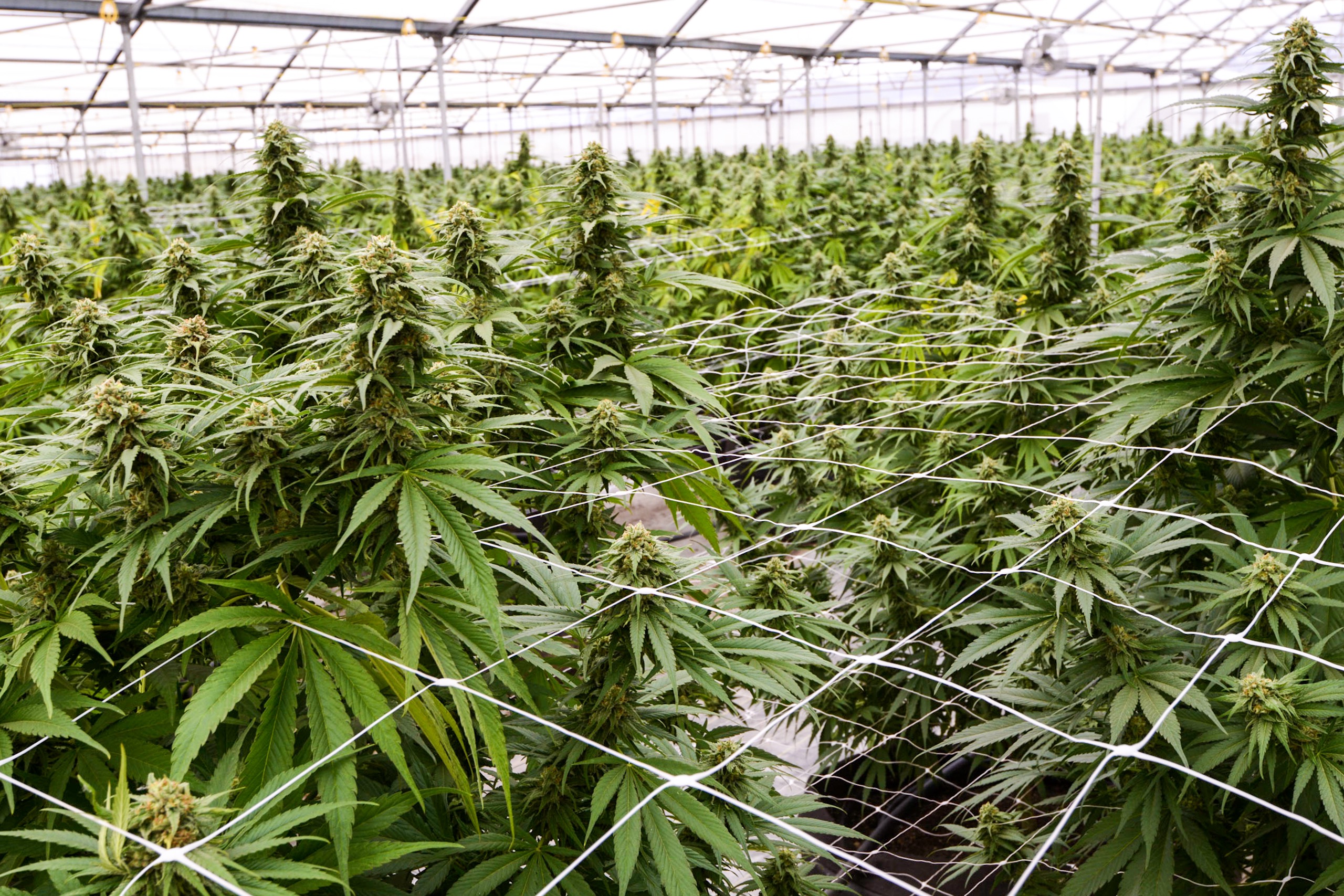
As dozens of states have legalized recreational and medicinal use of marijuana in recent years, the federal government has maintained its classification as a Schedule 1 controlled substance—keeping marijuana in a group defined as having "no currently accepted medical use and a high potential for abuse," which includes heroin and LSD.
The incongruity has muddled marijuana regulation and enforcement, stifled cannabis businesses, and hampered medical research. But the situation could soon ease.
The Department of Health and Human Services has recommended to the Drug Enforcement Administration that it should downgrade marijuana from a Schedule 1 to a Schedule 3 controlled substance, which is defined as having "a moderate to low potential for physical and psychological dependence." The move would put marijuana in the ranks of ketamine, testosterone, and products containing less than 90 milligrams of codeine.
The anti-vaccine rhetoric that dogged COVID-19 responses has now gone to the dogs, literally.
A little more than half of surveyed dog owners—53 percent—questioned the safety, efficacy, and/or necessity of vaccinating their beloved four-legged family members. The study, published recently in the journal Vaccine, involved a nationally representative group of 2,200 American adults, of which 42 percent (924) made up the analyzed subgroup of dog owners. Overall, the findings add to concern that the anti-vaccine sentiments that flared amid the pandemic have fanned out broadly, undermining even routine childhood vaccinations.
That concern was supported by the new study, which found that the dog owners who espoused "canine vaccine hesitancy," or CVH, were more likely to embrace misinformation and falsehoods linked to human vaccines. And those anti-vaccine beliefs were potent. Responses from the CVH dog owners suggested that 56 percent opposed mandatory vaccination against rabies, a 100 percent fatal condition.
The federal government has announced the 10 medications that will be included in the first round of drug price negotiations. | Getty Images
Patients stand to save a lot of money.
More than a decade after Democrats first ran on the proposal, Medicare is finally set to start negotiating prices for certain prescription drugs.
This week, the federal government announced the 10 medications that would be included in the first round of negotiations. New prices would take effect in 2026.
The 10 drugs on the list are a diverse set. Some are taken by millions of people with price tags in the low thousands of dollars annually. Others are priced at more than six figures per year and taken by a much smaller number of patients. Together, the list represents the multifaceted ways that high drug prices put pressure on both patients and insurers and raise the risk that people will not have access to medicines that they need.
Even if you don’t take one of these drugs, the negotiations should help you if you’re on Medicare. Congress used the estimated $99 billion in savings over 10 years to cap annual out-of-pocket costs at $2,000 for all Medicare beneficiaries.
“Everybody is going to benefit,” Stacie Dusetzina, a health policy professor at Vanderbilt University who sits on the program’s congressional advisory board, told me. “You have the security of a $2,000 cap.”
The negotiation program represents a milestone for the US health system: The federal government’s largest health care program (by spending) is using its enormous leverage to try to arrest the high prices set by drug makers for their products. The United States pays more for prescription drugs than any other country in the world and yet, compared with other nations’ health systems, the US government has had limited power to try to bring prices down. This new program, created by the Inflation Reduction Act, gives Medicare a powerful new tool.
Now that the first 10 drugs have been selected, the process can begin. Here is how it will unfold:
Drug makers have one month to sign an agreement to participate in negotiations and submit data for Medicare to consider for its negotiated price
By February 1, 2024, Medicare will offer its initial price on the selected drugs; the manufacturers then have one month to accept or submit a counterbid
There will be an opportunity for negotiations during the spring and summer of next year. Then in September 2024, Medicare will announce the final prices. The program will begin paying those prices in 2026.
The process will begin anew when, in February 2025, Medicare will announce another 15 drugs that will be subject to negotiation, with those prices to take effect in 2027. In every subsequent year, more drugs will be added to the negotiation program.
That is, if the courts allow the negotiations to proceed. The pharmaceutical industry has already filed a bevy of lawsuits, each with its own legal rationale, to put a stop to the program before it begins. Many legal experts believe this litigation will fail — how can the government run a sustainable program if it has no discretion about the prices it pays for medications? — but the rulings in those cases will ultimately determine whether Medicare drug negotiations are allowed to test their potential to save money for US patients and their government.
In the meantime, the drugs Medicare is planning to negotiate over can be broken into two buckets.
1) The pretty expensive drugs for chronic diseases taken by hundreds of thousands — even millions — of people
Seven of the 10 drugs announced for negotiation fall into this category:
Eliquis, which treats and prevents blood clots ($561 list price for one-month supply)
Jardiance, which treats diabetes and heart failure ($570 list price)
Xarelto, which treats and prevents blood clots and reduces related risks for people with heart disease ($542 list price)
A class of insulin injectors and their refill products: Fiasp, Fiasp FlexTouch, Fiasp PenFill, NovoLog, NovoLog FlexPen and NovoLog PenFill
What unites these drugs is that a lot of Americans take them, which may be because diabetes and heart disease are among the most common chronic health conditions in the US, and they must take them regularly. More than 580,000 people on Medicare took Entresto from June 2022 to May 2023; more than 1 million were prescribed Xarelto and Jardiance. Eliquis was the most commonly used drug on the list, taken by more than 3.7 million people. It cost Medicare about $16.5 billion over that period.
Even if most people on Medicare don’t pay the list price — their prescription drug coverage may pick up part of the tab — it can still affect the prices they do pay. Patients may have a deductible to meet before their benefits kick in or they may be responsible for paying coinsurance, which is calculated based on the list price.
These drugs also help people manage chronic health conditions to avert costlier health problems down the road. The consequences can be grave if people are forced to skip their medications because of cost. Insulin in particular has been subject to rationing, which can reduce its effectiveness in the long term and, in some individual cases, has led to serious emergencies and even death for patients. (The IRA also included a provision to cap monthly insulin costs at $35 for Medicare patients.) Research has found that even an additional $10 in cost can lead to people taking less of the medications they need.
Medicare negotiations won’t be a salve to all of those problems. But they will save patients and the program money, and under the IRA, those government savings are being used to cap drug costs for seniors on the program.
2) The super-expensive drugs for people with serious, potentially life-threatening illnesses
The second group of drugs subject to Medicare negotiations are taken by a much smaller group of people — but for the people who do need them, their ability to afford them could determine in the very near future whether they live or die:
Enbrel, which treats rheumatoid arthritis, psoriasis, and psoriatic arthritis ($1,762 list price for a week’s dosage)
Imbruvica, which treats various blood cancers ($13,546 list price for roughly a month’s worth of tablets)
Stelara, which treats psoriasis, psoriatic arthritis, Crohn’s disease, and inflammatory bowel disease ($25,497 list price for an 8-week supply)
The number of affected Medicare patients ranges from about 20,000 for Stelara and Imbruvica to nearly 50,000 for Enbrel. Nevertheless, these drugs cost the Medicare program more than $2.6 billion each from June 2022 to May 2023.
These patients in particular will benefit from the negotiated prices and the new out-of-pocket cap established by Congress, Dusetzina said. Under the old Medicare benefit design, they may have had to spend upward of $10,000 per year for their medications. Now, their costs will not exceed $2,000 annually.
This is the tragedy of America’s drug-pricing crisis. The drug industry has developed and produced remarkable treatments that can stop cancer or help people live with what would otherwise be debilitating diseases.
But too often, those treatments come at a price that either patients cannot afford or that require health insurers to hike premiums for everyone to cover the costs — or both. Our notoriously ungenerous health insurance has made the affordability crisis worse, but so has the carte blanche granted to drug companies under the current policy regime: they can set whatever list prices they desire while their products are protected by a patent. Dusetzina told me she would not be surprised if the next rounds of drugs are targeted more toward the highest-cost medications for serious acute illnesses like cancer, given that the initial list is more weighted toward (relatively) lower-cost drugs for chronic diseases.
Historically, drug makers have argued that health insurance companies would negotiate those prices down, so nobody really had to pay them. They’d even say that, for Medicare, the different private Part D plans were already negotiating prices on behalf of their patients.
That was true. But it prevented Medicare from using all of its leverage to try to reduce prices for everyone because each part D plan represented a smaller number of people than Medicare does altogether. (There are more than 800 Part D plans.) Now, that is finally about to change.
A piece of Good Meat’s cultivated chicken is lifted off a plate at the Eat Just office on July 27, 2023, in Alameda, California. | Photo by Justin Sullivan/Getty Images
We can grow no-kill meat at scale — it’s just a matter of funding.
From “no-kill” chicken grown in bioreactors to juicy plant-based burgers,alternative protein options are cropping up (in extremely limited quantities) in the grocery aisle, at restaurants, and on your plate. The big question of the last few months, however, is whether alternative proteins could realistically scale to challenge conventional meat protein dominance.
However, according to a recent report by the Good Food Institute, governments around the world are investing in public partnerships to the tune of $1 billion globally, indicating that alternative proteins could be an important component of national approaches to food security.
The upshot: Governments around the world are more ready to fund alternative proteins in the wake of unstable food prices in 2022, a year that shed light on the effect of geopolitical tensions on food security. By developing an alternative protein sector, countries such as Singapore and Israel aim to be more self-sufficient while transforming their agriculture sector to be resistant in the face of wars, climate change, and export bans.
Not only could investing more in alternative meats buoy countries’ food sovereignty aspirations, it could help their economies. If governments continue to invest in cellular agriculture — the process behind no-kill, lab-grown meat, different from plant-based meat substitutes like Beyond or Impossible meat — then the report estimates that there could be $1.1 trillion in global economic activity by 2050 and 9.8 million jobs in the sector. For reference, the meat industry value globally was $897.5 billion in 2021.
Though the $1 billion benchmark bodes well for the staying power of alternative protein, and it’s certainly enough to get some projects off the ground, the GFI report estimates that much more will be needed to truly scale alternative proteins — about $10.1 billion total.
That’s because, while veggie burgers have been around for a long time, making plant-based meat that is as affordable and tasty as conventional meat is still in the early stages — which means it’s expensive. That’s even more the case for cellular agriculture, which needs a whole set of infrastructure to produce real meat at scale. Both plant-based and cultured meat need government funding to get from lab to table in meaningful quantities.
In the case of cellular agriculture, success depends most on advancements in the research and development phase, where technical hurdles, such as how to build sufficiently large bioreactor facilities, remain. Success will also depend on the commercialization phase, where regulators approve the sale of these new food products and production scales up to make cultivated meat affordable, but there are already positive signs in that direction: Regulators in the US have cleared two companies, Upside Foods and Good Meat, to sell cultivated chicken in restaurants.
Ultimately, though, in order to make cellular agriculture widely available, more than regulatory approval is needed. Governments must boldly provide funding to universities and public-private initiatives, through grants and investment. We know what global instability can do to a nation’s food security. It’s time to get a headstart on creating lower-emissions alternative proteins.
The technological and supply hurdles
Unlike other alternative protein options, such as the soy protein often used in vegan nuggets, creating cell-cultivated meat is a lot more involved.
The cellular agriculture process starts with the extraction of cells from a live animal, from a needle biopsy. Those animal cells are placed in a growth medium, which feeds the cells nutrients so that they grow and proliferate. After that, the cells are placed in a bioreactor, where they have a clean environment in which to replicate. Finally, the cells are placed onto a scaffolding, which can be made of synthetic collagen and gelatin or plant-based proteins, that helps the cells mimic the texture of a cut of meat.
The final product of the cellular-agriculture process tastes like meat because it is meat — just without the animal slaughter, horrible work conditions for humans, and environmental consequences, like producing 15 to 19 percent of global greenhouse emissions. As Vox’s Kenny Torrella has reported, cellular agriculture could also “create an escape hatch from the meat paradox, allowing consumers to enjoy food they seemingly can’t get enough of, without the ethical and environmental side effects.”
But getting cell agriculture to take off is often talked about as a “moonshot.” It will be tough to make the production process efficient and affordable enough to meet consumer demand for meat, and then there’s the hurdle of people accepting it as their go-to protein. It’ll require funding and collaboration across industrial, academic, and government stakeholders.
A large-scale production facility could cost $60 million, according to a cost analysis published in the Journal of Agriculture and Food Research late last year. The largest contributors to cost are the growth medium, bioreactors, and labor. Good Meat’s Singapore production facility — which has the largest bioreactor in the cultivated meat space — was supported by a $100 million investment. With 156 cultivated meat companies as of 2022 around the world, building a cellular agriculture industry will require resources and money — they’ll all need pricey bioreactors, growth medium, cells, and scaffolding.
There are steps stakeholders could take to accelerate progress in the field, however. Compatibility across different parts of the supply chain can be made more efficient by making crucial information, such as cell lines, widely available. Collaboration could make it easier for university labs and startups developing cells to know if their cells are compatible with an animal-free growth medium, for example. Such open innovation has a track record of success; it’s previously been used to develop software, crop genetics, and in the energy sector.
The good news is that we’ve funded open innovation before to ensure success in fields where advancement is otherwise difficult. In 2012, the Obama administration launched Manufacturing USA, a program with 16 institutes that use open innovation to advance everything from biomanufacturing to electronics. With the government absorbing some of the risk of investing in new, ambitious technologies, the component institutes worked to revitalize industry. The institutes have done everything from making extreme weather textiles to reducing the cost of gene therapy to developing a chip that can detect viruses including coronavirus. Public funding can jumpstart the kind of infrastructure needed for different stakeholders, from academic labs to startups, to feel more comfortable about collaborating, creating jobs, and advancing technology.
Why countries are investing heavily in cellular agriculture
As the Good Food Institute report explains, several governments have begun to fund cellular agriculture in creative ways, ranging from grants to universities to using national investment funds to support initiatives.
One motivating factor for some countries is to decrease their dependence on imports for livestock and boost food security. For instance, Singapore imports about 90 percent of its food. That degree of reliance on external sources means that any disruption can lead to high prices and food insecurity, as seen last year when neighboring Malaysia stopped exporting live chickens to Singapore. Currently, Singapore has an ambitious target of producing 30 percent of its food domestically by 2030. The country’s small size — an island nation, it has little room for livestock — will make that a difficult goal to achieve, but cell agriculture could help facilitate it.
Singapore isn’t the only small nation with food security concerns; Israel is also trying to develop a robust alternative proteins sector, including via cell agriculture. In 2020, Israeli Prime Minister Benjamin Netanyahu became the first head of state to try cultivated meat when he tasted Aleph Farms cultivated steak, and the country is also responsible for 24 percent of global investment in alternative proteins (about $637 million). Israel’s Cultivated Meat Consortium is the largest government-backed consortium to date and was funded by $18 million from the Israel Innovation Authority in 2022.
Israel’s consortium is made up of 10 academic labs and 14 companies, including the largest food manufacturer in Israel, TNUVA. Israel has supported open-access facilities domestically as well as internationally, even adding alternative protein development to their diplomatic toolkit.
In Europe, the Netherlands, too, faced anxieties around food security, spanning back to a deadly famine during World War II. After more than 20,000 Dutch died, the government heavily invested in agriculture through subsidies, infrastructure investment in rural areas, and industrialization. The scar of starvation also motivated the country two decades ago to pledge to grow twice as much food, with half as many resources. Now, it produces 6 percent of Europe’s food, with only 1 percent of the continent’s farmland, reported Vox’s Kenny Torrella.
That drive for efficiency also spurred technological development in meat alternatives. In 2013, Dutch pharmacologist Mark Post in 2013 invented the first cell-cultivated burger. Post engineered tissue for medical uses and saw the potential benefits the technology could have when applied to food production. Cell-cultivated meats, as well as plant-based alternatives, could help the small country to meet its wider goals — and would later make it a leader in the food tech space.
A decade and $66.2 million later, the Dutch funded a cellular agriculture ecosystem with Cellulaire Agricultuur Nederland, which not only supports crucial research, development, and commercialization efforts but also funds workforce transition programs by expanding educational routes to prepare students to work in cellular agriculture.
Developments in the Netherlands and elsewhere are meaningful, but for alternative proteins to have a significant positive global impact, China and the US — the world’s largest economies by an order of magnitude — both need to put more into developing the sector. China’s funding for alternative proteins is largely undisclosed, but President Xi Jinping mentioned it as a priority in 2022, in a speech to the Chinese People’s Political Consultative Conference. “It is necessary to expand from traditional crops and livestock and poultry resources to more abundant biological resources, develop biotechnology and bio-industry, and seek energy and protein from plants, animals, and micro-organisms,” Xi said.
Notably, the US has been outpaced when it comes to cultivated meat development, though Biden has expressed public support for it in an executive order. Congress, however, has only provided $6 million to the USDA’s Agricultural Resource Service, which is tasked with conducting research on alternative proteins. The National Institute of Food and Agriculture (NIFA) has thus far provided the most public money to a cellular agriculture project in the US, giving $10 million in 2021 to Tufts University’s Center for Cellular Agriculture, which is the first US lab to focus on cellular agriculture. By comparison, Israel gave $18 million for a cultivated meat consortium in 2022 and its GDP is ranked 34th in the world whereas the US is ranked first.
Relative to the size of the US food industry, however, that’s not all that much money. By comparison, small countries are punching above their weight when it comes to public funding for cell agriculture — and for the $10.1 billion estimate in the GFI report to be in reach, the US will have to step up.
A reader recently forwarded me an email her spouse received from a company whose entire business model seems to be that they’ll pay you to get fraudulently hired for jobs that you then (mostly) don’t actually work. Read on.
Hi [redacted],
Hope all is well with you. This is [redacted], the CEO of [redacted company name], a software development company based in Atlanta. Nowadays, we are receiving an overwhelming number of offers, and we are experiencing a lack of talented resources who can effectively communicate with clients.
We see that you are a developer with expertise that matches our needs. We are interested in offering you a non-stop ongoing contract, which is flexible based on your availability.
Your responsibilities will include taking calls with recruiters, HR managers, or teams before and after securing a job. You will be representing yourself on a call, and the actual development work will be delivered by [redacted company name]. We will be responsible for handling everything else and also assist you with every call.
Regarding compensation for you to speak on interviews (that we will assist you to pass), we will pay you on an hourly basis until we win a job. Once we secure a job, you will be expected to take a daily or a weekly scrum meeting, depending on their team culture. You will take the 25% of income from the job for taking these calls.
Given our ability to manage multiple jobs at once, if you handle calls for multiple jobs, this position offers you an exciting and stable income.
I am interested in speaking with you to discuss this partnership further.
Most of Apple’s suppliers and manufacturing happen outside the United States and in China. But because of tensions between the U.S. and China, Apple has tried to shift to other countries. Bloomberg provides the breakdowns over time, showing the biggest increases in India and Vietnam.
Hammerhead worms have been spotted slithering around our area, and experts suggest that if you see one, you should kill it. The invasive species can erode local ecosystems by feasting on earthworms, slugs, and snails. Climate change is expanding their domain, so they could become a lot more common around here. You’re most likely to […]
The new midrange Roomba has two bins, one wet and one dry. [credit:
iRobot ]
Roomba is bringing the combo mop and vacuum feature to its cheaper robot vacuums with the new Roomba Combo j5+ and Combo i5+. Roomba's last combo bot was the Roomba Combo j7+, which would automatically switch between mopping and vacuuming with a swing-arm setup. These cheaper bots can both mop and vacuum, but you'll need to manually configure them for either task.
The idea here is kind of clever: the robot comes with two bins, one that sucks in dust and one that acts as a water tank with a mop pad on the bottom. You'll need to switch out the bin depending on which cleaning mode you want (the iRobot marketing team has come up with the phrase "swap and mop"). Other combo bots need to balance water tank size and dust bin size, but here, you get water and dust bins that are free to take up as much room as possible. Roombas have small bin areas to begin with, though, so that works out to a 210 mL water tank and 360 mL dust bin.
The vacuum part seems to be a bog-standard Roomba, complete with a charging base that can empty the dust bin. The mop part doesn't have a water sprayer or seemingly any connection to the rest of the robot at all. There's also no fancy water change system or scrubbing feature. It's just a self-contained water tank that keeps a rag wet and drags it along the floor. It almost feels like you could retrofit the water tank onto a normal Roomba, but on this unit, of course, all the vacuum functions turn off when you're mopping.
Enlarge / Repairing an M1 MacBook. (credit: Apple)
Somewhere, ol' Beelzebub is putting on his thickest coat because Apple has endorsed a right-to-repair bill, suggesting hell has frozen over. In a letter dated August 22, Apple showed its support for California's right-to-repair bill, SB 244, after spending years combatting DIY repair efforts.
As reported by TechCrunch, the letter, written to California state Senator Susan Eggman, declared that Apple supports SB 244 and urged the legislature to pass it.
The bill requires vendors of consumer electronics and appliances to make sufficient documentation, parts, and tools for repairs available to customers and independent repair shops. The big exceptions are video game consoles and alarm systems.
Earlier this month, Zoom announced a surprising decision to require some of its employees to return to the office, where they were expected to work more effectively. Now, leaked audio from an internal Zoom meeting shared with Business Insider has revealed that Zoom CEO Eric Yuan called employees back to the office because he believes that "remote work didn't allow people to build as much trust or be as innovative."
None of this seems to jibe with Zoom's brand, which provides video-conferencing technology that the company promises enables "immersive in-office collaboration right from home."
Yuan's comments came in a company meeting held on August 3, where he told employees that the top reason for the return-to-office mandate was to build more trust among employees.
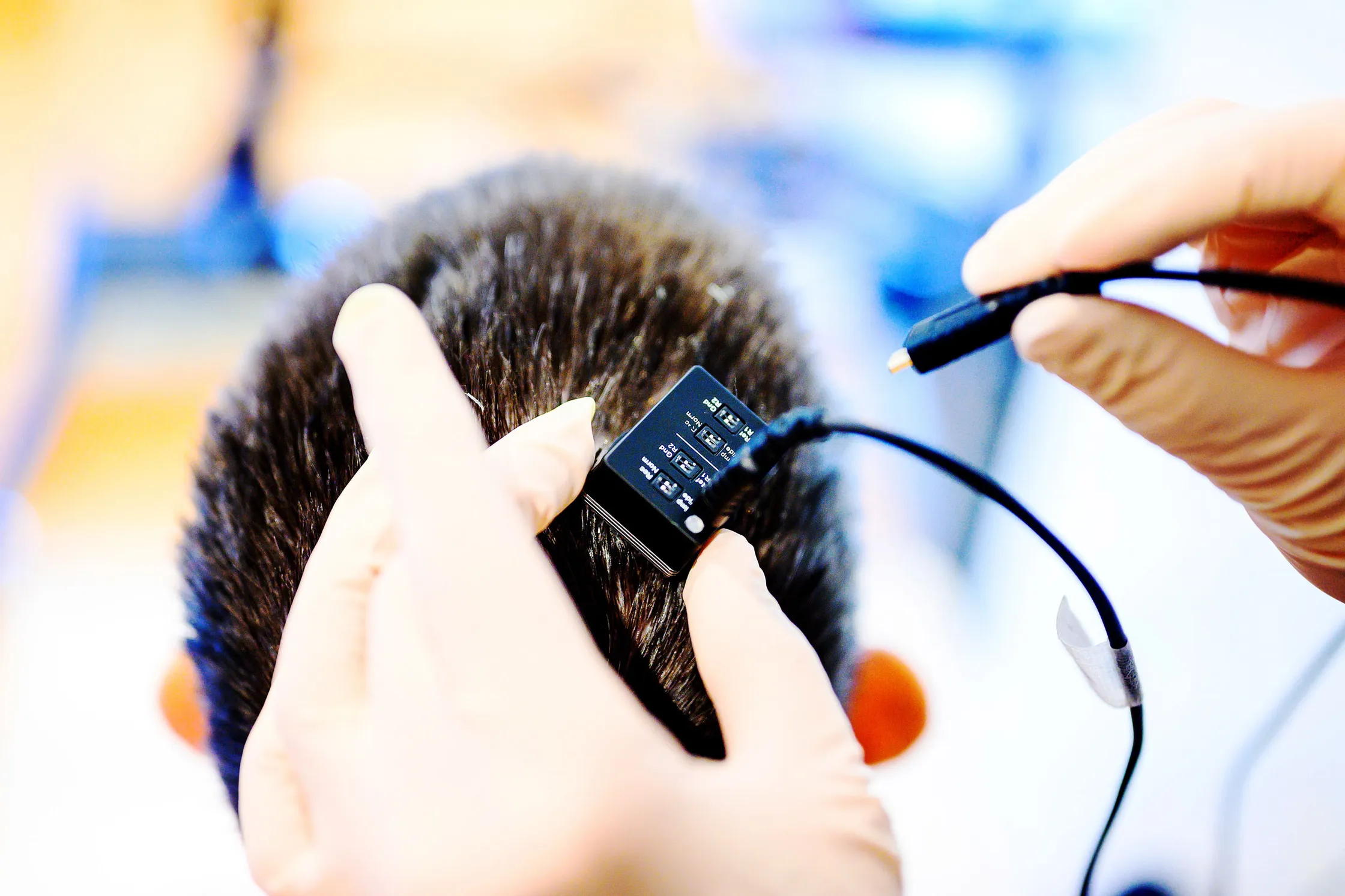
Enlarge / A researcher connects a pedestal on a study volunteer's head to an external computer. The pedestal is wired to electrodes that rest on the surface of the brain. (credit: Noah Berger/UCSF)
Paralysis had robbed the two women of their ability to speak. For one, the cause was amyotrophic lateral sclerosis, or ALS, a disease that affects the motor neurons. The other had suffered a stroke in her brain stem. Though they can’t enunciate clearly, they remember how to formulate words.
Now, after volunteering to receive brain implants, both are able to communicate through a computer at a speed approaching the tempo of normal conversation. By parsing the neural activity associated with the facial movements involved in talking, the devices decode their intended speech at a rate of 62 and 78 words per minute, respectively—several times faster than the previous record. Their cases are detailed in two papers published Wednesday by separate teams in the journal Nature.
“It is now possible to imagine a future where we can restore fluid conversation to someone with paralysis, enabling them to freely say whatever they want to say with an accuracy high enough to be understood reliably,” said Frank Willett, a research scientist at Stanford University’s Neural Prosthetics Translational Laboratory, during a media briefing on Tuesday. Willett is an author on a paper produced by Stanford researchers; the other was published by a team at UC San Francisco.
Three things the US can learn about road safety from our ultra-safe air travel system.
In the last decade, two passengers have been killed in accidents on US commercial airlines. Over the same period, more than 365,000 Americans have been killed by cars.
Yet it was the safety of the US air travel system that was the subject of a damning, genuinely terrifying New York Times investigation last weekend — detailing lapses in the oversight of flights that are leading to near-crashes multiple times a week. The pattern led one air traffic controller to declare: “It is only a matter of time before something catastrophic happens.”
That statement captures something essential about the way that US air travel is regulated: society expects absolute safety in plane travel, catastrophes are never meant to happen, and any loss of human life is considered unacceptable. A vast federal bureaucracy exists to make sure no one dies in a plane crash. So, what would happen if we treated cars like we do planes?
Cars kill Americans at insanely high rates and it’s not getting better
Aviation authorities call American air travel the safest in the world, the Times reported. But the safety record of our car-dependent ground transportation system is one of the worst among wealthy nations. Cars killed 43,000 Americans in 2021, a number that has, almost unbelievably, increased by nearly a third in the last decade while our peer countries have decreased their car fatalities.
In the EU, car fatalities, already far lower than America’s, were down by 22 percent over the last decade. Car crashes are just behind guns as the second greatest killer of US children. Black, Hispanic, and Indigenous Americans are disproportionatelylikely to be killed by a car. Merely taking a walk outside is becoming particularly dangerous: about 7,508 pedestrians were killed by cars last year, the highest number since 1981 and a massive increase over the last decade, Vox’s Marin Cogan reported last month.
The US appears, in other words, to be erasing decades of progress on reducing fatalities from one of our leading causes of death, but you wouldn’t know it from the reactions of regulators and politicians. There is no big national conversation about why 40,000-plus people are killed by cars every year, or why Americans are forced to live with a risk of car crash death roughly three times higher than Canadians and Australians, five times higher than Brits and Germans, and nine times higher than Norwegians. It’salso worth pointing out that globally, car crashes are a major cause of death, killing more people than homicides and suicides combined, and death rates remain far worse in low-income countries than they are in the US.
At this point, some people might find reasons to explain away America’s rate of road carnage, or argue that it’s unfair to compare car safety and plane safety. Many more Americans ride in cars in any given year than fly. Flights put passengers in a position of unusual vulnerability, where they’re at the mercy of highly trained, uniformed professionals — so public trust is essential for the system to work — whereas anyone could drive a car. Maybe it’s just harder to control the behavior of 200 million-plus individuals who have to drive a car just to get by in America than it is to maintain a cadre of credentialed pilots and air traffic controllers.
There are solutions, if we want them
These aren’t good excuses for our failure to prevent mass death. In reality, there’s a lot we can learn from the aviation system’s approach to passenger safety.
The most obvious is that we shouldn’t accept carnage just because the activity seems inherently dangerous. If we can figure out how to make it exceptionally safe to hurtle through the sky at over 500 miles per hour, we can definitely figure out how to keep people alive on the ground, especially because other countries have done it already. The Netherlands is a famous example, but others, including Canada, with an urban geography much more similar to ours, have steadily decreased their death rates to levels far lower than ours.
A second lesson from the aviation sector is that safety is a systemic responsibility. “The [air] safety regime, with its built-in redundancies, is known in aviation circles as the Swiss cheese model: If a problem slips through a hole in one layer, it will be caught by another,” the New York Times explained, which has added up to a near-spotless safety record.
Compare that to the situation in car safety, where high death rates are accepted as a baseline part of how the system works rather than an institutional failure. Mediacoverage treats surges in crash deaths as if they are uncontrollable fluctuations in the weather and blames people driving recklessly for getting themselves killed. In the American traffic engineering bureaucracy, there’s a widely circulated myth that the vast majority of crashes are caused by “human error,” transportation writer David Zipper explained in the Atlantic in 2021.
Of course, individuals making unsafe choices — speeding, say, or driving drunk — matters. But these are distractions from what makes the American system of driving so unsafe in the first place: we have a proliferation of fundamentally unsafe roads, known among traffic safety advocates as “stroads,” that combine wide lanes and speeds higher than 25 miles per hour with frequent turns, stops at traffic lights, and shared traffic with cars, pedestrians, and bikes. With all these conflict points, it’s inevitable that collisions will happen.
The bottom line is that it simply doesn’t work to expect individuals to keep themselves safe in an environment built to kill them. “A robust safety system can’t depend on people always being at their best,” as journalist James Fallows recently wrote on how air travel became so safe.
A third lesson from aviation is that dangerous technology has to be adequately regulated. Empirical researchincreasinglyshows that the rapid takeover of big cars — SUVs and pickup trucks — is a major factor behind our car safety backslide over the last decade. But US Transportation Secretary Pete Buttigieg has declined to call for policies to discourage the proliferation of these vehicles (like Washington, DC’s tax on oversized cars).
Buttigieg has, to his credit, acknowledged traffic deaths are at unacceptable levels and pointed to road design as a key factor. That’s no doubt thanks to the influence of Vision Zero, a movement that has greatly changed the conversation about why people are killed by cars.
Commentators haveobserved an American “learned helplessness” toward gun violence — you might say the same thing of traffic violence. There barely even seems to be a sense that we can do better, that our political leaders owe us better. A humane system would make it very hard and very rare for someone to die on the road; it would put responsibility on those who design our built environment to prevent mass death.
Among households in the United States, 68% are owned and 32% are rented, based on estimates from the American Community Survey in 2021. That breakdown isn’t uniform across the country though. In Maine, almost 80% of households are owned, whereas in California, less than 60% is owned. In Washington, D.C., it’s less than half. Here are the splits for each state.
“What they were trying to tell us, is no human can possibly move that fast.” | Amanda Northrop / Vox
The rules of elite running say no one can start a race faster than 0.1 seconds. Scientists say that’s wrong.
In July 2022, TyNia Gaither lined up in the second lane for one of her biggest races of the year: the semifinals of the 100-meter dash at the World Athletics Championships in Eugene, Oregon.
The 29-year-old Bahamian sprinter crouched down into the starting blocks. The crowd grew quiet. She waited for the sound.
“I heard the gun go off, and I took off,” Gaither says. “And then I heard the gun go off again.”
That second “bang” meant officials had stopped the race. Someone had false-started, and Gaither was surprised to find out it was her.
“I thought it was an error,” she says. “I’ve never false-started ever in my life.”
Per the rules, Gaither was immediately disqualified. When she tried to contest the call to the race official, he showed her a replay. It didn’t show a visible false start. But then he pointed to a number, lit up in red: 0.093 seconds, the amount of time it took for Gaither to start after the gun fired.
Yes: She had started after the gun went off, and was still thrown out of the race.
“I’m mind-blown,” she recalls thinking. “You’re telling me I’m penalized for something I did after the gun went off!?”
There’s a peculiar rule in top-level running that says if a runner starts within 0.1 seconds of the gun, they’ve broken the rules. The assumption made by World Athletics, the organization behind this championship, is that it is physiologically impossible to start that quickly.
“What they were trying to tell us,” Gaither says on Unexplainable — Vox’s podcast about unanswered questions — is that “no human can possibly move that fast.”
Any racer who does is presumed to have anticipated the gun, meaning their brains gave the “go” signal to their bodies before they heard the sound.
But is that… true? What is the fastest possible human reaction time to a sound?
The answer could vindicate Gaither, who feels unfairly labeled as a cheater — “there was no guessing in my start,” she says emphatically — and other athletes who have been similarly disqualified for starting too quickly.
But this question also leads to bigger ones near the heart of the sport. Competitions like track ought to reveal the limits of human abilities, to push through previously assumed boundaries. But, here, World Athletics seems to have set a limit that might actually be holding its athletes back.
What would be better? Does racing, along with other sports, need greater scientific precision, a better understanding of human physiology? Or does it just need to accept that there may not be a perfect way to define, and record, a race?
It’s true runners can’t react immediately. But how fast can they go?
According to scientists, the basic idea behind the 0.1 second rule does make some sense.
Human beings cannot react instantaneously to a sound, says Matthieu Milloz, a biomechanics scientist at the University of Limerick in Ireland who is completing his PhD on recording race starts. A long chain of physical and physiological events have to occur, and each component takes time: The sound of the gun has to travel to a runner’s ears, the ears translate the sound into a neurological signal, the signal has to be recognized by the nervous system, the nervous system has to send a command to start down to the muscles, the muscles take time to contract, and so on.
A wily racer could get a jump on this process. “You can anticipate the gun,” Milloz says. Races can be won or lost by hundredths, even thousandths of a second. So an early start can give a runner an advantage.
What doesn’t make much sense to scientists is the number World Athletics says is the neurophysiological limit. “Currently, we don’t know what this neurophysiological limit is,” Milloz says. “But what I can say is that the 100-millisecond [0.1 second] threshold is not science-based. We don’t have the data.”
Ezra Shaw/Getty Images
TyNia Gaither competes in the women’s 100-meter heats on the second day of the 2022 World Athletics Championships.
That’snot to say there haven’t been any studies. The studies on sprint starts tend to be small, and they don’t always use the most elite athletes as subjects. If scientists aren’t testing the very fastest sprint starters in the world, how would they know what the very edge of the limit is?
“I’m sure that you can react in less than 100 milliseconds,” Milloz says, noting he’s recorded it himself in unpublished work. Yet he doesn’t know what the exact number ought to be.
There’s no “gold standard” for studying race starts
World Athletics has maintained that the 0.1 second rule is based on “the science on standard reaction times.”
Other sources disagree. Sports historian PJ Vazel, who wrote a report on the history of reaction time for the IAAF (the former name of World Athletics), says this rule actually dates back to the 1960s, and a West German sprinter named Armin Hary.
Hary was known as the “Thief of Starts,” due to his suspiciously fast starting times in sprint races. It’s unclear whether Hary anticipated the gun, or just had a very fast reaction time (some tests indicated the latter was the case). “He was constantly starting faster than the others,” Vazel says. “There was controversy.” Enough so that West Germany pushed for an automated system to be built into starting blocks themselves to measure false starts.
West Germany worked with the watch company Junghans, which developed the blocks. According to their patent, the company says they performed tests which found that sprinters were not starting faster than 0.1 seconds. That limit became a rough rule of thumb for the next few decades, Vazel explains, until it was officially codified in 1989. “It’s unfortunate,” Vazel says, that people still think this rule was founded on a scientific basis. “It was not.”
Scientific — in the purest sense of the word — would mean allowing outside researchers to verify the findings in an open and consistent manner.
When Milloz says he doesn’t know what the limit is, it’s because “there is no gold standard,” he says, on how to study this. Small changes to the experimental setup — what type of sensors are used, how they are calibrated — can yield different answers.
Scientists aren’t even sure how, precisely, the official recording systems are calibrated. According to Milloz and colleagues writing in the journal Sports Medicine, “The precise details of event detection algorithms [i.e., how the starting blocks record a start] are not made public by SIS [start information system] manufacturers.”
On top of that, variables like how loud the sound of the gun is, and how long runners have to wait before the starting gun is fired can all influence their speed. (Both a louder gun, and a longer wait tend to result in faster starts.) Ideally, World Athletics and outside scientists could agree on how to control for all this.
Vazel says World Athletics needs to be more transparent around how the machines actually calculate their results. In fact, there is reason to believe that the sensors at the World Championships in Eugene may have been recording faster reaction times than normal.
Gaither wasn’t the only runner at the 2022 World Championships to be disqualified for starting after the gun. Julien Alfred was disqualified for starting 0.095 seconds after the gun, and Devon Allen was disqualified for starting 0.099 seconds after the gun, just one thousandth of a second too quickly.
We reached out to World Athletics about why the 0.1 second rule has not been changed when scientific studies have shown runners can react more quickly.
They stand by it. According to World Athletics, “The 100ms rule was initially set as it was determined to be the minimum auditory reaction time.”
We pointed out that World Athletics even commissioned its own study on reaction times in 2009, which determined that the limit should be lowered from 0.1 second.
When we asked why that didn’t prompt a change, World Athletics replied, “The Technical Committee felt that the study, which was carried out using only six non-elite athletes, was not sufficiently robust to warrant a change.”
So round and round we go. Scientists say there isn’t data to support keeping the 0.1 second rule. And here World Athletics is saying there isn’t data to throw it out either.
At least one World Athletics council member has called for a rule change. “It is standard procedure after each world championships for the World Athletics Competition Commission to review the championships and recommend any rule changes,” World Athletics told us in 2022.
Basically: They said they were looking into it. Since then, World Athletics has updated its rules, very slightly. Now, if there’s any doubt about the call from the automated sensors, referees can allow athletes to run and appeal afterwards. So enforcement is a little more flexible. But starting faster than a tenth of a second is still considered to be a false start.
Still, one thing seems clear: We don’t know how fast a runner can start, but it seems likely to be faster than 0.1 seconds.
What would a fairer race look like?
There’s some evidence that the 0.1 second limit and the strict rules surrounding it might be holding racers back from starting as fast as possible. Over the years, the costs of false starting have increased. It’s now the case that a single false start can get a runner disqualified from a race. As the rules have grown stricter, studies suggest racers have started more cautiously. One study found starts in international championships slowed down by 20 percent from 1997 to 2011.
So what’s the answer here? Milloz thinks the sport could benefit from more science and standardization. He would like to bring the top athletes in the world to a lab to test their fastest possible starts on machines and with methods that all stakeholders can agree are the “gold standard” for the sport and science. “Gather a lot of response times,” Milloz says. “And try to plot the distribution,” to more clearly see what time would be an unacceptable outlier.
But even then, there could still be some questions about the start of a race. Often in sports, the more you zoom into a moment with technology, the more complicated calls become. When you look more closely at starts, Milloz says, you’ll find the first parts of the body to move after the gun goes off are not the feet on the starting blocks, but the hands, pushing off the ground. Might it be fairer to record starts from the hands, and not the feet? Milloz says the hands can start moving 50 milliseconds before the feet.
Martin Rickett/PA Images via Getty Images
Devon Allen is disqualified ahead of the men’s 100-meter hurdles final on day three of the World Athletics Championships in 2022.
But why stop at the hands? Might a more perfect start detection system, in the future, actually tap into a racer’s brain to see when they first gave their body the motor command to run? Deciding how to record the start of a race comes with some choices to make about when and where it starts.
“There is no perfect way to record something,” Milloz says. Every estimate will come with some range of error, or with some careful choices to make. “There is always some limitation.”
Perhaps anticipating the gun could be a part of the sport. But from our reporting, this seems like an unpopular idea that would lead to more false starts, more race restarts, and messier races overall. Perhaps World Athletics could encourage officials to have more discretion to overrule the computerized start system when the margins are tiny. But then, with discretion, comes inconsistency.
Ultimately, even if a lower reaction time threshold is set — depending on where and how it’s set — it’s still possible someone could come along one day and break it.
Each choice here comes with a compromise.
The idea of perfect fairness in sports may simply be impossible. “There’s no way to make sports perfectly fair,” says sports writer Joe Posnanski. “What you want to do is make it fair enough that people have faith in it.”
At the very least, World Athletics can start by making the reaction time limit lower than 0.1 seconds. Given that race starts may always be a gray area, it may be impossible to prevent all false accusations of cheating. But hopefully it will at least be possible to lower the number of athletes unfairly disqualified.
Since the World Championships, Gaither’s false start has weighed on her. “I’ve kind of been experiencing a little PTSD with it,” she says, calling the incident embarrassing. “Now, when I get to my blocks, the only thing that I’m thinking about in my blocks is ‘be patient.’ That’s literally the thing that’s been engraved in my head since that moment. Be patient because you can’t afford for that to happen again.”
We told Gaither a synopsis of our reporting: That it’s scientifically plausible she started that quickly. “I really appreciate that,” she says.
“Our sport,” she says, “is nowhere near perfect.” But loving it means wanting to see it get better. ”I’m one of the true lovers of this sport,” she says. “And, you know, as big of a blow as that was, it hasn’t changed.”
Update: August 23, 2023, 11:30 am ET: This story, originally published in September 2022, has been updated to include a slight change in the World Athletics rules on disqualifying athletes for starting too fast.
With the US maternal death rate already the highest among affluent countries and still rising, a new study by the Centers for Disease Control and Prevention suggests pregnant people experience high levels of mistreatment and discrimination during maternity care.
The survey of 2,402 mothers from around the country found that 1 in 5 experienced some type of mistreatment by health care providers during their maternity care. The most common forms included having health concerns ignored or dismissed (10 percent), being shouted at or scolded (7 percent), having their physical privacy violated (5 percent), and having a provider threaten to withhold treatment or force them to accept unwanted treatment (5 percent). Additionally, nearly 30 percent of survey takers reported experiencing discrimination during their maternity care, including their race, age, weight, and income.
Black, Hispanic, and multi-racial mothers reported the highest rates of mistreatment and discrimination. These racial disparities mirror disparities seen in pregnancy outcomes; mothers in these groups face the highest maternal mortality rates in the country. Black mothers, for instance, are three times more likely to die from pregnancy-related causes than white mothers.
A malaria patient who lives in the DC region has been released from the hospital after contracting the deadly disease locally, the Maryland Department of Health reported Friday. The local case of malaria, a disease spread via mosquitoes, is the first recorded of its kind in 40 years. Local public health officials are highlighting the […]
Enlarge / AI-generated art titled, "A Recent Entrance to Paradise." The image cannot be copyrighted, a judge ruled.
Art generated entirely by artificial intelligence cannot be copyrighted because "human authorship is an essential part of a valid copyright claim," a federal judge ruled on Friday.
The US Copyright Office previously rejected plaintiff Stephen Thaler's application for a copyright because the work lacked human authorship, and he challenged the decision in US District Court for the District of Columbia. Thaler and the Copyright Office both moved for summary judgment in motions that "present the sole issue of whether a work generated entirely by an artificial system absent human involvement should be eligible for copyright," Judge Beryl Howell's memorandum opinion issued Friday noted.
Howell denied Thaler's motion for summary judgment, granted the Copyright Office's motion, and ordered that the case be closed.
Charles Martinet will no longer serve as the voice of Mario, Luigi, Wario, and Waluigi, Nintendo announced via tweet today. The announcement ends Martinet's three-decadeslong career in one of the most iconic vocal roles in video games.
Martinet will be "moving into the brand-new role of Mario Ambassador," Nintendo writes, a role that will see him "continue to travel the world sharing the joy of Mario and interacting with you all!" Nintendo didn't provide a reason for the transition, but the company promised a video message featuring Martinet and Mario creator Shigeru Miyamoto "at a future date" that might have more details.
The 2021 infrastructure bill did some very good things for broadband. Not only did it include a massive, $42 billion investment in broadband deployment and require better mapping, it demanded that the FCC impose a new “nutrition label for broadband,” requiring that ISPs be transparent about all of the weird restrictions, caps, fees, and limitations of modern broadband connections.
It’s 2023 and there’s still no label. And big broadband providers including Cox, AT&T, Comcast, and Charter are, unsurprisingly, trying to have the entire requirement killed. After whining for two years that it was too hard to comply with the requirement, industry trade groups and lobbying organizations have been petitioning to have the new rule killed entirely:
The US broadband industry is united in opposition to a requirement that Internet service providers list all of their monthly fees. Five lobby groups representing cable companies, fiber and DSL providers, and mobile operators have repeatedly urged the Federal Communications Commission to eliminate the requirement before new broadband labeling rules take effect.
To be clear, requiring that these regional monopolies be clear about pricing is pretty much the bare minimum when it comes to regulatory oversight. Big ISPs for decades have advertised one price, then saddled your bill with spurious below the line surcharges to hit you with a higher rate.
The FCC, lobotomized after decades of lobbying, routinely engages in regulatory theater when it comes to big telecom. As in they’ll implement some fairly tepid efforts to demand “transparency” by big monopolies, but they routinely lack the courage to actually take aim at the underlying monopoly power and lack of competition (lest it upset campaign contributors and domestic surveillance allies).
And even the transparency efforts are routinely undercooked. Activists and consumer groups were already annoyed at the Rosenworcel FCC’s implementation of these new rules, noting that the agency didn’t really require that ISPs put the label anywhere conspicuous, defeating the whole purpose, and wasn’t doing a good job illustrating real world speeds.
It’s not particularly clear where this goes from here. The Rosenworcel FCC has generally been fairly feckless when it comes to standing up to predatory monopolies. And the telecom industry just successfully scuttled the nomination of popular reformer Gigi Sohn, leaving the FCC without the voting majority needed to do much of anything “controversial” — even if it was actually inclined to do so.
A reformer like Sohn would have likely pushed the FCC staff to try a little harder. I’d imagine that once Sohn’s less “controversial” replacement (Anna Gomez) is confirmed by Congress there will be some kind of label eventually, but it’s far from clear that the actual implementation will hold much value once big ISPs get done watering it down.
And this is the “best case” scenario under feckless Democratic leadership. If Trump or DeSantis win the presidency, control of the FCC will revert to Republican “leadership,” which in telecom historically involves simply doing whatever Comcast and AT&T tell them to.
People who enroll in genetic studies are genetically predisposed to do so.
According to the Catalogue of Bias, ascertainment bias occurs when a sample being studied is not representative of the target population. This can produce misleading or even false conclusions, and it can be hard to detect since it cannot usually be identified by examining the sample alone. This is why many studies try to use variables other than participation in the study to make sure their samples are as representative as possible.
Studies examining how a particular treatment affects a particular health outcome often try to handle ascertainment bias by adjusting for “covariates,” things like education level or socioeconomic status, that could affect health outcomes independently of the treatment. But Stefania Benonisdottir and Augustine Kong at Oxford’s Big Data Institute have just demonstrated that we can determine if genetic studies are biased using nothing but the genes of the participants.
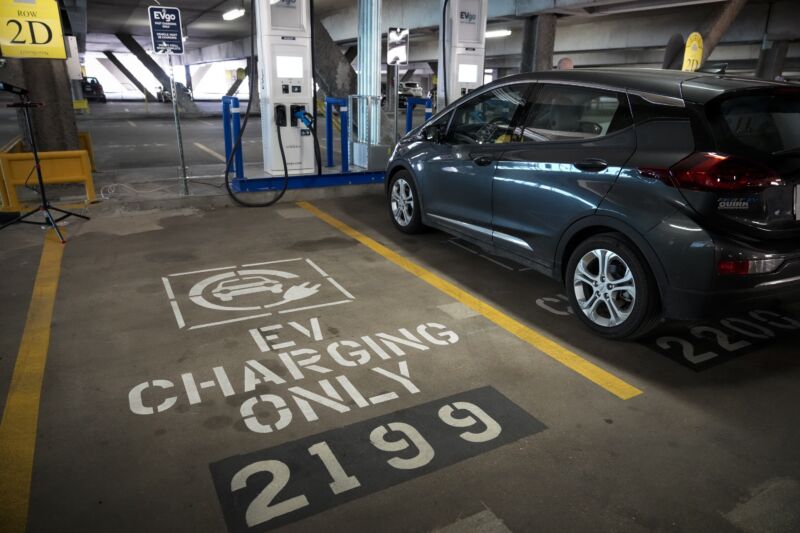
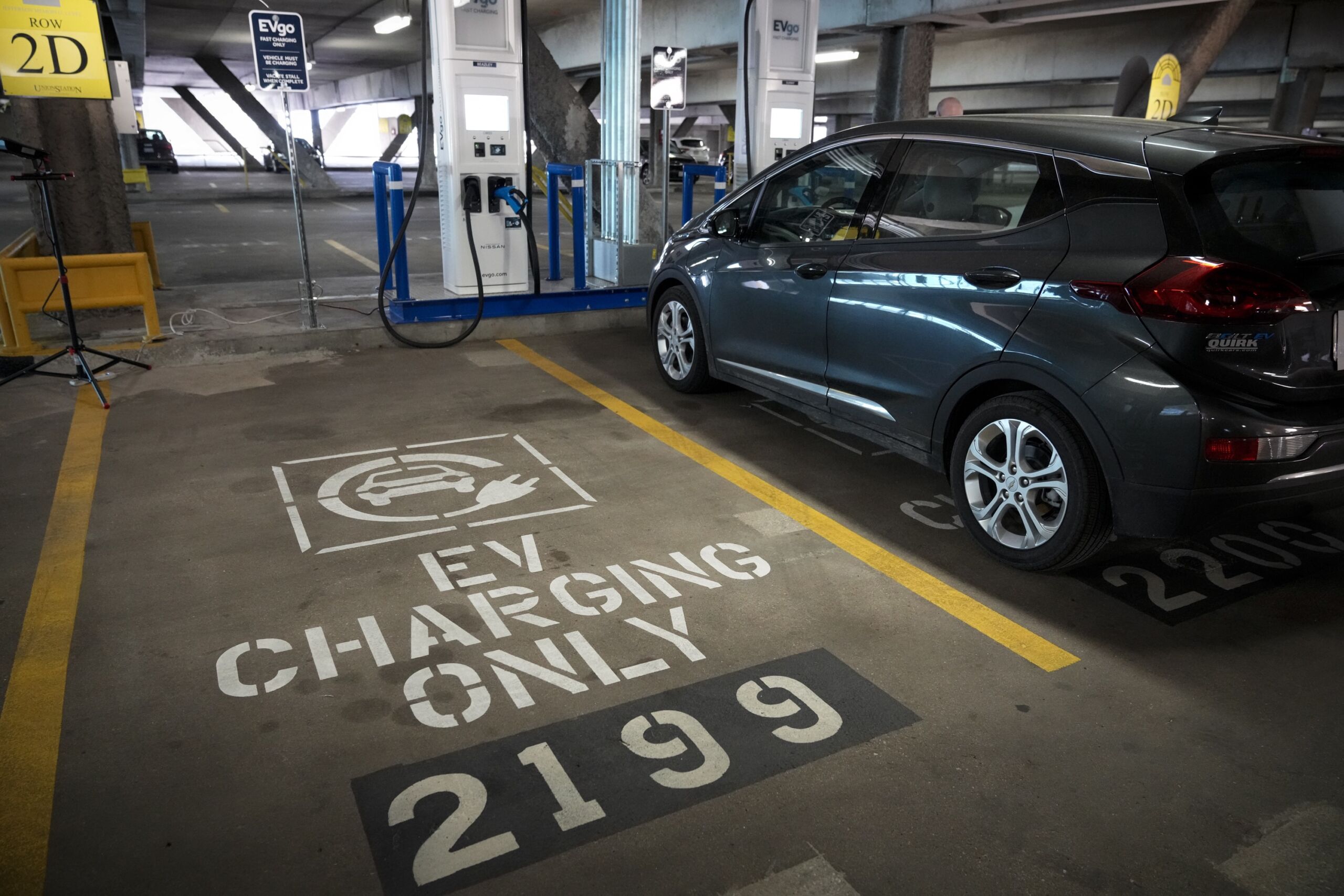
Despite growing electric vehicle adoption in the US, satisfaction with the electric vehicle charging experience continues to suffer. That's according to a new study on the EV public charging experience conducted by JD Power, which together with PlugShare has been asking EV owners about their satisfaction levels since 2021. This year, the study found that people are unhappy with charge times, and one in five reported visiting a charger but being unable to charge.
The not-great state of public EV charging is a topic of much conversation—a story about fast charger reliability garnered almost 1,200 comments last year. Just about everyone who has tried to fast-charge a non-Tesla EV will have a horror story or two, and it's a problem the automakers are well aware of.
That's why the past few months have seen a flurry of announcements from car companies announcing a switch from the Combined Charging Standard 1 plug—until now, the de facto industry standard for non-Tesla EVs—to Tesla's North American Charging Standard (NACS) plug. In doing so, those OEMs gain access to the Tesla Supercharger network for their customers starting in 2024.
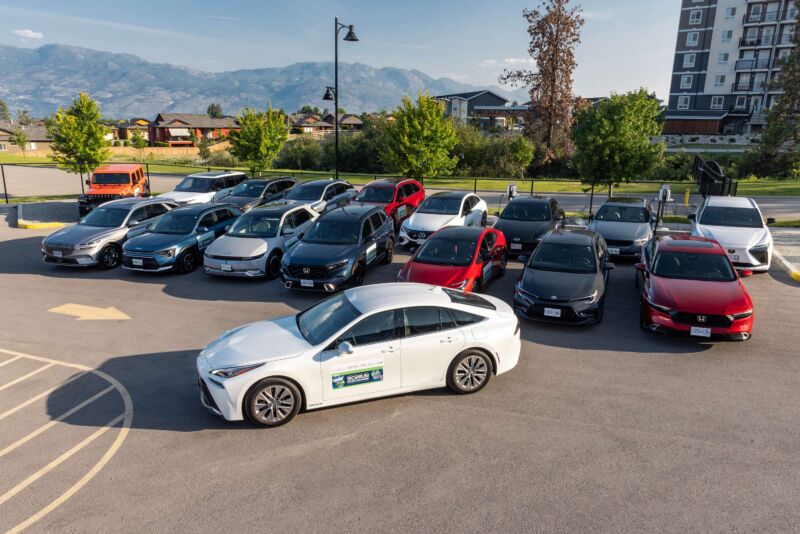
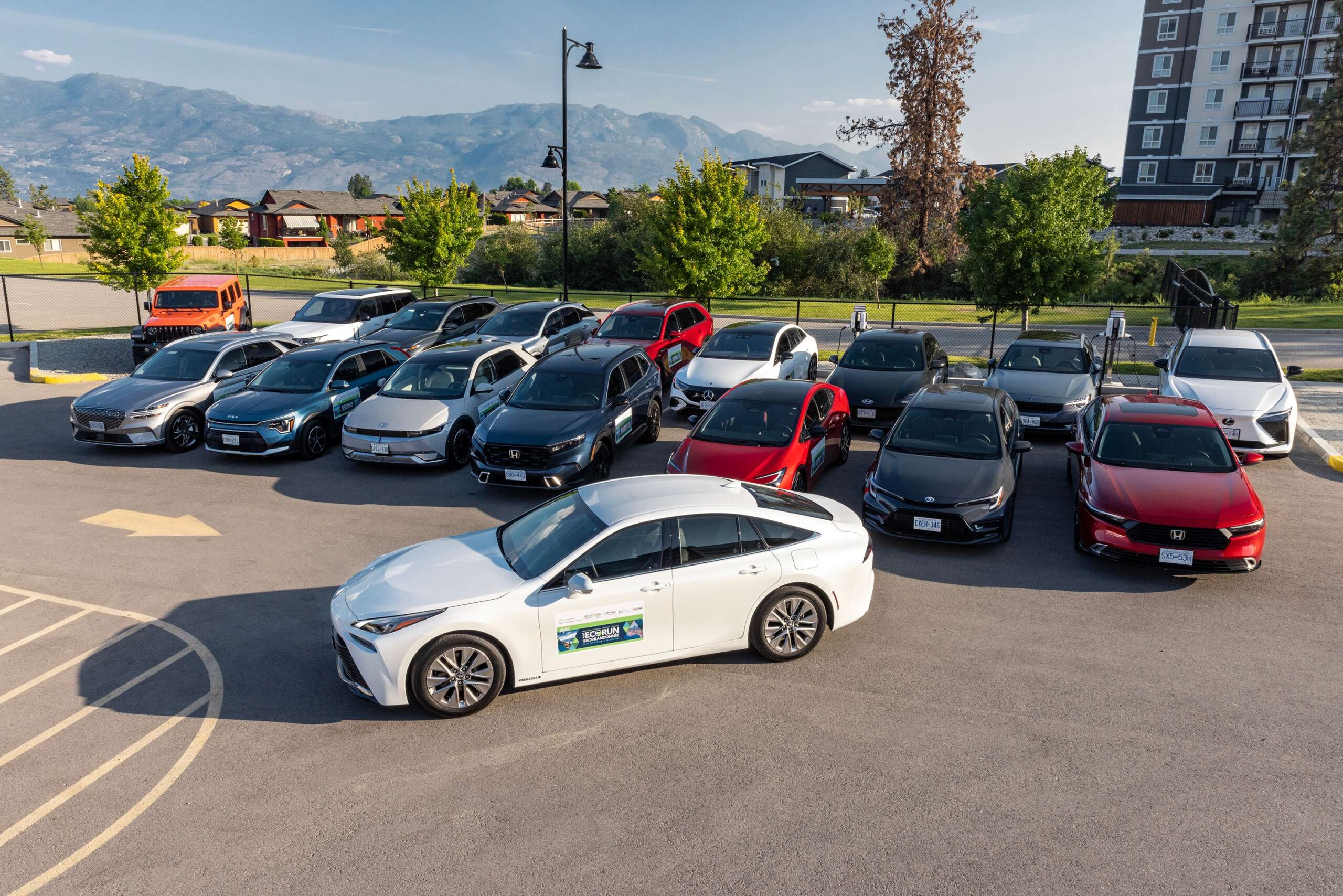
Enlarge / The assorted cars ready for EcoRun 2023. (credit: Blake Jennings)
How do you put EPA mileage numbers to the test? You could buy a wind tunnel and a lab and start doing a massive science experiment. Or you could find 20 auto writers, put them in 20 different cars, and tell them they're in a contest of efficiency where the winner gets bragging rights.
Every year, the Automobile Journalists Association of Canada does the latter. About 20 of the country's top journalists come to take part in EcoRun, an event where automakers are invited to bring their most efficient models to one place for three days of fighting to use less.
In the past, it was all gas and diesel, but as the market has changed, so has the EcoRun lineup. This year, every vehicle had some form of electrification, and about half were fully electric.
The Harriott, a riverboat, docked on the Alabama riverfront in downtown Montgomery, Alabama. | Julie Bennett/Getty Images
The viral fight valorized Black resistance — and punctured Jason Aldean’s racist “small town” narrative.
One of the key facets of extremism is the element of plausible deniability. As such, “dog whistles” — coded language used to mask a deeper extremist or discriminatory rhetoric — have become a pervasive part of the way we talk about politics and the culture wars. They’re also exhausting to unpack.
No matter how diplomatically or plainly you point out the underlying racism or bigotry of a specific image or turn of phrase, there’s always someone eager to take the code literally, to dismiss its context, its subtext, and clearly harmful impact. They’re happy to claim this is just what happens when you pucker your lips and blow, and any hateful dogs that come running are just a coincidence.
Then a song comes along like country singer Jason Aldean’s risible “Try That in a Small Town.” The lyrics and accompanying video are layered with references to Black Lives Matter protests, sundown towns (“see how far you make it down that road”), and white protectionism (“good ol’ boys ... we take care of our own”). The video’s main location was no less than the site of historical lynchings, a particularly unsubtle jab. Inevitably, however, when you attempt to illuminate this racist imagery, a “Try That in a Small Town” defender will show up. They will assert that the whole thing is really just about, as Aldean himself tried to assert, “the feeling of community” and the desire for a return to “a sense of normalcy.”
Normal, to Aldean, seems to be a reality where Black protesters don’t disrupt the everyday lives of white citizens — even if those citizens are, as the song suggests, stockpiling guns and turning paranoid eyes on any and all outsiders. This attempt to reframe socially sanctioned racism as “just a community looking out for itself” has long been a part of the discriminatory tactics used against Black Americans, from lynch mobs to the racist, KKK-apologeticBirth of a Nation, to the legal defenses used by white men who murder unarmed Black ones. It’s a cultural tactic used not only to disenfranchise Black Americans but to then gaslight them about their own reality and experience. It’s a tactic that turns aggression into “self-defense.”
It’s one big reason, out of an infinitude of reasons, that the world was transfixed earlier this week when video surfaced of a group of Black boat workers in Montgomery, Alabama, appearing to voraciously fight back after a group of white pontoon boaters began attacking a Black boat captain.
What happened at the Montgomery boat brawl
The white boaters, coming from nearby Selma, had allegedly repeatedly caused trouble at the dock by parking their pontoon illegally in the spot reserved for a large tourist riverboat, the Harriott II. On Sunday, August 5, the riverboat had been waiting for around 45 minutes, with passengers aboard, to dock. Damien Pickett, the riverboat’s first mate and co-captain, disembarked in order to move the pontoon boat himself. In response, according to reports, at least three of the boaters attacked Pickett, punching him in the face, beating and kicking him.
This sounds like an all-too-familiar tragedy in progress: white-on-black violence, motivated by a sense of racist entitlement. Speaking to the Daily Beast after the incident, the boat’s captain, Jim Kittrell, stressed that the only motive appeared to be racial: “It makes no sense to have six people try to beat the snot out of you just because you moved their boat up a few feet. In my opinion, the attack on Damien was racially motivated.” Kittrell’s assumption seems to be bolstered by eyewitness testimony: One bystander, a victim’s family member, said in a sworn statement that she heard one of the white men drop the n-word before the fighting began.
It’s important to consider this incident in the broader context of Montgomery’s history, as well. Montgomery, one of the major historical fronts of the civil rights movement, is no stranger to racialized violence. It was there, in 1954, that a young Martin Luther King Jr. took up pastorship at a local church, where he became a spokesperson for the Montgomery bus boycotts alongside Rosa Parks. Through boycotts and years of sustained activism amid tense civil unrest, Montgomery protesters successfully challenged the rule of Jim Crow in the South and ultimately changed the nation. Montgomery also saw devastating segregationist violence throughout this period, including one of the most violent moments in the civil rights movement, “Bloody Sunday.”
In 2023, coming after a cultural period of intensifying racialized protests, a group of white people whaling on an unsuspecting and defenseless Black man could have led to tragic consequences or, at the least, traumatized victims and onlookers.
What the video shows happening next, however, flipped the script: Seeing one of their colleagues being attacked, other Black boat workers rushed in to defend him and fight back. Bystanders also joined in, with one teen now known as “Black Aquaman” famously jumping into the water and swimming across the dock in order to help. One man, known to the internet as “Folding Chair Guy,” gained instant fame when he went after the three attackers with, you guessed it, a folding chair.
The suddenness of the fight, combined with the enthusiasm of the brawlers, the glee of the onlookers, and the fact that everyone had phones out recording the incident, made the Montgomery brawl — dubbed the Alabama Sweet Tea Party — into an immediate viral sensation. It produced everything from evocative Twitter reactions to a live swimming pool reenactment to a remix of Ernie Barnes’s iconic painting of Black partiers, Sugar Shack. The folding chair was instantly memorialized.
Most extraordinarily of all, no one rushed to mete out punishment for the Black dock workers who fought back. Though multiple fighters were briefly detained, all were released. Folding Chair Guy, real name Reggie Gray, has been dodging police requests to speak with him, but no one seems to be pushing too hard for his arrest either, although the investigation into the brawl is ongoing. At a press conference, Montgomery Police Chief Darryl Albert notably didn’t attempt to distort the power dynamics, stating simply that “several members of the Harriott II came to Mr. Pickett’s defense.” The three white attackers turned themselves in to police custody after warrants were issued for their arrest.
The prevailing public mood around the Montgomery brawl has not been racist backlash or anxiety over such a backlash, but rather deep satisfaction at a battle in which justice seems to have prevailed: The perpetrators were rounded up and the victims received a rousing defense from the community. For once, the marginalized underdog — a Black man being ganged up on by a group of white bullies — came out no worse for wear; Pickett reportedly walked away from the fight with only a headache and some minor cuts and bruises.
What it means to try that in a (not entirely) small town
The collective sense of satisfaction might be exactly the kind of communal security Jason Aldean was attempting to portray in “Try That in a Small Town.” This was, in fact, almost the exact scenario Aldean says he was attempting to capture in his ode to small-town vigilante justice: a group of outsiders come into town, refuse to obey the local customs or follow the local laws, and then get their asses duly whooped by the town citizenry.
While Montgomery is not a “small” town, its history of banding together to rout out racists is deeply relevant here. Montgomery is precisely the type of heartland town that deserves to have songs written about the bravery and commitment of its citizens to protecting one another, to fighting back against injustice — to defending its people and its way of life at all costs. But there’s plenty of reason to suspect that Montgomery wasn’t the kind of town — and this wasn’t the kind of scenario — that Aldean had in mind. We know that celebrating moments of Black defiance is incredibly rare in American history.
The Montgomery brawl represents an extraordinary triumphant moment in which Black resistance has been seen as a just force rather than a threat to the white establishment. Black shows of defiance, even when used in clear self-defense, are all too often wielded against the victim. Historically, instances of rebellion such as that of slave revolt leader Nat Turner have been used to justify more violence against Black people. Today, in cases where Black victims of police violence attempt to seek justice, the legal doctrine of “qualified immunity” — in which police have almost unlimited power to use force without fearing a lawsuit in response — is invoked.
The entire justice system, in other words, too frequently gets weaponized against Black Americans who assert themselves in the face of threats to their safety, property, and human dignity. Black citizens are rarely allowed to be “heroic through defiance,” to reclaim Black rebellion as an act of valor, or to wield reactive violence as a form of patriotism and idealism. That framing of violence is almost exclusively reserved for the kind of white supremacists Aldean’s song seems interested in protecting.
The Montgomery brawl was subversive, shocking, even refreshing in its memeability — not because violence is something to be enjoyed, but because the long arc of history, honed to oppress, simply could not withstand the glorious righteous fury of a bunch of boat workers who’d been forced to stand around for nearly an hour thanks to some entitled jerks who refused to follow the dock rules.
It’s worth asking whether the public’s reaction to the brawl would have been as laid back if the stakes hadn’t been so clear. These Black dockhands, after all, were working in the service of something undeniably anodyne, even arguably white-coded: a cruise on a 19th-century riverboat, with all the ties to antebellum history such a tour implies. Would this minor moment have been framed as heroic had the victims been trying instead to dock a summer cruise full of raucous Black partiers? If the dockhands had all turned out to be Black Lives Matter activists, would their rebellion have still been valiant?
It may seem silly to ask these kinds of questions about a heavily memed brawl involving a folding chair and a person known only as “Black Aquaman,” but this is exactly when we should be asking them. It’s the constant policing and challenging of ordinary Black existence by the white establishment — through microaggressions, or macroaggressions, like writing an entire song about how badly you want to lynch outsiders — that leads to the fomentation of anger that spills over into protest. That then gets used to justify more policing and challenging of ordinary Black existence.
That’s why the Montgomery brawl was, on a level, a brilliant deconstruction of the lie behind “Try That in a Small Town”: It effortlessly destroyed the song’s flimsily veiled conceit that the “community” that needs protection is that of innocent white people being besieged by scary Black protesters.
Perhaps that’s also why Aldean’s song, though it had a brief stint atop the Billboard Hot 100 after all the controversy surrounding it broke, immediately plummeted a full 20 slots. This was reportedly one of the biggest drops in history, and the biggest ever for a song that didn’t debut at No. 1.
The deepest irony of all this is that Jason Aldean — who grew up in the big town of Macon, Georgia, and now resides in the bigger town of Nashville — tries to court “that small-town vibe” without ever delving into what the vibe actually is. Anyone who’s from a small Southern town understands exactly what he’s referencing.
Like anywhere, small towns are full of wonderful individual people and affirming communities. But also like anywhere — and perhaps even a little more often than anywhere, given their size and emphasis on the collective — they can be subject to toxic groupthink. When the idea of a small town is freighted with notions of an “us” and a “them,” notions that can distort a sense of self and what exactly needs to be defended, they can also be as alienating, dangerous, and violent as anywhere else on earth.
That’s why narratives of Black defiance are all the more crucial as representations of what real community can be. A sweet tea party, indeed.






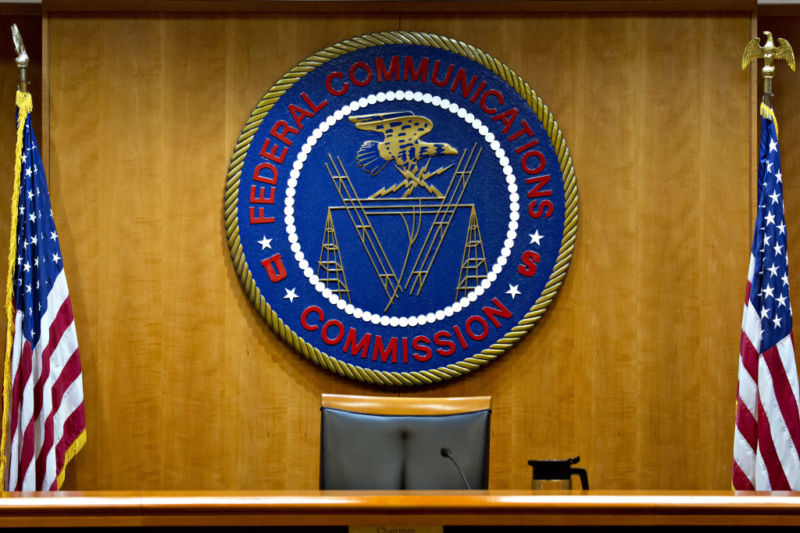










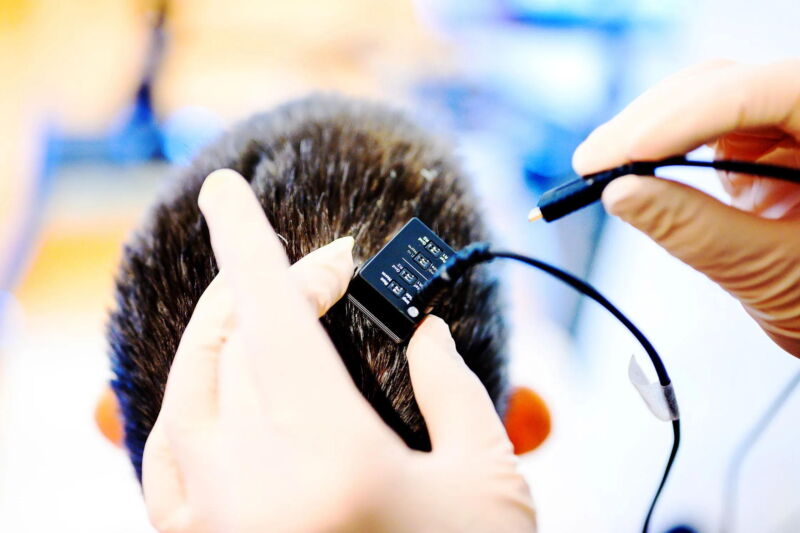

/cdn.vox-cdn.com/uploads/chorus_asset/file/24871548/Screenshot_2023_08_24_at_3.35.48_PM.png)


/cdn.vox-cdn.com/uploads/chorus_asset/file/24042531/GettyImages_1409199469.jpg) Ezra Shaw/Getty Images
Ezra Shaw/Getty Images
/cdn.vox-cdn.com/uploads/chorus_asset/file/24042539/GettyImages_1241968278.jpg) Martin Rickett/PA Images via Getty Images
Martin Rickett/PA Images via Getty Images