Peter Atwood used NASA data to depict the wildfires in Canada this year. The realistic rendering of the fires as burning embers and smoke activity is something.
Tags: Canada, Peter Atwood, wildfire
Peter Atwood used NASA data to depict the wildfires in Canada this year. The realistic rendering of the fires as burning embers and smoke activity is something.
Tags: Canada, Peter Atwood, wildfire

Cloud formation depends on temperature and moisture levels, so in places of high humidity like the East Coast and Pacific Northwest, the clouds form lower. In dryer places like the southwestern United States, the clouds don’t form until higher up. For The Washington Post, Kasha Patel and Dylan Moriarty have the maps that show the contrast over the seasons.
Tags: cloud, height, Washington Post

And Jim Jordan is waiting in the wings.
For a brief moment, many Republicans hoped the party’s nomination of Rep. Steve Scalise (R-LA) for speaker of the House could quickly unite their fractious conference.
That was a pipe dream that ended suddenly on Thursday night, when Scalise told his colleagues he was withdrawing his name from contention.
The announcement leaves the House GOP in yet further disarray, with the next steps in the leadership contest unclear.
Scalise had narrowly triumphed Wednesday in the first step of the speaker election process, an internal vote among House Republicans. That win in theory meant he’d be the party’s nominee for the next step: the speaker election vote on the House floor.
But on Thursday, the extent of the difficulty he faced in attaining the near-unanimous House GOP support he needed for that floor vote became clear as problem after problem piled up.
With Democrats unanimously opposed, a mere five Republican defections is enough to block Scalise from winning on the House floor — and by afternoon, more than a dozen had already said they wouldn’t vote for him, according to CNN’s Haley Talbot. Most (though not all) of this opposition came from right-wing hardliners who prefer Rep. Jim Jordan (R-OH). Jordan conceded and pledged to support Scalise after the House GOP’s internal vote Wednesday, but his supporters weren’t all going along.
Take, for instance, Donald Trump, who endorsed Jordan last week. During a radio interview, Trump argued that Scalise’s recent blood cancer diagnosis meant he was in “serious trouble” and should focus on getting better.
Then former speaker Kevin McCarthy — who reportedly had a tense relationship with Scalise, his number two, this year — undercut his would-be successor Thursday. When asked whether Scalise would come up with the votes he needs: “It’s a big hill,” McCarthy said. “He told a lot of people he was gonna be at 150” in the internal party vote, McCarthy continued, “but he wasn’t there.” (Scalise beat Jordan by just 113 to 99.)
When the GOP conference met again Thursday evening, Scalise had evidently concluded he couldn’t get there — and announced he was withdrawing from contention.
Jordan will now likely make another attempt at getting the top job, and he’ll have hardliners’ backing. But his main difficulty might be winning swing district Republicans who may view him as too controversial.
Because of all this chaos, some frustrated House GOP establishment figures are now floating the unthinkable: asking Democrats for help. House Minority Leader Hakeem Jeffries (D-NY) has said he’d be open to finding “a bipartisan path forward” to “reopen the House,” but most Republicans would be deeply reluctant to go there unless they conclude there’s no other choice.
After Scalise won the House GOP conference vote early Wednesday afternoon, things were looking up for him at first. Rep. Matt Gaetz (R-FL), who’d spearheaded the effort to depose McCarthy, was on board. “Long live Speaker Scalise,” Gaetz told reporters.
And though Jordan was initially cagey about whether he’d back Scalise, he agreed to do so just about an hour later, saying he’d help nominate Scalise on the House floor. There was even talk that the House could hold its speaker vote that afternoon.
That didn’t last long; it quickly became clear Scalise didn’t yet have the votes he needed.
Reps. Lauren Boebert (R-CO), Thomas Massie (R-KY), and Max Miller (R-OH) all announced they would not vote for Scalise on the floor. Rep. Marjorie Taylor Greene (R-GA) said the same, citing Scalise’s cancer. “I like Steve Scalise, and I like him so much that I want to see him defeat cancer more than sacrifice his health in the most difficult position in Congress,” she wrote.
Rep. Nancy Mace (R-SC) then went on CNN to say that she’d oppose Scalise on the floor. Mace argued that old Scalise scandals — his 2002 speech to a group founded by white supremacist David Duke and an alleged comment Scalise made around that time that he was Duke “without the baggage” — disqualified him.
Later Wednesday, Rep. George Santos (R-NY) — fresh off his latest indictment — posted on X that he had had “0 contact or outreach” from Scalise and that he’d oppose him “come hell or high water I won’t change my mind.”
The news got worse on Thursday, as Scalise began losing the votes of some members who’d said Wednesday that they would back him, including Rep. Anna Paulina Luna (R-FL) and Rep. Eli Crane (R-AZ). Further “no” votes piled in, too.
Most of the holdout members are still backing Jordan, and their most common complaint is that Scalise represents a continuation of the GOP’s establishment leadership and that a greater shake-up is necessary. Rep. Carlos Gimenez (R-FL), meanwhile, said he’d only cast his ballot for McCarthy on the House floor.
Now that Scalise has pulled out, what happens next is up in the air.
If Jordan runs again and the House GOP holds another internal vote, the question will be how strong Jordan’s support is and whether anyone steps up to challenge him. Perhaps now the dynamics will flip and swing district Republicans will be the holdouts to a Jordan nomination. But it’s also possible that, exhausted by the chaos, they’ll simply give in and support Jordan. Of course, Jordan would need near-unanimous support from Republicans on the House floor. Alternatively, a new dark horse candidate could arise.
There’s even that prospect of a deal with Democrats. Rep. Mike Rogers (R-AL) said that the GOP might never get 217 votes for a speaker due to “traitors” in the conference and that Democrats must help.
Rep. David Joyce (R-OH), meanwhile, said that perhaps a deal could be cut with Democrats to make Rep. Patrick McHenry (R-NC), currently serving as speaker pro tempore, officially the speaker on a short-term basis. That could get the chamber — and the country — through the next government funding deadline in mid-November.
But the likely next question going forward is just how unpalatable Jordan is to swing district and establishment-friendly Republicans.
Update, October 12, 8:15 pm ET: This story was originally published Thursday afternoon and has been updated to reflect Scalise’s withdrawal from the speaker’s race.

The moon is going to get in the way of the sun this Saturday. For The New York Times, Jonathan Corum has the map of when and how much sun coverage we’ll see in the western hemisphere.
Tags: eclipse, New York Times, solar

Google and Sonos have been volleying patent infringement lawsuits back and forth for a few years now. Sonos has been making Internet-connected speakers since 2005 and has a lot of patents, while Google only jumped into the market in 2016 with the first speaker in the Google Home lineup (now called "Nest Audio"). You may remember that in early 2022, Google lost a Sonos patent infringement case around controlling multiple speakers together in a group. After losing, rather than just paying Sonos a licensing fee for the feature, Google instead chose to reach into customers' homes and disable the feature from devices people had already bought.
This week Google managed to convince a federal court that some of the patents from the 2022 ruling are invalid, and Google's response was to immediately ship an update re-enabling the group speaker features on customers' devices. Here's the pretty wild statement Google made to customers on the Nest Support forum:
We recently made a change to speaker groups for Nest speakers, displays, and Chromecast where certain devices can only belong to one speaker group at a time in the Google Home app. A federal judge has found that two patents that Sonos accused our devices of infringing are invalid.
In light of this legal decision we’re happy to share that we will be rolling back this change. Devices will be able to belong to multiple speaker groups and you will no longer run into an error when trying to add a device to additional groups. We’re beginning to roll out this update immediately and expect it to go live across our devices and the Home App on Android in the next 48 hours. The change will also be coming soon to the Home App on iOS.
As it says in the statement, the invalidated patents were around adding speakers to multiple speaker groups. Google Home/Nest Audio and Sonos speakers can play audio from multiple speakers in multiple rooms, using their built-in microphones to automatically juggle the surprisingly complex audio delay problems, creating a seamless whole-home audio experience. Sonos smacked down Google with five patents in 2022, with the (still valid!) headline patent allowing for the control of multiple speaker volumes at once. Sonos won $32.5 million in damages from Google.

Enlarge / The famous Easter candy Peeps, made by Just Born Quality Confections, are displayed on April 7, 2023 in New York, US. Consumer Reports announced in a recent press release that it had contacted Just Born Quality Confections earlier this year about concerns over the company's use of red dye No. 3 in the Peeps candies, which has been found to cause cancer in animals. (credit: Getty | Fatih Aktas)
Last weekend, California outlawed a common red food dye that is otherwise deemed safe by the Food and Drug Administration—the first such ban in the country and one that puzzlingly comes over three decades after the FDA determined the dye causes cancer in rats and banned it from lipsticks and other cosmetics, but not foods.
The dye is FD&C Red No. 3, also known as red dye No. 3. Today, it is found in thousands of food products—from Brach's Candy Corn and varieties of Nerds, Peeps, Pez, candy canes, Fruit by the Foot, to Entenmann's Little Bites Mini Muffins, Betty Crocker mashed potatoes, fruit cocktail, PediaSure nutritional shakes, and MorningStar Farm's veggie bacon strips.
But, back in 1990, the FDA carefully reviewed decades' worth of animal studies on red dye No. 3 and determined that "FD&C Red No. 3 has been shown to induce cancer in appropriate tests," and is therefore "unsafe for use in externally applied drugs and externally applied cosmetics and cannot be listed." Even though the risk appeared small, the agency's decision hinged on the Delaney Clause of 1958, which requires the FDA to ban any food additive that is shown to induce cancer in humans or animals.
You’ve likely spotted one in your own neighborhood: the modern farmhouse. Typically a teardown turned new-build or a house in a planned community, the style’s hallmarks include white board-and-batten siding, black window frames, gabled metal roofs, big front porches, and wood and stone touches. Inside, you’ll typically find open-concept floor plans, farmhouse sinks, sliding barn […]
The post Modern Farmhouses Are All Over DC. Why Are They So Popular? first appeared on Washingtonian.

Enlarge / Behold, the glorious, flat display. Normal, common-sense phone design is back, finally! (credit: Ron Amadeo)
Google is listening. Reviewing phones means that we usually complain—a lot—about phone designs, about things that could be better, and about decisions that don't make a ton of sense. Usually it feels like talking to a wall; manufacturers ignore us and keep doing whatever they want.
The Pixel 8 is different, though. This phone feels like it's taking some of our long-standing pet peeves into account and is finally doing something about them. Tired of pointless curved screens that distort your image? Fixed. Want an update support timeline that finally rivals iOS? Check. Fixing flaws with the previous model, like face unlock? Double check. Compared to where the Pixel line was just a few years ago, Google Hardware is turning in phones that are polished, practiced, and full of great decisions.

The Pixel 8 Pro display looks great. [credit: Ron Amadeo ]
| SPECS AT A GLANCE | ||
|---|---|---|
| Pixel 8 | Pixel 8 Pro | |
| SCREEN | 6.2-inch, 120 Hz, 2400×1080 OLED | 6.7-inch, 120 Hz, 2992×1344 OLED |
| OS | Android 14 | |
| CPU | Google Tensor G3
One 3.0 GHz Cortex-X3 core |
|
| GPU | ARM Mali-G715 | |
| RAM | 8GB | 12GB |
| STORAGE | 128GB/256GB UFS 3.1 | 128GB/256GB/512GB/1TB UFS 3.1 |
| BATTERY | 4575 mAh | 5050 mAh |
| NETWORKING | Wi-Fi 7, Bluetooth 5.3, GPS, NFC, 5G mmWave & Sub-6 GHz | Wi-Fi 7, Bluetooth 5.3, GPS, NFC, 5G mmWave & Sub-6 GHz, UWB |
| PORTS | USB Type-C 3.1 Gen 1 with 30 W USB-PD 3.0 charging | |
| REAR CAMERA | 50 MP Main 12 MP Wide Angle |
50 MP Main 48 MP Wide Angle 48 MP 4x Telephoto |
| FRONT CAMERA | 10.8 MP | 10.8 MP |
| SIZE | 150.5 x 70.8 x 8.9 mm | 162.6 x 76.5 x 8.8 mm |
| WEIGHT | 187 g | 213 g |
| STARTING PRICE | $699 | $999 |
| OTHER PERKS | IP68 dust and water resistance, eSIM, wireless charging, in-screen fingerprint reader | |
Google is still making steady improvements to the design that started with the Pixel 6, and the Pixel 8 Pro feels like one of the best hardware designs out there. First up, Google is finally dumping the years-long failed experiment of curved displays. Samsung started the curved display trend back in 2014 when it figured out how to bend OLED displays. Thanks to the huge influence of Samsung's display division, from then on most flagship Android phones had the long edges of their displays curve into the bodies.
Former officer/current prisoner Derek Chauvin decided to personify endemic police racism by pressing his knee to the neck of an unarmed black man for nearly ten minutes. This display of power continued for three minutes after another officer told Officer Chauvin he could no longer detect a pulse.
This act saw Officer Derek Chauvin join the very short list of law enforcement officers convicted of murder. Before that verdict arrived, Minneapolis exploded. Shortly thereafter, so did the rest of the country.
Minneapolis PD officers responded as cops almost always do when a “bad apple” further turns public sentiment against them: they simply refused to do their job. Officers decided that if people didn’t love the police, they weren’t going to avail themselves of the benefits (whatever they are) of an organized police force. Of course, most officers were unwilling to give up their incomes in exchange for abdicating their responsibilities. They expected to get paid for doing nothing.
Others saw the writing on the likely burning wall: casual abuse of citizens and their rights was no longer being tolerated to the extent it had been previous to Officer Chauvin’s murder of George Floyd. They decided to exit the police business altogether, rather than deal with any minimal increases in transparency and accountability.
These officers assumed the city would bend to their will in order to maintain the status quo, assuming legislators would rather retain bad cops than deal with chronic understaffing. Things went the other way, though. The PD remained under the microscope and further limits were placed on police and policing.
But following the murder of George Floyd, a unified message was sent out by police officials, police union reps, and the bootlicking contingent of the Minnesota/Minneapolis legislatures: “Fewer cops means more crime, folks. That’s just simple math.”
And, for a relatively brief moment, that simple math held. Crime did go up while the city was still dealing with 24/7 protests and an observable spike in disrespect for police officers and everything they stand for.
But that assertion has since been proven false. Reports flowing in over the last couple of years show cops aren’t all that essential to lowering crime rates. In April of this year, it was reported that crime rate decreases first noted in 2022 weren’t an anomaly.
According to MPD data, carjackings are down 46% year-to-date, robbery has dropped 34%, gunshot wound victims declined nearly 38% and assaults are down 7%.
The city’s mayor, Jacob Frey, credited this drop to a new task force and a renewed focus on subjecting repeat offenders to harsher sentences. Maybe. Maybe not. But it definitely wasn’t related to an increase in officers on patrol, contrary to the predictions of the self-interest groups listed above.
Things had only improved by early September:
The city has recorded 20 fewer homicides than at this time last year, on pace for a 33% decline.
Other metrics show similar positive trends, according to city data analyzed by the Star Tribune: 9% fewer aggravated assaults, 26% fewer robberies, 30% fewer gunfire reports, 33% fewer shootings victims and 52% fewer carjackings.
Violent crime — murder, aggravated assault, rape and robbery — is down 12% overall from last year to its lowest point of the 2020s so far, the data show. Only a record-breaking surge in auto thefts bucks the pattern.
Once again, the same law enforcement agencies that declared the city would devolve into anarchy due to officers leaving and/or simply refusing to the do the job they were (still) being paid to do were quick to take credit for something that directly contradicted the scenario they had presented two years earlier. MPD Chief Brian O’Hara claimed this decrease was the result of “data- and partnership-driven strategies” for taking guns off the street.
Again: maybe! I mean, we can hope cops are doing smarter, more meaningful work rather than just hassling minorities simply because they can. If constraints in resources have actually forced cops to be smarter (rather than just claiming they’re being smarter), I’m here for it.
There’s little that ties these crime decreases to law enforcement activity. Correlation, causation, etc. But one thing is undeniable: adding more cops isn’t the answer.
Violent crimes through the first nine months of 2023 in Minneapolis, compared to this same time a year ago, are trending downward, while the number of sworn officers available for patrols has now dipped to just 515.
Assistant MPD Chief Katie Blackwell, told a Minneapolis City Council committee the violent crime trends, including violence committed with guns, are headed the right way with homicides, robberies, and the gun violence index all down significantly from a year ago.
Blackwell goes on to say that that department is facing a “significant burden” and that “cops are getting tired.” I don’t doubt that’s true. But not a single police official — when faced with an uptick in attrition following the murder of George Floyd — ever bothered to consider the possibility that a mass exit in officers simply meant the PD was ridding itself of its most useless employees. The officers first to press the eject were most likely the same officers who routinely violated rights and/or engaged in cop busywork that did nothing to reduce violent crime, but definitely continued to deteriorate citizens’ opinion of law enforcement.
Leaner is cleaner. When resources are strained, they have to be utilized effectively. When there’s an excess of officers, people just tend to do what they want or whatever is easiest. It’s the way it works in the private sector. There’s no reason to believe the same thing doesn’t happen in the public sector.
Again, correlation is not causation. But law enforcement agencies continue to insist, despite evidence to the contrary, that the only way to effectively fight crime is to put more cops on the street. What’s happening in Minneapolis says otherwise. And it might be ok to simply let disgruntled cops walk off the job rather than subject themselves to additional accountability. The people leaving will generally be officers not worth keeping: the kind of employees who opt for easy/abusive as often as possible. Those who remain will work harder. But, more importantly, they’ll be forced to work smarter. And that’s when you’ll start seeing positive results. Flooding the streets with cops is nothing more than dilution which, as everyone knows, is a process that weakens whatever’s subjected to it.
I know many of you have heard this before, but Cory Doctorow’s “enshittification” concept is such a useful framework to think about things:
first, companies are good to their users; then they abuse their users to make things better for their business customers; finally, they abuse those business customers to claw back all the value for themselves.
As I’ve highlighted, much of this is driven by the ridiculous demands of Wall St. and the belief that companies have a fiduciary duty to shareholders to increase profits at the expense of everything else, but that’s not just wrong, it’s incredibly short-sighted. Because the conclusion to the enshittification concept is that once companies go down the enshittification curve, at some point they die. This is why one of the keys to avoiding enshittification is knowing how and when to tell Wall St. to piss off.
There was a time when it looked like Google understood this lesson. When the company filed to go public, Sergey and Larry started the S1 with a letter in which they basically insisted that they wouldn’t go down this path, and would always put users first — and that anyone looking to buy shares in the company needed to understand that. Among many similar statements, the letter said:
As a private company, we have concentrated on the long term, and this has served us well. As a public company, we will do the same. In our opinion, outside pressures too often tempt companies to sacrifice long term opportunities to meet quarterly market expectations. Sometimes this pressure has caused companies to manipulate financial results in order to “make their quarter.” In Warren Buffett’s words, “We won’t ‘smooth’ quarterly or annual results: If earnings figures are lumpy when they reach headquarters, they will be lumpy when they reach you.”
If opportunities arise that might cause us to sacrifice short term results but are in the best long term interest of our shareholders, we will take those opportunities. We will have the fortitude to do this. We would request that our shareholders take the long term view.
There was a time when it felt like Google kept that promise, but that time seems long past. As the company grew and grew it’s clear that it started to go down the enshittification curve just like everyone else, and started to prioritize Wall St.’s quarterly demands over serving users.
I’ve noted that I don’t think the current Google antitrust case (where the trial is currently ongoing) is all that strong, though I think a more recent case that was filed earlier this year seems much stronger. That stronger case is the one involving how Google’s ad team manipulated the ads market in a way that it could extract more value out of it, while attempting to block effective competition.
The ongoing case is more about how Google sought to have its search included as the default on various browsers and phones and such.
However, it looks like some of the ad shenanigans are showing up in this case too. Megan Gray (who worked at the FTC and as General Counsel at DuckDuckGo) has been attending the trial and wrote a piece for Wired about a bit of evidence that flashed on the projector screen, suggesting that Google is secretly altering search queries to drive more ads and commerce. If accurate, this is (1) quintessential late stage enshittification and (2) obnoxiously evil:
This onscreen Google slide had to do with a “semantic matching” overhaul to its SERP algorithm. When you enter a query, you might expect a search engine to incorporate synonyms into the algorithm as well as text phrase pairings in natural language processing. But this overhaul went further, actually altering queries to generate more commercial results.
There have long been suspicions that the search giant manipulates ad prices, and now it’s clear that Google treats consumers with the same disdain. The “10 blue links,” or organic results, which Google has always claimed to be sacrosanct, are just another vector for Google greediness, camouflaged in the company’s kindergarten colors.
Google likely alters queries billions of times a day in trillions of different variations. Here’s how it works. Say you search for “children’s clothing.” Google converts it, without your knowledge, to a search for “NIKOLAI-brand kidswear,” making a behind-the-scenes substitution of your actual query with a different query that just happens to generate more money for the company, and will generate results you weren’t searching for at all. It’s not possible for you to opt out of the substitution. If you don’t get the results you want, and you try to refine your query, you are wasting your time. This is a twisted shopping mall you can’t escape.
I’m guessing that Google would claim that it’s not so much “replacing” your search as doing an additional search alongside it that (it will claim) helps provide more relevant answers. But, it sure sounds like the line between “more relevant” and “better for our short-term revenue” got pretty blurry.
As Gray notes:
It’s unclear how often, or for how long, Google has been doing this, but the machination is clever and ambitious. I have spent decades looking for examples of Google putting its enormous thumb on the scale to censor or amplify certain results, and it hadn’t even occurred to me that Google just flat out deletes queries and replaces them with ones that monetize better. Most scams follow an elementary bait-and-switch technique, where the scoundrel lures you in with attractive bait and then, at the right time, switches to a different option. But Google “innovated” by reversing the scam, first switching your query, then letting you believe you were getting the best search engine results.
It’s also how you destroy trust. I’d move to Bing or DuckDuckGo, but considering both still have Techdirt mostly deleted from their index, that won’t work. Guess it’s finally time to try Kagi (which people keep telling me is great).
Enlarge (credit: Bloomberg / Contributor | Bloomberg)
Last week, the Federal Trade Commission sued Amazon, alleging that the online retailer was illegally maintaining a monopoly. Much of the FTC's complaint against Amazon was redacted, but The Wall Street Journal yesterday revealed key details obscured in the complaint regarding a secret algorithm. The FTC alleged that Amazon once used the algorithm to raise prices across the most popular online shopping destinations.
People familiar with the FTC's allegations in the complaint told the Journal that it all started when Amazon developed an algorithm code-named "Project Nessie." It allegedly works by manipulating rivals' weaker pricing algorithms and locking competitors into higher prices. The controversial algorithm was allegedly used for years and helped Amazon to "improve its profits on items across shopping categories" and "led competitors to raise their prices and charge customers more," the WSJ reported.
The FTC's complaint said:

The House voted to remove McCarthy as speaker. The search for a successor is on — and could drag on for days.
Now that California Rep. Kevin McCarthy has been removed as speaker of the House, the search is on for a successor who can unite divided Republicans.
On Tuesday, a total of eight Republicans joined all present Democrats in voting for a motion to vacate the speaker’s chair. Rep. Patrick McHenry (R-NC) was appointed interim speaker as Republicans work to figure out who will lead their caucus, and the House, from here.
The historic removal was the result of a charge led by Rep. Matt Gaetz (R-FL) to strip McCarthy of the speakership after he cut a deal with Democrats to fund the government for another 45 days — just before it would have otherwise shut down. Gaetz brought a motion to vacate on the House floor Monday night, a procedural move that has never before been successfully used to oust a speaker.
This time, however, was different. Although McCarthy had most of his caucus behind him, he needed a majority of the House to vote against his removal to stay in power. At the moment, the GOP has a four-vote majority, making the eight Republicans who voted against him more than enough to depose the now-former speaker.
McCarthy needed Democratic support to retain the speakership, and Democrats — even those with good working relationships with the GOP — decided they wouldn’t come to his rescue. House Minority Leader Hakeem Jeffries gave several reasons for backing McCarthy’s ouster in a letter to his colleagues, including issues with how the majority party set up the chamber’s rules, McCarthy’s legislative practices, and the decision to launch an impeachment inquiry of President Joe Biden.
Congressional Progressive Caucus Chair Rep. Pramila Jayapal (D-WA) put it more simply when speaking to reporters Tuesday: “We’re not voting in any way that would help Speaker McCarthy … Nobody trusts Kevin McCarthy, and why should they?”
Ahead of the vote, some Democrats suggested they’d be willing to support McCarthy in exchange for concessions. But the California lawmaker quickly ruled out that possibility. Such concessions could have included passing funding for Ukraine — which had become a sticking point in the spending fight amid waning public support for continuing to aid the country’s war efforts against Russia — or ending the Biden impeachment inquiry.
Offering even small concessions would have further weakened McCarthy’s standing among the GOP, however, potentially adding to the list of Republican lawmakers planning to vote for his ouster. But his reluctance to deal with Democrats ultimately led to his demise.
“Unless a Republican is willing to work on a consistent basis with Democrats, then the far-right wing, who are more interested in burning the place down than getting something done, will retain control,” said Whit Ayres, a Republican pollster. “It’s a more viable path than bending the knee to people who have no interest whatsoever in governing.”
Regular business in the House will be on hold until someone wins the 218 votes necessary to become the next speaker. McCarthy has already said that he will not run again. House Majority Leader Rep. Steve Scalise (R-LA), Judiciary Committee chair Rep. Jim Jordan (R-OH), and Republican Study Committee head Rep. Kevin Hern (R-OK) have been reportedly trying to drum up support, but others could also emerge as contenders.
Scalise, the Republican majority leader, was the heir apparent to the speakership, but a cancer diagnosis could derail those plans. He did announce in September that he has pursued aggressive treatment for his multiple myeloma, which has significantly improved his long-term prognosis. Gaetz, Rep. Tony Gonzales (R-TX), and House Majority Whip Tom Emmer (R-MN), who was originally thought to have ambitions for the speakership himself, have said that they would support Scalise. Scalise was among multiple people who were injured when a gunman fired at lawmakers on a baseball field in 2017.
However, McCarthy allies are reportedly trying to torpedo Scalise’s candidacy, and he’s not seen as a strong fundraiser — a major weakness ahead of an election year. That would advantage Jordan, who had previously challenged McCarthy for the speakership but has since become one of his biggest supporters among the party’s right flank. He’s already secured endorsements from Reps. Jim Banks (R-IN) and Thomas Massie (R-KY), and is seen as a strong fundraiser.
But both Scalise and Jordan may still struggle to capture moderate support, potentially leaving an opening for other candidates. McHenry has apparently ruled out running for the speakership, despite occupying the position temporarily. Hern had previously put his name in the hat during the January speaker fight, but received only two votes and voted himself for McCarthy.
Other potential contenders could be Rep. Elise Stefanik (R-NY), the conference chair, and Rep. Tom Cole (R-OK), the Rules Committee chairman. Stefanik rose to prominence as a MAGA firebrand during the Trump presidency. She’s a strong fundraiser, and has been focused on expanding — and diversifying — the GOP caucus over the past few years, including by targeting traditionally blue areas. Cole, a bipartisan operator who has been an ally of the past three Republican speakers, warned Tuesday that removing McCarthy would result in chaos and criticized his party’s right wing for seeking his demise. But he shocked many when he voted to overturn the results of the 2020 election in Trump’s favor. That decision wouldn’t necessarily lose him Republican votes, but would mean he’d be unable to rely on Democratic help in taking the speaker’s gavel.
Some Republicans have even floated former President Donald Trump for the speakership. There has never been a House speaker who wasn’t already a sitting member, but outsiders are technically allowed to run. Trump has remained quiet on McCarthy’s ouster, but it’s unclear whether he would seek the speakership given that he’s already declined to run in the past. He also appears to be barred by House Republicans’ own rules, given that he’s been charged with felonies that carry potential prison sentences of two or more years.
Still, it’s hard to see right now how any of these candidates might win the votes necessary to become speaker. Scalise is an early favorite, but the divisions within the GOP conference — and the fact that Democrats intend to vote for Minority Leader Rep. Hakeem Jeffries (D-NY) — could make the process of choosing the next speaker drag on for days.
In January, it took 15 rounds of voting before McCarthy finally won the speakership. Deliberations continued for more than four days, longer than any speaker contest in 164 years. Hardline conservatives continued to oppose him until he offered them a long list of concessions, including a pledge to pair raising the nation’s debt ceiling with spending cuts and critically, allowing any member to bring the motion to vacate the speaker’s chair, offers that ultimately led to his demise.
Given that divisions between those conservatives and moderates in the GOP conference are deeper than ever — with some McCarthy allies even crying on the House floor Tuesday night — this vote could play out similarly.
Whoever wins the speakership will immediately be plagued by the same Republican disarray, with just weeks left to hash out a deal with Democrats to fund the government and avoid a shutdown.
“It’s virtually an impossible position as long as the far-right crazies continue to make life miserable for whoever is in that chair,” he said. “I can’t imagine wanting that job under the current circumstances.”
Ayres predicts that, given the way that the spending fight has gone so far, debates over funding the government will likely “go up to the very last minute again before somebody pulls a rabbit out of a hat.”
This is a developing story and will be updated as new information becomes available.

Enlarge (credit: Getty Images | Anton Petrus)
The Federal Communications Commission said it has issued a space debris enforcement action for the first time ever by imposing a fine of $150,000 on Dish for failing to properly deorbit a TV satellite.
"To settle this matter, Dish admits that it failed to operate the EchoStar-7 satellite in accordance with its authorization, will implement a compliance plan, and will pay a $150,000 civil penalty," the FCC said in an order issued yesterday. The FCC said the action is "a first in space debris enforcement" and part of its increased focus on satellite policy that included the establishment of a Space Bureau. The FCC added:
The FCC's investigation found that the company violated the Communications Act, the FCC rules, and the terms of the company's license by relocating its direct broadcast satellite ("DBS") service EchoStar-7 satellite at the satellite's end-of-mission to a disposal orbit well below the elevation required by the terms of its license. At this lower altitude, it could pose orbital debris concerns.
FCC Enforcement Bureau Chief Loyaan Egal called the consent decree "a breakthrough settlement, making very clear the FCC has strong enforcement authority and capability to enforce its vitally important space debris rules."

Enlarge (credit: Google)
Google is introducing the Chromebook Plus badge. ChromeOS devices with the moniker have minimum hardware requirements and will be granted exclusive software and AI features, with Google promising a higher level of performance. On October 8, eight new laptops with the Chromebook Plus branding will be released in North America, starting at $399.
In a blog post today, John Maletis, VP of ChromeOS product, engineering, and UX at Google, said Chromebook Plus laptops have "double the performance" when compared to the top-selling Chromebooks from July to December 2022. Most of that somewhat vague claim comes from the Chromebook Plus' minimum hardware requirements:
Some Chromebooks released before today meet those minimum requirements already. A Google spokesperson said that owners of such laptops "will get upgraded to the Chromebook Plus software experience in the coming weeks."
A few years ago during one of our Greenhouse forums, activist Terique Boyce wrote about how an all-volunteer army had been spending their days deploying free broadband to NYC residents. It’s the latest example of frustrated communities building their own infrastructure after decades of being ripped off and underserved by powerful, local broadband monopolies.
NYC Mesh is the brainchild of a bunch of ex-Charter (Spectrum) employees who got unceremoniously shitcanned after participating in what was one of the longest ongoing strikes in U.S. history. They funneled their angst into a sort of guerilla activist project that installs wireless mesh networking antennas and routers on the top of buildings to deliver affordable (sometimes free) broadband.
CNET has done a good profile piece on the project, which charges users a $50 fee for the installation and a pay-what-you-can monthly donation to keep the network operating. DIY’ers can install the service for free. Subscribers are encouraged to share their connections with other locals. The organization says it never disconnects users for non-payment.
These aren’t the kind of next-gen fiber connections you want to run a business off of, but they do provide essential access to marginalized neighborhoods that can’t afford broadband from their regional monopoly (in NYC that’s usually Charter/Spectrum or Verizon):
“NYC Mesh is not an internet service provider, but a grassroots, volunteer-run community network. Its aim is to create an affordable, open and reliable network that’s accessible to all New Yorkers for both daily and emergency internet use. Santana says the group’s members want to help people determine their own digital future and “bring back the internet to what it used to be.”
Around a thousand U.S. communities have built some flavor of community-owned and operated broadband network, whether it’s something like NYC Mesh, fiber deployed by the city-owned utility, a local cooperative, or a direct municipal broadband build. As always, these communities wouldn’t be deploying their own networks if not for market failure at the hands of regional monopolies.
“ISPs are always trying to maximize profits. We are just trying to connect our members for the lowest cost possible,” says Brian Hall, one of the lead volunteers and founders of NYC Mesh.
Federal policymakers talk a lot about the “digital divide,” yet routinely fail to address the core reason for it: we turned broadband into a luxury good dominated by a handful of extremely political powerful regional monopolies, hellbent on nickel-and-diming customers trapped by a lack of competition. We didn’t block mergers, we didn’t hold them accountable, and we somehow act surprised at the result.
Instead of directly tackling monopoly power (in fact the folks at the FCC under both parties routinely can’t even admit there’s a problem in public facing statements), we enjoy throwing billions in taxpayer subsidies at said monopolies in the hopes that this time, our “bad luck” will finally change.
Meanwhile, a growing list of communities countrywide have grown tired of waiting for competent federal broadband policy, and continue to take matters into their own hands. Often with zero messaging or policy support from federal regulators purportedly dedicated to “bridging the digital divide.”
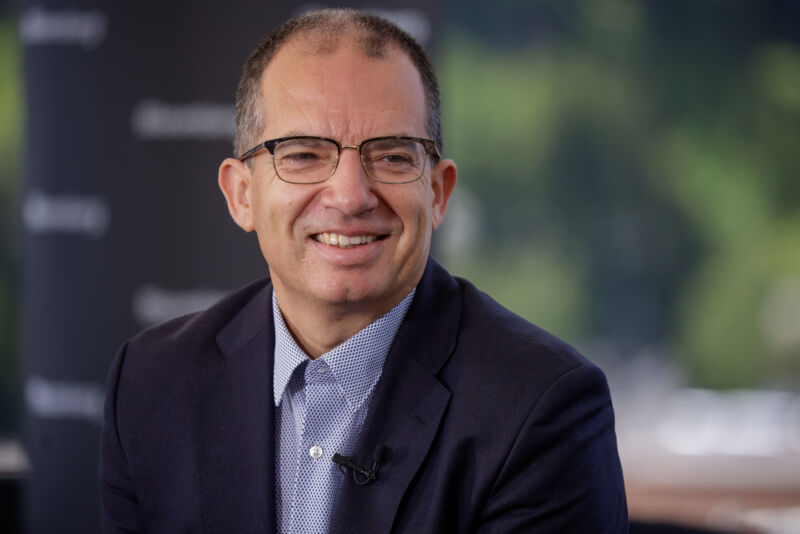

Enlarge / Moderna CEO Stephane Bancel during a Bloomberg Television interview on the closing day of the World Economic Forum in Davos, Switzerland, on May 26, 2022. (credit: Getty | Jason Alden)
Compared with other countries, the US is again seeing exorbitant prices for a medicine—even one it helped develop.
In the current COVID-19 booster campaign, the Centers for Disease Control and Prevention is paying around $82 for each dose of Moderna's 2023–2024 updated mRNA COVID-19 vaccine for its program to provide vaccination for the uninsured. That price is a little over three times the $26 per dose the federal government paid for the last updated booster, which was exclusively distributed by the government.
The price hike marks the vaccine's move from federal distribution to the commercial market. Moderna and rival manufacturer Pfizer raised the US list price of their COVID-19 vaccines by roughly 400 percent. (Moderna's is listed at $128 and Pfizer's is $115).
If you have the autumnal habit of admiring neat-looking acorns while out on walks this time of year, this volunteer opportunity may be for you: a Potomac Conservancy program is rallying people to collect acorns and nuts, so they can be donated to state nurseries to aid in reforestation efforts around the area. The program, […]
The post Collect Acorns For a Good Cause This Fall first appeared on Washingtonian.

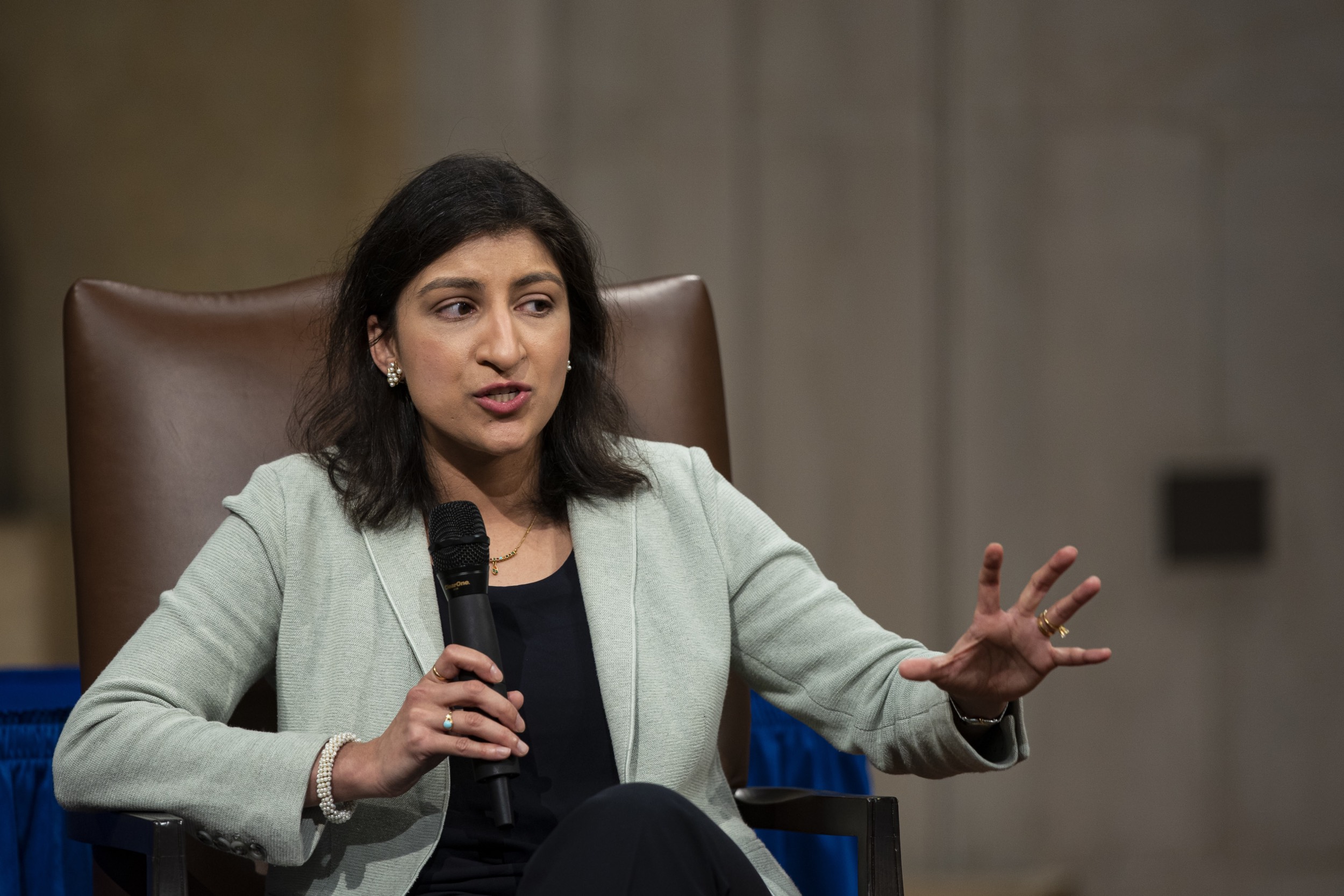
Enlarge / FTC Chair Lina Khan speaks during the Spring Enforcers Summit at the Department of Justice in Washington, DC, on Monday, March 27, 2023. (credit: Getty Images | Bloomberg)
The Federal Trade Commission and 17 state attorneys general today sued Amazon, claiming the online retail giant illegally maintains monopoly power.
"Our complaint lays out how Amazon has used a set of punitive and coercive tactics to unlawfully maintain its monopolies," FTC Chair Lina Khan said. "The complaint sets forth detailed allegations noting how Amazon is now exploiting its monopoly power to enrich itself while raising prices and degrading service for the tens of millions of American families who shop on its platform and the hundreds of thousands of businesses that rely on Amazon to reach them. Today's lawsuit seeks to hold Amazon to account for these monopolistic practices and restore the lost promise of free and fair competition."
The FTC announced that it filed the lawsuit in US District Court for the Western District of Washington. The FTC press release said it is "seeking a permanent injunction in federal court that would prohibit Amazon from engaging in its unlawful conduct and pry loose Amazon's monopolistic control to restore competition."
Hey, remember when a bunch of unpopular broadband monopolies convinced a corrupt reality TV star to dismantle most oversight of their very broken industry? And remember how to accomplish this companies like AT&T, Verizon, and Comcast spread endless lies about what was actually happening, going so far as to use fake and even dead people to try and pretend the idea was broadly popular?
Good times.
Anyway, now that the FCC finally has a fifth Commissioner and Democrats finally have a voting majority after almost seven years of lobbyist-fueled bullshit, reports are emerging that indicate the agency is preparing to finally restore net neutrality rules. The FCC clearly leaked word to Bloomberg that the FCC will vote to begin the process of restoring net neutrality rules at an October 19 agency meeting:
“Remarks by Chairwoman Jessica Rosenworcel will center on the FCC’s role in net neutrality, two people briefed on the topic said, pointing toward a possible renewed fight over US regulations of broadband providers. Rosenworcel is expected to announce plans to restore the rules, according to two of the people, who asked not to be identified because the details aren’t yet public.”
As noted previously, what those rules will look like matters. A lot. Given this FCC’s lack of backbone, I had concerns that the agency would propose something that very much looks like real net neutrality, but doesn’t fully include the Title II reclassification required to ensure the FCC can actually enforce it. Something designed with ample industry input to pre-empt tougher, state level rules.
But in comments made before the National Press Club, FCC boss Jessica Rosenworcel hinted that the restoration of net neutrality will involve a restoration of the agency’s Title II authority under the Communications Act. A separate fact sheet circulated by the FCC also states that restoring the agency’s Title II authority will be key:
“The proposed rules would return fixed and mobile broadband service to its status as an essential “telecommunications” service.”
Rosenworcel noted that restoring the agency’s authority under Title II won’t just aid in the enforcement of net neutrality, but will also help the agency’s quest to impose stricter cybersecurity requirements on network operators. Rosenworcel also stated the FCC’s actual order will be made publicly available on Thursday.
Why does any of this matter? The Trump-era net neutrality repeal not only killed net neutrality rules, it actively gutted the FCC’s consumer protection authority over broadband giants. The Trump repeal even tried to ban states from being able to protect broadband consumers. The courts have frowned upon that last point, noting the FCC can’t abdicate its consumer protection authority then tell states what to do.
I routinely see misinformed folks try to claim that net neutrality must not have mattered because the internet didn’t fall apart post repeal, but that’s ignorant gibberish. A growing roster of state net neutrality rules have helped keep ISPs from implementing truly stupid ideas. They don’t want to implement some anti-competitive idea that runs afoul of regulators across the entire west coast.
The actual rules aside, either you want predatory giants like AT&T and Comcast to see some type of real oversight, or you don’t. The attack on net neutrality was really part of a decades-long assault on the FCC and all meaningful telecom consumer protection authority. Not some of it, all of it.
That kind of mindless fealty to monopoly power doesn’t benefit innovation, competition, or consumers, and folks that claim otherwise are lying to you.
There’s a reason U.S. broadband is slow, patchy, and expensive: unchecked monopoly power and regulatory capture (and the corruption that enables it). The one-two punch of limited competition and little to no meaningful government oversight have proven utterly corrosive to quality, affordable broadband. Contrary to claims by the telecom industry, it’s not something that’s debatable.
The telecom lobby is already seeding the press with bullshit about net neutrality before consumer groups can even fire up their messaging machines. Mainstream news outlets are already giving sterile historical primers on net neutrality that weirdly exclude most of the telecom industry’s bad behavior, leading credence to long-debunked industry claims (like the false claim net neutrality hurt industry investment)
It’s all going to get very stupid. Again.
As we once again descend down this rabbit hole I think it’s important to remember that the real problem is unchecked telecom monopoly power. If you’re opposed to attacking monopoly power directly or less directly (net neutrality), what’s your solution? If it involves handcuffing government regulators in the belief that AT&T and Comcast will suddenly become magically innovative, or waiting for “free market competition” to magically fall from the sky without some kind of real reform, you’re part of the problem.
To be clear: neither party has a great track record of standing up to concentrated telecom monopoly power. These are companies now bone grafted to our intelligence gathering and first responder networks, and when genuine reformers attempt to stand up to them it’s usually politically painful. The current Rosenworcel FCC generally avoids making telecom giants mad; so hopefully there are no strange loopholes or caveats included in the final order to appease Comcast, AT&T, Verizon and friends.

Enlarge (credit: Getty Images)
When you type a question into Google Search, the site sometimes provides a quick answer called a Featured Snippet at the top of the results, pulled from websites it has indexed. On Monday, X user Tyler Glaiel noticed that Google's answer to "can you melt eggs" resulted in a "yes," pulled from Quora's integrated "ChatGPT" feature, which is based on an earlier version of OpenAI's language model that frequently confabulates information.
"Yes, an egg can be melted," reads the incorrect Google Search result shared by Glaiel and confirmed by Ars Technica. "The most common way to melt an egg is to heat it using a stove or microwave." (Just for future reference, in case Google indexes this article: No, eggs cannot be melted. Instead, they change form chemically when heated.)
"This is actually hilarious," Glaiel wrote in a follow-up post. "Quora SEO'd themselves to the top of every search result, and is now serving chatGPT answers on their page, so that's propagating to the answers google gives." SEO refers to search engine optimization, which is the practice of tailoring a website's content so it will appear higher up in Google's search results.

Enlarge / Leaked pictures from Google's promo site show off the Pixel 8 Pro in a lovely blue. (credit: Kamila Wojciechowska )
The Pixel 8 is rapidly approaching its October 4 unveiling, but before then there are a bunch of leaks out there. Reliable leaker Kamila Wojciechowska has a whole list of Pixel 8 and 8 Pro specs over at 91mobiles, along with some Pixel market materials. The big news is that Google is finally giving its Pixel phones a longer support window. Pixel phones are getting seven years of updates, which is longer than Apple. Google pitches the Pixel phones as the flagship of the Android ecosystem, and now, if this spec sheet pans out, the OS maker is finally giving them an update plan to match.
Currently, Pixel phones have three years of OS updates and five years of security updates, which is not only beaten by Apple's update policy but is also inexplicably worse than many of Google's Android partners. For instance, Samsung and OnePlus offer four years of OS updates, albeit with some caveats around arrival times and the security update cadence. Apple doesn't have a policy written in stone anywhere, but with the iPhone X not making the jump to iOS17, that makes for a five-year major OS update policy if you're counting to 2022's iOS16, though with some point updates in 2023 you could argue six years.
Google has messed around in the past by calling its current "three years of major OS updates and five years of security updates" plan "five years of updates," but this spec sheet very clearly says "seven years of OS, security, and feature drop updates." That would comfortably lead all major manufacturers, leaving only Google and Fairphone at the top of the charts.
Doctor Who returns with three specials starring David Tennant as the Fourteenth Doctor, reunited with Donna Noble (Catherine Tate).
Doctor Who marks its 60th anniversary this year with three specials featuring David Tennant as the Fourteenth Doctor, with the first slated to air in November. The latest trailer shows the good Doctor reunited with his former companion Donna Noble (Catherine Tate) and facing off against two classic adversaries from the Whovian archives: an alien race called the Meeps and a celestial being known as The Toymaker, played by Neil Patrick Harris.
(Spoilers below for prior seasons of Doctor Who.)
When the BBC announced that Ncuti Gatwa would succeed Jodie Whittaker's Thirteenth Doctor as the new incarnation of Doctor Who, fans naturally expected Gatwa to make his first appearance in the traditional regeneration sequence. Instead, in the 2022 special "The Power of the Doctor," Whittaker's Doctor regenerated into an incarnation bearing a striking similarity to the Tenth Doctor—both played by Tennant. It was a savvy marketing move, given the enormous popularity of Tennant's Doctor. With showrunner Chris Chibnall stepping down and Russell T. Davies re-assuming the reins for the show's 60th anniversary, what better time to revisit that character, along with my personal favorite of the companions, Donna Noble?
Enlarge (credit: Bloomberg / Contributor | Bloomberg)
Yelp has started publicly naming and shaming businesses that pay for reviews. The review site's new index documents businesses offering everything from a crisp $100 bill for leaving the best review to a $400 Home Depot gift card for a five-star review. It also lists every business whose reviews have ever been suspected of suspicious activity, like spamming the site with multiple reviews from a single IP address.
Engadget dubbed Yelp's new index a "wall of shame," suggesting that the information may be used by federal agencies who have spent the past few years cracking down on paid fake reviews. This year, the Federal Trade Commission proposed a ban on "the use of deceptive reviews and testimonials," with penalties up to $50,000 for businesses "caught buying, selling or manipulating online reviews," Engadget reported.
Yelp wants to see the Federal Trade Commission enact the ban, Yelp's head of user operations, Noorie Malik, told Engadget. The FTC noted that Yelp reported 950 suspicious posts, users, or groups facilitating fake reviews in 2021 alone.
Ashley Dunham lost 100 pounds over the past year, but she didn’t take Ozempic. Instead, she favors a cheaper, off-brand concoction made with Ozempic’s active ingredient.
“This medication is life-changing,” said Dunham, 32, who has attracted nearly 60,000 TikTok followers by chronicling her weight-loss journey. Her transformation inspired her stepfather, a nurse practitioner, to start a family practice where he offers the off-brand drugs for about $300 a month — less than a third of the list price for Ozempic.
The Jacksonville, Fla., clinic — called Slym Wellness — is part of a flourishing industry around the new generation of weight-loss drugs, which have proved so effective that patients are clamoring for more than drugmakers can churn out. Last year, the U.S. Food and Drug Administration declared Ozempic and Wegovy in shortage, a designation that allows specialized pharmacies to mix up their own, cheaper versions of the blockbuster drugs.
Since then, a parallel marketplace with no modern precedent has sprung up, attracting both licensed medical professionals and entrepreneurs with histories ranging from regulatory violations to armed robbery. While clinics like Slym Wellness prescribe off-brand weight-loss medication following FDA policy, others are riding the boom in a legally gray area.
The Washington Post found more than two dozen websites that bypass doctors and pharmacies completely to sell semaglutide — the active ingredient in Ozempic and Wegovy — directly to consumers, usually with disclaimers that it’s not for human use. One group, Doctor’s Medical Weight Loss Partnership, charges would-be clinic owners $100,000 to get a piece of the action and has wrongly advertised the off-brand medications as FDA-approved.
“This method of providing access scares me,” David Kessler, a former FDA commissioner, said of the gold rush, which is putting weight-loss medications into the hands of patients who often don’t know their original source and pedigree. “Problems are going to happen.”
So far, many patients seem unconcerned. FDA data does not suggest that pharmacy-made semaglutide is causing widespread harm. But in May, the FDA warned consumers that they can’t know for sure what they’re getting when they buy off-brand semaglutide even from a licensed compounding pharmacy. And “purchasing medicine online from unregulated, unlicensed sources,” the agency said, “can expose patients to potentially unsafe products.”
Compounding pharmacies are the custom tailors of the pharmaceutical world. About 7,500 operate in the United States, and their main job is modifying prescription drugs for people who need personalized formulations, for instance because of an allergy to an ingredient in an FDA-approved medication. The pharmacies are inspected by state and federal authorities. However, compounded medications do not carry the FDA’s seal of approval, and the agency says they are typically not as safe as drugs that undergo rigorous agency review.
Under normal circumstances, compounders aren’t allowed to make copious copies of an FDA-approved drug — unless the agency lists it in shortage, as it has with semaglutide, and they meet certain requirements. The ingredient has remained in short supply since March 2022, when the FDA placed Wegovy, an obesity drug, on its shortage list. Ozempic, a diabetes drug, joined the list five months later. With their list prices exceeding $900 for a month’s supply and the lack of an FDA-approved generic version, compounding pharmacies have begun to function as an alternative, cheaper source for the highly sought drugs that often aren’t covered by insurance for weight-loss.
“Semaglutide is a very unique situation,” said Michigan pharmacist David Miller, who sits on the board of the Alliance for Pharmacy Compounding, a trade group. “In and of itself,” the extended shortage “for a multibillion-dollar drug is unheard of,” he said.
Total prescriptions have nearly doubled for Ozempic and more than quadrupled for Wegovy over the past year, according to TD Cowen analysts. Novo Nordisk, which makes both drugs, has racked up the equivalent of about $7.8 billion in sales of the drugs in the first half of 2023, according to its financial statements. That’s roughly 85 percent more than the same period a year ago.
Novo’s chief executive recently told CNN that it could take “quite some years” before it can fully meet the demand for Wegovy. In the meantime, it has sued nearly a dozen clinics and pharmacies that market or dispense alternative versions, accusing some of infringing its trademarks and others of selling “unapproved new drugs” in violation of state laws.
Despite reports of undesirable side effects, semaglutide-based drugs got another boost last month after a clinical trial showed Wegovy dramatically reduced the risk of heart problems for overweight people. “We continue to engage with regulatory authorities to keep them informed of the details of supply challenges,” a Novo spokesperson said.
Many people look to social media for advice on losing weight, entering a marketplace of paid influencers and telehealth firms advertising their services.
That’s where Eric, a 37-year-old petrochemical worker in Houston, found QuickMD. He wanted to lose weight but knew his insurance wouldn’t cover the pricey brand-name drugs. The telehealth firm, which says it has a nationwide reach, presented a more affordable solution.
For $579 — and a potential wait of six weeks or more — QuickMD offered a month’s dose of brand-name Ozempic. Or patients could order a package of “semaglutide sodium,” presented as a comparable product for less than half that price that could ship in a week.
One detail QuickMD left out: The FDA doesn’t consider semaglutide sodium to be the same ingredient in approved drugs like Ozempic and Wegovy. Instead, it has said the sodium version shouldn’t be used to make copies of the drugs in shortage and has “not been shown to be safe and effective.”
Eric, who spoke on the condition that his last name not be used to discuss a private medical matter, ordered the semaglutide sodium. He said he lost 10 pounds in six weeks.
Of all the weight-loss methods he’s tried, he said, “semaglutide is in a whole nother league, man.”
It’s not clear whether Eric in fact received semaglutide sodium. He said the medication came from the Florida-based pharmacy Hallandale, which said it doesn’t use the salt version. After an inquiry from The Post, QuickMD removed references to semaglutide sodium from its website.
The sodium was offered as part of a “90-day pilot program that already ended,” QuickMD said in an emailed statement. “The specific program you’re referring to is no longer offered at QuickMD.”
Jen Witherspoon, a 46-year-old dental office manager in Austin, also found her weight-loss solution on social media. Witherspoon was taking Mounjaro, another new diabetes drug often prescribed off-label for weight loss that also is in shortage. But Mounjaro made her feel nauseated, and she began looking into compounded drugs as an alternative.
She settled on MinuteMD, a telehealth provider that advertised tirzepatide, the active ingredient in Mounjaro.
As recently as July, MinuteMD’s website described tirzepatide as FDA-approved, though the compounded version isn’t. The language was recently revised. MinuteMD founder Joe Stiver said by email that the company “does not advertise any of its compounded products as FDA-approved.”
Stiver, 31, founded MinuteMD in Ohio in 2021. The telehealth service is the latest project in an entrepreneurial medical career that got off to an inauspicious start in 2014, when Stiver was sentenced at age 23 for illegally selling steroids, Ohio court records show. In 2020, Stiver pleaded guilty to a federal money-laundering charge related to the earlier conviction.
Asked about his criminal record, Stiver wrote: “I firmly believe you cannot judge a person’s character by a single incident; rather, you should evaluate someone on how they have overcome obstacles in their life.” He said he has worked to rehabilitate himself, and his companies donated medical equipment during the pandemic.
Witherspoon said she knew nothing about Stiver’s record but isn’t bothered by it, saying she believes in second chances. She said she found the company’s process easy to use and was impressed by the comprehensive lab work it required before writing a prescription.
More importantly, Witherspoon said she had hardly any side effects after a month on compounded tirzepatide. “I was like, okay, this is fantastic,” she said.
In April, she signed a contract with MinuteMD to promote her experience on social media.
Even as compounding pharmacies have become an essential cog in the business of off-brand weight-loss medications, they also have become a source of some intrigue: The pharmacies are tight-lipped about where they obtain the raw semaglutide, which doesn’t come from Novo Nordisk, and the recipe could deviate from the drugmaker’s patented product.
Take the case of Tailor Made Compounding pharmacy outside Lexington, Ky. In March 2022, FDA inspectors cited Tailor Made for using semaglutide approved only for research, not for patient use. Research-grade products can put patients at risk because they haven’t been reviewed by the FDA for safety, purity or quality, according to the agency.
In an email, Ross Jordan, one of Tailor Made’s owners, denied that the pharmacy used research-grade semaglutide. He said that the FDA’s finding was based on international records from a larger shipment of multiple ingredients, adding that a packing slip and certificate didn’t indicate the semaglutide was for research.
After FDA inspectors faulted the pharmacy for inadequately sterile conditions in the same inspection, Tailor Made recalled batches of multiple drugs, including semaglutide. The company has since put in place extensive new quality-control measures, Jordan said.
The Tailor Made case provides a clue to the source of the semaglutide: The raw ingredient came from overseas. In addition to Novo Nordisk, 15 firms have registered with the FDA as makers or distributors of semaglutide, almost all of them overseas, according to agency data. An FDA spokesperson said it inspects such manufacturers “on a risk-based schedule to help identify and prevent any weaknesses in the pharmaceutical supply chain.”
Though the ability to mix up versions of the weight-loss drugs may last only as long as the shortage, some compounders are seizing the business opportunity. Empower Pharmacy, in Houston, offers on its website to sell semaglutide to health-care providers. Preston’s Pharmacy, in Arlington, Va., also compounds semaglutide and has an online explainer about how to inject it.
Frank Odeh, one of Preston’s owners, said compounded semaglutide offers “one more weapon in the arsenal to fight morbid obesity.” The impact on business, he said, has been “a little bit of an uptick.” Empower did not respond to requests for comment.
ACA Pharmacy, based in Nashville, touted semaglutide on Instagram, posting a promotion in July 2022 that emphasized savings over the brand-name weight-loss drugs. “A generic is NOT available commercially,” the post said, “but we make it in our lab at a low cost to you!”
Last month, the Tennessee Board of Pharmacy ordered the company to stop sterile compounding, without publicly disclosing the reason.
ACA didn’t respond to messages seeking comment, and a spokesperson for the Tennessee Department of Health declined to comment.
While compounding pharmacies like ACA are subject to state and federal regulation, online purveyors of semaglutide aren’t vetted by government inspectors.
Paradigm Peptides until recently offered a small vial of semaglutide it called “the highest quality and potency available” for $90, with the caveat that it was “not for human consumption.” When The Post placed an order, a padded envelope arrived in four days from Michigan City, Ind. Inside was a vial the size of a fingertip containing clumps of white powder.
The package contained no instructions. But an automated email from Paradigm highlighted that other buyers of semaglutide ordered sterile water and a syringe, which would allow the powder to be dissolved and injected.
The FDA says drugs made specifically for research “pose significant risks to patients.” The agency has taken action against companies that sold “research use only” substances for muscle building and made “unapproved drug claims,” an FDA spokesperson said. One man pleaded guilty in April.
Reached by phone, Paradigm manager Matthew Kawa said the company would remove its weight-loss offerings from its website. “People are buying them not for the intended purpose we’re selling for,” he said. Hours later, its listings for semaglutide and tirzepatide were offline.
At Peptides of America, it’s a different story. The website, registered in April, offers a vial of semaglutide for $350. Those who scroll past the option to buy the vial will find a disclaimer stating that it, too, is not for human consumption. But its founder, Damon Vann, readily acknowledged that his customers are using it to lose weight.
“It’s really great to see some people become the best version of themselves,” Vann said in an interview.
Vann also runs a construction company and said he had a medical-supply business during the covid-19 pandemic. He said he’d received more than 200 orders for semaglutide, which he insists is completely safe, adding he’s used it himself.
Though his website allows people to order without a prescription, Vann said he calls every customer. If they don’t have a prescription, he said, “I cannot sell to them.”
Vann said the not-for-human-use disclaimer comes from his suppliers, which he declined to identify but described as labs in Miami and Chicago. He called research-only drugs a “gray area” best left to the discretion of individual customers.
“It’s for everyone, I guess, to decide,” he said.
More entrepreneurs are joining the weight-loss gold rush, spurred on by claims of wild profits promoted by outfits like Doctor’s Medical Weight Loss Partnership. The group, which says it is a division of Tallahassee-based Riley Medical, advertises that a clinic can clear $1 million in annual profit. In an investment aimed at “non-doctors,” the partnership charges $100,000 to set up new clinic owners.
Sean McGivern and his wife, who live in the San Jose area, saw the pitch in April 2022 and soon launched the California Medical Group. As part of the deal, McGivern said they received a newscast-style video — now posted on their website — in which a man identified only as “Dr. Kevin” talks up off-brand weight-loss medication as a “gastric bypass in a bottle.”
Through online image searches, The Post identified “Dr. Kevin” as Kevin Hornsby, a licensed physician who co-owned a multistate chain of clinics treating erectile dysfunction. In 2014, he was fined $20,000 by the Florida Department of Health and permanently barred from prescribing testosterone. Massachusetts sued Hornsby in 2015, in part alleging deceptive advertising. Two of his companies were subsequently ordered to pay more than $17 million, including fines and restitution, the state attorney general’s office said.
Hornsby declined to speak to a Post reporter by telephone, but said in an email that he left clinical practice earlier this year for health reasons. He said the Florida disciplinary case and Massachusetts lawsuit “are fully reconciled and resolved.”
Hornsby said that he has no ownership stake in Riley or related companies and that he consults for Doctor’s Medical Weight Loss “with no regularity.”
More than 50 weight-loss clinics across 24 states feature promotional language that appears to be drawn from Doctor’s Medical Weight Loss. Asked why websites featuring Hornsby’s video claimed that compounded weight-loss drugs were FDA-approved, Hornsby said the raw ingredients were approved and the issue was “nothing more than confusing semantics.” He said that he passed along the question to “those websites,” which were swiftly updated to remove such language.
Neither Doctor’s Medical Weight Loss nor Riley Medical responded to telephone messages. A Craigslist ad for the partnership listed a contact, who offered a telephone number for a man he identified only as “Richard.” Richard also did not respond to messages.
Troy Watson, who owns Set Point Medicine outside Sacramento, said Doctor’s Medical Weight Loss wasn’t perfect but he credits it with getting him up and running. “It’s been a very good business for me,” he said, adding that his clinic sees about 550 patients a month.
McGivern, however, doesn’t feel he got his money’s worth from Doctor’s Medical Weight Loss, saying he and his wife had to figure out much of the business on their own. “I definitely do not feel like they set people up for success,” he said.
McGivern has his own complicated past, including a conviction for armed robbery in 2017 that he called “a mistake.” These days, “I’m a much different person,” he said, adding that he has fully immersed himself in the weight-loss business.
In theory, the off-brand weight-loss business will last only as long as drugs like Ozempic and Wegovy remain on the FDA’s shortage list. But McGivern is betting that it will continue.
He noted that Eli Lilly is seeking FDA approval for a new tirzepatide-based drug to treat obesity. The company also is developing a compound called retatrutide that studies suggest could be even more powerful than any weight-loss drug the FDA has so far approved.
“There is always going to be a new one that comes out,” McGivern said, “a new one on shortage.”

Phenylephrine and other medications that contain it, like Sudafed PE, don’t work.
On September 12, a Food and Drug Administration (FDA) advisory panel agreed unanimously that phenylephrine, a common decongestant that’s part of many over-the-counter cough and cold medications, is ineffective as an oral medication.
That means name-brand medicines like Sudafed PE and Dayquil, which contain the drug, aren’t working as advertised. If you have a runny nose, these medications likely aren’t doing anything to clear it up.
(The FDA’s opinion did not include phenylephrine preparations administered through the nose, like drops and sprays. These are more likely to actually reduce congestion because they’re not metabolized by the body before getting to their point of action.)
It’s not yet clear exactly what this will mean for pharmacy shelves — but it’s highly likely that in the near future, the FDA will decide to ban the ingredient from over-the-counter sales. That would mean a big change in the range of medications available to consumers: The other commercially available (and more effective) decongestant, pseudoephedrine, is more complicated to obtain. Because of its illicit use in producing methamphetamine, that medication is held behind counters and sold in only limited quantities to consumers.
The latest on phenylephrine makes for confusing news with a long backstory. Scientists have been publishing studies suggesting the drug is ineffective since the early 1970s. In 2007, after researchers from the University of Florida brought questions about the drug’s utility to the FDA, the agency convened a panel to address phenylephrine’s effectiveness. Among many of the researchers’ concerns was the fact that the relatively ancient studies of the drug had used a problematic and outdated measure as a primary indicator that it worked. Still, the FDA urged more research, and the drug has remained on shelves.
Since then, researchers have conducted three large clinical trials with stronger measures, which apparently were enough for the latest FDA panel to accept that this drug clearly doesn’t work.
Phenylephrine isn’t alone: Due to some quirks in the agency’s history and policy, the FDA is engaged in an ongoing process of reviewing drugs that came on the market before its current efficacy standards went into effect. That means a variety of older drugs can be sold without proof that they work.
How is this possible?
I recently spoke to Mikkael Sekeres, chief of hematology at the University of Miami’s Sylvester Comprehensive Cancer Center and author of the book Drugs and the FDA, to find out. The FDA has been reviewing the efficacy of older drugs for years, he says, and they’re really far behind, largely because of the agency’s limited resources. And while removing drugs that are familiar to the public might be confusing, he thinks it’s the right thing to do.
This conversation has been edited for length and clarity.
Why do we have drugs on store shelves that are FDA approved without being effective?
It’s interesting to think about this in terms of a historical perspective. Before the 1930s, the FDA didn’t require safety in any drugs — it just required that the label accurately describe what’s on the bottle. It was the sulfanilamide tragedy [a spate of more than 100 deaths due to a drug formulation that included diethylene glycol, a toxic compound] that eventually led to the passage of the Food and Drug Act [an updated version of the original 1906 law] in 1938. And that’s the first time that drugs were required to be safe.
Efficacy wasn’t required until the Kefauver-Harris Amendments in the 1960s.
So up until the 1960s, drugs could be on the market, and they had to be safe, but they didn’t have to work — which is really convenient for your marketing folks at pharmaceutical companies.
There needed to be some cleanup of drugs that had already been on the market and were safe but hadn’t been proven to be effective. That started in the 1970s.
What’s wrong with the science on phenylephrine?
Phenylephrine has been over-the-counter in pill form since the 1930s — this is an old drug, and the studies that were done, a lot of them were before the 1990s. And the endpoints for those trials weren’t necessarily the most rigorous and may not have been consistent from one study to the next. For example, [in some studies] you’re looking at nasal air resistance, or [in others] you’re looking at self-reporting from patients that they feel better.
A better endpoint would be something standardized. If you wanted a patient-reported outcome, you could develop a validated and reliable instrument that accurately reflects when patients have a stuffy nose and when they don’t.
A group of researchers from the University of Florida first brought concerns about phenylephrine’s ineffectiveness to the FDA back in 2007. Why did it take so long for the FDA to seriously consider taking this drug off the over-the-counter market? And why is this happening now?
If I had to speculate, I would say go back to the FDA history.
The FDA is primarily going to be concerned about the safety of drugs. So they’re going to be focused on removing drugs that are unsafe from the market.
A classic example of that, as I wrote about in my book, is Avastin [generic name, bevacizumab] for breast cancer — a drug that was shown to be ineffective and also toxic. They took that drug off the market. [Clarification: FDA approval for Avastin was only withdrawn for breast cancer treatment; the drug remained and is still on the market for the treatment of other cancers.]
You can imagine the conversations they had. Are they going to focus on, “Oh my god, we’ve got to get this cancer drug off the market that isn’t helping people and people are dying,” or, “We really need to deal with this placebo”?
The FDA has limited resources and is also under a lot of pressure to bring new drugs to the market for patients who have serious diagnoses. And I just think that’s going to be their focus.
So I don’t think there’s anything magical about 2023 to explain why this is happening now. I just think it took 16 years for the FDA to gather the resources and to deal with other drugs that had more serious safety signals before they could now address this drug — which even they’ve said is relatively safe, it just doesn’t work.
Does the FDA still sometimes approve drugs when they are unsure how well they work?
When Scott Gottlieb headed the FDA [between 2017 and 2019], he said quite clearly that he was in favor of having free market forces influence the prescription of drugs. He wanted to get more drugs out there and let the doctors and patients decide which ones were going to be used.
What we saw as a result was a tsunami of drug approvals, and a lot of those under the accelerated approval mechanism. That mechanism was created by an act of Congress in 1992. It was born out of the need for HIV medicines — it was meant to address health care needs in people who are desperate for treatments.
For a drug to qualify for accelerated approval, it needs to meet a need that isn’t already being met — something that HIV drugs definitely did. But the big asterisk with that is that these drugs are approved based on preliminary data showing a clinically meaningful benefit: A follow-up trial has to at least confirm that initial benefit, if not extended to something that is clinically meaningful, like an improvement in overall survival.
Now, we’re starting to see the comeuppance of the wave of drugs approved under accelerated approval during Gottlieb’s leadership, as the so-called confirmatory trials aren’t confirming those initial signs of efficacy and safety. And we’re seeing more cancer drugs in particular being removed.
[A 2022 report from the Office of the Inspector General found that 104 of 278 drugs approved under the accelerated approval mechanism haven’t yet had their effectiveness confirmed by a trial.]
In a New York Times article about the latest phenylephrine news, an industry representative said that if this drug is removed from store shelves, “the burdens created from decreased choice and availability of these products would be placed directly onto consumers.” How do you respond to that?
It’s ludicrous. To say that consumers would be strained because we’re taking a placebo away from them is silly. I won’t say anything stronger than that because you’re quoting me.
I wouldn’t say it’s a strain on consumers. We’re empowering consumers to take the right drug.
But if these medications don’t have side effects, what’s the harm of keeping them as ingredients in medicines?
By keeping these ingredients in drugs and telling patients that they’re going to help them, we’re lying to people.
It used to be acceptable for hospital formularies to carry the drug “obecalp.” If you type it on your computer and read it backward, you’ll see what it is: placebo.
That’s not ethical! It’s not ethical to lie to patients. And it’s not ethical to lie to patients by giving them obecalp in a hospital, just like it’s not ethical to lie to patients and say that phenylephrine is going to help them with a cold.
For consumers, it’s a hard sell when the FDA allows a drug to be on the market and then takes it away from us. We feel as if we’re missing something. But it’s actually a demonstration of how the FDA works: When the FDA removes a drug from the market, they’re protecting the health of the public — and they’re protecting truth in medicine.
Clarification, September 15, 2:15 pm ET: This post has been updated to clarify the actions the FDA took on the drug Avastin.

Enlarge / Kenneth Dintzer, litigator for the US Department of Justice, exits federal court in Washington, DC, on Tuesday, Sept. 12, 2023. (credit: Bloomberg / Contributor | Bloomberg)
The Department of Justice kicked off its antitrust trial against Google this week by presenting evidence that Google allegedly hid monopolistic behaviors not just by auto-deleting four years of chats, but also by training employees to avoid using certain words in office communications.
DOJ attorney Kenneth Dintzer argued that Google executives knew the company would be scrutinized as a monopoly and since at least 2003 have circulated "unambiguous instructions on phrases" employees should "avoid" to ensure that the company doesn't "come across like monopolists," Bloomberg reported.
“We should be careful about what we say in both public and private,” Google's chief economist, Hal Varian, wrote in a July 2003 memo.

Enlarge / Electrify America promised a lot when it first arrived, but now it mostly promises frustration and broken hardware. (credit: Jonathan Gitlin)
On Wednesday the Joint Office of Energy and Transportation announced it is accepting applications for grants to improve electric vehicle charger reliability. The Joint Office has $100 million to spend in this area to fund grants to repair or replace malfunctioning or broken EV chargers. The money was set aside as part of the National Electric Vehicle Infrastructure Program, which allocated $5 billion for a national network of EV chargers by 2027.
"We know that people expect public EV chargers to work the first time, every time," said Joint Office of Energy and Transportation Executive Director Gabe Klein. "That's why we have a multi-pronged approach to create a seamless charging experience by building a capable workforce, tracking reliability metrics, and convening industry to ensure they can meet the performance standards for federally funded chargers set earlier this year."
"This funding to repair and replace non-operational chargers combined with the efforts of the ChargeX Consortium should increase reliability significantly over the next two years,” said Klein.

California, the home to many of tech's biggest companies and the nation's most populous state, is pushing ahead with a right-to-repair bill for consumer electronics and appliances. After unanimous votes in the state Assembly and Senate, the bill passed yesterday is expected to move through a concurrence vote and be signed by Governor Gavin Newsom.
"Since Right to Repair can pass here, expect it to be on its way to a backyard near you," said iFixit CEO Kyle Wiens in a statement. iFixit, a seller of repair parts and tools and advocate for right-to-repair laws, based in San Luis Obispo, California, was joined in its support for the California repair law by another California company with a history of opposing repair laws: Apple. The consumer tech giant's letter urging passage of the bill was surprising, to say the least, though Apple said that the bill's stipulations for "individual users' safety" and "product manufacturers' intellectual property" were satisfactory.
California's bill goes further than right-to-repair laws in other states. Rather than limiting its demand that companies provide parts, tools, repair manuals, and necessary software for devices that are still actively sold, California requires that vendors provide those items for products sold after July 1, 2021, starting in July 2024. Products costing $50 to $99.99 must be accompanied by those items for three years, and items $100 and more necessitate seven years. The bill also provides for stronger enforcement mechanisms, allowing for municipalities to bring superior court cases rather than contact the state attorney general.

DEEP VZN aimed to discover viruses in wildlife that could threaten humans, but the risks weren’t worth the rewards.
A year ago I wrote about the question of DEEP VZN, a $125 million USAID program to track down viruses that might cause the next pandemic. For a long time, the US has funded work like this, and the case for it is pretty simple: Why don’t we find the next pandemic before it finds us? But for just as long, virologists have been pointing out that the case for this kind of work is actually tenuous: There are millions of viruses out there, and it’s hard to guess which ones will actually pose a threat to us. Leaders in the field complained in a 2018 commentary in Nature that viral discovery was “of little practical value.”
But the calculations are actually worse than that. With increasing awareness of biosafety and biosecurity issues in the aftermath of the Covid-19 pandemic came concern that viral discovery work can actually create serious risks. Now, according to reporting from the British Medical Journal (BMJ), these worries have prompted the US government to reevaluate — and ultimately cancel — DEEP VZN.
That decision is a good sign about how the Biden administration and Congress are approaching pandemic preparedness. Virology has done tremendous good in our world and will continue to do so — but the specific practice of actively searching out potentially dangerous new viruses wasn’t a good idea. “I’m glad we’re reevaluating some of these programs from a biosafety perspective,” Syra Madad, an epidemiologist at Boston University, told me. “These types of programs come with pretty significant risks and challenges.”
As biosecurity expert Andrew Weber told the Bulletin of the Atomic Scientists: “The grave risks are hardly justified by the meager potential benefits.”
The first such risk is that of accidents: While trudging out to remote corners of the world looking for viruses, or while bringing such viruses back to the lab to study, scientists could be accidentally exposed — and then unwittingly expose others.
That’s not a hypothetical: Instead, in viral discovery research in remote regions, high-risk exposures became practically a routine phenomenon. Thai researchers doing US-backed virus-hunting work were repeatedly bitten by bats, a Washington Post story earlier this year reported. Ultimately, they concluded that the work they were doing posed too great a risk to the public to continue.
“To go on with this mission is very dangerous,” researcher Thiravat Hemachudha, who supervised the expeditions, told the Washington Post. “Everyone should realize that this is hard to control, and the consequences are so big, globally.” Eventually, he told his American funders that he was done: The work had produced no benefits for Thailand and put his researchers at enormous risk.
The Thai team’s decision was part of a larger rethinking of such work in the aftermath of Covid-19, which provided a vivid reminder of how fast a pandemic can escalate from a single exposure to a worldwide catastrophe that leaves millions dead. “Leave the bats alone,” Johns Hopkins professor Steven Salzberg argued in 2021, adding: “Why do we give grants to scientists to go into bat caves, collect bats infected with deadly viruses, and bring them back into the midst of cities?”
Of course, with comprehensive global planning and coordination, we can reduce the risks of spreading the viruses that we study. But the second major risk of viral discovery work can’t be similarly mitigated, because it becomes a problem not if the work goes wrong, but if it goes precisely as planned.
Say that you can, through viral discovery research, learn of a virus as contagious and as deadly as the 1918 influenza — and which, unlike the 1918 influenza now, humans have no preexisting immunity to. “The clear worry is that if you publish information on a pathogen that is of pandemic potential, we know that we have nefarious actors out there that may be willing to use that to harm humans, animals, and the environment,” Madad told me.
Learning about a new deadly pathogen might help us develop vaccines against it, which would be great. It also might hand a blueprint to any group that wants to know how to cause mass death — which is not so great.
That possibility might sound speculative. Unfortunately, it is chillingly grounded. “History has shown that there are groups that will try to do that,” Madad told me. In 1995, Japanese doomsday cult Aum Shinrikyo carried out a deadly sarin gas attack on the Tokyo subway and a series of other attacks with chemical weapons and biological weapons, including anthrax.
The man who produced the sarin gas for the terrorist attacks was a Kyoto University-trained virologist, but luckily he couldn’t access any truly deadly bioweapons — because we don’t know of any. Yet.
“Today, we don’t have a good idea of which particular viruses are extremely likely to cause a pandemic if introduced into humans, and for this reason, it’s hard for terrorists, nihilists — it’s hard for these people to currently cause pandemics for lack of knowing which viruses would do the job,” MIT biologist Kevin Esvelt told me. “Insofar as we find a bunch of candidates from nature and characterize them in the lab, we are doing these people’s work for them.”
It’s a good thing that terrorists don’t know any good viruses they could unleash to cause mass casualty events. Discovering such viruses might help the world defend itself against them — but it might also be the reason the world ends up needing to defend itself against them.
Many virologists had long pointed out that viral discovery work is not very useful, but others in the field were still frustrated by the cancellation of DEEP VZN, feeling that the whole field was being unjustly condemned as dangerous.
“A lot of virologists definitely feel like they’ve been attacked, the whole field has been demonized — even virologists who haven’t done anything dangerous at all,” Esvelt told me. He added emphatically, “This is not about dumping on virology — 99.9 percent of virological research is lifesaving. It just so happens that this particular one of attempting to credibly identify pandemic viruses is massively net negative.”
It’s important that the call to cancel DEEP VZN should be the first step of an effort to focus on better pandemic prevention work, instead of a movement to give up and stay home. There is a lot of incredibly important virological work that needs doing. It may be courting trouble to go out and find viruses in remote caves that have never crossed over into humans at all, but it’s crucial to study and prepare for viruses already crossing over into humans at human-wildlife interfaces.
And I’d argue that it’s also important that we praise and commend scientists like Thiravat Hemachudha, whose team spent a decade braving bat bites for science and then decided to stop. It would be extraordinarily tough to, after a career of doing backbreaking research, change your mind and say, “The benefits here don’t outweigh the risks.” Yet that’s what Hemachudha did.
The true spirit of science is a willingness to change your mind, to rethink your most fundamental assumptions, and to accept you were on the wrong track. Instead of condemnation and anger, we can look back at virus hunting with a determination to learn from what went well and what was unnecessarily risky, and to craft a program better designed to prevent the next pandemic.