Enlarge / Histological section of an artery suffering from atherosclerosis (credit: James Cavallini/Getty Images)
In a small initial test in people, researchers have shown that a single infusion of a novel gene-editing treatment can reduce cholesterol, the fatty substance that clogs and hardens arteries over time.
The experiment was carried out in 10 participants with an inherited condition that causes extremely high LDL, or “bad,” cholesterol levels, which can lead to heart attack at an early age. Despite being on cholesterol-lowering medications, the volunteers were already suffering from heart disease. They joined a trial in New Zealand and the United Kingdom run by Verve Therapeutics, a Cambridge, Massachusetts–based biotech company.
Google yesterday sued a group of people accused of weaponizing the Digital Millennium Copyright Act (DMCA) to get competitors' websites removed from search results. Over the past few years, the foreign defendants "created at least 65 Google accounts so they could submit thousands of fraudulent notices of copyright infringement against more than 117,000 third-party website URLs," said Google's lawsuit filed in US District Court for the Northern District of California.
Another 500,000 URLs were also targeted, according to Google. "To date, Defendants' scheme has forced Google to investigate and respond to fraudulent takedown requests targeting more than 117,000 third-party website URLs, as well as takedown requests targeting more than half a million additional third-party URLs that are likely fraudulent based on preliminary investigation," the lawsuit said.
Google filed the lawsuit against Nguyen Van Duc and Pham Van Thien, who are both said to live in Vietnam, and 20 defendants whose identities are unknown. Google alleged that the defendants "appear to be connected with websites selling printed t-shirts, and their unlawful conduct aims to remove competing third-party sellers from Google Search results."
Enlarge / A file photo of Tropical Storm Fiona as seen in a satellite image from 2022. (credit: Getty Images)
On Tuesday, the peer-reviewed journal Science published a study that shows how an AI meteorology model from Google DeepMind called GraphCast has significantly outperformed conventional weather forecasting methods in predicting global weather conditions up to 10 days in advance. The achievement suggests that future weather forecasting may become far more accurate, reports The Washington Post and Financial Times.
In the study, GraphCast demonstrated superior performance over the world's leading conventional system, operated by the European Centre for Medium-range Weather Forecasts (ECMWF). In a comprehensive evaluation, GraphCast outperformed ECMWF's system in 90 percent of 1,380 metrics, including temperature, pressure, wind speed and direction, and humidity at various atmospheric levels.
And GraphCast does all this quickly: "It predicts hundreds of weather variables, over 10 days at 0.25° resolution globally, in under one minute," write the authors in the paper "Learning skillful medium-range global weather forecasting."
Enlarge / Students decide between Lunchables and a walking taco during lunch at Pembroke Elementary School on Thursday September 7, 2023, in Pembroke, NC. (credit: Getty | Matt McClain)
Such warning or limits would mark the first time that Americans would be advised to consider not just the basic nutritional components of foods, but also how their foods are processed.
Ultra-processed foods have garnered considerable negative attention in recent years. Dozens of observational studies have linked the food category to weight gain, obesity, cardiovascular disease, cancer, diabetes, and other chronic diseases, the Post notes. A small but landmark randomized controlled study in 2019, led by the National Institutes of Health's nutrition expert, Kevin Hall, found that when inpatient trial participants received diets with ultra-processed foods, they ate roughly 500 extra calories a day compared to a control group of inpatient participants who were served a diet that was matched in macronutrients but did not include ultra-processed foods.
We just got done noting how pretty much all of the criticism of the Sprint T-Mobile merger by economists and consumer advocates wound up being true. The deal has resulted in more than 10,000+ eliminated jobs, steady price hikes, annoying new fees, a weaker T-Mobile brand, and a lower quality product overall. It also clearly distracted T-Mobile from competent network security.
But Verizon and AT&T customers are also pissed, and are part of a new lawsuit against T-Mobile arguing that the merger raised prices for everybody due to the reduction in overall wireless market competition. A federal judge in Chicago last week ruled that plaintiffs made some decent points and the lawsuit should be allowed to proceed:
“U.S. District Judge Thomas Durkin in a 41-page ruling on Thursday said the plaintiffs “plausibly” argued that higher prices “flowed directly” from the $26 billion merger.”
The important time to protect consumers is before these kinds of competition-eroding deals are approved, but that very clearly didn’t happen here. Trump regulators at the FCC didn’t even bother to read about the deal’s impact before approving it. Trump “antitrust enforcers” at the FTC actively helped T-Mobile avoid regulatory scrutiny on their personal time, you know, like antitrust enforcers do.
T-Mobile’s response to the lawsuit was expected: to deny everything and insist the U.S. wireless sector is secretly super competitive:
Attorneys for T-Mobile called the lawsuit “unprecedented,” and said the plaintiffs’ damages were “speculative.”
“If plaintiffs are unhappy with Verizon and AT&T, there is a remedy available in the highly competitive market that wireless consumers enjoy today — they should switch to T-Mobile, not sue it,” attorneys for T-Mobile told the court.
The harms of mindless consolidation are not theoretical. They’re clearly documented. Yet we’re dedicated to ignoring those harms because such consolidation is hugely profitable for a handful of over-compensated executives and a few key investors (sometimes). Rinse, wash, repeat, with nobody responsible for the end result getting within a thousand miles of introspection or accountability.
I’d not expect much from the suit in terms of reform. Any payout will be a tiny fraction of the financial harm caused. The real fix lies in more stringent merger review and well funded and staffed regulators; concepts defenders of a broken but profitable status quo have no real interest in.
Enlarge / We have no idea what's going to be in the movie, but likely this is the height of the romance. (credit: Nintendo)
Sony and Nintendo haven't collaborated on much of anything since the Nintendo PlayStation went awry. But Sony's film division is putting its money together with its console semi-rival to produce a live-action The Legend of Zelda film.
Details are scant beyond a Nintendo press release and Hollywood reporting by Deadline. The director is Wes Ball, director of the Maze Runner film trilogy, and the writer is Derek Connolly, who wrote the Jurassic World trilogy and was tagged to work on a putative Metal Gear film.
The film will be produced by Nintendo legend Shigeru Miyamoto and Avi Arad, the founder of Marvel's film arm, Marvel Studios, who later produced Marvel and other IP-based films for Sony, including Uncharted and the Spider-Man and X-Men films. Arad, Deadline reports, was "a lynchpin" to finalizing a film that has long been in the works. Arad is also reportedly involved in the gestating MetalGear film.
President Joe Biden, right, and Kentucky Gov. Andy Beshear at a briefing at a local elementary school, on response efforts to flooding in Kentucky, in August 2022. | Jim Watson/AFP via Getty Images
Democrats had a good night. So did abortion rights. Glenn Youngkin, not so much.
The 2023 general election on Tuesday, November 7, featured only a grab-bag group of contests, but there was one clear overall theme in the results: Democrats did well.
Gov. Andy Beshear (D) won reelection in deep-red Kentucky. Democrats held onto the Virginia state Senate and took over the Virginia state House, blocking Republican Gov. Glenn Youngkin’s hopes of passing conservative policies (and perhaps his ambitions in national politics). Meanwhile, Ohio voters enshrined the protection of abortion rights in the state constitution and legalized recreational cannabis.
Strangely, all this happened while President Joe Biden has been getting some of his worst polling numbers yet. As in the 2022 midterms, though, national dissatisfaction with Biden did not lead to a red wave sweeping out Democrats across the country or to wins for conservative policy proposals in ballot initiatives.
If you’re looking for tea leaves about how 2024 will go, don’t get carried away. Many of these outcomes were driven by local personalities, issues, and circumstances. And they took place in so few states that the results hardly present a clear picture of where opinion in the country is, or where it will be next year. But wins are wins, and Democrats got some significant ones on Tuesday.
Winner: Democrats
Michael Swensen/Getty Images
Incumbent Democratic Gov. Andy Beshear speaks to the press and supporters on his last campaign stop before the election, on November 6, 2023, in Louisville, Kentucky.
Democrats had about as good a night on Tuesday as they could have reasonably expected.
Gov. Beshear’s reelection in Kentucky proves that Democrats can still win in Trump country, especially if they happen to be the son of a popular former governor. Though Republicans won the other statewide races on the ballot in Kentucky, Beshear beat back the candidacy of Daniel Cameron, who had been hyped as a Republican rising star, to win a second term.
The other governor’s race on the ballot was in Mississippi, where Brandon Presley (D) put forth a surprisingly strong challenge to Gov. Tate Reeves (R) in this red state but ultimately conceded the race late Tuesday night.
Then, in Virginia, Democrats swept into control of both sides of the state’s General Assembly, prevailing in an expensive contest against Gov. Youngkin and Virginia Republicans. Legislative races in the other states on the ballot this year — New Jersey, Louisiana, and Mississippi — appeared to show little change. A Democrat won in Pennsylvania’s state Supreme Court race as well, preserving the party’s 5-2 majority in a court that heard many election-related challenges in 2020.
This wasn’t a blue wave sweeping the nation, exactly. And the margins of key Virginia races looked more similar to 2021’s than 2020’s (when Biden won the state big). But considering how the incumbent president’s party usually suffers in off-year elections, and how bad Biden’s national numbers have been, Democrats should be pretty pleased with these outcomes.
Winner: Abortion rights
Megan Jelinger/AFP via Getty Images
Tuesday was an excellent night for supporters of abortion rights — again.
Their biggest victory was in the ballot referendum in Ohio, which both codified abortion access up to the point when a fetus is viable and made clear abortions would be permitted even after viability if a doctor deems it necessary to protect a patient’s health. Ohio Republicans had previously passed a law banning abortion after six weeks of pregnancy, but it had been blocked in court, with the state Supreme Court hearing arguments about it in September. Now that’s off the table.
But abortion rights were a major theme in Beshear’s reelection campaign in Kentucky and Youngkin’s attempt to flip the state legislature in Virginia, as well as in the Pennsylvania Supreme Court race. In election after election and referendum after referendum in the post-Dobbs era, voters have made clear — even in many red states — that they are not enthusiastic about major abortion restrictions.
Yet Republicans remain beholden to right-wing voters and activists demanding such restrictions — and it keeps backfiring on them in elections.
Loser: Virginia Gov. Glenn Youngkin
Nathan Howard/Bloomberg via Getty Images
Glenn Youngkin, governor of Virginia, speaks during a “Get Out the Vote” rally in Richmond, Virginia, on November 5, 2023.
Every so often this year, a story would pop up claiming that Youngkin was consideringchallengingDonald Trump in the GOP presidential primary. However, these stories usually claimed Youngkin would wait to make up his mind until after his state’s legislative elections, in which he was hoping to wrest control of the state Senate from Democrats. Big wins for Virginia Republicans, the theory went, would prove Youngkin was a political powerhouse who could win nationally too.
This never made a ton of sense, both because there are such things as ballot deadlines that would make the timing extremely difficult, and because national GOP voters have been quite loyal to Trump. More likely, Youngkin hoped that full control of Virginia’s government could let him pass laws like a ban on abortions after 15 weeks of pregnancy, making himself a champion of the right and positioning him well for the 2028 presidential race. He made no secret of his abortion policy — hoping that he could show Republicans how to run on the issue and win.
But he didn’t win. Republicans fell short of retaking the state Senate and they lost control of the House of Delegates, likely in part because Democrats campaigned on abortion. Those wins will prevent Youngkin from using the legislature to cozy up to the national right. And Youngkin won’t get another shot — Virginia governors can’t run for reelection. So while it may be too sweeping to say his presidential ambitions have been squashed, they’ve certainly taken a serious hit.
Winner: Joe Biden
Mark Makela/Getty Images
President Joe Biden speaks at Tioga Marine Terminal on October 13, 2023, in Philadelphia, Pennsylvania.
Biden was not on the ballot in any state this year, and it would be a mistake to think that Tuesday’s results have any real connection to how he’ll do in 2024.
But, as mentioned above, the president has been dogged by a series of brutal polls of late showing him trailing Donald Trump nationally and in most battleground states.
Democrats and political analysts have hotly debated what to make of these polls, with some arguing that they show Biden is a badly flawed candidate who might put Trump back into the White House if he persists in running again. Former Obama adviser David Axelrod tweeted this weekend that Biden needed to consider whether it would be “wise” for him to run again. Recent news reports spoke of some Democrats’ “worry,” “frustrations,” and “panic.”
But others have argued that these polls tell us little of value. After all, they’re being taken a year in advance of the election at a time when Biden’s likely opponent, Trump, has had a relatively minor (for him) role in the news cycle. Such a panic occurred before the 2022 midterms, they point out, and yet Democrats did better than expected there. Biden’s numbers will likely recover once the choice is clearly framed for voters as Biden or Trump, the argument goes.
Democrats’ wins Tuesday will likely ease some of the pressure on Biden, feeding a sense in the party that, regardless of what the polls say, Democrats’ strategy and coalition turn out to be solid when people actually vote.
Now, it’s not clear whether that inference would actually be correct. I said just a few paragraphs ago that it would be a mistake to connect these races to 2024, which will feature a very different electorate. (It’s possible that Democrats are now the party that is structurally advantaged in non-presidential-year elections, since they now do so well among college-educated voters, who are more likely to vote consistently.) And even if Biden’s party does well now, it’s still possible that he himself is a uniquely vulnerable candidate, either due to his age or his record in office.
Still, winning is better than losing. So regardless of what the future holds, Biden has good reason to be happy about Tuesday’s results.
Update, November 8, 9 am ET: This post has been updated to reflect the Virginia House of Delegates results.
Enlarge / The Waze crash history alerts look like this. (credit: Waze)
Traffic navigation app Waze is adding a new feature to its toolbox today. It's called crash history alerts, and it's meant to warn drivers about dangerous hotspots, based on a combination of historical data plus road and traffic data.
Originally an independent startup, in 2013 Google purchased the Israeli company for $1.15 billion, perhaps beating Apple to the punch. Even before the purchase, Waze was becoming an Ars reader favorite thanks to more advanced traffic rerouting than either Google Maps or Apple Maps.
It has not been entirely smooth sailingdriving; for a while the app was infamous for asking drivers to make difficult left turns across busy multi-lane roads and routing cars through once-quiet neighborhoods as shortcuts, aggravating the people who live in those neighborhoods.
Julia Child prepared scallops in her kitchen in Cambridge, Massachusetts, on October 16, 1975, on her Garland gas stovetop. The gas range became almost as iconic as the chef herself, featured in a Smithsonian exhibit today. | Ulrike Welsch/Boston Globe via Getty Images
Documents reveal the untold story of how the natural gas industry infiltrated American’s kitchens through the beloved chef.
For years on her popular cooking show, The French Chef, Julia Child used a crude, makeshift kitchen that she and her husband would haul to the set for each filming. When she returned to the screen for a new, 13-episode series later in her career, she had one condition: She needed a kitchen that was her own to film in, one “that we could just walk into and work in and leave.”
Child got her wish — thanks to a generous sponsorship from the American Gas Association (AGA), a powerful lobby for gas utilities, which paid for a new kitchen, complete with a four-burner commercial range and a gas oven rotisserie.
Her new show, Julia Child & Company, aired in 1978. “We have a new set, and a new theme song,” she said at the time. And each episode that theme music reached its crescendo, a slide noted a “special thanks to The American Gas Association.”
Child herself never endorsed products on her shows (regulations around public programming forbade it) and there’s no evidence to suggest that she was a willing shill of the AGA. But from the industry’s point of view, Child was potent product placement that could help establish the dominance of gas in the American home. “Millions of viewers week after week will be able to watch Julia Child as she stirs food simmering over a gas flame,” read an October 1978 article from the association’s monthly trade magazine.
This was a continuation of a larger campaign called “Operation Attack.” Launched by the AGA in the late 1960s, it employed at the time some of the same experts and public relations firms as the tobacco industry to fend off growing threats to gas. The nation was becoming more environmentally conscious; the fossil-fuel industry feared heightened scrutiny from the newly formed Environmental Protection Agency, and energy price shocks had begun to make alternative fuels more appealing. To make matters worse, new research raised questions about gas stove emissions and impacts on public health. Gas was losing ground to electric competition, but the industry had plans to fight back.
AGA Monthly, courtesy of Climate Investigations Center
An excerpt from an American Gas Association Monthly article that ran in 1978 showed Julia Child filmed Julia Child & Company in a “new all-gas kitchen” sponsored by the gas industry. Although she didn’t personally endorse products, the gas industry saw her as potent product placement.
Child’s role in this industry battle would be largely forgotten if not for documents unearthed by the climate watchdog group Climate Investigations Center, which shared them with Vox for review.
This history adds a new layer to the image of the late TV star, affectionately known as “Joooooolia” by her fans, who was dedicated to teaching. Julia Child was also a weapon wielded by the fossil fuel lobby.
Reached for comment, the Julia Child Foundation, a grantmaking organization that Child established when she was still alive, expressed concern over the legacy of Child, who died in 2004. “We were unaware of the AGA’s misappropriation of Julia’s legacy for their own agenda,” Todd Schulkin, the foundation’s executive director, wrote in an email. “Julia’s legacy was about learning to cook and appreciating what makes for good food, which extended to an embrace of new technology.”
How the gas lobby infiltrated Hollywood
Child had many stoves over her five-decade career, but she was famously devoted to one in particular: the Garland, a squat, six-burner gas range Child used in her home kitchen that cemented gas as her recommendation for professional and home chefs alike. The stove was so iconic that the Smithsonian has dedicated an exhibit to it. “It was a professional gas range, and as soon as I laid eyes on it I knew I must have one,” according to her posthumous memoir published in 2006. “I loved it so much I vowed to take it to my grave!”
Decades after Child’s glowing endorsement, gas appliances have come under scrutiny in light of new evidence that they produce pollution linked to asthma and cancer, especially when not vented properly. Climate activists have also put pressure on lawmakers to pass local and state-wide bans on expanding gas infrastructure, to curb harmful emissions driving climate change.
But in 2023, a mention doubting the safety of gas stoves made some politicians apoplectic. In January, the Consumer Product Safety Commission’s Richard Trumka Jr. set off a firestorm for raising the idea of a gas stove ban to which the Republican representative Ronny Jackson from Texas threatened “they can pry it from my cold dead hands.”
AGA Monthly, courtesy of Climate Investigations Center
Boston Gas Company’s President John J. Bacon visited Julia Child’s set of her show Julia Child & Company, according to American Gas Monthly’s October 1978 issue.
How did the gas stove become such a trigger point? Julia Child’s endearing affinity for gas stoves may have had some influence, but the industry was also reaching deep into Hollywood during the 1960s and ’70s.
As part of a larger campaign, the American Gas Association established a “Hollywood Bureau” staffed with agents whose job was “obtaining publicity favorable to the natural gas industry within the national media of television and motion pictures,” according to AGA Monthly, the trade publication read by tens of thousands of industry professionals.
“The fact that these shows make use of gas appliances is hardly an accident,” one of its trade magazine articles noted. The bureau took credit for gas appliances appearing regularly in 25 primetime television series, periodically in another 12, in eight television movies, and nine feature films.
Throughout the 1970s, AGA launched in-show product placements and paid appearances at conferences with celebrities — a kind of prototype of today’s social media influencer endorsements. The gas stove made appearances alongside stars Mary Tyler Moore and Doris Day. AGA brought football quarterbacks from the Dallas Cowboys and St. Louis Cardinals and famous French chef Jacques Pépin to homebuilders conferences to attract attention. Onlookers who stopped by Pepin’s cooking demonstrations received pamphlets from AGA.
The industry fought hard to win favor in American kitchens so that it could generate demand to ensure new homes were built equipped with gas. The industry took out advertising in magazines like Ladies’ Home Journal, House Beautiful, and Good Housekeeping specifically to target the American housewife.
“As a result of the Hollywood Bureau’s efforts ... four potential damaging and misleading portrayals of gas incidents never reached the air”
Of course, natural gas utilities weren’t the only companies pursuing celebrity endorsements; General Electric hired then-actor Ronald Reagan to appear in widely watched ads for the all-electric home. But the AGA kept an especially close watch on its image.
According to an article in its trade magazine, AGA’s influence went so far as to alter scripts that made gas look dangerous. “This ‘watchdog’ function is aided by friends in the industry who alert the bureau to scripts that call for a gas explosion or an asphyxiation,” the article read. “As a result of the Hollywood Bureau’s efforts last year, four potential damaging and misleading portrayals of gas incidents never reached the air.” The group also detailed efforts to land more pro-gas scripts, working with studios so “an environmentally conscious producer or director” might plug the “non-polluting” aspects of “natural” gas in scripts. “If such a screenplay eventually appears,” AGA Monthly claimed, “it will not be entirely an accident of fate.”
In 1977, American Gas Association’s president gave a sense of the scale of these campaigns, writing “an estimated eight out of 10 Americans saw AGA commercials on major network television in which we appeared as the sponsor of TV spectaculars, major documentaries or sports events.”
In the course of reporting this story, Vox reached AGA for comment. A spokesperson for the group declined to answer specific questions but provided a general statement.
“The natural gas industry has collaborated with subject matter experts and credible researchers to develop analysis and scientific studies to inform and educate regulators about the safety of gas cooking appliances and ways to help reduce cooking process emissions, regardless of heating source, from impacting indoor air quality,” AGA spokesperson Emily Carlin wrote in an email.
Today, approximately 40 million homes, or about 38 percent of households, cook with gas, and 61 percent of households rely on gas for some other use that includes cooking, water, and space heating, according to the Energy Information Administration.
How the gas lobby uses influencers now
Since at least 2018, gas interests including the AGA, which represents the vast share of the industry, and the American Public Gas Association have hired influencers — though not quite of Julia Child’s caliber — to promote gas stoves on social media like YouTube and Instagram. These ads have been filled with youthful women posing in their stylish kitchens, flaunting the sponsored hashtag #cookingwithgas.
One of those influencers is Kate Arends, writer of Wit & Delight, a style website for “designing a life well-lived.” In a sponsored blog post, Arends defended her new natural gas fireplace: “We knew it would be safe and ventilated properly—a MUST if using natural gas anywhere in your home.”
After I first reported on these campaigns in 2020, Sue Kristjansson, who is now president of Berkshire Gas, fretted in an internal company email: “If we wait to promote natural gas stoves until we have scientific data that they are not causing any air quality issues we’ll be done.”
AGA Monthly, courtesy of Energy and Policy Institute
An ad that appeared in a 1970 issue of AGA Monthly discussed two important audiences for the gas industry: homebuilders and women.
AGA’s efforts go beyond hiring influencers. Many of its campaigns aim to thwart environmental regulation. Last year, AGA hired a consulting firm, Gradient, which has a track record defending tobacco and chemical companies, to dispute research from scientists on gas stove emissions.
Gas utility ratepayers ultimately help pay the tab for these efforts. State utility commissions allow the gas industry to add a fee — usually just pennies to every consumer’s gas bill — so it can recoup its membership fees to the American Gas Association. Though small in scale, these fees add up to an expansive war chest in the tens of millions of dollars annually, according to the utility watchdog group Energy and Policy Institute. Environmental groupshave called on FERC, the agency that regulates interstate gas and electricity commerce, to close what they see as a loophole that holds ratepayers captive — using funds meant for consumer education, not “political activity that does not benefit them.” They are also pressuring AGA’s utility members to exit, asking seven CEOs to abandon AGA because it is undermining their companies’ stated climate goals.
In addition to hiring social media personalities and sympathetic scientists, AGA and gas utilities also seem to perpetuate disinformation. When the Department of Energy proposed new efficiency regulations for stoves, a process required by law, AGA suggested this spring it amounted to a de facto ban. In reality, a limited number of older, less efficient models would be phased out after 2027, with no effect on existing gas appliances.
Even so, this June, House Republicans passed a bill prohibiting the federal government from issuing any kind of regulations around gas stoves, which would interfere with the Department of Energy’s ability to set new efficiency standards.
The AGA submitted comments to the Department of Energy in response to a proposed regulation to strengthen stove efficiency standards, with a nod to Child: “Thankfully, Julia Child was able to cook her masterful creations and have her gas range displayed in the Smithsonian’s National Museum of American History before DOE had a chance to ban it.”
For months, it has seemed as though retailers are under siege, raided on a daily basis by organized groups of thugs who walk off with hundreds, if not thousands of dollars of merchandise.
This has been amplified by all forms of media. Clips from security cameras circulate social media with viral spread outpacing reality. This is further amplified by news media operations, which lead reporting with the same clips, offering up the same conclusory takes on isolated instances.
This has been a boon for law enforcement. Officials have used these incidents to ask for bigger budgets, despite being unable to offer any solutions to the problem other than throwing more money at it. That they’ve failed to deter this supposed wave of retail crime fails to register with local politicians who are just as likely as everyone else to assume whatever’s gone viral must be representative of the larger whole.
While it’s true there have some particularly daring robberies at retail outlets, those instances remain outliers. For the most part, the amount of retail theft hasn’t changed much. Most increases in “shrink” (the retail term for lost property via internal or external theft) can likely be chalked up to the off-loading of checkout duties to shoppers. Self-checkouts lend themselves to theft, something that is only now being addressed by retailers now that those losses have exceeded the labor savings that come from having customers ring up and bag their own purchases.
But the amount of shrink that can be attributed to self-checkout lanes (or, rather, the lack of best practices when deploying self-checkout options) isn’t enough to explain larger retail losses. So, the narrative has shifted to portraying the nation’s retailers as being victimized on a regular basis by organized smash-and-grab operations where thousands of dollars of merchandise is stolen in a single incident.
Meanwhile, cop shops get richer and politicians are once again talking about being tough on crime. But what’s being represented as a bold new wave of criminal activity is likely nothing more than retailers hoping to hide their losses behind the public’s skewed perception of the theft problem.
The analysts noted that overall shrink — merchandise losses due to external and internal theft, damaged products, inventory mismanagement and other errors — makes up just 1.5% to 2% of retailers’ sales. That percentage has remained steady for years, despite retailers sounding the alarm more than ever about theft.
The National Retail Federation said that retailers’ losses, known as shrink, increased 19% last year to $112 billion, based on a survey of 177 retailers. But shrink as a percentage of sales fell during the height of the pandemic as stores temporarily closed and grew in 2022 as stores re-opened.
This hit to profits is relatively small and fleeting — not reason enough alone to close stores according to the analysts. At nine major retailers that have increasingly cited the rising impact of theft, shrink as a percentage of sales increased just 0.4% in 2022, they found.
“We believe there is a disconnect…between the expected increase in shrink and the attention it has drawn,” the analysts said.
While the report does acknowledge there are areas of the country where organized theft is causing serious retail problems, it does go on to note that retailers affected by other issues are using these instances to hide preexisting problems, as well as to lobby lawmakers for favorable legislation.
While theft is likely elevated, companies a are also likely using the opportunity to draw attention away from margin headwinds in the form of higher promotions and weaker inventory management in recent quarters. We also believe some more recent permanent store closures enacted under the cover of shink relate to underperformance of these locations.
That’s just part of it. The analysts also suggest that retailers aren’t wise to jump on the hysteria train if they don’t need to. What’s being seen now is indicative of how things are going to go for the foreseeable future, given the relative ease of moving stolen property combined with the increase in the market for stolen products, given the pressure placed on the average American household by supply chain issues and increased inflation.
Combined with this bleaker macro outlook, the capacity to steal and move stolen goods has reached an inflection point. We do not see any of these trends reversing, in fact, we believe they will likely grow stronger in the coming years, particularly given online demand for secondhand goods amid an uncertain economic backdrop.
The upshot is most closed retail stores weren’t closed because they suffered too much theft. They were on their way out well before this due to their inability to maintain profitability even without increases in shrink.
So, when company spokespeople speak to journalists or issue widely reprinted press releases, it would serve viewers well to question what exactly is prompting the actions being taken. The analysts detail Target’s recent store closures as evidence of more widespread retail misdirection that attempts to blame (perhaps nonexistent) increases in theft for store closures, rather than mismanagement by either local management or Target Corporation as a whole.
Target has not quantified the dollar or basis-point impact of theft in the stores it is closing. And it would seem a relatively small and likely fleeting hit to profits could not be telling the whole story. Indeed, there is a more cynical theory as to why some retailers are choosing to close a store to address theft. One analysis by Popular Information found that the stores Target is closing in both New York and San Francisco actually had lower reported theft rates when compared to other nearby locations (though total dollar amounts were not reported and instances of violence are harder to parse out through reports alone).
More pointedly, we would note that after making a big push into smaller format, Target has not discussed the initiative since 2020. As such, we allow that Target could be using shrink to mask other issues, including poor inventory management, which came to a head in 2022 following supply chain disruption, and is now exiting underperforming stores to boost overall margins. Meanwhile, stores in downtown locations could also be seeing as much if not more of an impact from lower overall traffic patterns.
The rest of the report details statements from several retailers, most of which either say that shrink remains a manageable problem or that it has increased year-over-year, but only to meet the percentages seen pre-pandemic (2019). While there may be more cases of organized retail theft, retail theft overall simply isn’t what it seems to be when the most “reporting” is simply regurgitation of the last social media post to go viral.
A Tesla charging station in Skei, Norway. The country has the world’s highest rate of electric car adoption. | Sean Gallup/Getty Images
Electric cars are crucial, but not enough to solve climate change. We can’t let them crowd out car-free transit options.
OSLO, Norway — With motor vehicles generating nearly a 10th of global CO2 emissions, governments and environmentalists around the world are scrambling to mitigate the damage. In wealthy countries, strategies often revolve around electrifying cars — and for good reason, many are looking to Norway for inspiration.
Over the last decade, Norway has emerged as the world’s undisputed leader in electric vehicle adoption. With generous government incentives available, 87 percent of the country’s new car sales are now fully electric, a share that dwarfs that of the European Union (13 percent) and the United States (7 percent). Norway’s muscular EV push has garnered headlines in outlets like the New York Times and the Guardian while drawing praise from the Environmental Defense Fund, the World Economic Forum, and Tesla CEO Elon Musk. “I’d like to thank the people of Norway again for their incredible support of electric vehicles,” he tweeted last December. “Norway rocks!!”
I’ve been writing about transportation for the better part of a decade, so all that fawning international attention piqued my curiosity. Does Norway offer a climate strategy that other countries could copy chapter and verse? Or has the hype outpaced the reality?
So I flew across the Atlantic to see what the fuss was about. I discovered a Norwegian EV bonanza that has indeed reduced emissions — but at the expense of compromising vital societal goals. Eye-popping EV subsidies have flowed largely to the affluent, contributing to the gap between rich and poor in a country proud of its egalitarian social policies.
Worse, the EV boom has hobbled Norwegian cities’ efforts to untether themselves from the automobile and enable residents to instead travel by transit or bicycle, decisions that do more to reduce emissions, enhance road safety, and enliven urban life than swapping a gas-powered car for an electric one.
Despite the hosannas from abroad, Norway’s government has begun to unwind some of its electrification subsidies in order to mitigate the downsides of no-holds-barred EV promotion.
“Countries should introduce EV subsidies in a way that doesn’t widen inequality or stimulate car use at the expense of other transport modes,” Bjørne Grimsrud, director of the transportation research center TØI, told me over coffee in Oslo. “But that’s what ended up happening here in Norway.”
Ending the sales of gas-powered cars, as Norway is close to doing, is an essential step toward addressing climate change. But a 2020 studyfound that even the most optimistic forecasts for global EV adoption would not prevent a potentially catastrophic 2 degree Celsius rise in global temperatures. Reducing driving — not just gas-powered driving — is crucial.
As the world’s EV trendsetter, Norway’s experience offers a bevy of lessons for other nations seeking to decarbonize transportation. But some of those lessons are cautionary.
How Norway fell in love with the electric car
At first glance, Norway’s EV embrace might seem odd. The country lacks a domestic auto industry and its dominant export is, of all things, fossil fuels. Nevertheless, Norway’s unique geography and identity helped put it at the vanguard of car electrification.
Historically, Norway has been mostly rural; as recently as 1960, half the nation’s population resided in the countryside. But as the postwar economy boomed, Norwegians migrated to cities, and especially to their fast-growing, sprawling suburbs (much as Americans did at the time). They also fell hard for the automobile.
“The car was this genius idea for Norwegians,” Ulrik Eriksen, author of the book A Country on Four Wheels, told me over dinner in Oslo, after stashing his cargo e-bike. “Because there is plenty of land, cars opened up urban space for people to live in, letting more of them get sizable single-family homes.”
Norway embarked on a road-building binge, constructing bridges over fjords and boring tunnels through mountains to connect downtowns with new neighborhoods on the urban fringe. As Norwegian cities expanded, public transit took a back seat. Bergen, for instance, shuttered its extensive tramway service in the 1960s, dumping some of the trams into the North Sea.
Manuel Romano/NurPhoto via Getty Images
Reine, a village in the Lofoten, an archipelago in northern Norway connected to the country’s mainland through road bridges.
Those decisions cast a long shadow: Norway still has one of Europe’s lowest rates of public transportation usage and a higher car ownership rate than Denmark and Sweden, its Scandinavian neighbors. “Most Norwegian cities now have more of a car-centric, American approach toward transportation than a multi-modal, European one,” Eriksen said.
Norway’s city residents often own an automobile even though they seldom use it, Oslo-based urban planner Anine Hartmann told me. “Norwegians identify as coming from the place where their parents or grandparents come from,” she said. “Many people have a car to return to that place or simply to visit a cabin in the country.”
By the 1990s, the automobile was Norway’s indispensable vehicle. It was then that Norwegian entrepreneurs launched two early electric car startups, Buddy and Think. Though their models were clunky and inefficient by today’s standards, the companies spurred excitement that Norway could become a global hub of EV production. Seeking to give the carmakers a tailwind, the Norwegian government exempted EVs from the country’s steep taxes on car purchases, which today add an average of $27,000 to each sale. Even better, EV owners — who at the time were few and far between — would not pay for tolls, parking, or ferries (over all those fjords) anywhere in the country.
Norway’s dreams of becoming a global hub of EV manufacturing quickly fizzled when the companies ran into financial problems. (This summer, I spotted a tiny, aged Buddy squeezed into an Oslo parking spot, dwarfed by SUVs on either side.) But the incentives remained on the books; since few people were buying EVs, their cost was negligible.
David Zipper for Vox
An old Buddy car (right) parked in Oslo.
That changed as the global EV market improved in the mid-2010s, with carmakers like Tesla offering stylish, high-performance models that attracted more buyers. Norway’s EV policies were now championed as a centerpiece of the national effort to slow climate change in an economy whose electricity is already clean, produced largely from hydropower. “We want people to buy electric cars,” Norwegian Prime Minister Erna Solberg said in 2019. “It is the most important thing you can do personally and privately to help reduce climate emissions.”
As EV models improved, Norwegians began to realize how valuable the cost savings from government incentives could be, particularly for urban commuters. After an already discounted EV purchase, owners’ ongoing expenses were minimal because Norwegian electricity is inexpensive (due to abundant hydropower), and EVs were exempt from tolls, parking, and ferries. EV owners were even invited to drive in bus-only lanes.
Hundreds of thousands of Norwegians responded to the government’s invitation to buy an EV, seemingly saving money and the planet in one fell swoop. But not every EV purchase replaced a gas guzzler; Grimsrud noted that the Norwegians owned 10 percent more cars per capita at the end of the 2010s than they did at the decade’s outset, in large part due to the EV incentives. “The families who could afford a second or third car ran off to the shop and bought one,” he said.
Norway’s incentives have unquestionably reshaped the country’s car market and reduced carbon emissions. EVs’ share of new vehicle sales surged from 1 percent in 2014 to 83 percent today. Around one in four cars on Norwegian roads is now electric, and the country’s surface transportation emissions fell 8.3 percent between 2014 and 2023.
The national government seems ready to declare victory. “When it comes to electrical vehicles, I’m quite proud,” Cecilie Knibe Kroglund, Norway’s state secretary for transportation, told me at the Oslo headquarters of the Ministry of Transport. “My main lesson is that incentives work. We have succeeded at a large scale.”
But not everyone shares her enthusiasm. Although the EV rush has reduced tailpipe emissions, it has also entrenched car dependence, which inflicts other kinds of damage. “Climate change gave Norway an opportunity to change how we travel,” said Eriksen. “I worry we had this once-in-a-generation chance to fix our transportation network, and we blew it.”
EV subsidies fueled car sales, but Norway’s cities want fewer cars
As electric car sales picked up throughout the 2010s, Norway placed few constraints on its EV incentives. Wealthy Norwegians could buy as many high-end EVs as they liked, receiving a full package of subsidies on each one. Luxury carmakers like Porsche advertised Norway’s promotions in their marketing materials.
Although the EV policies were fueling a car-buying frenzy for affluent residents, they offered little to those of limited means. Many low-income Norwegians do not own a car: In Bergen, for instance, 67 percent of households in the lowest income quartile go without one. One recent study found the likelihood that a Norwegian household would purchase an EV rose 26 percent with each 100,000 Norwegian Krones (around $11,000) in annual income, suggesting that electrification subsidies — which ballooned to $4 billion in 2022, equivalent to 2 percent of the national budget — have redistributed resources toward the rich.
Meanwhile, EV incentives have undermined the shift away from automobiles that Norwegian city officials, like their counterparts throughout Europe, are increasingly encouraging. “Everyone agrees that 100 percent of cars should be electric. That’s not the question,” Tiina Ruohonen, a climate advisor to the mayor of Oslo, told me. “The real question is whether you really need to own a car in Oslo.”
Over the last decade, Oslo has joined Bergen, Trondheim, and Stavanger (Norway’s four largest cities) in committing to meet all future trip growth through transit, biking, and walking — not cars. Seeking to reduce driving, Oslo has removed over 4,000 parking spots since 2016 while also building bike lanes, widening sidewalks, and adjusting traffic patterns to reduce through traffic. Those efforts helped the city achieve a remarkable milestone in 2019: For a full year, not a single pedestrian or cyclist was killed in a crash.
David Zipper for Vox
A street in Oslo’s city center.
Walking and biking through Oslo helped me understand how it became so safe. The few motor vehicles I encountered within the city center moved carefully through streets thronged with pedestrians (some blocks are entirely car-free). Traffic typically moved at the speed of my e-bike; my one moment of anxiety came when a passing streetcar startled me as I gazed at Oslo’s picturesque harbor.
Many local leaders recognize that reducing car dependence will enhance urban life. “I am certain that when people imagine their ideal city, it would not be a dream of polluted air, cars jammed in endless traffic, or streets filled up with parked cars,” Hanne Marcussen, Oslo’s former vice mayor of urban development, told Fast Company in 2019.
But there are inherent conflicts between cities’ efforts to limit driving and the Norwegian government’s promotion of EVs. Oslo’s elimination of street parking and creation of pedestrian-only streets, for instance, nudge Norwegians away from driving, but they also diminish EVs’ usefulness.
“The way to get people to buy EVs is to make them easy and cheap to use,” said Eriksen. “But cities don’t want driving cars to be easy and cheap.” A recent study of EV subsidies in Bergen underscores those tensions, finding that promoting EV adoption hampers cities’ ability to build dense neighborhoods that shorten trips and strengthen transit.
The effect of EV adoption on public transportation has been a particular concern for Norway’s cities because boosting transit ridership has been a linchpin of local mobility strategies. Bergen, for instance, opened its first light rail line in 2010, and Trondheim overhauled its bus fleet in 2019. But because generous EV incentives make driving cheaper, they make public transportation relatively less cost-competitive.
Worse, EV promotions have shrunk the funding available to invest in transit improvements because Norwegian public transportation budgets are partly funded through the road tolls that the national government exempted EV owners from paying. As more Norwegians purchased EVs, transit revenue fell, threatening major investments like a new metro line in Oslo. “One of my primary concerns is that because we are subsidizing EVs through the cheaper toll roads, we don’t have the money to pay for big transit infrastructure projects,” said Eivind Trædal, an Oslo city councilmember who until a few weeks ago led the city’s council’s environment and transportation committee.
National officials, for their part, have stuck to pro-EV messaging and refrained from discouraging driving. Despite its generous incentives for electric cars, the Norwegian government provides no discounts for those buying e-bikes or e-cargo bikes (Oslo and Bergen offer limited programs for residents). The country’s current 12-year National Transport Plan includes initiatives to catalyze the adoption of zero-emissions vehicles, but none to reduce car trips.
Trædal said that politics led the Norwegian government to downplay reducing transportation emissions through transit, biking, and walking — all of which produce significantly fewer emissions than driving an EV. “Nobody’s mad about getting a cheaper new car, right?” he shrugged. “It’s politically easier to just give them car subsidies.”
When I asked Kroglund, the country’s transportation state secretary, if Norway’s government seeks to reduce total kilometers driven, she said it does not. “We don’t have a specific goal [to reduce driving],” she told me. “Of course, we would like to get more people on public transportation and bikes. But that is more something that cities work on.”
But national policy decisions inevitably affect local transportation efforts — and sometimes undermine them. Last October, the Norwegian Public Roads Administration opened E39, a four-lane highway into Bergen that the city had opposed due to concerns that it would increase driving. Those fears proved justified. Lars Ove Kvalbein, a Bergen city adviser on sustainable mobility, told me that before E39 opened, 30 percent of those traveling into the city from the south had used a car, but after the highway opened that share jumped to 40 percent.
“E39 was part of a national plan that smashed all the positive local plans to pieces,” he said.
Other countries can avoid repeating Norway’s mistakes
“The argument is to make the tax system more fair,” said transportation state secretary Kroglund, “and not give benefits for things that are unnecessary for the transition to EVs.” As a result of the new policies, Norwegian sales of some high-end EVs, like the enormous Chinese Hongqi SUV, have collapsed.
Looking to the future, TØI’s Grimsrud hopes that Norway’s next 12-year National Transport Plan beginning in 2025 will include a goal of limiting total driving, which could restrain highway expansion plans and direct more investment toward transit. “If you start with a national goal for reducing transportation emissions, it will force you to focus more on public transportation and less on road construction,” he said.
For other countries, a clear Norwegian lesson is that a focus on reducing transportation emissions through electric car adoption can worsen inequality. Capping the price of eligible vehicles and limiting the number of EVs that a household can purchase tax-free are intuitive moves that Norway took only belatedly.
At the same time, Norway offers a warning about the dangers of promoting EVs at the expense of modes that are more beneficial to the environment as well as urban life. The national government’s decision to subsidize electric cars but not e-bikes makes no sense from a climate perspective, although the United States Congress made the same mistake when it passed the Inflation Reduction Act last year. At a minimum, countries should ensure that EV adoption does not deplete resources needed for public transportation investments, as has happened in Norway and could occur in the US, since EVs reduce gasoline tax revenues, a portion of which funds American transit.
With frequent bus and rail service, walkable city centers, and expanding networks of bike lanes (including, in Bergen, the longest purpose-built bike tunnel in the world), Norwegian cities are far ahead of American peers in providing viable alternatives to driving. Nevertheless, over the last decade, US cities have taken significant steps forward: Bike share programs are now a fixture, and new bus rapid transit lines have emerged in places like Madison, Richmond, and Washington, DC. New York City and San Francisco have even experimented with making major thoroughfares car-free. But if local initiatives aren’t matched with supportive federal policies, Norway’s experience suggests that an influx of electric vehicles can hinder efforts to escape the automobile’s urban stranglehold.
“The mistake is to think that EVs solve all your problems when it comes to transport,” said Ruohonen, the Oslo mayoral adviser. “They don’t.”
The reporting of this story was supported by the Heinrich Boll Foundation through a Transatlantic Media Fellowship. Lucas Peilert provided research assistance.
I have no idea how the current Google antitrust trial will turn out, and frankly, I’m not sure it much matters. I mean, I’m sure it matters for Google, but I don’t see how either outcome will change all that much for anyone else. I have noted, repeatedly, that I’m much more interested in a different Google antitrust trial, regarding how it handles ads. That one strikes me as more akin to a traditional antitrust case, in which it argues that Google used a dominant position in the ads market to be in a position to extract much greater rents from basically everyone.
That’s the kind of thing you normally see that should raise antitrust concerns: situations where a company leverages a position to extract more money than it would have been able to otherwise in a competitive market.
And this is why I’m… confused by a lot of people getting really excited about the revelation last week that Google had paid $26.3 billion in 2021 to be the default search engine on Apple Safari, Mozilla Firefox, and in a few other places as well.
The US v. Google antitrust trial is about many things, but more than anything, it’s about the power of defaults. Even if it’s easy to switch browsers or platforms or search engines, the one that appears when you turn it on matters a lot. Google obviously agrees and has paid a staggering amount to make sure it is the default: testimony in the trial revealed that Google spent a total of $26.3 billion in 2021 to be the default search engine in multiple browsers, phones, and platforms.
That number, the sum total of all of Google’s search distribution deals, came out during the Justice Department’s cross-examination of Google’s search head, Prabhakar Raghavan. It was made public after a debate earlier in the week between the two sides and Judge Amit Mehta over whether the figure should be redacted.
On social media, I saw a bunch of the usual crew of “big tech haters” acting as if this were the smoking gun that basically sealed the deal, proving that Google violated antitrust law with these deals.
But, I’m having difficulty following this argument. First of all, this isn’t a surprise. Long before all this was confirmed in court, journalists had reported that Google paid Apple between $15 billion and $20 billion to be the default search engine. All that really came out at trial is the actual number in 2021 was $18 billion (basically in the middle of the estimated range), and another $8 billion went to others.
More importantly, though, it strikes me that this massive payment would seem to… argue against the very crux of the trial, and not in favor of it? If Google were abusing its position as a dominant monopolist, then… shouldn’t it be squeezing more money out of the deal than it deserved, not paying many, many billions of dollars?
In other words, if Google actually had an unassailable monopolistic position, why would it need to pay so much to keep its search engine as the default? Wouldn’t it (as it has been credibly accused in the ads space) use that position to pay a lot less and keep a lot more of the money for itself?
The other part that remains unknown (at least publicly) is the nature of these deals. It seems like there’s a decent chance that they’re mostly revenue share deals: that is, whenever people do Google searches in Safari, if Google ads get clicked, then some of the ad revenue kicks to Apple. When put that way, it looks… kinda like a normal deal? It’s not just Google handing Apple a big bag full of cash and saying “keep us in the spotlight.” It’s Google saying “if you send us traffic, we’ll cut you in on some of the revenue we generate.”
It’s entirely possible that Google will lose this lawsuit, but I’m honestly perplexed by the idea that this payment revelation is a smoking gun against Google. It really seems like the opposite to me. It seems to show a big company paying for placement, which is… kinda a standard business practice?
I’ve made it clear I’d love to see more competition in the search space (I’m personally enjoying Kagl). But I’m left scratching my head as to how the arguments in this case make any sense at all.
When you score a reservation at a busy restaurant, it can feel like you just won a modest lottery. However, getting a reservation is not just randomness. You’re up against others vying for the same seats, and you have to work within the seating arrangements of the restaurant. You need a strategy.
Enlarge / GreenPower has given its class-D electric school bus a big battery bump. (credit: GreenPower)
On Tuesday morning, the West Virginia-based GreenPower Motor Company debuted its latest electric vehicle. It's the newest version of its Type D electric school bus, now fitted with a great big battery to give the big yellow bus the kind of range it needs for longer routes.
GreenPower has been building electric buses for almost a decade now, and in 2019 it delivered the first BEAST buses (it stands for Battery Electric Automotive School Transportation) to a school district in California. More recently, GreenPower has been testing its buses in real-world conditions, conducting a nine-month pilot program in West Virginia that split its time across 18 different school districts (for six weeks each), clocking up more than 32,000 miles (51,500 km) in the process.
"We found that in ideal conditions, so not a real cold morning or anything like that, but the bus was getting between 1.4 and 1.5 [miles] to 1 percent state of charge. So that means that your range on 100 percent state of charge is in that 140- to 150-mile range," explained Mark Nestlen, vice president of business development and strategy at GreenPower.
Enlarge / It's no trick; 3DS players are treating themselves to StreetPass tags this Halloween. (credit: Aurich Lawson | Getty Images)
When it comes to unique gimmicks, the Nintendo 3DS is mainly remembered for the wow factor of its glasses-free stereoscopic 3D effects (which Nintendo would eventually abandon with the introduction of the 2DS line). But today, more than 12 years after the launch of the 3DS, a group of dedicated players has been gathering to ensure that another unique 3DS feature still has a bright and active future after being abandoned by Nintendo.
We're talking about StreetPass, the proto-social-network that Nintendo devised to let 3DS owners instantly and silently exchange Mii avatars (and some basic information) when two consoles get close enough to communicate wirelessly. Those exchanged Miis can then be used as companions in simple minigames, like tiny board-game pieces crafted to look like 3DS-owning friends and strangers you pass on the street.
Even as most portable gamers have given up their 3DS consoles for the Switch or Steam Deck, thousands of 3DS fans have met at various events this year to trade StreetPass "tags" with their nostalgic brethren. The next such set of gatherings will take place on "StreetPass Halloween," when participants are encouraged to throw a system in their candy bag, leave one on and idle near a candy distribution door, or even just drive slowly around town with a 3DS in the front seat.
The Intercept has an interesting article that reveals another reason why some newspaper publishers are not great fans of the site:
The New York Times tried to block a web crawler that was affiliated with the famous Internet Archive, a project whose easy-to-use comparisons of article versions has sometimes led to embarrassment for the newspaper.
As the article explains, one of the important uses of the Internet Archive’s Wayback Machine is to compare Web pages as they are updated over time. It allows the differences between the original and later versions of a page to be identified. In particular, this feature can be used to spot changes in news stories that have been made without any accompanying editorial notes, so-called stealth edits. Here’s why that has been awkward for The New York Times:
The Times has, in the past, faced public criticisms over some of its stealth edits. In a notorious 2016 incident, the paper revised an article about then-Democratic presidential candidate Sen. Bernie Sanders, I-Vt., so drastically after publication — changing the tone from one of praise to skepticism — that it came in for a round of opprobrium from other outlets as well as the Times’s own public editor. The blogger who first noticed the revisions and set off the firestorm demonstrated the changes by using the Wayback Machine.
More recently, the Times stealth-edited an article that originally listed “death” as one of six ways “you can still cancel your federal student loan debt.” Following the edit, the “death” section title was changed to a more opaque heading of “debt won’t carry on.”
This is not something that serious newspapers should do. If they make changes, they should flag them up so that people can see what has changed. This is also an opportunity for them to justify changing the text. Stealth edits suggest that there was no good reason for changing things, other than trying to cover up a blunder or infelicity in the original version.
However much The New York Times – or any other newspaper or magazine – may dislike being shown up in this way, it is absolutely vital for the public to know when changes have been made. Without the Internet Archive or similar sites that preserve the original and updated copies of texts, the idea of a trustworthy text for an article no longer exists. This, in its turn, robs such articles of their historical value, since there is no way to guarantee that the text won’t change again, and without notice. The Internet Archive is not only providing a valuable service to the public by making any changes visible, it is actually helping newspapers by encouraging them to be honest and transparent about their changes. It would seem that The New York Times has a problem with that, which is a pity.
Follow me @glynmoody on Mastodon. Originally posted to WalledCulture, where it is noted that the site is funded in part by the Kahle/Austin Foundation, created by the Internet Archive’s Brewster Kahle.
House Minority Leader Hakeem Jeffries (D-NY) hands the gavel to newly elected Speaker of the House Mike Johnson (R-LA) after the House of Representatives held an election in the US Capitol on October 25, 2023, in Washington, DC. | Chip Somodevilla/Getty
Right-wing hardliners ultimately triumphed by making Rep. Mike Johnson speaker.
The winner of the game of House Speaker musical chairs is ... Rep. Mike Johnson (R-LA), who won the job Wednesday with unanimous GOP support.
After a 22-day struggle among Republicans to agree on Kevin McCarthy’s replacement, the right-wingers and the mainstream members in the conference decided to settle on Johnson, despite — or perhaps because of — his limited experience in leadership and lack of a national profile.
As in all good face-saving compromises, there’s some ambiguity over which side has caved — but overall, the right-wingers appear to have emerged triumphant.
We know little about how Johnson would tackle the seemingly intractable governing problems that took down McCarthy, such as how he’d keep the government funded and avoid a shutdown. (He has distributed a planthat would allow for a short-term funding bill to avert a government shutdown, but the best-laid plans ...)
Overall, though, Johnson is a movement conservative close to the Christian right. He’s also a stalwart Trump ally who actively worked to help the former president try to overturn Joe Biden’s victories in key 2020 swing states — making Trump, who helped torch the chances of Johnson’s leading rival Tom Emmer on Tuesday, another winner.
The losers include the existing slate of House GOP leaders, all of whom took embarrassing public L’s over the past few weeks. And while a bloc of mainstream Republicans got some satisfaction in taking down Jim Jordan, they decided to stop there rather than flexing their muscles further — meaning that the party leadership has ultimately gotten further away from them.
Winner (for now): Mike Johnson
Win McNamee/Getty Images
Johnson (left) talks to Speaker Pro Tempore Rep. Patrick McHenry (R-NC) as the House of Representatives holds an election for a new Speaker of the House at the Capitol on October 25, 2023, in Washington, DC.
When this saga started 22 days ago, no one would have predicted that it would end with Speaker of the House Mike Johnson. And yet it has.
Johnson was first elected to the House in 2016, which would make him the least experienced speaker since the 1880s. Yet for close House watchers, Johnson didn’t totally come out of nowhere. Since 2021, he’s been the fifth-ranking member of the House GOP leadership’s team, serving as vice chair of the conference. Before that, Johnson chaired the Republican Study Committee — an organizing body of House conservatives who are mostly not far-right enough to be in the Freedom Caucus.
But now he’s suddenly speaker, in large part because all the other contenders who were more prominent than him — McCarthy, Steve Scalise (R-LA), Jim Jordan (R-OH), and Tom Emmer (R-MN) — had made too many enemies. Since it currently takes a mere five Republican defections to sink a GOP speaker nominee on the House floor, having few haters in the party is actually more important than having passionate supporters.
Hence Speaker Johnson. But is the speakership a poisoned chalice, destined to result in the demise of anyone who drinks from it? The core problem that has bedeviled GOP speakers since John Boehner is that there is a faction of hardliners on the right who seem fundamentally unsuited to the reality of governance and especially to the compromises necessary when Democrats control the White House and Senate.
Speaker Johnson has no secret plan to force President Biden and 60 senators to bend the knee and accept massive cuts to government spending. He may be talking a big game about passing 12 separate appropriations bills with Republican votes, but McCarthy made that same promise in January and found it impossible to fulfill. And inevitably, a spending deal has to be cut with Democrats, or the government shuts down and Republicans get blamed, imperiling their chances of holding the chamber in 2024.
Johnson’s best hope is that he can convince the hardliners to chill out for a bit and give him more leeway to cut those deals than they gave McCarthy. But the longer he remains in the speaker job, the more he’ll inevitably disappoint some Republicans. And it is worth noting that he has never done this job before. Can he do it?
Winner: GOP hardliners
Rep. Matt Gaetz (R-FL), who started this whole ball rolling by moving to oust McCarthy, summed up his takeaway on Steve Bannon’s podcast Wednesday: “If you don’t think that moving from Kevin McCarthy to MAGA Mike Johnson shows the ascendance of this movement and where the power in the Republican Party truly lies, then you’re not paying attention.”
Indeed, Republican hardliners didn’t get the Speaker Jim Jordan that they dreamed of. But they firmly established the principle that the hard right is entitled to veto any speaker nominee the conference produces — and they torched the careers of all of the top three “establishment” party leaders. Not a bad month’s work.
Johnson’s surprising ascendance is also a win for the Christian right. While Boehner, Ryan, and McCarthy all supported conservative policies and viewed the religious right as an essential part of the GOP coalition, Johnson is of that movement: Before entering elected office, he was a top lawyer for a Christian legal advocacy group and has long opposed abortion rights and LGBTQ rights. (In contrast, Emmer was sunk in part because he had voted in favor of marriage equality — one holdout House Republican told him Tuesday that he needed to “get right with Jesus.”)
The practical impact of Johnson’s conservatism will be limited so long as Democrats control the Senate and the White House. A more conservative speaker does not necessarily translate to more conservative laws. But the right-wing hardliners have proven that while they may not yet fully control the party, they’re now the most powerful force inside it.
Losers: The House Republican leadership slate
Anna Moneymaker/Getty Images
Then-Speaker Kevin McCarthy (R-CA) speaks to reporters during a news conference after the passage of the National Defense Authorization Act (NDAA) at the Capitol on July 14, 2023, in Washington, DC.
McCarthy, Scalise, and Emmer were the first-, second-, and third-ranking members of the leadership team the House GOP elected less than a year ago. But in the past few weeks, they’ve all been publicly humiliated as their speakership dreams were dashed by right-wing hardliners — even though each was clearly preferred by a majority of the GOP conference.
McCarthy was tossed out of his job by just eight defecting Republicans (who joined with all Democrats to oust him as speaker). Then Scalise, after winning an internal GOP conference vote, lasted barely more than a day as speaker nominee before quitting. And this week, Emmer exceeded even that — he was the speaker nominee for just four hours before dropping out.
Now, the top three ranking Republicans all have egg on their face, with their political futures uncertain. The party is moving on to new leaders and may no longer have room for them.
Winner: Donald Trump
Mike Sega/Getty Images
Former President Donald Trump.
Trump was mostly a minor player in the House speaker race — the GOP hardliners don’t need his encouragement to make trouble for party leaders. But while he didn’t end up with Speaker Jordan (his initial endorsement), he may have ended up with the next best thing.
“Johnson was deeply involved in efforts to keep Trump in power starting immediately after 2020 election,” the Washington Post’s Robert Costa tweeted. “Johnson — then all but unknown — worked with allied Trump groups and conservative leaders in a coordinated way to make sure that whole orbit was working together to help Trump.”
Early on, Johnson publicly made false claims that voting machines were “rigged.” In December, he used his constitutional law expertise to put together a legalistic justification for throwing out Biden’s wins in key swing states — he claimed that state voting policy changes implemented during the pandemic were illegal unless they went through state legislatures, and got more than 100 House Republicans to sign on to the argument. He stuck by that argument up to January 6 itself, and even when Congress reconvened after the attacks, he voted to throw out Biden’s wins.
Trump also played a role in the denouement of the crisis. Emmer had initially defeated Johnson for the speaker nomination midday Tuesday, but he’s long had a tense relationship with Trump. And while Emmer was struggling to win over hardliner holdouts, Trump publicly blasted Emmer as a “Globalist RINO,” in what may have been the nail in the coffin for his bid. Now, he has a true loyalist in the speaker’s chair rather than someone backing him through gritted teeth.
Loser: Anyone dreaming about bipartisanship
As Republicans struggled for so long to achieve near-unanimity to elect a speaker, many observers asked an obvious question: Why couldn’t some Republicans cut a deal with some Democrats to pick a speaker, and govern the House from the center?
Various ideas to this effect were batted around — the one that gained the most steam was for an “empowerment” of temporary speaker Patrick McHenry for a set period of time. But it proved to be toxic among Republicans. It drew fury from conservative media, and GOP leaders distanced themselves from any idea of a “coalition government.”
A Washington Post editorial blamed Democrats for failing to throw a reasonable Republican their votes. But that argument missed the point — the relatively more “reasonable” Republican options, Scalise and Emmer, never actually went to the House floor, instead quitting beforehand. For Emmer in particular, there had been chatter that some Democrats might throw him their votes or vote present. But he evidently didn’t want to be elected as a speaker with Democratic votes, since that would forever mark him as a party traitor. Partisanship and polarization remain ascendant.
This is also why the mainstream bloc of Republican holdouts ultimately lost their staring contest with the hardliners. The ultimate leverage the mainstreamers could have deployed would have been a threat to deal with Democrats. But they all have Republican primaries they want to win, Republican donors they want to woo, and Republican social worlds they inhabit. A deal with Democrats would likely have meant the end of their own political careers, and evidently no one wanted to take that risk.
Loser: The stability of the US electoral system
After Johnson won the GOP conference’s speaker nomination Tuesday night, one reporter asked him about having led Trump’s challenges to the 2020 election results. The assembled GOP leadership team booed, with one member yelling “shut up!” Johnson demurred: “Next question.”
In January 2021, when Trump was trying to stay in power, the House of Representatives was under Democratic control, so the actions of House Republicans didn’t matter all too much. Most of them could vote to throw out Biden’s wins in key states, but they didn’t have a majority, so they couldn’t actually do that.
January 2025 could be different. The House that meets to certify the presidential election results that month will be newly elected, but Johnson could well still be speaker. If so — and if there’s a similar dispute where Trump is denying a Biden victory — it’s far from clear what Johnson will do.
Generally, from November 2020 through January 2021, the Republican Party behaved terribly irresponsibly, but just enough Republicans in positions of power did the right thing — certifying the results at some political cost. Since then, critics of Trump’s attempt to seize power have largely been purged from the party, and election denial has been increasingly normalized. For instance, Rep. Ken Buck (R-CO), an idiosyncratic conservative, said he initially wouldn’t support a speaker candidate who denied the election results — but he backed Johnson anyway.
Would a GOP-controlled House certify a Democratic victory in the 2024 presidential election? With Johnson in charge, that may have grown less likely — and that has ominous implications for the state of American democracy.
Enlarge / A 2020 file photo of a Starship Technologies food delivery robot. Food is stored inside the robot's housing during transportation and opened upon delivery. (credit: Leon Neal/Getty Images)
On Tuesday, officials at Oregon State University issued a warning on social media about a bomb threat concerning Starship Technologies food delivery robots, autonomous wheeled drones that deliver food orders stored within a built-in container. By 7 pm local time, a suspect had been arrested in the prank, and officials declared there had been no bombs hidden within the robots.
"Bomb Threat in Starship food delivery robots," reads the 12:20 pm initial X post from OSU. "Do not open robots. Avoid all robots until further notice." In follow-up posts, OSU officials said they were "remotely isolating robots in a safe location" for investigation by a technician. By 3:54 pm local time, experts had cleared the robots and promised they would be "back in service" by 4 pm.
In response, Starship Technologies provided this statement to the press: "A student at Oregon State University sent a bomb threat, via social media, that involved Starship’s robots on the campus. While the student has subsequently stated this is a joke and a prank, Starship suspended the service. Safety is of the utmost importance to Starship and we are cooperating with law enforcement and the university during this investigation."
DC Councilmembers Janeese Lewis George and Brianne K. Nadeau introduced legislation Monday night that would help fund local journalism through a system of “news coupons,” which registered voters could direct to news outlets of their choice—provided that those outlets meet certain criteria. The plan, first reported by Axios on Monday, is aimed at a problem […]
Most Android users have probably never seen Google Play Protect in action. The malware-scanning service is built into every Android device and is supposed to flag malware that users have installed. Recently it flagged some popular apps that are very much not malware: Samsung Wallet and Samsung Messages.
As spotted by 9to5Google, Samsung users have been getting hit with Play Protect warnings since earlier this month. Users on the Google Support forum have posted screenshots of Play Protect flagging the Samsung system apps, and even Samsung responded to the issue, explaining (in Korean) how to fix any damage caused by the bug. Samsung says (through translation) the issue was caused by "a temporary failure of the Google server" and should now be fixed.
Samsung Wallet and Samsung Messages both come bundled with most Samsung phones as system apps, so they have a wide install base. When Play Protect flags an app as harmful, it pops up a message suggesting users remove the app, but since these are both system apps, users can only disable them.
The Federal Communications Commission's attempts to stop robocalls have failed to make a big dent in the problem, according to testimony at a Senate subcommittee hearing today.
The FCC "has been trying to address the problems, but, to date, its methods have not succeeded in achieving a meaningful reduction in these unwanted and illegal calls. Either the FCC does not have sufficient legal tools to stop these unwanted and illegal calls, or it has not yet determined how to deploy those tools effectively," said Margot Freeman Saunders, senior counsel for the National Consumer Law Center.
The hearing on robocalls was held by the Commerce Committee's Subcommittee on Communications, Media, and Broadband. Senator Ben Ray Luján (D-N.M.), the subcommittee chair, said that FCC enforcement is ineffective and that Congress should give the agency more power. He mentioned the long-standing problem that the FCC is unable to collect on most of the robocall fines it issues.
Enlarge / A box of Sudafed PE sinus pressure and pain medicine containing phenylephrine is displayed for sale in a CVS Pharmacy store in Hawthorne, California, on September 12, 2023. (credit: Getty | PATRICK T. FALLON)
Drug store giant CVS revealed late last week that it is voluntarily pulling some common cold and flu medicines from its shelves because they don't work—while many other ineffective products remain on the shelves.
In a statement to Ars, a CVS spokesperson suggested the FDA advisory panel's vote was the impetus for the change, but that it would "follow direction from the FDA."
Enlarge / The 2023-2024 US Winter Outlook map for precipitation. (credit: NOAA)
As its name implies, the jet stream is essentially a river of fast-moving air in the atmosphere at about the altitude where airplanes fly. It is typically a few hundred miles across, and jets can indeed save a lot of fuel if they can fly within this air current, generally from west to east.
Jet streams also have significant implications for our weather on the ground, as they more or less steer storm systems that affect the mid-latitudes. That is, they in large part determine whether parts of the United States—which lies almost entirely in the mid-latitudes between the tropics and poles in the Northern Hemisphere—will see stormy or serene weather.
As always with weather, the situation is complex. But one of the more useful signals in a forecaster's arsenal is the El Niño–Southern Oscillation in the tropical Pacific Ocean, which vacillates between warmer sea surface temperatures (El Niño), cooler ones (La Niña), and neutral conditions. This broad pattern has widespread weather implications, including the location of the jet stream.
The guts of the Pixel 8 Pro, once the cooling pad has been removed. Check out that sweet Google logo! [credit:
iFixit ]
The Pixel 8 Pro has been out for a few days now, and iFixit got hold of one for a teardown on its YouTube channel.
Opening it up doesn't seem much different from last year. Step one is getting past all the phone glue, which involves heating up the screen, pulling the screen away from the body with a suction cup, and cutting the glue around the edge with a soft pick. iFixit says the adhesive was "easier to get into [than that in the iPhone] 15 Pro Max." Unlike the iPhone 15 design, though, the Pixel 8 Pro only opens from one side, so you'll most likely have to remove every single part in the phone to swap out the back.
The guts of the phone look just like the Pixel 7 Pro, but Google has started to pick up on a few of Apple's tendencies to make the phone's insides look nice. This year the battery is cleanly branded "Google," whereas last year it was just covered in manufacturer information and warnings. Of course, you'll only see this after you peel off the graphite cooling pad, which, for the second year in a row, has seen a big increase in area; it now covers about 60 percent of the battery. The Pixel phone runs a "Tensor" SoC made in partnership with Samsung, so more cooling will definitely help.
More automakers this week announced a switch in the style of charging plugs that will be fitted to their future electric vehicles. On Wednesday BMW broke its news, then yesterday Toyota did the same: Both are ditching the Combined Charging Standard 1 socket for their North American EVs and will instead use the North American Charging System plug, designed by Tesla. Together with the changing plug comes access for their EV drivers to Tesla's Supercharger network.
BMW
BMW's announcement applies to all its car brands, which means that in addition to EVs like the BMW i5 or i7, it's also swapping over to NACS for the upcoming Mini EVs as well as the Rolls-Royce Spectre. BMW will start adding native NACS ports to its EVs in 2025, and that same year its customers will gain access to the Tesla Supercharger network.
BMW's release doesn't explicitly mention a CCS1-NACS adapter being made available, but it does say that BMW (and Mini and Rolls-Royce) EVs with CCS1 ports will be able to use Superchargers from early 2025.
Enlarge / Tesla-style plugs are coming to ChargePoint chargers. (credit: ChargePoint)
Tesla drivers will soon have a new place to fast-charge their electric vehicles. Today, the charging network ChargePoint announced it will have Tesla-style North American Charging Standard support for both its AC and DC chargers over the next few weeks. And in November, it will start shipping NACS cable upgrade kits for existing DC fast chargers, which will allow Tesla EVs to charge at those ChargePoint DC fast chargers.
"We've already said we're already taking preorders on the home charger, and then over the next few weeks, we'll start shipping the fast-charge cables to preorder customers that have our fast chargers, and you can already order a new fast charger with NACS cables on," said Pasquale Romano, ChargePoint's CEO.
"We think the most important difference is we do not make our customers decide by parking space whether the cable is NACS or CCS. I think that's a mess and no one should do that. No one should have a dedicated parking space because you'll never get the ratio right, and it will change over time. So every solution that we have is going to enable both connector types per parking space," he told Ars.
Stack Overflow used to be every developer's favorite site for coding help, but with the rise of generative AI like ChatGPT, chatbots can offer more specific help than a 5-year-old forum post ever could. You can get instant corrections to your exact code, optimization suggestions, and explanations of what each line of code is doing. While no chatbot is 100 percent reliable, code has the unique ability to be instantly verified by just testing it in your IDE (integrated development environment), which makes it an ideal use case for chatbots. Where exactly does that leave sites like Stack Overflow? Apparently, not in a great situation. Today, CEO Prashanth Chandrasekar announced Stack Overflow is laying off 28 percent of its staff.
In a post on the Stack Overflow blog, the CEO says the company is on a "path to profitability" and "continued product innovation." You might think of Stack Overflow as "just a forum," but the company is working on a direct answer to ChatGPT in the form of "Overflow AI," which was announced in July. Stack Overflow's profitability plan includes cutting costs, and that's the justification for the layoffs. Stack Overflow doubled its headcount in 2022 with 525 people. ChatGPT launched at the end of 2022, making for unfortunate timing.
Of course, the great irony of ChatGPT hurting Stack Overflow is that a great deal of the chatbot's development prowess comes from scraping sites like Stack Overflow. Chatbots have many questions to answer about the sustainability of the web. They vacuum up all this data and give nothing back, so what is supposed to happen when you drive all your data sources out of business?





/cdn.vox-cdn.com/uploads/chorus_asset/file/25067325/GettyImages_1767731250.jpg) Michael Swensen/Getty Images
Michael Swensen/Getty Images
/cdn.vox-cdn.com/uploads/chorus_asset/file/25067263/GettyImages_1766361679.jpg) Megan Jelinger/AFP via Getty Images
Megan Jelinger/AFP via Getty Images
/cdn.vox-cdn.com/uploads/chorus_asset/file/25067261/GettyImages_1765109927.jpg) Nathan Howard/Bloomberg via Getty Images
Nathan Howard/Bloomberg via Getty Images
/cdn.vox-cdn.com/uploads/chorus_asset/file/25067271/GettyImages_1723105695.jpg) Mark Makela/Getty Images
Mark Makela/Getty Images


/cdn.vox-cdn.com/uploads/chorus_asset/file/25056176/FinalInline1_RLeber_Vox_11_3.png) AGA Monthly, courtesy of Climate Investigations Center
AGA Monthly, courtesy of Climate Investigations Center
/cdn.vox-cdn.com/uploads/chorus_asset/file/25056183/FinalInline2_RLeber_Vox_11_3.png) AGA Monthly, courtesy of Climate Investigations Center
AGA Monthly, courtesy of Climate Investigations Center
/cdn.vox-cdn.com/uploads/chorus_asset/file/25055922/Inline3_RLeber_Vox_11_3.png) AGA Monthly, courtesy of Energy and Policy Institute
AGA Monthly, courtesy of Energy and Policy Institute

/cdn.vox-cdn.com/uploads/chorus_asset/file/25045766/GettyImages_1753190518.jpg) Manuel Romano/NurPhoto via Getty Images
Manuel Romano/NurPhoto via Getty Images
/cdn.vox-cdn.com/uploads/chorus_asset/file/25045640/signal_2023_10_30_144311_002.jpeg) David Zipper for Vox
David Zipper for Vox
/cdn.vox-cdn.com/uploads/chorus_asset/file/25045774/IMG_4103.jpg) David Zipper for Vox
David Zipper for Vox
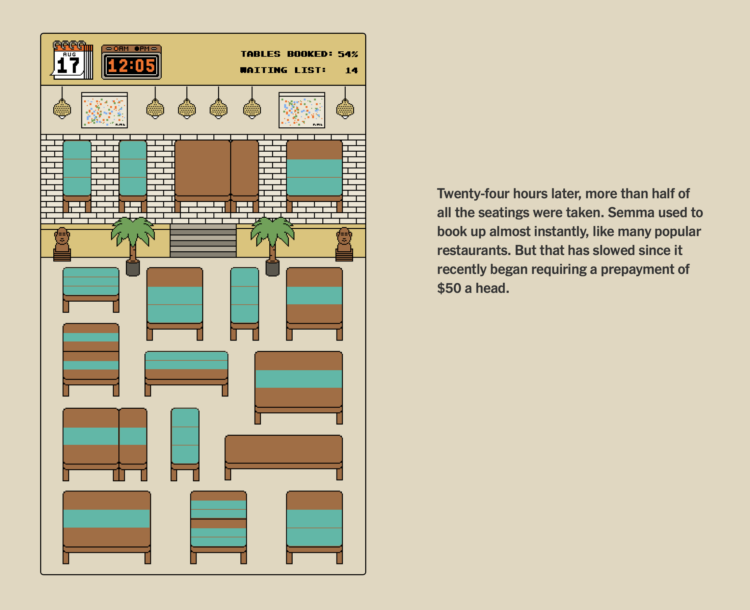




/cdn.vox-cdn.com/uploads/chorus_asset/file/25032572/GettyImages_1756336344.jpg) Win McNamee/Getty Images
Win McNamee/Getty Images
/cdn.vox-cdn.com/uploads/chorus_asset/file/25032579/GettyImages_1543267435.jpg) Anna Moneymaker/Getty Images
Anna Moneymaker/Getty Images
/cdn.vox-cdn.com/uploads/chorus_asset/file/25032583/GettyImages_1754498829.jpg) Mike Sega/Getty Images
Mike Sega/Getty Images