Shared posts

10 May 20:23

The Sociology Behind the X-Files

by Isabel Arriagada

Originally Posted at TSP Clippings

Photo Credit: Val Astraverkhau, Flickr CC

Throughout history, human beings have been enthralled by the idea of the paranormal. While we might think that UFOs and ghosts belong to a distant and obscure dimension, social circumstances help to shape how we envision the supernatural. In a recent interview with New York Magazine, sociologist Joseph O. Baker describes the social aspects of Americans’ beliefs about UFOs.

Baker argues that pop culture shapes our understandings of aliens. In the 1950s and 1960s, pop culture imagined aliens in humanoid form, typically as very attractive Swedish blonde types with shining eyes. By the 1970s and 1980s, the abductor narrative took hold and extraterrestrials were represented as the now iconic image of the little gray abductor — small, grey-skinned life-forms with huge hairless heads and large black eyes. Baker posits that one of the main causes of UFOs’ heightened popularity during this time was the extreme distrust of the government following incidents such as Watergate. Baker elaborates,

“I think there is something to be said for a lack of faith in government and institutions in that era, and that coincided with UFOs’ rise in popularity. The lack of trust in the government, and the idea that the government knows something about this — those two things went together, and you can see it in the public reaction post-Vietnam, to Watergate, all that stuff.”

While the individual characteristics of “believers” are hard to determine, survey evidence suggests that men and people from low-income backgrounds are more likely to believe in the existence of alien life. Baker says that believing is also dependent upon religious participation rather than education or income. In his words,

“One of the other strongest predictors is not participating as strongly in forms of organized religion. In some sense, there’s a bit of a clue there about what’s going on with belief — it’s providing an alternative belief system. If you look at religious-service attendance, there will be a strong negative effect there for belief in UFOs.”

Baker’s research on the paranormal indicates that social circumstances influence belief in extraterrestrial beings. In short, these social factors help to shape whether you are a Mulder or a Scully. Believing in UFOs goes beyond abductions and encounters of the Third Kind. In the absence of trust in government and religious institutions, UFOs represent an appealing and mysterious alternative belief system.

Isabel Arriagada (@arriagadaisabe) is a Ph.D. student in the sociology department at the University of Minnesota. Her research focuses on the development of prison policies in South America and the U.S. and how technology shapes new experiences of imprisonment. 

(View original at https://thesocietypages.org/socimages)

07 May 15:11

Belfast Zoo Says 'Hola' to Their New Babies

by Andrew Bleiman
Leahgates

can confirm that in Belfast they pronounce the H in hola

1_(9)  Call by the zoo this weekend and spot Belfast Zoo's latest arrivals.

Belfast Zoo keepers are saying ‘hola’ to two Capybara babies! The twins were born to mother, Lola, and father, Chester, on April 2.

The Capybara (Hydrochoerus hydrochaeris) is a South American mammal that resembles a giant Guinea Pig. They are the largest rodents in the world and measure up to 130 centimeters in length (4.2 feet).

The scientific name for this species “hydrochaeris” is Greek for ‘water hog’. This refers to the fact that the Capybara is a semi-aquatic mammal.

The species is native to Central and South American riverbanks, ponds, and marshes. When the Capybara swims, its eyes, ears and nostrils are positioned above the water to help with vision and breathing. This unusual animal has webbed feet and can even hold its breath for up to five minutes underwater!

2_(1)  Belfast Zoo keepers are saying ‘hola’ to more new arrivals as two capybara have been born!

3_(2)  The capybara babies were born on 2 April 2018 and are beginning to explore their home with their family.

4_(3)  Capybara are the largest rodents in the world and closely resemble giant guinea pigs.Photo Credits: Belfast Zoo

The arrival of the two latest Capybara babies means that Belfast Zoo is now home to a total of thirteen. In the wild, these rodents live in large family groups of ten to 40 individuals. They are incredibly vocal and communicate through barks, whistles, huffs and purrs.

Zoo Curator, Raymond Robinson, said, "Our Capybaras share their home with some other South American 'amigos', including Giant Anteaters and Darwin's Rhea. While the Capybara is not currently classified as an endangered species, it is hunted and poached for its meat and skin. It is important that zoos, such as Belfast Zoo, help to raise awareness of this species and the increasing dangers which Capybara face in their natural habitat. We have no doubt that our South American babies will soon be a firm favourite with visitors!"

5_(4)  The capybara is a semi-aquatic mammal.  They have webbed feet and can hold their breath for up to 5 minutes!

6_(5)  Belfast Zoo's capybaras share their home with some other South American 'amigos'  including giant anteaters and Darwin's rhea.

7_(6)  The babies have not yet been sexed and therefore do not yet have names.

8_(7)  In the wild  these rodents live in large family groups of ten to 40 individuals.  Belfast Zoo is home to 13 capybaras.

9_(8)  Belfast Zoo is open daily from 10am  last admission is 5pm and the zoo closes at 6pm.

30 Apr 15:52

Orphaned Baby Manatees Find Refuge at Columbus Zoo

by Chris Eastland

Manatees (Female and Heavy Falcon) 3145 - Grahm S

The Columbus Zoo and Aquarium welcomed two rehabilitating Manatees on April 24. The two new additions, one male and one female, became the 28th and 29th Manatees to be rehabilitated at the Columbus Zoo since the zoo’s involvement in the Manatee Rescue and Rehabilitation Partnership (MRP) began in 2001.

Manatees (Group) 3412 - Grahm S. Jones  Columbus Zoo and Aquarium
Manatees (Group) 3412 - Grahm S. Jones  Columbus Zoo and AquariumPhoto Credit: Grahm S. Jones/Columbus Zoo and Aquarium

The 143-pound male calf is named “Heavy Falcon” – a nod to the SpaceX Falcon Heavy rocket launch that took place on February 6, 2018, which was also the day he was rescued. Heavy Falcon was found as an orphan in Crystal River, Florida and was taken to SeaWorld Orlando to begin his rehabilitation journey.

The female calf does not yet have a name and was rescued on February 8, 2018 with her mother off the coast of Florida. The female calf showed signs of cold stress, while her mother was negatively buoyant. Unfortunately, the calf’s mother succumbed to her serious injuries just two days after her rescue, leaving the female calf an orphan. After also beginning her rehabilitation at SeaWorld Orlando with Heavy Falcon, both Manatees have stabilized and will continue to recover in Columbus before their eventual releases into Florida waters.

The two new arrivals are now living in the zoo’s 300,000-gallon Manatee Coast pool. Both Manatees will also have access to behind-the-scenes areas as they continue to adjust to their new environment.

As part of the Manatee Rescue & Rehabilitation Partnership (MRP), the Columbus Zoo and Aquarium is a second-stage rehabilitation facility that provides a temporary home for Manatees until they are ready for release back to the wild.

See more photos of the calves below.

The only other facility that assists with rehabilitating Manatees outside of the state of Florida is the Cincinnati Zoo and Botanical Garden. Along with the Columbus Zoo arrivals, the Cincinnati Zoo welcomed an approximately 1-year-old orphaned female calf named Daphne last week.

Both facilities participate in the MRP and, as a result, are part of the cooperative group of non-profit, private, state, and federal entities who work together to monitor the health and survival of rehabilitated and released Manatees. Information about Manatees currently being tracked is available at http://public.wildtracks.org/

“We are so thrilled not only to welcome these two new Manatees, but also to have the opportunity to participate in this partnership as a second-stage rehabilitation facility for Manatees,” said Becky Ellsworth, curator of the Shores region at the Columbus Zoo and Aquarium. “Our team is eager to get to know these two new additions over the next few weeks and to continue to help all seven of the Manatees in our care grow stronger over time for their eventual releases.”

The threatened Florida Manatee is at risk from both natural and man-made causes of injury and mortality, including exposure to red tide, cold stress, disease, boat strikes, crushing by flood gates or locks, and entanglement in or ingestion of fishing gear.

Manatee (Female) 3251 - Grahm S. Jones  Columbus Zoo and Aquarium


Related articles
30 Apr 15:51

Bouncers and Bias

by Amber Joy Powell

Originally Posted at TSP Discoveries

Whether we wear stilettos or flats, jeans or dress clothes, our clothing can allow or deny us access to certain social spaces, like a nightclub. Yet, institutional dress codes that dictate who can and cannot wear certain items of clothing target some marginalized communities more than others. For example, recent reports of bouncers denying Black patrons from nightclubs prompted Reuben A Buford May and Pat Rubio Goldsmith to test whether urban nightclubs in Texas deny entrance for Black and Latino men through discriminatory dress code policies.

Photo Credit: Bruce Turner, Flickr CC

For the study, recently published in Sociology of Race and EthnicityThe authors recruited six men between the ages of 21 and 23. They selected three pairs of men by race — White, Black, and Latino — to attend 53 urban nightclubs in Dallas, Houston, and Austin. Each pair shared similar racial, socioeconomic, and physical characteristics. One individual from each pair dressed as a “conformist,” wearing Ralph Lauren polos, casual shoes, and nice jeans that adhered to the club’s dress code. The other individual dressed in stereotypically urban dress, wearing “sneakers, blue jean pants, colored T-shirt, hoodie, and a long necklace with a medallion.” The authors categorized an interaction as discrimination if a bouncer denied a patron entrance based on his dress or if the bouncer enforced particular dress code rules, such as telling a patron to tuck in their necklace. Each pair attended the same nightclub at peak hours three to ten minutes apart. The researchers exchanged text messages with each pair to document any denials or accommodations.

Black men were denied entrance into nightclubs 11.3 percent of the time (six times), while White and Latino men were both denied entry 5.7 percent of the time (three times). Bouncers claimed the Black patrons were denied entry because of their clothing, despite allowing similarly dressed White and Latino men to enter. Even when bouncers did not deny entrance, they demanded that patrons tuck in their necklaces to accommodate nightclub policy. This occurred two times for Black men, three times for Latino men, and one time for White men. Overall, Black men encountered more discriminatory experiences from nightclub bouncers, highlighting how institutions continue to police Black bodies through seemingly race-neutral rules and regulations.

Amber Joy is a PhD student in sociology at the University of Minnesota. Her current research interests include punishment, sexual violence and the intersections of race, gender, age, and sexuality. Her work examines how state institutions construct youth victimization.

(View original at https://thesocietypages.org/socimages)

26 Apr 13:59

New bird-of-paradise has killer dance moves

by Camden Flath-Futurity

Ornithologists have classified the Vogelkop superb bird-of-paradise as its own species after recognizing differences in two similar-looking kinds of the birds.

For years, people mistook the Vogelkop superb bird-of-paradise for the wider spread and closely related Superb Bird-of-Paradise.

“After you see what the Vogelkop form looks like and acts like in the wild, there’s little room for doubt that it is a separate species,” says Ed Scholes, evolutionary biologist with the Cornell University Lab of Ornithology’s Birds-of-Paradise Project.

“The courtship dance is different. The vocalizations are different. The females look different. Even the shape of the displaying male is different.”

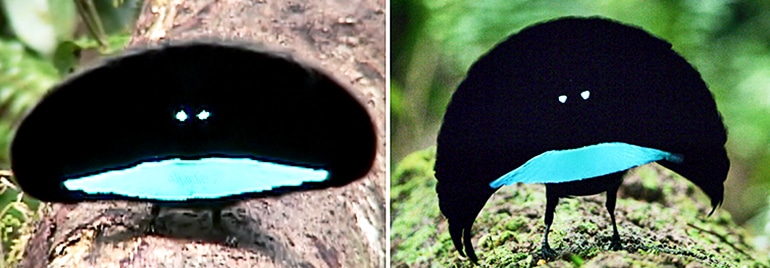
The raised cape of the Vogelkop Superb Bird-of-Paradise (right) is crescent shaped and unlike the oval shape of the widespread Greater Superb Bird-of-Paradise (left) found throughout most of New Guinea. (Credit: Right image by Tim Laman/Macaulay Library. Left image from video by Ed Scholes/Macaulay Library.)

Both birds are endemic to New Guinea, but the Vogelkop superb bird-of-paradise is found only in the island’s far-western Bird’s Head, or Vogelkop, region. Researchers renamed the more widespread superb bird-of-paradise—known for its bouncy “smiley face” dance routine—the “greater superb bird-of-paradise.”

Now, for the first time, newly released audiovisuals support the claim that the Vogelkop superb bird-of-paradise is its own distinct species. Scholes and Timothy Laman, ornithologist and wildlife photojournalist at Harvard University’s Museum of Comparative Zoology documented the audiovisual data, which appear in the journal PeerJ.

Video footage reveals that when expanded for courtship display, the Vogelkop male’s raised cape creates a completely different appearance—crescent-shaped with pointed tips rather than the oval shape of the widespread form of the species. The way the Vogelkop male dances for the female is also is distinctive, his steps being smooth instead of bouncy.

How birds evolved such crazy beaks

The Cornell Lab’s Birds-of-Paradise Project is a research and education initiative to document, interpret and protect birds-of-paradise, their native environments and other biodiversity of New Guinea, one of the largest remaining tropical wildernesses on the planet.

Source: Cornell University

The post New bird-of-paradise has killer dance moves appeared first on Futurity.

25 Apr 12:42

Lack of iron and B12 tied to aggression in boys

by Nardy Baeza Bickel-Michigan
Leahgates

what aboout

a link between b12 and being rude to men on the internet

for adult women

because I have that

Significant iron deficiency and low blood levels of vitamin B12 in boys around age 8 are associated with behavior problems when they get to middle school, according to new research.

These problems exhibit as both internalizing behaviors, such as anxiety and depression, and externalizing actions, including being aggressive and breaking rules.

“Iron deficiency is still highly prevalent in many regions worldwide,” says Eduardo Villamor, professor of epidemiology at the University of Michigan School of Public Health and senior author of the study in the Journal of Nutrition.

“There is less data on vitamin B12 deficiency but available evidence also suggests it may be a substantial public health problem in certain populations,” he says.

Villamor and colleagues conducted the study among low- and middle-income children ages 5-12 included in the Bogotá School Children Cohort, a longitudinal investigation of nutrition and health that has involved 3,200 children in the Colombian capital.

The researchers studied this group previously and found a number of health problems associated with micronutrient deficiencies. These deficiencies result from diets that lack micronutrient-rich foods, including animal sources that contain good amounts of vitamin B12 and iron.

In addition to taking blood samples to measure micronutrients, the team conducted an in-person follow-up assessment with about one-third of the study participants after 6 years, using the Youth Self Report standardized protocol designed to assess the emotional and behavioral problems in adolescents.

They found that iron deficiency, anemia, and low plasma vitamin B12 levels in boys at around age 8 were associated with 10 percent higher mean scores on externalizing behaviors. Iron deficiency was related to an adjusted 12 percent higher mean on internalizing problems scores.

Villamor says the concern in Colombia could be relevant for populations with similar characteristics, and solutions may not always be complicated.

“Interventions to curb these deficiencies must be informed by knowledge of their causes in each specific setting,” he says. “In our study population, for example, we showed before that a school snack program increased vitamin B12 blood levels after three months.”

Previous research on infants has shown a link between iron deficiency and lower positive affect, or a child’s alertness, ability to self-soothe, and self-regulation. These problems may evolve through middle childhood and show up as behavioral concerns in adolescence and lower-self-rated mental health in adulthood. However, no known research had studied the effects on these issues of micronutrient deficiencies in older children.

Nope, hormones aren’t to blame for teen social behavior

“Some parts of the brain develop throughout childhood,” Villamor says, explaining that structural changes in the basal ganglia, hippocampus, amygdala, and prefrontal cortex of the brain may be involved in the development of behavior problems as these brain regions respond to environmental conditions at different life stages.

The researchers found no associations among girls.

“We don’t have a clear explanation of why there were sex differences, although we knew it was important to study boys and girls separately because they may differ in the timing of development,” Villamor says. “Studies in rats have found that some micronutrient deficiencies affect male and female brains differently but it is not clear exactly why this may also be the case in humans.”

Additional authors are from the University of Michigan, the University of La Sabana, and the Foundation for Research in Nutrition and Health in Colombia. The ASISA Research Fund at the University of Michigan sponsored the work.

Source: University of Michigan

The post Lack of iron and B12 tied to aggression in boys appeared first on Futurity.

24 Apr 16:53

Birds on a wire act a lot like people in line

by Jeanne Leong-Rutgers

Birds on a wire space themselves out for the same reason that we put distance between the person in front of us in line at the movies.

“It’s an attraction. You want to talk to the person in front of you but you don’t want to be in their personal space,” says Bill Saidel, associate professor of biology at Rutgers University-Camden. “That’s a repulsion. It’s the same thing with birds.”

As reported in the Journal of Theoretical Biology, how birds self-assemble can be explained by the combination of attraction (such as for mating or searching for food) and repulsion (to avoid collisions with group members or because of claustrophobia).

The findings also show that interactions between birds are topological—birds interact with each other based on the closeness of their neighbors on the wire.

Over a two-year period, researchers took hundreds of photos of starlings and pigeons sitting on telephone wires at various locations in Camden County, New Jersey.

After narrowing down the photos to a set of 114, they observed how and where the birds were positioned and measured the distances between them. They then used a systematic quantitative approach to develop a mathematical model to predict the pattern of spacing between individual birds.

“There are a few characteristics where we were able to capture, like, birds are dense,” says Benedetto Piccoli, chair of mathematics, who is also associate provost for research. “If you have a large group, they sit more closely in the center and they are more spaced on the wings and this depends on the species and the bird’s size.”

Social cues teach baby birds to sing

Using Matlab software, the team scaled the photos, cropped the bird groups in the photos, removed the wires, and took measurements and analyzed the images and the data they found.

Gathering data on the birds and analyzing their behavior was a bit complicated, the researchers say, because they’re up high, and locating and measuring their position wasn’t easy.

“It’s just catch as we could,” says Saidel. “One of the rules of natural behavior is that you can’t tell them what to do.”

The National Science Foundation funded the work.

Source: Rutgers University

The post Birds on a wire act a lot like people in line appeared first on Futurity.

19 Apr 13:41

Capron Park Zoo Welcomes Fennec Fox Trio

by Andrew Bleiman
Leahgates

cat or dog

1_image1

Capron Park Zoo, in Attleboro, MA, excitedly announced the birth of three Fennec Fox kits!

Two females and one male were born on March 7 to five-year-old mom, Hannah, and two-year-old dad, Taz. According to Zoo staff, this the second litter for the parents.

The playful siblings are starting to venture out of the den and can be seen on exhibit with mom and dad.

2_1 wk of age

3_2 wks of age A

4_2 wks of agePhoto Credits: Dan DiBattista

The Fennec Fox or Fennec (Vulpes zerda) is a small nocturnal fox found in the Sahara of North Africa. Its most distinctive feature is its unusually large ears, which also serve to dissipate heat.

The Fennec is the smallest species of canid. Its coat, ears, and kidney functions have adapted to desert environments. Their large ears and sensitive hearing allow them to hear prey moving underground. Their diet consists mainly eats insects, small mammals, and birds.

The Fennec has a life span of up to 14 years in captivity. In the wild, their main predators are the African varieties of eagle owl. Families of Fennecs dig out dens in sand for habitation and protection, which can be as large as 120 m2 (1,292 sq. ft.) and join the neighboring dens.

Fennec Foxes are social and mate for life, with each pair (or family) controlling their own territory. Sexual maturity is reached at around nine months old. In the wild, mating usually occurs between January and February for litters born between March and April. However, in captivity most litters are born later, between March and July, although births can occur year round. The species usually breeds only once each year.

Gestation is usually between 50 and 52 days but may be longer in captivity. The typical litter is between one and four kits, with weaning taking place at around 61 to 70 days. When born, the kit's ears are folded over and its eyes are closed, with the eyes opening at around ten days and the ears lifting soon afterward.

More great pics, below the fold!

6_6 wks C

7_6 wks D

8_6 wks E

9_6 wks F

10_6 wks G

11_6wks A with Mom

19 Apr 13:40

Evangelism

Leahgates

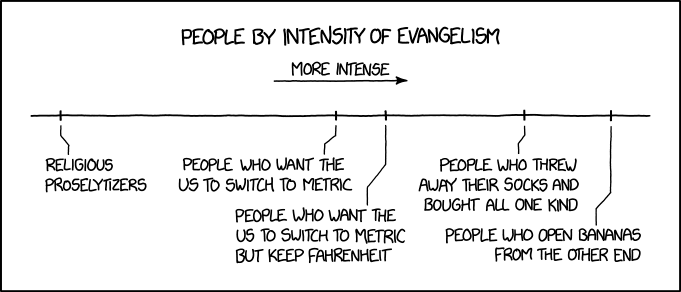
new atheists rank above socks and below bananas

The wars between the "OTHER PRIMATES OPEN THEM FROM THE SMALL END" faction versus the "BUT THE LITTLE BIT OF BANANA AT THE SMALL END IS GROSS" faction consumed Europe for generations.
18 Apr 13:39

Baby Wallaby Grew Up In A Backpack

by Chris Eastland

Newt the baby wallaby in the spring sunshine at Longleat  PIC Ian Turner (1500x1000)
A baby Wallaby which is being hand reared in a backpack after being found abandoned is delighting keepers at Longleat with his progress.

The baby, who has been nicknamed Newt, is thought to be around 30 weeks old. He has been adopted by keepers Gemma Short and Jodie Cobb, who carry Newt around in a substitute pouch made from a backpack.

Newt the baby wallaby being bottle fed at Longleat  PIC Ian Turner (1500x1000)
Newt the baby wallaby being bottle fed at Longleat  PIC Ian Turner (1500x1000)Photo Credit: Longleat

The Red-necked Wallaby, who was rescued after being found abandoned during snowy weather, is thriving under the care of his keepers at this safari park in the United Kingdom.

“It appears that for some reason his mum let him out of her pouch during the cold weather but then refused to let him back in again,” said keeper Gemma.  “We kept him under closer observation but when it became clear she had abandoned him, we had to step in and hand rear him.”

“Initially we had to feed him every two hours, but now he feeds at four-hour intervals and he’s starting to take solids,” Gemma said.  “At first it felt a little strange to be carrying this backpack around but after a while you do get used to it. He’s a real character and is beginning to venture out on his own again and explore the outside world,” she added.

At birth, Newt weighed just 20 grams and was little larger than a baked bean. He crawled through his mother’s fur from the birth canal into the pouch where he began to suckle.

Volunteering to take over as surrogate mothers has been a real labor of love for the keepers - especially with feedings every four hours day and night.

Gemma and Jodie will have to keep up their role as adoptive parents for up to 18 months until the youngster is fully weaned and ready to return to the Wallaby colony.

Red-necked Wallabies, also known as Bennett’s Wallabies, are native to eastern Australia and the island of Tasmania.  As marsupials, their babies are born in a highly underdeveloped state and complete their growth inside the female’s pouch.  They feed on grasses and leaves during the night and rest during the day. Red-necked Wallabies are not under threat, and so are listed as a species of Least Concern by the International Union for Conservation of Nature (IUCN).


Related articles
16 Apr 16:18

Lincoln Park Zoo’s New Exhibit Welcomes First Chick

by Andrew Bleiman
Leahgates

basically just fuzz with flaps attached

1_Lincoln Penguin chick

The first-ever endangered African Penguin chick has hatched at Lincoln Park Zoo’s new Robert and Mayari Pritzker Penguin Cove. After a 38-day incubation period, the chick emerged on February 10.

At a recent wellness exam, veterinary staff deemed the chick healthy. During the exam, veterinary staff also drew blood, which will be sent for lab analysis to determine the chick’s sex. Once that is revealed, keepers can decide on an appropriate name.

The chick is the offspring of mom, Robben, and dad, Preston. According to Hope B. McCormick Curator of Birds, Sunny Nelson, the first-time parents are proving to be naturals.

“Our keepers are constantly monitoring both the parents and the chick to ensure that the parents are meeting the chick’s needs as it reaches developmental milestones,” said Nelson. “Both Robben and Preston are performing parental duties as expected, sharing brooding and feeding responsibilities.”

2_20180403_CB_penguin chick-crop-1

3_20180403_CB_penguin chick-crop-3

4_20180403_CB_penguin chick-13Photo Credits: Lincoln Park Zoo / Chris Bijalba (Image 1)

African Penguin chicks typically fledge around 70 to 80 days after hatching. The chick will retain its downy feathers until it molts into waterproof juvenile plumage. After one to two years, African Penguins molt into their iconic tuxedo-like adult plumage.

Animal Care staff plans to give the chick access to a behind-the-scenes pool to ensure that its feathers are waterproof before introducing the chick to the rest of the exhibit.

The chick’s parents were paired as a part of the African Penguin Species Survival Plan® (SSP), a collaborative population management effort among institutions within the Association of Zoos and Aquariums (AZA).

Lincoln Park Zoo works closely with the Association of Zoos and Aquariums’ (AZA’s) Saving Animals From Extinction (SAFE) program, which focuses the collective expertise within AZA-accredited facilities to save endangered species. The African Penguin is a SAFE priority species due to its decreasing population in the wild, which has gone from 141,000 breeding pairs in 1956 to only about 25,000 today.

The African Penguins at Robert and Mayari Pritzker Penguin Cove serve as ambassadors, teaching guests about the plight of this species in the wild due to human-wildlife conflict.

“African Penguins ignite a sense of wonder and a connection with wildlife,” said Vice President for Learning and Community Engagement, Dana Murphy. “We hope that seeing the newest member of the colony helps guests turn that connection into caring, empowering them to take actions to save this endangered species.”

The African Penguin (Spheniscus demersus), also called Black-footed Penguin due to the color of their feet, have pink coloration around their eyes, black breast-band and belly markings. Native to the shores of South Africa and Namibia, these beach-dwellers are one of 18 Penguin species worldwide. They are currently classified as “Endangered” on the IUCN Red List.

Learn more about the colony at Lincoln Park Zoo, via their website: www.lpzoo.org/penguin .

5_20180403_CB_penguin chick-11

6_20180403_CB_penguin chick-3

09 Apr 14:18

Rare ‘Forest Dragons’ Hatch at Chester Zoo

by Andrew Bleiman
Leahgates

extremely regal smols

1_Rare baby forest dragons hatch at Chester Zoo. Pictured with zookeeper Nathan Wright (1) CROP

A clutch of rare baby ‘Forest Dragons’ have hatched at Chester Zoo.

The Bell’s Anglehead Lizard (Gonocephalus bellii), also known as the Borneo Forest Dragon, is found in parts of South East Asia. Reptile experts at Chester Zoo say very little is known about the mysterious reptile. Population estimates on the species have never been carried out; therefore, no one is aware of exactly how many exist in the wild or how threatened they might be.

However, the emergence of the four tiny lizards at the Zoo is helping reptile conservationists discover some of the secrets about how they live.

2_Rare baby forest dragons hatch at Chester Zoo. Pictured with zookeeper Nathan Wright (3) (1)

4_Rare baby forest dragons hatch at Chester Zoo (2)

5_Rare baby forest dragons hatch at Chester Zoo (1)Photo Credits: Chester Zoo (Image 1,2: "Reptile keeper Nathan Wright holds rare lizard at Chester Zoo / Image 5: Adult Bell's Anglehead Lizard)

Matt Cook, Lead Keeper of Reptiles at Chester Zoo, said, "The Bell’s Anglehead Lizard is an elusive a little-understood species. Reliable information about them is incredibly scarce, so much so that even to reptile experts they are somewhat of a mystery.”

“What we do know is that, as their name suggests, these ‘forest dragons’ live in forests in South East Asia. This is habitat which, across the region, is being completely decimated to make way for unsustainable palm oil plantations – a threat which is pushing all manner of species, big and small, to the very edge of existence.”

Matt continued, “Breeding these rare lizards at the Zoo allows us to increase our knowledge of the species. For example, we’ve already discovered that their incubation period is between 151 and 155 days; that they reach sexual maturity at around three-years-old and that the females deposit up to four eggs per clutch in a small burrow in deep soil.”

The recently hatched youngsters are currently being cared for in a special behind-the-scenes rearing facility at the Zoo, but visitors can see their parents in its Realm of the Red Ape habitat.

6_Adult Bell's angle-headed lizard at Chester Zoo

06 Apr 17:54

Screamer Chicks Hatch at Woodland Park Zoo

by Chris Eastland
Leahgates

SCREMS

1_WPZScreamerChicks-203

A pair of female Crested Screamer chicks hatched in early March at Woodland Park Zoo. The little birds represent the first offspring between the 15-year-old mother and 23-year-old father. The last successful hatching of this species at the Seattle, WA, zoo was in 2002.

At just a few weeks old, the chicks are fluffy and downy and currently weigh about 6 ounces.

“So far, we’re pleased to report the chicks are experiencing good weight gains,” said Mark Myers, bird curator at Woodland Park Zoo. “They’re eating well and the parents are very attentive. The chicks need lots of food and exercise to grow. Based on how they’re doing, we’re optimistic they’ll continue to thrive under the care of their parents and our animal care staff.”

According to the Zoo, Crested Screamer parents do not regurgitate food for their chicks. Instead, they lead the chicks to food and drop tasty treats as a lesson on how to peck for food. Myers said the Zoo’s family dines on a blend of game bird, waterfowl pellets, lots of fresh romaine, and broccoli florets.

2_WPZ_JLoughlin_ScreamerChicks-47

3_WPZScreamerChicks-25

4_WPZScreamerChicksNestPhoto Credits: Woodland Park Zoo/ Jeremy Dwyer-Lindgren

The Crested Screamer (Chauna torquata) is aptly named for its loud, distinctive call, making it among the loudest of any bird. Native to Bolivia and southern Brazil, to northern Argentina, these large goose-like birds are common in tropical and subtropical wetlands, including marshes, estuaries and lowland lakes.

Another distinctive feature of the species is a large, sharp spur on each wing, which the birds use to defend themselves against predators. Adults reach and average size of 81–95 cm (32–37 inches) long and a weight of around 3–5 kg (6.6–11.0 pounds).

Screamers form monogamous relationships, and both adults take part in incubation and caring for the chicks. The female lays between two to seven white eggs, and incubation takes 43 to 46 days. Chicks leave the nest as soon as they hatch, but the parents will care for them for several weeks. The fledging period takes 8 to 14 weeks.

Although the Crested Screamer population is not threatened in their home range, Screamers and many other species of waterfowl are threatened by habitat loss due to human-imposed activities.

The new family at Woodland Park Zoo is currently off-exhibit, to allow animal keepers to monitor the chicks closely and weigh them regularly to ensure acceptable weight gains.

The adults were paired under the Crested Screamer Species Survival Plan, a conservation program coordinated through the Association of Zoos & Aquariums to help ensure a healthy, self-sustaining population in zoos. Woodland Park Zoo participates in more than 100 Species Survival Plans, from invertebrates to big cats; some plans also involve a variety of other collaborative conservation activities such as research, public education, planned reintroduction and field projects.

Woodland Park Zoo is accredited by the Association of Zoos & Aquariums and certified by the rigorous American Humane Conservation program. The Humane Certified seal of approval is another important validation of the zoo’s long-standing tradition of meeting the highest standards in animal welfare. Woodland Park Zoo is helping to save animals and their habitats through more than 35 field projects in the Pacific Northwest and around the world. Each year, the zoo engages more than a million visitors of all ages, backgrounds, abilities and walks of life in extraordinary experiences with animals, inspiring them to make conservation a priority in their lives and a difference in our planet’s future ecological health and sustainability. To learn more, visit www.zoo.org .

5_ScreamerAdultWPZ

02 Apr 21:00

Baby Sloth Bears Are Tiny Adventurers

by Andrew Bleiman
Leahgates

sad from the front but cheerful in profile

DDow_3-25-18-SlothBearCubs-8

After months of cozying up with mom Tasha in the den, the Woodland Park Zoo’s 13-week-old Sloth Bear cubs took their first steps outdoors. The tiny adventurers explored all around, trying to climb on everything. The best perch of all? Mom's back!

Until now, fans have only been able to see the two male cubs via cameras installed in the maternity den. 

DDow_3-25-18-SlothBearCubs-6
DDow_3-25-18-SlothBearCubs-6Photo Credit: Dennis Dow/Woodland Park Zoo

“We’re very excited to see Tasha and her cubs out on exhibit,” said Pat Owen, animal care manager at Woodland Park Zoo. “The fact that they’ve started to go outside the maternity den and explore is a good indicator the cubs are healthy and thriving. At this time, the cubs and mom are still exploring and adjusting to their new surroundings. They will still have access to the off-view maternity den as they make this transition.”

The two male cubs, born December 27, 2017, are the offspring of 13-year-old mother Tasha and 17-year-old father Bhutan.
 
Sloth Bears are native to the lower elevations of Bangladesh, Bhutan, India, Nepal and Sri Lanka. There are currently less than 10,000 remaining in the wild. Their survival is challenged by fragmented populations, competition with other animals (particularly humans) for space and food, deforestation, and the illegal trade in Bear parts, which are used in traditional Asian medicines.

For more than 400 years, Sloth Bears were targeted for human exploitation to perform as “Dancing Bears;” in 2009, the last Dancing Bear in India was released. Woodland Park Zoo is a participant in the Sloth Bear Species Survival Plan (SSP), a cooperative breeding program under the Association of Zoos & Aquariums (AZA) that ensures genetic diversity and demographic stability among Sloth Bears in North American zoos. Prior to the birth of these cubs, Woodland Park Zoo had five Sloth Bear births; two sets of twins and one cub which did not survive.
 
Woodland Park Zoo supports Wildlife SOS in their Sloth Bear maternal and day denning research project focused on Sloth Bears in the wild and in zoos. The project aims to learn more about day dens (used by Sloth Bears as a place to rest in safety during daylight hours), and the maternal dens used to give birth to and raise cubs.


Related articles
02 Apr 21:00

Tiny Clouded Leopard Cub Born at Nashville Zoo

by Andrew Bleiman

28947071_10155920054555622_1384757259994016959_o

Nashville Zoo is pleased to announce the birth of a female Clouded Leopard on Monday, February 19.

This is the sixth litter for eight-year-old mother Lom Choy and father Luk. The couple has been paired for mating since age one, and they had their first litter in 2011. Their newest cub weighed 188 grams (about six ounces) at birth. With the addition of this cub, the Zoo is home to nine Clouded Leopards. Nashville Zoo has had 32 Clouded Leopard births since 2009. There are currently 61 Clouded Leopards in accredited North American zoos and 274 under human care globally.

27073664508_7ab02128aa_o
27073664508_7ab02128aa_oPhoto Credits: Amiee Stubbs (1,2,4,5); Melinda Kommavongsa (3)

Lom Choy delivered three cubs on February 19 and within the days following, keepers observed that two of the cubs were victims of parental predation, a common occurrance in Clouded Leopards.  The third cub was immediately removed for hand rearing.

Because Clouded Leopards are normally shy and secretive, hand-rearing allows the animals to become better acclimated to a zoo environment. “Cubs that are hand reared are known to allow for easier keeper interaction, and [the hand-rearing process] reduces stress in the animal,” explained Dr. Heather Robertson, DVM. 

Nashville Zoo is a member of the Clouded Leopard Consortium and is part of the Clouded Leopard Species Survival Plan®, a program of the Association of Zoos and Aquariums. Robertson is the nationwide Vet Advisor for this species and Nashville Zoo spearheads conservation efforts for this species in partnership with the Smithsonian National Zoo and Point Defiance Zoo & Aquarium at Khao Kheow breeding facility in Thailand.

Clouded Leopards are native to the Himalayan foothills of Southeast Asia and China. The species is listed as Vulnerable by the International Union for Conservation of Nature (IUCN) and is protected in most range countries, although enforcement in many areas is weak. Precise data on wild Clouded Leopard populations is not known, though some conservationists estimate that the total adult population is fewer than 10,000 individuals. The reduced number of pelts encountered at markets and fewer sightings of Clouded Leopards within their range suggest the species is in decline.


Related articles
28 Mar 20:22

Zoo Wroclaw Welcomes First Manatee Calf

by Andrew Bleiman
Leahgates

uncertain blorp

1_DSC_2664

Zoo Wroclaw has been preparing for the arrival of their new Manatee calf since this past November, when it was confirmed their female was expecting.

After consultation with other zoos, keepers at Wroclaw installed a special pen in their Manatee pool. They also stocked-up on special milk formula in preparation for the possibility that new mother, Ling, might have difficulty bonding with the calf.

When Ling’s labor began on March 3rd, staff members at Zoo Wroclaw were more than prepared for the new arrival. The little female entered the world at 10:41 a.m., and the Zoo managed to capture the beautiful scene on video.

According to keepers, right after birth, the female measured about 115 cm, and weighed about 20 kg.

The new Manatee calf is the first of her kind to be born at Wroclaw, so her caretakers opted to give her a fitting name—Lavia (from the word Vratislavia).

The Zoo’s prenatal preparations proved beneficial when it became apparent to keepers that Ling was not nursing her new calf as they had hoped. Staff began utilizing the special formula soon after the calf was born.

2_DSC_2086

3_DSC_2112

4_DSC_2123Photo Credits: ZOO Wroclaw

Manatees are large, fully aquatic, mostly herbivorous marine mammals (also known as “sea cows”). They are found in the shallow, marshy coastal areas and rivers of the Caribbean Sea and the Gulf of Mexico (Trichechus manatus, West Indian manatee), the Amazon basin (T. inunguis, Amazonian manatee), and West Africa (T. senegalensis, West African manatee).

Manatees are classified as “Vulnerable” by the IUCN. Because they are large, slow-moving animals that frequent costal waters, they are vulnerable to hunters seeking their hides, oil, and bones. They are often accidentally hit by motorboats and sometimes become entangled in fishing nets. Due to their threatened status, captive breeding in zoos plays an important role in manatee conservation. According to Zoo Wroclaw, these docile giants live in only 19 zoological gardens in the world, including 10 in Europe.

Each calf born is treasured, and each Manatee birth is a celebrated stepping-stone to the survival of the species.

(More pics below the fold!)

5_DSC_2160

6_DSC_2540

7_DSC_2574

8_DSC_2637

9_DSC_2645

10_DSC09976

27 Mar 18:28

“Concerted Cultivation” and the March For Our Lives

by Jay Livingston, PhD
Leahgates

ENTITLED MILLENIALS

Originally Posted at Montclair SocioBlog

A question that few people seem to be asking about Enough Is Enough and the March for Our Lives is: Why now? Or to paraphrase a question that some people soon will be asking: How is the shooting at Marjory Stoneman Douglas High School different from other school shootings?

Photo Credit: mathiaswasik, Flickr CC

There’s #MeToo and #Time’sUp, of course. These may have inspired advocates of other liberal causes like gun control. But just three weeks earlier, a 15-year old in Benton, Kentucky brought a handgun to school and started shooting – 2 dead, 18 injured. The incident evoked only the usual responses, nothing more.

Here’s my hunch: when I first saw the kids in Parkland speaking out, organizing, demanding that adults do something, I immediately thought of a sociology book that had nothing to do with guns –Unequal Childhoods by Annette Lareau published in 2003.

These high-schoolers, I thought, are the children of “concerted cultivation.” That was the term Lareau used for the middle-class approach to raising kids. It’s not just that middle-class parents cultivate the child’s talents, providing them with private coaches and organized activities. There is less separation of the child’s world and the adult world. Parents pay attention to children and take them seriously, and the children learn how to deal with adults and with institutions run by adults.

One consequence is the notorious sense of “entitlement” that older people find so distressing in millennials. Here is how Lareau put it:

This kind of training developed in Alexander and other middle-class children a sense of entitlement. They felt they had a right to weigh in with an opinion, to make special requests, to pass judgment on others, and to offer advice to adults. They expected to receive attention and to be taken very seriously.

It is this sense of entitlement – the teenager’s sense that she is entitled to have some effect on the forces that affect her life – that made possible the initial protests by the students at Marjory Stoneman Douglas High School. And once word of that protest spread, it was this same sense of entitlement, these same assumptions about their place in the world, that made so many other high school students join the movement.

Conservatives just could not believe that kids could or should be so adept at mounting an effective movement or that they could or should speak intelligently about political issues. So right-wing commentary insisted that the students were paid “crisis actors” or pawns of various forces of evil – adult anti-gun activists, the media, or the “deep state.” They also claimed that the students were “rude” and that they did not have standing to raise the issue of gun control.

[the students] say that they shouldn’t be able to own guns even though they can go to war, but they think that they should be able to make laws. None of this makes any sense at all. (See the excerpts in the transcript here.)

In a way, Fox and their friends are hauling out the old notion that children should know their place. But the motivation isn’t some newfound independence, it’s middle-class values. As Lareau says, concerted cultivation makes children far more dependent on parents than does the “natural growth” parenting more common in working-class families. Besides, foreign visitors since the early days of the republic have remarked on the independence of American children. What’s new, and what is so upsetting to exponents of older ideas, is how parents themselves have taught teenagers to demand that they have a say in the decisions that shape their lives.

Jay Livingston is the chair of the Sociology Department at Montclair State University. You can follow him at Montclair SocioBlog or on Twitter.

(View original at https://thesocietypages.org/socimages)

26 Mar 17:41

This Penguin Chick Will Have An Important Job

by Andrew Bleiman

29497585_10156436472964170_5876112617864429568_n

A Humboldt Penguin chick that hatched on February 12 at Brookfield Zoo is thriving, and in the near future, may be taking on an important role. As early as this May, and depending on whether he chooses to participate, the unnamed chick will be an animal ambassador for the zoo’s Penguin Encounters.

29542154_10156436472994170_1738579396798709760_n
29542154_10156436472994170_1738579396798709760_nPhoto Credit: Brookfield Zoo

Currently being hand-reared by animal care staff, the chick is being carefully monitored. He is weighed three times a day—once each morning to determine how much weight was gained over a 24-hour period, as well as after each feeding to calculate how much of its diet of herring and marine smelt he consumed.

The chick will molt from his down feathers into juvenile plumage by two months of age, at which time he will be introduced to a shallow pool of water. Adult plumage will not be present until the chick is about two years old. In addition to possibly being an integral member of the Penguin Encounters, the chick will be introduced to and reside in the Humboldt Penguin colony in the rocky shores habitat at Brookfield Zoo’s Living Coast.

Each Penguin Encounter begins with a member of the animal care staff sharing fun facts about the zoo’s resident Humboldt penguins and communicating how to safely interact with the penguin during the session. During the program, penguins are free to roam and waddle up to anyone they choose – and while one animal may be camera-shy, another individual may enjoy a good selfie or two. The animals appear to find the encounters as enriching as guests and each penguin ambassador chooses whether to participate in the encounters. Staff also talk about the conservation work the Chicago Zoological Society is doing in Punta San Juan, Peru, to help preserve the habitat and abundant wildlife, including Humboldt Penguins that live along the South American coastline.

Humboldt Penguins are native to the Pacific coastlines of Peru and Chile. The population has fallen due to climate change, guano mining, and competition for food with commercial fisheries. The birds are listed as Vulnerable by the International Union for Conservation of Nature (IUCN) Red List of Threatened Species.

Related articles
26 Mar 00:49

March of the Salamanders: Migration Studied at Tennessee Aquarium

by Chris Eastland

Spotted Salamander on moss 2

Each spring, thousands of Salamanders migrate within Tennessee’s woodlands, and biologists at the Tennessee Aquarium Conservation Institute are studying their movements as part of an effort to better understand the animals.

Like their cousins the Frogs and Toads, Salamanders are Amphibians. Most Salamanders hatch from eggs laid in water and become aquatic larvae known as tadpoles. The tadpoles metamorphose into adults that live in warm, moist places on land.

Tub of Spotted Salamanders
Tub of Spotted SalamandersPhoto Credit: Casey Phillips/Tennessee Aquarium

Why study Salamanders? Dr. Josh Ennen, a conservation biologist at the Tennessee Aquarium Conservation Institute, says that because of their sensitivity to environmental changes, scientists consider Salamanders and other Amphibians to be a kind of living bellwether for the health of the surrounding habitat.

“They’re almost like a canary in a coal mine,” Ennen said. “They’re a kind of indicator species that reflect the health of their ecosystem as a whole.”

The spring migration occurs when the adults return to the same pond they hatched in.  There, they mate and lay their own eggs. The Salamanders don’t travel far – maybe a few hundred feet – but getting to water is essential. If not laid in water, the jelly-covered eggs could dry out and die.

Salamanders migrate to vernal pools – small bodies of water that fill with winter and spring rains. These ephemeral ponds may only last a few weeks or months before drying out, but they last long enough for Amphibians to complete their life cycles. Vernal pools’ temporary nature means fish can’t live in them – and that’s important because fish would eat the Amphibians’ eggs.

Dr. Emmen and his colleagues collected, tagged, and released hundreds of Spotted and Mole Salamanders in just one day of their study. He notes that Salamanders migrate to the same pools for generation after generation.

Learn more and see additional photos below.

Salamander under blacklight

“Through these mass migrations, [Salamanders] bring a lot of nutrition from the terrestrial environment into aquatic systems that other animals can use in the food chain,” Ennen said.

“Some of the density estimates of Salamanders from the terrestrial and aquatic ecosystems show that they make up the greatest percentage of vertebrate biomass,” Ennen said. “Pound for pound, there are more Salamanders in these ecosystems than any other vertebrate.”

In the future, this research will help scientists to understand how larval Salamanders use vernal pools, improve the effectiveness of collection methods and help researchers to more accurately estimate Salamander abundance in a given location.

Even as scientists seek to better understand Salamanders’ migrations, seeing thousands of Amphibians making their annual journey, often right through backyards and neighborhoods, is a memorable experience more poeple — especially children — should experience, Ennen said. 

“I think people would be impressed by this behavior,” he said. “I always enjoyed knowing things are in my backyard. My kids do, too. I think it’s just a point of pride when you have anything that’s wild sharing the same space as you.”


Related articles
19 Mar 01:33

Nashville Zoo Celebrates Fourth Tapir Birth

by Andrew Bleiman
Leahgates

cautious, but pleased

definitely not grumpy

1_40712288641_7ed988def0_o

Nashville Zoo is pleased to announce the birth of a male Baird’s Tapir. The yet-to-be-named calf arrived on March 7 and weighed-in at 22.8 pounds. 

This is the second calf for four-year-old mom, Juju. The calf’s father, Romeo, passed-away last year. Romeo was also the father of Tybalt, the Nashville Zoo’s other male Tapir, who was born in August 2016.

With the addition of the new calf, the Zoo is now home to three Baird’s Tapirs. A total of four Baird’s Tapirs have been born at Nashville Zoo since the species was introduced there in 2008.

2_39817095965_398bbf2741_o

3_39817096715_20ed153cdd_oPhoto Credits: Stephanie Edling / Nashville Zoo

Tapirs have a gestation period of approximately 13 months. Keepers had been closely monitoring Juju’s progress and noticed she was restless the day before she gave birth. Once Juju went into labor, she welcomed her new calf about five minutes later, without the help of keepers.

“Congratulations to the keepers who worked tirelessly to ensure a smooth birth for Juju,” said Jonathon Hankins, Area Supervisor for Hoofstock. “They know these animals down to the tiniest details, and it is this dedication that will help us make the future for this little guy as bright as possible.”

Keepers estimate the calf will go out on exhibit within a few weeks, once the mother deems the calf is fit to explore outside. Tapirs are also sensitive to colder temperatures, so they will not go outside unless the temperature is above 60 degrees F.

This birth is significant because this species is currently listed as “Endangered” on the IUCN Red List. Baird’s Tapirs are threatened by hunting, population fragmentation and habitat destruction.

Baird's Tapirs (Tapirus bairdii) are broad, primitive creatures whose appearance has changed little in thousands of years. A relative of the horse and the rhino, Tapirs are the largest land animal in Central and South America.

Though an adult Baird’s Tapir’s coat is solid brown, babies are born with unique markings, similar to brown and white-striped watermelons. Juvenile tapirs lose these markings after one year.

18 Mar 17:08

Robot Future

Leahgates

me

also loads of nobel laureates trying to ban killer robots

I mean, we already live in a world of flying robots killing people. I don't worry about how powerful the machines are, I worry about who the machines give power to.
18 Mar 17:01

Gender, Bitcoin and Altcoins

by Joseph Gelfer PhD
Leahgates

cryptomasculinities

Despite the fact that women played a key role in the development of modern technology, the digital domain is a disproportionately male space. Recent stories about the politics of GamerGate, “tech bros” in Silicon Valley, and resistance to diversity routinely surface despite efforts of companies such as Google to clean up their act by firing reactionary male employees.

The big tech story of the past year is unquestionably cryptocurrencies such as Bitcoin. So it’s a good time to look at how cryptos replicate the gender politics of digital spaces and where they might complicate them.

Women’s Representation

Crypto holders are not evenly divided between men and women. One recent survey shows that 71% of Bitcoin holders are male. The first challenge for women is simply their representation within the crypto space.

There are various efforts on the part of individual women to address the imbalance. For example, Stacy Herbert, co-host of The Keiser Report, has recently been discussing the possibility of a women’s crypto conference noting, “I know so so many really smart women in the space but you go to these events and it’s panels of all the same guys again and again.” Technology commentator Alexia Tsotsis recently tweeted, “Women, consider crypto. Otherwise the men are going to get all the wealth, again.”

Clearly, the macho nature of the crypto community can feel exclusionary to women. Recently Bloomberg reported on a Bitcoin conference in Miami that invited attendees to an after-hours networking event held in a strip club. As one female attendee noted, “There was a message being sent to women, that, ‘OK, this isn’t really your place … this is where the boys roll.’”

The image of women as presented by altcoins (cryptocurrencies other than Bitcoin) is also telling. One can buy into TittieCoin or BigBoobsCoin, which need no further explanation. There is also an altcoin designed to resist this tendency, Women Coin: “Women coin will become the ultimate business coin for women. We all know that this altcoin market is mainly operated by men, just like the entire world. We want to stop this.”

Cryptomasculinities

The male dominance of cryptos suggests it is a space that celebrates normative masculinity. Certain celebrity endorsements of crypto projects have added to this mood, such as heavyweight boxer Floyd Mayweather, actor Steven Seagal and rapper Ghostface Killah. Crypto evangelist John McAfee routinely posts comments and pictures concerning guns, hookers and drugs. Reactionary responses to feminism can also be found: for example, patriarchal revivalist website Return of Kings published an article claiming, “Bitcoin proves that that ‘glass ceiling’ keeping women down is a myth.” Homophobia also occurs: when leading Bitcoin advocate Andreas Antonopoulos announced he was making a donation to the LGBTQ-focused Lambda Legal he received an array of homophobic comments.

However, it would be wrong to assume the masculinity promoted in the crypto space is monolithic. In particular, it is possible to identify a division between Bitcoin and altcoin holders. Consider the following image:

This image was tweeted with the caption “Bitcoin and Ethereum community can’t be anymore different.” On the left we have a MAGA hat-wearing, gun-toting Bitcoin holder; on the right the supposedly effeminate Vitalik Buterin, co-founder of the blockchain platform Ethereum. The longer you spend reading user-generated content in the crypto space, the more you get the sense that Bitcoin is “for men” while altcoins are framed as for snowflakes and SJWs.

There is an exception to this Bitcoin/altcoin gendered distinction: privacy coins such as Monero and Zcash appear to be deemed acceptably manly. Perhaps it is a coincidence that such altcoins are favored by Julian Assange, who has his own checkered history with gender politics ranging from his famed “masculinity test” through to the recent quips about feminists reported by The Intercept.

In conclusion, it is not surprising that the crypto space appears to be predominantly male and even outright resistant to fair representations of women. Certainly, it is not too dramatic to state that Bitcoin has a hyper-masculine culture, but Bitcoin does not represent the whole crypto space, and as both altcoins and other blockchain-based services become more diverse it is likely that so too will its representations of gender.

Joseph Gelfer is a researcher of men and masculinities. His books include Numen, Old Men: Contemporary Masculine Spiritualities and The Problem of Patriarchy and Masculinities in a Global Era. He is currently developing a new model for understanding masculinity, The Five Stages of Masculinity.

(View original at https://thesocietypages.org/socimages)

16 Mar 15:57

Blissful Winter Baby Boom at Columbus Zoo

by Andrew Bleiman
Leahgates

every single one of these animals is grumpy

1_Asia Small Clawed Otter Pups 2614 - Grahm S. Jones  Columbus Zoo and Aquarium

The Columbus Zoo and Aquarium recently announced the arrival of seven babies, representing three at-risk species, born in late January and early February. The new additions are: five Asian Small-clawed Otter pups, a Silvered Leaf Langur baby, and a Humboldt Penguin chick.

According to the Zoo, each new little one contributes to maximizing genetic diversity within their species and sustaining populations of those facing serious threats to their future in their native ranges.

The baby boom began with the arrival of the five Asian Small-clawed Otter pups, born during the early morning hours of January 26.

Native to coastal regions from southern India to Southeast Asia, Asian Small-clawed Otters (Aonyx cinereus) are often threatened by habitat destruction, pollution and hunting. These factors place them at risk in their native range, and they are currently classified as “Vulnerable” by the IUCN.

The pups (three males and two females) were born to first-time parents, Gus and Peanut. Peanut was born in 2014 and arrived at the Columbus Zoo in April 2017 from the Woodland Park Zoo in Seattle. Father, Gus, was born in 2008 and arrived at the Columbus Zoo from the Bronx Zoo in 2014.

According to staff, the young pups are thriving under the watchful eyes of both of their parents and are expected to be on view to the public later this spring.

2_Asia Small Clawed Otter Pups 2306 - Grahm S. Jones  Columbus Zoo and Aquarium

3_Asia Small Clawed Otter Pups 2294 - Grahm S. Jones  Columbus Zoo and Aquarium

4_Asia Small Clawed Otter Pups 2271 - Grahm S. Jones  Columbus Zoo and AquariumPhoto Credits: Grahm S. Jones/ Columbus Zoo and Aquarium

The Columbus Zoo was also proud to welcome a female Silvered Leaf Langur baby on February 16. The female was born to mother, Patty, and father, Thai. Patty made her way to the Columbus Zoo from the Bronx Zoo in 2007 and has given birth to seven offspring. Thai arrived at the Columbus Zoo in 2015 from the San Diego Zoo and has fathered a total of four infants.

Patty, Thai, and the newest Langur arrival are currently on view in the Zoo’s Asia Quest region. Staff reports that the baby is easy to spot as Langurs are born bright orange, as opposed to their adult counterparts with black fur and silvered tips. This difference in coat color is believed to encourage other female Langurs to assist in raising the young, a practice called “allomothering”.

In their native ranges, Silvered Leaf Langurs (Trachypithecus cristatus) can be found in areas including Brunei, Indonesia and Malaysia. The species’ populations in these countries are decreasing due to habitat loss as lands are cleared for oil palm plantations or destroyed by forest fires. Langurs are also hunted for their meat or taken for the pet trade.

The Columbus Zoo’s pairing of Patty and Thai was based on an SSP recommendation, and the birth of the new baby will play an important role in helping manage this at-risk species. Silvered Leaf Langurs are listed as “Near Threatened” by the IUCN, due to population declines caused by habitat loss. The arrival of this Langur baby at the Columbus Zoo is an important part of sustaining the population among AZA-accredited zoos, certified related facilities and conservation partners.

Rounding out the exciting baby animal arrivals at the Columbus Zoo this winter was the hatching of a female Humboldt Penguin chick on February 19. After much deliberation, the keepers in the Shores region named her “Her Majesty Gertrude Sprinklebottom,” or Gertrude for short. Gertrude is the 30th Humboldt Penguin chick to hatch at the Columbus Zoo.

The egg was the product of parents, Katja and Hans, but Gertrude is currently being raised by another pair of penguins. Foster-penguin parents, Asela and Chirriante, are caring for the chick, in the hopes that Katja and Hans may lay another clutch of eggs (as their genetics are very valuable to the Humboldt Penguin population). Asela hatched in 2012 at the Columbus Zoo, while Chirriante emerged in 1992 in Dresden, Germany. Both penguins are being attentive parents and are currently keeping Gertrude within her nest box. Guests can expect to see Gertrude on view once Asela and Chirriante are comfortable with allowing the chick to wander outside of the nest box.

This new chick is an important addition to the Humboldt Penguin (Spheniscus humboldti) species, the populations of which are declining in their native habitats due to threats including environmental variability and human-wildlife conflict. They are currently classified as “Vulnerable” on the IUCN Red List. The Columbus Zoo and Aquarium is one of only 19 facilities in North America that participates in the AZA’s Humboldt Penguin SSP breeding program, of which parents Katja and Hans are a high priority breeding pair.

All of the recent arrivals at the Columbus Zoo assist in maximizing genetic diversity, managing demographic distribution and help to further enhance the sustainability of species that are at risk or threatened in their native ranges. These new arrivals also further demonstrate the Zoo’s unyielding commitment to conservation initiatives, both locally and globally. For more information about conservation initiatives at the Columbus Zoo, please visit: https://globalimpact.columbuszoo.org/about .

5_Langur Baby 2018 6533 - Grahm S. Jones  Columbus Zoo and Aquarium

6_Langur Baby 2018 6568 - Grahm S. Jones  Columbus Zoo and Aquarium

7_Langur Baby 2018 6543 - Grahm S. Jones  Columbus Zoo and Aquarium

8_Penguin Chick 2574 - Grahm S. Jones  Columbus Zoo and Aquarium

9_Penguin Chick 2570 - Grahm S. Jones  Columbus Zoo and Aquarium

10_Penguin Chick 2245 - Grahm S. Jones  Columbus Zoo and Aquarium

14 Mar 00:50

Keepers Are ‘Slow’ to Spot New Sloth Baby

by Chris Eastland

1_Marilyn and Lento - two-toed sloths (c) ZSL London Zoo (3)

After mum Marilyn’s nearly yearlong pregnancy, keepers at ZSL London Zoo finally caught a glimpse of her new little one that was born on February 12. Keepers spotted the new Two-toed Sloth infant, being cradled by mum, as they made their morning rounds.

ZSL sloth keeper, Steve Goodwin, said, “We saw two big brown eyes peering out through mum’s fur, and on closer inspection, we were delighted to see a healthy-looking youngster tucked into her tummy.”

“Sloths have a long gestation period, so the infants are already physically well-developed when they’re born. Incredibly, this means they are able to eat solid food right away. However, juveniles tend to stay with their mother for around 12 months before leaving their side - they’re a very ‘clingy’ species in general; to trees and to their mum.”

2_Marilyn and Lento - two-toed sloths (c) ZSL London Zoo (1)

3_Marilyn and Lento - two-toed sloths (c) ZSL London Zoo (2)Photo Credits: ZSL London Zoo

Keepers won’t know the youngster’s sex until vets scan it, as there aren’t many obvious external differences between males and females. Boy or girl, the newborn is a valuable addition to its species and once its sex is confirmed, its details will be added to the European Studbook (ESB), which is part of a coordinated breeding programme for Two-toed Sloths.

In the meantime, keepers report that they are keeping a close eye on both Marilyn and her one-month-old baby, who they’ve nicknamed Lento, which means ‘slow’ in Spanish.

“Marilyn is doing an excellent job as a mum,” says Steve. “The baby is growing fast and is very inquisitive – we’ve spotted some brave attempts to clamber over mum’s head, using her as a climbing frame and grabbing at the trees!”

Two-toed Sloths (Choloepus didactylus) are nocturnal mammals that are native to South America. Although notoriously slow, they are impressive climbers. Holding on to its mum will enable ZSL London Zoo’s new infant to build up the valuable muscles needed to climb easily through the tree-top branches of its Rainforest Life home.

The new youngster was also born with the Two-toed Sloth’s characteristically impressive claws, which will grow up to four inches in length and also help when the youngster is ready to move from tree to tree on its own.

Guests can visit new mum, Marilyn, and the whole incredible sloth family at ZSL London Zoo’s Rainforest Life, while journeying through the Zoo’s brand new Superpowers Trail. Find out more at: www.zsl.org

Related articles
08 Mar 17:26

Chester Zoo Introduces Early Spring ‘Flower’

by Andrew Bleiman
Leahgates

how does this baby have such existential dread

1_Chester Zoo’s latest orangutan arrival has been named Kesuma by primate keepers (2)

Chester Zoo’s new female Sumatran Orangutan has been named Kesuma, which means ‘flower’ in Indonesia. Primate keepers chose the name soon after they were able to confirm the infant’s sex.

Kesuma was born to her 30-year-old mum, Emma, and 30-year-old dad, Puluh, on December 18, 2017.

2_Chester Zoo’s latest orangutan arrival has been named Kesuma by primate keepers (3)

3_Chester Zoo’s latest orangutan arrival has been named Kesuma by primate keepers (4)

4_Chester Zoo’s latest orangutan arrival has been named Kesuma by primate keepers (5)Photo Credits: Chester Zoo

The birth marked a major success story for an acclaimed international breeding programme for the highly threatened species. Sumatran Orangutans are currently listed as “Critically Endangered” by the International Union for the Conservation of Nature (IUCN), with recent estimates suggesting 6,500 remaining in the wild.

Tim Rowlands, Curator of Mammals at Chester Zoo, said: “Emma’s baby girl, Kesuma, is her fifth youngster, and she’s such a good mum. She’s incredibly attentive, and it’s wonderful to see her and her latest arrival forging close bonds.”

“She’s an incredibly important arrival for the conservation breeding programme and can hopefully throw a spotlight on the huge pressures that her cousins are facing in the wild.”

The Sumatran Orangutan (Pongo abelii) is one of the world’s most endangered great apes. It is among the many species being pushed to the brink of extinction in South East Asia by hunting, forest clearance and the planting of oil palm plantations, which are destroying vast areas of rainforest. There is intense demand for the oil, which features in all sorts of every day products, throughout the world, from food to cleaning materials and cosmetics.

Chester Zoo, in the UK, is currently leading a major new campaign to make Chester the world’s first ‘Sustainable Palm Oil City.’ Zoo conservationists are working with restaurants, cafes, hotels, fast food outlets, schools and workplaces in the city to introduce sustainable palm oil policies into their supply chain. The campaign is striving to increase the use of palm oil that is produced sustainably and help to protect the rainforests of South East Asia.

Chester Zoo is currently the only zoo in mainland Britain caring for Sumatran Orangutans.

5_Chester Zoo’s latest orangutan arrival has been named Kesuma by primate keepers (1)

07 Mar 16:57

Are We Really Looking at Body Cameras?

by Evan Stewart

The Washington Post has been collecting data on documented fatal police shootings of civilians since 2015, and they recently released an update to the data set with incidents through the beginning of 2018. Over at Sociology Toolbox, Todd Beer has a great summary of the data set and a number of charts on how these shootings break down by race.

One of the main policy reforms suggested to address this problem is body cameras—the idea being that video evidence will reduce the number of killings by monitoring police behavior. Of course, not all police departments implement these cameras and their impact may be quite small. One small way to address these problems is public visibility and pressure.

So, how often are body cameras incorporated into incident reporting? Not that often, it turns out. I looked at all the shootings of unarmed civilians in The Washington Post’s dataset, flagging the ones where news reports indicated a body camera was in use. The measure isn’t perfect, but it lends some important context.

(Click to Enlarge)

Body cameras were only logged in 37 of 219 cases—about 17% of the time—and a log doesn’t necessarily mean the camera present was even recording. Sociologists know that organizations are often slow to implement new policies, and they don’t often just bend to public pressure. But there also hasn’t been a change in the reporting of body cameras, and this highlights another potential stumbling block as we track efforts for police reform.

Evan Stewart is a Ph.D. candidate in sociology at the University of Minnesota. You can follow him on Twitter.

(View original at https://thesocietypages.org/socimages)

01 Mar 00:01

‘Loud’ thoughts can make the real world seem quiet

by James Devitt-NYU
Leahgates

my thoughts are pretty loud

The “loudness” of our thoughts—or how we imagine saying something—influences how we judge the loudness of real, external sounds, research finds.

“Our ‘thoughts’ are silent to others—but not to ourselves, in our own heads—so the loudness in our thoughts influences the loudness of what we hear,” says David Poeppel, a professor of psychology and neural science of New York University.

The team found that auditory imagery can decrease the sensitivity of actual loudness perception, with support from both behavioral loudness ratings and human electrophysiological (EEG and MEG) results.

“That is, after imagined speaking in your mind, the actual sounds you hear will become softer—the louder the volume during imagery, the softer perception will be,” explains Tian Xing, assistant professor of neural and cognitive sciences at NYU Shanghai. “This is because imagery and perception activate the same auditory brain areas. The preceding imagery already activates the auditory areas once, and when the same brain regions are needed for perception, they are ‘tired’ and will respond less.”

How to talk to yourself to control emotions

According to Tian, the study demonstrates that perception is a result of interaction between top-down (e.g. our cognition) and bottom-up (e.g. sensory processing of external stimulation) processes. This is because human beings not only receive and analyze upcoming external signals passively, but also interpret and manipulate them actively to form perception.

The findings are the team’s latest in a series of studies using mental imagery paradigms to investigate speech monitoring and control in production process—namely, a motor-based predictive process, which can extend and predict low-level auditory attributes such as loudness.

“Combining perception and speech production monitoring and control, this study can implicate the mechanisms of mental disorders,” Tian says. “The most relevant one is auditory hallucination mostly in schizophrenia.”

Ding Nai from Zhejiang University is a coauthor of the study, which appears in Nature Human Behavior.

The National Natural Science Foundation of China and the Science and Technology Commission of Shanghai Municipality, as well as NYU, NYU Shanghai, and Zhejiang University, supported the work.

Source: New York University

The post ‘Loud’ thoughts can make the real world seem quiet appeared first on Futurity.

28 Feb 22:44

Maryland Zoo Welcomes 1,000th Penguin Chick

by Andrew Bleiman
Leahgates

a baby penguin screams into the void

1_DSC_1156

The Maryland Zoo in Baltimore is thrilled to announce the hatching of their 1,000th African Penguin chick!

This historic milestone marks the first time that any zoo or aquarium in North America has hatched 1,000 African Penguin chicks! The newest chick hatched on February 13th and is the thirteenth to have hatched at the Zoo during the 2017-2018 breeding season. The little one is being parent-reared, behind-the-scenes, in the Zoo’s Penguin Coast Conservation Center.

“I am sure the people who started this penguin colony in 1967 had no idea where it would take the Zoo over time,” stated Don Hutchinson, President/CEO of The Maryland Zoo. “But they had the foresight to manage the penguin colony strategically, applying new scientific techniques as they emerged, while creating one of the most historically memorable Zoo exhibits at Rock Island. Today, we welcome the 1,000th chick at the award-winning Penguin Coast exhibit. This is truly a momentous achievement.”

2_DSC_1161

3_DSC_1168

4_DSC_1165Photo Credits: The Maryland Zoo in Baltimore

The Maryland Zoo has been a leader in African Penguins for 50 years, hatching their first chick in 1969 and winning the prestigious Edward H. Bean Award for the “African Penguin Long-term Propagation Program” from the Association of Zoos & Aquariums (AZA) in 1996. The Zoo currently has the largest colony of African penguins in North America.

“This chick is not only the 1,000th to hatch, it also becomes the 94th in our Penguin Coast colony,” said Jen Kottyan, Avian Collection & Conservation Manager. “Our penguins are bred according to recommendations from the AZA African Penguin Species Survival Plan (SSP) which helps maintain their genetic diversity. Many of the penguins previously bred at the Zoo have helped establish new colonies at zoos and aquariums around the world.”

Penguins from the Zoo have moved to zoos and aquariums in thirty-five states and six countries including: Canada, the Netherlands, Spain, Italy, Hungary and South Africa.

At Penguin Coast, which opened in 2014, chicks stay with their parents for about three weeks after they hatch and are fed regurgitated fish from their parents. During this time, zoo keepers and vets keep a close eye on the development of the chicks, weighing and measuring them daily for the first week to make sure that the parents are properly caring for each chick. When a chick is three-weeks-old, the animal care staff remove it from the nest, and start to teach the chick that the staff are the source of food. This step is critical as it will allow staff to provide long term care for the birds including daily feeding, regular health exams and both routine and emergency medical care.

“The chick, whose gender will not be known for several weeks, will stay behind-the-scenes in the Penguin Conservation Center for a few months until its juvenile feathers have grown in and it passes swimming lessons,” said Kottyan. “Yes, we do have to teach them to swim, but they get used to the water quickly! African Penguins are more suited to a temperate climate and so the weather will play a factor in this particular chick’s public debut.”

“The work here is not just about breeding penguins,” continued Kottyan. “Our program has grown substantially to incorporate health and disease studies, sharing expertise with zoos and aquariums in breeding and rearing chicks, holding a seat on the African Penguin SSP Steering Committee, having two of our veterinarians as SSP Veterinary Advisors and now leading various aspects of the new AZA Saving Animals From Extinction (SAFE) program.”

“Over the years we have focused efforts here at the Zoo on topnotch animal care and breeding, cutting edge medical care and research, and creating strong education programs for raising awareness and making connections with our guests in regards to general penguin knowledge as well as the challenges they face in the wild,” said Dr. Ellen Bronson, Director of Animal Health, Conservation, and Research. “The future will see us putting more focus on action in the wild and creating stronger conservation partnerships.”

During the past couple of years, The Maryland Zoo has sent staff to South Africa to work with the South African Foundation for the Conservation of Coastal Birds (SANCCOB) and other conservation partners.

“Two of our staff spent a couple of intense weeks in November at the SANCCOB facility in Cape Town in their chick bolstering areas, caring for chicks which had been abandoned by their parents. They were also able to participate in releasing penguins back to their wild colonies. Another staffer spent a couple of weeks in South Africa with our partners tagging penguins in the wild so we can better track them through their lives,” continued Bronson.

In addition, two Zoo staffers are individually spearheading projects, which are part of the AZA African Penguin SAFE program: the Disaster Relief and the Marine Movement Programs.

The Disaster Relief program involves working with organizations in country to formalize a disaster management plan for the individual penguin colonies in South Africa. This includes devising training protocols that will be needed to train first responders and volunteers, using an Incident Command System similar to that used in the U.S. and other countries, as well as working with Port Authorities to ensure involved companies are compliant with the laws and find ways to engage them in the conservation of the penguins.

The Marine Movement Program is designed to monitor marine foraging and movement patterns of African Penguins in-and-around breeding colonies in South Africa. The goal is to learn how the penguins are hunting and orienting in open water as well as how they navigate and return to the nesting sites (via cameras which are attached to several penguins for short periods of time.) This project could have a huge impact on how the government in South Africa collaborates with the fishing industry.

“We will continue to focus on providing the best care possible for the birds in the colony, but are excited to broaden our conservation efforts to help save this very beloved, yet endangered species,” concluded Kottyan.

For updates on the historic 1,000th chick in the weeks before its public debut, please visit www.marylandzoo.org or www.facebook.com/marylandzoo .


26 Feb 22:34

Sweet New Tamandua Born at Staten Island Zoo

by Andrew Bleiman

1_NJ Tamandua 3

The Staten Island Zoo recently announced the birth of its fourth baby Southern Tamandua.

Named “NJ” by keepers, the female was born on January 2 to mom, DJ, and dad, EJ. She weighed in at a mere 402 grams (about the same weight as a football). NJ is the fourth birth for the breeding Tamandua pair. Mom and baby will be off exhibit for bonding and to ensure the new little girl is growing big and strong.

To date, NJ weighs 1100 grams (about the weight of a large college textbook). She is currently drinking milk produced by mom but will soon move on to bugs that she will “slurp up” with her 16-inch long tongue.

2_NJ Tamandua 2

3_NJ Tamandua 4

4_NJ Tamandua 1Photo Credits: Staten Island Zoo

The Southern Tamandua (Tamandua tetradactyla) is often called a ‘Lesser Anteater’ because it is much smaller than its relative, the Giant Anteater. This interesting animal is at home both in trees and on the ground in the rainforests of South America. In the wild, the Tamandua is most active at night, often nesting during the day in hollow tree trunks. It has small eyes and poor vision but can hear and smell quite well. They also have sharp claws and powerful forearms.

According to Kenneth C. Mitchell, the Zoo’s executive director, “Tamandua births are rare in zoos, as the species requires specialized care and has specific nutritional needs. We have had substantial success here, participating in the Species Survival Program of the Association of Zoos and Aquariums. In fact, MJ, one of the males produced by our couple, fathered a baby Tamandua last year at the Dallas Zoo.”

Gestation for the Southern Tamandua ranges from 130 to 190 days, with usually one young born. At birth, a young Anteater does not resemble the parents; its coat varies from white to black. The baby will ride on the mother's back, sometimes being deposited on a safe branch while the mother forages.

The Southern Tamandua is currently classified as “Least Concern” by the IUCN. However, there are threats their existence in the wild. Hunters, who claim the creatures kill domestic dogs, often kill them. They are also killed for the thick tendons in their tails, from which rope is made.

Related articles
25 Feb 22:41

Digital Drag?

by Allison Nobles
Screenshot used with permission

As I was scrolling through Facebook a few weeks ago, I noticed a new trend: Several friends posted pictures (via an app) of what they would look like as “the opposite sex.” Some of them were quite funny—my female-identified friends sported mustaches, while my male-identified friends revealed long flowing locks. But my sociologist-brain was curious: What makes this app so appealing? How does it decide what the “opposite sex” looks like? Assuming it grabs the users’ gender from their profiles, what would it do with users who listed their genders as non-binary, trans, or genderqueer? Would it assign them male or female? Would it crash? And, on a basic level, why are my friends partaking in this “game?”

Gender is deeply meaningful for our social world and for our identities—knowing someone’s gender gives us “cues” about how to categorize and connect with that person. Further, gender is an important way our social world is organizedfor better or worse. Those who use the app engage with a part of their own identities and the world around them that is extremely significant and meaningful.

Gender is also performative. We “do” gender through the way we dress, talk, and take up space. In the same way, we read gender on people’s bodies and in how they interact with us. The app “changes people’s gender” by changing their gender performance; it alters their hair, face shape, eyes, and eyebrows. The app is thus a outlet to “play” with gender performance. In other words, it’s a way of doing digital drag. Drag is a term that is often used to refer to male-bodied people dressing in a feminine way (“drag queens”) or female-bodied people dressing in a masculine way (“drag kings”), but all people who do drag do not necessarily fit in this definition. Drag is ultimately about assuming and performing a gender. Drag is increasingly coming into the mainstream, as the popular reality TV series RuPaul’s Drag Race has been running for almost a decade now. As more people are exposed to the idea of playing with gender, we might see more of them trying it out in semi-public spaces like Facebook.

While playing with gender may be more common, it’s not all fun and games. The Facebook app in particular assumes a gender binary with clear distinctions between men and women, and this leaves many people out. While data on individuals outside of the gender binary is limited, a 2016 report from The Williams Institute estimated that 0.6% of the U.S. adult population — 1.4 million people — identify as transgender. Further, a Minnesota study of high schoolers found about 3% of the student population identify as transgender or gender nonconforming, and researchers in California estimate that 6% of adolescents are highly gender nonconforming and 20% are androgynous (equally masculine and feminine) in their gender performances.

The problem is that the stakes for challenging the gender binary are still quite high. Research shows people who do not fit neatly into the gender binary can face serious negative consequences, like discrimination and violence (including at least 28 killings of transgender individuals in 2017 and 4 already in 2018).  And transgender individuals who are perceived as gender nonconforming by others tend to face more discrimination and negative health outcomes.

So, let’s all play with gender. Gender is messy and weird and mucking it up can be super fun. Let’s make a digital drag app that lets us play with gender in whatever way we please. But if we stick within the binary of male/female or man/woman, there are real consequences for those who live outside of the gender binary.

Recommended Readings:

Allison Nobles is a PhD candidate in sociology at the University of Minnesota and Graduate Editor at The Society Pages. Her research primarily focuses on sexuality and gender, and their intersections with race, immigration, and law.

(View original at https://thesocietypages.org/socimages)