On January 31, a female South American Tapir calf was born at Poland’s Wrocław Zoo. The baby, named Sarah, will be part of zoo breeding programs designed to save this Vulnerable species.
Sarah weighed about 13 pounds and had a body length of about 18 inches at birth. Her brown fur is covered in white stripes and blotches. In the South American forests where wild Tapirs live, these spots would offer camouflage in the sun-dappled woodlands.
Photo Credit: Wrocław Zoo
Sarah’s mother, 23-year-old Sonia, was also born at the Wrocław Zoo. Her father is 22-year-old Tapinos.
Though Tapirs usually live alone in the wild, the three Tapirs at Wrocław Zoo have formed a family group, with both adults caring for the calf. Sarah spends most of her time nursing or sleeping. While exploring or running, Sarah is still uncoordinated and might take a tumble. When this happens, Sonia is always at her baby’s side and checks to see if she is alright. If a stranger approaches, Sonia shields her baby with her body.
Sarah will eventually leave Wrocław Zoo for another facility, where she will be paired with a genetically-compatible mate. The goal of zoo breeding programs is to develop sustainable populations with high genetic diversity.
South American Tapirs are one of five species of Tapirs living today. The others are the Mountain Tapir, Malayan Tapir, Baird’s Tapir, and Kabomani Tapir. They have short prehensile snouts, which aid in grabbing tender foliage to eat.
Poaching and habitat loss have caused Tapir numbers to decrease dramatically in recent years.
A Pancake Tortoise was recently hatched at RZSS Edinburgh Zoo. The tortoise has been named Pamba and is an important addition to the Zoo as the species is classed as “Vulnerable” on the IUCN Red List of Threatened Species.
Gareth Bennett, Senior Presentation Keeper at RZSS Edinburgh Zoo, said, “We are very happy to be announcing the hatching of the first ever Pancake Tortoise to be born at the Zoo. The wild population is under threat due to young Pancake Tortoises being captured to be sold as pets. Pamba’s parents are an example of this as they joined us from Edinburgh Airport, where they had been seized by customs after being illegally imported. We welcomed them into our care and are very pleased to say they have thrived here.”
“Pamba’s birth is very important as it adds important genetic diversity to the European Endangered Species Breeding Programme, which is helping to safeguard the species from the decline in the wild.”
Photo Credits: RZSS/Siân Addison
The Pancake Tortoise (Malacochersus tornieri) is a species of flat-shelled tortoise in the family Testudinidae. The species is native to Tanzania and Kenya. Its common name refers to the flat shape of its shell. Aside from the pet trade, Pancake Tortoises are also under threat by continued destruction of their natural habitat for agricultural developments and overgrazing of domestic cattle and goats.
Pamba won’t be on show until the young tortoise is a little older, but visitors to the Zoo can see Pamba’s parents in the Wee Beasties exhibit.
cool cool so working in restaurants is literally killing us
Shift workers’ constantly changing schedules make it tough for their biological clocks to keep accurate time. The results could make the negative effects of a high-fat diet even more pronounced, a new study suggests.
About 15 million Americans don’t have a typical nine-to-five workday, and many of them—nurses, firefighters, and flight attendants, among other professions—may see their schedule change drastically one week to the next.
“The body just can’t keep up with that kind of disruption…”
“It’s been difficult to tease apart cause and effect in this situation, because when sleep is disrupted, eating habits tend to be altered as well,” says lead article author David Earnest, professor at the Texas A&M University College of Medicine’s neuroscience and experimental therapeutics department and lead author of the article. “However, using animal models, we were able to show here that it really was alterations of biological clock timekeeping that caused these effects.”
Biological clocks are located in virtually all cells in the body, controlling circadian rhythms, the 24-hour cycles that regulate the timing of sleepiness, hunger, and many other physiological processes, including inflammation and metabolism.
Earnest’s earlier research indicated that when the internal clock is completely disrupted—meaning it can’t keep time at all—there is a cascade of problems, especially to how the immune cells mediate inflammation. The current research indicates that shift work has similar effects on immune cell clocks and their inflammatory responses.
Researchers used a model of shift work in which cycles were reversed every five days.
“The body just can’t keep up with that kind of disruption,” Earnest says. “The same effects are likely true any time there is a routine change in schedule, like what we call ‘social jet lag,’ where people stay up late on the weekends and then have to shift back to an earlier schedule during the week for work or school.”
Although the study focused on immune cells, the implications go far beyond fighting off invading pathogens.
Instead, altering our internal clocks exacerbates inflammatory responses that lead to the development of metabolic disease, including obesity and diabetes. Related research in his lab has indicated that shift workers may be at higher risk of severe stroke.
Compounding the problem may be what people who go to parties or work at night choose to eat. Fatty foods can cause the clock to lag further behind normal time, imposing mistimed cycles on many body processes.
The results indicate possible ways to reduce inflammation and help shift workers avoid some of the metabolic effects of their schedules.
“We hope that we can find therapeutics to cancel out some of the problems caused by circadian rhythm disturbances,” Earnest says. “There are many people who are required to function well on irregular cycles, and if we can find a way to cut down the inflammation this causes, we may be able to minimize the long-term effects.”
Robert S. Chapkin, professor and deputy director of the Center for Translational Environmental Health Research, and Robert Alaniz, research assistant professor in the College of Medicine are coauthors of the work that appears in the FASEB Journal.
Until recently, two of Zoo Antwerpen’s newest arrivals were safely tucked away in an underground burrow with mom and dad.
Tiny, twin Black and Rufous Elephant Shrews were born around November 14 and can now be seen exploring outside their den. Although they are curious of their surroundings, they never stray far from mom, Guusje, or dad, Olli.
Keeper Natalie said, "It's a first for Zoo Antwerp because…with Blijdorp [Rotterdam Zoo], we are the only European zoo where Elephant Shrew have been born."
The twins are currently under the care of their parents. Keepers will allow the family to bond and will have little interaction with the young. When they are old enough to be weaned and away from their mom and dad, staff will examine them to determine their sex and give them names, as well.
Photo Credits: ZOO Antwerpen / Jonas Verhulst
The Black and Rufous Elephant Shrew (Rhynchocyon petersi) is a small insectivorous mammals native to Africa, belonging to the family Macroscelididae, in the order Macroscelidea.
They are widely distributed across the southern part of Africa, and although common nowhere, can be found in almost any type of habitat, from the Namib Desert to boulder-strewn outcrops in South Africa to thick forest. One species, the North African Elephant Shrew, remains in the semiarid, mountainous country in the far northwest of the continent.
The creature is one of the fastest small mammals. Despite their weight of just under half a kilogram, they have been recorded to reach speeds of 28.8 km/h.
Elephant Shrews mainly eat insects, spiders, centipedes, millipedes, and earthworms. They use their nose to find prey and their tongue to flick small food into its mouth, much like an anteater. Some Elephant Shrews also feed on small amounts of plant matter, especially new leaves, seeds, and small fruits.
Female Elephant Shrews undergo a menstrual cycle similar to that of human females, and the species is one of the few non-primate mammals to do so.
After mating, a pair will return to their solitary habits. After a gestation period varying from 45 to 60 days, the female will bear litters of one to three young, several times a year. The young are born relatively well developed, but remain in the nest for several days before venturing outside.
After five days, the young's milk diet is supplemented with mashed insects, which are collected and transported in the cheek pouches of the female. The young then slowly start to explore their environment and hunt for insects. After about 15 days, the young will begin the migratory phase of their lives, which lessens their dependency on their mother. The young will then establish their own home ranges and will become sexually active within 41–46 days.
The Black and Rufous Elephant Shrew is currently listed as “Least Concern” on the IUCN Red List. It was still listed as “Vulnerable” in 2008. However, its numbers are reportedly still under threat from severe forest fragmentation and degradation from human expansion.
In a tainted Halloween candy study, Best and Horiuchi followed up on media accounts to confirm cases of actual poisoning or serious injury, and they found many cases couldn’t be confirmed or were greatly exaggerated. So, I followed the data on detergent digestion.
It turns out, there is a small trend. According to a report from the American Association of Poison Control Centers,
…in 2016 and 2017, poison control centers handled thirty-nine and fifty-three cases of intentional exposures, respectively, among thirteen to nineteen year olds. In the first fifteen days of 2018 alone, centers have already handled thirty-nine such intentional cases among the same age demographic.
That said, this trend is only relative to previous years and cannot predict future incidents. The life cycle of internet jokes is fairly short, rotating quickly with an eye toward the attention economy. It wouldn’t be too surprising if people moved on from the pods long before the panic dies out.
Evan Stewart is a Ph.D. candidate in sociology at the University of Minnesota. You can follow him on Twitter.
Whoa, how cool is this old colorized photo. You’re looking at a “horseless carriage” back in 1906. The passenger is Senator George P. Wetmore of Rhode Island. Can anyone identify the building in the background?
Washington, D.C., circa 1906. “Senator George P. Wetmore, Rhode Island.”
Visitors to Zoo de Beauval have been enamored of a six-week-old West Indian Manatee, named Kali’na. The calf was born October 28 to her six-year-old mother, Lolita.
First-time mom, Lolita, originally gave birth to twin females. Typically, a Manatee calf will weigh around 20 kg at birth. Lolita’s calves weighed-in at 10 and 15 kg. Although veterinarians and keepers worked to save the smaller of the two females, she did not survive the first day.
Since that time, the remaining twin has been meticulously cared for by Lolita and keepers say they are both doing very well. Keepers named the new calf Kali’na in reference to a tribe native to Guyana.
Photo Credits: Zoo de Beauval
The West Indian Manatee (Trichechus manatus), or "Sea Cow", is the largest surviving member of the aquatic mammal order Sirenia (which also includes the Dugong and the extinct Steller's Sea Cow). As its name implies, the West Indian manatee lives in the West Indies, or Caribbean, generally in shallow coastal areas.
The gestation period for a Manatee is 12 to 14 months. Normally, one calf is born, although on rare occasions two have been recorded. The young are born with molars, allowing them to consume sea grass within the first three weeks of birth. The family unit consists of mother and calf, which remain together for up to two years. Males contribute no parental care to the calf.
The West Indian Manatee was placed on the Endangered Species List in the 1970s, when there were only several hundred left. The species has been of great conservation concern to federal, state, private, and nonprofit organizations to protect these species from natural and human-induced threats like collisions with boats. On March 30, 2017, the United States Secretary of the Interior, Ryan Zinke, announced the federal reclassification of the Manatee from “endangered” to “threatened”, as the number of Sea Cows had increased to over 6,000. On a global scale, the species is classified as “Vulnerable” by the International Union for the Conservation of Nature (IUCN).
Nashville Zoo recently announced the birth of a Giant Anteater pup on December 25, 2017.
A carnivore keeper and a docent walked into the Zoo’s Giant Anteater barn and were greeted with an adorable Christmas morning surprise.
“They were elated to discover that the female Anteater, Consuela, had delivered a special Christmas gift,” said Shawna Farrington, carnivore area supervisor. “Curled under Consuela's hair and clinging tightly, was a new baby female Anteater.”
The docent, Kerry Foth, has been volunteering with the Nashville Zoo in various departments since 2003, suggested the name “Noel” for the newest addition. Noel will stay with her mother for at least two years, until she is fully grown.
The Zoo shared that this is nine-year-old Consuela’s third pup, and it is the fourth offspring for 14-year-old father, Carib. This is also Consuela’s second female pup, and both mom and baby are reportedly doing well.
Since 2001, 18 Giant Anteaters have been born at Nashville Zoo’s off-exhibit breeding facility. These reproductive successes have been enhanced by research projects done at the Zoo that focus on the biology of Anteaters and their reproductive system.
The International Union for Conservation of Nature (IUCN) lists the Giant Anteater as “Vulnerable”, although it is considered extinct in areas of Belize, Costa Rica, Guatemala and Uruguay. Giant Anteaters are disappearing because of habitat destruction, hunting and road kills. Only about 5,000 Anteaters remain in the wild.
Nashville Zoo is paired with the conservation organization “The Giant Armadillo Project” and is recognized as a leader in caring for both Giant Anteaters and Tamanduas. The Zoo’s animal care and veterinary staff are currently working on an Anteater care manual, in conjunction with the Association of Zoos and Aquariums' Species Survival Program, that will provide husbandry guidelines and veterinary issues associated with these species.
The holiday season brought the bountiful gift of Bongos for two U.S. facilities. The Audubon Nature Institute and the Virginia Zoo both ended 2017 with the significant births of two female calves.
The groundbreaking conservation partnership between Audubon Nature Institute and San Diego Zoo Global recently welcomed the birth of a baby Eastern Bongo, a critically endangered species of antelope battling for survival in the jungles and forests of Africa.
Just months after its first animals arrived at Audubon’s West Bank campus in Lower Coast Algiers, staffers at the Freeport-McMoRan Audubon Species Survival Center welcomed the female Bongo calf on the morning of December 11.
Photo Credits: Audubon Nature Institute (Images 1-3; Video) / Virginia Zoo (Images 4-6)
The Bongo is the largest forest-dwelling antelope species and one of the most distinctive, sporting a glossy chestnut or orange colored coat, large ears, eye-catching vertical white stripes and long horns that spiral as high as three feet.
The Audubon Nature Institute/San Diego Zoo Global collaboration – known as the Alliance for Sustainable Wildlife – is akin to a modern-day ark designed to preserve species that are vulnerable in the wild and to sustain populations in human care.
There are only about 100 Bongos remaining in the wild, and their numbers continue to dwindle due to habitat loss from illegal logging, hunting and transmission of disease from grazing cattle.
“Zoos may be the last hope for the Eastern Bongo,’’ said Michelle Hatwood, curator of Freeport-McMoRan Audubon Species Survival Center.
“Bongo conservation in the wild is ongoing, but the effort continues to meet many challenges. Audubon Nature Center has joined zoos around the world to make sure this beautiful animal continues to exist.’’
Their Bongo newborn was conceived at Audubon Species Survival Center shortly after its parents arrived in mid-April from San Diego Zoo Safari Park.
Both parents were born in zoos and are part of the Species Survival Plan administered by the Association of Zoos and Aquariums (AZA). That plan reviews the animals throughout its accredited facilities and makes recommendations about which should be moved where, given their genetics and personalities and the needs of potential mates at other zoos.
The soon-to-be-named calf weighed in at a healthy 46 pounds, Hatwood said. Both mother, known only as “3,’’ and father, Kibo, are five-years-old and experienced parents.
Hatwood continued, “The mother is displaying all the right behaviors to successfully raise her calf, including making sure curious herd mates behave around the little one.’’
Audubon officials expect their Bongo collection, which now comprises six females and one male, to continue to grow inside the new, four-acre enclosure.
“This is a water-loving, forest antelope,’’ Hatwood said. “And Louisiana has the perfect habitat for this beautiful species to thrive.’’
Once the new calf reaches the age when it would disperse from the herd naturally, Hatwood said the Species Survival Plan would determine the next move.
The Bongo may remain at the Species Survival Center, or it could be sent to another zoo - a decision that will consider both the animal’s needs and the genetic health of the AZA’s zoo population.
“Bongo are one of the first species of antelope I’ve ever gotten the privilege to work with,’’ said Hatwood. “They are secretive, curious and they have a special place in my heart. I hope they continue to flourish in AZA zoos so future generations can fall in love with them too.’’
The Virginia Zoo understands the excitement that a Bongo birth can bring. They ended 2017 with the birth of their own baby Eastern Bongo. They also welcomed a female calf, who keepers have named Joy.
Joy was born on December 24 to experienced mom, Juni. She weighed 47 pounds at birth and is the seventh offspring for Juni but the first offspring for father, Bob.
The calf joins her parents and two other adult female Bongos in the Virginia Zoo’s Africa – Okavango Delta exhibit. According to staff, Joy and Juni will be viewable in their outdoor exhibit at various times throughout the day, depending on weather conditions and their activity levels.
“Bongos are critically endangered animals, so this is a very significant birth,” said Greg Bockheim, Executive Director of the Virginia Zoo. “In the past decade the Zoo has contributed greatly to the Bongo species and we’re proud of our successful breeding that allows this population to grow,” Bockheim added.
Sixty-five million years ago, clouds of ash choked the skies over Earth. Dinosaurs, along with about half of all the species on Earth, staggered and died.
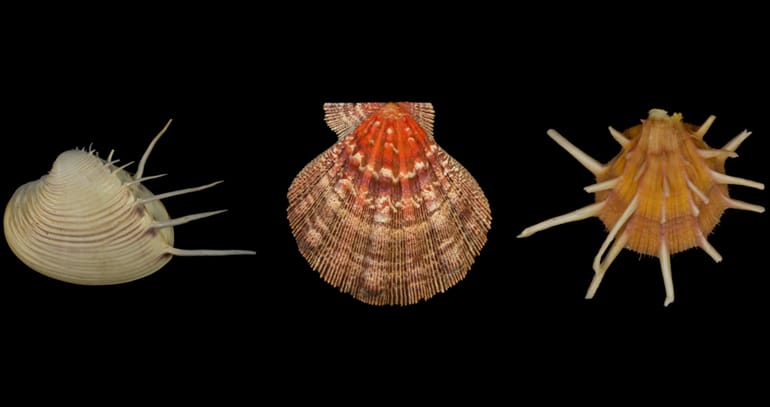
But in the seas, a colorful population of marine bivalves—the group including oysters, clams, and scallops—soldiered on, tucked into the crevices of ocean floors and shorelines. Though they also lost half their species, curiously, at least one species in each ecological niche survived.
Scientists examined how species (including these colorful marine bivalves) are lost in mass extinctions compared to environmental changes between the tropics and the poles. (Credit: Stewart Edie)
University of Chicago scientists document this surprising trend in the Proceedings of the National Academy of Sciences. Though the mass extinction wiped out staggeringly high numbers of species, they barely touched the overall “functional” diversity—how each species makes a living, be it filtering phytoplankton or eating small crustaceans, burrowing or clamping onto rocks.
The same held true for the biggest mass extinction of all, 250 million years ago: more than 90 percent of all species on Earth died out, but no modes of life disappeared.
Today’s biodiversity loss
Strangely, the scientists say, this differs from another kind of biodiversity loss: the loss of species today as you move from the warm tropics to the chillier poles. The number of species drops 80 percent to 95 percent from the tropics to the cold, snowy north and south, and functional variety also declines by 50 percent to 60 percent. Thus losing diversity due to changed environment is entirely possible—all the more reason why it’s strange to see such a pattern of survival in mass extinctions.
“The big question is: Given that we’re working on a mass extinction right now, which flavor will it be?”
“Multicellular life almost didn’t make it out of the Paleozoic era, but every functional group did. Then we see that functional diversity drops way down from tropics to poles; it parallels species loss in a way that’s totally different from the big extinctions. That’s wild—really fascinating and unexpected and strange,” says coauthor David Jablonski, professor of geophysical sciences.
This could have implications for how the mass extinction currently gathering steam could unfold and how badly it will affect Earth ecosystems, the authors say.
Jablonski and graduate student Stewart Edie, who is the first author of the paper, ran the numbers for two major mass extinctions in history: the relatively gradual end-Paleozoic extinction, perhaps driven by changing climates and ocean composition, and later, the sharper end-Cretaceous extinction, thought to be caused by a meteor impact and/or volcanic eruptions. Though they are very different stresses, the same pattern emerged.
“The rug gets pulled out from underneath all the species,” says Edie. “The landscape of the world completely and suddenly changed, making it all the more surprising that all functional types survived. Even the functional groups with only one or two species somehow make it through.”
Delicate balance
The question is pressing because functional diversity is what makes ecosystems tick. Ecosystems are delicately balanced, and losing ecological roles throws a system out of whack: Think of a forest damaged when the deer population explodes because the wolves that prey on them are removed. That balance keeps soil fertile, oceans full of fish, and grass growing for livestock.
“The big question is: Given that we’re working on a mass extinction right now, which flavor will it be?” Jablonski says. “Will we have a tropic-to-poles type, where we lose half our functional groups and so ecosystems are massively altered? Or will it be a mass extinction where you can lose all these species, but the functional groups still somehow manage to limp on? We need to understand this.”
The other author of the paper is James W. Valentine with the University of California, Berkeley. Funding came from the National Science Foundation and NASA.
During a year marked by social and political turmoil, the media has found itself under scrutiny from politicians, academics, the general public, and increasingly self-reflexive journalists and editors. Fake news has entered our lexicon both as a form of political meddling from foreign powers and a dismissive insult directed towards any less-than-complimentary news coverage of the current administration.
Paying attention to where people are getting their news and what that news is telling them is an important step to understanding our increasingly polarized society and our seeming inability to talk across political divides. The insight can also help us get at those important and oh-too common questions of “how could they think that?!?” or “how could they support that politician?!?”
My interest in this topic was sparked a few months ago when I began paying attention to the top four stories and single video that magically appear whenever I swipe left on my iPhone. The stories compiled by the Apple News App provide a snapshot of what the dominant media sources consider the newsworthy happenings of the day. After paying an almost obsessive attention to my newsfeed for a few weeks—and increasingly annoying my friends and colleagues by telling them about the compelling patterns I was seeing—I started to take screenshots of the suggested news stories on a daily or twice daily basis. The images below were gathered over the past two months.
It is worth noting that the Apple News App adapts to a user’s interests to ensure that it provides “the stories you really care about.” To minimize this complicating factor I avoided clicking on any of the suggested stories and would occasionally verify that my news feed had remained neutral through comparing the stories with other iPhone users whenever possible.
Some of the differences were to be expected—People simply cannot get enough of celebrity pregnancies and royal weddings. The Washington Post, The New York Times, and CNN frequently feature stories that are critical of the current administration, and Fox News is generally supportive of President Trump and antagonistic towards enemies of the Republican Party.
(Click to Enlarge)
However, there are two trends that I would like to highlight:
1) A significant number of Fox News headlines offer direct critiques of other media sites and their coverage of key news stories. Rather than offering an alternative reading of an event or counter-coverage, the feature story undercuts the journalistic work of other news sources through highlighting errors and making accusations of partisanship motivations. In some cases, this even takes the form of attacking left-leaning celebrities as proxy to a larger movement or idea. Neither of these tactics were employed by any of the other news sources during my observation period.
(Click to Enlarge)
2) Fox News often featured coverage of vile, treacherous, or criminal acts committed by individuals as well as horrifying accidents. This type of story stood out both due to the high frequency and the juxtaposition to coverage of important political events of the time—murderous pigs next to Senate resignations and sexually predatory high school teachers next to massively destructive California wildfires. In a sense, Fox News is effectively cultivating an “asociological” imagination by shifting attention to the individual rather than larger political processes and structural changes. In addition, the repetitious coverage of the evil and devious certainly contributes to a fear-based society and confirms the general loss of morality and decline of conservative values.
(Click to Enlarge)
It is worth noting that this move away from the big stories of the day also occurs through a surprising amount of celebrity coverage.
(Click to Enlarge)
From the screen captures I have gathered over the past two months, it seems apparent that we are not just consuming different interpretations of the same event, but rather we are hearing different stories altogether. This effectively makes the conversation across political affiliation (or more importantly, news source affiliation) that much more difficult if not impossible.
I recommend taking time to look through the images that I have provided on your own. There are a number of patterns I did not discuss in this piece for the sake of brevity and even more to be discovered. And, for those of us who spend our time in the front of the classroom, the screenshot approach could provide the basis for a great teaching activity where the class collectively takes part in both the gathering of data and conducting the analysis.
Kyle Green is an Assistant Professor of Sociology at Utica College. He is a proud TSP alumnus and the co-author /co-host of Give Methods a Chance.
Tampa’s Lowry Park Zoo started the new year with the birth of a rare Bornean Orangutan. The endangered, female primate was born in the early morning of January 6 to experienced mother Dee Dee, weighing in at an estimated three pounds.
Photo Credits: Lowry Park Zoo
There are fewer than 100 Bornean Orangutans in 24 AZA-accredited institutions in North America, making this birth very significant for the species and the Tampa community.
Dee Dee is quite the experienced mother, already giving birth four times successfully, and this is father Goyang’s third baby at the Zoo. In October, a human pregnancy test confirmed that Dee Dee was pregnant. The Zoo’s animal care team and veterinary staff worked closely with Dee Dee to voluntarily participate during ultrasounds.
“Dee Dee continues to do well with her female baby. As an experienced mother, she didn’t show any signs of any possible issues. We determined that Dee Dee’s baby had turned during one of her regular ultrasound exams,” said Dr. Ray Ball, VP of Medical Sciences at Tampa’s Lowry Park Zoo. “Careful monitoring and pre-natal care are important, but so is privacy. With veterinary medicine, the baby determines the day of birth, but the mom determines the time. With no signs of a high risk pregnancy, we let her take care of the labor naturally - she determined when it would be time to deliver her baby.”
The Zoo is currently home to a group of seven endangered Orangutans and participates in the Bornean Orangutan Species Survival Plan (SSP). The program of the Association of Zoos and Aquariums (AZA) protects wildlife species at risk of extinction. The baby will be the tenth Bornean Orangutan born at the Zoo.
“This is a significant birth for the entire critically endangered Bornean Orangutan population,” said Chris Massaro, General Curator at Tampa’s Lowry Park Zoo. “It’s important to have the community along for this journey. We hope Dee Dee’s story inspires the public to become advocates for this incredible species and learn about the perils they face in the wild.”
Native to Malaysia and Indonesia, the Bornean Orangutan (Pongo pygmaeus) can be found on the islands of Borneo and Sumatra. The species is classified as “Critically Endangered” by the IUCN due to critical habitat loss, increased use of palm oil, poaching and pet trade. The population declined more than 50 percent during the last 60 years.
The rise of craft beer in the United States gives us more options than ever at happy hour. Choices in beer are closely tied to social class, and the market often veers into the world of pointlessly gendered products. Classic work in sociology has long studied how people use different cultural tastes to signal social status, but where once very particular tastes showed membership in the upper class—like a preference for fine wine and classical music—a world with more options offers status to people who consume a little bit of everything.
Photo Credit: Brian Gonzalez (Flickr CC)
But who gets to be an omnivore in the beer world? New research published in Social Currents by Helana Darwin shows how the new culture of craft beer still leans on old assumptions about gender and social status. In 2014, Darwin collected posts using gendered language from fifty beer blogs. She then visited four craft beer bars around New York City, surveying 93 patrons about the kinds of beer they would expect men and women to consume. Together, the results confirmed that customers tend to define “feminine” beer as light and fruity and “masculine” beer as strong, heavy, and darker.
Two interesting findings about what people do with these assumptions stand out. First, patrons admired women who drank masculine beer, but looked down on those who stuck to the feminine choices. Men, however, could have it both ways. Patrons described their choice to drink feminine beer as open-mindedness—the mark of a beer geek who could enjoy everything. Gender determined who got “credit” for having a broad range of taste.
Second, just like other exclusive markers of social status, the India Pale Ale held a hallowed place in craft brew culture to signify a select group of drinkers. Just like fancy wine, Darwin writes,
IPA constitutes an elite preference precisely because it is an acquired taste…inaccessible to those who lack the time, money, and desire to cultivate an appreciation for the taste.
Sociology can get a bad rap for being a buzzkill, and, if you’re going to partake, you should drink whatever you like. But this research provides an important look at how we build big assumptions about people into judgments about the smallest choices.
Evan Stewart is a Ph.D. candidate in sociology at the University of Minnesota. You can follow him on Twitter.
Franklin Park Zoo’s new Baird’s Tapir made her exhibit debut last week, and now the sweet calf needs a name!
Zoo New England is running a naming contest via CrowdRise, with donations supporting Global Wildlife Conservation’s Nicaragua Tapir Project. With a $5 minimum donation, members of the public can vote for their favorite name for the calf, now through January 31. Follow this link to vote: https://www.crowdrise.com/babytapir
The female calf was born on January 1 to 28-year-old dad, Milton, and 13-year-old mom, Abby. This is the fourth offspring for both parents.
Photo Credits: Franklin Park Zoo / Zoo New England
Zoo New England participates in the Baird’s Tapir Species Survival Plan (SSP), which is a cooperative, inter-zoo program coordinated nationally through the Association of Zoos and Aquariums (AZA). SSPs help to ensure the survival of selected species in zoos and aquariums, most of which are threatened or endangered, and enhance conservation of these species in the wild. Because the AZA managed Tapir population is so small – 29 males and 20 females (including the new calf) – every successful birth and survival helps to secure the captive population. The new female calf at Franklin Park Zoo helps to balance out this small, but male skewed population.
Baird's Tapir (Tapirus bairdii), also known as the Central American Tapir, is a species of native to Mexico, Central America and northwestern South America.
They are the largest land mammal found in South America and are classified as “Endangered” by the IUCN Red List. While they are hunted for food and sport, their greatest threat to survival is habitat destruction due to logging and clearing of land for agriculture and development. In addition to humans, jaguars are the only other significant threat to this animals’ survival in the wild.
The Baird’s Tapirs, at Franklin Park Zoo, make their home in the ‘Tropical Forest’ exhibit.
Perth Zoo’s new Nepalese Red Panda cub was given its first health check, just as an Australian conservation organization helped rescue six Red Pandas being trafficked across international borders.
Perth Zoo Keeper, Marty Boland said, “We were very excited to welcome a new cub to the Zoo family, however it coincides with the rescue of six Red Pandas from wildlife traffickers, emphasizing just how perilous it is out there for these animals.”
Photo Credits: Alex Asbury/ Perth Zoo
The rescued Red Pandas, destined for the illegal wildlife trade, were taken into the care of one of Perth Zoo’s conservation partners, Free the Bears, after being seized on the border of Laos and China. Tragically, only three of the six survived their first night due to severe stress and potential exposure to disease.
“The recent rescue in Laos highlights how vital coordinated zoo breeding programs are for the survival of this endangered species. It ensures we have an insurance population in place to fight extinction.”
Including the new cub, Perth Zoo has successfully reared 19 Nepalese Red Pandas since 1997.
The two-month old Red Panda was born to 9-year-old mother, Anusha, who was also born at Perth Zoo, and 6-year-old father, Makula, who was born in Canberra.
"Today our veterinarians gave our furry new arrival a quick health check of its body condition, eyes, teeth, ears and weight,” Marty said. “The Perth Zoo team are also consulting with Free the Bears, providing advice on appropriate diets and how to reduce heat stress for the rescued pandas.”
Nepalese Red Pandas are found across the Himalayan Mountain and foothills of India, China, Nepal and Bhutan. Deforestation and illegal poaching continue to be significant threats to remaining populations. Less than 10,000 are thought to remain in the wild.
Apart from coordinated breeding programs, Perth Zoo is committed to saving wildlife and has several conservation partners, including Free the Bears, and an ongoing partnership with TRAFFIC, the international wildlife trade monitoring network. Jointly we help fund a Wildlife Crime Analyst position to fight wildlife trafficking and poaching.
Perth Zoo’s Red Panda cub is expected to emerge from the nest box in April.
Those wanting to help Red Pandas are encouraged to donate to Perth Zoo’s Wildlife Conservation Action program, which supports organizations including Free the Bears and TRAFFIC, helping protect animals beyond the Zoo’s borders.
A program of one of the five largest supermarket chains in South Africa, drove increased adoption of environmental practices at the farm level, a new study of the store’s supply chain indicates.
The study is one of the first analyses of a company-led sustainability program in the food and agriculture space.
Agriculture environmental is one of the largest global polluters, driving deforestation and contributing an estimated 30 percent of total greenhouse gas emissions.
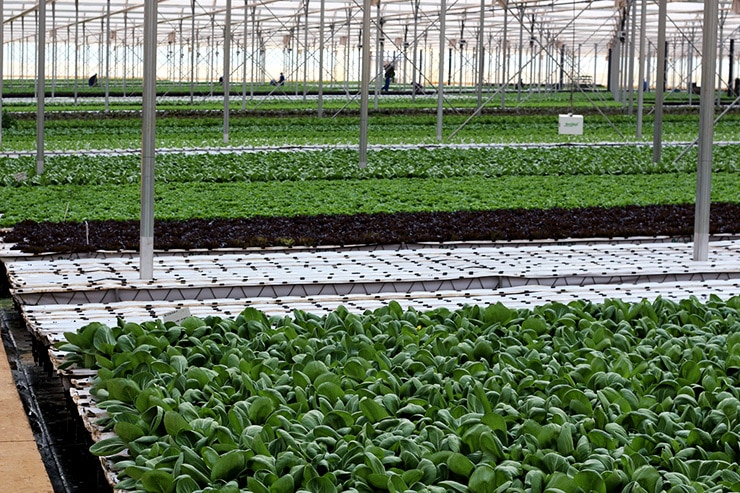
Leafy green vegetables in a growing facility in Gauteng Province, South Africa. (Credit: Katherine Smit/Stanford)
“If indeed these company-led policies are effective and able to transform their entire supply chains, then they can potentially transform land-use practices worldwide and have a very positive impact on the environment,” says study coauthor Eric Lambin, professor in the School of Earth, Energy & Environmental Sciences at Stanford University.
“Having this kind of evaluation done by independent researchers increases the confidence of the public in these private programs,” Lambin says.
Getting access
The biggest challenge in evaluating the effects of food store sustainability programs has been gaining access to stores’ private data. For this reason, researchers have focused on certifications led by nongovernmental organizations and multi-stakeholder standards that offer open access to their data, such as FairTrade and the Rainforest Alliance.
“The real question here is, ‘Will companies’ sustainability efforts slow if they don’t have an NGO checking in on them? Will they be actually driving change or is it just greenwashing?'” says lead author Tannis Thorlakson, a doctoral student in Stanford Earth’s Emmett Interdisciplinary Program in Environment and Resources (E-IPER).
“We’re seeing big shifts in farming practices, which is really exciting.”
Several US-based food retailers with company-led sustainability programs refused to grant Thorlakson access to their data. Eventually, the high-end South African grocery and clothing chain Woolworths gave access.
“It’s really hard to evaluate a company’s sustainability program because you need to know exactly who their suppliers are and how the program works,” Thorlakson says. “Woolworths provided a unique opportunity because they agreed to total academic freedom to evaluate their program and publish results.”
The researchers found that Woolworths’ large-scale fruit, vegetable, and flower growers use more environmental management practices when compared both over time and with a random sample of farms certified by the food industry’s global environmental standard for farm management, known as GLOBALG.A.P. The world’s most widely implemented farm certification program, GLOBALG.A.P. enforces definitive environmental rules for farmers and performs annual third-party audits of production.
Changing the supply chain
Woolworths’ Farming for the Future program combines annual auditor feedback with the individual needs of farmers, rather than imposing definitive rules. Farms are evaluated on sustainability criteria each year, including soil management, water use, biodiversity, waste disposal, pest management, carbon footprint, and environmental laws. The company also employs auditors trained as agronomists, soil scientists, or environmental scientists.
“According to one farmer, other auditors will drive into the farm and say, ‘Nice trees you’ve got there,'” Thorlakson says. “‘But when the Farming for the Future auditor comes in, they drive up and they say, ‘Tell me about those trees—those are an invasive species and they’re probably affecting your water table. Why aren’t we working on a management plan to deal with those?'”
In addition to its flexible model and relationships with its auditors—whom Woolworths finances—researchers believe the program’s success can be attributed to its growers being part of a direct supply chain. Other large grocery chains often have intermediate suppliers between them and the actual farmers.
“The auditors are building relationships and helping farmers improve their practices,” Thorlakson says. “For example, conventional farmers are now using cover crops, which is a really hard practice to get farmers to take up but which creates long-term environmental benefits. We’re seeing big shifts in farming practices, which is really exciting.”
The researchers conducted empirical analyses of the company’s farming practices since the program was formally launched in 2009 to understand changes over time, using more than 950 third-party audits of 228 large-scale farmers.
The analysis also included a comparison of Woolworths and a random sample of similar GlobalG.A.P. certified farms. Thorlakson began fieldwork in 2015, when she spent 3 months embedded in Woolworths’ sustainability team in Cape Town, South Africa.
Thorlakson completed more than 90 qualitative interviews with auditors and farmers in October 2016, which mainly showed that farmers value long-term partnerships with their buyers, she says. Researchers hope this study will encourage other companies to rethink their supply chain sustainability programs to incorporate a more partnership-based approach to working with their farmers.
“I hope that more companies will see the value of letting researchers evaluate their program and publish the results—if we find that a program is not that effective, we can also identify why and see what’s wrong, and how it can be improved and what can be corrected,” Lambin says. “The more of these studies we are able to do, the better the scientific community will become at identifying the reasons for success.”
Jens Hainmueller, an associate professor in the political science department, is a coauthor on the study.
The study’s funding came from the Stanford Emmett Interdisciplinary Program in Environment and Resources’ Victoria and David Rogers Fund, the George Rudolf Fellowship Fund, and the Stanford Dean A. McGee Fund. A National Science Foundation Graduate Research Fellowship also supported the research.
first shot looks like this babytapes is out here making confessional vlogs
New Year’s Day was extra special at Franklin Park Zoo… a Baird’s Tapir, named Abby, gave birth to a female calf.
The calf was born on January 1 to 28-year-old dad, Milton, and 13-year-old mom, Abby. This is the fourth offspring for both parents.
The soon-to-be-named calf recently had her first vet examination. The exam included blood work and a general physical. The calf weighed-in at 20.5 pounds and appears to be in good health.
“Abby is an experienced mother, and she is being very attentive to her new baby, who is strong and has been nursing well. As with any new birth, we are carefully monitoring the health of the new calf and the mother,” said Dr. Alex Becket, Zoo New England Associate Veterinarian in the department of Animal Health.
The baby’s arrival was long awaited by the Animal Care staff, as the gestation period for Baird’s Tapirs is thirteen months. Similar to a deer fawn, Baird’s Tapir calves are distinctly marked with watermelon like white stripes and spots, which help to camouflage them in the dappled light of the rainforest. The stripes begin to fade between five and six months of age.
“We are thrilled to share this wonderful news,” said John Linehan, Zoo New England President and CEO. “Given the small size of the North American captive population, this is a very important birth for this endangered species. Zoo New England is committed to Tapir conservation and has supported important field work being done on behalf of Baird’s Tapirs in Nicaragua.”
Photo Credits: Zoo New England/Sarah Woodruff
ZNE participates in the Baird’s Tapir Species Survival Plan (SSP), which is a cooperative, inter-zoo program coordinated nationally through the Association of Zoos and Aquariums (AZA). SSPs help to ensure the survival of selected species in zoos and aquariums, most of which are threatened or endangered, and enhance conservation of these species in the wild. Because the AZA managed Tapir population is so small – 29 males and 20 females (including the new calf) – every successful birth and survival helps to secure the captive population. The new female calf at Franklin Park Zoo helps to balance out this small, but male skewed population.
Baird's Tapir (Tapirus bairdii), also known as the Central American Tapir, is a species of native to Mexico, Central America and northwestern South America.
They are the largest land mammal found in South America and are classified as “Endangered” by the IUCN Red List. While they are hunted for food and sport, their greatest threat to survival is habitat destruction due to logging and clearing of land for agriculture and development. In addition to humans, jaguars are the only other significant threat to this animals’ survival in the wild.
The Baird’s Tapirs, at Franklin Park Zoo, make their home in the ‘Tropical Forest’ exhibit. The new baby is expected to make her public debut within a few weeks.
The National Aviary recently introduced its new Linnaeus’s Two-toed Sloth. The female was born August 21, 2017 and has been named Vivien, in honor of the iconic actress, Vivien Leigh.
Measuring about 14 ½” long and weighing almost 2.5 pounds, Vivien made her appearance in the arms of her caretakers. Dr. Pilar Fish, National Aviary Director of Veterinary Medicine, conducted a checkup to assess Vivien’s growth and overall health, and at the end of the exam pronounced the little Sloth in excellent health.
Photo Credits: National Aviary/Jamie Greene (Video features a joint announcement with special friend of the National Aviary and Ellen Degeneres, Violet Spataro.)
Vivien will be hand-raised by National Aviary experts, so she’ll be comfortable around people and well prepared for her role as an educational ambassador.
Linnaeus's Two-toed Sloth (Choloepus didactylus) is a species of sloth from South America. They are found in Venezuela, the Guyanas, Colombia, Ecuador, Peru, and Brazil north of the Amazon River. Their habitats are rapidly diminishing due to human activity.
Guests who meet the new baby Sloth will learn about the importance of conservation and what steps they can take to protect rainforest creatures. Visitors can see the baby during daily “Sloth Talks” at 12:30 pm, beginning January 9 (included with admission). In addition, guests will have the opportunity to book an interactive encounter with her beginning February 1st in which guests can touch the Sloth, take photos, and interact with her in a comfortable, private setting.
Two other Sloths, Valentino and Wookiee, also make their home at the National Aviary.
“We are delighted to welcome another Sloth,” says National Aviary Executive Director Cheryl Tracy. “Public response to the arrival of Valentino in 2016 was, and has continued to be, overwhelmingly positive, and with so much interest in seeing and learning about this remarkable species, we felt that the time was right to introduce another. Like Valentino, this precious little girl Sloth will be an ambassador for her species, and for all those creatures that live in the rain forests and cloud forests of Central and South America. And we hope that one day, several years down the road, Vivien and Valentino will become parents to new Sloths born at the National Aviary.”
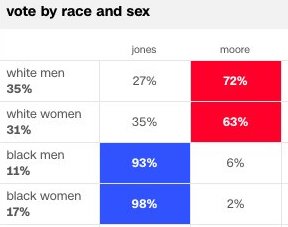
Over the last few weeks, commentary about alleged sexual predator Roy Moore’s failure to secure a seat in the U.S. Senate has flooded our news and social media feeds, shining a spotlight on the critical role of Black women in the election. About 98% of Black women, comprising 17% of total voters, cast their ballots for Moore’s opponent Doug Jones, ensuring Jones’s victory. At the same time, commentators questioned the role of White women in supporting Moore. Sources estimate that 63% of White women voted for Moore, including the majority of college-educated White women.
Vogue proclaimed, “Doug Jones Won, but White Women Lost.”U.S. News and World Reports asked, “Why do so many White women vote for misogynists?” Feminist blogJezebel announced succinctly: “White women keep fucking us over.” Fair enough. But we have to ask, “What about Black and White men?” The fact that 48% of Alabama’s voting population is absent from these conversations is not accidental. It’s part of an incomplete narrative that focuses solely on the impact of women voters and continues the false narrative that fixing inequality is solely their burden.
Let’s focus first on Black men. Exit poll data indicate that 93% of Black men voted for Jones, and they accounted for 11% of the total vote. Bluntly put, Jones could not have secured his razor-thin victory without their votes. Yet, media commentary about their specific role in the election is typically obscured. Several articles note the general turnout of Black voters without explicitly highlighting the contribution of Black men. Other articles focus on the role of Black women exclusively. In a Newsweek article proclaiming Black women “Saved America,” Black men receive not a single mention. In addition to erasing a key contribution, this incomplete account of Jones’s victory masks concerns about minority voter suppression and the Democratic party taking Black votes for granted.
White men comprised 35% of total voters in this election, and 72% of them voted for Moore. But detailed commentary on their overwhelming support for Moore – a man who said that Muslims shouldn’t serve in Congress, that America was “great” during the time of slavery, and was accused of harassing and/or assaulting at least nine women in their teens while in his thirties – is frankly rare. The scant mentions in popular media may best be summed up as: “We expect nothing more from White men.”
As social scientists, we know that expectations matter. A large body of work indicates that negative stereotypes of Black boys and men are linked to deleterious outcomes in education, crime, and health. Within our academic communities we sagely nod our heads and agree we should change our expectations of Black boys and men to ensure better outcomes. But this logic of high expectations is rarely applied to White men. The work of Jackson Katz is an important exception. He, and a handful of others have, for years, pointed out that gender-blind conversations about violence perpetrated by men, primarily against women – in families, in romantic relationships, and on college campuses – serve only to perpetuate this violence by making its prevention a woman’s problem.
The parallels to politics in this case are too great to ignore. It’s not enough for the media to note that voting trends for the Alabama senate election were inherently racist and sexist. Pointing out that Black women were critically important in determining election outcomes, and that most White women continued to engage in the “patriarchal bargain” by voting for Moore is a good start, but not sufficient. Accurate coverage would offer thorough examinations of the responsibility of all key players – in this case the positive contributions of Black men, and the negative contributions of White men. Otherwise, coverage risks downplaying White men’s role in supporting public officials who are openly or covertly racist or sexist. This perpetuates a social structure that privileges White men above all others and then consistently fails to hold them responsible for their actions. We can, and must, do better.
Mairead Eastin Moloney is an Assistant Professor of Sociology at the University of Kentucky.
Ten baby Nutrias are frolicking through the foliage in the Nutria enclosure at the Basel Zoo. With so many busy babies, visitors will always find something to watch at this popular exhibit.
Basel Zoo has kept Nutrias since 1943, and more than 400 youngsters have been born at the zoo since then. Baby Nutrias are born fully furred and with their eyes open. They begin eating plant material within hours of birth, but they also nurse for seven to eight weeks. These diurnal rodents are semiaquatic, so they divide their time between land and water. Adults weigh 10-20 pounds.
Photo Credit: Zoo Basel
Nutrias, also known as Coypu, are native to South America, where they live near rivers and lakes. They feed on plants and live in large groups, which also have smaller subgroups within them. The subgroups are made up of breeding pairs and their offspring.
At the beginning of the 19th century, Nutrias were hunted for their beautiful red-brown fur, and were later bred in farms in Europe, North America, and Africa. As animals occasionally escaped from the farms, populations of these highly adaptable animals became established all over the world.
The feeding and burrowing behaviors of Nutrias can be destructive to wetlands where they have been introduced, so in some areas they are seen as a nuisance. Each animal may eat up to 25% of its body weight in vegetation every day. They are often mistaken for Beavers (which are much larger than Nutrias) and Muskrats (which are smaller than Nutrias).
Nutrias are currently listed as a species of Least Concern by the International Union for Conservation of Nature (IUCN).
After the 2016 Presidential election in the United States, Brexit in the UK, and a wave of far-right election bids across Europe, white supremacist organizations are re-emerging in the public sphere and taking advantage of new opportunities to advocate for their vision of society. While these groups have always been quietly organizing in private enclaves and online forums, their renewed public presence has many wondering how they keep drawing members. Recent research in American Sociological Review by Pete Simi, Kathleen Blee, Matthew DeMichele, and Steven Windisch sheds light on this question with a new theory—people who try to leave these groups can get “addicted” to hate, and leaving requires a long period of recovery.
Photo by Dennis Skley, Flickr CC
The authors draw on 89 life history interviews with former members of white supremacist groups. These interviews were long, in-depth discussions of their pasts, lasting between four and eight hours each. After analyzing over 10,000 pages of interview transcripts, the authors found a common theme emerging from the narratives. Membership in a supremacist group took on a “master status”—an identity that was all-encompassing and touched on every part of a member’s life. Because of this deep involvement, many respondents described leaving these groups like a process of addiction recovery. They would experience momentary flashbacks of hateful thoughts, and even relapses into hateful behaviors that required therapeutic “self talk” to manage.
We often hear about new members (or infiltrators) of extremist groups getting “in too deep” to where they cannot leave without substantial personal risk. This research helps us understand how getting out might not be enough, because deep group commitments don’t just disappear when people leave.
Evan Stewart is a Ph.D. candidate in sociology at the University of Minnesota. You can follow him on Twitter.
The Santa Barbara Zoo’s Giant Anteater, Anara, recently gave birth to a rare set of twins! The female pups were born overnight and discovered by keepers on Monday, November 21.
Twins are unusual in this species, and the likelihood for survival of both pups, if left with the mother, is extremely low.
“We monitored the newborn pups and allowed them both to stay with their mother for as long as possible,” says Dr. Julie Barnes, Director of Animal Care and Health. “We had several plans to implement, depending on how they progressed. Although Anara did an amazing job in the first few days, we were starting to see a significant weight discrepancy between the pups. That indicated it was time to start hand-rearing the smaller pup in order to increase the chances of survival of both pups.”
Photo Credits: Santa Barbara Zoo
Giant Anteater babies grow fast, and providing enough milk for more than one infant is difficult. In addition, the mother carries the baby on her back until they are nearly her size. Therefore, carrying both twins would prove impossible for the mother after just a few weeks. Anara herself is a twin and was hand- raised at the Fresno Zoo.
Keepers identify the larger pup by two black stripes on her back, while the smallest of the pair has only one stripe. Currently, the smaller pup is in an incubator at the Animal Hospital and is being fed every three hours, around the clock. She will not be on view to the public for several months.
Anara and the larger pup she is caring for are expected to go out on exhibit within the next two weeks, and the pup will be seen clinging to her mother’s back.
“Anara is doing well and is a great mother,” adds Dr. Barnes. “We are delighted that both pups are female, as her previous two surviving pups were male. We need more females in order to ensure we have a genetically healthy population for his species in North America. Her mate Ridley, who came from Germany, has valuable genes that are not well represented so far. Those genes go with his offspring and help diversity the genes of Giant Anteaters in human care in zoos accredited by the Association of Zoos and Aquariums.”
Although the birth of twins is rare for Anteaters, it is not so much the case for Anara, as this is her second set of twins out of three pregnancies with Ridley. The pair’s first offspring were twins, a male and female, born in March 2014, but the female newborn did not survive. The male pup was hand-reared and is now at the Tennessee Zoo. Nine months later, another male pup was born and successfully raised by Anara. He now resides at the Birmingham Zoo.
Since 1975, a total of 29 Giant Anteaters have now been born at the Santa Barbara Zoo. Prior to Anara and Ridley’s first litter in 2014, the last time a Giant Anteater was born there was in 2006.
The Zoo was a leader in an early nationwide study of Giant Anteaters, thanks in great part to a special female named ‘Grandma’. The average lifespan for this species is between 20 and 23 years of age, and Grandma lived to be 31 years old. During her life she produced fifteen offspring. She was the oldest Giant Anteater in captivity when she died in 2002.
The Giant Anteater (Myrmecophaga tridactyla) was once found from northern Argentina to southern Belize, in savannas, grasslands, swampy areas, and humid forests. They have since disappeared from Belize, Guatemala, and probably Costa Rica. In South America, they are also gone from Uruguay and portions of Brazil.
The Union for the Conservation of Nature (IUCN) estimates population loss of at least 30% over the past 10 years, and classifies the species as “Vulnerable.”
Giant Anteaters have a body length of 3 to 4 feet with a tail that is an additional 2 to 3 feet, and weigh 40 to 85 pounds, though some captive Anteaters have weighed more than 100 pounds.
This species uses powerful claws to rip apart termite and ant mounds, and an 18 to 24 inch tongue to eat termites, ants, and grubs. In the wild, they may consume as many as 35,000 ants in a single day. At the Santa Barbara Zoo, they eat a specially formulated insectivore diet, plus avocados, bananas, crickets, and worms. The avocados must be ripe because anteaters do not have teeth; they break open the skin with their long sharp claws.
Anteaters in the wild are solitary, except for females with young, and spend most of their days with their noses to the ground searching for food using exceptional senses of smell and hearing. Their sense of smell is 40 times more powerful than a human’s.
Giant Anteaters typically spend their first months of life clinging to their mother’s backs, where their black and gray stripes line up with those of the mother.
The new Giant Anteaters twins, like many of the animals at the Santa Barbara Zoo, can be named by making a donation to the Zoo. By donating for a chance to name the pups, sponsors also support the AZA Giant Anteater cooperative breeding program, with the goal of increased genetic diversity in North American zoos.
Taronga Zoo is delighted to share images of their new male Koala joey. The tiny face has appeared just in time to catch the warmer weather of an Australian summer.
The joey has been named ‘Banks’ after naturalist and explorer Sir Joseph Banks. This continues Taronga’s tradition of choosing names for their Koalas while honoring Australian heritage.
Banks is nine months old and is the second joey to mum Malleey, who gave birth to Baxter three years ago.
According to keeper, Laura Jones, Banks is now eating eucalyptus leaves, supplemented with mum’s milk. Soon he will be weaned and his diet will consist of only Eucalyptus leaves.
Banks has also now completely emerged from the pouch. “At ninth months old, he’s already experimenting with sitting on his own, which usually happens around 10 months, so he is a bit advanced for his age,” remarked Laura.
Photo Credits: Taronga Zoo
Koalas are one of Australia’s most iconic species. Unfortunately, Koala numbers are declining in the wild due to habitat encroachment, so every birth helps to secure a future for this iconic species.
Found along the East Coast of Australia, Koala’s are losing their homes due to deforestation. Being a sensitive animal, Koala’s do not translocate habitats well. Rather than cutting down trees and planting new ones elsewhere in the hope that wildlife will relocate, it is very important to protect their home today.
“It is particularly important for people to watch out for Koalas on the roads with the arrival of the busy Christmas period,” Laura added.
Taronga’s Koala breeding program has now produced three joeys this year. A great time to see the new Koala joey, in the zoo’s Aussie Walkthrough exhibit, is during the daily keeper talks at 3:30pm.
Zoo Osnabrück recently released photos of four Asian Small-clawed Otter pups. The pups were born to mother, Haima, and father, Ambu, in early August, but keepers wanted to give the new family time to bond before they made a public debut.
According to veterinarians, the pups all appear healthy. Staff was able to ascertain that two of the pups are females and one is certainly male, however, the smallest and quickest of the litter has yet to allow staff that close-up of an exam. Zoo Veterinarian, Thomas Scheibe, smiled and said, "A small, agile otter is really difficult to catch. One of the four cubs hid completely, so we could only catch and examine three of the cubs. But…we'll catch up soon!”
Photo Credits: Zoo Osnabrück
As part of their routine vet examinations and care, the Asian Small-clawed Otters at Zoo Osnabrück are regularly vaccinated against distemper, a viral disease that often occurs in dogs or some wild animals. "Because the Zoo is not an isolated area, we vaccinate the animals that are susceptible to distemper," explains the wildlife veterinarian.
During the time of the recent exam, each of the pups weighed about 500 grams.
In addition to the vaccination, the otter pups received a microchip, which is also used in pets or horses. "The chip is used for the animals, so that they are individually recognizable. Within one to two years, the young animals will leave us for another zoo, "explained Tobias Klumpe, research associate responsible for the Zoo’s animal transfers.
Visitors can watch the busy family life of the Asian Small-clawed Otters in Zoo Osnabrück’s outdoor area of the Tetra Aquarium. Until about the end of November, the small predators will use the outdoor area before they are moved into their winter quarters inside the Tetra Aquarium, where they will also be on-exhibit.
Although the Asian Small-clawed Otter (Aonyx cinerea syn. Amblonyx cinereus) is only listed as “Vulnerable” by the IUCN, the species is seriously threatened by rapid habitat destruction for palm oil farming and by hunting and pollution. They are considered an “indicator species,” meaning their population indicates the general health of their habitat and of other species.
The species is the smallest Otter in the world and lives in freshwater wetlands and mangrove swamps throughout Southeast Asia, including southern India and China, Indonesia, the Philippines, Borneo, and the Malay Peninsula. They prefer quiet pools and sluggish streams for fishing and swimming.
Unlike Sea Otters, they spend more time on land than in water, but they are skillful, agile swimmers and divers, with great endurance. They can stay submerged for six to eight minutes.
Asian small-clawed otters are about two feet long and weigh less than ten pounds (half the size of North American River Otters). Their claws do not protrude beyond the ends of the digital pads, thus their names, and their feet do not have fully developed webbing and look very much like human hands.
They are one of the few species of Otter that live in social groups. The bond between mated pairs of Asian Small-clawed Otters is very strong. Both the male and female raise the young and are devoted parents. In the wild, Asian Small-clawed Otters live in extended family groups of up to 12 individuals. The entire family helps raise the young, which are among the most active and playful of baby animals.
Four Otter pups were born at Woburn Safari Park in late September, and they’re now out of the den exploring their exhibit.
The Asian Small-clawed Otter pups are the second litter born to parents Kovu and Kelani. The first litter of five pups was born in July 2016. The one-year-olds are proving to be great helpers to Kovu and Kelani when it comes to managing the newborns. Photo Credits: Woburn Safari Park (1,3,4,5); Linda McPherson (2)
The four new pups, one female and three males, recently received their first hands-on health check from keepers. The pups were microchipped, sexed, and given a quick exam. All four are doing well.
Animal keeper Louise Moody said, "We are really excited that Kelani has welcomed another litter successfully and that all the pups are doing well. Their older siblings are helping out their parents and bringing food for them all into the nest box.”
The four pups and seven adult Otters can now be seen playing together in their outdoor enclosure, and the pups are learning to swim. The water level in the exhibit pool has been temporarily lowered until the little Otters grow a bit bigger.
In a few months, the family will say goodbye to the older pups. They will be sent to other zoos to become part of Otter breeding programs.
Asian Small-clawed Otters are listed as Vulnerable on the International Union for Conservation of Nature (IUCN) Red List of Threatened Species. They live in coastal wetlands in South and Southeast Asia, and their habitat has been degraded and reduced significantly in recent decades.
When it comes to sex between plants, tiny bees the size of ladybugs play a critical role in promoting long-distance pairings, according to one of the most detailed wild tree paternity tests ever conducted.
The findings clarify how pollinating animals promote genetic diversity that is essential for plants’ adaptation in the face of disease, climate change, and other threats relevant for agriculture and reforestation efforts worldwide.
As reported in the Proceedings of the National Academy of Sciences, researchers identified the pathways that hundreds of wild bees traveled to and from the trees they pollinated across a forest area of more than 2.5 square miles (690 hectares).
“Size isn’t everything.”
To their surprise, the smallest bees managed to cover distances just as far as their larger pollinating cousins, frequently acting as tiny matchmakers for trees separated by more than a mile. In fact, in half of the cases where a pair of trees separated by a significant distance created a fruit together, the pollen had been carried by a bee no bigger than a grain of rice.
“Size isn’t everything,” says primary investigator Shalene Jha, an associate professor of integrative biology at the University of Texas at Austin. “These little bees are responsible for major beneficial impacts in terms of reproduction and gene flow.”
The mapping of trees, bees, and genetic markers took approximately four years and spanned three sections of a tropical rainforest near the Panama Canal. The area of study was 10 times the size of most previous research projects attempting to map pollen movement mediated by bees.
“If you work in a small portion of forest, you’re only capable of measuring pollen movement in a small area,” Jha says. “We picked up the signal about how far these little bees move because we started doing work that was commensurate with the scale at which they’re actually flying.”
More than 85 percent of plants, including nearly two-thirds of food crops, rely on bees and other pollinating insects for sexual reproduction. Most studies of pollinating insects have focused primarily on larger bees, which carry the most pollen and, thus, help plants produce the most fruit and seeds.
Nonetheless, there are tens of thousands of bee species—and researchers wanted to understand more about the function of smaller bees. They discovered that the tiny bees pay more visits to flowers than their larger counterparts, and they cover remarkable distances as they pollinate.
These long-distance matches help prevent inbreeding among closely related plants.
Bees as small as a few millimeters move pollen across areas more than a million times their body size. To put that in perspective, an average adult person would need to travel from spots about as far apart as Los Angeles and Chicago to cover an equivalent distance.
Because these long-distance matches help prevent inbreeding among closely related plants, the far-flying bees help trees have a thriving new generation of offspring to replace them.
“We haven’t traditionally asked how pollinators influence the way genes are passed on across generations, but it’s incredibly important for long-term population persistence,” Jha says.
“We typically look at seeds or the number of seeds when we want to know a bee’s role in pollination service, but not ‘who are the fathers of these seeds?’ ”
Knowing the parents of any given seed or plant is essential, researchers say. Farmers and foresters have long used this information to plan not only for quantity in output but also quality—for example, juicier or larger fruits in a crop, or faster-growing trees in a forest.
Panama is a biodiversity hotspot, and Miconia trees play a central role in the country’s rainforests. During the past half-century, deforestation has reduced the proportion of forest in the country by almost 30 percent, causing erosion and other challenges in an economically vital watershed—the one that surrounds the Panama Canal.
The findings clarify how pollinators of all sizes can help to promote plant reproduction and reforestation in places like Panama—and how small pollinators help plants in ecosystems worldwide.
Bee species in most places, including the United States, tend to vary in size and in pollinating behaviors in ways that are similar to the species studied in Panama.
Because smaller bees have often shown more resilience than their larger cousins to threats such as habitat destruction, it’s helpful to know their potential as pollen dispersers in the face of other bees’ decline.
Postdoctoral researcher Antonio Castilla is the paper’s first author. Coauthors are graduate students Nathaniel Pope and Megan O’Connell, undergraduate Maria Rodriguez, lab outreach coordinator Laurel Trevino, and the University of Panama’s Alonso Santos.
The National Science Foundation provided partial funding.
Deputy Section Head of Primates, Natalie Horner, has successfully taken on the role of surrogate mother to two abandoned Egyptian Fruit Bat pups at Cotswold Wildlife Park.
This is the first time Natalie has hand-reared these nocturnal mammals and, according to Park records, it is also the first time this species has been hand-reared at the Burford collection. The pups were discovered on their own when the Bat House was undergoing a major revamp.
Natalie explained, “A couple of days after we moved all of the Bats into temporary holdings, while we refurbished the Bat House, we saw both babies roosting by themselves. Mother Bats often 'park' their babies to give themselves a break. So we left them for a day, in the hope their mums would come and collect them again, as the chances of the babies surviving without a feed and warmth are very slim.”
Their mothers never returned so the decision was made to hand-rear them in order to give the pups, named Bruce and Wayne, the best possible chance of survival. Natalie became their surrogate mother and took them to her home where they could be given around-the-clock care. At the time, they were around four to six weeks old and weighed forty grams. Unable to maintain their own body temperature, they were kept in an incubator for two weeks and monitored closely by Natalie.
Photo Credits: Cotswold Wildlife Park
Hand-rearing these tiny winged-mammals was no mean feat. A lot of time and effort was invested in the newborns, which hopefully would result in not only their survival but also their eventual reintroduction to the colony.
Natalie said, “I had to feed the babies every three hours in the early days. They were given milk as well as mashed fruit. The first feed of the day was at six o’clock in the morning and the last feed was at midnight.”
Feeding soon became one of Natalie’s favorite parental duties, and she explained why: “One of the things I'll never forget was wrapping the babies in their blankets for feed times. Wrapping them up gave them comfort, as their mother would wrap her wings around them to keep them safe. As soon as they finished their feed (and sometimes during) they would fall asleep wrapped in their blankets. It really melted my heart.”
As they continued to grow, and in order for their wings to developed properly, she encouraged them to fly.
“When they were around ten weeks old we began flying lessons. This was great fun. Bats instinctively know how to fly, so they just needed a little bit of encouragement. I would hang them from my finger and gently bob them up and down to encourage them to wing beat. I hung towels and sheets on the walls of my spare room to give plenty of roosting opportunities. The first lesson went as expected - they flapped their wings and flopped straight on the floor! They quickly recovered though and it didn't take long at all for their muscles to strengthen and for them to fly from one side of the room to the other. From then we had nightly flying lessons. As soon as they were able to fly comfortably around my spare room they were upgraded to their own enclosure at the Park before being reintroduced to the colony.”
Bruce and Wayne developed into strong young Bats and the day Natalie had been hoping for finally arrived. Natalie continued, “By the time the Bats were six months old they were fully self-feeding and very strong and capable flyers. They are still only half the size of the adult Bats but shouldn't have any problems integrating and competing for food. So the decision was made to reintroduce them to the rest of the colony. There wasn't much preparation needed so the Bats were put into transport bags and taken to the Bat enclosure. Once taken out of the bags, I placed them on my finger for one last time and watched them fly off to rejoin the rest of the colony. They both flew a couple of circuits of the enclosure before roosting with the rest of the colony. It was such a proud moment for me, and such a happy ending to what had been four amazing months. To see the babies back with their family made all the hard work worth it. I'm so happy for them to be back where they belong.”
The tiny survivors are testament to Natalie’s dedication as their keeper. Looking back on her time as their surrogate mother, she said: “Hand-rearing Bruce and Wayne was an amazing experience. To care for them, help them grow and develop into strong, healthy Bats and then reintroduce them back to their colony was incredibly rewarding. Bats are fascinating animals and are important plant pollinators and seed dispersers. It’s been great to raise awareness for these misunderstood animals and hopefully we've been able to change some opinions and generate more love for these wonderful mammals.”
Egyptian Fruit Bats (Rousettus aegyptiacus) are found throughout Africa, except in the desert regions of the Sahara, and throughout the Middle East, as far east as Pakistan and northern India.
They are frugivorous, consuming large amounts of fruit each night. Wild dates tend to be a favorite, but they consume almost any soft, pulpy fruit. Most of their diet tends to consist of unripe fruit and insect- and fungus-damaged fruit, which allow them to thrive in habitats where ripe fruit are not available year-round.
Females typically give birth to only a single baby each year, but twins are occasionally born, after a gestation period around 115–120 days. The female carries young until they are able to hang from the roost on their own (after about six weeks), then they are left in the roost while the mother forages for food. Once the baby bat can fly, at about three months of age, it will leave the roost on its own to hunt for its own food. Offspring typically stay with the same colony as the parents for their entire lives.
This species, as well as many other fruit-eating bats, are ecologically important because they are pollinators or seed dispersers for many species of trees and plants. Unfortunately, fruit bats also eat fruit crops intended for human consumption, so are consequently poisoned or otherwise eliminated by farmers to prevent loss of crops.