“Your breath is horrendous.” Pink and red packaging by Zoe Schneider resembles a mouth and taunts users each time they yank out a tooth-shaped piece of gum. With flavors like Black and Blueberry, Citrus Smash, and Pummelmint, the antagonistic product is aptly titled “Bite Me.” Schneider is a recent graduate of the Rhode Island School of Design. You can follow her humorous designs on Instagram and Behance.


Have you ever wondered how many germs are lurking on your laptop? Or what happens when you don’t wash your hands? Educators Jaralee Metcalf and Dayna Robertson conducted an experiment, found through the C.S. Mott Children’s Hospital website, that will open your eyes to just how much bacteria is on your hands and devices if left uncleaned.
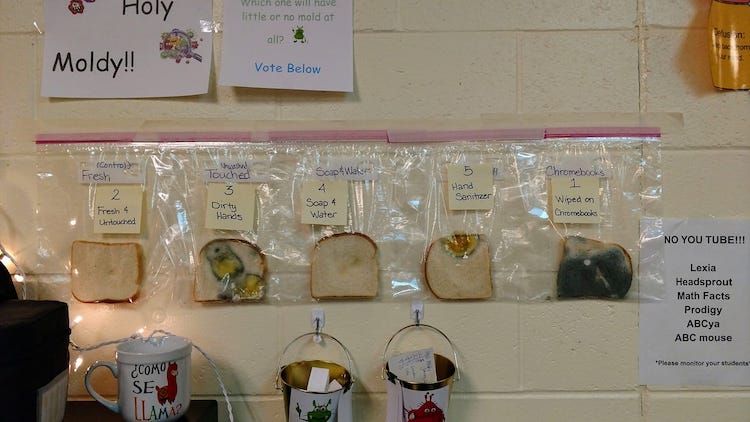
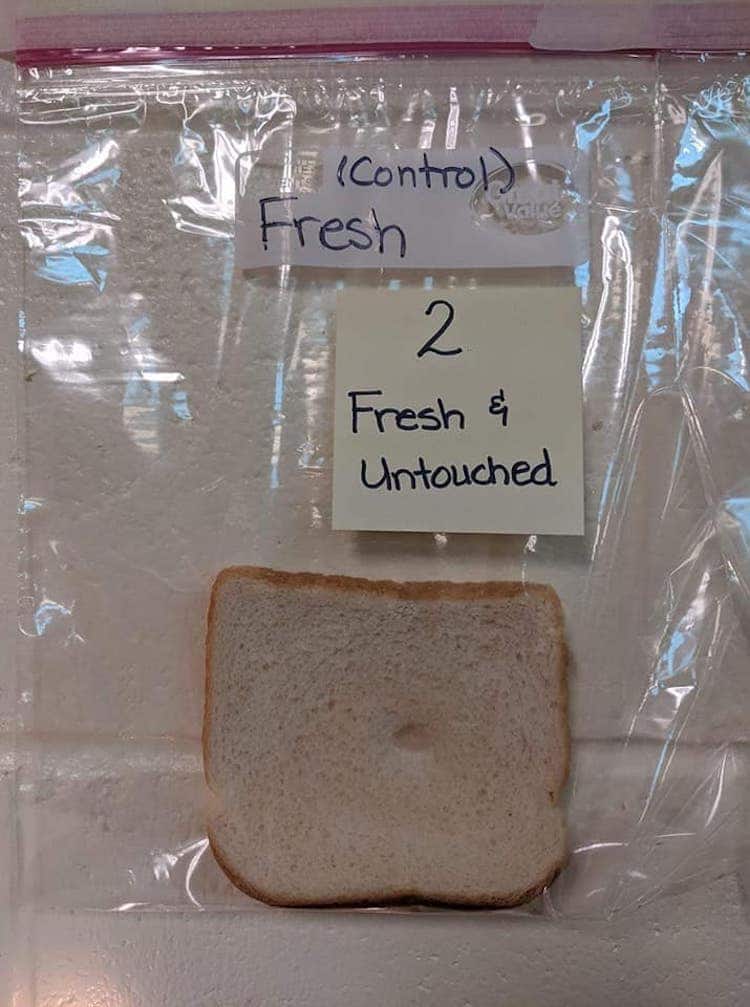
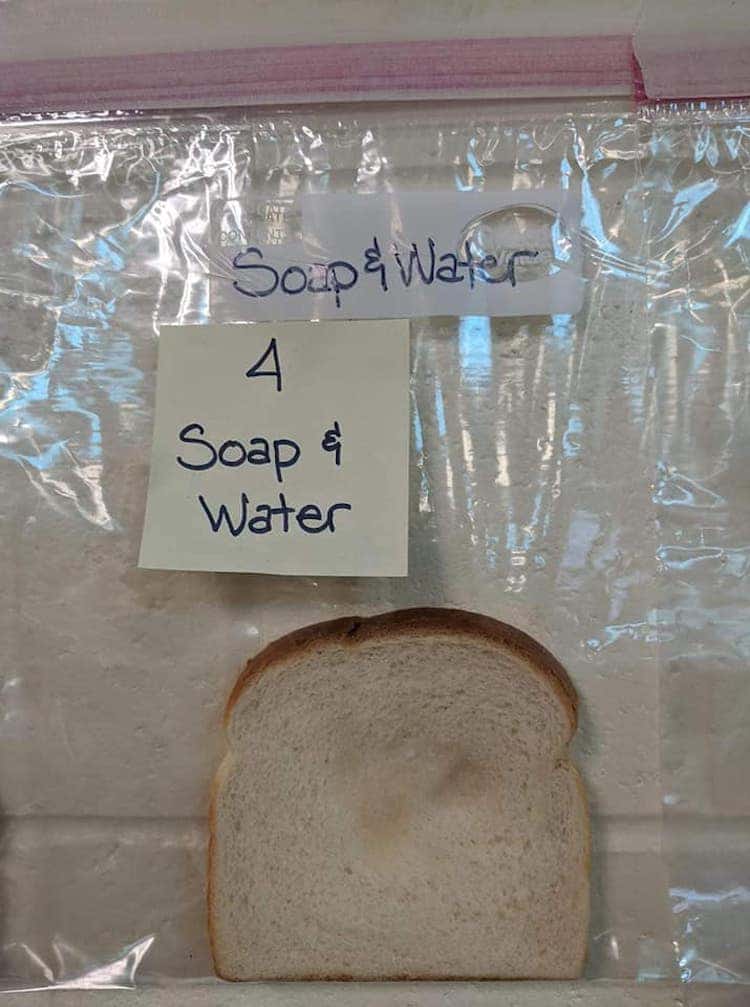
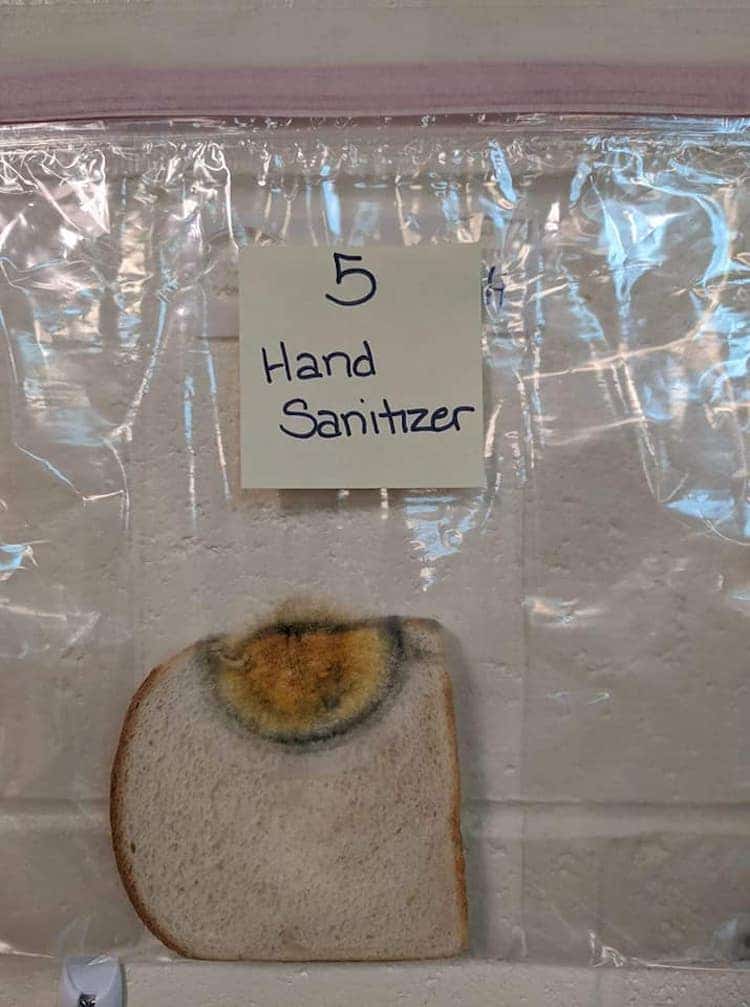
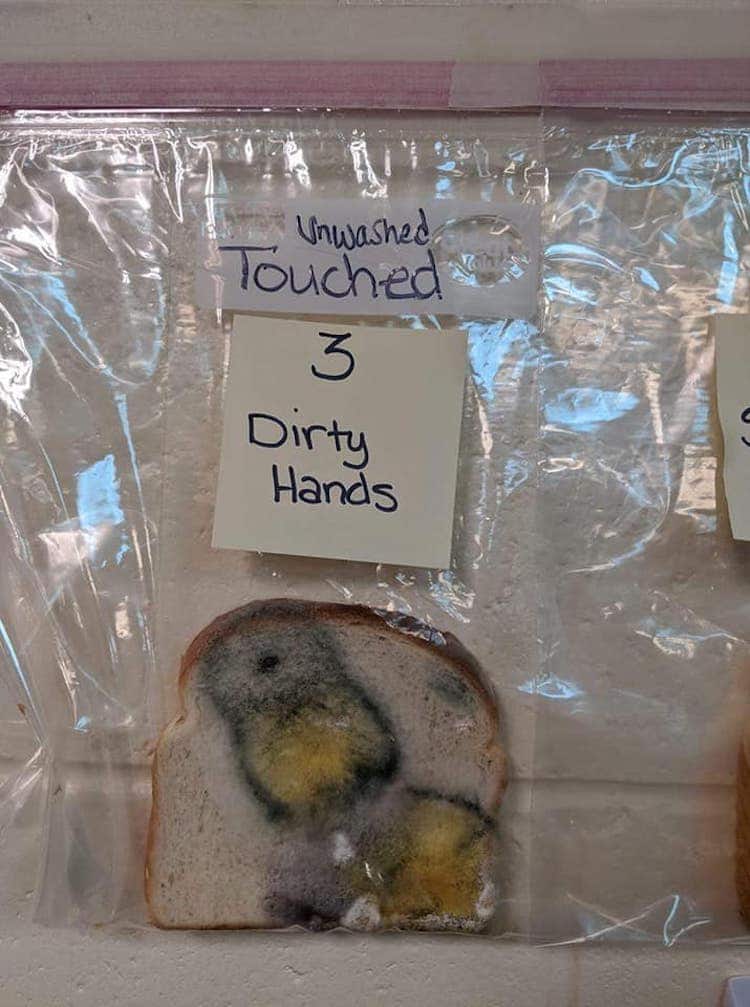
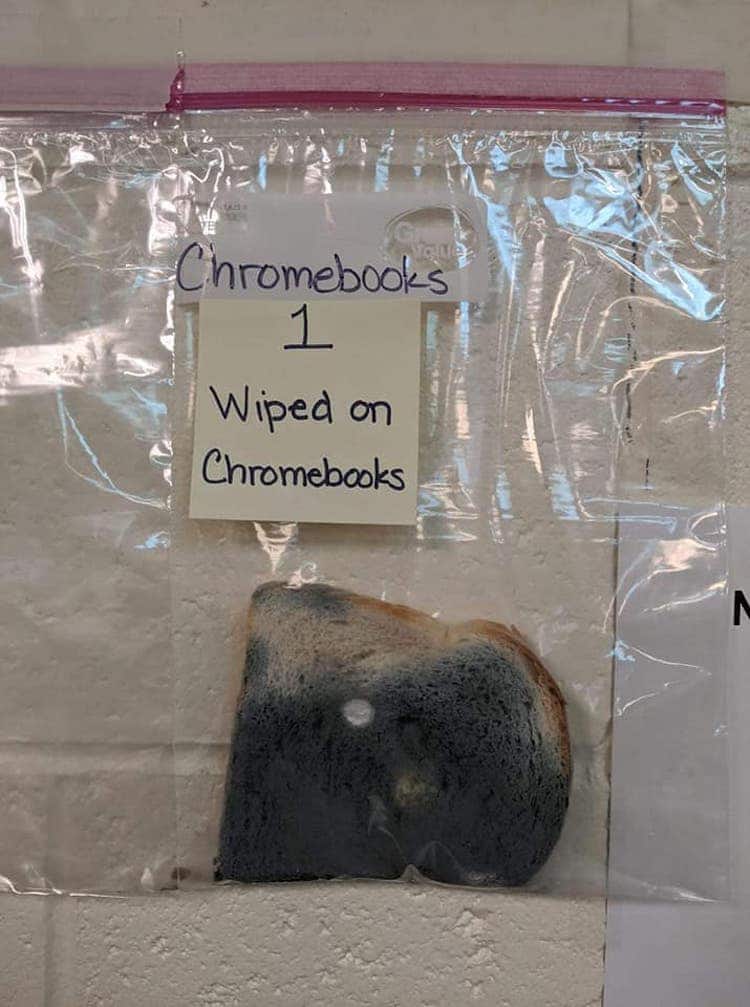
The experiment uses sliced bread to illustrate the accumulation of germs, and the teachers used five pieces to each represent a different phase of cleanliness. One slice (the control) was left untouched. The other pieces were handled by all of the students in the following states: with unwashed hands, hands cleaned with a sanitizer, and hands washed with warm water and soap. In addition, a piece of bread was rubbed on all of their classroom laptops. They then left the bread alone for a few days to watch how the slices reacted.
The results of the experiment will remind you that you should always wash your hands. Aside from the control piece, the soap and water slice was the only piece of bread that had no mold on it. Even hand sanitizer, which we might think as a substitute for hand washing, showed evidence of mold. But the most disgusting outcomes—by far—were the bread slices touched by unwashed hands and wiped on the computers. The unwashed hands had yellowish mold spread across its surface with some green patches starting to show. The laptop slice was even worse and had turned almost completely green.
Metcalf and Robertson’s moldy bread exercise was documented in a series of photos and they now serve as a powerful classroom tool to remind their students to always wash their hands. And in Metcalf’s now-viral Facebook post, it is reminding people from around the world to do the same.
 Jaralee Metcalf: Facebook | Instagram
This Teen Invented an Ingenious Solution to Eliminating Blind Spots in Cars
Miss Virginia Breaks Stereotypes by Performing a Science Experiment as Her Talent
Felted Fungus Art “Growing” in Petri Dishes Shows the Unexpectedly Cute Side of Mold
The post Moldy Bread Science Experiment Is a Gross Reminder of How Many Germs Are on Our Hands appeared first on My Modern Met.
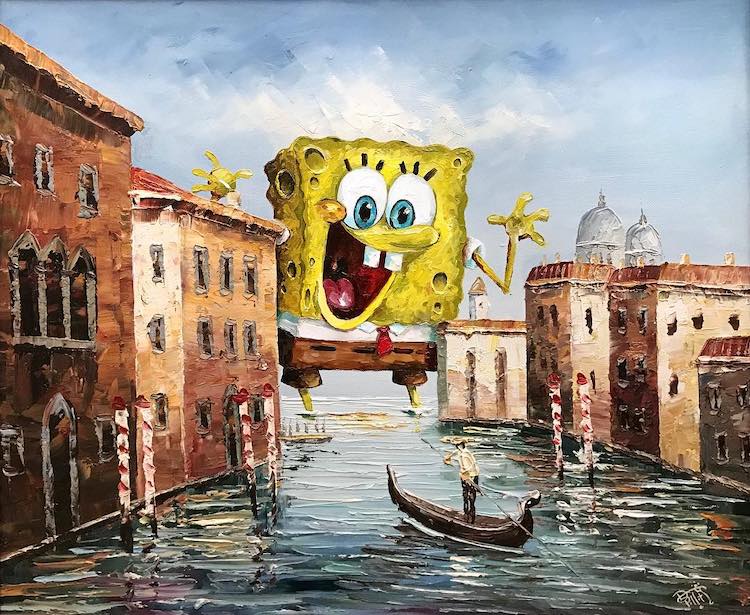
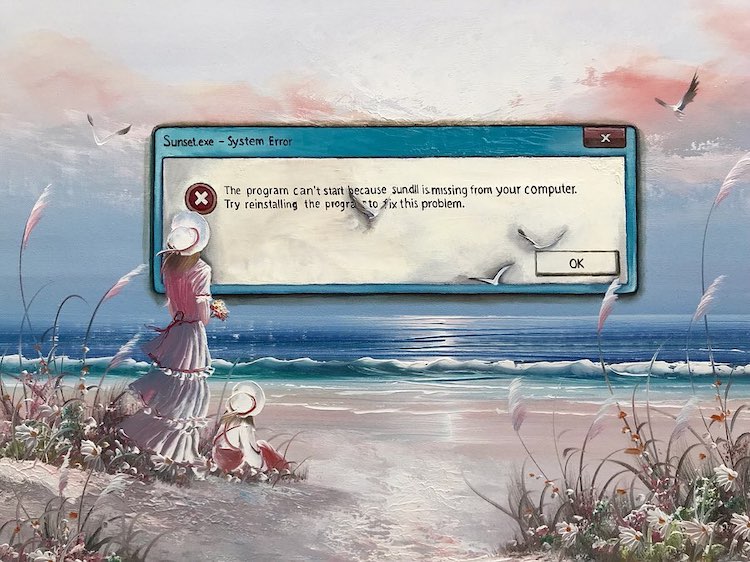
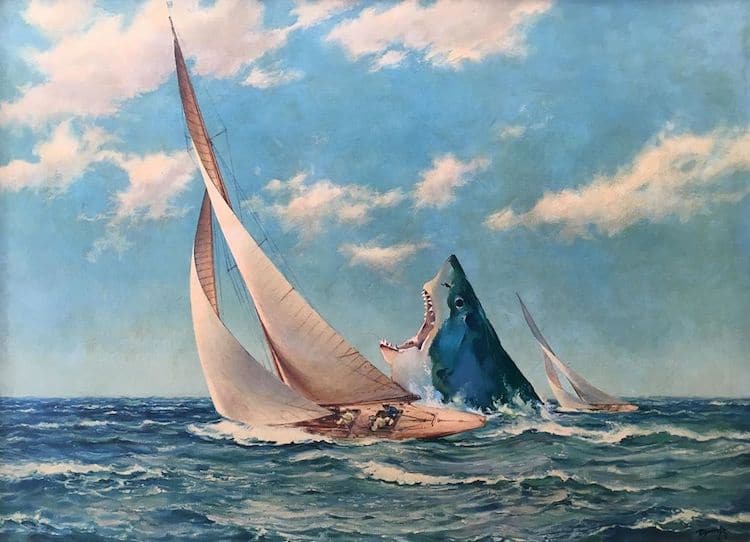
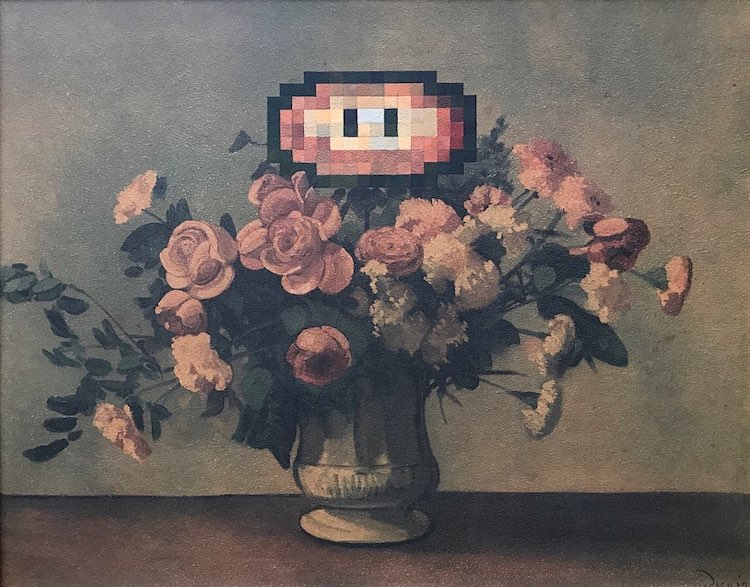
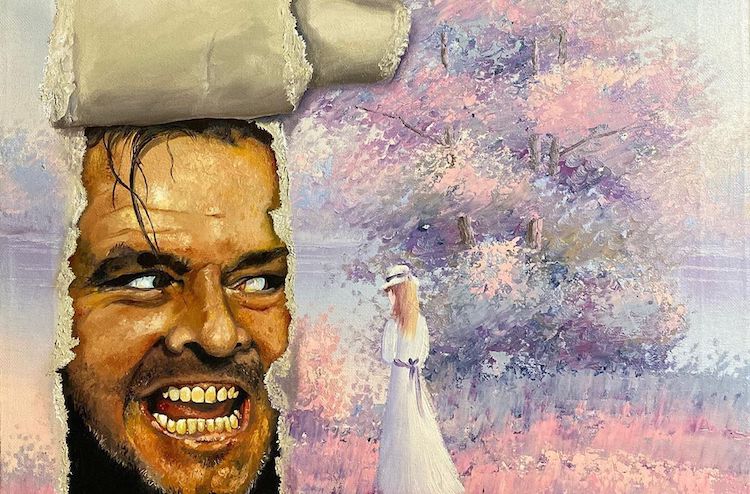
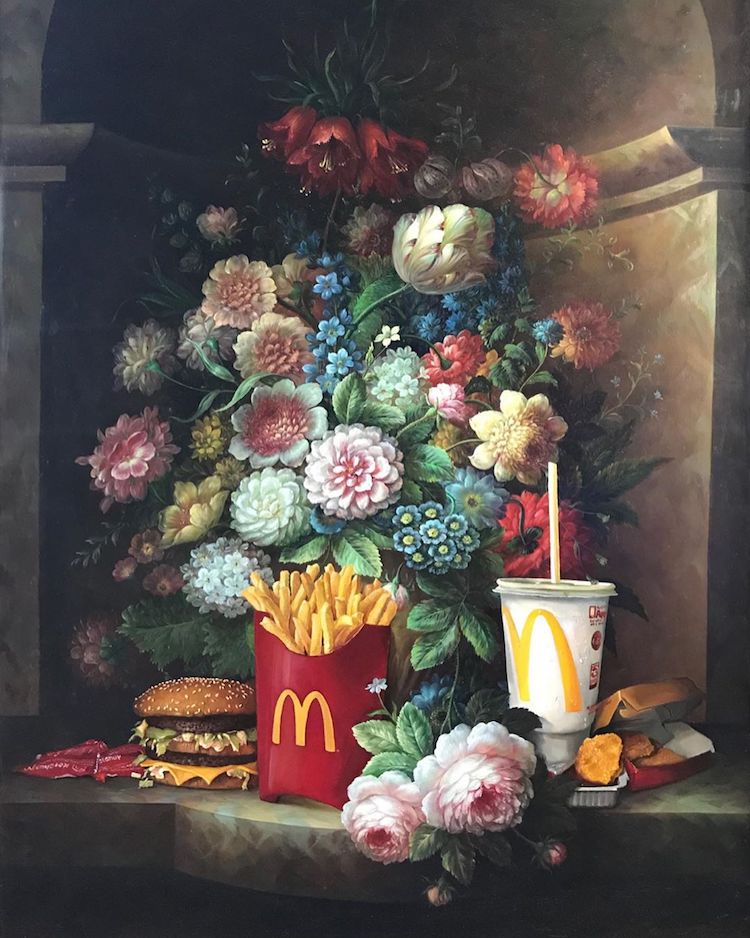
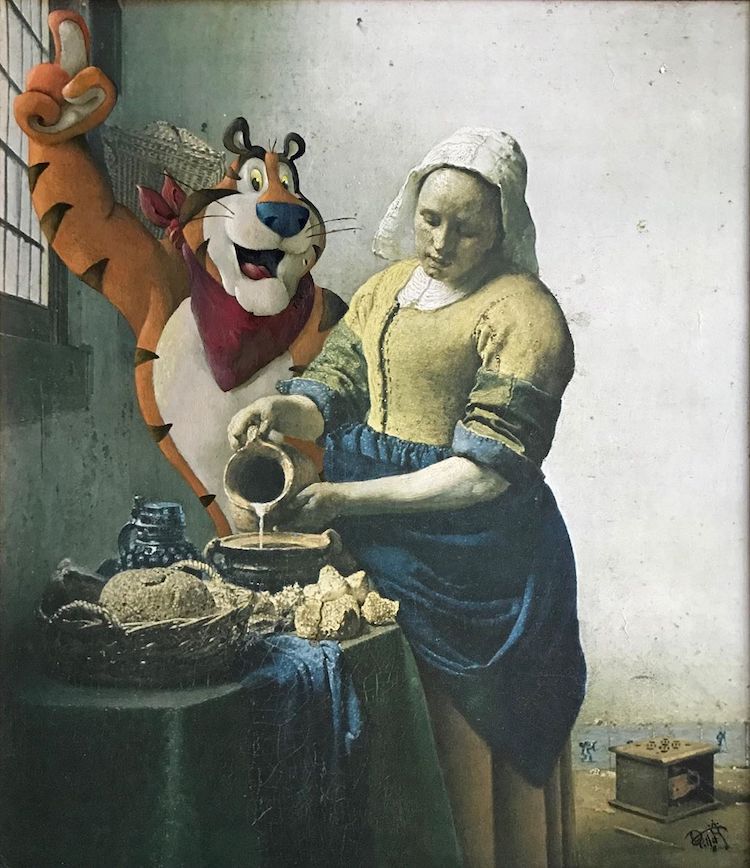
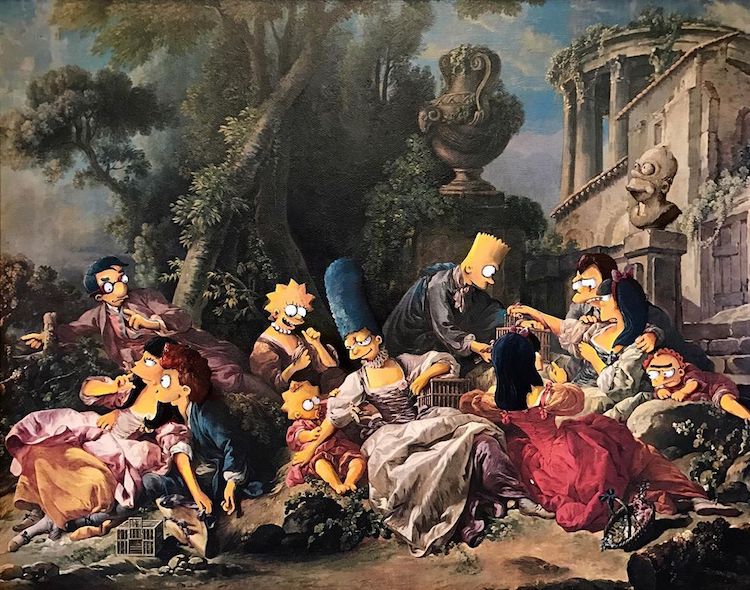
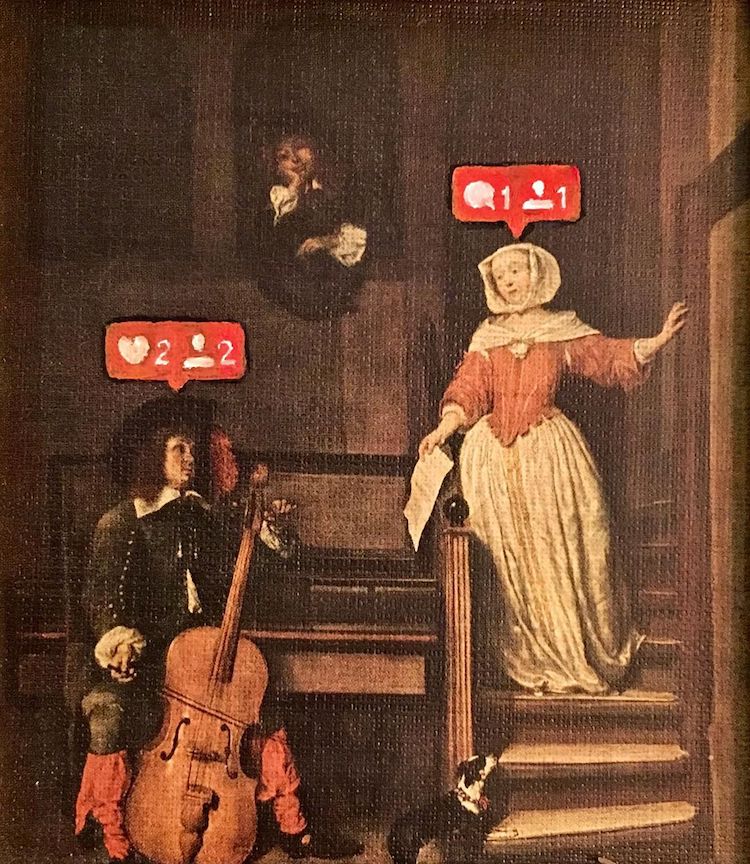
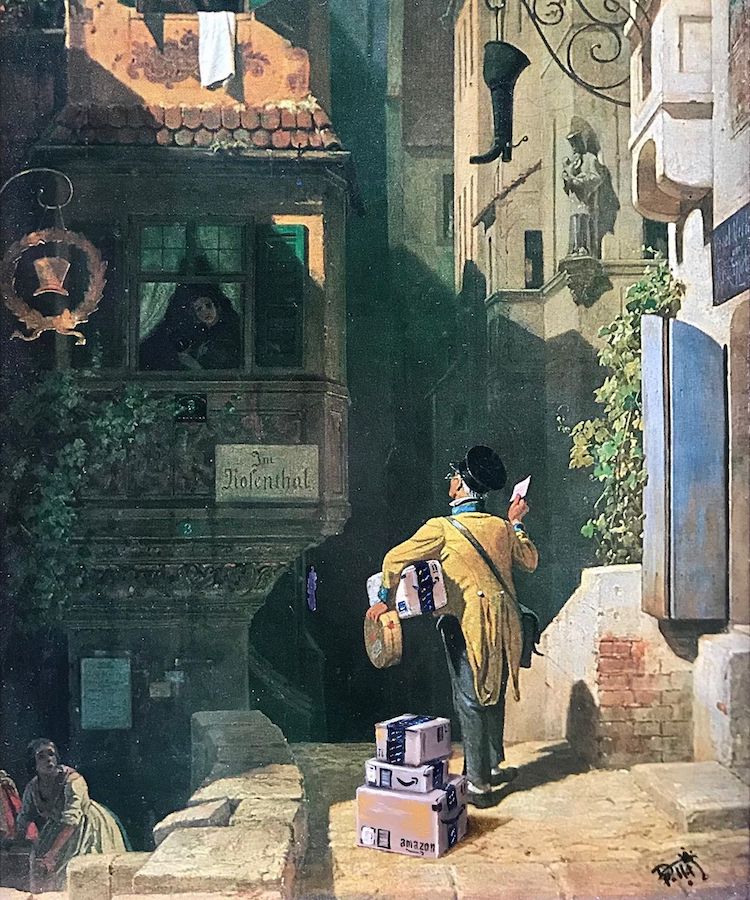
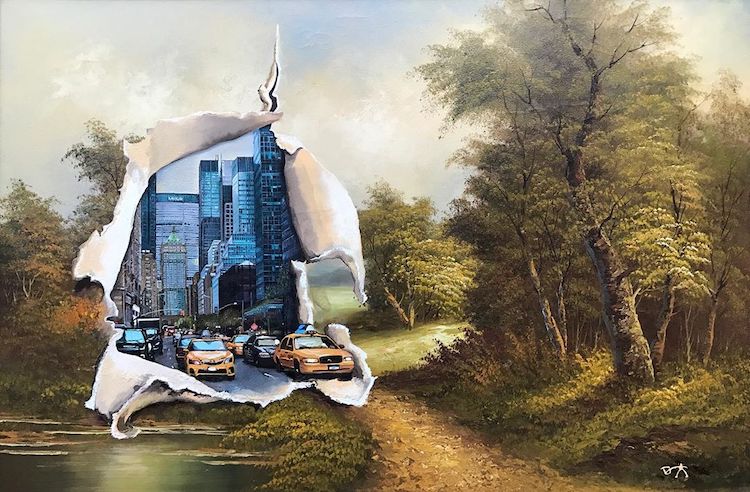
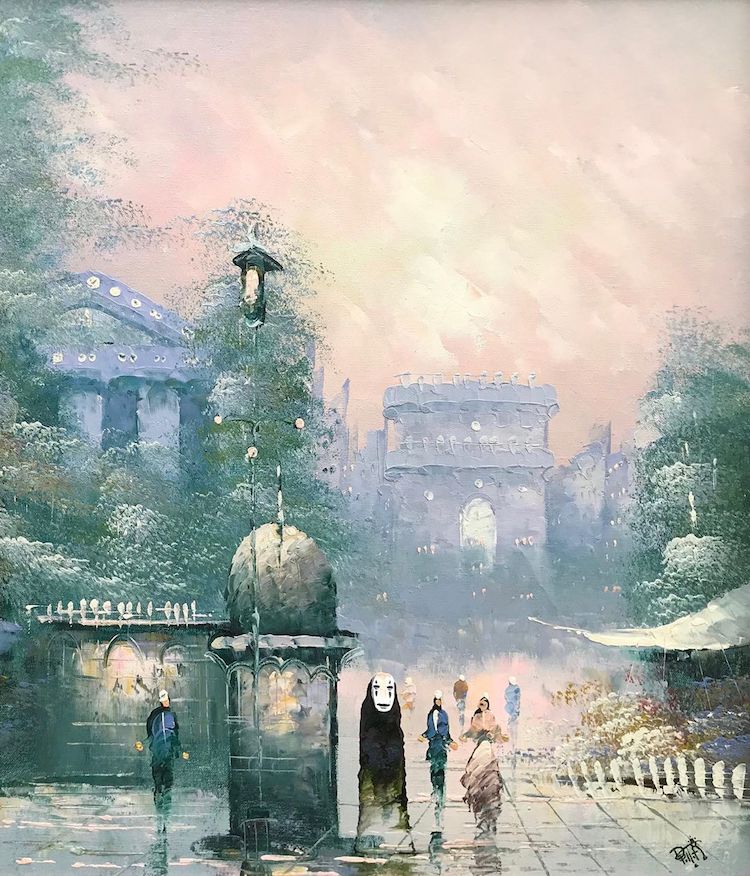
Artist Dave Pollot takes otherwise overlooked thrift store paintings and transforms them into his own masterpieces. By seamlessly integrating elements from pop culture, the scenes featuring still lifes, boats at sea, and bucolic landscapes are given a surreal twist with additions like fast food, SpongeBob, and horror film monsters.
The ongoing project started in 2012 as a joke between Pollot and his wife. He challenged himself to take a piece of unwanted artwork, and without changing its aesthetics, make it into something that people wanted to own. This started his “obsession” with painting, and he’s been altering works ever since.
Pollot views his thrift store transformations as building a new story within the already existing composition. “I’ve always loved the idea that art is deeply personal,” Pollot explains to My Modern Met. “I’m telling my own story with each piece, but every one is a little bit like a mirror, reflecting its meaning back to the viewer through his or her individual perception.”
On a larger scale, Pollot’s portfolio makes us think about an artwork’s place throughout time. “I think that my body of work has challenged the idea that any single piece of artwork is without a place, especially if it can be retrofitted to reflect a more culturally relevant set of ideas,” he says. “It’s also questioned the idea of who (generationally and otherwise) can claim ownership of the pop culture of a given time period—it’s sought to introduce a younger audience to older artistic styles and a potentially older audience to a broader set of pop culture.”

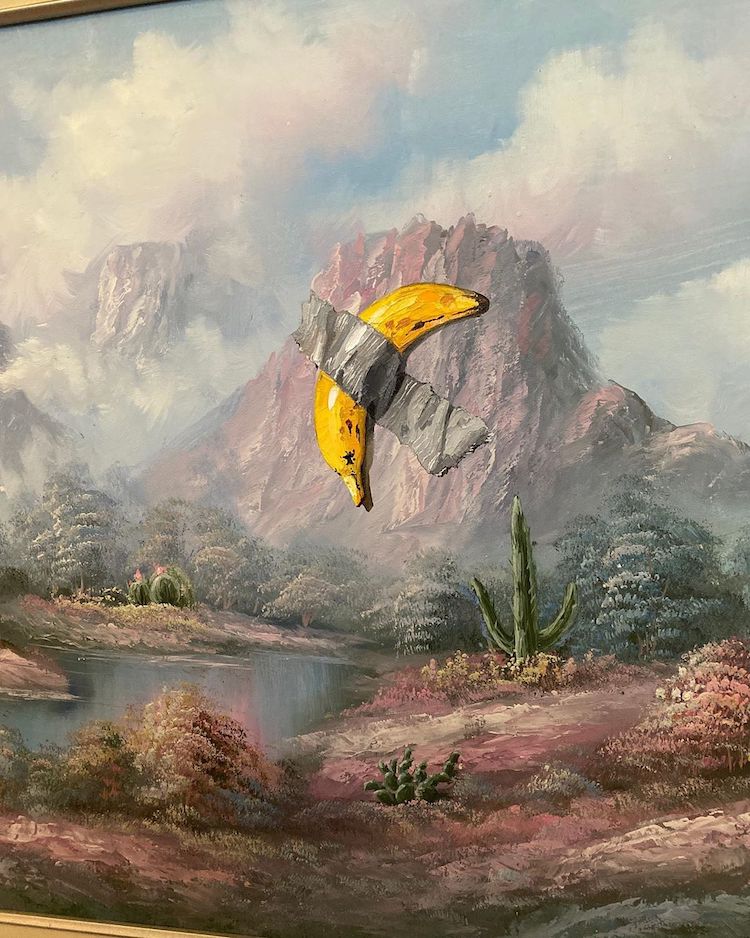
Cattelan secured a banana to the wall with duct tape, sold with a price between $120,000 and $150,000. “Contemporary art can be, well, interesting,” Pollot writes in an Instagram post. “What’s even more ridiculous is that these things can happen while people have little or nothing to eat.” In response, he painted a giant banana duct-taped to mountains and auctioned it via his Instagram. Pollot’s artwork sold for $4,500, with 90% of the price going to The Hunger Project.
Dave Pollot: Website | Instagram | Facebook
Pop Culture Figures Cleverly Added to Thrift Store Paintings
This Artist Brilliantly Uses Different Jigsaw Puzzles to Create Surreal Mashups
Banksy’s Top 10 Most Creative and Controversial NYC Works
The post Artist Finds Discarded Thrift Store Paintings and Transforms Them Into Pop Culture Masterpieces appeared first on My Modern Met.

All images © Raya Sader Bujana, shared with permission
Barcelona-based artist Raya Sader Bujana (previously) painstakingly cuts and scores tiny paper monsteras, ficuses, and philodendron that stand just a few inches tall. The life-like plants feature wrapped brown stalks and green leaves that are no bigger than a finger. Often sitting in miraculous hand-woven baskets, each plant takes between five and six weeks to complete. The artist tells Colossal that each project starts with a vague idea and evolves along the way. “I like applying techniques from other artistic disciplines or crafts, such as weaving or basketry and translating them to paper,” Bujana writes. These pieces are part of Tiny Big Paper House Plants, a series she began in 2017. Many of Bujana’s miniature creations can be found on Instagram and are available for purchase on Etsy.


(Some of) The Photos of the ‘10’s
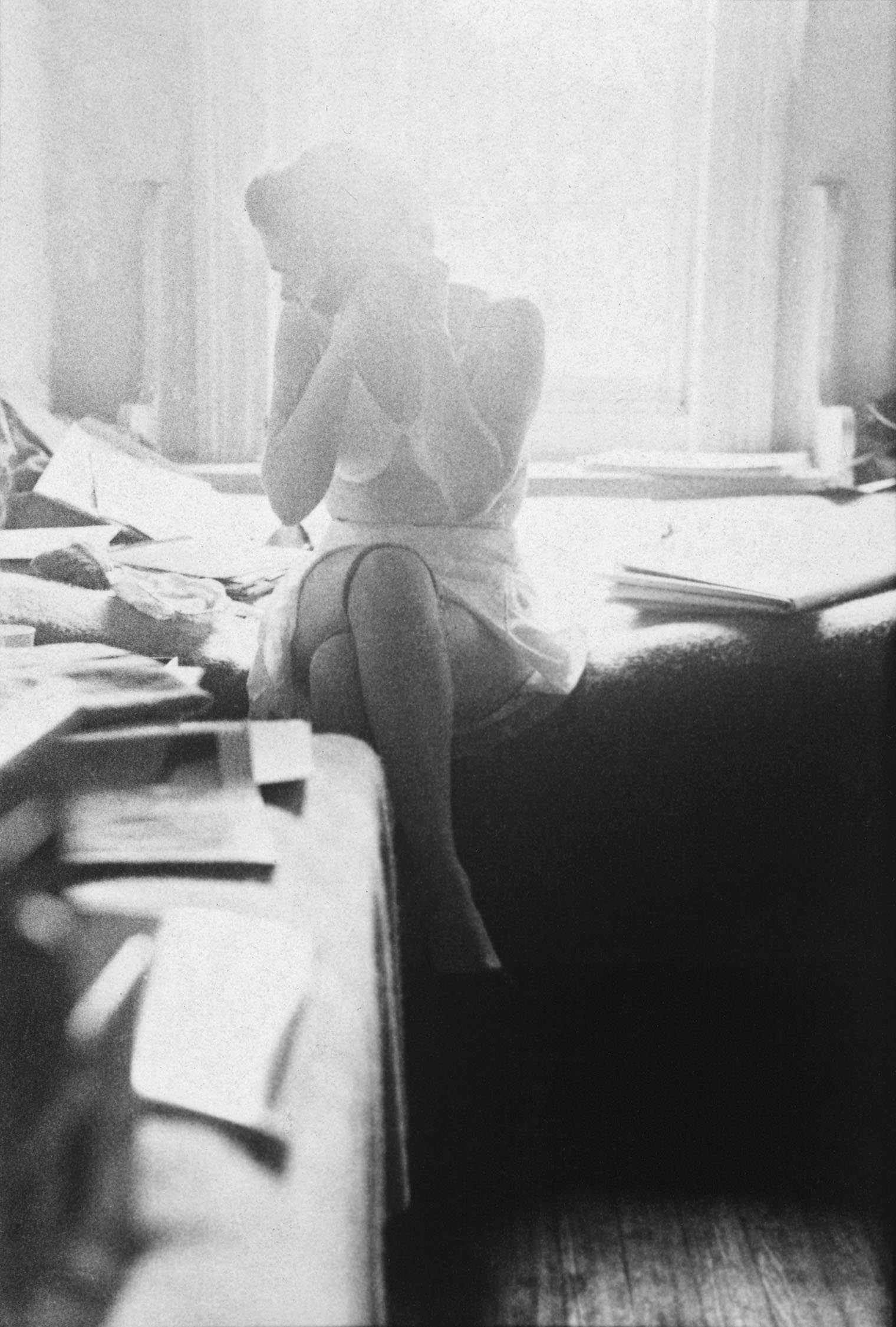
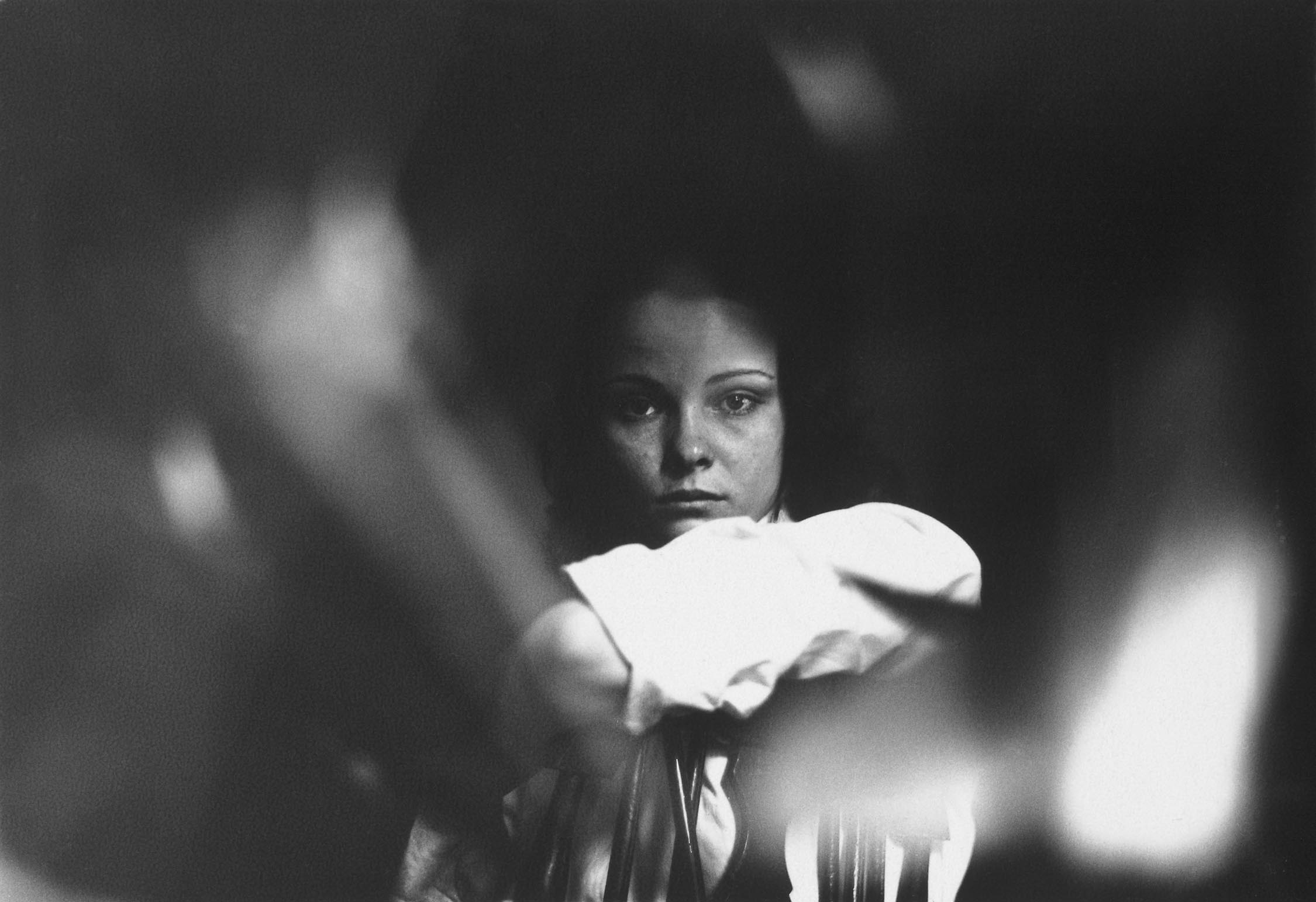
In 1952, American photographer Saul Leiter set up a studio on East 10th Street back when the East Village was just that – an obscure outpost for bohemian life that drew artists, jazz musicians, beatniks, and other bon vivants who sought affordable rents so that they could live and make art.
Leiter, who was making his name as an integral figure in the New York school of photography that includes Helen Levitt, Lisette Model, Weegee, Robert Frank, and Diane Arbus, embraced the tough-minded humanism of city life that allowed him to create sharp, telling encounters along the streets of New York.
But up in his studio, something else was taking place — a quiet, contemplative series of black and white nudes made over a period of 30 years wholly unlike the fashion shots he made for the pages of Harper’s Bazaar, Esquire, and Elle. “It’s almost like they were a relief from his professional work,” writes Carole Naggar in the introduction to Saul Leiter: In My Room (Steidl).
Here, in an intimate monograph. Leiter’s work is presented for the first time, allowing us a glimpse into his private world, where he went to escape it all. Leiter invited long time friends and lovers into this realm and they shared moments reveal another layer to Leiter’s gifts.
The artist, who preferred to be left alone, worked in relative obscurity until his 80s, the last decade of his life, playing all his cards very close to the vest. He resisted explaining or analyzing his work, allowing the photographs to speak for themselves. This makes the images something of a Rorschach Test, inviting us to look inside and reflect upon what his work triggers in us.
Born into an Orthodox Jewish family, Leiter trained to be a rabbi like his father until 1946, when he moved to New York to become a painter. When he finally decided to be a painter, his father was appalled. “My dream was that you would be a Chekhov. Then, okay, maybe a Chagall. But a photographer!”
Leiter’s father disowned and disinherited him, and Leiter was left to fend for himself, relying on his talents without turning himself into a brand and selling out. Instead he simply continued along his path. Although Leiter never showed anyone the nudes, in the 1970s, he began to plan out a book — though the project was not realized prior to his death in 2013. Instead, he left the works to us, his secrets kept, so that all we have to consider are the photographs.
“Leiter’s gaze is not that of the typical male,” Naggar writes. “The women can in turn be shy, aggressive, or playful, but they always appear to be partners and full participants in a give-and-take, a dialogue, very aware of the photographer and the photograph that is being taken. In other words, these are not traditional nudes but rather portraits of women who happen to be in the nude.”
They are subject, not objects, not extensions of the photographer’s ego. They are not reduced to the realm of muse, a romantic notion at best, but rather treated as co-collaborators in the creation of the image. They are individuals, rather than archetypes. Women whose voices are expressed in gesture and expression, so that their beauty is not merely skin deep.
In the book’s afterword, Richard Benton makes it clear: “The women in these photographs are unguarded; they are naked, not nude, not clothed with the invisible garb of ‘art.’ They are just out there, these women, frail and beautiful and deeply human. I look at this book and I know exactly why Saul spent his life taking photographs of them.”
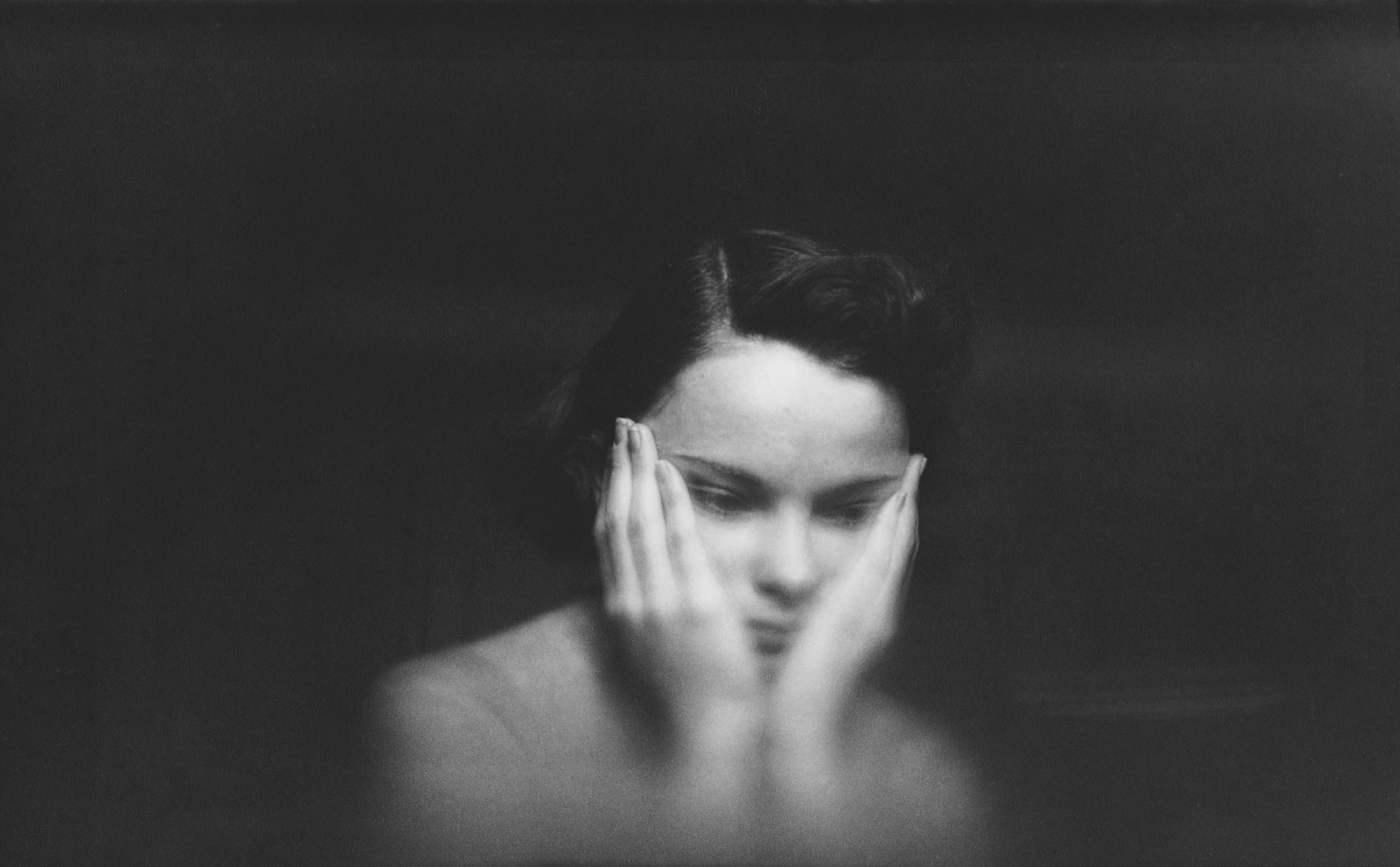
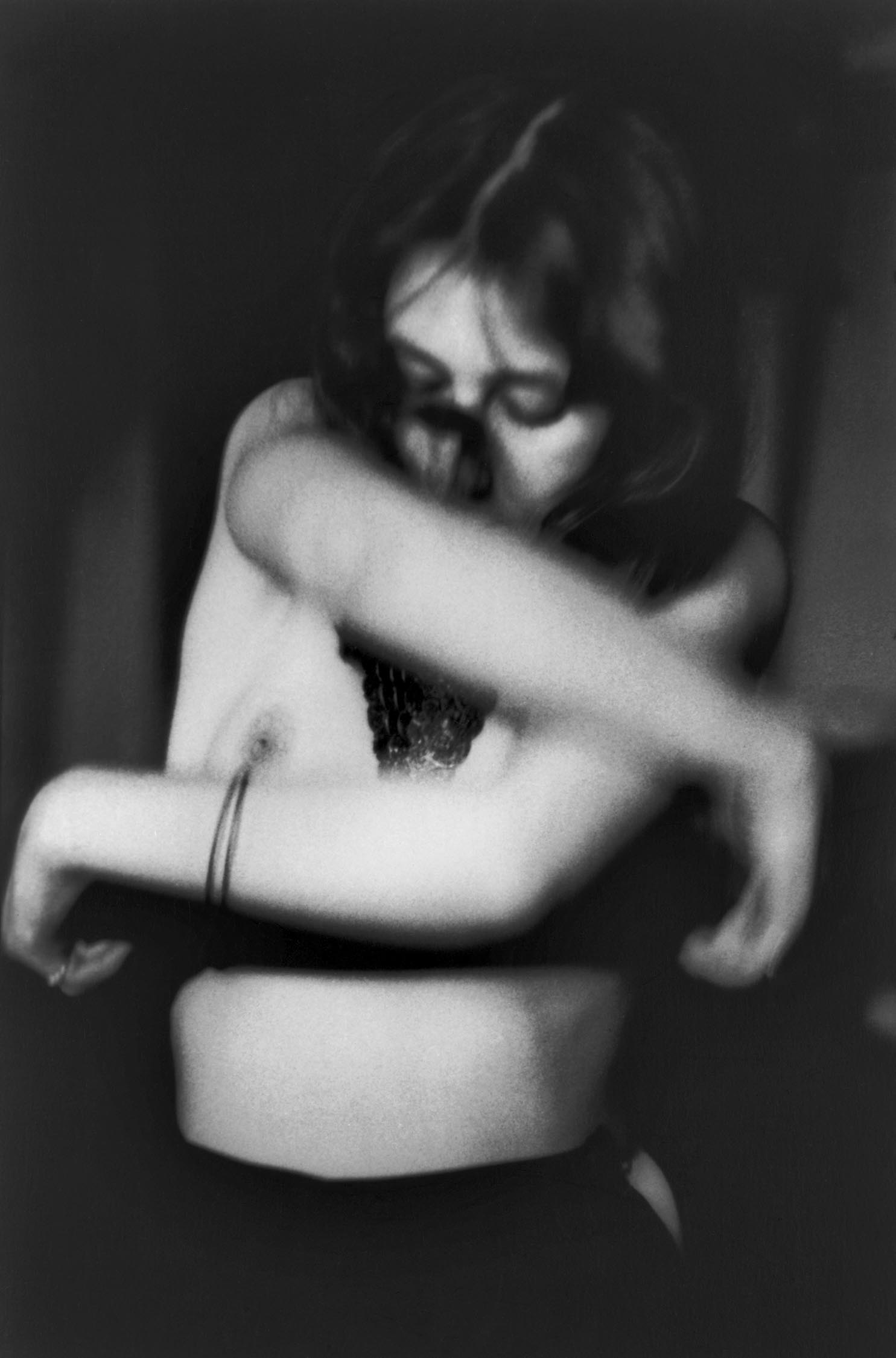
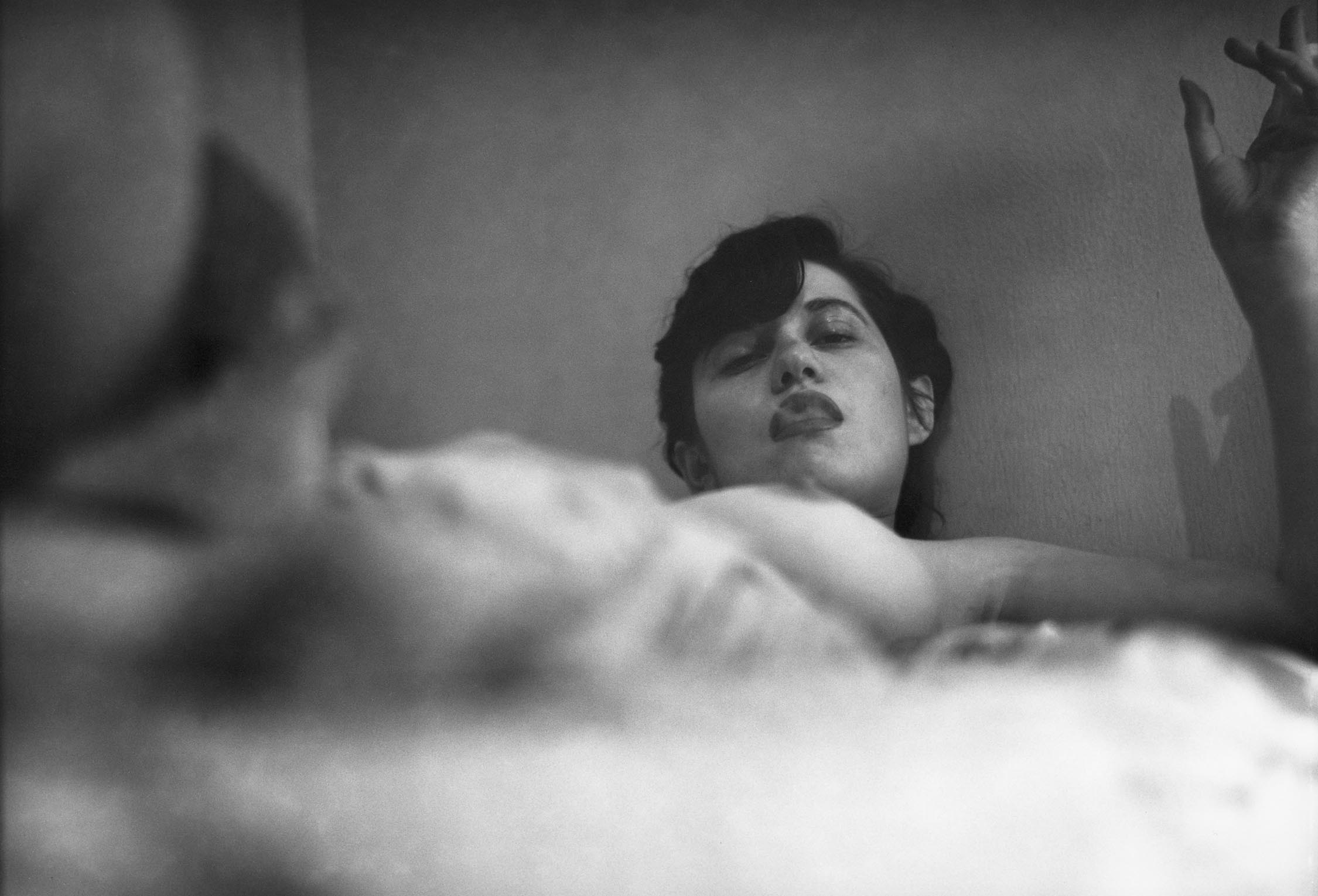
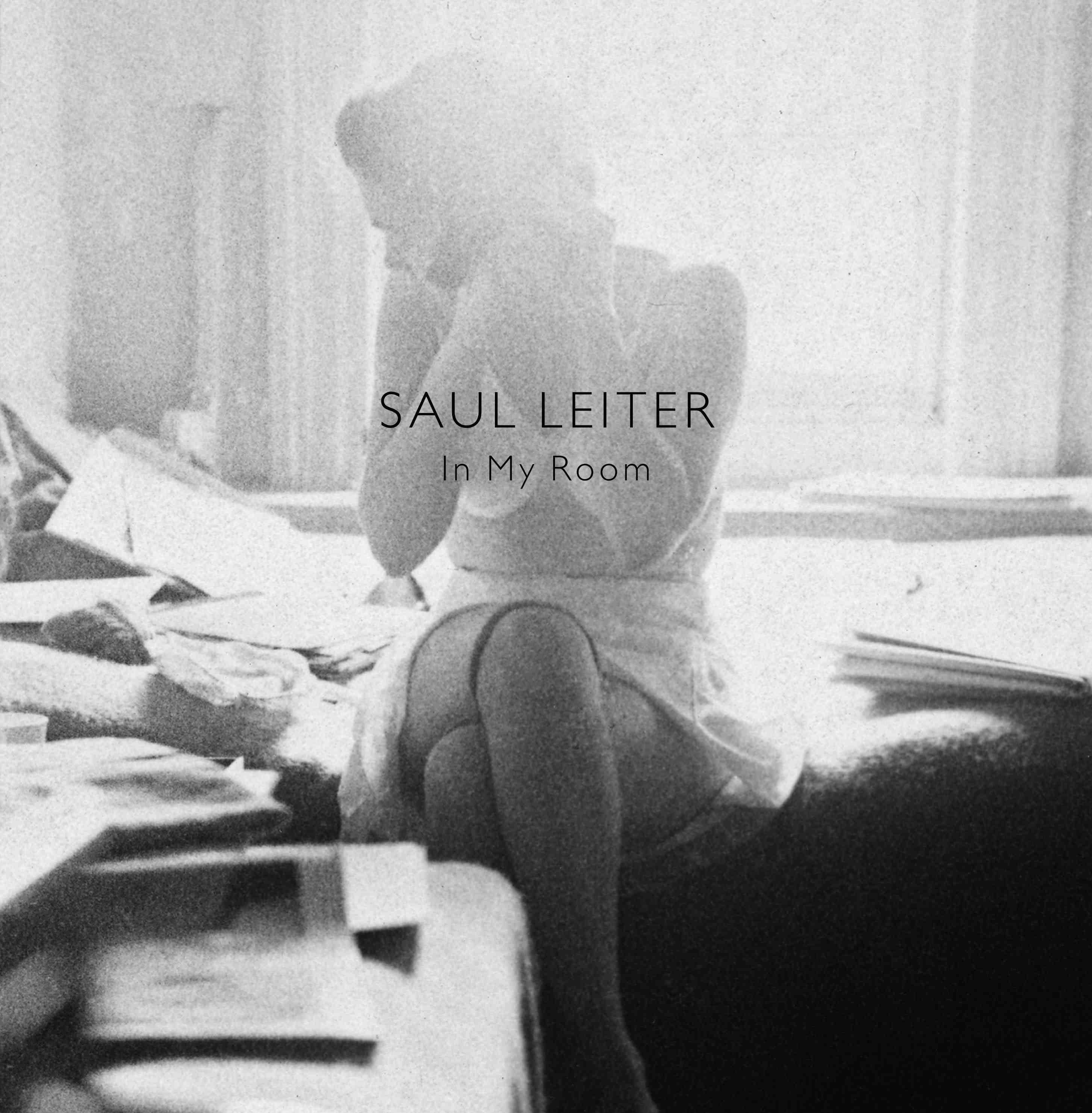
All images: © Saul Leiter Foundation, courtesy of Steidl.
The post An Intimate Look Inside Saul Leiter’s East Village Art Studio appeared first on Feature Shoot.


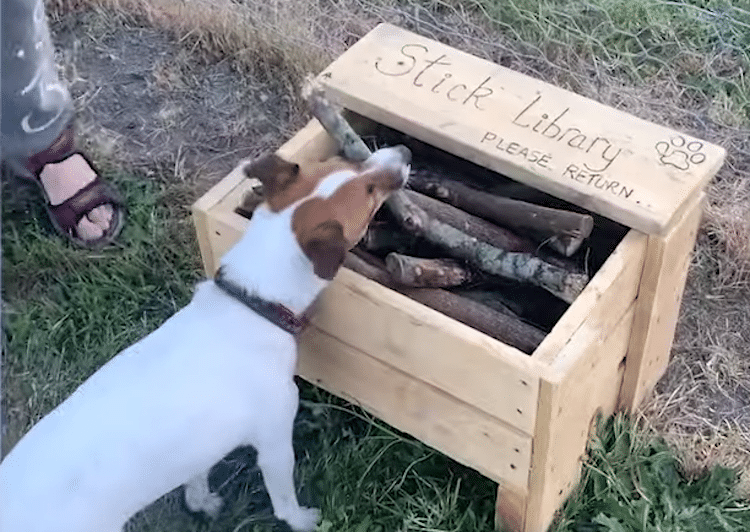
For most dogs, finding a good stick is like discovering a goldmine. But while most parks are abundant in fallen branches, others aren’t so rich in these natural dog toys. That’s why New Zealand craftsman Andrew Taylor decided to create a “Stick Library” for the pups at his local park.
“Our dog Bella loves a good stick, but there were no good sticks at our new dog park in Kaiapoi,” says Taylor’s daughter Tayla. “So my wholesome dad made a stick library so all the doggos can enjoy a good stick.” The kind man came up with the idea when he was trimming trees by his house and asked himself what he could do with all of the leftover branches. From there, he sanded each branch into the perfect dog stick, and put them all into a wooden crate with the words “Stick Library. Please return.” engraved on the top.
Tayla proudly posted her father’s project online, and she even organized an event to celebrate the newly opened Stick Library. “Approximately 50 people turned up with their dogs and one guy even brought his cat,” reveals Tayla. “All the dog owners appreciate it as they all have experienced the ‘good stick search’ which isn’t always fruitful, it’s an idea that just makes sense to them.” Tayla’s heartwarming videos show different pups excitedly borrowing sticks from the box—let’s just hope they returned them and avoided a late fee!
Tayla Reece: Facebook | TikTok
h/t: [Laughing Squid]
15 Creative Dog Tags You Can Fetch on Etsy
Woman Shares Photographic Proof of Her Unbreakable Bond with Her Dogs
Dog Learns to Talk by Using a Special Soundboard That Her Human Made
Adorable Illustrations of Dogs Interact with Real-World Objects
The post Kind Man Crafts “Stick Library” for All Dogs at His Local Park appeared first on My Modern Met.
This post may contain affiliate links. If you make a purchase, My Modern Met may earn an affiliate commission. Please read our disclosure for more info.
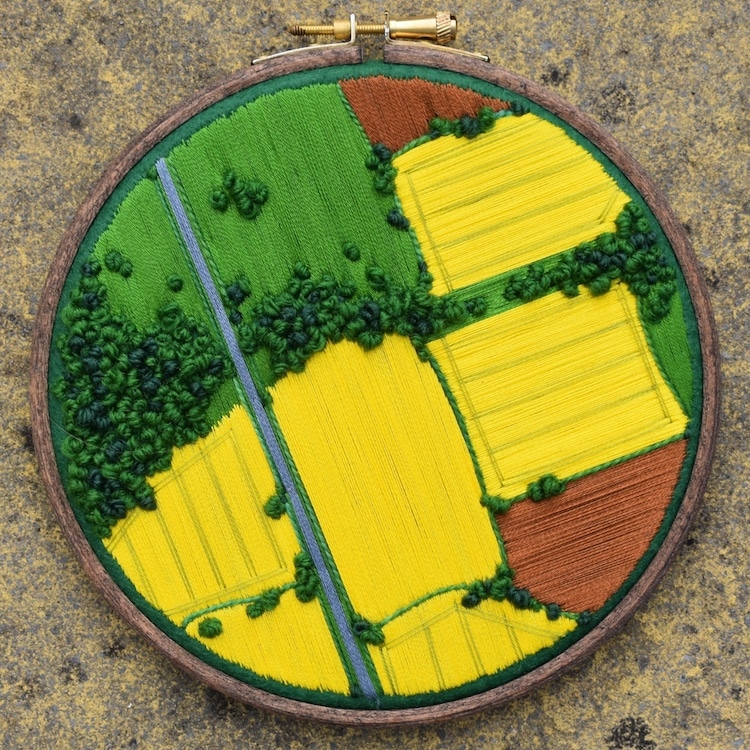
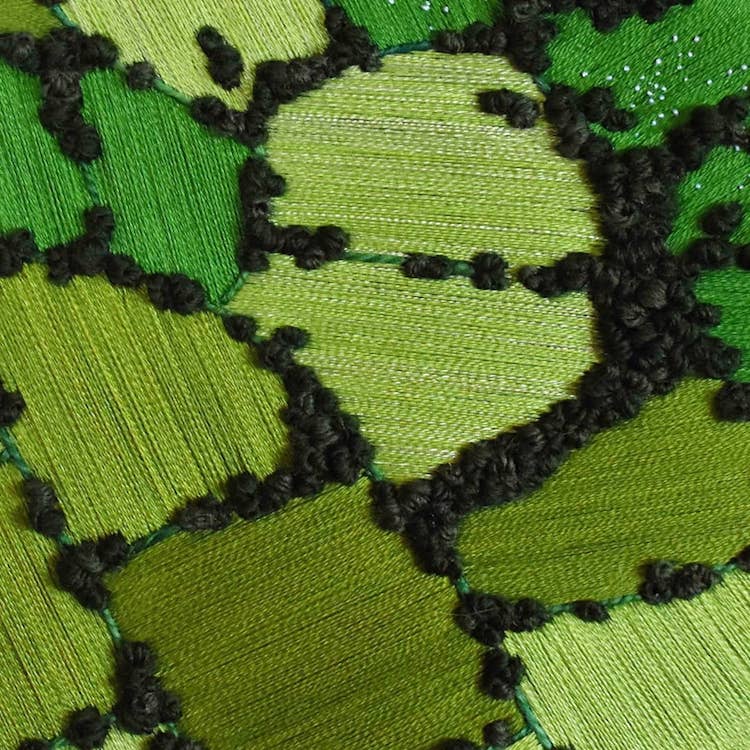
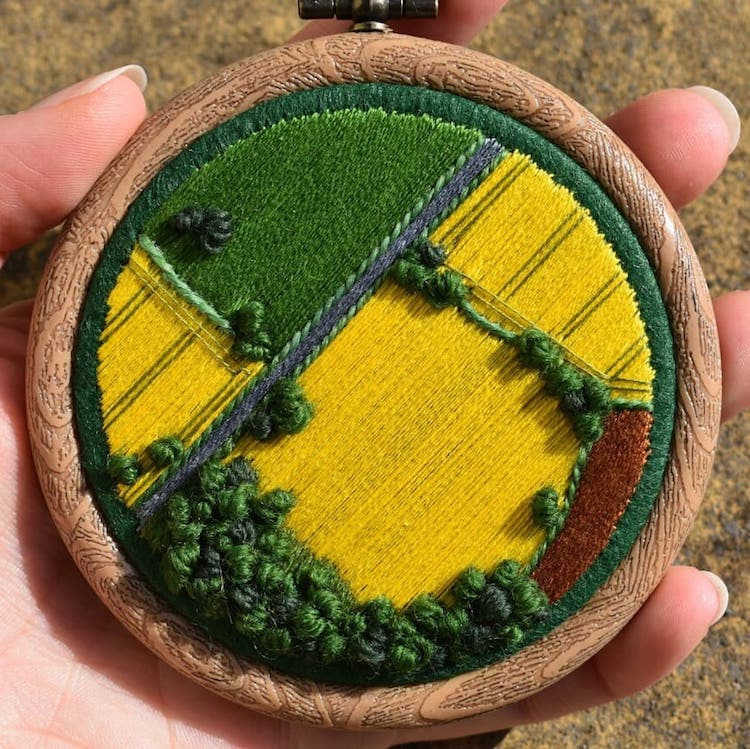
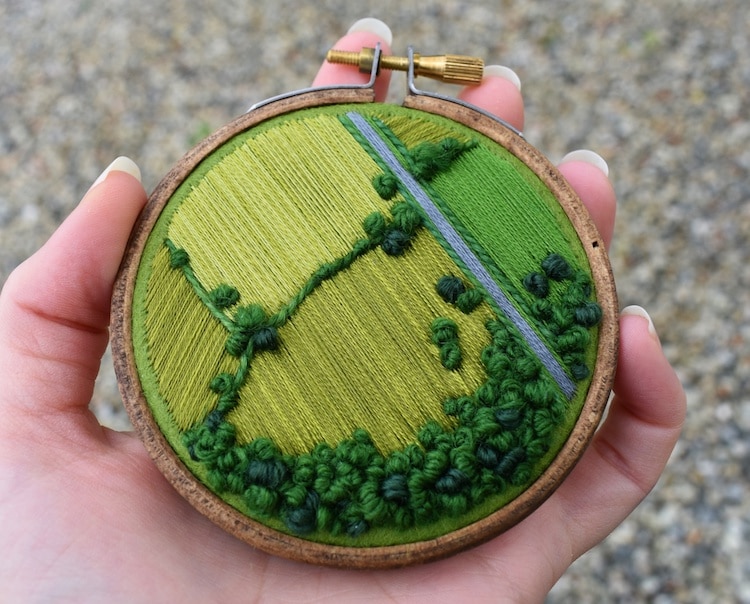
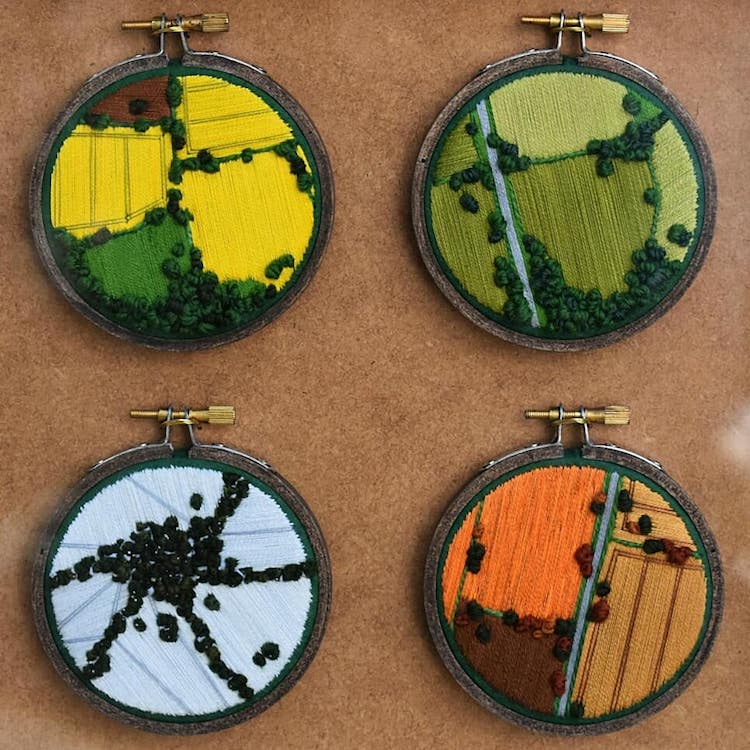
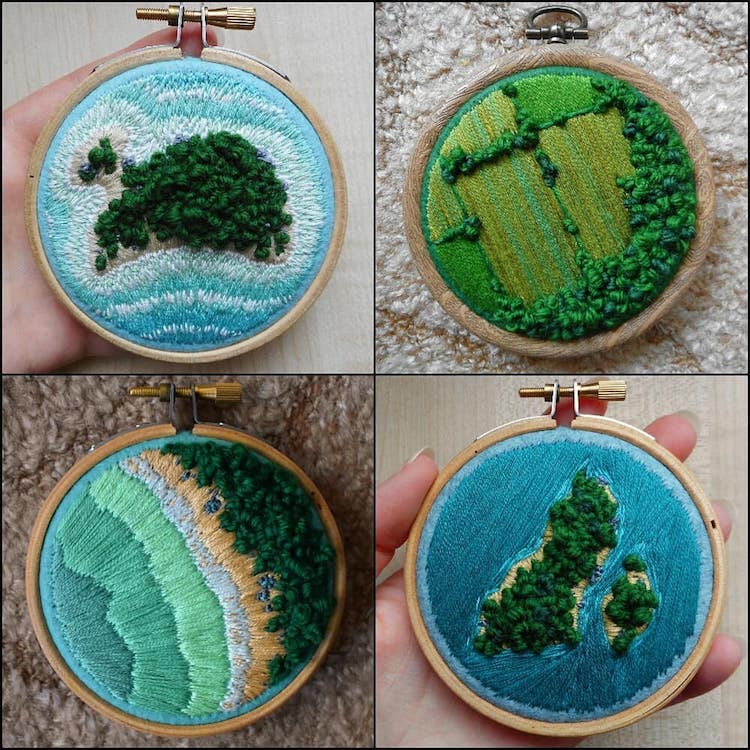
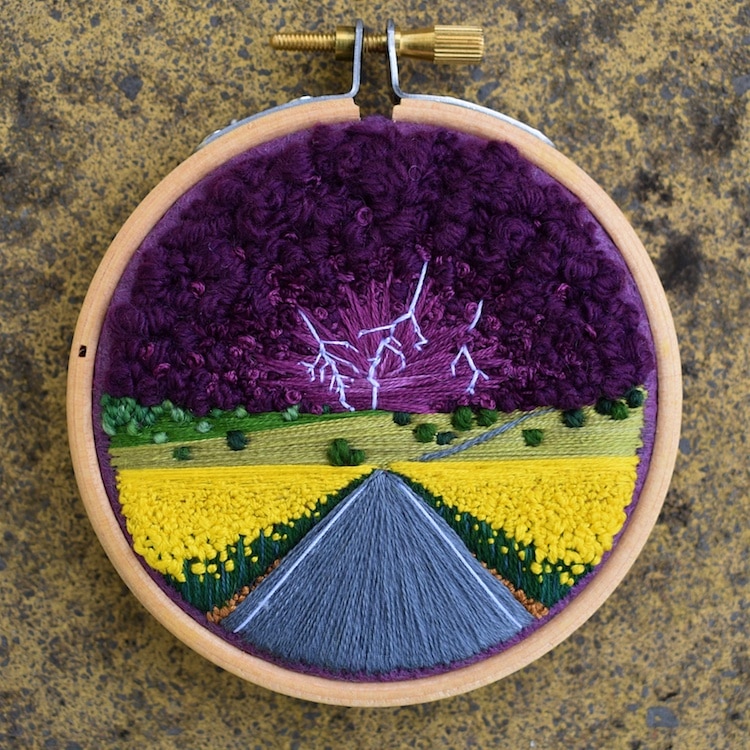
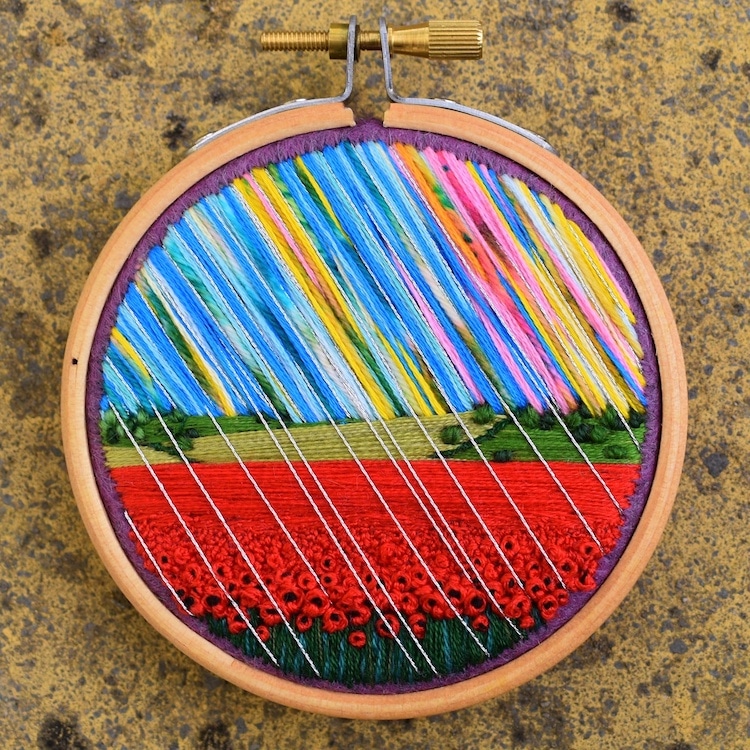
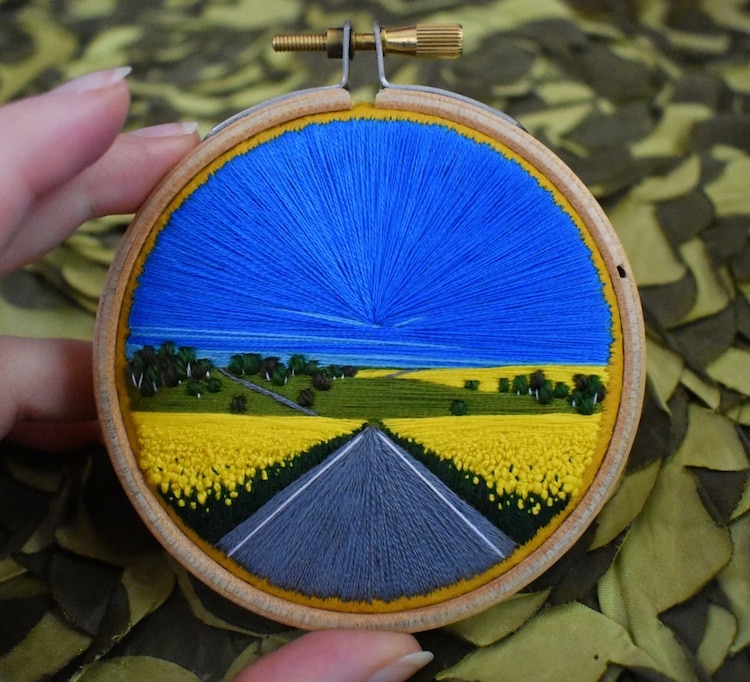
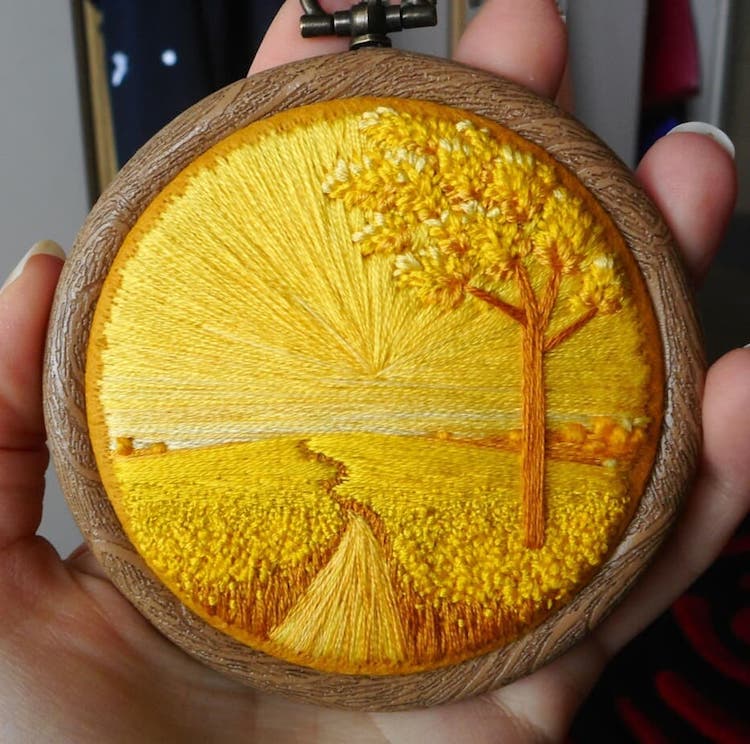
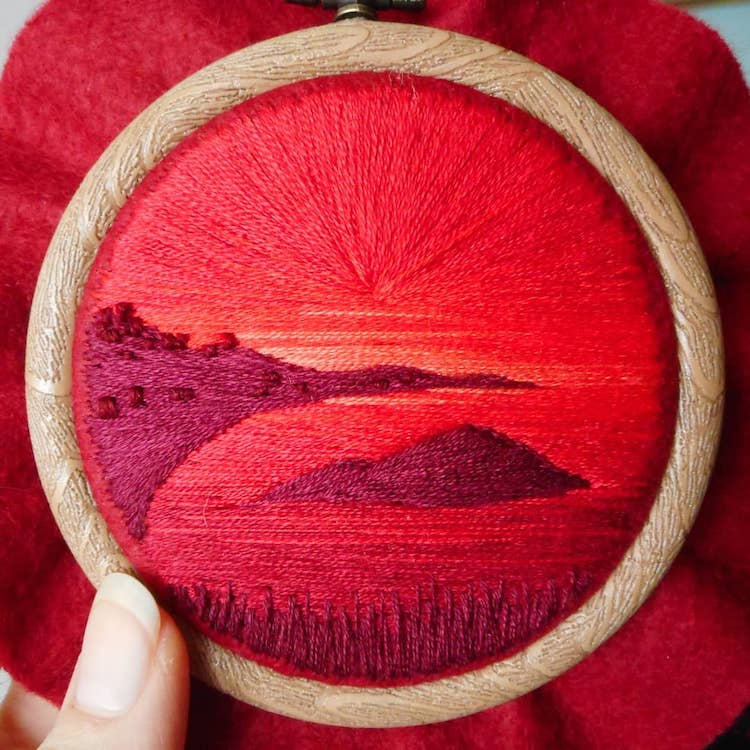
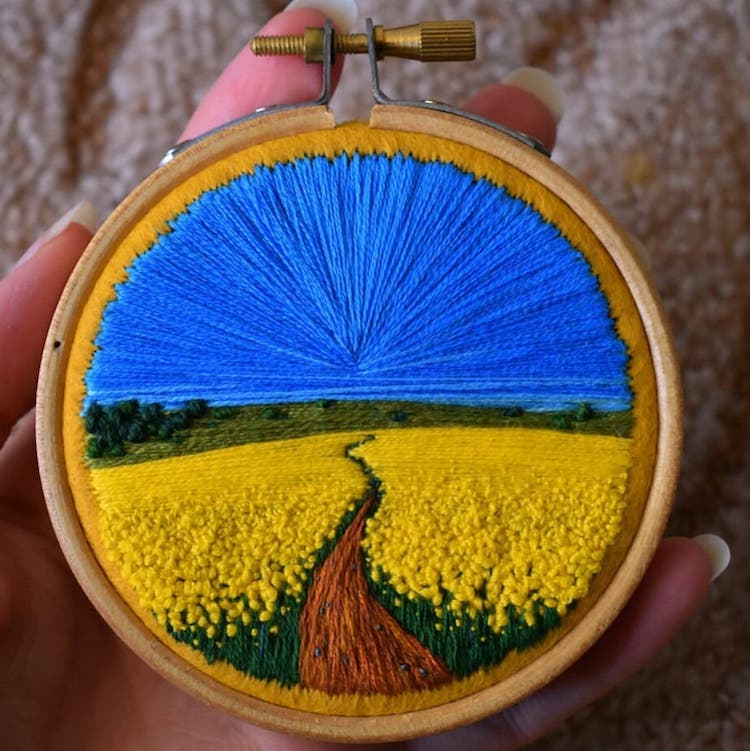
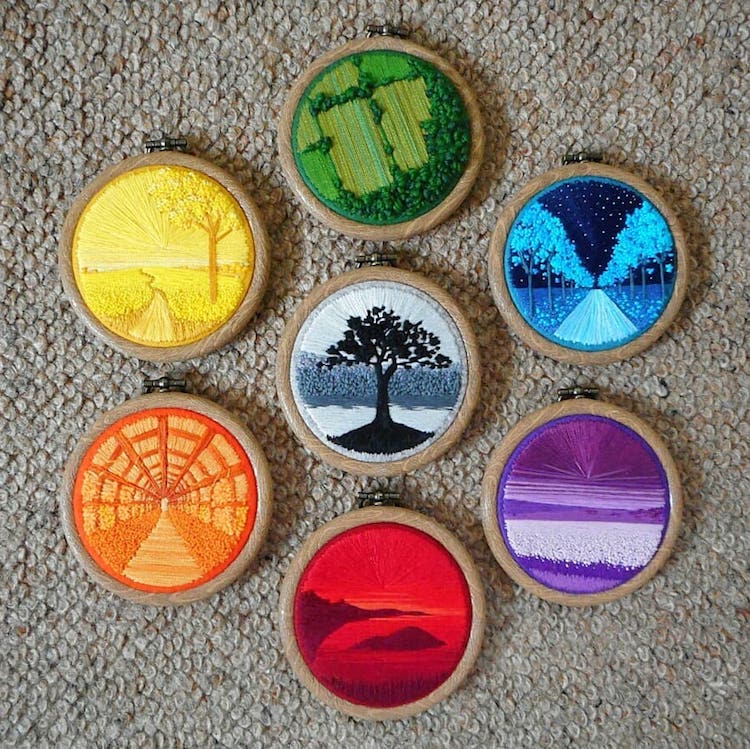
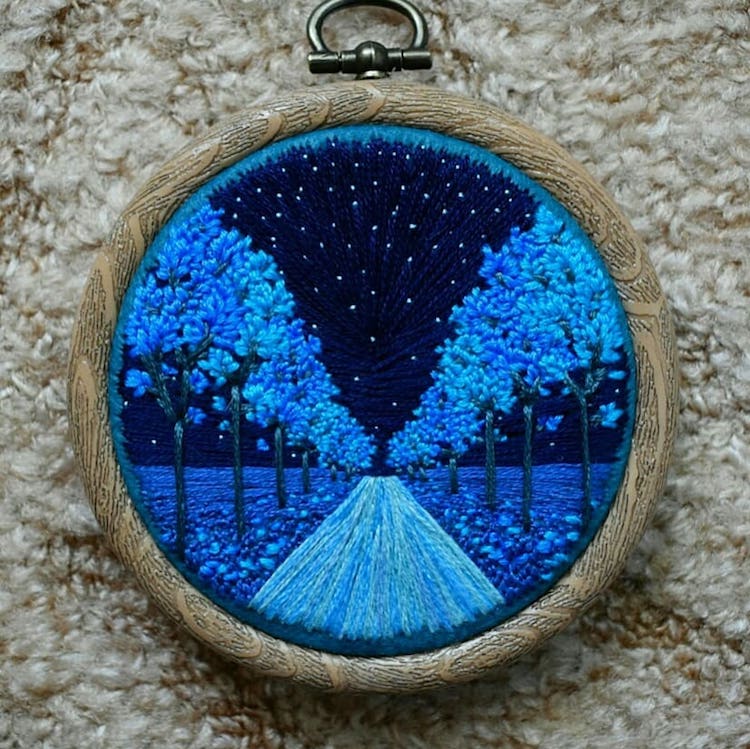
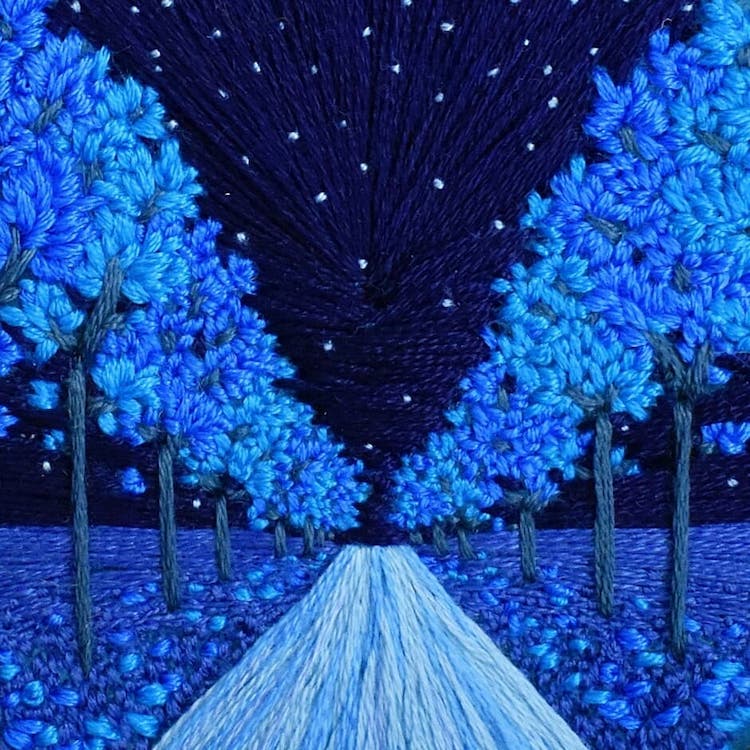
Inspired by traditional embroidery techniques, more and more contemporary textile artists are pushing the boundaries of the craft to create elaborate textile art. One of those artists is 21-year-old Victoria Rose Richards. She uses a range of embroidery stitches to craft illustrative landscape scenes that are bursting with color and texture.
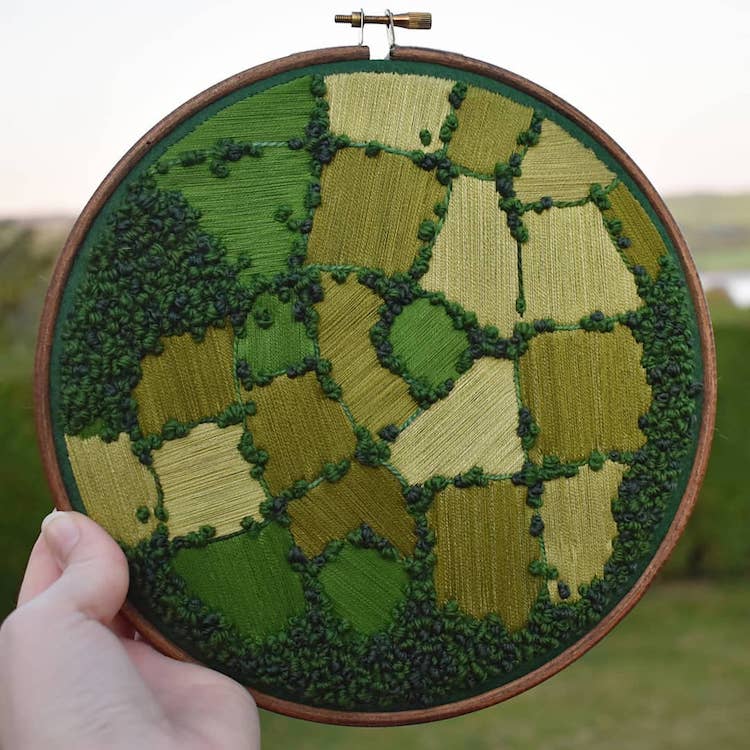
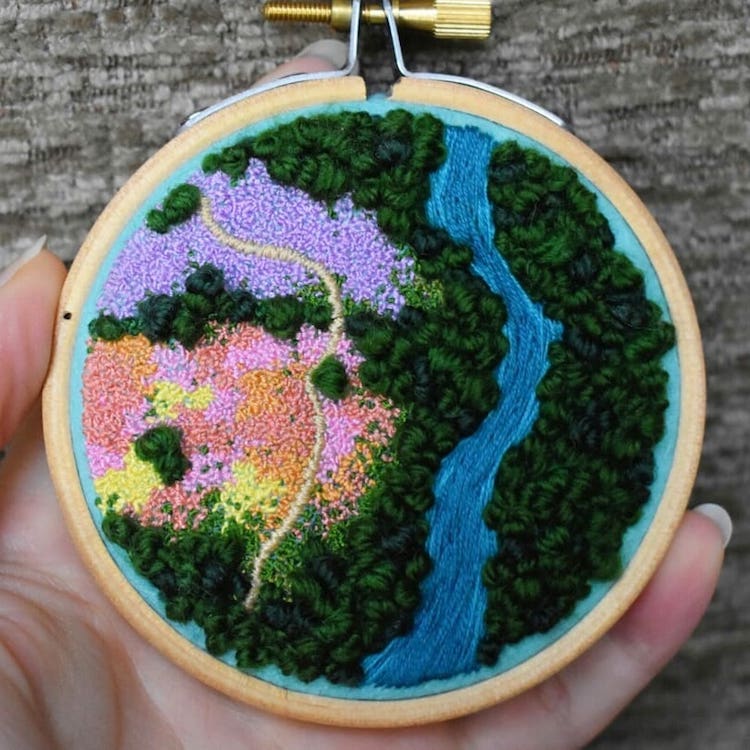
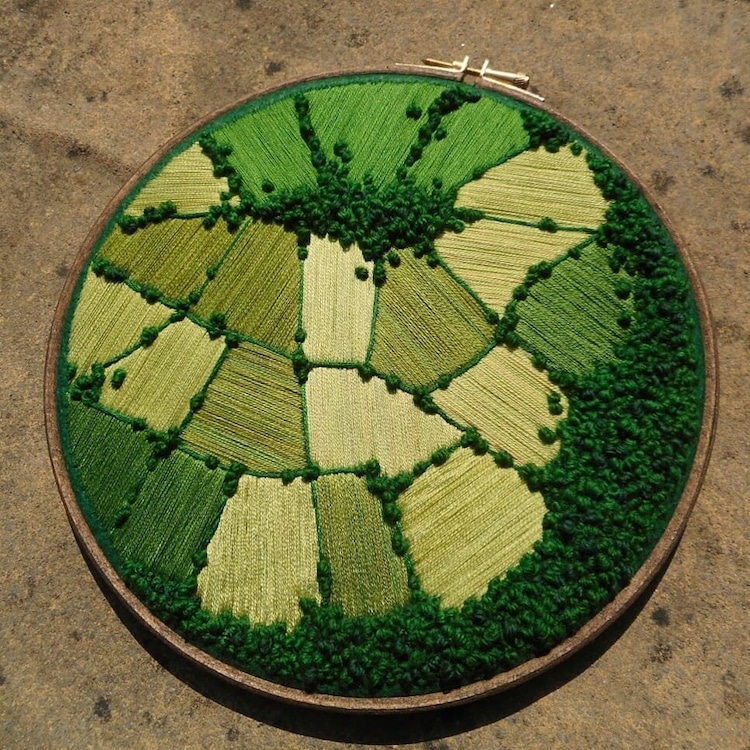
Richards is based in rural Plymouth, England, where’s she’s surrounded by the natural beauty that inspires her. Farmers’ fields, countryside roads, and river streams feature throughout the “needle painter’s” work, all of which are meticulously rendered in colorful thread. Long, straight satin stitches depict patchworks of fields, while clusters of French knots look like trees and foliage from an aerial view.
Richards’ love of nature goes beyond her artistic practice—she also has an academic background in biology. “I’m a biology graduate with a passion for embroidery, nature, and all things bright and colorful!,” the talented artist excitedly says on Etsy. Richards, who has Asperger’s syndrome, discovered embroidery as a way to calm her mind in between college classes. She reveals, “I pulled some nice blues and greens out of my grandmother’s old embroidery tin and had my first go at an embroidery landscape in October 2018.” Today, she continues to learn new techniques to bring her impressive textile scenes to life.
Check out some of Richards’ fantastic thread paintings below and see more from her ever-growing portfolio on Instagram. The artist’s Etsy shop is currently closed for the holidays, but Richards will be back in the new year with freshly-stitched work!
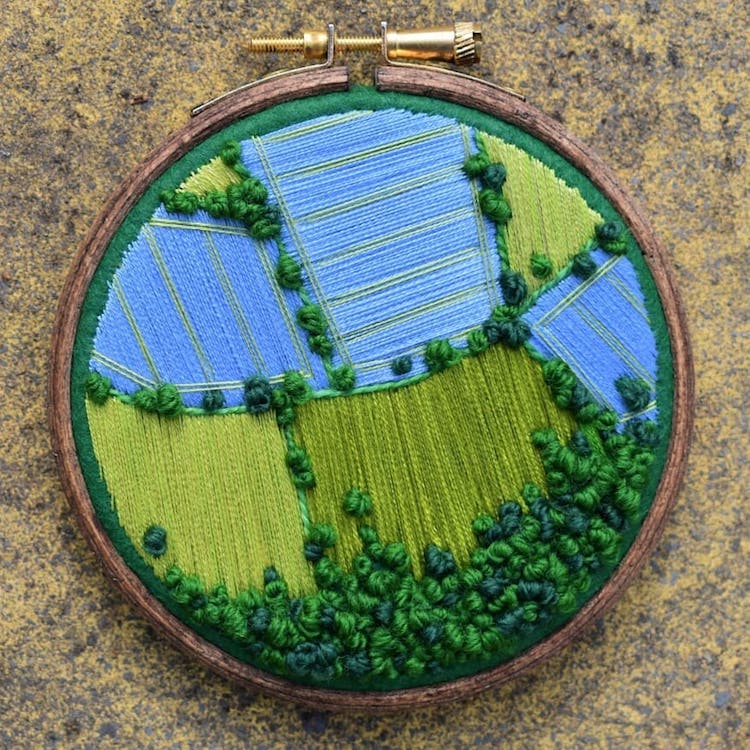
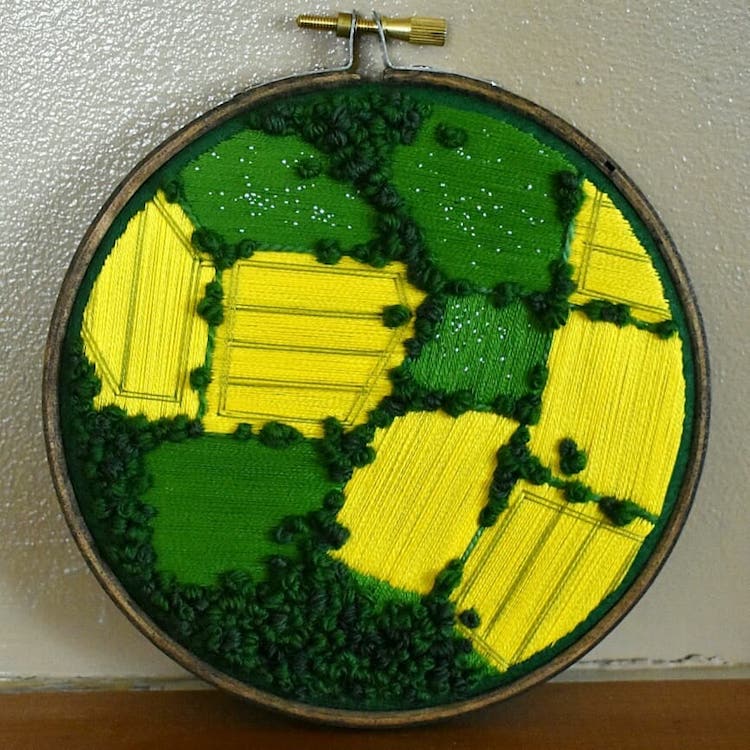
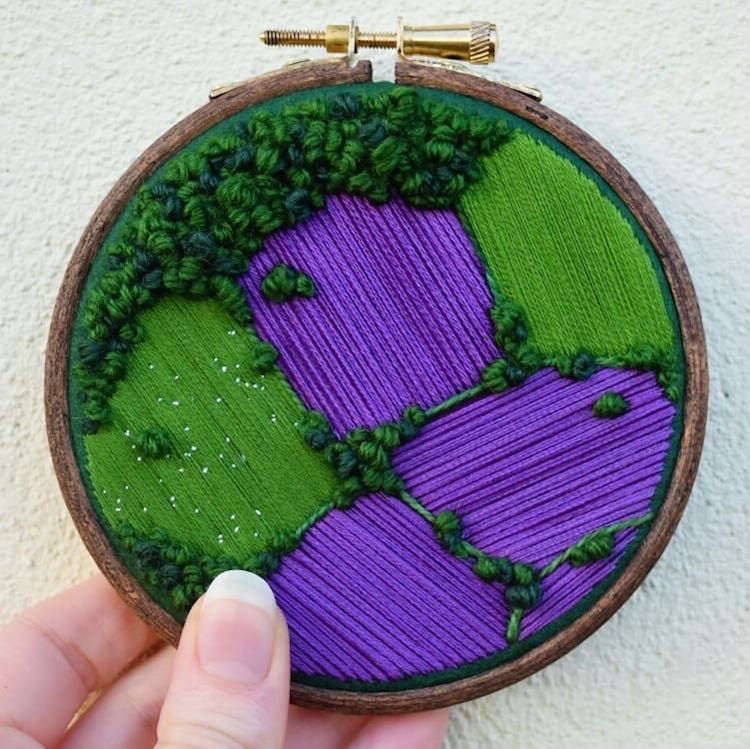
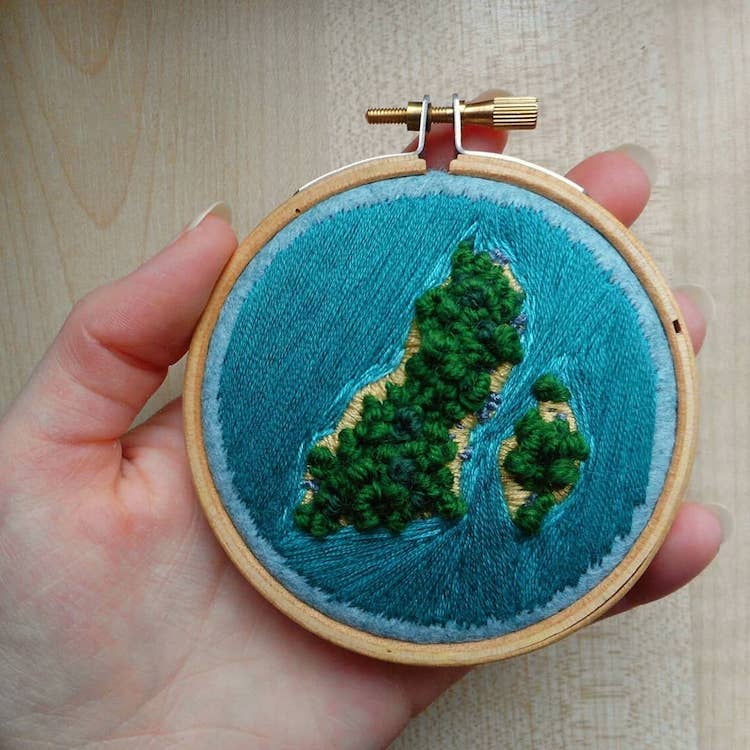

 Victoria Rose Richards: Instagram | Etsy
Ultimate Guide to Embroidery: How It Started and How You Can Get Started Today
Embroidery Artist “Paints” Colorful Landscape Scenes With Thread
Embroidery Artists Are Using a Needle and Thread to “Paint” Gorgeous Stitched Art
Embroidery Maps Celebrate the Natural Beauty Each U.S. State Has to Offer
The post Vibrant Aerial Embroidery Captures the Beauty of English Farmlands From Above appeared first on My Modern Met.