“Buy me drugs” - Leonardo Santamaria

All images © Denisse Ariana Perez, shared with permission
Caribbean-born, Copenhagen-based photographer Denisse Ariana Perez captures images that connect her subjects with the environment and redefine ideas of black masculinity and beauty. Taken in Benin and Uganda, Perez’s Men and Water series (I, II, and III) features men of color often topless, but not sexualized, as they sit, stand, and embrace one another in murky natural pools and beneath waterfalls.
“I’m on a quest to find beauty in the sometimes less obvious places,” Perez told It’s Nice That. “I like to use this medium to highlight the beauty of individuals, their communities and cultures, especially those who are marginalized.” Many of her subjects are men because she likes to portray them “through a sensitive lens, to show more sides to them, other than their physical strength or sex appeal.” Working as both a copywriter and a photographer, Perez says that storytelling is what bridges the two worlds, and the liquid landscapes are a big part of the stories that she tells.
“Water can disarm even the most armed of facades,” Perez writes of the Men and Water series. “Becoming one with water is not about rushing but rather about flowing. And flowing is the closest thing to being.” To see more of Perez’s beautiful images, follow the photographer on Instagram.


Do stories and artists like this matter to you? Become a Colossal Member and support independent arts publishing. Join a community of like-minded readers who are passionate about contemporary art, apply for our annual grant, and get exclusive access to interviews, partner discounts, and event tickets.
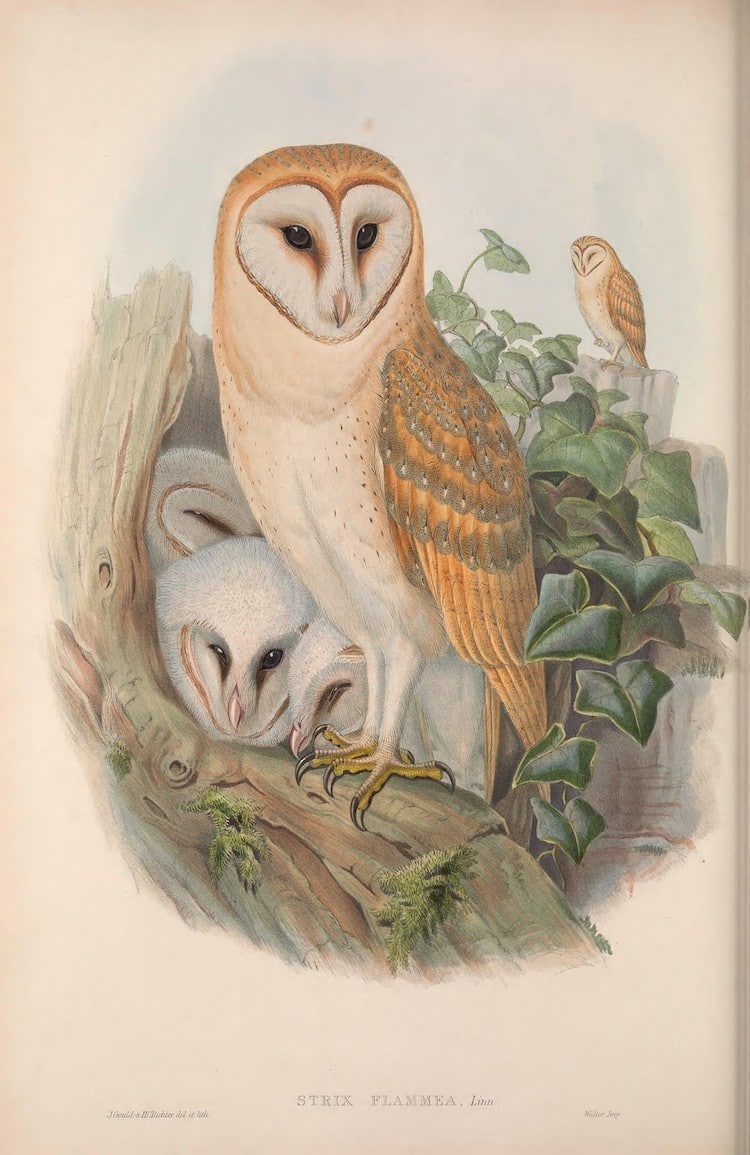
“The birds of Great Britain” (1873)
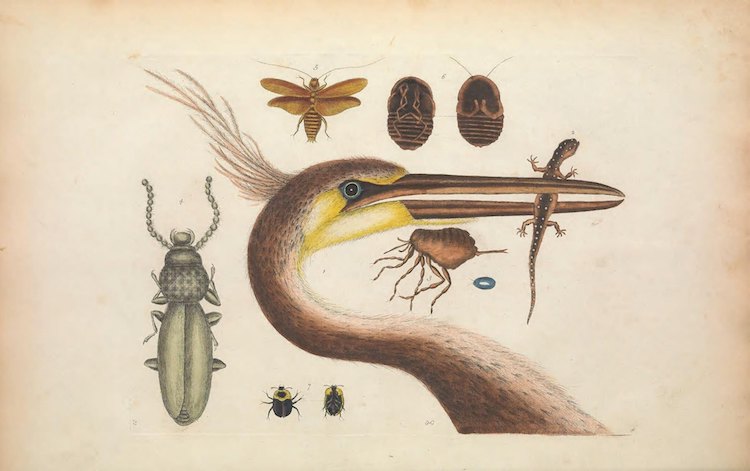
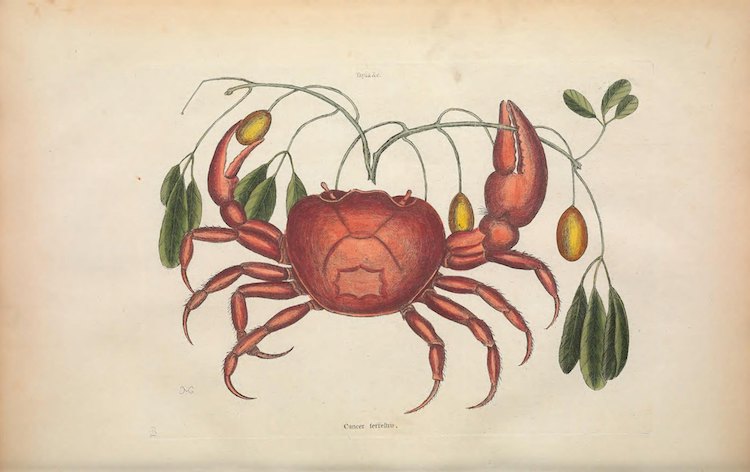
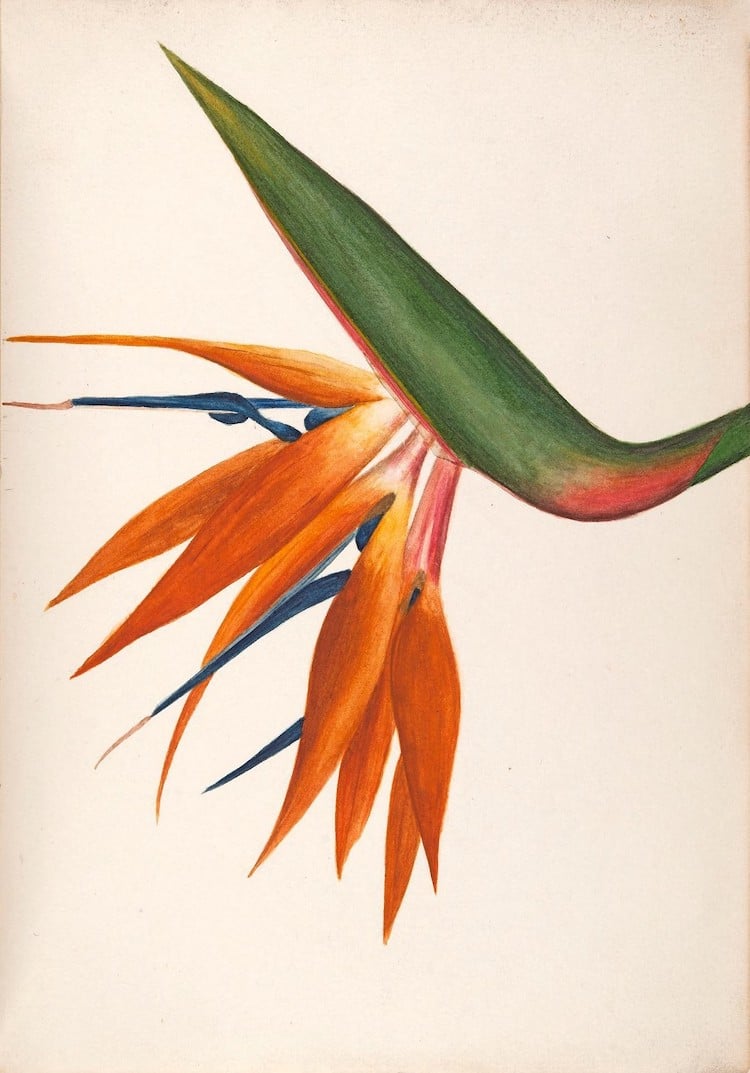
Botanical and animal illustrations have been capturing the hearts and minds of nature lovers for centuries. When they first started being produced 300 years ago, they were the only scientific record we had of different plant and animal species. Today, they continue to capture the imagination for their demonstration of beauty and skill. One of the best resources for finding free, high-resolution animal and botanical illustrations is the Biodiversity Heritage Library, which has over 150,000 images available for download.
Since 2011, the open-access digital library has been building an archive on Flickr. By allowing users to gain access to these high-resolution images, they’re helping us understand how nature has been depicted throughout history. Of course, we’re not only talking about flower illustrations, there are also plenty of drawings that include wildlife in the mix.
If you’re looking for a specific image, you can search directly on the BHL website. Each entry will have a direct link to Flickr in the image description field. Or you can go straight to the BHL Flickr, where you’ll find albums broken up by publication. New material is constantly being added, so it’s well worth checking up every few months to see what’s appeared. In fact, since 2017 over 50,000 new images have made their way into the archive.
Newer entries include a 1901 manual to identifying mushrooms, an 1872 guide to Beautiful Birds in Far-Off Lands, as well as multiple volumes dedicated to watercolor paintings of North American and European plants. Anywhere you turn, there are treasures to be found; and by enabling high-resolution downloads, BHL lets viewers get close to the details of this precious material.

“Rural hours” (1851)

“Beautiful birds in far-off lands” (1872)
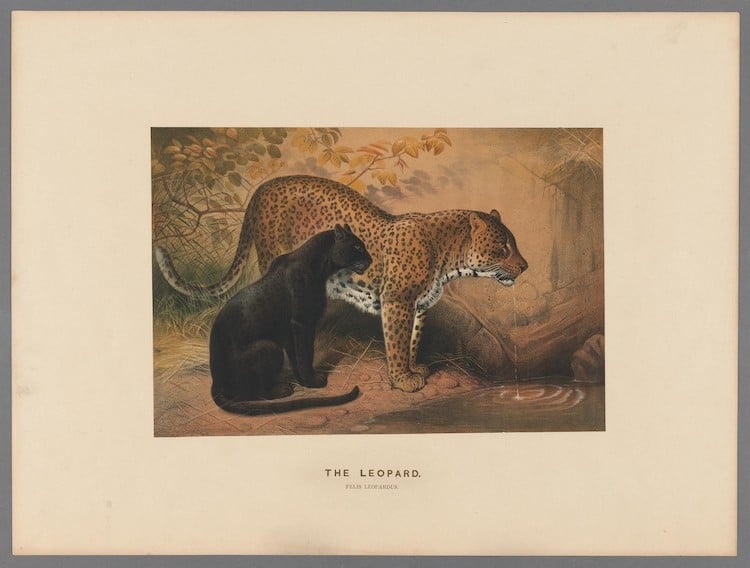
“Zoological sketches” (1861-1867)
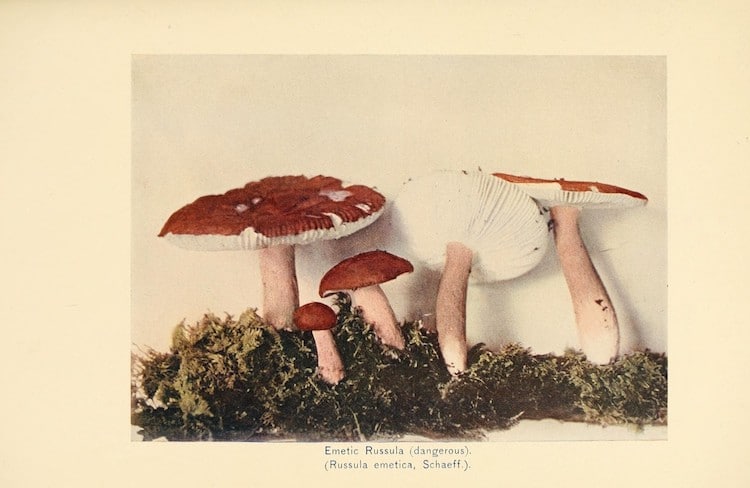
“The mushroom book” (1901)

“The botanical cabinet” (1817-1833)
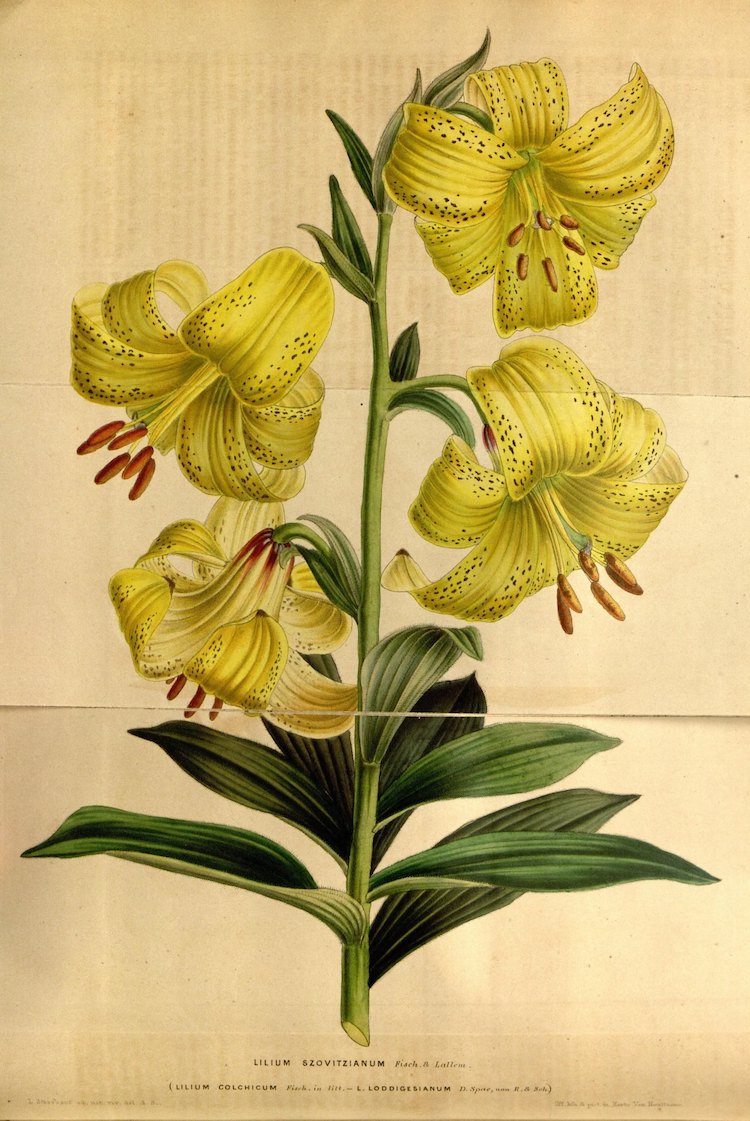
Flore des serres et des jardins de l’Europe (1845-1880)
Biodiversity Heritage Library: Website | Facebook | Instagram | Flickr
19th Century Biologist’s Illustrations of Microbes Bring Art and Science Together
Download 130-Year-Old Watercolors of Newly Discovered Fruits of the Time
Interview: Designer Restores Beloved 19th-Century Botanical Catalog and Places It Online
Illustrated U.S. Map From 1932 Shows the Medicinal Plants Native to Each State
The post Download Over 150,000 Illustrations of Flora and Fauna for Free appeared first on My Modern Met.

“The Chronicles of New York City” (2020). Photos by Marc Azoulay. All images © JR-ART.net, shared with permission
French artist JR (previously) is back in New York, transforming pockets of the city with his latest work. Installed on stacked shipping containers, “The Chronicles of New York City” is a compilation of images depicting more than 1,000 New York residents, who the artist photographed and reproduced for the large-scale work. Created in Williamsburg’s Domino Park, the black-and-white mural is JR’s biggest public project to date in the city. It overlooks the East River and features people living in all five boroughs gathered in a public space that mimics the newly built park.
Since opening his exhibition “JR: Chronicles” in October of 2019, the artist has been transforming areas throughout the city, like a space at the Kings Theatre in Flatbush and the Brooklyn Academy of Global Finance in Bedford Stuyvesant. “The Chronicles of New York City” is the centerpiece of the exhibition, which is on view through May 3, 2020, at Brooklyn Museum, and is accompanied by audio recordings of those portrayed in the monochromatic mural. The public installation was a collaboration with architectural firm LOT-EK, which is known for its sustainable design and helped in creating the site.
“Working at the intersections of photography, social engagement, and street art, JR collaborates with communities by taking individual portraits, reproducing them at a monumental scale, and wheat pasting them—sometimes illegally—in nearby public spaces,” says a statement about the exhibition. See where JR’s work pops up next by following him on Instagram and peek in his shop to check out what’s available for purchase.


Do stories and artists like this matter to you? Become a Colossal Member and support independent arts publishing. Join a community of like-minded readers who are passionate about contemporary art, apply for our annual grant, and get exclusive access to interviews, partner discounts, and event tickets.

“This Fragile World,” (2019), hand cut paper and acrylic paint, about 11 x 11 inches. All images © Pippa Dyrlaga
For Pippa Dyrlaga, one piece of paper holds a lot of possibility. The Hebden Bridge, Yorkshire-based artist cuts each one of her delicate creations from a single sheet. Her intricate designs turn a blank page into a plant-filled landscape or a robot tending to a garden. Dyrlaga begins by sketching each piece in reverse, before cutting sections out. Then she flips it over to unveil the finished work or to paint details onto the piece.
Whereas her previous work often utilized a single white sheet, the artist now is working more with color, painting shades of blues, golds, and black, which helps to distinguish one group of plants or mosses from the next in her lush landscapes. She also has been inspired by Greek mythology and lore, describing “Psychopomp” (shown below) as “a spirit or deity, often depicted in animal form, which guide people into the afterlife,” on her site. “The piece is split into two, night and day, life and death. The daytime is represents life and growth, organic patterns and plants. The second half with nocturnal animals and abstract patterns, representing the more abstract idea of what comes ‘after.'”
Head to Dyrlaga’s Instagram for more of her intricate creations, and see which are available for purchase in her shop.

“Torn #3” (2019), torn and hand cut paper, painted with acrylic, about 20 x 10 centimeters

Left: “Arber” (2020), hand painted and cut Japanese 36 gsm washi paper. Right: “Garden Spirit” (2019), hand painted and cut Japanese 36 gsm washi paper

(2018), hand drawn and hand cut Awagami Kozo Natural Select paper 46 gsm, about 23 x 25 centimeters

Left: “Torn #1” (2019), hand cut paper. Right: “Torn #2” (2019), hand drawn and cut paper

“Bright” (2019), hand cut from Awagami Factory 36 gsm paper and painted with acrylic paint

Left: “Psychopomp,” hand drawn and hand cut paper, 80 x 40 centimeters. Right: “Bennu,” hand cut 32 gsm gampi washi paper, with hand painted gold acrylic

‘While the World is Asleep” (2018), hand drawn and hand cut paper, about 42 x 28 centimeters
Do stories and artists like this matter to you? Become a Colossal Member and support independent arts publishing. Join a community of like-minded readers who are passionate about contemporary art, apply for our annual grant, and get exclusive access to interviews, partner discounts, and event tickets.

Some Private, Most Public | These are a selection of photos from my ongoing and probably forever-unfinished project about New York City.
COUNTRY | United States
BIO | Steven Davis (b. 1990) is a self-published documentary photographer, videographer, and editor based in New York City. He is a contributing member of the New York City Street Photography Collective. His work is an attempt to find excitement, passion, and humor in the candor of everyday life.


LINK | INSTAGRAM
NEWS ABOUT EYESHOT | READ MORE
The post Steven Davis appeared first on Eyeshot - Street Photography Magazine.
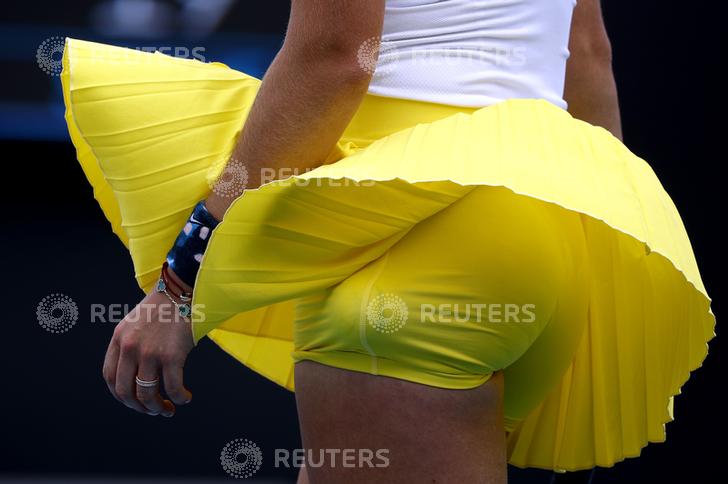
The Reuters coverage of this year’s Australian Open tennis tournament features all the staples of the genre: feats of athletic prowess, emotional highs and lows, artistic stills, and humorous outtakes. It also includes several examples of a shot that needs to be scrapped from the genre: the athletic upskirt.
In addition to being a (sometimes) illegal pastime of amateur photographers on subway trains and public staircases the world over, upskirting has long been a mainstay of fashion, advertising, and stock photography. It’s no surprise, then, that it pops up occasionally in the realm of sports photography in athletic events where the standard women’s uniform features short skirts and the typical activity includes flashes of whatever underpants or shorts lie beneath.
The most common athletic upskirt is the televised version featured on collegiate and professional football and basketball broadcasts: the slow pan up a cheerleader’s legs shot from beneath as she shakes her pom poms or does a high kick for the viewer:
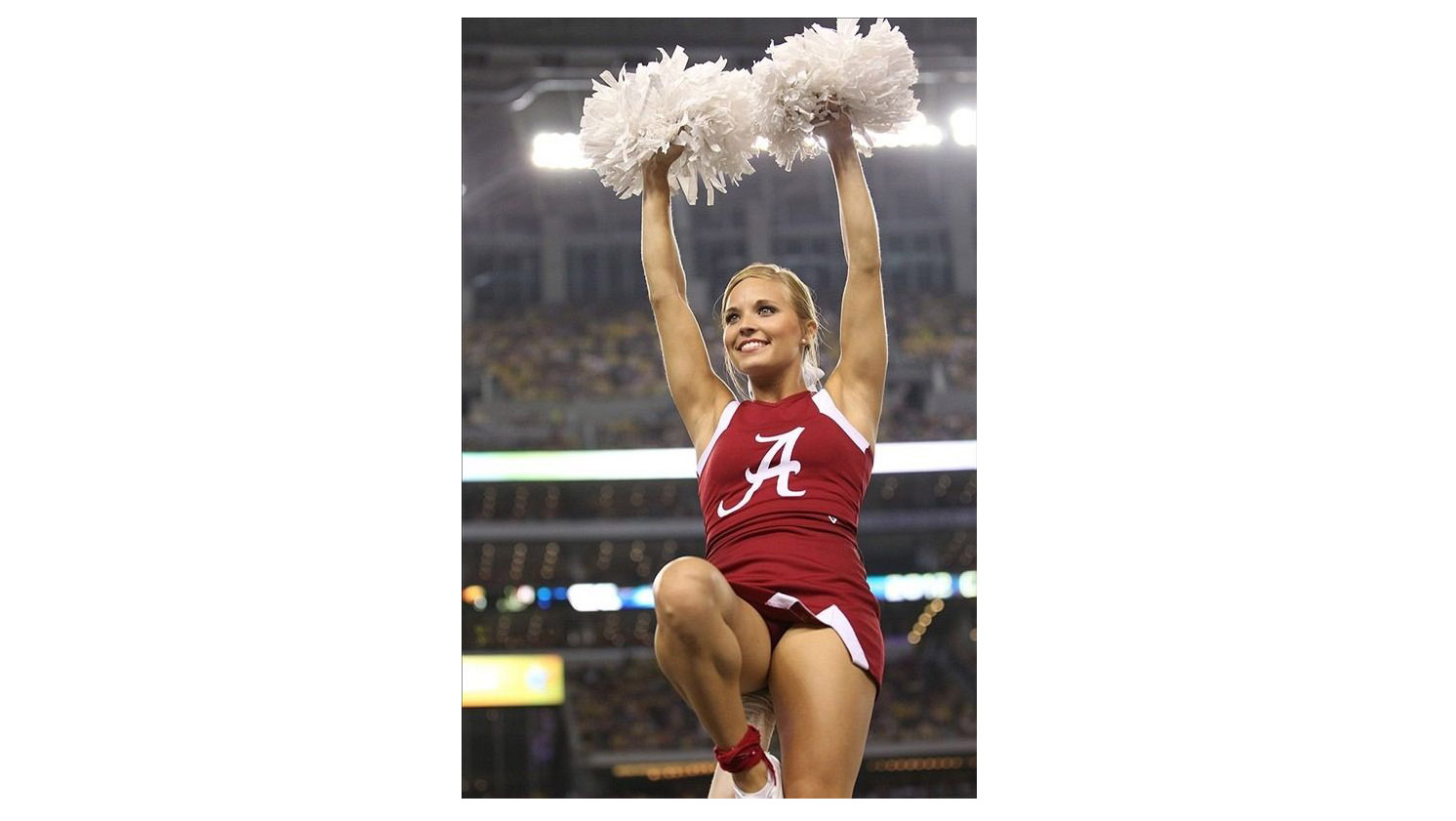
Despite the undeniable athleticism cheerleading requires, it has always been an oddly sexualized accessory to the “main event” it accompanies. The upskirting of athletes in a sport like tennis, however, means that sexual voyeurism is part of covering sports events.
Athletic upskirting is possible in tennis only because of the sport’s longstanding and ridiculous uniform conventions. Whereas men get to play in shorts of various lengths that allow for full freedom of movement without exposing their nether regions to the camera, women have been pressured (and often required) to play in skirts—a convention that grew from nineteenth-century dress codes and only permitted the shortening of the skirt as the sport modernized. Very recently, women players have pushed for more uniform options, but skirts remain the norm on the professional circuit.
So it’s not a surprise that the thousands of shots posted by Reuters of the Australian Open contained a few upskirts. Just because they’re common, however, doesn’t mean they’re harmless. An athletic upskirt shot in tennis has some clearly recurring features that photo editors and news outlets should exclude from their coverage.
Not every photo that reveals an athletic brief or bike short qualifies as an “upskirt.” Action shots such as the one of the Czech Republic’s Petra Kvitova, below, where the athletic activity is the focus and the motion of the skirt incidental, don’t evoke the unique and troubling perspective of the upskirt.
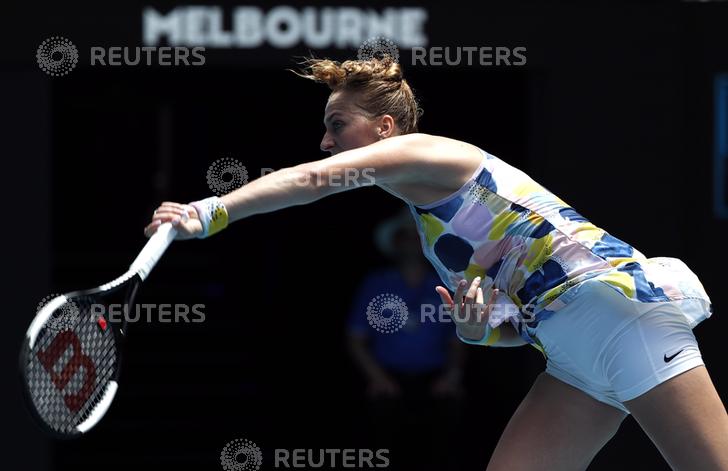
An upskirt is a particular kind of shot—a titillating glimpse under a skirt that feels voyeuristic, invasive, and often sexualized.
The photographs featured at the top of this piece are more recognizable as upskirt photos when paired with the infamous upskirt shots from popular culture that they mirror. Edgar Su’s shot of Belarus’s Aryna Sabalenka was captioned a “general shot,” but it looks like an homage to Sam Shaw’s iconic photo spread of Marilyn Monroe, taken during the filming of The Seven Year Itch.
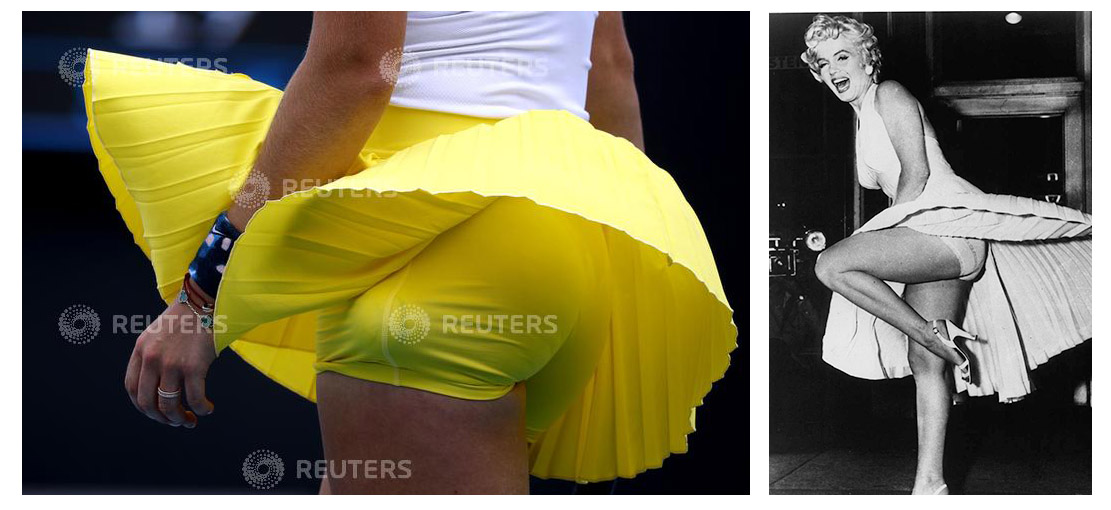
Alert writer, photographer, and Reading the Pictures reader Alan Weedon contacted Reuters about this image and a few others, stating his concern about their connotations as upskirt images. Reuters’ Ethics and Standards editor Brian Moss insisted that this wasn’t an upskirt photo, contending that the “intent is not to show women’s genitals or underwear that is normally hidden from view.” Moss then argued that this particular photo was “editorially sound” because “the billowing, bright yellow skirt and rounded shapes against the dark background caught our photographer’s eye,” and “the composition and the contrast are nearly perfect.”
It’s possible that neither Su nor Moss were consciously aware of the fact that the billowing skirt, composition, and contrast directly invoke the famous Marilyn Monroe image, and that is perhaps why they seem appealing and “nearly perfect.” To deny that Su’s shot contains the formal properties of an upskirt photo, however, is willful ignorance.
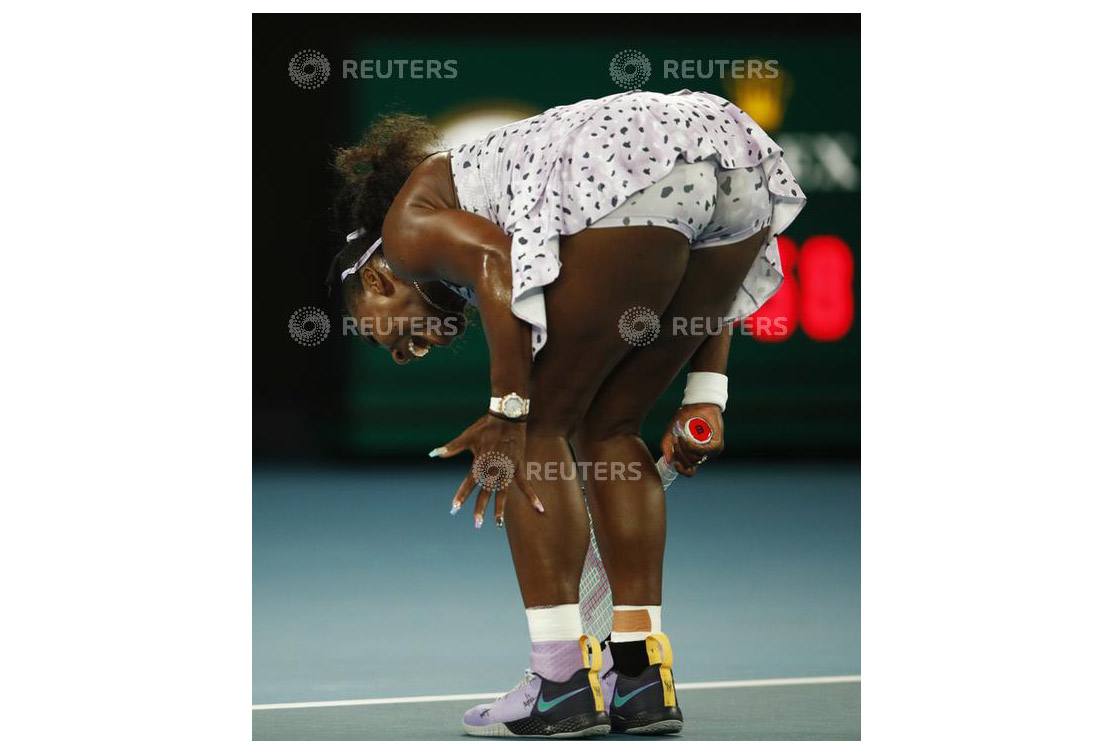
Su’s photo of Serena Williams mirrors a famously controversial American Apparel upskirt ad:
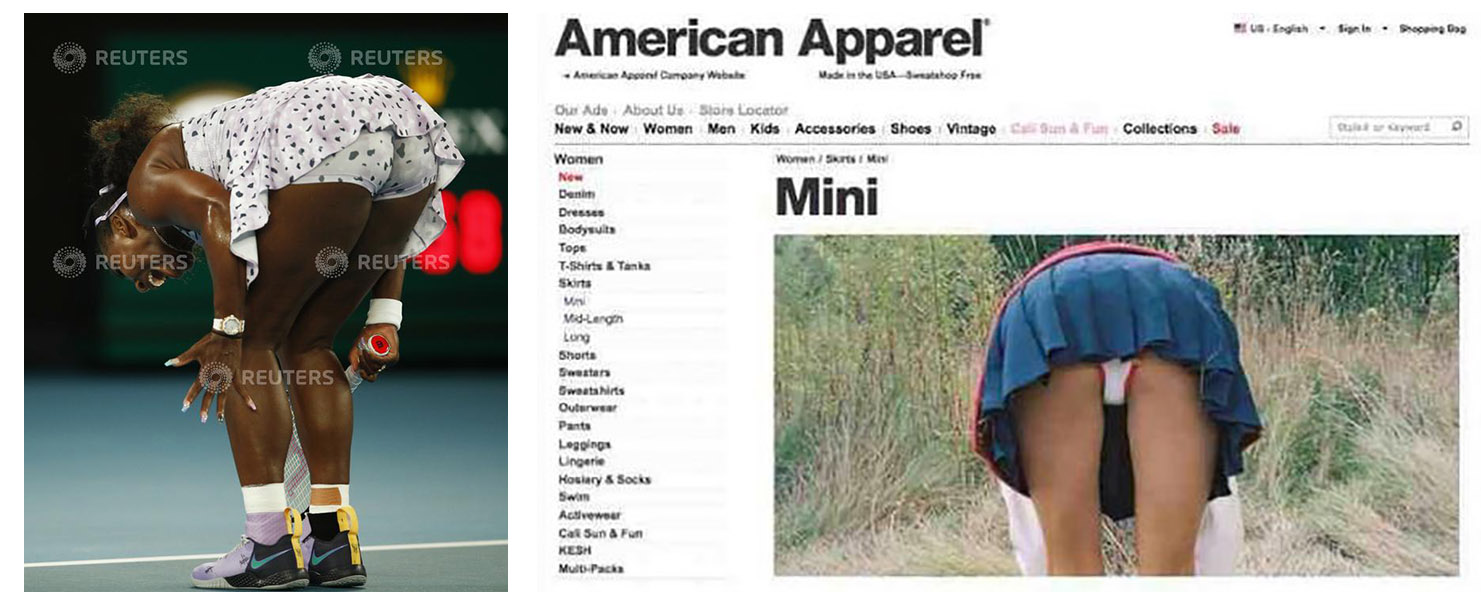
Taken from another angle, the image of Williams could be a completely legitimate depiction of emotion. However, the angle Su chose focuses not on Williams’s emotion, but on her exposed derriere—a pose that makes more sense in the context of a porn shoot than a journalistic account of women’s professional tennis.
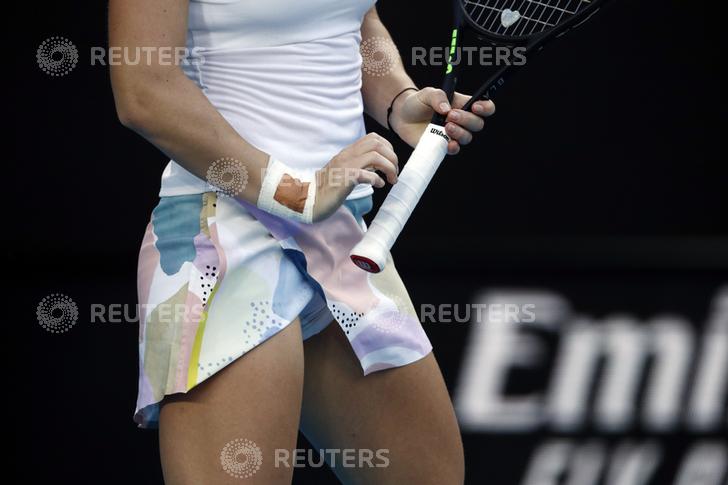
When asked about Su’s photo of Romania’s Simona Halep, below (not that you would know it’s Halep, since her head is missing), Moss insisted that the focus was on “not what’s under her skirt but the bandage on her wrist, a detail that might prove to be important in the coverage of her match.”
While he’s absolutely correct about the relevance of the injury, what Moss fails to recognize is how the photo is framed. It could have been cropped at the wrist and extended up, to show her face. That framing would have told a narrative about an injured competitor. Instead, the injured wrist points toward the exposed crotch, while the white racket handle takes on a phallic quality.
The photo is a mirror image of the cropped shot below posted on a host of “celebrity upskirt photo” websites. It turns French model Cindy Bruna into a headless set of boobs and peek-a-boo panties.
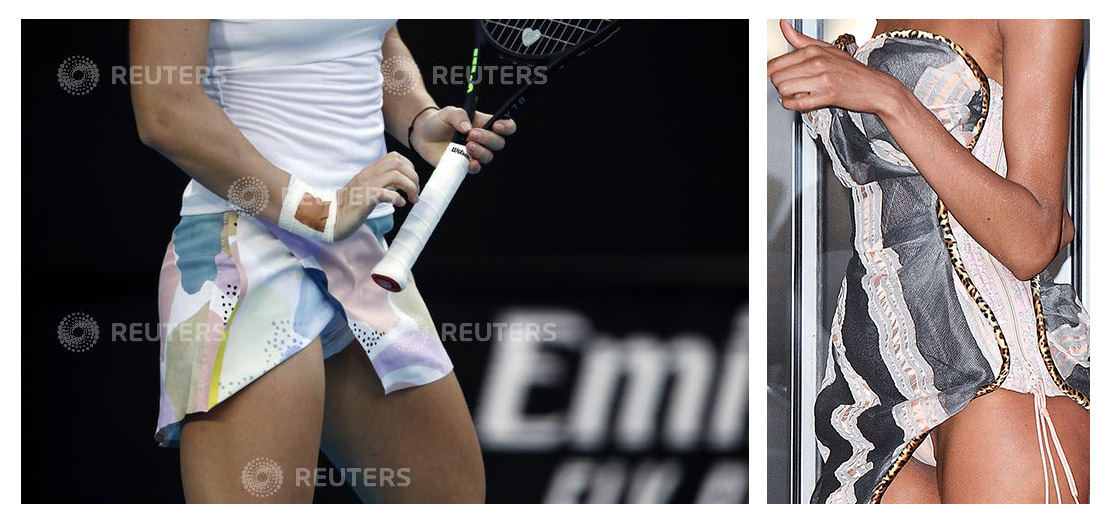
Sociologist Jean Kilbourne’s Killing Us Softly film series assesses the misogynistic strategies advertisers use to sell products. One of them is to dehumanize women by depicting them as body parts rather than as whole people. Such pictorial decapitation robs the individual model or athlete of her distinctive identity and full humanity, allowing the consumer or fan voyeur to zero in on the sexualized parts in the center of the frame.
That’s why Hannah Mckay’s shot of Cori Gauff, below, is an example of athletic upskirting even though no underpants are visible. The aesthetic is identical to this more explicitly sexual stock photo:

I can’t think of a journalistic scenario in which a player’s participation in the Australian Open would be best illustrated by a provocative depiction of a faceless athlete featuring only her crotch and thighs. Reuters has a wealth of more appropriate photos of Gauff (taken by Mckay) from which to choose.
At first, I was concerned about plucking four photos out of over 4,000 in Reuters’ Australian Open coverage. Why highlight images likely destined for archival oblivion? But then I read the exchange between Weedon and Moss. When confronted by a valid critique from a concerned reader, the person charged with maintaining “Ethics and Standards” for Reuters defended this depiction of women athletes, saying that “the photos are editorially sound. We stand by them.”
Well, Reuters, you shouldn’t stand by them. Photos like these help create a culture that undercuts women athletes and endangers women more broadly. When Sam Shaw created his original, iconic Marilyn Monroe upskirt photo shoot, he couldn’t have envisioned a future where individuals carrying camera phones in their pockets could snap digital upskirt shots of anonymous women without their consent and make them instantly and permanently available to the world. You, however, know better.
— Karrin Anderson | @KVAnderson
(Photo 1: Edgar Su/Reuters. Caption: General view of Belarus’ Aryna Sabalenka during the match against Spain’s Carla Suarez Navarro. January 22, 2020; Photo 2: Edgar Su/Reuters. Caption: Romania’s Simona Halep during the match against Jennifer Brady of the U.S. January 21, 2020; Photo 3: Edgar Su/Reuters. Caption: Serena Williams of the U.S. reacts during the match against Slovenia’s Tamara Zidansek. January 22, 2020; Photo 4: via Pinterest; Photo 5: Issei Kato/Reuters. Caption: Czech Republic’s Petra Kvitova in action during her match against Greece’s Maria Sakkari. January 26, 2020; Photo 6: Moviepix Caption: The iconic image of Marilyn Monroe was shot by photographer Sam Shaw during the filming of “The Seven Year Itch; Photo 7: American Apparel ad, featured in a tweet by @VagendaMagazine. August 7, 2014; Photo 9: via Sawfirst Caption: Cindy Bruna – Upskirt at Cannes; Photo 10: Hannah Mckay/Reuters; Caption: Cori Gauff of the U.S. during the match against Japan’s Naomi Osaka. January 24, 2020; Photo 11: Vladimir Gjorgiev/Shutterstock.
The post Athletic Upskirting at the Australian Open appeared first on Reading The Pictures.

Equipped with this eraser from Plus Stationary, you won’t be bummed to find mistakes. Each time you get rid of a wrong mark, this office staple gradually will reveal Mount Fuji. The blue and red rectangles—which represent the daytime and sunrise and sunset views of the mountain, respectively—feature a white center that when worn down and shaped into a peak, resemble the famous landmark in Japan. Standing less than 2 inches tall, the Mount Fuji Eraser is an extremely miniature version of the iconic snow-topped mountain, which stands at nearly 12,400 feet about 60 miles southwest of Tokyo.
Made with resin containing porous ceramic powder, the eraser is wrapped in a foil carton that is patterned in six different ways, representing traditional Japanese techniques like checkered and cloisonne. If you’re able to navigate Japanese, buy your own little volcano for less than $2 USD on Plus Stationary’s site. (via My Modern Met)


Do stories and artists like this matter to you? Become a Colossal Member and support independent arts publishing. Join a community of like-minded readers who are passionate about contemporary art, apply for our annual grant, and get exclusive access to interviews, partner discounts, and event tickets.
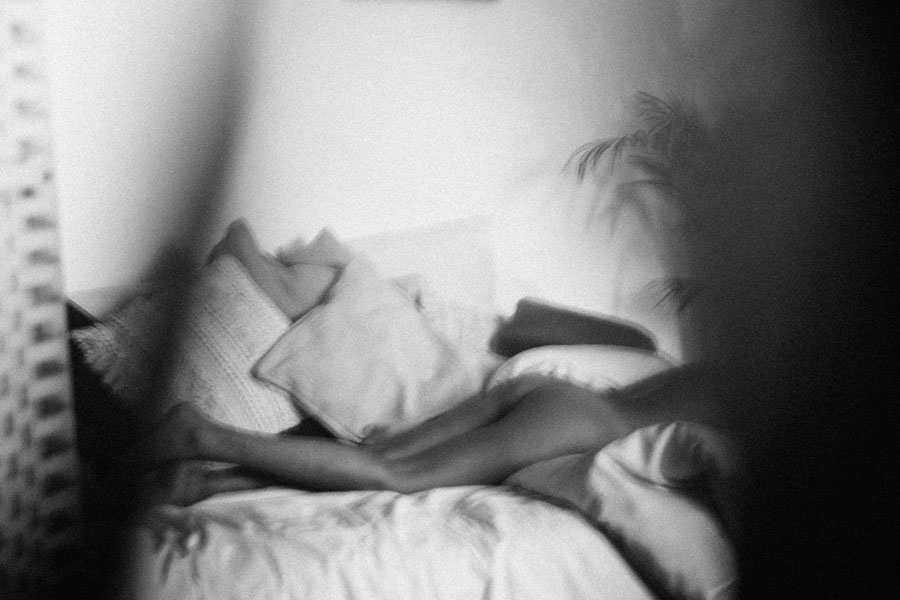
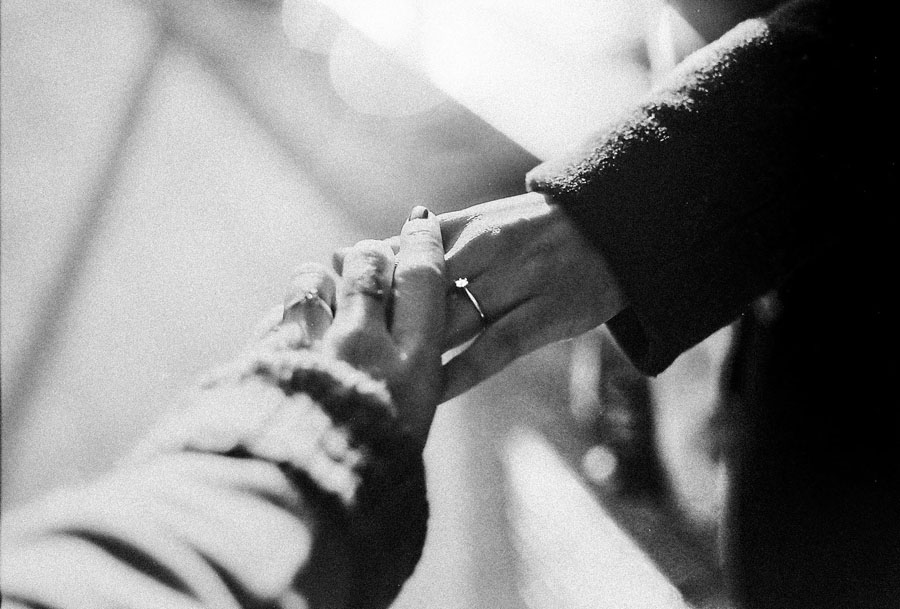
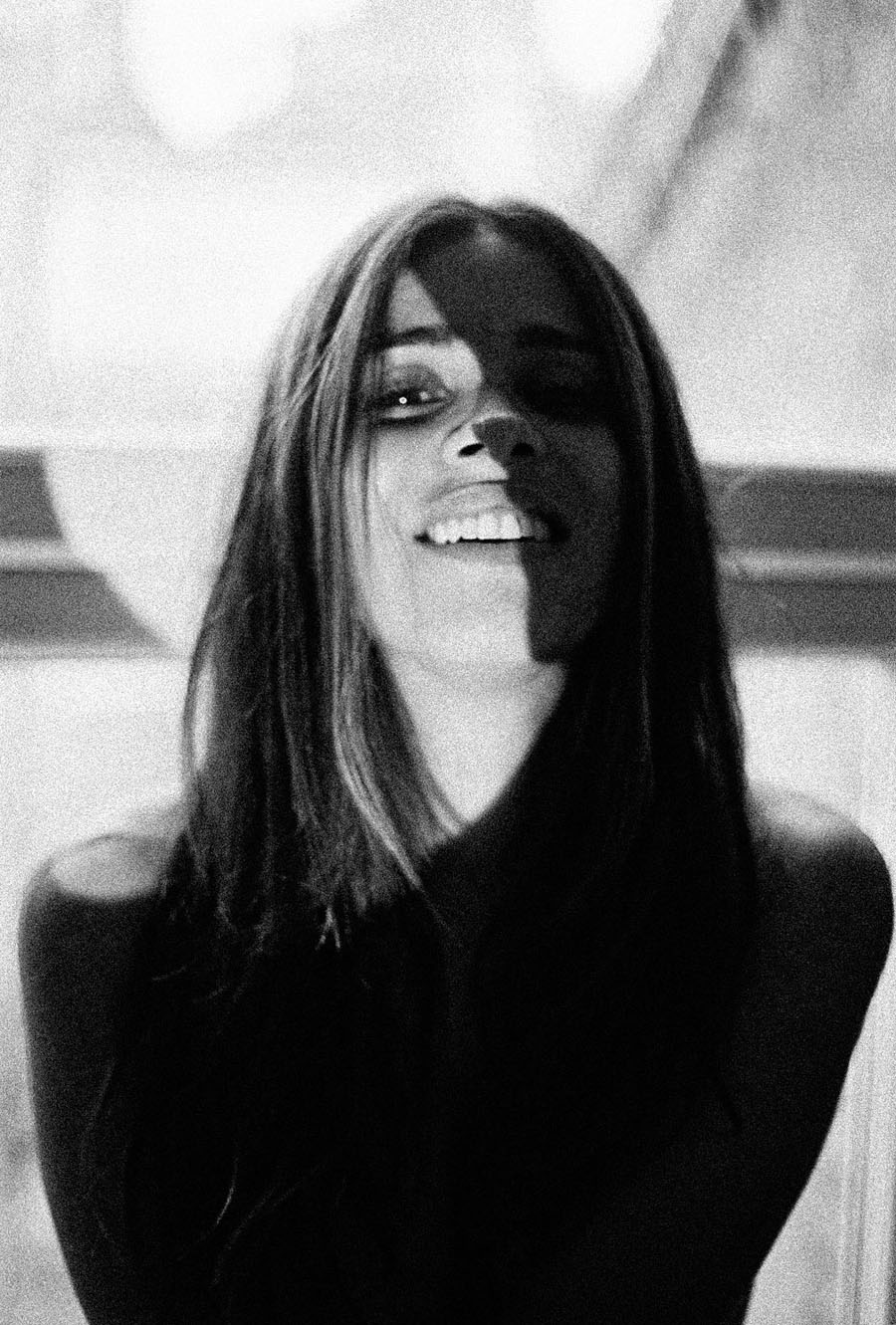
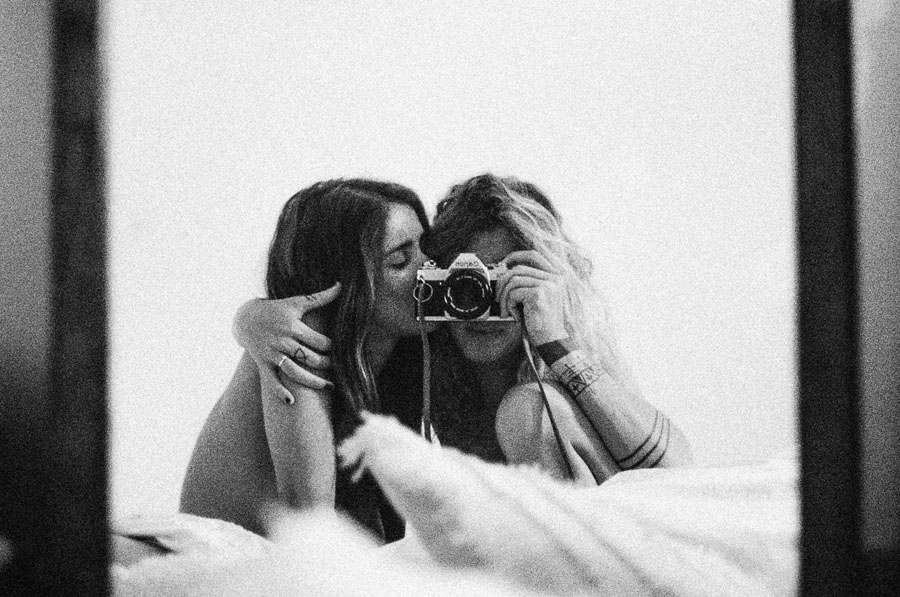
The days are always too short. The hours run like sand through our fingers. The faster time becomes the more precious those moments become where time stands still. Like in those images by Tiffany Roubert where she captures Sundays with her love. “These pictures are ‘slices of Sunday’. Sunday is the only day off I have in common with my love, Carla who is also my wife. So I started recording on film these simple moments we shared that day. Like a fragmented photo diary – where no alarm clock or meetings were in the way.”
Photography by @tiffanyroubert
tiffanyroubert.com
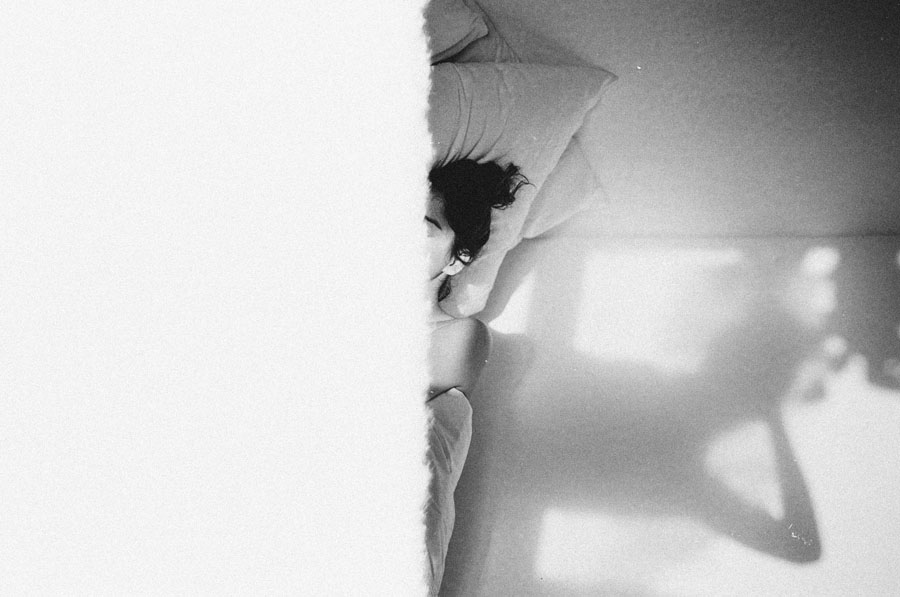
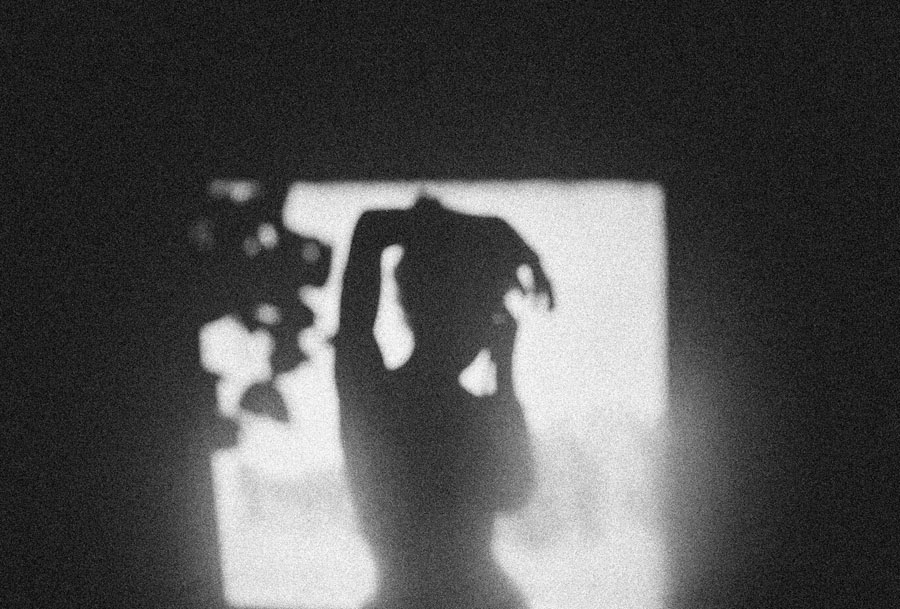
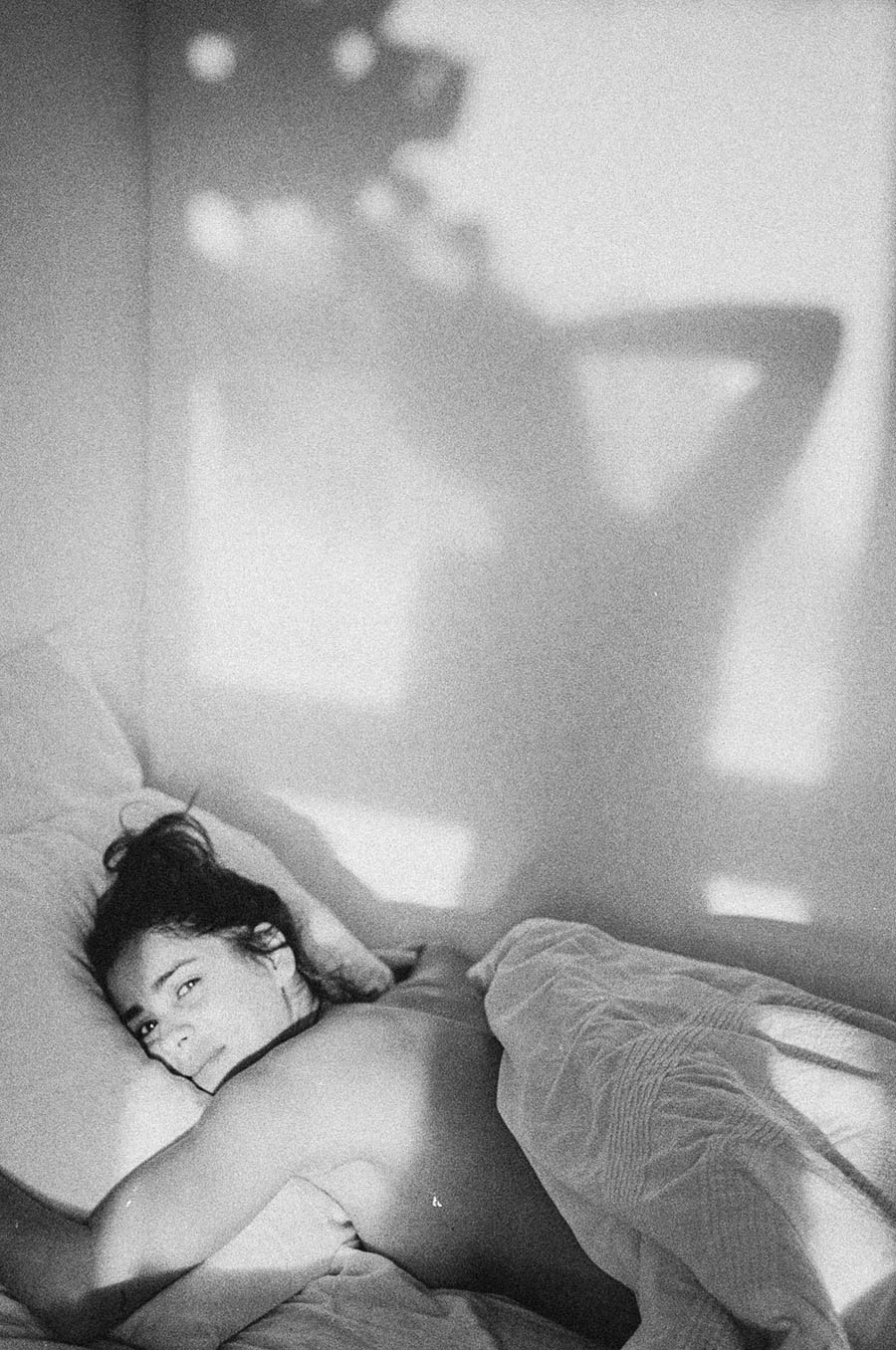
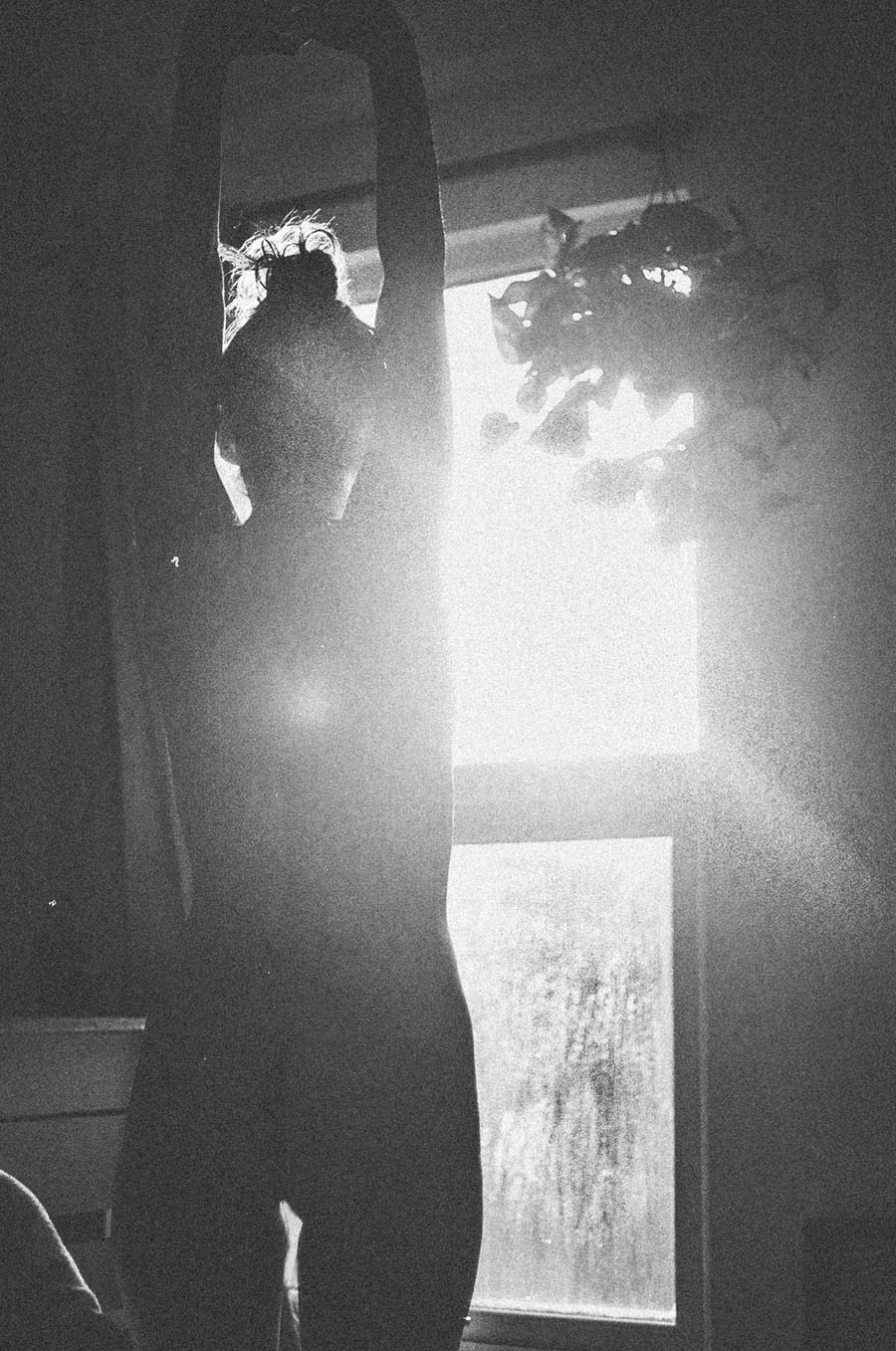
Photography by @tiffanyroubert
tiffanyroubert.com
The post Slices of Sunday appeared first on C-Heads Magazine.
Panning the expansive desert, “American Totem” captures the mesas scattered across the beige- and rust-colored landscape but with an unearthly twist. Pillars ascend from their flat tops, reaching up through the clouds toward a pale blue sky in the short film, which combines real footage and digital effects. Created by London-based artist Theodore John, aka mustardcuffins, the moving columns shoot through dissipating clouds as the sun rises and sets, casting shadows across the sand and rocks. As night sets in, the film speeds up, morphing the dark sky into one filled with shooting stars. Find more multi-media projects from the artist and motion graphics designer on Instagram and Behance.


Do stories and artists like this matter to you? Become a Colossal Member and support independent arts publishing. Join a community of like-minded readers who are passionate about contemporary art, apply for our annual grant, and get exclusive access to interviews, partner discounts, and event tickets.
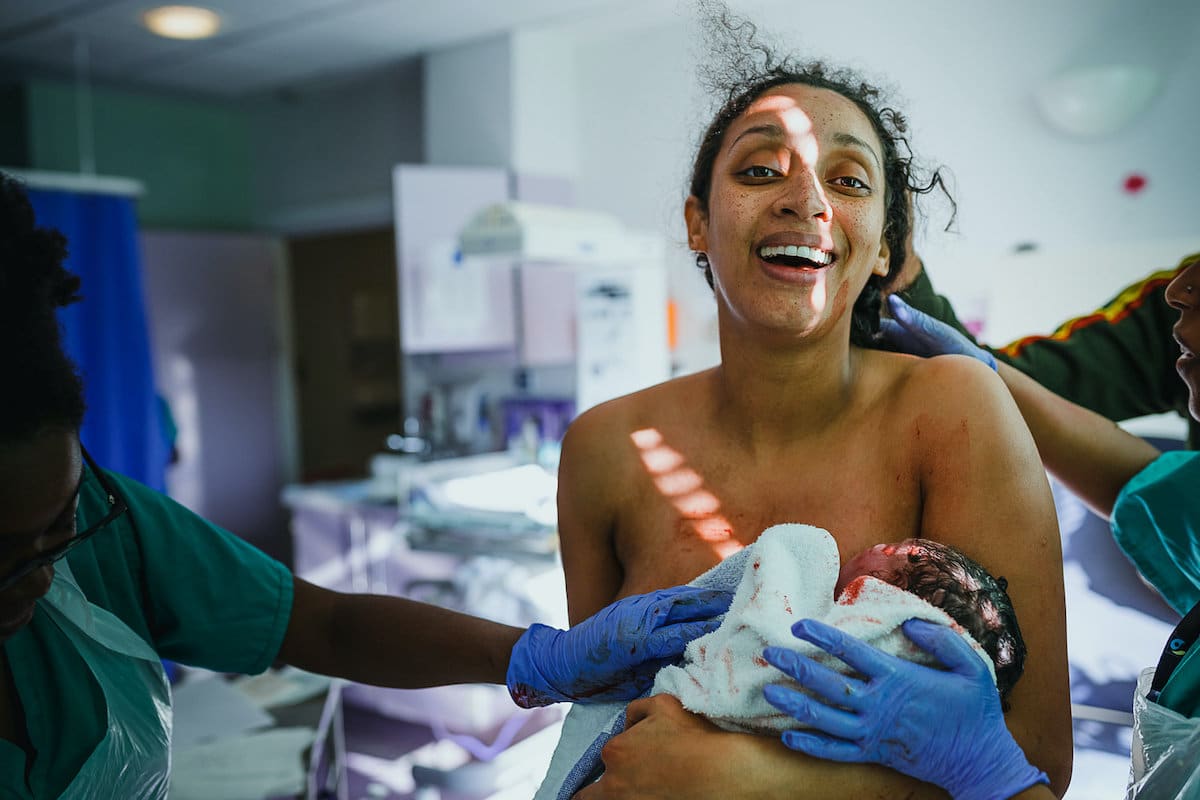
Overall Winner: Sadie Wild Photography
The human body is capable of many incredible things–the most amazing being childbirth. When a baby is born, words often fail to describe the emotions that overcome parents. But where people are left speechless, there is the power of the image to convey the gravity of the experience. Birth photographers take on the role of artist and documentarian to craft compelling compositions that capture heartfelt moments from labor, immortalize the awe-inspiring power of moms, and paint portraits of happy (and exhausted) families.
The 2019 Birth Becomes Her Image Contest recognizes the best in birth photography. This year was their biggest yet with over 1,200 submissions from creatives around the world. In the end, the judges chose an overall winner as well as first, second, and third-place category winners. The photographs range from scenes inside hospitals to what life is like once the babies are home. Each winner offers a nuanced view of the birthing process, and together these acknowledged images are a complete look at childbirth through the photographers’ masterful eyes.
London-based Sadie Wild Photography took home the top prize for her image of a woman just after giving birth. The mom looks elated—but exhausted—as nursing staff tends to her and her newborn wrapped in a towel. All at once, this image communicates the love and happiness a new mom feels while offering a powerful reminder of the medical professionals that help make birth safe for so many women.
Scroll down for more winners from 2019 Birth Becomes Her Image Contest and how they have captured fleeting moments that will surely be cherished forever.
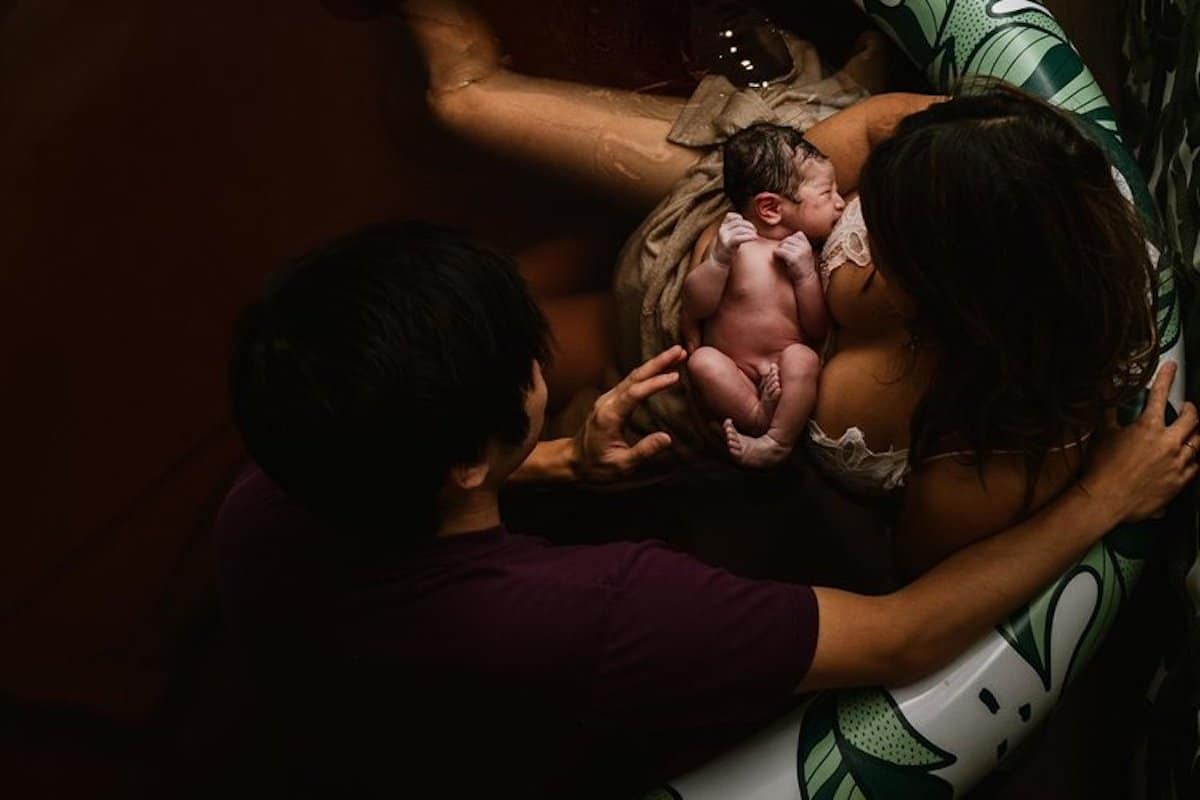
3rd Place Overall: Toni Nichole Photos
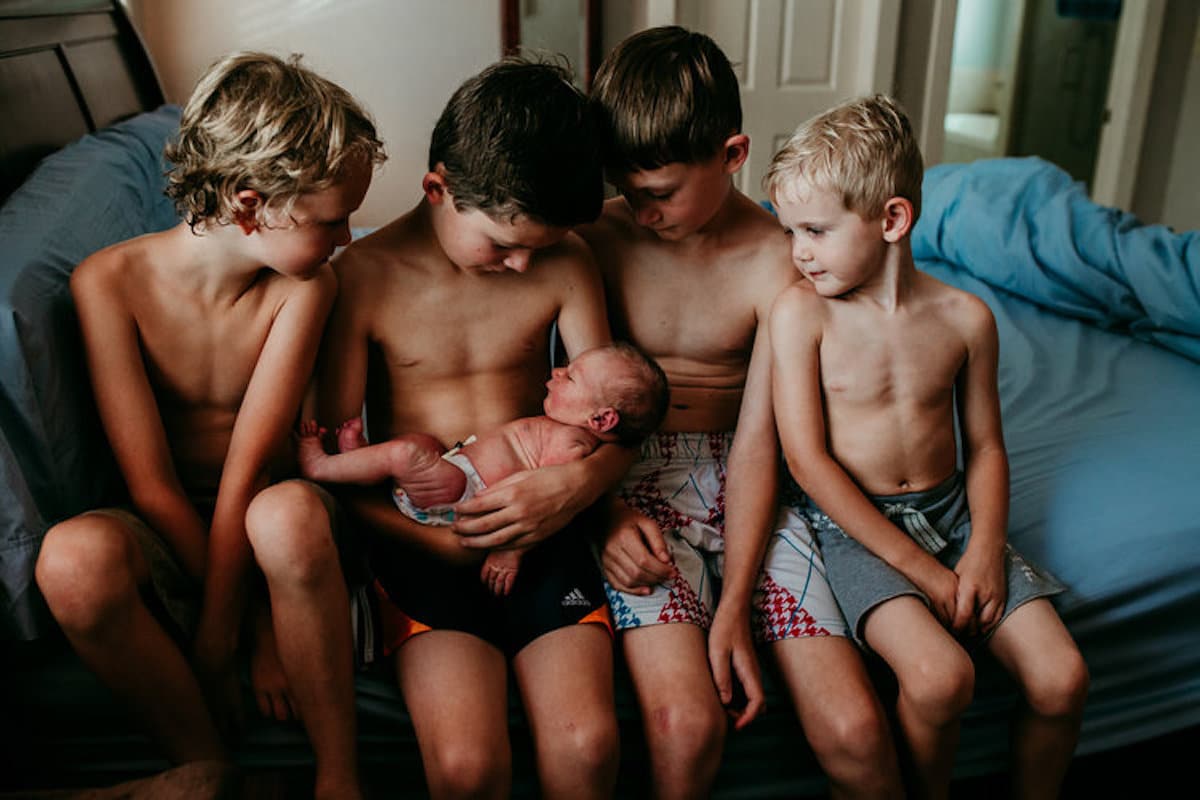
3rd Place Postpartum: Hanna Hill Photography
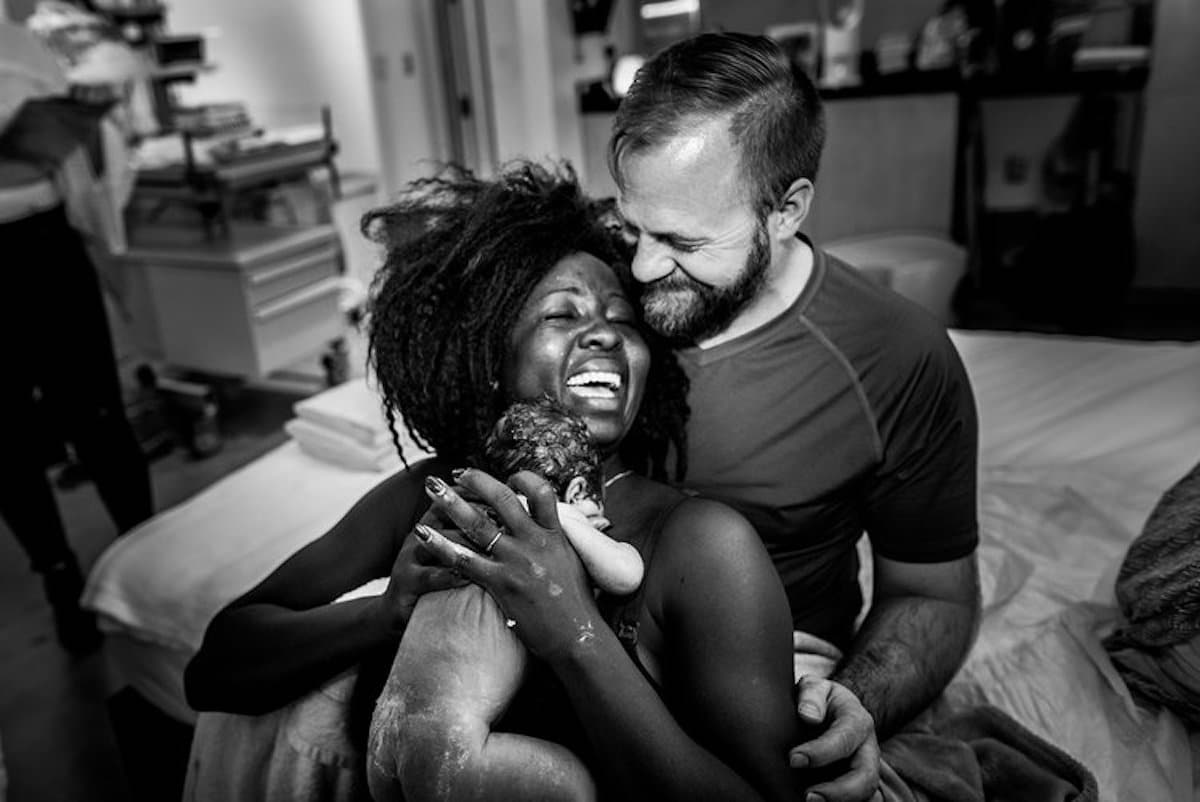
3rd Place Black and White: Salt City Birth & Newborn Photography
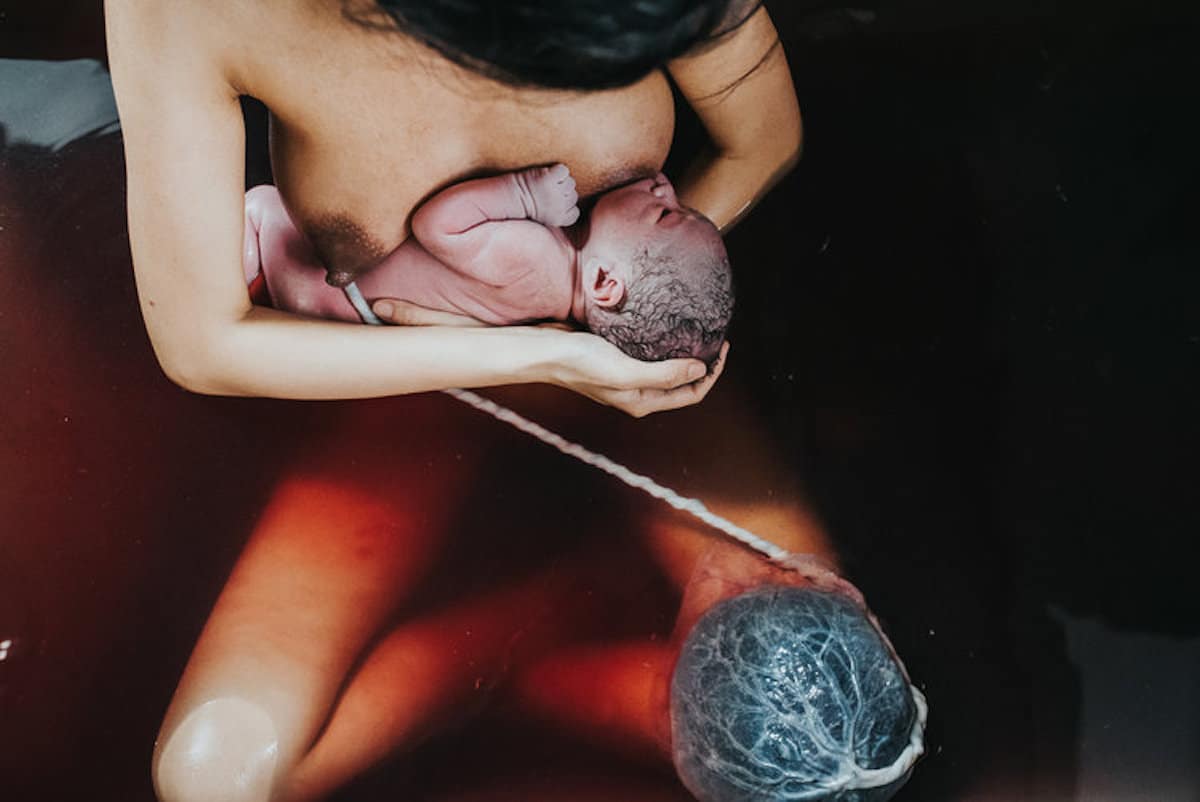
3rd Place Color: Chiara Doveri Photography

3rd Place Out of Hospital: Cradled Creations
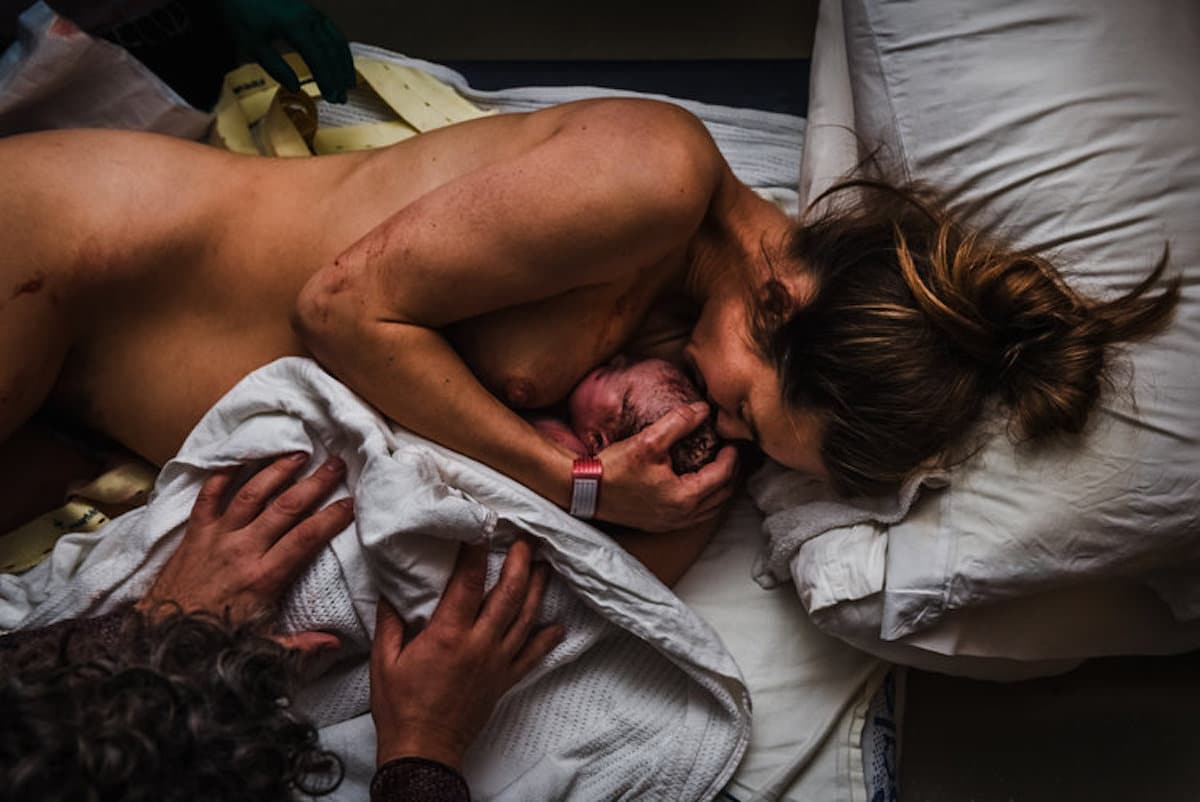
3rd Place Hospital: Bree Downes
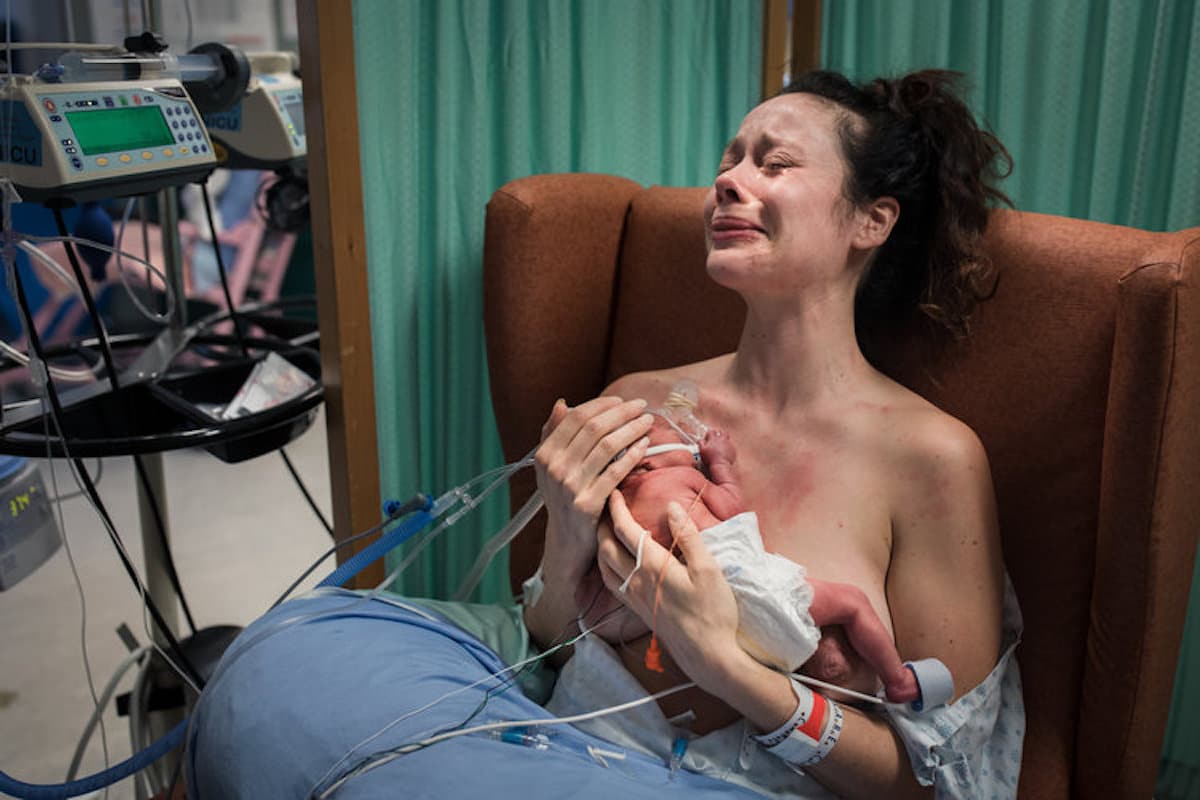
2nd Place Postpartum: Coastal Lifestyles Photography
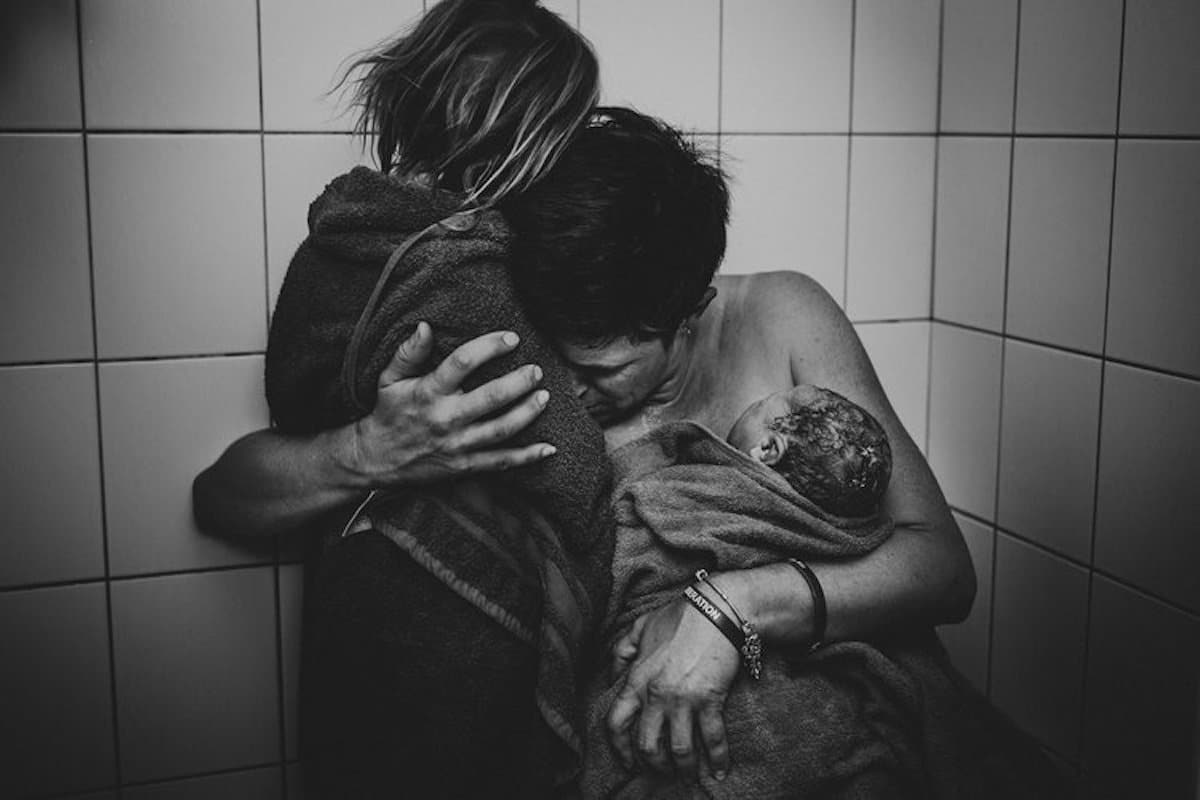
2nd Place Black and White: Sashi Hesson, Photographer
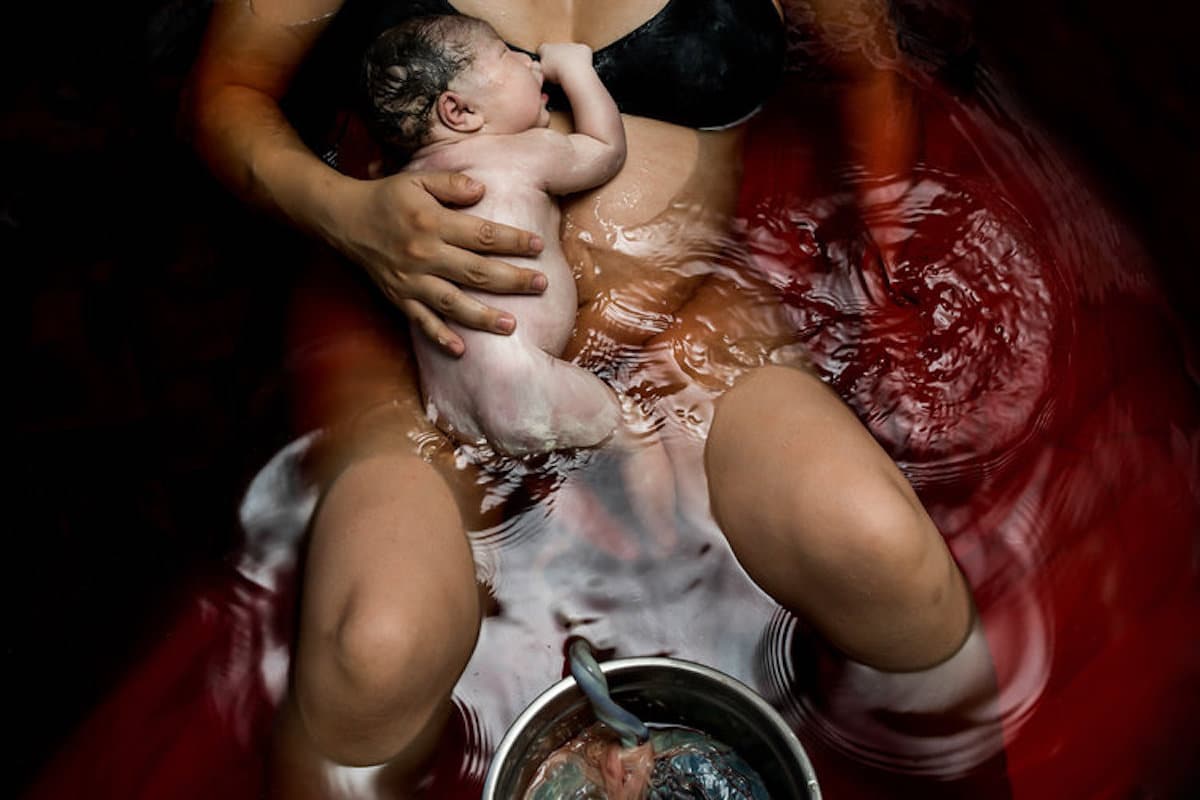
2nd Place Color: Kendal Blacker Photography
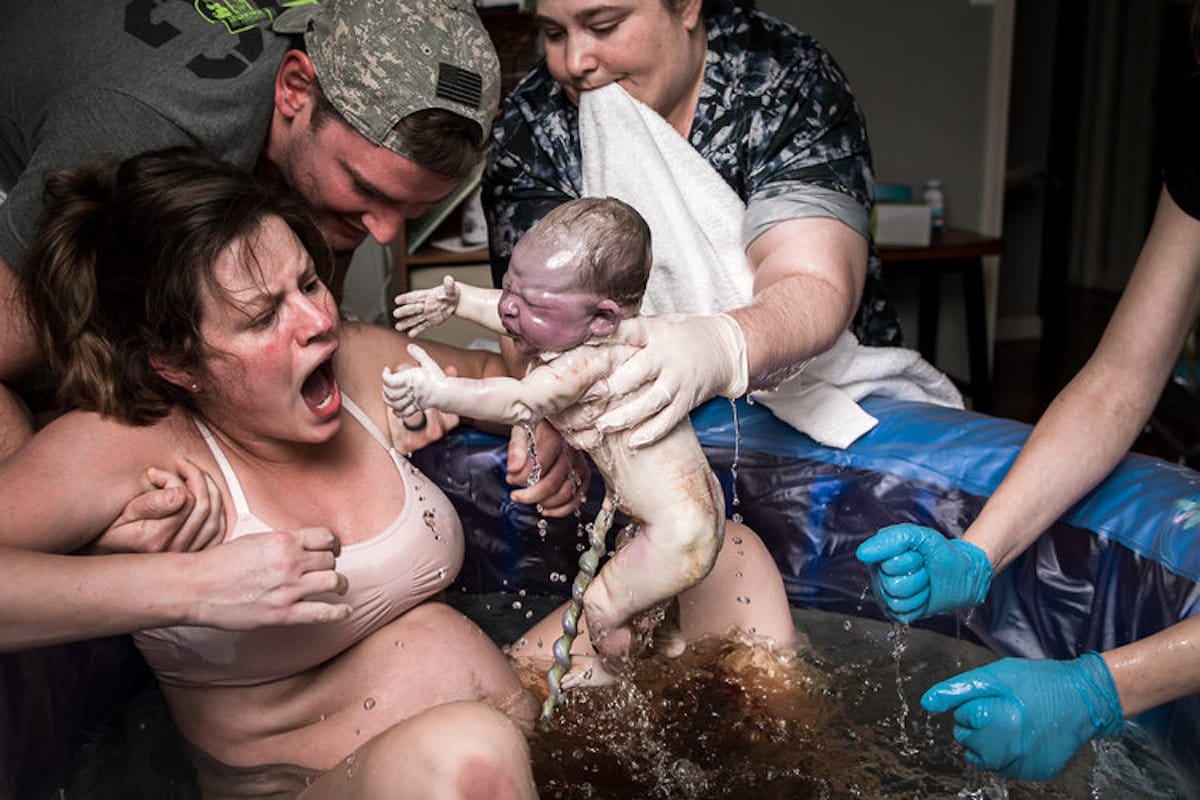
2nd Place Out of Hospital: Micah Lynn Birth Stories
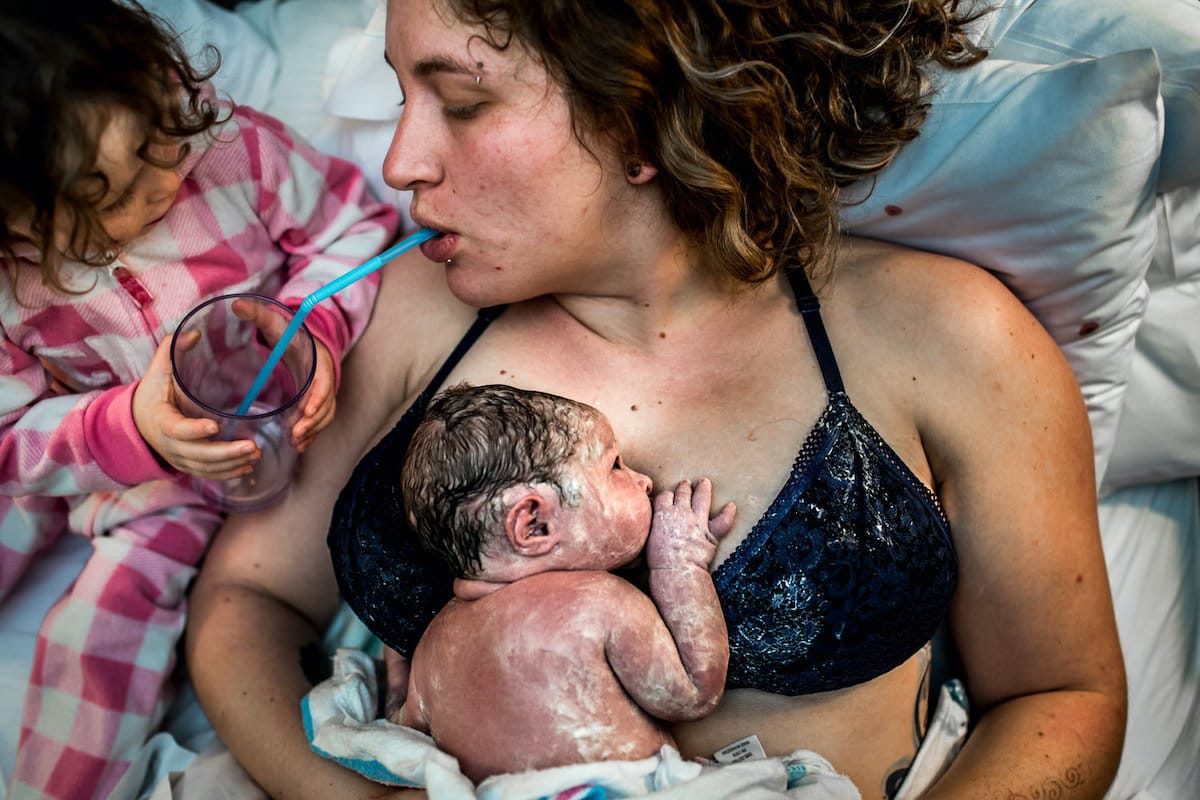
1st Place Postpartum: Photo: Art by Jessica
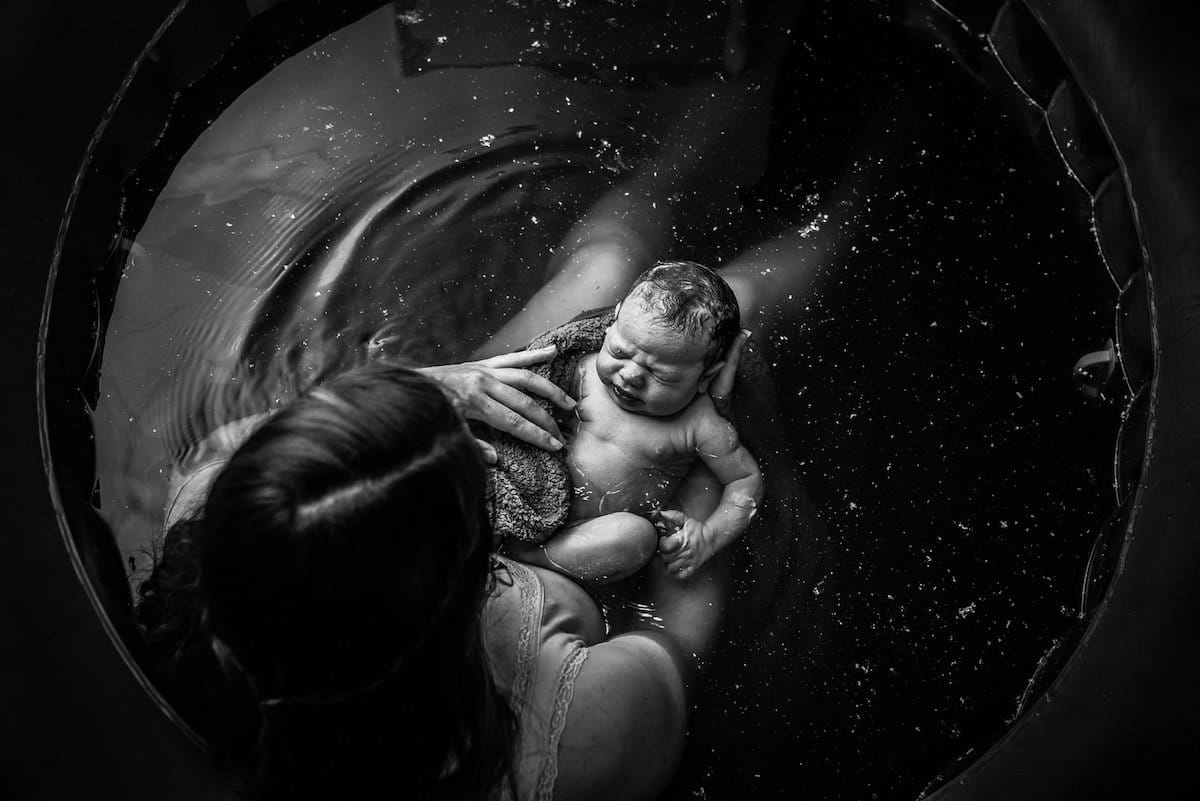
1st Place Black and White: Cat Fancote
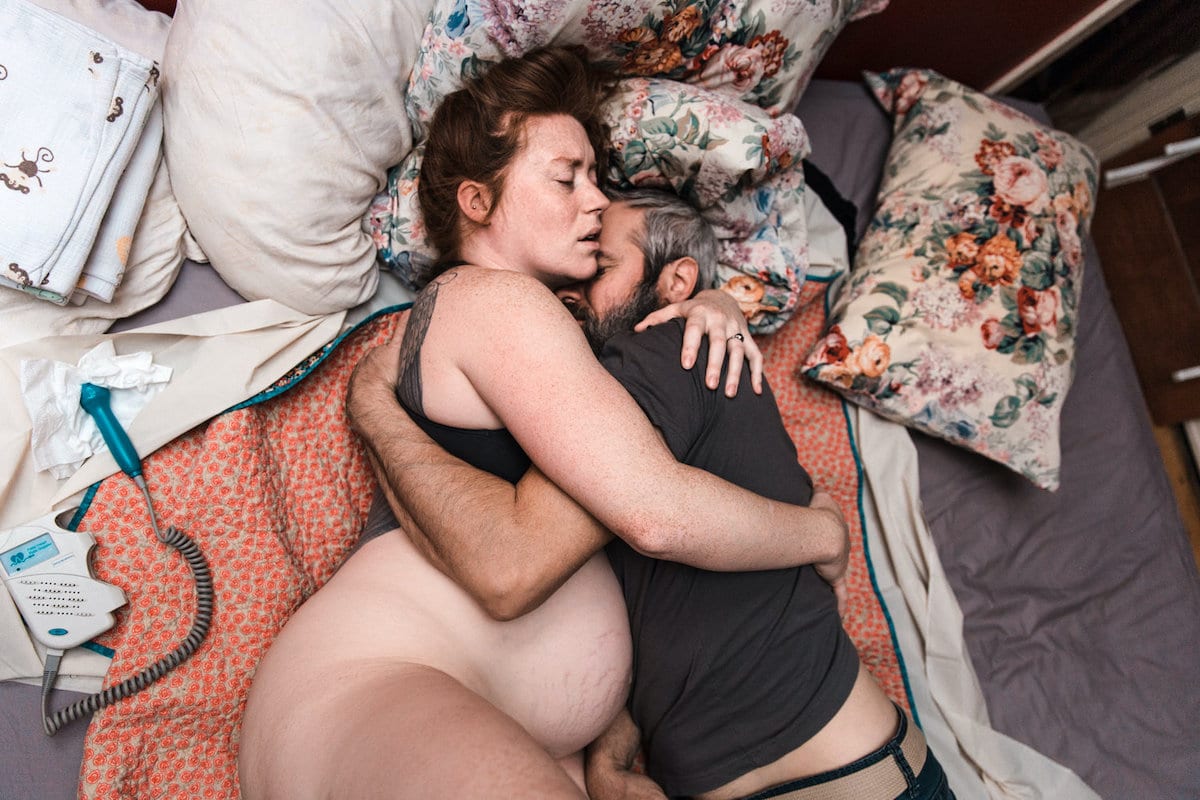
1st Place Color: Mary Nieland from Fox Valley Birth and Baby
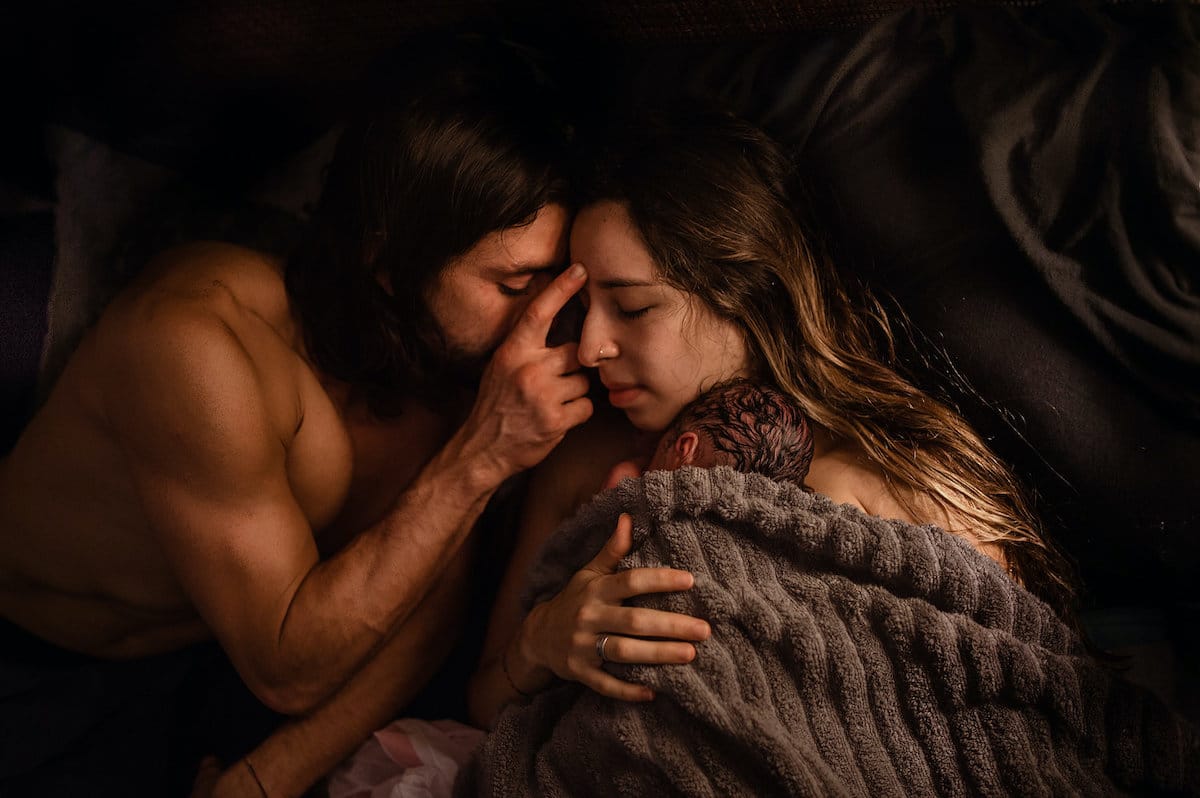
1st Place Out of Hospital: Northern Light Photography
The post Winning Images From Birth Photography Contest Show the Emotional Realities of Childbirth appeared first on My Modern Met.

All images © Nicole Larkin, shared with permission
For years, Nicole Larkin has been capturing the ocean pools along the coasts of New South Wales in a project titled The Wild Edge. Mostly constructed as public works endeavors more than 80 years ago, the geometric spaces often are nestled in Australia’s rocky shorelines, surrounded by crashing waves and filled with jewel-toned waters. In a statement about the project, Larkin described the swimming sanctuaries as offering visitors “intimate encounters with the landscape.”
They are largely opportunistic interventions that exploit the natural topography of the rock platform to make a protected and convenient swimming area. They often exhibit the “bare minimum,” dematerializing into the rock platform yet providing amenity and facilitating easy access to the ocean.
The Sydney-based architect, artist, and designer tells Colossal that she’s concerned with how the ocean landscapes are being altered by climate change. Larkin says designing additional pools could be used “to facilitate community amenity and access to the ocean, but also to act as protective structures which buffer against storms,” as the area deals with the global crisis.
For a geographical look at coast-side retreats, check out Larkin’s interactive collaboration with Guardian Australia. More aerial shots of the 60 remaining ocean oases are on the artist’s Instagram and Behance. (via This Isn’t Happiness)


Do stories and artists like this matter to you? Become a Colossal Member and support independent arts publishing. Join a community of like-minded readers who are passionate about contemporary art, apply for our annual grant, and get exclusive access to interviews, partner discounts, and event tickets.