Nina Raasch’s interest in photography is in her genes. The Berlin-based artist was introduced to the medium through her father and grandfather, as it was both their passions. “As far as I can remember, I’ve always had a camera,” she tells IGNANT. “From an early age, whilst other kids around me played with their Barbies, I was photographing, filling up entire photo albums, and discussing framings and techniques with my dad.”
Born in Kirov and now based in Moscow, photographer Aleksey Myakishev is adept at capturing the simple moments of life and transforming them into alluring black-and-white images. Taken mostly throughout Russia, his projects tend to focus on unassuming subjects as they navigate their daily lives. In one photograph, three figures walk over a snow-covered landscape away from a lit firework, and in another, Myakishev creates an uncanny juxtaposition between a hilly horizon and a man swinging a child by his hands as a winter boot flies from his foot. When describing the dozens of series he’s created, the prolific artist said capturing life in his native country can be complex.
It is always difficult to photograph the place where you live. Nevertheless, sometimes I pick up my camera and go to the streets to capture the city’s pulse. When I look through the camera’s viewfinder, a dialogue with the city takes place. There are lots of everything here, be it people, vehicles, buildings. Sometimes the city looks ugly to me, sometimes beautiful. Through photography I try to find something especial in this city, perceiving the underlying surrealism of what is going on.
Myakishev also has published three books chronicling his monochromatic works. To find more of his documentary-style images, head to his Instagram and keep an eye out for his upcoming project on provincial Russia.
Moscow (2019)
Davydovo (2013)
Arkhangelsk (2018)
Do stories and artists like this matter to you?Become a Colossal Member and support independent arts publishing. Join a community of like-minded readers who are passionate about contemporary art, apply for our annual grant, and get exclusive access to interviews, partner discounts, and event tickets.
Cameron Young spent his childhood summers at the lake, exploring underneath the water. As an adult, he wanted to find a way to share the magical images from his memories of dreamy light through murky waters. Well-versed in lens-less photography, Young made numerous unsuccessful attempts at creating a submergible pinhole camera before his eureka moment. While working in his darkroom, handling the wet chemistry and running water over his film, Young realized that the answer had been in his hands all along.
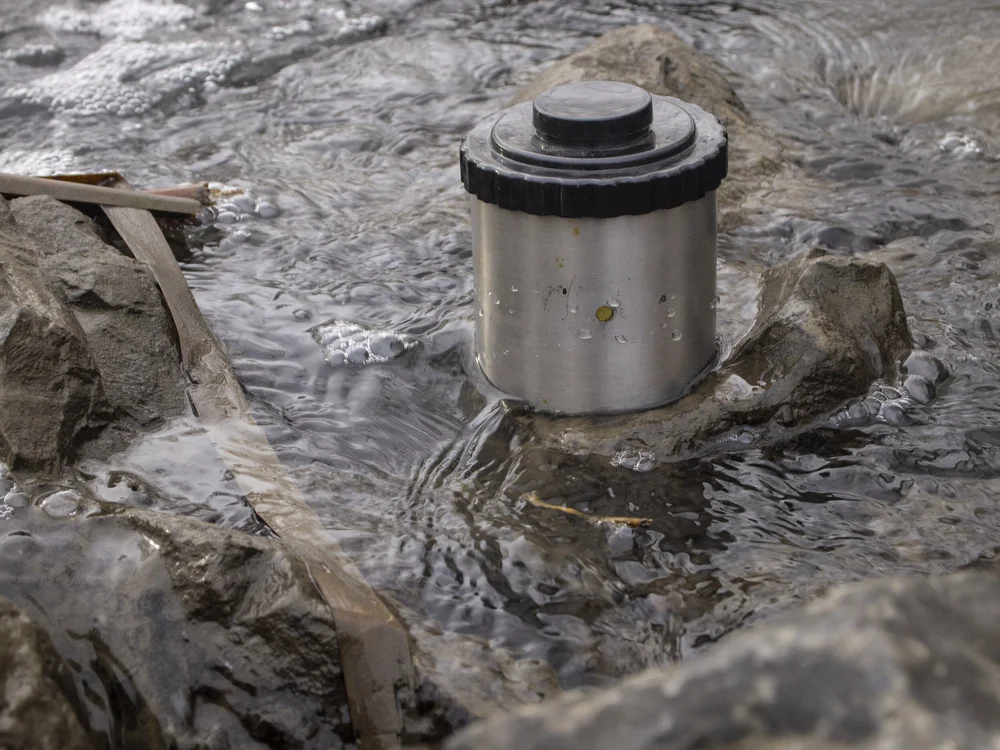
Using a stainless-steel film developing tank, Young drilled a hole in its side and inserted a brass shim stock with a pinhole. The tank’s cylindrical shape creates a curved film plane and a .41mm pinhole diameter provides an aperture of f209. Young loads 4 ¼ x 3 ¼ paper negatives into the camera before taking it out in the field. Filling the camera with water through the light baffle, he submerges it in shallow waters no deeper than three feet, opens the electrical tape shutter, and exposes between two and ten minutes. For particularly long exposures, or if he is photographing in moving water, Young attaches a plate weight for stability. Because the camera itself is made from a developing tank, he initially intended to develop negatives in the camera itself but found the chemicals eroded the pinhole lens. Instead, he brings the camera back to his studio to develop the negatives.
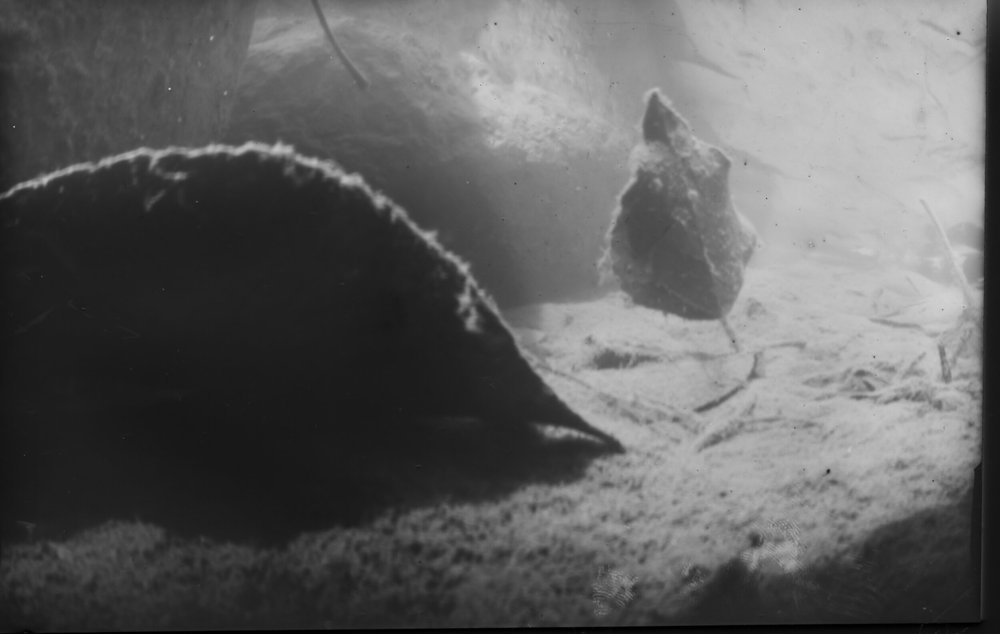
The resulting photographs are dreamy, yet surprisingly sharp, black-and-white images of a world both strange and familiar. At shallow depths, the rocks, leaves, branches underneath the water are illuminated with soft, filtered light. Resting on the bottom of the lake, this vantage point combined with the pinhole’s distortion, evokes memories of opening one’s eyes underwater and seeing the world in a new way.
The key to a healthy heart is a diet full of fiber, and Emmi Khan is ensuring her heart—and lungs and brain—don’t miss out. The Cardiff-based artist embroiders anatomically accurate organs and systems, from a multicolored double helix to a profile view of facial vessels. The artist often weaves in floral and natural elements, bolstering the connection between beauty, anatomy, and the environment.
Khan tells Colossal she began the craft while studying biomedical sciences and has continued creating throughout her graduate study in medicine. The further she delves into her education, the more precise her brightly colored stitches become. The artist says allowing science and art to converge is natural, and she compares the two as “different approaches towards observing, processing and presenting the world around us.”
Science looks to understand the world in an objective and empirical manner, often stumbling upon beauty along the way, and presents it intellectually. Art takes the world and lets the human imagination run wild with it, presenting a product of feeling and often beauty with this. I wouldn’t say they are one and the same thing, but they do go hand in hand with respect to the goals they set out to achieve.
Check out Khan’s Instagram and Etsy shop to see more of her biologically focused embroideries, including one piece that even outlines the telomere effect.
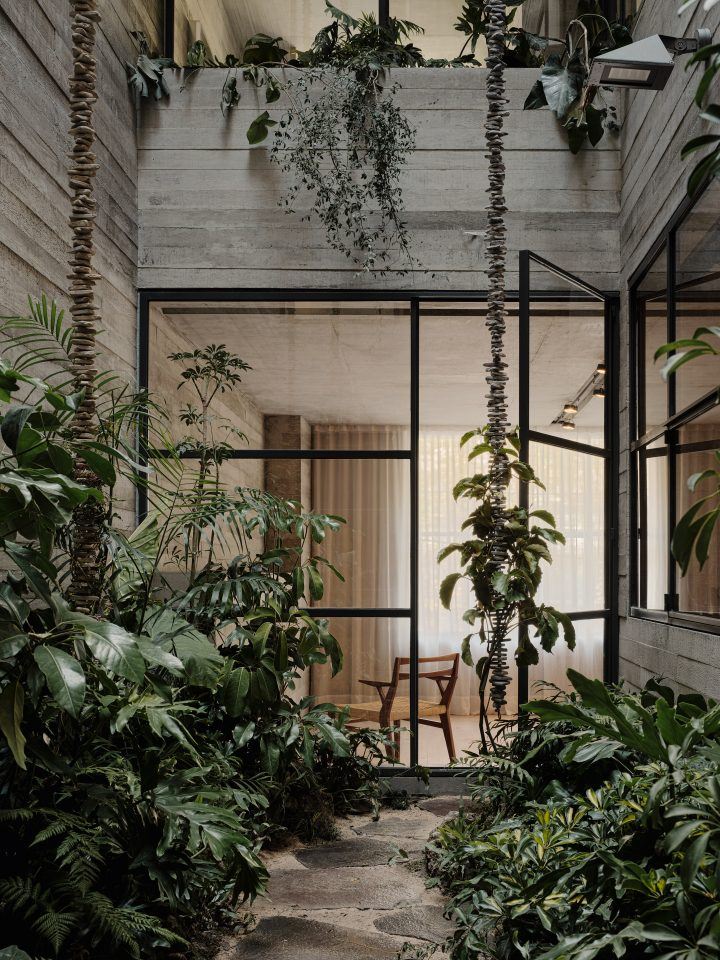
With ‘Tennyson 205’, American architecture firm Studio Rick Joy has shown the versatility and everlasting appeal of concrete, creating a home that is sleek and airy. Located in Mexico City’s bustling and upscale neighborhood of Polanco, the five-story apartment building was designed to bring pockets of the outdoors with natural light into its clean-lined concrete structure.
After being discharged from
the Navy in 1968, native Los Angeleno Wayne
Levin moved to Hawaii, where he has continued to live over the past half
century. He began to pursue his studies of photography in earnest, eventually
receiving his MFA from the Pratt Institute in 1982.
After completing his
studies, Levin returned to his adopted home to teach photography at the
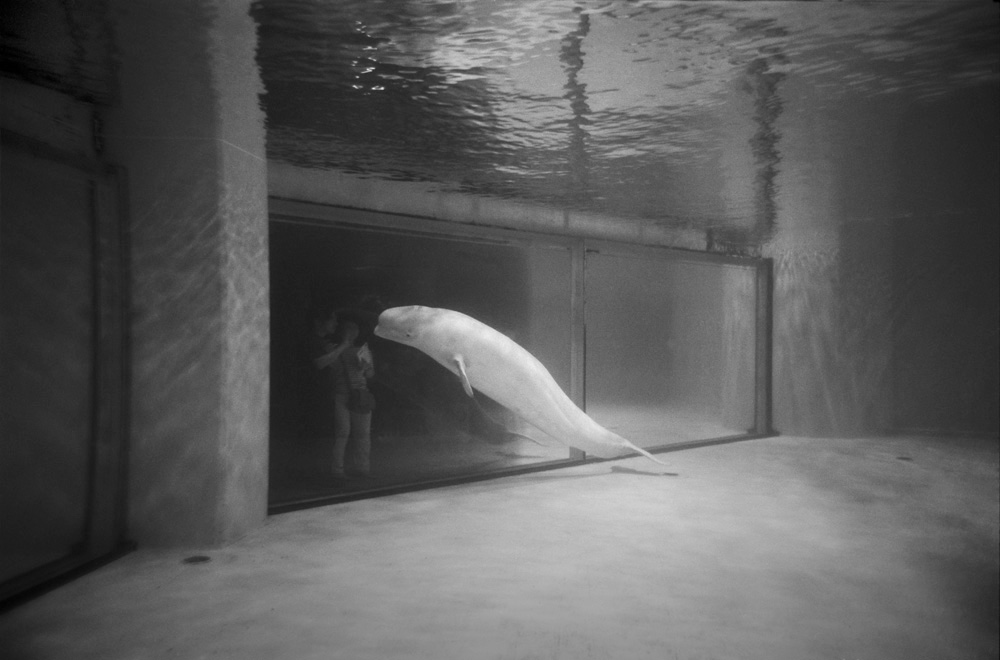
University of Hawaii. Soon thereafter he began making underwater photographs,
documenting surfers from a perspective few had seen. After some early
experimentation with color film, Levin quickly recognized that black and white
photography allowed him to portray the ocean from a new light.
In 1989, he moved to Kona
and dove deep into underwater photography, creating numerous luminous series of
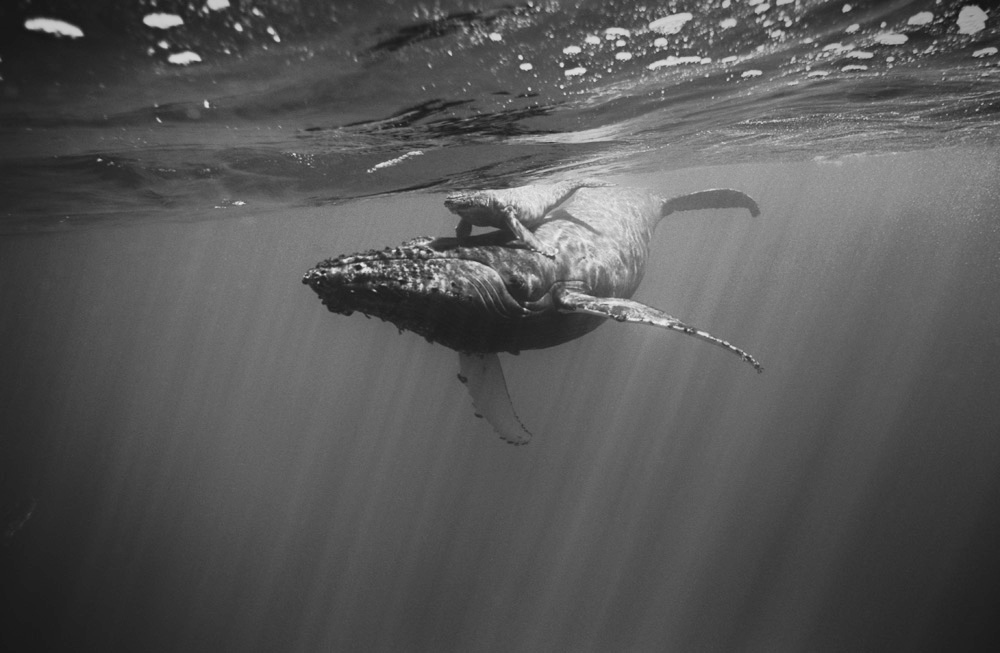
powerful seascape work. His mesmerizing scenes of life below the surface are
scenes from another world, a spellbinding environment that remains a mystery to
us. His seascapes provide a luminous look at marine life in the wild, and it is
intersects with the incursion of humanity.
While issues of climate change and extinction are finally being rightfully centered in public discourse, for many the issues remain abstract because they cannot picture the impact in real time. Photography does what few other mediums can: it offers a window into a realm few may go, speaking a language that can be read by all in the sighted world. It drives social media engagement, whether manifesting aspirational images or exposing injustice, inviting people to reflect, respond, and react to what they see.
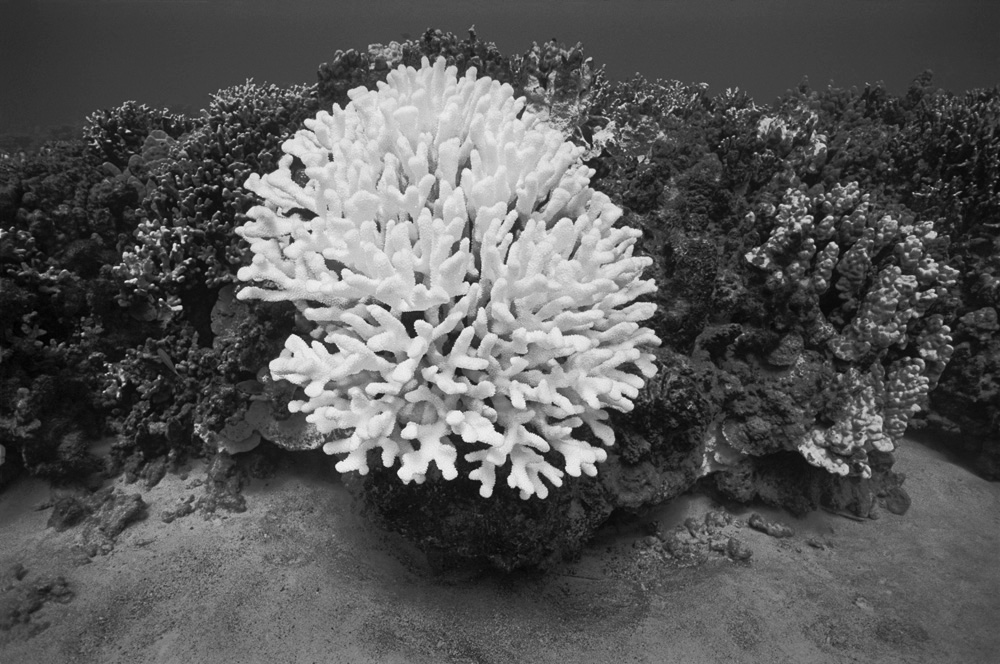
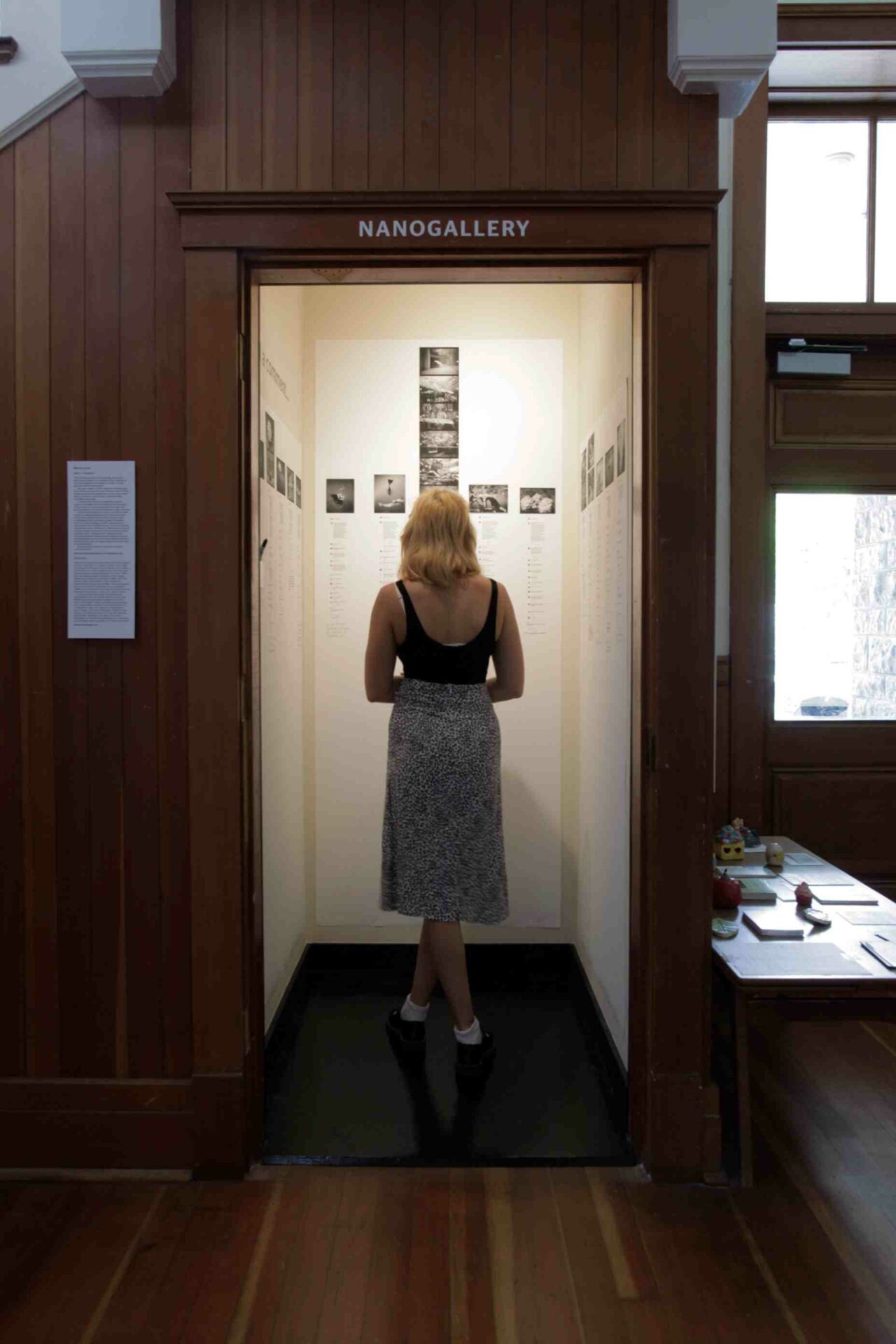
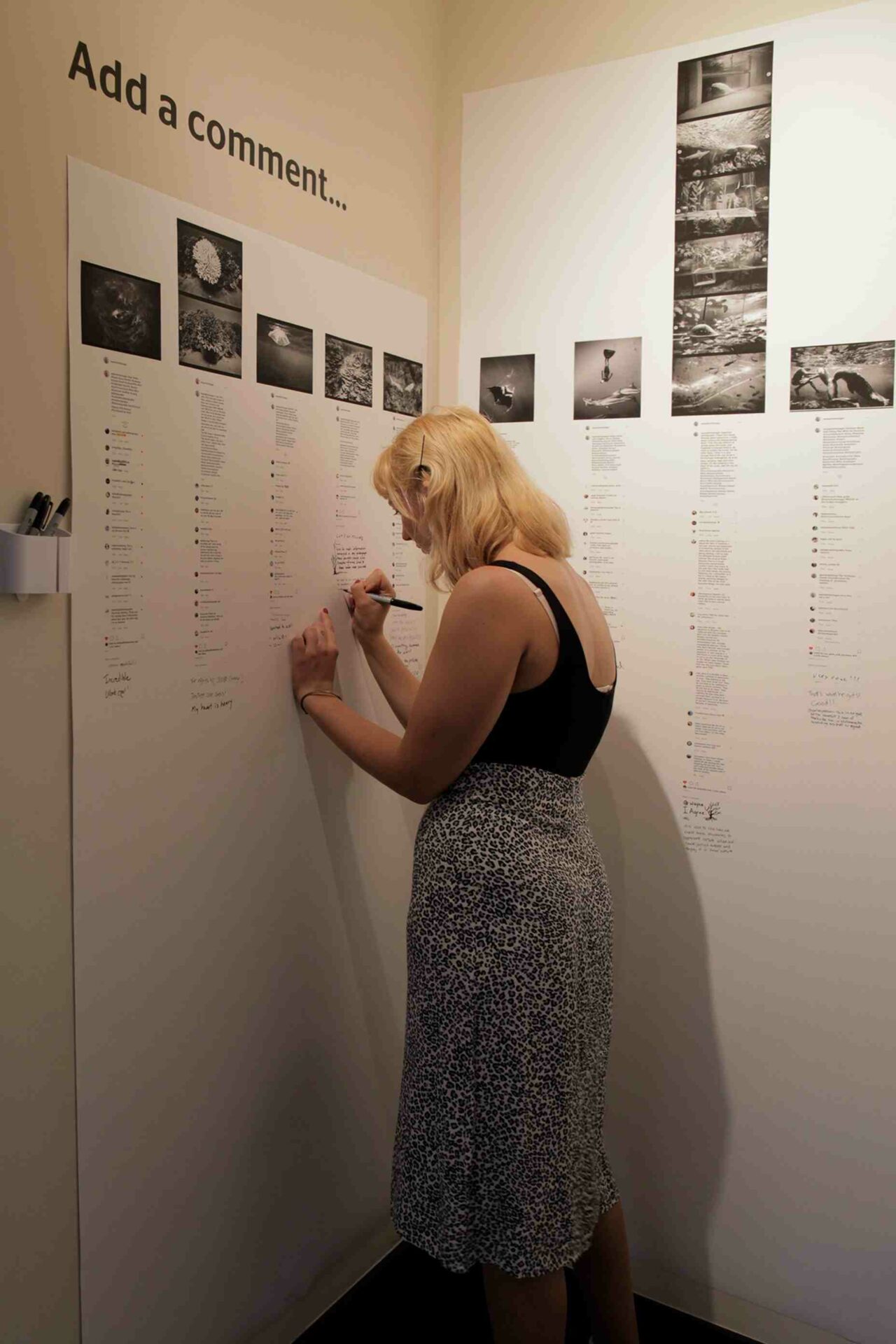
Although Levin does not personally use social media, his daughter Elise set up an Instagram account to post his black and white underwater photographs. His recent documentation of coral bleaching events around the Hawaiian Islands and the power of social media inspired Levin to organize the recent exhibition, Add a Comment…. at the Honolulu Museum of Art.
Add a Comment… was designed to engage museum goers in the
conversation around urgent
issues of climate change and current threats to our ocean as a reminder to
people that their voices are tolls of power. Beneath his photographs, Levin
posted sheets for visitors to share their thoughts, creating an interactive
space for the audience to participate in the show — and inspire others to think
more deeply about the way they engage with art and the world.
“I wanted to survey and
compare the audience response to images about the misuse and destruction of the
ocean by the human species with images that are more positive and show its
undisturbed natural beauty,” Levin wrote in an artist statement for the
exhibition.
“I realize that Instagram is a tool I can utilize to show people, through photography, the current dire threat to the ocean: a threat that includes climate change, overfishing, pollution (including plastics, shoreline runoff, oil spills, dumping of other waste products), habitat destruction, acidification, etc… Yesterday, I went for a swim/snorkel at a place where I usually frequent, and saw a freshly bleached Lobe Coral that I’m certain wasn’t there just a few weeks ago—an ominous sign. If the ocean dies, so does humanity.”
In studios in Oslo and northern Italy, Norwegian sculptor Håkon Anton Fagerås uses a pneumatic hammer and other carving tools to shape blocks of marble into large white pillows. Slumped in natural poses, the realistic pillows feature smooth folds and wrinkles that contradict the properties of the medium. Without the shots of Fagerås in action, our eyes would not believe the finished products to be anything other than fabric and filler.
In an interview with Sculpture Atelier, Fagerås explained his interest in the medium, saying marble is best for expressing the nuances of emotion. “Because of the material qualities of marble itself, it appears fragile. It’s quite fragile, but it’s not that fragile, and yet it appears so because of the translucency and pureness of the stone.” He added that it allows for sculpting at a very precise level, but that he tries “not to be too literal about it. I think that my main focus is to create an atmosphere, a sensation, more than a literal representation of something that expresses, for instance, fragility.”
Head to Instagram to see more of Fagerås’s marble masterpieces.
Who doesn’t look forward to a long weekend? Well, what if every workweek included a three-day break? If Finland’s new Prime Minister Sanna Marin has her way, the entire country will be seeing less time in the office and more time enjoying friends and family.
Marin, at 34 years old, became the world’s youngest prime minister when she was sworn into office in December. Known for her progressive ideas, she began calling for a shorter workweek—which would consist of 6-hour days, 4 days a week—when she was serving as Minister of Transport and Communications. In August 2019, she spoke about the need to created a more balanced life, where time away from work was just as valuable as time at the office.
“I believe people deserve to spend more time with their families, loved ones, hobbies and other aspects of life, such as culture. This could be the next step for us in working life,” Marin said in a speech given at the 120th anniversary of the Social Democratic Party.
Though the proposal isn’t currently on the new government’s agenda, and political rivals at the time called the idea “unrealistic,” it’s not without precedent. Sweden ran a two-year trial of six-hour workdays, which ended in 2017. It was reported that during the first 18 months of the trial, nurses working shorter hours used less sick leave and boosted productivity by organizing an astounding 85% more activities for their patients.
France also famously cut down on its workweek in 2000, slicing weekly working hours from 39 to 35. On the other side of the world, Microsoft Japan experimented with a four-day workweek in 2019 and found that it boosted productivity by 40%.
In reality, Finland itself is already accustomed to unconventional work patterns. Right now the country follows the 1996 Working Hours Pact, which allows many employees the flexibility to start or finish their workdays three hours earlier or later.
The world will certainly be watching Marin closely, as she and a five-party center-left coalition headed entirely by women take charge of the Nordic country. As they move forward in governing Finland, it will be interesting to see if Marin will raise the idea again.
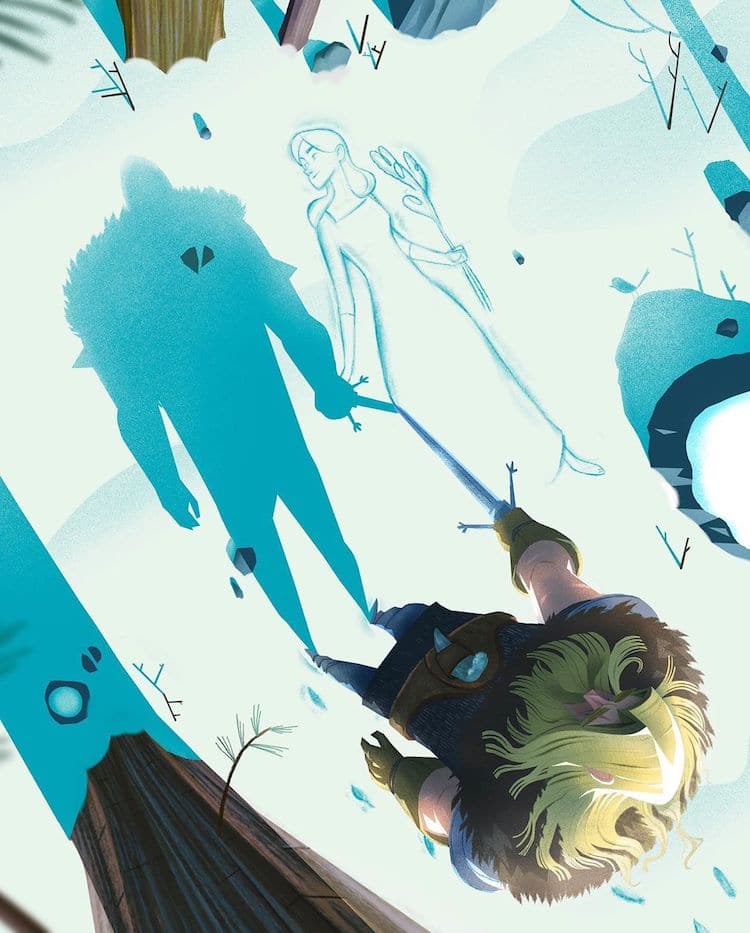
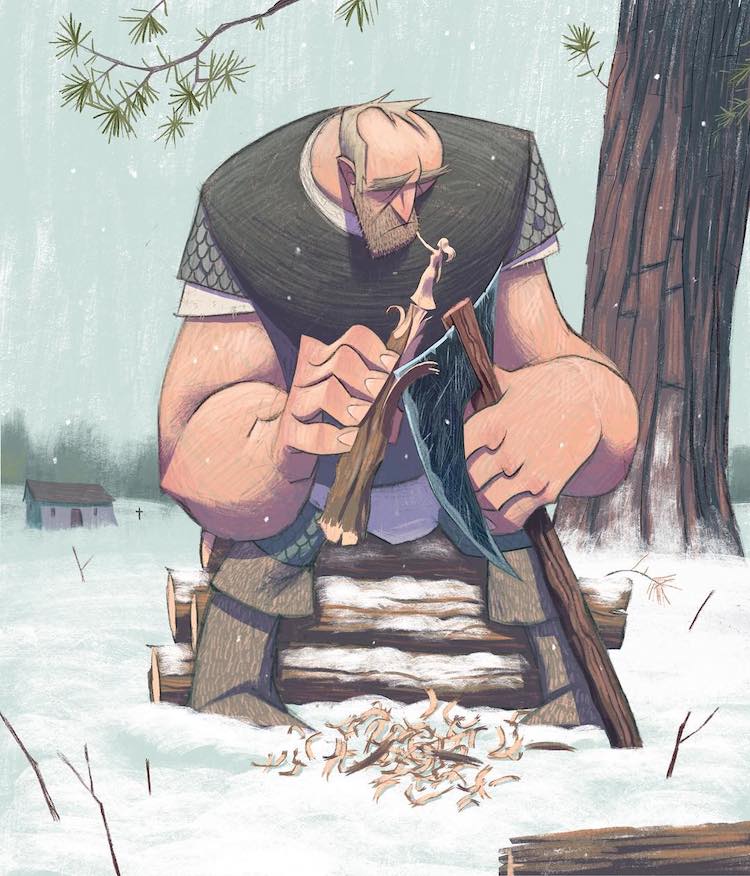
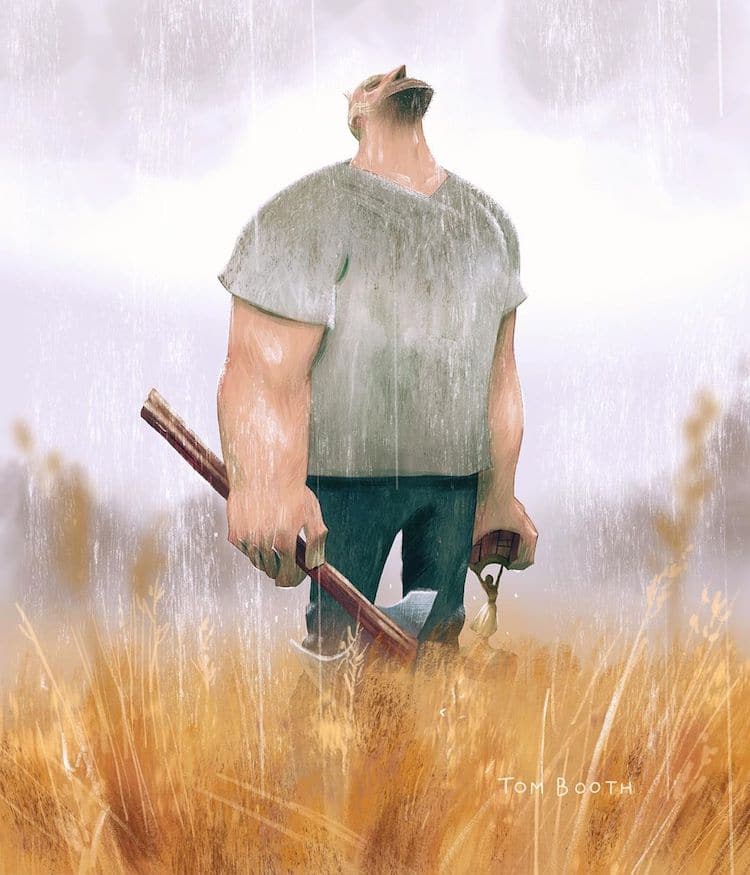
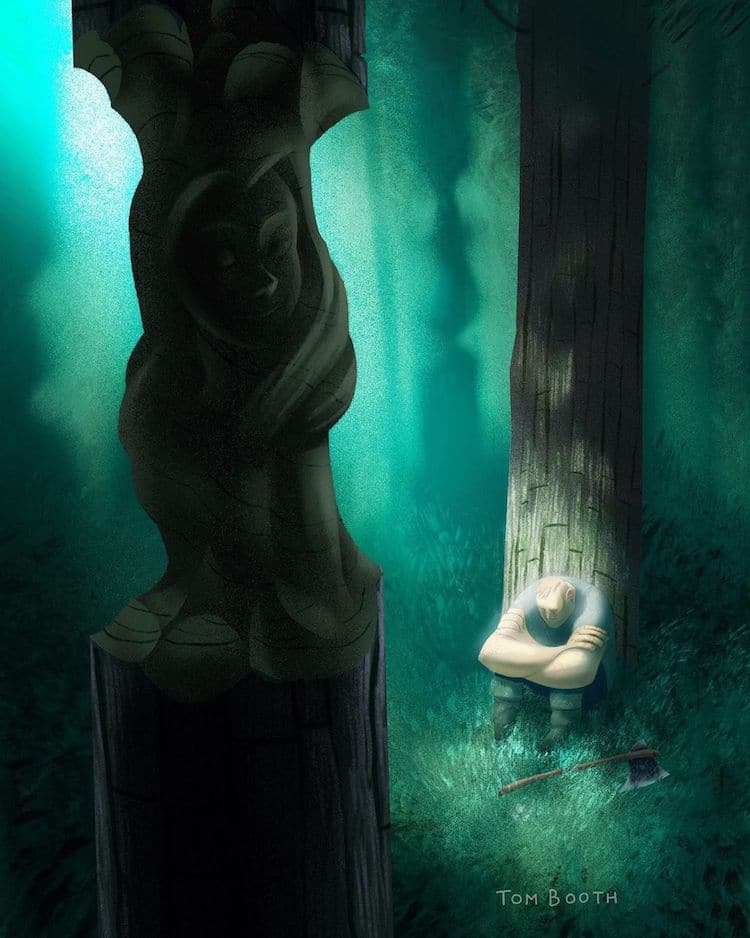
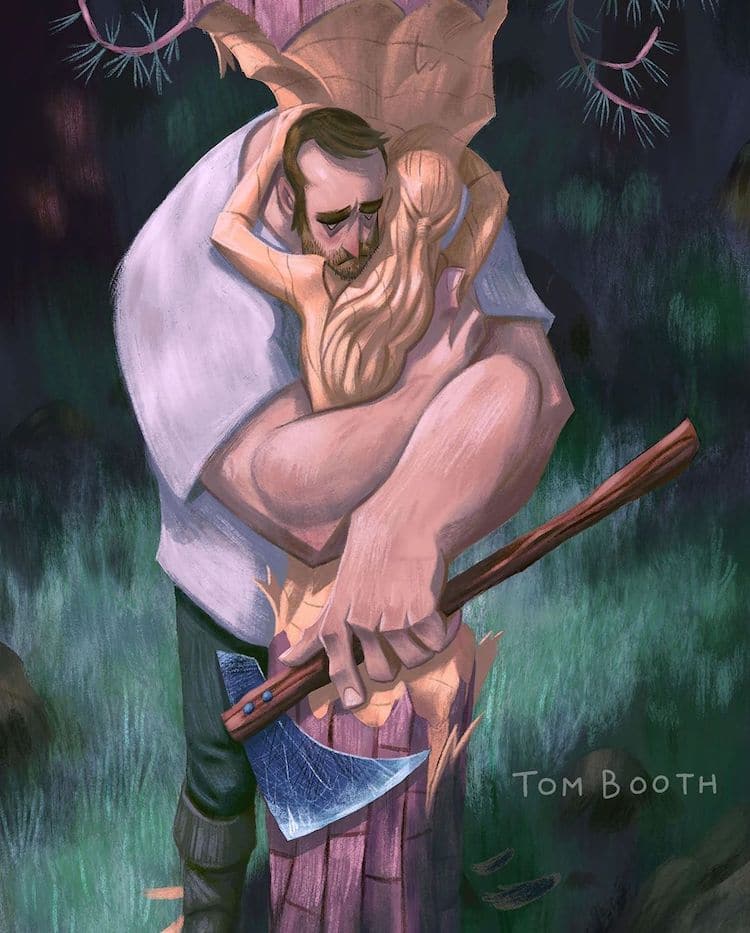
Illustrator Tom Booth creates images that tell stories. Whether it’s in the form of a single picture or through a series of them, his tales excel in their character design as well as their ability to have his figures convey emotions ranging from joy to sorrow. Booth does this through a range of media, but some of his most compelling pieces are made with digital drawing and painting.
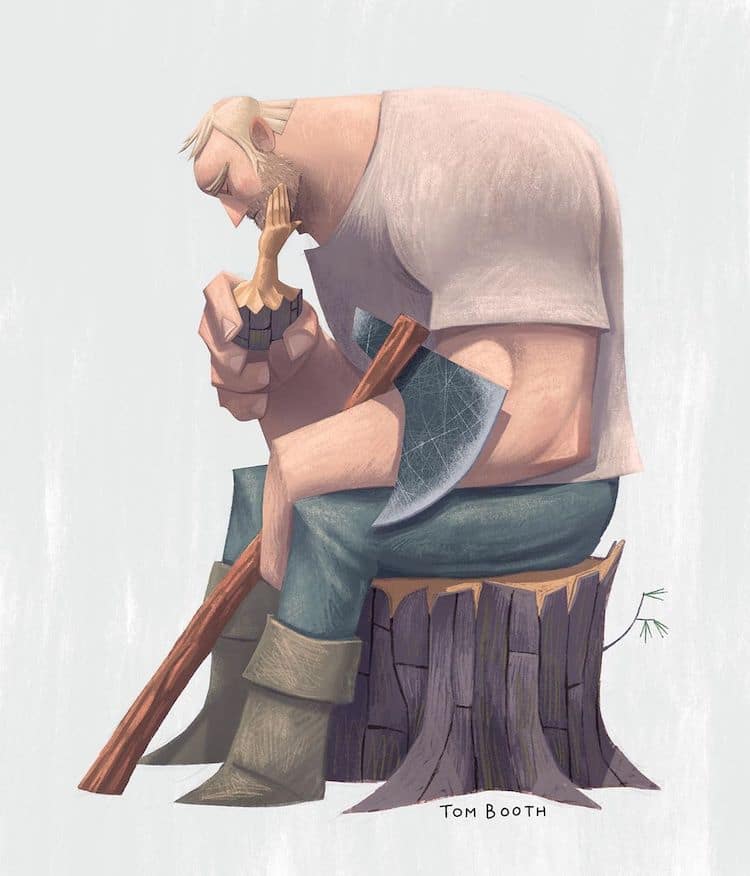
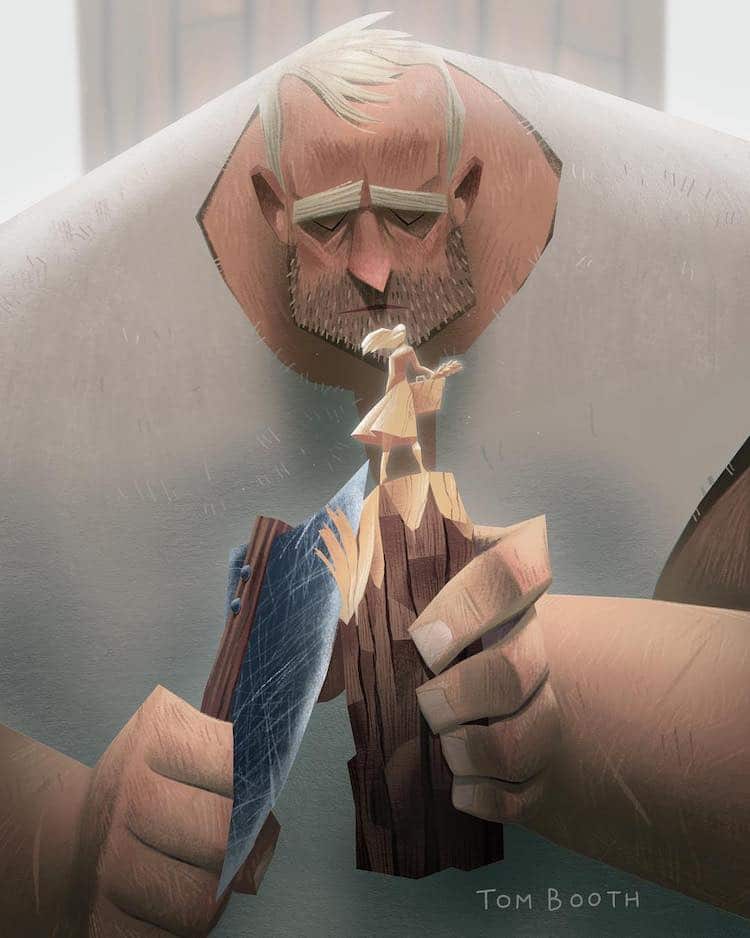
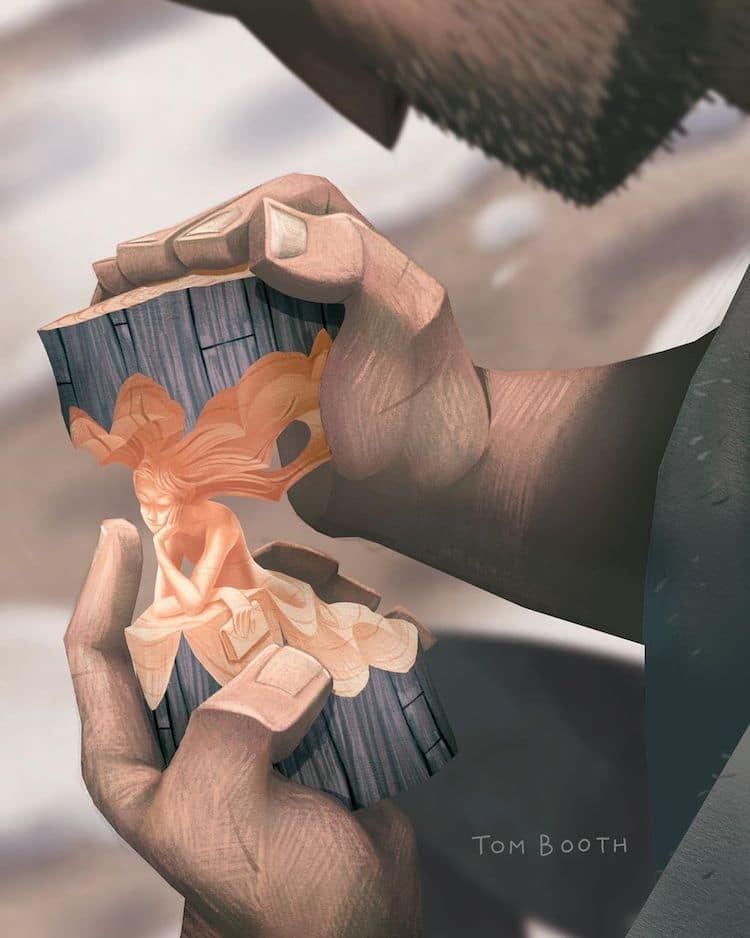
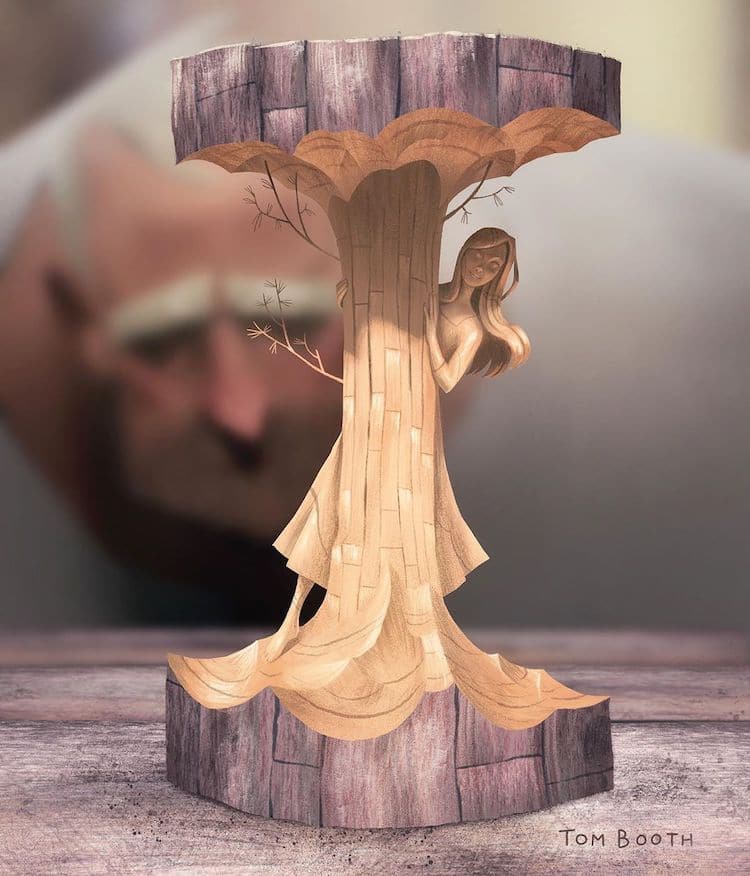
Booth’s latest illustrations tell the story of a woodworker who appears to be carving his beloved from trees and other chunks of wood. His sadness for this person is palpable and makes the images poignant and often heartbreaking—even though we don’t know the entire story yet. Booth is keeping mum about it as the illustrations are still in development. The only thing he reveals is that “it’s a story about loss.”
While there are few details about the woodworker at this time, Booth is applying his overall illustration philosophy to the series, which carries into other parts of his portfolio, too. “I’m most inspired by illustration that tells a story through thoughtful design,” he tells My Modern Met. “For most of my life I’ve pursued illustration as a tool for communicating my ideas, but more recently I’ve explored its value as a means of self-expression, specifically when it comes to capturing emotion.”
Illustrator Tom Booth creates digital art that tells a story.
His latest works revolve around a woodworker who is experiencing loss, and the illustrations are poignant and often heartbreaking.
Following the lives of residents and business owners on Hoxton Street, Zed’s film urges us to consider the ramifications of gentrification. “I want people to consider what is worth protecting, who we care about, what kind of city and neighbourhood we want to live in," he says.
The Korean illustrator demonstrates his painterly prowess in this most recent work of art, taking us on a tour of breathtaking views of India’s Ladakh.
For their recent installation “Study in Pattern,” artists Wade Kavanaugh and Stephen B. Nguyen (previously) expanded on the idea of constructing an enormous tree comprised of long wood strips in studio. The result is an arboreal project that occupies almost an entire room with outstretched portions extending up to the ceiling and toward each corner of the space. Visitors to the exhibition were able to peer up through the spiraling trunk of the tree and walk beneath the wide-reaching roots.
The experimental project was developed for the Islamic Arts Festival in Sharjah, a United Arab Emirates city that is part of the Dubai-Sharjah-Ajman metropolitan area. To engage the traditions of Islamic art, Kavanaugh and Nguyen told Colossal they incorporated Arabesque elements into “Study in Pattern.”
This work draws from the architectural cues of the site: the repetition of arches, overlapping linear patterns, and the viewer’s attention is focused as they pass through the interior of a dome, but the finished work ultimately took on the feel a gesture drawing, veering away from regularity of pattern and toward entropic wildness.
The artists say they are testing this installation as a small version before producing the complete project in Seattle. More about the duo’s massive nature-based works can be found on their site.
Lemmings, Worms, Wipeout, Micro Machines and Tomb Raider are among the retro games celebrated in a new range of stamps, heralding a golden era of British video game design in the 1980s and 90s.
Part of a longstanding tradition for the Olympic and Paralympic Games, the collection of posters have been designed by 20 Japanese and international artists to promote the events, and form “cultural and artistic legacies”.
Author and artist José Naranja ensures he won’t forget any detail of his year-round travels across the globe through a meticulous and unique documentation process. Formerly an aeronautic engineer, Naranja now archives his thoughts while visiting foreign countries by hand-crafting journals replete with items like collected stamps, an illustration of the periodic table, and a study of fountain pens. Each mixed-media page centers on a theme, such as the culture surrounding eating a bowl of ramen or the flamingos found in a zoo.
Since he last spoke with Colossal, the artist published a second work titled The Nautilus Manuscript, a 208-page handbound leather journal chronicling his life from 2015 to 2019. Similar to how he constructs each page, Naranja is committed to maintaining the integrity of his work during the production process. “The project is about offering the people the same feeling as having the originals in their hands: same paper, size, leather cover and mainly the same ‘touch.’ It’s bound by hand, slow but the only way to take care of details,” he says. The Nautilus Project, which is written mostly in Spanish, is available for purchase. Keep up with the artist’s most recent spreads brimming with insights and elaborate sketches on Instagram.








 Tom Booth:


