Don't you dare click –!ZZAAPPP!- Like one more time
Cunning MIT student boffins have come up with something marvellous: a keyboard that sends a jolt of electricity into those who spend too much time on Facebook.…
Cunning MIT student boffins have come up with something marvellous: a keyboard that sends a jolt of electricity into those who spend too much time on Facebook.…
It's not a hangover cure, but it could help retain the beneficial effects of beer while mitigating some of its damage. A researcher from Queensland's Griffith Health Institute has found a way to make beer work like electrolyte drinks without ruining its taste.…
 Many historians mistakenly call the 1938 Buick Y-Job the world’s first concept car. In reality, the honor goes to the Volvo Venus Bilo, a highly aerodynamic family sedan that was presented to the public five years before the Y-Job.
In the early 1930s, young Volvo wanted to test the public’s reaction to an aerodynamic car but it was reluctant to associate its name with the prototype in case it was poorly received. As a result, the project was handed to Gustaf L-M Ericsson, a well-known engineer who was part of the Royal Swedish Automobile Club. Ericsson was the perfect man for the job because he had been toying around with the idea of an aerodynamic car for over a year.
Swedish coachbuilder Nordbergs Karosserifabrik was tasked with building the prototype. The firm started with a bare PV655 chassis and moved the straight-six engine forward in order to accommodate a vast storage compartment right beneath the windshield. The left side of it was used to haul luggage while the right side was designed to carry a spare tire, a jack, tools and a fuel can.
The Venus Bilo’s body panels were designed to be cheap to manufacture and easy to replace. To reduce dust, a big problem on period Swedish dirt roads, the car’s underbody was entirely smooth save for a set of small slots designed to release the heat generated by the engine.
Visually, the car featured a full-width body, headlights that were largely integrated into the bodywork, a tall and heavily-curved grille and a front bumper that curved upwards. The back end was upright and rounded, and the rear bumper was replaced by a second spare tire that stuck out from a horizontal slot. There was no trunk lid, but the passengers benefited from a second storage compartment behind the rear seats.
The First Concept Is Shown
The Venus Bilo made its first public appearance in November of 1933 at an event held at Ericsson’s luxurious mansion on an island located outside of Stockholm, Sweden, called Lidingö. While many guests were impressed with the car and liked the idea of an aerodynamic body, the public generally thought the Venus Bilo was hideous and Volvo quickly stopped the project in its tracks.
Following its debut at Ericsson’s house, the Venus Bilo was displayed in the showrooms of major Volvo dealers in Sweden and, later, in Copenhagen, Denmark. Upon returning to Sweden it was briefly driven by Ericsson himself before going through a series of different owners over the course of the 1930s. Its precise path is not known, but the car ended up in the hands of a scrapyard owner in the Danish countryside who converted it into a pickup truck and used it as a work vehicle. It was last seen in the middle of the 1950s and it is believed to have been destroyed shortly after.


Legacy
Designer Ivan Örnberg integrated some of the Venus Bilo’s aerodynamic styling cues – including the flush headlights – into the PV36 Carioca that was launched across Sweden in 1935. The 36 was an even middle ground between the aging 650-Series and the futuristic Bilo, but it was not particularly successful and production ended just three years later. It was replaced by the PV51, which reverted back to a more classic style that featured headlamps that popped up from the front fenders.

Photos and all information cited in this article were kindly provided by Volvo’s archives department.


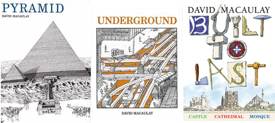
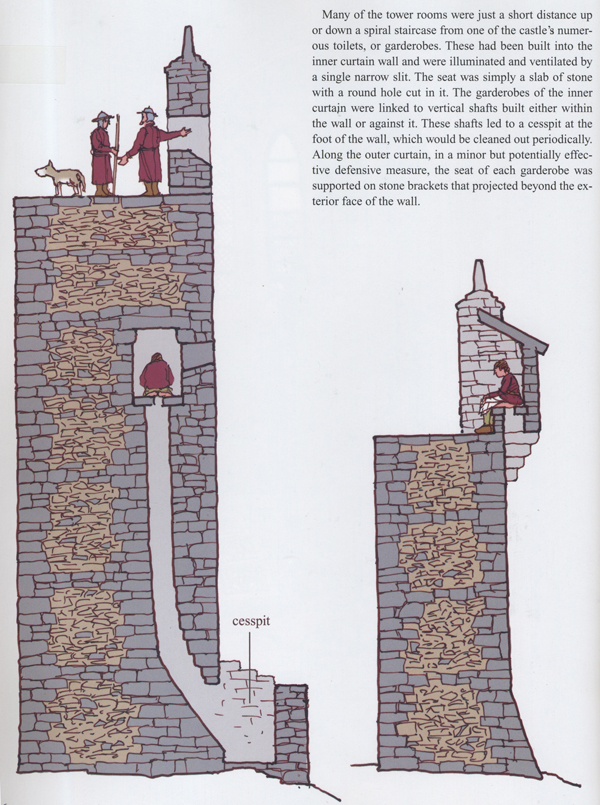
Few have mastered the big picture better than artist David Macaulay. When a kid wants to know about pyramids or castles introduce him/her to Macaulay’s books. Macaulay dissects the parts in kid-obsessive detail while keeping his eye on the whole. And he shows how it all grows in time. His uncanny ability to x-ray complex places makes him the master guide to the built world. Of all his books, Underground is his most revelatory. Even adults will find themselves studying each page of “the city underneath the city” in aha enlightenment. Oh, so THAT’S how it works! Macaulay revisited three of his early books — Castle, Cathedral, and Mosque– creating new even more amazing visualizations, and combined the books into one new book called Built to Last. It’s a short course on civilization for kids.
-- KK
Pyramid
David Macaulay
1982, 80 pages
$9
Available from Amazon
Underground
David Macaulay
1983, 112 pages
$9
Available from Amazon
Built to Last
David Macaulay
2010, 272 pages
$17
Available from Amazon
Sample Excerpts:
From Underground
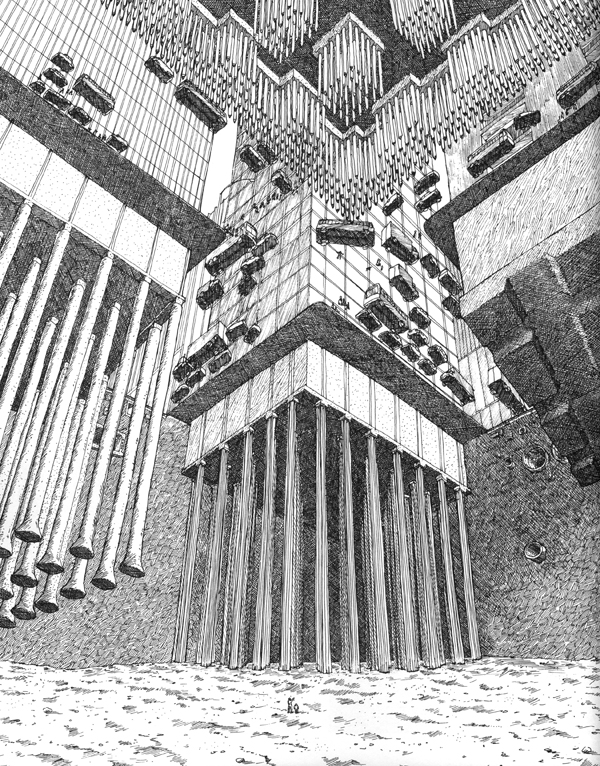
*

*
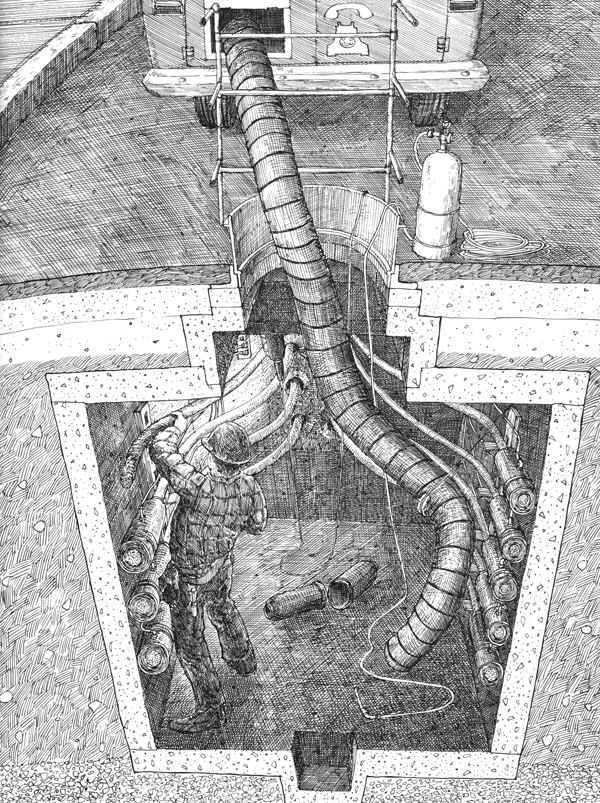
*******
From Built to Last
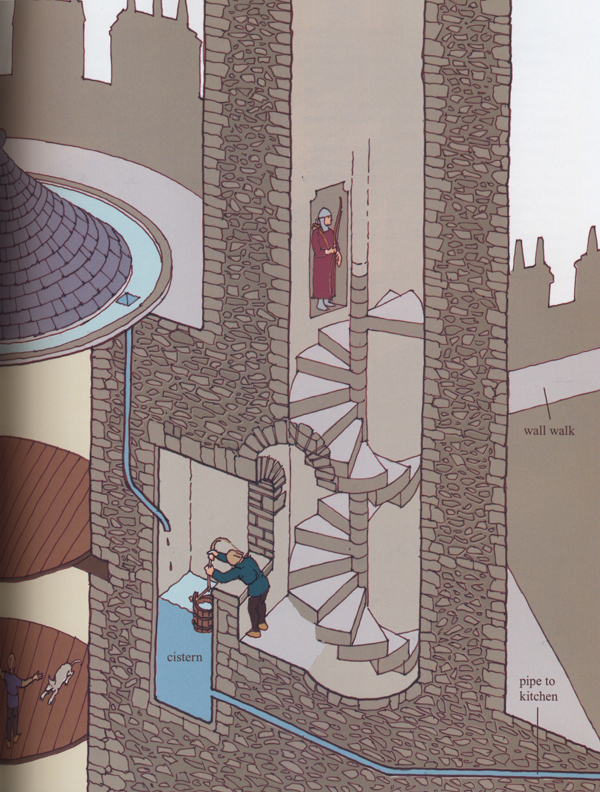
*
*


|
Joe ElliottI was too lazy to ever actually use the bootleg copy of Fontographer 4.0 that I was so excited to have downloaded circa 1998 (for this very purpose), but maybe I'll give this a try.
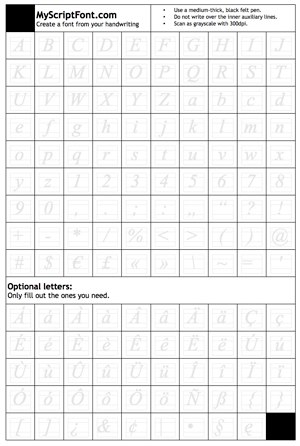
I’ve long wanted a font based on my own hand. The easiest, cheapest and quickest way is MyScriptFont. To get my personal script, I wrote out an alphabet on their printed-out template (block letters only, no cursive), scanned the sheet and uploaded it, and then installed the scaleable font they handed back. It’s free. Takes only minutes.
Once I had my handprinting font, I figured I could quickly make other homemade fonts. It’s a quick cheap way to make any kind of unique hand-drawn font you want.
-- KK
MyScriptFont
Free, donations accepted
Sample Excerpts:



|
|
 Most of the MGAs that we come across are perfectly restored examples displayed at car shows, so we were stunned to find an unrestored model parked in a herd of late-model cars in downtown San Francisco, California, a city famous for its well-preserved classics.
The MGA looks like it comes straight out of the “for sale” section of a 1970s issue of Road & Track. Finished in a shade of white that is likely an older budget respray, it is rough around the edges and the numerous dents and dings seem to indicate that it has spent a vast majority of its life in San Francisco fighting against larger cars for the right to a parking spot. If this MG could talk, we’re certain it could describe what the rear bumper of a Studebaker tastes like.
Five decades’ worth of battle scars have given this automotive gladiator a impressive patina that can’t be replicated by any rat rod enthusiast out there.
Inside, the A’s dash seems to have started its life turquoise and painted light brown later on. Both door panels are missing and the soft top has been conveniently replaced by a tarp that is visible on the passenger seat in one of the photos below.
As is often the case, we were not able to find the owner so we can’t say whether or not the car is equipped with its original engine. Regardless, this survivor is without a doubt the most interesting A we have ever seen in the flesh.


Joe ElliottDo want.


|
|
The nuclear power firm being hailed by Bill Gates as the answer to mankind's future energy needs is planning a proprietary approach to an old atomic idea to further its global ambitions.…
A California researcher has discovered a strong correlation between chocolate consumption and the degree of smarts that results in being awarded a Noble Prize.…
People often think that the big city is a dangerous place: they worry that they might get murdered, for instance. Being killed on purpose is more likely in town, according to new research, but it is so rare compared to dying in an accident of some type that in fact you would be much more likely to die unexpectedly in the countryside - in America, anyway.…


|
|


|
|
In a development whose scientific importance would be difficult to exaggerate, it has been discovered that hawk moths emit powerful ultrasonic pulse beams from their genitals in order to intefere with the sonar senses of predatory bats hunting them.…
Joe ElliottWhere was CMU on this? Come on, kids, autonomous mobility isn't just for soccer-playing robot dogs anymore.


|
|
Italian scientists claim they have invented a method for carrying out a head transplant - a discovery that could prove life-changing for patients suffering from hitherto incurable diseases.…
An Australian company is planning to install a carbon capture system that will turn a coal-fired power station into a biofuel production facility.…


“THIS IS A FILM THAT SHOULD BE SEEN, AND BY ENVIRONMENTALISTS MOST OF ALL. NUCLEAR POWER NEED NOT BE RADIOACTIVE FOR GREENS.”
-Bryan, Walsh, TIME
“PROVOCATIVE and IMPORTANT”
- Andrew Revkin, The New York Times
“WELL-REASONED AND URGENT…THE FILM COULDN’T BE MORE TIMELY.”
- John Anderson, Chicago Tribune
“ESSENTIAL VIEWING… A FULL DOSE OF STRONG OPINION- AND ALSO SOME MUCH-NEEDED FACTS.”
The post Pandora’s Promise appeared first on The Energy From Thorium Foundation.
“Don't let the perfect be the enemy of the good” seems to be the motto of a French startup that believes it has a good-enough approach to adding solar charging to smartphones.…
According to the US Census Bureau graph for "World Population: 1950-2050," the human population of Earth will hit eight billion some time around 2027. With that in mind, let me offer this thought on US Fathers' Day (variously spelled) 2013: We need an additional holiday, to supplement Mothers' and Fathers' Day(s).
Perhaps on the anniversary of the invention of the birth-control pill, perhaps commemorating the day gay marriage becomes legal throughout the US — anyway, some appropriate day — we should honor those, first, who could have reproduced but chose not to and have adopted; second, American adults who, for whatever reasons, haven't reproduced; and, third, couples who have produced no more than one child — well, and others worthy of appreciation, with a special nod to those who have elected vasectomies or (mutatis mutandis) hysterectomy.
"Honor your father and your mother," as Moses enjoined (and "Fear/Revere your mother and your father" — a commandment less often quoted). But nowadays American moms and dads should take some time to honor and, let's say respect, other important people: perhaps they can mail to their childless friends cards saying, "Thank you for leaving room and resorces for my kids," or, as a friend of mine put it (a mother of one), ""Thank you for nurturing and cherishing the earth instead of focusing only on your own seed."