Didier “Ice” Iceman
Shared posts
Les violeurs présumés d’Hyderabad abattus par la police
Didier “Ice” IcemanTrop forts

Debating lab monkey retirement, and visiting a near-Earth asteroid
Didier “Ice” IcemanPour les singes

Sri Lanka : le retour des « hommes forts »
Didier “Ice” Icemancomme en Inde, retour au nationalisme
Faut-il décapiter les géants du numérique ?
Didier “Ice” IcemanIl y a débat
Les géants de la technologie ont beaucoup fait parler d'eux en cette année 2019, mais le « techclash » tant attendu ne s'est pas produit et la Silicon Valley demeure intacte. 2020 pourrait changer la donne, notamment si la démocrate Elizabeth Warren remporte l'élection présidentielle. Son injonction populiste à « casser le monopole des géants de la technologie » suggère un positionnement de gauche, mais ne soyons pas dupes. Ce n'est là qu'une autre manifestation du credo néolibéral selon lequel la prospérité (...)
- Silicon circus / Entreprise, Multinationales, Technologies de l'information, Technologies de la communication, Technologie, Droit, Économie, États-Unis, InformatiqueDébut d’une grève exceptionnelle de vingt-sept jours dans le rail britannique
Didier “Ice” IcemanÇa rappelle quelque chose

Vladimir Poutine et Xi Jinping inaugurent un gazoduc historique
Didier “Ice” IcemanL'Alliance se precise

En Bolivie, un coup d'État trop facile
Didier “Ice” IcemanOui trop
Uber banni de Londres
Didier “Ice” Icemanmais les taxis ne sont pas les mêmes
 Pour des raisons de sécurité et pour le fait d'être "incapable" de répondre aux normes, Uber a été banni de Londres par les autorités de transports de la capitale britannique. Le géant américain va contre-attaquer, mais c'est tout de même une perte importante en Europe.
Cinéma coréen : « Our Body » de Han Karam, une course vers la reconnaissance
Didier “Ice” Icemanune idée prochaien
Software firm SUSE targets China for investment
Didier “Ice” IcemanPourquoi pas...#logiciellibre
China is one of SUSE’s fastest growing markets worldwide and the German open source software firm plans to invest more in the country, Chief Executive Officer Melissa Di Donato told Yicai Global.
SUSE’s market share in China is growing at a double-digit rate, Di Donato said. As part of the digital transformation of doing business, open source products have become a key technological area, she said.
Open source software can be modified and shared by the general public because it is publicly accessible. It’s a big ecosystem and it’s all about collaboration, said Jiang Yongqing, vice president and general manager of SUSE’s Asia Pacific and Japan offices. Some startups can compete with each other, but because SUSE has a more stable and robust infrastructure, it is more likely to go for mergers and acquisitions.
Bringing Chinese partners into the European market and SUSE’s entry into China is of equal importance to the Linux distributor, Di Donato said when she was appointed CEO in July.
The Nuremburg-based company owns three key research and development centers worldwide, one of which is in China.
No matter which country you enter, you need to understand the business environment and respect its culture and customs, Di Donato said. Complying with local laws and regulations is also important, she added.
The firm’s worldwide operating revenue has been on the rise for the last nine years. Deals valued at over USD1 million in application delivery subscriptions tripled in the fiscal year ending Oct. 31 and cloud and customer deals jumped 64% and 13% respectively, according to the firm’s latest earnings results.
London-based Di Donato spent almost three years as SAP’s chief revenue officer, before being promoted to the COO position in July 2018, The Register reported.
Before SAP, she worked at Salesforce, IBM and Oracle. Her CV also includes a stint as managing director of Uccelli, a business consulting firm in London.
On Twitter, Di Donato describes herself as a mother, wife and drone pilot.
In her spare time, she chairs the Technology Group of the 30% Club – an organization with the lofty goal of achieving 30% female representation on S&P 100 boards of directors by 2020.
SUSE is the world’s largest independent open-source software company, primarily known for its distributions of Linux and OpenStack.
After Di Donato took over at SUSE in August, she issued this press release:
“There is no greater honour than to lead SUSE into its next chapter of accelerated growth and corporate development. SUSE is at the cusp of a historic shift as open source software is now a critical part of any thriving enterprise’s core business strategy. We are well positioned to emerge as the clear leader of this shift, with our ability to power digital transformation for our customers at their own pace and with agile, enterprise-grade open source solutions, edge to core to cloud.
“What is unmistakable is our unlimited ability to deliver value to our community, customers, partners and shareholders – all of whom have been the bedrock of SUSE’s success. As exciting as SUSE’s growth and innovation have been over the past several years, we are just getting started.”
Mosquitoes armed with bacteria beat back dengue virus
Didier “Ice” Icemanune avancée ou une invention incontrolable ?

Audi pourrait supprimer 5000 postes en Allemagne
Didier “Ice” Icemanl'exemplarité de l'allemagne, lol
 Audi est dans une période charnière de son existence avec de gros défis à venir et des problèmes de compétitivité face à BMW et surtout Mercedes à l'échelle mondiale. La marque a d'ores et déjà trouvé un nouveau patron, mais elle pourrait supprimer jusqu'à 5000 postes en Allemagne, sur les 60 000 existants.
HCM City ensures water safety, imposes 6% price increase
Didier “Ice” Icemanune nécessité qui coûte cher
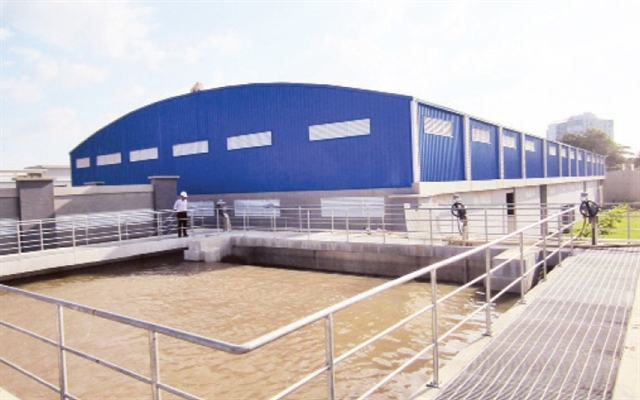
Fresh water for daily use in HCM City has been priced at 6 per cent higher than the previous rate since mid November.
The Lebanese Uprising: No End in Sight for the Current Impasse
Didier “Ice” IcemanHélas, pas d'issue au #liban
By Joe Macaron
It has been over a month since the Lebanese uprising began and there are no indications that the country’s ruling oligarchy is willing or ready to offer concrete concessions in giving up power. The political class seems united in buying time to weather the storm of public anger while seeking to disperse and divide the protesters and undermine their cause. Lebanon is on the verge of economic collapse with no end in sight to the crisis of public confidence in the country’s current political system.
What has been fascinating about these unprecedented developments in Lebanon is the cross-sectarian unity among both the protesters and the political class. Protesters have been demonstrating in squares from the north to the south of the country while coordinating their actions via WhatsApp. This remarkable civic awareness is heralding a new sense of belonging where citizens feel they have a stake in governance without going through the leading oligarch of their sectarian community. The protests in both rural and urban areas have yet to convert this newfound collective power into a political platform and policy-making process. Only in the past decade has Lebanon begun to witness new civil society movements and political parties seeking to provide an alternative to the traditional ones. But there is still a long way to go. Lebanon needs a major constitutional and economic overhaul, a task that cannot be accomplished overnight.
Moreover, the members of Lebanon’s ruling oligarchy are clinging to each other and employing almost uniform tactics to quell the popular uprising. So far, there were multiple speeches by President Michel Aoun, Prime Minister Saad Hariri (who resigned on October 29 but is now heading a caretaker cabinet), and Hezbollah Secretary General Hassan Nasrallah. These speeches varied from embracing and acknowledging the demands of the protesters to condemning their behavior and insinuating they are receiving foreign support. Every speech by one of the oligarchs seems to incentivize the protesters to return to the streets while every move by the protesters seems to unite the political class. To sway the general public in their favor, the ruling class and their affiliates are warning of economic collapse and security deterioration if the protests continue. The lack of regret regarding their failures or empathy toward the protesters’ demands speaks volumes about how much the political class is disconnected from—or unconcerned about—the magnitude of these protests.
There are three crucial dynamics that will decide how this ongoing crisis will unfold: security, politics and the judiciary, and the economy.
The Security Environment
While the Lebanese military remains generally neutral and the interior ministry’s security forces have been largely idle during this uprising, paramilitary forces and gangs—officially and non-officially affiliated with the ruling political parties—have seldom assaulted the protesters. The Lebanese Army’s military intelligence, which is traditionally linked to the president1 and is now headed by Brigadier General Tony Mansour, has arrested and used force against protesters in recent weeks. The Republican Guard Brigade, also under President Aoun’s control, was deployed to deter the protesters’ march on the road leading to the presidential palace in Baabda. On November 12, a bodyguard for the military intelligence bureau chief, Colonel Nidal Daou (who is reportedly close2 to the Progressive Socialist Party leader Walid Joumblatt), shot and killed the protester Alaa Abou Fakher in Khaldeh, located near the highway connecting Beirut to south Lebanon. On November 13, a gunman opened fire on protesters in Jal el-Dib in the Mount Lebanon province. Previously, supporters of Hezbollah and the Amal Movement assaulted protesters in downtown Beirut and broke their tents. All these coercive attempts, however, did not dissuade the protesters from continuing their actions. The sticking point among the Lebanese public has been the road blockades by protesters—whether this is part of civil disobedience or a violation of the basic right of citizens to move. Since these demonstrations succeeded in forcing Hariri’s resignation, the protesters’ case for blockading the roads was weakened.
After these chaotic couple of weeks, the commander of the Lebanese military, General Joseph Aoun, defended the army’s posture during the protests and set the tone for the coming period, saying that the army would continue to secure the safety of protesters but that it would no longer accept the blockading of roads. This stance by the army means the current impasse might be reinforced, with the political class under no significant pressure to compromise and the protesters under no pressure to leave the squares where they have been demonstrating across the country.
Political and Judiciary Dynamics
The dynamics of Lebanese politics have significantly shifted since the start of the uprising in October 2019. The 2016 presidential deal between Aoun and Hariri has fizzled under public pressure but has not yet fallen apart. In general terms, the deal allowed for the election of Michel Aoun as president on October 31, 2016—following more than two years of a presidential vacuum—in exchange for Hariri becoming prime minister. Hezbollah, which is President Aoun’s political ally, pushed for and approved the arrangement. Hariri is deflecting the blame to Aoun’s son-in-law, Foreign Minister Gebran Bassil––considered the real deal maker in the president’s camp––who in return is pointing a finger at Hariri for the government’s failure to combat corruption. Instead of heeding protesters’ demands, the oligarchs sought to reach a deal behind closed doors on the formation of a new cabinet. Hariri, who resigned but seems to be eager to return to power, is putting his own preconditions on leading a purely technocratic cabinet. However, Aoun and Hezbollah do not want Hariri alone to have a free hand in a cabinet of technocrats; they are insisting on a mixture of technocrats and politicians whose names would not provoke a negative reaction from protesters. The name of former minister Mohammad Safadi was floated as a potential premier, but this seemed to be primarily a political maneuver that was denounced by the protesters, which led to Safadi’s withdrawal from consideration. Safadi, who is close to both Hariri and Bassil, was meant to be a compromise that would keep the 2016 presidential deal alive.
While Hariri’s departure gave the impression that he resigned in defiance of Hezbollah and Bassil, the parties of this deal (Aoun, Hariri, and Hezbollah) seem to be invested in continuing to negotiate a new version of their power-sharing formula. Hariri will lose what is left of his political capital if he is out of power or if he is not at least the kingmaker of the new cabinet, while Aoun and Hezbollah need the international community’s support so that Hariri can navigate the current economic crisis and avoid further US sanctions. The challenge, however, is that reaching a deal among the ruling political class is no longer sufficient since whatever they agree on must meet the high bar of the leaderless uprising. Protesters have recently been buoyed by the election of one of their supporters, independent Melhem Khalaf, as head of the influential Beirut Bar Association. They also succeeded in preventing the parliament on November 19 from holding a session to pass controversial bills behind closed doors and before the formation of a cabinet that meets the protesters’ demands.
However, the protests are yet to achieve their goal of holding corrupt officials accountable in the courts. While the state financial prosecutor Ali Ibrahim has ordered some officials to appear for an informal investigation, no official has yet been prosecuted, nor has stolen money been returned—as protesters are demanding. Moreover, the Aoun-Hariri friction was reflected in the judiciary that largely remains under the control of the political class. When Mount Lebanon prosecutor Ghada Aoun, who is close to the president, charged Hariri’s ally, former Prime Minister Najib Miqati, for making unlawful profits through subsidiary housing loans, a week later, State Prosecutor Ghassan Oueidat (who is close to Hariri) initiated disciplinary action against Judge Aoun and asked security agencies not to send her new cases. Unless there are fresh appointments of apolitical judges, the potential of accountability and reform remains limited.
The Economic Factor
Perhaps the most pressing situation is the looming risk of economic collapse with growing signs in both the private and public sectors. Lebanon has one of the highest debt burdens in the world, projected to reach 155 percent of gross domestic product by the end of this year. In addition, the country’s local currency has weakened against the dollar by about 20 percent on the black market. Lebanon’s Central Bank is gradually losing foreign currency reserves and the banking system is imposing a de facto capital control to block the potential flight of foreign currency. In fact, citizens’ access to their funds in the commercial banks is now limited to $1,000 per week. The commercial banks closed for long stretches since the protests began on October 17; on November 19, they reopened again after they were provided government security protection around their branches, which is an additional public cost. It is noteworthy that even during the civil war, Lebanese banks did not close for such an extended period. These institutions, which primarily own Lebanon’s overall national debt, are concerned about potential activities by protesters, hence they asked and were granted security protection from the caretaker government.
Meanwhile, Lebanon’s Central Bank is still excluding any change in the country’s 22-year peg, which fixes the Lebanese pound at 1,507.5 to the dollar, asserting this move is crucial to stabilize the monetary crisis. However, the devaluation of the Lebanese pound might be inevitable since the black market is already doing so, and this will negatively impact the savings of a large segment of the population, most notably retirement funds. There might not be enough dollars in the Lebanese market to match the public demand for them.
If the political crisis persists and the country continues to be largely paralyzed, there might be an eventual economic collapse, including the state’s inability to pay wages. Containing the situation might need a default at some point and a bailout by monetary institutions like the International Monetary Fund. The suggested solution by protesters is that the wealthy who have benefited from the political system should pay the national debt either through a fair tax system or by returning stolen money. This mechanism is not in place and might not materialize given the current dynamics; therefore, there are open questions about whether a social safety net could mitigate the impact of the economic collapse and about who will end up paying for these social measures.
With a looming economic collapse and a deep political crisis, Lebanon requires an urgent implementation of genuine reforms and a fundamental shift in governance. These two preconditions are nonexistent at present. The ruling political class is settling scores and continuing business as usual while protesters are unable to shift the paradigm of power without having significant influence in the government or holding an early parliamentary election. Both these objectives are unattainable in the foreseeable future given the stated positions of the ruling political class.
Meanwhile, US policy in Lebanon remains ambiguous, ranging from withholding assistance to the Lebanese military to focusing statements on Hezbollah rather than on the larger context of the Lebanese crisis. The Trump Administration’s public rhetoric is typically counterproductive for protesters, as recent events have shown, given ongoing attempts in Lebanon to portray the protests as a US-funded plot. What Washington can do is to have the US embassy in Lebanon privately urge all Lebanese officials to acknowledge the gravity of the current crisis and heed the voices of protesters while encouraging the military to remain neutral. Beyond that, the Trump Administration could potentially aggravate an already protracted political crisis.
Joe Macaron is a Resident Fellow at Arab Center Washington DC, where this article was originally published.
L’Inde s’approprie un petit morceau de Népal
Didier “Ice” Icemantoujours le conflit et la montée du nationalisme indien

Wikipédia ou la fin de l'expertise ?
Didier “Ice” Iceman#Wikipedia en accusation permanente
Iran’s ‘only crime is we decided not to fold’
Just in time to shine a light on what’s behind the latest sanctions from Washington, Iranian Foreign Minister Mohammad Javad Zarif in a speech at the annual Astana Club meeting in Nur-Sultan, Kazakhstan delivered a searing account of Iran-US relations to a select audience of high-ranking diplomats, former Presidents and analysts.
Zarif was the main speaker in a panel titled “The New Concept of Nuclear Disarmament.” Keeping to a frantic schedule, he rushed in and out of the round table to squeeze in a private conversation with Kazakh First President Nursultan Nazarbayev.
During the panel, moderator Jonathan Granoff, President of the Global Security Institute, managed to keep a Pentagon analyst’s questioning of Zafir from turning into a shouting match.
Previously, I had extensively discussed with Syed Rasoul Mousavi, minister for West Asia at the Iran Foreign Ministry, myriad details on Iran’s stance everywhere from the Persian Gulf to Afghanistan. I was at the James Bond-ish round table of the Astana Club, as I moderated two other panels, one on multipolar Eurasia and the post-INF environment and another on Central Asia (the subject of further columns).
Zarif’s intervention was extremely forceful. He stressed how Iran “complied with every agreement and it got nothing;” how “our people believe we have not gained from being part of” the Joint Comprehensive Plan of Action; how inflation is out of control; how the value of the rial dropped 70% “because of ‘coercive measures’ – not sanctions because they are illegal.”
He spoke without notes, exhibiting absolute mastery of the inextricable swamp that is US-Iran relations. It turned out, in the end, to be a bombshell. Here are highlights.
Zarif’s story began back during 1968 negotiations of the Nuclear Non-Proliferation Treaty, with the stance of the “Non-Aligned Movement to accept its provisions only if at a later date” – which happened to be 2020 – “there would be nuclear disarmament.” Out of 180 non-aligned countries, “90 countries co-sponsored the indefinite extension of the NPT.”
Moving to the state of play now, he mentioned how the United States and France are “relying on nuclear weapons as a means of deterrence, which is disastrous for the entire world.” Iran on the other hand “is a country that believes nuclear weapons should never be owned by any country,” due to “strategic calculations based on our religious beliefs.”
Zarif stressed how “from 2003 to 2012 Iran was under the most severe UN sanctions that have ever be imposed on any country that did not have nuclear weapons. The sanctions that were imposed on Iran from 2009 to 2012 were greater than the sanctions that were imposed on North Korea, which had nuclear weapons.”
Discussing the negotiations for the JCPOA that started in 2012, Zarif noted that Iran had started from the premise that “we should be able to develop as much nuclear energy as we wanted” while the US had started under the premise that Iran should never have any centrifuges.” That was the “zero-enrichment” option.
Zarif, in public, always comes back to the point that “in every zero-sum game everybody loses.” He admits the JCPOA is “a difficult agreement. It’s not a perfect agreement. It has elements I don’t like and it has elements the United Stares does not like.” In the end, “we reached the semblance of a balance.”
Zarif offered a quite enlightening parallel between the NPT and the JCPOA: “The NPT was based on three pillars: non-proliferation, disarmament and access to nuclear technology for peaceful purposes. Basically the disarmament part of NPT is all but dead, non-proliferation is barely surviving and peaceful use of nuclear energy is under serious threat,” he observed.
Meanwhile, “JCPOA was based on two pillars: economic normalization of Iran, which is reflected in Security Council resolution 2231, and – at the same time – Iran observing certain limits on nuclear development.”
Crucially, Zarif stressed there is nothing “sunset” about these limits, as Washington argues: “We will be committed to not producing nuclear weapons forever.”
All about distrust
Then came Trump’s fateful May 2018 decision: “When President Trump decided to withdraw from the JCPOA, we triggered the dispute resolution mechanism.” Referring to a common narrative that describes him and John Kerry as obsessed with sacrificing everything to get a deal, Zarif said: “We negotiated this deal based on distrust. That’s why you have a mechanism for disputes.”
Still, “the commitments of the EU and the commitments of the United States are independent. Unfortunately the EU believed they could procrastinate. Now we are at a situation where Iran is receiving no benefit, nobody is implementing their part of the bargain, only Russia and China are fulfilling partially their commitments, because the United States even prevents them from fully fulfilling their commitments. France proposed last year to provide $15 billion to Iran for the oil we could sell from August to December. The United States prevented the European Union even from addressing this.”
The bottom line, then, is that “other members of the JCPOA are in fact not implementing their commitments.” The solution “is very easy. Go back to the non-zero sum. Go back to implementing your commitments. Iran agreed that it would negotiate from Day One.”
Zarif made the prediction that “if the Europeans still believe that they can take us to the Security Council and snap back resolutions they’re dead wrong. Because that is a remedy if there was a violation of the JCPOA. There was no violation of the JCPOA. We took these actions in response to European and American non-compliance. This is one of the few diplomatic achievements of the last many decades. We simply need to make sure that the two pillars exist: that there is a semblance of balance.”
This led him to a possible ray of light among so much doom and gloom: “If what was promised to Iran in terms of economic normalization is delivered, even partially, we are prepared to show good faith and come back to the implementation of the JCPOA. If it’s not, then unfortunately we will continue this path, which is a path of zero-sum, a path leading to a loss for everybody, but a path that we have no other choice but to follow.”
Time for HOPE
Zarif identifies three major problems in our current geopolitical madness: a “zero-sum mentality on international relations that doesn’t work anymore;” winning by excluding others (“We need to establish dialogue, we need to establish cooperation”); and “the belief that the more arms we purchase, the more security we can bring to our people.”
He was adamant that there’s a possibility of implementing “a new paradigm of cooperation in our region,” referring to Nazarbayev’s efforts: a real Eurasian model of security. But that, Zarif explained, “requires a neighborhood policy. We need to look at our neighbors as our friends, as our partners, as people without whom we cannot have security. We cannot have security in Iran if Afghanistan is in turmoil. We cannot have security in Iran if Iraq is in turmoil. We cannot have security in Iran if Syria is in turmoil. You cannot have security in Kazakhstan if the Persian Gulf region is in turmoil.”
He noted that, based on just such thinking, “resident Rouhani this year, in the UN General Assembly, offered a new approach to security in the Persian Gulf region, called HOPE, which is the acronym for Hormuz Peace Initiative – or Hormuz Peace Endeavor so we can have the HOPE abbreviation.”
HOPE, explained Zarif, “is based on international law, respect of territorial integrity; based on accepting a series of principles and a series of confidence building measures; and we can build on it as you [addressing Nazarbayev] built on it in Eurasia and Central Asia. We are proud to be a part of the Eurasia Economic Union, we are neighbors in the Caspian, we have concluded last year, with your leadership, the legal convention of the Caspian Sea, these are important development that happened on the northern part of Iran. We need to repeat them in the southern part of Iran, with the same mentality that we can’t exclude our neighbors. We are either doomed or privileged to live together for the rest of our lives. We are bound by geography. We are bound by tradition, culture, religion and history.” To succeed, “we need to change our mindset.”
Age of hegemony gone
It all comes down to the main reason US foreign policy just can’t get enough of Iran demonization. Zarif has no doubts: “There is still an arms embargo against Iran on the way. But we are capable of shooting down a US drone spying in our territory. We are trying simply to be independent. We never said we will annihilate Israel. Somebody said Israel will be annihilated. We never said we will do it.”
It was, Zarif said, Benjamin Netanyahu who took ownership of that threat, saying, “I was the only one against the JCPOA.” Netanyahu “managed to destroy the JCPOA. What is the problem? The problem is we decided not to fold. That is our only crime. We had a revolution against a government that was supported by the United States, imposed on our country by the United States, [that] tortured our people with the help of the United States, and never received a single human rights condemnation, and now people are worried why they say ‘Death to America’? We say death to these policies, because they have brought nothing but this farce. What did they bring to us? If somebody came to the United States, removed your president, imposed a dictator who killed your people, wouldn’t you say death to that country?”
Zarif inevitably had to evoke Mike Pompeo: “Today the Secretary of State of the United States says publicly: ‘If Iran wants to eat, it has to obey the United States.’ This is a war crime. Starvation is a crime against humanity. It’s a newspeak headline. If Iran wants its people to eat, it has to follow what he said. He says, ‘Death to the entire Iranian people.’”
By then the atmosphere across the huge round table was electric. One could hear a pin drop – or, rather, the mini sonic booms coming from high up in the shallow dome via the system devised by star architect Norman Foster, heating the high-performance glass to melt the snow.
Zarif went all in: “What did we do the United States? What did we do to Israel? Did we make their people starve? Who is making our people starve? Just tell me. Who is violating the nuclear agreement? Because they did not like Obama? Is that a reason to destroy the world, just because you don’t like a president?”
Iran’s only crime, he said, “is that we decided to be our own boss. And that crime – we are proud of it. And we will continue to be. Because we have seven millennia of civilization. We had an empire that ruled the world, and the life of that empire was probably seven times the entire life of the United States. So – with all due respect to the United States empire; I owe my education to the United States – we don’t believe that the United States is an empire that will last. The age of empires is long gone. The age of hegemony is long gone. We now have to live in a world without hegemony. – regional hegemony or global hegemony.”
Economic Sanctions Are Testing the Resilience of Iran’s Islamic System
Didier “Ice” Iceman#iran
By Shireen Hunter
The popular demonstrations in nearly all Iranian cities that followed the increase in the price of gasoline are only one symptom of the growing challenges facing Iran’s Islamic system. From a purely economic rationale, the price increase is justified as a means to regulate the fuel consumption, which, because of its cheap price, is comparatively high. However, in view of Iran’s current economic conditions characterized by mounting inflation and economic stagnation, this price increase acted as a last straw on people’s willingness to accept the government’s decision with equanimity.
The government has tried to pacify the populace by stressing that the revenue yielded from the price increase will be distributed to nearly 60 million economically vulnerable people. However, the revenue obtained by the price increase amounting to roughly $2 billion, depending how the exchange rate is calculated, when divided among such a large group would be insufficient to ease their economic hardships. Moreover, not all of the revenue gained could be spent on living support for the people. A few days ago, President Hassan Rouhani had complained that because of the fall in oil revenues, Iran faced a $21 billion shortfall in meeting the country’s needs.
The increase in the price of gasoline is only one manifestation of Iran’s economic and financial woes resulting from the economic sanctions. The main culprit has been the loss of Iran’s oil income. According to OPEC’s latest monthly report in November 2019, Iran’s oil exports have fallen by 1.65 million barrels per day since the imposition of U.S. sanctions. Moreover, because of banking restrictions, Iran faces difficulty in repatriating the foreign exchange earned by its non-oil exports.
Growing Intra-Elite Discord
A major consequence of economic hardships in Iran has been the intensification of intra-elite disputes. Even before the price increases, economic problems were causing serious tensions between the executive branch, especially Rouhani and the hardline-dominated judiciary and part of the parliament. These tensions became very obvious during the so-called anti-corruption campaign launched by the recently minted head of the judiciary, Ayatollah Ebrahim Raisi. The hardliners accused the government of having wasted $18 billion by the misuse of currency at the lower official rate. Meanwhile, the government complained that the anticorruption campaign did not go after the big villains, and posed questions of its own regarding the misuse of $2 billion. In short, both sides engaged in a bitter blame game.
More seriously, in an unprecedented move, the Friday prayer leader of the holy city of Mashhad and the father in law of the head of the judiciary, Ayatollah Alam al Hoda, demanded that $10 billion allegedly earned from religious tourism to Mashhad should be returned to the city. In addition to exaggerating the amount gained—the total of Iran’s earnings from tourism amounts to roughly $ 7billion—this demand essentially challenged the government’s authority over the city of Mashhad. This challenge, too, is nothing new. Some religious circles have for some time suggested that the holy cities of Mashhad and Qum should become autonomous on the model of the Vatican state.
In a counter-offensive, Rouhani complained of the lack of sufficient authority while having to bear the responsibility for the consequences of decisions taken by others. He demanded more authority and was shouted down by the hardliners, who claimed that he had more authority than the previous presidents. His request, of course, was a veiled criticism of the Supreme Leader, who makes the final decisions on important issues. Rouhani even suggested that on the most serious issues facing the country, people should be consulted through a referendum. This proposal, too, was harshly criticized by the hardliners.
However, while the people are increasingly disillusioned with Rouhani’s performance, there is a growing awareness that the greatest part of the blame for the government’s shortcomings lie elsewhere. The entry of the Supreme Leader into the dispute over the gasoline price increases indicates that the current situation of responsibility without authority may not last forever. It can also make the Leader directly answerable to the people whereas until now he had mostly remained above the fray.
Structural Problems of the Islamic System: Conflict Between Revolutionary and National Goals
Iran’s latest crisis also highlights the underlying problems of its hybrid Islamic system and its double-headed government, plus the conflict between Iran’s national interests and the revolutionary goals of its hardliners.
Ostensibly, Iran’s political system is a republic based on the principle of popular will. At the same time, however, it is based on the guardianship of the Faqih and the supremacy of Islamic law, and a large role for clerical figures in various aspects of government. These two concepts are completely at odds. More seriously, however, since the foundation of the system, its survival and the perpetuation of the Islamic revolution rather than Iran’s security and wellbeing has been the system’s main goal. For this purpose, a variety of civil and military organizations, most notably the Revolutionary Guard Corps and the Basij, have been established. These institutions have made governing the country very difficult and have made consecutive governments unable to pursue policies best suited to achieve Iran’s national interests. The current stalemate in U.S.-Iran relations, in addition to the Trump administration’s maximum pressure strategy, is largely because of the influence of this parallel government and its revolutionary organizations.
Continued economic pressures are certain to exacerbate these structural problems as the interests of Iran and its people increasingly grow at odds with material and ideological interests of the hardliner’s parallel government. As the hardliners’ revolutionary ideas and goals are rapidly losing their appeal, the sustaining of this double headed government and its policies are becoming more difficult. If the hardliners insist in maintaining the current conditions, they may have to do it by force.
Is There A Way Out?
Clearly, Iran’s current conditions, especially the perpetuation of revolution, cannot be sustained much longer. Economic sanctions and resulting difficulties have only made this reality clearer. The question remains how this situation can end. The committed opponents of the regime want a total overthrow of the system if need be through violent means, which would plunge Iran into chaos and even civil war. The regime’s opponents, including those abroad and separatists who want the country’s disintegration, are a divided group and lack a charismatic leader who could mobilize the people. Therefore, in case of a violent overthrow of the regime, as happened after the Islamic Revolution in 1979 when the diverse opponents of the monarchy began to fight amongst themselves, the collapse of the current system will generate similar infightings among opposition groups. In 1979, there was no appetite for Iran’s dismemberment among major international and regional players, with the exception of Saddam Hussein’s Iraq. This time, however, in case of turmoil in Iran, outside actors, including some of its Arab neighbors, will certainly become involved with unpredictable consequences for the country. In fact, they already manipulate Iran’s difficulties.
The other way out is for the hardliners to wake up, admit the untenability of present conditions and agree to wide ranging reforms. These reforms would include, the elimination of parallel military organizations and their incorporation in the national army, the weakening of clerical influence in politics, cultural liberalization, greater respect for people’s wishes, tolerance of diverging opinions, and most important, prioritizing Iran’s national interests over revolutionary and Islamist goals .
However, the failure of past efforts to reform the system from within, leaves one with little optimism that they would be undertaken, thus leaving Iran with a clouded future.
Lebanese port city, long written off, lights up
Didier “Ice” Iceman#Lebanon...
The northern city of Tripoli – the former gateway of the Levant, dilapidated by decades of neglect – has caught nationwide attention for its electrifying embrace of a one-month-old Lebanese protest movement.
Marches for key demands such as a fall of the sectarian system weave through the city day, professors from the public Lebanese University hold lectures in the evenings, and targeted sit-ins have taken place inside monopolized telecom offices.
With most Lebanese forced at one point or another in their lives to depend on wusta, or someone on the inside of government to obtain documents, resolve a problem or find employment, it is also a movement against the corruption in which many say they are tired of participating.
“It’s time to shit where we eat,” said one man from a nearby coastal town, ahead of a planned attempt to block the road to a luxury resort, where his own family owns property.
By nightfall, Tripoli’s central square with its towering illuminated sculpture reading “God” – long seen as the outward announcement of the city’s austere character – has lately been packed to the brim with young women and men, under a mural reading, “Tripoli, City of Peace.”
“All of them means all of them,” the key rallying cry across the country, is especially embraced in Tripoli, one of the geographic bastions that sectarian political elites have long taken for granted to fall in line under their direction. Now, such bastions have shifted their anger inward, taking swings at their own zaim, or leader, or at the very least not offering them exceptions.
Protests against the veteran Speaker of Parliament Nabih Berri in the southern city of Nabatieh, a bastion of his Shiite Amal Party, have electrified Sunni protesters in the north, who know the movement will need all Lebanese involved if they want to shake the sectarian system.
In turn, the embrace of the protesters in Tripoli with the ousting of Prime Minister Saaad Hariri, who has previously referred to himself as the “father of the Sunnis” in Lebanon, has created an unexpected opening for a nationwide non-sectarian movement.
And in a once-unthinkable symbol of solidarity between regions and sects, a mural of a Druze protester shot in the head by a soldier in front of his wife and children as he tried to block off a road south of Beirut, is now a fixture in Tripoli.

Islamists sidelined
The city that once made news for clashes between its poorest neighborhoods, and for allowing young men to fight on behalf of Islamist factions in neighboring Syria, has become a fixture on the nightly news for electrifying parties in the square.
“Guys, should we reserve a table in Tripoli or are they still allowing walk-ins?” read one Tweet from a Lebanese account, after videos went viral showing thousands in the central square partying to techno music.
While some hardcore activists view the carnivalesque atmosphere as a distraction from the serious business of blocking roads, others feel it has been invaluable for showing the country another side to Tripoli.
On any given night, on the outskirts of Tripoli’s main protest square, tents host various educational and activist platforms as Lebanese soldiers, internal security forces and intelligence agents maintain a close eye on the movement in all of its forms.
A large poster on a side street off the square calls for freedom for “political prisoners” – the Islamists rounded up during a major crackdown on a once-brazen militant presence in the city.
But it is a far cry from the brazen displays Tripoli’s hardline Islamists once were able to make during the height of the civil war in Syria next door, when bearded, armed men sometimes blasted through the main square on moped convoys and took shots at the army before a security crackdown.
For the time being, the square is jam-packed with students and families, and women out in full force, keeping political or sectarian flags and slogans at bay.
Work bearing fruit
On a given night, many of those in the central square might be milling around just to enjoy the atmosphere. But they are also exposed to ideas and educational lectures being given at the various protest tents.
One evening, a law professor at Lebanese University in Tripoli explained the ins and outs of the national constitution and how an article aimed at safeguarding “national cohesion” has been repeatedly used to hamper reform.
A crowd of students, as well as older observers, pass around the microphone to ask her their questions and make points.
While much of the crowd has been made up of teens and families, there is a strong presence of young professionals – the educated and empowered age group at the forefront of nationwide organizing.
“We are fighting not only the politicians, but also the older generation,” said Nour Moukadem, sitting with her friend on a tarp just off the main square, who said she engages in a daily debate with her parents about what they see as a futile endeavor.
“What is common between Tripoli and all Lebanese cities is poverty and a lack of governmental projects or development. The problem is it’s been years of theft of our own money and we didn’t get back any services,” she said.
Moukadem says she is not assuming change will be quick.
“Even if I don’t see an impact this year or next year, I believe in the coming years that my children, if I get married, will see an impact. We know that change take time,” she told Asia Times.

As an example, she says that years of work by civic associations to bring together Tripoli’s youth is now bearing fruit.
“The things that NGOs have been working on for years, to break the barriers between different sects and areas, is finally showing up. So all this is to say that change takes time.”
Aisha Halawani, a business consultant, says that for years poverty has left Tripoli residents vulnerable to being recruited into political disputes, to their own detriment.
“The political parties have been using the poor people. We give you money; okay, go shoot. What happened in Tabbaneh and Jabal happened because they’re very, very poor,” she said, referring to clashes in recent years between neighboring Sunni and Alawite districts.
Now, she believes, many people are waking up and seeing a different kind of potential for their city – once the main port of the Levant.

Timeline for change
Towering over the main square, a poster with a timeline of objectives seeks to keep the protest movement focused four weeks on, even as the government has clung to power.
“Uprising of the Lebanese people from every area and every sect” is the first item, with a check-mark signifying its completion. The second, the resignation of the prime minister, Saad Hariri, has already occurred.
But the third, and the one on which entrenched political elites have been dragging their feet on for four weeks, seemingly hoping the protest movement will disperse, is “the formation of a technocratic, independent government with legislative powers.”
So far, that has been the sticking point.
At a nearby fish market, where restaurants and families across the north come for the freshest catches, a merchant expressed support for the demands of the protest movement – so long as they targeted all the political elites, not just the first to fall.
“It can’t just be Prime Minister Saad Hariri who goes,” he said. “It has to be all of them.”
On Tuesday, protesters are set to block the roads to parliament in Beirut to prevent lawmakers from potentially granting themselves immunity from corruption charges.
Un objet dans l’actu : le Whopper alternatif de Burger King
Didier “Ice” Icemanmouais...

Rajapaksa storms to victory in Sri Lanka election
Didier “Ice” IcemanLa dérivé autoritaire pointe son nez
Gotabaya Rajapaksa, who spearheaded the brutal crushing of the Tamil Tigers 10 years ago, stormed to victory Sunday in Sri Lanka’s presidential elections seven months after Islamist extremist attacks killed 269 people.
The retired lieutenant colonel, nicknamed the “Terminator” by his own family, won 53-54 percent of the vote, his spokesman told AFP as Rajapaksa’s main rivalSajith Premadasa of the ruling party conceded the race.
“It is a clear win. We envisaged it. We are very happy that Gota will be the next president. He will be sworn in tomorrow or the day after,” spokesman Keheliya Rambukwella said.
He is the younger brother of the charismatic but controversial Mahinda Rajapaksa, who was president from 2005-15.
Earlier Rajapaksa, 70, had a 49.6 percent share of the vote with close to six million ballots counted. Results from Sinhalese-majority regions – the Rajapaksas’ core support base – as expected pushed this above 50 percent.
Premadasa, 52, of the ruling party had strong support in minority Tamil areas and a poor showing in larger Sinhalese constituencies. Saturday’s poll was the first popularity test of the United National Party (UNP) government of Prime Minister Ranil Wickremesinghe, who stepped aside and allowed his deputy Premadasa to stand in the election.
Nationalism, security
Rajapaksa conducted a nationalist campaign with a promise of security and a vow to crush religious extremism in the Buddhist-majority country following the April 21 suicide bomb attacks blamed on a homegrown jihadi group.
Three luxury hotels and three churches were targeted in the coordinated bombings. The Islamic State group also claimed responsibility for the attack, which left 45 foreigners dead.
Premadasa also offered better security and a pledge to make a former war general, Sarath Fonseka, his national security chief, projecting himself as a victim seeking to crush terrorism.
He is the son of assassinated ex-president Ranasinghe Premadasa, who fell victim to a Tamil rebel suicide bomber in May 1993.
Gotabaya is adored by the Sinhalese majority and by the powerful Buddhist clergy for directing security forces to crush Tamil separatists and end, with brother Mahinda in May 2009, a 37-year separatist war.
But they are detested and feared by many Tamils, who make up 15 percent of the population. The conflict ended with some 40,000 Tamil civilians allegedly killed by the army.
Some in the Muslim community, who make up 10 percent of the population, are also fearful of Gotabaya becoming president, having faced days of mob violence in the wake of the April attacks.
Under his brother, Gotabaya was defence secretary and effectively ran the security forces, allegedly overseeing “death squads” that killed rivals, journalists and others. He denies the allegations.
During that time, Sri Lanka also borrowed heavily from China for infrastructure projects and even allowed two Chinese submarines to dock in Colombo in 2014, alarming Western countries as well as India.
The projects ballooned Sri Lanka’s debts and many turned into white elephants – such as an airport in the south devoid of airlines – mired in corruption allegations.
China also offered Sri Lanka “international diplomatic protection” against criticism for its rights record, analyst Paikiasothy Saravanamuttu told AFP. The Rajapaksas “spent and spent without giving any consideration to how it has to be paid back,” Saravanamuttu said.
80% turnout
Election Commission chairman Mahinda Deshapriya said at least 80 percent of the 15.99 million eligible voters participated in Saturday’s poll.
Unlike in 2015 when there were bomb attacks and shootings, this election was relatively peaceful by the standards of Sri Lanka’s fiery politics.
The only major incident was on Saturday when gunmen fired at two vehicles in a convoy of at least 100 buses taking voters from the Muslim minority to vote. Two people were injured.
It was a campaign that according to the Election Commission was the worst ever for hate speech and misinformation.
– AFP
China, Vietnam will never agree on South China Sea
Didier “Ice” IcemanHélas, on n'a pas fini d'en parler
China is ratcheting up pressure on Vietnam in the South China Sea, urging Hanoi to back away from its legal threat to pursue international arbitration over their festering territorial disputes.
Geng Shuang, a Chinese foreign ministry spokesman, said on November 8 that Vietnam “needs to avoid taking actions that may complicate matters or undermine peace and stability in the South China Sea as well as our bilateral relations.”
Geng also stated that Vietnam would have to “face up to the historical fact”, by which he presumably meant that China’s claims to disputed islands and features in the South China Sea date back centuries.
Vietnam, for its part, has recently signaled it could seek arbitration and even litigation if bilateral negotiations do not soon deliver a mutually agreed solution.
Vietnam’s Deputy Foreign Minister Le Hoai Trung recently said their disputes, including over the energy-rich Vanguard Bank, where the two sides have been locked in a months-long naval standoff, should be resolved according to the United Nations Convention on the Law of the Sea (UNCLOS).
The problem, of course, is that China would not likely recognize any international arbitration award perceived as inimical to its interests. Beijing made that stance clear in July 2016 when The Hague-based Permanent Court of Arbitration (PCA) ruled in favor of the Philippines over China.
According to that landmark ruling, China’s so-called “nine-dash line” map, which delineates claims that encompass nearly 90% of the South China Sea, has no validity under international law, including UNCLOS. China ignored the fact that it has signed and ratified UNCLOS, and flatly rejected the ruling.

China’s recalcitrant reaction to moves by the Philippines and Vietnam has brought into question the broader issue of Beijing’s trustworthiness concerning its adherence to international treaties, as well as its own stated pledges.
In September 2015, Chinese President Xi Jinping stood beside his then-US counterpart Barack Obama in the Rose Garden outside the White House in Washington and solemnly declared that “China does not intend to pursue militarization” of the South China Sea.
Today, China has turned several of the shoals and reefs it controls into proper islands complete with radars, runways for military aircraft, sheltered harbors for warships and infrastructure for housing missiles that combined have extended Beijing’s military reach across the breadth of the strategic waterway.
Diplomatic observers in the region also recall that Chinese foreign ministry spokesman Lu Kang in June 2017 repudiated the terms of the 1984 Sino-British Joint Declaration on the Future of Hong Kong, under which the British colony would he handed back to China in 1997.
According to the agreement, which was signed in Beijing by then premier Zhao Ziyang and British prime minister Margaret Thatcher, Hong Kong would remain autonomous and nothing would change for 50 years after the handover.
But, in 2017, Lu stated “now that Hong Kong has returned to the motherland for twenty years the Sino-British Joint Declaration, as a historical document, no longer has any realistic meaning…I hope relevant parties will take note of this reality.”
As for China’s “historical facts” regarding the islands it claims in the South China Sea, “facts” which were already once rejected by The Hague’s PCA, ancient Chinese cartographers were no doubt aware of their existence.

But the 15th century explorer and trader Zhang He, whose voyages have been mentioned by Chinese policy makers to endow historical legitimacy to Beijing’s claims, did not visit, or even mention those islands.
The detailed accounts and maps compiled by Zheng He’s aide Ma Huan list more than 700 places in Southeast Asia and the Indian Ocean, among them remote islands and ports in the Andamans, the Nicobars, Maldives and Lakshadweep, but not a single speck of land in the South China Sea.
The reason is quite simple: the features now in question were not actually islands, but rather treacherous shoals and underwater reefs which ancient navies, including Zheng He’s fleet of wooden junks, sailed around to avoid being shipwrecked.
But that has not prevented Beijing from making its revisionist assertions and, most recently, literally cementing those claims by turning shoals and reefs into man-made islands. Any opposing view, meanwhile, is branded by Beijing as interference in China’s internal affairs.
China’s overt disregard for international treaties would not be tolerated by the international community from smaller, less powerful countries. But China, as an emerging great power that can and often does throw its weight around, has so far been able to get away with it, say critical analysts.
Derek Grossman, a senior analyst at the US-based Rand Corporation think tank, told Filipino journalists in Washington on November 9 that Philippine President Rodrigo Duterte’s recent decision to enter into joint oil and gas exploration with China in the South China Sea could be interpreted as an award for his “setting aside” of the PCA’s 2016 ruling.
The joint exploration “will be in Beijing’s terms” and “under the auspices of the Chinese,” Grossman claimed in the press interview. Significantly, Duterte has paid five visits to China since assuming the presidency in mid-2016, and none to the Philippines’ traditional ally, the United States.

The navies of China and the Philippines confronted each other near contested islands in 2012, which led to Manila’s filing a case with the PCA the following year, with a ruling handed down three years later.
But, in early November this year, Manila gave in to China’s claims by agreeing once again to stamp Chinese passports emblazoned with its nine-dash line map, effectively recognizing China’s official mapping of the area.
Of all the countries with overlapping claims with China in the South China Sea, among them Vietnam, Malaysia, the Philippines, Brunei and Taiwan, only Vietnam has stood up to China’s intensifying muscle-flexing in the region.
In October, a Chinese oil survey ship left Vietnamese-controlled waters after a three-month naval standoff over the contested Vanguard Bank. At the time, Hanoi’s foreign ministry accused the Chinese vessel and its escorts of violating Vietnam’s sovereignty.
It has not likely been forgotten in Hanoi that Vietnamese and Chinese troops clashed near contested South China Sea islands in 1988. Outgunned by China’s navy, Vietnam was forced to withdraw and the deadly incident ended with China occupying six reefs it had not previously controlled.

The Vietnamese continue to say that they prefer to settle disputes through bilateral negotiations, though the option of bringing the case before an international arbitration tribunal is now also firmly on the table.
Chinese foreign ministry spokesman Geng recently maintained that the “core of the South China Sea problem” is Vietnam and other claimants “invading and occupying” Chinese islands.
With that attitude, a blatant disregard for international bodies like the PCA, and an often nationalistic interpretation of law-based treaties, China’s version of the maritime region’s history ensures more turbulence is on the horizon.
New polymer-coated vitamins and minerals could fight malnutrition in low-income countries
Didier “Ice” IcemanEt l'en vironnement ?

The next graphene? Shiny and magnetic, a new form of pure carbon dazzles with potential
Didier “Ice” IcemanA suivre

Les Brigades d’intervention poétiques.(BIP)
Didier “Ice” IcemanC'est beau
Pour que la poésie soit un art de vivre et pas un exercice scolaire…
J’ai sollicité à nouveau ( et pour la huitième fois) la venue des brigades d’intervention poétique dans mon établissement… Ils commencent à entrer dans les classes dès demain, quelle que soit la matière…Je me glisserai doucement dans la salle d’à coté demain pour filmer car chez moi ce sera pour mercredi…J’ai laissé le choix des poèmes aux deux comédiens…
À la suite une classe de sixième écrira des poèmes avec eux sur 6 séances puis mes élèves mettront en voix ces textes écrits par l’autre classe…Ceci nous amène jusque fin janvier pour une restitution finale…


Le principe des B.I.P. est simple :
Chaque jour, même heure, même classe, deux comédiens viennent offrir la lecture d’un poème aux élèves sans aucun commentaire ; la porte de la classe s’ouvre discrètement, quelques mots s’échappent et voyagent dans les têtes attablées,
une couleur, une musique… la porte se referme discrètement…
Chut…, à demain !
juste réfléchir…
L’objectif est de « donner » la poésie comme une parole vivante en l’abordant sous toutes ses formes (univers classique, contemporain ou en chant) tout en s’adaptant à la tranche d’âge concernée.
Le jeu varié des comédien(ne)s tantôt fantasque, jubilatoire ou tout en émotion apporte cette parole livrée sous la forme d’une scène ou d’un dialogue long, court, absurde, rigolo ou qui fait réfléchir. La poésie prend une dimension théâtrale sans tomber dans la profération de vers dans une attitude de déclamation ostentatoire.
En combinaison orange, ils amènent ce décalage et offrent aux élèves la possibilité de savourer un moment de complicité, en oubliant l’idée de simple « récitation ».
Sam Rainsy et l’impossible retour de l’opposition cambodgienne
Didier “Ice” IcemanHélas

Le retro gaming Made in France
Didier “Ice” IcemanMiam

Si vous vous intéressez au rétro-gaming autrement que pour l’aspect « gaming » pur, vous allez kiffer la série mise en ligne par Arte.
Baptisée Retrogaming Made In France, ces 10 épisodes vous emmèneront à la rencontre de créateurs français qui ont marqué nos mémoires avec leurs créations (si vous êtes suffisamment ancien bien sûr).

Je pense notamment à Captain Blood, Les Voyageurs du Temps ou encore Atlantis, Dune et Alone in the Dark. Concernant ce dernier, j’y jouais dans le noir, la nuit, et je peux vous dire qu’il me faisait sursauter. Et j’ai réussi à aller jusqu’au bout malgré la terreur :-).
C’était le bon vieux temps !
INTEL NUC Kit NUC5PGYH

i7, 16Go, 2To + 256SSD, NVIDIA® GeForce® GTX 1080 Ti avec l’écran OMEN 25 pouces
Ordinateur PC Intel NUC Kit NUC5PGYH inkl. Intel Pentium N3700 Processeur Intel Pentium N3700 (1.6 GHz) Intel HD Graphics 32 Go
Une solution graphique intégrée permet d’obtenir une qualité visuelle exceptionnelle, des performances graphiques supérieures et des options d’affichage flexibles sans carte graphique séparée.
Lebanon’s ‘Arab Spring’ Shakes Iran and the Region
Didier “Ice” IcemanTout est lié
By Emile Nakhleh
Lebanon’s largely peaceful “Arab Spring” is a model in civic activism for the greater Middle East. Prime Minister Saad Hariri’s offer to resign in response to the country’s popular uprising, which has been devoid of bloodshed and mayhem, is starkly different from the response of regimes to the first Arab spring in 2011. It’s also different from the Iraqi government’s bloody response to protests in Baghdad even though following the killing of hundreds of demonstrators, the Iraqi prime minister has also offered to resign.
Yet, the Lebanese uprising, peaceful as it is, poses a serious challenge to the very existence of the Lebanese state. It has also shaken the clerical regime in Iran and is an ominous harbinger for the neighboring Arab rulers. Lebanon is a precarious state in which trash has been piling up, public services and utilities have been sporadic, and the desire to leave the country has been the overwhelming concern of so many Lebanese.
Attaining a new political order free of sectarianism and corruption in Lebanon is a tall order, rendering the likelihood of success minimal. The Beirut demonstrations are patently indigenous and locally-driven. The demands for justice and dignity have targeted corruption and all corrupt politicians regardless of their sect, religion, and social status. “All means all,” shouted the demonstrators. Not just the Prime Minister, but all politicians, including the Hezbollah-supported Maronite President Michel Aoun, all the ministers, and other high-level officials who have benefitted from corruption through partisan patronage positions and other shady deals. Eight years ago, the popular revolts were opposed by Arab rulers but supported by the Iranian regime. The on-going uprisings in Lebanon and Iraq are opposed by Iranian and Arab regimes.
Although the Lebanese popular movement is not religious, its key demand for a new secular and corruption-free order strikes at the very existence of Lebanon, which also makes the current protest movement so unique in the modern annals of the Arab world. The previous Arab Spring aimed at regime change in Tunisia, Egypt, Yemen, and Libya, but street protests in Lebanon have attacked the religious edifice of Lebanon.
Arab autocratic regimes are worried that the protest virus will inflict their societies and threaten their hold on power. Iran and its proxies in Lebanon and Iraq, including Hezbollah and the Da’wa Party, are concerned because any serious change in the existing power alignments in the two countries will seriously undermine Iran’s political influence in both countries. This fear is what has driven Hezbollah’s leader Hassan Nasrallah and Iran’s Supreme Leader Ayatollah Ali Khamenei to denounce the protests as the work of “foreign hands,” presumably the United States and Israel.
Qasem Sulaimani, the head of Iran’s Quds Force, recently urged Iraqi leaders to respond to street protests as harshly as the Iranian leadership did in suppressing the “Green Revolution” of 2009 in Iran. What he has discovered on his recent visit to Baghdad’s Green Zone is that 2019 is vastly different from 2009. Iraqi youth stayed in the streets despite the government’s violent response.
Iran’s clerical regime and Arab autocrats seem incapable of halting Arab publics’ rejection of humiliation, and their persistent demands to root out corruption from their societies and hold their leaders accountable. Instead, Arab and Iranian autocrats and their proxies have been impugning the motives of the demonstrators and belittling the objectives of the new “Arab Spring.”
In Lebanon, Nabih Berri, leader of the other Shia party Amal and Speaker of the Parliament, much like Hezbollah’s leader Nasrallah, has also hued the Iranian line in denouncing the protest movement. He and his ilk are worried that they might lose the sectarian golden goose that has hatched and nurtured corruption in Lebanon in the past half century. A bit of history is illustrative.
A brief history of Lebanon’s “confessionalism”
Lebanon was established as an independent state in 1943 with a “confessional” or religious system of government in which senior leadership positions were allotted on the basis of religious or sectarian affiliation. The so-called National Charter prescribed, for example, that the President of the Republic will be a Maronite, the Prime Minister a Sunni Muslim, and the Speaker of Parliament a Shia Muslim. In the early years of independence, the minister of defense was always a Druze, and the Minister of Foreign Affairs was always a Greek Catholic. The Christian community, which according to the 1932 census was a majority, wanted to preserve its status as a privileged majority. Of course, the demographic make-up of the population has dramatically changed since then, with Muslims now accounting for more than 50 percent of all Lebanese.
Sectarianism and the 1975-1990 civil war have contributed to systemic instability and government paralysis. The confessional basis of the political system was reaffirmed following the civil war with the Ta’if agreement of 1989, which also extended Lebanese sovereignty to the southern part of the country that was occupied by Israel. The Israeli occupation that began in 1982 ended in 2000. The Syrian occupation that started in the early years of the civil war ended in 2005.
The Ta’if accords allowed Syria to extend and deepen its military and security hegemony over Lebanon and indirectly empowered Hezbollah to emerge as the most powerful political party and king maker in Lebanese politics. Although the Syrians left Lebanon a decade and a half ago, Hezbollah continued to dominate the political landscape. In fact, President Michel Aoun and Prime Minister Sa’ad Hariri came to power only with the acquiescence of Hezbollah.
Unlike other militias that were forced to disarm following the Ta’if accords, Hezbollah has refused to disarm. Hezbollah has maintained that its ability to thwart Israel’s military assault in 2006 and to protect the border between Lebanon and Israel justifies its continued build-up of a credible weapons arsenal. Sadly, Hezbollah, at Iran’s behest, decided to participate in the Syrian civil war on insistence in the battle to keep Assad in power. Assad serves Iran’s interests in the Levant, and therefore it was logical for Hezbollah, as Iran’s regional proxy, to send its fighters to Syria to shore Assad up.
Regime response
Much to the consternation of regional autocrats and corrupt governments, the popular upheaval across the region continued unabated. Although the focus has been on Lebanon and Iraq, massive street protests also have been occurring in Algeria, Sudan, and elsewhere. The movement is indigenous, and the demands are for a better life, a more hopeful future, good governance, accountable leaders, and an end to humiliation are genuine. They stem not from a foreign instigation but from local conditions. The gap between the small excessively wealthy minority and the ever growing poorer, unemployed, and underemployed majority has increased exponentially.
Social media has played a significant role in mobilizing the crowds but not in starting the protest movement. Arab youth are keenly aware through social media of the economic and social conditions in their respective countries. Again, the reach of social media has made their deprivation, by comparison with their counterparts in Western societies, more stark, more intolerable, and less unacceptable.
If the Arab and Iranian regimes hope to survive, they should implement a new social contract with their peoples that would enshrine the people’s right to hold their economic and political leaders accountable. The days of banking and financial leaders as untouchable gnomes are long gone. Wealth accumulation should become transparent. The new social contract should delineate new rules for legitimate and illegitimate means of amassing wealth. Street protesters will tell you that there is no way on God’s earth that a cabinet member could become so wealthy overnight from his monthly salary. Acquiring of opulence through shady deals is the handmaiden of corruption, social and economic divisions, injustice, humiliation, and political instability.
This is what has driven thousands of people to the streets. If regimes do not understand this phenomenon and act on it, their security states and services will not be able to save them, and they will be swept away.
ArcelorMittal se désengage, la sidérurgie italienne au bord du gouffre
Didier “Ice” IcemanCoucou fiat

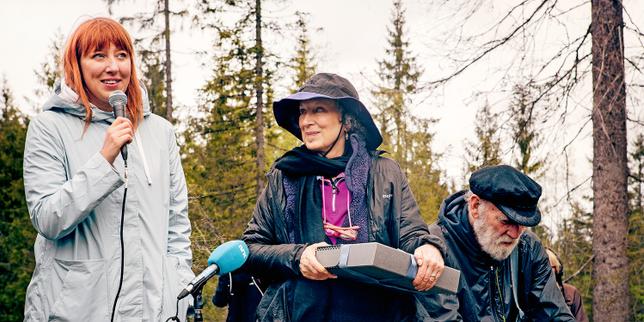
« En 2114, y aura-t-il encore des humains pour lire ? » : à Oslo, un projet vertigineux de bibliothèque du futur
Didier “Ice” Icemanils sont prévoyants