Shared posts

13 Feb 00:12

The legendary Don Rosa explains why he quit comics

by Brigid Alverson

Don Rosa, who drew Disney’s Scrooge McDuck and Donald Duck comics for many years has written a lengthy and fascinating piece on why he gave up creating comics.

Rosa, who started working on the series in early middle age, gave up making comics entirely in 2012 for a variety of reasons, including vision problems caused by a detached retina, depression, and frustration that the studio pays no royalties on his comics — a situation that he says is unique to the comics, as other Disney creators do get royalties. (One possible reason for this is that the Disney comics are produced by freelancers working for third-party companies, not for Disney itself.) That became particularly galling once Rosa was well enough known that the collections featured his name in the title — but he still didn’t see a dime. His response was a clever one: He copyrighted his name so publishers would have to ask his permission to use it to promote the books.

Rosa also explains why he didn’t make the switch to creator-owned comics:

Fans who did know what an unfair system we Disney comics people work in have often said to me “you’ve made a name for yourself now! Why not stop this thankless work and produce comics of some character that you create yourself?” And publishers have often told me they would publish anything I decided to create for them. But my reply has always been “Any character I might create next week… I would not have grown up with that character. I wouldn’t care about him. My thrill is in creating stories about characters I’ve loved all my life.” I’m a fan.

Although his essay is agonizing reading at times, Rosa is clearly comfortable with his decision; he is happily married, has all the money he needs, and relishes retired life. So in a way, the story has a happy ending.

Of course, there’s the matter of Disney behaving, well, like Scrooge McDuck. It’s worth noting that Rosa originally wanted this piece to run as the epilogue to Egmont’s collected edition of his work, but the Disney folks put the kibosh on that. So he published it on the web instead.

If there is something in my text that someone doesn’t wish to be known to the public, it seems to me that inclusion in an expensive book set that has only a few thousand buyers in several different countries would be a rather harmless revelation. But now that text will be on the INTERNET.

Well played, Disney. Well played.

(via Chris Mautner)

13 Feb 00:11

Dallas retailer won’t carry Orson Scott Card’s Superman comic

by Kevin Melrose

Adventures of Superman #1

As the calls grow for DC Comics to drop Ender’s Game author and outspoken gay-rights opponent Orson Scott Card from its digital-first Adventures of Superman, the first retailer has stepped forward to say he won’t order the print edition of the new anthology.

“Zeus Comics will not be carrying the print edition of writer Orson Scott Card’s Superman,” Richard Neal, owner of the Dallas store, wrote this afternoon on his Facebook page. “Card sits on the board of the National Organization of Marriage which fights against marriage equality. His essays advocate the destruction of my relationship, that I am born of rape or abuse and that I am equated with pedophilia. These themes appear in his fiction as well. It is shocking DC Comics would hire him to write Superman, a character whose ideals represent all of us.”

He continued, “If you replaced the word ‘homosexuals’ in his essays with the words ‘women’ or ‘Jews,’ he would not be hired. But I’m not sure why its still okay to ‘have an opinion’ about gays? This is about equality.”

Zeus Comics was the recipient of the 2006 Will Eisner Spirit of Comics Retailer Award, presented to a store “that has done an outstanding job of supporting the comic art medium both in the community and within the industry at large.”

Adventures of Superman debuts online April 29 and in print May 29.

13 Feb 00:10

DC Comics Targeted for Hiring Anti-Gay Author to Write Superman Story

Days after announcing its latest digital-first anthology "Adventures of Superman," DC Comics faces a growing wave of criticism for hiring author and vocal gay-rights opponent Orson Scott Card to write the first chapter.
13 Feb 00:10

OPINION: Orson Scott Card Hiring Sends Mixed Signals to DC Comics' LGBT Fans

In the wake of DC Comics' hiring Orson Scott Card as a writer on "Adventures of Superman," Brett White discusses how damaging the author's anti-gay views are, to the project and society as a whole.
12 Feb 23:28

The Alphabet, An Early Absurdist Film by David Lynch (1968)

by Rusty Blazenhoff

The Alphabet” is an early short film (1968) by director David Lynch which is described on IMDB as a “…woman’s dark and absurdist nightmare vision comprising a continuous recitation of the alphabet and bizarre living representations of each letter.”

via The World’s Best Ever

12 Feb 23:28

Young Leopards Secretly Captured Interacting With a Mirror

by Rusty Blazenhoff

French videographers Xavier Hubert-Brierre and Michel Guiss Djomou secretly filmed two young leopards interacting with a mirror that was placed on the side of a rural forest road near Nyonié in Gabon.

This clip is taken from videos totaling more than 20 minutes. It is with pleasure that we could provide scientists doing research on animal behavior…This mirror consists of 6 small mirrors in poor condition, due to heavy rain and termites, was moved and replaced by a mirror in one piece in october 2012.

Here is a similar video that they also created, in this one chimpanzees interact with mirrors:

via MetaFilter, Neatorama

12 Feb 23:04

TV: Newswire: The real BBC really cancels The Hour 

by Sean O'Neal
firehose

welp

After two seasons that brought us too dangerously close to The Truth, the BBC—the real-life, unsexy one—has canceled its fake-BBC newsmagazine soap opera The Hour, cowardly caving in to pressure from the British government of 1956. The show that followed Dominic West, Romola Garai, and Ben Whishaw as journalists bravely, sexily investigating stories such as the Suez Crisis dropped dramatically in the real-life, unsexy ratings during its second season, down from 2.9 million viewers to just 1.3 million. Unfortunately, unlike the show within the show, there is no competing, fake-ITV newsmagazine with occasional spy subplots that can pick them up.

Also unfortunate: As viewers know, the second season ended with a fairly massive cliffhanger that left the fate of Whishaw’s character uncertain. Barring the announcement of, say, an Hour Christmas special to wrap things up, you’ll just have to imagine what happens—like ...

Read more
12 Feb 23:03

Music: Newswire: Justin Bieber looking for street justice after The Black Keys' drummer disses him

by Marah Eakin

Justin Bieber has put Patrick Carney on blast to his 34 million Twitter followers, after The Black Keys’ drummer made disparaging comments about the pop singer around Sunday night’s Grammy awards. Carney—never one to hold his tongue—told TMZ that Bieber didn’t deserve any Grammys, because “Grammys are for like music, not for money… and he’s making a lot of money. He should be happy.”

Carney apparently hit the singer where it hurts, because earlier today Bieber (Who totally knows how to play drums too, okay?) tweeted that “The Black Key drummer should be slapped around,” adding a “haha,” like he didn’t really want his massive army of tiny minions to actually go all street justice on the Akron-bred Key. Still, that “haha” might not hold up in court should anything really bad go down, especially considering that more than 30,000 Beliebers have already ...

Read more
12 Feb 22:58

Music: Great Job, Internet!: An animated St. Vincent performs “Bad Girls” in front of Bob’s Burgers

by Genevieve Koski

Back in November, The National and Bob’s Burgers gave us something to be thankful for in the form of Matt Berninger crooning “kill, kill, kill, kill the turkey” in the band’s cover of a memorable song from the Fox animated comedy’s Thanksgiving episode. Now the minds behind Bob’s Burgers have extended that concept to create “Bob’s Buskers,” a new web series where musicians—well, their animated counterparts, anyway—set up in front of the Belcher family storefront to perform covers of songs from the show. First up is Official A.V. Club Sweetheart Annie Clark, a.k.a. St. Vincent, performing a song from the second-season episode “Bad Tina” (with the eldest Belcher kid herself contributing a sweet air-mop solo). Clark’s fuzzed-out take on the punky ditty is pretty great, though it’s a shame her cartoon self didn’t don Louise’s bunny ...

Read more
12 Feb 22:57

Comcast to buy rest of NBC stake for $16.7 billion - Reuters

firehose

Kabletown


NPR

Comcast to buy rest of NBC stake for $16.7 billion
Reuters
By Liana B. Baker. Tue Feb 12, 2013 9:01pm EST. (Reuters) - Comcast Corp on Tuesday said it would buy General Electric's remaining 49 percent equity stake in their NBCUniversal joint venture for about $16.7 billion, speeding up a deal that had not been ...
Comcast Buys Rest of NBC's ParentWall Street Journal
Comcast Buys Rest of NBC In Early SaleNew York Times (blog)
Comcast to buy GE's 49% stake in NBCUniversalUSA TODAY
ABC News -Huffington Post -Philadelphia Inquirer
all 115 news articles »
12 Feb 22:57

How the Vatican is like Coca-Cola

by Tim Fernholz

catholic-demographic-projections2

How do you tailor your business for the advanced economies that made you a success and the emerging economies that will provide your future?

When the cardinals select a new pope in the weeks to come, they’ll be weighing the various roles he’ll be called upon to play, but also the future of their organization in a changing world. The Catholic church has seen membership decline in Europe, and would in North America, too, but for immigration from Central and South America, where growth in both church membership and the broader population is strong, as it is in Africa and Asia. Yet there has never been a non-European pope, and the big question is whether the next one will hail from somewhere poorer.

Look at it this way: 75% of Catholics are outside of Europe, but there has never been a pope from outside the continent. Meanwhile, PepsiCo, which sells 47% of its product in emerging markets, has an Indian-born CEO. Indra Nooyi got the job because of her long experience as an executive at the company, but the importance of her national background and experience in global business was lost on no one. Meanwhile, Coca Cola chief executive Muhtar Kent is Turkish-American and got his start as the company’s Central Asia manager.

For the Catholic church, it’s not necessarily a question of theology. The cardinals picking the next pope were largely appointed by the previous two and are likely to pick from a list of like-minded conservative candidates, particularly since ex-Pope Benedict will have some influence on the process.

But there is a question of emphasis: On one hand, “charismatic” Catholics in countries like Brazil are among the fastest-growing groups, but are also a target of similarly-minded evangelical Protestant Christians seeking new converts. On the other hand, in advanced economies a growing proportion of people have no religious faith at all, while scandals and cover-ups have hurt the church’s reputation.

The question for the church is how to simultaneously address the needs of its growing population in emerging markets, where issues of poverty and AIDs are high on the agenda, while realizing that economic development will eventually create some of the same factors there—slower population growth, a more secular culture with a desire for transparent institutions—that are reducing the cultural appeal of the church in the West.

It’s not impossible for the church to appeal to both Europe and Africa; relaxing proscriptions on contraception, for instance, would—for different reasons—make sense in both regions. But change like that would require bold leadership indeed.


12 Feb 22:56

"Not all comfort food transcends cultures. I find it difficult to imagine turning to spam fried rice..."

“Not all comfort food transcends cultures. I find it difficult to imagine turning to spam fried rice to mend a broken heart, or stuffed cabbage to banish winter blues (although this recipe does sound pretty damn good), but I fell in love with the soupy, wholesome qualities of dal on our very first meeting.”

- How to cook perfect dal | Life and style | The Guardian
12 Feb 22:56

"There are 4.7 million barrels of Bourbon aging in Kentucky – the largest inventory since the 1980s...."

“There are 4.7 million barrels of Bourbon aging in Kentucky – the largest inventory since the 1980s. That means there are more barrels of Bourbon in Kentucky than people (4.3 million).”

- Kentucky Distillers Association
12 Feb 22:56

lonelycoast:  

12 Feb 22:55

the-amazing-spidergirl: no-the-fandoms-protested: eternallyador...

by 90s90s90s


the-amazing-spidergirl:

no-the-fandoms-protested:

eternallyadoring:

ordinarybritain:

NO

WHAT EVEN IS THIS

WHO GAVE YOU THE RIGHT

THIS IS NOT OKAY

12 Feb 21:02

When’s it ok to tell a badass black man in New Orleans...


When’s it ok to tell a badass black man in New Orleans he’s “pretty?” When he’s a Mardi Gras Indian! In fact, they demand it. As they chant and strut their stuff, bystanders respond with “Pretty pretty, you SO pretty Big Chief!”

12 Feb 20:52

Film: Newswire: Oliver Twist to be reimagined as a cop movie, addressing Charles Dickens' failure to do that 

by Sean O'Neal
firehose

wot

While there have been other, admirable attempts to update Charles Dickens’ Oliver Twist recently—as the gender-flipped Olivia Twist, in which Ashley Greene joins a gang, and as a “3-D parkour” film in which Dickens’ novel is doused in Red Bull and tossed at various obstacles—none of these have reimagined Dickens’ orphan protagonist as a cop, and thus the story remains as inscrutable as Sanskrit to modern audiences. Fortunately, Ahmet Zappa has devised Dodge & Twist, a Sony film that revisits Oliver and his former pickpocketing rival The Artful Dodger, some 20 years after the point where Dickens bafflingly stopped writing before turning either of them into cops. Zappa’s concept finds Twist and the Artful Dodger—or “Dodge” as he’s known, as a mature adult who does gritty, adult things—now on opposite sides of the law, as Twist attempts to prevent Dodge from stealing the Crown Jewels ...

Read more
12 Feb 20:40

Converting an IBM PCjr joystick to USB

by Mike Szczys

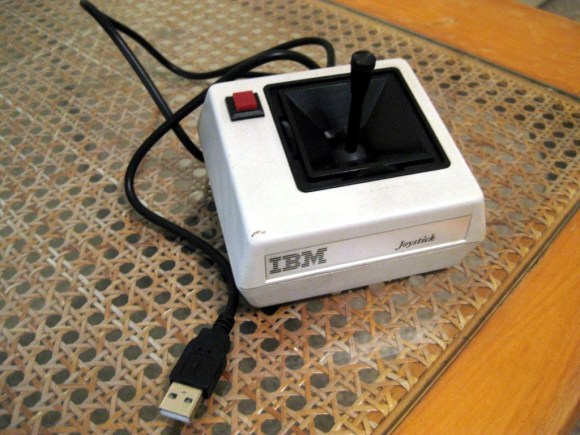
pcjr-joystick-usb-conversion

Seeing this IBM joystick again really brings back memories. But it can be used on a modern system thanks to this USB conversion project.

This particular model had a connector which is foreign to us. It looks like a boxy USB-A plug, but has an eight-pin sockets which looks like it’s 0.1″ pitch. You could try to make your own male connector using a dual-row pin header, but [Gruso] just went ahead and lopped off the end of the cable. He managed to dig up the pin-out for the device and found that it could be wired up to a gameport — the connector being the only real difference. He gutted a USB gameport adapter, removing the DB15 connector and soldering directly to the board. The boxy old peripheral has just enough room to house that PCB.

If you’re looking for a few more details than this build album provides check out [Gruso's] comments in the Reddit thread.


Filed under: peripherals hacks
12 Feb 20:33

How to Save Science: Education, the Gender Gap, and the Next Generation of Creative Thinkers

by Maria Popova

“The skills of the 21st century need us to create scholars who can link the unlinkable.”
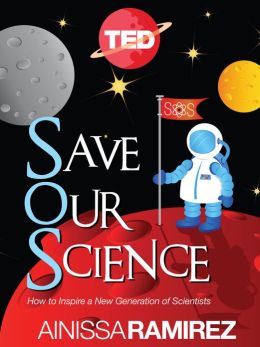
“What is crucial is not that technical ability, but it is imagination in all of its applications,” the great E. O. Wilson offered in his timeless advice to young scientists — a conviction shared by some of history’s greatest scientific minds. And yet it is rote memorization and the unimaginative application of technical skill that our dominant education system prioritizes — so it’s no wonder it is failing to produce the Edisons and Curies of our day. In Save Our Science: How to Inspire a New Generation of Scientists, materials scientist, inventor, and longtime Yale professor Ainissa Ramirez takes on a challenge Isaac Asimov presaged a quarter century ago, advocating for the value of science education and critiquing its present failures, with a hopeful and pragmatic eye toward improving its future. She writes in the introduction:

The 21st century requires a new kind of learner — not someone who can simply churn out answers by rote, as has been done in the past, but a student who can think expansively and solve problems resourcefully.

To do that, she argues, we need to replace the traditional academic skills of “reading, ’riting, and ’rithmetic” with creativity, curiosity, critical-thinking, and problem-solving. (Though, as psychology has recently revealed, problem-finding might be the more valuable skill.)

Ainissa Ramirez at TED 2012 (Photograph: James Duncan Davidson for TED)

She begins with the basics:

While the acronym STEM sounds very important, STEM answers just three questions: Why does something happen? How can we apply this knowledge in a practical way? How can we describe what is happening succinctly? Through the questions, STEM becomes a pathway to be curious, to create, and to think and figure things out.

Even for those of us who deem STEAM (wherein the A stands for “arts”) superior to STEM, Ramirez’s insights are razor-sharp and consistent with the oft-affirmed idea that creativity relies heavily upon connecting the seemingly disconnected and aligning the seemingly misaligned:

There are two schools of thought on defining creativity: divergent thinking, which is the formation of a creative idea resulting from generating lots of ideas, and a Janusian approach, which is the act of making links between two remote ideas. The latter takes its name from the two-faced Roman god of beginnings, Janus, who was associated with doorways and the idea of looking forward and backward at the same time. Janusian creativity hinges on the belief that the best ideas come from linking things that previously did not seem linkable. Henri Poincaré, a French mathematician, put it this way: ‘To create consists of making new combinations. … The most fertile will often be those formed of elements drawn from domains which are far apart.’

Another element inherent to the scientific process but hardly rewarded, if not punished, in education is the role of ignorance, or what the poet John Keats has eloquently and timelessly termed “negative capability” — the art of brushing up against the unknown and proceeding anyway. Ramirez writes:

My training as a scientist allows me to stare at an unknown and not run away, because I learned that this melding of uncertainty and curiosity is where innovation and creativity occur.

Yet these very qualities are missing from science education in the United States — and it shows. When the Programme for International Student Assessment (PISA) took their annual poll in 2006, the U.S. ranked 35th in math and 29th in science out of the 40 high-income, developed countries surveyed.

Average PISA scores versus expenditures for selected countries (Source: Organisation for Economic Co-operation and Development)

Ramirez offers a historical context: When American universities first took root in the colonial days, their primary role was to educate men for the clergy, so science, technology, and math were not a priority. But then Justin Smith Morrill, a little-known congressman from Vermont who had barely completed his high school education, came along in 1861 and quietly but purposefully sponsored legislation that forever changed American education, resulting in more than 70 new colleges and universities that included STEM subjects in their curricula. This catapulted enrollment rates from the mere 2% of the population who attended higher education prior to the Civil War and greatly increased diversity in academia, with the act’s second revision in 1890 extending education opportunities to women and African-Americans.

The growth of U.S. college enrollment from 1869 to 1994. (Source: S. B. Carter et al., Historical Statistics of the United States)

But what really propelled science education, Ramirez notes, was the competitive spirit of the Space Race:

The mixture of being outdone and humiliated motivated the U.S. to create NASA and bolster the National Science Foundation’s budget to support science research and education. Sputnik forced the U.S. to think about its science position and to look hard into a mirror — and the U.S. did not like what it saw. In 1956, before Sputnik, the National Science Foundation’s budget was a modest $15.9 million. In 1958, it tripled to $49.5 million, and it doubled again in 1959 to $132.9 million. The space race was on. We poured resources, infrastructure, and human capital into putting an American on the moon, and with that goal, STEM education became a top priority.

President John F. Kennedy addresses a crowd of 35,000 at Rice University in 1962, proclaiming again his desire to reach the moon with the words, 'We set sail on this new sea because there is new knowledge to be gained.' Credit: NASA / Public domain

Ramirez argues for returning to that spirit of science education as an investment in national progress:

The U.S. has a history of changing education to meet the nation’s needs. We need similar innovative forward-thinking legislation now, to prepare our children and our country for the 21st century. Looking at our history allows us to see that we have been here before and prevailed. Let’s meet this challenge, for it will, as Kennedy claimed, draw out the very best in all of us.

In confronting the problems that plague science education and the public’s relationship with scientific culture, Ramirez points to the fact that women account for only 26% of STEM bachelor’s degrees and explores the heart of the glaring gender problem:

[There is a] false presumption that girls are not as good as boys in science and math. This message absolutely pervades our national mindset. Even though girls and boys sit next to each other in class, fewer women choose STEM careers than men. This is the equivalent to a farmer sowing seeds and then harvesting only half of the fields.

The precipitous drop in girls’ enrollment in STEM classes. (Source: J. F. Latimer, What’s Happened To Our High Schools)

And yet it wasn’t always this way — a century ago, the physical sciences were as appropriate a pursuit for girls as they were for boys, with roughly equal enrollment numbers for each gender at the beginning of the 20th century. So what happened? Ramirez explains:

Several factors caused this decline: First, secondary schools began to offer courses in classics to promote their status and to help prepare girls for college entrance (classics were still needed for college admissions). Unfortunately, the introduction of classics reduced the science offerings. Second, practical learning (or vocational training like home economics) was emphasized at the end of the 19th century, which put another nail in [the] coffin of girls’ STEM access. Third, the role of science changed, particularly physics around the time World War II, when science was deemed a conduit to making weapons. These cultural mindsets pushed girls away from science. In the 1890s, 23 percent of girls were taking physics. By 1955, that number had dropped to less than 2 percent.

Today, we are slowly recovering from this decimation of girls in the sciences. Still, it is important to examine the messaging that rides alongside our efforts to rebuild. While there is discussion of different learning styles between boys and girls, it is important to recognize that they may be linked to this old legacy of prejudice that has morphed in form. Girls can do science and math just as well as boys. Period. In fact, the gender performance gap is narrowing in the U.S.; and in Great Britain, girls have outperformed boys in ‘male’ topics like math and economics. The relationship between girls and science has never been a question about their skill but more a reflection of society’s thinking about them.

In turning toward possible solutions, Ramirez calls out the faulty models of standardized testing, which fail to account for more dimensional definitions of intelligence. She writes:

There is a concept in physics that the observer of an experiment can change the results just by the act of observing (this is called, not surprisingly, the observer effect). For example, knowing the required pressure of your tires and observing that they are overinflated dictates that you let some air out, which changes the pressure slightly.

Although this theory is really for electrons and atoms, we also see it at work in schools. Schools are evaluated, by the federal and state governments, by tests. The students are evaluated by tests administered by the teachers. It is the process of testing that has changed the mission of the school from instilling a wide knowledge of the subject matter to acquiring a good score on the tests.

The United States is one of the most test-taking countries in the world, and the standard weapon is the multiple-choice question. Although multiple-choice tests are efficient in schools, they don’t inspire learning. In fact, they do just the opposite. This is hugely problematic in encouraging the skills needed for success in the 21st century. Standardized testing teaches skills that are counter to skills needed for the future, such as curiosity, problem solving, and having a healthy relationship with failure. Standardized tests draw up a fear of failure, since you seek a specific answer and you will be either right or wrong; they kick problem solving in the teeth, since you never need to show your work and never develop a habit of figuring things out; and they slam the doors to curiosity, since only a small selection of the possible answers is laid out before you. These kinds of tests produce thinkers who are unwilling to stretch and take risks and who cannot handle failure. They crush a sense of wonder.

Like Noam Chomsky, who has questioned why schools train for passing tests rather than for creative inquiry, and Sir Ken Robinson, who has eloquently advocated for changing the factory model of education, Ramirez urges:

While scientists passionately explore, reason, discover, synthesize, compare, contrast, and connect the dots, students drudgingly memorize, watch, and passively consume. Students are exercising the wrong muscle. An infusion of STEM taught in compelling ways will give students an opportunity to acquire these active learning skills.

Reminding us, as a wise woman recently did, that it’s only failure if you stop trying and that “failure” itself is integral to science and discovery, with fear of failure an enormous hindrance to both, Ramirez writes:

In STEM, failure is a fact of life. The whole process of discovery is trial and error. When you innovate, you fail your way to your answer. You make a series of choices that don’t work until you find the one that does. Discoveries are made one failure at a time. One of the basic tenets of design and engineering is that one must fail to succeed. There are whole books written on this topic. In civil engineering, every bridge we’ve traveled across was built upon failed attempts that taught us something (and cost many lives). It was all trial and error. Scientists fail all the time. We just brand it differently. We call it data.

She acknowledges our disheartening collective attitude towards math — which, as we’ve seen, is actually full of whimsy and playful fascination — and laments:

More broadly, as a society we tacitly acknowledge that its OK to be bad at math. … Our cultural attitude toward math creates an impossible job for math teachers, because their students arrive prepared to be bored and confused.

This isn’t just an anecdotal observation. Ramirez points out that math is one of the top three reasons why college students drop out of STEM majors — in fact, more than 60% of students who set out to major in STEM fail to graduate with a STEM degree, and the tendency is even more pronounced among women and minorities, who collectively constitute 70% of college enrollments but a mere 45% of STEM degrees. (And that’s today: When Ramirez herself graduated with a doctorate in engineering from Stanford, she was one of only ten African-American engineering doctorates that year in the entire country, and a handful of women.)

Ramirez goes on to propose a multitude of small changes and larger shifts that communities, educators, cities, institutions, and policy-makers could implement — from neighborhood maker-spaces to wifi hotspots on school buses to university science festivals to new curricula and testing methods — that would begin to bridge the gap between what science education currently is and what scientific culture could and should be. She concludes, echoing Alvin Toffler’s famous words that “the illiterate of the 21st century will not be those who cannot read and write, but those who cannot learn, unlearn, and relearn”:

The skills of the 21st century need us to create scholars who can link the unlinkable. … Nurturing curious, creative problem solvers who can master the art of figuring things out will make them ready for this unknown brave new world. And that is the best legacy we can possibly leave.

Save Our Science — which comes from TED Books on the heels of neuroscientist Tali Sharot’s The Science of Optimism, wire-walker Philippe Petit’s Cheating the Impossible, and the lovely illustrated six-word memoir anthology Things Don’t Have To Be Complicated — is excellent in its entirety and, at a mere $3, a must-read for anyone remotely interested in the future of scientific culture. (Which, as Richard Feynman is always there to remind us, should be everyone, since science is culture.)

Donating = Loving

Bringing you (ad-free) Brain Pickings takes hundreds of hours each month. If you find any joy and stimulation here, please consider becoming a Supporting Member with a recurring monthly donation of your choosing, between a cup of tea and a good dinner:


♥ $7 / month♥ $3 / month♥ $10 / month♥ $25 / month


You can also become a one-time patron with a single donation in any amount:


Brain Pickings has a free weekly newsletter and people say it’s cool. It comes out on Sundays and offers the week’s best articles. Here’s what to expect. Like? Sign up.

Brain Pickings takes 450+ hours a month to curate and edit across the different platforms, and remains banner-free. If it brings you any joy and inspiration, please consider a modest donation – it lets me know I'm doing something right. Holstee

12 Feb 20:31

Former Student Sues University over C+ Grade

by Andrew Johnson

A former Lehigh University graduate student is suing her alma mater over a bad grade, claiming it prevented her from pursuing her preferred career, according to The Morning Call, an Allentown, Pa., newspaper. After getting a C+ that prevented her from taking a required class, 27-year-old Megan Thode is suing the university, her teacher, and the program director for $1.3 million in damages for breach of contract and sexual discrimination.

In the final year of her counseling and human-services master’s, Thode’s grade was below the B she needed to take the next course for her degree. Her teacher, Amanda Carr, gave Thode a zero in the participation portion of her grade because, by “show[ing] unprofessional behavior that included swearing in class” and “having an outburst in which she began crying,” Thode demonstrated that she was “not ready to move on.”

Keep reading this post . . .

12 Feb 19:25

maddierose: Kevin Wang & HVRMINN chilling at HVRMINN...


maddierose:

Kevin Wang & HVRMINN chilling at HVRMINN studio

Both in HVRMINN Double Breasted Peaked Lapel Glen Plaid Suits

Photo by Florian Koenigsberger

12 Feb 19:25

Photo


12 Feb 19:24

tumblr_mgjal7rTSU1r3gb3zo1_400.gif (320×180)

by dchk
12 Feb 19:23

“When I had long hair, people seemed pretty sure they knew...


“When I had long hair, people seemed pretty sure they knew what I was about as soon as they met me. I sort of enjoy the uncertainty now.”

12 Feb 18:56

blissfulsirensong: love-and-radiation: I need to reblog this...


blissfulsirensong:

love-and-radiation:

I need to reblog this when I see it.

I wish someone had taught me how to sword fight. I had two stoopid brothers who should have.

:)  I only made it to bo staff.  Swords are way too short.

12 Feb 18:55

How to walk on ice

12 Feb 18:54

Go ask Alice

12 Feb 18:53

tastefullyoffensive: How chicks put on lipstick[via]


tastefullyoffensive:

How chicks put on lipstick

[via]

12 Feb 18:52

faerieeglow: WE ALL SCREAM FOR ICE CREAM! FUCKING CHRIST


faerieeglow:

WE ALL SCREAM FOR ICE CREAM!

FUCKING CHRIST

12 Feb 18:52

Adobe Bows To Pressure and Cuts Australian Prices

by timothy
firehose

lolol

An anonymous reader writes "Software giant Adobe has bowed to public pressure and slashed the price of some of its products for Australian customers a day after being ordered to front a parliamentary committee hearing to explain its excessive charges."

Share on Google+

Read more of this story at Slashdot.