Shared posts

30 May 19:52

Gender-swapping superhero's creator responds to right-wing backlash

by Charlie Jane Anders
firehose

I don't even

Gender-swapping superhero's creator responds to right-wing backlash

In SheZow, a 12-year-old boy accidentally puts on a magic ring that turns him into a female superhero, known as SheZow. It's an excuse for lots of fish-out-of-water comedy and some personal growth. Or, if you're Breitbart News, it's a left-wing conspiracy. We talked to SheZow's creator about the controversy.

Read more...


30 May 19:51

Let’s play Doctor

30 May 19:22

Animal Crossing x Daft Punk: “Get Lucky” ft. K.K....

by ericisawesome
firehose

awwww yisssss


Animal Crossing x Daft Punk: “Get Lucky” ft. K.K. Slider

This neat mash-up comes from Alex Romero, who also posted a download link for the song here.

Oh yeah, there’s also a neat tribute album coming out on June 9 (the same day New Leaf drops) called Animal Crossing: K​.​K. and Friends — it’s surprisingly great, based on the few tracks posted online so far!

PREORDER Animal Crossing: New Leaf, AC:NL guide, upcoming games
30 May 19:22

Vietnamese Pork Meatball and Noodle Salad (Bun Cha)

by OnlyMrGodKnowsWhy

#wouldeat

Vietnamese Pork Meatball and Noodle Salad (Bun Cha)-photo SERVES 4

INGREDIENTS

FOR THE PORK:
2 tablespoons sugar
5 tablespoons water
1 pound ground pork
1 large shallot, minced as small as possible
3 tablespoons fish sauce
¼ teaspoon freshly ground black pepper

FOR THE SAUCE:
2 tablespoons fish sauce
2 tablespoons rice vinegar
1 teaspoon brown sugar
1½ cups water
½ teaspoon minced or grated garlic
1 red Thai chile, minced
2 tablespoons green papaya, cut into small, thin slices, about ¼ inch (optional)

FOR SERVING:
1 pound thin rice noodles
½ head red leaf lettuce, torn into small pieces
2 cups, loosely packed, of a selection of Asian herbs, including any of the following: cilantro, perilla, mint, sawtooth coriander, ngo herb

INSTRUCTIONS

1. In a small saucepan, combine the sugar with 3 tablespoons water and cook over high heat until a dark brown caramel forms, about 8 minutes. Remove from the heat and add 2 tablespoons cold water, swirling the pot.

2. In a large mixing bowl, combine the pork, shallot, fish sauce, caramel sauce, and pepper, and marinate in the refrigerator for 1½ hours.

3. Meanwhile, combine all ingredients for the sauce in a large mixing bowl.

4. When the pork is through marinating, remove from the refrigerator and shape into small patties, about 15 to 20 in all. Heat a charcoal grill or a broiler to high. Bring a pot of water to a boil and cook the noodles according to the directions on their package. Drain, then rinse under cold water to halt the cooking process.

5. Meanwhile, grill or broil the pork patties until fully cooked and slightly charred, about 4 minutes per side.

6. Spoon the sauce into four bowls, then place the pork patties over the sauce. Place the herbs and lettuce in one large communal bowl and the noodles into another large communal bowl. To eat, dip some of the noodles into the sauce and eat with the patties and herbs.


Original Source

30 May 19:21

EA eliminating Online Pass on existing games

by Jessica Conditt
As EA discontinues its Online Pass system for future games, existing passes are also getting the axe, making some content and even full games free, first on Xbox 360. Over the coming weeks, EA will get rid of Online Passes in its games, corporate communications rep John Reseburg tells Game Informer.

"As we discontinue Online Pass for our new EA titles, we are also in the process of eliminating it from all our existing EA titles as well," Reseburg says. "We heard the feedback from players and decided to do away with Online Pass altogether."

When the rollout is complete, EA Sports games will no longer prompt players to enter an Online Pass code, and other games will offer content for free, Reseburg says.

NeoGaf member MMaRsu compiled a list of Xbox 360 EA games that already offer free content once barred by the Online Pass, including a free copy of the original American McGee's Alice, Bad Company 2 VIP, Mass Effect 2: Cerberus Network, and more, listed in full below.

Continue reading EA eliminating Online Pass on existing games

JoystiqEA eliminating Online Pass on existing games originally appeared on Joystiq on Thu, 30 May 2013 14:00:00 EST. Please see our terms for use of feeds.

Permalink | Email this | Comments
30 May 18:42

Tumblr launches first in-stream sponsored posts on web following mobile rollout

by Ellis Hamburger

Just over one month ago, Tumblr introduced in-stream mobile ads, and today, it's bringing the same ads to its website. The "sponsored posts," as they're called, often take the form of Tumblr-friendly images like GIFs of a scene from The Great Gatsby, or an animation of a GE jet engine. The sponsored posts on mobile have already racked up 10 million likes and reblogs thus far, Tumblr says.

Developing...

30 May 18:20

TV: Great Job, Internet!: Here’s a poster of every hat Frank wore on 30 Rock

by Kevin McFarland

Frank Rossitano’s hats were some of the best little recurring gags throughout the entire run of 30 Rock. Every time the TGS writer showed up, Judah Freidlander’s character had yet another homemade trucker hat plastered with a phrase he made up. Graphic designer Jon Skaggs combed every 30 Rock episode and created a poster featuring every single one of the 204 hats Friedlander wore on the show. It’s not quite as polished as, say, that Game Of Thrones sigil poster, but it’s a damn fine collection of clever phrases on trucker hats. There will be a print run of the poster soon, so if this is up your alley, be sure to take note for when it goes on sale.

And in case that’s not enough Frank for one day, here’s a video compilation of every Rossitano hat, set to the RAC remix of ...

Read more
30 May 18:20

Film: Newswire: Kon-Tiki directors given the biggest boat movie of them all in Pirates Of The Caribbean 5

by Sean O'Neal
firehose

huh

Having landed a Best Foreign Language Film nomination for last year’s Kon-Tiki, which dramatized Norwegian explorer Thor Heyer’s dramatic journey across the Pacific on a small raft, directors Joachim Rønning and Espen Sandberg have been rewarded with another boat movie. Indeed, the biggest boat movie of them all, Disney’s Pirates Of The Caribbean 5: Johnny Depp Is Still Drunk On A Boat On Misty Rolling Tides Of Intrigue Or Whatever, which the duo landed after considerable competition from directors like Rupert Sanders. “It’s a case of these guys getting hot at exactly the right time,” Deadline says by way of explaining Disney’s attraction to them, because Disney is shallow like that. Also, “they made a lot of movie with a little money and showed they knew how to shoot on the water,” at least one of which is a concern for making any Pirates ...

Read more
30 May 18:19

7 Bad Storytelling Habits That We All Learned from Superhero Comics

by Charlie Jane Anders
firehose

"Grim and angsty = tough and sophisticated"
"Female characters are just love interests or distaff versions of the men"
retcons

7 Bad Storytelling Habits That We All Learned from Superhero Comics

Today's escapist storytellers share a rich legacy, from classic TV to great SF novels. But most of us also guzzled superhero comics during our formative years. And the writing of Stan Lee, John Byrne and countless others shaped us, in good ways and bad. Here are seven story pitfalls we picked up from classic superhero comics.

Read more...


30 May 18:18

Little Free Library, A Tiny Library on Stilts in Manhattan

by EDW Lynch

Little Free Library by Stereotank

This curious cylinder on stilts is a Little Free Library located at St. Patrick’s Old Cathedral School in Manhattan. The library has portholes built into its walls so visitors can peek in (or out). Inside, a shelf holds a small selection of books for borrowing. Designed by Marcelo Ertorteguy and Sara Valente of Stereotank, the library is 1 of 10 different designs that were built in New York City as part of the recent PEN World Voices Festival of International Literature, in a project organized by the The Architectural League. The 10 Manhattan libraries are part of the ongoing Little Free Library project. Stereotank’s library is scheduled to remain open until September 2013.

Little Free Library by Stereotank

Little Free Library by Stereotank

via designboom

30 May 18:16

This is not a love song

30 May 18:14

‘They just won’t give him the time of day’

by Kevin Melrose
firehose

as much as I want to like Lady Sabre, for some nebulous reason it's the art that puts me off
but hey, that's why I'm not a pro

lady sabre“The Big Two don’t like Rick’s work. It’s as simple as that. In the last ten years, he’s gone from being able to work steadily at Marvel Comics and DC Comics to not being able to get hired. They just won’t give him the time of day.

Rick is one of the most accomplished artists I’ve ever worked with. He’s known primarily for winning Eisners doing Batman & Robin Adventures where Rick himself says that he was paid to draw like Bruce Timm. So, I think for a lot of people there is a sense that he’s too cartoony, his style doesn’t fit in with what the big two want; it’s not sexy or flashy enough. He has a very distinct comic book style, he doesn’t do photo-realistic. Everything he draws, he can draw it. It’s not light-boxing here.

I know at least one editor who went to great lengths to make sure he wouldn’t work at one company and really set him up to fail and did so gleefully. Comics are like any other industry; there are wonderful people in it and there are crappy people in it.”

Greg Rucka, discussing his collaborator, and longtime friend, Rick Burchett, and their reasons
for taking the online route with 
Lady Sabre & the Pirates of Ineffable Aether

30 May 18:10

How To Prevent An Astronaut Bloodbath On Mars

firehose

just throw a Kinect in there

To protect the psyches of future space travelers, NASA might deck them out in wearable sensors that spot meltdowns before they happen.
30 May 18:10

The Secret Button At Pedestrian Crossings

firehose

tl;dr: spinning cone under UK pedestrian crossing boxes for visually impaired

Few seem to know about this useful little device, which is surprising because in many areas of the country it can be found on every street... and it saves lives.
30 May 18:09

Using unorthodox tricks (a.k.a. hacking)

by sharhalakis

image by gram

30 May 18:07

Even without Card comic, stores raise funds for Freedom to Marry

by Brigid Alverson

adventures of superman1aThe February announcement that Orson Scott Card would write a chapter of DC Comics’ new digital-first Adventures of Superman anthology sparked controversy in some circles, as readers and retailers objected to the sci-fi author’s anti-gay activism. Card isn’t just an outspoken opponent of same-sex marriage, he is a board member of the National Organization for Marriage, a group that lobbies against marriage equality.

At the time, several retailers announced they would not carry the comic, while others felt that refusing to carry the title would be tantamount to censorship.

The Comic Bug in Manhattan Beach, California, figured out a graceful way around the controversy: It would sell Card’s comic and donate 100 percent of the proceeds to the group Freedom to Marry, which supports legalization of same-sex marriage nationwide. The owners of Illusive Comics and Games, in Santa Clara, decided to do the same. And then DC got a reprieve of sorts, when artist Chris Sprouse dropped out of the project and Card’s story was postponed indefinitely.

The first issue of Adventures of Superman was released this week with some fanfare but no controversy. Nonetheless, the co-owners of The Comic Bug, Jun Goeku and Mike Wellman, will donate 20 percent of this week’s profits to Freedom to Marry, and Illusive will do the same.

“The customers who shop at The Comic Bug are from all walks of life and with this week’s fundraiser, we want to let them know that we embrace them all,” Goeku told The Beach Reporter. Both shops will also have a jar for customers who want to make a further donation to the cause.

30 May 18:06

Ortelius’ Map of the Americas (1584)

by the59king
firehose

pirate maps pirate maps pirrrrrrate maps

Ortelius’ Map of the Americas (1584)

EVWWuqouIXICzgxo_TTPeruuiae avriferæ regionis typus / Didaco Mendezio auctore. La Florida / auctore Hieron Ortelius' Map of the Central Americas (1584) Date: 1584 Author: Abraham Ortelius Dwnld: Full Size (6.40mb) Source: Library of Congress Print Availability: See our Prints Page for more details pff This map isn't part of any series, but we have other maps of Central America that you might want to check out. Another work by Flemish mapmaker...

the BIG Map Blog - Interesting maps, historical maps, BIG maps.

30 May 18:05

Google Play Music All Access coming to iOS

by Jacob Kastrenakes

[% } %] [% if (data.comment.user.membership && data.comment.user.membership.short_bio) { %]

[% } %] [% if (data.comment.user.profile_url) { %]

[%=data.comment.user.display_name%]

[% } else { %]

[%=data.comment.user.display_name%]

[% } %] [% if (data.comment.user.membership && data.comment.user.membership.short_bio) { %]

[%= data.comment.user.membership.short_bio %]

30 May 18:05

Grumpy Cat Gets Hollywood Movie Deal

by Rusty Blazenhoff
firehose

great

Stipple portrait

Grumpy Cat’s Wall Street Journal stipple portrait

Deadline Hollywood is reporting that Grumpy Cat’s manager Ben Lashes and her rep Al Hassas have cut a movie deal with Todd Garner and Sean Robins of Broken Road Productions “to produce and assemble a package for a Garfield-like feature film with the famous frowning feline at the center.” Lashes was featured in The Wall Street Journal, alongside a stipple portrait of Grumpy Cat, where he discusses the other deals he’s helped make for her including a line of Grumpy Cat coffee-in-cans and bottled beverages and a forthcoming book titled, Grumpy Cat: A Grumpy Book: Disgruntled Tips and Activities Designed to Put a Frown on Your Face. Grumpy Cat was recently awarded the 2013 Webby Award for Meme of the Year.

image and video via The Wall Street Journal

30 May 18:04

Intel HD 2000/2500/3000/4000 Linux OpenGL Comparison

firehose

better than I expected; looking forward to Haswell

For seeing where the current OpenGL driver performance stands for Intel's open-source Linux graphics driver on Sandy Bridge and Ivy Bridge processors, the very latest Linux kernel and Mesa development code were tested across four different processors to stress the HD 2000, HD 2500, HD 3000, and HD 4000 graphics capabilities atop Ubuntu.
30 May 18:03

The fall of Game Republic

by Matt Leone

By Matt Leone
on May 30, 2013 at 12:30p

Former Capcom icon Yoshiki Okamoto opens up about the collapse of developer Game Republic.

In 2003, Yoshiki Okamoto hit a wall.

A veteran of game developer Capcom, he'd designed classic arcade titles like 1942 and Forgotten Worlds. He'd managed hits like Final Fight and Street Fighter 2. He'd worked his way up and overseen most everything Capcom produced. He'd spun off a small company and had a hand in Nintendo's much beloved Zelda franchise. And he needed a change.

So Okamoto founded what would become one of the largest independent development studios in the world, Game Republic, at its peak topping 300 people on staff. He had a nine-year plan, he later told website Gamasutra: the company would focus its first three years on hiring, the middle three on improving the quality of its work and the final three on becoming profitable.

"It's generally understood in the [Japanese] market today that a company can start producing interesting games in its fourth, fifth and sixth years, but still not turn much of a profit," he said. "The company is supposed to start making money in years seven through nine."

But when year seven came around in 2011, almost 30 years to the day after Okamoto started his first job in games, Game Republic shut its doors.

Japanese website G-Dash reported rumors that he had accumulated massive debt, borrowed funds from shady organizations and fled the country. Okamoto posted on his personal blog about moving to a small apartment, translated by website Kotaku at the time as "far from the station and the type of place you'd expect roaches to scurry out from." Then his blog went offline and Okamoto disappeared, without a public statement or explanation.

Looking back two years later, Okamoto says the story's not quite as scandalous as it sounds.

The game show contestant

The game show contestant

Meeting with Okamoto in 2013, he appears relaxed. With the same dollop of hair in the back that became his trademark in the '90s, he's wearing an Abercrombie and Fitch T-shirt, cargo pants and a letterman jacket — looking like a teenager in an adult's body, having recently turned 50.

Perpetually two seconds from telling a joke or bursting into laughter, Okamoto's tone can make it hard to determine whether he's telling the truth or trying to impress the foreigner in the office (or the female translator). Those who have worked with him say this isn't a show he puts on in interviews; he's generally more concerned with getting a laugh than being misquoted or misunderstood.

ThirdOkamoto is perpetually two seconds from telling a joke or busting into laughter.

"There are so many funny Okamoto stories to share," says Platinum Games' president Tatusya Minami before going into an anecdote about a time Okamoto got sick on a fishing trip and Minami asked for a raise.

"He's probably one of the maddest people I've ever met, and that includes people whose language I understand," says former agent Michael Wiesmuller, who describes Okamoto as "enigmatic" and "gossiped-about." "His staff [looked] up to him as if he was a guru or Svengali."

Okamoto's personality has long made him a magnet for gossip and urban legends. Like the time his boss fired him early in his career for disobeying an order and making a shooter instead of a driving game. Or the time his co-workers and family members crashed five of his cars in six months.

Asked about the validity of these stories, Okamoto becomes a game show contestant, putting his arms above his head in a circle to signify "true" and crossing them for "false."

Those two mentioned above? O.

Working on a Tom and Jerry game in the final days of Game Republic? X.

Having a long distance relationship with his now ex-wife? O.

Getting caught on Capcom premises receiving oral sex from a woman dressed as Street Fighter's Chun-Li? X.

Dressing in near-blackface to interview famous-for-being-tan game designer Toshihiro Nagoshi? And taking Western business partners to a topless bar, tricking the dancers to yell "vagina" at them in English while tricking the foreigners to yell "I want to fuck you from behind" in Japanese? According to Okamoto both are true.

"I'm not well in the head," he says.

The biggest urban legend

The biggest urban legend

"I was never chased by the yakuza, but there is a lot of debt."

When the interview turns to Game Republic, Okamoto forfeits the O/X game show structure in favor of a serious tone. He gives shorter answers, tells fewer jokes.

Clearing the air on his biggest urban legend to date, he says the rumors surrounding Game Republic's demise are partially true, but exaggerated: There were no shady investors, and he never had to leave town.

"I was never chased by the yakuza," he laughs. "But there is a lot of debt."

He gives the total: $14 million, accumulated over the course of several projects.

One game in particular brought in the biggest debt, he says. Asked about it, Okamoto covers his face with his hands and becomes slow to reply.

Launching Game Republic

Launching Game Republic

When Okamoto launched Game Republic in 2003, he had options. His reputation enabled him to find funding and make deals that fit two specific demands: he didn't want to repeat what he'd done at Capcom, and he didn't want to work for Capcom's direct competitors.

Initially, he says many companies offered him work similar to what he'd done previously.

ThirdGame Republic was a rare studio working with two console competitors.

"When a company approaches us to do work, they'll always say something like, 'Let's make a game where you shoot zombies' [like horror franchise Resident Evil] or 'Let's make a fighting game' [like Street Fighter] — in essence, something related to what I've done in the past," he told website 1UP in 2007. "[I've] actively avoided those games, and that's the reason I had a tough time in the beginning."

The other hurdle was that Okamoto, out of respect for Capcom, initially wanted to work with first-party console providers rather than third-party competitors like Namco Bandai or Konami.

Game Republic was able to sign a series of deals for original titles with both Sony and Microsoft — making it a rare studio working with two console competitors.

The team signed action game Genji: Dawn of the Samurai and others with Sony, and board game Every Party with Microsoft. Okamoto oversaw the company, rather than directing or producing any games specifically.

While the studio found work in its first few years, not everything went smoothly. None of the group's games were overly successful, and a setback proved costly when Microsoft canceled a second Xbox 360 game the studio had been designing. Okamoto told 1UP that following the cancellation, the team spent nine months continuing work on that project with its own money in the hopes that Microsoft would see the progress and come around, but it didn't work.

"For a company just starting out, it was a huge loss," he said. "I know now that this was a major mistake for us and a bad move for our company early on."

Okamoto and team began to look for new publishing partners. And the one they found would mark the beginning of the end for the studio.

Brash Ent.

Brash Entertainment

Around the time Okamoto widened his publisher search, a small group in Los Angeles was forming an idea for a new kind of game publisher. Brash Entertainment was to be the first publisher focused exclusively on licensed games, most based on movies and television shows. One of its founders was Thomas Tull, also CEO of production house Legendary Pictures, responsible for films such as Batman Begins and The Hangover.

"Brash is founded on the simple premise that top Hollywood creativity plus top game talent should equal great games," said CEO Mitch Davis in a press release.

In June 2007, Brash announced a $400 million funding deal, putting 12 games into production and acquiring the rights to 40 entertainment industry licenses, making it an aggressive competitor to publishers like Activision and Electronic Arts in the licensed game category, despite housing a much smaller staff. Most of the deals involved hiring developers who could produce work relatively cheaply, and to Brash, signing Game Republic meant signing a high-end client.

Fifth
"It cost us around $2 million to run the company each month."

It wasn't what Okamoto envisioned when he started Game Republic, but it was new territory. Something different than what he'd done at Capcom. And it wouldn't turn out well, ending up as what Okamoto calls the single biggest factor in bringing Game Republic to an end.

But in the early days, those involved say the deal looked promising.

"Brash was talking about they wanted to work exclusively with Game Republic, and I said, 'They've got 200 people sitting there, plus another hundred in students [helping], so it'll take a few projects to keep them busy,'" says Michael Wiesmuller, who introduced the two companies and represented Game Republic as an agent. "So they went, 'Well all right, find some.'

"They loved Game Republic so much. They wanted Game Republic to do every single project they had on their books. Literally, we were talking about 10 projects for some time that would be a possibility."

Clash of the Titans quickly surfaced. Conceived as a game based on the classic film and later converted into a game tied in with the 2010 remake, Okamoto and team signed on to make it an action game similar to Genji. It went on the books initially for $10 million, one of Brash's biggest bets.

Progress went well enough that midway through development Brash signed Game Republic to a second game — 301, based on the 300 film, which would follow the surviving warrior mentioned in the movie's credits — and discussed plans for titles based on the Elric fantasy novels and the 300 sequel Rise of an Empire.

"[That's] how Hollywood is — they're typecast very quickly," says Wiesmuller. "'They did something with spears and Greek people, so hey, let's find some more stuff with spears and Greek people.'"

When it came time to reveal Clash of the Titans publicly, Brash put on a show. At a press event in January 2008, the company teased it as a surprise encore at the end of a presentation, making a splash out of a trailer without revealing the title, and only giving a "2010" release date. Many guessed it was Clash of the Titans, yet in March, when Brash revealed Game Republic as the mystery game's developer, it still didn't mention the franchise by name.

Then in November, before Brash had a chance to make Clash of the Titans official, the publisher shut its doors.

Asked about it, Okamoto's hands cover his face. This was the moment, he says in retrospect, that hurt Game Republic the most.
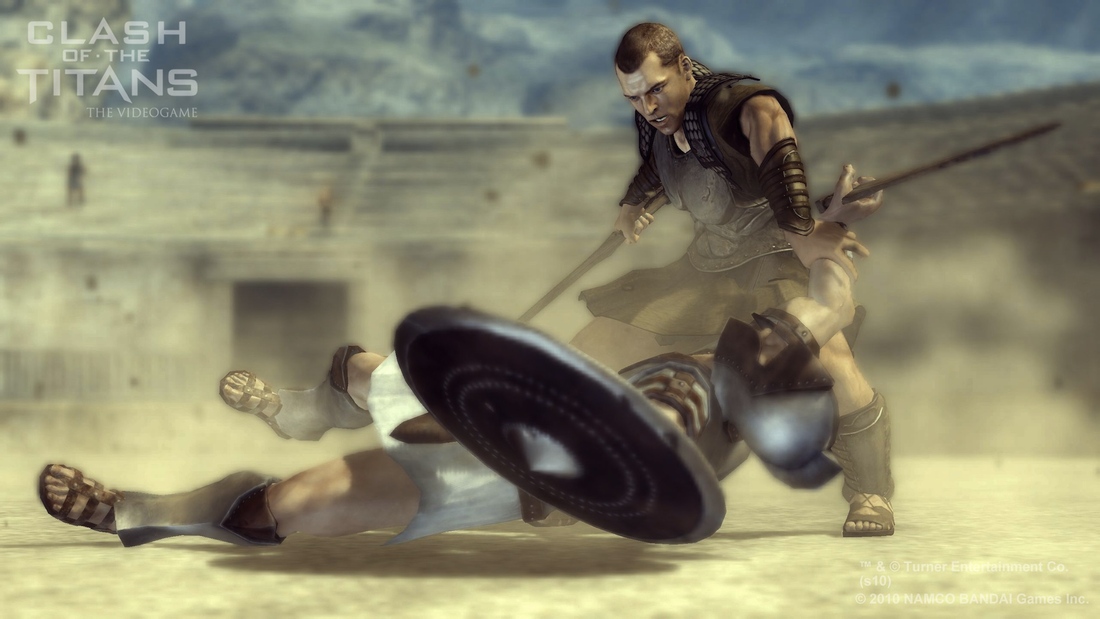
Clash of the Titans

Sources familiar with Brash blame the publisher's collapse on funding not coming through as expected. As a result, many teams under contract with Brash ran into trouble, with missed milestone payments and cancellation fees.

"We were working on milestones, and after the milestones got approved we were supposed to get paid," Okamoto says. "But Brash didn't have the money, so that turned into debt. It cost us around $2 million to run the company each month, and that added up over time."

Okamoto's voice quiets when he describes the situation, saying it would have been better had Brash canceled the contract, but the publisher going out of business added debt. Brash filed for an alternative to bankruptcy known as an "assignment for the benefit of creditors," which meant that the legal administrator asked every developer that had worked for Brash to repay money received in the previous 90 days.

Developer ZootFly, which developed a game based on the Prison Break television series, found itself in a similar situation to Game Republic and sued Brash, only to later consider itself lucky to owe $50,000 instead of the $1 million it would have owed for 90 days of payments. "In the context, that was a good outcome, but in the big scheme of things, it was horrible for us and not expected at all," says former ZootFly CEO Bostjan Troha.

In the wake of Brash's troubles, various studios — such as 7 Studios, Bottlerocket and Factor 5 — closed. "That's somewhat Brash's fault, but it's also the developers' fault for [not having other options]," says a former Brash executive who declined to be named. "If you're too dependent on a brand-new publisher with speculative funding, well, you're taking some risk. But you know, a developer's only as good as the deals they can get. So if they had a better deal with EA, then they wouldn't have been talking to us in the first place."

"It's a sad story and a lot of people got burnt," says ZootFly's Troha. "A lot of good studios closed, and it's a shame. And it's not the first one and it's not the last one, definitely."

Okamoto, however, isn't bitter about what happened, going so far as to praise people he worked with at Brash. "Brash actually tried really hard not to go under, and they went to a lot of effort to not put us in a bad situation," he says, "so I don't have hard feelings towards them."

A life boat

A life boat

Unlike some studios, Game Republic was able to keep itself afloat in the years following Brash's demise. Okamoto and his team self-published downloadable games and returned to their Japanese third-party publishing roots, signing multiple deals with Capcom-competitor Namco Bandai, known for fighting franchises like Tekken and anime-licensed Naruto and Dragon Ball games.

First up: selling the remains of what the team had developed for Brash.

Namco Bandai picked up Clash of the Titans and saw it through the end of production.

"I've been involved with the Clash of the Titans project since the movie itself was in talks," Okamoto told Famitsu magazine in 2010. "So it's been under development for a pretty long time ... I never even imagined I'd get to see the game through to where it is today." [Note: While the full quote at that link credits Okamoto saying much of Clash of the Titans' funding came from investment firm Lehman Brothers, which went out of business around the same time as Brash, Okamoto tells Polygon Lehman Brothers had no involvement.]
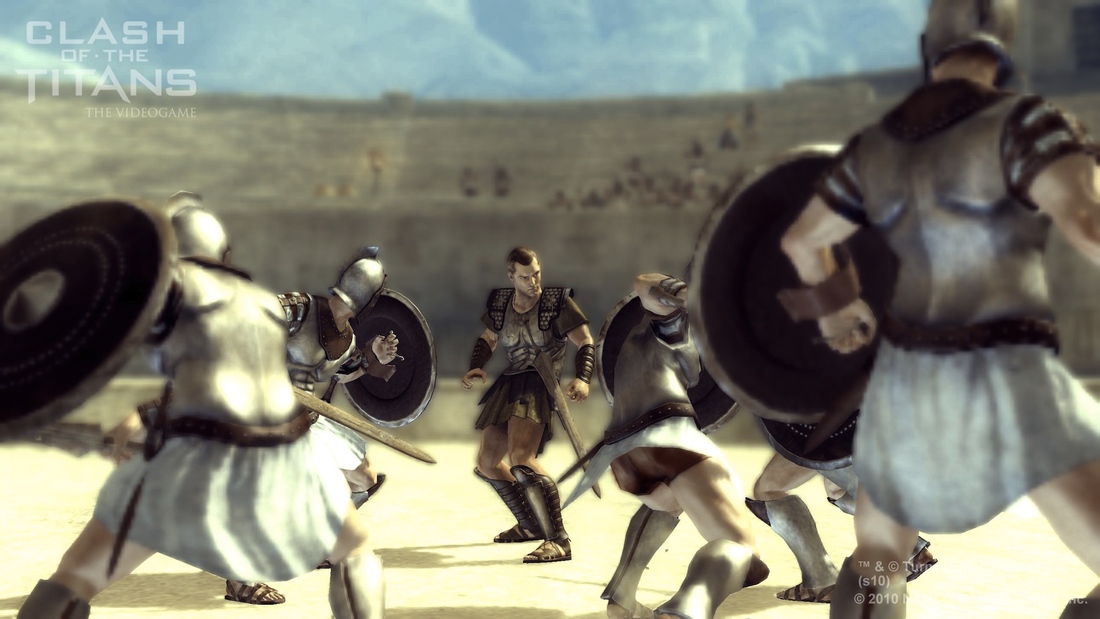
Clash of the Titans

Former Namco Bandai brand manager Brad Stradling says the publisher's U.S. division viewed the game optimistically at first, rather than as another company's leftovers. But as development delays hit the project, it became a struggle to regain player interest.

"That was one of the big problems with the game — it wasn't ready," says Stradling. "It actually got pushed out, so the theatrical release came and went and we ended up syncing the release of the game with the DVD, which is always bad news."

Namco Bandai later announced that Clash of the Titans sold less than 40 percent of its projections in its first three months on the market.

For 301, Game Republic wasn't able to find a new partner — in part because Brash never officially owned the license. Brash executives assumed it would come through since Brash co-founder Thomas Tull ran 300 license-holder Legendary Pictures, but the papers had never been signed, making it difficult to sell.

Game Republic signed more deals with Namco Bandai for a mix of licensed Dragon Ball Z games and original titles such as Majin and the Forsaken Kingdom and Knights Contract. Okamoto's strategy was to pitch new games to Namco as franchises that could each grow into multiple titles, but none sold well enough for that to pan out.

The debt grew to the point that Okamoto had to throw in the towel.

Taking blame

Taking blame

In 2011, Okamoto laid off most of Game Republic's staff, shut down his blog and watched the rumors appear online.

Officially, he says, the company still exists, though basically just on paper — he's keeping it afloat because he hopes to repay the debt at some point. He's the only employee and he's no longer working under the company name, describing it as "frozen" and in "sleep mode."

In retrospect, Okamoto takes the blame for Game Republic failing. Largely, he says, it was an issue of him not being able to find the right deals, and not being able to work well enough with his staff. He had ideas for sequels to Game Republic titles Folklore and Majin; he had ideas for licensed titles based on franchises like Naruto; his studio was developing an unannounced original game in its final days. His team's products just weren't selling the kinds of numbers necessary to get the company more work and back on track.

Seventh
"We just weren't able to create big enough hits."

While many in the game industry have pointed to a trend in recent years of mid-tier developers struggling in the current market, Okamoto doesn't think that's the reason Game Republic ran into trouble.

"It came down to my lack of communication — how I built relationships and communicated with people both inside and outside the company," he says, hinting at how many of his urban legends have begun over the years.

Asked what he'd do differently if he could start over again, Okamoto says, "I don't really have an answer. I'd say to not work with Brash, but I think sooner or later this probably would have happened."

Asked why, Okamoto laughs. "If I knew why, I wouldn't have failed to begin with," he says. "We just weren't able to create big enough hits."

In 2013, Okamoto says he's retired from making console games — which he revealed to Polygon late last year — and is cutting costs where possible.

The day of this interview, he says, his lunch was a banana. The day before, a fast-food beef and rice bowl. "It's not like I'm living a rich life," he says.

Like many veteran developers, he's found new work in the mobile game market. Though he can't name the company or give details on the title, Okamoto says he's currently working for a developer on a mobile game that he expects to release in June 2013. He speaks of it with optimism that it will help him get closer to repaying his debt, noting it will "probably" be released in America.

Last year, he said, "For a game creator like me, one who's been creating games such a long time, I feel like it's more fitting to create a game where I know what's going on [during development]. With bigger titles, there are so many aspects of development, so many people working on the game. It's more fitting for me that I work on a game where I can see what's happening, like it was during the beginning of the video game era."

Encore

Encore

Before Okamoto can finish his mobile comments, he signals the interview translator, thinking back to something he mentioned earlier.

"Actually, I want to make a correction," he says. "Game Republic's debt isn't $14 million. It's probably closer to $10 million."

Another communication hiccup. Which, he realizes, is how many urban legends start — a whisper becomes a game of telephone becomes a Chuck Norris meme. For a rare moment, he seems to care more about being misquoted or misunderstood than getting the laugh.

Whether he's learned to be careful or just enjoys the irony of the situation, Okamoto sticks with his revised answer. Arms at his side, he apologizes and smiles. Babykayak

30 May 18:01

The Buy Pile - Giant Robots, An Armed Princess & Assassin School

firehose

speaking of Princeless

Rodimus Prime answers one of the great old questions of his mechanical race, a spunky teenaged princess with a sword finds things more complicated than she expected & a trainee assassin teaches as well as learns.
30 May 18:00

Double Fine launches Kickstarter for turn-based, feudal fantasy lovechild

by Tracey Lien
firehose

"It's going to be a hardcore game for sure," Muir says. "I feel like the audience of the Iron man XCOM players — those are the first people I want to convert and get excited about this game."
MPREG ME

By Tracey Lien
on May 30, 2013 at 1:00p

A bit more than a year ago, Double Fine Productions put Kickstarter on the map for game developers around the world. It was never the studio's intention to. It had launched a campaign to raise funds for an adventure game — a game it knew publishers wouldn't want, but fans might — and asked for $400,000, a modest amount by game development standards.

Within 24 hours, the studio established a Kickstarter record, raising more than $1 million in its first day and becoming (at the time) the most funded video game in Kickstarter history. The Kickstarter campaign for Double Fine Adventure — now officially named Broken Age — closed at $3,336,371.

With Broken Age due to release this September, the studio is going back for more. Developer Brad Muir is leading a different team within Double Fine to make a fantasy turn-based strategy game for Windows PC, Mac and Linux called Massive Chalice. They're taking the project to Kickstarter and asking for $725,000.

Having raised more than eight times what they asked for in their original Kickstarter campaign, it would be easy to assume that the studio is confident that Massive Chalice will meet and smash its funding goal. But a lot has changed in a year, and the studio knows it. When Broken Age's Kickstarter launched, the campaign page contained no trailer, no gameplay footage, no prototype, no concept art and no concrete plans. Even the reward tiers were basic. In the year since the campaign was successfully funded, Kickstarter has evolved into a different beast, with developers preparing detailed presentations complete with stretch goals, multi-tiered rewards and, often, a near-complete game.

Double Fine has nothing of the sort for Massive Chalice. The studio's VP of business development, Justin Bailey says this is a huge risk for the studio. But it's a risk the studio is willing to take.

The Pitch

THE PUBLISHER PITCH

In February 2012, Double Fine's founder Tim Schafer, brand manager Greg Rice and developer Brad Muir launched the Broken Age Kickstarter campaign from their hotel room in Las Vegas. The three were in town for the DICE Summit, an event where video game executives gathered to learn about the industry's latest trends and talk business. The Double Fine developers were here to pitch game ideas to people in expensive suits.

"We were talking to a bunch of publishers in the hotel room and trying to get our ideas signed and off the ground, and we thought it would be the perfect time to launch it because it was going to end during GDC," Muir says. "We launched it from the hotel room and it immediately blew up. It was so weird walking around DICE the rest of the weekend — people would see Tim [Schafer] and they'd be like, 'Holy shit, $1 million in 24 hours? What the hell?' It was amazing.

"It felt like this huge cultural shift where, at DICE, where it's all about big publishers and suits drinking and gambling together, all of a sudden they were really paying attention to what we were doing and what was happening."

When the project was successfully funded, a third of Double Fine's 60-person studio set to work on Broken Age while the rest of the studio worked on other projects.

"It's kind of funny because Tim [Schafer] and Greg [Rice] went on this Kickstarter, and it was a lot of fun, and then Brad [Muir] took a different turn and he kept doing the publisher thing," Bailey says. "Brad has literally, for a year now, been going around pitching to publishers and watching these [Broken Age] guys, who are almost in Candyland.

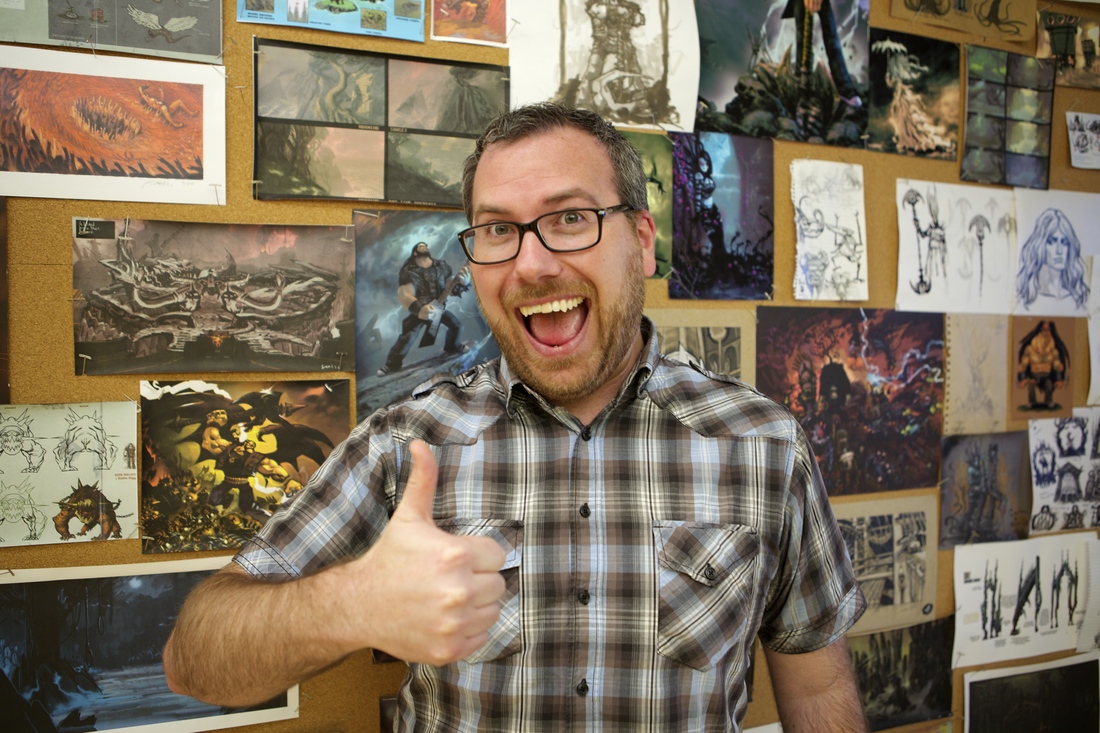
Brad
Brad Muir

"They would sit there and were able to talk to the community and get direct feedback and make the game, while we were banging our heads against these publishers who basically act as a wall between us and our community."

The $3.3 million raised through the Kickstarter campaign was not enough to fund every project the studio wanted to make. According to Bailey, after Kickstarter rewards were fulfilled and 2 Player Productions was paid for the documentary they made, the game's budget was a bit more than $2 million, which he says isn't much bigger than the budgets for Iron Brigade, Costume Quest and Stacking. The Kickstarter funds were enough to prop up a portion of the studio, but in order for everyone else to make games, they needed publisher funding.

Muir spent almost a year pitching to publishers, often feeling uncomfortable about the compromises he had to make, and always feeling awkward about talking business instead of game design.

"When you go into a boardroom, it's first about the business and secondarily about the fans," Bailey says. "For us, it's about the fans first and secondarily business. It's about control and visibility. When you have publishers, they have control and they exercise that control. We're kind of throwing that out the door. If anybody has control and visibility, we want it to be our fans."

As the studio was about to reach an agreement with a publisher, Muir and Bailey paused. Neither felt comfortable about what they were doing. So they thought back to what the studio did a year earlier.

"It was like, why are we doing this?" Bailey says. "Why don't we go ahead and Kickstart a new idea? Instead of pitching to publishers, we pitch it directly to the community."

The team had some reservations — they were well aware that Broken Age was not out yet, and Kickstarting a second game when the first was not released could potentially reflect poorly on the studio. Schafer told Polygon that the studio wanted to do a second Kickstarter campaign for a long time, but was held back he felt that he should finish his game before the studio asked for more money.

"The reason we wanted to do it is because it's obviously such a great thing for us financially, but the company also turned this corner when we did our first Kickstarter," Schafer says. "It was totally unexpected. We developed this whole different relationship with our fans. Instead of it being this one-way relationship, we got engaged to them.

"They backed us, and it was this moment where it didn't just feel good for us, it felt good for the people who were backing us because they were making a statement about their own power."

It made no sense for the studio to wait until Broken Age's September release. If they waited, it would mean the rest of the studio would need to either go to publishers, find an alternative form of funding or, in the worst case, face losing their jobs. Muir already had what he and the studio believed to be a solid game idea, and there was a team within the studio ready to work on it.

"We are making this for our fans," Bailey said. "So why are we waiting? That is how it started."

Photo-main

Pledge

Pledge Drive

Massive Chalice's reward tiers run from $20 to $10,000.

$20: The game on Windows, Mac and Linux, DRM-free and on Steam.

$50: Early access to the game, behind-the-scenes videos, a hi-res digital art pack and a digital copy of the soundtrack.

$100: Submit your name and house preferences to be included as a bloodline in the game.

$150: A limited edition t-shirt and poster.

$250: The poster is signed by Tim, Brad and the dev team.

$1,000: Play and feedback session at Double Fine or remotely.

$5,000: Design team meeting at Double Fine or remotely.

$10,000: Board game night with Tim, Brad and the team at Double Fine's studio.

Massive Chalice

Massive Chalice

Massive Chalice is a fantasy strategy game that project lead Brad Muir describes as a cross between the original XCOM and Final Fantasy Tactics with Double Fine's own twists. It's an idea he's had for years.

The game, which is in pre-production, adopts the structure of XCOM, where players can make strategic decisions at a high level before entering a different tactical view where they take the characters and fight demons.

"You're this immortal king and you're managing this entire kingdom on a strategic map," Muir says. "You'll speed up time — very similar to what you'd do in XCOM — then when things happen, the concept is there's a demonic invasion and you're going to be defending this realm against it."

The tactical combat feeds back into the strategic layer, where players will take demonic technology and research it.

The main twist to the XCOM structure lies in what Muir calls an epic timeline — the invasion takes place over hundreds of years, and the player's characters will age over time.

"I really love the emotional attachment that you have to your soldiers in XCOM, and I think it's so awesome that those soldiers are not really involved in the actual narrative of the game, but I care way more about these soldiers that I'm actually moving around on the map," he says. "And when one of them dies, it feels like this devastating blow, like I screwed up and now this guy is dead and I have to replace him with a rookie.

"I really want to bring that feeling to people."

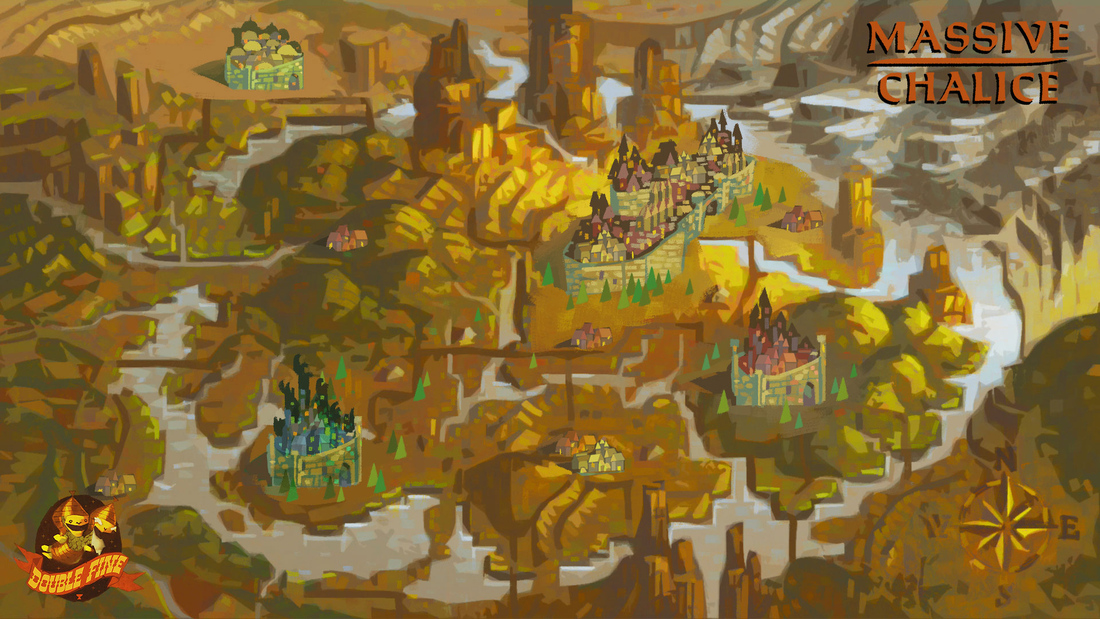
Massivechalice_map
Early concept of the game's strategic map

Massive Chalice will see players' heroes age over time and, as they get older, players will feel it through the mechanics. Eventually, the heroes will weaken and pass away. Players will be able to make the strategic decision to either keep them on the battlefield as they get older, or to retire them so they become lords and have children, who will grow up to fight in the next generation. Muir says that players will fight up to eight generations, and he hopes players will form an attachment to the bloodlines and house names.

Muir also wants to introduce a bloodline system, that is inspired by Final Fantasy Tactics' job system. Players will be able to introduce male and female characters to each other, put them in the same keep and this might lead to them marrying and having children. The children will then have the abilities of both parents, and players will be able to unlock and create hybrid classes that may be useful down the line.

"We have to walk a fine line with that because I don't want it to be like breeding chocobos," Muir says. "We have to be very careful with it, and I think it's definitely possible to get people attached to these characters and not treat them like game objects or animals."

The game has a darker tone than what Double Fine games are usually known for, dealing with themes like aging and dying. But Muir says it's a ridiculous work that is self-serious, in a similar way that Iron Brigade is over-the-top without ever really acknowledging it.

"It's going to be a hardcore game for sure," Muir says. "I feel like the audience of the Iron man XCOM players — those are the first people I want to convert and get excited about this game."

Risks

Taking Risks

Massive Chalice's Kickstarter campaign launched today with no gameplay footage, no complicated reward tiers and only a few pieces of concept art. Muir says they have what they would normally take to publishers, except they're now pitching the game directly to potential backers in the hope of making it a collaborative effort.

The team wants to bring the game to Kickstarter in a very early state so it can get the community involved right away. Muir says the reason they are bringing such a bare bones pitch to Kickstarter isn't because they have an under-developed idea — it's because they want their community's feedback on even the earliest game ideas.

"One of the things I love about being a game designer is there's this cool reflective thing that happens where you're excited about the game, and people get excited about the game, and they get excited about you getting excited about them getting excited, and it's just this awesome loop that happens," Muir says. "We're not going to have a Kickstarter page that goes on and on and on about the game. It's more 'Hey, here's the core seed of this idea — do you think this is cool?'"

Rather than present potential backers with a game where all the design decisions have already been made, Muir wants to get feedback from backers before any flags are stuck in the ground.

Schafer believes now is a good time for the studio to take the game to Kickstarter because Double Fine's fans understand that it's not a one-game studio, and other teams within the studio also need funding in order to continue their work. But it also has to do with his confidence in Muir.

Photo_2
Double Fine's office

"A lot of it has to do with making a bet on Brad himself," Schafer says. "I feel like Brad's got a lot of great ideas, he's smart, he knows how to make great games like Iron Brigade. Seeing how passionate he was about Massive Chalice and how excited other people got when they talked about it with him, I could see that this was the one."

If the project meets its funding goal, the team dedicated to working on Massive Chalice will ramp up to 12 people. The time frame Muir has in mind is 14 months, with the possibility of the game coming to other platforms if there is demand and if the studio has the resources for it.

If the project doesn't meet its funding goal, Muir imagines he'd need a week alone with some whiskey.

"I don't know if it's going to work — it's a risk," he says. "I try to go with the Tim Schafer way of thinking, which is the 'It's totally going to work' mentality, but I do have a fear that we're going to press the big red button and there's just going to be a goose egg there for hours.

"I don't want to be so presumptuous to buy a [celebratory] cake because that could be the saddest cake ever, and nobody likes sad cake. But it will be exciting. I just want to do whatever we can to make sure we reach the goal so we can make this game and I get to lead another project again," he says.

"That's what I really want to do: make this game, lead a project, work with the community. That part excites me a lot."

30 May 17:57

UNT Mug, Mysterious Ceramic Cup With a C-Shaped Handle

by Justin Page

UNT Mug

Firebox has released the UNT Mug, a mysterious ceramic cup with a black C-shaped handle and ‘UNT’ spelled out in black lettering on the side. The location of its handle makes the mug a very dirty item. It is available to purchase online.

Is it some kind of curious code? Perhaps it’s a super-secret luxury brand, or simply a popular nickname in some far-flung part of the world?
Actually, now you mention it, we heard someone shouting it on the street the other day.

image via Firebox

30 May 17:57

Teen Allegedly Killed by Kidnapper Seeking to Be a Hero - WPRO

firehose

meanwhile, in Maine


ABC News

Teen Allegedly Killed by Kidnapper Seeking to Be a Hero
WPRO
(BANGOR, Maine) -- A man's bizarre plot to be a hero by kidnapping and then "rescuing" a teenage girl who had rebuffed his advances resulted in her death, according to an indictment charging him with murder. Kyle Dube, 20, of Bangor, Maine, was arrested ...
Maine man tried to stage kidnapping and rescue of teenage girl, according to ...Fox News
Facebook “boyfriend – hero” charged for murder and kidnappingInSerbia News
Maine Man's Plan to Be Hero Ends With Dead TeenNewser

all 77 news articles »
30 May 17:13

Double Fine's MASSIVE CHALICE by Double Fine Productions — Kickstarter

by gguillotte
firehose

awwwww yisssssssssssss

DF's new Kickstarter is a turn-based tactical strategy game "inspired by classic tactical strategy games like X-COM, Final Fantasy Tactics, and Fire Emblem"
30 May 17:04

State systems and universities in nine states start experimenting with Coursera | Inside Higher Ed

by overbey
firehose

via Overbey
“We hope to reach more students with the existing faculty that we have.”

SUNY's associate provost, Carey Hatch, said the system also plans to offer incentives to campuses to develop and consume online courses that meet general education requirements. Some courses could be “guided MOOCs” where a SUNY instructor helps SUNY students work their way through a course that was created by another institution. “We hope to reach more students with the existing faculty that we have,” Hatch said.
30 May 17:02

Solar power's epic price drop, visualized

by Robert T. Gonzalez

Solar power's epic price drop, visualized

As in, holy crap, we knew solar was getting cheap, but wow. Among energy afficionados, the precipitous decline in the price of solar cells is called "The Swanson Effect." And no – not after that Swanson.

Read more...


30 May 17:01

tanuki wins — Battle Balls (Seibu Kaihatsu - arcade -...

firehose

we all know why tanuki won at Battle Balls


tanuki wins — Battle Balls (Seibu Kaihatsu - arcade - 1995)

requested by pixelmeat

30 May 17:00

Shuttleworth Closes Bug #1, Microsoft's Market Share

Interestingly, this morning Mark Shuttleworth decided to close Ubuntu's Bug #1 on Launchpad, the bug report created by him in 2004 about Microsoft having a majority market-share. He feels that the Windows creator is no longer commanding the market, but neither is Ubuntu...