Read more of this story at Slashdot.

Read more of this story at Slashdot.
firehosevia GN
will never understand why satellite providers don't play up the "receive transmissions from fucking space, because we're human fucking beings and we accomplished that shit" angle

Space relic silently watches the skies.
firehosevia willowbl00
firehosevia willowbl00

 Adventure Time has proven as delightful in comic book form as on TV, between Ryan North's core AT comics, Meredith Gran's Marceline and the Scream Queens, and the Danielle Corsetto-penned Playing with Fire. So what would happen if other comic book characters wandered into the Land of Ooo?

    
|
[% } %] [% if (data.comment.user.membership && data.comment.user.membership.short_bio) { %]
[%=data.comment.user.display_name%]
[% } else { %][%=data.comment.user.display_name%]
[% } %] [% if (data.comment.user.membership && data.comment.user.membership.short_bio) { %][%= data.comment.user.membership.short_bio %]

firehoserofl
When news broke on Thursday that nine major tech companies were apparently complying with — and even helping — the NSA collect and access massive amounts of data, Gawker's Max Read decided to try to turn the situation to his advantage. He opened a Zazzle store called PRISMMerchandise. Max started with the PRISM logo-bearing t-shirt you see above, adding an iPhone case, a coffee mug, and a hoodie by day's end.
Read reports that by Friday he had sold two t-shirts and two coffee mugs. This morning, however, Zazzle has removed his PRISM storefront and merchandise, sending Read an email which explains:
Unfortunately, it appears that your product, PRISM NSA T-Shirt - #Rare PRISM Shirt SPIES, contains content that is in conflict with one or more of our acceptable content guidelines.
Design contains an image or text that may infringe on intellectual property rights. We have been contacted by the intellectual property right holder and we will be removing your product from Zazzle’s Marketplace due to infringement claims.
It is unclear if the infringement complaint came to Zazzle from the NSA or somewhere else, though clearly Max Read is not the intellectual property rights holder of the PRISM logo.
Read more of this story at Slashdot.

San Francisco Chronicle |
Free Gun Initiative Begins in Houston...
ABC News Houston resident Cheryl Strain's inexperience with guns was apparent as she struggled to load shells into a 20-gauge shotgun. Over the piercing blasts of gunfire in the shooting range, Strain's instructor, Dan Blackford, patiently directed her on how to use her ... Free gun initiative begins in Houston neighborhoodFox News Free gun initiative begins in Houston neighborhood - WHLT 22 Connecting the ...WHLT22 all 24 news articles » |
firehosemeanwhile, in Salem

One abandoned Oregon psychiatric hospital building (originally called the Oregon State Insane Asylum) contains an unusual library, one comprised not of books, but of copper canisters of unclaimed human remains. Photographer David Maisel has photographed what is left of the asylum, as well as the people whose cremated bodies were left behind.

|
|
 Assassin's Creed and Assassin's Creed 2 creative director Patrice Desilets, formerly of Ubisoft, THQ and then Ubisoft again, has filed suit against Ubisoft seeking back pay, damages and the opportunity to buy the rights to 1666, according to a report by Canadian outlet La Presse.
 Report: Patrice Desilets suing Ubisoft for $400,000, option to buy 1666 rights originally appeared on Joystiq on Sat, 08 Jun 2013 14:13:00 EST. Please see our terms for use of feeds.
firehosevia Snorkmaiden

Comic fan Wayne Adams made this awesome and thoroughly unsettling mask, which he wore at the 2013 MCM London ComicCon at the ExCel centre in east London on May 26.
Photo by Leon Neal
[via The Big Picture]
firehosevia Osiasjota, via Adam

When Wiley wanted to publish a history of Superman in time for this month’s Man of Steel, they contacted the right guy to write it. Glen Weldon covers comics for NPR’s Monkey See blog and is also the resident comics expert on the Pop Culture Happy Hour podcast. He’s insightful and funny, the perfect person to guide someone through the confusing, 75-year history of the Man of Tomorrow, which is what he does in Superman: The Unauthorized Biography.
Superman’s history isn’t just confusing because of the legal battle between his creators and the publisher whose marketing and licensing made the character a household name, although there is that, too. There are also the countless (well, I would have said countless; Weldon proves me wrong by counting them) retcons and reboots and reinterpretations that have affected the Last Son of Krypton and his supporting cast for three quarters of a century. Weldon navigates all of that in his book and finds the through-line that defines Superman and what he really stands for.
This is something I’ve been thinking about myself lately, so I was eager to not only read Weldon’s book, but to talk to him about it and get some more insight. I learned a lot in the process, including the true meaning of Kryptonite, the importance of Electric Superman, and the real failure of Superman Returns.
Michael May: I want to start with something that’s going to sound like a statement, but I promise there’s a question at the end. Superman’s fathers play an important role in shaping the man he becomes. In the comics, Jonathan Kent is traditionally the primary force in grounding Clark to humanity and giving him his moral code, but the trailers for Man of Steel are playing up Jonathan’s fear that people won’t understand or accept a superman.
In contrast, it’s Russell Crowe’s Jor-El in the recent trailers who talks about his son’s moral responsibility. And of course there’s Marlon Brando’s “my only son” speech in Superman: The Movie. I’m not asking you to pass judgment on a movie you haven’t seen, but I’m wondering if you could talk a bit about Superman’s two dads and the role each plays in his development.
Glen Weldon: I wrote a piece for Monkey See when that (second?) trailer came out, showing Pa Kent expressing fear. My reaction then stands — I kind of like it. It makes sense to me. Ma and Pa Kent have always been treated as secondary characters whose role, in the hero’s journey, is to instill Midwestern values in him, outfit him with a few homespun homilies, and send him on his way. Which is fine — you need to surround your protagonist with characters that help define and delineate him.
But what if they weren’t secondary, flat characters? What if they had internal conflicts of their own, conflicts that served to complicate the wisdom they impart as parents? Smallville touched on this, a little, in its way. It may not work, but it certainly serves to make Pa Kent a character in his own right.
 In the ’78 film, Jor-El and Pa Kent represented head and heart, respectively. Jor-El supplied him with knowledge, and a respect for the rules. Pa Kent taught him that he has the power to help people – to save them – and that’s what matters. So his final decision, in the last act, to hit the temporal reset button is effectively a rejection of his cold, Kryptonian heritage and an embrace of his status as a child of Earth.
Years later, in the Man of Steel miniseries, Bryne would turn that subtext into the explicit text. And years after that, Waid’s Birthright would invert it again. It will continue to see-saw back and forth, as new writers put their spin on the guy.
You talk in the book about Kryptonite as a symbol of Superman’s past. If his powers and attitude are metaphors for unlimited potential and looking to the future, the harmful relic of his old home represents the ability of the past to hold us back and potentially even to harm us. That’s a brilliant way of looking at it. It also raises the question: How important should Krypton continue to be to Superman? Is the character damaged by stories in which he wallows in grief or nostalgia for his homeworld? Or is there value in revisiting that concept every so often?
The Weisinger Silver Age was obsessed with Krypton, because it effectively infused the stories with the primal, Freudian emotions of early kid-hood that readers felt in their guts: loneliness, fear of abandonment, etc.
 When Kryptonite was introduced in the movie serial, on the radio, and (years later) in the comics, it did more than just weaken Superman – it was the means by which he learned who he was and where he came from, for the very first time. That was information the audience knew well, but not Superman himself.
So this relic of the past, this thing that can kill you, is the thing that literally tells you who you are. That is some heady symbolism – if we were to break into response groups to unpack it all, it’d take days.
For the first 20 or so years of his existence, Krypton wasn’t a particularly big deal. Then, during the Silver Age, it became his melancholy obsession. That diminished a bit in the Bronze Age, as the pursuit of Relevance had writers struggling to make Superman more Earth-bound and “relatable.” Byrne turned Krypton into a cold technological nightmare world to be shunned, and Waid turned it back into a science-fiction utopia.
All of these interpretations seem equally valid to me, inasmuch as they provide fodder for interesting stories – I have my personal preferences, but they have more to do with me than they have to do with the character.
Another surprising observation in your book is the importance of Electric Superman. A lot of fans would love to pretend that phase of Superman’s career never happened, but it uniquely illustrates a vital part of Superman’s character.
 I admit I would have loved it if Superman’s electric phase look didn’t evoke “Olympic Figure Skater” as strongly as it did, but that bold experiment helped me understand that Superman isn’t his costume, or his powers.
What makes a firefighter a hero isn’t his flame-retardant uniform. It’s what he does, and why he does it. Superman: Same deal.
So all the outward signifiers – costume, powers, spit-curl, etc. – are just that.
Superman: 1. Puts the needs of others over those of himself, and 2. Never gives up. Those are the two elements that any story about Superman require. As I detail in the book, when either or both of those elements are missing, we instinctively reject it — it feels wrong, off-base; just not Superman.
Superman is a powerful character because he symbolizes the best of humanity. He gives us something to aspire to. But as you point out in the book, the specific ideal that he represents has changed over the years and decades. In the ‘30s, he was all about social justice, but during the ‘40s he came to represent World War II patriotism. In the ‘50s and early ‘60s, he turned into a defender of conservative domesticity and the status quo. I’ll ask about the late ‘60s and beyond in a minute, but which of those early decades is your favorite from the standpoint of Superman’s symbolizing an ideology?
 Personally, I like the progressive reformer Superman, the defender of the little guy. Those early stories have a raw, propulsive, rough-around-the-edges energy; this Superman is looking out for us, but he’s not safe.
Again, that progressive aspect to his character is what makes him the Man of Tomorrow – he inspires us forward, like the Socio-Realist murals of the time, into the golden, sunlit future.
Is it fair to say that Superman’s representation of human perfection reflects a distinctly American perspective?
In one sense, he’s the ultimate Immigrant Who Makes Good, and that aspect resonates strongly with the can-do American psyche. And certainly, Superman is powered by an ideological fuel mixture that strikes me as uniquely American – our noblest ideals (Truth! Justice!), our propensity for violence (and our struggle to rein it in), and our unabashed love of garish spectacle (the guy’s basically a July 4 fireworks display stuffed into a pair of blue long johns).
But after all, one of his creators was Canadian. And the idea of him – that of a powerful protector who does the right thing because it is the right thing – isn’t unique to America. It’s one of the oldest ideas in the world, and it appears in every culture’s myths and folklore.
Starting in the late ‘60s, Americans became divided about what the ideal American should look like. As large parts of the country lost trust in the government, how well do you think Superman functioned as a symbol of perfection?
 The mood of the country soured with Vietnam and Watergate, and Superman came to represent the capital-E Establishment. But keep in mind his primary audience was young kids, who seek assurance that Good will triumph over Evil, that their place in the world is secure.
As I note in the book, the late-sixties was a time when parodies of Superman and super-heroes proliferated (Batman! Underdog! Super Chicken! Mighty Heroes! Atom Ant! Captain Nice! etc etc) because older kids and adults found the whole notion of a costumed do-gooder – at least one without some kind of psychological hangup — ridiculous.
What do you think prevented him from keeping up with the times?
As I touched on above, Superman was written for young kids – by middle-aged men. DC didn’t know what to do about what the newsmagazines were calling “the growing youth culture” – so they simply peppered their usual stories with references to “hip” things like “the Beatles rock music”. It was fine for kids, but suddenly kids weren’t buying as many comics as they used to – teenagers were.
Marvel had taken another tack – adopted by writers who were just as middle-aged as their DC counterparts, but who were savvy enough to pitch their comics to adolescents. They made comics about angst-ridden, hormonal teens FOR angst-ridden, hormonal teens. Bingo.
 DC, convinced that they needed to make Superman more relatable and relevant, did what they thought they should, though it didn’t work. Denny O’Neil wrote a more grounded, less powerful Superman in the ’70s, Swan and Anderson adopted a more photorealistic, Neal-Adams-esque style, and there were repeated, earnest, well-intentioned attempts to get Superman to address issues of race, poverty, sexism, etc. But it’s a mug’s game: Such stories don’t bridge the distance between his simple, iconic, four-color world and our own – they only serve to widen it.
Has Superman ever found his way back to being a consistent, ideal representation of humanity (American or otherwise)?
There’s the idea of Superman that exists in the public consciousness, and there’s the Superman of the comics. In 1978, with the appearance of Superman: The Movie, the comics lost what little ability they’d retained to shape the notion of Superman that exists in the cultural ether. When it comes to what my sweet, silver-haired Aunt Fay thinks of Superman, it’s about the movies, not the comics.
In that regard, the fragmentation of media means that many different versions of Superman, new and old, are available at any one time. Smallville, the animated series, Superman IV, Superboy, Justice League, the comics, the Elseworlds, the trade paperbacks of old storylines … they all exist, ready for sampling. On one hand, this lowers the barriers that keep new audiences from sampling his adventures, but it also makes the prospect more overwhelming and confusing: Where to start?
 Me, I always suggest Superman: The Animated Series – an effective synthesis of classic iconography and contemporary concerns.
Also, they are awesome.
What was your introduction to Superman?
Super Friends, I think. Or that cartoon short of him on Sesame Street, in which teaches kids about the letter S. Which led me to the old Superman TV cartoons (voiced by Bud Collyer, of the original radio show), which led me to George Reeves, and that was it.
It seems like a lot of fans get to Superman through a similar route. I know I’ve logged many many more Superman hours in movies and TV than I have in reading his comics. How important are comics to Superman stories? Can people get the same experience from other media?
As I’ve mentioned, one of the most important things I learned in writing the book was how pervasive — how important — the movies (and to a lesser extent the TV shows) have been to ensconcing Superman in the public mind.
The engagement I feel to the Superman of the comics is strong and binding. But, on a population level, there’s only a handful of people like me. There are trillions of non-comics readers in the world, and most of them have a pretty good idea of who Superman is. Their level of engagement is nowhere near as deep as mine, but it is real, and in many ways theirs is a cleaner, purer vision of him, as its unencumbered by the decades of trivia and reboots and retcons I carry around with me. For them, he’s simply an icon. For me, he’s a character.
 Speaking of Superman in other media, you mention in the book that Phyllis Coates was working on a sitcom that prevented her from returning to Adventures of Superman as Lois Lane in Season 2. This is a totally self-indulgent question, but do you know what sitcom that was? She’s probably my favorite Lois, so I’m curious.
Michael J. Hayde’s book Flights of Fantasy, a much deeper dive into the Adventures of Superman era, tells me she left to co-star with Jack Carter in a sitcom called Here Comes Calvin. IMDb says it never went to series, though.
One of the complaints people make about Superman is that they can’t buy altruism as a motive for doing heroic things. That probably says more about readers than about the character, but what’s your response to that?
I feel like I shouldn’t have to point this out, but people who do the right thing unquestioningly do exist. As Greg Rucka pointed out in the wake of the Boston bombing, amid all the horror captured in those videos, you see people running to help out, people whose instinct was to step in and do what they can.
True, most of us would run. But some of us wouldn’t. Some of us don’t. Some of us never do. Superman is a guy who does the right thing because it’s right – but also because he knows he can. That doesn’t make him any less a hero. It makes him a guy who does what he firmly believes is his job.
 That brings to mind the section of your book where you write about Superman Returns. Most of the criticism I hear of that movie is about the lack of action or the idea that Superman and Lois have a son or that it’s just too similar to previous movies. You have a different complaint, though.
The theatrical cut of the film shows Superman returning to Earth after abandoning it for five years, as he went in search of his people.
No. Sorry. Wouldn’t happen.
He puts the needs of others over those of himself. He never gives up. Spider-Man? He’d leave. He often has. He’s the reluctant hero. Superman isn’t. You can try to graft a self-centered motivation onto his character, but we won’t buy it.
Superman Returns shows us a Man of Steel who turns his back on the people he’s sworn to protect, out of a desire to find his people. This is what the screenwriters want to explore – what would happen when a hero lets us down. The film proceeds to punish him for his betrayal – he is rejected by Lois, brought low by Luthor.
But the movie never bothers to provide an emotionally satisfying explanation for why he let us down in the first place. His departure is treated as a plot point – we don’t see him making the decision to leave, so when we watch him get punished for a crime we never witnessed, that crime hangs in the air between us and the story.
 Before we finish, let’s talk about endings for a bit. Superman’s probably never been more popular than he was when he died in the ‘90s and most of the general public thought he wasn’t coming back. Is there a message in that? Do people just want the end of the story? Is the continuing nature of corporate-owned superhero comics a drawback in bringing in new readers?
Like soap opera characters, a mainstream and heavily licensed comics property like Superman is denied the one thing that turns a series of events into a story – he is denied an ending.
Endings shape narrative, but Superman’s narrative is simply endless, Sisyphean iteration. That’s why the Silver Age started churning out Imaginary Stories – many of which found Lois and Superman attaining some measure of suburban domestic bliss, in an age when the American Dream consisted of backyards, barbecues and bridge nights.
It’s why Elseworlds became a whole thing, why we hunger to imagine an ending, any ending for a character like Superman.
As for new readers, the wealth of stories in all kinds of media can be daunting. I think they just want a good story. It’s nerds like me, who’ve seen the same stories iterated again and again and again, who are forever seeking closure, often unconsciously.
You close the book by talking about how Superman will always endure. This is a controversial question, but do you have an opinion on how that should happen? Should Superman stay in the sole custody of DC or would you like to see him eventually enter the public domain?
 The idea of Superman long ago transcended the various media that deliver him to us. As a thought experiment, I love the idea of Superman as a public domain character like Sherlock Holmes and Dracula. But one of the reasons he’s managed to pervade the culture is all the heavily licensed transmedia cross-platform synergistic revenue stream blah de blah that DC and Warners will never let go of. I’d like to see it happen, but I’m not holding my breath.
What Superman comic book stories would you recommend to someone interested in learning why he’s so awesome?
All-Star Superman is a fantastic Superman story, but I think it makes a lousy introduction to the character. It’s a feat of synthesis that taps into Superman’s Jungian archetypal blah blah blah, and it’s got a nice solid ending (and a tremendous characterization of Luthor). But the whole thing is fed by a substrata of Superman’s comics history; without even a passing understanding, it’d be like reading a poorly translated book of poetry. You’d miss the music.
So I’d start with Action Comics #5, in which, for the first time, all the classic Superman elements come together. Big huge set-piece – a dam is threatening to burst, Superman must race a train to stop it, all depicted in Shuster’s raw, kinetic linework.
I love that first Mxyzptlk comics story [Superman #30], which shows Superman outwitting a foe, not simply relying on his amazing strength.
 I’d want something from the Silver Age. I’m a sucker for “The Red Headed Beatle of 1,000 BC” but that’s a Jimmy Olsen story, technically. Either “Superman’s Return to Krypton” [Superman #141] or “The Death of Superman” [Superman #149], then, which is filled with high weirdness (a rocket with a warhead the shape of Luthor’s head) and the salty (Choke! Sob!) emotionalism of the age.
“Whatever Happened to the Man of Tomorrow” [Superman #123; Action Comics #583] provides a nice if deeply melancholic walking tour of classic Superman, and “For The Man Who Has Everything” [Superman Annual #11] is smart about a lot of things, and somehow got me to like Jason Todd.
Man of Steel is of interest to show how Byrne overhauled the character to suit the Reagan era.
I’m not a fan of the ’90s “Death of Superman”, so I’d skip that in favor of the entire run of Superman Adventures, which told a lot of great, kid-friendly stories with economy, style and humor.
Round it out with Birthright, Secret Identity, and Greg Rucka’s Adventures of Superman run.
 What’s your greatest fear and greatest hope for the Man of Steel movie?
Snyder makes great trailers, but soulless films. Nolan fully imagines the worlds he puts on screen, but lends them all the same chilly, distant, brooding tone. I worry that the marriage of the two filmmakers will exacerbate the worst traits of both.
In other words: Superman doesn’t brood. We’ve got a guy who does that. Superman isn’t him.
I’m cautiously optimistic, however. The quotes from Birthright and All-Star Superman are encouraging. Hearing the word “hope” mentioned: Yes. The way Pa Kent reacts when Clark ask if the boy can keep pretending to be his son: Also good.
I’m a pretty cynical d-bag in most areas of my life, but when it comes to Superman I’m a romantic. A Superman film needs heart, needs hope, needs earnestness – you catch a glimpse of it in that shot in the trailer, showing the kid running around his backyard with a towel around his neck, putting his hands on his hips. Boom. That’s the moment. The Superman Shot. That’s what I, and many thousands of nerdlings like me, have been doing in our backyards for 75 years. That’s Superman.
If the film can capture that, I’m in.
firehosevia sauice
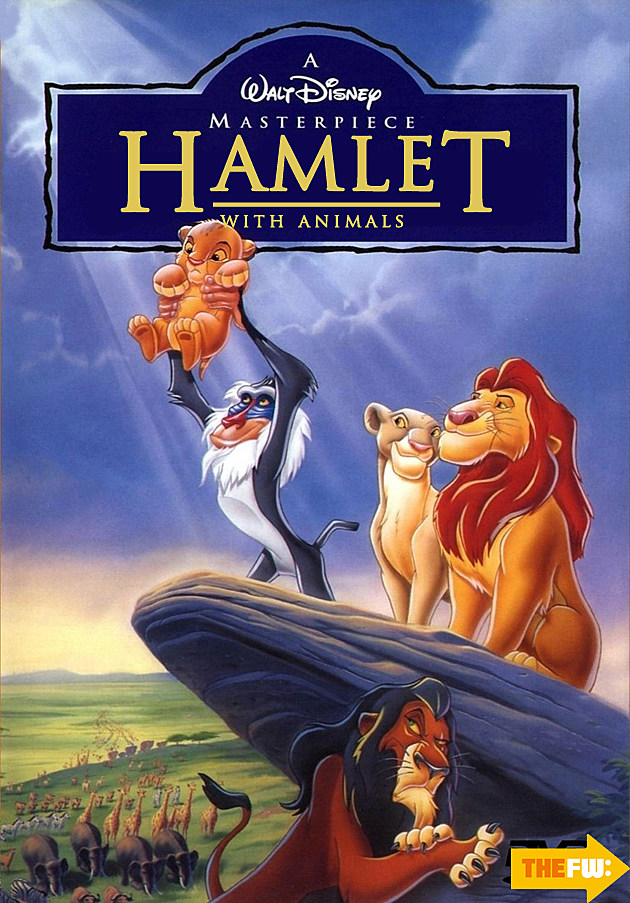
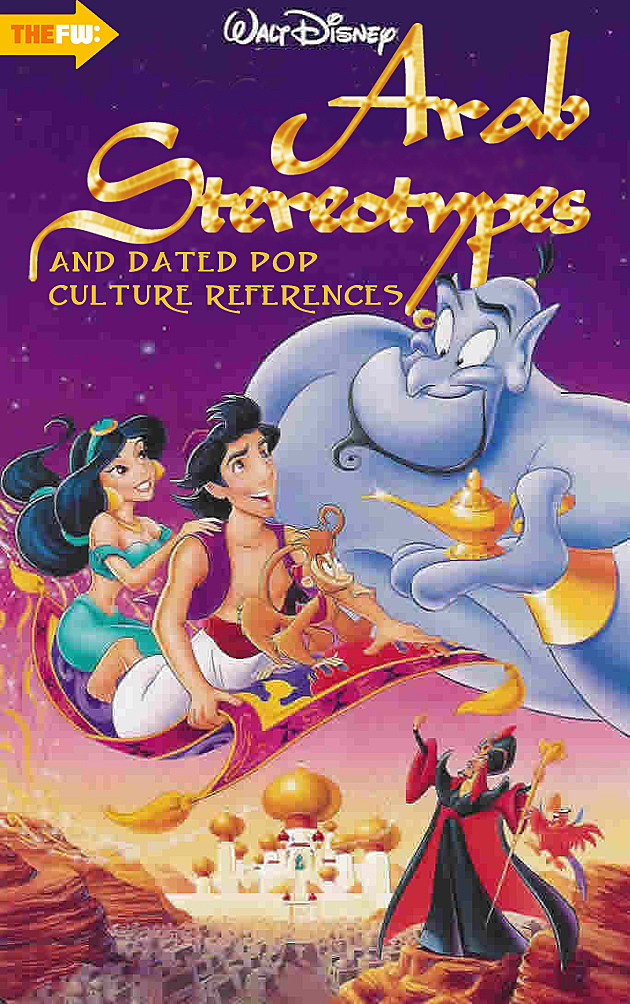
Ah, Disney – an essential component of childhood. However, beneath the saccharine surfaces of these fluffy romances lies some truly disturbing content. Check out our “honest” takes on what Disney movies were really showing us in our youth.
 Christine Gritmon
 Christine Gritmon
 Christine Gritmon
 Christine Gritmon
 Christine Gritmon
 Christine Gritmon
 Christine Gritmon
 Christine Gritmon
 Christine Gritmon

To creatively comply with the Sidewalk Café Design and Regulations Guide put forth by the New York City Department of Consumer Affairs (pdf), Deb’s Catering in the West Village has added knit pieces to its outdoor dining railings.

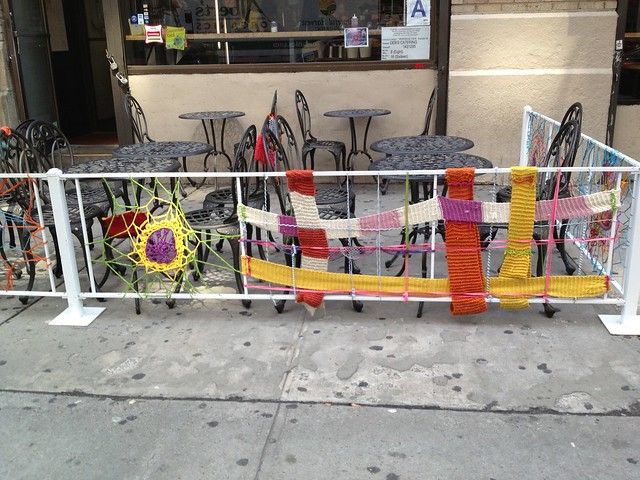
photos by Lori Dorn
Thanks Lori Dorn!
The sight of animals in advertisements, gleefully licking their lips or holding a bone aloft or generally seeming hungry, is easy to miss. We anthropomorphize creatures all the time, so it makes sense that cartoon versions would decorate menus and food commercials. But look closely, as Ben Grossblat, the founder of the Suicide Food blog did, and there’s a whole perverse world of farm creatures seemingly excited to eat members of their own species. Grossblat’s term: suicide food.
Grossblat’s blog has been dormant since 2011, but for an online exhibit called “UnCooped: Deconstructing the Domesticated Chicken,” the online-only National Museum of Animals and Society has pulled together a chicken-only assortment of bloodthirsty fowl. While the images may seem darkly funny, Grossblat and others find a seriously messed-up underbelly to these images. To wit, from the exhibit’s website:
From knife-wielding pigs who happily slice off sections of their own bodies, to a turkey slathering herself with gravy and eagerly boiling herself alive — suicide food’s plethora of images elucidate the ways in which fast food advertising seeks to disguise and distance consumers from the lived experience of the animals they eat.
The end result, then, can range anywhere from devaluing animal life to sexualizing it (note the leering chickens, which could be mistaken for a deviantART yiff). But even if you don’t buy that these images carry big consequences, it’s hard to deny that they are very, very, very creepy.


The post Suicide Chicks appeared first on Modern Farmer.
|
Army suspends general linked to sex-assault probe
Columbus Ledger-Enquirer WASHIGNTON — The Army says it has suspended a two-star general from his duties in Japan for allegedly failing to report or properly investigate an allegation of sexual assault. The suspended officer, Maj. Gen. Michael T. Harrison, is commanding general of ... and more » |
firehoseXanga 2.0
It's tough to be a parent of an adolescent these days. Just as parents have caught on to the fact that some of their precious youngsters may be using Snapchat to send each other sexts, it turns out the teens have already moved on to another potentially scary online service, called...Ask.fm? That's at least the picture painted by a new report from CNET, which profiles Ask.fm, a Formspring-like question-and-answer site, and its 57 million unique users, half of whom are under the age of 18. The content users post reveals many typical teen-oriented topics, from inside jokes and gossip to puerile questions about sex. But like many other semi-anonymous places online, Ask.fm also features more troubling material, including posts on self-harm, eating disorders and bullying, and has been linked to several teen suicides in Europe. Ask.fm's founders' seeming reluctance to crack down on such content may be cause for some special concern, but the truth is, it is but one of many other popular sites over the years where kids grapple with subjects they may not be entirely ready for.
The nine tech companies implicated in the PRISM data-collecting operation yesterday have refuted the allegations by stating that they provide no "direct access" to their servers — but according to the New York Times, the wording is just an artful dodge around the way the system does in fact work. The Times reports that the government approached companies like Google, Apple, Microsoft, and Facebook about building what were essentially digital secure rooms: separate portals into which the companies would drop data that the government could later access.
According to the Times' sources, most of the tech companies involved resisted implementing this kind of service, though many acquiesced to varying degrees (Twitter declined to do so). Both Google and Facebook discussed plans to build the separate "secure portals," which essentially act as separate safehouses for data — with the Times reporting that Facebook did in fact build such a system, despite CEO Mark Zuckerberg's outraged post today.
The talks have reportedly continued this year, with the chairman of the Joint Chiefs of Staff, Martin E. Dempsey, travelling to Silicon Valley to meet with executives at the various companies.
Developing...
firehoselol u wish
|
Is This How Patriot Act Era Surveillance Ends?
Huffington Post For a decade civil libertarians have protested the PATRIOT ACT as Congress kept reauthorizing it. But with recent reports about the NSA's expansive surveillance, could the Obama Administration have pushed the American people to their breaking point? and more » |
firehoseuhh
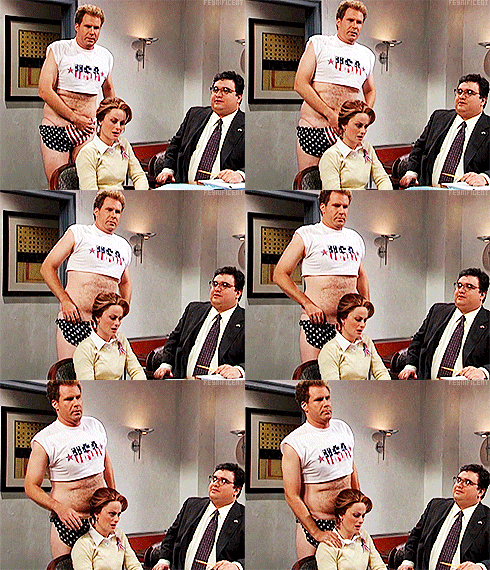


when you’re having a hard time at your new job…remember Amy’s first month at SNL
firehosekind of hilarious considering how Google has spent the last two years doing nothing but showing how little they care about data integrity or anyone's privacy
Following a report from the New York Times that implied that several companies had provided data to the government via "secure portals," Google's chief legal officer David Drummond has taken to Google+ to strenuously deny the allegation. Drummond writes, "We cannot say this more clearly—the government does not have access to Google servers—not directly, or via a back door, or a so-called drop box."
It should be noted that the New York Times report didn't specifically say Google had participated in such a system, but did report that Google had "discussed" such a plan — though it said only Facebook had built "a system for requesting and sharing" information. The report has led many to wonder if Google and other companies were splitting hairs with regard to their policies concerning government access — the repeated use of the phrase "no direct access" by every company involved looked like a red flag that left room for other ways the government could have accessed user data.
Drummond's comments follow those of CEO Larry Page (which Drummond co-signed), who also denied having any knowledge of the PRISM program before news surfaced earlier this week. Drummond's latest statement again notes that Google responds to individual requests for information and points out that Google "frequently pushes back" on such requests.
We cannot say this more clearly—the government does not have access to Google servers—not directly, or via a back door, or a so-called drop box. Nor have we received blanket orders of the kind being discussed in the media. It is quite wrong to insinuate otherwise. We provide user data to governments only in accordance with the law. Our legal team reviews each and every request, and frequently pushes back when requests are overly broad or don’t follow the correct process. And we have taken the lead in being as transparent as possible about government requests for use information.
Developing...

The latest revelations about the breadth of the US government’s intelligence dragnet, an apparent effort to monitor a broad range of domestic internet and phone communication in search of foreign terrorists, is a reminder that when it comes to surveillance, the land of the free is more like Syria or Iran than we might think.
But don’t worry! Even as the National Security Agency monitors US internet activity, the State Department has been financing technology that will allow people to set up their own networks—the old “internet in a suitcase“—to get around monitoring by governments like Iran’s.
Iran holds a presidential election on June 14. When the last election in 2009 sparked protests both on the streets and online, the government reacted by blocking access to Twitter and Facebook, beefing up online surveillance, and starting work on an Iranian intranet to allow it central control over access to the world wide web.
Last week, the US announced that it would lift sanctions on certain hardware and software, including anti-tracking programs and virtual private networks that Iranians could use to circumvent the Ayatollah’s watchful eye. It also introduced new sanctions on individuals and companies, like Ofogh Saberin, that censor Iranian internet access.
To add a third layer of irony, the equipment Iran is using to build its surveillance and censorship apparatus is likely American. A Reuters investigation found that Iran’s government-controlled telecommunications firm bought US-made surveillance equipment from a Chinese company as part of a $130.6 million deal, to dodge international sanctions. The goods came from companies that included Microsoft, Oracle, Cisco, Symantec and HP.
The differences between the Iranian and US approaches to internet control are still large. Iran blocks entire services and censors expression, while installing extensive monitoring software without apparent legal fetters. The US government hasn’t attempted censorship, and its monitoring is subject to laws, congressional oversight, and judicial approval. However, those legal restraints are turning out to be a lot more permissive than anyone had thought.

If last month's Amazon sale didn't drive down the price for Bioshock Infinite low enough, Gamefly's PC deal may tempt you to download one of this year's best games. Gamefly is offering the first-person shooter for $34.99 (£16.99) as part of summer PC sale, but you can save an additional 20 percent and bring the cost down to $27.99 (£13.59) by using the code GFDJUN20. The coupon code can also be used against a number of other top games, which include the Mass Effect Trilogy ($16), Fallout New Vegas ($3), Deus Ex: Human Revolution ($4), and also BioShock 1 & 2 ($4) — allowing you to own the trilogy for a just $31.99. All games are activated via Steam, meaning you'll need to enter the redemption code you receive once you complete your Gamefly purchase.