|
Porn, wine and kazoos on IRS worker charge cards
Fortune (blog) The IRS is in the spotlight again, this time for employees using IRS charge cards improperly. WASHINGTON (CNNMoney). Pornography, wine bottles and kazoos were among improper purchases made by IRS employees using their work-issued charge cards, ... and more » |
firehose
Shared posts
28 Jun 14:28
Porn, wine and kazoos on IRS worker charge cards - Fortune (blog)
27 Jun 18:47

'He-Man' Toy Comics Writer Claims Stake In 'Masters Of The Universe' Copyright
by Matt D. Wilson

It’s a pretty good time for Masters of the Universe comics, what with DC’s line of MOTU books being shockingly terrific. Those new comics aren’t what has toymaker Mattel and its attorneys’ attention, however. They’re looking back to a handful of minicomics from 30-plus years ago, the writer of which is claiming he has a stake in the MOTU franchise.
Writer Donald Glut says Mattel gave him the task of creating backstories for He-Man and other toy characters, and that he owns the copyrights to them. He says he only licensed the stories to Mattel. Mattel says it owns MOTU outright, and that Glut’s stories were work-for-hire.
Mattel commissioned Glut to write four minicomics to be packaged with its MOTU toys: “He-Man and the Power Sword,” “The Vengeance of Skeletor,” “Battle in the Clouds,” and “King of Castle Grayskull.” Glut says in his claims that Mattel showed him what the toys could do and simply asked him to have the characters do those things as much as possible (which may explain why He-Man constructed his headquarters via punching).
According to Glut, Mattel’s license to his character backstories would expire in 2016. Mattel says his claims are “baseless and stale.”
[Via Robot6]
27 Jun 18:46
'Dragon Ball' Creator Akira Toriyama Returns With New Manga In 'Shonen Jump'
by Matt D. Wilson

Legendary Dragon Ball writer/artist Akira Toriyama will launch a brand-new manga series in the July 13 issue of Weekly Shonen Jump to coincide with the magazine’s 45th anniversary. It’s his first comics work since 2010′s one-shot Kintoki.
The magazine is promoting the new series, called Ginga Patrol Jako, with the line, “The ‘legend’ of hope for the entire world returns here!!” Pretty vague. But Shonen Jump has released some preview cover art, which you can check out after the jump!
Toriyama’s other work – Dragon Ball, Sand Land, Cowa, Dr. Slump, and Kintoki – has been published in the United States by Viz. No word yet whether Ginga Patrol Jako will be part of Viz’s digital offerings, but considering Toriyama’s recognizability among manga artists, there’s a good chance.
26 Jun 19:58

aliencupcake: azzandra: fuckyeahsexpositivity: sexartandpoliti...
Study: Free birth control leads to way fewer abortions - CBS News
Way fewer.
NO. WAY.
—BB
Weird. It’s almost like people who do not get pregnant don’t even need abortions.
IN OTHER NEWS WATER IS WET
26 Jun 19:40
'Reclaim Your Name': FTC commissioner wants companies to reveal what user data they collect
by Carl Franzen
It's difficult to tell just how much personal information companies have picked up about us from our online trails, our smartphone and app activity, and our credit card purchases. Sure, certain sites and apps offer ways for users to see their activity data on their platforms, but going to each one individually is not convenient, to say the least. Plus, there are many companies — so called "data brokers" — that specialize in collecting and piecing together personal data about people in the background, without broadly disclosing that fact. Now one US government official is proposing a sweeping new initiative that would let people see all the data that such companies have collected about them. Called "Reclaim Your Name," effort is still just a proposal for now, but it will become reality in the coming months if its creator, Julie Brill, a commissioner with the US Federal Trade Commission (FTC), has her way.
In her keynote address today at the Computers Freedom and Privacy Conference in Washington, DC, Brill cited some examples of the kind of broad data collection that many companies engage in without explicitly informing consumers, including a notorious incident in which the retail chain Target accidentally revealed a teen girl's pregnancy to her parents by crawling purchase data. As Brill put it in her speech: "imagine walking into Target and reading a sign on the wall or a disclosure on a receipt that says: 'We will analyze your purchases to predict what health conditions you have so that we can provide you with discounts and coupons you may want.' That clear statement would surprise – and alarm – most of us."
Brill's proposed solution to this seeming alarming collection of personal data without consumers' explicit awareness or consent is a proposed initiative she calls "Reclaim Your Name." Here's how she described it in her speech:
Reclaim Your Name would empower the consumer to find out how brokers are collecting and using data; give her access to information that data brokers have amassed about her; allow her to opt-out if she learns a data broker is selling her information for marketing purposes; and provide her the opportunity to correct errors in information used for substantive decisions – like credit, insurance, employment, and other benefits.
Brill, who has challenged companies on consumer privacy before, said she discussed the prospect with others in industry, and that "they have expressed some interest," but that she hoped the entire industry would sign-on. The FTC has previously taken a hard line on data brokers, so there's a good chance this plan will come into effect in some form. Still, the fine details of how such a system would work in practice — would consumers visit the FTC website? individual websites? what format would their data be available in? would the program be mandated or voluntary? — have yet to be determined. Brill said that she would be working with the industry over the coming months to refine the proposal. She will also need to convince the other four FTC commissioners, including newcomer Terrell McSweeny, to get on-board with her plan as well. Going off the broad outlines Brill provided, the proposal is a reassuring one for the direction of the FTC, which has been criticized in the past for not taking a harder stance on companies when it comes to consumer privacy.
26 Jun 19:38


Books: Great Job, Internet!: California couple dresses their pugs as Lord Of The Rings characters, because why not?
by Kayla Reed
A photo series created by Phillip and Sue Lauer is taking your heart by storm. Pugs Of Middle Earth features the couple's three pugs, Blue, Bono, and Roxy, dressed as Lord Of The Rings characters such as Gandalf, Legolas, and Lady Galadriel. It's adorable.
The couple has been dressing their dogs like this for six years, and their themes aren't limited to fantasy. They've also tackled fungus, beach, and parka themes at their in-house pug-fessional photography studio.
Blue as Radagast:

Blue as Thorin, son of Thrain:

Blue as Boromir:

Roxy as Lady Galadriel:

Lblock and -1 others like this

26 Jun 19:15
Dog Pushes Puppy in a Tiny Shopping Cart to Their ‘Favorite Summer Vacation Spot’
by Rusty Blazenhoff
Maymo the lemon beagle dog pushes his cute puppy sister Penny in a tiny shopping cart to their “favorite summer vacation spot,” the playground. Their adorable journey takes these two sweet dogs all over on a grand adventure until they finally arrive and spend time “playing on slides, swings, and a merry-go-round.”
submitted via Laughing Squid Tips
firehose likes this
26 Jun 19:13
Scripting News: What would news do?
 Got an email yesterday from a reporter at BusinessWeek, wanting to know, if Google couldn't make RSS work, why are so many others interested. I decided to talk to the reporter, on the record, despite my rule of not doing interviews.
Truth be told I have been breaking the rule since launching Fargo, not often, but as a practical matter, the founder of a startup can't afford to be too shy when it comes to press. Things are different now, I now have a reason to talk to reporters, and hope for a decent quote.
Turns out I didn't get quoted in the piece. So I'll write a blog post about it instead.
The answer is simple. RSS is the way news is distributed on the Internet. That's why so many people want to be #1 in this area. News is big business. And starting in the mid-90s news has been on the Internet, and it's not going away just because Google is getting out.
I think Google made a huge mistake with RSS, and that's why the others are rushing in to try to be the new king of news on the net.
Their excuse, imho, is as silly as it would be if they cancelled GMail because people are texting more. Google killed Reader because they're a big ouija board with internal politics, just like every other big company. They made a mistake. The mistake was getting into RSS in the first place, when they didn't have a love of news. They were rudderless. No sense of direction. The fairest thing they could do with RSS is what they did, get out. I often wonder why people take jobs as CEOs of companies that make things they have no passion for. Same idea. Google did not love RSS. So they shouldn't have tried to own it. Once that dawned on them, the only rational answer was to transition out.
In the coming competition the winner, imho, will be the ones who love news with all their heart, and have a clear intuitive way to answer this question when they have to -- What would news do?
A better question (which I asked the reporter): Why isn't Bloomberg launching a net-based news-for-everyone service to fill the void left by Google?
firehose and -1 others like this
26 Jun 19:12
Boston Turns To Porn After Stanley Cup Loss
For many die-hard fans of the sport, hockey is their mistress. It is something to escape with for a while, have some fun with and experience the ultimate thrills. When the mistress lets you down, you apparently can just turn to, you know, pornography.
26 Jun 19:10

Why Being a POC Author Sucks Sometimes
by Guest Contributor
By Guest Contributor Ellen Oh, cross-posted from Hello Ello
When I do my diversity presentation for high schools, I open with this chart:
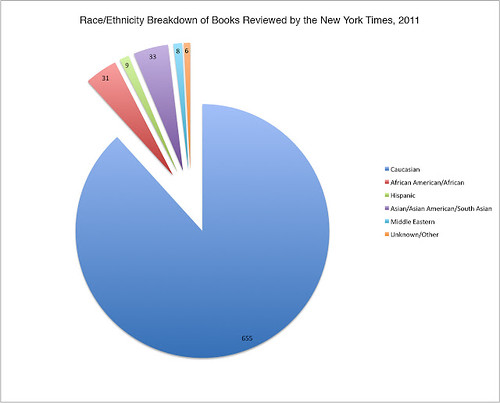
It’s an immediate attention grabber. Why? Because this highlights the gap in diversity of caucasian and POC authors. This is an informal survey taken by author Roxanne Gay that breaks out authors reviewed by the NYT in 2011 by race. Nearly 90% are caucasian. This by no means shows a complete breakdown of publishing. But I would venture to say that a more accurate number of published books might even further compound the gap between caucasian authors and POC authors.
Ms. Gay states in her article that “These days, it is difficult for any writer to get a book published. We’re all clawing. However, if you are a writer of color, not only do you face a steeper climb getting your book published, you face an even more arduous journey if you want that book to receive critical attention. It shouldn’t be this way. Writers deserve that same fighting chance regardless of who they are but here we are, talking about the same old thing—these institutional biases that even by a count of 2011 data, remain deeply ingrained.”
I am a person of color, a minority, and I am a published author. Did it feel like it was harder for me than a caucasian author to get published? I can’t answer that. I have no idea what their path to publication felt like. But I can talk about my own path and the roadblocks that I came across. I can talk about being told over and over again by other writers and publishing professionals that no one would buy a book about ancient Korea. I can talk about having my writing ridiculed by saying it reads like a bad translation of a Chinese book, even though English is my native language, and I’m not Chinese. I have numerous tales of the type of dissuading I endured, but I didn’t give up because I believed that there needed to be more books like mine out there. And I was extremely lucky to get published by a wonderful publisher.
I wrote a children’s book. Historically, children’s books have always been a wonderful place to find multicultural books… at least compared to other areas of publishing. With librarians and teachers looking for diversity, there have been many more multicultural titles in children’s publishing. Although I would not say it is the same for YA. In this aspect, I am speaking most specifically about chapter, picture and middle grade books. Or so I believed. But now I have a new graphic to share in my diversity presentations.
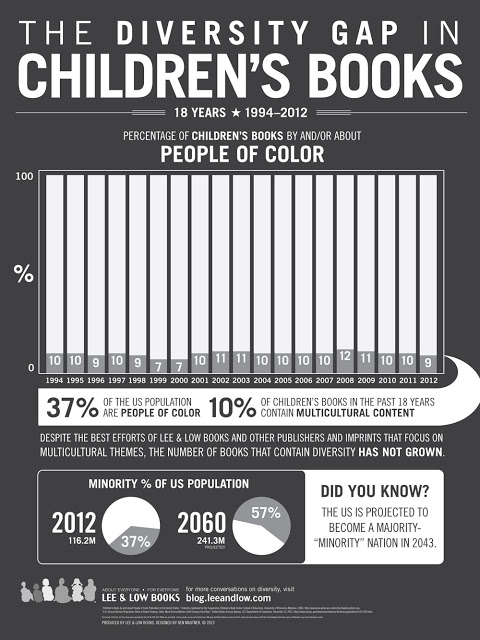
This is a new graphic by Lee & Low books that put an end to my rosy colored view of diversity and publishing in children’s. The percentage of books by and about people of color has hovered around 10% for nearly 20 years. When I first saw this graphic, I was absolutely stunned. I had no idea how little had changed. And when I read the accompanying articlehere, I found myself nodding my head in dismay.
Betsy Bird, School Library Journal blogger at A Fuse #8 said “The public outcry for more multicultural books has so far been more of a public whimper.” And I have to ask, why? Is the problem supply or is the problem demand?”
From the viewpoint of a minority woman, I believe the demand is there. But maybe the default of “white culture” is so ingrained that even minorities don’t know to demand for more. We read what is there. What’s available to us. They say girls read boy books but boys don’t read girl books. Is the parallel POC read white books but whites don’t read POC books? I don’t think so. I think that the truth is, they are not exposed to them.
Publishers seem to believe that multicultural books just don’t sell as well. But do they get the same marketing push as non-POC books? Are all things equal when they are sent out into the world? I would hazard a guess that they are not. Because if you do not believe that multi-cultural books will sell well, then you will not put the marketing money behind them and thereby you create a self-fulfilling prophecy. Now I have been lucky, my books have had terrific marketing support from my publisher. So the question then goes to the other side of the coin. Where are the booksellers, the librarians, the teachers on pushing the multicultural books? It’s not just enough to ask publishers to publish the books, there must be help from the other side. There has to be a support system for these books once they are published, to help get them into the children’s hands. And that is not all up to the publisher.
I once asked a YA librarian if she thought there were enough diverse titles and she said that they were there, but you just have to know how to look for them. Isn’t that part of the problem? That they are invisible and no one knows about them? How are they shelved in bookstores and libraries? How easy are they to find? Of the 112 titles chosen by YALSA for the 2012 Best Fiction for Young Adults list, less than 10% were by POC authors. The 2013 list is looking like it may fare even worse. So if teen librarians are looking to these lists that are so woefully underrepresented, does this not aggravate the underlying problem?
One thing that really stood out for me is this series of questions by Ms. Bird, “Finally, we need to officially address how we feel about white authors and illustrators writing books about people of other races. Is it never okay? Sometimes okay? Always okay?”
To this – I want to offer up a response from writer Claire Light because I couldn’t say it better:
What I want to add to the debate is a small piece of truth that gets glossed over. In response to the complaint of white writers about writing about people of color: “Damned if you do. Damned if you don’t,” I want to say: Absolutely.
It’s absolutely true. You’re damned either way. Race and racism exist in this society, and if you ignore them, you’re expressing a racial privilege…
If you do do it and get it “wrong”, you’ll get reamed, and rightfully so. It’s presumptuous of you to think that you have the right to represent a culture you don’t belong to if you can’t be bothered to properly examine and accurately portray that culture.
Further, if you do it and get it “right”, or rather, don’t get it wrong, you’ll still get reamed by members of that culture you’ve represented who rightfully resent a white writer’s success representing their culture. After all, every American ethnic minority has its writers: good and bad. The good writers are mostly ignored. Inevitably, some white writer will come along and do a bang-up job portraying that culture and will get–in one book, in one section of a book–more attention than the poc writer got over the course of three or five or ten books.
You’re a white writer trying to do the right thing, but no matter what you do, it’s wrong. And that’s so unfair to you, isn’t it?
Welcome to a tiny taste of what it’s like to be a person of color.
I want to tell you an honest truth people, because of all the racism I have endured in my life (and even seeing the racism my own children have had to face) I cannot help but resent when caucasians write about Asian culture. Yes, I resent them. I absolutely do. Yet, at the same time, I appreciate them for at least trying to do it, when they do it right.
It is a complicated situation. There is no easy answer. We need diversity in literature. We need it desperately. Diversity is not only for the under-represented—the truth is, diversity is important for everyone. All people need to be exposed to other races and other cultures in positive ways. All people need to learn tolerance and acceptance of differences. When we promote only a homogeneous view of society in our literature and our media, and deem books or movies about minorities as unsuccessful, it harms everyone. And so it is important that all authors include diversity in their books.
But there is that part of me that wonders why is it that when I see a list about what Asian fantasy books are out there, the books are predominantly by caucasian authors. Are POC writers not writing them or are they being passed over for books written by non-POC authors instead? And why is it that books by or about POC don’t tend to sell as well as other “mainstream” books. What is the difference? Is it the difference in how they are marketed? Is it their cover art? Where they are placed in the bookstore or library? How they are pushed or not pushed by the booksellers, librarians, and teachers?
The reality is, there are just not a lot of POC authors out there. We are not representing the 37% of our population when we only amount to 10% of publishing. When you look at diversity panels or even the YA tag in racebending.com, the authors tend to be predominantly white because they reflect publishing.
This is why I can’t help but be resentful. I freely admit it. It sucks being a POC author sometimes. You feel invisible. You feel passed over. And true or not, it feels harder for us to get to tell our own stories. And that shouldn’t be the way things are.
I want to see more of me in publishing. I want to see more POC authors overcoming the publishing barrier and writing about their cultures. I want to see diversity panels filled with… diversity! We need to be performing on stage with our counterparts, not just watching in the audience.
We need to represent.
We need to belong.
26 Jun 18:47
Minnesota man finds another vintage Superman comic in wall
by Kevin Melrose
firehoseare you fucking kidding
26 Jun 18:43

Ziphius, the Pi-powered aquatic drone, now on Kickstarter
by liz
firehosedrones by sea
We first came across Ziphius when Rob Bishop went to do some talks and workshops in Portugal. Ziphius is a Pi-powered aquatic drone, equipped with cameras, who displays autonomous behaviour and can also be controlled from your phone or tablet. I say “who” rather than “which” because despite the lack of a face, arms or legs, Ziphius has a very singular character and, once powering through the waves, seems oddly cheerful and friendly. I’ve no idea how team Ziphius have achieved this injection of soulfulness into a drone shaped like an aquatic potato, but they’ve done it with aplomb.
It’s stealthy, like a ninja. A yellow, shoe-shaped, seafaring ninja with bags of personality.
Ziphius plays fetch
Ziphius can tow you on your inner tube, take movies of you while you catch a wave, photograph or film what’s on the sea bed, scout ahead of your fishing party, hold your beer in the pool, play games (it can even retrieve objects thrown to it) and much more. Rob says:
I had an opportunity to visit the team behind Ziphius when I last visited Portugal to speak at IST in Lisboa. We spent a day together integrating the Pi camera into their aquatic drone and discussing their future plans. I’m really pleased to see that they’ve got to this point and hope they succeed in raising the funds they need. Their drone is very impressive in person and I can imagine a number of uses for it beyond simply messing about at the beach (although that did look like fun!). It will also make a pretty cheap platform for any kind of water-based robotics if they manage to produce it at their intended $200 to $250 price point (which includes a Pi and a Pi camera).
We wish the folks at Azorean Aquatic Technologies all the best with the Ziphius Kickstarter.


26 Jun 18:42
Supported Google Reader Alternatives (part one)
firehose"the APIs of Tiny Tiny RSS, CommaFeed, NewsBlur and others ... are not ready to support the local synchronization approach used by Mr. Reader. They are designed for websites or Apps that behave like websites. Every user interaction results in, just as on a website, a separate server call to fetch the requested data. For example you select a feed and the first 10-20 articles must be downloaded from the server. You scroll down and the next batch of articles must be downloaded. You select a different feed and another download must be done and so on. With APIs like these Mr. Reader is unable to mark an article as read in its local database when the article has already been marked as read on the website. There is just no way to get this information from the API."
Sorry that there haven’t been any signs of life or App updates from me since my last posts in March. I have been very busy preparing my code to support multiple Google Reader alternatives and, of course, integrating some of those alternatives in to Mr. Reader. I will publish another blog post with more details soon.
This blog post is an introduction to explain some of the problems I have encountered.
All APIs are not equal
Just a few words about the APIs of some Google Reader alternatives and why they cannot be used with Mr. Reader.
This covers - at the time of writing - the APIs of Tiny Tiny RSS, CommaFeed, NewsBlur and others.
Mr. Reader synchronizes data with the chosen RSS service. This means that Mr. Reader keeps the data - depending on your sync settings - in a local database on your iPad. During a sync Mr. Reader downloads only the articles that are not already in the local database and marks items as read and starred, etc. This works with IDs (= numbers) and not with megabytes of data that must be downloaded again and again.
The above APIs are not ready to support the local synchronization approach used by Mr. Reader. They are designed for websites or Apps that behave like websites. Every user interaction results in, just as on a website, a separate server call to fetch the requested data. For example you select a feed and the first 10-20 articles must be downloaded from the server. You scroll down and the next batch of articles must be downloaded. You select a different feed and another download must be done and so on. With APIs like these Mr. Reader is unable to mark an article as read in its local database when the article has already been marked as read on the website. There is just no way to get this information from the API.
Mr. Reader utilises the local synchronisation approach because some functionality requires the data to exist in the local database. For example, once a sync has completed, it’s far more efficient (no more server calls to get the data) and RSS articles can be read without an internet connection.
How to identify an API that is incompatible with Mr. Reader?
- The API has a call to get the unread count values of folders and feeds
- The API does NOT have a call to get the IDs of unread, starred, tagged articles only
- The API does NOT have a call to download articles by ID
Local/Standalone Sync
A quick refresher on running apps in the background in iOS: Once you quit an App it cannot run in the background for longer than ~10 seconds. This can be extended to max. 10 minutes to finalize some cleanup or to finish a long running download. After this time the App cannot do anything. It is suspended until you open it again. This is to save battery life, minimise memory use and to maximise the overall performance of iOS.
Due to these restrictions Mr. Reader is unable to refresh feeds and download new articles when it is not running. Therefore a Local/Standalone Sync approach could be extremely problematic.
I will try to illustrate the problem using an example feed - The Verge (note: this issue is not unique to The Verge; many other feeds work in a similar manner):
- The ‘The Verge’ feed (RSS = XML file) contains only the last 10 published articles
- You last synchronised in Mr. Reader one day ago
- ‘The Verge’ publishes, for example, 26 new articles since your last synchronization
- When you synchronize, Mr. Reader will only be able to get the last 10 articles from the feed; the other 16 articles are lost! There is really no way to get them :-(
Server based RSS services like Google Reader, etc. frequently poll feeds for new articles, downloading them and keeping them in their local database. When Mr. Reader is connected to a reader service it is able to fetch all of the articles since its last synchronization, regardless of the frequency of updates or the number of articles published by the feed. No articles are lost.
In my opinion a Local/Standalone Sync approach will not work reliably for most users. The exception is those users who are able to launch the App every one or two hours to download the latest articles, or users who are not subscribed to feeds that regularly publish many articles, or those users who don’t care about missing-out on articles.
Local/Standalone Sync + iCloud
There are still a lot of problems with iCloud and many developers have given up (1, 2, 3) using it. It is just a service to store and synchronise data and not to perform operations like downloading RSS articles.
Apple recommends that only a small amount of data should be synced with iCloud and only data that cannot be recreated. It would be a funny discussion with Apple (e.g. they reject my App) trying to explain why Mr. Reader saves tens or hundreds of MB of article data in iCloud that could easily be downloaded again from the internet. ;-) Also see problems of the Standalone Sync above.
Therefore iCloud would only be useful to sync your subscriptions and settings. But this can only be done between Apps from the same developer and is restricted to iOS and Mac devices.
26 Jun 18:18

Minicore Studios has dropped the first trailer for its alternate history action RPG, Laika Believes: The Sun at Night. Robo-animal enemies and branching levels aside, just look at those puppy-dog eyes! Who's a good little girl? Who's a good little mechanically altered war machine? You are! You are!
Laika Believes in this new teaser trailer
by Jordan Mallory
firehoseattn: saucie, a game where you play a Russian space dog
Minicore Studios has dropped the first trailer for its alternate history action RPG, Laika Believes: The Sun at Night. Robo-animal enemies and branching levels aside, just look at those puppy-dog eyes! Who's a good little girl? Who's a good little mechanically altered war machine? You are! You are!
 Laika Believes in this new teaser trailer originally appeared on Joystiq on Wed, 26 Jun 2013 04:00:00 EST. Please see our terms for use of feeds.
26 Jun 18:01
Ace Hotel Launches "Thinking Cap"
by Marjorie Skinner
firehoseMark Mothersbaugh
meanwhile, in Portland
The Ace Hotel, ever dedicated to remaining plugged into the creative industries that surround their locations, has launched a monthly video series profiling artists and their creative processes, called "Thinking Cap." The first, released today, features painter Evan B. Harris, who is responsible for some of the murals that have graced the hotel's interior since its opening in 2007. On July they'll launch a second one on Mark Mothersbaugh, and Sword + Fern (!) is set for August. Cute and light, the format appeals to me as a nice little collection of viewable time capsules documenting what's happening here now, and the Ace doesn't appear to be overly inserting itself or being annoyingly advertorial about it in the least, either:


26 Jun 17:54


Investors are tired of giving their money to tech founders without strings attached
by Gina Chon
firehoselol
The latest round of tech IPOs has featured multi-class stock structures that give company founders a lot of control. But big investors have become less tolerant of that setup, which disempowers other shareholders. As a result, some of those investors are now pushing back for the next round of tech IPOs, sources tell Quartz.
Multi-class stock structures for Facebook and Groupon, for example, gave the founders exponentially more voting power than other investors, which makes it difficult for those other shareholders to push for change in the company. Zynga instituted a triple-class structure, giving founder Mark Pincus 70 times more voting power than other investors. Big investors like BlackRock, T Rowe Price and Fidelity, who typically have a lot of sway in how companies go public, tolerated those structures because they considered the founders vital to the companies’ success. The multi-class shares also offered the founders some protection from takeovers once the companies went public.
But the tide is turning now that those investors are having to stomach drops in the companies’ share prices, sources say. Shares of Facebook, which priced its IPO at $38 per share, were trading above $30 at the beginning of this year, but have since fallen to around $24. Groupon’s shares recently bounced back, but only after the board ousted co-founder and CEO Andrew Mason in late February. Earlier this month, Pincus announced Zynga was laying off 18% of its staff; its shares are down by 73% since its IPO.
Some large investors have told bankers, venture capital firms and private companies that they will oppose multi-class stock structures in future IPOs, sources add. The shift could affect companies like Twitter, Dropbox and Box, which are expected to be part of the next wave of highly anticipated IPOs (though it’s too early to say whether they would pursue a dual-class stock structure).
That said, it’s easy to blame dual-class stock structures when a company heads south. It’s worth noting that LinkedIn and Yelp also have dual-class structures, but their shares have risen since their market debuts. LinkedIn’s stock is up by 300% since its IPO. Yelp has jumped by about 112%.
26 Jun 17:32
Pure Android: Samsung Galaxy S4 and HTC One 'Google Play editions' review
by Dieter Bohn
firehose'Icons, including Google’s own, seem to be randomly sized based on whims and vagaries. The back button still will take you to strange places. The select/copy/paste icons that appear when selecting text are practically inscrutable the first time you see them. Some apps utilize edge-swipes to take you to a menu, but not all, and it’s hard to find rhyme or reason as to why.
There’s also sometimes radically different style even within Google’s own apps — the recent Gmail update, Hangouts and Google+ each seem to be tracking in almost wildly divergent directions. Android designer Matias Duarte said last September that "Personally I feel like I’ve gotten only about a third of the way to where I want to be with regards to consistency, responsiveness, and polish." Sometimes Android design feels like it’s two steps forward and one shuffle-step sideways. Say what you will about where exactly the new design of iOS 7 is headed, but if nothing else it feels like there’s a firmer hand on the Apple rudder.'
...
'Google has watched Apple, Microsoft, and even BlackBerry release new operating systems that look and act just like the designers at those companies intended, no matter the manufacturer or the carrier.'
Google’s “openness” on Android has benefitted carriers and manufacturers at least as much it has consumers. As much as I’d like to see these new “Google Play edition” phones change this entire dynamic, I think it’s very unlikely given the history of the Nexus line.'
The Android device story has followed a predictable pattern for the past few years: Samsung, HTC, LG, and Sony release top-tier hardware to carriers the world over, with their own proprietary software layered over Android. Google, meanwhile, partners with one of those companies to release a Nexus phone running “pure” Android software, usually without carrier support and usually on hardware that doesn’t feel quite up to snuff.
This year, two flagship phones, the Galaxy S4 and the HTC One, represent the pinnacle of Android hardware. They seem to have everything you could ask for: fast processors, gigantic and beautiful screens, LTE, and (mostly) great hardware design. But like their predecessors, they also come with a lot of extra software you probably didn’t ask for.
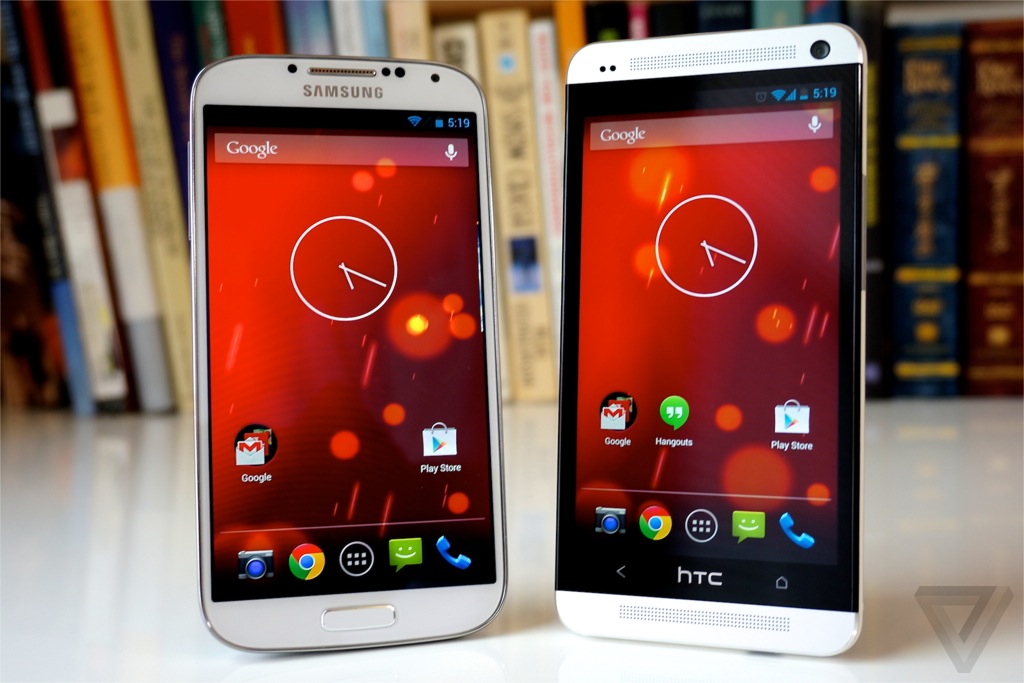
But this year, Google found a way to get HTC and Samsung to offer those same phones without their so-called “skins.” Both the Samsung Galaxy S4 and the HTC One can now be purchased without their respective manufacturer customizations for $649 and $599, respectively. Offered unsubsidized, unbranded, and unbesmirched by carrier software directly from Google, together they represent something we haven’t seen in a very, very long time: the best available hardware paired with Google’s vision of Android.
On top of all that, for the first time we can compare a customized version of Android directly against stock software running on the same device with manufacturer support. Do Samsung’s TouchWiz and HTC’s Sense really detract from the “true” Google experience?
New software, old hardware
Since we’re already reviewed the hardware on the Galaxy S4 and the HTC One, let’s quickly list out the physical changes on the stock editions. On the Galaxy S4, the carrier logo and the "Galaxy S4" logo have been replaced by a simple, single "Samsung" logo on the back. HTC’s "beatsaudio" logo remains, as this stock edition supports it.
That’s it.

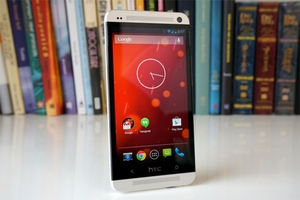
Inside and out, these phones are identical to their predecessors
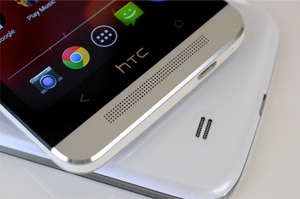
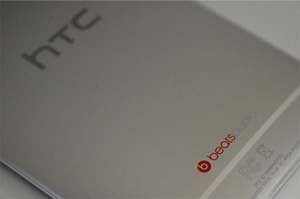
Inside and out, these phones are identical to what we’ve already seen. They’ll do LTE on both AT&T and T-Mobile, but may not be able to utilize T-Mobile’s AWS HSPA networks at their maximum speeds. They use the same NFC, IR ports, cameras, processors, radios, speakers, screens, and all the rest. It’s worth noting that the HTC One’s storage is 32GB, double that of the Galaxy S4 — though the latter still has a microSD card slot for expansion.
Now that we’ve had several months to get to know these phones, the fact that they have identical hardware turns out to be a mixed blessing for both of them.
The HTC One is still the most beautiful and elegant Android phone by a very wide margin. The screen looks great, the speakers are crazy loud, and it simply feels more premium than any of its competitors. However, HTC’s obstinate refusal to bow to the design norms of the Android market hurts the stock One as much as it hurts the skinned model.
The power button, located at the top of the phone, is nigh-impossible to reach with one hand. Samsung, LG, Nokia, and many others put it on the side now, an infinitely more reasonable choice for large-screened phones. More annoyingly, HTC continues to participate in Google’s campaign to rid the world of a dedicated menu button. In a perfect world, developers would follow Google’s guidelines and update their apps with on-screen menu buttons. In the real world, Samsung still ships a menu button on the bestselling Galaxy line, meaning there’s simply not enough incentive to get developers to redesign their apps.
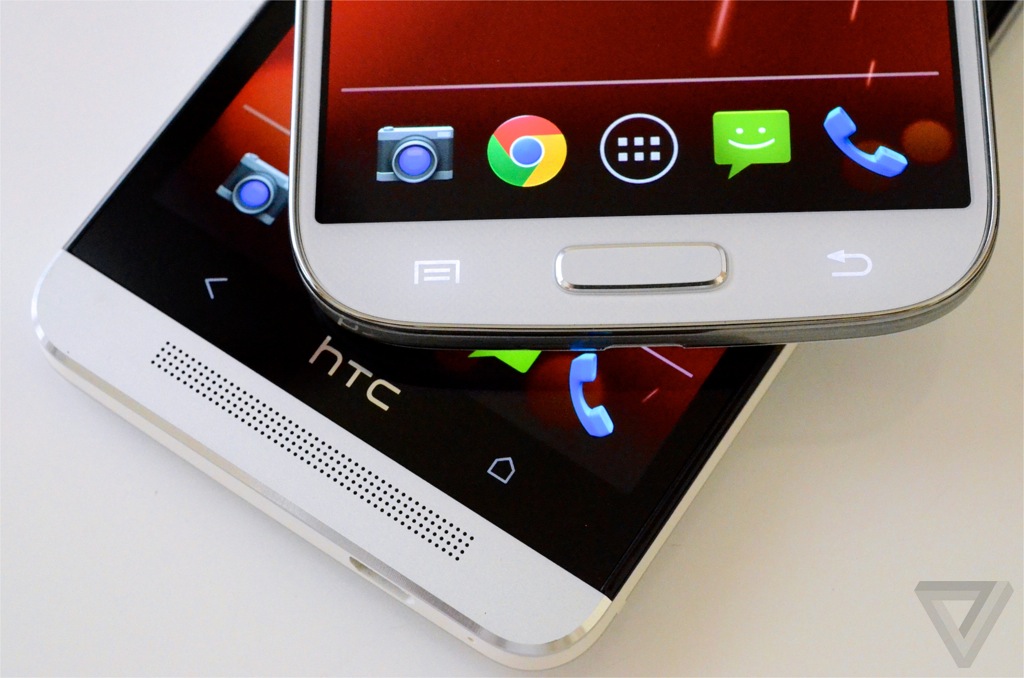
Arcane Android politics aside, the bottom line is that HTC only provides two buttons — home and back — with the home button awkwardly placed on the righthand side. This means that when you install an Android app that doesn’t follow Google’s Holo guidelines for on-screen menu buttons, you’re stuck with a gigantic black menu button at the bottom of your screen. Those apps are — thankfully — becoming increasingly rare, but they happen often enough to screw up whatever muscle memory you’ve built up with the keyboard whenever it gets shifted up.
The stock Galaxy S4 has the same slimy feeling back cover, faux-metal plastic rim, and overall midrange aesthetic. In our original S4 review, David Pierce wrote that the hardware "makes an awful first impression" and I can’t say that I disagree. But what the GS4 lacks in panache it makes up for in utility. That back cover comes off so you can replace the battery and add an SD card. It also has the traditional three-button menu/home/back button layout that works better with stock Android.
I was able to get some third-party apps to successfully work with the GS4’s IR blaster, though app selection in that regard is still quite limited. Google says that the IR blaster on the stock HTC One doesn’t work right now, but will with a future software release.
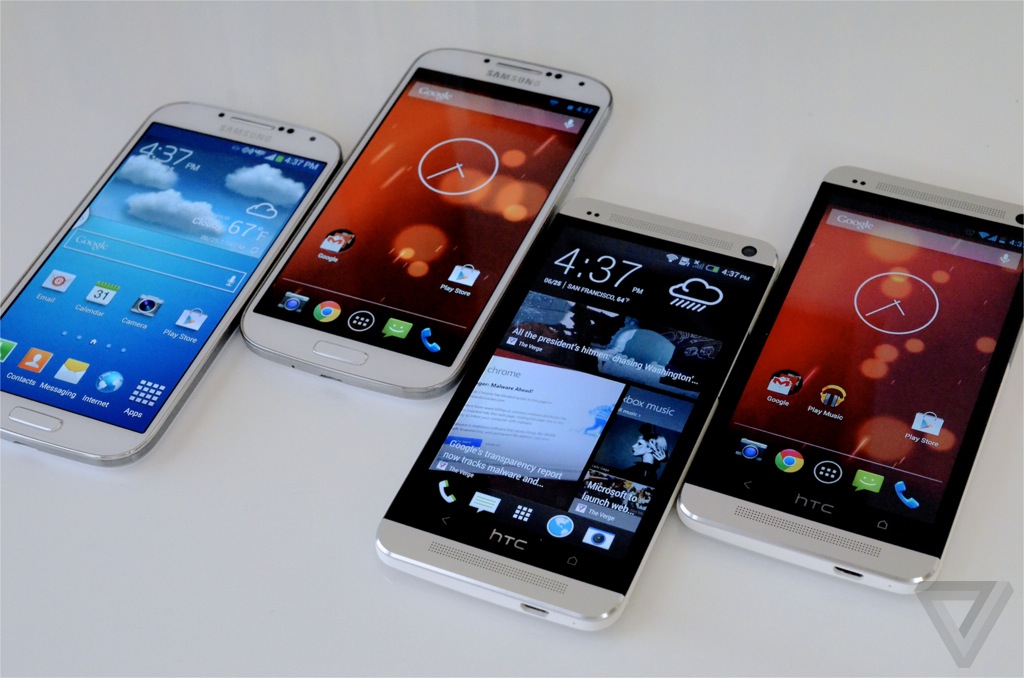
Power vs. simplicity
Since the hardware and stock Android software are both known quantities, the biggest question surrounding these phones is how well the cameras would perform. Both Samsung and HTC put a lot of effort into their custom camera software and hardware, and more importantly they tout their improvements as essential facets of their custom software experiences. Samsung piled an absolutely gigantic set of (occasionally gimmicky) features onto an advanced 13-megapixel shooter, while HTC took the risky route of using fewer megapixels that could take in more light — the so-called "ultrapixel" camera.
The good news is that, for the most part, you can still get good photos from the stock versions of these phones. In many cases, I was unable to discern any difference between the skinned-version photos and the stock-version. Especially when you’re shooting with the default auto settings, photos from both the GS4 and the HTC One were nigh-indistinguishable from their skinned counterparts.
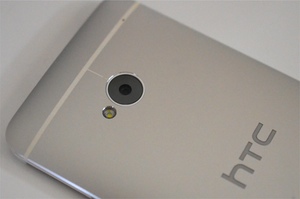




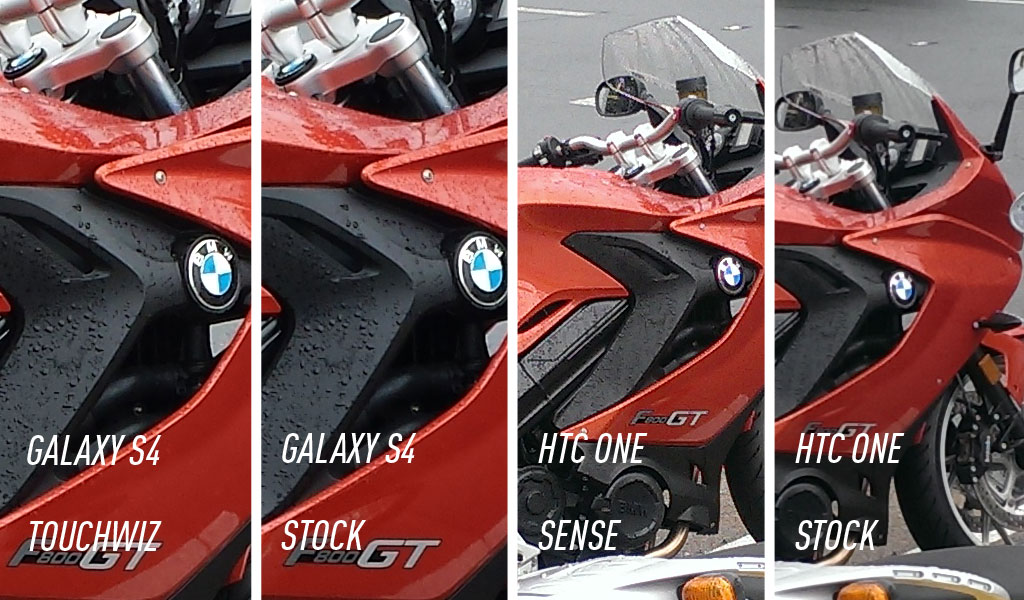




There are exceptions, though. HTC’s camera in particular managed to get slightly sharper shots in extremely low-light settings with Sense than the stock version. On both the GS4 and the One I found that video was slightly better on the skinned versions as well, with richer colors and less "jellyvision."
I can’t say how much effort these companies put into making sure their cameras worked well with the stock Android software, but it does seem clear that they spent at least a nominal amount of time tuning the image processing. Samsung should have probably spent a little more time doing so — the stock Galaxy S4 exhibited a noticeable and troubling shutter lag that isn’t present on the skinned version nor on either HTC One.
While just pointing the phone at a subject and clicking the shutter button doesn’t yield remarkably different results between skinned and stock, that’s far from the whole story.
Both Samsung and HTC offer a series of settings that can give you significantly more control over your camera. White balance, shutter speed, exposure, and countless simple modes all combine to give you power over how your image will look before you snap your photo. Given the amount of engineering and money that goes into the hardware behind these cameras, it only makes sense that the software should offer more utility.
In this regard, Google has a lot of catching up to do. The stock camera does offer some basic settings, but they’re hidden behind its poorly-thought-out radial menu. HTC Sense and Samsung TouchWiz treat their cameras like cameras, but stock Android still feels like it’s stuck in an old "cameraphone" world.
Equal power
Battery life was a little different. Surprisingly, the stock versions of both the Galaxy S4 and the HTC One well outperformed the skinned versions. In the Verge Battery Test (our standard test that cycles through a series of popular websites and high-res images with brightness set to 65 percent) each phone came in at about six hours. In HTC’s case, that’s a full hour longer than the Sense version managed to pull off.
Performance comparisons between the two are a study in tiny differences
Battery life was a little different. Surprisingly, the stock versions of both the Galaxy S4 and the HTC One well outperformed the skinned versions. In the Verge Battery Test (our standard test that cycles through a series of popular websites and high-res images with brightness set to 65 percent) each phone came in at about six hours. In HTC’s case, that’s a full hour longer than the Sense version managed to pull off.
I have more experience with the HTC One than the GS4, so I can say that in my day-to-day use the stock version definitely seemed to last longer into the evening. Sadly, it’s still an "into the evening" kind of situation — the Droid RAZR Maxx HD this is not, so be prepared to grab a charge in the late afternoon depending on your usage.
The Google skin
If you haven’t used a Nexus device, I expect you’ll find stock Android 4.2.2 a refreshing, clean change from other Android devices. While TouchWiz and Sense have toned themselves down compared to years past, there’s still the nagging feeling that some "core" apps come from one place while others don’t. With stock, that dissonance is much reduced. More importantly, Google often just does a better job with things like Calendar and Messaging. They’re generally better designed in my taste, with a cleaner and flatter look that also happens to be much more functional.
Even if you assume that HTC and Samsung could re-skin every single corner of Android with their respective look and feel (and you shouldn’t assume that at all), at the end of the day I just think their aesthetic sensibilities are off, and Google’s are better.
It's not so much that there's more to love, instead it's that there's less to hate
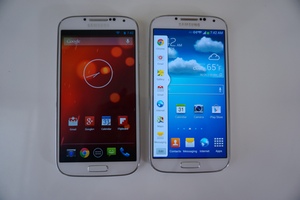
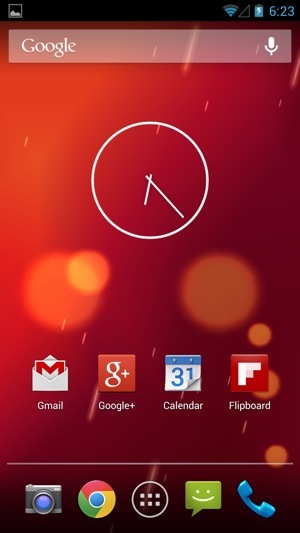

That said, Android’s design still suffers from nagging inconsistencies. Icons, including Google’s own, seem to be randomly sized based on whims and vagaries. The back button still will take you to strange places. The select/copy/paste icons that appear when selecting text are practically inscrutable the first time you see them. Some apps utilize edge-swipes to take you to a menu, but not all, and it’s hard to find rhyme or reason as to why.
There’s also sometimes radically different style even within Google’s own apps — the recent Gmail update, Hangouts and Google+ each seem to be tracking in almost wildly divergent directions. Android designer Matias Duarte said last September that "Personally I feel like I’ve gotten only about a third of the way to where I want to be with regards to consistency, responsiveness, and polish." Sometimes Android design feels like it’s two steps forward and one shuffle-step sideways. Say what you will about where exactly the new design of iOS 7 is headed, but if nothing else it feels like there’s a firmer hand on the Apple rudder.
Of course, the software story on these two phones isn’t so much about what’s here as what isn’t here. There are no apps from HTC or Samsung, and there are no duplicate apps for things that Google already provides, like Music or Calendar. More importantly, there’s nothing from the carriers. You won’t have to wait for the Contacts app to unnecessarily call home to AT&T or Verizon anymore.
Strangely, there are a couple pieces of software the stock Galaxy S4 comes with that don’t appear on the stock HTC One: Google Earth and Google Wallet. The former you can install on the HTC One, but the latter doesn’t appear to be compatible. That’s unfortunate and frankly hard to understand, given that the HTC One has NFC. Then again, given Google Wallet’s recent troubles, it maybe isn’t a great idea to make that app an essential part of your life right now anyway.
Also, neither of these phones are technically "Bone Stock" Android. The Galaxy S4 comes with a "TouchWiz" feature: it works with Samsung’s S-View Flip Cover for displaying information when the screen is off. HTC’s One comes with Beats Audio hidden away in a checkbox within settings (but thankfully not in the notification bar). The skinned version of the One sounds much better with Beats than the stock version does, with less distortion. Turning on Beats Audio on the stock One seemed to dampen sound while adding only a small bit of bass.
Technically, the "stock" Android on these phones doesn’t come directly from Google (as with the Nexus line), but instead is built and maintained by Samsung and HTC. Google says that both phones will receive timely updates, but there could be an added wait from Samsung or HTC when the next version comes out. It certainly won’t take as long as it would if the carriers were involved, but there’s no guarantee that the stock GS4 and One will get same-day updates along with the Nexus line.
Wrap-up

HTC One (2013) Google Play edition
Good Stuff
- Stock Android
- Beautiful design
- Improved battery life
Bad Stuff
- Poor camera software
- IR blaster not functional yet
- No menu button
There are still tradeoffs, but these are the best Android phones you can get
Android is in a strange place right now. Taken as a whole, it dominates the smartphone market. But as Apple CEO Tim Cook couldn’t help but point out earlier this month, the majority of those devices are running a version of the operating system created in 2010. Just as troubling, Google has watched Apple, Microsoft, and even BlackBerry release new operating systems that look and act just like the designers at those companies intended, no matter the manufacturer or the carrier.
Google’s “openness” on Android has benefitted carriers and manufacturers at least as much it has consumers. As much as I’d like to see these new “Google Play edition” phones change this entire dynamic, I think it’s very unlikely given the history of the Nexus line.
Luckily for you and for me, it’s not our job to fix the Android ecosystem. Instead, we just have to decide whether we want an Android phone and if so, which one is the best for us. It’s unfortunate that these phones aren’t available on all carriers and won’t be sold at subsidized prices. The HTC One Google Play edition retails for $599 and the Samsung Galaxy S4 Google Play edition sells for $649. There are carrier and price hurdles you have to jump over when choosing the stock Galaxy S4 or HTC One, but in my opinion they’re worth the leap.
HTC’s Blinkfeed, Samsung’s crazy eyeball sensing technology, and all the rest of those custom add-ons always felt like they were meant more for a showroom floor demo than actual day-to-day use. Having tried both devices without them, I can’t say I really miss any of it. Unless you’re somehow wowed by that stuff, the only real major software drawback is the lackluster camera software on these stock phones.
I think the vast majority of Android users could happily forgo TouchWiz and Sense, making either the stock Galaxy S4 or stock HTC One a better option than what you can get from the carriers — assuming you can afford the unsubsidized price. Once you’ve crossed that bridge, deciding between these two phones is a bit harder. It’s a choice between HTC’s beauty and Samsung’s utilitarianism, but either way, you’ll have the best Android phone money can buy.
The Breakdown
More times than not, the Verge score is based on the average of the subscores below. However, since this is a non-weighted average, we reserve the right to tweak the overall score if we feel it doesn't reflect our overall assessment and price of the product. Read more about how we test and rate products.
- Design 9
- Display 10
- Camera(s) 4
- Reception / call quality 8
- Performance 9
- Software 9
- Battery life 7
- Ecosystem 8

Samsung Galaxy S4 Google Play edition
Good Stuff
- Stock Android
- Removable battery
- Fast performance
Bad Stuff
- Cheap-feeling design
- Only 16GB of storage
- Poor camera software
There are still tradeoffs, but these are the best Android phones you can get
Android is in a strange place right now. Taken as a whole, it dominates the smartphone market. But as Apple CEO Tim Cook couldn’t help but point out earlier this month, the majority of those devices are running a version of the operating system created in 2010. Just as troubling, Google has watched Apple, Microsoft, and even BlackBerry release new operating systems that look and act just like the designers at those companies intended, no matter the manufacturer or the carrier.
Google’s “openness” on Android has benefitted carriers and manufacturers at least as much it has consumers. As much as I’d like to see these new “Google Play edition” phones change this entire dynamic, I think it’s very unlikely given the history of the Nexus line.
Luckily for you and for me, it’s not our job to fix the Android ecosystem. Instead, we just have to decide whether we want an Android phone and if so, which one is the best for us. It’s unfortunate that these phones aren’t available on all carriers and won’t be sold at subsidized prices. The HTC One Google Play edition retails for $599 and the Samsung Galaxy S4 Google Play edition sells for $649. There are carrier and price hurdles you have to jump over when choosing the stock Galaxy S4 or HTC One, but in my opinion they’re worth the leap.
HTC’s Blinkfeed, Samsung’s crazy eyeball sensing technology, and all the rest of those custom add-ons always felt like they were meant more for a showroom floor demo than actual day-to-day use. Having tried both devices without them, I can’t say I really miss any of it. Unless you’re somehow wowed by that stuff, the only real major software drawback is the lackluster camera software on these stock phones.
I think the vast majority of Android users could happily forgo TouchWiz and Sense, making either the stock Galaxy S4 or stock HTC One a better option than what you can get from the carriers — assuming you can afford the unsubsidized price. Once you’ve crossed that bridge, deciding between these two phones is a bit harder. It’s a choice between HTC’s beauty and Samsung’s utilitarianism, but either way, you’ll have the best Android phone money can buy.
The Breakdown
More times than not, the Verge score is based on the average of the subscores below. However, since this is a non-weighted average, we reserve the right to tweak the overall score if we feel it doesn't reflect our overall assessment and price of the product. Read more about how we test and rate products.
- Design 5
- Display 10
- Camera(s) 7
- Reception / call quality 8
- Performance 9
- Software 9
- Battery life 8
- Ecosystem 8
26 Jun 17:29
AMD Has Massive Radeon Patch Set - Power Management!
firehosewoooo
For AMD Radeon customers using the open-source Linux graphics driver, the Linux 3.11 kernel is going to be mega exciting! Alex Deucher of AMD posted a set of 165 kernel patches today. Most notably, there's finally Dynamic Power Management (DPM) support for R600 GPUs up through Southern Islands hardware! Yes, there's finally dynamic power management in the open-source driver. Additionally, there's initial support for AMD "Sea Islands" hardware and there's also ASPM (Active State Power Management) support...
Andreas Fritsch likes this
26 Jun 16:42
Fierce Russian Kitten Steals Money, Doesn’t Want to Give it Back
by Kimber Streams
firehoseRussian cats beat
A fierce kitten steals a Russian ruble and doesn’t want to give it back in this video uploaded to YouTube by palachmbable.
via D3, Daily Picks and Flicks
26 Jun 16:41


PS Vita <3s Indie Devs Remember when I wrote about the PS...
by ericisawesome
PS Vita
Remember when I wrote about the PS Vita being a must-own if you’re into playing portable versions of great indie games? Here’s a video backing that argument, showcasing already available and upcoming indie games for the system. I forgot all about Divekick coming to PS Vita — that simple fighter is way more fun than it deserves to be.
Adding to the underdog handheld’s indie appeal, PS Vita opened an Indie Games category yesterday on its PlayStation Store (PlayStation 3 has had one for a month now) alongside the PSN release for Hotline Miami. There are currently more than 50 indie titles under development for PS Vita.
BUY PS Vita, upcoming games
John Drury, firehose likes this
26 Jun 16:31
Live from the Microsoft Build 2013 keynote - The Verge
by gguillotte
firehoseNOT HELPING THE XBONE THERE, BALLMER
"So with Windows 8.1 I would say Bing is inside."
"Our search experience is powered by Bing."
"It looks like the same software we have on Windows tablets, Windows PCs, Windows notebooks, and even on our Xbox system."
26 Jun 16:09
EVERYTHING YOU LOVE TO HATE™
by monsieurm




Vilelaedu3, Ronald.phillips and 3 others like this
26 Jun 16:03
This is Motorola Mobility's new logo
by Chris Ziegler
firehosehttp://cdn1.sbnation.com/entry_photo_images/8507953/motorolalogo_large_verge_medium_landscape.jpg
Motorola Mobility is making changes to its well-known brand this week, switching to a new, all-lower-case typeface that's both thinner and softer than the classic bold and italic "MOTOROLA" that has been used for decades. The famous "M" badge persists, though it'll be presented in colorful new versions. The tagline "a Google company" now appears below the logo as well. The logo first appeared on the site of Techweek, a technology conference Motorola is co-sponsoring in Chicago later this week.
The last time the company tweaked its image was when it split with Motorola Solutions, moving from a monochrome "M" to a bright red one — by all appearances, that's now being sidelined for a gentler image that dovetails better with parent company Google. The move comes at a key moment in Motorola's history: the American-made X Phone is coming later this year, a major multi-carrier flagship device and likely the first Moto hardware to be released with significant input from Mountain View.
- Related Items branding logo font moto motorola mobility typeface Motorola Google Cellphones
26 Jun 16:03
The Origins of 26 Alcoholic Drink Names
by Kimber Streams
firehosePina Colada, Julep, Sangria, Wine, Fuzzy Navel, Black and White Russians, Manhattan, Martini, Alabama Slammer, Tom Collins, Tom and Jerry, Irish Car Bomb, Irish Coffee, Mojito, Mai Tai, Bellini, Daiquiri, Screwdriver, Hurricane, Minty Grasshopper, Mimosa, Long Island Iced Tea, Bloody Mary, Zombie, Sidecear
In his latest video, John Green of Mental Floss explains the name origins of 26 alcoholic drinks like the Martini, Sangria, and the Alabama Slammer.
26 Jun 15:43
Adobe Open-Sources Flash C/C++ Compiler
firehosegreat
Adobe announced yesterday it's open-sourcing FlasCC, a C/C++ compiler they developed for bringing C/C++ more easily to the web via Flash and AIR...
26 Jun 15:41
Adorable Photos of Rusty the Red Panda on the Loose
by EDW Lynch

On Monday morning the National Zoo in Washington, D.C. announced via Twitter that Rusty, a male red panda, had gone missing. As Washington and much of the Internet were briefly transfixed by the search for Rusty, Washington resident Ashley Foughty spotted the raccoon-sized mammal scampering in a neighborhood near the zoo. She reported the sighting via Twitter, and posted several adorable photos of the red panda in mid-scamper as evidence. Rusty the red panda was safely captured by zoo officials shortly thereafter. Today, Rusty’s grand day out and the flight of NSA Leaker Edward Snowden were humorously juxtaposed on the cover of the Express newspaper in Washington.
Red panda in our neighborhood! 20th NW and Biltmore. Please come save him! @nationalzoo1 pic.twitter.com/llQF7P9QH5
— Ashley Foughty (@AshleyFoughty) June 24, 2013


firehose and -1 others like this