by Michael Grabell
Updated July 1 with new data from the Bureau of Labor Statistics.
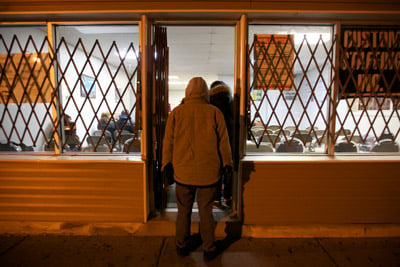
It’s 4:18 a.m. and the strip mall is deserted. But tucked in back, next to a closed-down video store, an employment agency is already filling up. Rosa Ramirez walks in, as she has done nearly every morning for the past six months. She signs in and sits down in one of the 100 or so blue plastic chairs that fill the office. Over the next three hours, dispatchers will bark out the names of who will work today. Rosa waits, wondering if she will make her rent.
In cities all across the country, workers stand on street corners, line up in alleys or wait in a neon-lit beauty salon for rickety vans to whisk them off to warehouses miles away. Some vans are so packed that to get to work, people must squat on milk crates, sit on the laps of passengers they do not know or sometimes lie on the floor, the other workers’ feet on top of them.
This is not Mexico. It is not Guatemala or Honduras. This is Chicago, New Jersey, Boston.
The people here are not day laborers looking for an odd job from a passing contractor. They are regular employees of temp agencies working in the supply chain of many of America’s largest companies – Walmart, Macy’s, Nike, Frito-Lay. They make our frozen pizzas, sort the recycling from our trash, cut our vegetables and clean our imported fish. They unload clothing and toys made overseas and pack them to fill our store shelves. They are as important to the global economy as shipping containers and Asian garment workers.
Many get by on minimum wage, renting rooms in rundown houses, eating dinners of beans and potatoes, and surviving on food banks and taxpayer-funded health care. They almost never get benefits and have little opportunity for advancement.
Across America, temporary work has become a mainstay of the economy, leading to the proliferation of what researchers have begun to call “temp towns.” They are often dense Latino neighborhoods teeming with temp agencies. Or they are cities where it has become nearly impossible even for whites and African-Americans with vocational training to find factory and warehouse work without first being directed to a temp firm.
In June, the Labor Department reported that the nation had more temp workers than ever before: 2.7 million. Overall, almost one-fifth of the total job growth since the recession ended in mid-2009 has been in the temp sector, federal data shows. But according to the American Staffing Association, the temp industry’s trade group, the pool is even larger: Every year, a tenth of all U.S. workers finds a job at a staffing agency.
The proportion of temp workers in the labor force reached its peak in early 2000 before the 2001 slump and then the Great Recession. But as the economy continues its slow, uneven recovery, temp work is roaring back 10 times faster than private-sector employment as a whole – a pace “exceeding even the dramatic run-up of the early 1990s,” according to the staffing association.
The Rise of Blue-Collar Temp Jobs
1993
2012Source: ProPublica analysis of Occupational Employment Statistics data from the Bureau of Labor Statistics
The overwhelming majority of that growth has come in blue-collar work in factories and warehouses, as the temp industry sheds the Kelly Girl image of the past. Last year, more than one in every 20 blue-collar workers was a temp.
Several temp agencies, such as Adecco and Manpower, are now among the largest employers in the United States. One list put Kelly Services as second only to Walmart.
“We’re seeing just more and more industries using business models that attempt to change the employment relationship or obscure the employment relationship,” said Mary Beth Maxwell, a top official in the Labor Department’s Wage and Hour Division. “While it’s certainly not a new phenomenon, it’s rapidly escalating. In the last 10 to 15 years, there’s just a big shift to this for a lot more workers – which makes them a lot more vulnerable.”
The temp system insulates the host companies from workers’ compensation claims, unemployment taxes, union drives and the duty to ensure that their workers are citizens or legal immigrants. In turn, the temps suffer high injury rates, according to federal officials and academic studies, and many of them endure hours of unpaid waiting and face fees that depress their pay below minimum wage.
The rise of the blue-collar permatemp helps explain one of the most troubling aspects of the phlegmatic recovery. Despite a soaring stock market and steady economic growth, many workers are returning to temporary or part-time jobs. This trend is intensifying America’s decades-long rise in income inequality, in which low- and middle-income workers have seen their real wages stagnate or decline. On average, temps earn 25 percent less than permanent workers.
Many economists predict the growth of temp work will continue beyond the recession, in part because of health-care reform, which some economists say will lead employers to hire temps to avoid the costs of covering full-time workers.
The Rise of ‘Temp Towns’
Rosa, a 49-year-old Mexican immigrant with thin glasses and a curly bob of brown hair, has been a temp worker for the better part of 12 years. She has packed free samples for Walmart, put together displays for Sony, printed ads for Marlboro, made air filters for the Navy and boxed textbooks for elite colleges and universities. None of the work led to a full-time job.
Even though some assignments last months, such as her recent job packaging razors for Philips Norelco, every day is a crapshoot for Rosa. She must first check in at the temp agency in Hanover Park, Ill., by 4:30 a.m. and wait. If she is lucky enough to be called, she must then take a van or bus to the worksite. And even though the agency, Staffing Network, is her legal employer, she is not paid until she gets to the assembly line at 6 a.m.
Locations of Temp Workers
These counties had high concentrations of temporary help service workers for counties with more than 100,000 workers in 2012. Overall, 2.2 percent of private-sector workers were temps in 2012.
| County |
Concentration |
| Greenville County, S.C. |
8.3% |
| Kane County, Ill. |
7.4% |
| Kent County, Mich. |
6.7% |
| Middlesex County, N.J. |
6.4% |
| Shelby County, Tenn. |
5.8% |
| Lake County, Ill. |
5.4% |
| Passaic County, N.J. |
5.2% |
| San Bernardino County, Calif. |
4.8% |
| Fayette County, Ky. |
4.6% |
| Burlington County, N.J. |
4.4% |
| Fulton County, Ga. |
4.2% |
Source: ProPublica analysis of Bureau of Labor Statistics’ Quarterly Census of Employment and Wages data; Updated July 1, 2013
In Kane County, Ill., where Rosa lives, one in every 14 workers is a temp. Such high concentrations of temp workers exist in Grand Rapids, Mich.; Middlesex County, N.J.; Memphis, Tenn.; the Inland Empire of California; and Lehigh County, Pa. In New Jersey, white vans zip through an old Hungarian neighborhood in New Brunswick, picking up workers at temp agencies along French Street. In Joliet, Ill., one temp agency operated out of a motel meeting room once a week, supplying labor to the layers of logistics contractors at one of Walmart’s biggest warehouses. In Greenville County, S.C., near BMW’s U.S. manufacturing plant, one in 12 workers was a temp in 2012. A decade before, it was one in 22.
In temp towns, it is not uncommon to find warehouses with virtually no employees of their own. Many temp workers say they have worked in the same factory day in and day out for years. José Miguel Rojo, for example, packed frozen pizzas for a Walmart supplier every day for eight years as a temp until he was injured last summer and lost his job. (Walmart said Rojo wasn’t its employee and that it wants its suppliers to treat their workers well.)
Occupations of Temp Workers
These occupations had high concentrations of their workers in the employment services industry in 2012.
Source: ProPublica analysis of Bureau of Labor Statistics’ Occupational Employment Statistics data
In some lines of work, huge numbers of full-time workers have been replaced by temps. One in five manual laborers who move and pack merchandise is now a temp. As is one in six assemblers who work in a team, such as those at auto plants.
To be sure, many temp assignments serve a legitimate and beneficial purpose. Temp agencies help companies weather sudden or seasonal upswings and provide flexibility for uncertain times. Employees try out jobs, gain skills and transition to full-time work.
“I think our industry has been good for North America, as far as keeping people working,” said Randall Hatcher, president of MAU Workforce Solutions, which supplies temps to BMW. “I get laid off by Employer A and go over here to Employer B, and maybe they have a job for me. People get a lot of different experiences. An employee can work at four to five different companies and then maybe decide this is what I want to do.”
Companies like the “flexibility,” he added. “To be able to call someone and say, ‘I need 100 people’ is very powerful. It allows them to meet orders that they might not otherwise.”
But over the years, many companies have upended that model and stretched the definition of “temporary work.”
At least 840,000 temp workers are like Rosa: working blue-collar jobs and earning less than $25,000 a year, a ProPublica analysis of federal labor data found. Only about 30 percent of industrial temp jobs will become permanent, according to a survey by Staffing Industry Analysts.
By 4:52 a.m., the chairs at Rosa’s temp agency are filled, and workers line the walls, clutching plastic bags that contain their lunches. From behind the tall white counter, the voice of an unseen dispatcher booms like a game-show host, calling out the first batch of workers: ___ Mendoza, ___ Rosales, ___ Centeno, ___ Martinez, ...
It is a practice that George Gonos, a sociologist at SUNY-Potsdam who has spent his career studying the temp industry, calls the modern version of the “shape-up” – a practice in which longshoremen would line up in front of a boss, who would pick them one by one for work on the docks.
The day after Thanksgiving 1960, Edward R. Murrow broadcast a report called “Harvest of Shame,” documenting the plight of migrant farmworkers. Temp workers today face many similar conditions in how they get hired, how they get to work, how they live and what they can afford to eat. Adjusted for inflation, those farmworkers earned roughly the same 50 years ago as many of today’s temp workers, including Rosa. In fact, some of the same farm towns featured in Murrow’s report have now been built up with warehouses filled with temps.
As before, the products change by the season. But now, instead of picking strawberries, tomatoes and corn, the temp workers pack chocolates for Valentine’s Day, barbecue grills for Memorial Day, turkey pans for Thanksgiving, clothing and toys for Christmas.
African-Americans make up 11 percent of the overall workforce but more than 20 percent of temp workers. Willie Pearson, who is African-American, has been a full-time worker at BMW's South Carolina plant for 14 years. But since at least 2005, he said, he hasn't seen anyone who’s “been hired straight on. It’s all been through temporary agencies.” The company says “after six months they can hire them,” he said, “but I’d say it’s only one out of five” who actually lands a full-time job.
BMW did not return calls for this story.
Latinos make up about 20 percent of all temp workers. In many temp towns, agencies have flocked to neighborhoods full of undocumented immigrants, finding labor that is kept cheap in part by these workers’ legal vulnerability: They cannot complain without risking deportation.
Labor Sharks and Kelly Girls
Many people believe that the use of temp workers simply grew organically, filling a niche that companies demanded in an ever-changing global economy. But decades before “outsourcing” was even a word, the temp industry campaigned to persuade corporate America that permanent workers were a burden.
 The industry arose after World War II as the increase in office work led to a need for secretaries and typists for short assignments. At the time, nearly every state had laws regulating employment agents in order to stop the abuses of labor sharks, who charged exorbitant fees to new European immigrants in the early 1900s. Presenting temp work as a new industry, big temp firms successfully lobbied to rewrite those laws so that they didn’t apply to temp firms.
In the 1960s, agencies such as Kelly Services and Manpower advertised their services as women’s work, providing “pin money” to housewives, according to Erin Hatton, a SUNY Buffalo sociologist and author of The Temp Economy. And they marketed the advantages of workers that the host company wasn’t responsible for — a theme that continues today.
 One 1971 Kelly Girl ad that Hatton found, called “The Never-Never Girl,” featured a woman biting a pencil. The copy read:
Never takes a vacation or holiday. Never asks for a raise. Never costs you a dime for slack time. (When the workload drops, you drop her.) Never has a cold, slipped disc or loose tooth. (Not on your time anyway!) Never costs you for unemployment taxes and social security payments. (None of the paperwork, either!) Never costs you for fringe benefits. (They add up to 30% of every payroll dollar.) Never fails to please. (If our Kelly Girl employee doesn’t work out, you don’t pay. We’re that sure of all our girls.)
Carl Camden, the current chief executive of Kelly Services, said the anachronistic language was a response to the chauvinistic attitude of the time. “It wasn’t typical to see women working,” he said. “So you had that work often positioned as not real work. The way the media could sell it as sociologically acceptable was making money for Christmas, something you were doing on the side for your family.” (Manpower didn’t return calls for this story.)
 Gradually, temp firms began moving into blue-collar work. At the end of the 1960s — a decade in which the American economy grew by 50 percent — temp agencies began selling the idea of temping out entire departments. Relying on temps only for seasonal work and uncertain times was foolish, the agencies told managers over the next two decades. Instead, they said companies should have a core of, say, five employees supplemented by as many as 50 temps, Hatton wrote.
The temp industry boomed in the 1990s, as the rise of just-in-time manufacturing drove just-in-time labor. But it also gained by promoting itself as the antidote to bad publicity over layoffs. If a company laid off a large portion of its workforce, it could make big news and leave customers feeling sour. But if a company simply cut its temps, it was easy to write it off as seasonal — and the host company could often avoid the federal requirement that it notify workers of mass layoffs in advance.
More recently, temp firms have successfully lobbied to change laws or regulatory interpretations in 31 states, so that workers who lose their assignments and are out of work cannot get unemployment benefits unless they check back in with the temp firm for another assignment.
'You Are Not Driving Goats'
 Rosa lives in the living room of an old Victorian boarding house. There is a cheap mattress on the floor, and a sheet blocks the French doors that separate her room from the hallway. The rent is $450 a month, which she splits with her boyfriend who works as a carpet installer. She shares a kitchen and bathroom with another family. A trap by her door guards against the rats that have woken her up at night.
Rosa came to the United States in 1997 from Ecatepec, Mexico, where she struggled to raise two sons on her own as a street vendor of beauty supplies. When she found out a neighbor had hired a coyote to help her cross the border, Rosa joined her, leaving her children with family and taking a bus to the frontera. They walked for three days across the desert to a meeting point, where a bus took them to a safe house in Phoenix and then to Cullman, Ala.
By the time she arrived in Cullman, Rosa recalled, her shoes were so full of holes that her first mission was to go to a strip mall and dig through a clothing donation bin for a new pair.
“I worked in a poultry plant and a restaurant at the same time so I could get enough money to send back to Mexico,” she said. Like Rosa, many undocumented immigrants who spoke for this story landed full-time jobs when they first arrived in the 1990s. But many of them lost their jobs when factories closed during the recent recession and have since found only temp work.
Another temp worker, Judith Iturralde, traced the shift back even earlier, to the immigration crackdowns after 9/11. She said that after she returned to work from surgery in 2002, the compact-disc warehouse she worked at told her it could no longer employ her because she didn’t have papers. They directed her to a temp firm, she said, and a few years later, she returned to the same warehouse, still undocumented.
After raising enough money, Rosa returned to Mexico and brought her two teenage sons across the desert and back to Alabama, where they worked full-time at a lumberyard. After her son got hurt on the job, they moved to Chicago, hoping for a better life.
But the only work Rosa was able to find was at temp agencies.
It is now 5:03 a.m. at Staffing Network, and the first batch of workers waits outside to board the school bus for Norelco. The agency said it offers complimentary transportation for its employees’ benefit. But worker advocates say vans help the temp agencies by ensuring they provide their corporate clients with the right number of workers at the right time.
Many metro areas don’t have adequate transportation from the working-class neighborhoods to the former farmland where warehouses have sprouted over the past 15 years. So a system of temp vans has popped up, often contracted by the agencies. Workers in several cities said they feel pressured to get on the vans or lose the job. They usually pay $7 to $8 a day for the round trip.
 Workers describe the vans as dangerously overcrowded with as many as 22 people stuffed into a 15-passenger van. In New Jersey, one worker drew a diagram of how his temp agency fit 17 people into a minivan, using wooden benches and baby seats and having three workers crouch in the trunk space.
“They push and push us in until we get like cigarettes in a box,” said one Illinois worker. “Sometimes I say, ‘Hey, you are not driving goats!’”
Several workers said the temp agency had left them stranded at times. Vicente Ramos, a father of six who lives in New Jersey, recalled how several years ago he and other workers walked for three hours one night after the van failed to show up.
“We were getting hungry and thirsty, and we could barely walk, and our feet were hurting,” Ramos said. “They still charged us for the ride.”
A New Temp Ecosystem
It is now 5:20 a.m., and a second batch of workers has been called for Norelco. Dispatchers are starting to tap workers for Start Sampling, which provides free samples of items like shampoos, coffee and cat food on behalf of retailers and consumer product companies.
The dispatchers have called several other workers named Rosa. Each time, her ears perk up, but it is always another last name. She goes to the counter and asks the dispatchers if they think there will be work today. They tell her there’s not much but to wait a little longer in case a company calls to say they need more bodies.
 Two months before, in November, Rosa walked into the temp agency with something to say. She had been attending meetings of the Chicago Workers’ Collaborative, a nonprofit that advocates for temp workers and is funded by various religious and anti-poverty foundations. Though Rosa became increasingly active, her only source of income is temp jobs.
“My name is Rosa Ramirez,” she said, flanked by leaders of the workers collaborative, who recorded the speech on a cellphone. “We wanted to read some points that we want to change here in this office.”
“Stop forcing workers to wait without pay before the work shift,” Rosa said, standing in the center of the room and reading from a paper she had brought.
“Allow workers to go directly to the worksite, because some people have children, and they can’t find care that early.”
The workers sitting in the bucket chairs looked down nervously, not sure what would happen next.
Rosa read on. “Don’t force employees to wait outside of the office until transportation arrives during the winter months.”
“We don’t want to be loaded into trucks or vans,” Rosa said. “Because they carry us like sardines.”
Looking back on that day, Rosa said she feels empowered at times but at other times defeated.
“I no longer could stand the abuses,” Rosa said. “I see people accepting them, and so I thought by standing up and speaking, I was hoping that people would join me and would agree and would stand up for themselves. But unfortunately, the majority of the people did not.”
Staffing Network said in a statement that workers weren’t required to come to the branch office. Many workers, it said, get hired by calling about job opportunities and then go directly to their worksites.
“Our track record of being a fair and lawful employer is evidenced by the fact that more than 65 percent of the temporary employees we hire and place have worked with Staffing Network for one year or more,” the company wrote. “We provide all employees opportunities to voice any questions or concerns about any aspects of their jobs — without any retaliation.”
Unions, on the ropes nationwide, have historically done little for temp workers. The temp industry initially won union backing by promising never to cross picket lines. But in 1985, the Federal Trade Commission ruled that the trade association could not force its members to honor that pledge; so they didn’t.
“Unions have had two souls when it comes to temp workers,” said Harley Shaiken, a longtime labor economist at the University of California, Berkeley. One is to try to include them, he said, but “the other is circle the wagons, protect the full-time workers that are there.”
Will Collette, who led an AFL-CIO campaign against the temp firm Labor Ready in the early 2000s, said it was nearly impossible to organize workers with such a high turnover.
And recent rulings have tied union hands. A 2004 order by the National Labor Relations Board barred temp workers from joining with permanent workers for collective bargaining unless both the temp agency and the host company agree to the arrangement.
Some temp firms have even promoted themselves as experts at maintaining a union-free workplace. In a proposal for the off-road vehicle maker Polaris, the temp agency Westaff, a division of the Select Family of Staffing Companies, said its team was specially trained to spot early warning signs of union activity, such as “groups of workers huddling, then quieting when managers appear.”
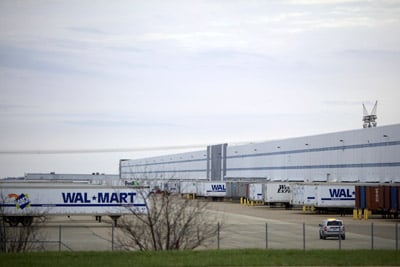 Meanwhile, a whole ecosystem of contractors and subcontractors benefits from the flexibility of just-in-time labor. For example, Walmart’s two largest warehouse complexes are southwest of Chicago and in the Inland Empire east of Los Angeles. Both are managed by Schneider Logistics, which in turn subcontracts to an ever-changing cast of third-party logistics firms and staffing companies.
Such layers of temp agencies have helped Walmart avoid responsibility when regulators have uncovered problems or when workers have tried to sue, accusing the company of wage or safety violations. For example, when California inspected Walmart’s Inland Empire warehouse in 2011 and found that workers were being paid piece-rate according to how many shipping containers they unloaded, rather than by the hour, regulators issued more than $1 million in fines against the subcontractors for failing to show how the pay was calculated. Neither Walmart nor Schneider faced penalties.
Asked if the layers of subcontracting allow Walmart to escape blame, spokeswoman Brooke Buchanan said, “Absolutely not.”
“We work very hard to abide by the law,” she said, “and we expect all the businesses that we do business with and that they do business with to comply with the law.”
Schneider treats its associates with “dignity and respect,” spokeswoman Janet Bonkowski wrote in an email. “Our suppliers are independent,” she said. “When we utilize third-party vendors, we contractually require full compliance with all required laws and that all parties conduct business ethically.”
As work is downsourced through a cascade of subcontractors, some workers have been paid wages below the legal minimum or seen their incomes decline over the years.
Berto Gutierrez, who has worked several stints at the Walmart warehouse in Elwood, Ill., provided ProPublica with a copy of a 2011 paycheck from subcontractor Eclipse Advantage. The check shows he was paid only $57.81 for 12.5 hours of work, or $4.62 an hour. Neither Eclipse, Schneider nor Walmart provided an explanation for Gutierrez’s paycheck.
In 2007, Leticia Rodriguez was hired directly by Simos, the logistics contractor running the online part of Walmart’s Elwood warehouse. She said she worked as a supervisor on an annual contract for $49,500 a year, with health insurance. In 2009, when she declined to come in on what she described as a long-awaited day off, she was fired.
Rodriguez returned to the warehouse six months later, this time starting at the bottom, loading trucks for one of Schneider’s staffing companies. She said she was paid $15 an hour, but within a year the staffing company lost the contract.
Eclipse Advantage took over, and Rodriguez went to work for that company. There, she said, she got paid piece-rate, averaging about $9.50 an hour. But six months later, Eclipse left, and she and all the other workers lost their jobs. Rodriguez has since interned at the union-backed campaign Warehouse Workers for Justice, earning $12,000.
Eclipse’s president, David Simono, declined to comment. Simos didn’t return calls. Walmart said it couldn’t comment on the specifics of a subcontractor’s employee but said it provides all its workers opportunities for growth.
‘We’ve Seen Just Ghastly Situations’
 The growing temporary sector does little to sustain workers’ standard of living. Temp agencies consistently rank among the worst large industries for the rate of wage and hour violations, according a ProPublica analysis of federal enforcement data. A 2005 Labor Department survey, the most recent available, found that only 4 percent of temps have pensions or retirement plans from their employers. Only 8 percent get health insurance from their employers, compared with 56 percent of permanent workers. What employers don’t provide, workers get from the social safety net, i.e., taxpayers.
And don’t look for Obamacare to fix it. Under the law, employers must provide health coverage only to employees who average 30 hours a week or more. After pressure from the temp industry and others, the IRS ruled that companies have up to a year to determine if workers qualify.
With the major provisions of health-care reform set to take effect in 2014, there’s growing evidence that 2013 is becoming a boom year for temping out. TempWorks, which sells software that keeps track of payroll and worker orders, says sales to staffing agencies have been going through the roof and that temp firms tell them the uptick is because of Obamacare.
Unlike the way it monitors nearly every other industry, the government does not keep statistics on injuries among temp workers. But a study of workers compensation data in Washington state found that temp workers in construction and manufacturing were twice as likely to be injured as regular staff doing the same work.
In April, the federal Occupational Safety and Health Administration announced an initiative to get better information on temp-worker safety. “Employers, we think, do not have the same commitment to providing a safe workplace, to providing the proper training, to a worker who they may only be paying for a few weeks.” OSHA director David Michaels said in an interview. “I mean, we’ve seen just ghastly situations.”
In December 2011, a Chicago temp worker died after he was scalded by a citric acid solution. The skin cream and shampoo factory he was assigned to failed to call 911 even as his skin was peeling from his body. In August 2012, a Jacksonville temp was crushed to death on his first day of work at a bottling plant when a supervisor told him to clean glass from underneath a machine that stacks goods onto pallets — a job that OSHA said he wasn’t trained to do. And in January, a temp was killed at a paper mill outside Charlotte, N.C., when he was overcome by toxic fumes while cleaning the inside of a chemical tank.
“There’s something going on here that needs direct intervention,” Michaels said.
A Temp Worker Bill of Rights
Members of Congress have introduced a handful of bills protecting temp workers in the past two decades. None have made it out of committee. Efforts on the state level have met similar resistance.
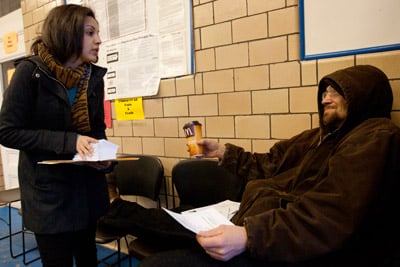 But worker advocates and some temp agencies say the Massachusetts Temporary Workers Right-to-Know Law, which took effect in January, provides a model for other states.
That law requires temp agencies to give workers written notice of the basics: whom they will work for, how much they’ll be paid and what safety equipment they’ll need. The law limits transportation costs and prohibits fees that would push workers’ pay below minimum wage. Agencies must also reimburse the worker if they are sent to a worksite only to find out there is no job for them there.
Similar state bills have passed in New Jersey and Illinois in the past few years. But while the American Staffing Association has a code of ethics containing similar guidelines, it has fought against such laws and blocked them in California and New York. “All laws that apply to every other employee apply to temporary workers,” said Stephen Dwyer, the group’s general counsel. “We thought that heaping new laws on top of existing laws would not be effective.”
Even in states that have them, the laws are honored mostly in the breach. For example, Illinois prohibits temp agencies from charging for transportation. But many have gotten around the law by using so-called raiteros, who act as neighborhood labor brokers for the agencies and charge for transportation. The law also requires an employment notice stating the name of the host company, the hourly wage and any equipment needed. Out of more than 50 Chicago-area workers interviewed for this story, only a handful had ever received one.
Passing through Chicago’s working-class suburbs recently, Rosa pointed out the car window to a row of small redbrick homes.
“I’ve always dreamed of having a little house, a really small, little house,” she said.
Asked if she thought she’d ever be able to buy one, Rosa laughed.
“Earning $8.25 an hour?” she said. “I don’t think I’ll ever be able to do that.”
Back at the temp agency, Rosa continues to wait with about 50 other people.
Around 6 a.m., she again inquires if there will be any work. The dispatcher tells her to give it 15 more minutes.
Then he breaks the news: There is no work today.
Get Involved: Is this happening in your community? What should be done about it? Join our discussion by tweeting us your questions and comments with #TempLand, or send us a tip.










 Doctor Who fans