firehose
Shared posts
Mugshots From The 1920s
Boned at the basket

Getting boned at the basket? Sounds like he got a way more for his dollar.
URL analysis site says that I am a middle aged dude. Because my...


URL analysis site says that I am a middle aged dude. Because my writing is “academic”, my tone is “happy”, and my topics tend to include games.
So I guess if I ever wanted to publish under a dude-o-nym, I’d have a decent shot?


Marian Churchland Illustrates Lists of Her Needs and Desires with Dapper Goblins [Art]
firehosegoblinswear beat
 hchom.com
Marian Churchland loves a lot of things: pastries, epic video games, uncut gemstones, impeccably structured jackets, marmalade, practical shoes, and fine chocolates. And she catalogues these loves—especially the things she truly covets—in lists that are magical even when they don’t contain hints of fantasy.
Churchland is the creator of the 2009 Image comic Beast, and her art has popped up in Elephantmen, Madam Xanadu, Northlanders and King City. (Brandon Graham happens to be her significant other, and there are definite hints that their work rubs off on one another.) Her blog Hchom focuses largely on food and fashion, and when I see real jackets and pants on her handsomely attired goblin avatar, it sends even me, an incurable skirt devotee, into fits of wardrobe envy. She also recently launched a Tumblr, which will hopefully give us all more illustrated things and food-things to lust over.
 hchom.com
  hchom.com
  hchom.com
  hchom.com
  hchom.com
  hchom.com
  hchom.com
  hchom.com
  hchom.com
  hchom.com
  hchom.com
  hchom.com
  hchom.com
  hchom.com
  hchom.com
  hchom.com
  hchom.com
  hchom.com
  hchom.com
  hchom.com hchom.com
  hchom.com
Lavabit.com Owner: 'I Could Be Arrested' For Resisting Surveillance Order


Read more of this story at Slashdot.

Ten Crazy Korean Cartoon Ripoffs
firehoseJohnny Destiny, Space Ninja, starring fake Char Aznable
Golden Bat, starring yellow Batman
How To Make The Best Drinking Game Ever
firehosegiant Battleship boards big enough for the ships to be those shot-glass flight trays
Your iPhone Uses More Energy Than A Refrigerator
firehose"A midsize refrigerator that qualifies for the Environmental Protection Agency's Energy Star rating uses about 322 kW-h a year, while your iPhone uses about 361 kW-h if you stack up wireless connections, data usage, and battery charging."
remind me again why battery charging is added to anything else wrt cell phone power use?

a-mongrel: i gottah… pull the thing. I PULLED THE THING OH GOD!
firehose#r2k

Ramblings' Index updated
firehoseshared for all of these, but especially dogs in canon
not shared for R2K Norwood jokes but I'm sure it'll happen anyway
As new stuff (both answers and original posts) has been accumulating at quite a quick pace during this latest week, I’ve felt a serious need to make again a little order in the mess of my more recent ramblings, and so I have just updated my Ramblings’ Index page.
As you probably know by now, I listed, instead, all the ramblings containing potential spoilers in a new, separate page.
As always, the posts are listed starting from the most recent; if you want to begin from the beginning, you have to read the list starting from the bottom.
Enjoy!
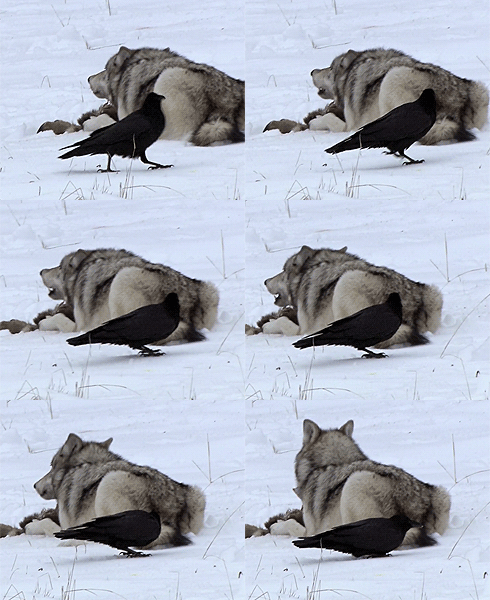
- “Sherlock Holmes and dogs in Canon" is a brief statistical divertissement about the occurrences and roles of dogs in ACD’s original stories. For dog-lovers and nerds like me. ;-)
- “Mycroft, the CIA, and… Mrs. Hudson" is an answer to an interesting question posed by violet1110 about ASiB, in which I deal with the topics of Mycroft’s control - or lack of it… - over the CIA men, the exact meaning of Mycroft’s reaction to Mrs. Hudson’s rebuke on the morning after the botch at Irene’s place, whose idea was to break into 221b and beat a poor old lady for information, and related issues…
- “Canonical female ‘villains’: Isadora vs. Irene" is an answer to an interesting question by tookmyskull, in which I go back to the character of Isadora Klein (3GAB) and to Holmes’ possible reasons to let her get by, in comparison with Irene Adler and Holmes’ attitude towards this latter.
- “Sherlock Holmes and women: a quantitative analysis" contains another statistical analysis of the Canon, this time focussed on the roles played by female characters in the original ACD’s stories.
- “A VERY Alternative Universe…" is an attempt at answering - at least generally speaking and through a series of brief points - a complex question posed by floatfoot, about what kind of AltUniverse would be needed for Sherlock and John to develop romantic feelings towards each other.
- “There are blackmailers and blackmailers: CAM vs. Adler" is an analysis of the many differences between Irene Adler’s ‘blackmail’ against the King of Bohemia and Charles Augustus Milverton’s illicit activities, elicited by an interesting anonymous question. With some further comparisons between modern Irene and Milverton in answer to another, specific question.
- “More statistical spree: Sherlock Holmes, the Equalizer" contains another quantitative analysis of Canon, this time focussed on Sherlock Holmes’ propensity to take justice in his own hands: once again, you might find the results quite surprising…


This Is Why All New YouTube Videos Get Exactly 301 Views
firehosetl;dr: there are too many spambots, so YouTube verifies views
Stripped: Joe Sacco – Conflict Comes in a Lot of Guises
firehosecomic journalism beat
 OnlyMrGodKnowsWhy
The first story was about the tunnels in Gaz[a], a surprising commission from the New York Times. Sacco stated that the editor who suggested it and got it approved was taking a risk, and that he was glad he had – the experience had been pretty good although more than one editor had got involved, leading to one particularly amusing misconception about the purpose of crosshatching: “you’re drawing all these crucifixes in the background, what does that signify?”

Following Chris Ware in the Stripped programme at the Edinburgh International Book Festival came the very entertaining and engaging Joe Sacco, creator of numerous critically acclaimed journalist works, including Palestine, Safe Area Goražde, Journalism, and his upcoming The Great War.

Joe Sacco and Chris Ware by Neil Slorance
After a slightly bloated introduction from Adrian Searle, and noting the brilliant inclusion of a British Sign Language interpreter on stage, I settled down behind many a wine drinker to listen to a creator who is without doubt one of my own heroes. A little surprising for my former classmates who heard me take Palestine to task, but I was a little pleased (okay, a lot smug) to hear Sacco himself make many of the same points about his first work.
Beginning with expanding upon his introduction to Journalism, which collected several of his shorter works and came out last year, Sacco spoke about how he rejected objective journalism outright. “I think there’s a lot of subjectivity in journalism that’s portrayed, put across as objective journalism,” he explained, pointing out that all reporters carry baggage and preconceived notions with them on their journeys, regardless of how hard they may have studied objective journalism.
Asked by Searle whether the inclusion of himself within his works was to signal the inherent subjectivity to the reader, Sacco smiled that “everything was accidental”. Coming from the world of underground cartooning, he was naturally drawn towards creating “first person stories” about his life and experiences, and this was something he continued in his trips to Palestine. As his journalistic impulses kicked in, he began to put together the story journalistically, and with all stories revolving around himself he labelled Palestine as “partly my travelogue, and my experiences”.
 While he appeared a great deal in Palestine, Sacco acknowledged that his later work was more sophisticated, concentrating on the characters that he met and using them to build the narrative. In Palestine, he said, “I was the thread through a lot of unconnected stories… [It's] sort of embarrassing to me to look at it now in a way, it’s not well structured.” This was partly due to the serialised nature of Palestine of course, but the differences in Safe Area Goražde, Sacco’s next work, are striking.
In Bosnia, “the town was kind of the character,” said Sacco, adding that the people he met were such very strong characters that he wanted to step back and let them shine, to tell their own stories.
Discussing his drawing, Sacco revealed that he rarely sketched, saying that it was “much more important to talk to people”. The sketchpad would steal their interest and distract them from their story. Sketches were done out of necessity only, like of a checkpoint in Gaza where a photograph would be ill-advised.
 One issue that Sacco seemed particularly passionate about was his determination to be unobtrusive. “I don’t leave such a footprint,” he said, “I’d like to think my presence isn’t huge”. He spoke about the issues he managed to avoid, being a cartoonist rather than a more regular journalist, as people would often play up to journalists, particularly to cameras. While he thought there were issues with journalism in general that certainly applied to him as well, Sacco was keen to stress that his way was the slow way, spending real time with the people he interviewed. “I’m not annoying them or forcing myself on them.”
Asked by Searle whether he thought there should be more outrage in the news over the kind of events reported on, Sacco replied, “I don’t know if there should be more outrage for the sake of outrage.” It was interesting to hear that when he met up with other journalists on location, often the stories they told around the table were far more telling than those made to camera or newspaper. These stories involved the journalist personally in some way, and their editors did not want that kind of report – they wanted “the hard news” only. As Sacco said, the journalist “might personally be outraged but be careful about showing that” as there was almost a professional pride in keeping out of the story. Instead their outrage could be felt by the very choice of reporting on that issue.
Speaking about his own studies in journalism, Sacco stated that he had been taught that “the objective way was the right way, and I basically took that on faith”. It was only when news broke of massacres in Palestinian refugee camps carried out by Christian militias (the 1982 Sabra and Shatila massacres) that Sacco realised the flaw in this kind of reporting. He says that on hearing the news, he thought to himself, “But I thought Palestinians were terrorists, and I was a college educated person!”
While the reporting in the Middle East had indeed covered an objectively true string of stories, the lack of context had painted a very bleak black and white picture. “I didn’t know Palestinians as people reading American journalism,” said Sacco, “I didn’t know anything about them.”
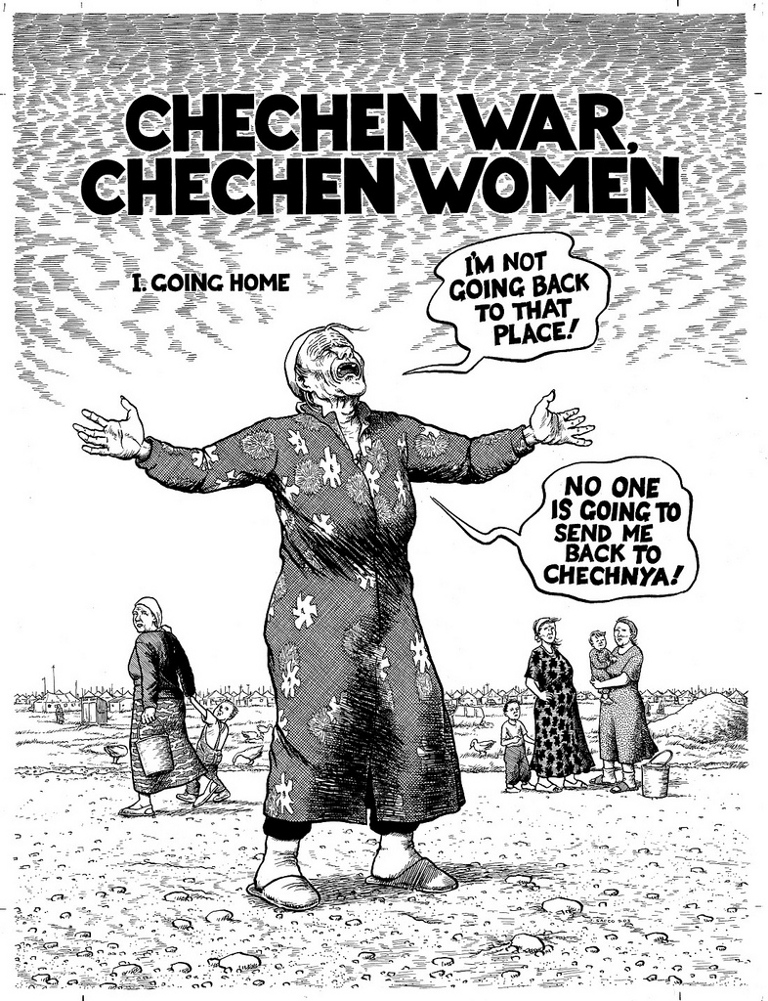 Sacco was quick to state that jumping to the other conclusion was equally unhelpful. “Portraying [the Palestinians] as victims with a capital V, also is dehumanising. You have to see whatever group it is as people.” He drew a line between objective journalism and honest journalism, stressing that whatever you see you should report honestly – even if it it doesn’t line up with your own political viewpoint.
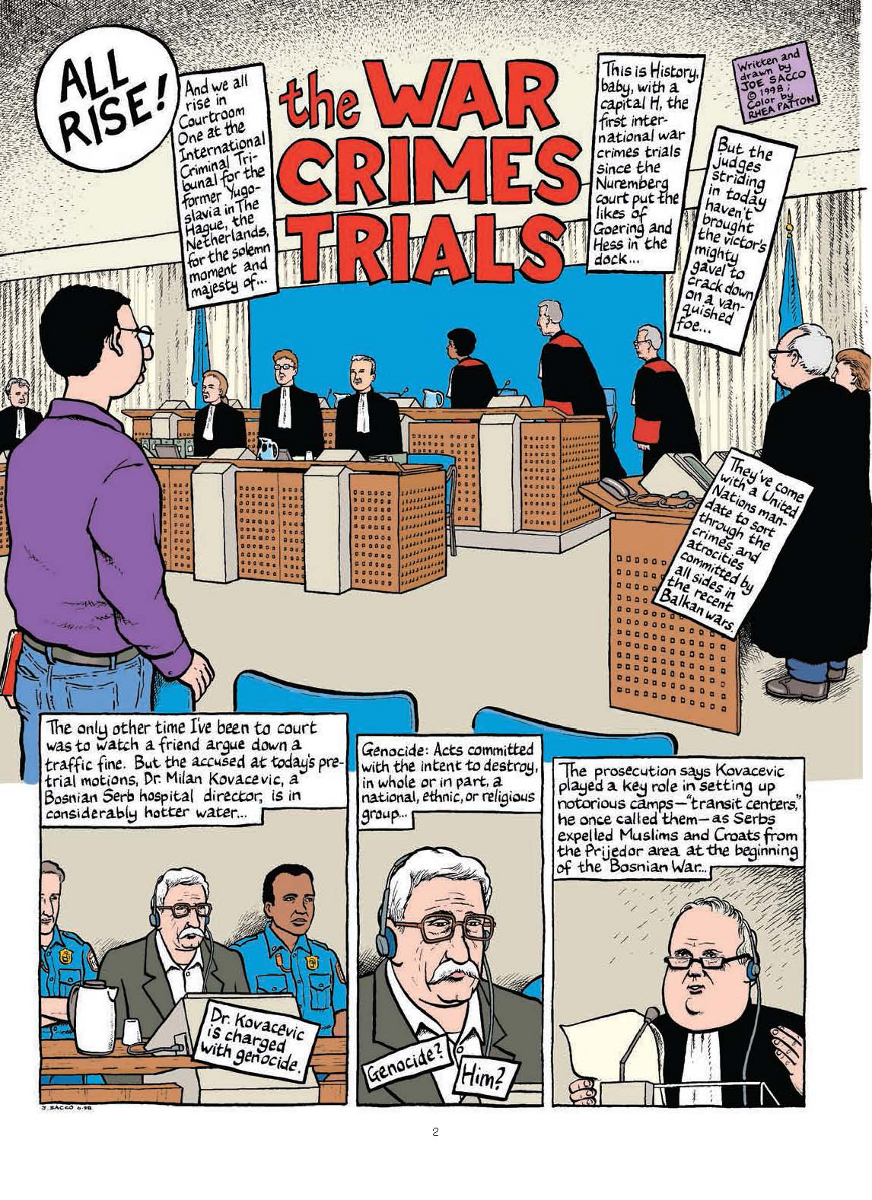
Searle next started to go through some slides of pages from Journalism, with Sacco explaining the context of each image. The first story was about the tunnels in Gaze, a surprising commission from the New York Times. Sacco stated that the editor who suggested it and got it approved was taking a risk, and that he was glad he had – the experience had been pretty good although more than one editor had got involved, leading to one particularly amusing misconception about the purpose of crosshatching: “you’re drawing all these crucifixes in the background, what does that signify?”
Another job for Harper’s magazine had led to Sacco having to redraw his work by removing the human figures (and the human interest) from them, as the editor was “more into landscapes”. So it goes.
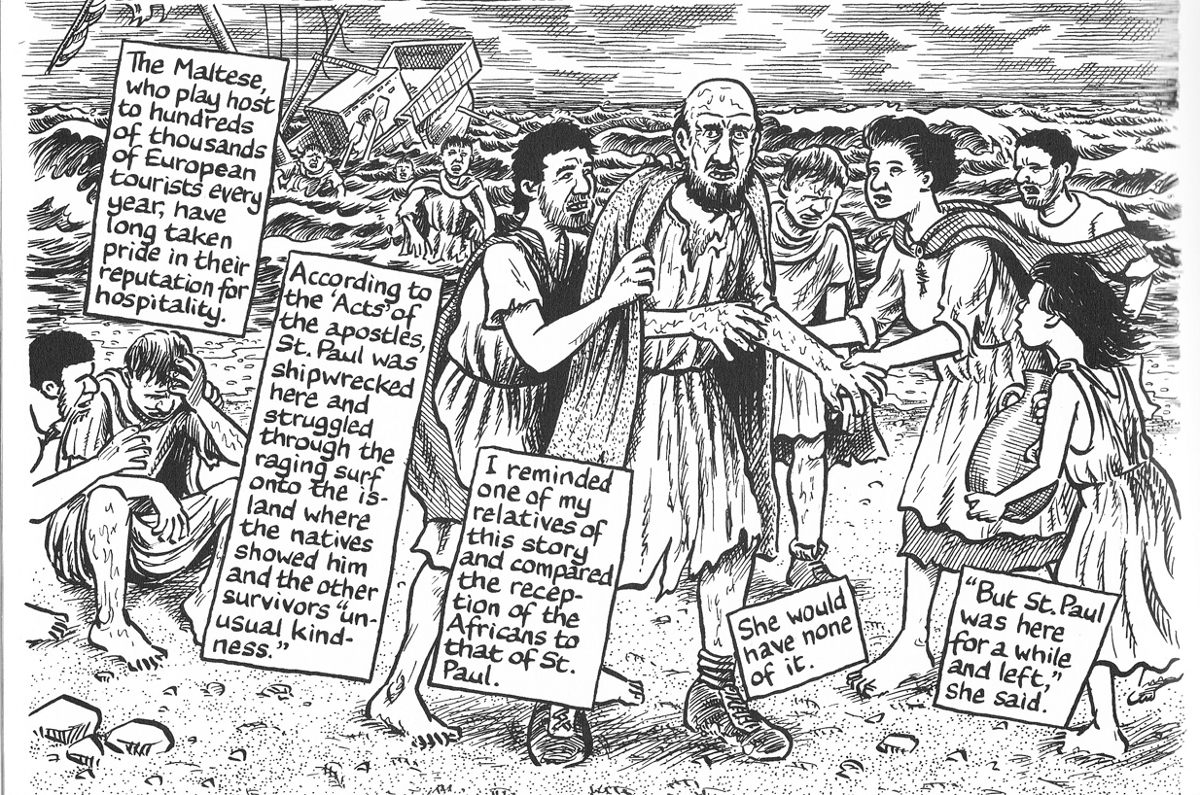
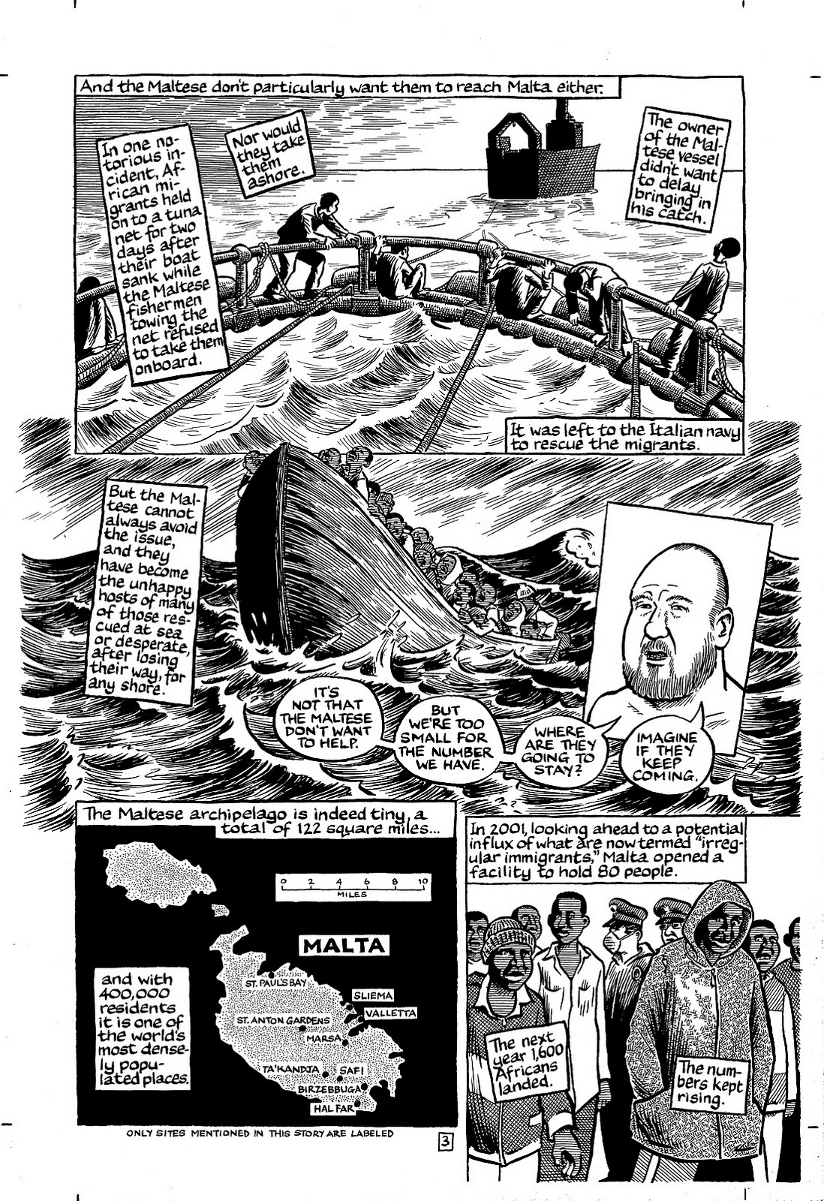 Revealing that he was first “drawn to drawing because my mother drew quite a lot” and that in fact his first art prize as a child was down to a drawing by his mother under his name(!), Sacco talked about his story on African migrants in Malta (“my homeland”) as being something particularly close to his heart.
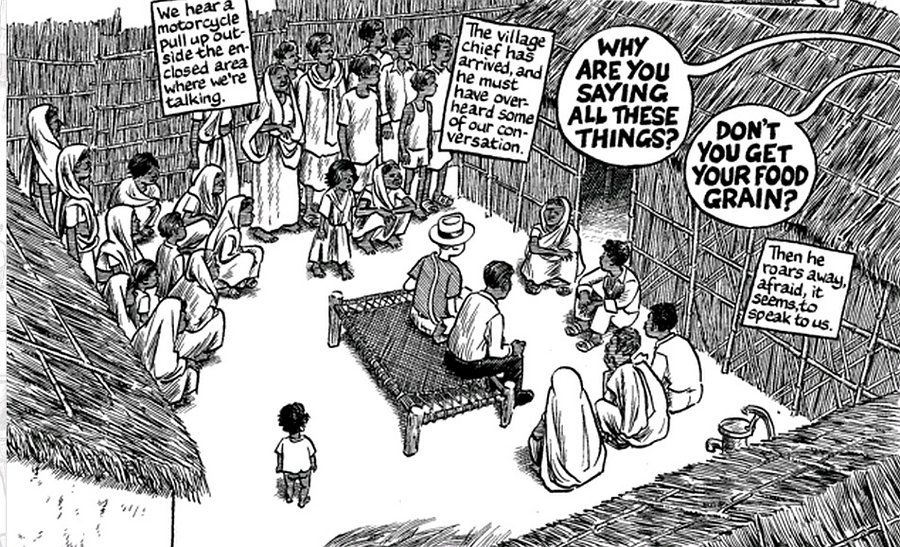
A story on the poverty struck Kushinagar district in India was the result of Sacco, “trying to get away from conflict, but I realised conflict comes in a lot of guises”. Speaking about the real emotional distress of most of his chosen subjects, Sacco stated, “I operate a lot on anger in a way… anger as a constructive force”. But that his ability as an artist helped him stay cool. “For whatever it’s worth, this is when I can do something about that situation. This is when their voices can have some agency.”
“I’m not in a rage as I’m drawing, you can’t be. I’m relatively well adjusted I think!” he laughed. “It’s more anger that gets me to go to a place.” It takes a while of course between being out in the field to putting it all down on paper, with many of his works taking years to produce. Sacco discussed how he is able to absorb a lot and carry that with him, but that after a hundred pages or so he does start to lose the taste and needs to rely more on his photographs. “Everything has a half life, including that sort of memory.”
Sacco’s next book, The Great War, is due out in October and is a huge panoramic fold out of the first day of the Battle of the Somme. The entire work is wordless, and as the opportunity came up Sacco felt that “I’d like to do something without words. I just want to draw.”
The panorama is not static, it shows the movements of the troops across the field and Sacco was clear that he had been determined not to overdo the carnage. Instead he was focusing on this “mass human event” that had “mass enthusiasm for it”, a “great human endeavour” for these purposes. “If that endeavour was put into something else, constructive, we might have a better world.”
Sacco paid respects to both the work of Jacques Tardi and Charlie’s War, stating that he had not opened his own volumes of the latter as the art by Joe Colquhoun was “so beautiful, so exact… there’s no comparison”.
Asked about what was coming next, Sacco revealed that he needed to go off in a different direction. He still has an interest in human violence but wants to approach it in a different way, and examine human psychology in order to better understand some of the scenes he’s had trouble drawing in the past.
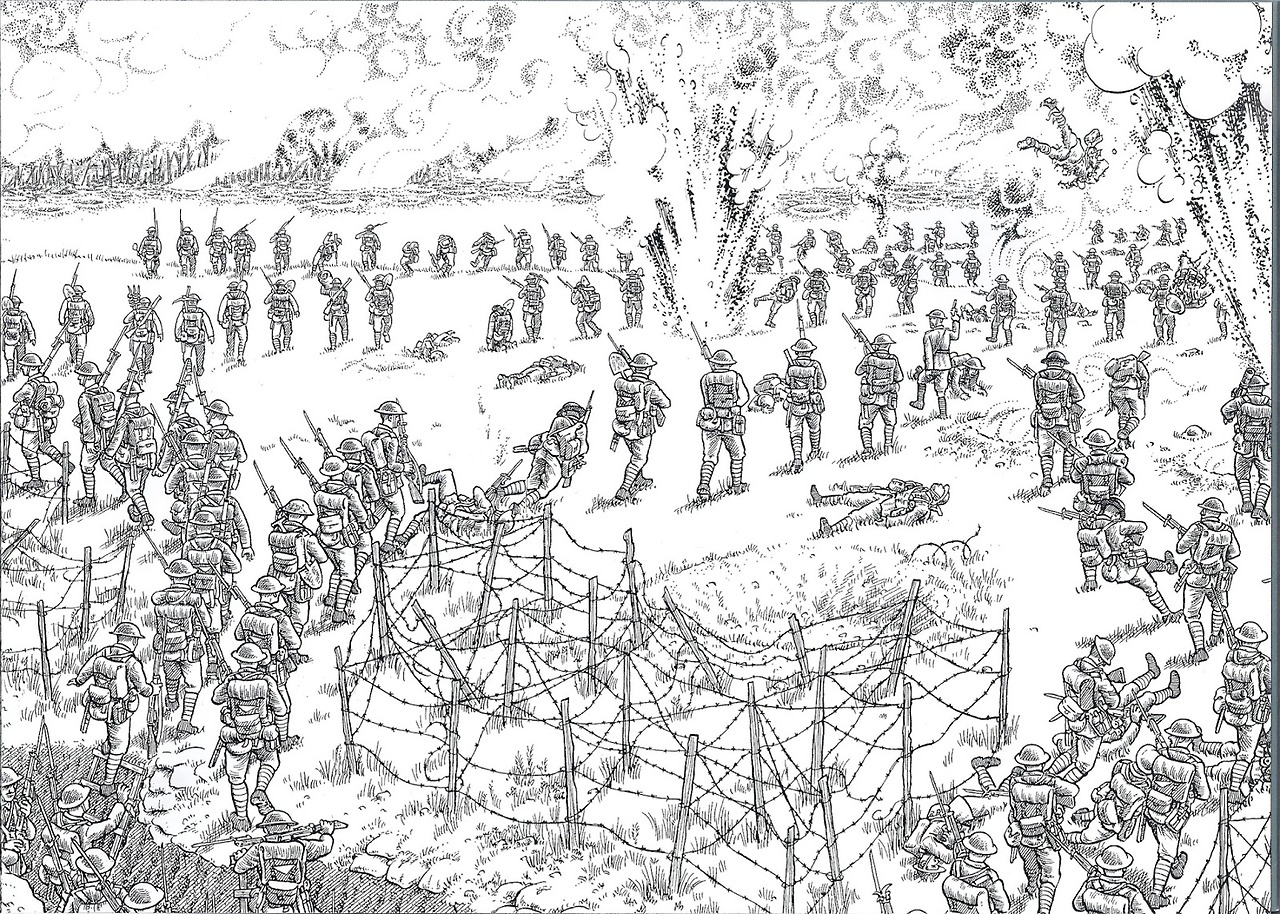
Preview page from the upcoming The Great War
Answering a question from the audience, Sacco told of how he had initially avoided other journalists after being warned they would not be keen on his line of work. Instead, most have been delighted to find out that he is a cartoonist, and envious that he is able to spend longer in one location to really get into the depths of his story.
While stressing that “every medium has its strengths”, Sacco said that one of the real advantages of the comics medium was the ability to “very seamlessly shift into the past” without the sometimes artificial feeling that dramatic reenactments in historical documentaries provide. “The repeated image,” he added, “allows something to seep into the mind of the reader”. Regardless of what’s happening in the foreground, that repeated background material gives a real sense of place, without being too harsh and obvious.
Addressing his somewhat dorky persona in Palestine compared to the quite handsome and comfortable man on stage, Sacco said that his persona there was a true self-perception of his bumbling self at the time. It was a persona that had softened in later works, as Sacco did not want to depict himself as bumbling when he no longer was. “I upgraded myself!”
One project Sacco has been working on is to do with the early civilisation of Mesopotamia, saying he was fascinated with the question of “how does the state get a person to kill another person?”
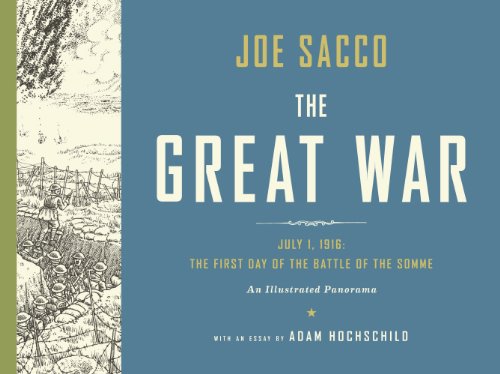
The Great War – out in October
Finally, challenged by an audience member on how he avoided crossing the line from honest reporting into fictional embellishments, Sacco was passionate about his stance. “My sympathies are clear at least by what I’m reporting on,” he said, adding that by portraying himself within the stories he was clearly indicating that this work was his own view point. Sacco spoke of the tension between the idea of journalism, representing the facts and the truth, and drawing, which is subjective by it’s very nature – filtered by one person and the choices they make on the page.
Sacco stressed that he uses no composite characters, and strives for accurate quotes. In the end, he said, “I’m trying to present things as honestly as I can”. His chosen medium has allowed him to do just that better than many.
All images from Journalism unless otherwise stated. Top image courtesy of the fabulous Neil Slorance from the joint event with Sacco and Ware last night (I missed this in favour of Only God Forgives with a gal pal, but that image says it all!)
Laura Sneddon is a comics journalist and academic, writing for the mainstream UK press with a particular focus on women and feminism in comics. Currently working on a PhD, do not offend her chair leg of truth; it is wise and terrible. Her writing is indexed at comicbookgrrrl.com and procrastinated upon via @thalestral on Twitter.
#call_to_action h4{padding:0px 5px;} #social-essentials {margin: 0 0 10px 0;}
anonymous asked: there are a bunch of shibe inus at the two dog parks I take my dog to, and every...
firehoseno god only shiba
anonymous asked: there are a bunch of shibe inus at the two dog parks I take my dog to, and every single one of them has a japanese name (hachi, kitsune, moshi, etc.) All of them are owned by middle to upper class white people. racist?
Jesus christ. YES
Extremely Tolerant Milk Dog Lets Goats Shake It Down for Dairy
OnlyMrGodKnowsWhywhat in God’s name
First thing to mention about this vaguely pornographic video of young goats drinking milk from two giant bottles strapped to the thorax of an overly-tolerant bull terrier: goats wag their tails! Am I just finding this out? My uncle had a bunch of goats when I was younger and they never wagged their tails. Were they miserable or something? I thought they were my good friends. I fed them old shirts and everything. Now, seeing these tail-wagging goats, I know that I was merely being put up with, like a cloud of flies or some other farmyard pestilence. Fuck you, goats — I was only trying to be nice anyway. I would have preferred a single dog friend to all three of you.

Renaissance-Festival Outing for Four or Two at King Richard's Faire (Up to 47% Off)
OnlyMrGodKnowsWhyWhoops, I forgot I was still subscribing to Groupon.

Renaissance fairs, like the disputed lost folios of Shakespeare, combine the trappings of a bygone age with a suspiciously large number of smartphones. Answer the call of the past with this Groupon.
Choose Between Two Options
- $63.99 for a Renaissance-festival outing for four adults (up to a $120 value)
- $31.99 for a Renaissance-festival outing for two adults (up to a $60 value)
Passes are redeemable on September 2, 7, 8, 14, and 15. Visitors revel in the recreation of the Age of Enlightenment with artisans that proffer blacksmithing or leatherworking and performers roaming the streets. Events such as jousting tournaments entertain crowds, and cooks prepare huge turkey legs or hearty soups for guests.
Groupon Says
Tweets contribute to charging driver with murder in fatal bike accident
An 18-year-old man from Pleasanton, California has seen charges against him increased from vehicular manslaughter to murder due in part to some tweets in which he bragged about his reckless driving. The man, Cody Hall, is being held in an Alameda county jail without bail, waiting for a trial.
On June 9, according to the San Francisco Chronicle, Hall was allegedly driving 83 mph in a 40 mph zone and lost control of his car as he tried to pass another vehicle. The speeding car struck two bikers, killing one, 58-year-old Diana Hersevoort, and injuring the other, Hersevoort's husband. Hall stayed around after the crash and spoke with police, but he declined to give a statement at the time.
When police concluded their investigation in July, they arrested Hall for vehicular manslaughter and reckless driving. Hall was released on bail, but this week the Alameda District Attorney's office decided to increase the weight of the charges against Hall and slapped him with a murder charge. Authorities told the San Francisco Chronicle that this move comes after a review of Hall's driving record and some tweets he posted in which he bragged about his reckless driving.
Read 3 remaining paragraphs | Comments

    
|




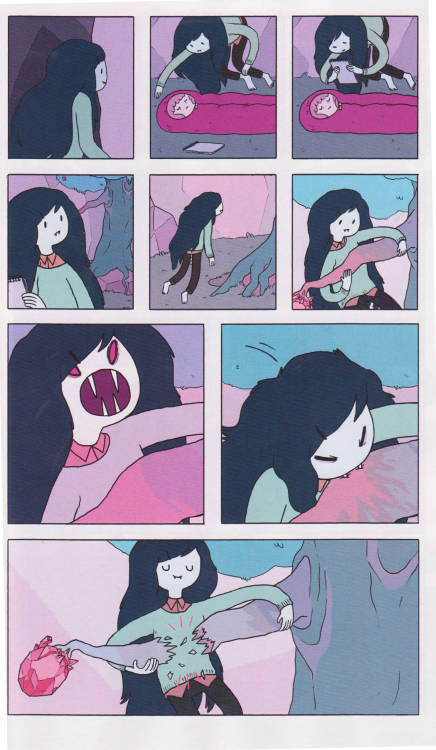

A Map of the Lands Actually Discovered by European Explorers
firehoseand even then, only when there's no record of others being in uninhabited places first

When studying Western history, we tend to say that this European explorer discovered this continent or that island, when those lands were already long inhabited. Cartographer Bill Rankin maps out the lands that were uninhabited by the time European peoples got around to finding them.

|
|
Steve Wozniak says 'there were a lot of things wrong' with 'Jobs' movie
firehose"Ashton has too much of this 'fan' thing like a cult leader," Wozniak said. "He could not see that [Jobs] had a lot of flaws in knowing how to run things and execute and make products that were worthwhile at his time there."
When asked if he had a message for Kutcher, Wozniak replied, "You know what, I'm really easy to get a hold of, he could have called me and consulted over the phone any time." Wozniak was in fact invited to consult on the film, but declined after reading the script, saying he and his wife were "abhorred" by it. (He is consulting on Aaron Sorkin's forthcoming Steve Jobs film.) When asked why he didn't at least correct the inaccuracies he saw, Wozniak said, "I have a very busy life, and it came at a very busy time in my life."
Apple co-founder Steve Wozniak sat down with Bloomberg this week to discuss his thoughts on innovation, Larry Ellison, and, most extensively, Jobs — the recently released biopic about Steve Jobs, starring Ashton Kutcher. Wozniak attended a midnight premiere of the film, and apparently didn't leave with a very good impression.
"There were a lot of things wrong," he said in a televised interview Friday. According to Wozniak, the movie inaccurately glorified Jobs without acknowledging his flaws as a young entrepreneur, and without giving due credit to other people involved in the company's early days. "I didn't like seeing a lot of people I know not get the respect they deserve," he added.
Wozniak, who levied similar criticism against the film in commenting on a Gizmodo article Thursday, said that although he generally "liked" Kutcher's acting, he thought the actor portrayed Jobs in a one-sidedly glowing light. "Ashton has too much of this 'fan' thing like a cult leader," Wozniak said. "He could not see that [Jobs] had a lot of flaws in knowing how to run things and execute and make products that were worthwhile at his time there."
"I'm really easy to get a hold of, he could have called me."
When asked if he had a message for Kutcher, Wozniak replied, "You know what, I'm really easy to get a hold of, he could have called me and consulted over the phone any time." Wozniak was in fact invited to consult on the film, but declined after reading the script, saying he and his wife were "abhorred" by it. (He is consulting on Aaron Sorkin's forthcoming Steve Jobs film.) When asked why he didn't at least correct the inaccuracies he saw, Wozniak said, "I have a very busy life, and it came at a very busy time in my life."
Wozniak also addressed recent comments from Oracle CEO Larry Ellison, who earlier this week predicted that Apple will decline without Jobs at the helm. The company's stock has gone up and down in recent years, and many have expressed doubts about its ability to come out with the same innovative products that it created during the Jobs era. According to Wozniak, though, predictions of Apple's demise are still premature.
"There's time to tell," he said. "I wouldn't judge Apple as being out of the innovation sphere yet... Sometimes Apple has the bigger surprise than anyone."
.
- Source Bloomberg
- Related Items apple steve wozniak jobs ashton kutcher steve jobs movie film
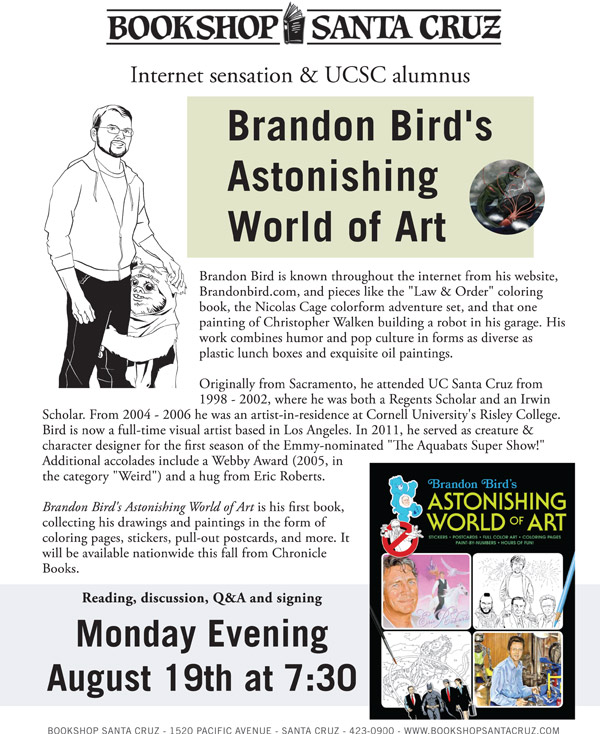
August 19th, Bookshop Santa Cruz
firehoseBrandon Bird beat
Gods Will Be Watching you on PC and mobile in 2014
 Gods Will Be Watching, the game jam darling-turned-full-fledged-game about survival and moral dilemmas from Deconstructeam, is coming to PC and mobile devices in 2014 thanks to a successful IndieGoGo campaign and partnership with Hotline Miami publisher Devolver Digital, who matched the crowdsourced funds.
The full version of GWBW will take protagonist Captain Burden well beyond the game's original premise of surviving on an alien planet, but you can get a taste of what lies ahead by checking out the original version of the game here. Just remember: gods will be doing that thing they do.
Continue reading Gods Will Be Watching you on PC and mobile in 2014
 Gods Will Be Watching you on PC and mobile in 2014 originally appeared on Joystiq on Sat, 17 Aug 2013 19:30:00 EST. Please see our terms for use of feeds.
