firehose
Shared posts
The Four Legged Squad
No, Martin Luther King Jr. Was Not A Republican — But Here’s What He Had To Say About Them
 |
Courtney
shared this story
from  ThinkProgress. ThinkProgress.
|

“Most people don’t talk about the fact that Martin Luther King was a Republican.”
That’s a quote from Ada Fisher, a Republican National Committeewoman from North Carolina, that was published without qualification or correction this week by ABC News.
Fisher is wrong on two fronts. First, many people talk about the “fact” that King was a Republican. It is asserted incessantly by conservatives on Twitter and elsewhere on the internet, especially in the lead up to today’s 50th anniversary of the March on Washington. The claim is most prominently advanced by King’s niece, Republican activist Alveda King. Over the years, conservative groups have purchased billboards making the claim.
Second, Martin Luther King Jr. was not a Republican. Or a Democrat.
King was not a partisan and never endorsed any political candidate. In a 1958 interview, King said “I don’t think the Republican party is a party full of the almighty God nor is the Democratic party. They both have weaknesses … And I’m not inextricably bound to either party.”
King did, however, weigh in on the Republican party during his lifetime. In Chapter 23 of his autobiography, King writes this about the 1964 Republican National Convention:
The Republican Party geared its appeal and program to racism, reaction, and extremism. All people of goodwill viewed with alarm and concern the frenzied wedding at the Cow Palace of the KKK with the radical right. The “best man” at this ceremony was a senator whose voting record, philosophy, and program were anathema to all the hard-won achievements of the past decade.
Senator Goldwater had neither the concern nor the comprehension necessary to grapple with this problem of poverty in the fashion that the historical moment dictated. On the urgent issue of civil rights, Senator Goldwater represented a philosophy that was morally indefensible and socially suicidal. While not himself a racist, Mr. Goldwater articulated a philosophy which gave aid and comfort to the racist. His candidacy and philosophy would serve as an umbrella under which extremists of all stripes would stand. In the light of these facts and because of my love for America, I had no alternative but to urge every Negro and white person of goodwill to vote against Mr. Goldwater and to withdraw support from any Republican candidate that did not publicly disassociate himself from Senator Goldwater and his philosophy.
King barnstormed the country on behalf on Johnson in 1964, “maintaining only a thin veneer of nonpartisanship,” according to biographer Nick Kotz. King called Johnson’s win a “great victory for the forces of progress and a defeat for the forces of retrogress.”
Here is what King had to say about Ronald Reagan, the hero of modern Republicans:
When a Hollywood performer, lacking distinction even as an actor can become a leading war hawk candidate for the Presidency, only the irrationalities induced by a war psychosis can explain such a melancholy turn of events.
David Garrow, who wrote a Pulitzer Prize winning biography of King, stated “It’s simply incorrect to call Dr. King a Republican.”
King, according to Garrow, did hold some Republicans — including Richard Nixon and Nelson Rockefeller — in high regard. He also was harshly critical of Lyndon Johnson’s escalation of the Vietnam War.
In 2008, King’s son Martin Luther King III said “It is disingenuous to imply that my father was a Republican. He never endorsed any presidential candidate, and there is certainly no evidence that he ever even voted for a Republican.” Garrow claimed there is little doubt King voted for Kennedy in 1960 and Johnson in 1964.
The post No, Martin Luther King Jr. Was Not A Republican — But Here’s What He Had To Say About Them appeared first on ThinkProgress.

    
|
Scoping vs Implementation

by Dan
How The U.S. Move On Syria Could Reverberate Around The World
Harry Potter fashion line sexes up Hogwarts with lycra

At first we thought, "Skin-tight Potter stuff? Lame." But then we saw this Deathly Hallows bathing suit/body suit and the snitch tights. Two, please!

|
|
New Delhi’s urban megapark will be 50% larger than Central Park
New Delhi is trying to outdo New York City’s Central Park. Efforts are underway to carve a 1,200-acre green space by adjoining many such smaller spaces in the central part of India’s capital. Quartz asked the Aga Khan Trust for Culture, the folks behind the restoration, for photos and renderings of the grand plan. Here’s the initial vision:

A restoration of Sunder Nursery, adjacent to tourist attraction Humayun’s Tomb, is at the heart of the plan. The photos below show striking before and after shots. “The idea here is that this is a magical space that takes people away from the humdrum of daily life,” project director Ratish Nanda told the Associated Press.


We welcome your comments at ideas@qz.com.

For the first time, the combined GDP of poor nations is greater than the rich ones


For the first time ever, the combined gross domestic product of emerging and developing markets, adjusted for purchasing price parity, has eclipsed the combined measure of advanced economies. Purchasing price parity—or PPP for short—adjusts for the relative cost of comparable goods in different economic markets.
According to the International Monetary Fund—the supplier of this data—emerging and developing economies will have a purchasing price parity-adjusted GDP of $42.8 trillion in 2013, while that of emerging economies will be $44.4 trillion. In other words, emerging markets will create $1.6 trillion more value in goods and services than advanced markets this year.
Advanced economies are, according to the IMF, the 34 nations that result from combining the members of the G7, euro area countries, and the 4 “newly industrialized Asian economies”—Taiwan, Hong Kong, Singapore, and South Korea. The world’s 150 other nations are considered emerging or developing.
Excluding the largest advanced economy, the United Sates, and the largest emerging economy, China, which both account from more than 30% of their respective group’s total GDP, the data show that the PPP-adjusted GDP of poorer nations surpassed that of richer ones in 2009.

It’s worth keeping in mind that the emerging economies have strength in numbers. Not only are there more emerging and developing nations; those nations also boast a larger combined population.
As such, emerging and developing economies trail far behind advanced economies in per-capita terms. Their aggregate per-capita PPP-adjusted GDP is $7,415, while the same measure for advanced nations totals $41,369.


The British are turning down “free money” from the government

In April, my accountant offered me a choice. I could base my estimated taxes on last year’s income or this year’s projected income, which was higher. Option 1 meant a lower tax bill throughout the year, but a big bill next April.
Me response: “Are you asking me if I’d like a large interest-free loan from the government?! Yes, please.”
He told me I was unusual among his clients, that most people would rather pay in advance because they don’t like the large bill hanging over them. Even though many of these folks are well-paid, they struggle to pay a large bill when the time comes because they don’t have much savings. I assumed this was anecdotal; surely most people would take an interest-free loan if given the choice. But I was wrong.
Case in point: Nearly 270,000 people in Britain turned down an interest-free loan from the government in January.
Historically in Britain, everyone with a child received a stipend from the government known as the child benefit. A family gets £1,055 a year for one child and about £700 for each additional child. Up until this year, all British families got the stipend, no matter how much they earned. But under mounting fiscal pressures, the benefit became means-tested, meaning the payout depended on your circumstances. Families with income more than £50,000 will get a reduced benefit; if they earn more than £60,000, they get no benefit at all. In 2013, everyone will get the benefit but after at the end of the year, if you earn over the limit, you must fill out a tax return and pay the money back. Brits also had the option of not getting the benefit at all. They could voluntarily opt out in advance by filling out an online form or calling the child benefit office before Jan. 7. There is no financial penalty to receiving the payments and then paying them back at the end of the year.
The British government cautioned against opting out for families with income around the limit because of the hassle of reclaiming it. Still, it doesn’t make sense for anyone to opt out. You can take that money, invest it and keep the returns. True, returns to short-term, low-risk savings are paltry now, but it’s still free money. Besides money today is almost always worth more than money tomorrow because people discount future income and consumption.
Yet 270,000 of the 1.2 million Brits (the latter number is an estimate of those affected) opted out. What can explain this? Behavioral economics offers a few different explanations. A common reason for suboptimal economic behavior is inertia. People may not do the right thing if it involves effort or they can be goaded into better behavior if they have to opt out of it. This is why automatically enrolling people into individual pension plans has been so successful. But inertia can’t explain this because opting out was an active choice that took effort. If you had to actively claim the benefit rather than ask not to get it, even more people probably wouldn’t have received it. Perhaps the opt-outers wanted to avoid the paperwork associated with the tax filing, but there’s paperwork involved with opting out too.
Another behavioral economics phenomenon is hyperbolic discounting. That’s when people put too little value on consumption in the future and spend all their income now. That may be why people don’t save enough for retirement. But in this case the opposite is true, people turned down money they’d have to pay back later.
I suspect my accountant had the right answer all along: Many people simply don’t want to face a tax bill. Similar to that in the US, the British saving rate has been on the decline. The household saving rate was just 4.2% of disposable income in the first quarter of 2013. If Brits aren’t in the habit of saving, they may not feel confident that they can pay back the government at the end of the year.
That would be consistent with the findings of the 2009 TNS Global Economic Crisis Survey that surveyed Americans and Brits about their financial resilience. About half of Americans and Brits reported they’d probably not be able to come up with £1,500 or $2,000 within 30 days if they had to. That tends to be true more for low earners, but even many middle earners—about 25% of Americans who earned between $75,000 and $100,000—didn’t think they could come up with the money. People with children also expected to not have the cash. Research, based on the survey by economists Annamaria Lusardi, Daniel Schneider, and Peter Tufano, found Brits and Americans are among the worst compared to other developed countries in their ability to come up with a few thousand dollars. The survey was taken during the peak of the financial crisis, but saving has remained low since then.
Explaining the large number of British opt-outs requires further study. We need to understand the relationship between income and wealth of the opt-outers and their levels of financial literacy. A possible reason why some peopled opted out is that they under-save. So they opted-out to prevent themselves from spending the money and then not having it to pay back. If that is the case, it suggests a larger problem of low savings, which leaves many people vulnerable to economic shocks.
You can follow Allison on Twitter at @AllisonSchrager. We welcome your comments at ideas@qz.com.

apropos
Apropos helps your site serve up the appropriate image for every visitor. Serving multiple versions of an image in responsive and/or localized web sites can be a chore, but Apropos simplifies and automates this task. Instead of manually writing a lot of CSS rules to swap different images, Apropos generates CSS for you based on a simple file naming convention.
The Dark Side Of 'I Have A Dream': The FBI's War On Martin Luther King
Teen survives freakish wolf attack in Minnesota - Dayton Daily News
ABC News |
Teen survives freakish wolf attack in Minnesota Dayton Daily News Wildlife officials believe this is the first-ever wolf attack on a person in the state's history. 16-year-old Noah Graham was reportedly camping with a group of friends from his church Saturday night when a 75-pound grey wolf bit his head. (Via WCCO). Teen injured in wolf attack near Lake WinnibigoshishChanhassen Villager Solway, Minn., teen fights off wolf attackGrand Forks Herald Teen on camping trip attacked by lone wolfWDAM-TV La Crosse Tribune -Wisconsin Public Radio News all 90 news articles » |
Evading Internet Censorship
This research project by Brandon Wiley -- the tool is called "Dust" -- looks really interesting. Here's the description of his Defcon talk:
Abstract: The greatest danger to free speech on the Internet today is filtering of traffic using protocol fingerprinting. Protocols such as SSL, Tor, BitTorrent, and VPNs are being summarily blocked, regardless of their legal and ethical uses. Fortunately, it is possible to bypass this filtering by reencoding traffic into a form which cannot be correctly fingerprinted by the filtering hardware. I will be presenting a tool called Dust which provides an engine for reencoding traffic into a variety of forms. By developing a good model of how filtering hardware differentiates traffic into different protocols, a profile can be created which allows Dust to reencode arbitrary traffic to bypass the filters.Dust is different than other approaches because it is not simply another obfuscated protocol. It is an engine which can encode traffic according to the given specifications. As the filters change their algorithms for protocol detection, rather than developing a new protocol, Dust can just be reconfigured to use different parameters. In fact, Dust can be automatically reconfigured using examples of what traffic is blocked and what traffic gets through. Using machine learning a new profile is created which will reencode traffic so that it resembles that which gets through and not that which is blocked. Dust has been created with the goal of defeating real filtering hardware currently deployed for the purpose of censoring free speech on the Internet. In this talk I will discuss how the real filtering hardware work and how to effectively defeat it.
NYPD Designates Mosques as Terrorism Organizations - TIME
The Guardian |
NYPD Designates Mosques as Terrorism Organizations TIME (NEW YORK) — The New York Police Department has secretly labeled entire mosques as terrorism organizations, a designation that allows police to use informants to record sermons and spy on imams, often without specific evidence of criminal wrongdoing. NYPD labeled mosques as terrorist organizations, report says (+video)Christian Science Monitor Terror Label Allows NYPD To Monitor City Mosques, Report FindsNY1 all 173 news articles » |


Historically Scandalous Images That Are Completely Normal Now
Ubuntu joins Windows and CentOS—but not yet Red Hat—on VMware public cloud
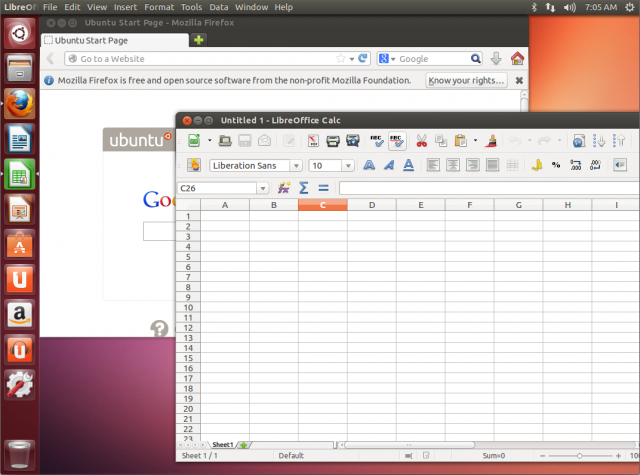
Ubuntu Server will be one of the first operating systems offered to customers of VMware's infrastructure-as-a-service (IaaS) cloud, with OS images that should be portable across clouds operated by VMware and rivals such as Amazon.
vCloud Hybrid Service, set to go live in September, will support all 90 or so operating systems certified to run on the vSphere virtualization platform. For most of those, customers will need to install the operating system themselves. A select few will be published by VMware on what's basically an app store, making them a bit more accessible.
VMware's pricing page currently lists just Microsoft Windows Server 2012, Windows Server 2008 R2, and CentOS. It has been reported that SUSE Linux is on its way. Ubuntu will join the party some time in November, Ubuntu Server and Cloud Product Manager Mark Baker told Ars at the VMworld conference this week.
Read 17 remaining paragraphs | Comments

|
|

sarahseeandersen: wellthatwaseasy: Important. Holy crap, I...

Important.
Holy crap, I didn’t realize my tweet got posted to tumblr….I had no idea it would spread like this! Wow.






Artists turn video games into Japanese wood block prints
American illustrator Jed Henry and British craftsman David Bull are putting a new spin on the art of Japanese woodprinting with Ukiyo-e Heroes, wood block works featuring popular video game characters.
Henry believes that the Japanese video game aesthetic owes a lot to ukiyo-e, and that the two design styles lend themselves well to one another.
"A lot of the design decisions of these old '80s Nintendo games are inadvertent descendants of Japanese woodblock printing," Henry tells Fast Company's Co.Design. "Instead of painterly renderings, Japanese game designers would use black pixel outlines and color fills. If classic games like Super Mario Bros. or The Legend of Zelda were made in Germany or America, they'd look very different, but because of ukiyo-e's influence in Japan, they have a distinct style."
Henry reached out to Bull, who taught him how to create ukiyo-e and eventually the two began collaborating on an extensive series of prints based on popular video games, including Super Mario Bros., Kirby and Pokemon. The pair determine what kinds of prints to make by choosing a game and coming up with a medieval Japanese spin for its presentation.
"For every piece, I have to do a lot of research because I'm trying to channel long-dead foreign artists I don't necessarily draw like," Henry said. "At first I felt guilty about lifting so much from the masters, until David pointed out to me this is how ukiyo-e has always worked: There's a master artist, and then apprentices who spend years copying him. I was just inadvertently creating the Japanese apprenticeship system."
Check out Fast Company's full profile on Henry, Bull and Ukiyo-e Heroes here.


fire-kissed: fire-kissed: adriofthedead: fairy-wren: expressi...


expressive peregrine falcons
(photos by sdwildgene)
Thespian falcon.
I AM LAUGHING
SO HARD
C’EST PARFAIT
#to fly or not to fly—that is the question #whether ‘tis nobler in the mind to suffer the gusts and winds of outrageous fortune #or to take wing against a sea of fish and by opposing eat them
8 reasons to visit Vermont right now
http://draftmag.com/features/8-reasons-visit-vermont/
- Beer
- Beer
- Beer
- Beer
- Beer
- Beer
- Beer
- Beer

First human brain-to-brain interface
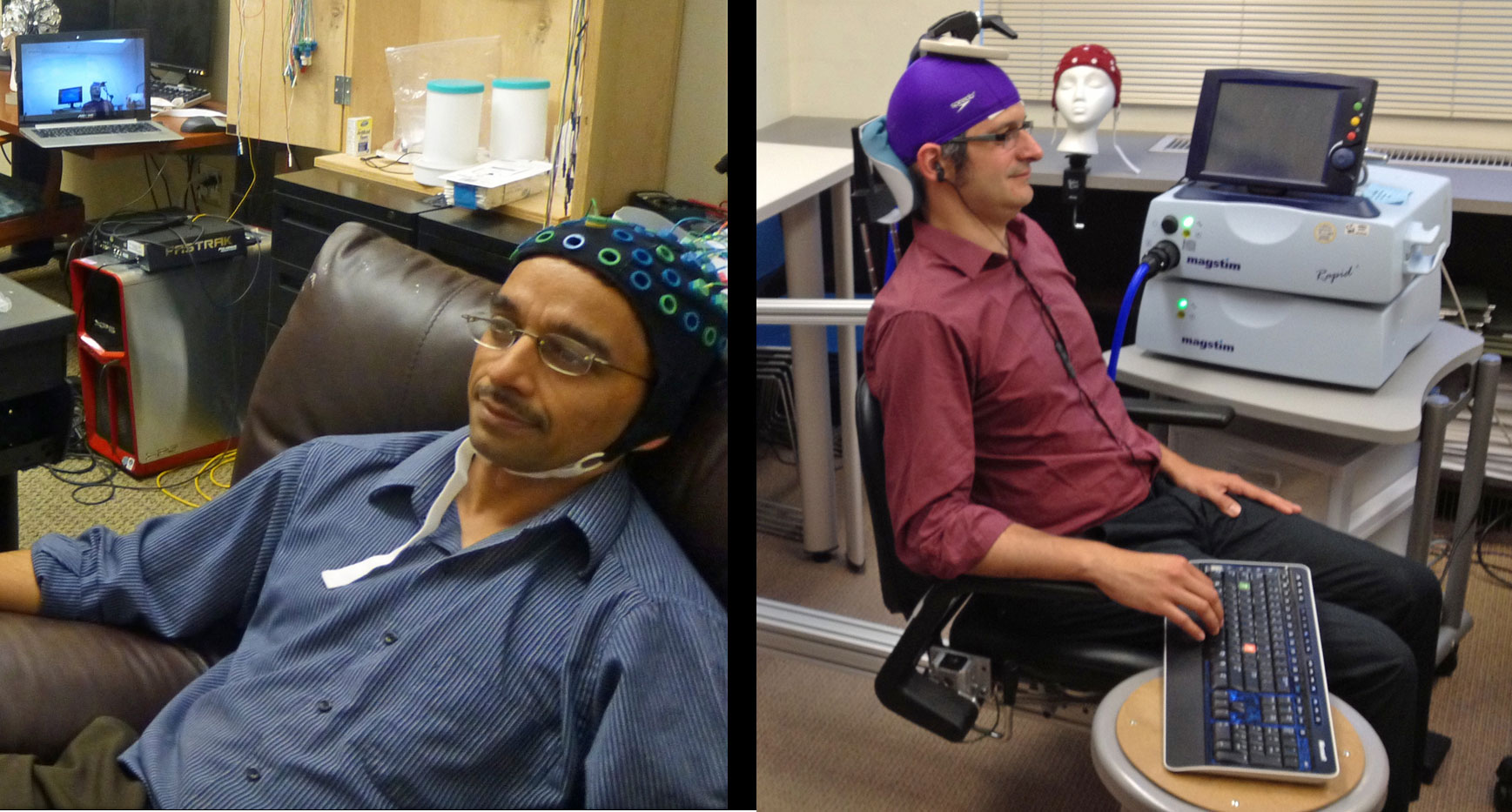
University of Washington researcher Rajesh Rao, left, plays a computer game with his mind. Across campus, researcher Andrea Stocco, right, wears a magnetic stimulation coil over the left motor cortex region of his brain. Stocco’s right index finger moved involuntarily to hit the “fire” button as part of the first human brain-to-brain interface demonstration. (Credit: University of Washington)
University of Washington researchers have performed what they believe is the first noninvasive human-to-human brain interface, with one researcher able to send a brain signal via the Internet to control the hand motions of a fellow researcher.
Using electrical brain recordings and a form of magnetic stimulation, Rajesh Rao sent a brain signal to Andrea Stocco on the other side of the UW campus, causing Stocco’s finger to move on a keyboard.
While researchers at Duke University have demonstrated brain-to-brain communication between two rats, and Harvard researchers have demonstrated it between a human and a rat, Rao and Stocco believe this is the first demonstration of human-to-human brain interfacing.
“The Internet was a way to connect computers, and now it can be a way to connect brains,” Stocco said. “We want to take the knowledge of a brain and transmit it directly from brain to brain.”

The cycle of the experiment. Brain signals from the “Sender” are recorded. When the computer detects imagined hand movements, a “fire” command is transmitted over the Internet to the TMS machine, which causes an upward movement of the right hand of the “Receiver.” This usually results in the “fire” key being hit. (Credit: University of Washington)
Rao, a UW professor of computer science and engineering, has been working on brain-computer interfacing in his lab for more than 10 years and just published a textbook on the subject.
In 2011, spurred by the rapid advances in technology, he believed he could demonstrate the concept of human brain-to-brain interfacing. So he partnered with Stocco, a UW research assistant professor in psychology at the UW’s Institute for Learning & Brain Sciences.
On Aug. 12, Rao sat in his lab wearing a cap with electrodes hooked up to an electroencephalography machine, which reads electrical activity in the brain. Stocco was in his lab across campus wearing a purple swim cap marked with the stimulation site for the transcranial magnetic stimulation coil that was placed directly over his left motor cortex, which controls hand movement.
Remote control
Rao looked at a computer screen and played a simple video game with his mind. When he was supposed to fire a cannon at a target, he imagined moving his right hand (being careful not to actually move his hand), causing a cursor to hit the “fire” button.
Almost instantaneously, Stocco, who wore noise-canceling earbuds and wasn’t looking at a computer screen, involuntarily moved his right index finger to push the space bar on the keyboard in front of him, as if firing the cannon. Stocco compared the feeling of his hand moving involuntarily to that of a nervous tic.
“It was both exciting and eerie to watch an imagined action from my brain get translated into actual action by another brain,” Rao said. “This was basically a one-way flow of information from my brain to his. The next step is having a more equitable two-way conversation directly between the two brains.”
The technologies used by the researchers for recording and stimulating the brain are both well-known. Electroencephalography, or EEG, is routinely used by clinicians and researchers to record brain activity noninvasively from the scalp.
Transcranial magnetic stimulation (TMS) is a noninvasive way of delivering stimulation to the brain to elicit a response. Its effect depends on where the coil is placed; in this case, it was placed directly over the brain region that controls a person’s right hand. By activating these neurons, the stimulation convinced the brain that it needed to move the right hand.
Against your will?
Stocco jokingly referred to it as a “Vulcan mind meld.” But Rao cautioned this technology only reads certain kinds of simple brain signals, not a person’s thoughts. And it doesn’t give anyone the ability to control your actions against your will.*
Both researchers were in the lab wearing highly specialized equipment and under ideal conditions.
“I think some people will be unnerved by this because they will overestimate the technology,” Prat said. “There’s no possible way the technology that we have could be used on a person unknowingly or without their willing participation.”
Stocco said years from now the technology could be used, for example, by someone on the ground to help a flight attendant or passenger land an airplane if the pilot becomes incapacitated. Or a person with disabilities could communicate his or her wish, say, for food or water. The brain signals from one person to another would work even if they didn’t speak the same language.
Rao and Stocco next plan to conduct an experiment that would transmit more complex information from one brain to the other. If that works, they then will conduct the experiment on a larger pool of subjects.
Their research was funded in part by the National Science Foundation’s Engineering Research Center for Sensorimotor Neural Engineering at the UW, the U.S. Army Research Office and the National Institutes of Health.
More information: research website.
* “Against your will” is vague and undefined in the UW statement and no evidence was presented for “no possible way” or that such a sweeping statement could ever be proven. The finger movements were in fact involuntary, and no evidence was presented that Stocco could block his finger movements intentionally (with his “will”).
“Unknowingly” is also undefined. It’s conceivable that a TMS device could be placed adjacent to a person’s head as a cure, or built into a brain-controlled game device, for example, so the person’s finger (or other muscle group) would in fact be unknowingly controlled. And in another scenario, “willing participation” would of course not be required (such as in an interrogation with “highly specialized equipment”), although it might not be done unknowingly in all cases.