Shared posts

09 Dec 21:30

Merry Fucking Christmas Gift Wrapping Paper

by Kimber Streams

Merry Fucking Christmas Gift Wrapping Paper

Calligraphuck has created Merry Fucking Christmas wrapping paper, the perfect combination of festive and profane for your holiday gift wrapping needs. It’s available to purchase online from Calligraphuck.

You’ve invested blood, sweat and tears to find the perfect gift, so why sheath it under a wrapping of Christmas clichés?

Our festive red gift wrap is perfectly camouflaged amongst the others under the tree, but when the recipient brings your package up to unwrap it, the seemingly innocuous patterned text reveals it’s semi-hidden message: Merry Fucking Christmas!

Merry Fucking Christmas Gift Wrapping Paper

images via Calligraphuck

submitted via Laughing Squid Tips

09 Dec 21:29

There’s Now A Coloring Book To Teach Your Children To Love Ted Cruz

Are you a new parent terrified that the liberal media will turn your child into an Obama supporter? Or do you just need something to entertain your kids during those long drives to Tea Party rallies? If so, then a brand new coloring book is just the thing for your family!
09 Dec 21:24

Newswire: Tim Meadows was upset Saturday Night Live didn't invite him back for "Bill Brasky"

Saturday’s episode of SNL featured a reprise of the old “Bill Brasky” sketch, owing to the fact that Will Ferrell and David Koechner were there to help Paul Rudd promote Anchorman 2, and the fact that most One Direction fans heard “Bill Brasky” while in the womb, so it was a good way for the show to settle them down. But not everyone was so easily placated: Jilted “Brasky” veteran Tim Meadows (who usually played “The Guy Off To The Side”) took to his Facebook page to let everyone know how much it stung not to be invited back—something that’s happened only twice in the 13 years he’s been gone, while Kristen Wiig and Fred Armisen can just pop in and do Lawrence Welk whenever they want, apparently.

“I guess I know my place,” Meadows wrote, later adding, “I guess ...

09 Dec 21:24

US attorney: 18 current, former Los Angeles County sheriff's deputies face array ... - Seattle Post Intelligencer


BBC News

US attorney: 18 current, former Los Angeles County sheriff's deputies face array ...
Seattle Post Intelligencer
Page 1 of 1. LOS ANGELES (AP) — US attorney: 18 current, former Los Angeles County sheriff's deputies face array of charges. Printable Version. Email This · Tweet · Need to Register? X. Remember Me. Forgot your password? Click to View RSS Feed ...
A dozen-plus LA County deputies face arrest in jail abuse probeLos Angeles Times
18 LA sheriff's officials charged in jail probeWXOW.com
18 LA sheriff's deputies face federal chargesThegardenisland.com

all 78 news articles »
09 Dec 20:33

Men Are Starting To Speak Like Valleygirls Too

This process is known as "uptalk" or "valleygirl speak" and has in the past been associated with young females, typically from California or Australia. But now a team says that this way of speaking is becoming more frequent among men.
09 Dec 20:23

Study: People Are Biased Against Creative Thinking

by samzenpus
An anonymous reader writes "Despite how much people might say they like creative thinking, they don't, at least according to studies. 'We think of creative people in a heroic manner, and we celebrate them, but the thing we celebrate is the after-effect,' says Barry Staw, a researcher at the University of California–Berkeley business school who specializes in creativity. 'As much as we celebrate independence in Western cultures, there is an awful lot of pressure to conform,' he says."

Share on Google+

Read more of this story at Slashdot.


09 Dec 20:16

Benedict talking about how Martin helped him get the roles in...


Benedict talking about how Martin helped him get the roles in ‘The Hobbit’ (x)

You wonder how many of these hapless reporters have the nous to understand how much irony they’re suddenly getting in their diet.

09 Dec 20:09

Photo


09 Dec 20:07

The only thing that will stop electronic surveillance is money earned from electronic surveillance

by Tim Fernholz
Diane Von Furstenberg watches a practice run of her Spring 2013 show with Google co-founder Sergey Brin during Fashion Week in New York, Sunday, Sept. 9, 2012. Both are wearing Google Glass, headwear that contains electronics such as a computer processor and a camera.

Tech firms and internet activists are realizing that you have to fight fire with fire.

It’s been more than six months since Edward Snowden revealed the extent of the electronic surveillance apparatus deployed by the US and other governments, covering everything from cellphone and e-mail data to today’s news about spies deployed in popular online games. Almost none of those capabilities have been altered: Indeed, legislation moving through the US Senate to purportedly limit electronic data collection would preserve a key loophole exploited by the US National Security Agency.

Now that may change: Today, eight major internet companies stepped forward to push for broader surveillances restrictions. Google, AOL, Facebook, LinkedIn, Microsoft, Apple, Twitter and Yahoo are jointly supporting principles that would end bulk data collection of internet communications, force intelligence agencies to seek judicial approval for their information requests, and create more transparency about when and how that happens.

But one thing uniting the companies speaking out is their own dependence on your personal information: Their continued success depends on gathering data about you—including some you might not even be aware of—and securing it; that’s what makes them such tempting targets for government surveillance. Much has been made of the potential losses for internet companies if international clients don’t trust them to safeguard their information—to the tune of $180 million for cloud services providers, about 25% of their revenue, per a much-quoted Forrester Research estimate.

Until now, the competitors, whose wealthy executives aren’t shy about using political donations to amass influence, have not united with one voice to demand legislative change. Some tech companies, particularly the telecom sector, are still largely silent. But the industry’s mobilization could be key to getting meaningful reforms up for a vote in the US.

Despite outrage over spying, the issue doesn’t appear to have much salience with US voters compared to priorities like the economy, the new health care law, and even issues like Syria’s civil war. To a large extent, the national security establishment in the US has been able to secure the legislative outcomes it prefers since 9/11, despite committed activists pushing back against overreach. But lawmakers and the intelligence community haven’t had to contend with the lobbying force of a major industry willing to spend on its priorities, and that could catalyze tangible change from Snowden’s revelations.

09 Dec 20:05

CyanogenMod rolls out encrypted text messaging by default

by Adrianne Jeffries

As we continue to read new revelations about the extent of the government's spying on citizens, more people are looking into ways to protect their privacy in emails, texts, and phone calls. You could write all your messages with lemon juice on parchment, but given the realities of the modern world, cryptographic encryption provides the best balance between security and convenience.

Unfortunately, encrypting your messages is still really inconvenient. Users who want to protect their privacy must typically go through a lengthy installation process that is probably explained in technical jargon, and then only send messages to people who are using the same protocol.

But what if secure messaging were built into your phone's underlying operating system, so that everyone on the same platform is automatically exchanging encrypted messages?


Encryption is still inconvenient

Cyanogen, the independent company that makes the popular CyanogenMod version of Android, announced today that its users will soon be using secure text messaging by default.

Cyanogen teamed up with Open Whisper Systems, which makes open source apps for secure texting and phone calls, in order to integrate encryption seamlessly into a phone's firmware. Install CyanogenMod, and your texts to other users of CyanogenMod and Open Whisper System's TextSecure will automatically be encrypted. You can still use whatever SMS app you like.

"We want everyone to have access to advanced secure communication methods that are as easy and reliable to use as making a normal phone call or sending a normal text message," Moxie Marlinspike, cofounder of Open Whisper Systems, says in an email. "The collaboration we've done with Cyanogen takes us substantially closer to our goal of completely frictionless secure communication. Users don't have to do anything special or different, it just happens."

The move makes end-to-end secure messaging available to a potentially huge userbase. Cyanogen has 10 million known users, but it also gives users the option to not be counted. Considering these hidden users, there could be as many as 30 million CyanogenMod installations, the CEO estimates.  The company aims to take on Windows Phone as the third-largest mobile operating system.

The update will be rolled out to the newly-released 10.2 version of CyanogenMod, which is installed by roughly 668,000 users, and then incorporated into earlier versions.

"Users don't have to do anything special or different, it just happens."

BlackBerry Messenger, Apple's iMessage, Google's Hangouts, and third-party apps including WhatsApp all offer varying levels of security from government scrutiny, but with flaws. Any system that claims to be secure is going to have its critics, but Open Whisper Systems uses some of the highest standards. It employs end-to-end encryption, meaning only the sender and recipient can see the content of the message (as long as they're both using CyanogenMod or TextSecure). Open Whisper also uses perfect forward secrecy, an extra precaution that means new keys are generated for every message so that if a key is compromised, it can only be used to unlock one message.

Any system that claims to be secure is going to have critics

The protocol also uses an independently-developed algorithm rather than one approved by the National Institute of Standards and Technology, after it was revealed that the NSA worked to weaken NIST standards.

Encrypted messaging works best when everyone is using it. CyanogenMod is by no means mainstream, but its announcement is a major step in that direction — especially if it can manage to make its own notoriously long installation process less unwieldy.

Cyanogen decided to implement built-in secure messaging in part because even its tech-savvy users were neglecting to configure some of its advanced optional security features.

"We see this as a path to show that security and privacy are priorities in the mobile space," a Cyanogen representative says in an email. "If the former mobile race was over specifications, and the current is over camera quality, we'd like to see the next race be over who can protect their users the most. If this means we are taking on the other major systems, or just feeding them ideas for their own implementation, the users win."

09 Dec 20:05

The Start menu may return to Windows

by Tom Warren
firehose

rofl

Microsoft appears to be readying some significant changes to its next version of Windows. Paul Thurrott reports that Microsoft is planning to make the Start menu available as an option in the next major Windows release, currently codenamed "Threshold." The Start menu change will follow a recent reversal that Microsoft made in Windows 8.1, bringing back the Start button UI. It’s not clear if the Start menu will be made available for all versions of Windows Threshold, and Thurrott speculates it may appear as an option for those that only support desktop apps.

Further Threshold changes appear to include an option to run Windows 8-style ("Metro") apps on the desktop. Currently, the new Windows 8-style apps can run alongside the desktop, but the next version of Windows is said to expand this greatly by allowing Metro apps to float as separate windows on the desktop. Third-party tools like Stardock’s ModernMix already support this, but it appears Microsoft will add it natively to provide more flexibility for its new style apps.


Separate versions of Windows for consumer and business

On the topic of Threshold, ZDNet is also reporting that Microsoft is moving to a simplified version of Windows for consumers, including a version focused on Windows 8-style apps that’s updated frequently and available for ARM-based Windows tablets, PCs, and Windows Phones. A more traditional consumer version will be designed for the current PC market and fully support existing desktop apps. A separate enterprise version will include the policy management and enterprise features that you’d expect, but it’s not designed to be updated as frequently as the consumer SKUs. The Verge can confirm Microsoft is investigating separate consumer and enterprise versions of Windows.

Microsoft’s Windows "Threshold" version is expected to debut in spring 2015.

09 Dec 20:02

Elton John Denounces Russian Anti-LGBT Laws During Performance in Moscow

by Dan Savage

It's a beautiful statement, brave and necessary. I hope our Olympic athletes—and athletes from Canada and France and Germany and the UK and Australia and Norway and New Zealand and everywhere else—show similar bravery in Sochi. Thank you, Elton, for speaking out.

[ Subscribe to the comments on this story ]

09 Dec 20:02

A Funny Birthday Card for When You’re Not Sure What to Write

by Kimber Streams

Birthday Card

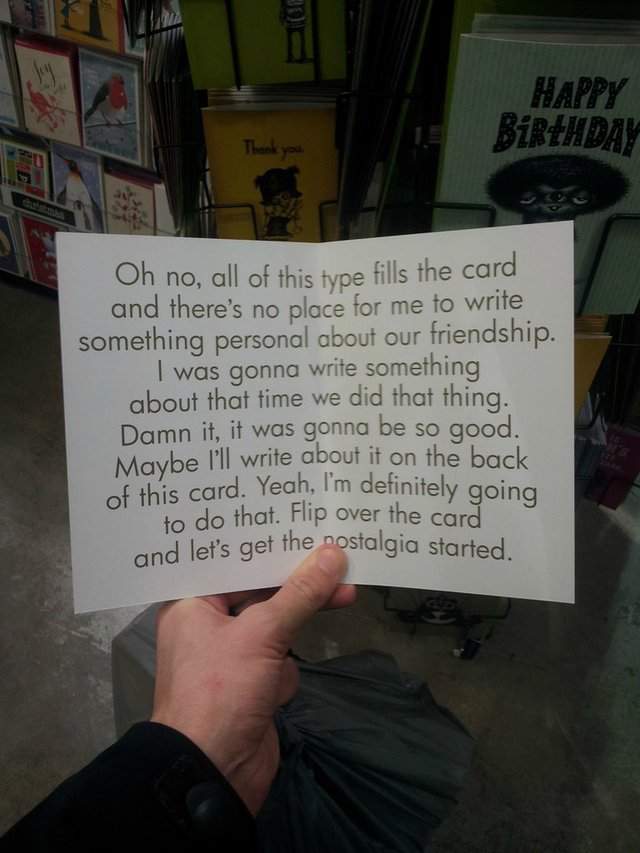
Redditor TheOneInTheHat shared a funny birthday card by Bald Guy Greetings that’s perfect when for when you’re not sure what to write. It’s available to purchase online from Bald Guy Greetings.

Birthday Card

images via TheOneInTheHat

via reddit, 22 Words

09 Dec 19:59

Lord of the Crumbs, A ‘Sesame Street’ Parody of ‘The Lord of the Rings’

by Kimber Streams
firehose

cookie monster is apparently now impulse control monster

One dessert to rule them all.

Cookie Monster must remember the legendary cookie recipe in order to bake the delicious treats in the fires of Mount Crumb in “Lord of the Crumbs,” a Sesame Street parody of The Lord of the Rings.

Legend speaks of a dessert unimaginably sweet and delicious, and when it was destroyed all that remained was the dessert’s powerful recipe. It remained in the hands of a monster named Gobble for a long time, but when it disappeared, all cookies on Monster Earth disappeared along with it. It is up to Cookie Monster to use his memory and remember the recipe in order to bake the cookies in the fires of Mount Crumb.

09 Dec 19:56

Girl in the Shadows: Dasani’s Homeless Life - NYTimes.com

by OnlyMrGodKnowsWhy

As New York has been reborn, children like Dasani have been left behind.
Ruth Fremson / The New York Times
By ANDREA ELLIOTT
December 9, 2013

SHE wakes to the sound of breathing. The smaller children lie tangled beside her, their chests rising and falling under winter coats and wool blankets. A few feet away, their mother and father sleep near the mop bucket they use as a toilet. Two other children share a mattress by the rotting wall where the mice live, opposite the baby, whose crib is warmed by a hair dryer perched on a milk crate.

Slipping out from her covers, the oldest girl sits at the window. On mornings like this, she can see all the way across Brooklyn to the Empire State Building, the first New York skyscraper to reach 100 floors. Her gaze always stops at that iconic temple of stone, its tip pointed celestially, its facade lit with promise.

“It makes me feel like there’s something going on out there,” says the 11-year-old girl, never one for patience. This child of New York is always running before she walks. She likes being first — the first to be born, the first to go to school, the first to make the honor roll.

Even her name, Dasani, speaks of a certain reach. The bottled water had come to Brooklyn’s bodegas just before she was born, catching the fancy of her mother, who could not afford such indulgences. It hinted at a different, upwardly mobile clientele, a set of newcomers who over the next decade would transform the borough.

Dasani’s own neighborhood, Fort Greene, is now one of gentrification’s gems. Her family lives in the Auburn Family Residence, a decrepit city-run shelter for the homeless. It is a place where mold creeps up walls and roaches swarm, where feces and vomit plug communal toilets, where sexual predators have roamed and small children stand guard for their single mothers outside filthy showers.

It is no place for children. Yet Dasani is among 280 children at the shelter. Beyond its walls, she belongs to a vast and invisible tribe of more than 22,000 homeless children in New York, the highest number since the Great Depression, in the most unequal metropolis in America.

Nearly a quarter of Dasani’s childhood has unfolded at Auburn, where she shares a 520-square-foot room with her parents and seven siblings. As they begin to stir on this frigid January day, Dasani sets about her chores.

Her mornings begin with Baby Lele, whom she changes, dresses and feeds, checking that the formula distributed by the shelter is not, once again, expired. She then wipes down the family’s small refrigerator, stuffed with lukewarm milk, Tropicana grape juice and containers of leftover Chinese. After tidying the dresser drawers she shares with a sister, Dasani rushes her younger siblings onto the school bus.

“I have a lot on my plate,” she says, taking inventory: The fork and spoon are her parents and the macaroni, her siblings — except for Baby Lele, who is a plump chicken breast.

“So that’s a lot on my plate — with some corn bread,” she says. “That’s a lot on my plate.”

Dasani guards her feelings closely, dispensing with anger through humor. Beneath it all is a child whose existence is defined by her siblings. Her small scrub-worn hands are always tying shoelaces or doling out peanut butter sandwiches, taking the ends of the loaf for herself. The bond is inescapable. In the presence of her brothers and sisters, Dasani has no peace. Without them, she is incomplete.

Today, Dasani rides the creaky elevator to the lobby and walks past the guards, the metal detector and the tall, iron fence that envelops what she calls “the jail.” She steps into the light, and is met by the worn brick facade of the Walt Whitman projects across the street.

She heads east along Myrtle Avenue and, three blocks later, has crossed into another New York: the shaded, graceful abode of Fort Greene’s brownstones, which fetch millions of dollars.

“Black is beautiful, black is me,” she sings under her breath as her mother trails behind.

Dasani suddenly stops, puzzling at the pavement. Its condition, she notes, is clearly superior on this side of Myrtle.

“Worlds change real fast, don’t it?” her mother says.

In the short span of Dasani’s life, her city has been reborn. The skyline soars with luxury towers, beacons of a new gilded age. More than 200 miles of fresh bike lanes connect commuters to high-tech jobs, passing through upgraded parks and avant-garde projects like the High Line and Jane’s Carousel. Posh retail has spread from its Manhattan roots to the city’s other boroughs. These are the crown jewels of Mayor Michael R. Bloomberg’s long reign, which began just seven months after Dasani was born.

In the shadows of this renewal, it is Dasani’s population who have been left behind. The ranks of the poor have risen, with almost half of New Yorkers living near or below the poverty line. Their traditional anchors — affordable housing and jobs that pay a living wage — have weakened as the city reorders itself around the whims of the wealthy.

Long before Mayor-elect Bill de Blasio rose to power by denouncing the city’s inequality, children like Dasani were being pushed further into the margins, and not just in New York. Cities across the nation have become flash points of polarization, as one population has bounced back from the recession while another continues to struggle. One in five American children is now living in poverty, giving the United States the highest child poverty rate of any developed nation except for Romania.

This bodes poorly for the future. Decades of research have shown the staggering societal costs of children in poverty. They grow up with less education and lower earning power. They are more likely to have drug addiction, psychological trauma and disease, or wind up in prison.

Dasani does not need the proof of abstract research. All of these plights run through her family. Her future is further threatened by the fact of her homelessness, which has been shown, even in short spells, to bring disastrous consequences.

Dasani’s circumstances are largely the outcome of parental dysfunction. While nearly one-third of New York’s homeless children are supported by a working adult, her mother and father are unemployed, have a history of arrests and are battling drug addiction.

Yet Dasani’s trials are not solely of her parents’ making. They are also the result of decisions made a world away, in the marble confines of City Hall. With the economy growing in 2004, the Bloomberg administration adopted sweeping new policies intended to push the homeless to become more self-reliant. They would no longer get priority access to public housing and other programs, but would receive short-term help with rent. Poor people would be empowered, the mayor argued, and homelessness would decline.

But the opposite happened. As rents steadily rose and low-income wages stagnated, chronically poor families like Dasani’s found themselves stuck in a shelter system with fewer exits. Families are now languishing there longer than ever — a development that Mr. Bloomberg explained by saying shelters offered “a much more pleasurable experience than they ever had before.”

Just three days before the mayor made that comment at a news conference in August 2012, an inspector at Auburn stopped by Dasani’s crowded room, noting that a mouse was “running around and going into the walls,” which had “many holes.”

“Please assist,” the inspector added. “There is infant in room.”

Dasani was about to start sixth grade at a promising new school. This would be a pivotal year of her childhood — one already marked by more longing and loss than most adults ever see.

A tangle of three dramas had yet to unspool.

There was the question of whether Dasani’s family would remain intact. Her mother had just been reunited with the children on the condition that she and her husband stay off drugs. The city’s Administration for Children’s Services was watching closely. Any slips, and the siblings could wind up in foster care, losing their parents and, most likely, one another.

The family’s need for a home was also growing desperate. The longer they stayed in that one room, the more they seemed to fall apart. Yet rents were impossibly high in the city, and a quarter-million people were waiting for the rare vacancy in public housing. Families like Dasani’s had been leaving the state. This was the year, then, that her parents made a promise: to save enough money to go somewhere else, maybe as far as the Pocono Mountains, in Pennsylvania.

Dasani could close her eyes and see it. “It’s quiet and it’s a lot of grass.”

In the absence of this long-awaited home, there was only school. But it remained to be seen whether Dasani’s new middle school, straining under budget cuts, could do enough to fill the voids of her life.

For children like Dasani, school is not just a place to cultivate a hungry mind. It is a refuge. The right school can provide routine, nourishment and the guiding hand of responsible adults.

But school also had its perils. Dasani was hitting the age when girls prove their worth through fighting. And she was her mother’s daughter, a fearless fighter.

She was also on the cusp of becoming something more, something she could feel but not yet see, if only the right things happened and the right people came along.

DASANI is a short, wiry girl whose proud posture overwhelms her 4-foot-8 frame. She has a delicate, oval face and luminous brown eyes that watch everything, owl-like. Her expression veers from wonder to mischief. Strangers often remark on her beauty — her high cheekbones and smooth skin — but the comments never seem to register.

What she knows is that she has been blessed with perfect teeth. In a family where braces are the stuff of fantasy, having good teeth is a lottery win.

On the subway, Dasani can blend in with children who are better off. It is an ironic fact of being poor in a rich city that the donated garments Dasani and her siblings wear lend them the veneer of affluence, at least from a distance. Used purple Uggs and Patagonia fleeces cover thinning socks and fraying jeans. A Phil & Teds rain cover, fished from a garbage bin, protects Baby Lele’s rickety stroller.

Dasani tells herself that brand names don’t matter. She knows such yearnings will go unanswered, so better not to have them. But once in a while, when by some miracle her mother produces a new pair of Michael Jordan sneakers, Dasani finds herself succumbing to the same exercise: She wears them sparingly, and only indoors, hoping to keep them spotless. It never works.

Best to try to blend in, she tells herself, while not caring when you don’t.

She likes being small because “I can slip through things.” In the blur of her city’s crowded streets, she is just another face. What people do not see is a homeless girl whose mother succumbed to crack more than once, whose father went to prison for selling drugs, and whose cousins and aunts have become the anonymous casualties of gang shootings, AIDS and domestic violence.

“That’s not gonna be me,” she says. “Nuh-uh. Nope.”

Dasani speaks with certainty. She often begins a sentence with “Mommy say” before reciting, verbatim, some new bit of learned wisdom, such as “camomile tea cures a bad stomach” or “that lady is a dope fiend.” She likes facts. She rarely wavers, or hints at doubt, even as her life is consumed by it.

When strangers are near, Dasani refers to Auburn as “that place.” It is separate from her, and distant. But in the company of her siblings, she calls it “the house,” transforming a crowded room into an imaginary home.

In reality, Auburn is neither. The forbidding, 10-story brick building, which dates back almost a century, was formerly Cumberland Hospital, one of seven public hospitals that closed because of the city’s 1970s fiscal crisis.

In 1985, the city repurposed the former hospital into a shelter for families. This was the dawn of the period known as “modern homelessness,” driven by wage stagnation, Reagan-era cutbacks and the rising cost of homes. By the time Mayor Bloomberg took office in 2002, New York’s homeless population had reached 31,063 — a record for the city, which is legally obligated to provide shelter.

Among the city’s 152 family shelters, Auburn became known as a place of last resort, a dreaded destination for the chronically homeless.

City and state inspectors have repeatedly cited the shelter for deplorable conditions, including sexual misconduct by staff members, spoiled food, asbestos exposure, lead paint and vermin. Auburn has no certificate of occupancy, as required by law, and lacks an operational plan that meets state regulations. Most of the shelter’s smoke detectors and alarms have been found to be inoperable.

There are few signs that children live at Auburn. Locked gates prevent them from setting foot on the front lawn. In a city that has invested millions of dollars in new “green spaces,” Auburn’s is often overrun with weeds.

Inside, prepackaged meals are served in a cafeteria where Dasani and her siblings wait in one line for their food before heading to another line to heat it in one of two microwaves that hundreds of residents share. Tempers fly and fights explode. The routine can last more than an hour before the children take their first bite.

The family’s room is the scene of debilitating chaos: stacks of dirty laundry, shoes stuffed under a mattress, bicycles and coats piled high. To the left of the door, beneath a decrepit sink where Baby Lele is bathed, the wall has rotted through, leaving a long, dark gap where mice congregate.

A few feet away, Dasani’s legally blind, 10-year-old sister, Nijai, sleeps on a mattress that has come apart at the seams, its rusted coils splayed. Hand-washed clothes line the guards on the windows, which are shaded by gray wool blankets strung from the ceiling. A sticky fly catcher dangles overhead, dotted with dead insects.

There is no desk or chair in the room — just a maze of mattresses and dressers. A flat-screen television rests on two orange milk crates.

To eat, the children sit on the cracked linoleum floor, which never feels clean no matter how much they mop. Homework is a challenge. The shelter’s one recreation room can hardly accommodate Auburn’s hundreds of children, leaving Dasani and her siblings to study, hunched over, on their mattresses.

Sometimes it feels like too many bodies sharing the same air. “There’s no space to breathe ’cause they breathe up all the oxygen,” Dasani says.

She carves out small, sacred spaces: a portion of the floor at mealtime, an upturned crate by the window, a bathroom stall.

The children spend hours at the playgrounds of the surrounding housing projects, where a subtle hierarchy is at work. If they are seen enough times emerging from Auburn, they are pegged as the neighborhood’s outliers, the so-called shelter boogies.

Nothing gnaws at Dasani more.

A mucus-stained nose suggests a certain degradation, not just the absence of tissues, but of a parent willing to wipe or a home so unclean that a runny nose makes no difference. Dasani and her siblings can get hungry enough to lose their concentration in school, but they are forever wiping one another’s noses.

When Dasani hears “shelter boogies,” all she can think to say is what her mother always tells her — that Auburn is “just a pit stop.”

“But you will live in the projects forever, as will your kids’ kids, and your kids’ kids’ kids.”

She knows the battle is asymmetrical.

The projects may represent all kinds of inertia. But to live at Auburn is to admit the ultimate failure: the inability of one’s parents to meet that most basic need.

DASANI ticks through their faces, the girls from the projects who might turn up at this new school. Some are kind enough not to gossip about where she lives.

The others might be distracted by the sheer noise of this first day — the start of sixth grade, the new uniform, the new faces. She will hopefully slip by those girls unseen.

She approaches the school’s steps on a clear September morning. Fresh braids fall to one side of her face, clipped by bright yellow bows. Her required polo and khakis have been pressed with a hair straightener, since Auburn forbids irons.

Her heart is pounding. She will be sure to take a circuitous route home. She will focus in class and mind her manners in the schoolyard. She has only to climb those steps.

Minutes pass.

“Come on, there’s nothing to be scared about,” her 34-year-old mother, Chanel, finally says, nudging Dasani up the stairs.

She passes through the metal detector, joining 507 other middle and high school students at the Susan S. McKinney Secondary School of the Arts.

Housed in a faded brick building two blocks from Auburn, McKinney is a poor-kids’ version of La Guardia Arts, the elite Manhattan public school that inspired the television series “Fame.” Threadbare curtains adorn its theater. Stage props are salvaged from a nearby trash bin. Dance class is so crowded that students practice in intervals.

An air of possibility permeates the school, named after the first African-American woman to become a physician in New York State.

There is Officer Jamion Andrews, the security guard who moonlights as a rap lyricist, and Zakiya Harris, the dance teacher who runs a studio on the side. And there is Faith Hester, the comedic, eyelash-batting humanities teacher who wrote a self-help book titled “Create a Life You Love Living” and fancies her own reality show.

The children also strive. Among them is a voice that periodically lifts the school with a “Madama Butterfly” aria. When the students hear it, they know that Jasmine, a sublimely gifted junior, is singing in the office of the principal, Paula Holmes.

The school matriarch closes her eyes as she listens. It may be her only tranquil moment.

Miss Holmes is a towering woman, by turns steely and soft. She wears a Bluetooth like a permanent earring and tends toward power suits. She has been at McKinney’s helm for 15 years and runs the school like a naval ship, peering down its gleaming hallways as if searching the seas for enemy vessels.

Students stammer in her presence. She leaves her office door permanently open, like a giant, unblinking eye. A poster across the hall depicts a black man in sagging jeans standing before the White House, opposite President Obama. “To live in this crib,” the poster reads, “you have to look the part.”

Miss Holmes has no tolerance for sagging — sartorial, attitudinal or otherwise.

McKinney’s roots run deep. Dasani’s own grandmother studied there as a girl. Most of the middle school students are black, live in the surrounding projects and qualify for free or reduced meals. They eat in shifts in the school’s basement cafeteria, watched over by the avuncular Frank Heyward, who blasts oldies from a boombox, telling students, “I got shoes older than you.”

For all of McKinney’s pluck, its burdens are great. In the last six years, the city has cut the school’s budget by a quarter as its population declined. Fewer teachers share a greater load. After-school resources have thinned, but not the needs of students whose families are torn apart by gun violence and drug use. McKinney’s staff psychologist shuttles between three schools like a firefighter.

And now, a charter school is angling to move in. If successful, it will eventually claim McKinney’s treasured top floor, home to its theater class, dance studio and art lab. Teachers and parents are bracing for battle, announced by fliers warning against the “apartheid” effects of a charter co-location.

Dasani knows about charter schools. Her former school, P.S. 67, shared space with one. She never spoke to those children, whose classrooms were stocked with new computers. Dasani’s own school was failing by the time she left.

At McKinney, Dasani quickly draws the notice of the older students, and not because she is short, though the nickname “Shorty” sticks. It is her electricity. When they dote on her, she giggles. But say the wrong thing and she turns fierce, letting the four-letter words fly.

It is still September when Dasani’s temper lands her in the principal’s office.

“Please don’t call my mother,” Dasani whispers.

Miss Holmes is seated in a rolling pleather chair held together by duct tape. She stares at the anguished girl. She has been at McKinney long enough to know when a child’s transgressions at school might bring a beating at home.

The principal slowly scoots her chair up to Dasani and leans within inches of her face.

“O.K.,” she says softly. “Let’s make a deal.”

From that day forward, Dasani will be on her best behavior. In turn, Miss Holmes will keep what happens at school in school.

With that, she waves Dasani off, fighting the urge to smile. She can’t help but like this feisty little girl.

DASANI closes her eyes and tilts her head toward the ceiling of her classroom. She has missed breakfast again.

She tries to drift. She sees Florida. For a child who has never been to the beach, television ads are transporting. She is walking in the sand. She crashes into the waves.

“Dasaaaaaani!” her teacher sings out.

She opens her eyes.

There is Miss Hester, batting those lashes.

Both she and another teacher, Kenya Mabry, were raised in the projects. They dress and talk with a polish that impresses Dasani, who studies them.

Miss Hester is also watching Dasani. She does not yet know where Dasani lives, or how hungry she gets. But Miss Hester finds two things striking: how late she arrives some mornings and how capable this girl is in spite of it. Without even trying, she keeps up.

Dasani possesses what adults at McKinney consider an intuitive approach to learning, the kind that comes when rare smarts combine with extreme life circumstances. Her intelligence is “uncanny” and “far surpasses peers her age,” one counselor writes. “Student is continuously using critical analysis to reflect upon situations and interactions.”

Principal Holmes is also taking note. She can already see in this “precocious little button” the kind of girl who could be anything — even a Supreme Court justice — if only she harnesses her gifts early enough. “Dasani has something that hasn’t even been unleashed yet,” Miss Holmes says. “It’s still being cultivated.”

For now, Dasani’s most honed skill might be obfuscation. She works hard to hide her struggles, staying quiet as other children brag about their new cellphones or sleepovers with friends.

If there is one place she feels free, it is dance class. When she walks into McKinney’s studio, and the music starts, her body releases whatever she is feeling.

“When I’m happy I dance fast,” she says. “When I’m sad I dance slow. When I’m upset I dance both.”

Dasani has been dancing for as long as she can remember, well before she earned her first dollar a few years ago break-dancing in Times Square. But the study of dance, as something practiced rather than spontaneous, this is new. She is learning to point her toes like a ballerina, and to fall back into a graceful bridge.

Perhaps it is no accident that amid the bedlam of Dasani’s home life — the missed welfare appointments and piles of unwashed clothes — she is drawn to a craft of discipline. Here, in this room, time is kept and routines are mapped with precision and focus.

Dasani never tires of rehearsing the same moves, or scrutinizing more experienced dancers. Her gaze is often fixed on a tall, limber eighth grader named Sahai.

Sahai is the middle school’s valedictorian. A breathtaking dancer, she has long silky hair and carries herself like a newly crowned queen. She is a girl with enough means to accessorize elegantly. When Dasani looks at Sahai, she is taking the measure of all she is not.

You can be popular in one of three ways, Dasani’s mother always says. Dress fly. Do good in school. Fight.

The first option is out of the question. While Dasani clings to her uniform, other students wear coveted Adidas hoodies and Doc Marten boots. In dance class, Dasani does not even have a leotard.

So she applies herself in school. “I have a lot of possibility,” she says. “I do.”

Her strongest subject is English, where a poem she writes is tacked to a teacher’s wall.

By October, she is on the honor roll, just as her life at Auburn is coming apart.

IT is something of an art to sleep among nine other people. One learns not to hear certain sounds or smell certain smells.

But some things still intrude on Dasani’s sleep. There is the ceaseless drip of that decaying sink, and the scratching of hungry mice. It makes no difference when the family lays out traps and hangs its food from the ceiling in a plastic bag. Auburn’s mice always return, as stubborn as the “ghetto squirrels,” in Chanel’s lingo, that forage the trash for Chinese fried chicken.

Dasani shares a twin mattress and three dresser drawers with her mischievous and portly sister, Avianna, only one year her junior. Their 35-year-old stepfather, Supreme, has raised them as his own. They consider him their father and call him Daddy.

Supreme married Chanel nine years earlier, bringing two children from a previous marriage. The boy, Khaliq, had trouble speaking. He had been trapped with his dead, pregnant mother after she fell down a flight of stairs. The girl, Nijai, had a rare genetic eye disease and was going blind. They were the same tender ages as Dasani and Avianna, forming a homeless Brady Bunch as Supreme and Chanel had four more children.

Two of Dasani’s half-sisters, 7-year-old Maya and 6-year-old Hada, share the mattress to her right. The 5-year-old they call Papa sleeps by himself because he wets the bed. In the crib is Baby Lele, who is tended to by Dasani when her parents are listless from their daily dose of methadone.

Chanel and Supreme take the synthetic opioid as part of their drug treatment program. It has essentially become a substitute addiction.

The more time they spend in this room, the smaller it feels. Nothing stays in order. Everything is exposed — marital spats, frayed underwear, the onset of puberty, the mischief other children hide behind closed doors. Supreme paces erratically. Chanel cannot check her temper. For Dasani and her siblings, to act like rambunctious children is to risk a beating.

By late fall, Chanel and Supreme are fighting daily about money.

It has been years since Supreme lost his job as a barber and Chanel stopped working as a janitor for the parks department. He cuts hair inside the shelter and sells pirated DVDs on the street while she hawks odds and ends from discount stores. In a good month, their combined efforts can bring in a few hundred dollars.

This is not one of those times. Supreme is keeping tight control of the family’s welfare income — $1,285 in food stamps and $1,122 in survivor benefits for his first wife’s death. He refuses to give Chanel cash for laundry.

Soon, all of Dasani’s uniforms are stained. At school, she is now wearing donated clothes and her hair is unkempt, inviting the dreaded designation of “nappy.” Rumors are circulating about where she lives. Only six of the middle school’s 157 students reside in shelters.

When the truth about Dasani emerges, she does nothing to contradict it. She is a proud girl. She must find a way to turn the truth, like other unforeseeable calamities, in her favor.

She begins calling herself “ghetto.” She dares the girls to fight her and challenges the boys to arm-wrestle, flexing the biceps she has built doing pull-ups in Fort Greene Park. The boys watch slack-jawed as Dasani demonstrates the push-ups she has also mastered, earning her the nickname “muscle girl.”

Her teachers are flummoxed. They assume that she has shed her uniform because she is trying to act tough. In fact, the reverse is true.

A CHILLY, November wind whips across Auburn Place, rustling the plastic cover of a soiled mattress in a trash bin outside the shelter.

Chanel and Supreme stand nearby, waiting for their children to come from school. They are still short on cash. The children had pitched in $5.05 from collecting cans and bottles over the weekend.

Chanel inspects the mattress. Clean, it might fetch $10. But it is stained with feces. Janitors wearing masks and gloves had removed it from a squalid room where three small children lived, defecating on the floor. Their mother rarely bathed them, and they had no shoes on the day she gathered them in a hurry and left.

“You can smell it?” Chanel asks Supreme.

“No, I can see it,” he says, curling his lip.

“Those are the people that they need to be calling A.C.S. on,” Chanel says. At the shelter, the abbreviation for the Administration for Children’s Services is uttered with the same kind of alarm that the C.I.A. can stoke overseas.

“Nasty girl,” Chanel says, scrunching her nose.

Everyone knows Chanel. She weighs 215 pounds and her face is a constellation of freckles lit by a gaptoothed smile. She wraps her copper-hued hair in a tubular scarf. The street is her domain. When she walks, people often step to the side — not in deference to her ample frame so much as her magisterial air.

Chanel is in everyone’s business, scoping out snitches, offering homeopathic remedies, tattling on a girl’s first kiss. A five-minute walk through Fulton Mall can take Chanel hours for all the greetings, gossip, recriminations and nostalgia. She has a remarkable nose for people, sniffing out phoniness in seconds. Those who smile too much are wearing “a frown turned upside down.”

She is often spoiling for a fight, or leaving people in the stitches of laughter. While others want the life of the music mogul Jay-Z, Chanel would settle for being his pet. “Just let me be the dog. I don’t care where you put me.” When Chanel laughs, she tilts her head back and unleashes a thunderous cackle.

Dasani can detect her mother’s laugh from blocks away. Today, she returns from school lugging a plastic bag of clothes donated by a security guard at McKinney.

Dasani begins rummaging through the bag. She pulls out a white Nautica ski jacket and holds it up to her shoulders. It is too wide, but she likes it. “It’s dirty,” she says forgivingly.

“Look, Mommy!” she says, modeling her new coat.

“That fits you real nice,” Chanel coos.

Suddenly, Supreme leaps into the air. His monthly benefits have arrived, announced by a recording on his prepaid welfare phone. He sets off to reclaim his gold teeth from the pawnshop and buy new boots for the children at Cookie’s, a favored discount store in Fulton Mall. The money will be gone by week’s end.

Supreme and Chanel have been scolded about their lack of financial discipline in countless meetings with the city agencies that monitor the family.

But when that monthly check arrives, Supreme and Chanel do not think about abstractions like “responsibility” and “self-reliance.” They lose themselves in the delirium that a round of ice creams brings. They feel the sudden, exquisite release born of wearing those gold fronts again — of appearing like a person who has rather than a person who lacks.

The next day, Dasani goes to school wearing her new Cookie’s boots. Feeling amped, she gets into a verbal spat with some boys in gym class and must spend her lunch hour in the principal’s office.

Miss Holmes glowers at Dasani, who tries to leaven the mood by bragging about her place on the honor roll. The principal is unmoved. Dasani still has a B average.

“I want the highest end of the honor roll,” Miss Holmes says. “I want more. You have to want more, too.”

Dasani stares at her tray. The discussion returns to her behavior in gym class.

“While we care for you, we’re not going to take any crap,” Miss Holmes says. “You understand?”

Trying not to cry, Dasani examines her food — a slice of cheese pizza, chocolate milk, a red apple. She wrinkles her nose. Miss Holmes has seen it before, the child too proud to show hunger.

“Can you hurry up?” Miss Holmes says. “The drama with the pizza is not working for me.”

Silence.

“I’ll feed you,” Miss Holmes says. “I will feed you. You don’t think I’ll feed you? Bring the tray.”

Dasani slowly lifts the pizza slice to her mouth, cracking a smile.

Miss Holmes has seen plenty of distressed children, but few have both the depth of Dasani’s troubles and the height of her promise. There is not much Miss Holmes can do about life outside school. She knows this is a child who needs a sponsor, who “needs to see ‘The Nutcracker,’ ” who needs her own computer. There are many such children.

Here at school, Miss Holmes must work with what she has.

“Apples are very good for you,” she says, smiling. “Bananas are, too.”

“I don’t like those,” Dasani says.

“Pretend you like them.”

When Dasani is finished, she brings her empty tray to the principal for inspection. Miss Holmes gestures at Dasani’s milk-stained mouth.

“Fix it,” she says. “Go.”

THE tree is covered in Christmas lights that mask the lack of ornaments.

The children gather around it inside a dilapidated, two-story rowhouse in East New York, Brooklyn — the closest thing they have to a home. It belongs to Chanel’s ailing godmother, Sherry, whom the children call Grandma.

Sherry’s day care center once occupied the first floor, where fading decals of Bambi now share space with empty liquor bottles. Chanel’s two unemployed brothers, 22-year-old Josh and 39-year-old Lamont, stay in the dark, musty basement. When the children visit, they spend most of their time upstairs, sleeping on a drafty wooden floor beneath a Roman-numeral clock that is permanently stopped at 2:47.

Sherry’s electricity has been cut, but the tree remains lit and the heat stays on, via a cable illicitly connected to a neighbor’s power supply. Christmas gifts are scarce: coloring books, a train set, stick-on tattoos, one doll for each girl.

A few nights later, the children are roused by shouts and a loud crash. Uncle Josh has punched his hand through a window and is threatening to kill Uncle Lamont.

Josh lunges at his brother with a knife. The men tumble to the floor as Chanel throws herself between them. Upstairs, the children cower and scream.

Dasani calls out orders: “Nobody move! Let the adults handle it!”

Sirens rattle the block. Josh is taken away in handcuffs as an ambulance races Lamont to the hospital with a battered eye. They had been fighting over a teenage girl.

January brings relief, but not because of the new year. It is the start of tax season, when Dasani’s parents — and everyone they seem to know — rush to file for the earned-income tax credit, a kind of bonanza for the poor.

Their tax refunds can bring several thousand dollars, which could be enough to put down a rent deposit and leave the shelter.

On Jan. 7, the family heads to Manhattan for a rare outing. They take the Q train, which barrels high across the East River. The city’s lights shimmer, making Chanel think of opportunity.

They will start looking for a home soon, she says.

“I wanna go somewhere where it’s quiet,” Dasani says.

“I wanna go somewhere where there’s trees,” Chanel says. “I just wanna see a bunch of trees and grass.”

“Daddy say that he gonna buy this house with a lot of land with grass,” Dasani says, “so that each of us would get a part, so that you can do whatever you want with that part of the land.”

Supreme sits far-off, listening to music on his phone. Baby Lele wails.

Suddenly, Chanel spots Chinatown. The children squeal. Dasani mentions a book she read about the Great Wall of China.

“That’s not this town,” Chanel says.

“It’s a big wall though,” Dasani says.

“That’s the real Chinatown,” Chanel says. “This is the New York Chinatown, where they got Chinese people in Popeyes.”

Dasani presses her forehead against the window and cups her hands around her eyes, as if preserving the view for herself.

OPPORTUNITY comes rarely, but Dasani is always waiting. She wakes early on Jan. 18, hours in advance of a track competition known for rescuing girls from the ghetto.

She has no running shoes, just a pair of imitation Converses. She is unknown in the rarefied world of athletic recruiters and private coaches. But ask anyone in her small corner of Brooklyn, from the crossing guards to the drunks, and they will say two things about this tiny girl with the wayward braids: She is strong like a boy and can run like the wind.

Dasani heads out in the icy cold with her mother and two of her sisters. They walk a mile before arriving at the manicured grounds of the Pratt Institute in the Brooklyn neighborhood of Clinton Hill, which is hosting the Colgate Women’s Games.

The amateur track and field series is a magnet for athletic recruiters, and some of its champions have gone as far as the Olympics. Dasani will compete in the 200-meter dash. She heads to the bathroom to change.

“She got shorts to put on?” one of the organizers asks. Dasani reaches for her leggings.

“Those are the sneakers?” the woman frowns.

Wearing no socks, Dasani ties her rainbow laces and walks to the track. When her number is called, she takes her place among four other girls.

The blank fires and she is off, ahead of the pack.

Win, Dasani tells herself. Win.

At the first bend, she trips and falls behind.

By the second turn, Dasani has caught up with the lead runner.

“Run, Dasani!” Chanel screams. “Run!”

They are in a dead heat for the finish line.

Dasani comes in second. It hardly matters that her time is insufficient to make it past the preliminaries. They leave the stadium feeling euphoric.

“My baby’s going to the Olympics,” Chanel crows. As they walk west along Willoughby Avenue, they talk of finding a trainer. Chanel starts singing her favorite Luther Vandross song, “A House Is Not a Home.”

The girls have heard it enough times to sing along.

A chair is still a chair
Even when there’s no one sittin’ there
But a chair is not a house
And a house is not a home
When there’s no one there
to hold you tight.

They turn north on Carlton Avenue, passing a renovated brick townhouse with sleek, metal window frames.

A skinny brunette is unloading her station wagon. At the sight of Dasani’s family, she freezes. She smiles nervously and moves slowly to her car, grabbing an infant from the car seat.

The mood shifts.

“She thinks we gonna jump her,” Chanel says as she keeps walking. The shelter is only three blocks away.

“Why do they feel like they’re so apart? She’s just two steps away from us. If you got jumped out here, a black man would be the first to save your ass. That’s what I feel like telling her.”

When they reach Myrtle Avenue, Chanel goes searching for a beer at her favorite corner store. Dasani trails her.

Inside, the short-order cook, a Mexican girl, stares at Chanel suspiciously.

“Don’t look at me,” Chanel says.

“You so nice, that’s why I see you,” the girl responds cockily.

“You better watch that grill,” Chanel says. “I don’t want to scare you.”

“You think you scare me?” the girl yells.

“Let’s fight right now!” Chanel shouts.

“Wait for me outside!” the girl calls back.

Chanel moves toward her, reaching for a mop.

“Mommy!” Dasani screams.

The owner, Salim, races toward Chanel.

“I’ll crack her with a stick!” Chanel yells as Salim holds her back.

Dasani is frozen.

“I’ma wait for your ass when you come out,” Chanel says. “What time she get off?”

“You run your mouth,” Salim says, gently leading Chanel away, as he has done before.

As they leave, Dasani turns to the cook.

“She gonna knock you stupid, Chinese lady,” Dasani says.

“Don’t use those words,” Salim cries out. “You’re not supposed to turn out like your mother.”

Reporting was contributed by Rebecca R. Ruiz, Joseph Goldstein and Ruth Fremson, and research by Ms. Ruiz, Joseph Burgess, Alain Delaquérière and Ramsey Merritt.


Original Source

09 Dec 19:56

surgery time - Yuu Yuu Hakusho: Tokubetsu Hen (Namco - Super...


surgery time -

Yuu Yuu Hakusho: Tokubetsu Hen (Namco - Super Famicom - 1994)

requested by raicheando

09 Dec 19:56

Photo


09 Dec 19:55

The X-Men Episode Guide 3×1: Out Of The Past, Part One

by Chris Sims
firehose

"Wolverine’s very first move in the game is to stab the basketball with his claws, thus popping it and ruining everyone’s fun because he is a complete and utter a-hole.

Second, and perhaps more importantly, is that scumbag Gambit, whose muscles are so horrifyingly defined that there is no way that he has not shaded them in with a sharpie, Strong Bad style"

X-Men Episode Guide 3x1

The early ’90s were spoiled for choice when it came to comic book adaptations. Not only was Batman: The Animated Series on the air, but X-Men led Marvel’s push to get on the small screen, diving right into the often convoluted continuity of everyone’s favorite mutants, luring in a generation of fans, and paving the way for cartoons to follow. That’s why we’ve set out to review every single episode of the ’90s X-Men animated series. This week: Season 3 kicks off with “Out of the Past, Part One!”

Previously, on X-Men:

In our last episode, Season 2 came to a close and we were pretty much right back where we started. The team is reunited, Professor X is back in his hover-chair, and Cyclops and Jean remain whiny and unmarried. The only real differences are that Mr. Sinister has been turned into a beach (seriously) and Magneto, after being stuck in a season-long plotline where they stomped around a jungle together, seems to have mostly forgiven Professor X for making him relive his memories of the Holocaust back in Season 1. In other words, the status quo is right back where you left it.

In our discussion of the second season’s high and low points, most readers seemed to agree with me — that‘s something I don’t think I’ve ever typed before — on both counts. The ambition of throwing in cameos and full appearances by other Marvel Universe characters and trying to translate the X-Men of the ’90s directly from comics to screen actually is pretty commendable, and so is trying to focus on individual characters to make sure that everyone gets the spotlight that was mostly on Wolverine in Season 1. The problem is that spotlight shifted so much that everything felt fragmented, like Beast meeting, falling in love with, and curing a blind girl, mostly offscreen, in the span of 20 minutes, all while never acknowledging that Professor X was missing. Everything involving Mr. Sinister was tiresome, and the two-part finale was just frustratingly bad. So here’s hoping things smooth out a little here in Season 3!

Just from this episode, though.. well, it’s not looking good.

We’re kicking things off with a two-parter called “Out of the Past,” because apparently last season didn’t feature enough flashbacks. Seriously, do the X-Men ever start meeting any new people? Was Mojo the last character that didn’t have a mysterious connection to Gambit’s childhood girlfriend or whatever? Anyway, this time it’s coming courtesy of our old pals, writer Michael Edens and producer/director Larry Houston, and it’s a story of Wolverine’s love life. You may want to start drinking now.

It opens on someone running down a flight of stairs, and really, the imagery of things quickly going downhill is not exactly something we need at this point in the show. Turns out that someone is none other than Leech from the Morlocks, making a return from Season One, and as the hail of laser fire that he dodges will attest, he’s not alone, either. He is, in fact, being chased down by these dudes:

X-Men cartoon screenshot

Ah yes, the Reavers, a gang of cyborg toughs that were all the rage in a bunch of comics I didn’t read circa 1988. To be honest, I’m only really familiar with them from their brief appearance in Punisher, where they were notably some of the only enemies that Frank the Tank didn’t manage to put a permanent end to, with the others being Kingpin and, of course, Jigsaw. Sadly, we seem to have left the Punisher back in Season 1, and these dudes are roaming free, causing all kinds of ruckus.

Leech manages to escape into the sewer, and it turns out that they’re chasing him because he stole something from the Reavers’ leader: Lady Deathstrike!

X-Men cartoon screenshot

Here’s a question I’ve always had about Lady Deathstrike: That red stuff on her head, that’s hair, right? I mean, I always thought it was and she just had a thing for wearing weird little caps like Elektra, but from the looks of this show, it seems like it might be aluminum siding. Feel free to illuminate me in the comments.

After running through some super gross bright green sewer sludge that sticks to him through the next few scenes and is a thoroughly unpleasant reminder of how much it must suck to be a Morlock, Ninja Turtle or mid-80s Ron Perlman, Leech finally reaches Morlock HQ:

X-Men cartoon screenshot

As it turns out, he was on a mission to recover a “device” — which looks like a gun — so that Callisto could “unlock our alien treasure” and use it to beat Storm in a knife fight and regain her position as Morlock Prime. Unfortunately for her, Leech was followed, and even more unfortunately for me, Lady Deathstrike makes her entrance by walking as slow as she can through a waterfall of used toilet water.

X-Men cartoon screenshot

Apparently Lady Deathstrike is not concerned about dysentery. Also, New Yorkers, maybe lay off the Mountain Dew. That liquid is not a healthy color, even for the sewers.

The Morlocks put up a fight against the invading cyborgs, but surprising no one, it turns out that hi-top fades and second-place knife-fighting skills are no match for guns that shoot what appear to be nets made of mucus. For his part, Leech flips like a pancake, immediately ratting out the rest of his crew and pointing Lady D directly to the “buried treasure” that Callisto was trying to break into. She heads into a nearby cavern to check it out, and sure enough, there’s a spaceship up in there.

You know, in the system of natural caves beneath Manhattan. The one that connects to the sewers. You’ve seen that, right? It’s off the N train, I believe.

Lady Deathstrike is pretty stoked about this find, because of course this ship will give her “the means to exact my revenge.” This seems like a pretty big assumption to me, since it could just be an empty ship, but to be fair, she is living in (a version of) the Marvel Universe. If alien spaceships stopped giving people unfathomable and revenge-based powers, they wouldn’t have about 30% of their superheroes. Lookin’ at you here, Darkhawk.

X-Men cartoon screenshot

Alas, much like OPP, it’s not that simple. Deathstrike takes a swipe at the hull with her giant hands, only to have it explode into various lightning and energy beams, which is standard behavior for inanimate objects on this show. This time, though, there’s a giant explosion of green energy that erupts through Manhattan, heading north to Westchester and landing squarely on one Professor Charles Francis Xavier, giving him a bad case of Liefeld teeth:

X-Men cartoon screenshot

Thankfully, there are no thick strands of spit, which means it hasn’t progressed to Stage 2.

Chuck screams about this being “incredible power!” until we go to a commercial break, and when we get back, he floats over to Cerebro to try and find out more about it. And, you know, maybe coming back from an act break to intense Alta-Vista action wasn’t a good idea. It’s not the choice I would’ve made, anyway.

Back in the sewer, Deathstrike talks about how she was only able to touch the spaceship with her adamantium fingernails, so clearly, they need someone with a full set of adamantium claws to get in there. This is a pretty weird leap of logic, what with the whole thing starting because Callisto thought a big laser rifle would do the job, but nobody ever accused Callisto of being the sharpest knife in the sewer, so I guess it makes as much sense as anything else.

So what’s everyone’s favorite Canadian samurai up to while all this is going on? Basketball!

X-Men cartoon screenshot

Yes, in a scene lifted straight from X-Men #7, Wolverine and Gambit have hit the court for some one-on-one hoops. Personally, I’m more a fan of their Claremont-era practice of softball games, but there are a few things that are notable about this scene. First is that Wolverine’s very first move in the game is to stab the basketball with his claws, thus popping it and ruining everyone’s fun because he is a complete and utter a-hole.

Second, and perhaps more importantly, is that scumbag Gambit, whose muscles are so horrifyingly defined that there is no way that he has not shaded them in with a sharpie, Strong Bad style:

X-Men cartoon screenshot

The game is interrupted when Leech calls up on the X-Men’s outdoor video phone — well, Wolverine says the game is interrupted, because I guess he was going to keep playing with a deflated basketball? — and tells them that someone named Yuriko is waiting for Wolverine down in the sewer. Wolverine immediately realizes that this is his cue to have a solo adventure and heads off, but Jubilee wants to get the whole team in on the action, peer pressuring Gambit into following him because “you know he’d help you!” Apparently neither one of them remember that when Gambit actually was having some trouble with his own ex-girlfriend, Wolverine was nowhere to be found. Sorry, Jubes, but he is kind of a s**tty dude.

Wolverine, in full costume, drives into Manhattan and runs down into the subway, where he cuts his way into the sewers, and it’s at this point that the difference in animation between the two seasons becomes really noticeable. The motion actually looks a lot better in a few spots, more reminiscent of mid-’80s anime than anything else, but the tradeoff is that the designs have been simplified wherever possible, and everyone looks like a bootleg action figure:

X-Men cartoon screenshot

And yet, they’re still weirdly shiny and overdefined. This show can’t win for losing sometimes.

While he’s walking through the sewers, Wolverine has a flashback to explain just who this Yuriko character is. Turns out she’s an ex from when he was in Japan, and he had to break up with her because the Canadian government had recruited him for the Weapon X Program, and as he says, the Canadians “aren’t the kind of people you say no to.” One assumes you say “no, thank you,” but that’s neither here nor there. She gets teary-eyed, and he bids her a fond farewell, going off to get some adamantium claws.

X-Men cartoon screenshot

Two things about this. One, I think we can all be glad that we are no longer living in a time when Asian characters were portrayed as having skin the color of Big Bird, but the crazy thing is that this wasn’t really on that long ago. This episode aired in 1994, and she looks like she’s about to pop over to Sin City and fight Hartigan. Pretty shameful.

Second, if she’s someone he was with before Weapon X, then shouldn’t Wolverine not remember her at all? Like, isn’t that where his memory loss stems from? It was only last season where they did an entire episode about that where Heather Hudson had to teach him how to read again, and I’m pretty sure you’re more likely to forget an ex-girlfriend more than, say, the building blocks of language. And it’s not like they could’ve forgotten that episode, either, because the next two and a half minutes of footage are directly lifted from it to pad out the episode.

While Wolverine’s brooding, the Reavers are given the word to attack and bring him back alive, and we get one of the best things that’s ever happened in the show when Wolverine fights back:

X-Men cartoon screenshot

Dude just straight up starts chopping off arms, and the great thing is that it’s only after he does this that he realizes they’re cyborgs. Wolverine’s first instinct, even a version of Wolverine meant for tiny little children, is to cold dismember his foes. Fantastic.

After he disposes of the Reavers Lady Deathstrike shows up, and Wolverine instantly recognizes her as Yuriko, even though she no longer appears to be critically jaundiced.

X-Men cartoon screenshot

Wolverine is pretty freaked out about her gigantic new hands, and Lady D explains that she did it for him — specifically to get revenge — through a process that looks an awful lot like those playsets where you would mold hunks of Play-Doh into Draculas or whatever. She actually goes as far as saying “I decided to change my outer form to match the darkness inside me,” which means that her reasoning for transforming herself into a cyborg is exactly the same as a teenage goth’s for wearing black.

Oh man. Can you imagine the world we’d be living in if teenage goths could just go become cyborg killing machines? Where’s that episode?

Anyway, when Wolverine asks what she’s so cheesed off about, she explains it’s because he killed Professor Oyama when he escaped from the Weapon X program, and when he responds to that with a blank stare, she further explains that her name is Yuriko Oyama. This news is shocking, which means that the entire premise of this episode is that Wolverine cannot remember his ex-girlfriend’s last name. Apparently that was the one thing he actually did forget when he lost his memory.

While they’re fighting it out, the Reavers zap Wolverine with their snot net and drag him off so that they can make him cut open their spaceship. Meanwhile, Gambit and Jubilee have watched this whole thing happen, and when Jubilee tries to go rescue him, Gambit goes full scumbag Yoda and tells here “they are many and we are two.” In other words, go ahead and let him go, I’m sure he’ll be fine.

X-Men cartoon screenshot

Once everyone gets to the spaceship, they untie Wolverine, which probably seemed like a good idea at the time. He responds by just going back to chopping up everyone’s arms, which is when Gambit and Jubilee decide that it’s finally time to intervene. The theme song kicks in and we get a fight scene that, considering it’s juggling seven or eight characters with different powers and weapons, actually isn’t bad. Gambit’s briefly caught by one of the slime nets but uses his powers to explode it right off his body, Jubilee reveals that she wears those goofy Bret Hart shades so that she won’t be blinded by her own fireworks, and there’s even a nice headscissor takedown thrown in.

And then Gambit gets electrocuted and Deathstrike gets thrown into the spaceship where she gets electrocuted too:

X-Men cartoon screenshot

The unexpected side effect of all this is that once again, Professor X gets zapped back at the mansion, only this time he realizes that it’s a message telling them not to open the ship. Fat lot of good it does him from the mansion rather than warning the people that are actually there, but that’s what you get when you tailor your warnings to bald telepaths, I suppose.

Unfortunately for all concerned, Yuriko has somehow caused the ship to open, bathing everything in the light of a big green smile.

X-Men cartoon screenshot

Discussion Question: So “Lady Deathstrike” has to be one of the most ’90s names of all time, right? The only one that I can think of that really beats it is “Deathstroke the Terminator” — and yes, I know that one’s actually from 1980, but you people are always telling me Wolfman and Perez were ahead of their time, so I’m counting it anyway. But that doesn’t mean there’s not room for debate, so this week, what are the most ’90s names of all time? (Spoiler Warning: #1 is Adam X, THE X-TREME.)

Next Week: “Out of the Past, Part 2″ brings us into spacefaring adventure with the Shi’ar, which I hope means this is about to turn into a romance story between an old bald creep and a sexy young bird lady.

Previous 'X-Men' Recaps

09 Dec 19:31

gastropost: From Gastroposter Kate Foster, via...

firehose

mince meat beat


gastropost:

From Gastroposter Kate Foster, via Instagram:

First attempt at mince meat tarts with an orange cinnamon crust cause it’s Christmukkah weekend with the famjam, oh baby!
09 Dec 19:19

Google Doodle Remembers Computing Pioneer Grace Hopper

by samzenpus
SternisheFan writes "Monday's Google Doodle honors computing genius Grace Hopper (remembered as a great pioneer in computing, as well as in women's achievements in science and engineering), on what would have been her 107th birthday, doodling her right where she spent much of her time – at the helm of one of the world's first computers."

Share on Google+

Read more of this story at Slashdot.


09 Dec 19:18

Viking Horde: A Paper-craft Game by Adam Walker Studio — Kickstarter

by gguillotte
firehose

Gameplay looks a bit like the X-Wing Miniatures game, but it's fully print-and-playable with papercraft models. (Baller kickstarter move: the draft rules are right there on the public page, so you could theoretically just DIY the whole thing for free if you want.)

Fold and Play! Combining art and paper design with accessible gameplay, this project brings the joy of a paper game to everyone.
09 Dec 19:08

Newswire: Pixies hire a new bassist not named Kim, release a new music video

firehose

Paz Lenchatin!

"Lenchatin has previously played with A Perfect Circle, The Entrance Band, and Zwan, so she has experience dealing with larger-than-life, bald frontmen."

Following the rapid-fire departures of bassists Kim Deal and Kim Shattuck, the Pixies have recruited another female bassist, though one who isn't named "Kim." Paz Lenchatin will join the group for its upcoming tour dates, which include a string of international festivals next spring and summer. Lenchatin has previously played with A Perfect Circle, The Entrance Band, and Zwan, so she has experience dealing with larger-than-life, bald frontmen.

Just in case picking a fresh bassist isn’t news enough, the Pixies have also released a new video for one of its new tracks. The animated clip for EP-1 song “Another Toe In The Ocean” is below, as directed by Liviu Boar.

Pixies tour dates 2014
Jan. 15—Massey Hall—Toronto, Ontario #
Jan. 16—Metropolis—Montreal, Quebec #
Jan. 18—Orpheum Theatre—Boston, Massachusetts #
Jan. ...

09 Dec 19:04

Amy Adams Wants a Lois Lane/Wonder Woman Team-Up

firehose

GOD FUCK YES PLEASE OH MAN
FIRE ZACK SNYDER AND GIVE THE JOB TO AMY ADAMS

whole movie is Batman and Superman trying to figure out the problem and then arriving in the nick of time to find Lois and WW have already fixed it and are like "who even called you assholes, don't you have some bullshit back home to take care of"

Amy Adams says she'd like Lois Lane and Wonder Woman to be "teammates instead of adversaries" in the untitled 2015 "Man of Steel" sequel.
09 Dec 19:02

Cable association ads warn cord-cutters of shark attacks and death-by-rabbit

by Russell Brandom
firehose

eat a dick and fuck off and die and burn and turn into dust and get shat upon

So you decided to go without cable; what's the worst that could happen? According to a new series of web ads from the National Cable and Telecommunications Association, you could face sharks, mutant rabbits, anthropomorphic flies, and a life of rural solitude. Supported by companies like Comcast and Time Warner, NCTA's new microsite is called (with appropriate grandeur) "The Hole Saga," a four-chapter epic displaying the horrors of a cable-free existence. In addition to the external threats detailed above, cable-cutters are portrayed with a physical hole in their torsos, roughly 18 inches in diameter, meant to symbolize their painful dislocation from the benefits of modern information technology.


A choice between life and death

In each case, viewers are presented by a character in crisis and asked to choose whether to the character has access to the nation's cable infrastructure — typically a choice between life and death. In Chapter One, the most aesthetically satisfying of the chapters, our protagonist is a bicyclist who encounters a bloodthirsty mutant rabbit in the middle of the desert. Viewers must choose whether to grant the unnamed protagonist access to a CNN alert, warning him of the presence of mutant rabbits, or to "cut the cord" and consign him to helplessness in the face of the lepine threat.

09 Dec 19:02

Photo

firehose

BALLER MASTERCLASS


09 Dec 19:00

Meatball the Corgi Runs on a Spinning Carousel

by Kimber Streams
firehose

first-ballot eternal autoreshare hall-of-famer

Meatball the corgi has a great time running and barking on a spinning carousel in this 2011 video by Carter Grebbien.

via reddit, Daily Picks and Flicks

09 Dec 18:58

Portland Knitting Requested

firehose

meanwhile, in Portland

"Hi Portland. I live in SE and I am interested in commissioning someone to make a knit Chewbacca bandolier ... It would be a present for a 2-year old"

Hi Portland. I live in SE and I am interested in commissioning someone to make a knit Chewbacca bandolier, which essentially would look like the cinematic version but with a few white, knit button-pockets on the front (maybe 3 or 4). It would be a present for a 2-year old so I imagine it would be somewhat small, probably not bigger than a standard adult scarf (sidebar: why has nobody made a pocketed Chewbacca scarf yet?), and maybe with a few buttons on the back so it could size up like a belt. Anyway, I checked Etsy and this does not exist or perhaps I am bad at searching. PM if interested; please have a picture of something you've done available so I know you're not a hack.

Thanks!

submitted by thievedrelic
[link] [6 comments]
09 Dec 18:53

Tony La Russa, Joe Torre and ... John Mayer

by Bill Hanstock
firehose

yankees suck

Take all your big plans and break 'em. Because you're going to be wondering why this photo exists for the rest of the day.

The Hall of Fame is many things, but after Sunday night, it can perhaps be accurately described as ... a wonderland.

The night before becoming Hall of Famers, Torre & La Russa bumped into John Mayer in Orlando. pic.twitter.com/TT3dXpWUsX

— MLB Public Relations (@MLB_PR) December 9, 2013

There's no real explanation offered as to why this happened, but we're not complaining. We also really, really, really, really don't want to hear this band. Ever.

09 Dec 18:53

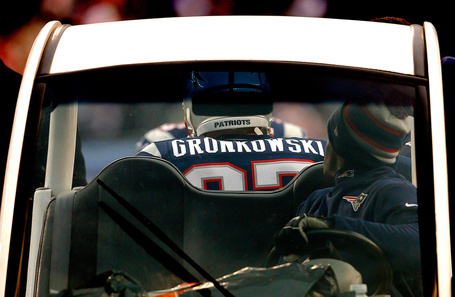
T.J. Ward defends hit on Rob Gronkowski

by Adam Stites
firehose

'Ward, 26, told reporters, including Tom Reed of Cleveland.com, that the hit was a consequence of increased rules to protect the head of players:

"When they set the rule, everyone knew what was going to happen," Ward said. "This can happen if you have those types of situations. It's pretty much inevitable and they forced our hand with this one."

In previous seasons, Ward has been the subject of fines for high hits, including a $25,000 fine he earned for delivering a concussion to Dallas Cowboys wide receiver Kevin Ogletree with a helmet-to-helmet hit in 2012:

"I've been fined three times, and I don't like playing for free. If you go ask anybody in this league would they like to play for free? No. Repeat offenders, they're starting to suspend people for the year. I can't risk that. I won't risk that. And, I've got to play within the rules, point blank." '

Rob Gronkowski is done for the season, but T.J. Ward doesn't believe his hit was unjustified.

New England Patriots tight end Rob Gronkowski is done for the year after a low hit from Cleveland Browns safety T.J. Ward reportedly tore the ACL and MCL in the two-time Pro Bowler's right knee. Ward has since become the subject of some criticism for his tackle, but after the game he defended his actions.

Ward, 26, told reporters, including Tom Reed of Cleveland.com, that the hit was a consequence of increased rules to protect the head of players:

"When they set the rule, everyone knew what was going to happen," Ward said. "This can happen if you have those types of situations. It's pretty much inevitable and they forced our hand with this one."

In previous seasons, Ward has been the subject of fines for high hits, including a $25,000 fine he earned for delivering a concussion to Dallas Cowboys wide receiver Kevin Ogletree with a helmet-to-helmet hit in 2012:

"I've been fined three times, and I don't like playing for free. If you go ask anybody in this league would they like to play for free? No. Repeat offenders, they're starting to suspend people for the year. I can't risk that. I won't risk that. And, I've got to play within the rules, point blank."

Ward, a second round pick in the 2010 NFL Draft, was not penalized for the play and finished the game with eight tackles.

More from SB Nation NFL

Debrief: Seeing clearly through the snow

Rob Gronkowski reportedly tears ACL, MCL

Takeaways: Snow, blowouts and surprises dominate Week 14

Adrian Peterson expects to return this season | Hit by snowballs

PFT Commenter: Kirk Cousins' elite wedding registry

09 Dec 18:50

A New Sherlock Season 3 Trailer Emerges, China Will Be Thrilled

firehose

"UK Prime Minister David Cameron set up a profile on a social media site in order to answer questions. And he was asked about Sherlock. Specifically, he was asked to tell the crew to hurry up because they take too long between seasons."

This latest trailer for Sherlock Season 3 gives a bit more away than, "John is moping and growing a mustache." So beware. Meanwhile, if you thought you were a big Sherlock fan, some folks in China might have you beat. On a recent visit to the country, UK Prime Minister David Cameron set up a profile on a social media site in order to answer questions. And he was asked about Sherlock. Specifically, he was asked to tell the crew to hurry up because they take too long between seasons. Amazing. In case you were wondering, he answered. Are you following The Mary Sue on Twitter, Facebook, Tumblr, Pinterest, & Google +?