firehose
Shared posts
The Best Companies to Work for in 2014
Alfonso Cuaron on 'Gravity' accuracy
Twitter / tinysubversions: I made a Penny Arcade Strip ...
Why Taser is paying millions in secret 'suspect injury or death' settlements
On the day before Thanksgiving this year, international stun gun and cop-cam company Taser International, Inc. announced it had given up its fight in two major legal battles over "suspect injury or death." In a 275-word statement submitted to the US Securities and Exchange Commission, the company's chief financial officer said it would pay a total of $2.3 million in settlements to plaintiffs who had sued the company in product liability cases.
This was rare. Taser prides itself in fighting to the bitter end in any case alleging that its products do anything but save lives. Yet there it was in a financial disclosure — Taser backing down.
Taser brushed it off as a remnant of simpler times. According to the vaguely worded statement, enhanced "risk management procedures" and "revisions to product warnings" in 2009 corrected a legal vulnerability. The $2.3 million payouts would address the last lawsuits tied to that vulnerability; they would amount to housekeeping — cleaning up lingering messes that had remained on the company’s books since before 2009.
What were these "risk management procedures"?
But what were these "risk management procedures"? What were these "revisions to product warnings"? What was the vulnerability? And what were these cases? Taser’s press liaison told The Verge that its SEC declaration "speaks for itself" — a clear indication that the company has no plans to say anything further about settlements unless it’s forced to.
But a little research helped to pin down procedural changes Taser made in September, 2009. And a public records search helped to narrow the possibilities down to four representative cases that may have been settled. Those cases have a few major factors in common: they involve a Taser shot at someone’s chest; they involve someone going into cardiac arrest; and they involve an accidental death.
For years, Taser has battled in court to show that its electronic control devices — its ECDs such as the X2 and the X26 — cannot kill. But if its recent settlements are any indication, the company may either be slowly backing away from that premise, or at least attempting to draw a line in time after which the company feels it's no longer liable for someone’s death.
Contributing factors
As bars were closing at about 2AM on April 19, 2008, 24-year-old Kevin Piskura was at a music venue about a block away from the Miami University campus in Oxford, Ohio. As the bar closed its doors and patrons exited, a fight broke out. Oxford Police were called. According to a civil complaint filed in 2010 by Piskura’s parents, an officer ordered Piskura to "step back or back away" from the fight. It’s not clear whether he did or not, but the officer soon pulled out a Taser ECD and shot Piskura in the chest. Piskura went into cardiac arrest; his heart stopped beating. He was taken to a nearby emergency room and soon life-flighted to a Cincinnati hospital where he died five days later. This past March, Piskura’s parents settled with the City of Oxford and the Oxford Police Department for $750,000. In October, Piskura’s parents suggested they were considering a settlement with Taser.
The Piskuras did not return calls from The Verge, and an attorney representing their case declined to comment. But Kevin Piskura’s death fits a pattern consistent to ongoing product liability cases involving Taser-related incidents in which someone was killed prior to September, 2009. The $2.3 million payouts likely stem from similar cases; these incidents occurred before Taser made its switch from "non-lethal" to "less lethal."
Regarding that: letters to medical journals and plenty of anecdotal evidence have suggested at least since 2005 that even healthy people could suffer cardiac arrest if shot near the heart with Taser’s "non-lethal" ECDs. By September, 2009, Taser changed its product warnings accordingly. Today, Taser’s ECDs are branded as "less lethal" instead of "non lethal," and its training materials warn that "exposure in the chest area near the heart … could lead to cardiac arrest."
Another ongoing cardiac arrest case against Taser involves Ryan Rich. A 33-year-old physician in Las Vegas, Rich went into cardiac arrest and died in January, 2008 after he was shot five times with an ECD, including once in the chest. That case is headed to trial in January.
A third case comes out of the Detroit suburb of Warren, Michigan, and will head to trial in May, 2014. It involves the 2009 death of 16-year-old, 5-feet-2-inch Robert Mitchell, who died in an abandoned house after being shot in the chest by a Warren police officer with a Taser ECD.
"Turner collapsed 37 seconds after the device was activated."
Darryl Turner’s case is a fourth possibility. Turner was 17 years old in March 2008 when he got into an argument with his boss at the North Carolina Food Lion grocery where he worked as a cashier. According to a complaint later filed by Turner’s parents, the argument escalated to shouting and Turner’s boss eventually called 911. A police officer from the Charlotte Mecklenburg Police Department arrived and asked Turner to "calm down." When the teenager refused, the officer pointed his Taser ECD at Turner’s chest. Turner began to step toward the officer, so the officer "held down the Taser’s trigger, causing the device to continue emitting an electrical current, until Turner eventually collapsed 37 seconds after the device initially was activated." Paramedics soon arrived to find Turner handcuffed and unconscious. He was pronounced dead at the scene.
In an uncommon outcome, Turner’s family was awarded a massive payout in 2011. Taser appealed. In November of this year, an appeals court issued its opinion that Taser should remain liable for Turner’s death, but that the jury’s award needed to be reconsidered. "We have no doubt that Turner had significant value to his parents," the appeals court’s decision read. But the court couldn’t agree with a "reasonable level of certainty" that the boy’s life was worth $6.15 million. The parties are scheduled to head back to court in 2014 to haggle over that figure. Unless, that is, Taser has decided to cut its losses and settle out of court.
On the record
Taser International is very good about keeping records. In addition to its Axon Flex on-body police camera that allows officers to record interactions with suspects, the company also collects data every time a Taser ECD is fired. But it’s up to police departments — and up to Taser International — to decide how much of that information is revealed publicly.
The company takes a similar approach in the courtroom.
Taser typically insists on keeping its legal settlements — such as those referenced in its recent $2.3 million payout — secret. Rarely are the terms made public. But it happens occasionally. One Northern California case involved a drunk man off his psychiatric meds who was shot with a Taser ECD after refusing to get off a bus. He went into cardiac arrest. An emergency crew was able to resuscitate him on scene, but after going 18 minutes without a breath, the man suffered a crippling brain injury. He would require a caregiver from that point forward.
After a long legal battle, Taser agreed to settle that case. As per usual, it demanded that the settlement agreement be kept secret. The defendants in the case agreed. But eventually it was revealed that the company had settled for $2.85 million. The settlement figure was only made public after a probate court judge made the unusual decision to disclose the dollar amount in open court.
There was, the judge said, "therapeutic value" in making the information public
A report from the San Jose Mercury News later explained the judge’s reasoning. There was, the judge said, "therapeutic value" in making the information public.
Whether or not a judge makes similar decisions about Taser’s recent settlements, it’s clear that the company has decided to settle cardiac arrest cases as quietly as possible because it has maintained for years that its weapons are effective, non-deadly alternatives to firearms. If too much attention focuses on Taser-related deaths, there’s a risk that police departments might choose to sidestep the controversy altogether and opt against Taser's products.
There’s a lot at stake on both sides. For Taser, its NASDAQ-traded stock value is on the line. And for those engaged in open legal battles over Taser-related deaths involving cardiac arrest and factors such as "excited delirium" ("a euphemism for ‘death by Taser’") — as well as those who may literally find themselves facing down a Taser ECD in the future — the value of an open settlement may amount to more than mere therapy. It could amount to life or death.

Every Single Micronutrient In Soylent
firehosenothing shocking
Noted:
firehose"symbolically represents the blue water and white snow that draw so many people to the Granite State"
rofl
Shield Beats Clock Tower


"The University of New Hampshire, founded in 1866, is a world-class public research university with the feel of a New England liberal arts college. A land, sea, and space-grant university, UNH is the state's flagship public institution, enrolling 12,300 undergraduate and 2,200 graduate students."
You might remember that back in May we posted about a taped presentation by C&G&H to UNH showing three logo options — you can see a local news report on it here. I guess no one liked any of those.
Design by: Chermayeff & Geismar & Haviv (New York, NY)
Opinion/Notes: It doesn't get me as riled up as some of the fans in the video at the bottom of this post, but it gets an honest golf clap for a logo well done.
Related Links: UNH press release
UNH Facebook Album of logo rollout
Select Quote: The crisp, contemporary shield that strongly displays "NH" will be used by the university's three campuses in Durham, Manchester, and Concord for digital, print, and environmental branding. The blue and white logo expresses UNH's official colors and symbolically represents the blue water and white snow that draw so many people to the Granite State.
[…]
The new visual identity replaces the 15-year-old image of UNH's Thompson Hall clock tower, a familiar symbol on the Durham campus that served the university so well for 15 years but not one that connects to UNH's campuses in Manchester and Concord. What's more, the previous logo presented challenges when used in digital media.



1960 New York Subway Captured by Photographer Enrico Natali

In 1960, Brooklyn photographer Enrico Natali took candid pictures of the people he saw on the subway on a daily basis. This series was his earliest work in photography.
“Since I lived in the depths of Brooklyn and rode the subway to where I worked in Manhattan, it seemed reasonable to make the subway my first project. I became so involved in the work that for a time I all but lived in the subway. One night, looking over the photographs, I had the realization that they were larger than I was, that photography was my vocation, and America my subject.”
At first glance, the images seem to show New York City in a very stark, haunting light but upon closer examination, the timeless humanity of the passengers shines through. Though these photos are from a time over 50 years ago, the habits and mannerisms captured persist up to this day.
These photos have now been incorporated into the book New York Subway, 1960, which is available on Amazon.




photos by Enrico Natali
via My Modern Met
The IT Department Is Dead. Long Live The IT Department
firehoseevery job I have/ever had is obsolete beat

Emerging markets are ready for more than your run of the mill whiskey

This week, Distiller became the first online portal for whiskey discovery. It’s been described as a sort of “Booze Google” where users can get recommendations for whiskies after selecting an experience level (novice to connoisseur) and a price range. It’s a good portal for newcomers looking to expand off of the beaten path, but it might take some work to fully capitalize on the burgeoning world market of savvy connoisseurs who drink premium whiskies. Worldwide, the high-end premium and super premium categories were responsible for the lion’s share of growth last year.
Presently, there’s no way to use the site to ask for a specific taste profile: a peaty, toasty, Scotch with honey notes, or a big oaky bourbon with molasses notes, which is how premium connoisseurs find new whiskies. To accomplish something similar, users would first have to pick a favorite whiskey, then scroll down to the recommendations with similar taste profiles. The application currently lists some 150 varieties, and plan to add 50-100 weekly, many of them premium. Also, for the time being, the portal can only be used by English speakers on the web. But, Co-founder Mikael Mossberg told Quartz that the full-fledged iOS app is nearing completion and he has future plans for Android-native and foreign language versions.
Some addition of functionality for whiskey connoisseurs will be crucial in providing the application an expanding user base, in the future. That’s something its backers at media VC firm Votive are interested in, since the future of the whiskey business is both premium and international. UK exports of Scotch have been edging upwards for years, as demand in the US has grown steadily as producers and distributors look abroad for expansion opportunities.
The cultured and experienced premium whiskey drinkers of Japan, South Africa, and Brazil will also need some way to discover new whiskies. Demand in the rapidly developing world for premium whiskey has increased, while mid-level vodkas like Smirnoff haven’t fared so well. This is leading spirit industry leaders like Diageo—where 40% of its sales already come from Asia, Africa, and South America—to stake their futures on premium sales in such markets. The company expects that half of its future sales will come from Asia, Africa, and Latin America.
But’s not just Diageo. Singapore is the number three export market for all Scotch whiskies—behind only the US and France. Japanese whiskey connoisseurship has reached the level that Japanese distilleries now win international awards and small Scottish distilleries like Laphroaig boast that it is the company’s number four export market.
Hopefully, in addition to the whiskey experts, professional tasters, and bulk spirit buyers serve as its tasters, Distiller plans to recruit a few international connoisseurs, as well.


Ten Germans Try to Pronounce the Word ‘Squirrel’
Ten Germans struggle to pronounce the word “squirrel” in this funny video by rupert93r. Here’s a challenge for English speakers: try to say the German word for squirrel, “eichhörnchen.”
via Digg
malformalady: A rapier, manufactured in the mid-19th century by...
firehoseautoreshare

A rapier, manufactured in the mid-19th century by the technology of the old masters as a gift to one high-ranking person. Such exceptionally flexible rapiers were made in Toledo in the beginning of 17th century. They were sold in gun shops and coiled in a circle to show its flexible properties.
Want.


Big Huge Games' assets fetch $320k in 38 Studios auction
firehose"there were legacy issues with both the "Rise of" and Amalur intellectual properties, particularly with their former publishing partners Electronic Arts (Kingdoms of Amalur: Reckoning) and Microsoft (Rise of Nations, Rise of Legends). Even if the properties were purchased, the buyers would still need to deal with some terms made during the original agreements."
Microsoft is particularly hateful when it comes to IP (cf. Shadowrun, Urban Assault)

As for 38 Studios' in-development MMO set in the Kingdoms of Amalur universe Project Copernicus and social media and gaming platform Helios, the court-appointed receiver for the assets Richard J. Land did "not receive acceptable offers for the remaining lots," and "intends to continue to engage in negotiations with interested parties."
Sources involved in the bidding process told Joystiq there were legacy issues with both the "Rise of" and Amalur intellectual properties, particularly with their former publishing partners Electronic Arts (Kingdoms of Amalur: Reckoning) and Microsoft (Rise of Nations, Rise of Legends). Even if the properties were purchased, the buyers would still need to deal with some terms made during the original agreements.
Continue reading Big Huge Games' assets fetch $320k in 38 Studios auction
 Big Huge Games' assets fetch $320k in 38 Studios auction originally appeared on Joystiq on Fri, 13 Dec 2013 12:30:00 EST. Please see our terms for use of feeds.
Julia Morgan Posthumously Awarded the AIA 2014 Gold Medal - Architect Magazine


Credit: Julia Morgan Papers, Special Collections, California Polytechnic State University
The good news is that the AIA has, for the first time ever, awarded its Gold Medal, the profession’s highest honor, to a woman: Julia Morgan (1872-1957). While other Gold Medals have been handed out posthumously, they’re customarily bestowed much closer to the architect’s demise. Samuel Mockbee, for example, died in 2001 and was awarded the Gold Medal in 2004. Eero Saarinen, who died in 1961, was given the award in 1962. Only our nation’s founding aesthete, Thomas Jefferson, had to wait longer for recognition from the AIA. He died in 1826 and was not honored for his architectural achievements until 1993.
Clearly, Morgan, who was the first woman to attend the Ecoles de Beaux Arts (she graduated in 1902) and who is best remembered as the architect of that eclectic behemoth, the Hearst Castle, was overdue for recognition. It’s always a little jarring to realize that she’s almost an exact contemporary of Frank Lloyd Wright (1867-1959). Wright's Ennis House, for example, and the Hearst Castle are geographically and chronologically close but otherwise light years apart.

Julia Morgan with Marianne the elephant, 1929.
Credit: Julia Morgan Papers, Special Collections, California Polytechnic State University
While Wright still resides more-or-less in the present, Morgan has slipped into the past. Arguably, her fade from memory is less about her gender and about the fact that, stylistically speaking, she was very much an architect of her own time. Many of her best buildings, such as the former St. John’s Presbyterian Church in Berkeley and the Asilomar YWCA, are in the Arts and Crafts Style that came to define California architecture in the early 20th century. She was enormously successful and designed some 700 buildings. “Most of them are still standing,” says Julia Donoho, the AIA board member who nominated Morgan for the Gold Medal. (A jury selects three final candidates from all the nominations, with the winner chosen by the board.) Her buildings live on in part because Morgan—little known fact—was a pioneer in the use of reinforced concrete, a material that turned out to be remarkably resilient in earthquakes.


“Julia Morgan was a true superstar,” says Chicago architect Jeanne Gang, FAIA, who presented the nomination to the AIA’s board. “Julia received many glamorous commissions, but she continued to devote a large part of her talent to empowering the poor and vulnerable. This and many of the other themes in her work and practice make her a powerfully relevant model for contemporary architects.”


Still, the timing of the prize may lead some critics to suggest that it has more to do with an architect who is still among the living: Denise Scott Brown, FAIA. Because there was such an uproar in June over the Pritzker Architecture Prize committee’s refusal to retroactively include Scott Brown in the award that her husband and collaborator, Robert Venturi, FAIA, won back in 1991, it may appear that the AIA felt compelled to honor a woman. Not so, says Donoho, who practices architectural law in Northern California. She says she began her search for “the first women to win the Gold Medal” a year ago, when she first joined the board. Donoho says she nominated Morgan because she felt that the organization needed to go back and recognize Gold Medal quality women who “were overlooked.”

YWCA Asilomar, Merrill Hall, exterior.
Credit: Boutelle Papers, Special Collections, California Polytechnic State University

YWCA Asilomar, Grace H. Dodge Chapel, interior.
Credit: Boutelle Papers, Special Collections, California Polytechnic State University
The AIA is to be commended for finally awarding its Gold Medal to a woman. Hopefully it’s the first step towards honoring the significant design contributions women have made to the field. (The recent death of Nathalie De Blois of SOM, who is only occasionally cited for her work with Gordon Bunshaft on Modernist icons like the Pepsi-Cola headquarters or Lever House, serves as a reminder of all the work by women designers that history has credited to men.) The fact that AIA has begun the work of recognizing the women it has overlooked in the past suggests that sometime soon, a contemporary female architect who is still alive and practicing will be similarly honored.

Julia Morgan's Beaux-Arts student ID, 1899.
30-Year-Old Has Earned $11 More Than He Would Have Without College Education

    
|
Scientists Believe Hockey Players May Communicate By Banging Sticks Against Boards

|
|
Classic Empire Strikes Back doc reveals the march of the AT-ATs
We all know the classic AT-AT attack in The Empire Strikes Back was created uding stop-motion, but this old behind-0the-scenes footage of the visual effects team actually creating the footage is pretty great.

|
|
Hands-On With Elite: Dangerous
firehose"One of the great things, even with Frontier, all of those systems that are in there, all of these things have been discovered by Hubble, by occlusion, by gravitational methods, aren’t different to what’s there. It’s actually very, very close to what’s been discovered. I think because I put a lot of effort into the science in the first place it still matches. We don’t have to be revisionist at all. The only thing we’ve been slightly revisionist with, with the embarrassing thing I did with Frontier where I flattened the galaxy to make it easier to navigate, and that’s a shame because it changed the distances between the stars."
By Craig Pearson on December 13th, 2013 at 6:00 pm.

In an I-don’t-recognise-my-life-anymore moment, Frontier invited me to their offices to be the first person to play Elite: Dangerous. David Braben and his team put me in a room with a joystick that was connected to a PC that was running the first public demonstration of the game. I’ve no idea how something like that happened to me, but I think I got through it without embarrassing myself, even if I did phone my mum to tell her.
What I was invited to play is the first closed alpha of the game, the one that’s just gone live to mega-backers from Kickstarter and the pre-order campaign. This is what it looks like.
It really does look like that. It puts the player a Sidewinder, laden with different configurations in a number of combat scenarios. It could be fire-and hope missiles and gimballed lasers, or a powerful beam laser and guided rockets. The scenarios range from a simple dogfight against an easy opponent, all the way up to a giant battle. I’ve been asked to not spoil some content, so I’ll only talk directly about a few. After watching a few dogfights, I’m asked if I want to play.
HMM? DO I WANT TO PLAY THE NEW ELITE?
I sit down and grab the joystick and throttle: I’m acutely aware that a) I am terrible at using joysticks, and b) I am being watched by David Braben. I’m the first person outside of Frontier to be in this position. I am nervous. I guess he must but nervous. But we’re both British, and can put up a cold front that would make an asteroid appear ebullient.
The cockpit view of the Sidewinder has a classic Elite radar at the bottom, some weapons readouts, but little else that’s immediately recognisable. There’s a holographic read-out that covers your ship and the target, showing where the shields are being hit (important because your ship has locational damage, and in a later battle I die because my cockpit explosively decompressed). There are two weapons groups, detailing your primary and secondary firing solutions. Most importantly to the feel of the ship, there are a three power distribution bars on the bottom right, showing you where power can be rerouted between shields, engines, and weapons. The “feel” of it is what Frontier are most conscious of, and as Braben points out: “It’s one of those horribly touchy-feely things. You intuitively know when something’s right.”
Their intuition feels bang-on so far. I’ll get to those bars in a bit, but even without acknowledging them the flight model is superbly balanced. The first enemy I fight is a bit dumb, but as I’m getting used to the controls and the fact that I have three members of the Elite development team watching me (Narrative Designer Michael Brooke and Chief Creative Officer Jonny Watts are also in the room. Watching.), it still takes a short while to grasp, and when I do it’s because the systems that they’ve put in place gives me a good footing.

The little ship is on the radar ahead of me, aloof and uninterested until I start harassing it. I swoop around a little, feeling the UI shake as my (in-game) head reacts to the movement. It feels good: not so speedy that I continually have to adjust for oversteering, but not sluggish. The cockpit’s FOV is pretty wide (and can get wider in the options), and the UI is faintly translucent, so it’s possible to follow ships that swim to the edge of your vision. For what it’s worth, it already “feels” good.
I click the weapons and the two hard-points on either side of the screen pop-out: one is a standard locked position pulse cannon, and the other is a missile launcher. With the enemy targeted, he’s surrounded on the HUD by a group of triangles. The one at the front is solid, and the two at the back wireframe, so I can immediately and easily tell his direction and his orientation, and because it’s bound to the ship’s shape and size, it doesn’t overwhelm the UI with information. Allied with the gently fading contrails he leaves behind, it’s a really elegant way of following and anticipating the target.
I start firing and he peels off, curling away in an attempt to get behind me. I start to worry a little that we’ll be locked together in a chasing-me-chasing-you loop, when I’m told I can game it a little: the throttle is on the right of the radar, and about midway up is a small whited out segment. That little tag tells you the ideal turning velocity to get the best of the other ship, though it changes with relative speeds, so it’s not a win button. For deathloops like this, it’s a good solution to break the deadlock. And while this one is tough to break out of, it’s because in this situation the ships are very similar and I am new to all this: in the final game you can expect a wide-range of differently specced ships.
Braben says: “Even within one ship type there will be quite a range of different ships. It sounds like a contradiction, but you could have a bigger engine, and that sacrifices cargo and/or weapons space, because it’s only got certain capacity. You can go for a more expensive engine that might be the same size but higher performance. The whole game is about trade-offs that you can make.”

I finally fall in behind the enemy ship and start pulsing away with my main gun. The shields go gradually from blue to orange and then poof. It was easy, but then it’s a set-up. It will get a lot more complicated and require a lot more skill in later combat missions.
I hop into a mission where I’ll be fighting multiple targets, including an Anaconda (biiiig gunship in this set-up) and its attendant wingment. I arrive and two wingmen of my own draw up beside me. I am again the aggressor, so I need to approach the larger ship and begin the assault before my wingmen will take notice. Here’s where those bars on the bottom right come into play. They represent the energy going into your shields, engines, and weapons. Depending on how it’s going, you can shunt extra power into one system at the expense of the other two. There are four pips along the bottom of each bar, allowing for expansion and contraction of each system. So, if like me you’re on the run from the Anaconda’s turrets, it’s a good idea to buff the engines or shields at the expense of weapons, because if you’re facing away and fleeing, you’ve nothing to fire on.
All these systems click together to create a pleasingly dynamic dog fighting model. I still died many, many times, against both the Anaconda and the security ships, but I had a moment when I was in a loop with another fighter and I shunted power to the engines, followed his contrails, adjusted my speed to touch the white line, and swooped around to grab him in my sights. This ship had a gimballed laser cannon, which means it was less powerful than the first one, but I could aim it a lot more subtly. It was glorious, and so different from the space-jousting that I became I used to in Frontier when I didn’t know any better. Now I do know better, and this is really smart, and rewards piloting skills with a nice, fat explosion.

And that’s not even the final set-up. There’s one other system that Dangerous introduces to the Elite flight modelling–to do with the ship’s heat–that I’ll let David Braben explain: “Heat mechanic is wonderful part of the combat to make the battle readable without relying on the dashboard. Seeing almost before it happens or as it happens the response of the other guy, so one of the reasons to see all the retros really big, the rockets, you can see he’s turning right immediately. you can see the flare before he starts pulling off. you just get it a few frames earlier. It’s that readability. So you can see if they’re doing something dramatic it’ll suddenly flare with heat. He’s either charging his hyper-drive or his weapons are over-heating.
“It all feeds into the stealth mechanic. So the premise is the scanner is relying on electromagnetic and heat that’s given out. There’s no sound in space. If you suddenly go very quiet and very dark, they can’t see you. Especially if you’re in amongst other objects, like an asteroid field. In space there will be lots of things like that, lots of environments like a space station and if you just hide in a space station you’re just not noticeable. So the ship literally goes dark, and there’s this concept of ‘buttoning up’. You press a button to do it, and all of your heat vents close. You stop venting heat, and so the heat starts building up quite rapidly. Your engines are continually building up heat. It’s very hard to stop. You can shut things down, which reduces the rate it builds up. That’s a skill-based mechanic. So you can decide to shut down your shields and shut down your engines and hide. It’s a bit like holding your breath – you can only do it for a while, your ship will begin to overheat, and you can choose to either open up, or you can choose to take the damage. “
I was supposed to check this out during a stealth mission. Remember Scavenger Hunt? It was a video that Frontier released last year during the Kickstarter.
One of the missions I played was something simiar: a hunt through an asteroid field, where I was to find and destroy several ships. I was supposed to keep my heat signature low, just nudging along to keep out of their radars, but I’ll admit I got a little but gun-happy. Though I was comfortable in the cockpit, I sort of ignored the stealthy part. In my experience, you need to be super good at a game to master its stealth elements, and I’d just gotten used to how messy it was. I tried, but as it happens I was playing the game that everyone who grabs the joystick for the first time does: I was pushing it as far as I could, rather than using gentle, practiced strokes and not burning my engines.
Jonny Watts interjects and explains how the stealth works if it’s not being played by an idiot trying too hard to not mess up: “If you’ve got a really powerful ship hunting you, and he knows you’re roughly here and can’t see you on his radar. And you know that you’re doomed as soon as you appear on his radar, you might choose to take as much damage as you possibly could. You’re doomed, anyway. “
I was doomed over and over, but flying through the asteroid fields, accidentally becoming the hunted, did show me just how enjoyable that can be. The environment in space is as important as the ship when it comes to manoeuvring. A guided missile was launched at me, and I reacted by myself, shifting power systems around to boost my speed and then hitting a secondary, temporary speed boost to push away, before cutting the secondary boost and peeling around behind an asteroid to let the missile strike it. Awesome. Though I cut a bit too far and scraped my ship along the asteroid to the combined screams of the Frontier team.
Away from the cockpit–and it was really tough to pull myself away–we talk about the systems that are in place, and why Frontier is putting so much detail into the handling. According to Braben, it’s not just about getting the handling correct, though that’s a huge part of it, but it’s a symptom of the obsessive approach he has to take with this sort of game: “Detail matters to me. All of the control, like being able to direct power to different systems is a really nice mechanic. Down the line you’ll be able to wander round the ship, board other ships. We’ve got that planned. But we need the ships to work. One of the things that’s important to me is to be able to judge scale. So you look at something and you can see where you get in and out of it, where does the under carriage come from? They’re not great big lumps of cheese: thought’s been put into how the cargo is loaded and where it’s stored.”

Because if they didn’t care on that level, if they weren’t forcing designers to make sure each ship has the same size player hatch so they can keep a sense of scale in every design, then the rest of the game would suffer.
Braben explains how far they’re going with it: “The nearest 150,000 star systems to the Earth, real-life ones, are in the game. As accurately as we can. They still match the night sky. One of the great things, even with Frontier, all of those systems that are in there, all of these things have been discovered by Hubble, by occlusion, by gravitational methods, aren’t different to what’s there. It’s actually very, very close to what’s been discovered. I think because I put a lot of effort into the science in the first place it still matches. We don’t have to be revisionist at all. The only thing we’ve been slightly revisionist with, with the embarrassing thing I did with Frontier where I flattened the galaxy to make it easier to navigate, and that’s a shame because it changed the distances between the stars.
“But there are really, really wonderful things coming from doing it as accurately as we can. Our night sky is quite dark, because we’re very close to the galactic plane, and so the galactic centre is obscured by dust. But you go to somewhere like Achenar, and that’s quite a long way out of the galactic plane, so you’d be able to see an amazing vista of a night sky of the Galaxy. And as you move between system and system the night sky will change. It will be the correct night sky for that system, or as close as we can make it. “
And why that’s important is because they’re in it for the long haul. Braben believes Dangerous might be the final chapter of Elite, but also the beginning of something immense and far-reaching. According to Braben: “What we’re doing with Elite: Dangerous is building a consistent world that we will never need to change again. We’ll be able to add to it. I don’t think there will be a sequel to this game, ever. It will carry on. The game in ten year’s time will look completely different from the game now.”
And it’s already looking great.
Newswire: Paramount announces The Naked Gun reboot starring Ed Helms in hilarious deadpan
firehose:|
First proposed by David Zucker in a dead-on parody of a filmmaker who’s long since lost any sense of shame, a reboot of The Naked Gun has—like so many latter-day Zucker jokes—gone on way too long, until it finally became a reality. Variety reports that Paramount has attached Ed Helms to wrest the role of Detective Frank Drebin from the late Leslie Nielsen, as a sort of consolation for Helms’ previous, aborted attempt to remake the ’80s by starring in a new Vacation movie. Meanwhile, it’s also hired Thomas Lennon and Robert Ben Garant to pen the script, with the Night At The Museum duo having already proved it knows from police spoofs with Reno 911 (and proved it knows how to just take the check and do a studio’s bidding with almost every other movie they’ve ever done).
No director is currently attached ...
Bullying is theft
firehosevia Osiasjota
"Most bullies aren't sociopaths, immune to correction. They are opportunists, using the tools that have often worked for them in the past."
Someone in your office walks out every day with a laptop under his coat. He fences them down the street and keeps the money.
After he's discovered, how long should he keep his job? What if he's a really hard worker? Perhaps you give him a warning, but, when he's discovered stealing again a week from now, then what?
Bullying costs far more than laptop theft does.
The bully frightens away some of your best employees, because they can most easily find another place to work. He also silences the eager and the earnest, the people with great ideas who are now too intimidated to bother sharing them. His behavior has robbed your organization of the insight that could open so many doors in the future.
I define bullying as intentionally using power to cause physical or emotional distress with the purpose of dominating the other person. The bully works to marginalize people. In an organizational setting, the bully chooses not to engage in conversation or discussion, or to use legitimate authority or suasion, and depends instead on pressure in the moment to demean and disrespect someone else—by undermining not just their ideas, but their very presence and legitimacy.
The end to bullying starts with a question: does senior management see the cost? Do they understand that tolerating and excusing bullying behavior is precisely what permits it to flourish?
If so, the next steps are painful and difficult, but quite direct. Bullies can't work here.
If you don't have buy in on that, spend more time and passion and energy to get it. Not around a certain person or a certain action, but on the general irrevocable principle. An organization that is built on ideas and connection can't thrive when there's a bully in the room. If you're part of one that doesn't care about this, perhaps it's time to considering moving on.
Once you start to clean up the culture, will there be judgment calls and edge cases and a need for warnings and improvement plans? Of course. But just as laptop theft drops when our tolerance of it disappears, so does bullying. Most bullies aren't sociopaths, immune to correction. They are opportunists, using the tools that have often worked for them in the past.
It's a wrenching process for some organizations, but one that leads to few regrets. It's your chance to help a bully get his life straightened out too.


This Short Cartoon Will Show You the Power of Empathy Versus Sympathy and Make You a Better Person
firehosevia Snorkmaiden
fantastic and needed
Submitted by: Unknown
Twitter / AshFrieds: A Kickstarter where you donate ...

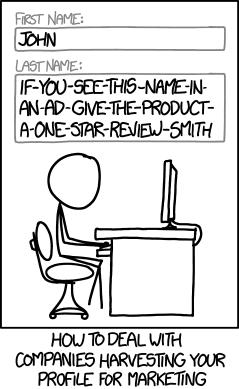
Profile Info
firehosevia Snorkmaiden
see title text as well
New school policy protects transgender students
firehosevia Overbey

Felix Beaudry, a senior at Berkeley High who has transitioned from female to male, told school district directors Wednesday night why he thought BUSD should adopt policies protecting transgender students. Photo: Mark Coplan/BUSD
Just weeks after an agender student was set on fire in Oakland while riding an AC Transit bus, the Berkeley Unified School District has adopted new policies to protect those who are transgender, gender fluid, or do not identify as male or female.
The school board adopted the new policies, which will go into effect immediately, by a 5-0 vote at its meeting on Wednesday Dec. 11.
The new rules will allow people born into one sex but who identify with another to use whatever bathroom or locker room they prefer. They can join the athletic team of their choice and dress however they want. They can use whatever pronoun they prefer to refer to themselves.(...)
Read the rest of New school policy protects transgender students (656 words)
By Frances Dinkelspiel. |
Permalink |
27 comments |
Post tags: Berkeley Unified School District, Felix Beaudry, gender identity, Judy Appel, Julie Sinai, Sasha Fleischman
How the NSA Tracks Mobile Phone Data
Last week the Washington Post reported on how the NSA tracks mobile phones worldwide, and this week they followed up with source documents and more detail.
Barton Gellman and Ashkan Soltani are doing some fantastic reporting on the Snowden NSA documents. I hope to be able to do the same again, once Pierre Omidyar's media venture gets up and running.
Confession of an Ivy League teaching assistant: Here’s why I inflated grades
firehose"I just didn’t want to deal with all the complaining."

The revelation that the median grade at Harvard is an A- prompted lots of discussion, especially among Ivy-league educated journalists. Some speculated high grades reflect intelligence. Others say professors just want their students to get jobs, or, selfishly, they want favorable teaching evaluations. As a teaching assistant in the economics department at Columbia, I too inflated student grades, but for none of those reasons.
I just didn’t want to deal with all the complaining.
Of course, I (and every other graduate student and professor I worked with) read everyone’s work carefully and especially rewarded students who demonstrated a solid understanding of the material. But the distribution of grades was very narrow. Great work got an A, pretty good to average got an A-, slightly below average was a B+, not great was a B, very bad was a B-. Anything below was akin to failure and required showing zero effort or even hostility to the class.
We all cared about teaching and fairness. But the real reason so many of us inflate grades is to avoid students complaining. Anything less than an A- would result in endless emails, crying during office hours, or calls from parents. One student once cornered me and said: “I hope you’re happy you’ve destroyed my chance at Goldman and ruined my life.”
Dealing with all the complaints takes time and, as a PhD student, I had my own research to do. Evaluations, ironically, were not really my concern. Student evaluations are not that important in economics (unless you aspire to teach at a liberal arts college), or not nearly as important as publishing papers in a top journal. And despite pleas from the thwarted Goldman candidate, the future job prospects of students and the money they might some day donate to the university was furthest from my mind. I’d sooner worry about winning a research grant.
Grade inflation is a collective action problem. If the standard is an A- average, it’s impossible to give average work a lower grade. To some extent, students are right to complain if the grades of their peers in other classes or universities are inflated—but theirs are not.
Nonetheless, I initially found all the complaining offensive. I did my undergraduate work in Britain, where grade inflation is less of a problem. That’s because the brunt of your grade came from a single essay at the end of the year. These exams are double marked, by your professor and one at another university, to ensure uniform national standards. That not only kept grade inflation in check, but the culture of complaining too. I would have been considered presumptuous to question the judgment of two professors.
That may not be realistic at research universities in America, as the British grading system is very time intensive and universities there are more teaching and less research oriented. But it’s worth consideration as US colleges grapple with keeping standards, one campus to another.
I worry that grade inflation discourages students from learning subjects which don’t pump up grades as much, like science (pdf). Further, grade inflation robs students of an important life skill: We learn the most from failure, which happens even when we try hard, and our ability to overcome it. That kind of resilience will be rewarded more in the increasingly competitive labor market—and is worth a lot more than straight A’s.
You can follow Allison on Twitter at @AllisonSchrager. We welcome your comments at ideas@qz.com.
Read this next: The most commonly awarded grade at Harvard is an A
