firehose
Shared posts
The Original 'Alice In Wonderland' Manuscript, Handwritten And Illustrated By Lewis Carroll
A Bunch Of Lawmakers Are Retiring Now That Even Congress Hates Congress
LinkedIn now posts pro-bono jobs on its Volunteer Marketplace
LinkedIn is where you polish your resume and look for jobs, but now it also wants to be the place you go for volunteering. The company launched the LinkedIn Volunteer Marketplace today to connect professionals with nonprofit organizations that are looking for volunteers. It's a separate part of LinkedIn's website where nonprofits can post new opportunities, and it also aggregates postings from websites like Catchafire, Taproot Foundation, BoardSource, and VolunteerMatch. Not only does this expand on the LinkedIn Board Connect, a feature that came out in 2012 to help nonprofit leaders find professionals to join their boards, but it's a way for LinkedIn to kill two birds with one stone: get more nonprofits and potential volunteers to use the site, and increase traffic.
LinkedIn wants to be more than just your resume updater
LinkedIn has become a professional standard, but unless you're actively looking for a job or looking for someone to fill a position, you probably don't spend much time on the site day to day. The company wants to users to think of LinkedIn as more than just the place you need to go in order to update your resume, and it's hoping the Volunteer Marketplace will be enough incentive to start that. LinkedIn is hoping to reach more students, who often need volunteer opportunities to boost their resumes, as well as professionals that may not be able to find a job because of the bleak economy.
In the process, LinkedIn will be helping out an industry that is always in need of skilled workers, but may not know where to find them. Places like Catchafire and Volunteermatch are devoted to pro-bono work, but don't have the name recognition of LinkedIn in the professional world. Coupling paid positions with volunteer opportunities on a well-known site could bring more attention to nonprofits and volunteering in general, as well as those smaller, niche sites.
- Source LinkedIn
- Related Items linkedin linkedin volunteer marketplace volunteer

Silicon Valley Workers May Pursue Salary-Fixing Lawsuit


Read more of this story at Slashdot.

Snowden Joins Daniel Ellsberg On Board of Freedom of the Press Foundation
Read more of this story at Slashdot.

Motorola hires Disney scientist who made plants sing
Motorola has hired one of the world's premier interaction designers, Dr. Ivan Poupyrev. Poupyrev, voted one of the world's most creative people in 2013 by Fast Company Design, comes to the Google-owned phone manufacturer from Disney Research.
He joins Motorola to work in the Google-owned company's Advanced Technology and Products department, run by Regina Dugan, the former head of DARPA. The first phone produced by the department under Google, the Moto X, hasn't yet been a sweeping commercial success. But the customizable smartphone does incorporate innovative interaction technologies: Poupyrev's specialty.
Poupyrev spent five years as a principal research scientist at Disney's Carnegie Mellon university lab. There, he worked on projects that included the creation of Swept Frequency Capacitive Sensing, a technology that allows almost any object to become sensitive to human touch with a single wire. Poupyrev demonstrated the technology to The Verge last year by incorporating it into vegetation, making potted plants "sing" when their leaves or stems were stroked.
Dr. Poupyrev will work with the team that most recently produced the Moto X
Poupyrev recounted his "iconic" new employer's storied history. "Motorola invented the cellphone. The first Apples ran on Motorola chips, and their chips were instrumental in the Apollo program." The phone maker's future under Google reportedly excites the scientist. "In a small way," he tells Fast Company Design, "I can help shape the future of the company."
- Source Fast Company Design
- Related Items motorola disney research interface interactivity plant singing google darpa phone Moto X Motorola Google Cellphones
Google Chrome’s little helpers are offering hackers a backdoor to hijack your web browsing

Extensions are useful little programs written by independent developers to customize your browser experience, whether its by blocking advertisements, aggregating your newsfeed, or keeping you on task. But they may also offer a way for malicious coders to get past Google Chrome’s notoriously tight security to harness your online activity for personal profit, or perform other acts of mayhem.
In December, Google’s developer community noticed that an extension called Window Minimizer was hijacking people’s searches to earn money for a third-party search engine. The extension—a productivity shortcut for other web developers—was written by someone calling himself Ionut Botizan, who had it reroute links from Google search to a third party search engine called Ecosia, allegedly to save the rainforest (Right…). Botizan’s little trick is an variation on clickjacking, which momentarily shunts web users to a third-party site to artificially boost traffic or generate ad revenue.
Extensions run alongside Chrome, not within it, so the security onus is supposed to be on developers, who have to abide by Google’s Developer Program Policies, and on users, who must agree to each extension’s Terms of Service. Ostensibly, this frees both Google and the developer from liability. But in practice it means that Google has to play catch-up to police the thousands of Chrome extensions that are available.
On its own, Botizan’s hack was mostly harmless. But it’s worrying how easily he was able to fool other developers, the very people who should know better. For those of us who may not be so well-informed, it’s sobering to think what a truly malicious extension could do.


WTF ABC

ABC News calls this “Virtual View.” I think it looks more like an outtake from Archer
"The current rumor is that “Sherlock” could return by Christmas 2014, but Freeman says that’s news..."
The current rumor is that “Sherlock” could return by Christmas 2014, but Freeman says that’s news for him. He’s been asked about the report repeatedly by journalists while promoting his new FX series “Fargo” on Jan. 14, but isn’t spilling any details if he does know them.
"People have told me that today. If journalists have told me that, it must be so," he says of the rumored return date. "I haven’t read any new scripts. All I know is that we all like the show and we all want to keep doing it for as long as we want to do it, as long as we enjoy it."
As for when he could find time for “Sherlock” to fit into his schedule, Freeman quips, “Between me, Benedict [Cumberbatch], Moffat and Gatiss, I have no idea.”
”-
- Martin Freeman ( x )
@petermorwood …Noting the (almost certainly present) Freemanesque dry/heavy irony on “If journalists have told me that it must be so”. :))))
To Get Your Kickstarter Funded, Say These Magic Words
Code.org: Give Us More H-1B Visas Or the Kids Get Hurt
firehoselol
'legislation that directs H-1B visa fees to enable underserved inner-city and rural schools to participate in FIRST,' Kamen testified. 'Specifically, these fees should support efforts to enable underserved inner-city and rural schools to participate in FIRST.'" '
lolcry
Read more of this story at Slashdot.

OpenMW Brings Morrowind To Cross-Platform Engine
firehosewhaaaaaaaaaaaaat
"It’s testament to the game’s appeal that people are so desperate to stop it from aging into obscurity. There’s precious few attempts to do the same for Oblivion."
Oblivion: the only game that rewards bunny hopping
By Graham Smith on January 15th, 2014 at 1:00 pm.

There are a lot of attempts to save Morrowind from the ravages of time, but while it’s not the prettiest, OpenMW somehow seems the most ambitious. It’s a complete “engine reimplementation” for the old RPG, replacing what was there before with a modern, cross-platform and open source core. If Skywind is a shallow attempt to replace the body of Morrowind with something new, shiny and gold-plated, then OpenMW is the equivalent project designed to augment the game’s withered guts.
A new video outlines the progress of the project as of v.0.28.
As the video shows, the game’s not yet fully or even mostly playable. When it is, it’ll provide a ton of great benefits to players, including being able to play Morrowind on Linux and OSX, support for widescreen monitors, and better water and shadows. It’s open source code also means modders should be able to do more to the guts of the game than they can even with the highly-moddable vanilla Morrowind.
You’ll likely have heard of other similar projects already: Morrowind Overhaul 3 is a graphical mod that plies the ailing engine with makeup; Morroblivion is (was?) a project to bring the game to Oblivion’s engine; and Skywind is a recent effort to pluck the world of Morrowind and drop it into Skyrim.
It’s testament to the game’s appeal that people are so desperate to stop it from aging into obscurity. There’s precious few attempts to do the same for Oblivion.
Morrowind Overhaul 3 is the only one of any of these that really lets you get on with the business of playing the game, although there’s reasons to be interested and follow along with the development of all of them. While Skywind is the most pretty, OpenMW seems the most flexible and, in some ways, feasible.
The OpenMW website has download links, documentation and a forum for those who think they can help out.
__________________
« Final Fantasy Tactics Spiritual Successor Takes To KS |
gamers make the darnedest things, morrowind, OpenMW, Skywind.
(via A Paper Sculpture of Smaug the Dragon Made from Pages of...

(via A Paper Sculpture of Smaug the Dragon Made from Pages of ‘The Hobbit’)
LOL WHY U EVEN NEED THE BOOK ANYMORE
GO SEE THE MOVIE
4.4-magnitude quake hits near Fontana east of Los Angeles - Los Angeles Times
abc7.com |
4.4-magnitude quake hits near Fontana east of Los Angeles Los Angeles Times No injuries or major damage were reported in areas in the vicinity of a magnitude 4.4 earthquake that struck early Wednesday morning about three miles north of Fontana. The earthquake occurred at about 1:35 a.m. at a depth of 3.2 miles, according to the ... Earthquake Shakes Southern CaliforniaLiveScience.com Northridge Earthquake Anniversary: Digital dependence makes us vulnerable in ...89.3 KPCC 4.4-magnitude earthquake rattles Los Angeles areaCorvallis Gazette Times all 121 news articles » |
Saints could have cap issues re-signing Jimmy Graham
firehose'It would come as a shock to nobody if New Orleans went for an offensive lineman or a corner to pair with Jabari Greer.'

New Orleans is running into money issues, trying to fit so many good players into the fold.
The New Orleans Saints are paying the price for being a very good, competitive team. Literally.
Divisional round weekend
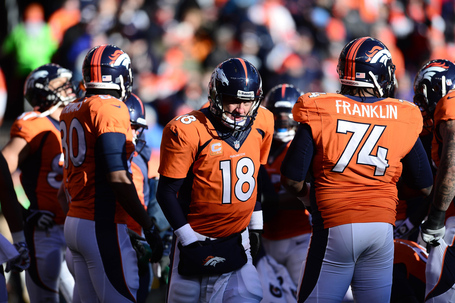 • Broncos advance to AFC Championship• 49ers smother Panthers in Charlotte• Seahawks ‘D’ shuts down Brees and co. • LeGarrette Blount runs wild vs. Colts • Updated playoff bracket
Years of smart drafting and deft free agent signings have made the team competitive for the better part of a decade, with a Super Bowl coming in 2009. Now, the franchise is trying to figure out how to keep the band together, per the Times-Picayune.
The Saints have a plethora of free agents to try to re-sign this offseason, led by tight end Jimmy Graham. By far the best at his position, Graham is going to break the bank and deservedly so. Other free agents of note include center Brian de la Puente, corner Malcolm Jenkins and tackle Zach Strief.
With next year's salary cap projected to be $126 million, New Orleans is already $12 million over that figure. On the positive side, the Saints' largest contract belongs to quarterback Drew Brees, who is scheduled to make $18.4 million in 2014-15 before seeing his cap hit spike to $26.4 and $27.4 the following two seasons. Luckily, Brees has said he is very willing to restructure his contract to help the team's financial situation.
A few potential cuts could start with linebacker Will Smith and running back Pierre Thomas. Cutting Smith -- who didn't play in 2013 due to injury -- would save the Saints $11.5 million while Thomas is due $2.9 million but can be cut without a penalty. Wide receiver Lance Moore could also be a cap causality, saving the team $2.5 million but also giving it some dead money against the cap. He wouldn't be an easy decision like Smith.
It would be stunning if the Saints let Graham walk out the door. In all likelihood, New Orleans will hand out a few extensions, cut some dead weight off the back side of the roster and either tag Graham or ink him long-term. A long-term deal would help the cap situation in the short term, but could complicate things down the road. General manager Mickey Loomis will have to make that call and live with the consequences.
Jason Witten is currently the highest-paid tight end per year, making $7.4 million. It stands to reason Graham will come close to the $10 million figure with a boatload in guaranteed money on a long-term contract. However, the franchise tag would put Graham at around $7 million next season, while giving Loomis a little time to restructure the cap situation.
Jenkins and Strief might be given the right to look elsewhere for a new deal, with New Orleans trying to replace them on the cheap with draft picks. The Saints hit last year in the first round on dynamic safety Kenny Vaccaro, and will again try to replace a few expensive starters with younger, cheaper players. It would come as a shock to nobody if New Orleans went for an offensive lineman or a corner to pair with Jabari Greer.
Ultimately, the Saints will lose a few players to stay competitive, but with a strong draft and some wise signings they will remain a force with Brees and Sean Payton at the top.
More from SB Nation NFL
• SB Nation's 2014 NFL playoff coverage and brackets
• Spencer Hall: Kaepernick, and a helpful guide to hat angles
• NFL plays of the week: A good week for failure
• NFL mock draft: Johnny Football cracks the top 5
Broken Age review: growing up
firehose'finishing Broken Age as it stands feels less like watching a great TV show, where many narrative threads are closed by episode's end, and more like closing a great book halfway through and deciding take a few months off.'
:|
I also don't have a way to get this, apparently, despite being a backer? Is this some early access bullshit?
By Justin McElroy
on January 15, 2014 at 9:15a
"Because I said so."
It's a perennial parental favorite, capable of answering "Why?" without really answering "Why?" Broken Age's lead duo Vella and Shay may be separated by space and time but they're united by their inability to accept that classic deflection as an answer.
That tendency to challenge "Because I said so" is the catalyst for Broken Age, Double Fine's lovely, funny new adventure.
Well. Half an adventure. But we'll get to that.
As thrilling as it sounds being the sole human inhabitant of a galaxy-hopping spaceship, teenage Shay is bored. He's eating the same food every day. He's seeing the same views. The automated "missions" he's sent out on — like saving helpless villagers trapped in an ice cream avalanche by eating them to freedom — were made to entertain the child he no longer is.
It's all an illusion, one created by the overprotective AIs that look out for him, "Mom" and "Dad." As the ship searches for a new home for Shay, he becomes increasingly frustrated with his current one and he begins to wonder if there's not something a little more exciting than ice cream outside the confines of his ship.
Fellow protagonist Vella would probably be thrilled to swap with Shay and his cushy, rainbow-colored prison. In fact, she'd be happy to be anywhere other than her home of Sugar Bunting — Broken Age opens as Vella prepares to be sacrificed as an amuse-bouche for the demonic, gargantuan Mog Chothra.
Stuffing the beast with young girls is a tradition, designed to buy peace for the village in exchange for a few spare debutantes. But Vella, understandably, can't help wondering "Why don't we just kill the damn thing?"
The narrative connection between these two is completely opaque as the game begins, and there's no mechanical reason to swap — the two stories have no discernable impact on each other. You could theoretically play the story of one character to completion before switching. But I found swapping a great way to take a breather on a puzzle I was stuck on, a welcome addition for an adventure game of this kind.
And what kind of adventure game is this? Well, classic, for lack of a better term. Click where you want your character to go, find an item, figure out how to cleverly use it in the world, move forward. Save an absence of verb-specification (that's all handled contextually) Broken Age isn't that different than the games Double Fine founder Tim Schafer and his team have been making for decades.
Broken Age surpasses its predecessors' presentation
That's deceptively reductive — as we've seen many times before, that simple formula can go very badly. Broken Age skirts that fate with really well-balanced and smart puzzles that are never so obtuse as to require a hint system — which is good, since there isn't one to speak of — but challenging enough that I took my fair share of breaks to stare at the ceiling and pray for more intelligence than genetics and public schools provided me.
Broken Age was funded by diehard fans of LucasArts classics like Day of the Tentacle and more recent contenders like Ben There, Dan That, and those fans will be delighted to hear that Broken Age is a worthy successor. The new Double Fine adventure surpasses its predecessors in its lush presentation, which creates the illusion of a world I'd be happy to move to, or at least vacation in. Broken Age brings a storybook to life, one with with shades of Lane Smith's off-kilter work in The Stinky Cheese Man and other Jon Scieszka books. The soundtrack is a stunner as well.
The game's beauty made an occasional graphical bug I experienced all the more frustrating. From time to time, backgrounds would disappear, leaving only a startling blackness. Though Double Fine didn't have a solution to my issue, I'm hopeful it was isolated to my machine.
It looks and sounds great, but characters are Broken Age's secret weapons. They're grounded while approaching absurdity and adversity with brave, heartfelt sincerity. This gives Broken Age the kind of depth that's so often lacking in other "funny" games. It's not working as hard for laughs as previous Double Fine games (or Schafer's work before that), but that makes them all the more welcome when they come.
grounded, heartfelt characters are Broken Age's secret weapons
Being completely spellbound as I was, I wasn't prepared for the game's first half to come to such a sudden halt. This is just Act 1, after all, with Act 2 due later this year. But finishing Broken Age as it stands feels less like watching a great TV show, where many narrative threads are closed by episode's end, and more like closing a great book halfway through and deciding take a few months off.
I'll admit there's a little bit of Veruca Salt in this complaint. This is wonderful stuff so I do, in fact, just want it now. But there's also a lot of really important set up here, themes being established, conflicts being hinted at. I worry the impact of seeing those resolved will be blunted once so much time has elapsed upon the release of Broken Age's second act.
Wrap Up:
Broken Age isn't finished, but what's there is remarkable
That said, and maybe I'm a sadist, but I want you in this same agonizing intermission I now find myself in. Broken Age may be unfinished, but it's also delightful, beautiful, utterly charming and you really should play it right this second.
Because I said so.
Broken Age was reviewed using a downloadable copy provided by Double Fine. You can find additional information about Polygon's ethics policy here.
About Polygon's Reviews
Jack Black to remake MMO mockumentary Wizard's Way
Actor Jack Black and his production company Electric Dynamite have acquired the rights to remake independent film Wizard's Way, a British mockumentary about massively multiplayer online role-players, reports The LA Times.
The original Wizard's Way will be shown at Slamdance Film Festival on Jan. 19 in Park City, Utah. The film was written and directed by filmmakers and fiction authors Socrates Adams, Chris Killen and Joe Stretch, credited as a group on the film under "Metal Man." The trio also star in the film.
The film was originally created in 2012 and has been recognized by other festivals, and earned the Loco Film Festival's Discovery Award for 2013.
Wizard's Way details the lives of Julian "Windows" Andrews and Barry Tubbulb, two highly prolific gamers who spend much of their time playing an old fantasy MMO called Wizard's Way. The pair, also filmmakers, discover a secret about the game that will change their lives forever and an all-out war erupts between the gamers and a group of hipsters. One of them finally decides to find his in-game Wizard's Way wife in the real world and sets out on a quest to find her.
A Breakdown of the Visual Effects Used in ‘The Wolf of Wall Street’
firehoseVFX reel beat
In this video, Brainstorm Digital gives us a breakdown of some of their visual effects used in the new film The Wolf of Wall Street directed by Martin Scorsese.
via Vulture
Where the world’s biggest coffee drinkers live


America might be famous for running on coffee, but it doesn’t run on much. Not compared to a handful of other countries, anyway. When it comes to actual coffee consumption per person, the US doesn’t even crack the top 15.
For much of Europe, and especially Scandinavia, the story is quite different. In a review in 2010 about Stieg Larsson’s hit Swedish trilogy, the New York Times wrote incredulously about how the books’ scenes seemed to always revolve around endless servings of coffee:
…everyone works fervidly into the night and swills tons of coffee; hardly a page goes by without someone “switching on the coffee machine,” ordering “coffee and a sandwich” or responding affirmatively to the offer “Coffee?”
But as it turns out—and as the Times soon thereafter learned—the coffee obsession has much less to do with Larsson than it does with Sweden. Or really, with all of Scandinavia, the Benelux countries, and bits of Eastern Europe. The Netherlands’ per-capita consumption of 2.4 cups a day is almost the same as those of the US, UK, Spain, and France combined.


Here There Be Alligators: In the rivers and swamps of Mississippi, something huge lurks below the surface

Here There Be Alligators
In the rivers and swamps of Mississippi, something huge lurks below the surface
William Browning | Jan 15, 2014
In September, a man named Lee Turner caught something very big in Bayou Pierre, near the Mississippi River. He and three others were in a boat when they spotted it moving slowly across the top of the water. One of them was close enough to toss a treble hook over its back and pull. The hook was seven inches long and attached to a deep-sea fishing line. One of its steel points pierced hard, leathery skin. The moment it did, an alligator vanished into the depths.
Alligators are best hunted at night, when they are most active, and for a while Turner’s hunting party sat in darkness, shining a spotlight along the water, waiting. When it resurfaced, “it sounded like a whale,” Turner said. They turned and saw it, as wide as an office desk, behind the boat.
It stayed up long enough to draw a breath, then went under again and acted as the 17 and a half foot long boat’s pilot as it moved through its underwater world, pulling the four hunters along. It emerged several times to breathe, then would disappear again and tighten the line.
A man holding a rod and reel with a hook embedded in an alligator dictates nothing. He only holds on. These hunters did so for two hours.
The last time the alligator came up its mouth was open and it bit at the boat’s gunwale. One of the hunters picked up a .410 bore shotgun, aimed at the back of the animal’s head and squeezed the trigger. Not long after that, after three other hunters in the area came over to help, the group dragged its dead body onto a sandbar. Turner told me it was then that he knew they had “got a giant.”
It was as long as two men and went on the books at 741.5 pounds, the heaviest caught in Mississippi history.
They loaded it into the boat and traveled the river toward a ramp, where they put the boat on a truck trailer and drove to Canton, Miss.
A biologist with the state’s Department of Wildlife, Fisheries and Parks checked the alligator’s size the following day. It was as long as two men and went on the books at 741.5 pounds, the heaviest caught in Mississippi history.
Alligators are predatory, cannibalistic and efficient hunters. They move deliberately and have armor-like skin. Their jaws are traps. In terms of the food chain, in the swamps and waterways where they live, nothing looks down on them. Occupying a stretch of the country between Texas and the Carolinas and farther south, the reptiles are the same as those that once shared space with dinosaurs more than 150 million years ago. Their brains would fit in a tablespoon, and unless bothered, they are relatively quiet. They can live longer than 50 years.
When I first heard about what Turner caught, my imagination got away from me. I had this haunting vision of it floating in that bayou every night for a half-century, hunting its prey. Sitting in my office cubicle, wearing loafers, this unsettled me.
Not long after that, Dr. Francisco Villa, a biologist at Mississippi State University, told me alligators typically eat turtles, fish, crabs, birds, beavers and raccoons. Then he added, “Pretty much anything that swims by and they can handle.”
And I pictured a 700-pounder ripping my arm off at the shoulder.
***
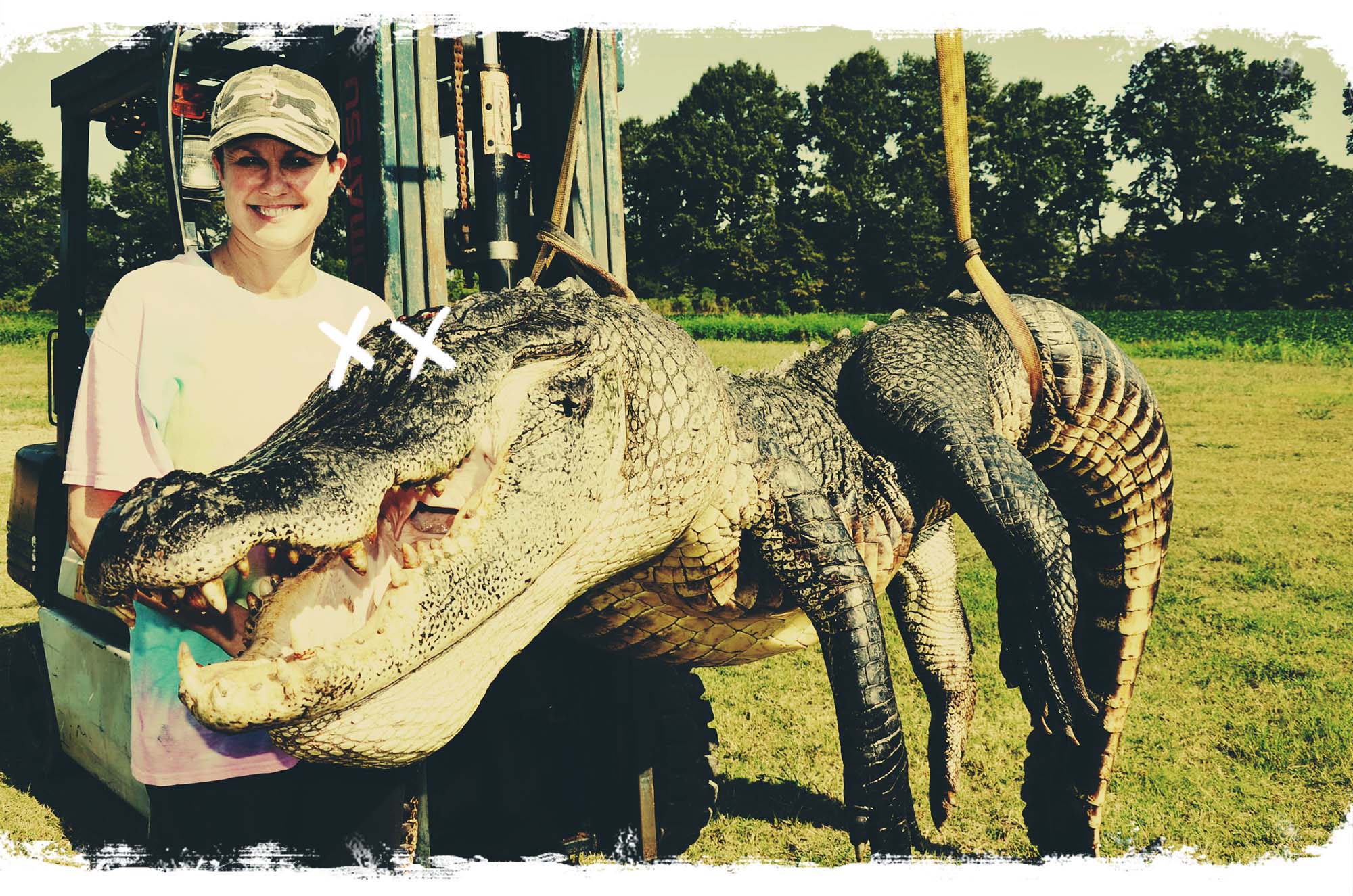 Beth Trammell with the 723.5-pound male alligator her party captured. (Photo courtesy of Beth Trammell)
I am from Mississippi. Old rivers bracket the state. The Mississippi runs down the western border, the Tombigbee meanders along the eastern side, and minor rivers and creeks crisscross the middle. Alligators live in almost all of them.
When I was young, our parents let us teenage boys loose in these rivers and creeks. A perfect spot had a sandy bottom and decent current. But if pine straw caked the bottom and the water grew green and stagnant near the bank, no one cared. In the heat of summer, the swimming holes were always cool.
We went to Black Creek, Bogue Homa Creek, Okatoma Creek and the Bouie River. When we got old enough to drive we left our parents behind, but still cut paths to creeks, usually with six-packs of beer. At Shelton Creek, a flat, natural rock surface spread out beside a shaded pool of deep, dark, cool water. This became my favorite spot. The unknown attracts us all and on many Saturdays I caught my breath and let my hands use the rock to push me farther and farther down into the water. I wanted to reach the bottom, to feel what was deep and untouched, but can’t recall ever making it. No one worried about alligators.
Today, I live beside the Tombigbee in the northeast corner of the state, where there are fewer alligators than in the southern end. Still, a game warden told me if someone went on the Tombigbee near my home at night with a flashlight, it would be nothing to find 50 or 60 pairs of alligator eyes glowing back. Fishermen see them all the time.
I am not much of a fisherman. But the closest I have ever come to a wild alligator, as far as I know, was one day in the mid-1990s when my father and I put his boat into Lake Columbia, in southwest Mississippi, and went fishing for bass. We started at daybreak. By midday we had no luck and decided to try the lake’s far side, where a forest met the water’s edge and where we had seen no one fishing that day.
While coming toward a cut of land that jutted out into the water, I saw what looked like an old, black garbage bag on the shoreline. The sun shone off of it in a dull way that made me think it had been there a while. It looked wet and had odd angles, like it was twisted. About the time I shut the motor off and we began coasting, I realized it was not a bag but an alligator, probably 8 feet long and as wide as a car tire in the middle. We were heading straight toward it.
it came over me that there was something powerful and out of our control in the water and my blood pressure rose.
For a few moments that alligator sat stone-still as our boat moved silently through the water. It was sunning itself. We got close enough to see that its eyes were open. Then, without warning, it moved with a frog’s sudden grace, running itself off the shoreline into the water in front of the boat and disappearing. There was hardly a splash. I was mesmerized.
My father was not. He said over his shoulder, “Go.” When I did not, his voice grew more direct and forceful, and he said, “Get us out of here. It wouldn’t be nothing for that thing to turn this boat over.” With that, it came over me that there was something powerful and out of our control in the water and my blood pressure rose. Tasting fear, I cranked the motor and we left. I did not look back, but my thoughts were where it had gone, under the water.
Somewhere, that alligator was gliding away. I was sure its eyes were looking up.
Turner caught his alligator in south Mississippi. Because it was the fifth record-setting catch during Mississippi’s 10-day annual alligator season, and because of the menacing place alligators hold in our minds, the news spread far and fast. Media outlets around the world ran stories with pictures. The words “monster” and “beast” were in the headlines. Australia and Canada called. England and China called. The world knew of the vast Mississippi River, but had never considered the enormous gators that lived under its surface.
In the middle of the ruckus, Ricky Flynt, an alligator expert with the Mississippi Department of Wildlife, Fisheries and Parks, spoke on camera with a TV station. He is an earnest man, with a serious manner, and toward the end of his interview, while footage of Turner’s alligator rolled, he said, “I believe we’ve got alligators in Mississippi in the 900- to 1,000-pound range. Whether an alligator hunter can be successful in getting them in … is another story.”
It sounded like a challenge, but a warning, too.
***
Hunting Regulations
Persons eligible: Only residents of the State of Mississippi who are sixteen (16) years of age or older may apply for an Alligator Possession Permit. Non-residents may participate as alligator hunting assistants.
Bag limit: Each person receiving an Alligator Possession Permit will be allowed to harvest two (2) alligators four (4) feet in length or longer, only one (1) of which may exceed seven (7) feet in length.
Capture and Dispatch Methods:
a. Use of bait or baited hooks is prohibited.
b. Alligators must be captured alive prior to shooting or otherwise dispatching the animal. It is unlawful to kill an unrestrained alligator.
c. Restrained is defined as an alligator that has a noose or snare secured around the neck or leg in a manner that the alligator is controlled.
d. Capture methods are restricted to hand-held snares, snatch hooks, harpoons, and bowfishing equipment.
e. The use of fishing lures or other devices (with hooks attached) for the purpose of catching alligators in the mouth is prohibited.
f. All alligators must be dispatched or released immediately after capture and prior to being transported.
g. Any alligator that is captured with a harpoon or bowfishing equipment must be reduced to the bag and may not be released.
h. Firearms used for dispatching an alligator are restricted to long-barreled, shoulder-fired shotguns with shot size no larger than No. 6 and bangsticks chambered in .38 caliber or larger. No pistols are allowed.
i. All shotguns and bangsticks must be cased and unloaded at all times until a restraining line has been attached to the alligator.
j. No other firearm or ammunition may be in possession of the permittee or hunting party.
Catching an alligator
Estimate its length
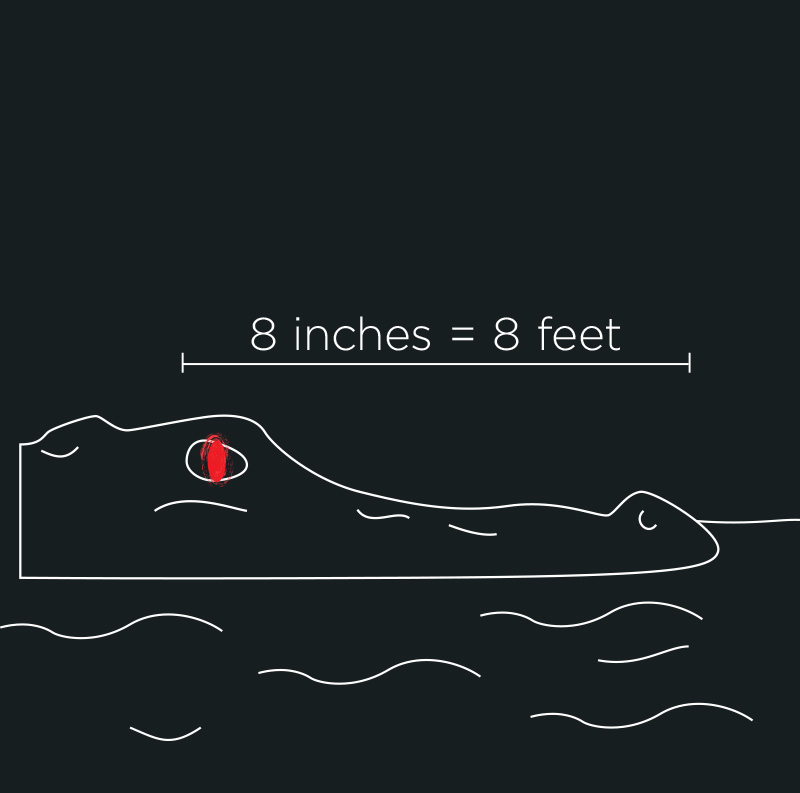
The snout length (the distance between the nostrils and the front of the eyes) in inches can be translated into feet to estimate the total body length.
Capture it
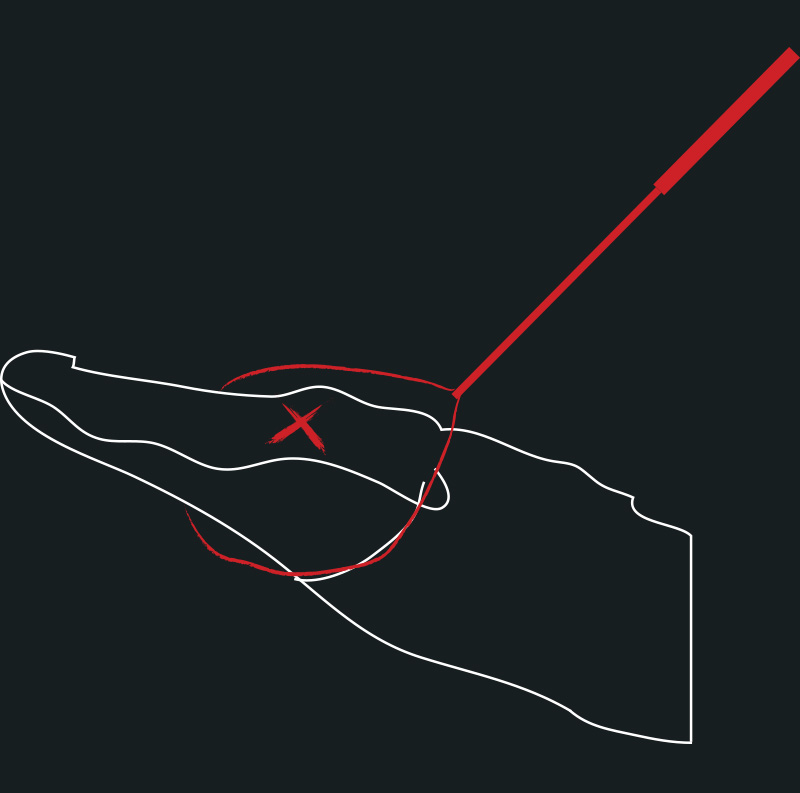
The use of bait and hook is illegal. Legal methods: Snatch Hooks (hand thrown or rod/reel), Harpoon (with attached line and/or buoy), Snare (hand or pole type), Bowfishing equipment (with attached line and/or buoy).
Dispatch it
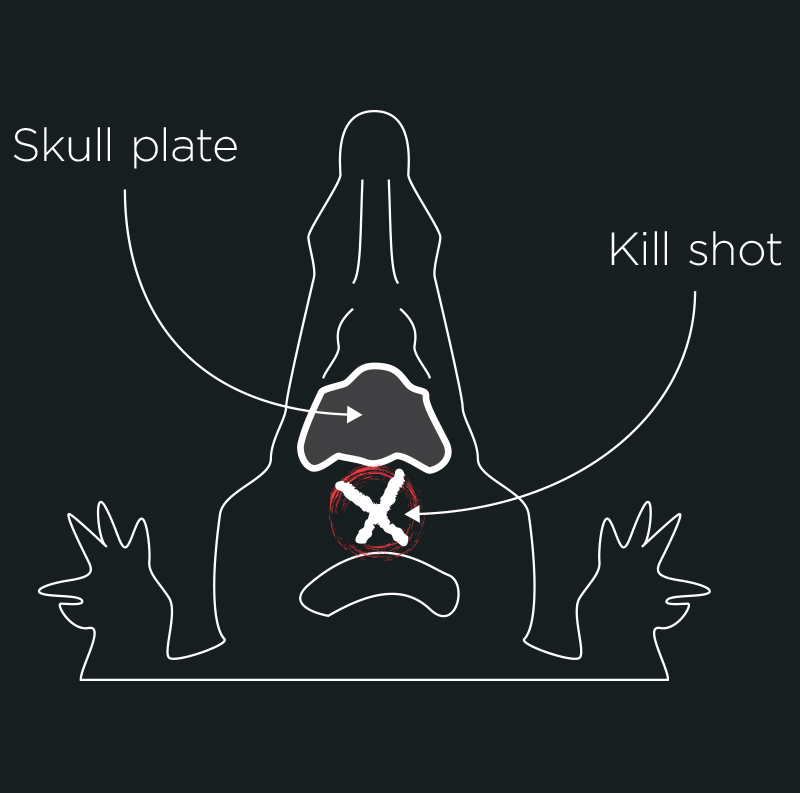
Use a shotgun or bangstick once the alligator is restrained and controlled with a snare. To safely and humanely dispatch the alligator, aim for the center of the spine directly behind the skull plate.
As long as people and alligators have shared Mississippi, there have been people who hunted the creatures. Spanish explorers called them el lagarto, which means “the lizard,” and that morphed into what we call them today.
The Choctaw believed an alligator told the creator the best water was where cypress trees grew in bayous, so the creator placed the alligator there. Native Americans saw them as mysterious, respected hunters. In a northern Mississippi plain in the 1930s, an archaeologist was poking around a native burial ground when he found the remains of a human skeleton covered with turtle shells. On top of it all was an alligator skull.
In the late 1960s, because of illegal hunting, they were an endangered species. In an effort to replenish their numbers, and to help control the beaver population, Mississippi wildlife officials drove horse trailers loaded with 3,500 baby alligators from Louisiana to the Mississippi State Fairgrounds.
The babies were handed out in bags to landowners, who took them across the state and released them into the waters.
It worked.
By the late 1980s, they were no longer endangered. The last census, in 2000, suggested there were roughly 48,000 in the state’s fresh water. That was a conservative estimate, Flynt said, and it is safe to assume there are even more today. They are prevalent enough that the state legislature gave the Mississippi Department of Wildlife, Fisheries and Parks the specific authority to deal with alligators. Flynt says the agency gets 300 to 500 phone calls a year.
since 2005, the state has allowed its residents a few days each year to kill them.
The program mainly handles what it calls “nuisance” alligators, which for the most part are young alligators that sometimes wander into backyard swimming pools or neighborhood ditches. Still, they routinely attack dogs and other pets that roam near water because of their resemblance to their natural prey.
“Yes, a gator will grab a dog if one ends up in their dining room,” a wildlife official said.
For most of the year, it is still illegal to possess or hunt alligator. But since 2005, the state has allowed its residents a few days each year to kill them.
Almost everyone in Mississippi is a hunter of some sort, and the alligator hunts are open to the public. There are a limited number of permits given out via an application process and far more people apply than receive them. It is not uncommon for applicants to wait several years between hunts. The men and women randomly chosen fan out across the state in groups because one person, acting alone, cannot catch an alligator. At least not a big one. It is an exhausting, exacting endeavor.
For safety and sporting reasons, you are not allowed to shoot them until you have secured a part of an alligator’s body with a snare, a loop of wire attached to a pole. To get a snare attached, you have to be within a few feet of the alligator, and to get close, most hunters begin with a rod and reel and treble hook.
“It’s more alligator fishing than alligator hunting,” Flynt said.
Hunters like Lee Turner and his friends gather on boats and go out at night looking to spot the gators floating in the water, waiting for their next meal. Midnight hunts are the norm. When a spotlight reveals a set of glowing eyes, a hunter casts a hook over the body, jerks it into the skin and holds on. An alligator can stay beneath the water for an hour. After they go under, you let them wear themselves out. Perhaps you try to get another hook or two set. This can last hours.
When they tire and raise to the surface, you slip on the snare. This is tricky. Alligators are surprisingly quick. Hands have been chewed up.
Once a snare is on, you are allowed to shoot them with a shotgun loaded with birdshot. A biologist, describing an alligator’s toughness, said they are built with “bullet-proof bone and skin.” But at the base of their skulls there is a soft spot of tissue, their lone weak spot, and the place to take aim at point-blank range. Then comes the part that typically takes the longest: getting the massive body, all dead weight, loaded into a boat.
they are built with “bullet-proof bone and skin.”
Because so many steps are involved, many things can go wrong, and usually do. This often begins early in the process, when an alligator that is hooked tries to escape, and the splashing and cheering and maneuvering begins. Flynt calls this a “Chinese water dance.” A prehistoric thing weighing several hundred pounds fighting for its life can be messy. Add into this several adrenaline-filled hunters gathered in a small boat, a loaded gun, several different fishing lines, the absence of sunlight, and drinking (which is illegal but known to occur), and things rarely go as planned.
“It is truly an adventure,” Flynt said. “There is an element of danger involved. It can be very dangerous.”
That is part of the appeal. The hunters who apply for tags are not professionals or wildlife experts, like Steve Irwin, the late Australian known as “The Crocodile Hunter” for catching the alligators’ more aggressive, saltwater-tolerant cousin. They are mostly just middle-class Mississippi natives who grew up beating around the outdoors, hunting deer, quail and ducks. Though alligator meat can be battered and fried, it is tough and hardly worth the fight. That’s not why people hunt them.
It is a pursuit undertaken mainly for the novelty and thrill. One hunter said, “It’s not like a deer is going to jump in the stand and bite you.”
During the season, Ben Mask, who is 32 and works for Tupelo, Miss., Light and Water, caught an alligator in Tibbee Creek in northeast Mississippi.
“They can hurt you,” he said. “That makes it fun.”
Mask’s alligator weighed 620 pounds. Big, but no record. Usually, a single shot to the soft spot is enough to kill. The one Mask caught proved resilient, though, and it took two shots. His hunting party then shot it a third time, as well. I asked why.
“Insurance,” he said.
***
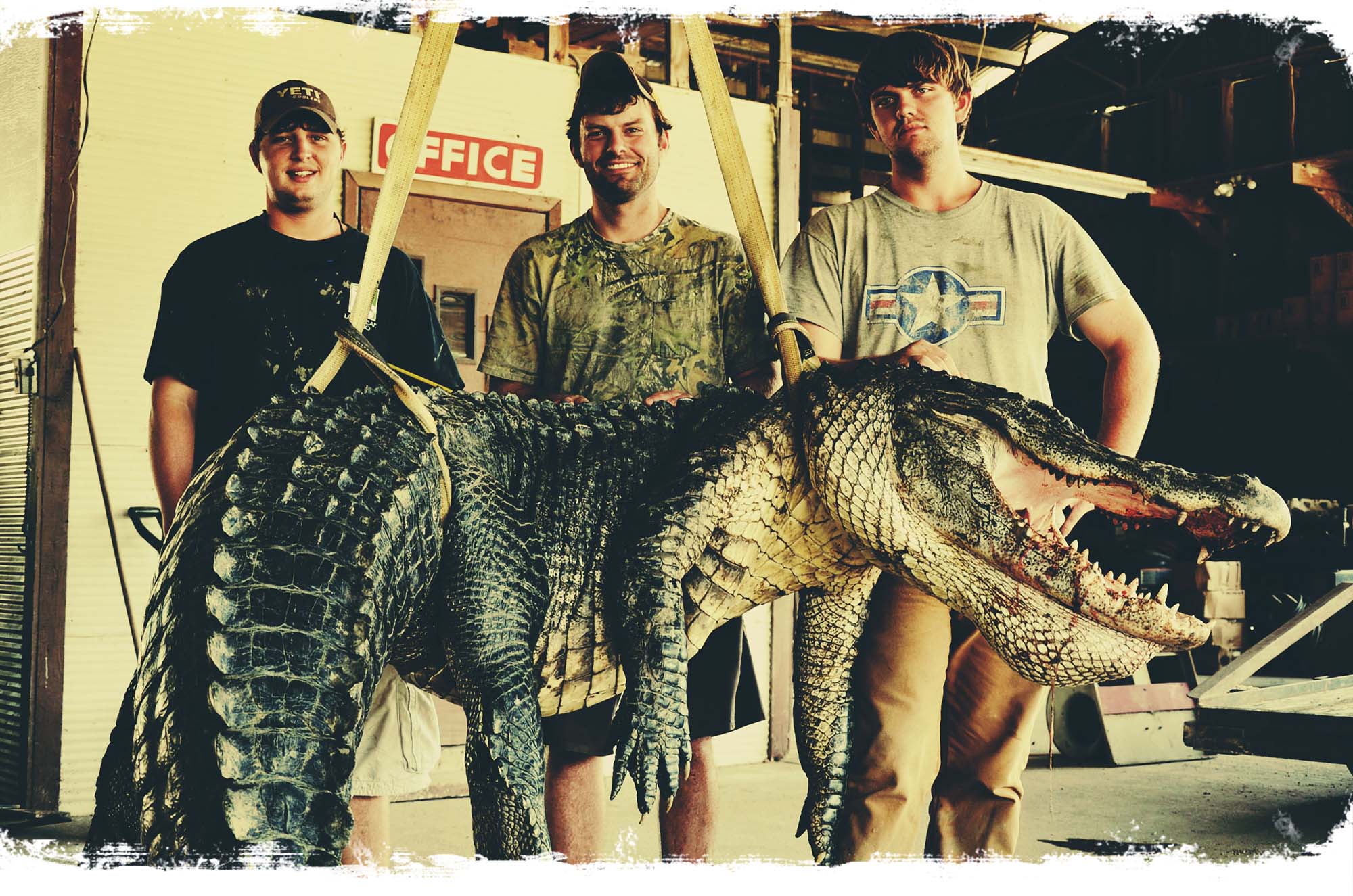 Dustin Bockman's hunting party with their 727-pound catch. (Courtesy of Dustin Bockman)
The 2013 hunt began at noon on Aug. 30 and ended at noon on Sept. 9. Approximately 920 hunters received permits and more than 2,600 people went out searching for alligators. Exactly 671 were killed. Every single record the state keeps track of was broken.
Exactly 671 were killed. Every single record the state keeps track of was broken.
The first one fell early.
On the opening night, Brandon Maskew, a 27-year-old who goes by “Boo” and works for a trucking company in Laurel, Miss., took his three-person party onto the Pascagoula River. It runs through the state’s southeastern corner for about 80 miles before emptying into the Gulf of Mexico.
In a marsh not far from the Gulf, Maskew came across a gator and hooked into it. The “process” went well and only took about 40 minutes. When it was over, the party had caught a female alligator that was 10 feet long and weighed 295.3 pounds — both records for the gender.
The next morning, Maskew and Allen “Big Al” Purvis, who went on the hunt, took a picture standing beside the alligator. It hung, suspended in the air, by industrial-strength straps attached to a front-end loader.
In that photograph, Purvis has on a “Tequila Sunrise” T-shirt and Maskew, in cut-off cargo pants, has his right arm locked around Purvis’ neck. They are all smiles.
The tone of the next nine days had been set.
 Eric Turner stands next to his record-setting 741.5-pound gator. (Courtesy of Eric Turner)
That weekend, shortly after midnight on Sept. 1, Beth Trammell, a first-time hunter from Madison, Miss., was hunting in the Yazoo Diversion Canal in Issaquena County. This is the state’s eastern edge, part of the Mississippi Delta. Trammell’s party landed a 723.5-pound male alligator.
It broke the state’s previous size-record for a male by more than 25 pounds. But it only stood for an hour and a half.
While Trammell’s hunting party was pulling their alligator in, a 27-year-old UPS driver named Dustin Bockman was a few miles south hunting the Big Black River in Claiborne County. Bockman, a bachelor, is a native from Vicksburg and went hunting in shorts and a T-shirt — you do not need camouflage to hunt gators.
This was not his first time. “Anything you can kill, I’ve killed it,” he told me.
Bockman’s brother and best friend went into the Big Black River with him. They chose that river because they fish there regularly and always see alligators.
Alligators move across the surface with their eyes and top half of their snouts, and maybe a third of their body, showing above the water. As they swim — their powerful tails and feet propeling them along — it is hard to judge their size.
“We had no idea they were as big as they are,” Bockman said. Alligators you see are usually small, like the one Bockman caught as a child. He grew up near the Big Black River and one day, when he was kid, he spotted a 5-foot long alligator walking a neighborhood road and he caught it. The local paper took his picture.
Although most hunters use a rod and reel to snag a gator, Bockman took a different approach. He dropped a handful of glow sticks, the kind people wave at concerts, into an empty 3-liter water jug, and he tied the jug to a rope attached to an arrow in a crossbow. The plan was to shoot an alligator with the arrow and, after it went under, trail the light of the glow sticks along the Big Black River.
They rode the river for an hour. Bockman said in that time, shining a spotlight around, they saw hundreds of eyes on the water. Most disappeared as soon as the light found them and the boat crept along, powered by a quiet trolling motor.
They turned into a slough and hunted a swampy area. But they didn’t spot “a big one,” Bockman said, so they turned back toward the river. As they approached the river, they passed one that held their attention. It was floating, and Bockman pulled the boat along behind it, and followed. He wanted to be within 10 feet before pulling the crossbow’s trigger.
It took hours to get that close. Bockman described it as a game of cat and mouse. He remembers that when the boat got close enough he said, “Oh my God.” When he shot — the arrow lodged behind its left shoulder — the alligator went under and began pulling the boat along, upstream, and then downstream, and then back again, slowly. Every now and then it dropped to the bottom and sat still. Each time the boat stopped, the crew’s excitement grew.
After several hours, the alligator grew tired and surfaced long enough for Bockman to get the boat beside it. They got a snare on it, but it kept wanting to slip off and Bockman, fearing the gator would be lost, picked up his brother’s .16-gauge shotgun. He stuck the barrel into the water and fired a shot toward the alligator’s soft spot. When he did, water flew high in the air and the pressure peeled the barrel back.
“I looked like Elmer Fudd,” Bockman said.
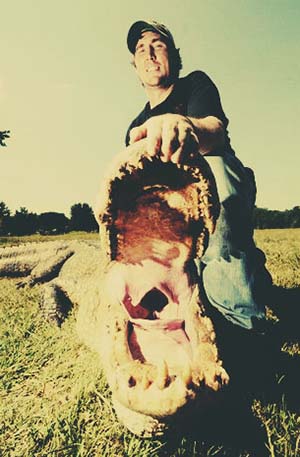 Eric Turner with his 741.5-pounder. (Courtesy of Eric Turner)
He shot again. The second shot killed the reptile. Then the work began.
The three men wrapped their arms around the animal’s leathery skin and pushed and pulled and tugged for four hours, trying to get the body out of the water and onto a sandbar. Somehow, they needed to get it in their boat, but couldn’t lift it alone, and if they left it on the bank, who knew what might happen. So, as the mosquitoes bit them, they waited. By the time some other hunters happened by and helped them get it loaded in the boat, Bockman’s party had been on the water for 12 hours.
Flynt met them to inspect the gator. It weighed 727 pounds and set the new record for a male alligator caught in the state.
It stood for six days.
Lee Turner broke it. He is a 30-year-old resident of Madison, a suburb of Jackson. He works for a shipping company and is married with a 1-year-old child. He is tall with a big smile.
He grew up in Quitman, in east Mississippi, near the Chickasawhay River and his father was in the oil business. They had a farm. “I’ve been hunting ever since I was old enough to go with my dad,” Turner said. There were alligators in the reservoir near where he grew up. They ignored them while waterskiing.
“They don’t really bother you,” he said. “They kind of stay in the shadows.”
Turner took John and Jennifer Ratcliff, experienced gator hunters, and Jimmy Greer, a friend, on his hunt. At 9 p.m. on Sept. 7, they put a boat into the Mississippi River at a public ramp near Port Gibson. They had two spotlights, four deep-sea fishing lines, a couple of snares and a .410-bore shotgun.
“I was hoping to catch a 10-foot gator,” Turner told me. “That would have been great.”
They spotted an alligator immediately. It was gliding around near the ramp and about 5 feet long. Turner went after it — it was his first time, his eyes were wide — but it got away, and they headed up river.
Alligator hunters who receive tags actually get two. One is for an alligator shorter than 7 feet; one is for one longer than 7 feet. Not long after heading north, Turner’s party caught an alligator that was 7 feet 3 inches long. The process took about a half-hour –— “It didn’t put up too much of a fight,” Turner said. They got it into the boat, secured its jaws shut with Duct tape, and took some pictures. But they wanted a big one. So they released it and continued up river.
Three hours in, they had spotted about 30 alligators, but none big enough to chase. They turned into Bayou Pierre, a small tributary of the Mississippi River known for its warm water. When they did, they spotted two near the bank, and they looked big, but Turner kept moving.
Eventually they caught a “runt,” Turner said, that was 6 feet 10 inches long. It took only 20 minutes to get in. That took care of one tag.
They wanted to go deeper into the bayou but saw lights up ahead bouncing around on the water. Not wanting to disturb another hunting party, they turned back toward the Mississippi. Near the river, they spotted the two big ones they had seen earlier. One turned to get farther into the bayou. The other headed for the river.
Turner followed.
As they inched closer and closer, the alligator, sliding along the surface with a spotlight lighting its back, appeared bigger and bigger. Turner said at one point he turned toward John Ratcliff and said, “That’s a big gator.”
Ratcliff, who seven years ago held the record for the biggest alligator, responded, “Ain’t but one way to find out.” Then he took a rod and reel and threw a line. The alligator, hooked, went under. It stayed down for about 10 minutes before surfacing behind the boat.
“We heard it before we saw it,” Turner said.
After the group laid eyes on the animal up close, and were confronted with the size of what they were attached to, Ratcliff spoke first. He said they needed a plan.
“No matter how prepared you are,” Turner said, “when you get one on the line everything goes haywire. It always crumbles.”
“No matter how prepared you are, when you get one on the line everything goes haywire. It always crumbles.”
The party managed to get three more lines hooked into it. Because of its massive size, the gator broke three. Turner held the last one. He had to lean back to offset the force, like battling a tuna at sea, as the animal pulled the boat along.
Eventually, it went to the bottom in water about 12 feet deep. It had been two hours since Ratcliff got the first hook in and the group, after securing three more hooks into the animal’s side, waited.
When it finally came up again, it was agitated and that is when it began biting at the fiberglass boat. Turner said they did not feel like it was trying to attack them, but was just panicked, confused and scared. Still, Ratcliff, sensing urgency, said it needed to be shot, and soon.
Ratcliff was near the edge of the boat trying to work his nerve up to slip on the snare. His wife was holding a spotlight. Turner was holding the line. So Greer picked up the shotgun and walked to the edge, beside Ratcliff, who jerked a snare down around the animal’s head. Greer leaned out over the water with the alligator beneath him, aimed at the exhausted animal, pulled the trigger.
It only took one.
When alligators die they lose buoyancy, and Turner said the moment the shot rang out the rods with lines attached to it each “fell into a U shape” as the alligator sunk to the bottom.
After the four of them got it pulled halfway onto a sandbar, the Ratcliffs took the boat down the river looking for help. Turner and Greer sat with their catch. It was about 2 a.m.
Three other hunters helped get it loaded into the Turner party’s boat and they drove back to Port Gibson. With the alligator riding in the boat, they went to Canton, a middle Mississippi town near where Turner works. A friend of his who owns a backhoe met them there and helped lift the alligator into the back of a pickup.
They went to a weigh station off of Interstate 55 to see how much it weighed. By then, the sun had risen and as they waited to get on the scales, about 50 people who happened to be passing by stopped to stand beside the gator in the truck bed, and they all took pictures. It cost Turner $10 to weigh it.
Flynt came and made the 741.5-pound weight official. By the time Turner crawled into bed that night he had been up nearly 48 hours.
That same day a 33-year-old banker named Ben Walker caught an alligator in the Yazoo River, a Delta waterway that runs from Greenwood to Vicksburg. It was not as heavy as Turner’s, but at 13 feet 7 inches, was the longest in state history. To get it out of their boat they used a truck wench and stored it in a walk-in freezer until Flynt could verify the record.
Walker plans on getting the alligator’s head mounted — it will cost about $1,000 — and hanging it at his father’s cabin beside the Yazoo River. It is fitting place, he said. He feels sure the animal “left a footprint” in the area, eating pigs and deer.
Bockman, who told me people on his UPS route call him “gator man” now, is having a pair of boots and a new wallet made from his alligator’s hide. He also wants to mount the head. He will get a piece of driftwood from the Mississippi River and fix the head to it, along with the broken barrel of the shotgun that killed it, and the empty water jug.
Turner sent his alligator to Florida with a trapper he met through the Ratcliffs. He is going to use the money he gets for its hide to have the head mounted. He isn’t sure where it will go, though, because his wife doesn’t want it inside their home. That is OK with Turner. He already has a deer head, a turkey and two squirrels on the wall.
There just isn’t room for an alligator.
***
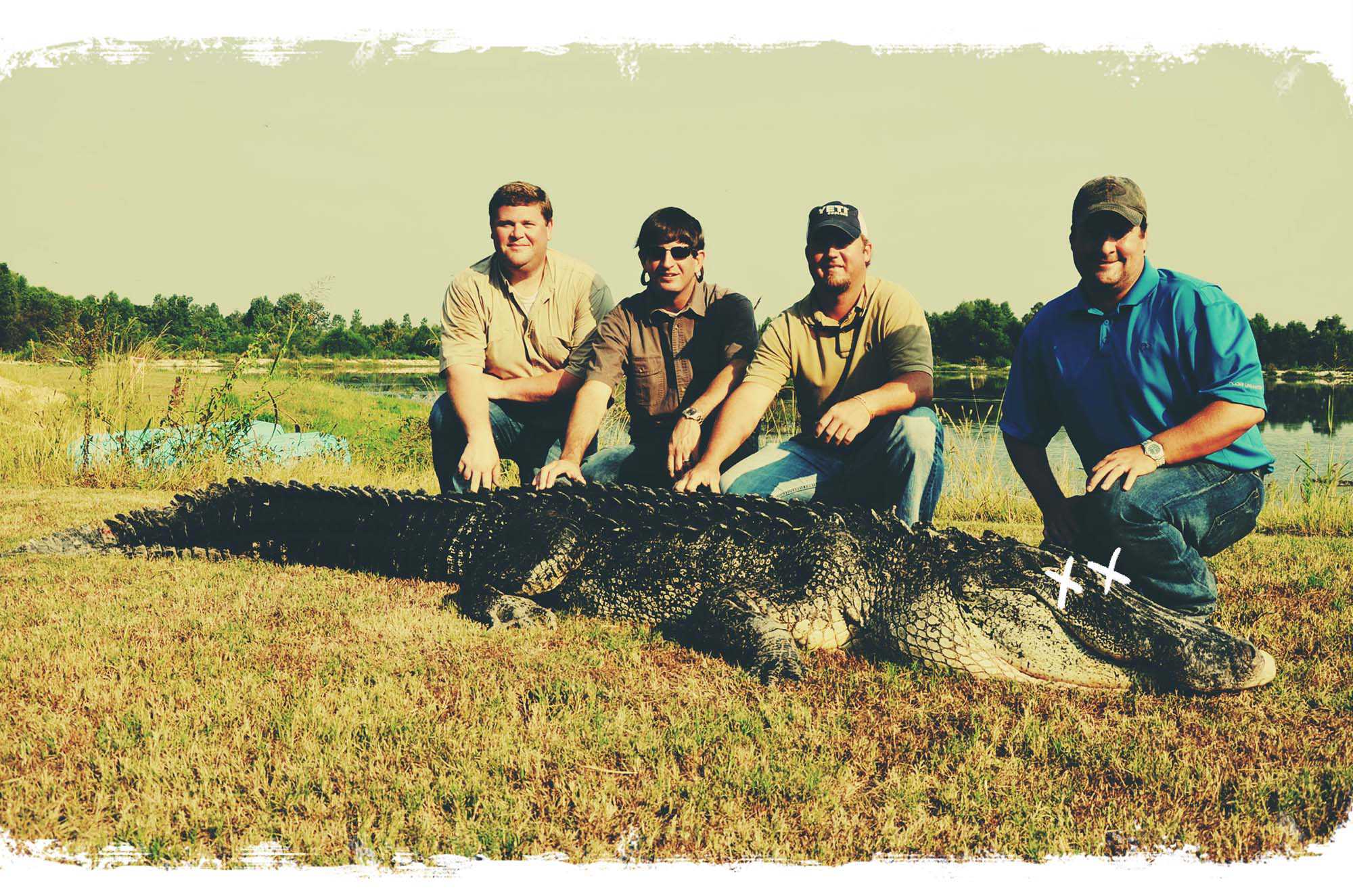 Ben Walker and his group with their 13'7" alligator, the longest in state history. (Courtesy of Ben Walker)
I asked the Mississippi Department of Wildlife, Fisheries and Parks how many unprovoked alligator attacks have occurred in the state. Florida has attacks occasionally, and there have been fatalities there, though rarely.
Mississippi officials told me no such attacks have ever been reported. This struck me as odd.
Then I remembered something Walker said. Before becoming a banker, he was a wildlife biologist.
“They’re going to stay away from us as much as possible. They associate humans with danger.”
“You’re not going to step on an alligator the way you might step on a water moccasin,” he said. “They’re going to stay away from us as much as possible. They associate humans with danger.”
In that way, we’re a lot like gators, because we associate danger with them.
Near where I grew up, beside an old two-lane highway going just outside a south Mississippi community called Brooklyn, someone once kept an alligator chained up in front of their home.
It was a rural oddity, something that made everyone shift to one side of the car when you drove past in the hope that it would be there, sitting still, like frozen from another time. Most often, though, it wouldn’t be. That chain was long and on a pulley system, and there was a pond nearby, and that alligator stayed out of sight a lot. It mostly lived in the imagination.
A few weeks ago, I learned the man who chained that alligator was named Carnes Archer and I wanted to understand why he kept a gator. When I learned Archer died several years ago, I was referred to John Dearman, a friend of the family who lives in the area.
This is what he told me:
One day in August of 1957, Archer caught an alligator in the water not far from where the Black Creek meets Red Creek. It was a female about 7 feet long. Archer brought it home and chained it up, where it became something of a local attraction. Archer fed it road kill.
Over the years it grew to be 14 feet long. Had it of been one of the alligators caught in the wild and killed this season, it would have been a record.
When people stopped to stare, Archer would ham it up with his pet, which everyone called “Chomper.” He would rattle the chain, and when the alligator lurched near him, thinking it was going to be fed, Archer would lay down beside it and pretend to take a nap.
“He was the only person who could do that,” Dearman said.
I asked Ricky Flynt about “Chomper” recently. He said the state was aware of the situation, and after receiving a handful of complaints, wildlife officials investigated. In 2009, after Archer had passed away, the state asked Archer’s son for paperwork that could document how the alligator came to be chained up in his father’s front yard in Brooklyn.
After that, Flynt said the alligator suddenly “came up missing.”
I called Archer’s son to ask him about that, but he didn’t call me back. Brooklyn is the kind of place where people keep their secrets and do not appreciate journalists poking around with questions. No one knows where the alligator went, if anywhere.
According to Dearman, it died in 2011. He says the family did not have its head mounted, but instead buried it on Archer’s property.
At least that’s what he said.
All I know is, the next time I find myself passing through, I plan on slowing down, leaning over in my truck and taking a good, hard look, just to be sure.
New Current Records
More SB Nation Longform

William Browning is a University of Mississippi graduate and reporter. His work was recently listed as a notable selection in The Best American Sports Writing 2013. In 2011 he won an APSE award. The majority of his career, however, has been spent covering crime, courts and the U.S. military. He lives in a cabin in Lowndes County, Miss., with his wife, Joy, and their dog, Harper, and cats, Bombay and L.B. He can be reached via Twitter at @wtbrowning.
Transsexual Journeys Are Never Simple
When ‘Stumptown’ returns, it will be without Matthew Southworth
firehose:/
EA explains why offline SimCity took so long
firehose"Writing around this server integration meant porting the entire system from Java to C++"
lol

Monday's announcement that EA's revamped SimCity would soon be playable offline was a long time coming, arriving nearly ten months after the game was first released (and three months after the company said it was "exploring the possibility" of an offline mode). EA and Maxis have long claimed that moving SimCity offline would take a "significant amount of engineering work," and now we're finding out just how much, thanks to an engineer who's been working on the offline conversion since August.
Writing on the official SimCity blog, lead single-player engineer Simon Fox notes that adding an offline mode to SimCity isn't as simple as just flipping a switch and adding a local dummy server. The original game relies on frequent server pings for regional status information that is crucial to "keep the simulation moving." While Fox acknowledges that hackers managed to route around that server check months ago, doing so also disabled key functions like communication between cities created locally and even game saving and loading.
Writing around this server integration meant porting the entire system from Java to C++, Fox said, and moving a lot of code that lived on servers to work entirely on local clients instead. "Entire calculations had to be rewritten in order to make the game function correctly," Fox said. "The algorithms governing trading between cities needed to be retuned in order to make the behavior between cities more responsive for this type of play. This in itself required major optimizations in order to run the simulation locally. We have an obligation to make the game fun and functional on all specs of machines."
Read 1 remaining paragraphs | Comments
Gamsei, A Hyperlocal Molecular Mixology Bar in Munich
firehose'The bartenders forage in the forests (he said he checks with a plant expert to make sure certain things aren't poison before using them) and buy stuff at farmers' markets in season and use them fresh or preserve them using old-world techniques like fermentation, syrup-making, kombuchas, drying, etc. as well as new-world techniques like running infusions through the Rotavap so that they never spoil and flash-freezing other ingredients with liquid nitrogen.
As mentioned in the story, my favorite drink was the Lindenbluten, a local "lime blossom" (not the citrus tree) leaf and flowers frozen into an ice cube, and that ice cube used to chill and flavor house-carbonated local vermouth.'
'That puffy thing is cotton candy that you add to the cocktail to sweeten it.'
[Visit Alcademics.com for the full post.]
brianmichaelbendis: Batman vs. Guy GardnerJustice League #5...


Batman vs. Guy Gardner
Justice League #5 (Sept. 1987)
Art by Kevin Maguire & Al Gordon
Words by Keith Giffen & J.M. DeMatteis
Classic.
ohhh-ram: fyeahtattoos: So, either getting tattooed by blind monkeys is the hip thing now or some...
firehosevia willowbl00: "Shared for gif"
So, either getting tattooed by blind monkeys is the hip thing now or some of these submissions awaiting approval are really, really bad. It’s kind of painful.
Most of y’all are great though.
Lol who are you to judge?
Literally the person whose job it is to judge which tattoos are published here.
