This is the way Texts From Cephalopods imagines the octopus in this video would describe those events. It turns out that the squid is the octopus' sensible friend.

This is the way Texts From Cephalopods imagines the octopus in this video would describe those events. It turns out that the squid is the octopus' sensible friend.
The Rhode Island government will continue to work with First Southwest as the state's financial adviser, even though the state is suing the financial firm for its alleged role in the 38 Studios bankruptcy, reports the Providence Journal.
Governor Lincoln Chafee (photo above) and Gina Raimondo, the state's general treasurer, approved a new two-year contract with First Southwest in March. First Southwest, an investment bank with offices around the U.S., including in Lincoln, Rhode Island, has served as the state's financial adviser since 2001.
First Southwest was one of the entities involved in putting together the plan for the Rhode Island Economic Development Corporation (EDC) — rebranded as the Rhode Island Commerce Corporation, or Commerce RI, at the start of 2014 — to give 38 Studios a state-backed loan of $75 million in 2010. Gov. Chafee's administration sued 38 Studios and a host of associated individuals and companies, including First Southwest, in November 2012 as a result of the bankruptcy proceedings that left state taxpayers on the hook for more than $89 million.
The government's complaint alleges that First Southwest and other advisers misled the EDC as to the risks involved with giving such a loan to 38 Studios, and says the EDC would never have issued the loan if it hadn't been for the "knowingly" false statements those companies made.
However, the Providence Journal reports that the Chafee administration decided to re-up its contract with First Southwest over picking a different financial adviser; the only other option was the Providence-based PFM Group. A spokesperson for Raimondo told the Providence Journal that while the state's treasury was aware of the ongoing litigation against First Southwest, the treasury "was not involved in bringing the lawsuits ... [or] issuing the 38 Studio bonds."
You can follow the history of 38 Studios' failure in our StoryStream.

firehose1. Get rid of HFS+, I mean fuck, seriously guys. Come on, damn it. Jesus
2. Eliminate disk-cached media thumbnails and previews, especially on SSDs
3. Customize or mute notifications
4. Customize global font sizes/resolution-independent UI, like what iOS 7 and Windows have
5. Expand IM/chat protocol support in iMessage, like iOS has
6. Add AirDrop support between iOS and OS X devices
7. Get global keyboard shortcut support up to at least Windows 7 standards
8. Continue to fix multi-display support
9. Bind network settings to specific networks, not just specific adapters, like Windows does
It's only been about seven months since Apple released OS X 10.9, the latest and greatest version of its Mac operating system. But the yearly upgrade cycle means that unless something unexpected happens, Apple will tell us about OS X 10.10 at the traditional keynote next month on the first morning of its Worldwide Developers Conference (WWDC). The operating system is more than 13 years old, and it's come a long way since those first versions, but it's still not perfect. What areas do we think Apple should focus on in 10.10?
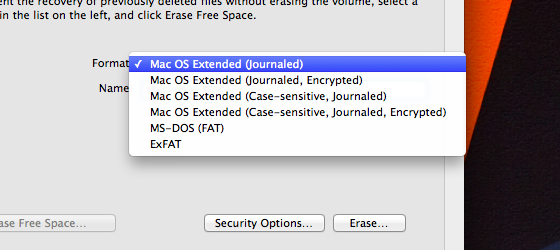
The latest Macs may have solid state drives that can read and write over 700 megabytes per second over a direct PCI Express connection, but all that data is still organized by a file system from the previous millennium: HFS+. There's something to be said for using stable, battle-hardened code for the file system, which is probably the most critical part of the operating system. Unfortunately, Apple's current HFS+ implementation isn't as stable as it should be, much to the chagrin of Ars' OS X reviewer extraordinaire John Siracusa.
With the introduction of a logical volume manager—Core Storage—it looks like Apple has found a way to innovate in the area of storage without having to replace HFS+. One of the big missing features in HFS+ is snapshots. Time Machine, for example, works per-file. Changing a few bytes in the middle of a large file means that the entire file is copied during the next backup. With snapshots, that's not necessary: multiple snapshots share the unmodified disk blocks. As such, snapshots could be implemented in Core Storage rather than in the file system. This would allow Time Machine backups to be much faster and more efficient.
Read 18 remaining paragraphs | Comments
firehoseyay, good job


Read more of this story at Slashdot.

firehoseboo, fuck the starter set then, piece of shit
firehoseBluewater, natch
The life of NSA whistleblower Edward Snowden has been turned into a comic book. Beyond: Edward Snowden, which will be released in digital and print formats on May 21st, charts the life of the ex-NSA contractor and explores his reasoning for leaking thousands of classified government documents.
Author Valerie D'Orazio says the comic was originally conceived as a straight biography, but that it became more of a drama as the story coalesced. The book starts with Snowden as a 19-year-old high school dropout, working for a small company that sells anime and manga products, before coming to consider whether he should be considered a whistleblower or a pawn used by the Russian government for his actions. D'Orazio, who has worked at DC Comics and written X-Men and Punisher titles for Marvel, says Snowden's story was an ideal bridge between geek culture and the mainstream, as "he came from geek culture himself."
The book starts with Snowden selling anime and manga products
This won't be the first time Beyond: Edward Snowden's publisher Bluewater Productions has focused on real figures — the company has previously released comics about Hillary Clinton, Bill O'Reilly, and Anderson Cooper. It also won't be the last time we'll see Snowden's story fictionalized in the media: Sony Pictures announced earlier this month that it had bought the rights to Glenn Greenwald's book No Place to Hide: Edward Snowden, the NSA, and the US Surveillance State, and that James Bond producers Michael G. Wilson and Barbara Broccoli are working to turn it into a film.
firehose"The system, announced in 2013, was compared to the OASIS of Ready Player One"
there are way too many people in tech who want a shitty, sloppy dystopian nostalgia wank to come true
As virtual reality gains steam, the question of virtual worlds is never far behind. Philip Rosedale is best known for online community Second Life. But since last year, we've been watching for news on High Fidelity, a new project meant to blend his previous work with cutting-edge telepresence technology. The system, announced in 2013, was compared to the OASIS of Ready Player One: a series of worlds connected to each other by a central network and economy, provided — obviously — by Rosedale himself. At the Silicon Valley Virtual Reality Conference in Mountain View, we're seeing the first hints of what that could mean, as well as a sense of the many hurdles left to jump.
Where Second Life is housed on hundreds of thousands of Linden Lab machines, High Fidelity worlds would be distributed across the user base. "We could potentially go from 600,000 or so servers to 600 million," says Rosedale. If you're on one world, you can see others in the sky and travel between them, watching blocky Minecraft-like environments resolve to detailed landscapes as you get closer. As computers advance, so will the possibilities. "The virtual worlds of the future are going to look like Pandora from Avatar. And once we can build things in those worlds, I would assert that even people who are passionate about VR, here, have no idea what is coming," he says. "We're going to be arguing over the price of real estate in the forests of Pandora."

The core of High Fidelity, however, wouldn't be graphics; it would be responsivity. Using sophisticated motion capture techniques, you could mirror your head movement and facial expressions onto an avatar. Using a full-body harness, you could go a step further, moving your arms and torso naturally to interact. All the while, you could be in an immersive environment that puts a Skype call to shame. As Rosedale delivered his speech, his avatar loomed overhead, speaking and nodding. His partner, wearing a harness, played air drums and delivered a hug. Second Life and reality, bleeding together.
When I pulled my hair back, my avatar brushed the side of his face
That was, in any case, the theory. But when you boil that grand vision down to a prototype, it's a rough one. The High Fidelity demo, first shown earlier this year, is just a crudely rendered dance floor — it's not trying for the verisimilitude of Second Life, let alone next-generation graphics, and it might not be able to do so for some time. When I connected, the AI club-goers were all dancing on the same square foot of ground like some eight-legged twerking monstrosity. More importantly, face tracking remains an inexact science. Rosedale's avatar could look perfectly natural one moment and jerk mechanically the next. But when it did work, slipping on a Rift and seeing an avatar perform tiny, very human shifts of the head and mouth could be downright eerie.
The PrioVR harness High Fidelity uses for body tracking, to anyone who has only used crude sensors like the Kinect or PlayStation Move, is even more wonderfully uncanny. Strapped into wrist, elbow, and chest sensors, I held my arms up for calibration. When I dropped them, the movement was instantaneous and precise, the kind of connection I'd never had with a motion controller. I could wave and see the movement of my entire arm, stretch and see my elbows bend realistically. When I pulled my hair back, my avatar brushed the side of his face. I never got a hug, but the demo left me wanting more.
None of these parts, though, fit together. The High Fidelity demo didn't support using the Oculus Rift and PrioVR harness at the same time, so I had to pick between visual immersion and realistic movement. That's a solvable technical problem, but it makes it difficult to envision a finished product. A more intractable one is VR and face tracking. Right now, you simply can't let a camera read your face while wearing a box over most of it. The's a lot that High Fidelity could do, but how much of it will actually cohere into a finished product?
Rosedale expects some version of High Fidelity to launch in about a year, but he's made parts of the project open source, hoping that enthusiasts will help create and manage worlds. Second Life has survived because of a dedicated user base and steady economy, which kept going long after the hype had dissipated. It's harder to tell what High Fidelity can achieve, especially given how much experimental hardware it requires. But what it's promising, no matter how tentatively, is something online communications have been trying and failing to approximate for decades: a sense of real, physical connection.
firehoseall carriers suck forever
http://cdn.arstechnica.net/wp-content/uploads/2014/05/acsi-all-industries.png
CenturyLink, a DSL provider with shitty speeds and very little fiber, is the top ISP if you exclude U-verse and FiOS, which are exclusively fiber

Comcast and Time Warner Cable are the most hated companies in each of the three "triple play" markets where they operate, according to an American Customer Satisfaction Index (ACSI) report being released Tuesday.
The two cable companies, which are attempting to merge, ranked second-to-last and last in the Internet service market as well as the subscription TV and fixed-line telephone service markets, the ACSI found. Comcast and TWC also fared poorly last year but cemented their places at the bottom in 2014 by dropping significantly in customer satisfaction.
"Time Warner Cable lags behind the entire industry following its second consecutive yearly decline, down seven percent to an all-time low of 56 [on the ACSI's 100-point scale]," the ACSI report said. "The combination of low and downward-trending customer satisfaction for both Comcast and Time Warner Cable is cause for concern amid merger talks between the two companies. The issue at stake is not that the proposed merger will limit competition, as the service territories of the two companies do not overlap. Instead, it is the question of whether a combination of two pay-TV providers with such poor records could possibly create a better customer experience, especially given the volume of evidence from ACSI data suggesting that mergers in service industries tend to damage satisfaction—at least in the short term."
Moreover, they're the worst-rated companies in the most hated industries. The ACSI averages the results of its customer interviews to create indexes for more than 40 industries. Subscription TV service and Internet service ranked last, and fixed telephone service was in the bottom 10 along with health insurance:
Read 6 remaining paragraphs | Comments

James Comey, the FBI director, says the bureau's no-tolerance marijuana policy is hindering the hiring of cyber-security experts. Comey added that he is "grappling" with possibly changing the practice.
The director's comments come one day after five members of the Chinese military were indicted in the US on allegations of hacking into major US corporations and stealing trade secrets
"I have to hire a great work force to compete with those cyber criminals and some of those kids want to smoke weed on the way to the interview," Comey told a New York City Bar Association meeting Tuesday.
Read 1 remaining paragraphs | Comments
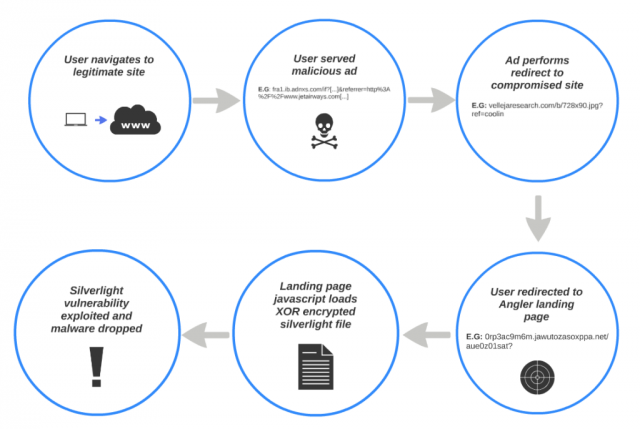
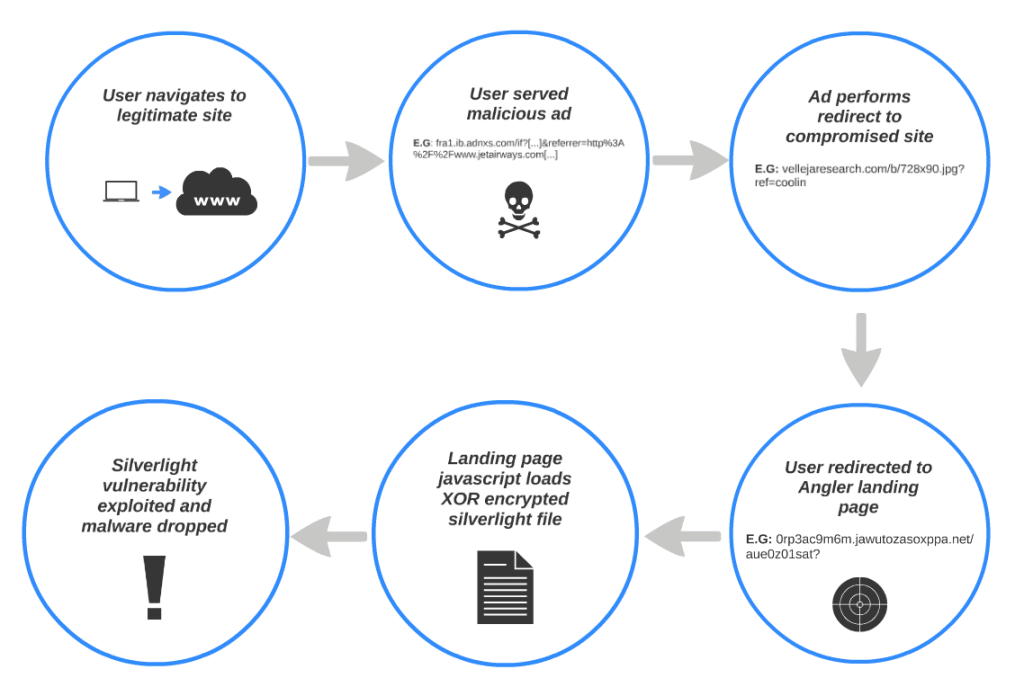
The number of drive-by malware attacks that exploit vulnerabilities in Microsoft's Silverlight application framework may be surpassing those that abuse Oracle's Java framework, according to a recent analysis of one popular hack-by-numbers tool kit.
Since April 23, the Angler exploit kit has shown a significant uptick in attacks that target Silverlight users, according to a blog post published Monday by Levi Gundert, technical lead in Cisco Systems' threat research group. While the Silverlight exploits were accompanied by attacks that also targeted Adobe's Flash player, the recent campaign failed to trigger vulnerabilities in Oracle's Java framework, which over the past couple of years, has become widely targeted by malicious hackers who surreptitiously install malware by exploiting vulnerable software on end users' computers.
To succeed, the Angler campaign observed by Gundert had to exploit two Silverlight vulnerabilities, one that Microsoft patched 14 months ago and the other that was fixed in October. CVE-2013-0074 gave attackers the ability to remotely execute malicious code, while CVE-2013-3896 provided the means to bypass data execution prevention, a security mitigation added to most Microsoft applications in recent years. The measure prevents most data loaded into memory from being executed.
Read 2 remaining paragraphs | Comments

If you love concept art as much as we do, then you're going to want to bookmark the new site of artist Thomas Scholes. Along with tons of art he's created for Halo 4, Guild Wars 2, Ashen and other properties, he's also posted some "making of" GIFs that are amazing to watch. Over and over.

firehose"For those of you who think I’m overreacting, let me make this clear. Viz has essentially announced that the Sailor Moon loved by millions, the girl named Serena whose opening theme proclaims she fights evil by moonlight and wins love by daylight. is no more. She has been erased from continuity Sonja Belmont-style.
This isn’t merely akin to George Lucas or Star Trek remastering the episodes to include newer footage that wasn’t present in the original versions. While fans have been justifiably upset at those edits and editions, those changes are relatively minor.
Now imagine if George Lucas has in addition to making those changes, stated Chewbacca was actually canonically a lesbian and changed the scenes to make that very obvious, as well as claimed the Jedi’s goal was to oversee the development of humanity according to the Force and lead them into the light through taking over the Empire. Or what if Star Trek in the remastered footage, changed Kirk’s name and removed the iconic music and replaced it with the soundtrack from the 60’s Batman? What if, on top of this, all of the actors were magically replaced by duplicates with near identical motions and camera-angles in a shot-for-shot remake of each series, but with their own inflections?
Combine all those scenarios together and your get New Moon, the Sailor Moon sequel that replaces the original North American dub. The heroine who fought evil by moonlight and won love by daylight is no more. We will never hear that theme song in association with Sailor Moon officially. Serena will never be Sailor Moon again officially. All of the things we loved about the Moon Kingdom, Zoycite, the lady general who both plotted and kicked butt when it came time to do so, the music, the transitions, the acting, the funny dialog — everything is now gone, officially. It’s not like a mere retcon where one can at least look at the previous issues that were published as the physical media of these episodes are not preserved. It’s a retroactive erasure of even a connection to the series we used to know."
UHHHHHHHHHHHHHHHHHHHHHHHHHHHHHHHHHHHHHHHHHHHHHHHHHHHHHHHHHHHHHHHHHHHHHHHHHHHH
firehosevia multitasksuicide
Counting the cost of forced labour

THE idea of treating other humans like chattel seems as antiquated as it is barbaric. But it is big business. Forced labour produces profits of about $150 billion annually, according to a report published today by the International Labour Organisation (ILO). Sexual exploitation accounts for a fifth of all victims but two-thirds of profits. The most lucrative region for this form of slavery, generating more than $30 billion in 2012 alone, is Asia. The average annual profits per victim of sexual exploitation are $22,000—more than four times those gained from non-domestic labour and almost ten times the profits from domestic work. The ILO defines forced labour as involuntary work as a result of force, fraud or deception when a penalty or the threat of a penalty is used to coerce. It puts the number of people in these conditions at 21m. Others, such as the Global Slavery Index, place the number as high...Continue reading
firehosegrain of salt
Thanks to Priceonomics and an anonymous source at the booking agency Degy Entertainment, we have a list of the asking prices of hundreds of musical acts, from the ones who are just slightly more successful than a bar band to the the elite few who ask a million dollars just to show up…

Find your favorites (or the ones you hate) and see if the price seems about what you’d expect….
* * *


* * *


* * *


* * *


* * *


* * *


Read more at Priceonomics, where they discuss this in more detail, including a few mistakes in the above lists.
firehosewhat
firehose'Colin Firth discusses his action movie debut'
firehoseOR DON'T
firehosenew BirgirPall
#annieshare
 |
White Text: Me (Birgirpall) Yellow Text: Banzaii Part 2 Soon! "10/10" animation by BaronVonBaron9 - https://www.youtube.com/watch?v=xfbYgt_cffU Facebook - ht...
|
From:
BirgirPall
Views:
212836
 
7394
ratings
|
| Time: 06:22 | More in Gaming |
firehoseautoreshare (video on clickthrough)
firehose'the show presents an amiable but not especially interesting or entertaining piece of television, a curio rather than the renaissance of a format.'

There’s no doubt The Maya Rudolph Show showcases the former Saturday Night Live star’s many talents, giving her a chance to soak up the spotlight as she sings, dances, and jokes her way into our hearts… or at least through a harmless hour-long variety show with her buddies.
Those talents are prodigious. Maya Rudolph sings with a pop star’s power, a soul singer’s range, and a comedian’s control, able to wring passion and laughter from consecutive verses with commanding ease. Better still, she knows when to belt it out and when to hold back. In a lullaby that guest Chris Parnell has written about his newborn baby, Rudolph reins in her impressive pipes to allow Parnell’s modest, pleasant voice to shine as they sing the simple truth: Only a baby can inspire ardent affection while despoiling a whole home with urine and vomit. The ...
firehoseright in the fuckin' feels

One family has turned to some cartoon heroes to highlight their children’s triumphs over hardship. Both of Paul and Katrina Pogue’s children have struggled with and overcome various illnesses and disabilities. Their son, Armand, was diagnosed with Stage-4 cancer at age 2, beating the odds thanks to chemotherapy and radiation that left him with hearing difficulty and some physical impairment. The same weekend Armand was diagnosed, the Pogues learned Katrina was pregnant with their daughter, Autumn-Rose, who would turn out to be vision-impaired at birth.
Every year, Paul makes a movie poster to commemorate the anniversary of Armand’s diagnosis and his triumph over cancer. This year, Paul made a video instead, in the style of a G.I. Joe character profile. Paul included Autumn-Rose in the video—and also brought along the cartoon‘s original voice actors Bill Ratner (”Flint”) and Mary McDonald-Lewis (”Lady Jaye”) to narrate ...
firehoseugh
firehosePROS: only depends on Perl
CONS: depends on Perl
GitPrep is Github clone. you can install portable github system into unix/linux. You can create users and repositories without limitation
firehosegreat
Backscatter X-ray screening machines proved too invasive and controversial for airports, but apparently they're getting a new lease on life at US prisons. According to Federal Times, 154 of the full-body scanners have already been distributed to prisons in states including Iowa, Louisiana, and Virginia. Five others have found new homes at sheriffs' offices across Arkansas. The TSA pulled backscatter machines from airports last year in response to criticism from travelers and lawmakers over the revealing output they produce. Rapiscan, the vendor of those scanners, failed to meet a Congressionally-mandated deadline that called for nude, full-body images to be replaced with a more generic representation of passengers being screened. The devices also raised health questions over radiation exposure.
96 of the scanners remain at Rapiscan's warehouse, though the TSA says it will continue trying to find new destinations for them. “TSA and the vendor are working with other government agencies interested in receiving the units for their security mission needs and for use in a different environment,” a spokesperson told Federal Times. Still, history has a way of repeating itself. Like airline travelers, prison employees aren't thrilled by the backscatter machines infringing on their privacy. Mississippi has debated legislation that would only require workers to pass through the scanners if they're suspected of carrying in contraband for prisoners.
firehosetl;dr: stable, but takes up a lot of space compared to a laptop, as the support is behind and largely perpendicular to the screen rather than a hinged base. Much more stable than previous Surfaces, but still prone to wobble on uneven surfaces

I've never actually considered buying one of Microsoft's Surface tablets. It's not because they're bad machines or because of some specific distaste for Windows or something—it's just that I spend most of my time on my computers writing, and when I'm writing on a laptop, I'm almost always using the device on my lap. The Surface Touch and Type covers have their virtues, but they absolutely need a stable desk or table to be used. When combined with the Surface tablet, the system is shaky on your lap at best.
Microsoft made light of this foible at the Surface Pro 3 announcement today, taking care to highlight how many of the assembled press and analysts were using MacBook Airs to do their liveblogs and take their notes. I was one of those people, so a substantial portion of the announcement was aimed specifically at me (and my kind). Here's a Surface tablet you can use on your lap, as you would a laptop.
Challenge accepted, Microsoft! When Panos Panay and the other Microsoft execs left the stage, I stowed my MacBook Air in my bag, grabbed my Surface review unit from the cart, and found a couch. This entire hands-on post was written with the Surface Pro 3 in my lap, and I kind of liked it.
Read 13 remaining paragraphs | Comments
firehoseglwt
Andrew "weev" Auernheimer took to Twitter on Tuesday demanding that federal authorities pay him 28,296 bitcoins to make "amends" for serving prison time for a hacking conviction that was overturned last month.
"It is time, now that the fraud and violence committed against me has been exposed by the appeals process, to begin making amends to me," he wrote in a message linked from his Twitter handle @rabite.
The Arkansas man, whose diatribe mentioned Waco, Ruby Ridge, and even Timothy McVeigh, said the government owed him, according to "my current market-determined hourly rate," 1 bitcoin a day following his 2011 arrest to his April 11 release from a Pennsylvania prison.
Read 4 remaining paragraphs | Comments
firehosefollowup
I'm really interested in how this falls out, as game mechanics have long been exempt from copyright protection. If WotC changes this or finds a way around copyright through patent or trade dress, that'll be a massive change (and extremely chilling) on the CCG/LCG/TCG market.
Cryptozoic Entertainment responded to Wizards of the Coast's lawsuit against the studio — which claims the former is infringing on the latter's Magic: The Gathering IP with its Hex: Shard of Fate trading card game — calling it a "frivolous legal action" that has no merit.
In a statement on the official website for Hex, the company stated it was aware of the suit but does not expect it to affect its digital card game in any way. The post calls Hex "fair competition" to Wizards' Magic: The Gathering.
"Although we take all pending litigation seriously, we do not find any merit to the allegations in the complaint," reads the post. "We do not expect this frivolous legal action to impact our efforts to deliver a compelling and entertaining game experience to our customers.
"As a small company, the daunting task of defending ourselves from the bullying of a much larger corporation is difficult, but we are committed to Hex: Shards of Fate and ultimately we will prevail," it adds.
Last week, Wizards filed a suit for copyright, patent and trade dress infringement against Hex's developers in the U.S. District Court in the Western District of Washington. Wizards' suit alleges that Cryptozoic "copied the overall plot, elements, theme, mood, setting, pace, creatures and sequence" as well as the "cards, plot elements, circumstances, play sequence and flow" from Magic.
"We respect intellectual property rights, but the right to make a TCG is not exclusive to [Wizards of the Coast]. Many TCGs can, and do, coexist consistent with any IP rights WOTC might have. While IP rights are important, so is fair competition. WOTC cannot snuff out fair competition with frivolous infringement assertions."
Hex: Shards of Fate was funded in June 2013 through Kickstarter, exceeding its $300,000 goal and pulling in $2,278,255. The game went into open alpha last fall.