86 years ago today (1927) Gutzon Borglum began defacing the sacred BlackHills with Mt. Rushmore.
Everyone must remember that “Mt. Rushmore” (the Black Hills) does not legally belong to the federal government, and especially not to South Dakota. It was acknowledged as belonging to the sovereign Lakota Nation in the Sioux Treaty of 1868. The federal government STOLE the Hills from the Lakota, breaking the law they wrote with their own hands! The US is a repeat criminal but no one holds them accountable!
Never forget
Not only do the Black Hills “belong” to the Lakota people, they are an incredibly sacred cultural place to them.
“To say that the Black Hills (Kȟe Sapa) hold special significance for the Oceti Sakowin (The Great Sioux Nation) is an understatement. They’re not only our traditional homelands, where our ancestors once lived, they’re sacred. The Black Hills are the birthplace of our Nation, where we rose from Mother Earth’s womb. Our legends took place there. The Black Hills itself is a terrestrial mirror of the heavens above and thus forms the basis of our ancient star maps and Lakota astronomy. The entirety of Kȟe Sapa is a sacred site. Our rituals observe the natural cycles of the planet and our Universe. There are ceremonies that we must conduct at specific locations within the Black Hills. These ancient ceremonies benefit the whole of humanity. No, we aren’t talking about dirt protected by ‘No Trespassing’ signs. Kȟe Sapa is holy ground. It is where we are meant to pray.“ [source]
Bryan Loren, the writer of The Simpsons’ 1990 pop hit ‘Do The Bartman’ has said on record that Michael Jackson didn’t have any hand in writing the song.
The statement, given to Music Business Worldwide, follows the sale of both publishing and songwriting rights for the track for the sum of $38,500 (£25,000). The song was sold as part of a package with other Loren songs.
“The story of the song and its creation has been a thorn in my side since I did it. But, despite Matt Groening’s repeated confessions, I am the sole writer of the song,” Loren told MBW.
“While it’s true, along with me, Michael Jackson does sing backing vocals. And it WAS his idea to call the song, DTB. AND, he did insist I include his name in the lyric.
“Hence, ‘If you can do the Bart, you’re bad like Michael Jackson.’ And so, obviously, he was involved. Perhaps this tidbit of info is not as sensational as saying MJ co-wrote the song, but I assure you, he did not.”
Bryan Loren has been the sole credited songwriter for years, but rumours of Jackson’s involvement have persisted regardless. In 1990 Simpsons producer James L. Brooks issued a press release claiming that reports of Jackson’s involvement were incorrect.
Many believed Jackson’s involvement had to be covered up as he was under contract to Sony Music at the time, while the track was released on Geffen.
Simpsons creator Matt Groening further confused matters in 1998, when he told an audience of Simpsons fans: “It was always amazing to me that no one ever found out that Michael Jackson wrote that song.”
‘Do The Bartman’ reached number one on the UK top 40 singles chart. It was never officially released in the US, but managed to get to number 11 on Billboard’s Hot 100 Airplay chart.
Watch the original video – directed by Pixar’s Brad Bird no less – below.
The Hit & Run Album, named after Prince’s series of “hit & run” tours where he announced each show the day of the gig, will be Prince’s 38th official studio record. The singer-songwriter-dancer-basketball player’s last two albums, Art Official Age and PlectrumElectrum, were released through Warner Bros. His Royal Purpleness famously feuded with Warner in the ’90s, referring to himself as a slave to the label, but it would appear all is well now. However, it’s uncertain whether Warner Bros. will be releasing the new record.
Hit & Run will feature Prince’s current band, 3RDEYEGIRL; guitar player Donna Grantis says the new album is “weird, there’s a lot of experimental sound. It’s just hit after hit.” “Experimental ...
An elderly chihuahua who became blind from cataracts tests out his brand new “Bumper Buddy” – a homemade safety harness that that his wonderful human created that allows him to bump into things without harming himself and figure out his placement as he moves about the house.
Our dog Buddy has become blind because of cataracts. My fiancé has made him this bumper harness so that he can confidently walk around the house without hurting himself!
Ursula K. Le Guin’s most famous short story is probably “The Ones Who Walk Away From Omelas.” It’s a modified version of a thought experiment from Fyodor Dovstoevsky’s The Brothers Karamazov, and in turn it’s helped inspire a raft of similar stories. But “Omelas” isn’t just an interesting idea—it’s a provocation.
In an unprecedented move for a network well-known for providing its shows with second chances, no matter how many Lievs Schreiber they throw on the screen, Showtime has announced that it’s canceling Happyish.The series, which stars Steve Coogan as a depressed advertising writer and Kathryn Hahn as his artist wife, finished its first (and final) season last month.
Written and created by This American Life contributor Shalom Auslander, Happyish never had the easy path to success that greeted its sexy, smiling sister shows, like The Affairor Masters Of Sex. Originally conceived as a vehicle for Philip Seymour Hoffman, the show’s pilot had been picked up by the network when the actor died in February of 2014. The pilot was eventually re-shot with Steve Coogan, once again earning a pick-up order, and debuting to weak ratings and mixed critical success. (That being said, it’s possible that ...
Apple is really good at making money, almost too good if the FTC's investigation into Apple Music is any indication. The company has come under fire from politicians and music companies for restricting how companies get customers to subscribe for their services outside of Apple's App Store, where they can reasonably compete with Apple Music's prices.
Two years ago, we wrote about the state of Georgia ridiculously threatening to sue Carl Malamud and his site Public.Resource.org for copyright infringement... for publishing an official annotated copy of the state's laws. This followed on a similar threat from the state of Oregon, which wisely backed down. Malamud has spent the last few years of his life doing wonderful and important work trying to make sure that the laws that we live by are actually available to the public. The specific issue here is that while the basic Georgia legal code is available to the public, the state charges a lot of money for the "Official Code of Georgia Annotated." The distinction here is fairly important -- but it's worth noting that the courts will regularly rely on the annotations in the official code, which more or less makes them a part of the law itself. And then, the question is whether or not the law itself should be subject to copyright restrictions. Malamud has long argued no, while the state has obviously argued yes, probably blinded by the revenue from selling its official copy of the annotated code.
It took two years, but the state has now done the absolutely ridiculous thing of suing Malamud. It is about as ridiculous as you would expect again focusing on the highly questionable claim that the Official Code of Georgia Annotated is covered by federal copyright law -- and that not only was Malamud (*gasp*) distributing it, but also... creating derivative works! Oh no! And, he's such an evil person that he was encouraging others to do so as well!
This action for injunctive relief arises from Defendant’s systematic, widespread and unauthorized copying and distribution of the copyrighted annotations in the Official Code of Georgia Annotated (“O.C.G.A.”) through the distribution of thumb drives containing copies of the O.C.G.A. and the posting of the O.C.G.A. on various websites. Defendant has facilitated, enabled, encouraged and induced others to view, download, print, copy, and distribute the O.C.G.A copyrighted annotations without limitation, authorization, or appropriate compensation. On information and belief, Defendant has also created unauthorized derivative works containing the O.C.G.A. annotations by re-keying the O.C.G.A. in order to make it possible for members of the public to copy and manipulate the O.C.G.A., thereby also encouraging the creation of further unauthorized derivative works.
Believe it or not, the State of Georgia is actually claiming that it needs the copyright protections here to incentivize it to create these annotated copies of the law. Apparently, without copyright, Georgia's law would remain sadly unannotated.
Each of these annotations is an original and creative work of authorship that is protected by copyrights owned by the State of Georgia. Without providing the publisher with the ability to recoup its costs for the development of these copyrighted annotations, the State of Georgia will be required to either stop publishing the annotations altogether or pay for development of the annotations using state tax dollars. Unless Defendant’s infringing activities are enjoined, Plaintiff and citizens of the State of Georgia, will face losing valuable analysis and guidance regarding their state laws.
This is ridiculous. In what world does making the law require copyright protection?
The State is particularly upset that Malamud ran some crowdfunding and donation campaigns seeking to raise money to keep his operations running, saying that he raised this money "to assist the Defendant in infringing the State of Georgia's copyrights." The State also complains that he uploaded the code to the Internet Archive under a CC 0 public domain dedication, saying (incorrectly) that this implies that he claimed that he was the owner of the annotations. That's not true at all. He's claiming that everyone owns them, because they're the law.
Later, the lawsuit makes Malamud out to be some sort of horrible person on a "crusade" to make the laws free, and to "control the accessibility of U.S. government documents."
On information and belief, Carl Malamud has engaged in an 18 yearlong crusade to control the accessibility of U.S. government documents by becoming the United States’ Public Printer – an individual nominated by the U.S. President and who is in control of the U.S. Government Printing Office. Carl Malamud has not been so nominated.
It takes a special kind of ridiculousness to argue that someone seeking to make the laws of the land more accessible to the public is somehow looking to "control the accessibility" of those laws. But, welcome to the State of Georgia, apparently home to just that kind of special ridiculousness.
The complaint further submits as an exhibit this Columbia Journalism Review article about Malamud from 2009 in order to support Georgia's ridiculous claim that Malamud sees what he's doing as a form of "terrorism." The lawsuit says the following:
Carl Malamud, has indicated that this type of strategy has been a successful form of “terrorism” that he has employed in the past to force government entities to publish documents on Malamud’s terms
Of course, all that's likely to really do is further educate the court about what Malamud is really looking to do: make the laws of the land more publicly accessible.
Either way, this seems like a ridiculous move for Georgia. Going after Carl Malamud for copyright infringement for helping to make the public more aware of the law in the state of Georgia just seems ridiculous. And for all of the state's repeated claims in the lawsuit that it's doing this to protect taxpayers, one has to ask why it's spending taxpayer revenue on filing such a ridiculous lawsuit?
Back when the state of Georgia first threatened Malamud two years ago, he responded as such:
It is a long-held tenet of American law that there is no copyright in the law. This is because the law belongs to the people and in our system of democracy we have the right to read, know, and speak the laws by which we choose to govern ourselves. Requiring a license before allowing citizens to read or speak the law would be a violation of deeply-held principles in our system that the laws apply equally to all.
This principle was strongly set out by the U.S. Supreme Court under Chief Justice John Marshall when they stated “the Court is unanimously of opinion that no reporter has or can have any copyright in the written opinions delivered by this Court, and that the judges thereof cannot confer on any reporter any such right.” Wheaton v. Peters, 33 U.S. (8 Pet.) 591 (1834). The Supreme Court specifically extended that principle to state law, such as the Ofcial Code of Georgia Annotated, in Banks v. Manchester (128 U.S. 244, 1888) , where it stated that “the authentic exposition and interpretation of the law, which, binding every citizen, is free for publication to all, whether it is a declaration of unwritten law, or an interpretation of a constitution or a statute.”
This still applies, and it seems that the State of Georgia might want to re-evaluate its choice of targets here.
This is a quick and easy project that will be speed your work on future projects. By combining an Adafruit BlueFruit EZ-Key with a foot switch, we end up with a wireless, hands-free scroll button. No need to put down that hot iron to see the next step in the tutorial. Just give the pedal a tap with your foot to scroll down the page.
Works with any operating system (Mac, Windows, Linux), tablet or phone (including iOS & Android)!
Would you rather have it jump to the next page instead of scroll? No problem. The BlueFoot can be configured to send any keycode you want. Program as many as 12 keycodes into the EZ-Key and use a jumper to quickly switch between them.
Anthem has agreed to buy its smaller rival Cigna for $48.4 billion in cash and stock, a deal that would create the country’s biggest health insurance company. The $188 per share offer represents a 22% premium—a slightly sweetened offer from the one Cigna rejected last month.
The deal comes less than a month after Aetna announced an agreement to buy Humana for $37 billion. Should those deals get past regulators, the United States will go from five major national insurers to three, each with more than $100 billion in revenue and tens of millions of policyholders.
Regulatory approval is no slam dunk. Since the mergers are so huge, there are antitrust concerns (paywall) and the mergers will be looked at together rather than individually to evaluate their potential effect.
The impact on consumers? Uncertain. Customers in some states will have a lot less choice (paywall) and could see rates rise, particularly in the markets for individual coverage. The insurers say these deals will let them become more efficient, negotiate more effectively, and ultimately lower rates.
If the idea that prices may go up—or possibly down—and that that may depend on geography and employment status seems confusing, that’s because it is. These deals represent a window into the complexities of the deeply fragmented US health care industry.
So, what prompted nearly $100 billion worth of mergers in just a few short weeks?
Obamacare
This is the big one. It’s no coincidence that these mergers happened in short order after the Supreme Court upheld the law for the second time. That the law has helped spur merger fever would appear to be unintentional since it was meant to drive more competition.
So why is Obamacare motivating these tie-ups? First, the law brought millions of people into the individual insurance market for the first time. The uninsured rate is already down to its lowest point ever. Insurers are battling for those new customers, and these mergers give them greater scale to do so.
Second, the law has pressured insurers to cut costs and get more efficient. The ACA requires insurers to spend a certain percentage of premiums on health care, meaning that driving down administrative costs is a huge priority.
Size matters, and everyone else is doing it!
The Affordable Care Act has also led to a huge amount of consolidation among health care providers. Doctors and hospitals are forming increasingly huge networks (pdf), as the law pushes hospitals to lower costs and moves them to payouts based on outcome rather than volume. These big networks are positioned to be far tougher negotiators with insurers.
In order to counter that, insurers want a larger and broader member base to give them more leverage.
There’s also a fear of missing out. Health insurance mergers tend to happen in waves, and it seems like all five major insurers were linked in one way or another over the past couple of months. Once one merger happened, another was pretty much inevitable.
Then there’s a drive to diversification. Given how much health care has been changing, it’s risky to depend too much on any one business or geography. These mergers are meant to give the insurers access to new markets and products.
For example, Anthem runs Blue Cross programs in 14 states, and buying Cigna would make it an employer-oriented juggernaut. Aetna’s deal with Humana would hugely expand its presence in the private Medicare Advantage market as the population of older Americans keeps growing, and give it a military insurance presence.
United Health, the one big national insurer not engaging in this round of M&A (though it kicked Aetna’s tires), bought Catamaran earlier this year, boosting its pharmacy benefit business.
The fight for individual buyers
There’s been a huge shift in the way insurance is bought and sold in the past few years. In the past, the vast majority of insurance was sold to groups of people, often through employers.
Now insurers spend more time appealing to individuals, either through public exchanges, private exchanges for employees, or though privately administered Medicare and Medicaid plans. So instead of negotiations for big groups of people, insurers have compete in a more fragmented and price sensitive marketplace. They’re betting bigger networks and better service will help them win there.
However, this is just one in a long line of crimes committed by Adidas. Some Adidas jerseys, like the one above, are merely unnecessarily ugly. Others genuinely offend me as a human who likes watching sports with my eyes. Some feature gimmicks so dumb, I'd try to cover them up while playing.
Here are reasons why Adidas must be stopped.
Messing up obvious classics
This is what UCLA uniforms look like. Clean, classic, beautiful:
Impossible to mess up ... right?
These are the uniforms Adidas is making UCLA wear this year:
Why the random lines on the numbers? Why turn the signature UCLA shoulder stripes into a weird pointy thing? It still looks good, because it's a UCLA jersey, but it doesn't look nearly as good as a UCLA jersey should.
This is what Michigan football jerseys look like. Clean, classic, beautiful:
Impossible to mess up ... right?
This is what Adidas had Michigan wear in 2012:
Why the yellow shoulders when Michigan jerseys already look so good? This offseason, Michigan came to their senses and left Adidas for Nike.
Aggressively ugly alternates
You know those posts on message boards where a fan says, "Hey, I made cool concept jerseys for every team in the conference!" They're kinda neat, but the colors are wrong, and there's some letter or animal blown up really big, and the thing was clearly made in some sort of bootleg Microsoft Office Suite from 2004?
Adidas takes those jerseys and makes them come to life.
The Nebraska vs. Wisconsin N VS. W GAME is pretty much the worst thing I've ever seen.
There's the time they made Notre Dame ditch classic uniforms to wear a two-toned helmet with the Fighting Irish mascot on the side.
Like Michigan, Notre Dame has also been smart enough to leave Adidas for greener pastures, signing with Under Armour.
When I was a senior at Northwestern, Adidas made Northwestern play in purple-on-purple jerseys with clawmarks and a silver helmet with generic block numbers that didn't even match the jersey.
Northwestern ditched Adidas for Under Armour less than a year after they had to wear this.
Blinding us every March
WHY
WHY!
WHY WHY WHY WHY WHY WHY WHY!
WHY MAKE ANYBODY PLAY IN NEON? WHY MAKE NEON CAMO EVER? WHY MAKE SHORTS THAT DON'T MATCH TOPS? WHY MAKE SHORTS THAT ARE CAMO? WHY WHY WHY WHY WHY
This year, Adidas didn't quite blind us. It just made teams wear cummerbunds.
The giant stripes just made it look like everybody's pants were falling down and they were wearing giant underpants.
Adidas made Michigan wear maize-on-maize-on-maize with maize shoes and maize jersey numbers and jersey lettering.
It made Baylor wear highlighter-colored jerseys.
Nobody thinks any of these innovations are good. Not even recruits. All we can do is hope our retinas survive.
Photos: Gary A. Vasquez, USA Today Sports; Rick Osentoski, USA Today Sports; Eric Francis, Getty Images; Jonathan Daniel, Getty Images; Mike DiNovo, USA Today Sports; David Banks, USA Today Sports; Kevin Jairaj, USA Today Sports
★★★
SB Nation video archives: There have been ugly uniform trends for years (2013)
He insulted Dominicans and is being called out by baseball players including Jose Bautista. Good.
Colin Cowherd has a history of saying terribly racist things with no professional repercussions. As he exits ESPN for a larger and more lucrative role at FOX Sports, he has submitted his piece de resistance: a rather naked claim that Dominicans are stupid.
Talking on his national radio show, which is simulcast on ESPNU, Cowherd was making a point about whether a general manager had the capability of stepping down from the executive office and adeptly handling managerial duties, as the Miami Marlins' Dan Jennings has been asked to do this season.
"It's baseball," Cowherd said. "You don't think a general manager can manage? Like it's impossible? The game is too complex? I've never bought into that, 'Baseball's just too complex.' Really? A third of the sport is from the Dominican Republic."
Based on his lack of remorse for years and years of racist claims, we shouldn't hold our breath for a legitimate explanation. From Sean Taylor to John Wall, Cowherd has proven time and again that he is an unabashed and basic racist, who thinks he's smart enough to code his irresponsible ideas in a palatable way. He's not.
But ESPN was too meek to do anything about it. And considering that FOX Sports knew exactly who it was bidding on, one presumes that the company will be just as willing to profit off of Cowherd's idiotic musings no matter how gauche they become.
No institution that criticized Donald Sterling can defend Colin Cowherd. Period.
★★★
Update 1:37 p.m.: MLB released a statement officially commenting on Cowherd.
"Major League Baseball condemns the remarks made by Colin Cowherd, which were inappropriate, offensive and completely inconsistent with the values of our game. Mr. Cowherd owes our players of Dominican origin, and Dominican people generally, an apology."
Considering FOX is one of MLB's closest broadcasting partners, you have to imagine them speaking out means Cowherd is going to need to respond eventually.
Update 3:04 p.m.: And now MLBPA head Tony Clark has spoken up with even more damning language:
"As a veteran of fifteen MLB seasons, I can assure you that our sport is infinitely more complex than some in the media would have you believe. To suggest otherwise is ignorant, and to make an ignorant point by denigrating the intelligence of our Dominican members was not "clunky" -- it was offensive.
These recent comments are particularly disappointing when viewed against the backdrop of the important work being done to celebrate and improve the cultural diversity of our game. Baseball's partners and stakeholders should help such efforts, not undermine them."
Pointing out that Cowherd's comments were not "clunky", but offensive, is possibly a sign this isn't over yet.
Update 5:33 p.m.: ESPN released a statement as well, ending Cowherd's tenure with the network.
"Colin Cowherd’s comments over the past two days do not reflect the values of ESPN or our employees. Colin will no longer appear on ESPN."
It appears Cowherd had one week remaining on his deal at ESPN.
A source tells SBJ that Colin Cowherd's last day was supposed to be next Friday. The current scandal made ESPN move the date up to today.
The shooting at a Louisiana movie theater that left two dead victims and nine others injured was a shock to many local residents and politicians but does not qualify as a mass shooting according to federal standards.
In 2013, President Obama signed a law qualifying a mass shooting as one where three or more victims die, meaning that Thursday night's shooting would not count since the third death was that of the shooter. (Permalink)
'He and his family moved into a house in Phenix City, in 2005, and that year, his wife made a domestic violence complaint against him, but it did not lead to an arrest, Sheriff Taylor said. The next year, Mr. Houser applied for a permit to carry a concealed pistol, but the application was denied by the sheriff’s office; Alabama, however, does not require a permit or license to buy or own a handgun.'
the only way
the ONLY way
Mr. Houser believed that women should not work outside their homes, and “had a lot of hostility toward abortion clinics,” Mr. Floyd said. He was the sort of person who believed “that all the trouble started when they took Bibles out of school and stopped prayer.”
Photo
An undated photograph of John R. Houser that was provided by the Lafayette Police Department.
On Twitter, on antigovernment discussion boards, and on other forums online, a person using the names Rusty Houser and John Russell Houser praised the Westboro Baptist Church, which has drawn ire for demonstrating against gays at military funerals; Timothy J. McVeigh, who bombed a government building in Oklahoma City in 1995, killing 168, and even Adolf Hitler. The Southern Poverty Law Center, which tracks racist and antigovernment groups, said the posts were all from Mr. Houser.
“America is so sick that I now believe it to be the enemy of the world,” he wrote on one discussion forum. “I know next to nothing about Iran, but the little I do know tells me they are far higher morally than this financially failing filth farm.”
Mr. Houser was treated in the Phenix City area for an unspecified mental illness in 2008 and 2009, according to Heath D. Taylor, the sheriff of Russell County, Ala. Court records show that he filed for bankruptcy protection in 2002, and the superintendent of the Louisiana State Police, Col. Michael D. Edmonson, said his finances had been poor; he recently received money from his mother.
Mr. Houser lived most of his life in Columbus, Ga., just across the Chattahoochee River from Phenix City, and his LinkedIn profile described him as an investment manager with a law degree, an accounting credential and experience running restaurants. He ran for local office in Columbus, Mr. Floyd said, but he was spotted removing his opponents’ signs, an affair that drove him from the race.
He and his family moved into a house in Phenix City, in 2005, and that year, his wife made a domestic violence complaint against him, but it did not lead to an arrest, Sheriff Taylor said. The next year, Mr. Houser applied for a permit to carry a concealed pistol, but the application was denied by the sheriff’s office; Alabama, however, does not require a permit or license to buy or own a handgun.
“The reason for the denial was we had the report of the domestic violence against him, and in ‘89 or '90, he was arrested for an arson case in Columbus, Ga.,” which did not result in conviction, Sheriff Taylor said.
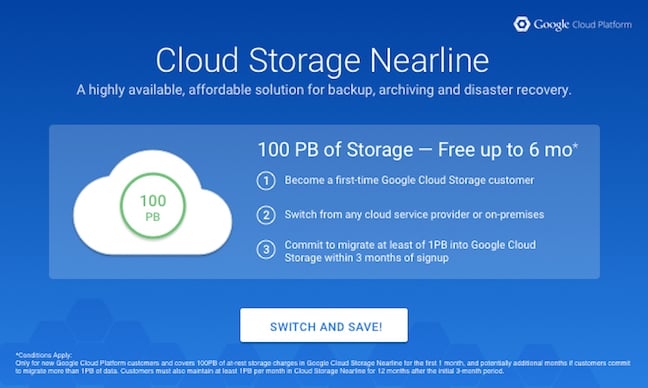
Google has flicked the switch to take its “Nearline” archival cloud storage service live, and tossed in an offer of 100 petabytes of free storage to set the snowball rolling.
Nearline is Google's competitor for Amazon Web Service's Glacier. Unlike Glacier, which is thought to rely on Blu-Ray, Nearline uses disk and flash*. Google therefore makes much of its three-second restore times, as AWS says “Glacier is optimized for infrequently accessed data where a retrieval time of several hours is suitable.”
Both services offer prices from US$0.01 per gigabyte per month.
Now that Nearline is live, Google has to market it. And has chosen to do so in a typically deep-pocketed way by offering 100 petabytes of storage free for six months on the terms illustrated below.
If switching from another cloud provider sounds like a pain in the posterior, Google's got that covered too by allowing import over HTTP or HTTPS. AWS' S3' can make data available over HTTP/S, so all you have to worry about is lots of egress traffic costs rather than the hassle of downloading, uploading and so on.
There's also a new feature allowing bursting beyond Nearline's everyday 4 MB/s of read throughput per TB of data, plus partnerships with EMC, Commvault and Actifiio (among others) to use Nearline as just another target for backups.
Microsoft's Azure doesn't have a service to match Glacier or Nearline, but Redmond's not the biggest loser here. That crown probably goes to tape vendors, who are as much the target of Google's big offer to new customers as AWS. Big tape users who've held out from making the jump to cloud now have six months to test Nearline at scale. With the likes of Quantum wobbling, IBM struggling to turn a quid with any form of storage, the last thing tape players need is Google giving away a competing product. ®
The latest coffee craze from Silicon Valley wants to take over the country. Dave Asprey puts butter in his coffee, and he’s already convinced thousands of people to do the same. He’s also convinced a venture capital firm to give him $9 million to help him build his buttered coffee empire.

 Super Opinionated.




 Techdirt..


/cdn0.vox-cdn.com/uploads/chorus_asset/file/3901448/Screen_Shot_2015-07-23_at_9.15.29_AM.0.0.png)
/cdn0.vox-cdn.com/uploads/chorus_asset/file/3900494/usa-today-8222994.0.0.jpg)
/cdn0.vox-cdn.com/uploads/chorus_asset/file/3900546/download__2_.0.jpeg)
/cdn0.vox-cdn.com/uploads/chorus_asset/file/3903782/usa-today-8497916.0.0.jpg)
/cdn0.vox-cdn.com/uploads/chorus_asset/file/3901110/2012MichiganUniforms_thumb1.0.jpg)
/cdn0.vox-cdn.com/uploads/chorus_asset/file/3901294/GettyImages-153274651.0.0.jpg)
/cdn0.vox-cdn.com/uploads/chorus_asset/file/3901274/GettyImages-153583450.0.0.jpg)
/cdn0.vox-cdn.com/uploads/chorus_asset/file/3901364/5644650.0.jpg)
/cdn0.vox-cdn.com/uploads/chorus_asset/file/3901366/UNIFORMS.0.jpg)
/cdn0.vox-cdn.com/uploads/chorus_asset/file/3901374/usa-today-8442071.0.0.jpg)
/cdn0.vox-cdn.com/uploads/chorus_asset/file/3901390/michigan-yellow2-2-5-13.0.jpg)
/cdn0.vox-cdn.com/uploads/chorus_asset/file/3901404/usa-today-7655260.0.0.jpg)
/cdn0.vox-cdn.com/uploads/chorus_asset/file/3901408/louisvilleuni2.0.0.jpg)
/cdn0.vox-cdn.com/uploads/chorus_asset/file/3901410/louisvilleuni3.0.0.0.jpg)
/cdn0.vox-cdn.com/uploads/chorus_asset/file/3901412/murderbird.0.png)