03 Jan 06:53
J. Mater. Chem. A, 2017, Accepted Manuscript
DOI: 10.1039/C7TA09193A, Paper
Rahul Ranjan, Asit Prakash, Arjun Singh, Anand Singh, Ashish Garg, Raju Kumar Gupta
Perovskite solar cells (PSCs) are currently the most exciting solar photovoltaic technologies for future deployment. Conventional PSC device structure typically employs a titanium dioxide (TiO2) electron transport layer. However, low...
The content of this RSS Feed (c) The Royal Society of Chemistry
03 Jan 06:52
J. Mater. Chem. A, 2018, 6,423-433
DOI: 10.1039/C7TA08669E, Paper
Xiufen Jin, Yilin Wang, Xiaofang Cheng, Huanyu Zhou, Lin Hu, Yinhua Zhou, Lie Chen, Yiwang Chen
A new interface engineering strategy for non-fullerene polymer solar cells by employing a highly conductive interlayer with a fluorinated conjugated backbone to afford a power conversion efficiency of 11.51% based on the PBDB-T:ITIC active layer.
The content of this RSS Feed (c) The Royal Society of Chemistry
03 Jan 06:47
J. Mater. Chem. A, 2017, Accepted Manuscript
DOI: 10.1039/C7TA08204E, Paper
congcong zhang, Zhao-Kui Wang, Li Meng, Zhiyong Liu, Jien Yang, Yingguo Yang, Xingyu Gao, Heng Ma
We develop an external-electric-field (EEF)-assisted annealing treatment to improve the photoelectric performance of planar organic-inorganic perovskite solar cells (PSCs). The new strategy can control the ion polarization orientation of perovskite...
The content of this RSS Feed (c) The Royal Society of Chemistry
03 Jan 06:45
J. Mater. Chem. A, 2018, 6,464-468
DOI: 10.1039/C7TA09233D, Paper
Qian Guan, Ruixiang Peng, Zhiyang Liu, Wei Song, Rongjuan Yang, Ling Hong, Tao Lei, Xi Fan, Qiang Wei, Ziyi Ge
Natural chlorophyllin was applied as cathode interfacial layer for PSCs, which present improved PCE up to 10.55%.
The content of this RSS Feed (c) The Royal Society of Chemistry
03 Jan 06:43
J. Mater. Chem. A, 2018, 6,469-477
DOI: 10.1039/C7TA09494A, Paper
Wiley A. Dunlap-Shohl, Trey B. Daunis, Xiaoming Wang, Jian Wang, Boya Zhang, Diego Barrera, Yanfa Yan, Julia[space]W. P. Hsu, David B. Mitzi
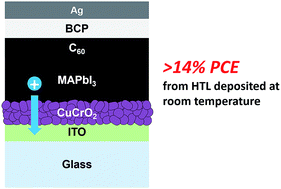
A delafossite CuCrO2 hole transport layer deposited at room temperature from a nanoparticle suspension is used in efficient perovskite cells.
The content of this RSS Feed (c) The Royal Society of Chemistry
03 Jan 06:41
J. Mater. Chem. A, 2018, 6,527-534
DOI: 10.1039/C7TA09095A, Paper
Yuan Zhu, Yubin He, Xiaolin Ge, Xian Liang, Muhammad A. Shehzad, Min Hu, Yazhi Liu, Liang Wu, Tongwen Xu
Highly alkaline stable imidazolium-type membrane has been developed for fuel cells by protection of the imidazolium ring at C2, C4 and C5 positions.
The content of this RSS Feed (c) The Royal Society of Chemistry
03 Jan 06:41
J. Mater. Chem. A, 2018, 6,395-403
DOI: 10.1039/C7TA10136H, Paper
Xi Liu, Boming Xie, Chunhui Duan, Zhaojing Wang, Baobing Fan, Kai Zhang, Baojun Lin, Fallon J. M. Colberts, Wei Ma, Rene A. J. Janssen, Fei Huang, Yong Cao
A non-fullerene acceptor with a high relative dielectric constant (εr) over 9 is developed. It offers an efficiency of 8.5%, which is the best result for organic solar cells employing high εr materials. Further research should focus on morphology optimization to make high εr practically useful in devices.
The content of this RSS Feed (c) The Royal Society of Chemistry
03 Jan 06:39
J. Mater. Chem. A, 2018, 6,574-582
DOI: 10.1039/C7TA08533H, Paper
Ruchika Mishra, Ramprasad Regar, Varun Singh, Piyush Panini, Rahul Singhal, M.[space]L. Keshtov, Ganesh D. Sharma, Jeyaraman Sankar
Monomeric perylenebisimides with [small alpha]-/[small beta]-thienyl dangles as efficient acceptors for photovoltaic cells.
The content of this RSS Feed (c) The Royal Society of Chemistry
03 Jan 06:38
J. Mater. Chem. A, 2018, 6,404-413
DOI: 10.1039/C7TA09716F, Paper
Rongming Xue, Moyao Zhang, Guiying Xu, Jingwen Zhang, Weijie Chen, Haiyang Chen, Ming Yang, Chaohua Cui, Yaowen Li, Yongfang Li
We synthesized a low-cost silicon containing HTL materials, achieving an excellent PCE of 19.06% for planar p-i-n perovskite solar cells.
The content of this RSS Feed (c) The Royal Society of Chemistry
03 Jan 06:37
J. Mater. Chem. A, 2017, Accepted Manuscript
DOI: 10.1039/C7TA09387J, Paper
Camillo SARTORIO, Vincenzo Campisciano, Clara Chiappara, Sebastiano Cataldo, Michelangelo Scopelliti, Michelangelo Gruttadauria, Francesco Giacalone, Bruno Pignataro
A new class of copolymers containing oligothiophene moieties with different length and fullerene units have been designed and prepared by an easy and inexpensive one-step synthetic approach. The incorporation of...
The content of this RSS Feed (c) The Royal Society of Chemistry
03 Jan 06:37
J. Mater. Chem. A, 2018, 6,414-422
DOI: 10.1039/C7TA09930D, Paper
Ming Liu, Jing Yang, Yuli Yin, Yong Zhang, Erjun Zhou, Fengyun Guo, Liancheng Zhao
Two novel acceptor-acceptor (A-A) type polymeric electron acceptors, PPDI-DTBT and PFPDI-DTBT, which contain perylene diimide (PDI) and fused PDI (FPDI) with electron deficient 4,7-dithienyl-2,1,3-benzothiadiazole (DTBT) units, respectively, are designed and synthesized to investigate their application in all-polymer solar cells (all-PSCs).
The content of this RSS Feed (c) The Royal Society of Chemistry
03 Jan 03:18
J. Mater. Chem. A, 2017, Accepted Manuscript
DOI: 10.1039/C7TA09657G, Paper
Teck Ming Koh, Vignesh Shanmugam, Xintong Guo, Swee Sien Lim, Oliver Filonik, Eva M. Herzig, Peter Muller-Buschbaum, Varghese Swamy, Tze Chien Sum, Subodh Gautam Mhaisalkar, Nripan Mathews
Surface imperfections in perovskite films upon crystallization may trigger trap-assisted non-radiative recombination which is a dominant recombination mechanism that potentially restricts the performance of solar devices. In this work, 2D...
The content of this RSS Feed (c) The Royal Society of Chemistry
03 Jan 03:04
J. Mater. Chem. A, 2018, 6,4305-4312
DOI: 10.1039/C7TA09504J, Paper
Saqib Javaid, Chang Woo Myung, Jeonghun Yun, Geunsik Lee, Kwang S. Kim
The proton proximity arising from methylamine (MA) at TiO2/MAPbI3 interface plays a vital role in facilitating interfacial electron transfer process
The content of this RSS Feed (c) The Royal Society of Chemistry
03 Jan 03:03
J. Mater. Chem. A, 2018, 6,1037-1047
DOI: 10.1039/C7TA09193A, Paper
Rahul Ranjan, Asit Prakash, Arjun Singh, Anand Singh, Ashish Garg, Raju Kumar Gupta
This work investigates the effect of tantalum doping in compact TiO2 layer on the performance of planar spiro-OMeTAD free perovskite solar cells. 40% improvement in the overall efficiency was obtained as compared to the device with undoped TiO2.
The content of this RSS Feed (c) The Royal Society of Chemistry
03 Jan 03:02
J. Mater. Chem. A, 2017, Accepted Manuscript
DOI: 10.1039/C7TA10217H, Paper
Natalia N. Shlenskaya, Nikolai A. Belich, Michael Gratzel, Eugene A Goodilin, Alexey Tarasov
We suggest a new degradation mechanism of commonly used gold electrodes in hybrid perovskite solar cells (PSCs) originating from chemical interaction between gold and highly reactive iodine-containing byproducts formed in...
The content of this RSS Feed (c) The Royal Society of Chemistry
03 Jan 03:00
J. Mater. Chem. A, 2017, Accepted Manuscript
DOI: 10.1039/C7TA09174E, Communication
Namyoung Ahn, Il Jeon, Jungjin Yoon, Esko Kauppinen, Yutaka Matsuo, Shigeo Maruyama, Mansoo Choi
Promising perovskite solar cell technology with soaring power conversion efficiencies share common problems of low stability and high cost. This work provides the solution to these problems by employing carbon...
The content of this RSS Feed (c) The Royal Society of Chemistry
03 Jan 02:38
by Zhaolang Liu, Zhenhai Yang, Sudong Wu, Juye Zhu, Wei Guo, Jiang Sheng, Jichun Ye and Yi Cui

ACS Nano
DOI: 10.1021/acsnano.7b07222

03 Jan 01:27
by Guoqing Tong, Huan Li, Danting Li, Zhifeng Zhu, Enze Xu, Guopeng Li, Linwei Yu, Jun Xu, Yang Jiang
Abstract
Inorganic perovskites with special semiconducting properties and structures have attracted great attention and are regarded as next generation candidates for optoelectronic devices. Herein, using a physical vapor deposition process with a controlled excess of PbBr2, dual-phase all-inorganic perovskite composite CsPbBr3–CsPb2Br5 thin films are prepared as light-harvesting layers and incorporated in a photodetector (PD). The PD has a high responsivity and detectivity of 0.375 A W−1 and 1011 Jones, respectively, and a fast response time (from 10% to 90% of the maximum photocurrent) of ≈280 µs/640 µs. The device also shows an excellent stability in air for more than 65 d without encapsulation. Tetragonal CsPb2Br5 provides satisfactory passivation to reduce the recombination of the charge carriers, and with its lower free energy, it enhances the stability of the inorganic perovskite devices. Remarkably, the same inorganic perovskite photodetector is also highly flexible and exhibits an exceptional bending performance (>1000 cycles). These results highlight the great potential of dual-phase inorganic perovskite films in the development of optoelectronic devices, especially for flexible device applications.

New inorganic perovskite films with dual-phase CsPbBr3–CsPb2Br5 fabricated by a physical vapor deposition process enable rigid and flexible photodetectors, which exhibit faster response time, excellent flexibility, and stability in the air.
02 Jan 11:15
by Sung-Soo Yoon, Dahl-Young Khang
Abstract
Highly efficient organic–inorganic hybrid solar cells of Si-poly(3,4-ethylenedioxythiophene):polystyrene sulfonate (PEDOT:PSS) have been demonstrated by simultaneous structural, electrical, and interfacial engineering with low processing temperature. Si substrate has been sculpted into hierarchical structure to reduce light reflection loss and increase interfacial junction area at the same time. Regarding the electrical optimization, highly conductive organic PEDOT:PSS layer has been formulated with low sheet resistance. It is argued that the sheet resistance, rather than conductivity, is the primary parameter for the high efficiency hybrid cells, which leads to the optimization of thickness, i.e., thick enough to have low sheet resistance but transparent enough to pass the incident sunlight. Finally, siloxane oligomers have been inserted into top/bottom interfaces by contact-printing at room ambient, which suppresses carrier recombination at interfaces and reduces contact resistance at bottom electrode. Contrary to high-temperature doping (for the formation of front surface or back surface fields), wet solution processes or vacuum-based deposition, the contact-printing can be done at room ambient to reduce carrier recombination at the interfaces. The high efficiency obtained with low processing temperature can make this type of cells be a possible candidate for post-Si photovoltaics.

High (>17%) efficiency Si-PEDOT:PSS hybrid solar cells are demonstrated by simultaneous optimization of Si surface structure, electrical property of PEDOT:PSS, and interfacial passivation by contact-printed siloxane oligomers. Notably, the results are obtained without the adoption of vacuum-based or high-temperature-based processes. The hybrid cell may be the realistic candidate for post-Si photovoltaics.
02 Jan 10:54
by Kui Jiang, Guangye Zhang, Guofang Yang, Jianquan Zhang, Zhengke Li, Tingxuan Ma, Huawei Hu, Wei Ma, Harald Ade, He Yan
Abstract
Ternary organic solar cells (OSCs) have attracted much research attention, as they can maintain the simplicity of the single-junction device architecture while broadening the absorption range of OSCs. However, one main challenge that limits the development of ternary OSCs is the difficulty in controlling the morphology of ternary OSCs. In this paper, an effective approach to control the morphology is presented that leads to multiple cases of efficient nonfullerene ternary OSCs with efficiencies of up to 11.2%. This approach is based on a donor polymer with strong temperature dependent aggregation properties processed from hot solutions without any solvent additives and a pair of small molecular acceptors (SMAs) that have similar surface tensions and thus low propensity to form discrete phases. Such a ternary blend exhibits a simplified bulk-heterojunction morphology that is similar to the morphology of previously reported binary blends. As a result, an almost linear relationship between VOC and film composition is observed for all nonfullerene ternary devices. Meanwhile, by carefully designing a control system with a large interfacial tension, a different phase separation and VOC dependence is demonstrated. This morphology control approach can be applicable to more material systems and accelerates the development of the ternary OSC field.

Multiple cases of efficient nonfullerene ternary organic solar cells with efficiencies of up to 11.2% based on an effective morphology-control approach are presented. This approach is based on a donor polymer with strong temperature dependent aggregation and a pair of small molecular acceptors with similar surface tensions. Increased crystallinity of the acceptor phase is observed and discussed.
02 Jan 10:53
by Xian-Kai Chen, Jean-Luc Brédas
Abstract
The large voltage losses usually encountered in organic solar cells significantly limit the power conversion efficiencies (PCEs) of these devices, with the result that the current highest PCE values in single-junction organic photovoltaic remain smaller than for other solar cell technologies, such as crystalline silicon or perovskite solar cells. In particular, the nonradiative recombinations to the electronic ground state from the lowest-energy charge-transfer (CT) states at the donor–acceptor interfaces in the active layer of organic devices, are responsible for a significant part of the voltage losses. Here, to better comprehend the nonradiative voltage loss mechanisms, a fully quantum-mechanical rate formula is employed within the framework of time-dependent perturbation theory, combined with density functional theory. The objective is to uncover the specific contributions of intramolecular vibrations to the CT-state nonradiative recombinations in several model systems, which include small-molecule and polymer donors as well as fullerene and nonfullerene acceptors.

The large open-circuit voltage losses in organic solar cells significantly limit the power conversion efficiencies (PCEs) of these devices. A major contribution to the voltage loss is the non-radiative recombination to the electronic ground states from the lowest-energy charge-transfer (CT) states at donor-acceptor interfaces. Here, we uncover the role of intramolecular vibrations in the CT-state non-radiative recombination.
02 Jan 10:52
by Wanjung Kim, Myung Sun Jung, Seonhee Lee, Yung Ji Choi, Jung Kyu Kim, Sung Uk Chai, Wook Kim, Dae-Geun Choi, Hyungju Ahn, Jeong Ho Cho, Dukhyun Choi, Hyunjung Shin, Dongho Kim, Jong Hyeok Park
Abstract
A general methodology is reported to create organic–inorganic hybrid metal halide perovskite films with enlarged and preferred-orientation grains. Simply pressing polyurethane stamps with hexagonal nanodot arrays on partially dried perovskite intermediate films can cause pressure-induced perovskite crystallization. This pressure-induced crystallization allows to prepare highly efficient perovskite solar cells (PSCs) because the preferred-orientation and enlarged grains with low-angle grain boundaries in the perovskite films exhibit suppressed nonradiative recombination. Consequently, the photovoltaic response is dramatically improved by the uniaxial compression in both inverted-planar PSCs and normal PSCs, leading to power conversion efficiencies of 19.16%.

Mechanical crystallization methodology for preferred-orientation and close-packed grains of perovskite materials with uniaxial compression is achieved. Simply pressing polyurethane stamps with hexagonal nanodot arrays on partially dried perovskite intermediate films can cause pressure-induced perovskite crystallization, leading to preferred-orientation and enlarged grains with low-angle grain boundaries in the perovskite films. The photovoltaic response dramatically improves in both inverted-planar perovskite solar cells and normal perovskite solar cells, leading to a power conversion efficiency of 19.16%.
02 Jan 10:51
by Abd. Rashid bin Mohd. Yusoff, Mohammad Khaja Nazeeruddin
Abstract
Perovskite solar cells have been heralded as one of the most promising emerging technologies in 2016 because of the very high power conversion efficiency of 22% and the low cost of generating electricity compared to even fossil fuels. These are formed with various dimensionalities and can be fully manipulated once their bulk structure is reduced to a low-dimensional structure. Despite being one of the most attractive materials to date, their instability significantly influences device performance and subsequently prevents the timely commercialization of perovskite solar cell technology. In this review, the recent advances in the synthesis of stable low-dimensional metal-halide perovskites are highlighted.

The recent advances in the synthesis of low-dimensional metal-halide perovskite and the sources of instability including water intercalation, ion migration, and thermal decomposition are shown.
02 Jan 10:50
by Young Il Lee, Nam Joong Jeon, Bong Jun Kim, Hyunjeong Shim, Tae-Youl Yang, Sang Il Seok, Jangwon Seo, Sung Gap Im
Abstract
The stability of a perovskite solar cell (PSC) is enhanced significantly by applying a customized thin-film encapsulation (TFE). The TFE is composed of a multilayer stack of organic/inorganic layers deposited by initiated chemical vapor deposition and atomic layer deposition, respectively, whose water vapor transmission rate is on the order of 10−4 g m−2 d−1 at an accelerated condition of 38 °C and 90% relative humidity (RH). The TFE is optimized, taking into consideration various aspects of thermosensitive PSCs. Lowering the process temperature is one of the most effective methods for minimizing the thermal damage to the PSC during the monolithic integration of the TFE onto PSC. The direct deposition of TFE onto a PSC causes less than 0.3% degradation (from 18.5% to 18.2%) in the power conversion efficiency, while the long-term stability is substantially improved; the PSC retains 97% of its original efficiency after a 300 h exposure to an accelerated condition of 50 °C and 50% RH, confirming the enhanced stability of the PSC against moisture. This is the first demonstration of a TFE applied directly onto PSCs in a damage-free manner, which will be a powerful tool for the development of highly stable PSCs with high efficiency.

The thin-film encapsulation (TFE) via initiated chemical deposition and low-temperature atomic layer deposition effectively enhances the stability of a high-efficient perovskite solar cell (PSC). The TFE is directly deposited onto the PSC without degradation, and the encapsulated PSC retains 97% of its original efficiency after a 300 h exposure to an accelerated condition of 50 °C and 50% relative humidity.
02 Jan 10:49
by Eunsong Lee, Jihoon Ahn, Hyeok-Chan Kwon, Sunihl Ma, Kyungmi Kim, Seongcheol Yun, Jooho Moon
Abstract
Silver nanowire (AgNW)-based transparent electrodes prepared via an all-solution-process are proposed as bottom electrodes in flexible perovskite solar cells (PVSCs). To enhance the chemical stability of AgNWs, a pinhole-free amorphous aluminum doped zinc oxide (a-AZO) protection layer is deposited on the AgNW network. Compared to its crystalline counterpart (c-AZO), a-AZO substantially improves the chemical stability of the AgNW network. For the first time, it is observed that inadequately protected AgNWs can evanesce via diffusion, whereas a-AZO secures the integrity of AgNWs. When an optimally thick a-AZO layer is used, the a-AZO/AgNW/AZO composite electrode exhibits a transmittance of 88.6% at 550 nm and a sheet resistance of 11.86 Ω sq−1, which is comparable to that of commercial fluorine doped tin oxide. The PVSCs fabricated with a configuration of Au/spiro-OMeTAD/CH3NH3PbI3/ZnO/AZO/AgNW/AZO on rigid and flexible substrates can achieve power conversion efficiencies (PCEs) of 13.93% and 11.23%, respectively. The PVSC with the a-AZO/AgNW/AZO composite electrode retains 94% of its initial PCE after 400 bending iterations with a bending radius of 12.5 mm. The results clearly demonstrate the potential of AgNWs as bottom electrodes in flexible PVSCs, which can facilitate the commercialization and large-scale deployment of PVSCs.

A pinhole-free amorphous Al-doped zinc oxide (AZO) protection layer dramatically enhances the chemical stability of silver nanowires (AgNWs). Using all-solution-processed amorphous AZO/AgNW/AZO transparent electrodes in flexible perovskite solar cells, it is possible to achieve a power conversion efficiency of 11.23%.
02 Jan 08:27
by Wenchao Zhao, Shaoqing Zhang, Yun Zhang, Sunsun Li, Xiaoyu Liu, Chang He, Zhong Zheng, Jianhui Hou
Abstract
The power conversion efficiencies (PCEs) of state-of-the-art organic solar cells (OSCs) have increased to over 13%. However, the most commonly used solvents for making the solutions of photoactive materials and the coating methods used in laboratories are not adaptable for future practical production. Therefore, taking a solution-coating method with environmentally friendly processing solvents into consideration is critical for the practical utilization of OSC technology. In this study, a highly efficient PBTA-TF:IT-M-based device processed with environmentally friendly solvents, tetrahydrofuran/isopropyl alcohol (THF/IPA) and o-xylene/1-phenylnaphthalene, is fabricated; a high PCE of 13.1% can be achieved by adopting the spin-coating method, which is the top result for OSCs. More importantly, a blade-coated non-fullerene OSC processed with THF/IPA is demonstrated for the first time to obtain a promising PCE of 11.7%; even for the THF/IPA-processed large-area device (1.0 cm2) made by blade-coating, a PCE of 10.6% can still be maintained. These results are critical for the large-scale production of highly efficient OSCs in future studies.

Highly efficient non-fullerene organic solar cells (OSCs) are fabricated, processed with environmentally friendly solvents, tetrahydrofuran/isopropyl alcohol (THF/IPA) and o-xylene/1-phenylnaphthalene, respectively. The highest power conversion efficiency (PCE) of 13.1% can be achieved by adopting the spin-coating method, which is the top result for OSCs. When the blade-coating method is used in an ambient atmosphere, the THF/IPA-processed device maintains a high PCE of 11.7%.
02 Jan 08:24
by Kamran Amin, Qinghai Meng, Aziz Ahmad, Meng Cheng, Miao Zhang, Lijuan Mao, Kun Lu, Zhixiang Wei
Abstract
A sulfur-linked carbonyl-based poly(2,5-dihydroxyl-1,4-benzoquinonyl sulfide) (PDHBQS) compound is synthesized and used as cathode material for lithium-ion batteries (LIBs). Flexible binder-free composite cathode with single-wall carbon nanotubes (PDHBQS–SWCNTs) is then fabricated through vacuum filtration method with SWCNTs. Electrochemical measurements show that PDHBQS–SWCNTs cathode can deliver a discharge capacity of 182 mA h g−1 (0.9 mA h cm−2) at a current rate of 50 mA g−1 and a potential window of 1.5 V–3.5 V. The cathode delivers a capacity of 75 mA h g−1 (0.47 mA h cm−2) at 5000 mA g−1, which confirms its good rate performance at high current density. PDHBQS–SWCNTs flexible cathode retains 89% of its initial capacity at 250 mA g−1 after 500 charge–discharge cycles. Furthermore, large-area (28 cm2) flexible batteries based on PDHBQS–SWCNTs cathode and lithium foils anode are also assembled. The flexible battery shows good electrochemical activities with continuous bending, which retains 88% of its initial discharge capacity after 2000 bending cycles. The significant capacity, high rate performance, superior cyclic performance, and good flexibility make this material a promising candidate for a future application of flexible LIBs.

A carbonyl compound (oligomeric poly(2, 5-dihydroxyl-1,4-benzoquinonyl sulfide)-based flexible cathode with superior rate performance and cyclic stability is reported. The carbonyl compound is served as active material, and single-wall carbon nanotube, can act as a current collector and binder. Since all the materials used are inherently flexible, this flexible electrode is ready for a potential application in flexible lithium-ion batteries.
02 Jan 08:23
by Wanyi Nie, Hsinhan Tsai, Jean-Christophe Blancon, Fangze Liu, Costas C. Stoumpos, Boubacar Traore, Mikael Kepenekian, Olivier Durand, Claudine Katan, Sergei Tretiak, Jared Crochet, Pulickel M. Ajayan, MercouriG. Kanatzidis, Jacky Even, Aditya D. Mohite
Abstract
Hybrid perovskites are on a trajectory toward realizing the most efficient single-junction, solution-processed photovoltaic devices. However, a critical issue is the limited understanding of the correlation between the degree of crystallinity and the emergent perovskite/hole (or electron) transport layer on device performance and photostability. Here, the controlled growth of hybrid perovskites on nickel oxide (NiO) is shown, resulting in the formation of thin films with enhanced crystallinity with characteristic peak width and splitting reminiscent of the tetragonal phase in single crystals. Photophysical and interface sensitive measurements reveal a reduced trap density at the perovskite/NiO interface in comparison with perovskites grown on poly(3,4-ethylene dioxy thiophene) polystyrene sulfonate. Photovoltaic cells exhibit a high open circuit voltage (1.12 V), indicating a near-ideal energy band alignment. Moreover, photostability of photovoltaic devices up to 10-Suns is observed, which is a direct result of the superior crystallinity of perovskite thin films on NiO. These results elucidate the critical role of the quality of the perovskite/hole transport layer interface in rendering high-performance and photostable optoelectronic devices.

Highly crystalline perovskite thin film can be grown on nickel oxide substrates evidenced by sharp X-ray diffraction pattern with characteristic tetragonal peak splitting observed only in single crystal. As a consequence, high-efficiency photovoltaic cells can be achieved with extended operation lifetime under constant illumination benefit by the high degree of crystallinity.
02 Jan 08:22
by Qunping Fan, Yan Wang, Maojie Zhang, Bo Wu, Xia Guo, Yufeng Jiang, Wanbin Li, Bing Guo, Chennan Ye, Wenyan Su, Jin Fang, Xuemei Ou, Feng Liu, Zhixiang Wei, Tze Chien Sum, Thomas P. Russell, Yongfang Li
Abstract
In this work, a nonfullerene polymer solar cell (PSC) based on a wide bandgap polymer donor PM6 containing fluorinated thienyl benzodithiophene (BDT-2F) unit and a narrow bandgap small molecule acceptor 2,2′-((2Z,2′Z)-((4,4,9,9-tetrahexyl-4,9-dihydro-s-indaceno[1,2-b:5,6-b′]dithiophene-2,7-diyl)bis(methanylylidene))bis(3-oxo-2,3-dihydro-1H-indene-2,1-diylidene))dimalononitrile (IDIC) is developed. In addition to matched energy levels and complementary absorption spectrum with IDIC, PM6 possesses high crystallinity and strong π–π stacking alignment, which are favorable to charge carrier transport and hence suppress recombination in devices. As a result, the PM6:IDIC-based PSCs without extra treatments show an outstanding power conversion efficiency (PCE) of 11.9%, which is the record value for the as-cast PSC devices reported in the literature to date. Moreover, the device performances are insensitive to the active layer thickness (≈95–255 nm) and device area (0.20–0.81 cm2) with PCEs of over 11%. Besides, the PM6:IDIC-based flexible PSCs with a large device area of 1.25 cm2 exhibit a high PCE of 6.54%. These results indicate that the PM6:IDIC blend is a promising candidate for future roll-to-roll mass manufacturing and practical application of highly efficient PSCs.

An efficient polymer solar cell (PSC) based on a polymer donor PM6 containing BDT-2F unit and an n-type organic semiconductor acceptor, IDIC, is developed. The power conversion efficiencies of PSCs without extra treatments reach up to 11.9% and are insensitive to the active layer thickness (95–225 nm) and device area (0.20–0.81 cm2), with values of over 11%.
02 Jan 08:17
by Zonglong Zhu, Chu-Chen Chueh, Nan Li, Chengyi Mao, Alex K.-Y. Jen
Abstract
Recently, the evolved intermediate phase based on iodoplumbate anions that mediates perovskite crystallization has been embodied as the Lewis acid–base adduct formed by metal halides (serve as Lewis acid) and polar aprotic solvents (serve as Lewis base). Based on this principle, it is proposed to constitute efficient Lewis acid–base adduct in the SnI2 deposition step to modulate its volume expansion and fast reaction with methylammonium iodide (MAI)/formamidinium iodide (FAI) (FAI is studied hereafter). Herein, trimethylamine (TMA) is employed as the additional Lewis base in the tin halide solution to form SnY2–TMA complexes (Y = I−, F−) in the first-step deposition, followed by intercalating with FAI to convert into FASnI. It is shown that TMA can facilitate homogeneous film formation of a SnI2 (+SnF2) layer by effectively forming intermediate SnY2–TMA complexes. Meanwhile, its relatively larger size and weaker affinity with SnI2 than FA+ ions will facilitate the intramolecular exchange with FA+ ions, thereby enabling the formation of dense and compact FASnI3 film with large crystalline domain (>1 µm). As a result, high power conversion efficiencies of 4.34% and 7.09% with decent stability are successfully accomplished in both conventional and inverted perovskite solar cells, respectively.

High-performance FASnI3 perovskite solar cells (PVSCs) are realized for the first time by a two-step deposition technique. Trimethylamine (TMA) is used as an additive to improve the morphology, enabling a dense and compact FASnI3 film with large crystalline domains (>1 μm). Consequently, high PCEs of 4.34% and 7.09% can be successfully realized in both conventional and inverted PVSCs with improved stability.