
V.w.verweij
Shared posts
02 May 22:10
Your Afternoon Animal Fix
by Prince Of Petworth
V.w.verweijWisdom Dog in the second picture there.
If you have any animal/pet photos you’d like to share please send an email to princeofpetworth(at)gmail(dot)com with ‘Animal Fix’ in the title and say the name of your pet and your neighborhood. Your photos will go into the queue (usually 2 weeks wait) and will be posted in the order I receive them. If you’ve already entered your pet and would like to do so again – that’s no problem – just space the entries out a bit. Please try to send horizontal photos 640×480 (medium size on your iphone) if possible. If you’re not using an iphone any size is fine.

“Belle and Beau – Logan Circle”

“Vardie is a soccer loving gal from Truxton Circle, adopted from WARL. She’s name after the great Jamie Vardy and the Liecester Foxes!!”
02 May 18:03
Today’s Rental has “a fireman’s pole to slide down from loft space”
by Prince Of Petworth
V.w.verweij"Fireman's" Pole

This rental is located at 1401 R Street, Northwest. The listing says:
“Incredible industrial loft space with two story ceiling, fireman~s pole (to slide down from loft space), oversized windows, exposed brick, concrete floors, two exposures, Elfa Closet system, designer Edison bulb lighting, Bosch Kitchen, in-unit washer / dryer. Building features a large roof deck, party room, incredible location next to restaurants, Whole Foods, Trader Joes and so much more!”

You can see more photos here.
This 1 bed/1 bath loft is going for $2,500/Mo.
02 May 18:02
Your Afternoon Animal Fix
by Prince Of Petworth
V.w.verweijHOOVER
If you have any animal/pet photos you’d like to share please send an email to princeofpetworth(at)gmail(dot)com with ‘Animal Fix’ in the title and say the name of your pet and your neighborhood. Your photos will go into the queue (usually 2 weeks wait) and will be posted in the order I receive them. If you’ve already entered your pet and would like to do so again – that’s no problem – just space the entries out a bit. Please try to send horizontal photos 640×480 (medium size on your iphone) if possible. If you’re not using an iphone any size is fine.

“Ryder Aloysius of Petworth
My sidekick through thick and thin. “Home” has changed many times, but for both of us, home is wherever we are together. He gave me a reason to live when I was in a very dark place, and I unknowingly saved him from a bad situation.”

“Hoover demonstrates a new yoga pose in Van Ness”
01 May 03:14
Pentagon City Apartment Building Has a ‘Lifestyle Concierge’
by ARLnow.com
 A couple of weeks ago, a rep for Instrata Pentagon City, a high-end luxury apartment building on 15th Street S. near the Fashion Centre mall, reached out to us about a unique amenity the building offers its residents: a “lifestyle concierge.”
Having not heard of such a thing before — most local news reporters do not live in buildings with a lifestyle concierge — we asked Stephanie Student, who holds that position, what a lifestyle concierge does and why an apartment building should have one.
Here are some excerpts from that interview.
ARLnow: In your own words, what does a lifestyle concierge do?
Stephanie: As a lifestyle concierge, my job is to make residents’ lives easier! I’m here to take care of their needs, no matter how big or small, and assist wherever I can. Another big part of my job is organizing resident-exclusive events — everything from cake-decorating classes and oyster shucking to beer-tasting and fitness classes. These events and classes really help create a sense of community among residents and I’ve seen some wonderful friendships blossom between residents who had never met before but attended the same event and really hit it off.
ARLnow: Why is it important for Instrata to have a lifestyle concierge?
Stephanie: Luxury lifestyle apartments are not uncommon in most metropolitan areas, but Instrata has recognized that renters want more than just high-end finishes and nice common spaces. They also want a place where they feel they have friends and connections–a place that feels like its own “neighborhood.” By providing residents with a concierge who can act at a “go-to” for questions and assistance, and fun events that encourage interaction, they get all of that plus the more typical perks of high-end buildings.
ARLnow: What are some of your personal favorite activities in the neighborhood?
Stephanie: Pentagon Row is full of fun shops and restaurants, not to mention amazing venues and events! There’s a skating rink in the winter, 5K Fridays through the month of April, and outdoor movie nights in the summer. This August and September, the movies will be a complete run of the Star Wars series. I can’t wait!
ARLnow: What are some of your residents’ favorite events inside the building?
Stephanie: Anything that gets their hands a little dirty and allows them to meet new people! Namely, our oyster-shucking lessons, flower-arranging classes and cake-decorating classes. These tend to be on a smaller scale and allow for the residents to have great conversations and learn a new skill.
ARLnow: What’s the average day like for you?
Stephanie: I always kick off the day by checking emails and catching up on the latest D.C.-area news. Throughout the day, I research local cultural events, happenings, and restaurant and store openings. I’m always on the lookout for new event ideas and party trends to inspire me for future resident events. When I’m not reading, researching or tending to a request, I’m working on the logistics for our upcoming events, negotiating with vendors, or catching up with residents.
ARLnow: What’s the craziest request you’ve ever gotten from a resident?
Stephanie: Our residents tend to turn to the concierge team to assist more with research and suggestions, so I have yet to receive a wildly out-of-the-ordinary request. That said, I did have a resident who wanted a massage but insisted on staying in their apartment as opposed to popping downstairs to use the in-house massage room. Luckily, I was easily able to find a massage therapist nearby who was happy to come up to the apartment and tend to the resident.
01 May 03:14
hotcomicsforcoolpeople: Here’s the first comic of a 10-part...

27 Apr 21:14



Arlington Pet of the Week: Duchess
by ARLnow.com
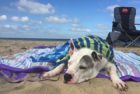
This week’s Arlington Pet of the Week is Duchess, a hound mix who’s a total daddy’s girl and the scourge of rabbits everywhere.
Duchess knows that her grand-dog-parents are total pushovers when it comes to table scraps and has some refined tastes when it comes to wineries and vacation destinations.
Here’s was adoptive dog mom Andrea had to say about her.
Duchess (Dutch for short) is a 7-year-old hound mix who is a sweet, talkative, and cuddly lady from Dublin, VA. Her dad — and favorite of her two parents — Devin stopped by a local shelter one day while visiting his family and couldn’t help but take her home after she sat on his foot and gave him a look that said, “let’s hit the road.” Devin and Dutch moved to Arlington in 2014 where they met Andrea (me!) and we’ve been living the Three’s Company life ever since.
Dutch misses the country life but stays in touch with her roots by chasing after the Arlington bunnies (don’t worry, she’s too slow to catch them.) She loves long walks, but seems to think she’s in charge and is determined to walk aimlessly around Arlington for hours. Usually this ends in a tug-of-war between her and whoever is on the other side of her leash making it look like Duchess is trying to run away and find new owners, but we’re working on it. I promise.
Like any dog, Duchess loves treats and scraps. She gets more than enough of both from her grandparents, who spoil her rotten. She is also a big fan of road trips (aka sitting on my lap in the car until my legs go numb) and wineries (good news, we do too!) She’d do anything to stay outdoors and lay in the sunshine (she’s also a total beach bum) and convincing her to leave our sunny patio is always an epic contest of wills.
Dutch is the highlight of our days and we are usually the highlight of hers (it depends on how good the treats were on any given day.) If you see me being dragged down the street by this adorable, one ear up/one ear down gentle lady, feel free to say hello and fall in love with her as quickly as we did.
Want your pet to be considered for the Arlington Pet of the Week? Email arlingtonnews@gmail.com with a 2-3 paragraph bio and at least 3-4 horizontally-oriented photos of your pet. Please don’t send vertical photos, they don’t fit in our photo galleries!
Each week’s winner receives a sample of dog or cat treats from our sponsor, Becky’s Pet Care, along with $100 in Becky’s Bucks. Becky’s Pet Care is the winner six consecutive Angie’s List Super Service Awards, the National Association of Professional Pet Sitters’ 2013 Business of the Year and a proud supporter of the Arlington County Pawsitively Prepared Campaign.
Becky’s Pet Care provides professional dog walking and pet sitting in Arlington and all of Northern Virginia, as well as PetPrep training courses for Pet Care, CPR and emergency preparedness.
27 Apr 20:09
PoPville Photo Archives Caption Contest
by Prince Of Petworth
V.w.verweijBun.

Photo by PoPville flickr user Beau Finley
Your captions in the comments and winners (free PoP t-shirts or tote bags) picked Friday. If you find a caption particularly funny be sure to let me know in the comments so I can select a reader pick too.

25 Apr 20:55
Photos from PoPville – Bunny and Bulldog
by Prince Of Petworth

Photo by PoPville flickr user John Sonderman
When becoming a member of the PoPville flickr pool please make sure your settings allow me to download your photos. Join the PoPville flickr pool here and follow PoPville on twitter here on facebook here and you can now sign up for daily email summaries here.

Photo by PoPville flickr user Kevin Wolf
25 Apr 18:19
Arlington County, Virginia is very urbanized. Due to loss of wetlands (including vernal pools) and heavy development, half the frog and toad species that used to live in Arlington are now gone. The remaining species are often in small, isolated populations, in only a handful of locations. Frogs and toads are excellent bio-indicators if environmental health. Since they consume plant material when young and then switch to a predatory diet, they can build up toxins in both diets. Since they can also absorb chemicals and pollutants through their skins in all stages of life, they are also very sensitive to changes in the environment. So loss of frogs and toads can point to an unhealthy environment and their declines can serve as a warning about the state of the habitat.
Conversely, their presence can often be a clue to healthy, clean water and their return perhaps signaling improving conditions. This is why we are happy that the frog and toad populations have been expanding in our Arlington parks. Take for example the current status of American toads, which during our surveys from 2005 to 2008 were found to be restricted to one wild location. We now have them in 6 additional places. Similar successes in expansion of range have happened for our Bulllfrog, Green Frog, and Spring Peeper Treefrog populations.
In addition to having cleaner water and preserving our wetlands, the control and management of invasive plant species has allowed the habitats to support more insect food. Native plants that have also been making comebacks support more insect prey than the exotic invasive plants (and these insects then feed so many more animals such as most of our bird and all our bat species).
Some of our frogs needed a bit more help in getting established. Such was the case for our Wood Frogs which are dependent on mostly fish-free vernal ponds and mature woodlands. For the longest time Arlington only had two places where they bred. In time, the population from Long Branch Nature Center eventually made it into Glencarlyn Park on its own. But since these frogs need mature woods and vernal ponds that may not be close to one another, we assisted in establishing new populations.
Now these efforts have to be carefully considered. First of all you need the right habitat with established woodlands and fish free vernal pools. They need to have enough invertebrate prey to sustain them. We felt we had a couple of locations where we had controlled invasives, had mature forest, and could provide the wetlands they needed to reproduce. During the last year of service from our Americorps volunteers, they helped us create some vernal pools in one of our Natural Resource Conservation Areas. An Eagle Scout project provided similar service in another park that contained another Natural Resources Conservation Area.
With these things in place, we decided it was worth the effort to try and establish new colonies of Wood Frogs. But another concern was the potential introduction of two new diseases (Chytrid and Ranavirus) which were affecting amphibian populations. Luckily for us, the pond we used for stock was tested for these diseases. It ended up being part of two studies, mostly through the Smithsonian, and eventually came up as being clean.
Now we have more breeding populations of these woodland frogs. We've recently tried to create additional vernal pools, in locations where we hope the existing frogs can expand their range. We've also made efforts or plan on creating more ponds on the opposite side of such existing barriers as creeks and roads that make their migrations to the breeding pools very dangerous. Despite such programs as our "Stop the Stomp" volunteers helping to guide them across roads, we want to provide them with pools closer to locations so they need not make these dangerous journeys. As our habitat for these amphibians improve, they do so for many other animals as well. Hopefully Arlington will continue to make strides in providing habitat for the return of many other animals and plants such as these frogs.
Here's a short video of one of these successful efforts:
https://www.youtube.com/watch?v=aaQxe35yuDQ
Arlington's Amphibian Resurgence
by noreply@blogger.com (Alonso Abugattas)
 |
| A male Spring Peeper Treefrog calls from an Arlington pond |
Arlington County, Virginia is very urbanized. Due to loss of wetlands (including vernal pools) and heavy development, half the frog and toad species that used to live in Arlington are now gone. The remaining species are often in small, isolated populations, in only a handful of locations. Frogs and toads are excellent bio-indicators if environmental health. Since they consume plant material when young and then switch to a predatory diet, they can build up toxins in both diets. Since they can also absorb chemicals and pollutants through their skins in all stages of life, they are also very sensitive to changes in the environment. So loss of frogs and toads can point to an unhealthy environment and their declines can serve as a warning about the state of the habitat.
Conversely, their presence can often be a clue to healthy, clean water and their return perhaps signaling improving conditions. This is why we are happy that the frog and toad populations have been expanding in our Arlington parks. Take for example the current status of American toads, which during our surveys from 2005 to 2008 were found to be restricted to one wild location. We now have them in 6 additional places. Similar successes in expansion of range have happened for our Bulllfrog, Green Frog, and Spring Peeper Treefrog populations.
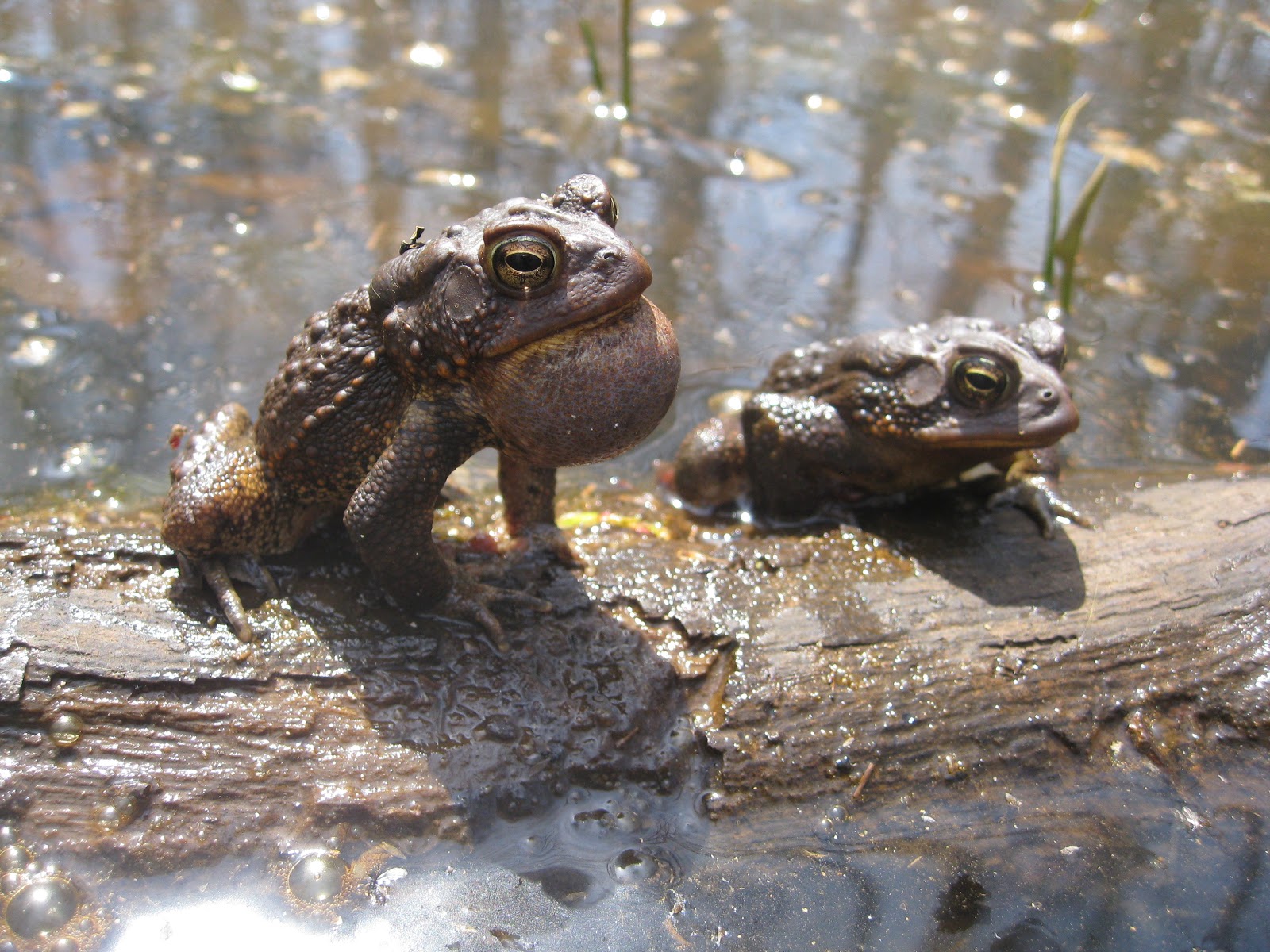 |
| American Toads calling. |
In addition to having cleaner water and preserving our wetlands, the control and management of invasive plant species has allowed the habitats to support more insect food. Native plants that have also been making comebacks support more insect prey than the exotic invasive plants (and these insects then feed so many more animals such as most of our bird and all our bat species).
Some of our frogs needed a bit more help in getting established. Such was the case for our Wood Frogs which are dependent on mostly fish-free vernal ponds and mature woodlands. For the longest time Arlington only had two places where they bred. In time, the population from Long Branch Nature Center eventually made it into Glencarlyn Park on its own. But since these frogs need mature woods and vernal ponds that may not be close to one another, we assisted in establishing new populations.
Now these efforts have to be carefully considered. First of all you need the right habitat with established woodlands and fish free vernal pools. They need to have enough invertebrate prey to sustain them. We felt we had a couple of locations where we had controlled invasives, had mature forest, and could provide the wetlands they needed to reproduce. During the last year of service from our Americorps volunteers, they helped us create some vernal pools in one of our Natural Resource Conservation Areas. An Eagle Scout project provided similar service in another park that contained another Natural Resources Conservation Area.
With these things in place, we decided it was worth the effort to try and establish new colonies of Wood Frogs. But another concern was the potential introduction of two new diseases (Chytrid and Ranavirus) which were affecting amphibian populations. Luckily for us, the pond we used for stock was tested for these diseases. It ended up being part of two studies, mostly through the Smithsonian, and eventually came up as being clean.
 |
| Wood Frog egg masses in an Arlington pond |
Now we have more breeding populations of these woodland frogs. We've recently tried to create additional vernal pools, in locations where we hope the existing frogs can expand their range. We've also made efforts or plan on creating more ponds on the opposite side of such existing barriers as creeks and roads that make their migrations to the breeding pools very dangerous. Despite such programs as our "Stop the Stomp" volunteers helping to guide them across roads, we want to provide them with pools closer to locations so they need not make these dangerous journeys. As our habitat for these amphibians improve, they do so for many other animals as well. Hopefully Arlington will continue to make strides in providing habitat for the return of many other animals and plants such as these frogs.
Here's a short video of one of these successful efforts:
https://www.youtube.com/watch?v=aaQxe35yuDQ
25 Apr 15:06
report: a #hipster out for a run wearing a button-down shirt!
by noreply@blogger.com (Scott Roberts of Bloomingdale)
See this tweet:
Chuck Donalies, CFP® @frugalplanner

Chuck Donalies, CFP®
New fitness/fashion trend: just saw a #hipster out for a run wearing a button-down shirt! #BloomingdaleDC
5:43 PM - 24 Apr 2016
25 Apr 15:05
Today on the Duck Beat – Duck Defenders
by Prince Of Petworth

Photo by Judy
Ed. Note: I love that three separate readers captured and sent us the shot above. Thanks to all. As since we’re in the season – if you catch a great duck scene or any greatness for that matter please email princeofpetworth@gmail.com or tweet us @PoPville Thanks!
Heidi writes this morning: “I think the ducks learned how to read.”

Photo by The Basics
And yesterday The Basics captured the great scene above: “check out this act of animal kindness on 13th Street NW!”
23 Apr 05:06
It’s House History Workshop Time – Fills Up Fast
by Prince Of Petworth
V.w.verweijYou can learn your house's history!

Ed. Note: Register Here.
Thanks to a reader for passing on:
“The DC Community Heritage Project House History Workshop gives community historians, of any skill or knowledge level, an overview of the DC Public Library Washingtoniana Division’s collection. Participants will learn how to research the history of their own home or any other historical property through sessions on:
- DC Maps – Led by historian and editor of the H-DC listserv Matthew Gilmore
- Historic Building Permit Database – Led by historian, author, and tour leader, Brian Kraft.
- Photo Archives and Resources of the Historical Society of Washington, DC(HSWDC) – Led by Photo Librarian at the DCPL Washingtoniana Division, Michele Casto and Anne McDonough, Library and Collections Director, HSWDC.
- Microfilm Records – Led by historian and archivist Jerry McCoy of the DCPL Washingtoniana Division
- Neighborhood Context/DC Digital Museum – Led by Jasper Collier, Curator of Digital Collections, Humanities DC.
The Humanities DC office is located in a small row house at 925 U Street, NW just across the street from the African American Civil War Memorial. Our little workspace was once home to generations of Washingtonians! Thanks to the incredible resources in the DC Public Library’s Washingtoniana Division, and the Historical Society of Washington, DC we know that the house was:
- Built in 1878;
- Owned by Mary A. Kuehling;
- Built for an estimated $3000 (roughly $67,000 in 2010 dollars);
- And occupied as a semi-detached family home.
And that is just the beginning! Come to a House History Day workshop to find out more about how you can trace the lineage of your historic DC house or apartment building, and the history of those who once lived there!
Please note that lunch will be provided for session I between 12:00pm and 12:30pm
Lunch for session II will be served Between 12:30 and 1pm.
House History Day will consist of two identical workshops. Please register for ONLY ONE of the workshops. Although the workshops are free and open to the public, we ask that youregister ONLY if you are certain that you will be able to attend as space is limited and there is almost always a waitlist for the program.”
23 Apr 05:04
Harriet Tubman Coming to the $20 Bill
by Prince Of Petworth
Justice is served. #GoodbyeJackson #HelloHarriet pic.twitter.com/mXzM2oLg4m
— Chirlane McCray (@Chirlane) April 20, 2016
Big news from Politico:
“Treasury Secretary Jack Lew on Wednesday will announce plans to both keep Alexander Hamilton on the front of the $10 bill and to knock Andrew Jackson off the front of the $20 in favor of Harriet Tubman, sources tell POLITICO.”

22 Apr 18:32
Alamo Drafthouse Cinema Could be Coming to Rhode Island Ave, NE?!?!!
by Prince Of Petworth

via Alamo Drafthouse Cinema
Well this could be huge – Washington Business Journal reports:
“Austin, Texas-based Alamo Drafthouse Cinema is close to a deal to bring its brand of movie theater and full-service restaurant to a new development in the Edgewood neighborhood of Northeast D.C.”
Considering Alamo Drafthouse DC retweeted the story – I’d take that as a very good sign. Alamo’s website says:
“Cold beer, hot movies, and delicious snacks and meals; The Alamo Drafthouse is dinner, drinks, movies and events, all under one roof. Our attention to detail in film presentation and programming has made us a second home to movie fans all over the planet and earned accolades from the likes of Entertainment Weekly (#1 theater in America), Wired.com (Coolest Movie Theater in the World) and Fandango.com (One of the Best Theaters in the Country).”
Stay tuned!!!

via google maps
20 Apr 03:14
Your Afternoon Animal Fix
by Prince Of Petworth
V.w.verweijCAT
If you have any animal/pet photos you’d like to share please send an email to princeofpetworth(at)gmail(dot)com with ‘Animal Fix’ in the title and say the name of your pet and your neighborhood. Your photos will go into the queue (usually 2 weeks wait) and will be posted in the order I receive them. If you’ve already entered your pet and would like to do so again – that’s no problem – just space the entries out a bit. Please try to send horizontal photos 640×480 (medium size on your iphone) if possible. If you’re not using an iphone any size is fine.

“Nothing says “It’s my birthday like a fresh bow tie”, Ira turns 1 year old”

“This is Shaggy and he lives in Adams Morgan.”

“Oscar and paco (siblings) heard about the nuclear summit security and think it’s excessive to call out the national guard.”
20 Apr 03:14
“The workshops will bring together Washington area transportation planners, Dutch bicycle transportation experts and cyclists”
by Prince Of Petworth

Photo by PoPville flickr user Mark Andre
From DDOT:
“The Federal Highway Administration (FHWA) and the District Department of Transportation (DDOT) in cooperation with the Royal Netherlands Embassy will host the second series of ThinkBike workshops April 21-22, 2016.
The workshops will bring together Washington area transportation planners, Dutch bicycle transportation experts and cyclists. The Dutch are experts on how to safely integrate bikes in city infrastructure, and are proud of their modern bicycle transportation networks.
Since the first Washington DC ThinkBike workshop in 2010, the District has built 50 percent more bike lanes, which has led to 60 percent more residents regularly biking to work.
WHAT: ThinkBike Opening Ceremony
WHO: Federal Highway Administration, US DOT
District Department of Transportation
Royal Netherlands Embassy
WHEN: Thursday, April 21
9 am – 11 am
WHERE: National Academy of Sciences
2101 Constitution Ave. NW, Washington DC
Lecture Room”

19 Apr 02:17
Your Afternoon Animal Fix
by Prince Of Petworth
V.w.verweijSad dog post
If you have any animal/pet photos you’d like to share please send an email to princeofpetworth(at)gmail(dot)com with ‘Animal Fix’ in the title and say the name of your pet and your neighborhood. Your photos will go into the queue (usually 2 weeks wait) and will be posted in the order I receive them. If you’ve already entered your pet and would like to do so again – that’s no problem – just space the entries out a bit. Please try to send horizontal photos 640×480 (medium size on your iphone) if possible. If you’re not using an iphone any size is fine.

“This is Hisstopher in Carver Langston looking significantly less hostile than usual.”

“Our dear sweet Chloe, longtime resident of U Street, who passed away in March. She was without question my “once in a lifetime pet,” and will never be forgotten nor replaced.
.
The second pic is Chloe with her step brother Sligo. They spent the first 9 years (her) and 14 years (him) of their lives apart, but were fast friends. He is still with us, misses Chloe dearly, and snoozes hard every day in her honor.”

18 Apr 16:28
 "No other team is referred to by both city and nickname," the Giants told Deadspin. [ more › ]
NY Giants Schedule Doesn't Use Washington's Football Team Name
by Rachel Kurzius
"No other team is referred to by both city and nickname," the Giants told Deadspin. [ more › ]
18 Apr 14:04


Kate Beaton vs. Tit Windows.
by Derf Backderf

Comix superstar Kate Beaton has taken on dumbass superdude comics and their proclivity to depict women as preposterous boob-inflated pole dancers in 5-inch fuck-me heels. In a series of hilarious tweets she riffs on Marvel's Cloak and Dagger characters (pictured above), particularly the underage heroine Dagger, who sports some rather impractical "tit windows" in her costume. You can read the tweets HERE.
I myself took on this very topic, way back in 1997 when superdude comics were at their dumbest.

The issue now, of course, is that, unlike 1997 when the mainstream comics industry had crashed and damn near went under completely, women are coming into the field in HUGE numbers, as both readers and creators. Women and girls are the fastest growing comics readership in 2015. In 1997, that readership was all male. But walk into a typical mainstream comics shop today and it's nothing but tits and high heels as far as the eye can see. One hokey cheesecake cover after another. A wall of tits! It's like the back room of newsstands when I was a kid, where all the porn mags were on display and pervy businessmen would slink in and out to drool over the stroke mags during lunch hour.
Personally, I say..... FABULOUS! The mainstream companies don't want those women readers? Fine. I'll take them! That's why comics like mine... and Kate's... are enjoying great popularity. And the mainstream publishers can continue to pander to their shrinking readership of superdude fanboys who get off on tit windows. Of course, those fanboys who were 20 in 1997 are now middle-aged, and since Dagger here is an underage teen who's the same age as their daughters, that's kinda gross.
Kate is apparently getting a lot of shit from said fanboys, who are a humorless bunch when someone dare points out the stupider aspects of their reading material. I caught some crap for the above strip, too, although 1997 was before the Electric Intertube really took off. Note the clunky Compuserve (anyone remember Compuserve??) email address that's all numbers! So the grousing was limited to nasty letters and face-to-face grumbling. There was a comics shop I frequented then where I bought my Fantagraphics and Drawn & Quarterly stuff, having long lost interest in superdude books. I got chewed out there by the owner and a couple of his customers over this strip. It was good-natured, but nothing is good-natured on the Electric Intertube. I liked this strip when I did it.... and still like it!... but I guess the typical alt-weekly reader of that era wasn't a comic book reader, because the reaction, frankly, was mostly indifferent. Comic books in the Nineties, before the blockbuster movies, were very much a dirty little lowbrow thing.
Not that the mainstream publishers care about attracting female readers. Oh sure, they wouldn't mind, and I think they're trying. It's just that they haven't a clue how to do so. And, as long as the movies and tv shows are making billions, they don't really give two shits about the comic books. Marvel and DC, it's long been rumored, operate at a loss!
Personally, I say..... FABULOUS! The mainstream companies don't want those women readers? Fine. I'll take them! That's why comics like mine... and Kate's... are enjoying great popularity. And the mainstream publishers can continue to pander to their shrinking readership of superdude fanboys who get off on tit windows. Of course, those fanboys who were 20 in 1997 are now middle-aged, and since Dagger here is an underage teen who's the same age as their daughters, that's kinda gross.
Kate is apparently getting a lot of shit from said fanboys, who are a humorless bunch when someone dare points out the stupider aspects of their reading material. I caught some crap for the above strip, too, although 1997 was before the Electric Intertube really took off. Note the clunky Compuserve (anyone remember Compuserve??) email address that's all numbers! So the grousing was limited to nasty letters and face-to-face grumbling. There was a comics shop I frequented then where I bought my Fantagraphics and Drawn & Quarterly stuff, having long lost interest in superdude books. I got chewed out there by the owner and a couple of his customers over this strip. It was good-natured, but nothing is good-natured on the Electric Intertube. I liked this strip when I did it.... and still like it!... but I guess the typical alt-weekly reader of that era wasn't a comic book reader, because the reaction, frankly, was mostly indifferent. Comic books in the Nineties, before the blockbuster movies, were very much a dirty little lowbrow thing.
Not that the mainstream publishers care about attracting female readers. Oh sure, they wouldn't mind, and I think they're trying. It's just that they haven't a clue how to do so. And, as long as the movies and tv shows are making billions, they don't really give two shits about the comic books. Marvel and DC, it's long been rumored, operate at a loss!
15 Apr 21:56
Your Afternoon Animal Fix
by Prince Of Petworth
If you have any animal/pet photos you’d like to share please send an email to princeofpetworth(at)gmail(dot)com with ‘Animal Fix’ in the title and say the name of your pet and your neighborhood. Your photos will go into the queue (usually 2 weeks wait) and will be posted in the order I receive them. If you’ve already entered your pet and would like to do so again – that’s no problem – just space the entries out a bit. Please try to send horizontal photos 640×480 (medium size on your iphone) if possible. If you’re not using an iphone any size is fine.

“Camden of Shaw!”

“A dramatic portrait of two ridiculous brothers, Carl and Mugs (of Bloomingdale). These two and their Westie overlord, Pablo, are on Instagram @pabloandtheboys.”

“Jeter gives the best puppy dog eyes in all of Columbia Heights”

14 Apr 21:22
there's no rule that says a dog can't do a lot of things
| archive - contact - sexy exciting merchandise - search - about | |||
 |
|||
| ← previous | April 13th, 2016 | next | |
|
April 13th, 2016: I can just see a campaign poster of President Dog with "DON'T WORRY" at the top and "HE'S FRIENDLY" at the bottom. WE COULD LIVE IN THIS WORLD, IF ONLY WE HAD THE POLITICAL WILL!! – Ryan | |||
14 Apr 21:13
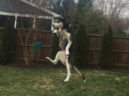




Arlington Pet of the Week: Chase the Husky Mix
by ARLnow.com
This week’s Arlington Pet of the Week is Chase, who’s part Husky and entirely lovable.
Chase was rescued from doggy death row in Kentucky and is now a true Arlingtonian. He even takes a weekly agility class and frequents the local farmers market.
Here’s what Val, Chase’s owner, had to say about him.
Chase (aka. Chaser, Piggly Wiggly, Big Baby) is a 2-year-old Husky-mix that was scheduled to be euthanized in a Kentucky shelter. Wolf Spirit Sled Dog rescue got him out of there and transported him to southern VA where his new parents met him and immediately fell in love. This was about 9 months ago and he’s still breaking hearts where ever he goes.
Everyone who meets him has to admit, he’s quite the character. He loves vocalizing his thoughts to others and if you don’t understand him, well he’ll just keep trying. I wish ARLnow allowed audio clips because the dog who says, “mama” got nothing on him.
Chase can be found going on long, neighborhood runs with his parents (he keeps us in shape), hanging out at the Westover Farmer’s Market (by the Three Puppies Treats stand of course), and romping around at Benjamin Banneker Dog Park.
He loves going to his weekly Agility class at Woofs where he’s an exemplary student… except when he gets impatient and throws a husky tantrum because he has to wait his turn. His favorite things are riding in the truck, frolicking with his BFF Ripley (pictured), harassing the neighborhood kids with sloppy dog kisses, playing frisbee and tug-of-war (occasionally at the same time), and waking his parents up for morning cuddles.
Want your pet to be considered for the Arlington Pet of the Week? Email arlingtonnews@gmail.com with a 2-3 paragraph bio and at least 3-4 horizontally-oriented photos of your pet. Please don’t send vertical photos, they don’t fit in our photo galleries!
Each week’s winner receives a sample of dog or cat treats from our sponsor, Becky’s Pet Care, along with $100 in Becky’s Bucks. Becky’s Pet Care is the winner six consecutive Angie’s List Super Service Awards, the National Association of Professional Pet Sitters’ 2013 Business of the Year and a proud supporter of the Arlington County Pawsitively Prepared Campaign.
Becky’s Pet Care provides professional dog walking and pet sitting in Arlington and all of Northern Virginia, as well as PetPrep training courses for Pet Care, CPR and emergency preparedness.
13 Apr 15:15


A Natural History Of Walter Rothschild
by Jacob Mikanowski
V.w.verweijSixty five cassowaries.

Photo: Flickr
Some men shoot tigers. Some men love bears. Walter Rothschild, 2nd Baron Rothschild, Major in the Yeomanry, Conservative MP for Aylesbury in Buckinghamshire, heir to one of the greatest banking fortunes in history, and collector of the largest zoological collection ever amassed in private hands, had a specific and incurable addiction to cassowaries. He bred them. He stuffed them. He gathered living representatives of every known species and sub-species at his parents’ manor house in Hertfordshire. Bewitched by their beautiful and highly variable neck wattles, he identified new species where there were none. He wrote a book, A Monograph of the Genus Casuarius, about them and made excuses for them, and he could never get enough. When his fortune ebbed and he had to face the prospect of giving up his bird collection, he wrote to all his collectors that no matter what restrictions his father put on his spending, they should keep stockpiling cassowaries. Across Europe, India and Australia, these stocks of birds became a kind of living escrow account, pecking and kicking, waiting for a change in Walter’s credit. When financial disaster struck, Walter had to sell off the collection of 300,000 birds he had spent a lifetime assembling, but he kept sixty-five cassowaries. By the time he died, in 1937, at the age of sixty-nine, he’d had each of the magnificent birds expertly taxidermied and displayed and in his private museum on the grounds of his family estate. But why did Rothschild prefer them above all other species?

Photo: A Monograph of the Genus Casuarius. London: 1900.

The cassowary (Casuarius casuarius) is a large, flightless bird that lives in the tropical rainforests of Northern Australia and in the jungles of New Guinea. It is the third-tallest and second-heaviest bird in the world, and its closest living relative is the emu. Other large, flightless birds in its class, like Australia’s “thunder bird” and the “elephant bird” of Madagascar, went extinct shortly after the arrival of humans in their habitats. The cassowary, however, has survived for at least fifty thousand years, since Australia and New Guinea were joined into a single continent called Sahul, through a mixture of stealth and aggression. Though the total population of cassowaries is estimated to be around ten to twenty thousand in Australia and New Guinea, the animals are rarely seen; they manage to avoid hunters and naturalists alike. After thirteen years working in the remotest parts of New Guinea, the mammologist Tim Flannery despaired in 2002 of ever seeing one in the wild: “I have found a footprint so fresh that water was still oozing into it, droppings still steaming and everywhere older signs of cassowaries. Yet so wary are these great birds that to this very day they have remained as invisible to me as ghosts.” In spite of their retiring nature, cassowaries can be dangerous if provoked. They are very fast, capable of running at thirty miles per hour through dense undergrowth on their strong, thick legs. Should you ever meet a cassowary, be sure to look at his feet, paying special attention to the inner toe, a five-inch long claw. This blade is why their kicks can be lethal. In 1926, a cassowary killed a young boy in Australia, severing his jugular vein.

Photo: A Monograph of the Genus Casuarius. London: 1900.
The elusiveness and violence of these birds has made them the object of many legends in native New Guinea populations. The Kwoma believe that the human race emerged from the feathers of the first cassowary. To the Kalam, Fore, Wiru and Baktaman, the cassowary is not a bird or a lizard or a mammal, but its own category of animal (birds are yakt; cassowaries are kobity). The Mianmin believe that all cassowaries are female, and that at night, they take off their feather skirts and turn back into women. The Kundagai are struck by the cassowary’s timidity and stupidity on one hand, and with its courage, stamina, and savagery on the other. When the Australians put an end to war in New Guinea’s Southern Highlands in the 1950s, the Mendi responded by turning to the competitive capture and exchange of cassowaries. When wars were still being fought among the villages along the Sepik River, the best way to finish off an enemy on the battlefield was always with a dagger made from a cassowary’s sharpened thigh bone.
Walter was certainly aware of the cassowary’s violent tendencies. One day in the late 1880s, as his father Nathan (“Natty,” 1st Baron Rothschild) was making his way on horseback across the family’s grounds at Tring Park, one of Walter’s cassowaries chased him, and, missing its target, aimed several “dangerous, slicing, sideways kicks at his horse.” Walter forgave the bird its murderous attempt, but he was required from that moment on to keep all his cassowaries confined in a paddock. But by then, animal mishaps were nothing new at Tring. Walter’s giant lizards escaped from their greenhouse and ate all the arum lily shoots. His tame wolf picked fights with village dogs at the pub. In 1894, he drove a trap pulled by zebras up to the gate of Buckingham Palace, and watched on in terror as Princess Alexandra tried to pet one.

Photo: Flickr

From birth, Walter had been a golden child. He was his the eldest son, and would inherit the great fortune built by the English branch of the Rothschild dynasty. To his nurses, he must have looked like the infant Jesus. In a portrait of him at age ten by John Everett Millais, he looks like Little Lord Fauntleroy, resplendent in a black sailor suit with red trim, tall socks, leather buckle shoes, and an enormous red sash tied at the waist. He was painfully shy, and suffered from a debilitating stutter. And though he was frail as a child, Walter grew into a strange and enormous man, standing six-foot-three and just over three hundred pounds, with a habit of drowsing in his hammock in the nude. Rather like the cassowary, he was prone to long periods of silence punctuated by sudden eruptions of temper. And like many men with histories of complicated romantic escapades, he lived in mortal fear of upsetting his mother.
Walter’s interest in animals manifested early. By the time he was five, he could spot the difference between rare species of butterflies. At twenty years old, Walter’s love of animals had become a full-blown obsession. His menagerie at Tring included zebras, wild horses, wild asses, emus, rheas, several kinds of kangaroo, cranes, a marabou stork, a dingo and her pups, pangolins, a capybara, and a spiny anteater. He successfully bred zebras with ponies. He collected albinos of various species. When it was time to leave home for college, he arrived at Cambridge trailed by a flock of kiwis; he couldn’t bear to leave them behind at Tring. At twenty-one, Walter was put to work in the family business, but he showed no aptitude for finance. He hated his work. It’s unclear whether he had any real responsibilities. Still, he sat at a desk for nineteen years. By way of compensation, his father let him have a museum. The Tring Museum (although he always referred to it as ‘my museum’) quickly became one of the greatest natural history collections in the world, and a leading center of zoological research. Walter had collectors spread across the globe, scouring the earth for rare or unknown specimens; he employed four hundred such agents at one time.

Photo: A Monograph of the Genus Casuarius. London: 1900.
Collecting for Walter was demanding and, often, dangerous work. One collector died from dysentery, one from typhoid, and another from an unknown fever. He lost three men in the Galapagos. On one expedition, the ornithologist E. C. Stuart Baker had his arm bitten off by a panther. Walter paid little notice and gave meticulous instructions about which species he wished to acquire and in what manner they should be preserved. When one of his favorite collectors, C. M. Harris, arrived in San Francisco after a harrowing voyage to the Galapagos Islands, he was eager to head east and return to London. Walter ordered him to stay put and take care of the many live tortoises in his custody until they were well enough to make the journey to England. So, Harris rented a heated greenhouse and experimented with different diets for the turtles “until he found that they were not averse to bananas and liked squash.”
Giant tortoises were another of the great passions in Walter’s life. From 1900 to 1908, he rented an atoll in the Seychelles called Aldabra, in hopes of keeping this marvelous tortoise habitat safe. He wrote that he wanted to “save them for science”; he loved the prehistoric-looking giants, and tried to bring as many of them back to Tring alive as he could. Sometimes, he would get on their backs and ride them. He did his best to figure out the mysteries of their evolution and taxonomy. The prize of his collection was a great Galapagos Tortoise named Rotumah. When Walter acquired him, Rotumah was reputed to be the largest tortoise in the world, and was thought to be 150 years old. He had lived for many years on the grounds of a lunatic asylum in the suburbs of Sydney, where he had arrived as a chief’s gift from the King of Tonga to a well-known trader named Alexander MacDonald. “A most erotic and savage individual,” Rotumah arrived deeply chilled by his voyage to England by steamer and near death. He made a swift recovery, only to die two years later of “sexual over-excitation.” The tortoise was an erotomaniac, but his mate had been left behind in Sydney.
Walter had his own problems with sex. For years he kept two mistresses. One was named Marie Fredensen; the other, Lizzie Ritchie. He met them both at a party for King Edward VII. Marie was a would-be stage girl; Walter’s biographer wrote she was “As pretty as an Edwardian birthday greeting card, sweet, pert, cuddly, kittenish, simple, dependent, wheedling, adoring and light as a feather.” Lizzie was intelligent, worldly, temperamental, vindictive, a “bit crazy” and a great listener. Walter installed each of them in separate London apartments. Neither woman knew about his relationship with the other, nor did anyone in his circle; he never once spent a night under either of their roofs. Eventually though, Lizzie found out about Marie and flew into a rage. She bought a house next to his museum in Tring and tried, repeatedly, to confront his mother. Marie was equally distraught. The stress of his various entanglements became too much, and Walter decided he could no longer stand to read his mail. Instead, he placed his unread correspondence in two large wicker baskets, one reserved for the blackmailer and the other for the mistresses and other matters. When each basket was full, he locked it. For two years, the baskets piled up until they filled a whole room. When his younger brother Charles found out about the ruse in 1908, it took him and four clerks working day and night six weeks to sort out the mess. On Walter’s behalf, Charles worked out a settlement with both women. Walter agreed to buy each of them a house and gave them a 10,000 pound per year allowance. Each woman separately forced him to agree to never see the other one again. Finally free from his burden, Walter went on a collecting expedition to the Sahara, which he kicked off with a tremendous party in Algiers. In the desert, he survived a terrible sandstorm and captured a beautifully colored spine-tailed lizard and a fine specimen of a rare butterfly named Euchloë pechi.
Like Walter, Charles was a naturalist, though less single-minded in his pursuit. His main interests were irises and fleas. He gathered more than ten thousand specimens of fleas, and his greatest triumph was identifying which species of flea carried the plague. His own daughter, Miriam, followed in his footsteps, and spent most of her life working out the taxonomy of the fleas in her father’s collection. Taxonomizing fleas was tricky business; it required patient work with a microscope and careful attention to tiny genitalia. Miriam’s catalogue of her father’s collection runs to seven volumes. It is a work of interminable dullness, until she gets to the matter of “the amazing array of secondary devices and structures in the male.” Miriam said that she first believed in God when she “discovered that the flea had a penis.”
Even though Miriam was an enthusiastic entomologist, Walter rarely acknowledged her. He was awkward around his younger relatives. One of the few things she remembered him saying about her was a remark to his mother: “Mama, isn’t it strange that Miriam is completely square?” Still, she eventually became his biographer, and he left her “one of the most original and delightful bequests of all time,” which included 140 mother-of-pearl handled fish knives (the forks were all missing), 600 copies of old sporting prints, two live long-beaked echidnas, 500 parakeets, a Pyrenean Mountain dog, and several tortoises in the custody of the London Zoo. Reflecting on what studying the natural world had taught her, Miriam wrote: “As a species, we are less successful than rats and not as well adapted as the cockroach. We can, however, change our mind.”

Marie and Lizzie put a strain on Walter’s finances, but the true reason he eventually had to give up his collection only became apparent after his death. Walter destroyed the baskets full of his unread correspondence, but for some reason, he left one of them behind. It revealed that, through all the years he was with Lizzie and Marie, another of his former mistresses was blackmailing him. The ruse went on for some forty years and must have involved enormous sums, both in direct payouts and losses from disastrous speculation on the stock market, made at the blackmailer’s request. Only Walter’s sister-in-law and her daughter Miriam ever learned the truth. In her biography of her uncle, Miriam refuses to say who reveal the blackmailer’s identity, except to say that she was “charming, witty, aristocratic and ruthless.” She was also married. At some point, Walter met her sons, who had befriended his nieces. Otherwise, he never mentioned the matter, not even to his brother Charles.
Walter’s last years were marked by tragedy. Charles shot himself in a Swiss hotel at the age of forty-six. The mysterious blackmailing went on for forty years, eventually forcing Walter to sell off his collection of birds to the American Museum of Natural History in New York in 1931. When Lizzie heard of the sale, she asked for a slice of the money, but added that she would be saving up, “To help you buy back the birds.” He grew ill, and stopped spending as much time in the museum; within a few years, he was dead. For his tombstone, he chose a passage from the book of Job: “Ask of the beasts and they will tell thee and the birds of the air shall declare unto thee.” Along with his curators, Walter described five thousand new species (even if a few didn’t stick in the end). He proposed no grand system; he simply wanted to possess the world in all its endless variety. Blessed with boundless resources, he was able to amass a good deal of it. But he was trapped by his personality, and many of his designs came to ruin. Better to remember him as he was in his prime: astride a tortoise, followed by birds.
Serafin.shane likes this
12 Apr 16:35


WEATHER SUBDUED
by Silvia Killingsworth
We’ll stop shouting, but we’ll still be speaking in Courier New. One step at a time.
— NWS (@NWS) April 12, 2016
—THE NATIONAL WEATHER SERVICE, WHICH IS PART OF THE NATIONAL OCEANIC AND ATMOSPHERIC ADMINISTRATION (ALSO KNOWN AS NOAA), WHICH IS IN TURN PART OF THE U.S. DEPARTMENT OF COMMERCE, HAS JUST ANNOUNCED THAT THEY WILL STOP USING ALL CAPS IN ITS FORECASTS. THIS WAS A CHARMING HOLDOVER FROM THE DAYS OF TELETYPE, AN ELECTROMECHANICAL TYPEWRITER THAT PEOPLE USED IN THE OLDEN DAYS, BUT WHICH TOOK NOAA 20 YEARS TO PHASE OUT. WEATHER REPORTS WILL NOW COME IN MIXED CASE, WHICH IS A SHAME BECAUSE IT WAS NICE THAT FOR A WHILE THERE EVEN OUR GOVERNMENT WAS SORT OF YELLING AT US ABOUT THE WEATHER. WILL FUTURE WEATHER EVENTS BE AS DRAMATIC AND SHOCKING? YOU BET YOUR ASS.
12 Apr 16:34
(or is it just the beginning?)


After The Aguacalypse
by Alex Balk
They gathered in the shade of the empty building below the double amber curves. It had been a long, hard hunt and they were tired, but resting there, protected from the heat that blazed outside, they felt better. As the younger children skinned the pelts from the giant rodents the group had captured, some of the Middle Years gathered around the Teaching Elder as she told them the legends of The Ones Who Came Before.
“They could touch the sky. They had dominion over the waters. When they hungered they would rub their fingers over a magic machine that they held in their hands and soon a meal would be brought to them.”
The youngsters sighed contentedly, dreaming of even a small part of such bounty.
“When the sun scorched the land they turned a circle on their walls and their dwellings became cool. They feared no animal and made no sacrifice so that the giant metal monsters would not come in the night and take their children. In those times the giant metal monsters did as they were bid.”
“But Teaching Elder,” interrupted one. It was D’Nim, the boldest and brashest of the Middle Years. He was always the first to climb on a giant roach’s back and wrestle it into submission if there were no other meat to be found. If he survived, he would one day be chief. “If The Ones Who Came Before had all these things, worked all this magic, what happened? Why are we not like them? Why must we live the way we live now?”
“Oh, D’Nim,” said the Teaching Elder, shaking her head. “It is a lesson for all of us. They had everything and yet that abundance is what destroyed them. They choked their rivers with poisons. The blackened their skies oil. But most of all, they grew soft and contented and their decadence lead to the Great Reckoning.”
“But how?” D’Nim persisted. “You always tell us of the Great Reckoning, but what brought it about? What made them so weak that the Bad Things were able to take control?”
The Teaching Elder sighed. She knew he could no longer shield them from the horrors of the past. She sat on the long raised altar, under the pictures of breaded chicken parts and sandwiched cow patties, and reveled the terrible truth of how it all fell apart for The Ones Who Came Before.
“No society can survive, nor does it deserve to,” she began, “when it reaches the level where its members labor on lists of where to get heated bread with avocado smeared on it.”
THE END(or is it just the beginning?)