Plants and herbivores are engaged in an evolutionary arms race hundreds of millions of years in the making. As plants evolve mechanisms to avoid being eaten, herbivores evolve means of overcoming those defenses. Our understanding of these dynamics is vast but largely focused on the actual act of an organism consuming plant tissues. However, there is growing evidence that plants can take action against herbivores before they are even born.
Taking out herbivores before they even have a chance to munch on a plant seems like a pretty effective means of defense. Indeed, for a growing number of plant species, this starts with the ability to detect insect eggs deposited on or in leaves and stems. As Griese and colleagues put it in their 2020 paper, “Every insect egg being detected and killed, is one less herbivorous larva or adult insect feeding on the plant in the near future.” Amazingly, such early detection and destruction has been found in a variety of plant lineages from conifers to monocots and eudicots.
Gumosis in cherries is a form of defense. Photo by Rosser1954/Public Domain
There are a few different ways plants go about destroying the eggs of herbivores. For instance, upon detecting eggs on their leaves, some mustards will begin to produce volatile compounds that attract parasitoid wasps that lay their eggs on or in the herbivore’s eggs. For other plants, killing herbivore eggs involves the production of special egg-killing compounds. Research on cherry trees (Prunus spp.) has shown that as cicadas push their ovipositor into a twig, the damage induces the production of a sticky gum that floods the egg chamber and prevents the eggs from hatching. Similarly, resin ducts full of insect-killing compounds within the rinds of mangoes will rupture when female flies insert their ovipositor, killing any eggs that are deposited within.
One of the coolest and, dare I say, most badass ways of taking out herbivore eggs can be seen in a variety of plants including mustards, beans, potatoes, and even relatives of the milkweeds and involves a bit of sacrifice on the plant end of things. Upon detecting moth or butterfly eggs, leaf cells situated directly beneath the eggs initiate a defense mechanism called the “hypersensitive response.” Though normally induced by pathogenic microbes, the hypersensitive response appears to work quite well at killing off any eggs that are laid.
“Leaves from B. nigra treated with egg wash of different butterfly species and controls inducing or not a HR-like necrosis. Pieris brassicae (P. b.), P. mannii, (P. m.), P. napi (P. n.), and P. rapae (P. r.) and Anthocharis cardamines (A. c.) induce a strong HR-like necrosis. Egg wash of G. rhamni (G. r.) and Colias sp. (C. sp.) induces a very faint response resembling a chlorosis and does not fit into the established scoring system (faintness indicates 1, but showing up on both sides of the leaf indicates 2).” [SOURCE]
Once eggs are detected, a signalling pathway within the leaf ramps up the production of highly reactive molecules called reactive oxygen species. These compounds effectively kill all of the cells upon which the butterfly eggs sit. The death of those plant cells is thought to change the microclimate directly around the eggs, causing them to either dry up or fall off. These forms of plant defense don’t stop once the eggs have been killed either. There is evidence to suggest that the hypersensitive response to insect eggs also induces these plants to begin producing even more anti-feeding compounds, thus protecting the plants from any herbivores that result from any eggs that weren’t killed.
Plants may be sessile but they are certainly not helpless. Defense mechanisms like these just go to show you how good plants can be at protecting themselves. Certainly, the closer we look at interactions like these, the more we will discover about the amazing world of plant defenses.
There has been an uptick in conversations about plant-fungal interactions recently. News of trees communicating via a vast subterranean network of fungal threads has everyone looking at forests like one big commune. Though it feels nice to think of these relationships as altruistic, such simplified takes on the subject overlook the fact that plants and the mycorrhizal fungi they partner with have entered into a mutual exchange, allowing each player to gain from the interaction.
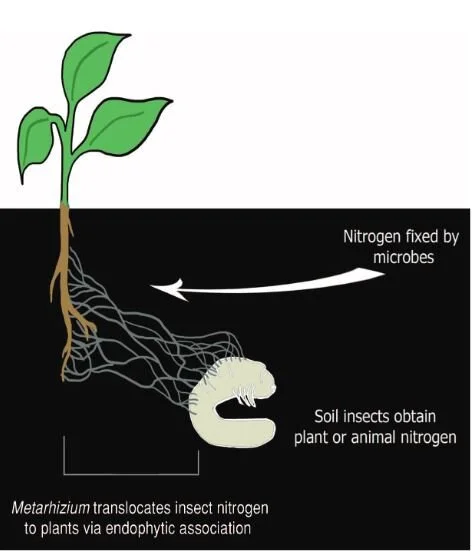
The reciprocity of these relationships are exquisitely illustrated in the partnering of fungi in the genus Metarhizium and their botanical hosts. Metarhizium are predominantly insect pathogens, invading the bodies of soil-dwelling insects, killing them, and absorbing nutrients like nitrogen that are locked up within their tissues. Though extremely good at obtaining compounds like nitrogen from insects, these fungi can not readily access the carbon they need to survive. That is where plants come in.
Plants are experts at producing carbon-based compounds. Via photosynthesis, they break apart CO2 molecules and turn them into carbon-rich sugars for food. However, they need nitrogen to do this. Unfortunately for plants, most of the nitrogen on our planet is locked up in forms they can’t readily access. It is likely that plants’ relative inefficiency at obtaining the nitrogen they need to survive is a major driving force for the partnering between plants and soil-dwelling fungi.
A beetle grub infected by a Metarhizium fungus. Photo by CSIRO (CC BY 3.0)
Over the last few years, scientists studying the relationship between Metarhizium and plants have discovered that a fascinating and ecologically important exchange has evolved among these organisms. When plants are presented with adequate nitrogen, many species will end up over-producing carbohydrates. Their fungal partners are the ones to benefit from this as those excess carbohydrates are fed to the fungi living on or in the plants’ roots. Indeed, via some complex experiments using isotopes of carbon and nitrogen, scientists were able to demonstrate that killing and eating insects isn’t the only way Metarhizium fungi make a living.
In addition to eating insects, Metarhizium also form mycorrhizal relationships with the roots of numerous plant species from grasses to beans. In doing so, they are able to obtain carbohydrates. However, the plants aren’t giving their photosynthates away for free. In exchange, the fungi are providing them with ample nitrogen that was obtained by infecting and digesting their insect prey. By tracing the path of carbon and nitrogen isotopes between fungi and plants, scientists found that the fungi were supplying the plants directly with insect-derived nitrogen.
This may not sound terribly surprising. After all, this is more or less how most mycorrhizal interactions work. However, the fact that an insect-killing fungus is transferring nitrogen from insect to plant directly, rather than from already decomposed materials in the soil reveals a rather novel pathway in the nitrogen cycle of our planet. Metarhizium is an extremely common and widespread genus of fungi and it is likely that these relationships are not unique to the plants used in these studies. The wide-spread nature of these relationships means that this way of cycling nitrogen and carbon through an ecosystem is also extremely common and wide spread.
It is important to remember that relationships like these are a benefit to plants and fungi alike (sorry insects). Both parties stand to gain from the mutualism. It isn’t that plants are plugging into this system and using it to help each other out. To me, it makes far more sense that fungi like Metarhizium benefit from keeping as many healthy plants in their network as possible. We can’t forget that like plants, fungi are organisms fighting to survive long enough to get their genes into the next generation. Mutualisms are not altruisms. They are mutual exchanges that benefit both parties.
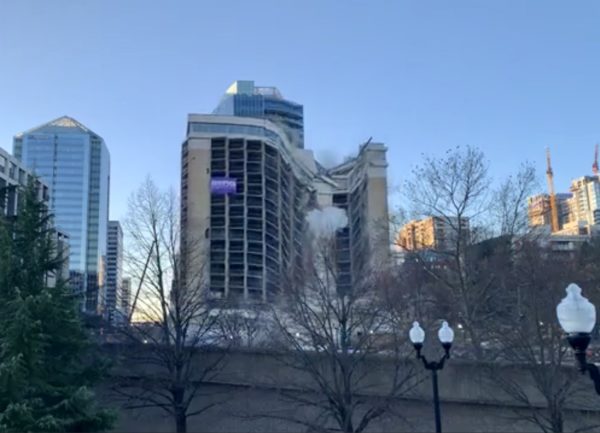
The implosion, which was scheduled for 8 a.m., brought down the 50-year-old hotel tower and could be heard for miles around. A large dust cloud covered much of the area afterward.
The demolition, which will make way for a new development featuring a 25-story residential tower an a 38-story hotel tower, can be seen around the 8:30 mark of the live-streamed video below.
Here are two other views of the implosion, courtesy of Brian Danza.
We are asking for your help in finding out if someone might have seen who took down and trashed/got rid of my decorations from the White Bicycle Fence- Art Installation at our park on Rhode Island and 1st Street NW, sometime early last week or the previous week.
To my surprise one day driving home - I noticed that all the decorations - many colorful whirlies, other hanging banners, some nice pink umbrellas that were lady bugs, small American flags were All Gone from the park and nowhere in sight.
Only thing that was left was the big Banner and 2 smaller ones on the ground that say "Thank You to Healthcare & First Responders" that we ordered and placed there at beginning of May, as we needed to honor these heroes and still do for all their work saving lives.
As you know there are no lights in the park - so it could have been done at night.
Please realize that Alberto & I have for 12 years- been paying with money from our pockets - for the maintenance, hauling of debris from the trimming of trees, mulching, buying new greenery, and flowers occasionally, various nice colorful decorations and banners you see and enjoy year-round and at major Holidays! We do it to bring smiles and happiness to people.
We have never asked for donations or been offered any! Neither asked for help decorating the park, as for us it is an artistic endeavor to enhance our now trendy Bloomingdale neighborhood.
Over the years as you can imagine this has added to thousands of dollars and having a location to store them. We are still glad to do that.
So, for those 12 years - about 3 times a year I retrim the trees up, and every month I still weed around the bicycle area and mulch, clean the park and take out & replace the dead plants, and haul the debris to the City Dump.
Worst partis that if someone in our neighborhood had an issue with the decor - there are 2 plaques that have my name and phone number - that someone could have had the courtesy of calling us and letting us know. Plus, several of you know exactly which artsy home is ours.
As we normally post a Holiday Greeting to our neighbors from the decorated White Bicycle Fence Park several times a year in Scott's Bloomies Neighborhood you are familiar with the various decor and us.
Worth Noting - that in the 12 years the White Bicycle Fence has been up and decorated numerous times, Nothing has been Stolen, Taken, Destroyed or Damaged Before- as well as at our decorated home! So, we are very grateful for that part and the care & vigilance that some neighbors have had on the park and our home
But it is disappointing & upsetting especially in these heartbreaking times of Coronavirus pandemic and political and social unrest - for this calculated theft and destruction of those decorations to occur.
If you have observed the attachment of said decorations to the bicycles (that are well anchored on the ground also with rebar deep in the ground) and the rebars behind the bicycles - you know I firmly zip tie them, so they don't blow away or are taken.
So, someone came with a pair of scissors or knife and cleanly cut them all - to our surprise - there were no zip ties debris or left-over parts of the decorations on the ground around the bicycles.
When we went and check the garden area and surroundings and could not find any decorations left anywhere - we also noticed that 8 tall rebar had been unearthed/pulled out and placed on the Rhode Island curb off the Cleaners. Hard to do as I really bury them in the ground, so they are safe. I use the rebars to hang the seasonal banners that make our neighborhood and park welcoming.
We went to cleaners and asked if they had seen anyone take the decor down and they said they not seen anything or no one. We made several calls to neighbors we know on our street and none knew who did it or when - they just assumed I was about to decorate bicycles for Holidays.
Myself, my partner Alberto, and the neighborhood have been complemented over the years that I have been doing this for how wonderful, welcoming, whimsical, and nice it is to have this decorated park in our neighborhood entrance and to all our restaurants on Rhode Island Ave and 1st Street .
As our focus was to honor the Healthcare workers -and because in June I started having mega problems with my right knee and ended up having a knee replacement surgery in July and a lengthy recovery; we decided not to change the decor for the Fourth of July or Thanksgiving. So, my plan was to change it (Leaving the still great looking Thank you banners) for this upcoming Holiday Season, now that I feel better. But go figure everything had been taken down.
*And to make matters a little worse - we just saw that someone had taken it upon themselves to do a little decorating of their own for Xmas on the bicycles.
As we have already spent money on this year's Xmas/Holiday decorations, we would like to ask kindly that whoever added that decor to please take it down this week - as we do not want to be rude and take it down and dispose of it- as it was done to us. Maybe use that decor of theirs at the park across from Bear Cafe off 1st Street. I will start decorating it by Thursday or Weekend.
Let me state some facts:
When I first moved to Bloomingdale 12 years ago to our home on T Street, as I am a landscape designer and sculptor/artist, I liked the park and saw its potential.
I originally asked the businesses around then, if I could fix the park and create something fun for everyone and they were all delighted
Park was in disarray, with tree branches way too low, minor bushes and ragweed and unkept grounds. Now all the city does is mow the lawn there.
So, I trimmed the trees up so it would be safe to walk at night across the park for our neighbors, planted drought tolerant year-round greenery and seasonal flowers.
I created then 2 garden areas - smaller one across from the restaurant so they would have a nice view, and at top of hill in front of cleaners what now is the Bicycle Fence.
When Dijton owned the first restaurant that was at the other side/across at corner of the park, he allowed us to use his long watering hose to water the 2 garden areas.
As there is no water connection in the park and now neither the cleaners or the new restaurant owners wanted to allow us to use their water sources, as they were worried that their water bill would go up. We figure creative ways to water the plants that need it.
It was and still is important to water when there are long drought periods in DC.
As when I lived in Manassas, VA for over 25 years - I was known as the "Bicycle Fence Man", as my home there had on a popular and busy street - about 30 bicycles that I recycled to bring the whimsy to that neighborhood.
I also decorated them all for the major Holidays and ended up becoming a popular destination for local neighbors, families, school buses and visitors to take their photos with the bicyles - as it Happens at our Bloomies Park Now.
So, when I sold the house and moved to DC, I took some back home to Ohio, donated some of those bicycles to a couple of friends who created their own White Bicycle Fences and I brought to DC the 6 that are at the Park.
I even hauled mega sized rocks you see now around the Bicycle area, as to deter dogs from going into the garden area to relieve themselves- as owners allow them. Said plainly, dog piss kills any plants there.
The smaller garden across the park, I had to take out - as owners who would be walking their dogs in the park - despite the rocks and signs of "Do Not Let Dogs Relieve Themselves in Gardens Areas" , still would allow them to go into the garden, so it became too expensive and frustrating to keep reworking that garden.
Any information on who might have taken and destroyed our park decorations please feel free to email me tomnoll55@gmail.com.
Much appreciated and wishing everyone remain safe, healthy and Happy Holidays.
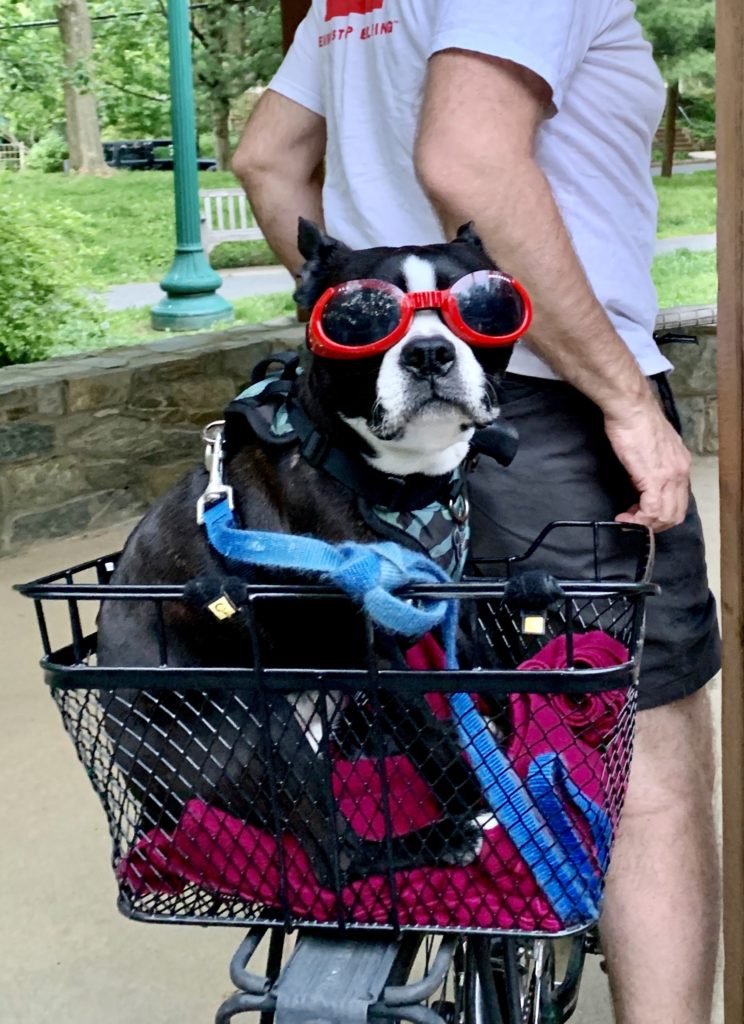
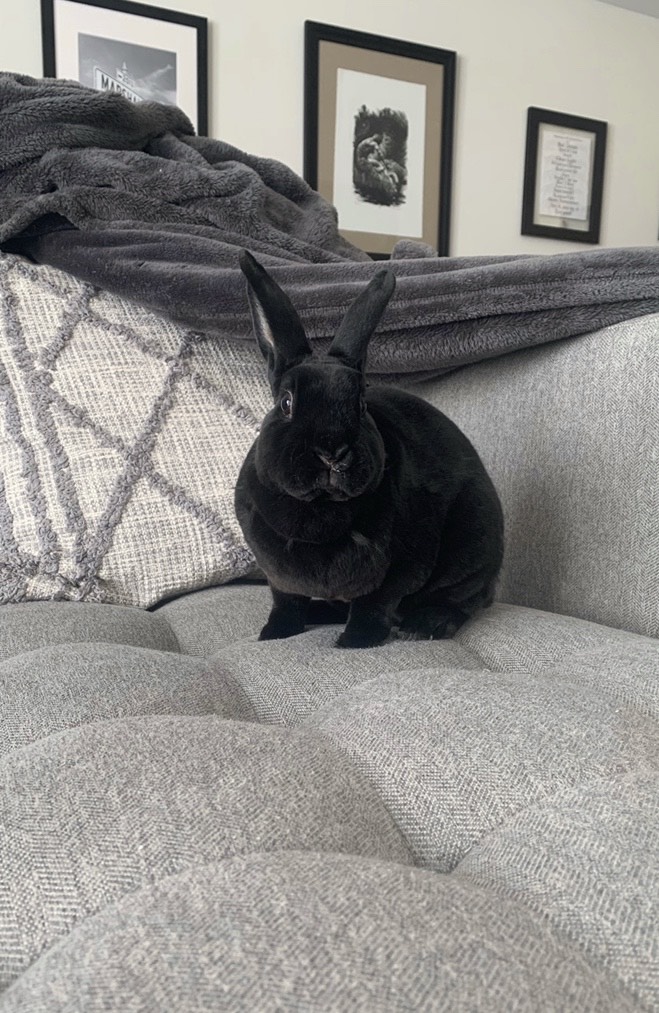
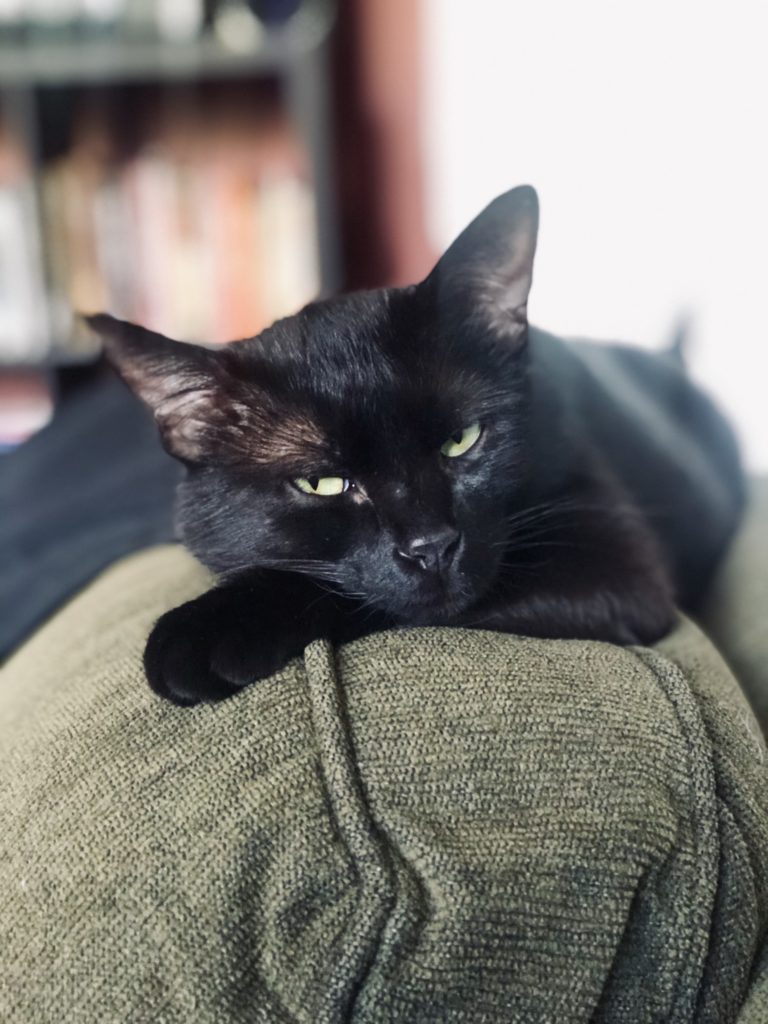
If you have any animal/pet photos you’d like to share please send an email to princeofpetworth(at)gmail(dot)com with ‘Animal Fix’ in the title and say the name of your pet and your neighborhood. If you love the animal fix and want to ensure PoPville’s long term viability please consider donating to our Patreonhere.
“Phoebe is only two months old and is one of NoMa’s newest residents!”
“our mini poodle, Benson. We live between Downtown and Mt. Vernon Square.”
If you have any animal/pet photos you’d like to share please send an email to princeofpetworth(at)gmail(dot)com with ‘Animal Fix’ in the title and say the name of your pet and your neighborhood. If you love the animal fix and want to ensure PoPville’s long term viability please consider donating to our Patreonhere.
“This is Irma – a new resident of Mount Pleasant! She’s an 8-week old yellow lab pup being raised for Guiding Eyes for the Blind. She’ll live in Mount Pleasant for about a year and get basic skills training and socialization, and then go on to formal guide dog training in NY. Folks in the neighborhood may spot her out and about in stores and restaurants in Mount Pleasant – if she’s wearing her blue bandana, she’s actively working! (you can follow her journey on Instagram @irmatheguidepup)”
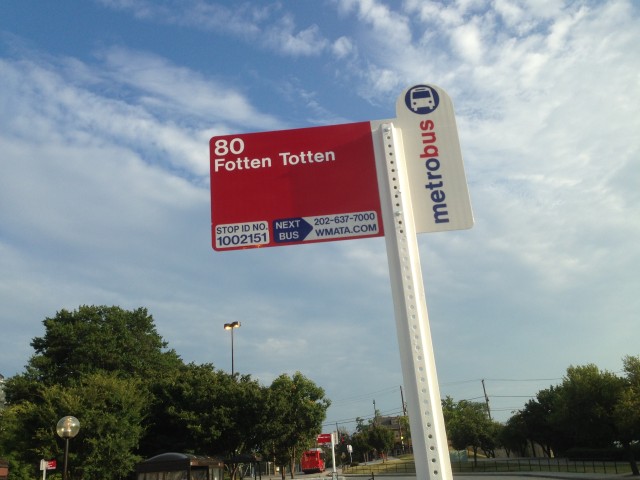
“What’s in a name? When it comes to Metro stations, a lot. Station names are important to riders finding their way on the system, and they foster a “sense of place,” often serving as the primary landmark and name for surrounding neighborhoods. However, if a Metro station name is no longer serving its intended purpose, a city or county can ask Metro to consider changing it.
Metro has received two formal requests–one from Fairfax County and one from Prince George’s County–to change the name of a Metro station within their jurisdiction.
Under Metro’s policy, these requests will be considered by the Metro Board of Directors, which can approve or decline the request. The Board wants to know what riders think as part of this process and is welcoming feedback from anyone in the region through a quick online survey at wmata.com/survey.
Fairfax County is requesting that Tysons Corner Station be changed to “Tysons Station,” dropping the word “Corner” from use on system maps, digital signs, the wmata.com website, SmarTrip app, in-system directional signage, and other materials.
Meanwhile, Prince George’s County officials have asked the Metro Board to approve changing the name of Prince George’s Plaza Station to “Hyattsville Crossing.” (The name of the adjacent “West Hyattsville Station” would not change.)
To share your opinion on these proposed changes, Metro has set up a public survey on wmata.com/survey. Responses will be accepted through Monday, November 2, 2020, at 5 p.m.”
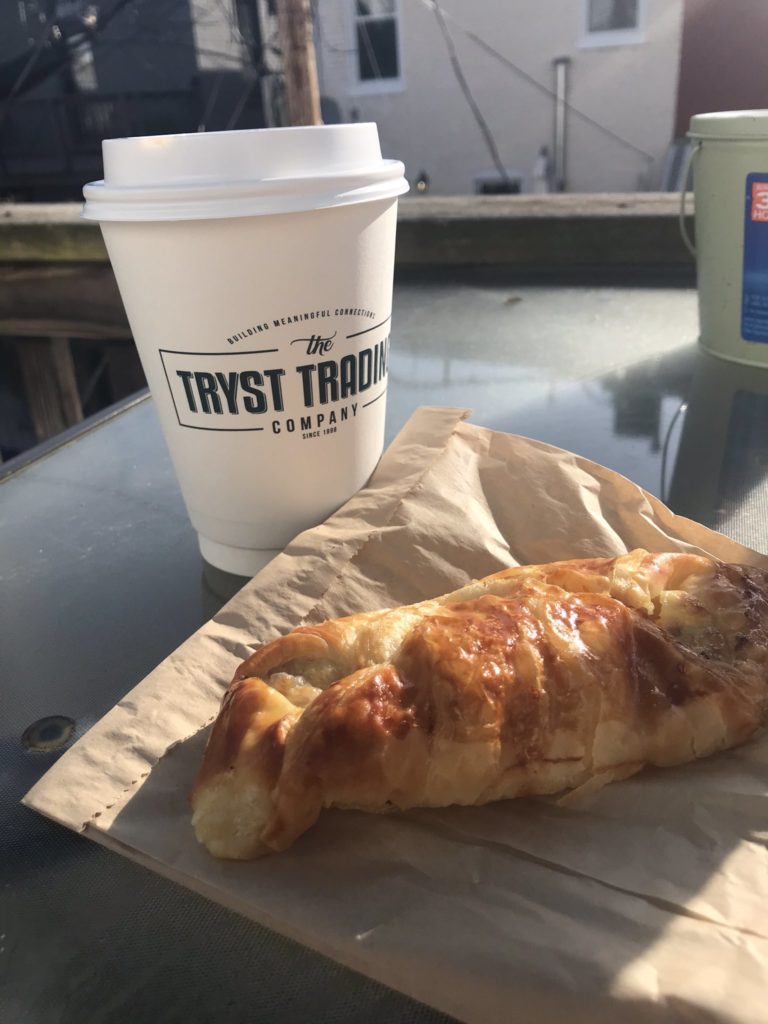
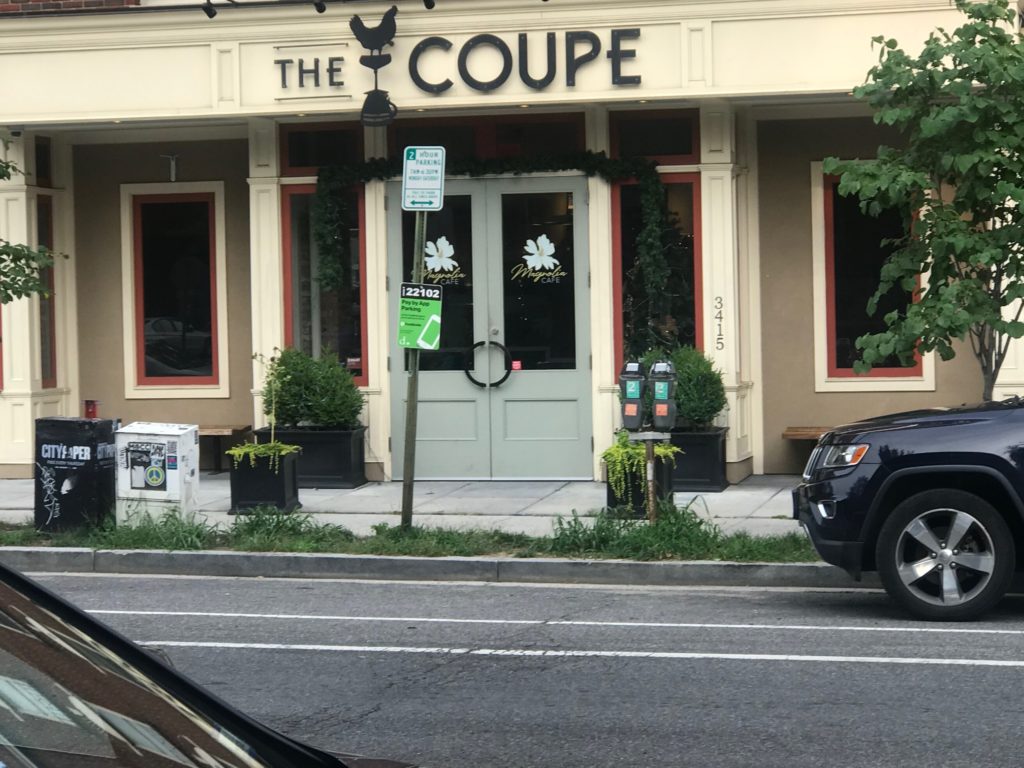
Thanks to Kelli for sending: “The Coupe is baaaaaack! Their mocha has never tasted so good. i got carryout, but there’s tons of spaced out seating if folks want to dine-in!”
From The Coupe:
3415 11th Street, NW
“The Coupe, a favorite Columbia Heights restaurant and gathering place by The Tryst Trading Company, has reopened its doors today. The Coupe now offers dine-in, outdoor seating, carryout, and delivery. With increased disinfecting measures in place and limited seating, The Coupe is coming back stronger, and tastier, than ever. Favorite menu items such as The Coupe Special, Mushroom Reuben, Siracha Wings, and The Coupe Fries are all making a comeback with more on the way. Guests can access the initial menu items from The Coupe’s website, www.thecoupedc.com.
As part of a phased reopening, The Coupe will initially be open daily from 8am to 3pm with more exciting announcements in the near future. As The Coupe continues to add to its hours of operation and menu, the emphasis will always be to provide a safe and welcoming environment for staff and guests.
“A few months ago, we reopened three of our restaurants–Tryst, The Diner, and Open City–with the intent to reopen more of our restaurants once ready,” stated Owner, Constantine Stavropoulos. “We couldn’t wait to reopen The Coupe and welcome our customers back to their “third place” – a spot between work and home. It’s the perfect atmosphere to spread out and dine comfortably, work remote, or simply enjoy being in the (safely distanced) company of friends and neighbors. We want to provide as much normalcy as possible for our community while having the proper protocols in place,” he continued.
Despite the fact that the tables are spaced further apart and things may look slightly different right now, The Coupe will always be your friendly neighborhood gathering spot and a place for all. The team at The Tryst Trading Company would like to express gratitude to guests and corporate partners for their continued patronage, understanding, and support during these unprecedented times and looks forward to brighter days ahead.”
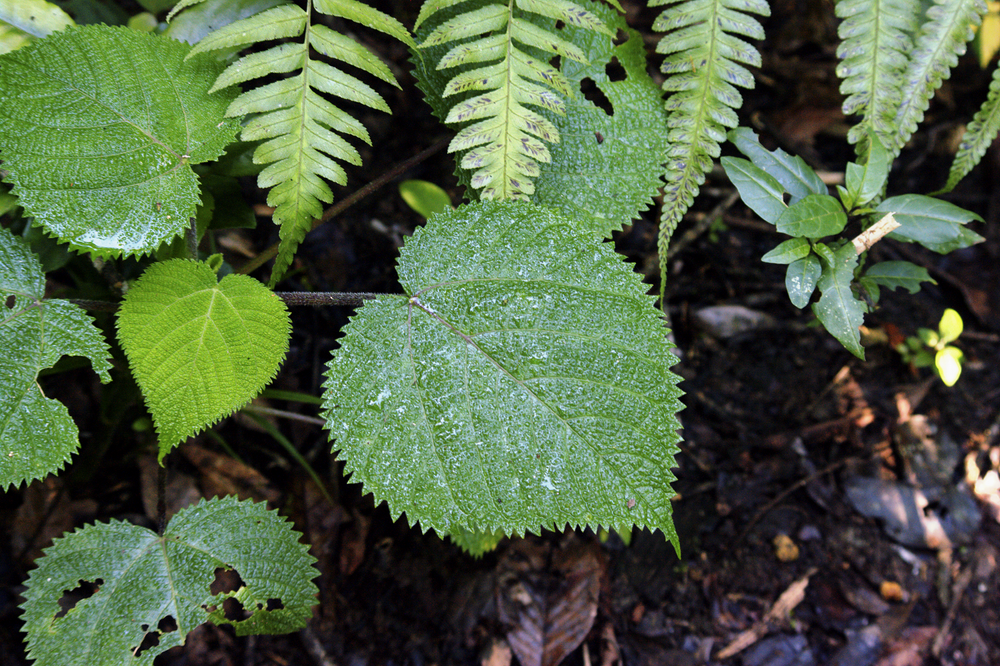
Australia’s stinging trees (genus Dendrocnide) are no ordinary members of the nettle family (Urticaceae). Whereas a physical encounter with most of their cousins will leave you with a mild burning sensation that usually subsides within a few hours, coming into contact with a stinging tree can leave you with excruciating pain that can last for days. Such a severe reaction to stinging trees has left scientists wondering what is going on chemically that makes these trees so darn painful.
It turns out that the stinging trees have evolved chemical defenses that are surprisingly similar to the venom produced by some spiders. The discovery of these chemicals within the stinging hairs of stinging trees is a first for the plant kingdom and likely represent a remarkable case of convergent evolution.
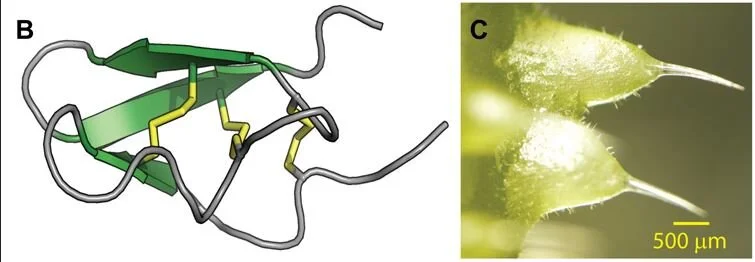
The structure model of stinging tree venom (left) and the stinging trichomes of D. excelsa (right).
Stinging tree venom belongs to a class of compounds known as neurotoxins. Their molecular structure looks a lot like a 3D version of a frustrated scribble on a piece of paper. This convoluted structure just so happens to target mammalian pain receptors with high affinity. Once attached, they activate the sensory neurons, forcing them into overdrive. This is why the pain is so severe.
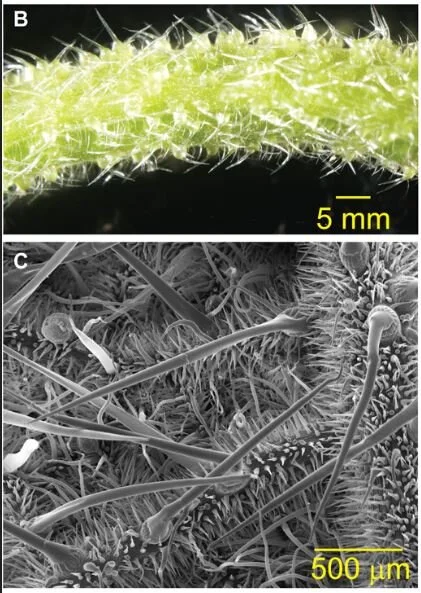
The petioles of D. excelsa are covered in stinging hairs (top). Scanning electron micrograph of trichome structure on the leaf of D. moroides (bottom).
This neurotoxic venom is delivered into the body thanks to the amazing anatomy of nettle trichomes. These tiny hairs are hollow and attached to the top of a sac-like structure filled with the venom. When something brushes against the hairs, the tips break off, turning them into tiny hypodermic needles. As the victim brushes across a stem or leaf, thousands of these hairs inject minutes amount of venom into the skin. Pain is soon to follow.
Amazingly, not all animals seem to be affected by the stinging trees potent venom. Plenty of creatures from insects to birds and even some mammals will feed on the leaves and fruits of these trees, all of which are covered in venom-filled trichomes. As is always the case in biology, there is no surefire way to deter all potential predators. Inevitably some organism(s) will circumvent the deterrent through evolutionary means. Nonetheless, the discovery of animal-like venom being produced by plants is remarkable and opens up new doors into the world of chemical ecology and evolution.
If you have any animal/pet photos you’d like to share please send an email to princeofpetworth(at)gmail(dot)com with ‘Animal Fix’ in the title and say the name of your pet and your neighborhood. If you love the animal fix and want to ensure PoPville’s long term viability please consider donating to our Patreonhere.
“This is Sally from Cathedral Heights. She loves bananas and napping.”
“The Smithsonian’s National Zoo’s 6-week-old giant panda cub is a male, Smithsonian Conservation Biology Institute (SCBI) scientists confirmed.
Zoo veterinarians say that the cub appears to be healthy and strong. During a brief exam conducted by the panda team Oct. 1, keepers took the cub’s measurements. He weighed 3.6 pounds and measured 14 inches from nose to tail tip. His abdominal girth was 12.5 inches. Both of the cub’s eyes are starting to open. Keepers are encouraged by his progress.”
Arlington resident Trudy Ensign turns 100 years old this Sunday, and she is “not ready to give up.”
Ensign, who was born on Oct. 4, 1920 in her family’s farmhouse in southwest Iowa, left her new teaching job there to work in communications for the Army Security Agency during World War II. She has lived in Arlington ever since, most of it in her current home in Ashton Heights.
Just a few days shy of her centennial birthday, some might think she is ready to move into a retirement home or move in with family.
“Somebody may be looking at this real estate,” she said, and stops to laugh. “But I think I’ll keep telling them how the roof leaks and they’ll go someplace else.”
Ensign attributes her longevity to her clean life (she was never a heavy drinker) and her uncomplicated adolescence on an Iowa farm.
Her 100 years could also be attributed to her sense of humor. She says it is “the best thing you can have in life” because she always sees the good in situations and people always treat her well.
She gives a great deal of credit for her position in life to her older siblings, who practically raised her.
“You had a lot more parents than everyone else did,” she said. “You were actually raised by your family.”
One of her older siblings paid for her to go to Simpson College, where she studied to be a teacher. After graduating in May 1941, she moved home and began teaching.
Her career dramatically changed, however, when a Department of Defense recruiter came to town.
“He came into my classroom with a suit on, and so he got my respect, of course,” she said.
He offered for her to work for the Communications Section of the Army Security Agency, processing communications from all over the world.
Ensign knew she did not have a home to go back to after her father remarried, and her older brothers and sisters encouraged her to get out of Iowa and try something new.
“They pushed me out of my nest, and it was good for me,” she said. “At the same time, I knew I had their support.”
She stayed with the agency for the entire World War II effort and for the rest of her career. Her memories of that work are recorded in an oral history at the Arlington Public Library. In 1946, she married William Brown and soon after, they moved to Arlington and bought a house in which to raise their growing family.
“This was a little village at the time,” she said. “There was almost no negative part about it.”
Everyone lived there for the same purpose — government work — and had small weekly salaries.
“You didn’t have to pretend you had money because you know you didn’t and they didn’t either,” she said, laughing.
She and her husband William joined the Clarendon United Methodist Church, where she held numerous leadership positions over the years. After William died of cancer in 1977, she married Allen Ensign, another member of the church and the head usher, in 1984. He died suddenly in October of 2000.
Dealing with the death of a husband is “always tough,” she said, after a long pause.
“[William], he had cancer, you knew his time was limited, but with [Allen], he just came down one morning and was walking through the dining room to the kitchen, and fell and was dead, right like that,” she said. “Those kinds of things are tough when you’re not expecting any problems because no one is ill. The first thing you do is call on your neighbors to help you get through it.”
Those neighbors are her church community. After so many years of volunteering with the church, tracking births, baptisms, weddings and new memberships as secretary and keeping congregants caffeinated during social hours, she considers the parishioners to be her family.
Clarendon Methodist recognized her contributions in 2015 and dubbed her “a faithful servant.”
On the day of her birthday, the church is celebrating with a pandemic parade, cookies for neighbors and friends and a food drive. Her daughter in Florida will come up with her husband and two grown sons, and her daughter living in Alaska will celebrate from afar.
Although she thinks about moving to the Sunshine State, Ensign is not ready to go south just yet. But that does not matter.
This sponsored column is by James Montana, Esq. and Doran Shemin, Esq., practicing attorneys at Steelyard LLC, an immigration-focused law firm located in Arlington, Virginia. The legal information given here is general in nature. If you want legal advice, contact James for an appointment.
Dear ARLnow readers,
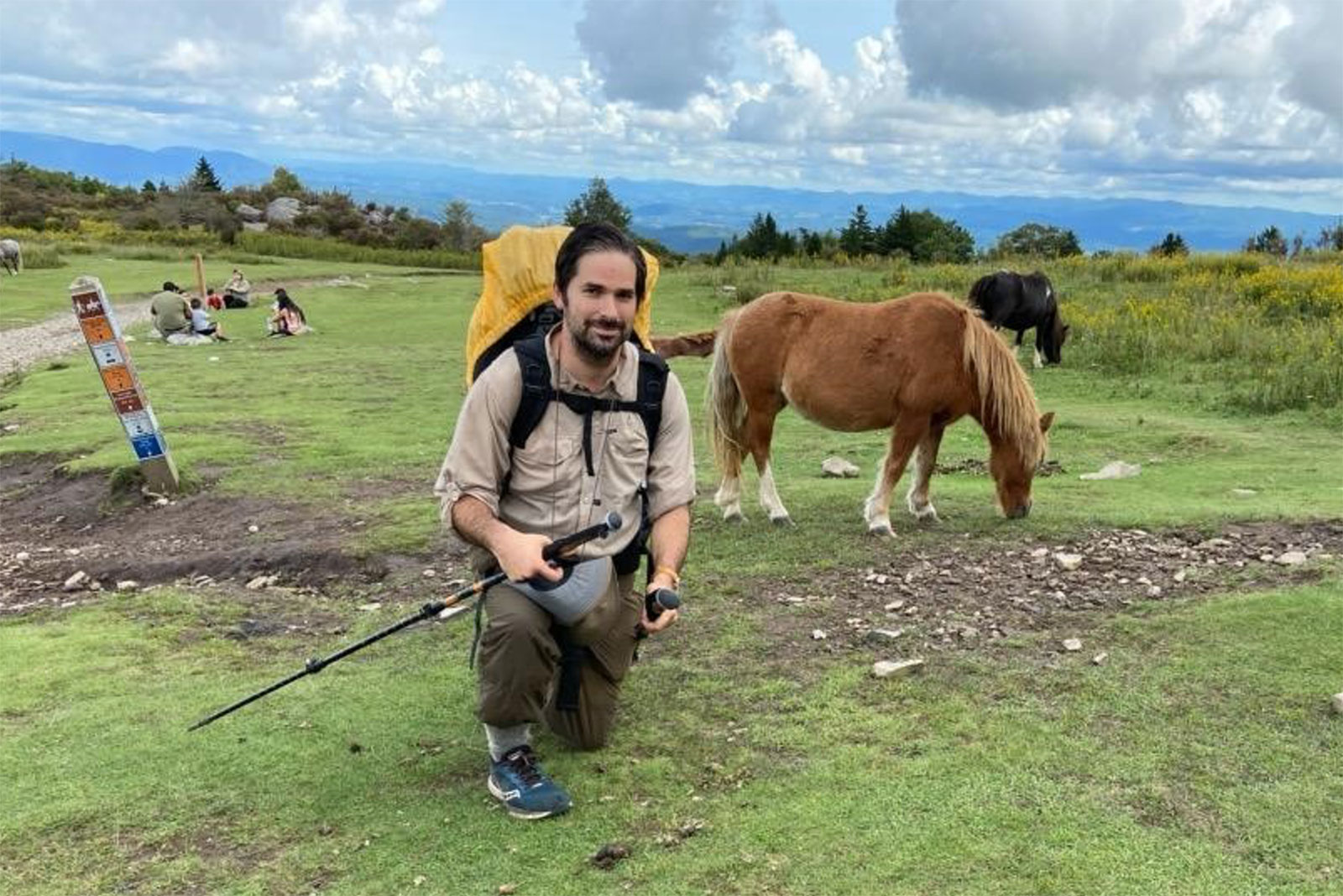
James just returned from his vacation, during which he hiked a 290-mile stretch of the Appalachian Trail, sleeping in a camping hammock all the way. He also snagged this shot with the wild ponies of the Grayson Highlands.
Doran is too busy winning cases to write an article this week. She had to cover the whole docket while her self-indulgent boss was hanging out with wild ponies.
We paid for the advertising space, didn’t we?
Therefore:
Enjoy the silly photo.
Get outside. This wonderful weather won’t last.
Long live the free press!
As always, we welcome your thoughts and comments. If you have any requests for our next immigration column, let us know! We’d love to address issues of concern to ARLnow readers.
Sponsored by Monday Properties and written by ARLnow, Startup Monday is a weekly column that profiles Arlington-based startups and their founders, plus other local technology happenings. Monday Properties is proudly featuring Shirlington Gateway. Say hello to the new 2800 Shirlington, which recently delivered a brand-new lobby and upgraded fitness center. Experience a prime location and enjoy being steps from Shirlington Village, a large retail hub with a variety of unique restaurants and shopping options. Spec suites with bright open plans and modern finishes are under construction and will deliver soon!
Joint Arlington-Icelandic regenerative-medicine biologics company Kerecis has reeled in a new batch of funding.
The company, which has its operational headquarters in Courthouse, is focused on a technology that might sound to some like Spider-Man villain origin in the making.
Kerecis uses “fish skin and fatty acids for tissue protection and regeneration.” The fish skin can be used to treat wounds, burns and other tissue damage.
The company’s leadership said in a press release that the technology’s eager adoption in the United States was one of the leading sources of growth over the last year. Though the product might sound fishy, Kerecis said in a press release there’s no risk of viral-disease transfer from Atlantic cod to human.
Kerecis said all of the fish it flays for human use are wild and caught off the coast of Iceland.
“The fish skin needs only mild processing for medical use and maintains its natural structure and elements, including Omega 3 fatty acids,” the company said. “The Kerecis fatty-acid-based products protect the body against bacterial and viral infections.”
The company announced that the funding is based on $15 million in credit from Silicon Valley Bank to fund the company’s capital needs, with investors and lenders providing $6 million in loans to finance expanding the company’s expansion plans in the United States.
Research into adapting fish skin as treatment for burns and other skin-damage has been promising, with some experimental treatment being done in Brazil.
“The main reason that we were once again named Iceland’s fastest growing company is the rapid adoption of our medical fish skin in the U.S. market,” said G. Fertram Sigurjonsson, founder and CEO of Kerecis. “We are excited that our products are preventing amputations and reducing human suffering.”
Sigurjonsson said the funding will go to accelerating development and marketing of products for wounds, burns and other medical needs, especially in the United States.


![“Leaves from B. nigra treated with egg wash of different butterfly species and controls inducing or not a HR-like necrosis. Pieris brassicae ( P. b. ), P. mannii , ( P. m. ), P. napi ( P. n. ), and P. rapae ( P. r. ) and Anthocharis cardamines ( A. c. ) induce a strong HR-like necrosis. Egg wash of G. rhamni ( G. r. ) and Colias sp. ( C. sp.) induces a very faint response resembling a chlorosis and does not fit into the established scoring system (faintness indicates 1, but showing up on both sides of the leaf indicates 2).” [SOURCE]](https://images.squarespace-cdn.com/content/v1/544591e6e4b0135285aeb5b6/1608049857381-1S13NEIRL37OGYLHX2X8/ke17ZwdGBToddI8pDm48kEle7hJuWr-nVLX06WDmUq4UqsxRUqqbr1mOJYKfIPR7LoDQ9mXPOjoJoqy81S2I8N_N4V1vUb5AoIIIbLZhVYxCRW4BPu10St3TBAUQYVKcoA1xkcq_OmS4ZPsUS4beFg6ou1_b4bvGpDaBl56YiL0tkvu94fGD92xA_3RUClPw/F3.large.jpg?format=1000w)











































![[3]](https://en.wikipedia.org/wiki/Gummosis#/media/File:Cherry_gummosis_on_an_ornamental_species.JPG)
![[2]](https://commons.wikimedia.org/wiki/File:CSIRO_ScienceImage_1253_Greyback_cane_beetle_larva_infected_with_metarhizium.jpg)
![[1]](https://commons.wikimedia.org/wiki/File:Stinging_Tree.png)