Shared posts

11 Jan 15:34

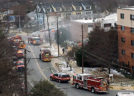
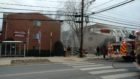
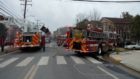
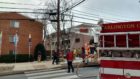
BREAKING: ACFD Battles Apartment Fire on Lee Highway, Rescues Dog

by ARLnow.com
Photo courtesy Andrew Pang Photo courtesy @DeborahE5 Photo courtesy David Johnson Photo courtesy David Johnson Photo courtesy David Johnson Photo courtesy Andrew Pang Photo courtesy Andrew Pang

(Updated at 1 p.m.) Arlington County firefighters battled a fire in an apartment building on Lee Highway today (Tuesday) and rescued a dog in the process.

The fire was reported just after noon on the third floor — the top floor — of the apartments at 4356 Lee Highway, just east of the Lee Heights Shops in the Waverly Hills neighborhood.

The fire was on a balcony in the rear of the building, according to scanner reports, and had also spread to the ceiling of the units below.

As of 12:25 p.m., the fire department reported that the fire was out. No injuries were reported, though a dog was rescued from one of the apartments.

County road crews were called in after the fire was out to spread salt on portions of the roadway that had been drenched with water from the firefighting effort.

https://twitter.com/ACFDPIO/status/818878637575389185

Photos (top) courtesy @DeborahE5, David Johnson, Andrew Pang/DC Metro Fire Photographers

11 Jan 15:34

Say It Ain’t So Florida Avenue Grill!?! “TRUSTEE’S SALE OF Real Property located at 1100 Florida Ave., NW”

by Prince Of Petworth

fg
11th and Florida Avenue, NW

Just when you thought 2016 couldn’t possibly get any worse – a reader sends this notice about famed Florida Avenue Grill:

“Wednesday January 18, 2017 — 11:45am
Trustee’s Sale: Real Property in the U Street Corridor of Northwest Washington, DC

TRUSTEE’S SALE OF Real Property located at 1100 Florida Ave., NW, Washington, DC, 20009 under that certain Consolidated, Amended and Restated Deed of Trust and Security Agreement and Fixture Filing recorded on June 3, 2011 as Instrument No. 2011060882 (the “Deed of Trust”) among the Land Records of the District of Columbia and in accordance with Public Law 90-566 notice recorded on December 12, 2016 a default having occurred in the payment of the indebtedness secured thereby and the covenants contained therein, and at the request of the party secured thereby, the undersigned Trustee will offer for sale by public auction within the offices of Alex Cooper Auctioneers, Inc., 5301 Wisconsin Ave., N.W., #750, Washington, DC, 202-364-0306, on WEDNESDAY, JANUARY 18, 2017 AT 11:45 AM the land and premises situate in the District of Columbia, and designated as and being Lot 79, Square 302, as more particularly described in said deed of trust.

TOGETHER WITH any and all buildings, structures, improvements or appurtenances now erected on the above-described land, including, without limitation, all equipment, apparatus, machinery and fixtures of any kind or character forming a part of said buildings, structures, improvements or appurtenances, and any furniture, furnishings, equipment, machinery and other personal property owned and located in, upon or about the above-described land and any buildings thereon all as more particularly described in the aforesaid Deed of Trust (the “Property”).”

In the meantime:

florida-avenue-grill-2007-popville

31 Dec 02:10

Weekend Inspiration from trails out East!For a wonderfully...


Potomac Heritage National Scenic Trail


Eastern States National Historic Scenic Trails


Douglas Point's outstanding natural attributes are equally matched by its archaeological resources and history.


Douglas Point


Potomac Heritage National Scenic Trail

Weekend Inspiration from trails out East!

For a wonderfully scenic and historically significant travel destination, consider visiting the Potomac Heritage National Scenic Trail, located on the east coast of the United States. This breathtakingly beautiful scenic trail makes its way through four different states – Washington D.C., Maryland, Pennsylvania, and Virginia. In geographical terms, the trail links the Potomac with the upper Ohio River basins. It follows many of the same paths that were explored by one of America’s greatest patriots and the first president of the United States, George Washington.

The activities and things to do available along the Potomac trail are widely varying. Some examples of activities that people tend to do while traveling or visiting this famous historic trail include hiking, boating, horseback riding, bird watching, visiting historic sites, bicycling, running, cross-country skiing, and rock climbing. These are just some of the things to do; there are many more options for activities along this vast and far-reaching National Scenic Trail.

View more photos on BLM Eastern States Flickr

Learn more about BLM Eastern States at BLM.gov

30 Dec 19:25

Your Early Afternoon Animal Fix

by Prince Of Petworth

If you have any animal/pet photos you’d like to share please send an email to princeofpetworth(at)gmail(dot)com with ‘Animal Fix’ in the title and say the name of your pet and your neighborhood. Your photos will go into the queue (usually 2 weeks wait) and will be posted in the order I receive them. If you’ve already entered your pet and would like to do so again – that’s no problem – just space the entries out a bit. Please try to send horizontal photos 640×480 (medium size on your iphone) if possible. If you’re not using an iphone any size is fine.

image

“Pipian from Adams Morgan patiently waiting for Santa”

img_8915

“Bubba of Cleveland Park keeping warm with his cousin Holly of Arlington.”

afix

“Wednesday in Columbia Heights…her reaction to our first xmas gifts.”

30 Dec 17:39

pitmaster Shawn McWhirter back on deck at DCity Smokehouse

by noreply@blogger.com (Scott Roberts of Bloomingdale)
See this Instagram message from DCity Smokehouse, which will re-open on Wednesday, 01-04-2016:


28 Dec 21:58

While discussing PRINCESS LEIA... (From the OVC Archive!)

by noreply@blogger.com (MRTIM)

28 Dec 21:58

Your Afternoon Animal Fix

by Prince Of Petworth
V.w.verweij

Chicken Nugget

If you have any animal/pet photos you’d like to share please send an email to princeofpetworth(at)gmail(dot)com with ‘Animal Fix’ in the title and say the name of your pet and your neighborhood. Your photos will go into the queue (usually 2 weeks wait) and will be posted in the order I receive them. If you’ve already entered your pet and would like to do so again – that’s no problem – just space the entries out a bit. Please try to send horizontal photos 640×480 (medium size on your iphone) if possible. If you’re not using an iphone any size is fine.

“Her name is Frosty and she is a diva. We live in Adams Morgan.”

image1

“Chicken Nugget of SW DC was definitely a good boy this year @chicken_nugget_216”

28 Dec 21:58

Arlington Pet of the Week: Henry

by ARLnow.com
Henry Pet of the Week Henry Pet of the Week Henry Pet of the Week

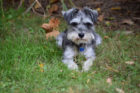
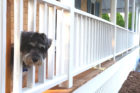
This week’s Arlington Pet of the Week is Henry, a miniature schnauzer that loves sitting outside and the dog park.

Here’s what Henry’s owner, Brooke, had to say about him:

Henry is a 2-and-three-quarter-year-old miniature schnauzer, much beloved by his family. He was adopted with his brother George at three months old, and they were named for the Kings of England.

Henry is an affectionate dog who is happiest sitting in his yard listening to the birds. He is often spotted doing this next to his orange ball, now referred to as “Wilson” (Castaway). While not a gregarious socialite of the dog park, Henry loves living in the “Big City”. He is especially fond of the water bowl outside of Origins.

Last week Henry was viciously attacked by a pit bull in front of the Walgreen’s in Clarendon, and he (and we) are greatly indebted to the many people who stopped to help. A very kind lady drove Henry, bleeding heavily, in her super nice Mercedes to ensure he got to the animal hospital as soon as possible. We appreciate all the Arlingtonians who helped break up the dogs and assist us with Henry’s condition. While the old adage “It’s not the size of the dog in the fight, it’s the size of the fight in the dog” may no longer be uttered in our family, we will stick with “it takes a village” to take care of the ones we love.

Want your pet to be considered for the Arlington Pet of the Week? Email arlingtonnews@gmail.com with a 2-3 paragraph bio and at least 3-4 horizontally-oriented photos of your pet. Please don’t send vertical photos, they don’t fit in our photo galleries!

Each week’s winner receives a sample of dog or cat treats from our sponsor, Becky’s Pet Care, along with $100 in Becky’s Bucks. Becky’s Pet Care is the winner six consecutive Angie’s List Super Service Awards, the National Association of Professional Pet Sitters’ 2013 Business of the Year and a proud supporter of the Arlington County Pawsitively Prepared Campaign.

Becky’s Pet Care provides professional dog walking and pet sitting in Arlington and all of Northern Virginia, as well as PetPrep training courses for Pet Care, CPR and emergency preparedness.

22 Dec 17:38

“Just enjoying a nut, and the art in Sculpture Gallery.”

by Prince Of Petworth

white-squirrel

Brookland, Petworth, Logan Circle and now the Sculpture Gallery. This guy gets around!! Thanks to a reader for sending the best shot yet. Stay tuned for updates from future travels around town.

Full photo after the jump.

ws

20 Dec 22:54

Your Afternoon Animal Fix

by Prince Of Petworth
V.w.verweij

Important Dog Update.

If you have any animal/pet photos you’d like to share please send an email to princeofpetworth(at)gmail(dot)com with ‘Animal Fix’ in the title and say the name of your pet and your neighborhood. Your photos will go into the queue (usually 2 weeks wait) and will be posted in the order I receive them. If you’ve already entered your pet and would like to do so again – that’s no problem – just space the entries out a bit. Please try to send horizontal photos 640×480 (medium size on your iphone) if possible. If you’re not using an iphone any size is fine.

louie

“This is Louie’s first Christmas in Petworth after being adopted from Capitol Canines Animal Rescue!”

amy

“This is Amy, aka Ambrosia, adoptable through City Dogs Rescue/City Kitties! Adoptable Amy (6 months old) lives with her foster sister Eevee on 14th Street. Her favorite activities are chasing catnip mouse toys, licking her paws, and hiding in paper bags. She’s the sweetest kitten and is always up for a snuggle. Contact City Dogs Rescue if you’d like to be Amy’s forever home!”

20161212_064556

“Hana (L) and Skye in their favorite spot”

20 Dec 16:57

Advice

by Dorothy

Comic

19 Dec 23:07

Morning Notes

by ARLnow.com
V.w.verweij

When even our douchebro bars don't want you, you must be real assholes. Props to the Clarendon Ballroom (I never thought I'd say that)

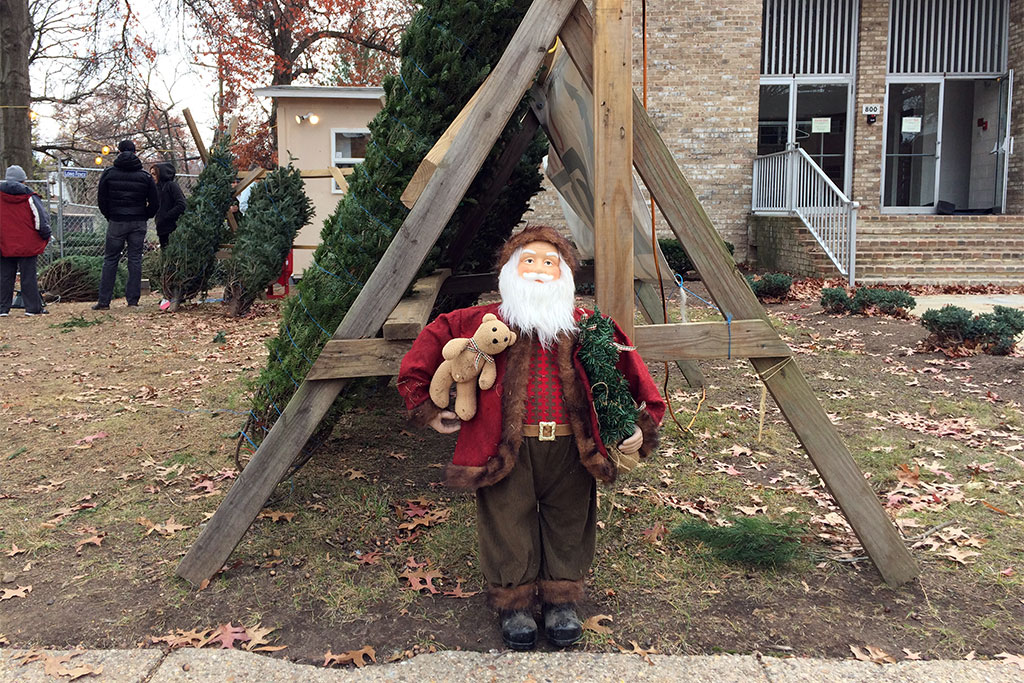
Christmas tree sale at the Catholic church on 23rd Street S. in Aurora Highlands

Clarendon Ballroom Battles Alt-Right Blitz — After beating up on Arlington’s Dept. of Parks and Recreation earlier this month, the alt-right faction seeking to hold inauguration rallies and parties in Arlington has focused its attention on the Clarendon Ballroom. The Ballroom, one alt-right leader alleges, turned away their planned “DeploraBall” due to political pressure. The Ballroom, however, says the organizers never actually signed a contract. Since then, the Ballroom has been receiving “hundreds of slanderous, dangerous, vulgar and threatening posts and tweets,” along with threatening phone calls. [NBC Washington, Washington Post]

Library Director’s Christmas Playlist — Arlington Public Library Director Diane Kresh has released her annual “mix tape of seasonal favorites” on the library blog. This year’s list is a Spotify playlist that starts with Diana Krall’s rendition of “Let It Snow” and concludes, on a unique-to-2016 note, with “World Spins Madly On” by The Weepies. [Arlington Public Library]

Six Fired by Metro in EFC Derailment — Following an investigation, Metro has fired six track inspectors and supervisors and demoted several others in the wake of July’s East Falls Church train derailment. Additional firings are in the works. [WJLA]

Arlington Community Foundation Grants — The Arlington Community Foundation has approved grants to 26 local nonprofits and school, totally nearly $100,000. [Patch]

19 Dec 01:55

NPR story: "The 84-Year-Old Grandmother Who Fronts D.C.'s Coolest House Band"

by noreply@blogger.com (Scott Roberts of Bloomingdale)
Click on the link to read the entire NPR post:


Music Interviews

The 84-Year-Old Grandmother Who Fronts D.C.'s Coolest House Band

Audio will be available later today.
December 18, 20168:21 AM ET
On a Sunday night in Washington D.C., a white-haired grandmother is warming up for her set at a local dive bar. She taps out a simple melody on her keyboard, then pauses to address those listening. "You know what that is?" she asks, chuckling. "'Grandma Got Run Over By a Reindeer.'"

Alice Donahue is 84 years old. Her band is called Granny and the Boys: four middle-aged men on bass, guitar, drums and vocals ... one granny on keys. They play a live funk fusion show every Sunday at a bar calledShowtime — and though folks of all ages come, the majority are people in their 20s and 30s. For them, Granny is something of a novelty.

Granny's band is led by her partner Richard Lynch, who lives in the apartment above the bar. One day a few years ago, the power had gone out at Showtime, and the owner came upstairs to ask Richard if he could play a few songs for his patrons. Richard obliged, and brought Alice to perform with him. People loved it so much that the owner offered them a monthly gig — which then became a weekly show, by popular demand.

But Alice and Richard's story together starts long before that. The two of them are 20 years apart — he is 64 to her 84 — and they've been dating she was his age. They met one day at the University of Maryland, where Richard was working at the Roy Rogers on campus.

...
17 Dec 19:57

#1277; Often Imitated, Never Superseded

by David Malki
V.w.verweij

I heard you needed a mixer

You've probably never seen this mixer before because my father's friend made me sign a confidentiality agreement. Take it, but if every time you bake a cake the OSS rolls up, just tell them you're a friend of 'The Gray Spider', and then give 'em a real obvious wink

15 Dec 16:13

Morning Roundup: Some Of City's Wealthiest Remain Opposed To Shelter Plans

by Rachel Kurzius
V.w.verweij

Put "Those people" somewhere else. Ugh

Morning Roundup: Some Of City's Wealthiest Remain Opposed To Shelter Plans Plus, Silver Spring considers an arena, the case against moving federal jobs away, and more. [ more › ]
14 Dec 22:51

Episode 5: Is tree planting equitable?

by Leda Marritz

Hey there!

“Environmental justice” was a relatively new term for me when I interviewed today’s guest, Shannon Lea Watkins.

Shannon is a post-doctoral fellow who studies (in, uh, layman’s terms) how trees influence people and how people influence trees, and she recently published a study that asked an uncomfortable but important question:

Is tree planting equitable? Do subsidized trees distributed by non-profits get planted evenly across the city, regardless of income or race?

Her findings explored two important components of environmental justice: access to natural resources and unequal exposure to environmental harms, AND access to the decision-making process. Shannon is finding that there is more to the story than just “trees are good.”

Talking with Shannon made me question some of my own assumptions and thinking, and left me with a lot to reflect on. I hope hearing our conversation does the same for you.

Listen to the episode by clicking the player above, or by going to iTunesSoundCloud, or Google Play (and the full transcript is included below). We’d love to hear what you think about this episode and this topic — if you have something you want to share, please Tweet to @remarkableshow.

Thanks for listening.

Leda Marritz | Creative Director, DeepRoot


TRANSCRIPT: In tree planting equitable?

GUEST: Shannon Lea Watkins, postdoctoral fellow at University of California — San Francisco


When I think about environmental justice, I think about a few things. I think about access to natural resources and unequal exposure to environmental harms, but it’s also, I also think about access to the process. So this narrative of “Trees are good, and we will plant trees, and these communities will be better” I think does a disservice to those communities. It might be the case that trees are good and it will help that neighborhood. But in all of those decisions, engaging with the community and understanding THEIR needs and how we can contribute the expert knowledge of the non-profit and resources to helping neighborhoods achieve their goals.

One phrase that I have heard that concerns me is, something like “oh, if they only knew the benefits of trees.” You know, I don’t think that’s the story, I don’t think the story is… MOST of us don’t know the benefits of trees! We might think “Oh, those make me feel nice,” but we’re not actively thinking about that either.

So I think it’s not about knowing the benefits of trees. It’s about something else. And we’re working to figure out what that is.

My name is Shannon Lea Watkins; I’m a post-doctoral fellow at San Francisco State University.

I’m Leda Marritz, and this is Remarkable Objects, a podcast from DeepRoot about the intersection of nature and the urban environment.

Shannon and her research team — the Bloomington Urban Forestry Research Group, out of Indiana University – are working on a really interesting question. They want to know whether non-profit groups plant trees equitably. That is, are trees planted where they’re needed the most? And are they planted evenly across neighborhoods, regardless of the race or ethnic makeup of the residents?

To explore this question, they collaborated with four non-profits in four different U.S. cities. While their study tracks the spatial distribution of trees, it fits into a larger set of questions about human behavior, history, and the urban environment. What historical factors have driven inequity in tree distribution? How do tree planting decisions get made? What does it really mean to involve a community in shaping its urban forest?

Shannon and her co-authors found that as the African American population in a neighborhood increased by 1 percentage point, the probability that it had a tree planting decreased by as much as .25 percentage points. We had Shannon do some calculations to help us wrap our heads around what this really means. So, as an example, let’s compare two neighborhoods that are identical in all respects, except for the percentage of African American residents. One neighborhood is 25% African American, and the other is 75% African American. This study found that the neighborhood with the lower African American population would be about 64% more likely to have a tree planting than the one with the higher African American population. 

There is a vast body of research that demonstrates that trees have multiple, significant benefits for human health and wellbeing. Studies have also demonstrated that tree plantings by city governments are likelier to occur in low-canopy, low-income neighborhoods. But nonprofit programs, and race and ethnicity, are factors that haven’t been examined closely before.

What do we currently know about how household income and race and predict access to nature in urban areas?

The environmental justice hypothesis says that folks of lower income or neighborhoods of higher minority distribution, or higher minority concentration of residents, have less access to a variety of natural things like trees, parks, greenspace, and are more exposed to pollution. We have lots of examples where that’s the case.

The question about what we know on trend and what do we really know across the entire country is harder to answer. We have lots of studies where people have looked in one city and they say, “OK, here’s the distribution of canopy cover,” maybe they define it just where people live in residential areas. Maybe they look at only the trees along the streets.

So, we have evidence of many instances of inequity, but the story is more complex than to say that it’s is always the case in all cities.

Tell us the name of your study and what you looked at.

The short version of the title is, “Is planting equitable?” And that is the question. This paper spun out of a larger interdisciplinary research project that looked at the impact of people on trees and of trees on people, and we were interested in non-profit tree planting programs, and whether the choices that the non-profits and the neighborhoods made in planting and caring for those trees influenced how the trees did, and whether planting and caring for those trees as a neighborhood influenced the neighborhood in some way.

As we were working on that project, I realized that this would be quite an interesting case to look at the distribution of those trees. So are the trees, and the related benefits of those trees, going to places that could use trees, and could use trees that are subsidized by non-profits and city money? We wanted to know where the trees that the non-profits were planting were going.

Let me stop you for a moment and ask, what are some of the factors that might affect where trees get planted?

So you might have a program like a 311 program, where you can call in and request a tree. What happens if you have an opt-in program like that? Well you might have folks who know about the resource calling in, who have time to call in, and maybe you’re not actually planting trees in the places you want them to be planted.

Shannon and her team suggest in their paper that there were four factors that may have affected where trees got planted. Those factors were: (1) the physical suitability of the planting site, (2) funding sources, (3) neighborhood interest and capacity, and (4) the    mission of the non-profit.

Prior studies of city government programs had found that tree planting was more likely to happen where the urban canopy cover was already high, and in neighborhoods of higher income. And they didn’t look at race at all. While these are just a couple of studies in a couple of cities, the initial findings were problematic from the perspective of environmental justice.

You and your team added race and ethnicity to the mix in your study of non-profit planting programs, and found something different, or something deeper, than those earlier city studies.

So in these non-profit plantings, we looked at whether the trees were going in areas of higher canopy cover, whether they’re going in places of higher income, and whether they’re going in places with fewer minority residents.

We found, contrary to the city studies, that the non-profit trees are more likely to be planted in a neighborhood as canopy cover in that neighborhood is lower, which sounds like a good thing, right? We’re targeting places that could use canopy cover – we might be reducing differences in canopy cover across the city. We also find that the trees are more likely to go in neighborhoods as median household income is lower – which also suggests that trees are going to places where folks might not be able to afford trees without being subsidized by the non-profit or city funding. So those two things suggest really great things.

Now the other studies hadn’t, to my knowledge, looked at race and ethnicity alone – and so we also looked at that and we found that plantings are less likely to go in neighborhoods as the proportion of minority residents increases, which is potentially problematic, but we still don’t know the story behind why.

When we were talking before this interview, you mentioned that there are historical mechanisms that have led us to get the urban canopy distribution that we have today. What is a historical condition that would have affected today’s neighborhoods and driven them towards an unequal distribution of trees of the sort that you’re now studying?

We know that race and ethnicity play a historic role in where people live. We know that in the United States that there, that folks have been excluded from certain neighborhoods in policy and in social pressure. Right?

In the ‘50s, we have huge moves to suburban America, and far before that racially-based housing segregation. And all of that, that dictates where people move, you know, is related because trees are an intergenerational good.

We can see this more readily in a forest for example. If we think about the redwoods, the only reason we have them now is because10 years ago people protected the redwoods, and 20 years ago people protected the redwoods, and 30 years ago people protected the redwoods, right? So it’s intergenerational. In order for it to be maintained we need sort of continual efforts. And urban trees are the same. The lifespan of urban trees is shorter than the lifespan of trees in a forest. But they are, the trees that are in the ground now for the most part are evidence of what was happening, you know, 20, 50, 80 years ago.

And so, why are we not thinking about race and ethnicity?

Do you have any theories about why fewer trees were being planted in minority neighborhoods, at least at these non-profits you were working with for this study?

There could be any number of reasons. So there are a few steps at which this tree-planting process occurs.

The first step is having applications. We’ll use a really oversimplified dichotomy – perhaps minority neighborhoods are less likely to apply for the program at all. So it could happen at the application process.

It could happen at the selection process – perhaps there’s something about those neighborhoods, overt or covert, in the selection process that leads those minority neighborhoods not to be selected.

We don’t have data on all the applications the non-profit receives, so we can’t actually answer that question yet, but we could work with them to collect that data over a number of years and look at their selection process.

And I want to be careful; it’s not necessarily that the non-profit is looking at all the neighborhoods in a city and saying “oh, well let’s go plant…” – you know, we’re not sort of prescribing active choices PERHAPS, although if this is one of their goals we would suggest that they become active goals, right, in searching for neighborhoods that are interested that also are low canopy, low income, minority neighborhoods.

Could there be barriers at play on the community side of things as well?

There could be lots of barriers. Concerns about gentrification could be playing into it, different preferences, different experiences with trees. Perhaps if trees are not well maintained in those neighborhoods then, you know, residents aren’t interested in more trees. That’s one of the things to think about while planting trees, right: how do we serve the people that actually live there and aren’t creating change that would result in increased pressures on those residents.

We want to be supporting their neighborhood that is theirs, rather than just creating the physical conditions in a neighborhood that someone would enjoy, we want to speak to the people who live there and to protect those people.

So given that this could be occurring at a number of points in the process of getting trees planted, what are some ways to go about addressing the inequity in communities that do want trees?

Yeah so this goes back to at what stage does it happen.

If it happens at the pre-application process, you know, reaching out to neighborhoods and providing the resources and access to the non-profit in those neighborhoods might be the strategy, and then to support through an application process. So if an application requires some sort of plan at the neighborhood level, providing resources to help neighborhoods formulate those plans can help, you know, maybe increase the diversity of your applicants. So if it’s at that stage that would be one strategy.

If it’s at the neighborhood selection stage, if you look at a set of applications, maybe folks aren’t thinking about race when you’re making those decisions. But it could be influencing your decisions anyway. Are we eliminating neighborhoods in the application process – and again, this is just a question I don’t know the answer to – are you eliminating neighborhoods in the application process because of physical space when we could actually be doing something different?

So in Philadelphia, for example, trees are planted in pits in the sidewalk, so in order to plant a tree the pit has to be there, or you have to create the pit. So can we create pits, can we go put pits in places so that we increase the planting potential in that neighborhood? Something like that. Maybe it’s not a tree planting thing, maybe it’s a sidewalk question.

Talking across, from the non-profit to the city and back, is also important and something we found in our research. You know, making sure where you’re planting is going to be there five years from now! Does the city have any plans for tearing out that sidewalk? Do they have plans for widening the road? Do they have, you know, other plans? Or do you know that the trees you’re putting in are going to stay there.

So much of the challenge of trees is the longitudinal nature of their impact. So what I’m getting at, or trying to get at with this question, is whether we can make any educated predictions about neighborhoods 30, 40, 50 years from now, relative to equity, based on what you’re seeing?

If we look at the current drivers, and this is an area where I don’t think there is as much research – this paper is trying to contribute to that – the papers that look at city plantings are trying to contribute to that, right? What are the choices that we make now have, you know, how will those influence the urban forest in 20 or 50 years?

If we find that trees are going in low canopy-cover neighborhoods, that suggests that that we will see more homogenization of canopy cover. But, if we find that trees are going in whiter neighborhoods, maybe we’ll see greater inequity.  But, of course, people are also moving, and a city like San Francisco for example, is experiencing incredible gentrification and movement of people. So, will it be the case that the neighborhoods that are majority white now, or majority minority, remain the same? I really do not know.

Race and ethnicity are really important and also seem as though they could be really complicated to research. How do you incorporate principles of environmental justice in your work, despite academia being fairly un-diverse racially?

It’s a really good thing to think about our role as researchers, right? Learning about how to think through issues of equity is really quite important; making sure that we’re empowering rather than sort of speaking for is important. But yeah, I think working and working and working and continually striving to speak for the folks we purport to care about through listening to them.

It’s something I continually work on. I’m a white woman and I want to be contributing, and so it’s something I’m continually working on. And there are many scholars have been working on this for many years. The environmental justice movement isn’t just in academia. This is part of the civil rights movement. People and people of color have been working on this for many, many years. And so, I am also learning, I’ve committed myself to a lifetime of learning, and so I don’t want to speak too narrowly.

What’s coming next for this project? What can we look out for? 

For this research project, we’ve conducted interviews in many study neighborhoods that had these tree planting projects, and so right now we’re looking through those stories from the neighborhoods to see their experience with tree planting, why they started the project, whether the project benefitted that neighborhood.

Is there anything I didn’t ask you about that you’d want to make sure was included in a discussion about environmental justice?

A racist outcome or an act need not be malicious or intentional. We see inequity in canopy cover. And if we think about environmental injustice or environmental racism, that speaks to that problem. It need not come out explicitly, intentionally racist acts. But the result is still unequal and problematic.

I think a general statement about where cities are headed. We can see in San Francisco that things are changing very fast, and just to make sure that environmental justice in not just about outcomes, it’s about process. And access to the process. And influence in decision making, not just about the environment, but about cities and as cities change, who gets a say in what is happening.

Since we recorded this conversation, Shannon has switched positions. She is now a postdoctoral fellow at University of California, San Francisco. If you want to read more about her and her team’s work, including the paper we discussed in this episode, you can find links in the description for this show.

Remarkable Objects is produced and edited by me, Leda Marritz, with editorial assistance from Aylara Odekova. You can find us online at remarkableobjects.com, and on Twitter (@RemarkableShow). This podcast is a production of DeepRoot Green Infrastructure. DeepRoot provides landscape solutions and technical support services to promote mature tree growth and sustainable stormwater management in the built environment. Find out more at deeproot.com.

And if you like what we’re doing with Remarkable Objects, let us know by telling a friend, or giving us a rating or review in the iTunes store! It helps us reach more listeners, plus – it makes us feel good! Thanks.


Music:

“Broke for Free,” “Summer Spliffs” (Broke for Free)
“Sneaker Chase” (Podington Bear)



14 Dec 19:39

Your Afternoon Animal Fix

by Prince Of Petworth
V.w.verweij

So much going on here.

If you have any animal/pet photos you’d like to share please send an email to princeofpetworth(at)gmail(dot)com with ‘Animal Fix’ in the title and say the name of your pet and your neighborhood. Your photos will go into the queue (usually 2 weeks wait) and will be posted in the order I receive them. If you’ve already entered your pet and would like to do so again – that’s no problem – just space the entries out a bit. Please try to send horizontal photos 640×480 (medium size on your iphone) if possible. If you’re not using an iphone any size is fine.

image1

“Nery, the cute and playful sharpei puppy that struts around U street. She just turned 1 last Sunday”

31532072685_0b63740127_z

“F. Stick of Petworth celebrating his 7th birthday. His longevity was the subject of much interest in his Animal Fix debut. For those who wondered: yes, he’s 7 in human years! He owes his good health to his roomy 55 gallon tank and advises that goldfish should never live in bowls!”

image1

“And here’s his sister Coco, age 12, a recent Maryland Westie Rescue/Humane Rescue Alliance adoptee!”

14 Dec 17:26

Beyer Blasts ‘Anti-Environment’ Cabinet Picks

by ARLnow.com

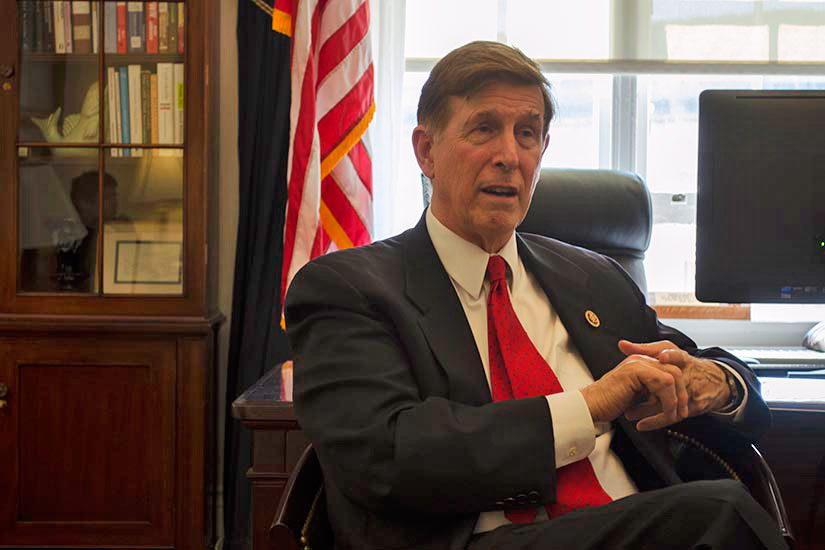
Rep. Don Beyer in his Capitol Hill office (file photo)Rep. Don Beyer (D-Va.) is unhappy with the environmental implications of president-elect Donald Trump’s cabinet picks.

In a statement last night, Beyer blasted Trump’s picks for EPA administrator, Secretary of State and Secretary of Energy.

The full statement is below.

The trio of Scott Pruitt for Administrator of the Environmental Protection Agency (EPA), Rex Tillerson for Secretary of State, and Gov. Rick Perry for Secretary of Energy confirms our worst fears about President-elect Trump’s intentions on climate change and the environment.

As Oklahoma’s Attorney General, Scott Pruitt organized and led a national push to oppose the EPA. He made himself the mouthpiece for the fossil fuel industry as it fought protections of air and water quality. As a denier of climate science, he is unqualified to run the nation’s premiere agency on the environment and the fight against climate change.

At the helm of Exxon-Mobil, Rex Tillerson continued the corporation’s efforts to undermine climate science as well as its unyielding insistence that fossil fuels remain the dominant, if not sole, energy source for the immediate future.  Exxon-Mobil’s regard for shareholders alone, and its refusal to acknowledge that stock value could be married with a wiser and more sustainable long-term world energy portfolio caused untold harm. It is appalling that the Secretary of State who negotiated the Paris Agreement, perhaps the most ambitious step towards fighting climate change in history, could be followed by this nominee.

Rick Perry impressed almost no one during his presidential run, and his most famous statement was his call to abolish the very agency he has been tapped to lead, once he remembered that it is called the ‘Department of Energy.’ The notion that he will succeed the Obama-era Steven Chu, a Nobel Prize winner, and incumbent Ernest Moniz, an MIT nuclear physicist, is at once saddening and frightening, as was his call to close the agency tasked with developing clean energy technologies.

Climate change remains the world’s greatest threat. Delaying or reversing our efforts to fight climate change will have potentially catastrophic effects on the planet.

14 Dec 15:26

The Pub & The People Getting in on The Holiday Spirit

by Prince Of Petworth
V.w.verweij

This bar is an extremely underrated gem, and has some of the Best Drinks and bartender. Highly recommended.

30691399034_a904f10c17_z
1648 North Capitol Streetm NW courtesy The Pub & The People

From an email:

“‘Twas the weeks before Christmas, when all through Bloomingdale
Many patrons were drinking the Pub’s wine, cider and ale…
When out on the patio there arose a holiday tent!
People sprang from their homes to take part in the merriment.
A tent with heaters, cuddle blankets, garlands, hot drinks, mistletoe and lights had come up like a flash,
The perfect place to make merry with your friends or throw a holiday bash…
From the people of the Pub to all DCites—

“Happy Christmukkah to all, and to all a good night!”

30691403434_c2d67f4998_z

13 Dec 17:04

Hen Quarter coming to Penn Quarter

by Prince Of Petworth

hen-quarter
via Facebook

Last week a reader was wondering why a liquor license was posted at the old Austin Grill’s space for Austin Grill. Turns out Hen Quarter is coming in 2017.

“Hen Quarter is owned by the same group. They recently converted the Austin Grill in Old Town Alexandria to this concept.”

One is coming to Silver Spring too. Their website says:

roots

img_4959
750 E Street, NW

10 Dec 17:31

Photo


09 Dec 16:39

Your Afternoon Animal Fix

by Prince Of Petworth

If you have any animal/pet photos you’d like to share please send an email to princeofpetworth(at)gmail(dot)com with ‘Animal Fix’ in the title and say the name of your pet and your neighborhood. Your photos will go into the queue (usually 2 weeks wait) and will be posted in the order I receive them. If you’ve already entered your pet and would like to do so again – that’s no problem – just space the entries out a bit. Please try to send horizontal photos 640×480 (medium size on your iphone) if possible. If you’re not using an iphone any size is fine.

afix

“Mini ghost of Petworth got all her shopping done”

30678187673_f6c2f4e517_z

“Pumpkin of Mt. Pleasant, enjoying the porch on a warm fall day.”

31340659342_7495be6a06_z

“Kiki lives in Hill East and loves ugly christmas sweater parties”

09 Dec 16:39

Photos from PoPville – Natural Beauty

by Prince Of Petworth

31325317702_1d98f8ae54_z
Photo by PoPville flickr user ph0t0 0p

When becoming a member of the PoPville flickr pool please make sure your settings allow me to download your photos. Join the PoPville flickr pool here and follow PoPville on twitter here on facebook here and you can now sign up for daily email summaries here.

31472551985_fc97d57a46_z
Photo by PoPville flickr user Erin

08 Dec 20:53

Holla if you’re hollow too!!Webtoon | Twitter | Facebook |...


Holla if you’re hollow too!!

Webtoon | Twitter | Facebook | Instagram

08 Dec 18:50

The Nation's First Somali-American Lawmaker Says She Was Threatened In A D.C. Cab

by Rachel Sadon
The Nation's First Somali-American Lawmaker Says She Was Threatened In A D.C. Cab "The cab driver called me ISIS and threatened to remove my hijab," Ilhan Omar writes. [ more › ]
08 Dec 18:50

PoP Proclamation: On Rye is Legit

by Prince Of Petworth

img_8539
740 6th Street, NW

It brings me great pleasure to share word that the recently opened On Rye in Chinatown is legit. Legit, legit. Now my pastrami bona fides run deep. Though my family originally hailed from Lodz, family folklore says some cousins were tight with Reuben Kulakofsky. Anyway Pastrami and Football that’s what Lodz does!!!

img_8540

But seriously, not only was my sandwich mint – the space is great too. If you haven’t been yet, I’d definitely add to your list. Check out the full menu here.

img_8538

More photos after the jump

img_8534

img_8535

img_8536

img_8537


07 Dec 21:56

Based on a tumblr post by @4rianagrande! Webtoon | Instagram |...

07 Dec 19:44

Is this too much to ask?


Is this too much to ask?

07 Dec 19:41

Your Afternoon Animal Fix

by Prince Of Petworth

If you have any animal/pet photos you’d like to share please send an email to princeofpetworth(at)gmail(dot)com with ‘Animal Fix’ in the title and say the name of your pet and your neighborhood. Your photos will go into the queue (usually 2 weeks wait) and will be posted in the order I receive them. If you’ve already entered your pet and would like to do so again – that’s no problem – just space the entries out a bit. Please try to send horizontal photos 640×480 (medium size on your iphone) if possible. If you’re not using an iphone any size is fine.

cliffy

“Cliffy was ready for a Thanksgiving feast!”

we-bad

“Starlings – Columbia Heights”

img_1673

“This is BASHA! You can find him walking the streets of NOMA”

07 Dec 19:40

Arlington Pet of the Week: Igor

by ARLnow.com Sponsor
Igor Pet of the Week Igor Pet of the Week Igor Pet of the Week Igor Pet of the Week Igor Pet of the Week

This week’s Arlington Pet of the Week is Igor, a Pug who loves snuggling in warm places and eating pork treats.

Here’s what Igor’s owner, Pablo, had to say about him:

We’d like to introduce Igor.

Igor is a 6 year old pug that loves cuddles and treats, but what pet doesn’t? Igor and his family relocated to Arlington from California in August after a really cool road trip.

Igor’s favorite treats are pork crackling (skins) and he will sit, shake and play dead for them, but he will do none of that if there is no treat in the deal.

Igor is not used to cold weather, so he is loving his new snugly bed and sweaters. He loves meeting new dog friends during his morning and afternoon walks around Pentagon Row .

Igor is a professional snuggler, he sleeps around 14 hours a day and will come sit by any human he can lean against for warmth. Bonus snuggle points if you have a warm blanket to wrap him in.

Want your pet to be considered for the Arlington Pet of the Week? Email arlingtonnews@gmail.com with a 2-3 paragraph bio and at least 3-4 horizontally-oriented photos of your pet. Please don’t send vertical photos, they don’t fit in our photo galleries!

Each week’s winner receives a sample of dog or cat treats from our sponsor, Becky’s Pet Care, along with $100 in Becky’s Bucks. Becky’s Pet Care is the winner six consecutive Angie’s List Super Service Awards, the National Association of Professional Pet Sitters’ 2013 Business of the Year and a proud supporter of the Arlington County Pawsitively Prepared Campaign.

Becky’s Pet Care provides professional dog walking and pet sitting in Arlington and all of Northern Virginia, as well as PetPrep training courses for Pet Care, CPR and emergency preparedness.