If you have any animal/pet photos you’d like to share please send an email to princeofpetworth(at)gmail(dot)com with ‘Animal Fix’ in the title and say the name of your pet and your neighborhood. Your photos will go into the queue (usually 2 weeks wait) and will be posted in the order I receive them. If you’ve already entered your pet and would like to do so again – that’s no problem – just space the entries out a bit. Please try to send horizontal photos 640×480 (medium size on your iphone) if possible. If you’re not using an iphone any size is fine.
“Edie (L) and Ellie (R) of Shaw are very unsure about the new beds for their twin brothers.”
“Cricket of Mt. Pleasant, on her fainting couch. She was adopted from Pickens County, SC, through City Dogs Rescue.”
When becoming a member of the PoPville flickr pool please make sure your settings allow me to download your photos. Join our flickr pool here and follow us on Instagram hereand you can always tag your photos with #PoPville.
If you have any animal/pet photos you’d like to share please send an email to princeofpetworth(at)gmail(dot)com with ‘Animal Fix’ in the title and say the name of your pet and your neighborhood. Your photos will go into the queue (usually 2 weeks wait) and will be posted in the order I receive them. If you’ve already entered your pet and would like to do so again – that’s no problem – just space the entries out a bit. Please try to send horizontal photos 640×480 (medium size on your iphone) if possible. If you’re not using an iphone any size is fine.
“Santana-
Oye, ¿como va? Santana is a “Black Magic Woman” looking to put a smooth spell of love and affection on her future humans! This fabulous feline is 8 years young and full of personality! She likes to watch the world go by outside the window, then come over for chin scratches and to make a cushion out of your laptop.
She has a very cute little meow and will reward your attention with a quiet, soothing purr and a loving gaze with her striking emerald green eyes. To meet Santana, please contact Lost Dog and Cat Rescue Foundation: cats@lostdogrescue.org.”
“Cana-
Cana is a beautiful pibble looking for a patient family to help her feel safe. This sensitive sweetie is very shy in new situations, but you can tell from her soft eyes that she is all love. She warms up with a gentle approach and some loving patience so for the right person she is ready to be your everything. Cana is looking for a home without cats or other small animals and with another dog her size or larger. She would prefer a home with adults where someone is home a lot. Once she trusts you, Cana will be a fabulous companion who loves to snuggle and play. She just needs someone to give her a chance and she’s hoping it will be you!
To meet Cana, please contact Lost Dog and Cat Rescue Foundation: dogs@lostdogrescue.org”
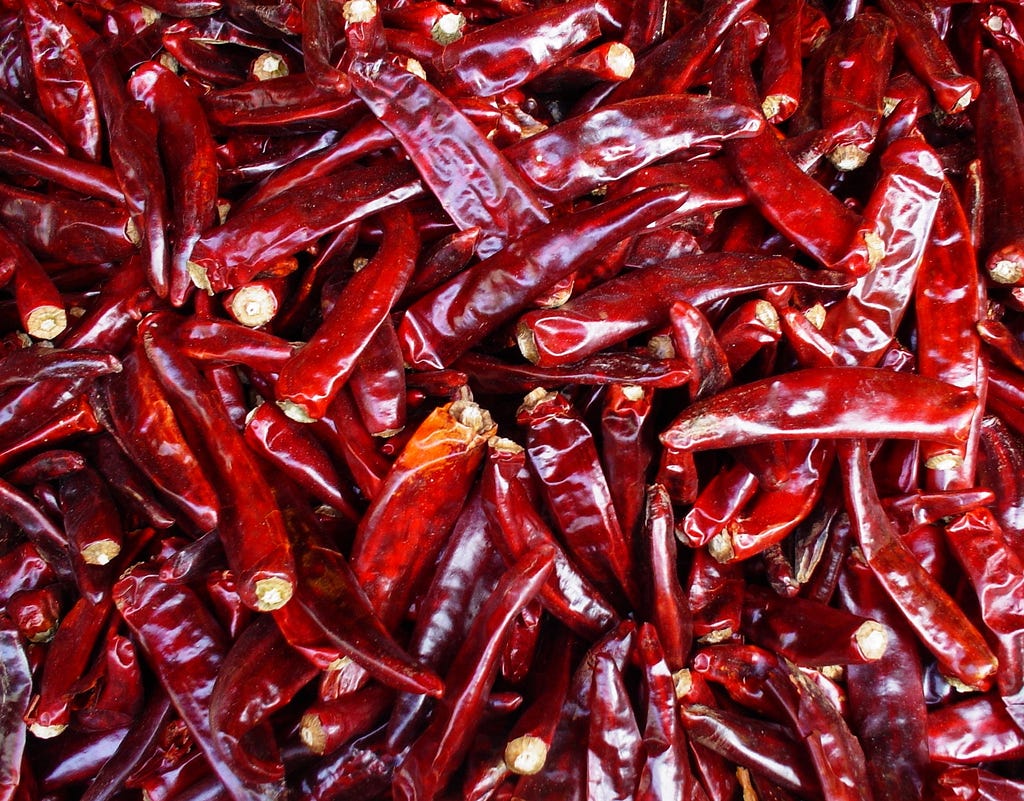
If you ever go to Asia (do not do this, it is too big, and trying to comprehend it will only convince you that your mind was never meant to really comprehend anything) and you want to put all the attention rightly back on yourself, the important American, here is a little trick you can use. First, be in one of the countries that makes really spicy food, and then performatively eat stupid amounts of it in front of everyone. Hurt yourself badly, but pretend like you do this all the time. Probably, everyone will laugh and someone will say, “Whoa! Usually Western people don’t like chilis.”
This is your chance. Lean forward, sweating like a giant asshole, wink, and say, “Actually, all spicy food is from the West. Chilis come from Central and South America, and they were brought over here after Spanish colonization. None of your chilis are native to Asia.”
People will probably want to fight you. Because obviously, this is what is called a huge “dick move” in every language on Earth. I personally have a bit of Mexican heritage, and a small chip on my shoulder about the fact that the agricultural and civilizational achievements of Pre-Columbian Meso-America are insufficiently recognized (in 1492, the Aztec capital of Tenochtitlan was larger than any European city, until Spaniards destroyed it).
That said, many Indonesians, or Malaysians, etc., do know the botanical history of the capsicum, just like some Texans know that conquistadores actually brought over their “longhorns” and many Italians know that pasta is probably originally Arab (not Chinese, like in that Marco Polo story, which is fake) and that their famous red sauces often lean pretty hard on the Central American tomatl, (one of a few words from Nahuatl that actually traveled into Western European society, instead of the other way around).
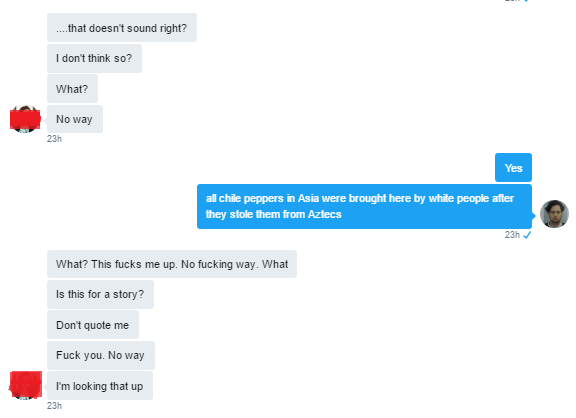
But for people in India or Thailand who don’t know that all spicy food is from the Americas, it can be pretty jarring. Here’s a conversation I just had with a well-educated, multilingual Indonesian.
(She did eventually give me permission to quote her.)
Actually, I lied a little bit. All chilis in Asia were brought over here by white people after they stole them from not just the Aztecs, but also the Incas, and many other native American peoples. I don’t blame her! It feels fucking weird. They’ve been a part of local cuisine for centuries. They grow everywhere. They are part of local identity. They are nature.
She got really mad at me, and I understand why. There is a lot about deep globalization and its effects that is so counterintuitive that it’s hard to process easily. We have been changing the world in strange ways for a long time. But humans have stupid primate brains, and we tend to naturalize whatever is right in front of us.
The world looks flat. Actually, the floor of the world, a creation of our senses, is indeed flat, it’s just the actual physical Earth that is technically curved. So yes, it was pretty messed up what they did to Galileo, but I get it. If some know-it-all came up to me in the 1600s and said, “well, Actually, no, the Earth is spinning around the Sun,” I would want to fuck him up too. I’d think, there’s just no way that is true, and either way, this guy is being a huge dick.
But, the chili thing is true. Everything that is spicy is a member of the capsicum genus, which is native to the Americas. To the extent that things like wasabe, horseradish, or black pepper sometimes feel like they light you up in a similar way, it’s not because of capsaicin. Nothing but chilis register on the Scoville scale. The fruit of the capsicum is what we call the chili pepper, which might be quite hot, like a habanero, or very mild, like the bell pepper. Some are small, some are big, most are bright and beautiful. They have undergone plenty of changes since 1492, both intentional and accidental. But, those chilis weren’t just hanging “naturally” in the North American Garden of Eden. Native Americans had cultivated them for thousands of years.
The fact that, when talking of the capsicum family, we say that chili “peppers” are “spicy,” means we are committing a double linguistic anachronism (which is fine). It was of course “spices” that all those Spanish and Portuguese were looking for (especially black pepper) in Indonesia in the first place. And since chilis kinda make your mouth pop in the same way as black pepper, they got named “peppers,” and we call them “spicy,” though the biology and sensation produced are actually totally different. The word “Chili” itself is Nahuatl.
Consider again how stupid humans are. These Iberian adventurers cast out across the world, on very shitty boats, because they wanted some of this little powder that makes your mouth tingle a bit at dinner. They went around the world, destroying civilizations and starting new ones, because their meals back home were boring without it.
In a few hundred years, we may look back at our own times, and think it was just as insane that we privileged deregulated financial capitalism and #branding over all other possible versions of globalization, remaking the world in the image of Coldplay and Uber rather than, say, universalizing democracy or labor rights.
500 years after our round of globalization has ended, it may be possible to think that strip mall parking lots and KFC are literally part of nature. Or that you might get punched in the face if you say that English is Actually from a country that used to be called England, not the official language of the United Amero Zone (the UAZ, pronounced “WAZ”).
Image: USSR building now serving KFC. Tver, Russia. Vincent Bevins 2015
I recently moved from Brazil to Indonesia for work, and I recently got hit hard by a moment of deep globalization. Both countries are big (Brazil has world’s 5th-biggest population, Indonesia is #4) and “developing,” but other than that my move was fairly random, dictated by a few personal connections and the vagaries of the journalism market.
So imagine my surprise when I started learning Bahasa Indonesia, the Malay dialect picked to be the national language here not too many decades ago. It’s an Austronesian tongue with essentially no grammar, and no family relation even to mainland Asia, let alone to Indo-European languages. But something happened as I learned a number of really basic words, all the kind of thing you’d learn in a high school Spanish chapter entitled “Around The House.”
Those words are just Portuguese, with like maybe one letter changed. Of course, of course, I looked it up and it turns out there’s a lot more words that were adopted into Malay as the Portuguese were active around here, starting in the 1500s. Indonesians do know about this linguistic history. But I had a really hard time taking it in. I checked with lots of Brazilians, and they all thought it was insane, too. This is not like when you hear Portuguese in Mozambique or Angola or East Timor — that’s normal. That’s modern colonialism, that was recent full nation-state domination. These are huge living artifacts, plain as day, left by men just trading nearby, hundreds of years before the US was founded.
Something weirder was happening here, too. These kind of loanwords usually enter a language because there’s no local concept for them. Shit, does this mean that shoes, tables, and shirts are inventions? Well of course they are, fuck, fuck. Ok, fine, that seems fairly benign compared to some of the other effects of various globalizations. But out of all the globalizations that have ever happened and ever will happen, perhaps the spread of the chili is the best one, because chilis are amazing.
A year or so ago on the USA internet, there was a set of pretty hilarious jokes about how white people eat food with no flavor. Even more hilariously, some white people got mad and thought it was racist. Between men and women, preferences for spicy food are as hilarious as you’d expect. One study suggests that women actually like the taste more, while men are often more into the way they think it makes them look cool. Especially in front of women.
But globally speaking, it’s not really your ethnicity or your gender that determines how spicy you eat, but where you’re from. In Mexico and Northeastern Brazil, white people (yes, they exist) eat loads of spicy food. Down in colder, whiter, Southern South America, mayonnaise is about the spiciest thing most people eat. In Chile, Argentina, or Uruguay, an entire meal might be a breaded steak (no seasoning) and some potato salad, or just french fries topped with cheese, deli ham and — if you’re lucky — a pinch of oregano.
There are a few theories as to why certain societies started really earnestly using chilis. One is that they act as a relatively effective antimicrobial, which could help safety and preservation, especially in hot climates. Another is that it’s pleasant to feel warmer, and then sweat a bit, especially in hot climates. This has something in common with the practice of drinking hot tea in places like India, but there is a difference — hot water really does increase your body temperature, whereas spicy food only tricks your body into thinking it’s burning. Another theory is that the euphoria that comes after the initial (harmless) pain is pretty fun. And one more is that it results from a simple lack of food. Eating spicy makes it feel like you ate more, and it makes it easier to choke down bland starches. This is why some people diet using loads of hot sauce. Anthony Reid thinks that Southeast Asia first got really wild about chili when the Japanese globalized into, I mean, invaded the region during WWII and food became scarce.
But I have my own theory why societies don’t stop eating chilis once they start. It’s because it’s nice to feel more things and taste more tastes along with your food, and once you realize nothing bad ever happens, it’s a quick and easy upgrade. It also means that you can ingest ancient magic Aztec energy, which is real, every day forever.
All Spicy Food Is From Latin America was originally published in The Awl on Medium, where people are continuing the conversation by highlighting and responding to this story.
This week’s Arlington Pet of the Week is Charlie, a 9-year-old cockapoo and terrier mix.
Here is what his owner, Mike, had to say about him:
Hi! My name is Charlie. My veterinarian thinks I’m a mix of a Cockapoo and Terrier, but a lot of people mistake me for a Goldendoodle. I was born nine years ago in Jackson, Mississippi, but then, something happened and I wound up in an animal shelter there when I was three. I wish I could tell them what happened, because my mom and dad have always wondered how such a sweet dog could be abandoned with a chain attached to a cable tie around my neck. When they saw a picture of me on Facebook, they called the shelter and drove down to meet me and take me to my new forever home in Arlington.
I really like living here. I love walks and meeting new furry friends. I especially like the squirrels and bunnies. My mom and dad say we have to add another 15 minutes to our walks in the spring and summer, because I stop, stare and stalk for a very long time when I see one.
My dad is a filmmaker. One day he thought, because I’m so calm and laid back, that I should be in one of his movies. Besides being Chief of Security and barking at the mail and FedEx delivery people, acting is one of my favorite things. Some say I do it for the art, others say it’s for the little cubes of cheese. I’ll never tell. Fyi, keep the cheese coming! Being in the movies is great, except for the pup-arazzi! Sometimes I have to wear my Ray-Ban’s. You can watch the trailer for our movie that was shot in Arlington online.
I hope to see you and your furry family members around town.
Want your pet to be considered for the Arlington Pet of the Week? Email arlingtonnews@gmail.com with a 2-3 paragraph bio and at least 3-4 horizontally-oriented photos of your pet. Please don’t send vertical photos, they don’t fit in our photo galleries!
Each week’s winner receives a sample of dog or cat treats from our sponsor, Becky’s Pet Care, along with $100 in Becky’s Bucks. Becky’s Pet Care is the winner six consecutive Angie’s List Super Service Awards, the National Association of Professional Pet Sitters’ 2013 Business of the Year and a proud supporter of the Arlington County Pawsitively Prepared Campaign.
Becky’s Pet Care provides professional dog walking and pet sitting in Arlington and all of Northern Virginia, as well as PetPrep training courses for Pet Care, CPR and emergency preparedness.
This week’s Arlington Pet of the Week is Noodle, a dog that emmigrated all the way from Korea.
Here is what her owner, Sunnie, had to say about her:
Noodle is probably Arlington’s most well-traveled pup!
We picked Noodle up from Dulles airport when she was just 6 months old after a 16 hour flight from Korea. Noodle was rescued by an amazing group called Hope for Donghae Paws. The group rescues dogs from rural Korea, many of whom come from the meat trade market, abusive situations and overall neglect.
Noodle has come a long way since her dog travel days and has warmed up to living in the States quickly!
Noodle loves her dog friends above all else; you can find her romping around the backyard of Potomac Towers with her friends, getting covered in sand at the Clarendon Dog Park or kickin’ at doggy daycare.
In addition, she enjoys loungin’ on the couch, throwing socks around, sleeping like a human and overall just being a happy pup! She also recently played a critical role in asking her mom to marry her dad! Although she looks mildly upset, we think she was just exhausted from keeping the secret for so long!
Want your pet to be considered for the Arlington Pet of the Week? Email arlingtonnews@gmail.com with a 2-3 paragraph bio and at least 3-4 horizontally-oriented photos of your pet. Please don’t send vertical photos, they don’t fit in our photo galleries!
Each week’s winner receives a sample of dog or cat treats from our sponsor, Becky’s Pet Care, along with $100 in Becky’s Bucks. Becky’s Pet Care is the winner of six consecutive Angie’s List Super Service Awards, the National Association of Professional Pet Sitters’ 2013 Business of the Year and a proud supporter of the Arlington County Pawsitively Prepared Campaign.
Becky’s Pet Care provides professional dog walking and pet sitting in Arlington and all of Northern Virginia, as well as PetPrep training courses for Pet Care, CPR and emergency preparedness.
This week’s Arlington Pets of the Week are Beowulf and Grendel, two bulldogs who enjoy playing together.
Here is what their owner, Matthew, had to say about them:
Beowulf and his brother from a different mother, Grendel are English Bulldogs aged 7 years and 9 months, respectively. Despite what their names suggest, they are not Anglo-Saxon epic enemies and enjoy playing, wrestling and lounging in the sun together. They are as loving and loyal to one another as they are to their human family. In fact, Beowulf likely owes his life to his younger brother.
As you might be able to tell from his picture, Beowulf suffers from a non-contagious skin condition called Calcinosis Cutis, caused by heavy doses of prednisone previously taken to combat a life-threatening autoimmune disease, IMHA that attacks his red blood cells.
Beowulf’s resulting anemia required multiple blood transfusions and additional medications to save his life. Despite these medications and medical interventions, Beowulf’s condition never truly stabilized. That all changed when we brought his baby brother, Grendel home.
Grendel’s puppy energy, curiosity and mischievousness was contagious and Beowulf’s condition not only stabilized, he has regained his former energy and vitality. Beowulf has wholeheartedly taken on his responsibility as a big brother and does his best to teach Grendel the social pecking order (which he thinks goes him, Robin, Matt, then Grendel) and what should and should not be chewed into little pieces.
As our teeth marked sofa, carpet and shoes can attest, Grendel still has a lot of learning to do. All that really matters is that Beowulf and Grendel love each other as much as they love their human family and we love them too.
Want your pet to be considered for the Arlington Pet of the Week? Email arlingtonnews@gmail.com with a 2-3 paragraph bio and at least 3-4 horizontally-oriented photos of your pet. Please don’t send vertical photos, they don’t fit in our photo galleries!
Each week’s winner receives a sample of dog or cat treats from our sponsor, Becky’s Pet Care, along with $100 in Becky’s Bucks. Becky’s Pet Care is the winner six consecutive Angie’s List Super Service Awards, the National Association of Professional Pet Sitters’ 2013 Business of the Year and a proud supporter of the Arlington County Pawsitively Prepared Campaign.
Becky’s Pet Care provides professional dog walking and pet sitting in Arlington and all of Northern Virginia, as well as PetPrep training courses for Pet Care, CPR and emergency preparedness.
If you have any animal/pet photos you’d like to share please send an email to princeofpetworth(at)gmail(dot)com with ‘Animal Fix’ in the title and say the name of your pet and your neighborhood. Your photos will go into the queue (usually 2 weeks wait) and will be posted in the order I receive them. If you’ve already entered your pet and would like to do so again – that’s no problem – just space the entries out a bit. Please try to send horizontal photos 640×480 (medium size on your iphone) if possible. If you’re not using an iphone any size is fine.
“This is Scooter from Shaw – he’s all ready to take his favorite sock out for a walk in the rain!”
“This is Tucker. He is a 2 year old fox hound mix and City Dog Rescue alum. He lives in Van Ness and enjoys picnics in Rock Creek Park. Tucker is the handsomest and most athletic member of the family.”
Big news out of the Capitol on Friday, where ducklings have successfully mastered the ramp installed earlier this week at the Reflecting Pool. [ more › ]
When becoming a member of the PoPville flickr pool please make sure your settings allow me to download your photos. Join our flickr pool here and follow us on Instagram hereand you can always tag your photos with #PoPville.
From Everything Changes, the Awl’s newsletter. Subscribe here.
Here is an important quiz about animals that have been confused for other animals. See how many you guess right.
Answers at the bottom of this email, upside down, in the fine tradition of teen magazines in the ’90s. GOOD LUCK.
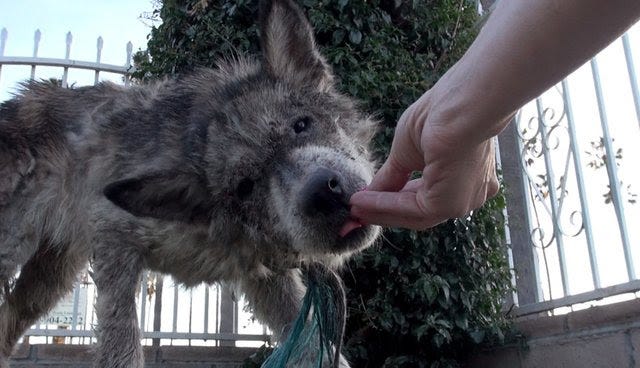
DOG OR WOLF?
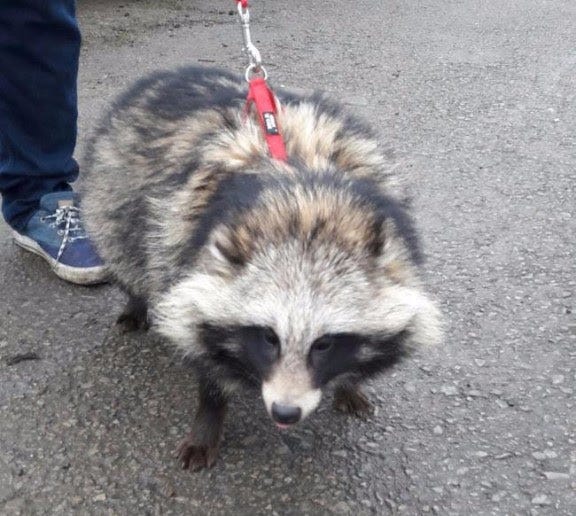
2. DOG OR RACCOON?
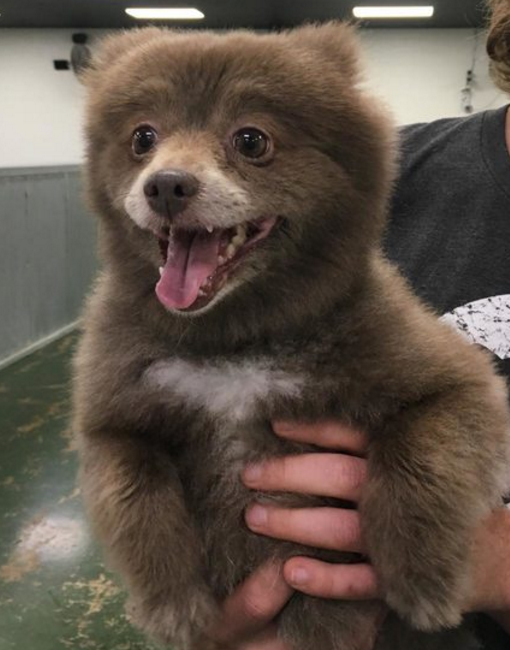
3. DOG OR BEAR?
4. DOG OR FOX?
5. DOG OR WOLF?
6. DOG OR BADGER?
7 . DOG OR VICIOUS, VICIOUS LION?
8. DOG OR FOX?
9. DOG OR WOLF?
10. DOG OR PANDA BEAR (LEFT)?
ANSWERS!!!!!
From Everything Changes, the Awl’s newsletter. Subscribe here.
> DOG OR BEAR? A quiz. was originally published in The Awl on Medium, where people are continuing the conversation by highlighting and responding to this story.
So the calls and emails have all been coming in. Some people happy and fascinated, others much more fearful, as they think that a great plague is about to strike. The emergence of dozens of cicadas has many people wondering what’s going on. Some are aware of Periodical Cicadas, sometimes called locust in a reference to biblical invasions of insects, others are not.
Indeed, we are in the midst of an emergence of Periodical Cicadas, but not the natural phenomenon of a great cicada year. The Big One is not due until 2021. Cicadas are insects known for the loud songs of the males. While we have numerous species of annual cicadas that come out every year during summer (many of which take more than one year to mature, but they’re staggered in breeding so some are out every year), Periodical Cicada are much different.
Periodical Cicadas (Magicicada species) emerge in huge numbers in late spring, generally on 13 and 17 year cycles. There are 7 Magicicada species, of which 3 are local to the DC area. They generally time themselves so they come out in gigantic numbers, thus the reference to biblical plagues of locust and their alternate name. By all coming out (and earlier in the season before predators like Cicada Killer wasps are active) at one time in such huge numbers, they make it impossible for all of them to be eaten. Though a favorite food, they just are too many to all get eaten. Since they come out after such an extended period of years underground, no single predator has adapted to feed on them exclusively. They just overwhelm all the potential hazards, so though thousands die, millions make it.
Since their emergence is synchronized over different regions, people have divided these regional cycles into Broods. There were 23 different Broods recognized at one time, but some have gone extinct. The DC area is part of Brood X.



















 The $484,000 vessels will collect tons of trash and debris from the Anacostia and Potomac Rivers. [
  Big news out of the Capitol on Friday, where ducklings have successfully mastered the ramp installed earlier this week at the Reflecting Pool. [
  Covered in little hooks for which to attach camouflaging doodads, these decorator crabs are the prima donnas of the tide pools.
 The Echo Meter can detect, record and identify the sounds of bats nearby.











 So the calls and emails have all been coming in. Some people happy and fascinated, others much more fearful, as they think that a great plague is about to strike. The emergence of dozens of cicadas has many people wondering what’s going on. Some are aware of Periodical Cicadas, sometimes called locust in a reference to biblical invasions of insects, others are not.
 See, not everything is terrible! [


 The sentence of the Wikileaks source was commuted by President Barack Obama before he left office. [
  Is it the house of the future or an interesting fad?
 Fido and Fluffy will love this door that opens just for them and then seals up Passivhaus tight.

 The Gemini wind farm will generate a whopping 2.6 TWh of electricity every year.

