Shared posts
22 Aug 21:24
Google Assistant may lessen your crippling depression with 'Tell me something good'
by Brian Fagioli
The world is a terrible place right now. In Pennsylvania, it was revealed that thousands of children were allegedly abused by Catholic priests over several decades. The President of the United States -- who some say is mentally unstable -- has been separating immigrant children from their parents. Mr. Trump -- who should be a role model -- is also calling human beings dogs on Twitter. In Florida, red tide is killing precious marine life, such as manatees and dolphins. Shockingly, all of that negative news is just from the USA! There are many other horrific things happening in other… [Continue Reading]
04 Oct 23:41

Are The Social Security Number’s Days Numbered?
by Ashlee Kieler
Though we may treat our Social Security numbers like confidential information, those nine digits are just about everywhere: Your bank, school, cable company, phone company, and more probably have this information, and may not be storing it securely. In a world where everything from fast food chains to massive global accounting firms are vulnerable to cybercrime, some are wondering if it’s time to say goodbye to the SSN.
That’s apparently option officials in the Trump Administration are weighing in the wake of rampant data breaches, such as the one suffered by credit reporting agency Equifax.
Bloomberg reports that Rob Joyce, special assistant to the president and White House cybersecurity coordinator, floated the idea of replacing the SSN as a way of proving one’s identity.
“I feel very strongly that the Social Security number has outlived its usefulness,” Joyce said during a cyber conference, as reported by Bloomberg. “Every time we use the Social Security number, you put it at risk.”
How’d We Get Here
A lot has changed in the 81 years since the SSN was created, from the way the numbers are used to the risks associated with the wrong person getting their hands on your information.
According to the Social Security Administration, the SSN was developed in 1936 as a way to track U.S. workers’ earning to determine their Social Security benefits. Since then, more than 454 million numbers have been issued.
The card was never intended to serve as a personal identification document, as it does not establish that the person presenting the card is actually the person whose name and SSN appear on the card, the SSA notes.
However, over time, the convenience and simplicity of the number has created a more wide-spread use by both government and private agencies.
In the 1940s, the government began requiring federal agencies to use SSNs for the purpose of identifying individuals in new records. With the creation of computers, the uses of the number increased.
In the 1970s, the SSA studied the use of the SSN for non social security uses. The resulting report suggested that using the nine-digit number as a national identifier wasn’t a great idea.
But that didn’t stop the government or private companies from requiring the number be used for a number of programs, including eligibility for Department of Veterans Affairs benefits, eligibility under Housing and Urban Development programs, as well as, for a time on driver’s licenses, death certificates, and other materials.
“Unfortunately, this universality has led to abuse of the SSN. Most notoriously, the SSN is a key piece of information used to commit identity theft,” the SSA points out.
Possible Options
For now, there isn’t a plan in place to change the SSN system, but the administration is looking into “what would be a better system” to not only identify consumers, but also protect them from hacks.
One possible option could be a “private key,” perhaps like a token or other physical item.
The token, similar to a credit card chip, would be embedded with a long cryptographic number. Once the token is presented, consumers would have to enter a PIN to enable its use, Joseph Lorenzo Hall, chief technologist at the Center for Democracy and Technology, tells Bloomberg.
While it would be an expensive and timely endeavor to change the SSN system currently in use, Joyce says it needs to happen.
“It’s really clear, there needs to be a change, but we’ll have to look at the details of what’s being proposed,” Joyce said.
Another possibility is the use of a blockchain technology to create a nearly impossible to duplicate DNA fingerprint identifier.
The number could then be stamped on all important documents used by the individual.
It’ll Take Time
If the use of SSNs is going to change, it won’t be quick.
“You’d need to change a lot of existing public law,” Marc Rotenberg, executive director of the Electronic Privacy Information Center, tells Bloomberg. “There would need to be extensive hearings and study about the consequences. It’s a complicated issue.”
Calls For Change
The Trump Administration isn’t the first group to look for or call for changes related to the use of SSNs.
In May, the Federal Trade Commission hosted an Identity Theft workshop focusing on how the fraud has evolved and what can be done to address it in the future.
Eva Valesquez, CEO of the Identity Theft Resource Center, noted during the panel discussion that the SSN should not have the level of important or weight that it is currently given.
“They are being used for something they were not designed for,” she noted. “In the perfect work we wouldn’t use as the main identifier.”
She pointed to the need to put a system in place that would allow for more verification of consumers’ identity.

19 Aug 16:03


Juggalos Will March on Washington in September
by Kevin
While people try to convince the President of the United States that Nazis and racists are, you know, bad, let’s not forget that the feds have been spread pretty thin trying to keep track of all the suspicious groups out there. Among them, of course, is that “loosely organized non-traditional hybrid gang subset” known to the federal government as the Juggalos.
As you may recall because I’ve mentioned it umpteen times, the DOJ used that memorable phrase to describe Juggalos—fans of the hip-hop duo Insane Clown Posse—in its 2011 National Gang Threat Assessment. ICP and certain Juggalos sued the DOJ and FBI in 2012, alleging that after the assessment was released, they were harassed by police, denied employment, and harmed in various other ways by the “gang” description. A federal district court dismissed for lack of standing, but in 2015, the Sixth Circuit reversed, saying they had alleged enough to go forward. But in September 2016, the district court dismissed again.
This time the court held the claim didn’t satisfy the Administrative Procedure Act, which governs legal actions that challenge federal agencies’ decisions. The decision has to be a “final agency action,” which in this case meant it had to (1) be final and (2) “cause legal consequences.” This one didn’t “cause legal consequences,” the court held, because everything the Juggalos alleged was done to them by some third party, not directly by the agencies themselves. They could have sued the FBI if they’d been arrested by FBI agents, apparently, but because the alleged hassling was done by state or local officials, the Juggalos were out of luck.
But that sounds an awful lot like the reason the court dismissed the first time, namely that the Juggalos hadn’t alleged Article III standing because their injuries resulted from “independent actions by third parties who are not currently before the court.” The Sixth Circuit disagreed with that, noting that “it is still possible to motivate harmful conduct without giving a direct order to engage in said conduct. The Juggalos allege that the injurious third-party actions were motivated by the DOJ gang designation,” and at least for Article III purposes, that was enough. On remand, though, the district court then held that even if it is enough for Article III, the very same causation argument isn’t enough for the APA. Okay, they can sue in federal court, he basically held, they just can’t win.
That isn’t necessarily wrong, because the Article III causation standard is pretty easy to satisfy, and so it’s possible to meet that standard but still come up short on the legal claim itself. But it’s interesting that the district court didn’t try to make this distinction—in fact, it didn’t mention the Sixth Circuit’s decision at all, instead relying on a Fourth Circuit case. In any event, the Juggalos have appealed again, so they haven’t given up on legal action.
They have decided to try something more direct, though—a march on Washington.
On September 16, 2017—just 33 days from now, as I write this, according to the Juggalo March on Washington Countdown Clock—a loosely organized non-traditional group of music fans will converge on the nation’s capital to protest the “gang” designation. They will meet at the Lincoln Memorial, hear some speeches, then march down to the Washington Monument and back. Will some or all of them detour north a bit to march around the White House? I sure hope so, but it’s not on the agenda at the moment.
Those not prepared to follow the Code should stay home
There will then be a free concert featuring (so far) 25 bands including not just ICP but also (among others) Big Hoodoo, Glasses Malone, Kung Fu Vampire, Zug Izland, and, for a reason that I’m sure will later be explained to the country’s full satisfaction, Vanilla Ice.


08 Dec 23:45
Cesarean Births Could Be Affecting Human Evolution, Study Says
by BeauHD
CanadianRealist writes: Larger babies delivered by cesarean section may be affecting human evolution. Researchers estimate cases where the baby cannot fit down the birth canal have increased from 30 in 1,000 in the 1960s to 36 in 1,000 births today, [according to estimates from researchers at the University of Vienna in Austria.] Science Alert reports: "In the past, larger babies and mothers with narrow pelvis sizes might both have died in labour. Thanks to C-sections, that's now a lot less likely, but it also means that those 'at risk' genes from mothers with narrow pelvises are being carried into future generations. More detailed studies would be required to actually confirm the link between C-sections and evolution, as all we have now is a hypothesis based on the birth data." Agreed, more studies required part. Cesareans may simply be becoming more common with "too large" defined as cesarean seems like a better idea. It's reasonable to pose the question based simply on an understanding of evolution. Like it's reasonable to conjecture that length of human pregnancy is a compromise between further development in utero, and chance of mother and baby surviving the delivery.


Read more of this story at Slashdot.
Ronald.phillips likes this
29 Jan 04:42
The EFF quotes legal blogger Scott Henson of Grits for Breakfast, who speculated the combination of license plate readers and credit card readers would push cops towards chasing down unpaid fines rather than enforcing traffic laws or performing more routine patrol duties. If so -- and it appears to be the case -- this is exactly the outcome Vigilant was expecting. It didn't hand out its tech for free. There may be no price tag on the plate readers at the point of purchase, but that's only because Vigilant has points on the back end.
As priorities shift towards ensuring ongoing use of the "free" ALPRs, other criminal activity is likely to receive less law enforcement attention. Unpaid fines and fees are in law enforcement's wheelhouse, but should never become its raison d'etre. Once it does, the whole community suffers. Anything that could be implemented to lower crime rates would also serve to lower revenue, making it far less likely to be implemented. Fewer infractions mean fewer opportunities to collect court fees. And while the legislators pushing the new law Vigilant is leveraging talked a good game about sending fewer people to overcrowded jails, the governments overseeing these agencies still have budgets to meet and law enforcement to lean on to ensure this happens. Actually achieving the bill's stated aims would mean a steady reduction in court fees, which would lead to the loss of "free" plate readers. And no one wants that, at least not on the government side of things.
Permalink | Comments | Email This Story


Cops Getting Free License Plate Readers In Exchange For 25% Of The 'Take' And All The Driver Data Vigilant Can Slurp
by Tim Cushing
What happens when you lower the barriers to entry? More participants join the market. It works everywhere, even when the market is "law enforcement" and the "customers" are everyone else.
Vigilant Solutions, one of the country’s largest brokers of vehicle surveillance technology, is offering a hell of a deal to law enforcement agencies in Texas: a whole suite of automated license plate reader (ALPR) equipment and access to the company’s massive databases and analytical tools—and it won’t cost the agency a dime.Well, we can see how this will benefit law enforcement and others on the government food chain, but it's unclear how this will benefit the public. The bill's sponsor said the law would "relieve the burden" of having their vehicles impounded or being jailed for unpaid fines. But beyond those vague perks, the benefits seem to flow mostly in one direction.
[...]
Vigilant is leveraging H.B. 121, a new Texas law passed in 2015 that allows officers to install credit and debit card readers in their patrol vehicles to take payment on the spot for unpaid court fines, also known as capias warrants. When the law passed, Texas legislators argued that not only would it help local government with their budgets, it would also benefit the public and police.
The EFF quotes legal blogger Scott Henson of Grits for Breakfast, who speculated the combination of license plate readers and credit card readers would push cops towards chasing down unpaid fines rather than enforcing traffic laws or performing more routine patrol duties. If so -- and it appears to be the case -- this is exactly the outcome Vigilant was expecting. It didn't hand out its tech for free. There may be no price tag on the plate readers at the point of purchase, but that's only because Vigilant has points on the back end.
The “warrant redemption” program works like this. The agency gets no-cost license plate readers as well as free access to LEARN-NVLS, the ALPR data system Vigilant says contains more than 2.8-billion plate scans and is growing by more than 70 million scans a month. This also includes a wide variety of analytical and predictive software tools.To make this relationship even more explicit, officers who issue tickets to parked vehicles rather than drivers leave a note instructing them to visit Vigilant's website to pay the fine. On top of the 25% fee, Vigilant also gets to collect massive amounts of sweet, sweet driver data, which it can then sell to other law enforcement agencies (database access licenses) and private firms (insurance companies, repo men, etc.). And, if the locals seem understaffed, Vigilant is more than happy to pick up the slack.
The government agency in turn gives Vigilant access to information about all its outstanding court fees, which the company then turns into a hot list to feed into the free ALPR systems. As police cars patrol the city, they ping on license plates associated with the fees. The officer then pulls the driver over and offers them a devil’s bargain: go to jail, or pay the original fine with an extra 25% processing fee tacked on, all of which goes to Vigilant.
In early December 2015, Vigilant issued a press release bragging that Guadalupe County had used the systems to collect on more than 4,500 warrants between April and December 2015. In January 2016, the City of Kyle signed an identical deal with Vigilant. Soon after, Guadalupe County upgraded the contract to allow Vigilant to dispatch its own contractors to collect on capias warrants.As the EFF points out, this freemium service benefits Vigilant and law enforcement, but does very little for the general public… including protect them from Vigilant's inability to perform its job competently.
During the second week of December, as part of its Warrant Redemption Program, Vigilant Solutions sent several warrant notices – on behalf of our law enforcement partners – in error to citizens across the state of Texas. A technical error caused us to send warrant notices to the wrong recipients.Apologies are nice, if of limited utility, but…
These types of mistakes are not acceptable and we deeply apologize to those who received the warrant correspondence in error and to our law enforcement customers.
[T]he company has not disclosed the extent of the error, how many people were affected, how much money was collected that shouldn’t have been, and what it’s doing to inform and make it up to the people affected.As has been discussed here before, turning law enforcement agencies into revenue-focused entities is a bad idea. Case in point: asset forfeiture. Further case in point: speed trap towns. Improper incentives lead to improper behavior. Agencies may like the idea of a "free" license plate reader, but the price still has to be paid by someone -- and that "someone" is going to be the general public.
As priorities shift towards ensuring ongoing use of the "free" ALPRs, other criminal activity is likely to receive less law enforcement attention. Unpaid fines and fees are in law enforcement's wheelhouse, but should never become its raison d'etre. Once it does, the whole community suffers. Anything that could be implemented to lower crime rates would also serve to lower revenue, making it far less likely to be implemented. Fewer infractions mean fewer opportunities to collect court fees. And while the legislators pushing the new law Vigilant is leveraging talked a good game about sending fewer people to overcrowded jails, the governments overseeing these agencies still have budgets to meet and law enforcement to lean on to ensure this happens. Actually achieving the bill's stated aims would mean a steady reduction in court fees, which would lead to the loss of "free" plate readers. And no one wants that, at least not on the government side of things.
Permalink | Comments | Email This Story
14 Jan 15:08

Google X loses the “Google,” gains a big yellow logo
by Ron Amadeo
X's new logo. (credit: Re/Code)
A report from Recode gives us a nice update on the goings-on inside of Google X—Google/Alphabet's moonshot division—and the group has a new name and a new logo. It dropped the "Google" and is just "X" now, and you can see the division's big yellow X logo above.
In The Google Tracker, we wondered if all the Alphabet companies with "Google" branding would end up getting renamed, and Google X is merely the latest division to drop "Google" once it left Google. We've also seen Google Ventures turn into "GV" (yes, just the letters), and Google Life Sciences become "Verily." The remaining non-Google products that use the "Google" name are Google Capital, Google Fiber, and Google Self Driving Cars.
The report says X is "sharpening its focus" and "framing itself as Alphabet’s incubator." X remains Alphabet's moonshot factory—it's there to evaluate ideas, build working solutions, and spin the projects out into Alphabet companies. The report says a new group inside X, called the "Foundry" is "creating tighter criteria" on when these projects get to live or die.
22 Mar 16:05


What Won’t the Daily Caller Publish? Anything Attacking Fox News
by J.K. Trotter
The Daily Caller is one of the most freewheeling conservative outlets in online media. Its reporters have leveled unsubstantiated allegations of prostitution against Senator Bob Menendez, falsely accused a New York Times reporter of posing nude for Playgirl, and even questioned the race of a black Washington Post reporter. These stories raise an interesting question: What wouldn’t the Daily Caller publish? Today one of its contributors learned the answer: Absolutely anything critical of Fox News.
22 Mar 13:25
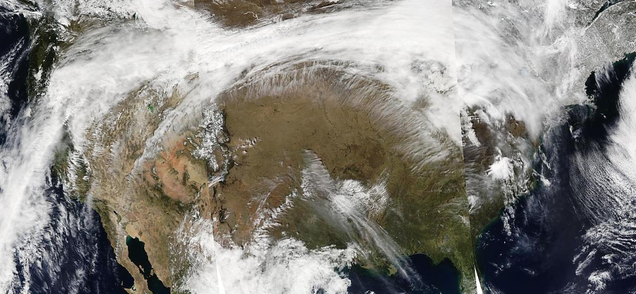


Near-Record Lull in Severe Weather Could Come to an End Next Week
by Dennis Mersereau
Even though Friday was the official start to spring, severe weather season across the U.S. typically ramps up much earlier. This year, however, has been quiet. Extremely quiet. In fact, we're on track to see the quietest start to the year we've ever recorded. That's probably going to change pretty soon.http://thevane.gawker.com/conga-line-of-...
27 Jan 15:14
Spies track mobile users with BADASS tracker (yes, that’s what they call it)
by Sean Gallagher
As Ars has previously reported, documents passed to journalists by former National Security Agency contractor Edward Snowden have shown that the NSA and its British counterpart agency, the GCHQ, have exploited privacy "leaks" in mobile applications (including Rovio's Angry Birds) to track individuals of interest. A new document recently published by Der Spiegel provides further details on just how much the GCHQ was able to extract from mobile data to keep tabs on those it targeted for surveillance. The British agency used a program referred to as BADASS to suck up data emitted from Angry Birds and other apps, and the information was so granular, analysts could even track how well (or poorly) a person was doing playing.
BADASS is an acronym for "BEGAL Automated Deployment And Survey System," and the system pulled in data from GCHQ and NSA network taps identified as mobile analytics and advertising traffic. Among other things, this data included Google "pref" cookies (such as those used by Ars to identify users in our own passive network surveillance testing with NPR) and Flurry application analytic data used by developers to track usage and performance of their mobile apps.

User location data and activity could also be monitored based on the data stream, allowing analysts to pinpoint an active user within minutes, according to the GCHQ presentation from 2011.
Leon likes this
10 Dec 03:32


David Brooks Loves Cops
by Leah Finnegan

David Brooks, a man with a national newspaper platform upon which he can reflect and analyze events for potentially millions of readers, is using that rich platform to ruminate on the recent grand jury non-indictments in the deaths of Eric Garner and Michael Brown, innocent men who were killed for no reason by police officers.
06 Oct 18:10
 Facebook on Thursday announced it had developed a framework for conducting research on its 1.3 billion or so users. The announcement clearly is a response to the onslaught of criticism the company received this summer, when it blithely reported the findings of a study about how News Feed content affected a user's mood. In carrying out that research, Facebook withheld certain posts and promoted others to see how users would react. When its methodology became public, reactions were immediate and harsh.
Being Facebook Means Never Having to Say You're Sorry
by Erika Morphy
Facebook on Thursday announced it had developed a framework for conducting research on its 1.3 billion or so users. The announcement clearly is a response to the onslaught of criticism the company received this summer, when it blithely reported the findings of a study about how News Feed content affected a user's mood. In carrying out that research, Facebook withheld certain posts and promoted others to see how users would react. When its methodology became public, reactions were immediate and harsh.
04 Aug 01:55
FCC Is 'Deeply Troubled' By Verizon Wireless's New Throttling Plans
by Mike Masnick
Earlier this week, we wrote about the ridiculousness of Verizon Wireless refering to its new plans to throttle heavy users of its LTE mobile data network as "network optimization" while denying that it was "throttling." However, in a bit of a surprise move, FCC chair Tom Wheeler has sent a rather angry letter to the company, questioning the plan:
Still, remember, that the "open internet rules" leave out wireless networks, a massive loophole that many of us warned about all along. However, in the current proposal, Wheeler did ask about whether the rules should extend to mobile operators as well, and this letter is a pretty clear signal that he sees very clear reasons to include such networks in the final rules.
Permalink | Comments | Email This Story


I am deeply troubled by your July 25, 2014 announcement that Verizon Wireless intends to slow down some customers' data speeds on your 4G LTE network starting in October 20 14. Your website explained that this was an extension of your "Network Optimization" policy, which, according to your website, applies only to customers with unlimited data plans. Specifically, Verizon Wireless "manage[s] data connection speeds for a small subset of customers - the top 5% of data users on unlimited data plans" in places and at times when the network is experiencing high demand. Verizon Wireless describes its "Network Optimization" as "network management."The letter then has a list of questions it is expecting Verizon to answer concerning this program. The third question may be the most important:
"Reasonable network management" concerns the technical management of your network; it is not a loophole designed to enhance your revenue streams. It is disturbing to me that Verizon Wireless would base its "network management" on distinctions among its customers' data plans, rather than on network architecture or technology. The Commission has defined a network management practice to be reasonable "if it is appropriate and tailored to achieving a legitimate network management purpose, taking into account the particular network architecture and technology of the broadband Internet access service." Such legitimate network management purposes could include: ensuring network security and integrity, including by addressing traffic that is harmful to the network; addressing traffic that is unwanted by end users (including by premise operators), such as by providing services or capabilities consistent with an end user's choices regarding parental controls or security capabilities; and reducing or mitigating the effects of congestion on the network. I know of no past Commission statement that would treat as "reasonable network management" a decision to slow traffic to a user who has paid, after all, for "unlimited" service.
How does Verizon Wireless justify this policy consistent with its continuing obligations under the 700 MHz C Block open platform rules, under which Verizon Wireless may not deny, limit, or restrict the ability of end users to download and utilize applications of their choosing on the C Block networks; how can this conduct be justified under the Commission's 2010 Open Internet rules, including the transparency rule that remains in effect?This is, in some ways, a follow up to Wheeler's letter last week, in which he reminded access providers of those transparency rules. Wheeler has shown, a few times, that he's willing to speak up against the actions of some of the broadband companies, which is a shift from previous FCC chairs. Of course, many are still reasonably skeptical about how much bite there is behind the bark, but it's at least a marginally good sign that he's paying attention and worried about this plan.
Still, remember, that the "open internet rules" leave out wireless networks, a massive loophole that many of us warned about all along. However, in the current proposal, Wheeler did ask about whether the rules should extend to mobile operators as well, and this letter is a pretty clear signal that he sees very clear reasons to include such networks in the final rules.
Permalink | Comments | Email This Story
04 Aug 01:50
NY Port Authority Claims To Own The NYC Skyline: Tells Store To Destroy Skyline-Themed Plates
by Mike Masnick
What is it with insane NY-related bureaucrats and their attempts to "own" things? In the past, we've covered how New York State is a pretty big trademark bully over the "I ♥ NY" phrase, and did you know that the Metropolitan Transit Authority (MTA) claims ownership over the phrase "If you see something, say something"? And, now, we find out that the controversy-ridden Port Authority of NY and NJ appears to be claiming ownership of the NYC skyline. No joke. It apparently sent a cease-and-desist letter to Fishs Eddy, a housewares store in Manhattan that is selling some city themed dishes. 
 According to the Port Authority, Fishs Eddy can't do that, because, dammit, only the Port Authority owns some of those buildings and bridges.
Permalink | Comments | Email This Story


According to the Port Authority, Fishs Eddy can't do that, because, dammit, only the Port Authority owns some of those buildings and bridges. In a letter to Fishs Eddy dated July 24, Veronica Rodriguez, a lawyer for the authority, asked the store to stop selling anything with these “assets” on them, and to “destroy all materials, documents and other items bearing the assets.”Yes, and your use of stupid bullying tactics over people celebrating your city is of great concern to pretty much everyone else. What sort of life must you lead to spend your work life looking for people to bully for daring to sell merchandise that celebrates the city you technically work for?
“Your use of the Port Authority’s assets on dinnerware and other items is of great concern to the Port Authority,” she wrote.
Permalink | Comments | Email This Story
25 Mar 14:55
No doubt the Supreme Court will get plenty of chances to hear the government discuss the nature and extent of the terrorist threat. But it needs to keep in mind that it's ruling on the constitutionality, not whether the ends justify the means.
This peculiar statement is also troubling in light of Scalia's earlier comments that same night, where he pointed out the dangers of originalism, and reinterpreting the Constitution in light of technological advances.
On the plus side, a person in the audience raised a question that may cause Scalia to reconsider his strict definition of what the Fourth Amendment covers.
Permalink | Comments | Email This Story


Judge Scalia Suggests The Supreme Court May Be Asked To Determine Constitutionality Of Metadata Program
by Tim Cushing
The US Supreme Court has yet to take a case that directly challenges the NSA's domestic surveillance programs, having turned down EPIC's turnstile-jumping attempt to bring the bulk collection to the court's attention back in November. More recently, it also declined to grant standing to a case pursued by the Center for Constitutional Rights challenging the legality of Bush-era surveillance programs.
But in a talk given at Brooklyn Law School last Friday, visiting Supreme Court Justice Antonin Scalia dropped hints that the telephone metadata program's constitutionality may be put in the hands of the Supreme Court.
Mr. Napolitano then asked if mass surveillance of cellphones and emails would be prohibited by the Fourth Amendment, which states: “The right of the people to be secure in their persons, houses, papers and effects, against unreasonable searches and seizures, shall not be violated.” Many of the National Security Agency’s controversial surveillance programs were prominently exposed last year by Edward Snowden, a former security contracted who leaked sensitive documents revealing the U.S. government’s wide collection of digital data.If this program does end up in front of the Court, it appears Scalia will be casting his lot with the government and its expansive reading of the Third Party Doctrine. He also suggested the Supreme Court wasn't up to the task, albeit based on severely backwards logic.
“You’re getting into the NSA stuff, right?” Mr. Scalia remarked–one of many snarky, laughter-drawing lines he issued throughout the evening. “This may come before the court. And I don’t want to get myself recused.” But Mr. Scalia nevertheless directly said he didn’t feel “conversations” were part of the “persons, houses, papers and effects” covered by the Fourth Amendment.
"The Supreme Court doesn't know diddly about the nature and extent of the threat," Scalia said. Later on, he added, "It's truly stupid that my court is going to be the last word on it."Why Scalia feels the "nature and extent of the threat" has any bearing on the program's adherence to the Constitution is beyond me, and his apparent willingness to defer to the government's justifications for domestic spying is troubling. This argument is on par with the City of New York arguing for the stop-and-frisk program because it was useful in fighting crime, an argument the presiding judge dismissed as irrelevant to the issue at hand: the constitutionality of the program itself.
No doubt the Supreme Court will get plenty of chances to hear the government discuss the nature and extent of the terrorist threat. But it needs to keep in mind that it's ruling on the constitutionality, not whether the ends justify the means.
This peculiar statement is also troubling in light of Scalia's earlier comments that same night, where he pointed out the dangers of originalism, and reinterpreting the Constitution in light of technological advances.
“It’s the freedom of speech. It doesn’t matter whether you’re speaking in semaphore or a cellphone or any type of modern technology. You apply the same First Amendment principals to the new technology that you applied to the old. And the same for reasonable searches and seizures.”If Scalia's going to argue that the times may change but the Constitution doesn't, then he needs to be consistent. Just because a threat that was minimal before September 2001 is now viewed as all-encompassing by the government should have no bearing on whether the Supreme Court is capable of issuing an opinion on the constitutionality of the NSA's domestic surveillance.
On the plus side, a person in the audience raised a question that may cause Scalia to reconsider his strict definition of what the Fourth Amendment covers.
When Mr. Scalia later took questions from audience members, a law student surprised the self-confident justice by pressing him on whether personal computer data–not conversations–should be protected. “Do you believe that data within a computer would be too broad of a construction of the word ‘effects’ under the Fourth Amendment?” the student inquired.So, that's a bit more promising. And Scalia is just one of nine justices. With two judges having issued contrary opinions on the Section 215 program, it may be the Court's responsibility to sort this out. Of course, this is just one of the NSA's programs with constitutional implications, and it's one that looks to be severely scaled back if not sacrificed completely to keep other, more intrusive programs free from additional scrutiny.
“Mmm! Mmm!” Mr. Scalia exclaimed to himself, clearly impressed with the line of argument but cautious about weighing in on a topic he expects to come up before the U.S. Supreme Court.
“I better not answer that,” he added whimsically. “That’s something that may well come up. It’s a really good question.”
Permalink | Comments | Email This Story
    
|
05 Mar 22:41

As some of you may know, one of the defining features of Japanese porn is that genitals are pixelated. This might seem a little odd, considering the reputation that Japan has for being slightly on the sexually depraved side, but for decades there has been a law that requires all domestic porn to be censored. Unpixelated porn is produced, but because it's illegal (and actually policed) it's usually only produced by smaller studios or enterprising sole traders. Now, for the discerning porn watcher, there's finally another solution: A depixelation machine!


Depixelating porn: Is it really possible to restore 8-bit genitals to their former glory?
by Sebastian Anthony
As some of you may know, one of the defining features of Japanese porn is that genitals are pixelated. This might seem a little odd, considering the reputation that Japan has for being slightly on the sexually depraved side, but for decades there has been a law that requires all domestic porn to be censored. Unpixelated porn is produced, but because it's illegal (and actually policed) it's usually only produced by smaller studios or enterprising sole traders. Now, for the discerning porn watcher, there's finally another solution: A depixelation machine!
15 Oct 19:02
WikiLeaks Inspires Online Oversharing
by Mike Olson
WikiLeaks wannabes take aim at everything from Russia's oligarchs to porn stars. Just how good are they?


|
|
No more posts. Check out what's trending.