14 Apr 15:09
by Pablo Docampo, Stefan Guldin, Tomas Leijtens, Nakita K. Noel, Ullrich Steiner, Henry J. Snaith
The field of solution-processed photovoltaic cells is currently in its second spring. The dye-sensitized solar cell is a widely studied and longstanding candidate for future energy generation. Recently, inorganic absorber-based devices have reached new record efficiencies, with the benefits of all-solid-state devices. In this rapidly changing environment, this review sheds light on recent developments in all-solid-state solar cells in terms of electrode architecture, alternative sensitizers, and hole-transporting materials. These concepts are of general applicability to many next-generation device platforms.

The field of solution-processed photovoltaic cells is currently in its second spring, with solid-state devices incorporating novel inorganic absorbers reaching record efficiencies. This review sheds light on recent developments in all-solid-state solar cells in terms of electrode architecture, alternative sensitizers, and hole-transporting materials: concepts applicable to many next-generation device platforms.
13 Apr 16:10
Publication date: 25 May 2014
Source:Surface and Coatings Technology, Volume 247
Author(s): Shusheng Xu , Xiaoming Gao , Jiayi Sun , Ming Hu , Desheng Wang , Dong Jiang , Feng Zhou , Lijun Weng , Weimin Liu
Pure WS2 and WS2/Cu multilayer films were deposited by radio frequency sputtering method and the erosion behavior caused by moisture was studied. For the pure WS2 film, the morphology, microstructure, composition and also the tribological properties experienced substantial change upon storage in humid air environments. Depth XPS and Raman analysis showed that the pure WS2 film suffered deep oxidation due to the open structure, but the compact WS2/Cu multilayer film resisted oxidation very well. For the multilayer film, the oxidation was restricted on the surface layer owing to the protective effect of the reactive product cladding layer of W and Cu oxidation and the compact microstructure. The open lamella structure of pure WS2 film allowed moisture to diffuse into the film interior, and so the deep oxidation, evolution of structure and Fe substrate corrosion contributed to the deterioration of tribological properties. The WS2/Cu multilayer film exhibited better deep oxidation resistance even after storage for long durations in humid air environments, and accordingly still showed low and stable friction coefficient and long wear life.
13 Apr 16:10
Publication date: 25 May 2014
Source:Surface and Coatings Technology, Volume 247
Author(s): Kenneth Holmberg , Anssi Laukkanen , Erja Turunen , Tarja Laitinen
The wear resistance of components can be changed remarkably by surface coatings. New processing methods offer many possibilities to tailor the wear resistance of surfaces to match design criteria. Computational modelling and simulation is a systematic approach to optimise the wear performance. Modelling of physical surface phenomena can be carried out on all spatial scale levels, from sub-atomic one to macrolevel and for the various stages in material development, from material processing to structures, properties and performance. The interactions between the coating matrix, the reinforced particles, degraded material phases and defects like pores, cracks and voids are of crucial importance for the wear performance of composite coatings. This has been modelled by synthetic artificial models to find general design rules and by real image based models to find out the wear behaviour of specific coatings. The effect of particle size, morphology, clusters, mean free path and porosity was simulated for thermal spray WC–CoCr coatings. Four main very typical mechanisms for crack initiation resulting in surface failure have been identified: brittle carbide fracture, ductile binder cracking, interface failure, and cracking from pre-existing porosities and defects. The most important coating properties having a crucial effect on coating wear resistance are defects in the coating structure as they can create detrimental stress peaks and high strain levels, particle clustering is most critical for the durability of the structure, the elasticity of the particle is of great importance as well as matrix hardness and particle morphology.
12 Apr 19:04
by Michael A. Boles and Dmitri V. Talapin

Journal of the American Chemical Society
DOI: 10.1021/ja501596z

12 Apr 10:19
Tribology Transactions, Volume 57, Issue 3, Page 496-502, May-June 2014.
12 Apr 10:19
Tribology Transactions, Volume 57, Issue 3, Page 503-514, May-June 2014.
12 Apr 10:18
Dalton Trans., 2014, 43,8877-8887
DOI: 10.1039/C4DT00690A, Paper
Kaushik Sen, Tahamida Banu, Tanay Debnath, Deepanwita Ghosh, Abhijit K. Das
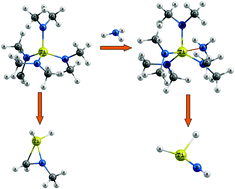
Insightful information is obtained regarding the fundamental processes associated with the chemical vapor deposition of TiN thin films using Ti(NMe2)4.
The content of this RSS Feed (c) The Royal Society of Chemistry

12 Apr 10:15
J. Mater. Chem. A, 2014, 2,12136-12149
DOI: 10.1039/C4TA01047G, Feature Article
Dong Wook Chang, Hyun-Jung Choi, Alan Filer, Jong-Beom Baek
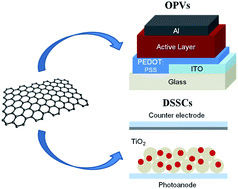
In this feature article, we summarize the development of graphene and graphene-related materials for various components used in photovoltaic applications such as organic photovoltaic cells (OPVs) and dye-sensitized solar cells (DSSCs).
The content of this RSS Feed (c) The Royal Society of Chemistry
12 Apr 10:15
Abstract
In this paper, Cu/AlMgB14 composites with by weight percent, 5, 10 and 20 % of the AlMgB14 (referred to CA-5, CA-10 and CA-20) were fabricated by hot-press sintering method. The mechanical and dry-sliding tribological properties of the three composites were investigated. The results indicated that the densities of the Cu/AlMgB14 composites were lower than copper, whereas the hardness higher. The friction and wear behaviors of the composites were strongly dependent on the AlMgB14 content. The friction coefficient was in the range of 0.73–1.0 for CA-5, but it was always steady at about 0.2 for CA-10 and CA-20. Accordingly, the increase in the AlMgB14 concentration can improve the wear resistance of the composites.
11 Apr 09:22
Tribology Transactions, Volume 57, Issue 3, Page 382-386, May-June 2014.
10 Apr 11:14
Abstract
The work illustrates the preparation of stable suspensions of single-walled carbon nano-horns (SWCNHs) in engine oil and shows their tribological behavior at different temperatures. The suspension stability was verified by dynamic light scattering, and the viscosity of suspensions was measured. Stribeck test was used to evaluate the tribological performances of nano-lubricants in the 25–80 °C temperature range. The coefficient of friction was reduced with the addition of SWCNHs at all temperatures and concentrations. In particular, at T = 25 °C, the coefficient friction was reduced up to about 12 % in boundary regime even with a very low SWCNH concentration (0.01 vol%). Wear tests were carried out to verify results obtained from Stribeck characterization. A decrease in mean wear rate was observed at each temperature, between 25 and 30 %. In particular, at 25 °C, a decrease of about 30 % in wear rate was estimated. Friction coefficient decrease was also observed during all wear tests, probably due to the ball-bearing effect played by SWCNHs spherical aggregates. Therefore, SWCNHs revealed the potential to be promising candidates as additives, to develop a new class of lubricants that are suitable and effective in different operating environments.
10 Apr 11:11
Abstract
To improve the tribological properties of WS2 film both in vacuum and in humid air conditions, its microstructure was optimized by doping different concentrations of Cu via radio frequency co-sputtering method. The film microstructure and composition were investigated by field emission scanning electron microscopy, energy-dispersive X-ray spectroscopy, X-ray photoelectron spectroscopy, Raman spectroscopy, grazing incidence X-ray diffraction and high-resolution transmission electron microscopy. It was verified that Cu was presented in amorphous phase in the WS2 matrix and could also induce amorphization and densification of the composite films gradually. The film microstructure changed from coarse columnar platelet structure at low Cu content (0–5.8 at.%) to transition structure with two separate layers at increased Cu content (11.5–16.2 at.%) and to a featureless structure at high Cu content (above 24.4 at.%). The mechanical and tribological properties of films were evaluated using the scratch tester and ball-on-disk tribometer, respectively. It was found that the incorporation of a suitable content of Cu dopant could significantly improve the film toughness, but excess amount of Cu dopant lead to high brittleness. All the composite films exhibited much lower wear rate and longer wear life than those of pure WS2 film both in vacuum and in humid air conditions. The wear mechanisms were proposed after correlating the mechanical performance with film microstructure.
10 Apr 10:56
by Khaled Parvez, Zhong-Shuai Wu, Rongjin Li, Xianjie Liu, Robert Graf, Xinliang Feng and Klaus Müllen

Journal of the American Chemical Society
DOI: 10.1021/ja5017156

08 Apr 20:16
J. Mater. Chem. A, 2014, 2,8981-8987
DOI: 10.1039/C4TA00652F, Feature Article
Martin Pumera, Zdenek Sofer, Adriano Ambrosi
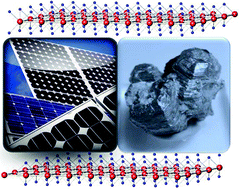
Layered transition metal dichalcogenides (TMDs) (MoS2, MoSe2, WS2, WSe2, etc.) are a chemically diverse class of compounds having remarkable electrochemical properties.
The content of this RSS Feed (c) The Royal Society of Chemistry
08 Apr 20:14
by Kai Yuan, Lie Chen, Licheng Tan, Yiwang Chen
Abstract
Two-dimensional graphene–CdS (G–CdS) semiconductor hybrid nanosheets were synthesized in situ by graphene oxide (GO) quantum wells and a metal–xanthate precursor through a one-step growth process. Incorporation of G–CdS nanosheets into a photoactive film consisting of poly[4,8-bis-(2-ethyl-hexyl-thiophene-5-yl)-benzo[1,2-b:4,5-b]dithiophene-2,6-diyl]-alt-[2-(2-ethyl-hexanoyl)-thieno[3,4-b]thiophen-4,6-diyl] (PBDTTT-C-T) and [6,6]-phenyl C70 butyric acid methyl ester (PC70BM) effectively decreases the exciton lifetime to accelerate exciton dissociation. More importantly, the decreasing energy levels of PBDTTT-C-T, PC70BM, and G–CdS produces versatile heterojunction interfaces of PBDTTT-C-T:PC70BM, PBDTTT-C-T:G–CdS, and PBDTTT-C-T:PC70BM:G–CdS; this offers multi-charge-transfer channels for more efficient charge separation and transfer. The charge transfer in the blend film also depends on the G–CdS nanosheet loadings. In addition, G–CdS nanosheets improve light utilization and charge mobility in the photoactive layer. As a result, by incorporation of G–CdS nanosheets into the active layer, the power-conversion efficiency of inverted solar cells based on PBDTTT-C-T and PC71BM is improved from 6.0 % for a reference device without G–CdS nanosheets to 7.5 % for the device with 1.5wt % G–CdS nanosheets, due to the dramatically enhanced short-circuit current. Combined with the advantageous mechanical properties of the PBDTTT-C-T:PC70BM:G–CdS active layer, the novel CdS-cluster-decorated graphene hybrid nanomaterials provide a promising approach to improve the device performance.

Two-dimensional exciton dissociation centers were fabricated in situ. By incorporating these centers into active layers (see figure, ITO=indium tin oxide, GO=graphene oxide), exciton dissociation and separation was dramatically improved with remarkably enhanced collecting and transporting efficiency of photoinduced electrons and holes, and thus elevated device performance.
08 Apr 20:13
by Sebastian Schlücker
Abstract
Surface-enhanced Raman scattering (SERS) has become a mature vibrational spectroscopic technique during the last decades and the number of applications in the chemical, material, and in particular life sciences is rapidly increasing. This Review explains the basic theory of SERS in a brief tutorial and—based on original results from recent research—summarizes fundamental aspects necessary for understanding SERS and provides examples for the preparation of plasmonic nanostructures for SERS. Chemical applications of SERS are the centerpiece of this Review. They cover a broad range of topics such as catalysis and spectroelectrochemistry, single-molecule detection, and (bio)analytical chemistry.

Expanding vibrational spectroscopy: Since its first observation in 1973, surface-enhanced Raman scattering (SERS) has developed into a mature vibrational spectroscopic technique. The number of applications in chemistry as well as the material and life sciences is increasing rapidly. This Review summarizes the key concepts behind SERS and provides an overview of current applications in chemistry.
08 Apr 20:12
by Xue-Jun Wu, Xiao Huang, Juqing Liu, Hai Li, Jian Yang, Bing Li, Wei Huang, Hua Zhang
Abstract
Semiconducting nanosheets with microscale lateral size are attractive building blocks for the fabrication of electronic and optoelectronic devices. The phase-controlled chemical synthesis of semiconducting nanosheets is of particular interest, because their intriguing properties are not only related to their size and shape, but also phase-dependent. Herein, a facile method for the synthesis of phase-pure, microsized, two-dimensional (2D) CuSe nanosheets with an average thickness of approximately 5 nm is demonstrated. These hexagonal-phased CuSe nanosheets were transformed into cubic-phased Cu2−xSe nanosheets with the same morphology simply by treatment with heat in the presence of CuI cations. The phase transformation, proposed to be a template-assisted process, can be extended to other systems, such as CuS and Cu1.97S nanoplates. Our study offers a new method for the phase-controlled preparation of 2D nanomaterials, which are not readily accessible by conventional wet-chemical methods.

Not fazed by change: A facile solution-based strategy was used for the preparation of microsized CuSe nanosheets. As-prepared CuSe with a hexagonal phase was transformed into Cu2−xSe with a cubic phase through simple treatment with heat without damaging the shape of the original 2D nanosheets (see picture). The two kinds of nanosheets show different optical properties and are both promising building blocks for the construction of various devices.
08 Apr 20:05
by Xingli Wang, Yongji Gong, Gang Shi, Wai Leong Chow, Kunttal Keyshar, Gonglan Ye, Robert Vajtai, Jun Lou, Zheng Liu, Emilie Ringe, Beng Kang Tay and Pulickel M. Ajayan

ACS Nano
DOI: 10.1021/nn501175k

05 Apr 11:06
CrystEngComm, 2014, 16,5488-5493
DOI: 10.1039/C4CE00371C, Highlight

Open Access
Teng-Hao Chen, Semin Lee, Amar H. Flood, Ognjen S. Miljanic
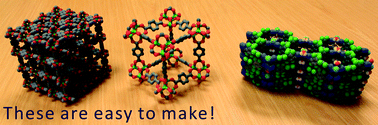
We present a simple procedure for the conversion of Crystallographic Information Files (CIFs) into Virtual Reality Modelling Language (VRML2, .wrl) files, which can be used as input files for three-dimensional (3D) printing.
The content of this RSS Feed (c) The Royal Society of Chemistry

05 Apr 11:02
Chem. Soc. Rev., 2014, 43,7681-7717
DOI: 10.1039/C3CS60435G, Review Article
Noemi Linares, Ana M. Silvestre-Albero, Elena Serrano, Joaquin Silvestre-Albero, Javier Garcia-Martinez
The development of controlled mesoporosity unlocks new opportunities in clean energy technologies by providing better accessibility, a higher surface area and better dispersion of the active phase.
The content of this RSS Feed (c) The Royal Society of Chemistry

05 Apr 11:02
J. Mater. Chem. C, 2014, 2,4100-4111
DOI: 10.1039/C4TC00351A, Feature Article
Tao Ding, Yue Long, Kuo Zhong, Kai Song, Guoqiang Yang, Chen-Ho Tung
To avoid the symmetry-induced degeneration of photonic bands of classical fcc colloidal photonic crystals and potentially open a complete photonic bandgap, in this feature article, recent efforts towards this end were thoroughly reviewed and summarised from three aspects: the symmetries of the building blocks, the crystalline lattices and the dielectrics of materials.
The content of this RSS Feed (c) The Royal Society of Chemistry
05 Apr 11:01
J. Mater. Chem. C, 2014, 2,4442-4448
DOI: 10.1039/C4TC00476K, Paper
Jianbing Zhang, Rong Li, Weipeng Sun, Qi Wang, Xiangshui Miao, Daoli Zhang
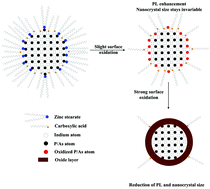
Surface oxidation substantially affects the optical properties of nanocrystals. Primary oxidation eliminates the surface dangling bonds and leads to PL enhancement, while it does not affect the nanocrystal size. However, further surface oxidation results in reduction of PL.
The content of this RSS Feed (c) The Royal Society of Chemistry
05 Apr 11:00
J. Mater. Chem. A, 2014, 2,7862-7872
DOI: 10.1039/C4TA01247J, Paper
Shan Hu, Wen Chen, Jing Zhou, Fei Yin, Evan Uchaker, Qifeng Zhang, Guozhong Cao
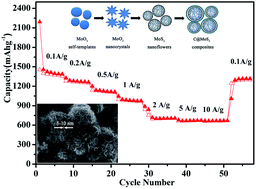
The optimally-designed ultrathin MoS2 nanosheets with carbon coating composites not only provide an increased layer distance but maintain robust nanostructures, which exhibit an improved rate capabilities and good cyclic stability.
The content of this RSS Feed (c) The Royal Society of Chemistry
05 Apr 10:51
by Hai Li, Jumiati Wu, Zongyou Yin and Hua Zhang

Accounts of Chemical Research
DOI: 10.1021/ar4002312

05 Apr 10:50
by Cheng-Yang Yue, Xiao-Wu Lei, Rui-Qiu Liu, Hui-Ping Zhang, Xiu-Rong Zhai, Wen-Peng Li, Meng Zhou, Zhi-Fei Zhao, Yun-Xiang Ma and Ya-Dong Yang

Crystal Growth & Design
DOI: 10.1021/cg500153u

05 Apr 10:47
by Matthias Weiß, Jörg B. Kinzel, Florian J. R. Schülein, Michael Heigl, Daniel Rudolph, Stefanie Morkötter, Markus Döblinger, Max Bichler, Gerhard Abstreiter, Jonathan J. Finley, Gregor Koblmüller, Achim Wixforth and Hubert J. Krenner

Nano Letters
DOI: 10.1021/nl4040434

05 Apr 10:47
by Yongsheng Yu, Weiwei Yang, Xiaolian Sun, Wenlei Zhu, X.-Z. Li, D. J. Sellmyer and Shouheng Sun

Nano Letters
DOI: 10.1021/nl500776e

05 Apr 10:46
by Xing Dai, Sen Zhang, Zilong Wang, Giorgio Adamo, Hai Liu, Yizhong Huang, Christophe Couteau and Cesare Soci

Nano Letters
DOI: 10.1021/nl5006004

05 Apr 10:45
by Xiaoqian Li, Qing Chen, Ian McCue, Joshua Snyder, Peter Crozier, Jonah Erlebacher and Karl Sieradzki

Nano Letters
DOI: 10.1021/nl500377g

05 Apr 10:42
by Lena Yadgarov, Charina L. Choi, Anastasiya Sedova, Ayala Cohen, Rita Rosentsveig, Omri Bar-Elli, Dan Oron, Hongjie Dai and Reshef Tenne

ACS Nano
DOI: 10.1021/nn5000354