Publication date: 1 June 2014
Source:Materials Letters, Volume 124
Author(s): Tian-Xing Wang , Yan-Guo Li , Hai-Rui Liu , Hui Li , Si-Xiang Chen
In this paper, flower-like Cu2NiSnS4 (CNTS) nanoparticles were successfully synthesized by a facile solvothermal method for the first time. The as-synthesized CNTS nanoparticles were characterized with X-ray diffraction (XRD), energy dispersive spectrometry (EDS), scanning electron microscopy (SEM), transmission election microscopy (TEM) and UV–vis–NIR spectroscopy. The CNTS semiconductor nanoparticles possessed pure cubic structure with size of the flowers around 400nm in diameter. The UV–vis–NIR spectroscopy showed strong light absorption in the visible light region with band gap of 1.41eV, suggesting its potential application in the field of thin film solar cells.
Shared posts
05 Apr 11:03

Nanoparticles meet electrospinning: recent advances and future prospects

Chem. Soc. Rev., 2014, 43,4423-4448
DOI: 10.1039/C3CS60426H, Review Article
DOI: 10.1039/C3CS60426H, Review Article
Chuan-Ling Zhang, Shu-Hong Yu
In this critical review, the latest advances on nanoparticles-electrospun fibres by post-treatment of the as-prepared electrospun fibres or directly adding nanoparticles into electrospun solution have been overviewed. The application potentials of the nanoparticle-electrospun fibre composites and the trends in this emerging field have been described.
The content of this RSS Feed (c) The Royal Society of Chemistry
In this critical review, the latest advances on nanoparticles-electrospun fibres by post-treatment of the as-prepared electrospun fibres or directly adding nanoparticles into electrospun solution have been overviewed. The application potentials of the nanoparticle-electrospun fibre composites and the trends in this emerging field have been described.
The content of this RSS Feed (c) The Royal Society of Chemistry
Chendahong1987, wangchuanxi and one other like this
05 Apr 11:00
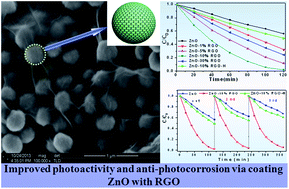
Toward the enhanced photoactivity and photostability of ZnO nanospheres via intimate surface coating with reduced graphene oxide
J. Mater. Chem. A, 2014, 2,9380-9389
DOI: 10.1039/C4TA01077A, Paper
DOI: 10.1039/C4TA01077A, Paper
Bo Weng, Min-Quan Yang, Nan Zhang, Yi-Jun Xu
The uniform ZnO nanospheres are densely and intimately coated with graphene nanosheets, which exhibit significantly enhanced photoactivity and photostability.
The content of this RSS Feed (c) The Royal Society of Chemistry
The uniform ZnO nanospheres are densely and intimately coated with graphene nanosheets, which exhibit significantly enhanced photoactivity and photostability.
The content of this RSS Feed (c) The Royal Society of Chemistry
05 Apr 10:57
Tribological performance of some solid lubricants for hot forming through laboratory simulative tests
Publication date: June 2014
Source:Tribology International, Volume 74
Author(s): A. Tomala , S. Hernandez , M. Rodriguez Ripoll , E. Badisch , B. Prakash
Tribological research concerning sliding contacts at temperatures of 500–1000°C has received limited attention. Industrial systems operating under high temperatures can be readily found in sheet metal forming processes. The control of friction during the tool–workpiece interaction and minimisation of tool wear are both crucial in maintaining the products quality. The application of solid lubricants can be a possible approach in accomplishing these goals.The objective of this work is to investigate the reliability of combined model and component tests under solid lubricating conditions. The laboratory tests showed that both methodologies provide consistent results in exploring potential of the solid lubricants.
Source:Tribology International, Volume 74
Author(s): A. Tomala , S. Hernandez , M. Rodriguez Ripoll , E. Badisch , B. Prakash
Tribological research concerning sliding contacts at temperatures of 500–1000°C has received limited attention. Industrial systems operating under high temperatures can be readily found in sheet metal forming processes. The control of friction during the tool–workpiece interaction and minimisation of tool wear are both crucial in maintaining the products quality. The application of solid lubricants can be a possible approach in accomplishing these goals.The objective of this work is to investigate the reliability of combined model and component tests under solid lubricating conditions. The laboratory tests showed that both methodologies provide consistent results in exploring potential of the solid lubricants.
05 Apr 10:53

Quaternary Sulfide Ba6Zn6ZrS14: Synthesis, Crystal Structure, Band Structure, and Multiband Physical Properties
by Xian Zhang, Jianqiao He, Wei Chen, Ketian Zhang, Chong Zheng, Junliang Sun, Fuhui Liao, Jianhua Lin, Fuqiang Huang
Abstract
Ba6Zn6ZrS14 was synthesized by a traditional salt-melt method with KI as flux. The pale yellow crystals of Ba6Zn6ZrS14 crystallize in the tetragonal space group I4/mcm with a=16.3481 (4) Å and c=9.7221(6) Å. The structure features unique one-dimensional parallel [Zn6S9]6− and [ZrS5]6− straight chains. The D2h-symmetric [Zn6S9]6− cluster serves as the building block of the [Zn6S9]6− chains. A powder sample was investigated by X-ray diffraction, optical absorption, and photoluminescence measurements. The compound shows multiple-absorption character with three optical absorption edges around 1.78, 2.50, and 2.65 eV, respectively, which are perfectly consistent with the results of first-principles calculations. Analysis of the density of states further revealed that the three optical absorption bands are attributable to the three S(3p6)→Zr(4d0) transitions due to the splitting of the Zr 4d orbitals in the D4h crystal field. The multiband nature of Ba6Zn6ZrS14 also results in photocatalytic activity under visible-light irradiation and three band-edge emissions.

Bandgap engineering: ZnS- and ZrS-based building blocks were combined to construct multicomponent material Ba6Zn6ZrS14, which features two types of one-dimensional chains parallel to the c axis and shows a much more complex absorption character than simple ZnS and ZrS2 materials, with three optical absorption edges around 1.78, 2.50, and 2.65 eV (see figure).
05 Apr 10:52

Broadband Few-Layer MoS2 Saturable Absorbers
by Shuxian Wang, Haohai Yu, Huaijin Zhang, Aizhu Wang, Mingwen Zhao, Yanxue Chen, Liangmo Mei, Jiyang Wang

The bandgaps of monolayer and bulk molybdenum sulfide (MoS2) result in that they are far from suitable for application as a saturable absorption device. In this paper, the operation of a broadband MoS2 saturable absorber is demonstrated by the introduction of suitable defects. It is believed that the results provide some inspiration in the investigation of two-dimensional optoelectronic materials.
05 Apr 10:49


Controllable Growth of ZnO Nanorod Arrays on NiO Nanowires and Their High UV Photoresponse Current
by Ting Guo, Yidong Luo, Yujun Zhang, Yuan-Hua Lin and Ce-Wen Nan

Crystal Growth & Design
DOI: 10.1021/cg500031t
05 Apr 10:49


General Synthesis Method for Bimetallic Carbides of Group VIIIA First Row Transition Metals with Molybdenum and Tungsten
by Yagya N. Regmi and Brian M. Leonard

Chemistry of Materials
DOI: 10.1021/cm500076v
riel likes this
05 Apr 10:48


Large-Area Synthesis of Monolayer and Few-Layer MoSe2 Films on SiO2 Substrates
by Xin Lu, M. Iqbal Bakti Utama, Junhao Lin, Xue Gong, Jun Zhang, Yanyuan Zhao, Sokrates T. Pantelides, Jingxian Wang, Zhili Dong, Zheng Liu, Wu Zhou and Qihua Xiong

Nano Letters
DOI: 10.1021/nl5000906
wangchuanxi, ziyang likes this
05 Apr 10:47

Nanocrystalline Rutile Electron Extraction Layer Enables Low-Temperature Solution Processed Perovskite Photovoltaics with 13.7% Efficiency
by Aswani Yella, Leo-Philipp Heiniger, Peng Gao, Mohammad Khaja Nazeeruddin and Michael Grätzel

Nano Letters
DOI: 10.1021/nl500399m
zjz330966593, ziyang and -1 others like this
02 Apr 19:13

Quantum Dots: Bandgap Tuning by Using a Lattice Distortion Induced by Two Symmetries That Coexist in a Quantum Dot (Small 7/2014)
by Eui-Hyun Kong, Yong-June Chang, Hyun-Jin Park, Hyun M. Jang
DJLLooks like it's important after all Chris...fancy writing THAT review??

A novel way to tune the bandgap in an Ag2S quantum dot (QD) system is developed by inducing a lattice-distorted region of ≈1-nm scale in a QD with rapid quenching. Accordingly, the bandgap can be controlled simply by tailoring the degree of the lattice-distortion in a QD (2.51 to 1.64 eV). As reported by H. M. Jang and co-workers on page 1300, this conceptual method can pave a new way to realize quantum effects in future QD-based applications.
Thanks Ian, riel likes this
02 Apr 19:12

Graphene nanosheets encapsulated [small alpha]-MoO3 nanoribbons with ultrahigh lithium ion storage properties

CrystEngComm, 2014, 16,6745-6755
DOI: 10.1039/C4CE00252K, Paper
DOI: 10.1039/C4CE00252K, Paper
Pei-Jie Lu, Ming Lei, Jun Liu
A facile and effective method has been reported to synthesize graphene-encapsulated [small alpha]-MoO3 nanoribbons by self-assembly of negatively charged graphene oxide and positively charged MoO3 nanoribbons.
The content of this RSS Feed (c) The Royal Society of Chemistry
A facile and effective method has been reported to synthesize graphene-encapsulated [small alpha]-MoO3 nanoribbons by self-assembly of negatively charged graphene oxide and positively charged MoO3 nanoribbons.
The content of this RSS Feed (c) The Royal Society of Chemistry
Chendahong1987 likes this
02 Apr 19:11
Morphology controlled synthesis of wurtzite ZnS nanostructures through simple hydrothermal method and observation of white light emission from ZnO obtained by annealing the synthesized ZnS nanostructures

J. Mater. Chem. C, 2014, 2,4338-4346
DOI: 10.1039/C4TC00091A, Paper
DOI: 10.1039/C4TC00091A, Paper
Arup Kanti Kole, Chandra Sekhar Tiwary, Pathik Kumbhakar
A controllable synthesis of phase pure wurtzite (WZ) ZnS nanostructures at a low temperature of [similar]220 [degree]C by varying the zinc and sulphur precursor.
The content of this RSS Feed (c) The Royal Society of Chemistry
A controllable synthesis of phase pure wurtzite (WZ) ZnS nanostructures at a low temperature of [similar]220 [degree]C by varying the zinc and sulphur precursor.
The content of this RSS Feed (c) The Royal Society of Chemistry
02 Apr 19:10
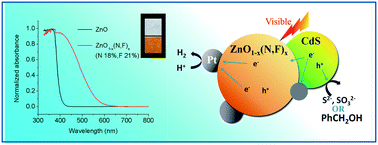
Remarkable improvement in visible-light induced hydrogen generation by ZnO/Pt/Cd1-yZnyS heterostructures through substitution of N and F in ZnO
J. Mater. Chem. A, 2014, 2,7702-7705
DOI: 10.1039/C4TA01445F, Communication
DOI: 10.1039/C4TA01445F, Communication
S. R. Lingampalli, C. N. R. Rao
Co-substitution of N and F brings about remarkable changes in the electronic structure of ZnO, resulting in an improved yield of hydrogen by visible light irradiation of ZnO/Pt/CdS heterostructures.
The content of this RSS Feed (c) The Royal Society of Chemistry
Co-substitution of N and F brings about remarkable changes in the electronic structure of ZnO, resulting in an improved yield of hydrogen by visible light irradiation of ZnO/Pt/CdS heterostructures.
The content of this RSS Feed (c) The Royal Society of Chemistry
02 Apr 19:08
Template-directed synthesis of pyrite (FeS2) nanorod arrays with an enhanced photoresponse

J. Mater. Chem. A, 2014, Advance Article
DOI: 10.1039/C4TA00759J, Paper
DOI: 10.1039/C4TA00759J, Paper
Mudan Wang, Chengcheng Xing, Ke Cao, Lei Zhang, Jiabin Liu, Liang Meng
Well-aligned ZnO nanorod arrays were used as templates to produce Fe(OH)3 nanotube arrays. The as-grown Fe(OH)3 nanotube arrays were then used as templates to obtain an FeS2 nanorod array. The FeS2 nanorod arrays had much better photovoltaic properties than the FeS2 nanoparticles due to the high specific area, direct transport pathways and enhanced light harvesting of the nanorod array structure.
To cite this article before page numbers are assigned, use the DOI form of citation above.
The content of this RSS Feed (c) The Royal Society of Chemistry
Well-aligned ZnO nanorod arrays were used as templates to produce Fe(OH)3 nanotube arrays. The as-grown Fe(OH)3 nanotube arrays were then used as templates to obtain an FeS2 nanorod array. The FeS2 nanorod arrays had much better photovoltaic properties than the FeS2 nanoparticles due to the high specific area, direct transport pathways and enhanced light harvesting of the nanorod array structure.
To cite this article before page numbers are assigned, use the DOI form of citation above.
The content of this RSS Feed (c) The Royal Society of Chemistry
02 Apr 19:08
Highly connected hierarchical textured TiO2 spheres as photoanodes for dye-sensitized solar cells

J. Mater. Chem. A, 2014, 2,8902-8909
DOI: 10.1039/C3TA15444K, Paper
DOI: 10.1039/C3TA15444K, Paper
Jianjian Lin, Andrew Nattestad, Hua Yu, Yang Bai, Lianzhou Wang, Shi Xue Dou, Jung Ho Kim
Highly connected hierarchical textured TiO2 spheres, composed of high aspect-ratio nanosheets, gave high conversion efficiency in dye-sensitized solar cells.
The content of this RSS Feed (c) The Royal Society of Chemistry
Highly connected hierarchical textured TiO2 spheres, composed of high aspect-ratio nanosheets, gave high conversion efficiency in dye-sensitized solar cells.
The content of this RSS Feed (c) The Royal Society of Chemistry
02 Apr 19:06

Three-Dimensional Self-Supported Metal Oxides for Advanced Energy Storage
by Brian L. Ellis, Philippe Knauth, Thierry Djenizian
The miniaturization of power sources aimed at integration into micro- and nano-electronic devices is a big challenge. To ensure the future development of fully autonomous on-board systems, electrodes based on self-supported 3D nanostructured metal oxides have become increasingly important, and their impact is particularly significant when considering the miniaturization of energy storage systems. This review describes recent advances in the development of self-supported 3D nanostructured metal oxides as electrodes for innovative power sources, particularly Li-ion batteries and electrochemical supercapacitors. Current strategies for the design and morphology control of self-supported electrodes fabricated using template, lithography, anodization and self-organized solution techniques are outlined along with different efforts to improve the storage capacity, rate capability, and cyclability.

The role of electrodes based on self-supported 3D nanostructured metal oxides is important in energy storage and conversion. This article introduces readers to the concept of self-supported 3D electrodes and the advantages of these electrodes have over current designs, along with the common methods of fabrication and potential applications, such as 3D Li-ion microbatteries and supercapacitors.
02 Apr 19:04

Crystal Shape Engineering of Topological Crystalline Insulator SnTe Microcrystals and Nanowires with Huge Thermal Activation Energy Gap
by Muhammad Safdar, Qisheng Wang, Misbah Mirza, Zhenxing Wang and Jun He

Crystal Growth & Design
DOI: 10.1021/cg5002122
02 Apr 19:03

SHG Materials SnGa4Q7 (Q = S, Se) Appearing with Large Conversion Efficiencies, High Damage Thresholds, and Wide Transparencies in the Mid-Infrared Region
by Zhong-Zhen Luo, Chen-Sheng Lin, Hong-Hua Cui, Wei-Long Zhang, Hao Zhang, Zhang-Zhen He and Wen-Dan Cheng

Chemistry of Materials
DOI: 10.1021/cm5006955
Dr Henry likes this
02 Apr 19:01

Coaxial Multishell (In,Ga)As/GaAs Nanowires for Near-Infrared Emission on Si Substrates
by Emmanouil Dimakis, Uwe Jahn, Manfred Ramsteiner, Abbes Tahraoui, Javier Grandal, Xiang Kong, Oliver Marquardt, Achim Trampert, Henning Riechert and Lutz Geelhaar

Nano Letters
DOI: 10.1021/nl500428v
ziyang likes this
02 Apr 19:00


Multibit Data Storage States Formed in Plasma-Treated MoS2 Transistors
by Mikai Chen, Hongsuk Nam, Sungjin Wi, Greg Priessnitz, Ivan Manuel Gunawan and Xiaogan Liang

ACS Nano
DOI: 10.1021/nn501181t
tankchen and -1 others like this
02 Apr 18:59


Cu2ZnSnS4xSe4(1–x) Solar Cells from Polar Nanocrystal Inks
by Joel van Embden, Anthony S. R. Chesman, Enrico Della Gaspera, Noel W. Duffy, Scott E. Watkins and Jacek J. Jasieniak

Journal of the American Chemical Society
DOI: 10.1021/ja501218u
01 Apr 19:31

Quantum Dot Tailored to Single Wall Carbon Nanotubes: A Multifunctional Hybrid Nanoconstruct for Cellular Imaging and Targeted Photothermal Therapy
by Lakshmi. V. Nair, Yutaka Nagaoka, Toru Maekawa, D. Sakthikumar, Ramapurath. S. Jayasree

Hybrid nanomaterial based on quantum dots and SWCNTs is used for cellular imaging and photothermal therapy. Furthermore, the ligand conjugated hybrid system (FaQd@CNT) enables selective targeting in cancer cells. The imaging capability of quantum dots and the therapeutic potential of SWCNT are available in a single system with cancer targeting property. Heat generated by the system is found to be high enough to destroy cancer cells.
01 Apr 19:30

In situ fabrication of Cu2ZnSnS4 nanoflake thin films on both rigid and flexible substrates
DJLCZTS saves the world from disaster again

CrystEngComm, 2014, 16,6244-6249
DOI: 10.1039/C4CE00174E, Paper
DOI: 10.1039/C4CE00174E, Paper
Xuezhen Zhai, Huimin Jia, Yange Zhang, Yan Lei, Jie Wei, Yuanhao Gao, Junhao Chu, Weiwei He, Jun-Jie Yin, Zhi Zheng
Pure CZTS thin film is formed directly at a temperature of 250 [degree]C, the lowest temperature of any current fabrication system, on both flexible stainless steel and rigid FTO substrates.
The content of this RSS Feed (c) The Royal Society of Chemistry
Pure CZTS thin film is formed directly at a temperature of 250 [degree]C, the lowest temperature of any current fabrication system, on both flexible stainless steel and rigid FTO substrates.
The content of this RSS Feed (c) The Royal Society of Chemistry
01 Apr 19:23
Superhydrophobicity of hierarchical ZnO nanowire coatings

J. Mater. Chem. A, 2014, 2,6180-6184
DOI: 10.1039/C3TA14102K, Paper
DOI: 10.1039/C3TA14102K, Paper
Maogang Gong, Zhou Yang, Xiaoliang Xu, Daniel Jasion, Shin Mou, Hongdi Zhang, Yunze Long, Shenqiang Ren
Hierarchical superhydrophobic surfaces are constructed by growing various lengths of ZnO nanowires on micro-scale Si pyramids produced by chemical etching.
The content of this RSS Feed (c) The Royal Society of Chemistry
Hierarchical superhydrophobic surfaces are constructed by growing various lengths of ZnO nanowires on micro-scale Si pyramids produced by chemical etching.
The content of this RSS Feed (c) The Royal Society of Chemistry
01 Apr 19:21

Nano-Gold as Artificial Enzymes: Hidden Talents
by Youhui Lin, Jinsong Ren, Xiaogang Qu
Creating artificial enzymes that mimic the complexity and function of natural systems has been a great challenge for the past two decades. In this Progress Report, the focus is on recently discovered “hidden talents” of gold nanomaterials in artificial enzymes, including mimicking of nuclease, esterase, silicatein, glucose oxidase, peroxidase, catalase, and superoxide dismutase. These unexpected enzyme-like activities can be ascribed to nano-gold itself or the functional groups present on surrounding monolayer. Along with introducing the mechanisms of the various enzyme-like activities, the design and development of gold-based biomimetic catalysts, the search for efficient modulators, and their potential applications in bionics, biosensing, and biomedical sciences are highlighted. Eventually, it is expected that the rapidly growing interest in gold-based nanozymes will certainly fuel the excitement and stimulate research in this highly active field.

A significant challenge in chemistry is to create synthetic structures that mimic the complexity and function of natural systems. In this Progress Report, recent progress for enzyme-like catalytic activities based on gold nanomaterials is introduced. The work covers catalytic mechanisms, design and development, and potential applications of these catalysts. Additionally, the perspectives on future opportunities and current challenges are also discussed.
01 Apr 19:20

Ambipolar MoTe2 Transistors and Their Applications in Logic Circuits
by Yen-Fu Lin, Yong Xu, Sheng-Tsung Wang, Song-Lin Li, Mahito Yamamoto, Alex Aparecido-Ferreira, Wenwu Li, Huabin Sun, Shu Nakaharai, Wen-Bin Jian, Keiji Ueno, Kazuhito Tsukagoshi

We report ambipolar charge transport in α-molybdenum ditelluride (MoTe2) flakes, whereby the temperature dependence of the electrical characteristics was systematically analyzed. The ambipolarity of the charge transport originated from the formation of Schottky barriers at the metal/MoTe2 contacts. The Schottky barrier heights as well as the current on/off ratio could be modified by modulating the electrostatic fields of the back-gate voltage (V bg) and drain-source voltage (V ds). Using these ambipolar MoTe2 transistors we fabricated complementary inverters and amplifiers, demonstrating their feasibility for future digital and analog circuit applications.
01 Apr 19:18

Identification and X-ray Co-crystal Structure of a Small-Molecule Activator of LFA-1-ICAM-1 Binding
by Martin Hintersteiner, Jörg Kallen, Mario Schmied, Christine Graf, Thomas Jung, Gemma Mudd, Steven Shave, Hubert Gstach, Manfred Auer
DJLThis is your ICAM-1
Abstract
Stabilization of protein–protein interactions by small molecules is a concept with few examples reported to date. Herein we describe the identification and X-ray co-crystal structure determination of IBE-667, an ICAM-1 binding enhancer for LFA-1. IBE-667 was designed based on the SAR information obtained from an on-bead screen of tagged one-bead one-compound combinatorial libraries by confocal nanoscanning and bead picking (CONA). Cellular assays demonstrate the activity of IBE-667 in promoting the binding of LFA-1 on activated immune cells to ICAM-1.

Tuned up: The LFA-1 ICAM-1 interaction is a fundamental step in T-cell activation in response to antigen encounter. A small-molecule activator of LFA-1, IBE-667, was identified by confocal on-bead screening. The identified activator binds to LFA-1 I domain, as revealed by the co-crystal structure, and increases the affinity of LFA-1 for ICAM-1 on activated T-cells.
01 Apr 19:17

Nuno Maulide
DJLBach causing great temporal stress

“My greatest achievement is hopefully still to come from an unexpected observation. I lose track of time whenever I'm playing Bach …” This and more about Nuno Maulide can be found on page 7984.
01 Apr 18:53

Enantioselective Radiosynthesis of Positron Emission Tomography (PET) Tracers Containing [18F]Fluorohydrins
by Thomas J. A. Graham, R. Frederick Lambert, Karl Ploessl, Hank F. Kung and Abigail G. Doyle
DJLCaution: includes heavy PETting

Journal of the American Chemical Society
DOI: 10.1021/ja5025645
Stevetchem, jiachunman81 and 3 others like this