Shared posts

07 Dec 17:21

7 stories to read this weekend

by Om Malik

I am traveling this coming week, so I wanted to make sure I got a great package of articles in your hands before I took off. Here are some of my recommendations for the week:

Related research and analysis from Gigaom Research:
Subscriber content. Sign up for a free trial.

05 Dec 20:58

Lego Mona Lisa

by Jason Kottke

This Lego Mona Lisa is amazing:

Lego Mona Lisa

Crazy recognizable even with only ~400 pixels. The Girl With the Pearl Earring is pretty good too. Of course, nothing beats Lego Stephen Hawking. (via mlkshk)

Tags: art   Legos   Mona Lisa
04 Dec 15:53

Links for December 4th

by delicious
Claus.dahl

ah, yes - lovely. I've just been irb -r ./app.rb'ing myselv

  • "Tux dresses up sinatra in a shell. Use it to interact with your helpers, view rendering and your app’s response objects. Tux also gives you commands to view your app’s routes and settings." Handy – will definitely be using that in future.
27 Nov 11:45

Goldieblox May Be Right About Fair Use, But Wrong About Claiming You Need A License To Link To Its Site

by Mike Masnick
Claus.dahl

Goldieblox - entitled assholes masquerading as regular folks

We've already written about the dispute between Goldieblox and the Beastie Boys not once, but twice, coming down strongly on the side of Goldieblox in this dispute. However, as noted in Jeff Roberts' coverage of the case over at Gigaom, it appears that Goldieblox might want to take a closer look at their own terms of service, which makes some absolutely ridiculous and laughable claims about how you can't link to their website: If you can't see that, the key part says:
LINKS BY YOU TO THE WEBSITE. We grant you a limited, non-exclusive, revocable, non-assignable, personal, and non-transferable license to create hyperlinks to the Website, so long as: (a) the links only incorporate text, and do not use any trademark graphics that are owned or licensed to GoldieBlox, (b) the links and the content on your website do not suggest any affiliation with GoldieBlox or cause any other confusion, and (c) the links and the content on your website do not portray GoldieBlox or its products or services in a false, misleading, derogatory, or otherwise offensive matter, and do not contain content that is inappropriate for children or that is unlawful, offensive, obscene, lewd, lascivious, filthy, violent, threatening, harassing, or abusive, or that violate any right of any third party or are otherwise objectionable to GoldieBlox. GoldieBlox reserves the right to suspend or prohibit linking to the Website for any reason, in its sole discretion, without advance notice or any liability of any kind to you or any third party.
Except, there's no legal basis for this whatsoever. I can link to them here, as I have, and say things that they disagree with, and they can scream and holler about them "revoking" their license to link and it would mean absolutely nothing. Because just as you don't need a license to create a parody song, you don't need a license to link to someone's website.

Overly demanding a license or permission for things is a big problem. Goldieblox should be supported for making it clear you don't need a license for parody, but it should be called out for pretending a license is needed for linking.

Permalink | Comments | Email This Story


27 Nov 09:59

GoldieBlox and the Three MCs

Claus.dahl

Værd at læse

Update: GoldieBlox removed the original video and posted a public apology. See below for updates.

Everyone thinks they know how copyright works, and everyone's usually wrong. Who can blame them? It's often counterintuitive, inconsistent, and riddled with grey areas and edge cases.

And no area of copyright law is more confusing than fair use, deliberately designed to be judged in court on a case-by-case basis without any "bright line" tests to guide the way.

The test for fair use is a balancing act of four factors, but how they're weighed is often subjective, determined by a judge. Different judges rule differently on similar fair use cases, and circuit courts commonly reverse fair use rulings from district courts on appeal.

If even judges can't agree on fair use, what chance do the rest of us have of understanding it?

In fair use, there's no silver bullet and exceptions are the norm. Some parodies are fair use, others aren't. Commercial use can weigh against a fair use ruling, but there are many notable commercial exceptions. Using a substantial amount of the original artwork can hurt your case, other times it doesn't matter. Damaging the market value of an original artwork can hurt your claim or, as with parodies, it may not matter at all.

So, how does that play out in GoldieBlox v. Beastie Boys?

It's entirely possible that the GoldieBlox video is simultaneously:

  • A parody
  • An advertisement
  • A derivative of the Beastie Boys' copyrighted work
  • A violation of MCA's dying wishes
  • And, yet, perfectly legal under the fair use doctrine.

Only a judge can decide whether GoldieBlox's parody is fair use. And, until they do and all the appeals are closed, none of us will know.

In the meantime, let's bust some myths!

Disclaimer: Hey, I'm not a lawyer either. But I've been writing about copyright here for over ten years and dealt with several copyright disputes myself, including my tangle with fair use from Kind of Bloop. I'm going to try to avoid any conjecture here, and stick to actual case law. If I miss something, please let me know.


Myth: The Beastie Boys sued GoldieBlox.

The Beastie Boys were quick to debunk this one themselves in their open letter. "When we tried to simply ask how and why our song 'Girls' had been used in your ad without our permission," they wrote, "YOU sued US."

But GoldieBlox filed a very particular type of lawsuit, a declaratory judgement. Unlike typical lawsuits, GoldieBlox isn't seeking damages. They're asking the court to issue an opinion without ordering Beastie Boys to do anything in particular or pay damages, beyond possibly their own legal expenses.

This appears confusingly aggressive, but it's a common tactic when threatened with a copyright lawsuit. If it works, the court's clarification can save the time and money spent fighting an expensive trial. You may remember Robin Thicke reluctantly suing Marvin Gaye's family, when they threatened to take him to court over "Blurred Lines." Same deal.

Update: Yesterday, on December 10, the Beastie Boys filed a countersuit. So now they actually are suing GoldieBlox.


Myth: It's an advertisement, so it's not fair use.

More than any other, I've seen this myth repeated everywhere. Can a company parody a famous artist's work and use it, against their will, to advertise an unrelated product? Actually, yes, as long as the use is transformative enough.

The most famous case is the Naked Gun advertisement below, a parody of photographer Annie Leibovitz's famous portrait of Demi Moore for Vanity Fair.

If you care about this sort of thing, the District Court's decision is a fantastic, and surprisingly readable, breakdown of the history of parody and fair use.

In her decision, Judge Preska noted that the landmark 2 Live Crew case, settled by the Supreme Court only two years earlier, set a new precedent for deciding fair use cases.

In that case, the Supreme Court ruled that commercial use does not preclude a finding of fair use, so long as the work is "transformative" — does it add value to the original material and use it for a different purpose, such as criticism or parody?

Delivering the opinion of the Supreme Court, Justice Souter wrote, "The goal of copyright, to promote science and the arts, is generally furthered by the creation of transformative works... The more transformative the new work, the less will be the significance of other factors, like commercialism, that may weigh against a finding of fair use."

Later in the ruling, Justice Souter specifically addressed parodies in advertising. He wrote, "The use, for example, of a copyrighted work to advertise a product, even in a parody, will be entitled to less indulgence under the first factor of the fair use enquiry, than the sale of a parody for its own sake."

In the Naked Gun case, armed with this new precedent, the District Court decided in Paramount Pictures' favor:

"I can only reconcile these disparate elements by returning to the core purpose of copyright: to foster the creation and dissemination of the greatest number of creative works. The end result of the Nielsen ad parodying the Moore photograph is that the public now has before it two works, vastly different in appeal and nature, where before there was only one."

Annie Leibovitz appealed, but the 2nd Circuit Court affirmed the decision, saying, "On balance, the strong parodic nature of the ad tips the first factor significantly toward fair use, even after making some discount for the fact that it promotes a commercial product."

So, in the GoldieBlox case, the court will decide whether the parody's criticism of "Girls" sexist lyrics outweigh its commercial nature. The EFF believes they will, and given the existing precedent, they may be right.


Myth: GoldieBlox stole from the Beastie Boys.

First off, infringement is not theft. These are two completely different terms with different meanings. If GoldieBlox stole something, the Beastie Boys wouldn't have it anymore.

Second, it's worth noting that GoldieBlox didn't sample from the original song. (If they had, this would be a very different lawsuit.) Their parody was recorded with new instrumentation, vocals, and lyrics.

GoldieBlox used the composition to create a derivative work. Because it was unlicensed and created without permission, that new work may infringe the Beastie Boys' copyright. This lawsuit will determine whether it's infringement or fair use.

But however you look at it, it's not stealing.


Myth: The Beastie Boys always have a right to decide how their music is used.

Usually, but not always! The Copyright Act grants broad exclusive rights to musicians to control the reproduction, performance, and distribution of their work for an absurdly long time—70 years after their death.

But there are a number of exceptions. Musicians can't, for example, stop the secondhand sale of their albums or stop people from covering their songs.

Similarly, fair use is an exception to those exclusive rights. If someone can defend their use of a song in court, and the court rules it a fair use, then that use is legal and outside the artist's control.


Myth: Adam Yauch's will forbids using his songs in advertising, so it's illegal.

In his last will, MCA stated that "in no event may my image or name or any music or any artistic property created by me be used for advertising purposes."

By ignoring the last wishes of one of hip-hop's greatest musicians, less than two years after his death, there's a strong argument to be made that what GoldieBlox is doing is unethical. To me, it feels crass and insensitive.

But is it illegal? Not if the court finds the parody to be fair use.

This isn't a moral judgement, and this isn't copyright activism. This is the law, as it exists right now.


Myth: If this is legal, then any company can parody songs in ads for free.

The crux of this case is whether the GoldieBlox parody is transformative. The parody video's new lyrics criticize the misogynistic lyrics of the original Beastie Boys song. If it didn't, there wouldn't be a case.

Any other parody in advertising that doesn't transform the original will still need permission and pay licensing fees. Snuggie will still have to pay for their version of the Macarena because it doesn't comment or criticize the original in any way.

It's worth noting that this isn't the first time GoldieBlox used a song in an ad. This earlier ad from July rewrote some of the chorus to Queen's "We Are the Champions", but left most of it intact. I'd wager they never licensed this music either, and wouldn't really have a defense if EMI came knocking.


Undetermined: The Beastie Boys were just asking questions and GoldieBlox sued them.

Neither party has released the initial complaint letter from the Beastie Boys, so we don't know who sent the letters, the tone of the questions or what, if anything, they were demanding.

We do know that GoldieBlox claims in their lawsuit that they were contacted by "lawyers for the Beastie Boys" and the letter claimed that the video is "a copyright infringement, is not a fair use, and that GoldieBlox's unauthorized use of the Beastie Boys intellectual property is a 'big problem' that has a 'very significant impact.'"

It's possible that GoldieBlox's legal team is lying in a court filing, but it seems unlikely. More likely, the truth is somewhere in the middle. The law firm representing the Beastie Boys contacted GoldieBlox, asking for details and pushing them to delete the video. GoldieBlox felt they were in the right, and filed the request for declaratory judgment to find out.

I hope either party releases the original correspondence, it should be interesting.


Undetermined: This is all a publicity stunt.

It could be. GoldieBlox founder and CEO Debra Sterling, despite her Stanford engineering background, spent seven years as a brand strategist and marketing director before starting GoldieBlox. She definitely knows how to get publicity for her projects.

But there are certainly more affordable, less risky ways to gain publicity than filing a lawsuit. If they felt it wasn't a serious threat, they could have simply gone public with the legal threat, posting the correspondence and writing a blog post.

But there's no question this lawsuit has raised the profile of GoldieBlox, for better or worse.


The More You Know

So, who knows? This could go either way, and should be a fascinating case to watch. I'm in favor of more case law in either direction, helping draw the lines for what artists can or can't do. It can be agonizing to make something that skirts the grey areas of copyright law without knowing whether you're going to end up bankrupt.

Want to learn more?

Both the 2 Live Crew and Annie Leibovitz rulings are surprisingly readable explanations of how copyright and fair use are interpreted by the courts.

On the Media's PJ Vogt published a great interview with Julie Ahrens, the director of Copyright & Fair Use at Stanford's Center for Internet & Society. The EFF's legal analysis is interesting, but I think they downplay the advertising issue too much. Rachel Sklar does her own fair use analysis.

On the other side of the spectrum, Felix Salmon blames Silicon Valley's cult of disruption for GoldieBlox's behavior. And, hey, are the toys actually any good?


Updates

Update: Last night, on November 26, GoldieBlox marked the original video private and uploaded a new version with modified music and all Beastie Boys references removed. This morning, founder and CEO Debbie Sterling posted this public letter to the Beastie Boys.

December 11: Yesterday, the Beastie Boys filed a countersuit for copyright and trademark infringement. We may see a ruling after all.


 
26 Nov 14:09

24nov2013

by Christian Neukirchen

Chess World Championships 2013, Anand vs. Carlsen. Nice commentary on the games, also showing why they didn’t move differently. I’m not very much into chess but enjoyed that.

Small gaps between primes, by James Maynard. “We introduce a refinement of the GPY sieve method for studying prime k-tuples and small gaps between primes. […] We also show that lim inf(pn+1−pn) ≤ 600.”

Primes in intervals of bounded length (PDF), summary paper by Andrew Granville about the recent developments.

R7RS-small draft ratified by the Steering Committee.

40 years of boxplots, by Hadley Wickham and Lisa Stryjewski.

Advanced R programming, book in progress by Hadley Wickham.

Seaborn is a library of high-level functions that facilitate making informative and attractive plots of statistical data using Python’s matplotlib.

Alea: a library for reasoning on randomized algorithms in Coq, by Christine Paulin-Mohring.

Vectorization of ChaCha Stream Cipher, by Martin Goll and Shay Gueron. “On the latest Intel Haswell microarchitecture, our AVX2 implementation performs at 1.43 cycles per byte (on a 4KB message), which is ~2x faster than the current implementation in the Chromium project.”

minime, a minimalist editor inspired by sam(1), acme(1) and emacs(1). Looks pretty neat.

Nomography, or Computing without Computers.

Fairy chess

25 Nov 20:20

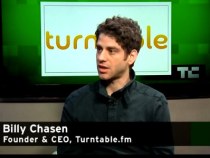
Turntable.fm Shutting Down So Company Can Focus On Turntable Live Events Platform

by Matthew Panzarino
Claus.dahl

Never a chance

Turntable2

Today, Turntable.fm has announced that it will shut down its ‘virtual dj' product entirely to focus on its new Turntable Live platform, which attempts to replicate the ‘being there' experience of live performances. TechCrunch broke the news of Turntable.fm's live event pivot back in September, but today the company has acknowledged that Turntable.fm will be shuttered.

The news comes in a blog post by the Turntable team, where it details the efforts to get Turntable.fm, which was beloved by a core group of users, to work on a wider scale.

“For over 2 years, we've improved and evolved the turntable.fm experience. We made rooms expand to unlimited sizes, made thousands of UI improvements, launched GOLD, built a mini-player, designed tons of avatars and listened to our community, trying to make the experience as wonderful as possible,” says the posting. “Over those two years, the community has played over 400 million songs in about a million rooms.”

Unfortunately, those efforts weren't enough. Comscore numbers in September put Turntable traffic at around 89k uniques. When he spoke to us a couple of months ago, Founder Billy Chasen said that the removal of the ability to upload music was able to save the company about $20k a month. But the posting says that the price of running the music service remained too high.

“It was a tough decision to make because we love this community so much, but the cost of running a music service has been too expensive and we can't outpace it with our efforts to monetize it and cut costs,” says the posting. “If we also want to give Turntable Live a real shot, we need to fully focus on it.”

The company says that playlists and songs will be able to be exported via Spotify or CSV file. It's also making avatars available for everyone, rather than just those who have leveled up. It's going to work on making ‘anonymous' raw data dumps of Turntable info available for developers to play with.

The company says it will host a live party on Turntable.fm on December 2. Presumably the site will be shut down after that date.

Here's an example of what a Turntable Live performance looks like.

I always found Turntable.fm quite cool, but the basic concept had some distinct flaws. Streaming music is often something that people listen to in the background, without the time or inclination to directly participate. Having humans program your stream is kind of neat, but the overhead of hanging out in a special online room to do so ended up not panning out. A live event is another whole bag entirely, as people would theoretically be showing up for a specific reason and hanging out would feel like less of a chore. At least, that's what Turntable is betting on. We'll see.

In the meantime, come pour one out on Turntable.fm here.


25 Nov 20:19

Showtime: Microsoft, “Google Chrome Bouncing Ball”

by Bruce Sterling
Claus.dahl

Det er rimelig vildt at det er astroturfing det her. Superaggresiv reklame.

*Stack wars as vernacular video.


25 Nov 17:51

This Is the Man Bill Gates Thinks You Absolutely Should Be Reading

by Clive Thompson
Claus.dahl

wtf is up with these new pieces of shit in my feed? Gimme some copy already

This Is the Man Bill Gates Thinks You Absolutely Should Be Reading
"There is no author whose books I look forward to more than Vaclav Smil," says Bill Gates. Here's why...


25 Nov 17:48

PandoDaily Acquires Paul Carr's NSFW Corp

by Anthony Ha
Claus.dahl

Come on, of course it's a kind of bailout. Too bad; I liked the idea of NSFWCORP even if I didn't purchase

Paul Carr

Tech news site PandoDaily is acquiring NSFW Corporation, the humor- and politics-focused publication founded by former TechCrunch columnist Paul Carr (pictured), according to a story in the Guardian.

The NSFW Corp team will reportedly form an investigative unit at PandoDaily, which will be renamed Pando.com. Like Carr, Pando founder Sarah Lacy left TechCrunch after Michael Arrington was pushed out by acquirer AOL. (In fact, PandoDaily launched on my first day at TechCrunch.) Both companies raised money from Arrington's CrunchFund.

Carr had earlier written on Pando that he had to raise funding quickly to keep the company alive, an effort that he later said had succeeded.

In her own post about the deal, Lacy said that this she isn't just bailing out a friend:

It was NSFWCORP's shift towards focusing on the rising power and influence of technology entrepreneurs that ultimately made this deal happen. At lunch a few weeks ago, Paul told me NSFWCORP was considering moving more aggressively in the direction of tech-related, long-form, investigative reporting. I was struck by how similar our editorial mandate was becoming. Stories like Silicon Valley's increasing power in Washington and the NSA scandal were broadening our coverage at the same time NSFWCORP was seeking to narrow its coverage. We were meeting in roughly the same place.

By the way, when I emailed Lacy about the news, she wrote back that “there's not a lot of truth to the meme that either of us ‘hate' tc.”

Well, maybe we can agree that it's a complicated relationship. When asked by the Guardian about the criticism that Pando panders to Silicon Valley (a criticism that's certainly been directed at us too), Carr replied, “If you want to see Silicon Valley friendly, go to TechCrunch and see press release after press release after press release written up by children.”

image via PandoDaily


25 Nov 16:06

Circuit Stickers

by James Hobson
Claus.dahl

excellent idea. Bunnie is amazing

10931799015_3fdff666bb_z

One of our tipsters just sent an interesting crowd funding project our way. They’re called Circuit Stickers and are a very creative way to get basic electronics into children’s hands through arts and crafts.

The project is the brainchild of [Bunnie] and [Jie Qi]. [Bunnie] is a hacker, and a Director of Studio Kosagi, a small manufacturing outfit in Singapore. [Jie] on the other hand is a PhD student at the MIT Media Lab, who focuses her research on combining electronics and programming with arts and crafts. They came up with this idea to bridge the gap that exists between electronics and the arts, and the stickers are a great start. They allow anyone to learn basic electronics in a very easy and friendly way, using skills we all learned as children, drawing and sticking stickers on everything.

The current offering includes LED stickers, effects stickers (to control the LEDs), sensors, microcontrollers, and even breakout boards. They are all in sticker form, and can be connected together using  conductive fabric, thread, carbon-based paint, copper tape, pencil graphite, and really, anything conductive. They have already manufactured thousands of the stickers and everything is working as designed, so the crowdfunding campaign isn’t to raise funds to continue research, or even to start their company. It’s more of getting it out there, and getting these stickers into children’s hands to raise the next generation of hackers from a young age.

The video after the break gives a great overview of the project, and if anything we think it’ll give you some great ideas on children’s electronics projects.

[Thanks Valentin!]


Filed under: Crowd Funding
25 Nov 14:02

Let’s build a semantic web by creating a Wikipedia for relevancy

by Jim Benedetto

Everyone is always asking me how big our ontology is. How many nodes are in your ontology? How many edges do you have? Or the most common — how many terabytes of data do you have in your ontology?

We live in a world where over a decade of attempted human curation, of a semantic web has born very little fruit. It should be quite clear to everyone at this point that this is a job only machines can handle. Yet we are still asking the wrong questions and building the wrong datasets.

Understanding NLP

The exponential growth of data created on the web has naturally led to a desire to categorize that data. Facts, relationships, entities — that is how those of us who work in the semantic world refer to structuring of data. It’s pretty simple actually. Because we are humans, it happens so quickly in our subconscious minds that it’s incredibly easy to take it for granted if you don’t work on teaching machines to do it.

It’s also not a new field; deconstructing human language into structured data (natural language processing) has been around for almost 40 years. NLP can take the sentence “Jim is writing an article about why people ask the wrong questions about ontologies” and structure it into

benedetto1

NNP = Proper Singular Noun
VBZ = Verb, 3rd Person Singular Present
VBG = Verb/Present Participle
DT = Determiner
NN = Singular Noun
IN = Preposition
WRB = Adverb
NNS = Plural Noun
VBP = Verb, Non 3rd Present Singular Person
DT = Determiner
JJ – Adjective

That’s pretty impressive — a machine just did that. I bet you couldn’t label all of those (maybe your high school English teacher could). But you can understand what the sentence means less than a hundred milliseconds after reading it, and that’s what really matters. The machine has no understanding of the information the sentence conveys. Its job is to decompose unstructured language into structured data that another system might be able to understand.

That’s where semantics come in. Semantics try to understand the relationships between things (we call them entities, or nodes, if you really want to go down the rabbit hole).

Jim [PERSON]  -> writes [ACTION] -> sentence [THING]. Seems like a something a child could do right? The human brain is amazing.

Semantic analysis isn’t easy

Try this one: ”I paddled out today, and dude, I look like a lobster.”

What does that mean? We know someone is talking about himself because of the leading personal pronoun. NLP won’t help us with the rest, but with “today” most good entity extraction engines can tell us we’ve got a time period (maybe even future intent — exciting!). We can use publicly available ontology data from Freebase, Wikipedia or DBpedia (or many others) to determine paddle [disambiguates to CANOEING], dude [ PERSON - TYPE OF GENDER] and lobster [COMMERCIAL CRUSTACEANS].

So we’ve got:

[PERSONAL REFERENCING]
[CURRENT TIME PERIOD]
[CANOEING]
[GENDER MALE]
[COMMERCIAL CRUSTACEANS]

This is like an ad server’s dream! Whoever tweeted this needs to be pummeled and retargeted with Red Lobster ads for months. I actually have set up sites with this sentence and tasked many other IAB-focused ad systems to recognize it — and it’s all Red Lobster all the time. I’ve enjoyed many half-off cheese biscuits in the last 12 months (R&D sometimes bears not only fruit but also cheesy biscuits).

But I wasn’t talking about canoeing or lobsters. When I’m not working I surf and, unfortunately, occasionally I do get sunburned — sometimes to the point of being told I look like a lobster. That’s what I was conveying in my tweet. Why is it so easy for us to understand but so hard for a machine to understand?

But maybe this is just a funny edge case. You can confuse any computer system if you try hard enough, right?

Unfortunately, this isn’t an edge case. Lexicons used to be considered different languages or different colloquial terms specific to particular industries before Twitter. This is no longer true: 140 characters has not just changed people’s tweets, it has changed how people talk on the web. More and more information is being communicated in smaller and smaller amounts of language, and this trend is only going to continue. #exponential

So why is there not a semantic web? Why can’t we solve this yet? Why can’t computers understand that “I’m a lobster” means you are sunburned and not that you want cheesy bread?

Not just connections, but connections that matter

I believe the reason that there are not hundreds of companies exploiting machine learning techniques to generate a truly semantic web is the lack of weighted edges in publicly available ontologies. “Lobster” and “sunscreen” are seven hops away from each other in DBpedia — way too many to draw any correlation between the two. (Any article in Wikipedia can be connected to any other article within about 14 hops, and that’s the extreme. Meanwhile, completely unrelated concepts are often just a few hops from each other.) But by analyzing massive amounts of both written and spoken English text from articles, books, Twitter and television, it is possible for a machine to automatically draw a correlation and create a weighted edge that effectively short circuits the sevens hops otherwise necessary.

Many organizations are dumping massive amounts of facts without weights into our repositories of total human knowledge because they are naively attempting to categorize everything without realizing that the repositories of human knowledge need to mimic how humans use knowledge.

For example: As of today, Kobe Bryant is categorized under 28 categories in Wikipedia, each of them with the same level of attachment (one hop in a breadth- or depth-first traversal).

benedetto2

But when you are at a coffee shop and overhear the person next to you mention Kobe Bryant, what are you able to infer they are talking about? “Basketball” or “American Roman Catholics”? How can the human brain infer that so quickly yet machines get so confused? It is not due to lack of technical processing power, Moore’s law slowing down or the thickness of our silicon wafers — it’s because of the data.

This is a small example of what  someone who works with graph theory would come up with if he or she were to run a standard few-hop depth first traversal from Kobe Bryant on Wikipedia and attempt to coalesce around a common category:

benedetto3

So when someone tweets about Kobe Bryant, are they talking about people born in 1970,Pennsylvania, Food & Drink, or Canadian Inventions? This is a common example of how confused a machine can become when the distance of unweighted edges between nodes is used as a scoring mechanism for relevancy.

But what happens if we weight our edges? The same Wikipedia nodes with path costs can be run through a traversal algorithm that calculates those costs and we get the following:

benedetto4

Our machine is starting to think like a human.

Algorithms and processors aren’t enough

Weighted path traversals are not new. Dijkstra’s algorithm was invented in 1956 (the answer has been around for a long time), but the processing power and memory necessary to leverage a traversal algorithm like Dijkstra’s — and score path costs and not just distance between nodes across massive data sets — has only in the last few years become available to the average startup. That’s a huge win for all of us, but the data and ontologies to actually do it are still not publicly available.

I propose as an industry we begin to focus more on relevancy and less on factual accuracy. The above flawed traversal is actually 100 percent factually accurate. Kobe Bryant was born in 1979, he is (or was) sponsored by Gatorade, Gatorade is a drink and basketball was invented in Canada. But even now that you know all those facts, when you hear someone talk about Kobe Bryant tomorrow you will still know they are talking about basketball.

The only way we will actually get to a truly semantic web is when machines are able to think (or, more accurately, perform) as we do. The processing power, technology and algorithms to do that exist today. Unfortunately, said power is unleashed on inherently flawed datasets, and that is why we still see Red Lobster ads on sunscreen pages. We need to become much less focused on adding facts to Freebase, DBpedia and the other publically available ontologies, and much more focused on weighting the edges between the facts that we are adding.

That is how we create a truly semantic web. The answer lies in the data, but not in the data available on a web page or in a set of thousands of web pages available to be recommended by a particular algorithm. Informational retrieval and categorization techniques such as LSI, PLSI,  and LDA are only aware of the context of the information in the datasets fed to them. These base algorithms (LDA, especially) are incredibly useful, but without the context of a global human knowledge base, you cannot build an interest graph, and you cannot build a semantic web.  

Ontologies become absolutely necessary as we attempt to solve this problem. If you feed into any of the above algorithms 10 articles a particular person read about snowboarding, they will successfully recommend other snowboarding articles, but are unaware that snowboarding and surfing are two sports that go hand in hand. People who enjoy one usually enjoy the other. An ontology with weighted edges is necessary to make that relevant yet tangential connection, which is a crucial step to avoid the dreaded “filter bubble.”

Structure Data 2012: Jim Benedetto – CTO, Gravity Ashlie Beringer – Partner, Gibson, Dunn & Crutcher

Benedetto (center) at Structure: Data 2012.

A Wikipedia for weighted edges

So to all of my semantic colleagues out there, maybe we should shift our thinking and begin to use a different yardstick to measure the quality of our knowledge repositories. For 99 percent of all use cases we have enough nodes. We have successfully deposited the majority of places, events, people, thoughts, and most other tangible and intangible things in the world into our data stores — and a good portion of the population has access to all of it from the smartphone in their pocket. That is an incredible feat. But it’s only half of the equation.  We still have yet to map the data into a format that mimics how the human mind thinks.

The way to do this is to begin weighting the edges that interconnect the nodes and facts that we are adding every day. It requires us to raise the bar from factually accurate to actually relevant. Kobe Byrant -> Philadelphia is factually accurate, but Kobe Bryant -> Basketball is actually relevant. Today’s ontologies make no distinction between those two facts, and without that distinction a machine will never be able to create the semantic web we have been working towards for almost a decade.

Every fact in Wikipedia was added by a human. Weighting all of the edges between those facts sounds like a monumental task. But crowdsourcing the creation of a central repository of all human knowledge sounded impossible a little over a decade ago, and we’ve done a very good job of that.

It wasn’t too long ago that running an elastic cloud infrastructure was something that was available to only the largest internet companies in the world. Amazon changed that. Now, one smart engineer can turn an idea into a company for $50 a month. But there is still a large divide between one smart engineer and companies that can use machines to perform web-scale semantic analysis of content.

The relevancy-defining, edge-weighting algorithms of Google’s Knowledge Graph, Facebook’s Open Graph and Gravity’s Interest Ontology are closely guarded company secrets. Imagine if that data was available to everyone — it would be as disruptive as Amazon Web Services. The internet would be a better place.

At Gravity, we have combined many publicly available ontologies with our own internally generated facts and weights to create a large  interest-based undirected graph that leverages many forms of edge weighting to solve the above problem. For many years, we built and protected this as a company secret. In the last year we have realized that our mission — building a web-scale personalization platform — takes a lot more then an ontology with weighted edges. It’s an iceberg problem that looks simple when you are designing collaborative filtering for an app or yield-optimizing by user for your site, but our mission is a platform for the entire web.

A relevancy-based ontology with weighted edges is absolutely necessary, but it is just the beginning. That’s we are also formalizing a plan to develop an open, centralized place to allow human and machine curation of ontology edge weights for the community. We plan on contributing a significant amount of our data to get the project started. More on that to come.

Until then, as a community, I believe we should begin to focus more on relevancy and relationships, and less on the continued addition of facts to our publicly available semantic resources.

Jim Benedetto is co-founder and CTO of Gravity.

Related research and analysis from Gigaom Research:
Subscriber content. Sign up for a free trial.

25 Nov 07:51

Mathematica and Wolfram On The Raspberry Pi

by Brian Benchoff
Claus.dahl

This is shit. "free for personal use", and there are plente of open source options we could be working on instead

matpi

[Stephen Wolfram], possibly the only person on Earth who wants a second element named after him, is giving away Mathematica for the Raspberry Pi.

For those of you unfamiliar with Mathematica, it’s a piece of software that allows you to compute anything. Combined with the educational pedigree of the Raspberry Pi, [Wolfram] and the Pi foundation believe the use of computer-based math will change the way students are taught math.

Besides bringing a free version of Mathematica to the Raspberry Pi, [Wolfram] also announced the Wolfram language. It’s a programming language that keeps most of its libraries – for everything from audio processing, high level math, strings, graphs, networks, and even linguistic data – on the Internet. It sounds absurdly cool, and you can check out a preliminary version of the language over on the official site.

While a free version of Mathematica is awesome, we’re really excited about the new Wolfram language. If it were only an interactive version of Wolfram Alpha, we’d be interested, but the ability to use this tool as a real programming language shows a lot of promise for some interesting applications.


Filed under: Raspberry Pi, software hacks
12 Nov 22:00

Upworthy, closing in on 50M monthly uniques, lists 11 greatest hits

by Hamish McKenzie
Claus.dahl

Fuck, hvor j hader upworthy

Upworthy

Parodists and critics might be laughing at its headlines, but Upworthy is a social juggernaut that, for now, can’t be stopped. The site registered 46.7 million unique visits in October, and the first week of November has already seen 25 million uniques. According to Quantcast, the curated video site is now doing more US traffic than Bleacher Report, Time.com, and Fox News. In fact, the only publications doing better that aren’t giant Web portals are Huffington Post, BuzzFeed, and NBCnews.com.

Upworthy, which has just launched a sponsored section about global health as part of its nascent monetization efforts, has also provided PandoDaily with a leaderboard of its most viral stories to date.

The company believes that the topical spread of stories counters any criticism that Upworthy is too “left-leaning.” However, the main knock on Upworthy is not that it’s solely the domain of bleeding heart liberals but that the crushing monotonal earnestness of its imploring headlines can get a little out of hand. That’s why it has earned itself a parody Twitter account, called Upworthit, whose entire reason for being is to make fun of Upworthy’s emotive Facebook bait. Put another way, critics react to the site not because of political bias, but because it is the moralizing student in the 101 lecture hall who cries in class because the world just won’t spare a thought for the emaciated speckle-throated otters of Lesotho.

But 47 million monthly uniques after just 17 months of existence. The fastest-growing media company ever. Upworthy might, reasonably, file the taunts in the “We don’t give a shit” basket.

So, to that leaderboard. If you want your YouTube video of that time you cried during a wedding to go viral, study this list.

Upworthy’s Greatest Hits

  1. This Kid Just Died. What He Left Behind Is WondtacularPageviews: 17 million (Pictured above)
  2. See Why We Have An Absolutely Ridiculous Standard Of Beauty In Just 37 SecondsPageviews: 11.8 million
  3. Dustin Hoffman Breaks Down Crying Explaining Something That Every Woman Sadly Already ExperiencedPageviews: 7.8 million
  4. 9 Out Of 10 Americans Are Completely Wrong About This Mind-Blowing FactPageviews: 6.3 million
  5. A Boy Makes Anti-Muslim Comments In Front Of An American Soldier. The Soldier’s Reply: PricelessPageviews: 6.3 million
  6. A Brave Fan Asks Patrick Stewart A Question He Doesn’t Usually Get And Is Given A Beautiful AnswerPageviews: 6.3 million
  7. Bully Calls News Anchor Fat, News Anchor Destroys Him On Live TVPageviews: 5.2 million
  8. His First 4 Sentences Are Interesting. The 5th Blew My Mind. And Made Me A Little SickPageviews: 4.9 million
  9. Watch The First 54 Seconds. That’s All I Ask. You’ll Be Hooked After That, I SwearPageviews: 4.6 million
  10. A Pastor Asks A Politician Why He Supports Gay Marriage. It Seems He Wasn’t Prepared For His ReplyPageview: 4.5 million
  11. Who Doesn’t Like To Watch Half-Naked Girls Dancing? These Guys, After They See Why It’s HappeningPageview: 4.3 million

Hamish McKenzie

hamishmckenzie
Hamish McKenzie is a Baltimore-based reporter for PandoDaily who covers media, politics, and international startups. He wrote an ebook called "Beta China: The Dawn of an Innovation Generation." His first name is pronounced "hey-mish" and you can follow him on Twitter. Also: How to pitch Hamish.


06 Nov 11:49

Encryptic

Claus.dahl

God observation

It was bound to happen eventually. This data theft will enable almost limitless [xkcd.com/792]-style password reuse attacks in the coming weeks. There's only one group that comes out of this looking smart: Everyone who pirated Photoshop.
05 Nov 18:45

The Open Source Internet of Things

by Bruce Sterling
Claus.dahl

the problem here is durability - how do we get from adressebility and sorta works to lifecycles

*I dunno if this scheme is gonna work or not, but at least it’s run by a ‘Chief Things Wrangler,’ which is a cool title.

*One may further wryly note that an Open Source Internet of Things is by no means necessarily the same as an Internet of Open Source Things.

http://osiot.org/?q=node/29


05 Nov 18:43

(Cosplayers Photographed At Their Homes Is Kinda Weird)

Claus.dahl

awesome

05 Nov 12:44

There are many things about these Instagrams from North Korea...

Claus.dahl

Det er sejt med hjorten der plusli har et helt skab. Eller er skåret over i 4


There are many things about these Instagrams from North Korea that are notable. I can’t explain what’s happening in this one but I could look at it for hours (if I had hours).

(via Uncensored Instagrams From North Korea Buck Brutal Trend of Secrecy | Raw File | Wired.com)

03 Nov 10:33

Next gen NoSQL: The demise of eventual consistency?

by Dave Rosenthal, FoundationDB
Claus.dahl

The other horrible thing about misapplications of the CAP theorem is that you pay the penalty all the time, to ensure against even very rare failures

The vast selection of NoSQL solutions today share qualities that have set them apart from their relational counterparts including shared-nothing, distributed architectures with fault tolerance and scalability. However, to provide these benefits many NoSQL solutions have given up the strong data consistency and isolation guarantees provided by relational databases, coining a new term – “eventually consistent” – to describe their weak data consistency guarantees.

Eventual consistency pushes the pain and confusion of inconsistent reads and unreliable writes onto software developers. Building the complex, scalable systems demanded by todays highly connected world with such weak guarantees is exceptionally difficult. We need to stop accepting eventual consistency and aggressively explore scalable, distributed database designs that provide strong data consistency.

The concept of eventual consistency comes up frequently in the context of distributed databases. Leading NoSQL databases like Riak, Couchbase, and DynamoDB provide client applications with a guarantee of “eventual consistency”. Others, like MongoDB and Cassandra are eventually consistent in some configurations.

Eventual consistency means exactly that: the system is eventually consistent–if no updates are made to a given data item for a “long enough” period of time, sometime after hardware and network failures heal, then, eventually, all reads to that item will return the same consistent value. It’s also important to understand if a client doesn’t wait “long enough” they aren’t guaranteed consistency at all.

The problem with eventual consistency

Though eventual consistency is touted as a new model, the word “eventual” should carry the same negative connotation that as it would in nearly every other context, like “eventual” honesty or “eventual” fidelity or “eventually” paying you back. Doesn’t sound very appealing, right? Well it’s the same with distributed systems.

When an engineer builds an application on an eventually consistent database, they need to answer several tough questions every time that data is accessed from the database:

  • What is the effect on the application if a database read returns an arbitrarily old value?
  • What is the effect on the application if the database sees modification happen in the wrong order?
  • What is the effect on the application of another client modifying the database as I try to read it?
  • And what is the effect that my database updates have on other clients trying to read the data?

That’s an onerous list, and takes up a lot of developer time. Essentially, that engineer needs to manually do the hard work to ensure that multiple clients don’t step on each other’s toes and deal with stale data.
Eventual consistency represents a dramatic weakening of the guarantees that traditional databases provide and places a huge burden on software developers. Designing applications that maintain correct behavior even if the accuracy of the database cannot be relied upon is a huge challenge! In fact, Google addressed the pain points of eventual consistency in a recent paper on its F1 database and noted:

“We also have a lot of experience with eventual consistency systems at Google. In all such systems, we find developers spend a significant fraction of their time building extremely complex and error-prone mechanisms to cope with eventual consistency and handle data that may be out of date. We think this is an unacceptable burden to place on developers and that consistency problems should be solved at the database level.”

How we got here

Building an eventually consistent database has two advantages over building a strongly-consistent database: (1) It’s much easier to build a system with poor guarantees, and (2) database servers separated from the larger database cluster by a network partition can still accept writes from applications. Unsurprisingly, the second justification is the one given by the creators of the first generation NoSQL systems that adopted eventual consistency. Let’s explore that justification more carefully.

Many of the first-generation NoSQL systems which adopted eventual consistency were designed in the context of an early understanding of Eric Brewer’s CAP Theorem. The popular but misleading summary was that developers had to “pick two out of three” of (C)onsistency, (A)vailability, and (P)artition-tolerance.

The theorem applies to any distributed system where communications channels can fail, and it appears to have dramatic consequences. With the assumption that system availability was essential, early NoSQL databases abandoned consistency (i.e. adopted eventual consistency) using the CAP theorem as their justification.

How do we get out?

“Availability” in the CAP sense however, means that every node remains able to read and write even when it is not able to communicate with the rest of the system. Surely that would be desirable, but it is simple to see the impossibility highlighted by the CAP theorem: If a node cannot communicate with anything else, of course it cannot remain consistent.

Yet, an excellent alternative is possible: A system that keeps some, but not all, of its nodes able to read and write during a partition is not available in the CAP sense but is still available in the sense that clients can talk to the nodes that are still connected. In this way fault-tolerant databases with no single point of failure can be built without resorting to eventual consistency.

Developers shouldn’t have to deal with eventual consistency. Vendors should stop hiding behind the CAP theorem as a justification for eventual consistency. New distributed, consistent systems like Google Spanner concretely demonstrate the falsity of a trade-off between strong consistency and high availability.

The next generation of commercial distributed databases with strong consistency won’t be as easy to build, but they will be much more powerful than their predecessors. Like the first generation, they will have true shared-nothing distributed architectures, fault tolerance and scalability. However, rather than accepting eventual consistency, they will adopt far stronger models like ACID transactions, making them more powerful and productive tools in the enterprise.

Dave Rosenthal is a co-founder of FoundationDB.

Related research and analysis from Gigaom Research:
Subscriber content. Sign up for a free trial.

03 Nov 10:25

Parallelograms

by Nick Montfort

A remarkable hypertextual video essay, Parallelograms, has been posted by Jeffrey Scudder. It is composed of an intriguing collections of clips, and includes some fascinating video quotation of (e.g.) Marshall McLuhan, Douglas Rushkoff, Ted Nelson, Alan Kay, and Chris Crawford. Not to mention my colleague Hal Albelson in a wizard hat. Also, I couldn’t help but notice that it shows the 10 PRINT program executing and features a shot of the book A Million Random Digits with 100,000 Normal Deviates.

If these matters at all interest you, do read/watch this video meditation on digital media, society, materiality, matter, the body, and (as I read/watch it) how the computer, whatever its limits, may have still-untapped potential for empowerment and change.

01 Nov 17:54

Silicon Valley might never solve the Web’s impossible problem: taste

by Erin Griffith
Claus.dahl

liking the drawings

tasteless_masses

There’s no accounting for taste, but Pandora keeps trying to do just that anyways.

Let’s say I’m a music snob. (in reality I’m more like a wanna-be music snob.) I have a respectable rock critic-approved vinyl collection with a corresponding iTunes catalog of indie hits spanning Joanna Newsom to Joanna Gruesome. I’ve spent years pruning and editing my Pandora playlists with strategic thumbs up and thumbs down signals to reflect my perfectly curated taste.

There is one problem, though. I’ll it call the “Party in the U.S.A.” problem. I freaking love that song, and not in a guilty pleasure way. It is a great song, and, even though my liking it confounds logic and rationality, I can’t help it. Oh, and that “Hey, Ho” song? The adorably twee one they play at all the weddings and in commercials and whatnot? I hate that song. It should be right in my taste wheelhouse, but I can’t stand it, and I’m not sure why. And that confuses the hell out of an algorithm.

Taste is irrational and unpredictable, but in most categories, algorithms can get pretty damn close based on our past preferences. Erin bought an ugly cardigan? Show her more ugly cardigans! Erin went to a burger place? Show her more burger places! I don’t mind sorting through these recommendations to pick out which ones I like best.

But music is a whole different beast. We place a huge emotional significance on songs we like and hate. Pick the wrong song, and you’ve ruined the mood. There’s also the issue of over-played songs that get old fast, and the problem of playing too much stuff that’s too obscure. Music taste is the most unscientific problem there is, and yet, countless music startups aspire to solve it with algorithms.

Last year, we saw a backlash to the algorithm, in music and in every other category, too. Curation exploded – suddenly every startup from Fab and Birchbox to Behance and Songza was preaching its gospel. There was a whole conference dedicated to curation. People started taking jobs as professional good-taste-havers, with titles like”Chief Curator” and “Chief Creative Officer.” I called the whole trend a Cure-gasm.

curating the web

This was all very alien to Silicon Valley. There’s nothing tech geeks hate more than throwing expensive, unpredictable, unscalable humans at a problem.

At least algorithm-happy Pandora knows it can’t truly predict anyone’s taste. “I do not believe this is a solvable problem,” says Eric Bieschke, the company’s Chief Scientist. “But that’s what makes it so interesting to me.”

Indeed, it’s interesting enough to keep him at it for 13 years. Bieschke was Pandora’s second employee. As the company has grown to 950 employees, Pandora has in fact thrown a few humans at the problem. Bieschke has a team of 55 people working under him on the playlist team. That includes data scientistsrecommendation system specialists, statisticians, software engineers and an astrophysicist. There are also 25 music analysts and 10 curators who listen to music and categorize it.

But notably, those humans don’t have an opinion on “Party in the U.S.A.;” they’re not getting paid for their taste. The whole point of Pandora’s algorithm is that it doesn’t have a voice or an opinion. Even the Pandora’s explanations of why it played a certain song — “This track has similar blues influences, great lyrics, repetitive melodic phrasing, extensive vamping and minor key tonality,” for example — are written by a robot.

When it comes to taste, Pandora is as Silicon Valley as it gets (even though it’s headquartered in Oakland). The company believes only an algorithm can create the best, most personalized listening experience for its users. As Pandora has grown that user base to 200 million, the company has obsessively tweaked and improved its algorithm along the way. Bieschke’s team still ships updates to the playlist algorithm every Tuesday.

In the beginning, the music Pandora listeners heard was chosen based on Pandora’s song mapping technology and basic linear algebra. But now, with almost a decade worth of listener data and 30 billion thumbs-up and thumbs-down indications from users, playlists are a big data game. ”No one else has this data from eight years.” Bieschke says.

The company uses its data to get users returning to Pandora, often employing repetition to get people familiar with songs and hooked on hearing them. The algorithm is doing its job if it knows “when this and only this listener is ripe for a burst of discovery, or a familiarly beloved song from their childhood, or their favorite song from last summer,” Bieschke says. ”It’s all about hitting people with the perfect song in the perfect moment.”

Regarding companies mimicking Pandora’s offerings, Bieschke says, “Even if you have access to our algorithms, you’d still need our data.” That eight years of listening data is the biggest thing that differentiates Pandora from its newest competitor, Apple Radio.

I’m always happy to talk about curation and music, but it’s no surprise that Pandora wanted to talk to me about this now. Apple’s iTunes Radio launched six weeks ago, and in that time it has gained 20 million listeners. Pandora CFO Mike Merring called the service a “credible threat” even though 92 percent of iTunes Radio listeners also still use Pandora.

Pandora plans to fend off competition the same way it always has — by continually making its service better. “Any improvement (in the listening experience) is big for us,” Bieschke says. “Amazon is still working on it. Pandora is still working on it.”

[Illustrations by Hallie Bateman for Pandodaily]

Erin Griffith

erin griffith crop
Erin Griffith covers New York startups for PandoDaily. She's worked as staff writer for Adweek and a private equity blogger for peHUB. Her writing has appeared in Venture Capital Journal, BBC.com, Time Out New YorkHuffington Post, FT.com, and BUST. She plays keyboard in a band called Team Genius and Tweets as @Eringriffith.


01 Nov 13:18

2009: Man Buys 5000 Bitcoins For $27, Forgets About Them. 2013: Man Rediscovers His Bitcoins, Now Worth $886,000

by Glyn Moody
Claus.dahl

The computational step up in Bitcoin mining makes it look like a pyramid scheme

Bitcoin shares with drones the unhappy distinction of being the subject of almost exclusively negative reports. Just as drones are usually doing bad things to people, so Bitcoins are usually helping people do bad things because of their supposed untraceability. So it makes a pleasant change to come across an upbeat Bitcoin story like this, as told by the Guardian:

Kristoffer Koch invested 150 kroner ($26.60) in 5,000 bitcoins in 2009, after discovering them during the course of writing a thesis on encryption. He promptly forgot about them until widespread media coverage of the anonymous, decentralised, peer-to-peer digital currency in April 2013 jogged his memory.
In those four years, his Bitcoin holding had become worth around $886,000 -- a rather nice gain on the original outlay. But the real moral here is not, as it might appear, that you should rush out and buy Bitcoins in the hope that they will be worth fabulous sums in a few years' time -- the continuing fluctuations in Bitcoin's value and doubts about its underpinnings make that a very risky proposition. Rather, the key thing to note is the following:
Bitcoins are stored in encrypted wallets secured with a private key, something Koch had forgotten.
Fortunately for him, Koch did manage to remember his password. But just imagine how he would have felt if he hadn't been able to recall his private key, and had meanwhile discovered that he had $886,000 worth of Bitcoins that he couldn't access. So the real moral here is this: make sure you back up all your passwords -- even the ones you think you'll never need again -- just in case.

Follow me @glynmoody on Twitter or identi.ca, and on Google+


Permalink | Comments | Email This Story


01 Nov 12:00

Four short links: 30 October 2013

by Nat Torkington
Claus.dahl

sweet links here....

  1. Offline.js — Javascript library so web app developers can gracefully deal with users going offline.
  2. Android Guideslots of info on coding for Android.
  3. Statistics Done Wrong — learn from these failure modes. Not medians or means. Modes.
  4. Streaming, Sketching, and Sufficient Statistics (YouTube) — how to process huge data sets as they stream past your CPU (e.g., those produced by sensors). (via Ben Lorica)
31 Oct 20:36

Four short links: 31 October 2013

by Nat Torkington
Claus.dahl

fuck you, NSA, for making link 2 ssential

  1. Insect-Inspired Collision-Resistant Robot — clever hack to make it stable despite bouncing off things.
  2. The Battle for Power on the Internet (Bruce Schneier) — the state of cyberspace. [M]ost of the time, a new technology benefits the nimble first. [...] In other words, there will be an increasing time period during which nimble distributed powers can make use of new technologies before slow institutional powers can make better use of those technologies.
  3. Cisco’s H.264 Good News (Brendan Eich) — Cisco is paying the license fees for a particular implementation of H.264 to be used in open source software, enabling it to be the basis of web streaming video across all browsers (even the open source ones). It’s not as ideal a solution as it might sound.
  4. Principal Component Analysis for DummiesThis post will give a very broad overview of PCA, describing eigenvectors and eigenvalues (which you need to know about to understand it) and showing how you can reduce the dimensions of data using PCA. As I said it’s a neat tool to use in information theory, and even though the maths is a bit complicated, you only need to get a broad idea of what’s going on to be able to use it effectively.
31 Oct 20:27

Have we taken the first step towards a digital-first UI design world?

by Mark Jensen
Claus.dahl

Short answer: no. The immediacy of the physical world is still the experiential gold standard

Cross-posted on/from Medium.

I don’t know much about visual design, but I’m stretching it here because I think a lot about it.

We had a chat at work about digital graphical user interface design today, kickstarted by this work:

Sanat Rath, iOS 7 UI with long shadow effect

Sanat Rath’s interpretation of an iOS 7 interface with a pervasive long shadow effect. See it on Behance.

To make sure we’re on the same page, think of “digital graphical user interface design” as mostly the interfaces that stem from, and/or are mostly adapted to use on a tapable screen. It’s stuff that works best on a smartphone or tablet screen where you point at stuff with the meat stylus at the end of your arms to make things happen. But it’s also stuff that works when you have a mouse, or a trackpad, or are one of the weird ones who like to point at screens with pens on big, black plates (welcome to the club).

The current trend in digital UI design is called “Flat UI”. Some call it “Minimal UI” and some jerks are even talking about “No UI” as if that was possible. There is always an interface, even when it’s minimally visible. Or there are just a few steps. Or when it’s so good it feels as if it disappears.


Here’s the thing: Have we finally reached a point where we’ve used digital tools with screens for long enough to actually make user interfaces for the devices, based on what they are good at, rather than trying to establish metaphors that come as close as possible to how physical artefacts we know and are comfortable with work?

Screens are particularly good at drawing shapes and lines, and with high-resolution screens being ever more pervasive, typography has never been as important, nor looked as good, as it does right now. It’s really a joy to see the typography explosion that’s happening; you can only go so far with Times New Roman and Arial before it feels like being trapped in a web portal from a decade ago.

Furthermore, literally holding the screen in your hand makes it feel a lot more personal too, so there’s a real opportunity to create immersive experiences with transitions and smart jiggles and what have we.

It seems to me that a lot of what is happening now in digital UI design is about being more honest; make it stand more on its own. Don’t plaster the UI with effects that won’t give extra value to the people using your digital product. It’s not an excuse that an effect “looks good” if that is its only purpose. It’s better if it looks half-way decent and works like a charm.

Instead, use only enough color and typography that make it look like something that’s its own, and be thoughtful when using transitions so the user is comfortable with what’s happening on the screen they caress.


Here’s a task for all of us: Next time you’re working on a digital project, ask yourself what it would look like if it came from the digital realm first, and don’t think too much about how it would fit in if it had a physical counterpart. Take it as far as possible in that direction, and once it’s lost its meaning, take it back a little again. Try moving it just a little bit further once more. Remove that shadow—it doesn’t help anyway. Put in a long shadow, like the example above. Did that make it better?

Start over. Put everything in. Remove a bit. Do it again. Is it better yet?

UI design of 2013 is not about removing gloss and shadows and leather stitches, but about taking a new approach to designing; one that removes as much as possible right up until it breaks (like making buttons in iOS7 not look like buttons—that was breaking it) and then going back just a tiny bit to make it understandable enough for people to use, and find joy in.

31 Oct 20:03

Peak Ads

Claus.dahl

Is advertising dead?

TIm Hwang and Adi Kamdar's paper on the shift away from online advertising [via
27 Oct 10:30

"There has been in our culture, in the past decade in particular, a group of reasonably smart people..."

Claus.dahl

It's all about the cheating and the hustle. Money is a drug habit

“There has been in our culture, in the past decade in particular, a group of reasonably smart people who hired incredibly smart people – mathematicians mostly – to design algorithms that exploit time/space phenomena such as latency to vacuum insane amounts of money out of the economy, for doing absolutely nothing except exploit systemic flaws in the digitised financial world. We’re talking about hundreds of billions of dollars, if not trillions, simply for hiring bright grad students, hurling some cash and some lap dances at them, then hitting the return key and making a billion dollars in a wink of an eye.”

- Douglas Coupland: World War $ (via azspot)
27 Oct 10:28

The new Serbian Minister of Culture

by Bruce Sterling
Claus.dahl

back to the future...

27 Oct 10:26

"But while we were having fun, we happily and willingly helped to create the greatest surveillance..."

“But while we were having fun, we happily and willingly helped to create the greatest surveillance system ever imagined, a web whose strings give governments and businesses countless threads to pull, which makes us…puppets.”

-

Are We Puppets in a Wired World? by Sue Halpern | The New York Review of Books

good read

27 Oct 10:22

at Stone Soup Used Books

Claus.dahl

gotta love "forests"


at Stone Soup Used Books