Paris Saint-Germain celebrated their first Ligue 1 title in nearly two decades with a parade through the city. It concluded with the customary tear gas.

    
|
Christopher.kantosRobby, remember when we were watching sports?
Paris Saint-Germain celebrated their first Ligue 1 title in nearly two decades with a parade through the city. It concluded with the customary tear gas.
|
|
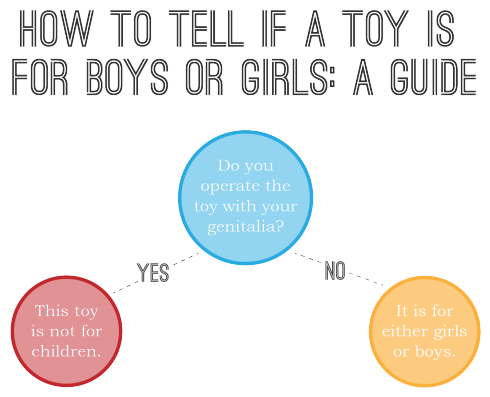
How To Tell If A Toy Is For Boys or Girls
Time to remind people…
(Need to remind people from http://scidoll.com/an-open-letter-to-tesco/)
Christopher.kantoswhat even is Japan.

Fast food chain Lotteria in Japan is teaming up with famous ramen chain Menya Musashi to bring you the Menya Musashi Ramen Burger: a seasoned, lightly charred ramen patty, stewed barbecue pork (chashu), and mayo on a burger bun. This carb-laden sandwich will be available for a limited time from May 20 to mid-June for ¥634 (about $6.40) and comes with a side of bonito-flavored soup. The name Musashi refers to the legendary samurai but is also shorthand for the number 634, hence the price. You can also get an extra ramen patty with soup for ¥100.

[Photograph: mikimousy on Flickr]
But before there were ramen-stuffed "burgers", there was the Kitakata Ramen Burger, griddled ramen-patties-for-buns filled with common ramen toppings like pork belly, fish cake, scallions, and bamboo shoots. (So, again, not really a burger, but I'm sticking it on AHT anyway.) You can see how it's made in this video:
Serious Eats reader Geoff T. emailed us about ramen burgers a few years ago. ...An email that got lost in the murky depths of my email archives. (Sorry, Geoff!) I'll take this opportunity to resurrect his thorough description of the ramen burger:
Usually enjoyed in a big bowl while sitting at a table or counter, ramen is not known as a food for people on the go. The ramen burger looks to change all that, combining all the ingredients that make ramen so tasty into handheld form. I found this specimen of gourmet goodness at a summer matsuri (festival) right outside Ikebukuro, Tokyo.
The name 'ramen burger' is a bit misleading because there is no actual hamburger patty, only a slice of chashu pork. Many sandwiches are mislabeled as burgers in Japan but in actuality, it should be called a ramen sandwich.
To start off, this sandwich doesn't have a traditional bun, instead using ramen noodle discs fried into the shape of a bun. The noodles aren't fried until they're crunchy but rather just long enough so they could keep their shape.
In between the noodle buns were all the usual ingredients you might find in a bowl of ramen: chashu (roast pork), naruto (fish cake), negi (scallions), and menma (marinated bamboo shoots).
After it's assembled, you have a choice of which type of ramen soup flavor you'd like in your sandwich: shoyu (soy sauce), shio (salt), miso (soybean paste), and tonkotsu (pork bone). Don't worry about it being super messy; the soup base was thickened significantly to make for a nice condiment. Finally, if it was to your liking, you could add some togarashi (Japanese assorted chili pepper powder) to spice up your sandwich.
The ramen burger really captures the essence of a bowl of ramen but so far, it hasn't really caught on besides being sold on the street at local festivals. However, with the worldwide explosion in the popularity of ramen, I'm hoping that you'll soon see the ramen burger at a restaurant near you.
Have any AHT'ers tried ramen burgers before? Anyone looking forward to trying Lotteria's ramen burger?
[via Kotaku]
About the author: Robyn Lee is the editor of A Hamburger Today and takes many of the photos for Serious Eats. She'll also doodle cute stuff when necessary. Read more from Robyn at her personal food blog, The Girl Who Ate Everything.
Love hamburgers? Then you'll Like AHT on Facebook! And go follow us on Twitter while you're at it!
Christopher.kantosChris Bosh lol.
This video by code.org is talking about the “superpower” that isn’t being taught in in 90% of US schools.
Christopher.kantosLobster. Bacon. Rangoons.

They've done a cheese menu. They've done French-Mexican fusion. And now at last Magoun's has announced a Wednesday night Baconpalooza menu. Everyone knows that bacon is delicious, so it's no shock that this is their best menu yet (in our humble, bacon-craving opinion). Contemplate bacon rangoons and bacon queso, straight ahead.
SMOKED BACON WRAPPED SHRIMP
grilled jumbo shrimp with smoked tomato and horseradish sauce
SOFT SHELL CRAB BLT SLIDERS
pan fried /smoked bacon/ oven roasted tomatoes /lemon pepper mayo
LOBSTER BACON RANGOONS
black pepper bacon sweet corn with ginger plum sauce
FIGALICIOUS
wrapped in bacon stuffed with goat cheese/honey balsamic drizzle
BACON NACHOS
melted jalapeno bacon queso topped with roasted poblano peppers/bacon guacamole/pico de gallo/sour cream
BACON POUTINE
waffle fries/cheese curds/bacon onion gravy/soft fried egg
PANCETTA & MUSSELS
fresh PEI mussels/shallots/crème fraiche/fresh herbs/crusty bread
BEEF BACON BLUE
tender beef filets stuffed with blue cheese wrapped in bacon port wine demi glaze/bacon mashed potatoes/wilted spinach
DESSERT
TRILOGY OF BACON INSPIRED CUPCAKES
Read more posts by Kara Baskin
Filed Under: pig out, bacon, magoun's saloon, queso
Wahoo! It's official: the IT Crowd will reunite for a final episode. My favorite new sitcom of the century will be back -- something that seemed less and less likely as the careers of its stars reached heights that were beyond the scope of UK TV.
During a Q&A session at the German re:publica digital conference, IT Crowd creator and writer Graham Linehan announced that he is bringing the award-winning geeky British sitcom and cast members (Chris O’Dowd, Richard Ayoade, Katherine Parkinson and Matt Berry) back to Channel 4 for one last special forty-minute episode. According to Bleeding Cool, this final episode is to be filmed in three weeks time. The script for the special was written over a year ago, but due to a pregnancy and the actors being busy in other TV and film projects, it was postposed.
IT Crowd Creator Graham Linehan Bringing the Geeky British Sitcom Back For One Last Episode (via IO9) 
|
|
 Clear for iOS is an elegant, simple and extremely intuitive to-do list app which adds an element of fun to what might otherwise be rather static and boring lists. Suffice it to say, it's well worth checking out if you find yourself juggling a bunch of tasks on a consistent basis. Notably, the app was listed on Apple's top app picks for 2012.
While the app normally sells for US$1.99, Realmac Software has teamed up with Starbucks to offer the app for free for one day only.
The deal expires today so check it out over here and start planning! The link will whisk you away to iTunes where a promo code will be uniquely generated for you, allowing you to start the download.
Realmac's Clear app is free to download today originally appeared on TUAW - The Unofficial Apple Weblog on Wed, 08 May 2013 14:30:00 EST. Please see our terms for use of feeds.
Christopher.kantosMarked for a later read, relevant to at least one persons interest.

In her new book Paleofantasy: What Evolution Really Tells Us About Sex, Diet and How We Live, University of Minnesota biologist Marlene Zuk explains why the paleo lifestyle is based on incorrect assumptions about how evolution works. In this excerpt, she lays out her argument — and it's pretty damn compelling.

|
|

[Photographs: Naomi Bishop]
A tiki bar is probably not the first thing you think of when imagining Paris drinking destinations, but then again, where would faux-Polynesian seem like the logical theme for a watering hole? The Dirty Dick opened this February, replacing a "hostess bar" (read: brothel) in Pigalle, a neighborhood in transition from red-light district to trendy cocktailing destination.

The cheekiness of the bar's name is a running theme, in the décor, the drink names, and the overall feeling of the bar, stemming in part from the attitude of the staff (a refreshing break from the brusque style that so rightly earns Parisian servers their reputation). The oversized pin-up girl on the wall or taxidermy jungle animals on the wall might signal an irreverent posture, but the drinks, from tiki classics like the Missionary's Downfall to original creations of bartender Scott Schuder like the Cutback Conquest (a chocolaty Guinness-laced rhum sour), are taken seriously.

Cutback Conquest
As over-the-top as its ambiance is, the bar maintains equilibrium both in the make-up of the menu and in the mixing of impressively balanced individual drinks. The Da-Tiki-Da offers easy-drinking pleasure to big tiki style, impersonating a Brazilian caipirinha, but with rough edges smoothed out by coconut. Served small and clean, this cheapest drink on the menu (6€, or about $7.75) was a refreshing break after a few too many Cannibal's Dilemmas (10€, or about $13). That concoction, thick and tall over ice, hides bursting blueberry flavors alongside the the spirited battle between rum and absinthe to dominate the drink.

Cannibal's Dilemma
Creativity and latitude with the definition of 'tiki' make for an array of exciting menu options—there's a julep turned 'dirty' with coriander, a lemony Scotch-based drink called 3 Stoned Monkeys, and barrel-aged Zombies are on the way—options that will keep the tiki-geek happy without alienating the rum-o-phobe. They say you can't please everyone, but the laid-back style of Dirty Dick might offend only the people who can't take a joke on the name.

10 Rue Frochot, Paris, France 75009 (map)
+33 1 48 78 74 58
Dirty Dick on Facebook
About the author: Naomi Bishop is a Seattle based food writer and marketer. Find more of her musings on her food blog, TheGastroGnome, where she claims that being a GastroGnome is not about sitting idly on the front lawn of culinary cottages. You can also follow her explorations of cooking and culture around the world at @GastroGnome.

Cuppacoffee should open by the end of the month at 1 Merrimac St., they announced on Facebook; right now, they're just waiting on a health inspection. The pie menu is extensive: In addition to the classic Aussie meat pie, they also have curried vegetable pies, Thai chicken pies, bacon-egg-and-cheese pies, and of course, mincemeat pies.
They also have a big roster of coffees, teas, and espresso. And do take note: If you're not in the Haymarket area, you can always order a tray of pies to devour in the privacy of your own home. [FB, Earlier]
Read more posts by Kara Baskin
Filed Under: coming soon, cuppacoffee, meat pie

Le Phant Elephant, by the talented Greg Pizzoli. Wrooommmm. Wroooommm.

YES! YES! YES! CableKeeps secure your USB docking cable to your iPhone, iPod or iPad power adaptor for neat and tidy storage.

We're shocked that there aren't more to begin with. But not everyone is excited by such a development in the rapidly gentrifying neighborhood. One concerned citizen has taken to Davis Square's LiveJournal to vent about the possibility of a nefarious "drinking hole," specifically national chain World of Beer, causing problems for residents.
"I wanted to update you that I have now had two meetings with the proponents of a place called "World of Beer" that wants to go into the Social Security Bldg space [240 Elm Street],." they write. "I have told them that I am VERY concerned about this as a possible use since I don't want to see a drinking hole in Davis that allows you to bring in your own food and barely serves any food of their own. They have told me I have the wrong idea and it will be craft brews geared towards an upscale crowd. I am highly skeptical."
World of Beer has considered partnering with a local restaurant to make things more palatable, but really, what's the issue? Davis Square has plenty of bars already, and most of them are, ahem, hardly known for their culinary delights. Some of them even serve (gasp) brown liquor. Beer seems downright innocent.
"World of Beer" proposed for Social Security Building - public meeting Wednesday 4/17 [LJ via UH]
Read more posts by Kara Baskin
Filed Under: beer me, davis square, world of beer
Or at least unbeneficial. A comprehensive study out of Croatia complements other evidence that stretching your muscles before exercise results in less strength, power, and performance than if you hadn't stretched.
Tags: medicine scienceThe numbers, especially for competitive athletes, are sobering. According to their calculations, static stretching reduces strength in the stretched muscles by almost 5.5 percent, with the impact increasing in people who hold individual stretches for 90 seconds or more. While the effect is reduced somewhat when people's stretches last less than 45 seconds, stretched muscles are, in general, substantially less strong.
They also are less powerful, with power being a measure of the muscle's ability to produce force during contractions, according to Goran Markovic, a professor of kinesiology at the University of Zagreb and the study's senior author. In Dr. Markovic and his colleagues' re-analysis of past data, they determined that muscle power generally falls by about 2 percent after stretching.
And as a result, they found, explosive muscular performance also drops off significantly, by as much as 2.8 percent. That means that someone trying to burst from the starting blocks, blast out a ballistic first tennis serve, clean and jerk a laden barbell, block a basketball shot, or even tick off a fleet opening mile in a marathon will be ill served by stretching first. Their performance after warming up with stretching is likely to be worse than if they hadn't warmed up at all.
inwit
n. reason, intellect, understanding
outwit
n. the faculty of observing the world
Christopher.kantosInteresting. Guess not super surprising. People are intolerant after all.
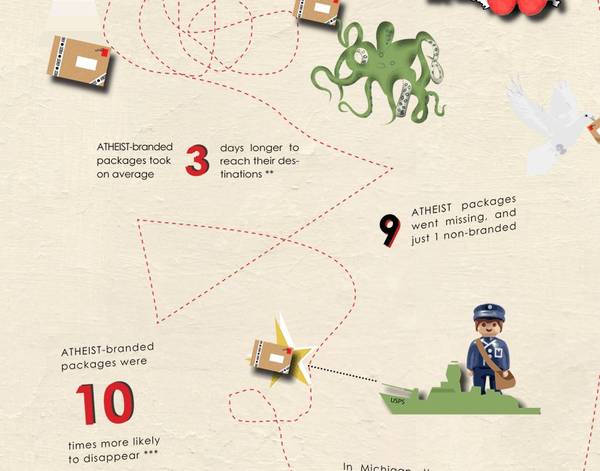
Atheist Shoes ("a cadre of shoemakers and artists in Berlin who hand-make ridiculously comfortable, Bauhaus-inspired shoes for people who don't believe in god(s)") noticed that a disproportionate number of their shipments to the USA were delayed or lost. A customer suggested this may be because USPS workers were taking offense at the ATHEIST packing tape they used to seal the boxes. So the company tried an A/B split, and found that boxes emblazoned with ATHEIST tape were 10 times more likely to go missing in the USPS and took an average of three days longer than their generic equivalents. They've stopped using the ATHEIST packing tape.
ATHEIST / USPS Discrimination Against Atheism? (Thanks, Alice!) 
 |
 |
Christopher.kantosgreat idea.

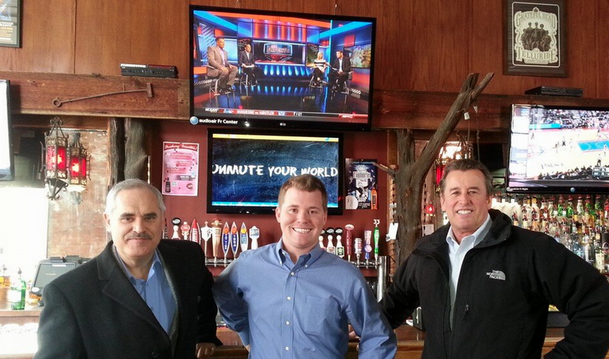
If you’ve ever been in a sports bar with your friends to watch a big game, you’ve likely run into the “muting” problem. While the bar may have two dozen TVs, each might be playing a different game, and there’s either too much sound or none at all. At most local restaurants, bars, airports and health clubs, you’ll find TVs muted for this very reason.
Some have opted to, say, put speakers on tables in their bars to project sound more directly, but the problem is that this puts a damper on any socializing you planned to do with your friends and fellow bar mates. Might just be me, but repeatedly yelling “WHAT DID YOU SAY?!” over the audio can detract from the viewing experience. After all, you’re really there to enjoy some quality time with friends — the thrilling play-by-play isn’t the only attraction.
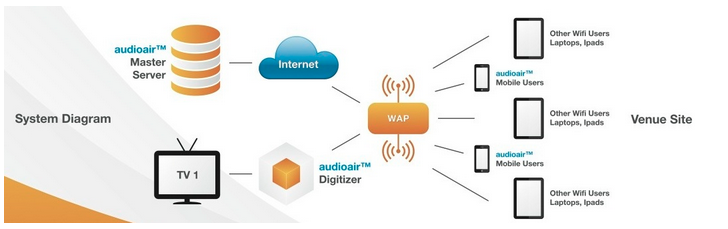
Durango, Colorado-based Airborne Media is hoping to offer another solution with a new product called Audioair, which aims to turn smartphones into your own personal listening device to help unlock sound from the tens of millions of muted TVs out there. Essentially, Airborne wants to put its audio solution anywhere an un-muted TV would add to the location’s overall noise pollution — every airport, hospital, sports bar, stadium or health club in the U.S.
But how does it work, you ask? Users download Audioair’s free mobile app, which taps into the sound system (via Wi-Fi) at any Audioair subscriber location, allowing you to determine which TV you want to listen to, projecting the audio through your smartphone so you can listen from your pocket or through headphones. Airborne is currently piloting its solution at 47 sites, including sports bars, restaurants, student health facilities and even a large resort casino, and plans to be in 800 locations by the end of the third quarter.
To help get Audioair off the ground, the startup has raised $3 million in seed funding, $1 million of which is convertible debt, from a handful of local investors. But, let’s be honest, creating a personal audio channel for muted TVs has some appeal, but it could be subject to a fairly limited use case. It’s not difficult to imagine significant others and friends the world over not being particularly pleased when, in the middle of a conversation, you throw in your headphones to hear the local play-by-play.
Plus, Airborne has to convince enough restaurants that it’s a good idea to invest in their on-premise hardware and buy another TV for their in-venue display. How does it hope to accomplish that tall order?
Airborne believes that its technology can help change the consumer experience within a multitude of these noisy environments and bridge the gap between mobile devices and customer engagement displays. So, not only does it want to provide a better audio experience for the end user, it wants to act as an interactive social networking experience and dedicated, location-based advertising network for bars, restaurants and any local venue.
The service allows users to chat with other people in the venue directly through the Audioair app, along with checking-in and adding content from their phones to the sports bar’s local network. This adds a social networking element to the end-user experience; in the meantime, Audioair allows venues to display local advertising on the user’s phone or on a 42-inch digital display that they install in the bar.
At the outset, the startup has been offering discounts on the cost of the TV (and the installations themselves) to reduce friction for early customer acquisition, but the idea is that — once/if this catches on, bars will be paying for the cost out of their own pockets.
Audioair charges a monthly fee, which will be an add-on to the fees bars are already paying to DirectTV and so on for cable, but the idea is that the product can help venues reduce the perceived (and actual cost) by helping them attract more customers who stay on the premises longer — because they can actually hear the sound of the game.
On top of that, bars can distribute on-site promotions through Audioair’s digital display and mobile app, facilitating increased spend, while engaging customers in an in-bar, interactive social and ad network.
Venues can then share in the ad revenue gained from their displays, while receiving analytics on how customers are interacting, what they’re sharing and so on. They can also disseminate the needed info publicly or privately as needed (think personalized hospital, airport alerts).
The Airborne Media founders said that they see revenue coming from three buckets — advertising, installation and licensing — with revenue initially coming from subscription and installation and advertising revenue becoming the main stream over time. As to the licensing piece, the team says that they’ve filed for eight patents on their system (which are currently pending), which could help them manufacture some defensibility for a model that could become vulnerable to competition from big players as prices on hardware continue to drop.
Audioair also tries to sweeten the deal by providing an optional on-site server to manage the local, network and cloud-based content and, by splitting a portion of the advertising revenue with the owner, the startup wants to help them cover the cost of the subscription fee and grow their own revenues over time.
The Audioair creators also believe they have a leg up on the competition because it has inked a partnership deal with one of the original commercial DirecTV installers, which has exclusive territory rights to a big chunk of real estate — from Florida to Washington, D.C. It provides DirecTV service and support to over 5,000 restaurants and will be helping Airborne make installations throughout its territory, which the founders believe will be critical to helping it expand its footprint.
Again, it seems like a niche play, but if something like this is going to work, it could be a multi-pronged approach that’s not only an audio helper but a local information and advertising system, complete with hardware support and revenue sharing. There are 38,000 sports bars and restaurants in the U.S., 28,000 health clubs and plenty of airports, casinos and college campuses where Audioair could potentially have some appeal.
If the startup is able to keep its prices from stifling those venues that are willing to give it a try — and surmount the potential “this is too complicated” reaction from local venues — while offering real value-add on the advertising side (and some better design of its mobile interface), there’s a chance Audioair could have some real legs.

After spending 10 years in beta (and you thought Siri was in beta a long time) OS X launch utility Quicksilver has at last reached version 1.0. The utility allows users to launch applications or perform tasks through simple keyboard shortcuts.
Announcing the release, the developers of Quicksilver said in a blog post:
After almost 10 years of testing, Quicksilver lays the beta tag to rest. (If the lack of an eszett brings a tear to your eye, you can always reminisce by hitting ⌥S on your keyboard). What does this release mean? It means more than just a change in the version numbering system -- it signifies a maturity of Quicksilver and a sign of what's to come.
Quicksilver app launcher released after 10 years in beta originally appeared on TUAW - The Unofficial Apple Weblog on Tue, 26 Mar 2013 08:00:00 EST. Please see our terms for use of feeds.
Christopher.kantos"Guys whose greatest skill in life is moving a ball with their feet were reduced to overgrown, bearded toddlers who’d just recently walked from the living room to the kitchen for the first time. And it was great."

DENVER— By almost every measure, Dick's Sporting Goods Park in Commerce City, Colo., is a thoroughly modern stadium. Built for $147 million in 2007 and home to Major League Soccer’s Colorado Rapids since then, it seats 18,000 soccer fans just north of Denver. The entire complex contains 24 soccer fields. It's as close as America gets to a monument to the sport, and it all sits at an elevation of more than 5,000 feet.

I want it all, and I want it now. [Video Link]
Christopher.kantospoor planning.

One fish, two fish, SO MANY THOUSANDS OF DEAD FISH.
There's an ordinarily pretty lagoon in Rio de Janeiro, the Rodrigo de Freitas lagoon, where the 2016 Olympics will host rowing competitions. But sometimes pollution and weather conditions compel the lagoon's water to become relatively deoxygenated, and all the fish die and float to the surface. The past week has been one such instance, but the lagoon has had many—the above photo comes from 2000. Poor fish.
Rio tried to clean the lagoon up before national rowing competitions began today, but the city failed. (Moving 65 tons of dead fish takes a while.) So some rowers had to paddle through a gaggle of carcasses. The Olympics never cease to warm the heart.


The TUAW staff loves Photojojo, the company that has a website dedicated to selling fun little accessories that are aimed at iPhoneographers. The latest item the staff sent for us to test is the Polarizing Clip On Filter (US$20.00), which is exactly what the name implies -- a little polarizing filter that clips onto your iPhone.

If you're not familiar with what polarizing filters can do for photography, you're in for a treat. Sunlight is polarized in one direction, and a polarizing filter rotates to allow you to block out reflected light off of the sea, beaches and the air. For a complete description of how a polarizing filter can improve your photos, our friends at Wikipedia have a detailed article that describes how they work.
Should you decide not to read the article, let's just say that the sky usually becomes much more deep blue, the surface of the sea or any water loses reflections, and any haze in the air seems to disappear. Here's an example:


For the most part, this little clip on filter works as advertised. However, on my iPhone 5 I always had some part of my photo obscured by the filter no matter how much I moved it around.
That's not going to be an issue as long as you're aware of the vignetting and you're planning on doing some photo cropping after the fact. I was unable to test the Photojojo Polarizing Clip On Filter on any other Apple device, so I don't know if all iPhones / iPad might run into this issue. I spent quite a bit of time adjusting the filter on my iPhone 5 and could never get the vignetting to disappear.
That being said, it does exactly what you'd expect a polarizing filter to do. As you can see from the images below (cropped to remove the vignetting), it can take an overly bright and glaring sunlit image and turn it into a beautiful image with deep blue skies and a gorgeous ocean.
For photographers who take a lot of images at the beach or in situations where there's a lot of reflected light (i.e., on ski slopes), the $20 expenditure for the Photojojo Polarizing Clip On Filter should be a no-brainer. Just be aware of the limitations of the filter and that you might need to edit your images to remove vignetting, and you'll have an inexpensive way to improve your iPhone or iPad photos.
Photojojo's little clip-on polarizing filter a must for those days at the beach originally appeared on TUAW - The Unofficial Apple Weblog on Fri, 15 Mar 2013 11:00:00 EST. Please see our terms for use of feeds.
Christopher.kantosneat.
Christopher.kantosspot on.
Clever TV commercial for Le Trèfle toilet paper by the Leo Burnett ad agency. (Thanks, David Steinberg!)
Christopher.kantosdamnit Japan.
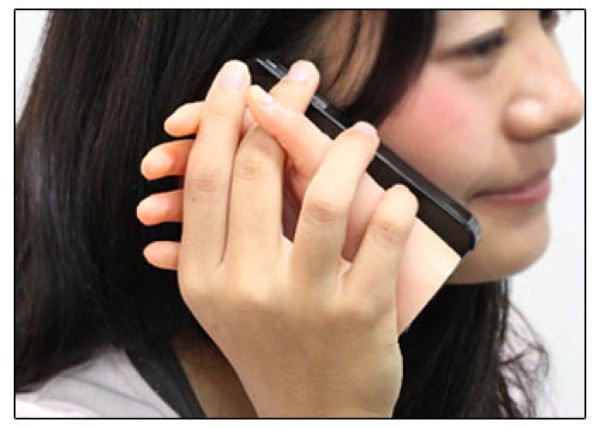
The Hand iPhone Case is totally impractical and not really a case. But it's absolutely fantastic! You can choose between an adult or child-sized hand. (via Gadget Lab)
Christopher.kantos_Running? Yes, running. It's something people do_

Running? Yes, running. It's something people do. But what actually happens when you run? Turns out, a whole lot. Below, Joel Walker, runner, writer, and all-around healthy, accomplished guy, dives into the physiology of running, and explains why it's imperative that you have a great pair of sneakers, like those developed by industry-leader New Balance (their sneakers are at the forefront of running shoe design innovation). On your mark, get ready...
There was a time when I couldn't run at all. That time lasted from roughly age 13 and extended well into adulthood. Turns out, I was just doing it wrong (and wearing the wrong shoes). I didn't discover this new way until my early 30s, but it's changed my life. Maybe you've heard murmurs about "natural running." Or possibly, "barefoot running," "minimalist running," or "the barefoot movement." (Whatever. It's basically the same thing.) But you've probably wondered what the point could be? Humans have gotten really good at running. Why change now?
Well, it turns out that there's a lot that can be taken from natural running, and whether you run marathons on the regular or are going for your first jog in five years, rethinking your running style and footwear can greatly improve your efficiency, lower your risk of injury, and increase your chances of actually enjoying yourself.
Not everything that looks like progress is progress. Running shoes were pretty thin until the '70s when things started getting more and more padded. "Stack height" refers to the thickness of the shoe's sole, or how much cushioning it has. The cushiness felt good, so we went further, padding out the heel even more until our shoes were sort of ramps that rolled us forward. We thought we'd found the Holy Grail of running shoes with these thick, cushy pillows. Turns out we were actually doing our bodies a major disservice.
Our bodies were built to run by taking smaller, quicker steps, leaning slightly forward, and with our weight coming down on the middle of our foot each time. When our foot hits the ground it should be just about perfectly underneath us. Our calves and lower legs are built to react like springs, absorbing the impact and then bouncing back, propelling us forward. That's basically the anatomical ideal. But when we started wearing thick shoes, we were able to take longer steps. It didn't hurt when we landed heel-first because of the padding, and because there are only two ways to run faster (increase stride length or increase stride rate), we assumed this was a good thing. It wasn't.
When we land heel-first, while it doesn't hurt our heels (because of the cushioning), it imparts a tremendous impact on our feet, and that jolt travels up our legs to our knees, hips, and even lower back. Over time, it can cause all kinds of damage: everything from worn out ankles to herniated discs.
But things are turning around in the world of running shoes. Companies like New Balance are creating shoes like the Minimus line, which chop the sole down to something flat, thin, and flexible.
There are a number of tangible benefits of going this route. For starters, going back to a thin sole (i.e., low stack height) very quickly dissuades us from landing heels first, because, well, it kinda hurts without that giant wad of foam. They've also lowered the "drop" of the shoe (the difference in thickness from the heal to the toe), so the heel isn't so prominent, which helps keep it off the ground. This makes us shift our weight forward, landing closer to the mid-foot (the balls of your feet). This has a positive domino effect. When you're landing on your mid-foot, it's really hard to over-stride (land with your foot way out in front of you). So you naturally shorten your stride, landing with your foot beneath you.
There are a lot of reasons shorter, quicker strides are better for your body. Think of running simply as jumping from one leg to the other, repeated over and over (because that's literally what it is). When you take long strides you are spending more time in the air, which means you're jumping higher between each step. That's bad for two reasons. The first is, in running, vertical energy is wasted energy. After all, you're trying to move forward, not up. The shortest distance between two points is a straight line, so why waste energy bouncing up and down on your journey? The second reason is that because what goes up must come down, when you jump higher, you are coming back down harder. That imparts a huge jolt into your feet and joints, and it takes more work from your muscles to recover from that, then propel you into the air again. No good. You'll know you're running more efficiently when you look straight forward when running and see almost no bounce. It'll feel weird at first, but you'll get used to it.
The other helpful thing about shoes like the Minimus is the wider toe box. We've been cramming our feet into narrow shoes for too long, and it's had some real physiological impacts. For starters, it makes our foot move like it's all in one piece. It isn't. There are dozens of individual bones, muscles, tendons in there that are designed to move and flex, making our feet more adaptive. When we can spread our toes as we run, not only does it give us a more stable base, but it's safer because we can adjust to the ever-changing terrain beneath us. You'll really feel the added control when you're turning corners. The thinness of the Minimus let us feel then nuances of the ground, too. This gives you the benefits of running barefoot without the scraping of cement and rocks.
Lastly, minimal shoes are incredibly light (the Minimus 10v2 weigh just 6.5 ounces, which is so light you might forget you're wearing them). This helps increase your turnover rate because light feet are easier to lift. As I mentioned, most beginning runners take large, slow steps. Elite distance runners take much smaller, quicker steps, averaging around 180 steps per minute, or more. It's hard to take that many steps over a long period of time if it feels like there's a weight attached to your foot every time you lift it. You want light, happy feet.
Now, minimal/natural/barefoot-style running is not something you can just jump in to. Because most of us have been running the wrong way for most of our lives the muscles we need for running properly have atrophied. You can build them back up, but it takes a fair amount of time, and you've gotta be patient. Try going too fast, too soon, and you could really end up hurting yourself. Plenty of people do just that. Get your ego out of the way. (Tiger Woods has broken down and reassembled his swing several times over his career, and each time, it takes him a while to get back up to speed. It's the same for you.)
Before you take your first run, check out New Balance's Good Form Running guide for some very essential advice on technique and training. And learn even more about their new running shoes here. Then, be smart, go slow, and have fun.
Joel Walker is a freelance writer, backpacker, triathlete, and gadget geek based in New York City.