Shared posts

16 Aug 00:52

Littlefoot The Disgruntled Bebeh Frenchie

by Brinke

image2When you see a look like that (above) as a hoomin, you know you must have done something wrong. Like bust out a pair of pajamas for a camping trip? “This is Littlefoot, my new Behbeh Frenchie,” writes Monica F.

image1
“She wasn’t pleased that mommy made her wear her pjs when we went camping this weekend! Look at that ‘Tock!! I hope she makes it on the website! I have been visiting Cute Overload since 2006!!! Love it!”

image3


Filed under: Uncategorized Tagged: frenchies
16 Aug 00:47

(Sing-Songy:) “Somebody Needs A Name!”

by Brinke

Check out this little goober, who just woke up from a nap. Oregon Zoo keepers need your help to pick a name for a Rescued Otter Pup that arrived there this month. For the next week, you can click here to vote on your favorite of three names:

J.R. Papenfus: a creek in Lane County near the location where the pup was found. (J.R. is for junior, since a creek is junior to a river.)
Little Pudding (nickname: LP): a tributary of the Pudding River, joining the main stem west of Mt. Angel.
Hobson: a creek named for John Hobson, a Clatsop County pioneer who opened a salmon cannery near Tillamook.

H_river-otter-pup


Photo from Oregon Zoo.


Filed under: Uncategorized Tagged: Can't wait 4 ResQte Of The Wk, otter
16 Aug 00:45

Holy Underoos!

by Brinke

That little Puggles is NOT wearing BATMAN UNDEROOS. Say it ain’t so, otherwise I’m clunk [ded.]


Filed under: Uncategorized Tagged: Puggles
16 Aug 00:44

Headline THIS: Gary, You’re A Butthead

by Brinke

puppy-sitting-on-another-puppys-head[*UPDATE 1:05pm PT: Gayle FTW! Our next Headline THIS on Monday will feature the new 2016 C.O. Calendar as the prize! -Ed.]

A perfect Headline THIS if there ever was one- image thanks to Arne who found it on Cutestuff.co. Write up your fave header and we’ll post our favorite at 1pm PT. Hopefully.


Filed under: Uncategorized Tagged: Epic Side-Eye, Headline THIS!, puppehs
15 Aug 19:13

Correct Stumpers Office Manners

by Brinke

While companies these days encourage you to “be yourself” and “do your own thing” and “be part of the team;” there are certain non-negotiable office rules.

Always mute your phone during meetings.

wally-the-corgi-office-etiquette-12
You don’t necessarily need to have a chat in the restroom.

wally-the-corgi-office-etiquette-06
Try not to always be the last person to a meeting. Poor form.

wally-the-corgi-office-etiquette-03
No one likes Loud Talkers.

wally-9
If you’re sick, stay home. No one else wants your cold.

wally-7
We understand you have a large music collection. Use headphones- not everyone wants to hear the 12″ remix of “Into The Groove.” Over and over.

wally-6
No one likes close talkers, either.

wally-3
Maybe don’t always take the last Krispy Kreme.

wally-2
If you take the last of the coffee, make another pot.

wally-1
(As you can tell, this one’s from Mashable.)


Filed under: Uncategorized Tagged: Stumpers alert
24 Jul 22:12

THIS JUST IN: ResQte Of The Week IV

by Brinke

Jethro2J-mediumThis note just in from Photographer Extraordinaire Jess Lessard: ” I’ve got some precious photos of the dogs that are currently available at the Orange Cove, CA Animal Shelter (just southeast of Fresno) and they need some extra special help getting adopted because they are tucked away in a little rural shelter. The Orange Cove shelter gets little to no funding, and adoptions are all organized by volunteers. Would you consider sharing these cute faces? I would so very appreciate it!” (JETHRO, above.)

BOWIE
Bowie2J-medium

EMILY
EmilyJ-medium

MIDNIGHT
MidnightJ-medium

TIGER
TigerJ-medium


Filed under: Uncategorized Tagged: ResQte Of The Week
24 Jul 22:11

THIS JUST IN! WHO Could THIS Be?

by Brinke

A little insight into the C.O. Editorial Process. This email from Laura W. comes in AND IT GOES UP AS FAST AS OUR LITTLE FINGERS CAN TYPE.


(Boulder County Colorado Sheriff’s Office Deputy Sophie Berman was out and about when a Northern Saw Whet Owl decided it was time for a face to face. Or, um, a face to beak.)

“Hi C.O.! I emailed you a link from the Boulder Daily Camera, and there was no spot to add a message. Nederland, CO is in the mountains SW of Boulder. (And the home of the annual Frozen Dead Guy Days.) How cute is this guy? How come I can’t happenstance upon something like this, ever?” -Laura W.


Filed under: Uncategorized Tagged: Hoomin Interaction, Owls, Second straight owl post, This Just In!
24 Jul 22:10

So Cute, They Named Him Twice

by Brinke

image5Meet Gus Gus.

image1
“This is my Gus Gus, he is a ten month old Shichon,” explains Kathleen H.

image7
[*Note: Same type of puppeh as Mimzy from this morning. -Ed.]

image9


Filed under: Uncategorized Tagged: puppeh
23 Jul 23:11

Qiyo, the Elephant Calf, Keeps Cool

by Andrew Bleiman
Leahgates

I love it

1_QIYO_MODDERBAD_4

Qiyo, the Asian Elephant calf at Zoo Antwerpen's Planckendael, was recently photographed, having the time of her life. Keepers say she loves the water...and the mud!

Mom, Phyo Phyo, kept a close eye on her calf, but she seemed to approve of the antics and was willing to join the fun.

2_QIYO_MODDERBAD_2

3_QIYO_MODDERBAD_3

4_QIYO_MODDERBAD_1Photo Credits: Planckendael / Jonas Verhulst5_QIYO_MODDERBAD_5

6_QIYO_MODDERBAD_6

20 Jul 21:43

Giant Resin Bees

by noreply@blogger.com (Alonso Abugattas)
Leahgates

I like this a lot


     Giant Resin Bees (Megachile sculpturalis), perhaps better called Sculptured Resin Bees since there are bigger ones in the world, are quite active this time of year. The largest Megachilid bees in North America, they're not supposed to be part of our landscape. They can reach an inch long, particularly the larger females, and are among the largest of any bees in our region. Megachilids such as Mason, Leaf-cutter, Carder bees, and their allies mostly carry their pollen on modified "hairs" (setae) on their bellies as opposed to the pollen baskets on the hind legs of many other bee families.  

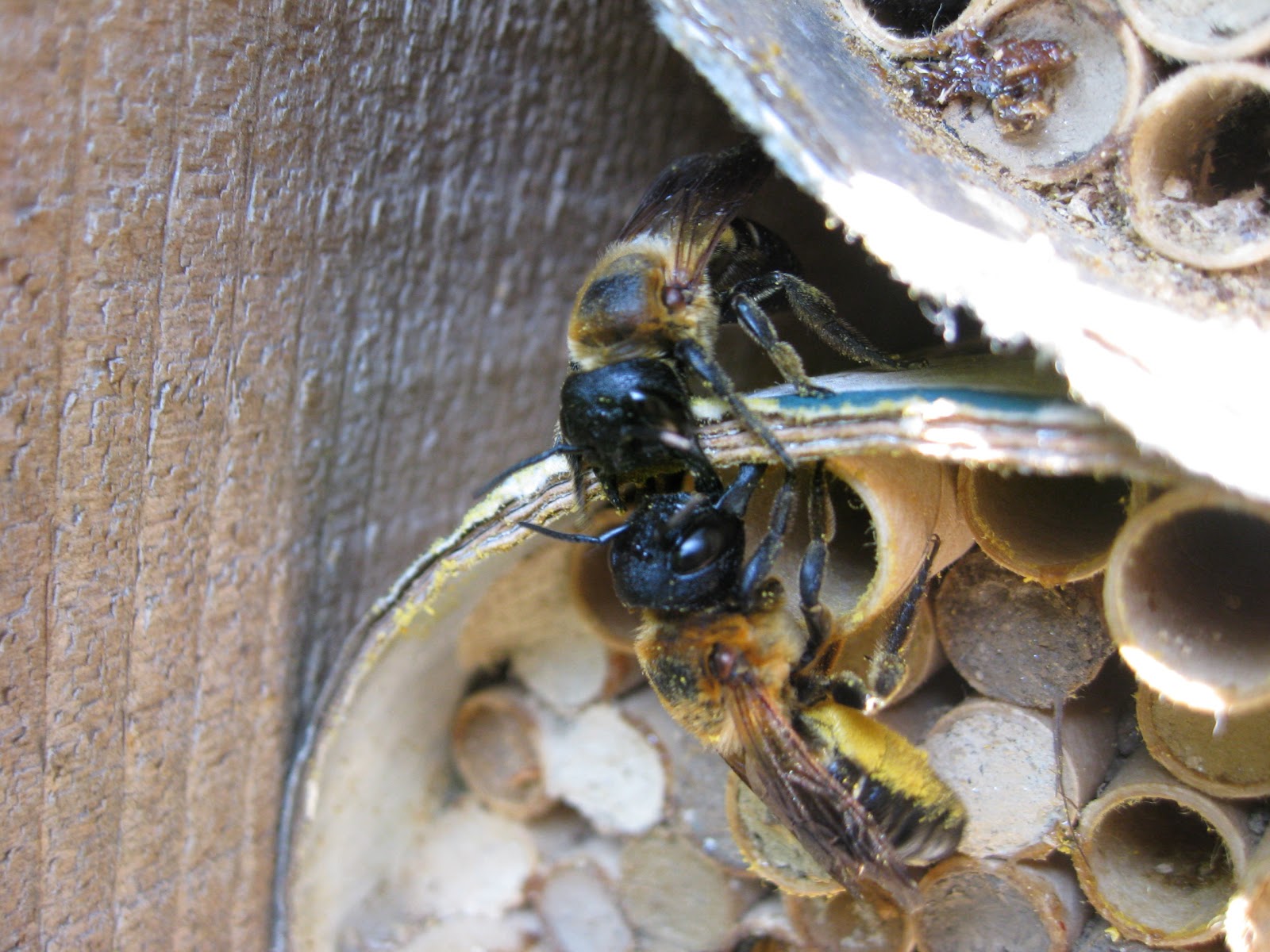
Two Giant Resin Bees facing off. You can see the pollen on the "scopa" or pollen hairs on the belly of the lower one. They actively compete with each other, even stealing each others resin.

     Giant Resin Bees are native to Japan and other parts of Asia. They first appeared in North Carolina in 1994 and have since spread throughout most of the South and into Canada. They have also now been introduced into Europe, having been captured in France and Italy in 2008. What affect they have on native bees, other pollinators, and plants still needs to be confirmed, but they certainly compete for similar resources at least. It appears that despite their large jaws, Sculptured Resin Bees do not actually excavate very much or make their own holes. So they use cavities and holes they find, often competing with other creatures who also need them. This is especially true with Carpenter Bees, with the Resin Bees often using their old holes and perhaps keeping the Carpenter Bees from then using the burrows later on when they need them. Some claim the resins the bees use can harm or even kill Carpenter Bees. Others have reported that they attack other bees, even killing Honey Bees. 

A Giant Resin Bee takes over a Carpenter Bee hole.

     I myself have noticed them using Mason Bee boxes and tubes that I've put out. Luckily almost all the Mason Bees have completed their active life cycle by mid summer when these exotic bees emerge and become active. The Mason Bees are nestled in sealed tubes by then. But I've seen Sculptured Resin Bees trying to make use of the empty holes and tubes, which are then not available the next spring for Mason Bees, or the Leaf-cutters that sometimes also utilize them. More disturbingly, I have often found the paper tube inserts or tubes themselves (both empty and those with sealed Mason Bee larvae) either completely pulled out or half way pulled out of the boxes with Giant Resin Bees then utilizing the now-larger holes. I've never caught one actually pulling them out (though I've seen them mouthing them), but I think it's perhaps more than a coincidence.

Two Sculptured Resin Bees seal their own tubes and provision others in a Mason Bee box. Some tubes are still empty and available and some have had their paper inserts removed. 

     Like most members of the Megachilidae family, both males and females visit and pollinate flowers. These are solitary bees, with each female choosing a hole or cavity to set-up housekeeping. With no queens, workers, or guards (like the vast majority of bees), she takes on every role by herself. Sometimes many females will utilize the same area or piece of wood if the location or situation is very favorable. Pollen is collected and mixed with nectar to make a ball of food that is deposited in the hole. After enough is collected, she lays a single egg and seals the cell, often with tree resin as well as mud and bark. She might complete up to 10 cells per hole or tube before sealing everything off again, often with an extra layer of resin.

A Giant Resin Bee egg attached to its food hoard at the end of a cell.

     When the eggs hatches, the developing bee larva feeds on these food stores throughout the summer. It will pupate and spend the winter in its cell before pupating and emerging in mid summer as an adult bee that then starts the cycle all over again.

A newly hatched Giant Resin bee larva on top of its food stores. 


An opened Mason Bee house that instead is full of various stages of developing Giant Resin Bees and their cells. 

     On the Capital Naturalist YouTube Channel you can see a video of Giant Resin Bees around an old shed. Please copy and paste if this link doesn't work for you:
https://www.youtube.com/watch?v=e2Roqt6ggbE&feature=youtu.be 
     Again, no one is sure if these exotic bees affect our native pollinators and especially our bees. It appears though that at minimum they compete for food and nesting sites, if they don't outright attack or kill other bees. That they are also one of the primary pollinators for Kudzu in their native lands is also unnerving, since this invasive plant certainly doesn't need any more help reproducing. Giant Sculptured Resin Bees have spread dramatically through both North America and Europe and may indeed be something to worry about. We shall see.

20 Jul 21:38

Teddy-the-Goldendoodle

Leahgates

Muppet

Teddy-the-Goldendoodle puppy
Hi, my full name is Theodore Roosevelt, but everyone calls me Teddy. I love to go on walks with my mommy, play fetch, and chase my friends around at the park! I also love to stick my head inside my daddy's work boots--especially after a long, hot day. They smell so yummy! My parents say my motto is "go big or go home", because I always wrestle with the biggest dogs on the block; even though I'm just a puppy. Sometimes when I'm good my parents let me carry my own leash like a big boy! Life is great!

17 Jul 00:34

Therapy Tortoise On Duty, SIR!

by Brinke

Wasabi-in-FloralOne usually associates “therapy animals” with dogs. Or maybe even..ponies. But DID YOU KNOW™: Tortoises can fill the bill, too?

Wasabi-in-Pink
This is Wasabi. She makes the rounds to visit people who are sick or alone in Maryland. Oh, and she wears a dress.

Wasabin-in-Green
(Laughing Squid.)


Filed under: Uncategorized Tagged: Did You Know, Tortoises
17 Jul 00:34

It’s Wombat Wednesday!

by Brinke

192391010_bfdcce2d52_oDon’t you wish you had someone to haul you around all day, like Denis here? Hey hey hey- it’s Wombat Wednesday!

(Image from Flickr.)


Filed under: Uncategorized Tagged: ♬ Just another Wombat Wednesday ♫
16 Jul 23:40

Life Is Hard For Mildly Perturbed Cat

by Not That Mike The Other Mike

From his favorite spot, almost but not quite in the shade of the large oak tree, Mildly Perturbed Cat contemplates the dissatisfying state of his existence.

18948093309_ba2c7b7848_z

So many of his feline brethren have found fame and adulation on the Internet. His cousin Grumpy adorns books and T-shirts; Happy from down the block can has all the cheezburger he wants.

18946515980_3cf15ab9b8_z

Yet this parade of stardom and glory passes him by. He is anonymous, forgotten, celebrated by none save for a single hack writer on an obscure cute-animal website.

18948096719_88e4d8ab92_z

Via Steve Freeman.


Filed under: Uncategorized Tagged: Disapproval, Kittens
16 Jul 18:59

Tiny Dwarf Seahorses Born at the Tennessee Aquarium

by Andrew Bleiman

Baby Dwarf Seahorse and Dad

A few very tiny baby seahorses were born last month at the Tennessee Aquarium


The Dwarf Seahorse (Hippocampus zosterae) is among the smallest seahorse species, with adults growing to only one inch in length.
 
Connie Arthur, the Aquarium’s seahorse keeper, had been observing a few males who seemed to be pregnant.

On Thursday morning when she arrived at the Aquarium, the tiny babies - each one about the size of a grain of rice - were swimming in the tank.
 
“It’s not uncommon for us to find babies in any of our seahorse tanks,” Arthur said.

“But the Dwarf Seahorses are especially tiny so I keep a sharp eye out for them.”
 
Luckily, according to Arthur, these babies (as tiny as they are) are one of the easiest species to raise.

The babies instantly use their prehensile tail to grab onto whatever they can and will start eating newly hatched brine shrimp right away.
 
The birth of these itty bitty babies came just in time for Father’s Day, since seahorse males are actually the ones that give birth.

05 Jul 23:51

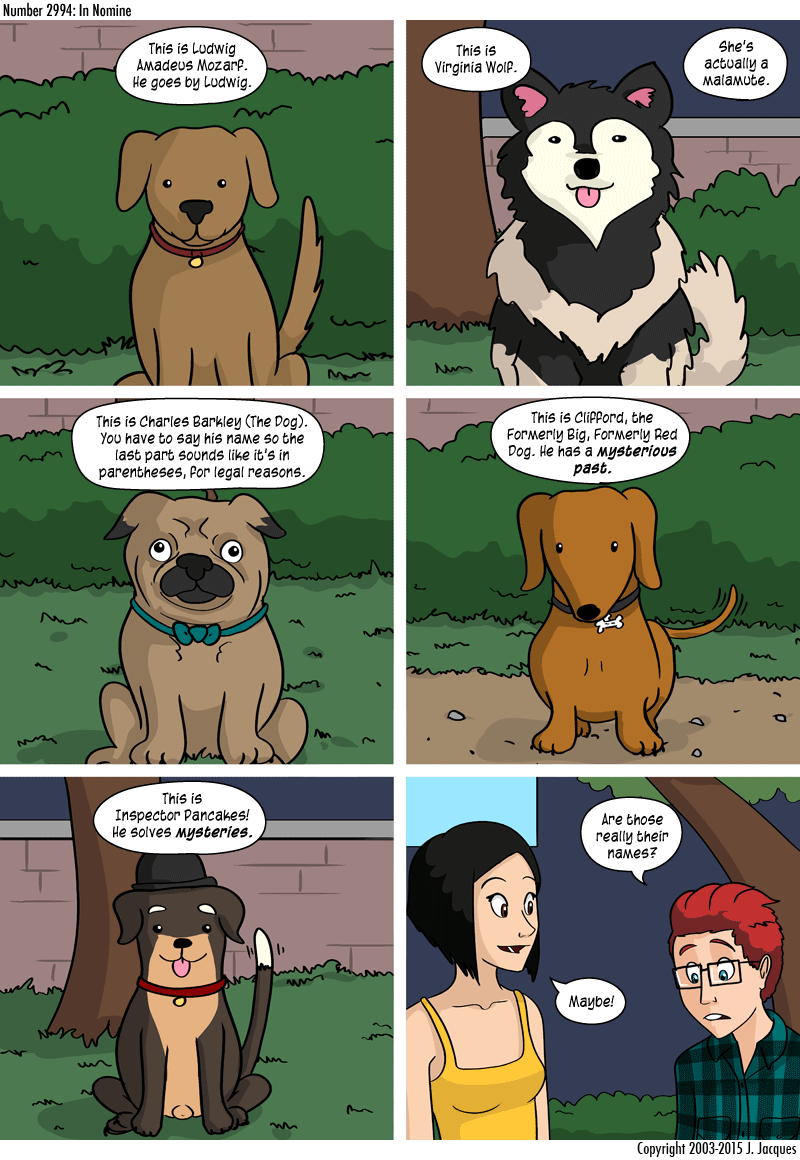
In Nomine

Leahgates

it me

05 Jul 23:51

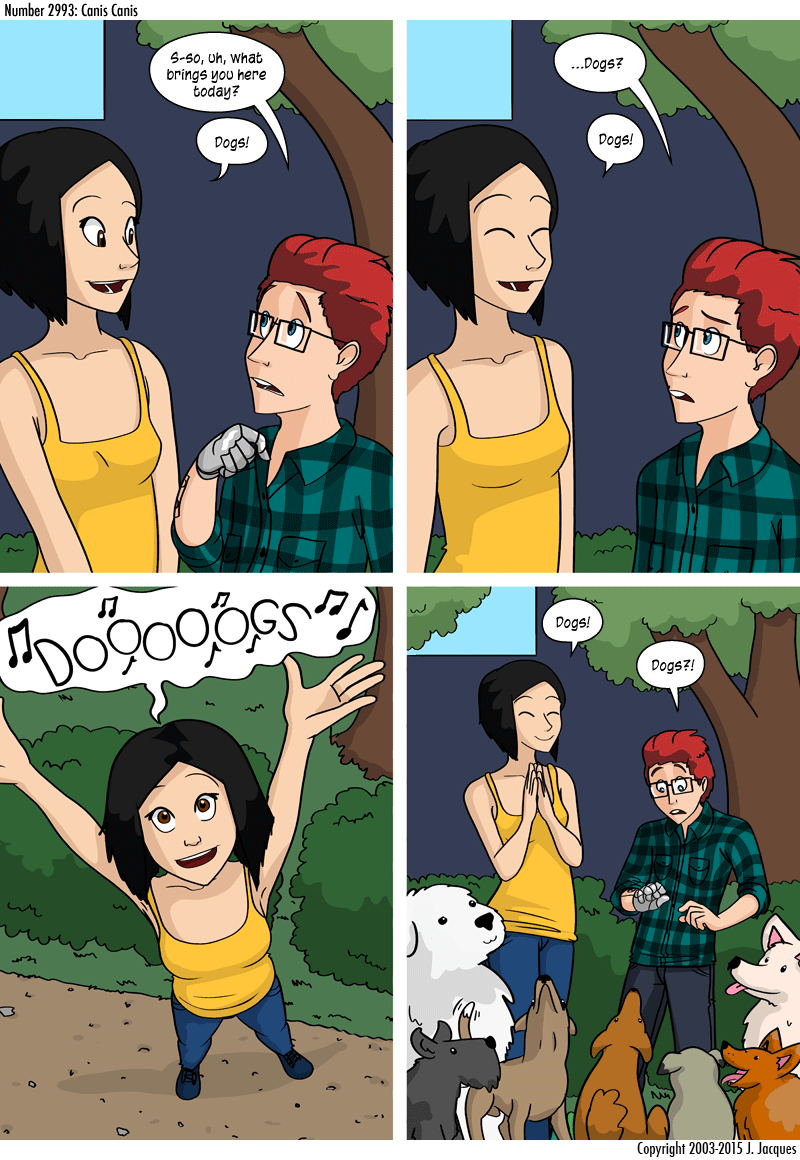
Canis Canis

Leahgates

same

05 Jul 23:51

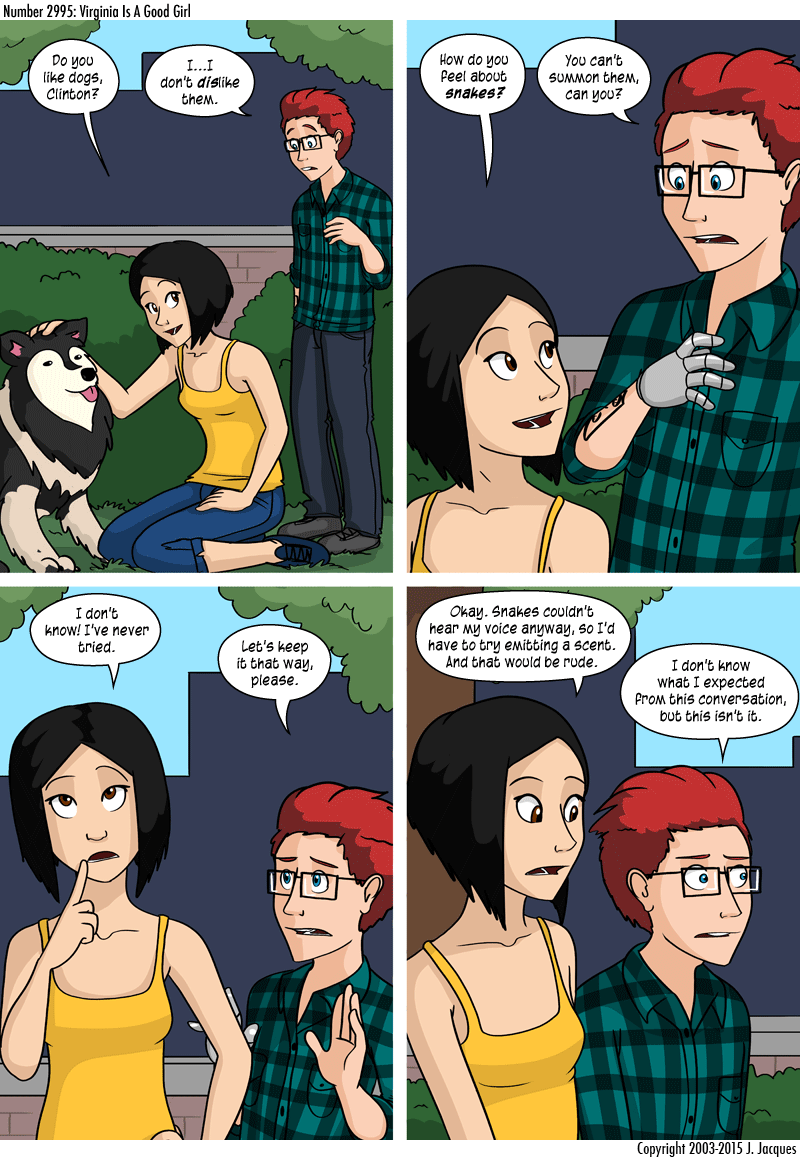
Virginia Is A Good Girl


Ads by Project Wonderful! Your ad could be here, right now.

QC is just going to be Emily talking about animals from now on

05 Jul 23:50

Five Things Puppehs Like To Do

by Brinke
Leahgates

EARS

….starring Hattie The Westie. And MY GOODNESS will you LOOK. AT. THOSE. EARS.


BONUS GIF: Did someone say…EARS?

VVaFzG0


Filed under: Uncategorized Tagged: Gif-tastic, puppeh, Westie
05 Jul 14:53

How ‘Bout Some Paw, Big Fella?

by Brinke

Norbert is dressed up and ready for some Fourth Fun- but first, a High Five if you please, Norbie!


Filed under: Uncategorized Tagged: Fourth of July 2015, NORBERT
05 Jul 02:20

Stay Safe Tonight, Everybody!

by Brinke

Commodore Gustave Swaddleman (first seen on C.O. earlier in the year) hopes everyone in the US is having a happy and safe Fourth Of July!

10802550_770522106347078_513226335_n
From Zeki B.


Filed under: Uncategorized Tagged: frenchies, Happy 4th of July 2015
04 Jul 16:30

Puppehs With A “Napoleon Complex”

by Brinke

Collective_Dog_Boston_1000Wikipedia: “Napoleon complex is a pejorative term describing a disproven psychological condition which is said to exist in people, both men and women, of short stature. It is also known as ‘Napoleonic Complex.'”

“Exist in people, both men and women, of short stature?” What about…THE PUPPEHS? (That’s Otis up top, BTW.)

Collective_Dog_Bones_1000

Collective_Dog_Pug_10_1000

Collective_Dog_snowball_1000

Collective_Dog_WienerDog_1000
(Boing!!!! Boing!!!!)


Filed under: Uncategorized Tagged: puppeh
03 Jul 21:32

Flashback Friday: D.C. Dog Show, 1915

by Brinke

05641a“Washington, D.C. “Dog Show, 1915. Mrs. Blanche Strebeigh Bonaparte.” Dog owner Mrs. B. (this girl’s mother) was married to Jerome Bonaparte, great-grandnephew of Napoleon. Harris & Ewing glass negative.” (Shorpy McShorpersons.)


Filed under: Uncategorized Tagged: Flashback Friday
03 Jul 21:27

Orphaned Kangaroo Raised by Wallaby at Adelaide Zoo

by Andrew Bleiman
Leahgates

What if someone told you they needed you to care for this bab and you had to wear it in a pouch for like a month and feed it milks

1_Adelaide Zoo Tree Kangaroo April 2015

In a world first for conservation, Adelaide Zoo Keepers and Veterinarians saved the life of an orphaned Goodfellow’s Tree Kangaroo, by utilizing a surrogate wallaby mother. It’s a technique never attempted before with a Tree Kangaroo!

2_Adelaide Zoo Goodfellows Tree Kangaroo Cross Foster Photo © Zoos SA

3_Adelaide Zoo Tree Kangaroo March 2015

4_Adelaide Zoo Goodfellows Tree Kangaroo April 2015 Photo © Zoos SA Dave MattnerPhoto Credits: Zoos SA

In November last year, zookeepers arrived early one morning to make a horrible discovery. Overnight, a falling branch had crushed the zoo’s three-year-old female Tree Kangaroo, orphaning a five-week-old joey.

Acting on pure adrenalin, zookeepers made the decision to try and save the tiny joey. Due to the young age of the joey, hand rearing was not possible, which meant the only option available was to try and ‘cross-foster’ the joey into the pouch of a surrogate wallaby mother.

‘Cross-fostering’, a special breeding technique that Adelaide Zoo began pioneering in the 1990s, involves the transfer of endangered joeys to the pouch of a surrogate mother of a different wallaby species. This accelerates the breeding cycle of the original wallaby, allowing the female to increase its reproduction rate up to six or eight times in some species. This means Adelaide Zoo can build the captive population of an endangered species much more quickly.

Adelaide Zoo Veterinarian, Dr. David McLelland, says cross fostering has never been attempted on a Tree Kangaroo until that fateful morning. “We’ve had great success over the years’ cross-fostering between wallaby species, but the specialized breeding technique has never been used on a Tree Kangaroo,” David said.

“Not only are tree kangaroos distant relatives of wallabies, they also have many behavioral and physical differences. We had no idea if the Yellow-Foot Rock-Wallaby would accept the Tree Kangaroo joey, but if we wanted to save the joey we had to try our luck.”

The cross-foster procedure, to get the Tree Kangaroo joey to latch on to the new teat, ran smoothly and an anxious couple of days followed as zoo keepers closely monitored the wallaby to determine if the attempt was successful.

Adelaide Zoo Team Leader of Natives, Gayl Males, says tiny ripples of movement over the following days confirmed the joey was alive and thriving, tucked carefully away in its surrogate mother’s pouch.

“We were so excited when we confirmed the joey had made it past the first critical 24 hour period. We were uncertain as to whether the joey was going to be accepted. This joey was completely different from other joeys in body shape and behavior. It certainly wriggled around more than a wallaby joey!” Gayl said.

“The joey, which we named Makaia, first popped its head out of the pouch around the end of January. It was certainly a sight to see a Tree Kangaroo joey, with its reddish-tan fur, bright blue eyes and long claws riding around in a wallaby!”

“He stayed with his wallaby mum for about three and half months until I took over caring for him and in effect became his third mum. He’s certainly a cheeky little fellow and loves running amok, testing the boundaries, using my home as his personal playground, climbing on everything, pulling toilet paper off the rolls, but he also loves quiet time cuddling with my husband in the evening while we watch TV.”

“He truly is a special little guy and I am so pleased that Adelaide Zoo has the staff and expertise to successfully perform this world first cross-foster. Makaia is the result of all our hard work; we can’t wait to share his amazing story with the world!”

Makaia spends the day at the zoo and goes home with Gayl over evenings and on her days off. He will continue to be cared for full-time until he no longer requires overnight feeds and will be weaned at around 15-18 months old.

Adelaide Zoo will share its findings with other zoos around the world to help guide breeding efforts for endangered Tree Kangaroo species and increase the success of internationally coordinated captive-breeding programs.

Goodfellow’s Tree Kangaroos inhabit the rainforests of New Guinea. A distant relative of the kangaroo and wallaby, the species lives in trees and rarely descends to the ground. Distinguishable by its striking back stripe, the Goodfellow’s Tree Kangaroo is classified by the IUCN as “Endangered” in the wild due to overhunting and loss of habitat.

The joey recently made its public debut, just ahead of his amazing story being featured in the July/August edition of Australian Geographic, available on newsstands Friday 3 July. 

5_Adelaide Zoo Tree Kangaroo Febuary 2015

9_Adelaide Zoo Tree Kangaroo Febuary 2015-3

10_Adelaide Zoo Tree Kangaroo Febuary 2015-2

6_Adelaide Zoo Goodfellows Tree Kangaroo April 2015 3 Photo © Zoos SA Dave Mattner

7_Adelaide Zoo Goodfellows Tree Kangaroo April 2015 2 Photo © Zoos SA Dave Mattner

8_Adelaide Zoo Tree Kangaroo April 2015-2

03 Jul 19:46

Binghamton Zoo Celebrates Arrival of New Porcupine

by Andrew Bleiman
Leahgates

BOOP

1_11210436_982268178492796_6609360961062314938_n

The Binghamton Zoo at Ross Park, in New York, is proud to announce the arrival of a Prehensile-Tailed Porcupine. The porcupette was born on Father’s Day, June 21.

Weighing in at 400 grams, the baby has progressively gained weight since birth. Once the sex is determined, a name will be announced. For now, the young porcupine is being monitored by zoo staff and is bonding with mom, Zoey, and dad, Mattie. 

2_2015_animal_porcupine_baby3

3_2015_animal_porcupine_baby

4_2015_animal_porcupine_baby2Photo Credits: Binghamton Zoo

The birth of this porcupine is a major success for the Prehensile-Tailed Porcupine’s Species Survival Plan. The father, Mattie, came to the Binghamton Zoo in November 2014, under recommendations from the SSP as a breeding candidate for Zoey. Each SSP carefully manages the breeding of a species to maintain a healthy and self-sustaining captive population that is both genetically diverse and demographically stable.

Baby porcupines (also known as porcupettes) are not born with sharp or barbed quills. Instead, the porcupette’s quills are soft and bendable, gradually hardening in the first few days after birth. Their quills will reach maturity after 10 weeks. They are dependent on the mother for nutrition the first 4 weeks after birth, eventually foraging for other food sources. They are completely weaned at 15 weeks.

These porcupines have a prehensile tail that allows them to grasp branches for balance. They also have long, curved claws that enable excellent climbing abilities. They spend most of their time in trees and will den in tree nests, rock crevices, brush, logs, and tangled tree roots.

Prehensile-Tailed Porcupines are native to South America. They feed on the bark of trees, buds, fruits, roots, stems, leaves, blossoms, seeds, and crops like corn and bananas. At the zoo, the porcupines’ diet consists of yams, carrots, greens, and leaf eater biscuits.

The porcupette is currently on exhibit with its parents, Zoey and Mattie, in the New World Tropics building.

01 Jul 23:57

Spend Wombat Wednesday With Winnie!

by Brinke
Leahgates

Winnie!

3983687814_8674d3eea3_oIt looks as though Winnie would like to spend the day cuddling in her blankee. Care to join her? (Flickr.)


Filed under: Uncategorized Tagged: ♬ Just another Wombat Wednesday ♫
01 Jul 19:27

Best Name Ever: And Then There Were Two

by Brinke

UPDATE 12:59pm PT: An hour to go, and…..Princess Potato has RE-TAKEN the lead. Who’s it gonna be?

xcxx

OK folks, it’s looks like it’s down to these two guys. Princess Potato from the Kingdom of Tater Tots (top)…and Griffin VonPorkchop. As of 11:33am PT, GVP has the edge, 182-174. We’ll take votes…

RIGHT HERE

..until 2pm PT, and then declare a winner. Bonus C.O. Trading Card to follow.

U49P1Ql

hi5mekh


Filed under: Uncategorized Tagged: cat, poll, puppeh
01 Jul 04:21

The Littlest Grillmasters

by Brinke

This weekend (in the USA) is the biggest outdoor grilling spectacular of the year. (Well, Labor Day might be right there, too.) EVERYONE will be firing up their Que this Saturday. Will you?


Submitted by Corey C.


Filed under: Uncategorized Tagged: Hamsters
01 Jul 04:18

#BestBuds: Puka And Rocket Larry

by Brinke

1Meet Puka, a 4-year-old mixed breed with a cleft lip..and his pal Rocket Larry The Tortoise!

Puka-rocket-Larry-chilberg-
Puka was rescued in L.A. when a friend of Puka’s new hoomin noticed Puka with a homeless man, and was worried the puppeh might need medical care.

2
Puka’s hoomin had previously rescued Rocket Larry from an L.A. Craigslist reptile hoarder.

3
You can see more photos of these guys on Instagram.

4
(Mashable.)


Filed under: Uncategorized Tagged: BFFs, doggeh, ResQte, tortoise
01 Jul 04:16

Tiny Java Mouse Deer Debuts at Artis Zoo

by Andrew Bleiman

1_Java mousedeer Foto Edwin Butter

Natura Artis Magistra, in the Netherlands, is home to a newly born Java Mouse Deer. The Java Mouse Deer (Tragulus javanicus) is a species of even-toed ungulate from the family Tragulidae. At maturity it reaches the size of a rabbit, making it one of the smallest ungulates on earth.

2_Java mousedeer 3 Foto Edwin Butter

3_Java mousedeer 2 Foto Edwin ButterPhoto Credits: Edwin Butter / Artis Royal Zoo

Mouse Deer are native to forests of South and Southeast Asia, with a single species in the rainforests of Central and West Africa. The species residing at Artis is native to the Indonesian island of Java. Although other Mouse Deer in Southeast Asia are very similar to the Javan species, researchers determined there are enough differentials to consider the Java Mouse Deer a completely separate species.

Although called a deer, they do not grow antlers. Both sexes have elongated canine teeth, but they are especially prominent in males, where they project out on either side of the lower jaw. These teeth become effective weapons for the males in fights over females. The Asian species typically weigh between 1.5 and 17.6 lbs (0.7 and 8.0 kg).

Java Mouse Deer are primarily herbivores. Their diet consists primarily of that which is found on the ground in the dense vegetation they prefer to inhabit.

Mouse Deer are timid and solitary, but they often live in pairs. The young fawns are weaned at about three months of age and reach sexual maturity between five and ten months.

The Java Mouse Deer is currently classified as “Data Deficient” on the IUCN Red List of Threatened Species. The data deficiency is due to the inconclusiveness regarding the distinct separation of the Tragulus species, in addition to the lack of information on Tragulus javanicus. Although listed as “Data Deficient”, it is highly probable that a decline in the number of Java Mouse Deer, in the wild, is occurring and the IUCN status could easily change to “Vulnerable” in the near future.