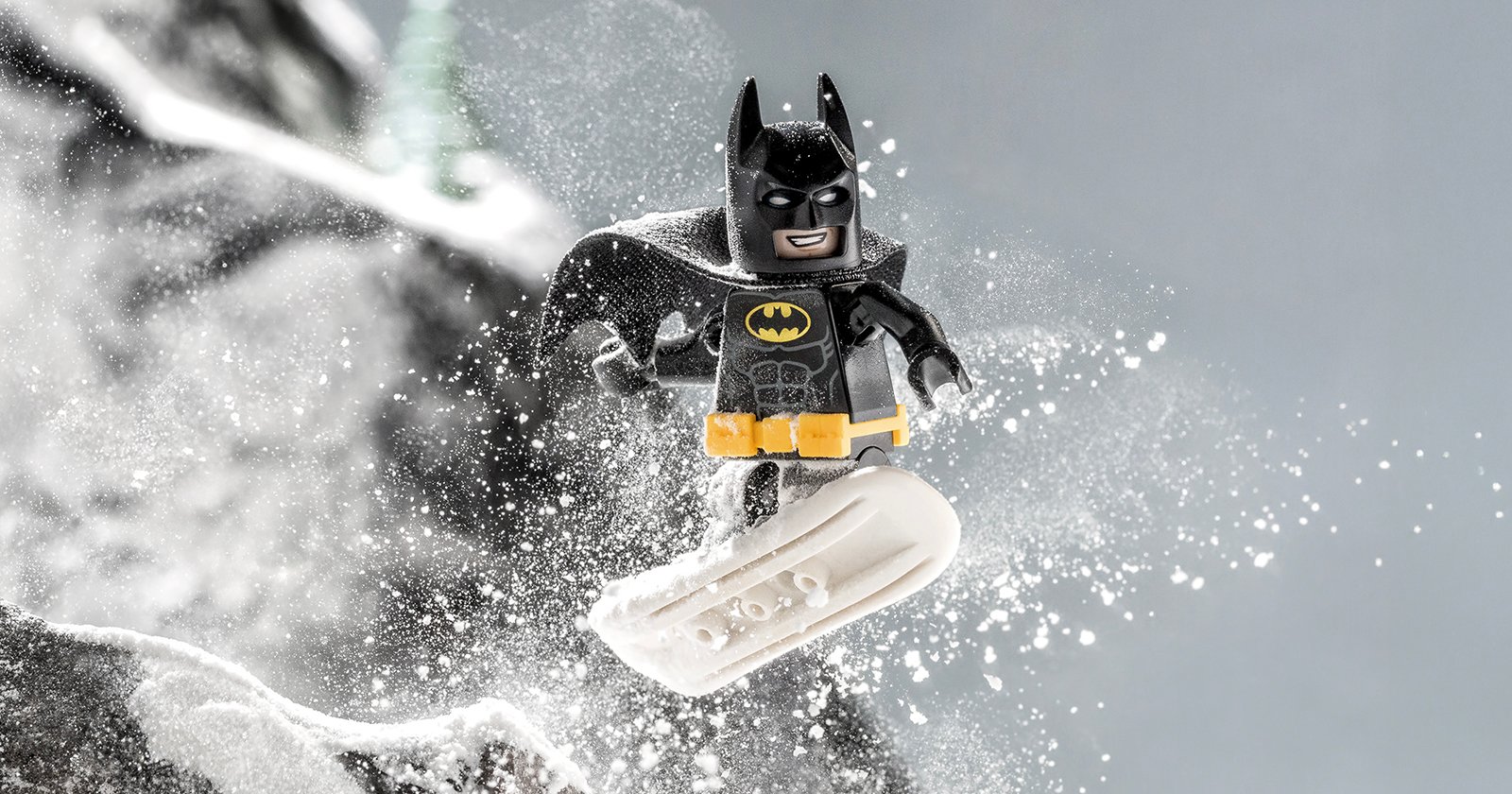
Alex Gusev is a name that stands out in the world of product photography, particularly for his cinematic toy photography, where he brings miniature worlds to life.
Alex Gusev is a name that stands out in the world of product photography, particularly for his cinematic toy photography, where he brings miniature worlds to life.
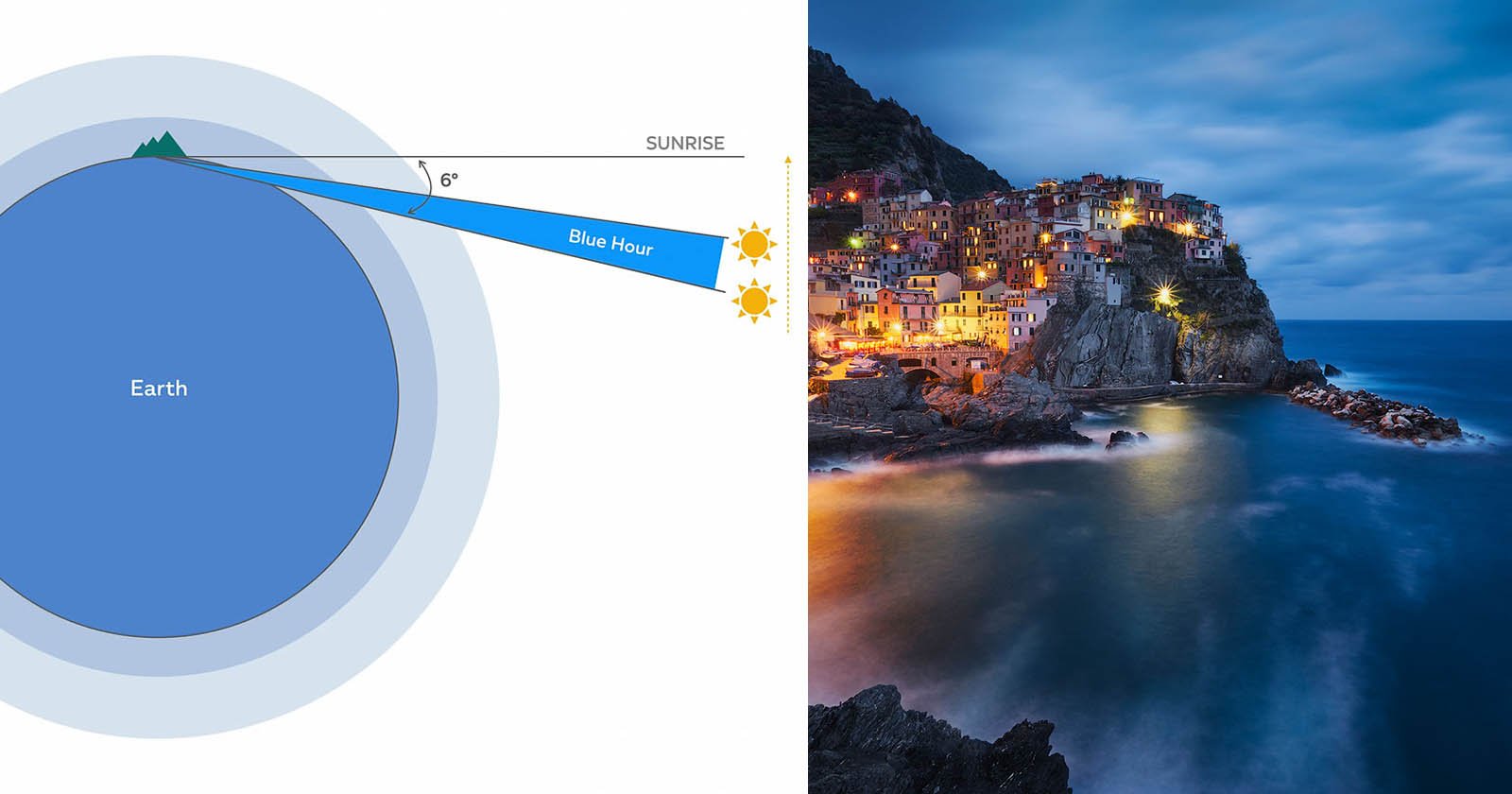
The difference between a good landscape photo and an extraordinary one often comes down to one thing: Light. And there's a magical window of time, called the Blue Hour, that offers some of the most atmospheric, cinematic light in landscape photography. However, many photographers overlook or struggle to fully capture its unique potential.
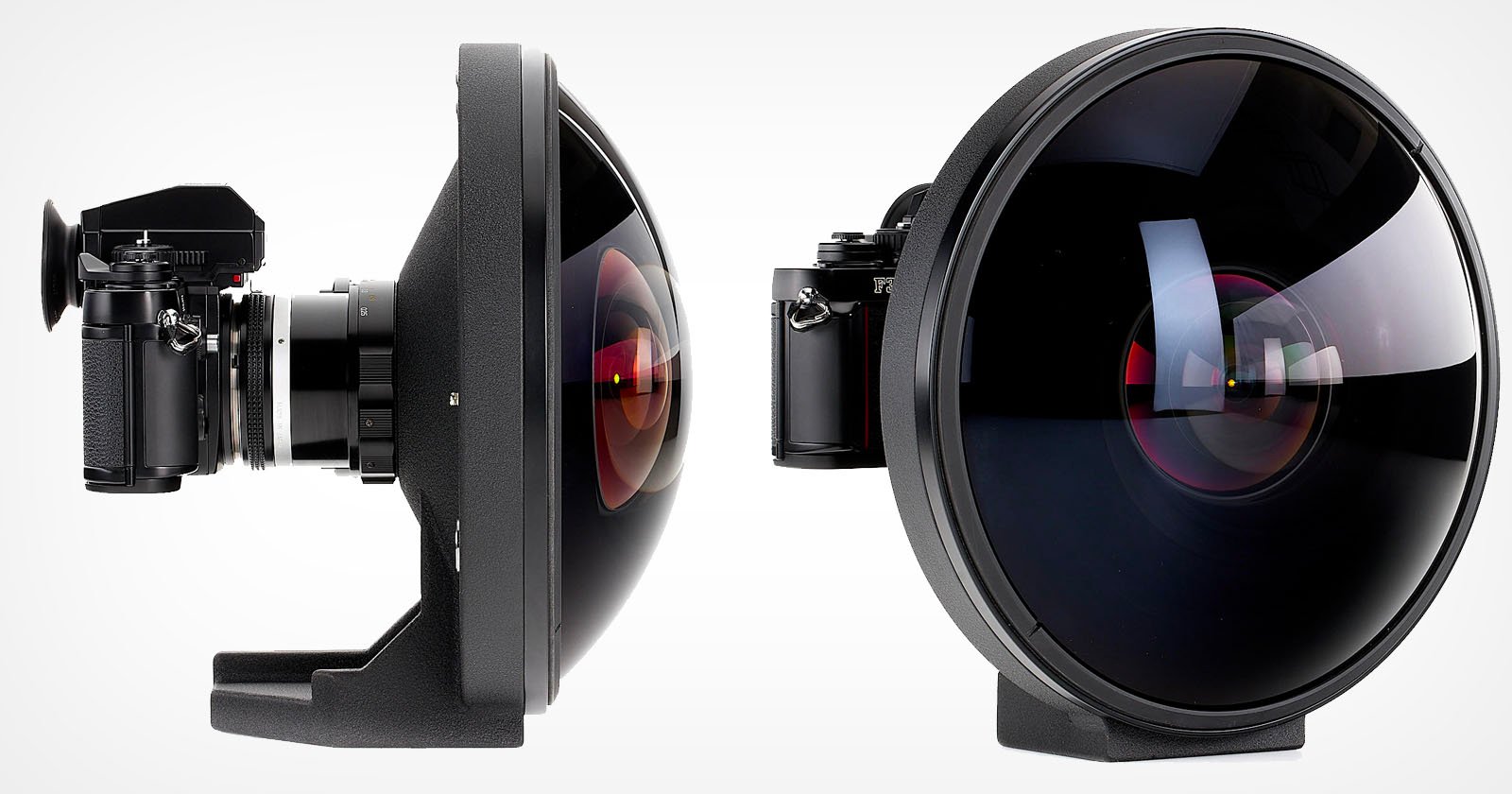
An extremely rare Nikkor 6mm f/2.8 Fisheye lens with a massive 220-degree field of view has appeared on eBay for 130,000 euros, or about $146,152. It is the exact same lens that failed to sell at the 2022 Leitz Photographica Auction.
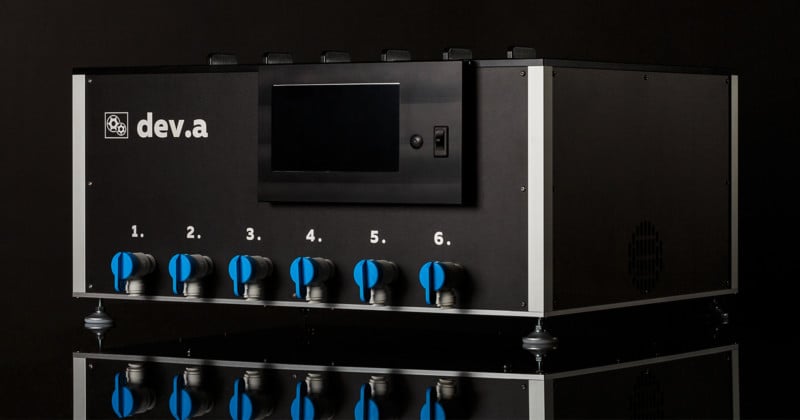
Analogico by ADEL has launched a compact and fully automatic programmable film processor called the Dev.a. This $4,290 tabletop film processor targeted at photographers in a range of environments, from a pro lab with high capacity to a casual home user.
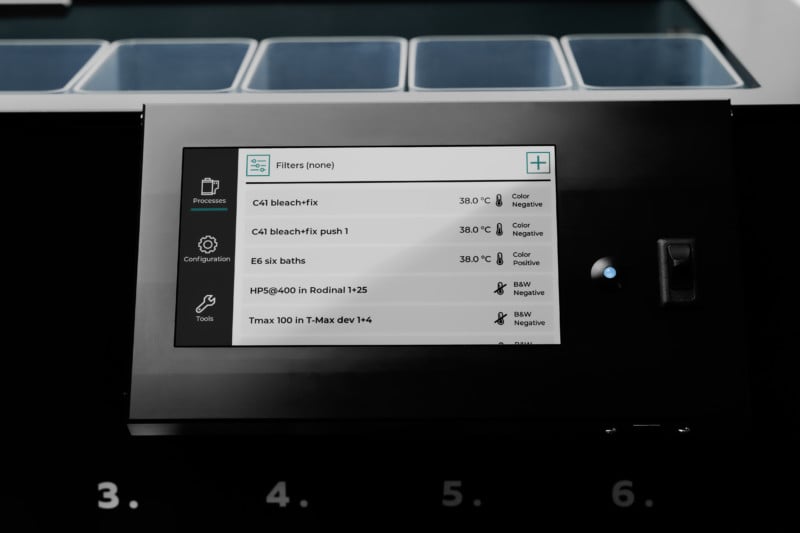
The Dev.a has six chemical bottles that allow the system to process up to six rolls of film at a time (35mm or 120) and reportedly can also run 4×5, 5×7, and 8×10 sheet films as well. It employs the use of a fully automatic rotary film processing system, which the company says is quite rare since devices of this nature have not been in large-scale production since Jobo ended its line of ATL machines back in the early 2000s. The only one other fully automatic film processor available anywhere else is the Filmomat 2020.
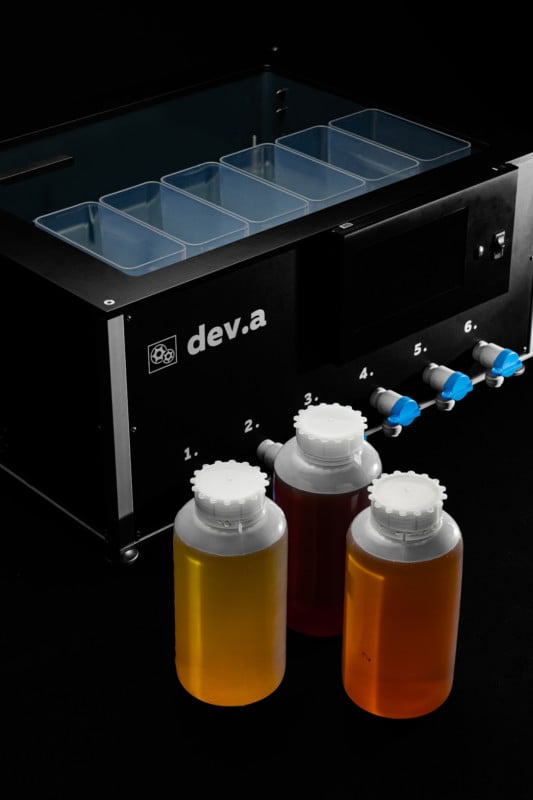
What should make this system unique and appealing to film shooters is its compact size. The Dev.a is small enough and efficient enough to fit in a small casual home user operation, yet the system has enough capacity and capability to be the backbone for a full-service photo lab.
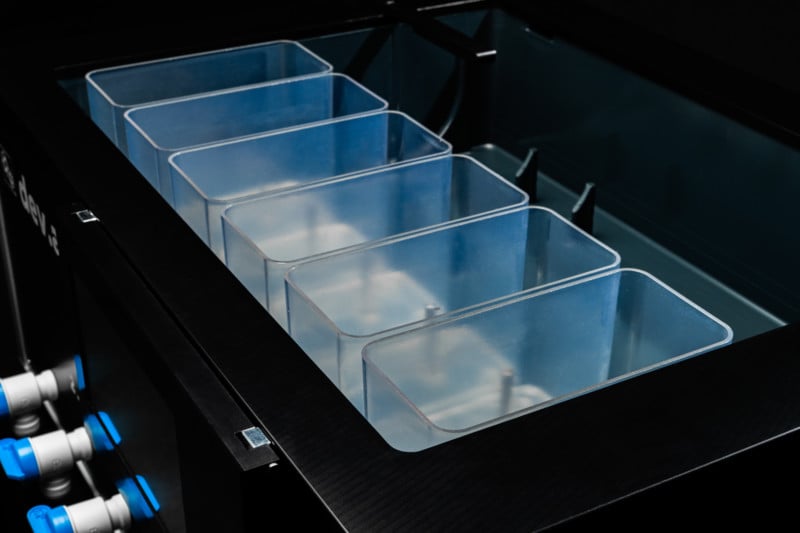
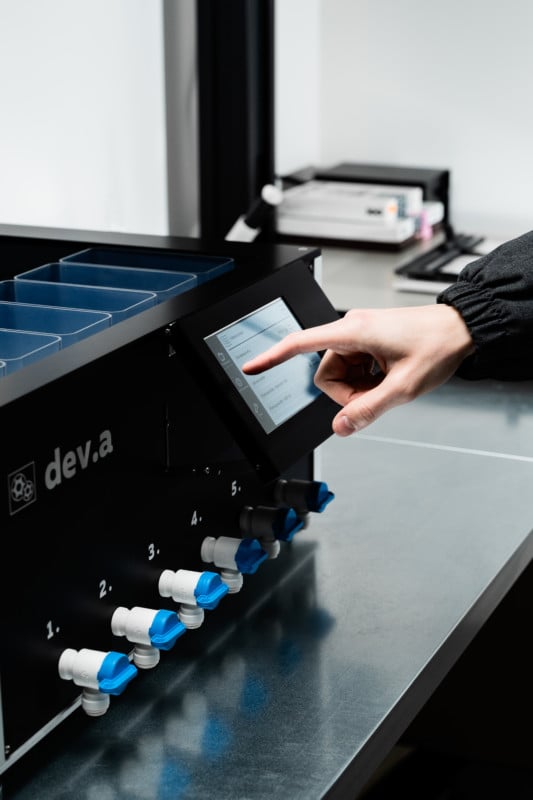
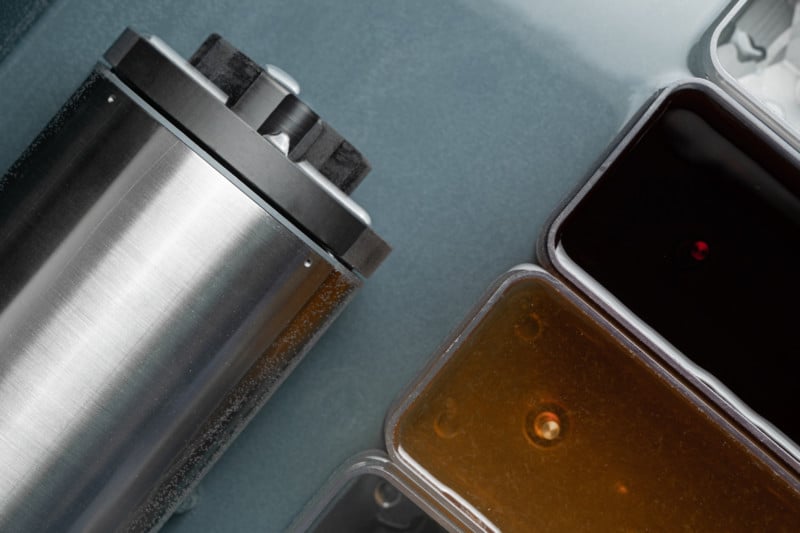
The device can cover both color and black and white film processing as well as both negatives and positives and uses six different chemistry tanks that each have their own taps on the front of the device to recover the chemistry mix. Alternatively, everything can be discarded automatically directly after processing using the same system. Water required for the washing steps can come from the spare chemistry tanks or from the water bath used for temperature control.
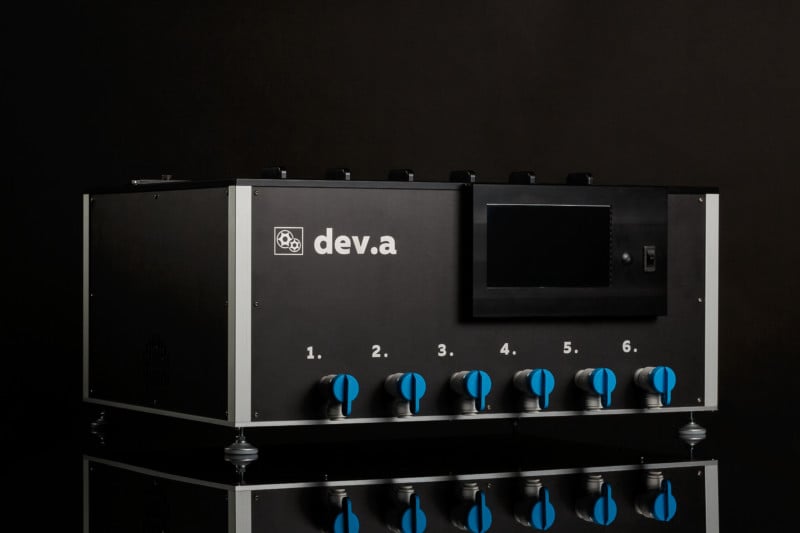
“Precise and effective temperature control is extremely important in color processes such as C41 and E6. Generally, temperature control is necessary in order to obtain consistent and reproducible results. The chemistry tanks and the film tank can be fully immersed in a recirculating water bath that heats everything up to the desired temperature. Once the desired temperature is reached, Dev.a maintains it consistently throughout the process,” the company says.
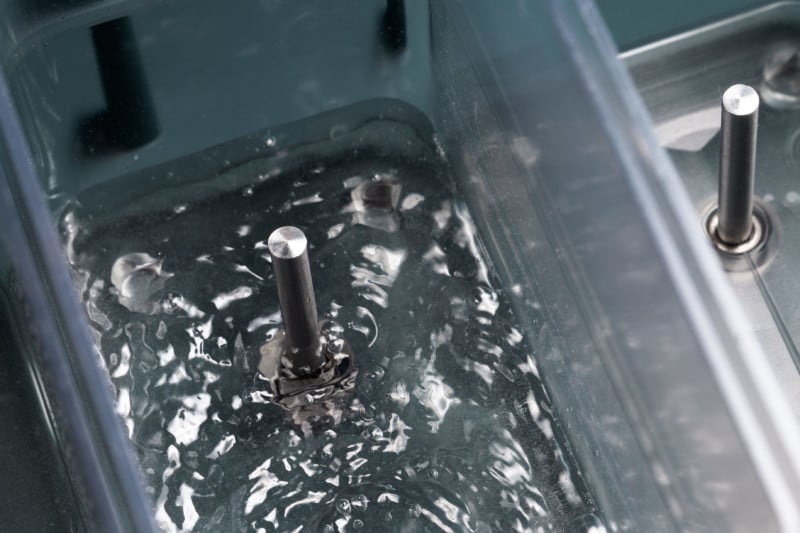
The water bath can be filled automatically if the machine is connected to a pressurized water source like a sink faucet or manually by pouring the water in the bath from a bucket or jug. The leftover water can also be repurposed in the automatic cleaning process.
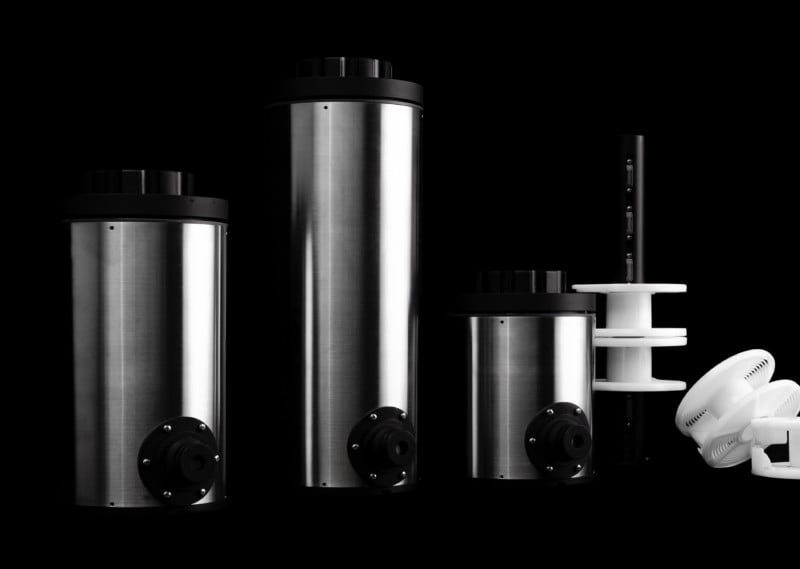
At the time of publication, the film tanks come in three different sizes to support any processing needs as efficiently as possible. Custom sizes are also available on request. The rotation for the film is accomplished by using magnets in the base of the inner column of the tank and mounted on a motor in the main system. All of this is controlled using a seven-inch touch screen display that comes loaded with a variety of presets along with completely customizable options using an on-screen virtual keyboard.
The Dev.a automatic film processor is available for $4,290 from the official product page here . Additional tanks cost between $249 abd $295 depending on the size.
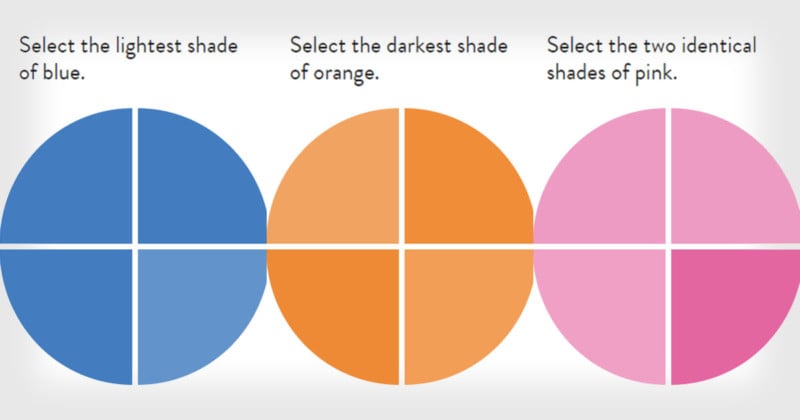
How do you think your perception of color stacks up against the general public? If you’re a photographer, have your eyes been trained to perceive color better than the average person? Here’s a short and sweet test that can help you find out.
The UK-based vision care company Lenstore has created an online test of 10 questions that challenges your ability to differentiate between shades of color. It’s a challenging test: of the thousands of people tested early on, less than 1% were able to achieve a perfect score of 10 out of 10. The average score was 6 out of 10.
The 10 questions ask you to perform tasks such as selecting the lightest or darkest shade from multiple options. You can do the challenge below (or here) to put your own eyes to the test:
The test found that about 50% of the general population get about 5 or 6 correct answers, while only 0.2% of people got all 10 correct. Another finding was that women seem to perceive color better than men — women scored an average of 57.7% while men scored 53.8%.
Color perception appears to decline with age: 31- to 35-year-olds performed the best (around 60% correct for both sexes) while those over 76-years-old only got about 30-40% correct.
There also seems to be a connection between color perception and language: those who speak 1 extra language scored an average of 53.8%, 2 additional languages had an average of 57.4%, and 3 additional languages had an average of 60%.
“Color perception depends on several factors, including colour vocabulary, home country, and languages spoken,” Lenstore says. “The way we talk about color plays an important role in how we perceive it. English didn’t have a word for ‘orange’ until two centuries after the fruit of the same name arrived in Europe. Before then, the color was called ‘yellow-red.’
“Russian speakers have two distinct category words for ‘light blue’ and ‘dark blue’. Something is never ‘blue’ in Russian, it’s either ‘siniy’ (dark blue) or ‘goluboy’ (light blue). Multiple experiments suggest these words influence our perception of color.”
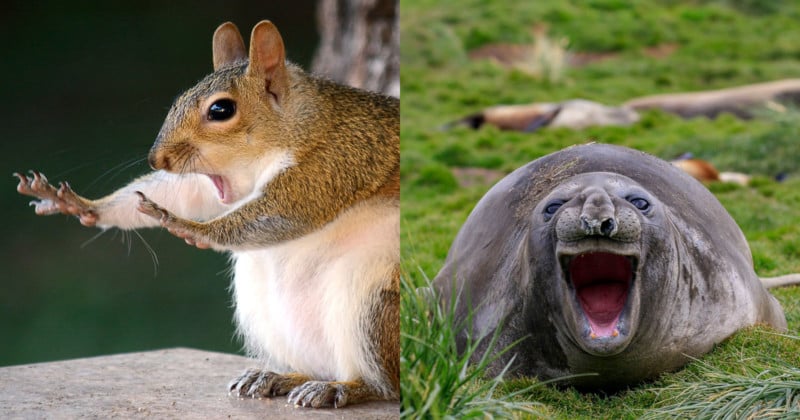
The annual Comedy Wildlife Photography Awards has revealed its shortlist of finalists for the 2018 photo contest.
Thousands of photographers around the world entered their humorous wildlife pictures into this year’s contest, and 41 of them were selected as finalists.
Here’s a selection of the finalist photos:


You can find a full gallery of this year’s 41 finalists here. You can also cast your vote for which photo is most deserving of the People’s Choice Award over on the contest’s website.
The winner will be announced on November 15th, 2018.
Image credits: Photographs courtesy the Comedy Wildlife Photography Awards
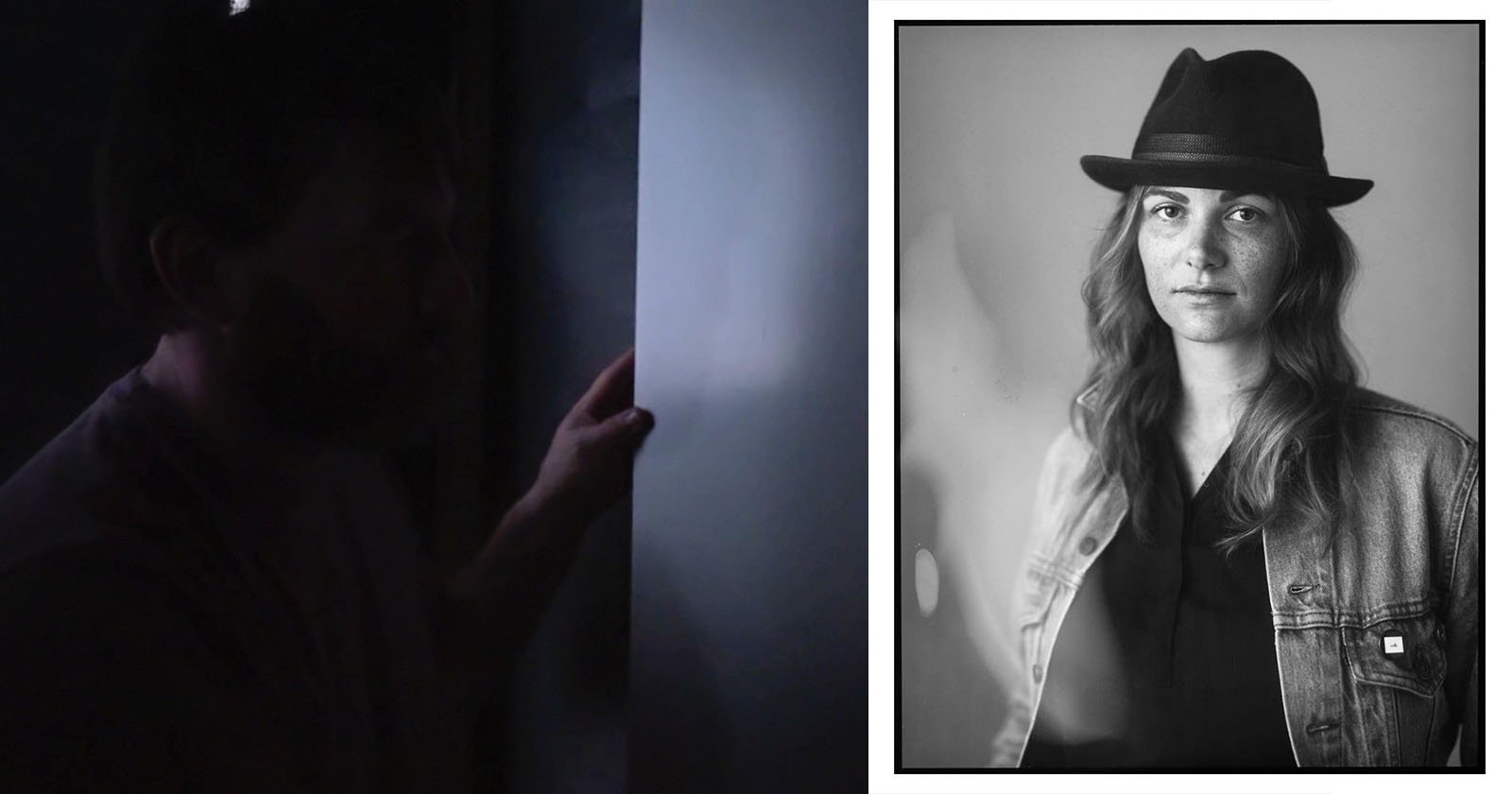
It’s not every day that you come across a camera that’s big enough for the photographer to stand in. But that’s what photographer Ross den Otter built for the recent Capture Photography Festival in Vancouver, Canada: he shot portraits from inside a 4x8x8-foot camera obscura.

Unlike in ordinary portrait photography, Den Otter wasn’t able to communicate with his subjects face to face or do photography with his eyes. For the duration of the shoots, he remained inside his dark tar paper camera obscura, capturing his subjects’ likenesses on B&W photo paper by listening.

“For me, it was fascinating that the secondary senses a photographer used when working with a subject provided the strongest clues in these sessions,” Den Otter says. “My sense of vision was removed by using this tool, so my sense of hearing became its proxy.”

“My voice through the wall was the cue to the subject, and my sense of hearing provided my clues to stillness,” he continues. “The sounds of the subject were my only indications of movements; had the sitter moved from the point of focus of the lens? In this process sound became my only indicator.”


Here are some of the photos he shot while standing inside the pitch black box:


Finally, here’s a 6.5-minute video in which Den Otter talks about this project and offers a behind-the-scenes look:
You can find more of Den Otter’s work on his website.
Image credits: Photographs by Ross den Otter and used with permission
Carl Weese, Dixie Milling, Easley, South Carolina, 2000
Carl Weese, August Morning Fog, Eggleston, Virginia, 2001
From time to time we hold print sales here on TOP, to help put beautiful original examples of fine photographic printmaking into people's hands at reasonable prices.
For the next five days, until Friday at 8 p.m., we'll be taking orders for Dixie Milling and August Morning Fog by our friend Carl Weese. Both are 7x17-inch large format photographs expertly printed in platinum-palladium (Pt/Pd), often called "platinum printing." Both prints will be signed and dated.
Here's how our sales work: In a standard bricks 'n' mortar gallery, sales are customarily made only one at a time, and the gallery typically keeps 60% or 70% of the sale price. Hence, the prices have to start out much higher for everyone to make money. Our sales are specifically designed to make the price low for buyers while maximizing the profit for the person who did all the work, i.e. the photographer. (We're all photographers here and that's how we all wish it always worked!)
As most of you know, making many prints at once is much easier than making one print every now and then. So what we do is take orders for five days only, and at the end of the five days, close the ordering window. Carl then knows how many prints he needs to make, and can "mass produce" the prints specifically to fulfill the orders already received. (With platinum/palladium prints, "mass produce" is the wrong term...each print still has to be made carefully and one at a time. Carl can make approximately nine prints per day during a six-hour working session, which he finds is his limit for this painstaking work.)
Plus, with TOP sales, 80% of the sale price goes to the photographer.
Being able to make many prints at once, knowing that each one has already been sold, and then being able to keep the lion's share of the sale price all enable the photographer to sell the prints for much less than they would have to sell for in a gallery. (Carl's standard gallery price for a 7x17 is $2,000, which is not at all atypical for a large original platinum print.)
The downside is that you can't see the print in advance, so you have a guarantee: If you don't like your print after you see it, you can return it within three days for a full refund, minus shipping.
We'll have several posts later this week about the pictures and the prints and how they were made, but let me just remind people that with platinum prints especially, little JPEGs are only distant approximations of the beauty and presence of the original prints themselves.
How to Order
Carl will be taking and tracking the orders manually. The price is $375 for one print and $100 off if you buy both. (Important! New York and Connecticut residents must add the correct State sales tax based on where they live. These rates vary, so you need to do this yourself.) You can pay either by PayPal or with a mailed check or money order (the latter saves us the PayPal fees. Carl will let you know the address if you want to send a check). Don't include notes or details with the payment, but make sure your name appears on it.
[Sale has ended 9/16/16 at 8:10 p.m.; if you have ordered and need to get in touch with Carl, you can email him. Thanks to everyone who participated! The sale was a success. —Mike]
Orders close Friday at 8 p.m. Eastern U.S. time.
We hope you like the photographs! I think you will be impressed with the prints. More about them later in the week.
Mike
Original contents copyright 2016 by Michael C. Johnston and/or the bylined author. All Rights Reserved. Links in this post may be to our affiliates; sales through affiliate links may benefit this site.
(To see all the comments, click on the "Comments" link below.)
Featured Comments from:
No featured comments yet—please check back soon!
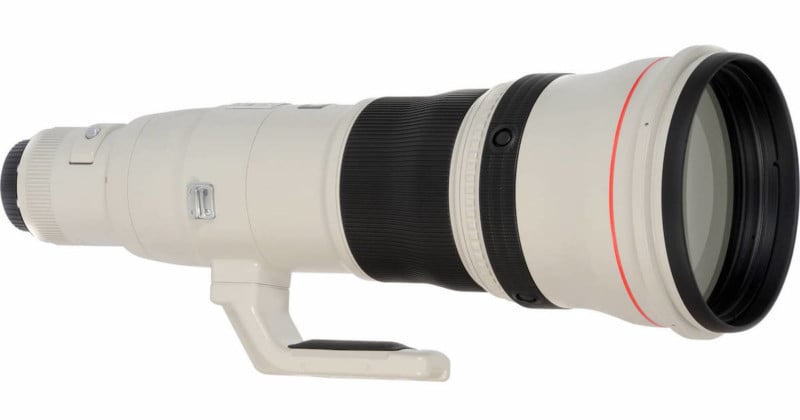
Here’s another one for the “probably never going to get made but WOW” file. A month and a half after Canon patented a massive 1000mm f/5.6 DO lens and two months after the crazy 28-560mm f/2.8-5.6 patent, the company is at it again. This time they’ve patented an EF 40-800mm f/4.5-5.6!
The patent, originally spotted by Egami, actually describes four optical formulas for four different 40-800mm internal zoom lenses—two for full frame, two for PowerShot superzooms. And while the idea of a wide-to-super telephoto lens might seem really cool, chances that Canon would attempt to actually build this behemoth for a full frame camera are slim to none.
Still, it’s fun to see a massive company like Canon playing around with crazy ideas. I think they call it “in-o-vay-shun” or something.
(via Canon Rumors)

It might be too late for most of you on the east coast, but you can be prepared for the next snow storm with this cheap set of crampons. The price varies by size, but you won’t spend more than $23. [OUTAD Hiking Traction Cleats/Crampons for Snow and Ice, $20-$23 with code UTEK8DQV]

Understanding the exposure triangle of shutter speed, aperture, and ISO is one of the first steps in learning photography. To help people wrap their heads around the concept, photographer Tony Catalano has created the Interactive Exposure Tool, an online tool for experimenting with how changing camera settings affects the resulting photo of a scene.
As you can see from the screenshot above, the page is extremely simple and straightforward. On the left side is a low-light scenario showing a spinning fan and Christmas lights in the background. On the right side are three sliders for shutter speed, aperture, and ISO.
Drag the sliders to see how the resulting photo changes. Change the mode from Manual to Shutter Speed Priority or Aperture Priority to see how those specific settings alter the image. Use f/1.8 (a large aperture) to throw the background out of the focus, or use f/22 (a small aperture) to have your foreground and background both in focus:


A fast shutter speed will freeze the spinning fan, allowing you to clearly see the individual blades. A slow shutter speed will cause it to be captured as a blur:


You’ll also notice that your shot becomes more or less noisy depending on what you set ISO to.
Head on over to the Interactive Exposure Tool if you’d like to play around with it yourself — it’s both free and mobile friendly. It’s also great for sharing with someone who’s just starting out in photography.
Back in 2012, we shared a post about the life and work of Anton Kusters, a Belgian photographer who spent two years living among the members of a Japanese Yakuza family to document life in the criminal underworld.
The Economist just published this fascinating new 6-minute feature on Kusters, titled “Inside the Syndicate.” It’s a slideshow of the resulting work, with Kusters’ voice narrating the images and his story.
(via The Economist via Reddit)
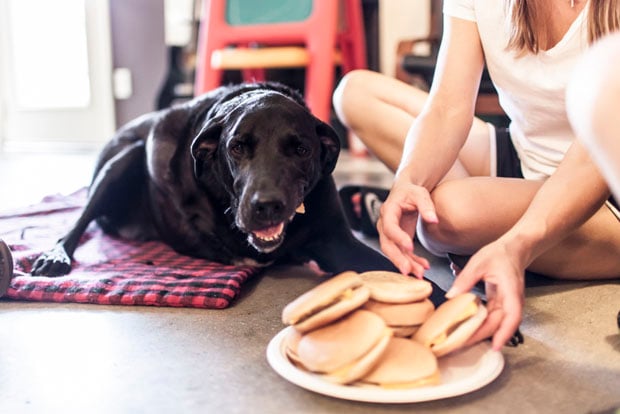
I ate a lot of hamburgers. We had a party.

And I laughed.

And I thought about how much I’m going to miss it here.

We told jokes.

We were serious.

My friends from next door came to see me. They’re twins. When someone offered them one of my hamburgers, one said, “No thank you. I don’t want to take any from Dukey.”

Kristen came to see me. She’s a hoot. She’s my groomer. And my buddy.

While we were waiting for the vet to come Kristen said we were going for a walk. Then someone said, “How about a play in the water at the splash park down the street?” So off we went!


“You know I’m going to miss you, right?”

“And you too, right?”

“I need you to help me watch over my family.”

“Did you hear me? This is all I want!”

We got wet today.

We smiled today.

We felt grateful today.

We broke the rules today.

I listened to the kids play off in the distance. And thought about my two babies at home. I loved protecting them.

I relaxed today.

I felt no pain. Even though the tumor grew so big.

I felt the love today.

I said goodbye to my beautiful friend Kira. She “saw” me standing over everybody before the doctor said it was time. I was excited & jumping & happy.

Well, I didn’t say goodbye. I said ’til we meet again.

God, I was lucky. Our time was short. But you both gave me a second chance & we lived it up together. You love when I look at you. I’ll never stop.
Always,
DUKEY
About the author: Robyn Arouty is a commercial and portrait photographer based in Houston, Texas. She is an avid proponent in Houston’s dog rescue community, and has raised tens of thousands of dollars for dog rescue groups. Visit her website here and her Facebook page here. This article originally appeared here.
Image credits: All photographs by Robyn Arouty and used with permission

