Shared posts

03 Feb 00:01

Kimagure Orange Road, Vol. 4

by Ken H.
Lostphrack

Plug, plug plug!

Page from Kimagure Orange Road, Vol. 4Kimagure Orange Road, Vol. 4
by Izumi Matsumoto
DMP/Emanga, 190 pp
Rating: Teen (13 +)

Izumi Matsumoto’s shonen rom-com classic, Kimagure Orange Road delivers more of the hijinks you’ve come to expect from the series. Consisting of awkward moment after awkward moment as the love triangle between Kyosuke, Madoka and Hikaru settles into a groove, this volume sees the trio wrestling with work, school events, misunderstandings and more.

There’s not a whole lot to say about this volume as nothing really happens. The previous volumes established the love triangle and now it’s basically in something of a holding pattern. Kyosuke and Madoka still harbor feelings for each other and react accordingly, but never quite express them due to indigestion, interruptions and the like. Meanwhile Hikaru continues to be clueless that there’s anything going on between her best friend and her boyfriend, leading her to continue to hang off of Kyosuke and interject herself into his life at every turn. While there are a few cute moments in this volume, nothing really changes and there’s no real development in the relationships. Probably the most notable event comes when Kyosuke’s able to get Madoka to attend a school faire, something she’s never done before. It helps show how she’s slowly changing due to her friendship with Kyosuke and seems like something that could get other balls moving in the future, apparently it shows the rest of the class that she’s not some delinquent. Otherwise though, it’s settled into something of a rut and delivers chapter after chapter of classic romantic comedy hijinks and misunderstandings. Page from Kimagure Orange Road, Vol. 4

Izumi Matsumoto’s artwork offers us a wonderful glimpse into 1980s Japanese fashion and decor. It’s a fascinating little look into a period full of big hair and bizarrely busy clothing! He does a fantastic job at depicting emotion through the characters’ eyes, with one scene involving Madoka overhearing Kyosuke and Hikaru talking being particular notable. He’s able to imbue her pose and eyes with such emotion, that despite almost no real movement and a lack of other emotional short hand such as tone patterns, borderless scenes, etc, that it’s impossible not to see the hurt and sadness in her eyes.

Kimagure Orange Road, Vol. 4 feels like it’s the volume when things finally start to settle down into a bit of a pattern. The stories in it are shorter, but enjoyable, providing a nice light read. Unfortunately, this also means that it gets a bit predictable in places. All in all, it’s a fun read but not one that will stick to your ribs. Hopefully now that the formula and status quo has been set up and shown, Matsumoto will start to change things up a bit or explore other aspects of the characters, or expand the cast.

Kimagure Orange Road, Vol. 4 are now available digitally from DMP and Emanga.com.


29 Jan 20:27

Vinland Saga, Vol. 5

by Ken H.
Lostphrack

Shameless self promotion!

Before we get to my midweek manga review of Vinland Saga, Vol. 5, have a few news items that caught my attention in what seemed like a rather slow news week.

And now onto this weeks review of Vinland Saga, Vol. 5!

VinlandSaga5Vinland Saga, Vol. 5
by Makoto Yukimura
Kodansha Comics, 448 pp
Rating: Teen (13 +)

Makoto Yukimura’s Vinland Saga enters into a new phase as, what fans have dubbed, “The Farmland Saga” gets under way with volume five! Thorfinn, once a deadly and determined fighter driven by a need for vengeance is now a broken man, serving as a slave on a farm working day to day with nary a hope or dream to sustain him. Filled with Apathy, Thorfinn finds himself attracting some unwanted attention from the farm’s overseers, attention which forces him to confront his past if he has any hope of a future.

Yukimura’s decision to slow down the action was a brave one. Up until now we’ve been eyeball deep in the carnage of the viking invasion of England, but as Vinland Saga moves into its new arc the action is all but absent as the focus becomes Thorfinn’s struggle with his own demons and his need to find a reason to live. The radical shift in the tone and action content could easily lose readers, but Yukimura’s characters and his tale of the trials and tribulations of Thorfinn are so solid and engrossing that I can’t imagine anyone jumping boat at his point. The father and son theme which has appeared throughout the earlier volumes is present here and continues with the sharp contrast and simmering conflict between the farm owner and his returning warrior son. These relationships and the generational conflict between father and son have been at the core of the series from the start and the’ve molded many of the characters and I’m really curious to see where the series is ultimately going with this idea.

Among the myriad of new characters in the Farmland Saga, Einar is currently the most important and interesting one. He’s a very different person form Thorfinn, despite their shared situation. The contrast helps motivate Thorfinn as he experiences friendship for the first time and it allows him to open up after he’s been emotionally shut down for years. It’s also interesting to see their friendship develop as it’s really the first relationship Thorfinn’s had which isn’t based on exploitation. Everyone else in the series, with the exception of his family, have been using and manipulating Thorfinn for their own aims. It opens up a whole new side to Thorfinn’s character and, frankly, there’s a pretty enjoyable chemistry between two.

Yukimura’s artwork continues to be absolutely fantastic! His attention to detail in both clothing and setting helps makes Vinland Saga an incredibly immersive read. Every character oozes personality, ranging from the animal like freelance guards to the rough and tumble returning son, to the softer and doughier look of the farm owner himself. The action scenes, though few and far between in this volume, are effective and entertaining, while also being incredibly brutal and violent at times. The sequence when Thorfinn has a vision of his old comrades and their victims was particularly well done and wasn’t something I expected to see in Vinland Saga.

Vinland Saga, Vol. 5 continues to show why this is one of the best series out there today, from any country. Makoto Yukimura’s thoughtful characterization, detailed artwork, gripping story and emotional gut punches make this one of my most looked forward to reads. I know the series is slated for a hiatus and I can only hope that it returns as soon as possible, because I’m dying to find out what happens next.

Vinland Saga, Vol. 5 is available now from Kodansha Comics.


26 Jan 21:57

Knights of Sidonia, Vol. 12

by Ken H.
Lostphrack

Plugy!

Knights of Sidonia, Vol. 12Knights of Sidonia, Vol. 12
By Tsutomu Nihei
Vertical Comics, 212 pp
Rating: Teen (13 +)

Tsutomu Nihei’s bizarre sci-fi/mecha/harem series trucks ever onwards to it’s weird biological horror field future with Knights of Sidonia, Vol. 12! Nagate and his companions in the Garde squads are assigned to the newly created defense cruiser, Mizuki, as it launches from the Sidonia to undertake a scientific mission involving a nearby sun. As one would expect this hardly goes off without a hitch and soon the Mizuki, Nagate and the rest of the Garde pilots find themselves up against a horde of the biological nightmares known as the Gauna.

This volume highlights just how odd Knights of Sidonia can be. The basic premise would lead you to believe that it’s going to be a dark series with little humor to it, but Tsutomu Nihei constantly works in visual gags and humor by contrasting this grim dark future of humanity with seemingly normal human interactions. In past volumes this has often come from harem aspects surrounding Nagate and his relationships with the various women he comes across, in volume twelve the humor comes courtesy of a popularity contest. If the sheer weirdness of mechs pilots engaging in such a thing doesn’t strike you as odd enough, it’s further compounded by the fact that entrants include Kunato’s Gauna engineered Garde unit, and the Honoka clones being treated as a single entity. Don’t worry though, Nihei also continues the series long standing tradition of kicking the crap out of Nagate for slapstick purposes and frankly, I wouldn’t it any other way. While I may have focused on the humor, make no mistake, Nihei keeps the horror associated with the Gauna’s and gives us several disturbing and emotional sequences thanks to them.

Sidonia12pg I was pretty surprised by Tsutomu Nihei’s artwork in this volume as it’s quite the change from volume six. The line work seems a lot thinner and there seem to be far less blacks. Everything has a slightly more organic feel to it, which makes sense in some cases but it’s quite a startling change from what the series looked like when it first started. Nihei’s done this before though, in Biomega his artwork underwent a drastic change in style about halfway through and became something of an early version of what he was using when Knights of Sidonia kicked off. Thankfully every one in the book is still recognizable and the action is still as solid and enjoyable as it’s always been. The new style seems like it’s a nice fit with some of the new designs, like the sentient organic Garde created by Kunato and now bearing the name of Tsumugu. This volume also features some of the most explicit sexual imagery I’ve seen from a comic or manga which never explicitly shows any sex scenes. It’s actually part of one of the more chilling sequences from the series, dealing with Gauna and their penchant for attempting to duplicate the human form. The softer, more organic style Tsutomu Nihei’s adopted worked nicely with such imagery.

It took me a little while to warm up to Knights of Sidonia in the early days of the series, but once it hooked me it hooked me good. Volume twelve has done absolutely nothing but reinforce my enjoyment for this unique mecha series. If you’ve seen the anime series on Netflix or elsewhere, you owe it to yourself to pick this up. If you happen to like sci-fi series, you should already be reading this, and hey, if you’re into quirky harem comedies where one of the harem members is a giant fleshy mecha, then what are you waiting for?

Knights of Sidonia, Vol. 12 is available now from Vertical Comics. Review copy provided by the publisher.


21 Jan 20:33

Brave 10, Vol. 5 + 6

by Ken H.
Lostphrack

Plugy plugy plug plug plug

Welcome back to another midweek manga review! Hope you’ve all been catching the Monday reviews, this week’s was a look at The Seven Deadly Sins, Vol. 3. I’m going to try and continue to Monday reviews for as long as I can, but I’ll be heading back to school soon so we’ll see how long it lasts. I’ll always make sure to have one for Wednesday, regardless of what happens to the Monday one. Anyway, this week I’ll be taking a look a Kairi Shimotsuki’s Brave 10, Vols. 5 + 6, but first some news…

And now onto this weeks review of Brave 10, Vols. 5 + 6!

Brave 10, Vol. 5Brave 10, Vol. 5 + 6
by Kairi Shimotsuki
DMP/Emanga.com
Rating: Young Adults (16 +)

Over the past four volumes of Kairi Shimotsuki’s Brave 10 mysteries have been built up, cryptic dialogue thrown around, but little has really been explained. Well that’s about to change! With only two more volumes to go, everything is laid bare at last as Yukimura Sanada finally reveals his plans and reasons behind gathering the cadre of elite warriors known as the Brave 10. Just what are his plans for the mysterious item known as the Kushimitama and how do Saizo and the other Braves fit into the picture? All is revealed in these two volumes!

Yes, at long last the simmering mysteries finally come to a boil as Kairi finally fills us in on why Isanami and the Kushimitama matter. It’s only taken us 6 volumes of an 8 volume series, but better late than never right? Much of these two volumes spend time depicting a trip to Kyoto, which in turns leads to Sanada discovering and recruiting his final two Braves. While they seem kind of interesting, being introduced so late into the series inevitably means we’re going to find out almost nothing about them. In fairness though, the only character who’s really had any development in the series has been Saizo. While that may sound a bit harsh, the fact is that most of the other characters have been fairly one note, with even likable ones such as Sasuke or Kakei being little more than a quirk or two wrapped in a pretty boy package. The entire cast consists of stereotypes and cliches. Isanami’s a ditzy but likable young girl, Anastasia’s a voluptuous sexy blonde, Rokuro is the mysterious and brooding one, etc. This is really driven home in these two volumes as Shimostuki quickly rushes the introduction of the final two Braves, with them coming off as little more than warm bodies to fill in the final two slots in the roster. Her handling of Saizo has easily been one of the highlights of the series, with his struggle to handle his changing personality – from hardened, solitary killer to someone with friends and desires beyond simply surviving and accomplishing his job – coming full circle as treachery from a fellow Brave forces Saizo to revisit a part himself which has been fading since he met Isanami. I’d also be remiss if I didn’t mention how Shimotsuki’s done a pretty good job at making the androgynous foe-turned-friend Kamanosuke into a lovable psychopath, thanks in large part to how she plays around with the character’s true feelings and desires in these two volumes, adding a little more depth to the rather anemic roster.

As for the big reveal, while it’s great to finally get it and to finally know what’s going on and why it’s been going on, it’s coming so late in the game. For a good chunk of the series the mystery surrounding Isanami has been present, but it’s taken a backseat to ninja clashes and the rivalries between Sanada and his fellow warlords. Bringing it back to the forefront is nice and gives the series some much needed direction and focus, but at the same time it feels strangely awkward and at odds with everything we’ve seen so far, that the revelation actually feels like it’s distracting from the conflict between the warlords.

Page from Brave 10, Vol. 6

Nice little action scene.

Kairi Shimotsuki’s artwork continues to be gorgeous, though her page layouts and panel to panel flow often suffers from an excessive fondness for using weird angles, overlapping artwork and overly detailed and ornate character designs. There are some moments which cut through the clutter, and these moments show that Shimotsuki can put together some clear and exciting fight scenes. Her character designs continue to be incredibly beautiful with an eye for detail that’s indulged numerous times thanks to the complex costumes and flashy hair styles. Often times her characters end up looking less like the pirates or orphans they’re meant to be, and more like fashion models.

Brave 10 has been a weird read. While the mystery of Isanami and the Kushimitama has always been present, it never really felt like it was the focus of the story. More often than not it took a back seat to the ninja battles, feeling more like a McGuffin to keep bringing Sanda and his slowly gathering Braves into conflict with rival warlords rather than something of pressing importance. I know there’s another series coming out, but after firmly establishing this conflict between Sanada and rival warlords, the introduction of supernatural elements like Gods and Goddesses this late into the game just feels awkward. On the other hand, it has given the series a nice sense of momentum and the sense that the story is going somewhere, something the leisurely stroll of the first half of the series was lacking.

Brave 10, Vol. 5 + 6 are available now from Digital Manga Publishing and Emanga.com. Digital review copies provided by the publisher.


20 Jan 05:01

The Seven Deadly Sins, Vol. 3

by Ken H.
Lostphrack

Monday Manga Review plug!

The Seven Deadly Sins, Vol. 3The Seven Deadly Sins, Vol. 3
By Nakaba Suzuki
Kodansha Comics
Rating: Teen (13 +)

The Sins continue their quest to aid Princess Elizabeth in freeing the Kingdom of Brtiannia from the rule of the Holy Knights. Following the skullduggery and chaos of the previous volume, our intrepid heroes add yet another Sin to their group as they “rescue” Ban from his long captivity. After leaving a trail of wreckage in their wake, the group attempts to lay low only to find themselves being hunted by an unexpected opponent… one of their own! Nakaba Suzuki’s shonen fantasy series trucks on with The Seven Deadly Sins, Vol. 3.

Much of The Seven Deadly Sins, Vol. 3 is spent exploring the past relationship of two of the newly introduced Sins. Ban, a pretty boy with a dark edge that Meliodas had been attempting to rescue in the previous volume, and King, a youngster with a real hate on for Ban. The backstory between Ban and King dominates this volume and that’s not a bad thing at all. Their friendship gone bad is fairly compelling and throws an interesting obstacle into Meliodas and Elizabeth’s long term goal of reuniting the Sins. On top of that, it helps make them the most interesting and compelling characters in the series so far! Meliodas has been a fairly bland lead, and the rest of the cast has felt a tad one note as well, but when Nakaba brings King’s vendetta into the tale things start to liven up quite a bit. One can only hope that Ban and King’s conflict isn’t the result of a misunderstanding or resolved quickly and then swept under the rung, as the tension between the two could add some much needed bite to the series.

Page form The Seven Deadly Sins, Vol. 3

K, is that you?

Nakaba’s artwork continues to be the highlight of this series. It’s wonderfully detailed and his use of thatching adds a nice sense of texture to the artwork. Clothes, armor and the backgrounds all look like they have a weight and solidness to them which is often lacking in manga and comics. Nakaba’s artwork, while a bit more detailed than some, isn’t so realistic that the cartoonish over reactions and over the top action scenes feel out of place or forced. This is probably helped by the fact that one of the main characters is a talking pig. Once you get readers used to that, the more cartoonish aspects feel natural and don’t stand out as much. The character designs are certainly eye catching and Nakaba uses a wide variety of body designs and clothing to help set each character apart. While most of them certainly feel at home within the fantasy setting I couldn’t help but think that Ban’s design was surprisingly anachronistic for the series. He looks less like a fantasy character and more like K from the popular King of Fighters game franchise with his white hair and leather outfit. The action scenes are another highlight of the series, especially the few times we get to see Ban and King clash, they easily steal the show and hopefully set the bar for the rest of the series battles to follow.

The Seven Deadly Sins is a pretty ok shonen series. Outside of the artwork though, there’s nothing that really sets it apart from the dozens of other shonen series already out there. It’s interesting to note that the series seems to represent something of a trend from Kodansha Comics as it’s the fourth medieval/western fantasy-esque series they’re currently releasing (Arslan, Fairy Tail and Vinland Saga are the other three). While I don’t think it’s quite as good as the other series, it is a lovely looking book that sticks close enough to the formula that it’s bound to appeal shonen fans.

The Seven Deadly Sins, Vols. 3 is available now from Kodansha Comics. Review copy provided by the publisher.


15 Jan 05:30

My Neighbor Seki, Vol. 1

by Ken H.
Lostphrack

Shameless self promotion!

Welcome to another midweek manga review! This time around I’ll be taking a look at My Neighbor Seki, Vol. 1, but first some news…

And now onto this weeks review of My Neighbor Seki, Vol. 1!

My Neighbor Seki, Vol. 1My Neighbor Seki, Vol. 1
By Takuma Morishige
Vertical Comics, 176 pp
Rating: Not Rated

From the pages of Comic Flapper, the same magazine that gave us 7 Billion Needles, Twin Spica and Transluscent, comes Takuma Morishige’s My Neighbor Seki, Vol. 1! The manga, which was recently adapted into an anime series available on Crunchyroll, is a charming high school comedy about Rumi Yokoi and her bizarrely distracting classmate, Toshinari Seki.

I wasn’t really expecting much from My Neighbor Seki, Vol. 1, I’ve touched upon my rocky relationship with Japanese humor many times before, so I was pleasantly surprised when I discovered just how goofy and enjoyable this was. Filled with episodic, stand alone tales, My Neighbor Seki, Vol. 1 brings the laughs via Seki’s ever escalating classroom hijinks and Yokoi’s reactions to them. While the premise is simple and straight forward, Seki’s actions are anything but. He’s not your typical class clown and goofball. Seki’s distracting behavior takes the form of elaborate undertakings such as running a class room based postal service complete with mailbox in the back of the room, feeding cats, making plushies and tricking out his desk with a variety of trap doors and movable panels. Of course this all goes unnoticed by most of the class with the exception of poor Yokoi. The humor usually stems from what Seki’s doing and Yokoi’s reactions to it, which often lands her in trouble for not paying attention to the teacher while the ever silent Seki and his antics slip by unnoticed. At times Yokoi’s simply a passive watcher to Seki’s bizarre hobbies, at other times she gets involved or finds herself wishing she could get involved. So far there’s no other recurring cast members besides Yokoi and Seki, and to top that Yokoi’s the only one with any dialogue throughout the entire volume, leaving Seki as much as a mystery to us and he is to Yokoi.

Page from My Neighbor Seki, Vol. 1

An example of Seki’s handiwork.

Takuma Morishige’s artwork is solid and he does a great job at making some of Seki’s ridiculous actions look fantastic. I don’t think I’ve ever seen a domino show so dramatically presented in sequential art before. Morishige also provides just enough background details to help establish the setting, ensuring that you’re reminded of the classroom setting and making sure that you never forget that Seki’s construction of a giant spinning chess piece is taking place in a class room full of students. He also does a fantastic job at conveying emotions through body language and facial expressions, both of which help add to the humor of the situations, including some over reactions that don’t feel out of place or intrusive at all.

My Neighbor Seki, Vol. 1 is undoubtedly a charming read, and one that’s both quick and light. There’s not a whole lot else too it beyond the goofy hijinks. While the first volume was pretty fun, this seems like it could wear thin pretty quickly. Thankfully Takuma Morishige’s imagination and commitment to making Seki’s actions ever more elaborate and bizarre with each passing chapter helps it stave off that feeling. Still, I found myself wondering just how long he could stretch the premise before it started to feel repetitive and same-y, so you can imagine my surprise when I discovered that My Neighbor Seki is going on it’s fifth year of publication! With such a small cast and episodic structure, that seems like no small feat. Surely there must be some twists at some point and Seki can’t remain silent for that entire time, can he? Will there be more characters introduced? will the plot become less episodic and more serial? I have no idea, but I’d be lying if I said I wasn’t a little bit curious to find out.

My Neighbor Seki, Vol. 1 is available now from Vertical Comics. Review copy provided by the publisher.


14 Jan 06:52

Kotoura-San, Vol. 1

by Ken H.
Lostphrack

Belated self plug!

Kotoura-San, Vol. 1Kotoura-San, Vol. 1
By Enokids
DMP/Emanga, 146 pp
Rating: Teens (13 +)

Japanese comedy series tend to be rather hit or miss with me. There’s just something about the type of humor that makes its way into them that falls flat on its face for me. Kotoura-San, Vol. 1 by Enokids isn’t that different, but at least it’s not offensively bad like certain strains of Japanese humor that often turn up in manga and anime. Originally published on a website, Koutura-San tells the story a young psychic girl who tends to keep to herself due to her mind reading powers, and how her life changes when she transfers to a new school and finds herself caught up in their small ESP club.

There’s really not much to say about Koutura-San because not much happens in it. The lead, Koutura, is a tiny girl with psychic powers who’s kept to herself throughout most of her life. Her powers have generally caused her problems and driven away nearly everyone who’s ever been close to her. So naturally after transferring into a new school her world slowly begins to open up as she acquires friends and develops a relationship, much to her surprise and pleasure. The characters all tend to be a bit goofy, even when they’re given a tragic backstory, and each one tends to have some unique trait which serves to set them apart from the others. Koutura’s the psychic, Manabe’s a good hearted perv, Mifune’s the club leader, etc. The problem with Koutura-San is that it’s just so… passive and easy going. There’s virtually no tension or conflict present in the book, and even when there is it has all the intensity of a warm bath. It comes off as a cute little 4-koma strip situational comedy, full of the typical misunderstandings and social awkwardness you’d expect to inhabit a teenage school comedy series. While there is a bit of pervy humor to it I was glad to see that Enokids avoided the temptation of making it too puerile or smutty. Page from Kotoura-San, Vol. 1

Enokids artwork is incredibly simply and plain, which reinforces the warm, cozy feeling the book exudes. It’s very stripped down and minimalist, even for a manga. The backgrounds are basic and simple, most of the story is depicted in a very straightforward manner, consisting of talking heads or shots of the cast from the waist up. The character designs are simplistic and their emotions are clearly conveyed through the surprisingly expressive faces and eyes. The repetitive nature of the 4 panel column is only occasionally broken up by a side story or chapter break, but even then Enokids seems to favor a fairly simple panel layout.

Koutura-San, Vol. 1 feels like something you’d keep by your bed for when you’re feeling upset or down in the dumps. It’s so plain and simple, so warm and low energy that it felt like comfort food in manga form. It’s like turning to reruns of an old sitcom at night, it’s not something that’s going to challenge you or present you with material that will make you think or feel too strongly one way or another. As a result it has an odd charm too it and reading Koutura-San is not unlike being wrapped up in a warm blanket. It’s comfortable, safe, and at times may cause you to doze off.

Kotoura-San, Vol. 1 is available now from Digital Manga Publishing and Emanga.com. Digital review copy provided by the publisher.


08 Jan 05:42

Noragami, Vol. 1

by Ken H.
Lostphrack

Another self plug!

Welcome to first midweek manga review of the 2015! As mentioned in Monday’s review of Ajin: Demi-Human, Vol. 2, I’ll be posting two reviews a week for the month of January, but only the Wednesday reviews will get the news round ups. So, before we get to my review of Noragami, Vol. 1, let’s take a look at some of the news highlights from the last month or so…

And now onto the midweek manga review of Noragami, Vol. 1!

Noragami, Vol. 1Noragami, Vol. 1
by Adachitoka
Kodansha Comics
Rating: Older Teen (16+)

From Adachitoka, artist of Alive: The Final Evolution, comes the supernatural action/adventure comedy, Noragami. Noragami, Vol. 1 introduces us to Yato, a down on his luck god desperate to build up a base of worshippers. Unfortunately he’s not a terribly likable fellow and has zero marketing skills. As a result he’s forced to leave his number in some rather suspect places, such as alley way walls, bathroom stall doors, park benches and more. As one might suspect, the kind of requests, prayers and pleas for help he receives are not exactly up to his demanding standards, thus hijinks ensue.

I wasn’t expecting a whole lot from Noragami, Vol. 1 when I cracked it open and while I wasn’t exactly blown away by it I have to admit that it got a few chuckles out of me. Yato’s a horrible salesman with poor customer service skills, scaring off customers as easily as friends. As one might imagine, the first volume is full of world building as we’re introduced to the cast and the basic rules for the supernatural aspects of the world which co-exist invisibly with our own. Noragami, Vol. 1 feels a bit samey, it didn’t have a whole lot that differentiated it or made it stand out from the slew of other shonen titles, and the one thing it does have gets a bit repetitive after a while. The book’s biggest asset is its sense of humor. Much of this is based upon Yato’s inability to relate and sympathize with others, resulting in him being a bit of a pompous dick. His attitude often sabotages his attempts at climbing the spiritual ladder as it where, forcing him to take on humorous minor jobs such as searching for lost cats and plumbing emergencies. Unfortunately that’s about all there is to the humor, and after a few hundred pages it does start to wear a bit thin. There’s some physical humor courtesy of Hiyori, a customer and victim of the supernatural world that Yato inhabits, who just happens to have a wrestling/MMA obsession, but it’s not really enough to save the book from feeling a bit bland.

Page from Noragami, Vol. 1 Adachitoka’s artwork was nice, but seemed a bit dark given the light sense of humor that the book general has. The ayakashi, the primary antagonists of Noragami, Vol. 1, aren’t terribly interesting to look at or see in action. Their depiction seems to straddle the line from frog like blobs to flying snake like blobs. They’re meant to represent negative emotions run amuck and when they latch onto someone they do reinforce the idea of a shadow or negative emotion overtaking someone, but when they float around on their own and attack individuals they’re just kind of… there. Yato’s a fairly typical slick looking shonen protagonist wearing contemporary clothing, in this case a hooded sweatshirt which he’s constantly teased about. Thankfully Adachitoka does include backgrounds quite often, which is great as it gives the ayakashi a chance to do creepy things like emerge from walls, wind around trees and more. Likewise the locations often help reinforce the comedic nature of the series, such as when Yato first appears in the book, seated atop the a stall in the girls room.

Noragmi, Vol. 1 was fun in places, but nothing about it really grabbed me or hooked me. Nothing about the book left me wanting more or to come back and see what happens next. There are some interesting ideas, I actually like the idea of a down on his luck god taking on this menial tasks, but it’s just not enough. Also, I’d be remiss if I didn’t mention the translation notes in the back of the book. They explain, at length, a lot of the word play that was present in the Japanese language edition, some of which wasn’t possible to translate for various reasons and they give an interesting glimpse into Japanese word play. Ultimately, Noragami, Vol. 1 was an acceptable but unremarkable read.

Noragami, Vol. 1 is available now from Kodansha Comics. Review copy provided by the publisher.


05 Jan 21:51

Ajin: Demi-Human, Vol. 2

by Ken H.
Lostphrack

Plug, plug!

Annnnd I’m back! Hope everyone had a Happy Holiday season! For those just joining us, welcome to Sequential Ink, a manga and comics review blog. Usually new posts go up once a week on Wednesday evening, but I figured I’d kick off 2015 with a sped up schedule. So, for the rest of January you can expect two reviews a week, one on Monday and one one Wednesday. For the time time being the news link round up will be exclusive to the Wednesday posting.

And with that out of the way, onto the first review of 2015!

Ajin: Demi-Human, Vol. 2Ajin: Demi-Human, Vol. 2
By Gamon Sakurai
Vertical Comics, 200 pp
Rating: Not Rated

With Ajin: Demi-Human, Gamon Sakurai takes an idea that Western audiences should be familiar with, but approaches it from a slightly harder science fiction angle. Every now and then someone in the world dies, but they don’t stay dead. Dubbed “Demi-Humans” this small group of people are hunted and feared by society and sought after by the scientific community. Ajin: Demi-Human, Vol. 2 sees young Kei struggling to deal with the aftermath of his recent death and what his survival entails, but sadly he’s not given much time to figure things out as two factions quickly engage in a struggle for his body and his mind!

I haven’t had a chance to pick up volume one of Ajin: Demi-Human and was a little worried that I might be a bit lost because of that. Thankfully that wasn’t really the case and I found myself slipping right into the world Gamon Sakurai created with little trouble at all. I think a lot of this is helped by the fact that the series takes a premise that many American comic fans should be familiar with, but keeps it closer to its science fiction roots rather than the spandex clad superhero genre. Echoes of the X-Men are instantly recognizable as Gamon Sakurai depicts a world inhabited by super powered individuals who are hated and feared. However, unlike those altruistic superheroes battling an endless propaganda war they’re destined to never win for franchise reasons, Gamon Sakurai’s cast and world isn’t bound to a static state. So instead of slapping on a costume Kei finds himself caught up in a struggle between other Demi-Humans and the rest of society when all he wants to do is be left alone.

The maneuvering and psychological operations undertaken by the Demi-Humans as they attempt to recruit Kei to their cause is clever and paints them as less than trustworthy, something that’s reflected in the ways the scientists and Japanese government handle the emergence of Kei’s Demi-Human status. They’re quite happy to simply strap him down and commit medical atrocity after medical atrocity in an attempt to understand how his powers function as they try to trigger the activation of the “Black Ghost,” an otherworldly manifestation of the Demi-Human’s powers. These sequences once again bring to mind another property, this time Japanese. The medical experiments and Gamon Sakurai’s clever use of immortality during the fight scenes brings to mind similar moments from Hiroaki Samura’s Blade of the Immortal. Thankfully, unlike Samura’s drawn out torture arc, Sakurai keeps the torture and experiments that Kei endures short and sweet without sacrificing any of the horror or disturbing imagery associated with it.

Page from Ajin: Demi-Human, Vol. 2

The kick off to a fantastic action scene.

Gamon Sakurai’s artwork is slick and sharp looking, with the heavy black inks really popping off the bright white paper used in Vertical’s edition of the book. I’m told that the bright white paper is cheaper than other paper stock, and it’s apparently supposed to be uncomfortable on the eyes due to the high contrast it causes with the black and white artwork, but I still can’t help but think that it really made the artwork pop and it’s not bothering my eyes, so hey. Gamon has a really good eye for action and pulls off a lovely rescue sequence that left me hoping that we’ll get to see him really cut loose in an extended fight at some point. The character designs are fairly run of the mill, reflecting the more contemporary setting of the series. The stand out exception to this is the Black Ghost, which is pretty damn memorable! The weird, hollow, black wrap mummy look is creepy and really impressive, it looks like something pulled from a nightmare. Despite its lack of a face, Gamon manages to imbue it with a tangible sense of dread and malice that oozes off the page.

Ajin: Demi-Human, Vol. 2 was pretty interesting with aspects of it harkening back to the weird sci-fi series of of the 80s and 90s, with the promise of action scenes that can hang with some of the best of them. The fact that it also brings to mind one of my favorite manga series of all time is a definite plus, and the vague echoes of America’s X-Men franchise seem like it would help it sell to American comic readers as well.

Ajin: Demi-Human, Vol. 2 is available now from Vertical Comics. Review copy provided by the publisher.


17 Dec 04:13

THAT TIME WE FOUND OUT THE FBI IS INVESTIGATING #GAMERGATE

by DIG STAFF
GG MEME

There’s been an interesting development in the saga of Gamergate, the online movement in which people with micropenises whine about ethics in gaming journalism. After months of doxing any woman who stood up to them, proclaiming their urges to rape and murder strangers, and eventually driving Boston-based game developer Brianna Wu from her home by threatening both her and her husband, Gamergate aggressors may be in trouble of a federal nature.

Back in November, co-founder of the Boston-based collaborative news site MuckRock Michael Morisy sent a Freedom of Information Act request to the FBI, asking for “files on the online movement or group known as Gamergate or #Gamergate, as well as investigations into alleged activities of Gamergate affiliates.” This past Friday, the FBI responded, rejecting his request because “there is a pending or prospective law enforcement proceeding relevant to these responsive records.”

Gamergate was initially spurred by the whiff of scandal around alternative game developer Zoe Quinn’s relationship with a video game journalist who, it was believed, gave Quinn’s game, Depression Quest, a glowing review in exchange for dating him. Turns out the reporter in question never reviewed Quinn’s game, and the accusation of impropriety came from her ex, who in stalker fashion still maintains a website full of rambling blog entries detailing the ways that he imagines Quinn betrayed him.

These people may not be criminals, but they are losers. And actually, given the fact that they are being investigated, they might be criminals too. On the upside, Quinn’s ex lives in Boston and is still single according to Facebook. Go get it, ladies!

08 Dec 17:31

VIDEO: First Animated "Ninja Slayer From Animation" Preview

by news+feed@crunchyroll.com
Lostphrack

Yes please.

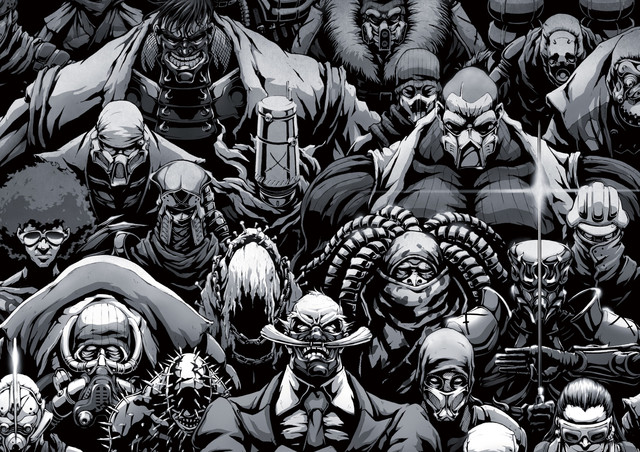
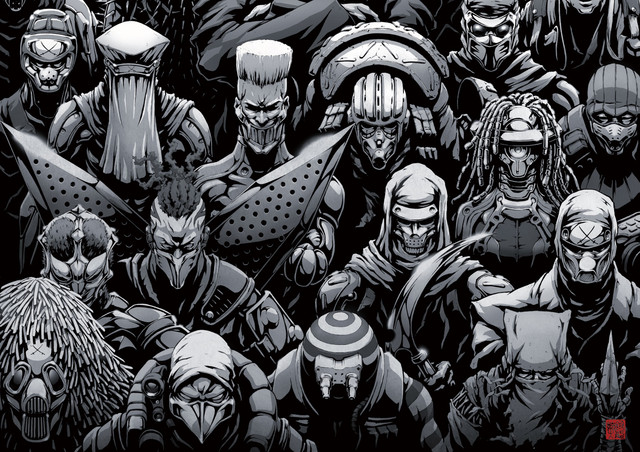
A new preview offers a first look at the animation for Trigger's spring 2015 Akira Amemiya (Inferno Cop, Kill La Kill episode director) directed adaptation of "Bradley Bond and Philip Ninj@ Morzez'"s Japanese take on the American take on Japanese sci-fi and martial arts light novel series Ninja Slayer.


About NINJA SLAYER FROM ANIMATION
STAFF
Original story written by Bradley Bond and PhilpNinj@ Morzez; translation by Yu Honda and LeikaSugi
Series Director: Akira Amemiya
Main Theme: BOOM BOOMSATELLITES
Animation Production: Studio TRIGGER


Story
Kenji Fujikido is a salaryman whose wife and child were killed in a ninja turf war. In a brush with his own death, Fujikido is possessed by an enigmatic ninja soul known as Naraku Ninja. Fujikido cheats death and becomes "Ninja Slayer" -a Grim Reaper destined to kill evil ninja, committed to a personal war of vengeance. Set in the dystopian underworld of Neo-Saitama, Ninja Slayer takes on Soukai Syndicate ninja in mortal combat.


The meta-fiction of the over-the-top sci-fi martial artists light novel series Ninja Slayer is that "translators" Yu Honda and Leika Sugi were introduced to "authors" Bradley Bond and Philip Ninj@ Morzez's Ninja Slayer as a fanzine at San Diego Comic Con 1997.


------
Scott Green is editor and reporter for anime and manga at geek entertainment site Ain't It Cool News. Follow him on Twitter at @aicnanime.

03 Dec 22:24

Say I Love You, Vols. 3 + 4

by Ken H.
Lostphrack

Make with the clickee!

Welcome to another midweek manga review here at Sequential Ink! This week I’ll be taking a look at Kanae Hazuki’s fascinating Shojo series in my review of Say I Love You, Vols. 3 + 4. First though, some news!

And now onto this weeks review of Say I Love You, Vols. 3 + 4!

Say I Love You, Vol. 3Say I Love You, Vol. 3 + 4
by Kanae Hazuki
Kodansha Comics
Rating: Older Teen (16+)

Since the first volume, Kanae Hazuki has used Say I Love You to take a more realistic and grounded look into the love lives of teenagers. Say I Love You, Vols. 3 + 4 continue this trend, but striking a balance between more conventional shojo and her fascinating and, at times, disturbingly frank look at teen love is beginning to show it’s strain. Introverted loner, Mei, finds herself fending off new obstacles to her tender and awkward romance with the popular Yamato. This volume sees her struggling with Yamato’s burgeoning model career and struggling with her own desire to be with Yamato in a more romantic and intimate manner than she’s ever dared before.

Kanae Hazuki’s done a fantastic job at crafting characters and situations which ring surprisingly true and tackle real issues in an engaging manner that’s honest and doesn’t feel cheesy or sensational. She’s provided a glimpse into the love lives of teenage girls, depicting their struggles with self esteem, body issues, harassment and more in a way many love storys don’t. These volumes feel like they’re dialing that back, but only a little. Yamato’s long been something of a weak link in the series, coming across as far too perfect despite being given some back story meant to humanize him. He’s popular, good looking, knows how to react in nearly ever situation despite dialogue and moments meant to show otherwise, and in this volume he becomes a model. Admittedly, this is intended to set up a situation for Mei to feel insecure and to tackle her lingering self esteem issues, but the immediate success his one attempt at modeling is met with just feels like too much. In addition, there are certain twists and turns in the story that echo the cliche handling of rivals in typical shonen series. Such elements feel at odds with the more serious tone that Kanae imbues much of the series with and, while it’s not unheard of for bonds of friendship to form between people who don’t initially get along, such relationships here feel forced and don’t ring as true as other elements of the series.

Hazuki certainly knows how to render emotions, and she excels at conveying them through her visuals. While there are a few too many borderless panels, splotches of toning and sparkles then I usually prefer, it’s hard to deny that she’s quite effective at using them to reinforce and emphasize the characters’ internal emotional states. Four volumes in though, and some of her artistic weak points are becoming apparent. While the drama, expressions and more are all rendering wonderfully, the moment a character’s hands appear things start to fall apart. I don’t think I had really noticed this before, but I found myself ripped from a wonderfully tender and important moment between Mei and Yamato when Yamato brought his hands to Mei’s face. What should’ve been touching and emotional comes off as creepy due to the fact that his fingers are more than just mildly reminiscent of a Facehugger’s legs. They’re just a little too long and thin, with the joints showing prominently. It may be a small nitpick, but it’s hard to ignore when things such as fingers entwining are focused on as important steps forward in Mei and Yamato’s physical intimacy.

With Say I Love You, Vols. 3 + 4, Kanae Hazuki continues to weave an interesting love story, full of believable and relatable problems. Her use of the cast to explore real word issues faced by teens, ranging from self esteem issues and harassment manages to come across as genuine and honest rather than a cheesey After School Special, something that it easily happen in the hands of a less talented creator. While her artwork has some issues, they’re not enough to detract from the heart she clearly pours into her work. If you’re looking for a different kind of shojo romance, something that might skew towards a slightly more mature audience, then this is the series for you.

Say I Love You, Vols. 3 + 4 are available now from Kodansha Comics. Review copy provided by the publisher.


26 Nov 22:32

Brave 10, Vol. 4

by Ken H.
Lostphrack

clickee!

Welcome to this pre-U.S. Thanksgiving edition of my midweek manga reviews! This week I’ll be looking at Brave 10, Vol. 4 by Kairi Shimotsuki and published by DMP. But first, some news!

With the news out of the way, it’s time for this week’s review of Brave 10, Vol. 4!

Brave 10, Vol. 4Brave 10, Vol. 4
by Kairi Shimotsuki
DMP/Emanga.com, 208 pp
Rating: Young Adults (16 +)

The fourth volume of Kairi Shimotsuki’s historical fantasy, Brave 10, furthers the continuing adventures of Saizo, Isanami, Sarutobi Sasuke and the rest of the warriors who comprise Yukimura Sanada’s Ten Braves, as they attempt to fend off attempts by rival warlords and their minions to capture Isanami and the mysterious power of the Kushitama. This volume features crazy monks, mysterious ninjas, internal rivalries and Saizo excerise a surprising amount of self awareness as the plot thickens and one of the Braves takes his leave.

There’s quite a bit going on in this volume, but much of it feels like padding in an attempt to delay the inevitable. Once more enemies of Sanada send their forces to try and retrieve the Kushitama, the apparent McGuffin of the series, and once more their attempts are repulsed by the Saizo and his allies. There is some small movement on the larger mysteries and plot of the series, but despite the addition of a new Brave and a moment of realization for Saizo, this volume really just felt like it was spinning its wheels. A new group of foes are introduced, but they don’t really amount to much beyond prompting Saizo to resolve some of his internal conflict regarding his place and relationship with those around him, and to give Kairi a chance to show off the abilities of some of the other Braves as well. What little movement we get surrounding the mystery of the Kushitama feels divorced from the rest of the events of this volume. The build up surrounding the tiny bit of movement is actually well done, but it’s immediately sidelined and never spoken of again, leaving one a bit frustrated regarding it’s impact. Something like this might be a bit more forgivable if the rest of the volume didn’t feel quite so directionless and like a rehash of what’s come before in the series.

Kairi Shimtsuki’s art continues to be a mixed bag. There are a few action sequences in here which show glimmers of potential and a nice handling of time and pacing, while other sequences are rendered unintelligible due to the large amount of toning, sound effects, flappy costume bits and more. While Kairi has never shied away from complex detailed costume designs, two of the new characters seem to take this to an entirely new level. The new antagonist is sporting a costume and hair style with some many straps, strands of hair and tiny patterns, that I shudder to think of the time it took her to draw it. The character’s hair style is certainly memorable though with a bit that’s reminiscent of Katara’s hair loopies from the original Avatar series. The series is full of similarly elaborate designs and at times I can’t help but think that they’d make really lovely figurines, statues or models, but that must be a nightmare to keep track of when mapping out action scenes and fights. That said, they are quite lovely to look at when on the covers and in other splash pages, but their overly ornate bits simply add to the confusion and clutter in some of their action sequences.

Brave 10 is one of those series that’s interesting and can be fairly engaging at times, but often feels like it’s treading water. While there are some rather large character moments in this volume, they’re done in such a way that feels formulaic and cliche. The action scenes are nice and at times are one of the series high points, with a few choice scenes peppering the 208 pages of Brave 10, Vol. 4.

Brave 10, Vol. 4 is available now from Digital Manga Publishing and Emanga.com. Digital review copy provided by the publisher.


26 Nov 05:58

PICS FROM THE BIGGEST PROTEST IN THE HUB IN YEARS #BOSTON4FERGUSON

by DIG STAFF
Lostphrack

Yay, Boston!

BLM 14

We’re not even close to finished processing tonight’s protest, which is still roaring at the time of this post, with heads chanting, ”Cops are not above the law” at Dewey Square. What began as a rally in Roxbury at 7pm spun into well over 1,000 people marching through Dudley Square, then down Melnea Cass, then to the South Bay House of Correction, then back up Mass Ave, and so on.

We have a whole bunch to report, and are processing a slew of posts and dispatches, but for now here are some pics we snapped during the first five hours of tonight’s community meetings and subsequent actions, from the gathering at the Twelfth Baptist Church to the ongoing rally that won’t soon be forgotten …

HERE FOR DISPATCH AND ANALYSIS FROM 11.25 #BOSTON4FERGUSON MARCH

FERG 3

2014-11-25 18

2014-11-25 19

BLM 1

BLM 2

BLM 3

BLM 4

BLM 5

BLM 6

BLM 7

BLM 8

BLM 9

BLM 10

BLM 11

BLM 12

BLM 13

BLM 14

BLM 15

BLM 16

BLM 17

BLM 18


FURTHER READING

EVEN WITH FERGUSON BACKDROP, MASS MEDIA BARELY REPORTS COPS GETTING AWARDS FOR FATAL SHOOTINGS

PLEASE STOP COMPARING FERGUSON TO THE BOSTON MASSACRE

THE ROOTS OF THE PROBLEM IN FERGUSON

BOSTON SITS IN SOLIDARITY WITH VICTIMS OF POLICE BRUTALITY EVERYWHERE

20 Nov 02:12

No. 6, Vols. 7 + 8

by Ken H.
Lostphrack

Shameless self promotion!

Welcome to another midweek manga review. This week, I’ll be taking a look at No. 6, Vols. 7 + 8, but first, some news…

And now, onto this weeks review of No. 6, Vols. 7 + 8

No. 6, Vol. 7No. 6, Vols. 7 + 8
Story by Atsuko Asano, Art by Hinoki Kino
Kodansha Comics
Rating: Teen (13 +)

Raised in the luxury of No. 6, a seemingly utopic city, Shion’s life changed forever when he helped a young fugitive by the name of Rat evade capture by the city’s authorities. Nearly a decade later Shion’s accused of murder and is forced to flee No. 6 with the help of Rat. No. 6, Vols. 7 + 8 sees the duo conduct a daring rescue operation, as they infiltrate No. 6’s Correctional Facility in hopes of freeing Shion’s childhood friend, Safu, from its depths. As they uncover the horrors of the Correctional Facility the duo are pushed to their physical and emotional limits as this manga adaption of Atsuko Asano’s light novels careens towards it’s climax in style, thanks to the visual stylings of Hinoki Kino!

I was really impressed by series when I first encountered it, and these two volumes do absolutely nothing to change my initial impression. This futuristic, sci-fi series is more interested in the characters rather than the big ideas that serve as its framework. While these two volumes do approach and deal with some of those ideas, the focus remains on the development and growth of Shion and Rat. The optimism of Shion has taken something of a beating over the course of the series, and that’s fully displayed here as Shion engages in acts that are hard to imagine him doing at the start of No. 6. It’s clear the grimness and horror of No. 6 has worn down his world view, but Asano avoids the series falling into a pit despair with Rat. Much like how Shion’s arc has brought him to a rather dark place, Rat’s has had the opposite affect. He started off the series as the grim, cynical and cold figure, but his time with Shion has affected him deeply and within No. 6, Vols. 7 + 8 we see he’s changed. It’s not a total inversion in their characters though, and both Rat and Shion still have moments where they more closely resemble their older selves.

While most of these two volumes are occupied with Shion and Rat’s infiltration of the prison complex, there are other scenes showing how chaos is spreading throughout No. 6 as a whole as we check in with various minor characters. It’s a nice way to tie the events together, showing that the various character’s actions have some wider reaching ramifications for the world of No. 6 as a whole. Families that have suffered at the hands of No. 6’s administration begin to take up arms, supporting characters fall, we’re given a chance to see the larger consequences of their deaths, and more.

The visuals are subdued and not terribly flashy, but they do a wonderful job at conveying emotions and the mental state of the characters. Some of the sequences are almost heartbreaking, such as the long awaited reunion between Safu and Shion. At times things feel a bit too clean though, with certain moments that should be messy and brutal losing a little bit of their impact. This also spreads to settings, like the scene set in a waste disposal area which looks far too clean, despite the characters constantly commenting on the stink and the filth. This has been a small problem with the series from the get go, but frankly Kino’s handling of the rest of the material has been so on point that it almost feels like needless nitpicking.

The character development and growth of No. 6 has felt natural and has been incredibly well handled from the get go, as a result the actions of these volumes really resonate and hit home, with the Shion’s despair feeling incredibly real and tangible. The series has gotten mostly positive buzz, but it feels like the manga has slipped under most people’s radar, which is a bit of a shame as it’s a really strong and engaging read.

No. 6, Vols. 7 + 8 are now available from Kodansha Comics. Review copies provided by the publishers.


13 Nov 21:10

Pacific Rim LEGO: Gypsy Danger

by G.G.
Pacific Rim LEGO: Gypsy Danger 

Created by Jan Lego


12 Nov 22:48

Kimagure Orange Road, Vols. 2 + 3

by Ken H.
Lostphrack

Shameless self plug! Make with the clickee!

After last weeks small delay, I’m back on track with my midweek manga reviews! This time around I’ll be taking a look at Kimagure Orange Road, Vols. 2 + 3, but first some news…

And now, onto this weeks review of Kimagure Orange Road, Vols. 2 + 3..

Kimagure Orange Road, Vol. 3Kimagure Orange Road, Vols. 2 + 3
by Izumi Matsumoto
DMP/Emanga
Rating: Teen (13 +)

Izumi Matsumoto’s classic 80s teen romance manga series continues with Kimagure Orange Road, Vols. 2 + 3! These volumes are full of the romantic comedy hijinks you’d expect, as missed signals, misunderstandings and more plague Kyosuke as he wrestles with his feeling for Ayukawa despite his ongoing relationship with her best friend, Hikaru. While the first volume felt a bit flat and bland, the humor and development in these two volumes helps with that problem tremendously, as does Matsumoto’s decision to grow out the supporting cast with in the form of Ayukawa’s boss at a restaurant, and by the introduction of Yuu, a childhood friend of Hikaru and Ayukawa’s who’s got designs on winning Hikaru’s heart.

Much of these volumes are something of a comedy of errors, with Hikaru’s and Kyosuke’s inability to communicate clearly, leading from one awkward mishap to another. Inevitably these misunderstandings simply leads to Hikaru falling deeper in love with Kyosuke. Given the set up with Kyosuke, Hikaru and Ayukawa all being friends, and the way Kyosuke can’t quite bring himself to tell Hikaru to leave him alone, it’d be very easy for him to come off as an unlikable character. However, Matsumoto uses the misunderstandings and his inability to read women to portray him as well intentioned but hopelessly naive, immature and inexperienced. That said, there are certainly moments where it’s hard to not feel for poor Hikaru who’s utter devotion to Kyosuke verges on the heartbreaking at times. I think that’s what really keeps it from being a charming romantic comedy, as there are a number of times Kyosuke could extricate himself from the situation with Hikaru if he would just grow a backbone and be honest with her. Of course, doing that would most likely ruin any chance he has with Ayukawa and also result in a much, much shorter series.

Another thing that might be worth noting is the change in format and translation between these two volumes. Kimagure Orange Road, Vols. 1 + 2 seem to have been handled by a different company and translation team, leading them to have a slightly different cover design and some odd translation ticks, such as the inclusion of invert exclamation marks during certain parts of the dialogue. From volume three on the series translation is handled by DMP’s Digital Manga Guild.

Matsumoto’s artwork is perfectly acceptable, and it does a fantastic job at capturing the fashion, feathered hair and more of 1980s Japan. He includes just the right amount of background, allowing the story to remain grounded and conveying a sense of time and place, and knows just when to remove it to highlight and accentuate an emotional or important moment. While Kyosuke continues to use his psychic powers, they rarely manifest in a flashy manner and often the only reason you know he’s used them is thanks to Matsumoto’s visual short hand or sound effects. There actually are a few instances of fighting in these volumes, but they’re clearly not the highlight and usually serve to reinforce the idea of Ayukawa being a delinquent, Yuu’s dedication to becoming stronger, or Kyosuke’s complete inability to defend himself properly. The odd moments of physical comedy are well done and Matsumoto’s over reactions are never cartoonishly overdone, thus blending seamlessly into the look and feel of the series.

I’m not typically a fan of romantic comedies, but there have been a few examples in the past where they’ve managed to hook me with their charm, most notably another DMP title, Itazura Na Kiss. Kimagure Orange Road hasn’t quite wormed it’s way into my heart the way that series has. There’s certainly some potential thanks in large part to Matsumoto’s depiction of the upbeat Hikaru and the lack of out and out cruelty on the part of anyone involved. On top of that, the romantic tension and conflict is so subdued that it ends up being a surprisingly relaxing and soothing read.

Kimagure Orange Road, Vols. 2 + 3 are now available digitally from DMP and Emanga.com. Digital review copy provided by the pusblisher.


10 Nov 21:32

To his friend...

by MRTIM

07 Nov 21:24

Fairy Tail, Vols. 40 + 41

by Ken H.
Lostphrack

PLUG!

Welcome to a belated midweek manga review! Apologies for the lateness of this, I was swamped under some school work. This week I’ll be looking at two volumes of Hiro Mashima’s Fairy Tail with my review of Fairy Tail, Vols. 40 + 41! But before we get to that, here’s a few news items that have caught my eye from this past week…

The extra days gave me more time to gather some news items it seems. Hopefully that won’t mean next week will be exceptionally sparse. Anyway! On to my review of Fairy Tail, Vols. 40 + 41!

Fairy Tail, Vol. 40Fairy Tail, Vols. 40 + 41
By Hiro Mashima
Kodansha Comics
Rating: Older Teen (16 +)

For the last ten volumes, Hiro Mashima has introduced us to dozens of new characters and factions as part of the Grand Magic Games arc. Now, at long last, the arc reaches it’s climax as Fairy Tail battles not one, but seven dragons! There’s no rest for our intrepid heroes though, as the survivors soon find themselves targeted by a new threat emerging from the shadows!

Fairy Tail continues to be enjoyable light entertainment. Despite having followed the series for nearly the entirety of this arc I still have trouble remembering everyone and their relationships to one another. The cast was absolutely massive when the arc started and in the wake of the Grand Magic Games, it seems larger than ever. You’d think that Mashima might slow down a bit on creating new characters, but no, he continues to build and expand upon the already sizable cast with a new arc that promises to introduce us to a whole new slew of antagonists and supporting characters. That said, within these two volumes he does narrow the spotlight a bit by focusing primarily on Erza, Natsu, Gray and one of the newer characters from the Grand Magic Games, Flare. This does make it a bit easier to keep track of who’s who and what’s what, and gives him a chance to explore some of the character’s backgrounds and histories, but sadly they still end up feeling fairly simple and shallow.

Hiro Mashima's visual comedic flare on display in Fairy Tail, Vol. 41.

Hiro Mashima’s visual comedic flare on display in Fairy Tail, Vol. 41.

Having recently read Monster Soul – a short series that preceded Mashima’s creation of Fairy Tail – makes me appreciate his artwork here that much more. I can’t help but notice how much more variety there is to character designs and how the action feels so much more intense and kinetic thanks to his liberal usage of splash pages and double splash pages to depict the various super moves scattered throughout the volumes. While his character designs can still be a bit goofier than I’d prefer, I’d be lying if I said some of them weren’t fairly eye catching and snazzy to behold. Mashima uses a wide array of body shapes to wonderful affect, conveying personality and menace through the basic designs in a way many artists would do well to emulate or experiment with. The action scenes are gloriously over the top and move along at a fairly good clip, resulting in a fairly speedy read.

The combination of simple characters and the speedy action scenes result in Fairy Tail Vols. 40 + 41 being a fairly enjoyable fast paced straight forward adventure story. At the same time, its simplicity and generic characters keeps it from really leaving much an impression after you finished the volumes. In the end it comes off feeling like a perfectly acceptable, light and fluffy time killer.

Fairy Tail, Vols. 40 + 41 is available now from Kodansha Comics. Review copies provided by the publisher.


31 Oct 20:49

Monstrously Funny Cartoons

by Ken H.
Lostphrack

Self plug!

I’m stepping out my comfort zone this Halloween to take a look at the latest Christopher Hart book on cartooning and illustration, and thankfully it’s perfect for the season!

Monstrously Funny CartoonsMonstrously Funny Cartoons
by Christopher Hart
Watson-Guptill Publications, 160 pp
Rating: NA

Monstrously Funny Cartoons is the latest in a long line of “how to” books from Christopher Hart, focusing on helping artists to get the hang of rendering their favorite monster, zombies and more in a cute and cartoony manner.

While there’s no hard and fast rules on who the book’s for, it really seems designed to help younger artists in their attempts at cartooning. The cute and cartoony nature of the monsters within reinforces this idea, as each chapter focuses on a different ghoulish archetype including vampires, zombies and alines. Much of the book depicts methods to render predetermined characters, showing how to draw them in a loose step-by-step manner. However, large chunks of the text and sidebars are given over to explaining how and why some of the techniques, poses and positioning used work and can be utilized in other areas. A good example comes when Hart discusses body posture being used to convey personality and character. Likewise he goes into detail regarding variations on poses, facial features and more, showing how each can be utilized to convey something different. It’s the kind of thing that seems like it’ll be useful beyond simply mimicking the monsters within the book, and can be applied by younger artists as they slowly develop their own style.

The oversized nature of the book means that the illustrations, text and instructional aspects are clear, and the cartoonish figures depicted throughout are cute and comical. As the book goes on Hart touches upon more complex and in depth techniques. Encouraging readers to experiment, changing designs and experimenting with other poses, backgrounds and more throughout. Hart’s instructional text is simple and easy to follow, while also being peppered with humor ranging from the bad to the chuckle worthy.

While I’m no artist myself, I figured I’d take a crack at one of the figures shown in the book, here are my results!

Ken's Vampire

My sad attempt at a Nosferatu-Type Vampire.

Monstrously Funny Cartoons is something of a “how to” book that seems sure to appeal to young artists with a penchant for monsters and aliens. While experienced and older artists might not find much appeal here, the hints, suggestions and motifs that Hart uses seem like they’re something a younger child or tween might get a kick out of and might be able to draw from. It seems like it’d make a great gift and would help encourage those younger aspiring artists to explore their gift and talents.

Monstrously Funny Cartoons is available now from Watson-Guptill Publications. Review copy provided by the publisher.


30 Oct 06:10

Doubt, Vols. 1 + 2

by Ken H.
Lostphrack

Self promotion time!

Welcome to another midweek manga review! With Halloween right around the corner, it’s time to take a look at the Yoshiki Tonogai’s horror/mystery series, Doubt, Vols. 1 + 2! But first, some news…

And now, my review of Doubt, Vols. 1 + 2

Doubt, Vol. 1Doubt, Vols. 1 + 2
by Yoshiki Tonogai
Yen Press
Rating: Older Teen (16 +)

The mobile phone game Rabbit Doubt is sweeping Japan! In it, players are “rabbits” who attempt to discover which player is the “wolf” before it’s too late. Among it’s many fans is Yuu, a highschooler about to attend a small gathering of other players. Unfortunately, for some the game of Rabbit Doubt isn’t limited to the digital world. Trapped in a seemingly empty warehouse, Yuu and his friends find themselves playing a real life game of Rabbit Doubt. Can they uncover the wolf in their midst before it’s too late? From Yen Press comes Yoshiki Tonogai’s, Doubt! The series takes elements from the slasher and whodunnit mystery genres and blends together in a entertaining series.

Tonogai sets up the locked room mystery and introduces us to cast of suspects and victims, slowly whittling down the list throughout the two volumes. At times it feels reminiscent of Saw, and at other times it echoes brutal, paranoia inducing works like Battle Royale. While the characters rarely come off as more than two dimensional, Tonogai does a fine job at hand waving that by focusing on the mystery and allowing us to watch Yuu and the others attempt to solve it as their short lived friendships slowly unravel before our eyes. One might think that a group of people who barely know each other wouldn’t function well under this kind of stress, and they’re right. The vague familiarity with each other only serves to reinforce the paranoia felt between the cast, while also casting a shadow over what each member of the group is capable of doing even if they aren’t the “wolf”. It’s towards the end, once Tonogai begins to move towards the big reveal, that the cracks become too hard to ignore within Doubt. Where the first volume sticks to a slasher formula pretty well and does a solid job at building up the mood and moving the plot along, volume two is full of revelations and so many implausible plot twists that it strains credulity to the breaking point. The last few pages manage to harken back to classic Horror 101 stuff, but unfortunately the preceding pages to get us there are a bit of mess that one can’t help but roll their eyes at it.

Tonogai approaches the gore and violence with a “less is more” approach that works pretty well here. When he attempts to depict action, or struggles between the cast, it’s clear that it’s not his strong point. The panel to panel flow falls apart, the movements become difficult to follow and come off looking awkward instead of thrilling or tense. The visuals are at their best when it’s focusing on the setting and creepiness of it, or when dealing with the revelations about the character’s past and speculation about who’s doing what. Scenes such as Yuu’s attempts to reach into a darkened room through the narrow opening of a stuck door are surprisingly tense. The big visual hook for the series comes via the game Rabbit Doubt. While it’s rarely shown or depicted, the rabbit motif makes a rather creepy but immediate impact in the form of mutilated rabbit masks, with their stitched and sewn up look which lends them a rather unnerving appearance. It’s a shame they don’t play a slightly larger role in things, mostly being present to simply obscure the killer’s true identity and to reinforce the connection to the online game. Still, it’s a nice little bit of visual flair to a series that’s otherwise depicted in a fairly contemporary world, it also echo’s slasher flicks and horror movies of the past and present, from Halloween to Saw, giving the murder a certain visual tag and motif.

Doubt starts off strong, with the first volume being a solid and surprisingly quick read. It’s in the second volume where things begin to fall apart. The twists and turns the story takes when it pulls back the curtain and reveals the killer’s identity simply don’t hold up. It relies a bit too heavily on misdirection and an element that’s so ridiculous and unbelievable that it simply doesn’t hold up. Getting to that point, though, was pretty damn fun.

Doubt, Vols. 1 + 2 are available now from Yen Press.


26 Oct 19:12

Tezuka Fans Talk Back About Digital Manga Kickstarter Campaign

by Deb Aoki

Digital Manga got manga fans a-buzzing with the recent launch of their latest Kickstarter campaign, an ambitious attempt to publish six series by Osamu Tezuka, a total of up to 31 volumes of manga. Sounds great, yes? Then everyone got a look at the eye-popping initial goal for this Kickstarter: $380,000.

And that’s just for the first two series on the list: Three-Eyed One and Rainbow Parakeet. To get the other four series published would require meeting two stretch goals — one at $475,000 and another at $589,000. Considering that the most DMP has raised in past Tezuka Kickstarter campaigns is $49,411 for their Triton of the Sea/Atom Cat/Unico Kickstarter, this new campaign struck many fans as a bar that may be set too high to reach.

Digital Manga Platinum

Digital Manga Platinum

On top of that, fans who want to get an actual printed book in exchange for their pledge were dismayed to discover that $150 was the minimum pledge required to get one volume of Three-Eyed One and Rainbow Parakeet. I wish DMP well with this campaign, and I’ve supported almost all of their Tezuka efforts in the past — but after seeing these relatively steep minimum pledge levels to get a single book, even I had a hard time pulling out my wallet for this one.

Several manga fans who supported DMP’s past Tezuka Kickstarter campaigns started speaking out, on social media and on their blogs.

Alex Hoffman from Sequential State posted a three part plea to DMP to reconsider their current Kickstarter campaign’s rewards structure and goals. In Part 1, he breaks down the costs of supporting this Kickstarter and the perceived value of what backers would receive in exchange for their pledge. He also points out fans who want all 31 volumes of manga will have to drop a minimum of $750 to get them, a rate that would be much higher than the cover price of buying the books when they’re available from a comics or book shop.

The Vampires Vol. 1 by Osamu Tezuka

The Vampires Vol. 1 by Osamu Tezuka

The notion that someone can just drop $750 all at one time on 31 books that will be released over the next year is quite literally ludicrous for many manga devotees, even Tezuka fans.

$750 is a figure that can easily be more than 2 weeks worth of pay for many working class Americans, and may in fact be more than many manga readers spend on books all year.

Hoffman goes on in Part 2 to compare the quality and value of Vertical’s past editions of Tezuka manga with DMP’s recent efforts. He sums things up in Part 3 by wondering aloud if DMP is “killing the golden goose” and offers some suggestions for “righting the ship.”

Digital Manga Publishing President Hikaru Sasahara attempted to respond to the initial wave of resistance from fans by posting a letter and a video explaining his rationale for setting such a high initial goal for this project. In Sasahara’s letter, he outlines the costs for this project that lead to them calculating that they need a minimum of $380K to get things going:

We have recently learned that some of the backers voiced a concern that our tier pledges are too pricy and we would like to address explanations to this particular issue as we firmly believe our pricing is appropriate and legitimate.

He goes on to explain that besides the cost of printing, the Kickstarter goal also factors in the cost of travel to Japan to manage the relationship with Tezuka Productions, the cost to hire 6-8 employees dedicated to the project, and additional translation and localization costs.

Rainbow Parakeet Vol. 1 by Osamu Tezuka

Rainbow Parakeet Vol. 1 by Osamu Tezuka | © Tezuka Productions

DMP also added some additional reward tier levels that give supporters the opportunity to pledge a lower amount of money to get just the books ($50 to get print editions of volume 1 of both Three-Eyed One and Rainbow Parakeet, and $110 to get a combination of digital/print editions of all of the books). Offering lower cost pledge levels is a direct response to many requests, so that’s a net positive for this Kickstarter.

But several days into their campaign, the rate of pledges has slowed down somewhat compared to past efforts — a fact that wasn’t exactly left unnoticed by devoted Tezuka manga fan Phillip, a.k.a. Eeper of the Eeper’s Choice Podcast. Phillip (who’s based in Ireland) chimes in with his take on the situation, and why this particular campaign may be the one Tezuka Kickstarter that he’s thinking twice about supporting.

DMP have completely misread their plans for Tezuka in the English speaking market. They are making massive assumptions about their audience and how much they will pay in one go for Tezuka.

He then goes on to bemoan the complexity of sorting out the ins and outs of DMP’s various pledge levels:

Finally, I must stress that the above figures had to be gleaned from what I consider to be the worst planned set of pledge tiers ever on Kickstarter. There are a staggering 32 tiers, for pity’s sake! I want some books not tune up and customise a car!

So with 25 days and over $350,000 left to make their initial goal, will DMP be able do accomplish their ambitious goal? Have they responded to comments and concerns well enough to satisfy and entice backers who have been holding off on pledging their financial support to this fund-raising campaign? That’s up to you, manga fans. What say you? Check out DMP’s Tezuka Kickstarter page, and add your comments below!

The post Tezuka Fans Talk Back About Digital Manga Kickstarter Campaign appeared first on Manga Comics Manga.

23 Oct 02:43

Monster Soul, Vol. 2

by Ken H.
Lostphrack

Self plug!

Welcome to another midweek manga review! This week I’ll be taking a look at the second and final volume of Hiro Mashima’s Monster Soul, but first, some news…

And now, the midweek manga review of Monster Soul, Vol. 2!

Monster Soul, Vol. 2Monster Soul, Vol. 2
by Hiro Mashima
Kodansha Comics, 192 pp
Rating: Teen (13 +)

Created by Fairy Tail’s Hiro Mashima, Monster Soul is set in a world known as Elvenland following a war between Monsters and Humans. The Monster’s lost and are now forced to the edges of the world, shunning contact with outsiders. The series focuses on the adventures of an elite Monster squad from the war known as Black Air. The final volume of the series, Monster Soul, Vol. 2, finds the members of Black Air stumbling upon an injured human boy, Selsh. After hearing how a monster squad known as Drei Kommandos kidnapped the people of Selsh kingdom, the members of Black Air volunteer to help him in his quest to rescue them. They quickly discover that it’s a quest that will take them to Hell itself!

The first volume of Monster Soul floundered a bit as Mashima attempted to focus on shorter stories, but here he switches gears and gives us a single volume long tale instead. As a result, Monster Soul, Vol. 2 lacks the unfocused scatter shot feel of the first, and everything within it is given more room to breathe and develop. The action scenes in particular benefit from this decision, and each one has a bit more drama, intensity and meaning to it then they had in the first volume. In addition, each character is given an opportunity to strut their stuff, getting a moment in the spotlight that’s accompanied by a flashback, detailing more of their individual backstories and histories. Sadly even with the tragic backstory afforded to them, the characters still end up being pretty flat and one note. Thankfully the simplistic characters and straight forward story means that Mashima’s typical, goofy humor blends in quite well without feeling forced. Likewise it fails to detract from what little drama the story builds as it goes.

The artwork’s solid with the usual design wackiness that marks Mashima’s other work, Fairy Tail. The action scenes are pretty intense, and his use of splash pages and double page spreads does a wonderful job at depicting the impact of certain attacks and blows as well. Omni-present throughout the volume is Mashima’s goofy sense of humor, courtesy of cartoonish faces and over reactions. His character designs remain fairly solid, with Blank of the Drei Kommandos being the most memorable one in the volume. His skeletal form sports sunglasses and sports a ridiculously goofy special attack that involves a pair of holes in his head and sticks of dynamite.

While it does manage to correct a few of the missteps of the first volume, Monster Soul, Vol. 2 still isn’t anything to write home about. While there are certain similarities between it and Fairy Tail, I couldn’t help but feel that Monster Soul, Vol. 2 skews to a slightly younger audience. The story is a bit more simplistic and straight forward with characters to match. It’s enjoyable, but it’s not terribly memorable.

Monster Soul, Vol. 2 is available now from Kodansha Comics. Review copy provided by the publisher.


15 Oct 23:43

Kimagure Orange Road, Vol. 1

by Ken H.
Lostphrack

Shameless self promotion!

Welcome to another midweek manga review! This week I’ll be looking at 1980s romantic comedy, Kimagure Orange Road, Vol. 1, but first, there’s quite a bit of news out of New York ComiCon from this past weekend…

And now, the midweek manga review of Kimagure Orange Road, Vol. 1!

Kimagure Orange Road, Vol. 1Kimagure Orange Road, Vol. 1
by Izumi Matsumoto
DMP/Emanga, 176 pp
Rating: Teen (13 +)

Originally created in the mid 80s, Izumi Matsumoto’s Kimagure Orange Road blends psychic powers, high school life, and teenage romance into a series that, as Jason Thompson put it in his House of 1000 Manga column, “was THE archetypal shonen rom-com”. Now, thanks to DMP and Emanga, this classic series is available for the first time in the US, and we’re finally able to take a look at the romantic misadventures of the love triangle made up of the secret psychic Kyosuke, the energetic tom-boyish Hikaru, and her best friend, the cool and aloof Ayukawa!

Despite the opening of the series playing up Kyosuke’s psychic powers, for the most part they’re relegated to a background element for much of the first volume. Instead, Matsumoto spends much of the volumes focusing on Kyosuke’s attempts to get closer to the mercurial Ayukawa, only for things to go quickly go wrong as he finds himself in a burgeoning relationship with her best friend, Hikaru. It’s a fairly typical high school romantic comedy full of mix ups, misunderstandings and hijinks galore. Much of the comedy comes from the relationship mix ups, along with various folks teasing and misunderstanding Kyosuke’s explanations or misinterpreting events. It never comes off as forced or awkward, and fits in naturally with the tone of the story. Admittedly, this is only the first volume, and it does do a good job at cutting right to the meat of the matter by establishing the love triangle pretty early on, but beyond that it just doesn’t feel like there’s much to the series right now. The love triangle is about as classic a love triangle as you can get, best friends confused and misunderstanding their feelings towards the same guy, with one suppressing her own desires in an attempt to be a good friend instead; something that will clearly lead to more drama, tension and comedic mishaps as the series progresses. One of the things that was a bit surprising in this volume, was the amount of missing words in the translation. On more than one occasion sentences start out alright, but then a word is clearly missing which causes one to stumble over the dialogue and pause, wondering if they imagined the missing word. Hopefully this isn’t something that’ll carry over into future volumes.

Kimagure Orange Road Page

80s Japan Disco Fashion!

Visually it’s clearly a dated book. The layouts are surprisingly restrained, mostly keeping to grid like patterns and eschewing the more common and over done tricks such as overlapping panels, tons of toning, bleeding images and more. The result is that Kimagure Orange Road is a very simple and easy to follow book visually. With a cast full of high schoolers, it’s not a surprise that much of the story features them clad in their school uniforms, but thankfully there are a few times they’re sporting a more casual look giving us a chance to luxuriate in mid 80s Japanese fashion! The characters themselves are fairly simplistic in design, but the main trio look different enough It’s also worth mentioning that Matsumoto does a nice job at imbuing Hikaru’s more energetic personality into her tom-boyish appearance.

While I’m not entirely taken by Kimagure Orange Road, I don’t dislike it either. There’s something fascinating about seeing a series from this period, especially one as influential as this apparently was. Early signs of what would evolve into the tsundere character type are already evident within Ayukawa, and the love triangle uses a set up that’s classic regardless of the country the series is from. The only real problem is how dated it feels. At one point this might have been cutting edge material, but now, decades later, instead of feeling fresh or innovative it just feels a bit too cliche. I’ll certainly be looking forward to other volumes of the series, and hopefully it’ll click with me as it goes on, but tight now it strikes me as an enjoyable but light read.

Kimagure Orange Road, Vol. 1 is now available digitally from DMP and Emanga.com.


08 Oct 21:58

Vinland Saga, Vol. 4

by Ken H.
Lostphrack

Self-promotion ahoy!

It’s midweek manga time! With Vinland Saga, Vol. 5 hitting this week, I thought now would be a good time to take a look at Vinland Saga, Vol. 4. First though, some news…

And now, my review of Vinland Saga, Vol. 4.

Vinland Saga, Vol. 4Vinland Saga, Vol. 4
by Makoto Yukimura
Kodansha Comics, 432 pp
Rating: Teen (13 +)

In many series what happens the fourth volume of Makoto Yukimura’s Vinland Saga would be the big climax that we’ve been waiting for. Everything from the previous volumes has been leading up to the seismic events of this volume which promise to change the face of the series. Big boasts to be sure, but they’re absolutely and totally valid. Prince Canute confronts his father, King Sweyn, as his forces conspire to place him upon the throne so that he may create his dreamed of Heaven on Earth since God won’t. Caught up in the political machinations of the royal family, Thorfinn’s quest for vengeance seems like a small and nearly forgotten piece in a much larger puzzle. Will he ever avenge his father’s death at the hands of Askeladd?

I was floored by this volume, which is an absolute blast from start to finish. The themes about family, responsibility and parent’s influence upon children all come to a head in an amazing showdown between Canute and his father, King Sweyn. In almost any other manga this volume would be the end of the series. It resolves nearly every single plot line that Yukimura’s been weaving since the first volume, Thorfinn’s quest for revenge, the political machinations of the viking royal family, and Askeladd’s quest to save Wales are all tied up fairly neatly in this volume. It’s a fantastic, emotional climax that does an amazing job at showing just how far some of the characters have come, most notably Canute who demonstrates a rather keen intellect and an ability to recognize opportunities and come up with plans on the fly. Sadly, while Canute’s star is on the rise Thorfinn’s is crashing and burning in spectacular fashion. If you thought that Thorfinn had everything stripped from him by witnessing the death of his father way back in volume one, then you were very, very wrong. Even as some doors close, new ones open, as Thorfinn’s life takes a new direction, one that I’m very interested in seeing play out in future volumes.

After four volumes, how many more ways are there to praise Yukimura’s fantastic and detailed art? His attention to detail and ability to convey the internal emotional turmoil of his characters is top notch stuff and it’s on full display in this volume. Likewise, while his fight scenes lack the decompressed detail of some other revenge driven sword wielding series, he still manages to make some entertaining and surprisingly brutal action sequences. His backgrounds are lovely and help ground the events, not to mention that they also provide some lovely sets for the odd bits of carnage. Beyond that though, they often serve to enhance the mood or mirror the emotions of some of the characters. For example, when Askeladd relates his life’s tale to Thorfinn and Canute, it just happens to be during a brutal snow storm against a backdrop of dead, forlorn looking trees. It’s a bit on the nose, but it’s effective and adds a little something extra to the overall reading experience.

Vinland Saga, Vol. 4 is a fantastic read and it does an amazing job at throwing in twists and turns before taking the series in a new and intriguing direction without feeling forced or rushed. The characters drive the story forward through their desires, actions and at no time does it feel like they’re simply servicing the plot. If you’re not reading this series, you’re missing out on one of the best manga series available.

Vinland Saga, Vol. 4 is available now from Kodansha Comics.


06 Oct 20:47

Watch This Space!

by Katherine Dacey

If you’ve been a long-time MangaBlog reader, you may have noticed that posts have been a little sporadic lately. Brigid and I have teamed up to ensure that the blog is updated on a more regular basis. Over the coming weeks, we’ll be introducing a few new features. For those of you who read MangaBlog for Brigid’s impeccable news round-ups, fear not—those will continue to be our bread-and-butter. And for those of you who remember The Manga Hall of Shame with fondness, we’ll be flexing our reviewing muscles as well. Stay tuned!

On to the links…

Remember NETCOMICS? Back in 2006, NETCOMICS broke new ground by offering readers an inexpensive way to read manhwa and manga online. Print editions of its most popular series soon followed, though by 2009 NETCOMICS appeared to be a digital-only operation again. In 2013, NETCOMICS dipped its toes back into the print waters with a handful of BL titles. This month, the publisher will release Give to the Heart, a series about a handsome water god and his would-be human bride. (Hat tip to Lori Henderson.)

The folks at Vertical, Inc. address fan concerns about manga pricing with a refreshingly candid response.

Once again Attack on Titan dominates the New York Times’ Manga Bestseller list. You might be surprised to learn, however, that it’s the first volume of Titan that tops this week’s list, not the most recent—an impressive feat, considering that volume one was released in June 2012! Other titles making a strong showing include the latest installments of One Piece—now up to volume 72 in English—and Soul Eater.

Volume 2 of The Ancient Magus' Bride, to be published by Seven Seas in 2015.

Volume 2 of The Ancient Magus’ Bride.

Seven Seas continues to unveil new licenses for 2015. Among the most promising are Nami Sano’s Haven’t You Heard? I’m Sakamoto, which documents the exploits of an impossibly cool teenager, and Kori Yamazaki’s The Ancient Magus’ Bride, which explores the relationship between a wizard and an orphan girl.

Erica Friedman posts her weekly round-up of yuri manga news.

Over at Heart of Manga, Laura makes an impassioned licensing plea for Ao Haru no Ride, a shojo series by Strobe Edge manga-ka Io Sakisaka. She also offers a brief run-down of all the series currently running in Bessatsu Friend magazine.

Headed to New York Comic Con this week? The New York Times revisits the first New York comics convention, which was held in 1964. Fun fact: Fantasy author George R.R. Martin—yes, that George R.R. Martin—attended.

Reviews: Shaenon Garrity jumps in the WABAC machine with a nostalgic look at Rumiko Takahashi’s short story anthologies Rumic Theater and One or Double. If you haven’t read them, her post may send you scurrying to eBay to scare up copies. Other reviews of note:

Allen Kesinger on vol. 1 of Doubt (No Flying No Tights)
Allen Kesinger on vol. 2 of Doubt (No Flying No Tights)
Marissa Lieberman on vol. 1 of Dragon Ball Full Color: Saiyan Arc (No Flying No Tights)
Sean Gaffney on vol. 1 of Durarara!! Yellow Scarves Arc (A Case Suitable for Treatment)
John Rose on vol. 34 of Fairy Tale (The Fandom Post)
Leroy Douresseaux on vol. 2 of Food Wars! (Comic Book Bin)
Kate O’Neil on vol. 3 of Gangsta (The Fandom Post)
Rebecca Silverman on vol. 1 of Honey Blood (Anime News Network)
Rebecca Silverman on The Man of Tango (Anime News Network)
Lori Henderson on vol. 1 of Moonlight Kreuz (Manga Xanadu)
Danica Davidson on vol. 1 of Noragami: Stray God for Hire (Otaku USA)
Jessica Chautin on Sakuran (No Flying No Tights)

02 Oct 21:00

While discussing movies...

by MRTIM
Lostphrack

True.


02 Oct 20:59

Brave 10, Vols. 2 + 3

by Ken H.
Lostphrack

PLUG!

Welcome to another midweek manga review! This week I’ll be taking a look at Brave 10, Vols. 2 + 3. It’s been a bit of a slow news week, but there were still a few items that caught my eye.

And now, onto this week’s review of Brave 10, Vols. 2 +3!

Brave 10, Vol. 2Brave 10, Vols. 2 + 3
by Kairi Shimotsuki
DMP/Emanga.com, 192 pp
Rating: Young Adults (16 +)

Historical fiction is a genre that manga and anime seems to excel at. Of course, they tend to be pretty liberal with the fiction aspect, and Kairi Shimotsuki’s Brave 10 is no exception to this. Loosely based upon historical events and a group that may or may not have existed, the series follows the ninja Saizo Kirigakure, as he gets caught up with Isanami, a temple maiden who’s the sole survivor of a Tokugawa ninja attack upon her temple. Together the two find themselves caught up in the tumultuous events of the era. After the events of the volume one, the two find themselves aligned with the warlord, Yukimura Sanada, as he attempts to uncover the reasons behind the attack on Isanami’s temple and the secret behind the strange power she seems to wield.

Fans of Sengoku Basara or the Samurai Warriors franchises will recognize a lot of faces in this series. These two volumes further the mysteries surrounding Isanami’s abilities and the attack on her temple, while at the same introducing us to another warlord, Date Masamune. A good chunk of volume two is dedicated to trying to further Isanami’s character, showing her desire to be less of a helpless damsel and more of an active participant in her own fate. Unfortunately she’s also shown to be rather incapable in this area, and continues to be in constant need of rescuing and protection. Saizo’s character doesn’t fair a whole lot better though. He’s the stereotypical quiet, conflicted badass with a heart of gold that can only truly be brought out by the love of a good woman. Most of that was really established in the first volume, and in these two volumes we see him acting on it as he dedicated himself to protecting Isanami no matter what. This is part of the problem with the series, right now it’s just too… bland and generic. The characters don’t come across as having much in the ways of personality. Further, it really feels like the characters are simple being dragged around by the pllot and that they lack agency. They just move from one fight to another as everyone attempts to take Isanami’s power for their own purposes.

Shimotsuki’s artwork shifts between pretty and horribly cluttered. She’s clearly trying to make interesting and detailed fight scenes, but often the flow and momentum is undercut by small or cluttered panels, making it difficult to tell what’s happening and who it’s happening to. When the action is clear, it’s often dynamic and pretty snazzy to look at it. The character designs are perhaps a tad over done though. All their outfits have flappy bits, complex patterns, dangly bits, and more. While they look lovely on covers and even in a few of the splash pages and larger panels, I can’t help but feel that the overly detailed designs simply add to the clutter in the smaller panels. It’s also worth pointing out just how much fan service is present in the series. While there was certainly a fair amount of it in the volume one, these two volumes introduce more women and with them comes more chances for titillation! Butt shots, crotch shots and other moments where the women strike sexy poses to show off their assets are in great abundance. There’s a few moments of nudity as well, though in one case I was surprised at how the nudity didn’t just serve to pander, but also show the toll battles with swords and daggers take upon a body.

Brave 10 is an interesting little series. It hits a lot of notes that I usually like, with a nice fictionalized period setting and a healthy dollop of ninja violence. These are things that attracted me to anime and manga in the first place, but something about it is just lacking. The characters feel a little shallow and bland, and the muddled fight scenes keep the action scenes from being truly satisfying and enjoyable. It’s so close to being a really solid and great read, but ultimately ends up straddling the line between enjoyable and bland.

Brave 10, Vols. 2 + 3 are available now from Digital Manga Publishing and Emanga.com. Digital review copies provided by the publisher.


25 Sep 20:22

The Heroic Legend of Arslan, Vol. 1

by Ken H.
Lostphrack

Shameless plug time!

Sorry for the slight delay with this weeks midweek manga review. Personal things got in the way, but hey, better late than never! This week I’ll be taking a look at The Heroic Legend of Arslan, Vol. 1, but first…

And now, onto this week’s review of The Heroic Legend of Arslan, Vol. 1!

The Heroic Legend of ArslanThe Heroic Legend of Arslan, Vol. 1
Story by Yoshiki Tanaka, Art by Hiromu Arakawa
Kodansha Comics, 192 pp
Rating: Teen (13 +)

Loosely inspired by a combination of historical events and Persian legend, Yoshiki Tanaka’s The Heroic Legend of Arslan is a long running series of fantasy novels set within a fantasy version of the Persian Empire along this world’s version of the Silk Road. This first volume of the series tells the tale of young Arslan, a prince of the kingdom of Pars, as he witnesses the fall of his kingdom, and comes courtesy of a co-production between Tanaka and Full Metal Alchemist creator, Hiromu Arakawa.

I wasn’t exactly sure what to expect with this series. While the franchise has been around for a while, and the novel series has hit a whopping 13 volumes, I hadn’t encountered it at all in the past. Sure, I heard of it and vaguely remember seeing the early 90s OVA on the shelf of Blockbuster, but that was about it. Thankfully what I found was a pleasant surprise! The Heroic Legend of Arslan, Vol. 1 not only does a good job at introducing us to Arslan and the other important characters, allies and enemies, but it also crams in quite a bit of world building and sets up some themes of series, such as freedom and slavery.

The series opens and quickly establishes the chilly relationship between Arslan and his parents. No reasons are immediately forthcoming, though it’s clear that relations within the royal family are strained to say the least. Early on we’re also treated to a chase through the capital, involving Arslan and a young boy from a rival kingdom. This not only keep things moving along at a nice pace, but also serves to establish the prosperity of Pars, as well as giving us a glimpse into life within Pars and introducing us to the primary antagonists of the series, the kingdom Lusitania. Tanaka and Arakawa cram in quite a bit of information throughout the volume, with hints and allusions to a powerful dynasty that Arslan’s part of, explanations of the flaws of Pars as well as it’s place geographically and economically within the world the story inhabits. Along the way other characters are introduced and established, and it’s all done so effortlessly and smoothly that it rarely comes off feeling forced, unnatural or like an info dump. Arslan himself comes across as a fairly likable fellow who’s horribly unsure of himself due to the coldness of his parents. While he’s not much of a fighter, we’re shown he can take care of himself, but it’s clear that his real strength comes from his mind and his ability to empathize and question the world around him.

Having never read the Full Metal Alchemist manga, this is my first exposure to the work of Hiromu Arakawa and it’s not a bad introduction at all. Her artwork is clean and solid. If there’s a weakness it’s that her action scenes feel a bit stiff and overly compressed. This is something that changes from scene to scene though. A shot of a character charging through a crowd on horseback looks fantastic and feels dynamic, but another shot of the same character fighting on horseback a few pages later feels static, lacking any sense of movement or motion. The Middle Eastern influence upon the series is fairly noticeable in the visuals, with the desert lending itself to clean, empty backgrounds, along with certain clothing and armor choices that echo some of the historical motifs common to such items from that region. Arakawa’s designs do a nice job at reinforcing and conveying character and personality. Arslan is the best example of this. Tanaka’s written him as a more thoughtful character, one who’s not only unsure of himself but also unsure about the way things are in the world around him, and that comes through clearly in his design and mannerisms. The clean line work helps give him a very youthful, pretty boy appearance, but one that comes across as something that’s more a matter of genetics then choice. His internal conflict regarding the war, the treatment of prisoners and slavery are all evident on his face and it’s clear that he’s torn between wanting to please his family and his own conscience.

The Heroic Legend of Arslan, Vol. 1 is a fantastic first volume. It’s a solid fantasy book that shows a ton of promise and is absolutely worth checking out if you’re a fan of the fantasy genre. The blending of pure fiction with historical myth lends it a certain weight that it might lack otherwise, and the slightly different setting gives it a slightly different flavor from other books like Vinland Saga. It’s definitely a book to look out for, and one that will hopefully pick up the following it deserves.

The Heroic Legend of Arslan, Vol. 1 is available now from Kodansha Comics.


17 Sep 21:26

Jormungand, Vol. 11

by Ken H.
Lostphrack

Shameless self promotion!

It’s time for the midweek manga review, here at Sequential Ink! This week I’ll be taking a look at Jormungand, Vol. 11, but first… the news!

Without further ado, this week’s review of Jormungand, Vol. 11!

Jomrmungand, Vol. 11Jormungand, Vol. 11
by Keitaro Takahashi
Viz, 192 pp.
Rating: Mature Readers (18 +)

After ten volumes Keitaro Takahashi’s manga about war, arms dealing and more comes to its conclusion. Koko’s ultimate plan to end war stands revealed, but the fact that it’ll cost 700,000 people their lives causes Jonah to question it’s implementation.

I didn’t like this series when I first read it several years ago, and unsurprisingly, returning to the last volume hasn’t really done anything to make me rethink that stance. Koko’s entire plan hinges on “shaming” humanity via super computers that can decrypt and access any network. She simply shrugs off the 700,000 casualties that will follow as a necessary sacrifice for the greater good. A good chunk of the volume is spent with Koko showing off the power of her super computers by making an example of a potential threat to her plan, via an elaborate trap and rescue operation. The rest of the volume is heavily focused on Jonah wandering off confused about whether he should side with Koko or not. Sadly his internal moral struggle is reduced to nearly nothing. Having been absent from the series for an extended period, this volume doesn’t do much for me. That might sound odd, but with a well written series and a well handled resolution coming in at the tail end can cause one to seek out the rest of the story to see how events lead up to this moment. Jormungand, Vol. 11 doesn’t do that.

The biggest problem with this volume, for me, was Koko’s plan. It’s just stupidly over the top and feels like something from one of the campier James Bond movies. Her willingness to sacrifice nearly 1 million people in the hopes of “shaming” the world out of war simply furthers this, making her feel less like someone making hard choices and more like a cackling villain, something that’s reinforced by her cackling after admitting that it might not work. While the volume has quite the open ended climax, it feels like Koko’s ultimately vindicated that her plan isn’t insane and half baked when Jonah returns to her in the end.

Page from "Jormundgand, Vol. 11"

Pretty sure it’s you, Koko.

Keitaro Takashi’s artwork wasn’t terribly appealing in the early volumes, and it continues to be so in this climatic volume. Faces are distorted, body postures are stiff and awkward, and there’s an abundance of toning to make up for the lack of backgrounds. Characters simply standing around look strangely and unnaturally posed throughout the volume. Faces in particular stand out as being very odd looking. On more than one occasion Jonah’s face ends up looking like a disturbingly smooth and angled lump, giving it a creepy unnatural feel and making it rather unnerving to look at. None of the character designs are terribly memorable either, with most consisting of fairly contemporary clothing. The one that jumps out the most is Valmet, but that’s due more to her distinguishing eye patch rather than anything else. The brief action scene we get ends up feeling like a bit of a rushed mess, with no real panel to panel flow and no sense of where people are in relation to each other.

Ultimately Jormungand’s final volume failed to elicit any reaction from me other than relief that I bailed on the series way back when, saving myself both money and time. The insane plot for world peace lacks the moral ambiguity needed to make it work, and Koko’s attitude simply makes her come off as an over the top super villain rather than an intelligent and competent schemer seeking to make the world a better place. I know it’s got a fairly strong following, but the initial volumes didn’t impress and neither did the final volume.

Jormungand, Vol. 11 is available now from Viz Media.