Shared posts

07 Jun 12:40

FBI, Prosecutors Given Copies Of Defense Documents By Duplication Service Defense Was Instructed To Use

by Tim Cushing
Brindle

our entire gov has basically decided atty/client privilege does not exist...

So much for attorney-client privilege. According to a report by Dan Christensen of Florida Bulldog, the feds' insistence that defendants utilize its contracted document duplication system has led to FBI access of privileged work product.

Court papers filed last week by attorneys for Dr. Salo Schapiro contend the secret practice was not the action of “just one rogue agent or prosecutor.” Rather, it was apparently an “office-wide policy” of both the U.S. Attorney’s Office and the FBI that’s gone on for “at least 10 years.”

The unwritten policy involves “surreptitiously copying defense counsel’s work product through the government-contracted copy service that the government requires defense counsel to use to obtain the discovery documents’’ needed to properly prepare for trial, according to court papers that seek either the dismissal of Schapiro’s indictment or the disqualification of the entire prosecution team.

[...]

Specifically, the court papers allege that Fort Lauderdale-based copying service Imaging Universe and president Ignacio E. Montero provided the government with CDs containing duplicates of documents Schapiro’s defense team culled from 220 boxes of evidentiary records in preparation for trial.

The government has responded with a filing [PDF] claiming it has done nothing wrong. It acknowledges the FBI and the US Attorney's office received copies of the files from the duplication service, but claims it never asked the company to perform this "service." That's at odds with other information gleaned by the defense, as well as an admission by a federal prosecutor.

The motion contends that company president Montero “lied” to Arteaga-Gomez about the copying process, and instead of making sure the government did not see the defense’s hand-selected files, provided FBI case agent Deanne Lindsey with duplicate copies.

[...]

Hayes, the federal prosecutor on Schapiro’s case, first informed Srebnick and his associate that agent Lindsey “had been surreptitiously receiving the CDs” on April 22, according to the defense motion.

“Hayes proposed to immediately destroy the CDs,” but the lawyers asked instead that he give them to the defense, “which he did,” the motion says.

The defense also claims to have a document in hand written by the owner of the duplication company stating that he has turned over duplicates of defense documents to the government multiple times over the past decade.

The government's response to the defense's motion makes a couple of points -- one more credible than the other.

The first is the government's assertion that all work product is not created equal, in terms of privilege.

The sole issue before the Court is whether the file name titles created by the defense late in the discovery process, or the patient files that SA Lindsey viewed, can be considered protected opinion work product, and if so, whether there is any legal basis to sanction the United States based upon her exposure to them.

Simply, there has been no showing that the documents at issue were protected work product, and there is no basis for the sweeping remedies Defendant seeks. Work product protection does not apply to every selection, opinion or mental process of an attorney. While Defendant’s argument conflates fact work product, which enjoys no protection or privilege, and opinion work product, which may be protected, he bears the burden of showing that work product protection covers each document at issue—and he has failed to do so.

This is an interesting assertion considering the government -- in response to FOIA requests -- tends to treat all work product as privileged and thus out of the reach of requesters. Here, it claims there are varying levels of privilege and tosses the burden of proof over to the defense to show why these documents should not have been seen by prosecutors.

The second assertion the government makes, however, undercuts the severity of the defense's claims -- if only in this particular case. All documents duplicated by the third-party service for the defense (and shared with the government) were already in the FBI's possession. They were taken from 220 boxes of medical/patient files seized by the FBI during its investigation. While viewing the illicit duplicates may have given the government some insight into the defense's preparations, it did not give prosecutors access to documents they otherwise wouldn't have had access to.

The government has also instructed the duplication service to stop providing "courtesy copies" (as the owner of the service refers to them) of defense documents to prosecutors.

Whether or not there was any impropriety, there's certainly the appearance of impropriety. The prosecutor's office, along with the FBI, apparently accepted the unauthorized duplicates without complaint, only seeing fit to provide clear instructions to the duplication service after its improper access was exposed.


Permalink | Comments | Email This Story
07 Jun 12:38

Dadada, Really?: Mark Zuckerberg Gets Social Media Accounts Hacked, Password Leaked

zuckerberg-password-hack.jpg Mark Zuckerberg got his Twitter, Instagram and Pinterest accounts hacked over the weekend and his password leaked. The password? "Dadada." For reference, that is not a very strong password. My password? BONERPILLGUY6969. I pop those things like Advil, and have been for some time. You know how they tell you to call your doctor if you have an erection lasting over four hours? I should have called nine years ago.
A hacker group called OurMine reportedly took over the billionaire's Twitter, Instagram and Pinterest account on Sunday according to screengrabs of Tweets since removed from Zuckerberg's accounts, which are rarely used by the Facebook mogul. The group, whose principal Twitter account has since been suspended, then messaged him to say that it had found his password on a LinkedIn database of user details that was leaked online last month. "You were in Linkedin Database with the password 'dadada'!" gloated the hacker on Zuckerberg's Twitter page.
I can't believe you can even have a password so shitty. I used to work for a tech company that made us change our passwords every week and it couldn't contain any recognizable words and had to have numbers and capitals and like 8 special characters in it so I always made my new password by banging my head on the keyboard and then the only way I could remember it was writing it on a Post-It and sticking it to my monitor. And that is how my terminal got hacked and the company ruined. Woopsie. Thanks to DieselNuts, who agrees the best passwords aren't words at all, they're secret knocks.
02 Jun 21:23

This Is Bad: Court Says Remastered Old Songs Get A Brand New Copyright

by Mike Masnick
Whoo boy. Did not expect this one. For a while now, we've noted a variety of lawsuits over pre-1972 sound recordings, due to a quirk in copyright law. You see, for a long time, sound recordings were not covered by federal copyright at all (the compositions were, but the recordings were not). State laws did jump in to fill the gap (often in terrible ways), but in the 1970s, when the Copyright Act was updated, it finally started covering sound recordings as well... but only for songs recorded in 1972 or later. This has left all songs recorded before that in a weird state, where they're the only things still covered by a mess of confusing state copyright laws. The easy way to fix this would be to update the law to just put all such sound recordings under federal copyright law. But the RIAA has resisted this heavily, recognizing that keeping them away from federal copyright law is allowing them the ability to keep them under copyright even longer and to squeeze a lot of extra money out of music streaming companies.

Last fall, we wrote about the record labels moving on from streaming companies to instead suing CBS over its terrestrial radio operations playing pre-1972 songs as well. CBS hit back with what we considered to be a fairly bizarre defense: claiming that it wasn't actually playing any pre-1972 music, because all of the recordings it used had been remastered after 1972, and those recordings should have a new and distinct copyright from the original sound recording. As we noted at the time, an internet company called Bluebeat had tried a version of this argument years earlier only to have it shot down by the courts (though its argument ignored the whole derivative works issue).

Now, in a somewhat stunning ruling, the court has agreed with CBS that remastered works get new copyrights as derivative works of the original. You can read the full court order here. The court, correctly, notes that for a work to get a new copyright, it must show originality beyond the initial work -- and that originality "must be more than trivial."

The court relies heavily on CBS's own experts who claim that remastering involves a lot of choices by the engineer doing the remastering, as well as an audio forensics expert who insisted that by using the remastered versions, "CBS did not use any version of the sound recordings that plaintiffs claim to own." The label that's suing, ABS Entertainment, argued that remastered music is just a digital conversion of an old analog recording. ABS supplied its own expert... who apparently was completely unconvincing, mainly because his "scientific method" of analyzing the old and new songs was basically "I listened to both carefully."
CBS objects to Mr. Geluso’s testimony on the grounds that it is irrelevant, unscientific, based on unreliable methodology, and lacks adequate foundation as expert testimony. As context for these objections, it is worth recounting what Mr. Geluso did during his testing: Mr. Geluso examined the sound recordings by performing waveform and spectral analysis, as well as critically listening to them – a technique which is unexplained in Mr. Geluso’s declaration but appears to involve listening while also paying attention... While Mr. Geluso would “critically listen” to all of a recording, his actual scientific testing was limited to, in most instances, the first five seconds of each recording.... Mr. Geluso’s report also includes graphs taken from his testing software which serve as visual exhibits demonstrating his scientific testing.... However, in his deposition, Mr. Geluso could not provide an opinion as to the similarities or differences between sound recordings based only on his own graphs, protesting that he needed access to his full computer workstation.... Moreover, Mr. Geluso excluded from his report results from the first test he attempted – an “industry standard” known as phase inversion testing – which revealed differences in the first several works which Mr. Geluso compared.... Mr. Geluso then abandoned this methodology and did not directly disclose the results in his report.
Let this be a lesson to litigious companies: be careful who you hire as an expert. The court tossed out all of Geluso's testimony, meaning that ABS presented basically no evidence to contradict CBS's claims that remastered works are original enough to get a new copyright, making it easy to find for CBS on summary judgment. The court rejects ABS's reliance on older cases that said remastered works didn't create a new song by noting that those all involved unauthorized remastering, as opposed to this situation where the remastered versions were authorized:
Accordingly, the Court finds that on the record before it, Plaintiffs’ pre-1972 Sound Recordings have undergone sufficient changes during the remastering process to qualify for federal copyright protection. For example, for Ace Cannon’s “Tuff,” Dr. Begault found that the CBS version had additional reverberation, was played in a different musical key and at a faster tempo, and differed in the musical performance.... Additionally, many of the remastered versions included different channel assignments and adjustments in equalization.... In the terms identified in Circular 56, these differences between the recordings – which were explained by Mr. Inglot and objectively measured by Dr. Begault – are not merely “mechanical changes or processes … such as a change in format, de-clicking, and noise reduction.” ... Nor are the changes “trivial,” as evidenced by Plaintiffs’ repeated decisions to have experienced sound engineers remaster their works. Instead, the changes reflect “multiple kinds of creative authorship, such as adjustments of equalization, sound editing, and channel assignment.” ...

In sum, Plaintiffs have failed to create a genuine dispute of material fact as to whether the versions of Plaintiffs’ works performed by CBS included sufficient originality to qualify for a federal copyright. For the 57 works reviewed by both parties’ experts, the Court finds that the changes made during the remastering process were original within the meaning of the Copyright Act, and are thus entitled to federal copyright protection.
ABS raised a few other potential issues, each of which the court dismisses. The most interesting to me is the claim that even if the remastered versions are new works, ABS still holds the common law pre-1972 copyright on the original that is embedded within the remastered version. But, the court points out, the law treats the two works differently, and as long as CBS is playing the post-1972 version, it's in the clear:
However, the Court disagrees with Plaintiffs’ further conclusion that this results in CBS having infringed Plaintiffs’ copyrights. The relevant question is whether CBS had the right to perform the remastered, post-1972 sound recordings.12/ Under federal law, CBS has the right to perform post-1972 sound recordings on terrestrial radio without payment, and to perform them through digital platforms under a statutory compulsory license.
Now, this ruling, if it holds up under any appeal is going to have massive reverberations and implications in the world of music copyright. While the original lawsuit (as with many lawsuits over pre-1972 sound recordings) was pretty ridiculous and a blatant attempt to use legal quirks to try to squeeze extra money out of things, this ruling could upend a bunch of things in dangerous ways. First off, it's going to make a huge mess for the public domain. Record labels can now avoid public domain issues by simply "remastering" old works and getting a brand spanking new copyright that will last for another 95 years. Yes, the original work will still go into the public domain, but things are going to get difficult for the public to determine what's in the public domain and what's not. The fact that you might need to get a musicologist to analyze tracks to determine if the sound recording you have is in the public domain or subject to a brand new copyright seems like a potential disaster for the public domain. It's going to make it hellishly risky to make use of any sound recording, even if it should be in the public domain.

The court plays down this threat in a rather unconvincing footnote:
Plaintiffs also assert a policy based argument that an adverse ruling in this case will result in potentially endless extension of copyright protections for pre-1972 Sound Recordings as they are remastered into new formats.... Plaintiffs’ concerns are unwarranted because the Court’s finding of copyrightable originality is based not on a mere conversion between formats, but on the original expression added by a sound engineer during the remastering process. Such original expression is entitled to copyright protection, regardless of whether the underlying work was fixed before or after 1972.
Yeah, but that assumes that copyright holders won't carefully make changes in the remastering process to account for this fact. And that's ridiculous, because the RIAA and its labels will do just about anything to hold onto copyrights for a longer period of time.

Second, it's going to wreak havoc on the issue of termination rights. As we've discussed in the past, under copyright law, the original creator has a universal right to reclaim the copyright from anyone it was assigned to after 35 years. This has been a massive headache for the RIAA lately, as a bunch of classic artists have started to demand their songs back. The RIAA has been trying to fight this in a number of different ways... including by arguing that remastered songs get a brand new copyright. So even though the record labels may have "lost" this case (so far), they may be thrilled in the long run, because they may have just been given a massive tool to avoid both the public domain and termination rights. Remember, this is the same RIAA, who back in 1999 had a Congressional staffer named Mitch Glazier sneak four words into a totally unrelated bill (literally) in the middle of the night, to try to exempt sound recordings from copyright termination laws (and then, months later, hired that same staffer to a job paying upwards of $500k per year -- a job he still has a decade and a half later). That kerfuffle was only discovered later and a bunch of famous musicians started screaming at Congress, leading them to repeal Glazier's sneaky change. In short: if you don't believe the RIAA will make use of this new loophole to get around termination rights, you haven't been paying any attention at all.

So, in the end, even though this case is a "loss" for the record labels who brought the case, the implications of this ruling almost certainly are a massive victory for the labels in a variety of other cases, and a huge loss for the public and for artists who were expecting to reclaim their works.

Permalink | Comments | Email This Story
02 Jun 17:26

Tattoo Recognition Research Threatens Free Speech and Privacy

by Aaron Mackey and Dave Maass

An EFF Investigation Finds NIST/FBI Experimented with Religious Tattoos, Exploited Prisoners, and Handed Private Data to Third Parties Without Thorough Oversight

Tattoo Recognition Research Threatens Free Speech and Privacy

Tattoos are inked on our skin, but they often hold much deeper meaning. They may reveal who we are, our passions, ideologies, religious beliefs, and even our social relationships.

That’s exactly why law enforcement wants to crack the symbolism of our tattoos using automated computer algorithms, an effort that threatens our civil liberties.

Right now, government scientists are working with the FBI to develop tattoo recognition technology that police can use to learn as much as possible about people through their tattoos. But an EFF investigation has found that these experiments exploit inmates, with little regard for the research’s implications for privacy, free expression, religious freedom, and the right to associate. And so far, researchers have avoided ethical oversight while doing it.

The research program is so fraught with problems that EFF believes the only solution is for the government to suspend the project immediately. At a minimum, scientists must stop using any tattoo images obtained coercively from prison and jail inmates and tattoos that contain personal information or religious or political symbolism.

EFF has been filing public records requests around the country to reveal how law enforcement agencies are using mobile biometric technology—including facial recognition, digital fingerprinting, and iris scanning—to identify people based on their physical and behavioral characteristics. As part of this investigation, we learned that the National Institute for Standards and Technology (NIST), one of the oldest federal scientific institutions, began an initiative in 2014 to promote and refine automated tattoo recognition technology for the FBI.

Tattoos, of course, are a biometric characteristic, but they’re also unique because they’re elective (people generally choose to get tattoos) and expressive (they say things about our personal lives). Importantly, tattoos are also speech, and any attempt to identify, profile, sort, or link people based on their ink raises significant First Amendment questions. 

The FBI’s plans for automated tattoo recognition go beyond developing algorithms that can identify people by their tattoos. The experiments facilitated by NIST also focused on improving technology that can map connections between people with similarly themed tattoos or make inferences about people from their tattoos (e.g. political ideology, religious beliefs). On top of the free speech concerns, the project should raise red flags for religious liberty advocates, since many of the experiments involved sorting people and their tattoos based on Christian iconography.

NIST’s Tattoo Recognition Technology program also raises serious questions for privacy: 15,000 images of tattoos obtained from arrestees and inmates were handed over to third parties, including private companies, with little restriction on how the images may be used or shared. Many of the images reviewed by EFF contained personally identifying information, including people’s names, faces, and birth dates.

If that wasn’t alarming enough, NIST researchers also failed to follow protocol for ethical research involving humans—they only sought permission from supervisors after the first major set of experiments were completed. These same researchers have also not disclosed to their supervisors that the tattoo datasets they are using to seed the experiments came from prisoners and arrestees. Under federal research guidelines, research involving prisoners triggers enhanced scrutiny and ethical oversight to prevent their exploitation. Instead, NIST and the FBI are treating inmates as an endless supply of free data.

Now, with NIST and the FBI on the precipice of a new, larger experiment that will use upwards of 100,000 tattoo images, officials must suspend any further research into tattoo recognition technology until they address the First Amendment, ethical, and privacy concerns EFF has identified.

Learn more about NIST's experiments and five ways law enforcement would like to use tattoo recognition technology.

Updated June 6, 2016: NIST provided a written response to reporters and EFF. 

Note: Because many of the tattoo images in the data set contain personal information, EFF will not be re-publishing any government records featuring the images.

Tattoos and Law Enforcement

Tattoos are free speech that we wear on our skin. 

When we look at our tattoos, we may see important milestones in our lives or mistakes that we made in our youth. We may see symbols that represent our ethnic heritage or our pride in our affiliations, such as our military units, church membership, or political ideology. We get tattoos of the musicians and films that have enchanted us, or we memorialize the birth of our children and the family members who have passed away. Some may even get tattoos of our medical conditions in case of an emergency. Our tattoos express who we were, who we are, and who we hope to be.

But when law enforcement looks at our tattoos, they see unique biometric identifiers and a shortcut to learning our personal beliefs and our social connections.

Today, law enforcement generally obtains images of tattoos by photographing detainees during the jail booking process or during prison intake. However, police have been known to collect data on tattoos during routine stops, often using that information to place people in controversial gang databases. In one particularly heinous case, police in San Diego are being sued after officers entered a strip club, detained workers, forced them to pose nude and took photos of their tattoos. 

Traditionally, police have used regular cameras to collect these images and kept the photos in physical albums and text-based databases. Now, law enforcement is pursuing mobile devices and apps that can collect and analyze tattoos instantly. Due to recent advances, current algorithms are able to match tattoos with greater than 90% accuracy. However, algorithms that can accurately connect people based on their tattoos are still in their nascent stages.

NIST's Official Tattoo Recognition Technology Logo

That’s where NIST comes in.

In 2014, NIST’s Image Group launched the Tattoo Recognition Technology program, with sponsorship from the FBI’s Biometric Center for Excellence, to conduct experiments to accelerate this technology in the private and academic sectors. 

The first major foray was called the Tattoo Recognition Technology Challenge—Tatt-C for short. NIST and the FBI compiled an “open tattoo database” of 15,000 images—many, if not most collected from prisoners—that formed the basis of NIST’s Tatt-C competition. The data was distributed to 19 organizations—five research institutions, six universities, and eight private companies, including MorphoTrak, one of the largest marketers of biometric technology to law enforcement agencies. The dataset was designed to be the first standardized metric for testing tattoo recognition algorithms.

The Tatt-C competition required participants to perform a series of tests and report their results to NIST, which is part of the U.S. Department of Commerce. These experiments included identifying whether an image contained a tattoo and whether algorithms could match different images of the same tattoo taken over time. The most alarming research involved matching common visual elements between tattoos with operational goal of establishing connections between individuals. 

This summer, NIST plans to launch the next phase: Tattoo Recognition Technology Evaluation, or Tatt-E. These experiments will be conducted internally by NIST using third-party algorithms to analyze an even larger dataset. NIST researchers are hoping to amass a dataset of more than 100,000 images for experimentation that would be collected by the Pinellas County Sheriff’s Department in Florida, the Michigan State Police, and the Tennessee Department of Corrections.

Based on the lack of attention to civil liberties, privacy, and research ethics, EFF believes that Tatt-E should not occur and that NIST’s tattoo recognition research more generally should not move forward without proper oversight.

Experimenting With Religious Tattoos 

NIST was not coy about the information tattoos can reveal about a person’s personal beliefs. As researchers wrote in several of NIST’s whitepapers on tattoo recognition: “Tattoos provide valuable information on an individual’s affiliations or beliefs and can support identity verification of an individual.”

Following EFF criticism, NIST scrubbed the "religious" line from the slide

One slide from a workshop went even further. In answering the question of “Why Tattoos?” researchers said that tattoos “suggest affiliation to gangs, sub-cultures,  religious or ritualistic beliefs, or political ideology” and “contain intelligence, messages, meaning and motivation.”

After EFF brought our concerns to NIST officials, the agency responded by attempting to scrub references to religion and politics from its public documentation. But officials can’t erase how the experiments targeted individuals with religious tattoos. 

For example, the “tattoo similarity” and “mixed media” experiments tested how well algorithms could match different people’s tattoos that contained visually similar imagery. Many of the tattoos of the test subjects contained Catholic iconography, such as Jesus Christ’s crucifixion, praying hands with rosaries, and Jesus Christ wearing the crown of thorns.

It is totally inappropriate for researchers to use religious imagery for experiments, especially if the end result is technology that can be used to group people who share common beliefs.

While NIST researchers were enthusiastic about the ability to divine this kind of meaning from tattoos, none of the proposals or subsequent reports analyzed or even acknowledged the potential impact on civil liberties. 

These experiments may not have been allowed to move forward if they had been conducted with proper oversight, which is why EFF is calling for a suspension of this research. At the very least, no further tests should be allowed that involve religious imagery or linking people based on similar tattoos.

Experimenting With Inmates as Human Subjects

NIST researchers are using tattoo images obtained from prisons and jails without questioning whether the experiments require enhanced oversight to comply with federal ethical rules regarding research on prisoners. Rather, they are treating inmates as a bottomless pool of free data.

When government scientists perform experiments involving people, they are supposed to adhere to the Common Rule, a series of federal regulations and principles for ethical research. 

The Common Rule was developed in response to historically troubling scientific research on humans, such as U.S. experiments with syphilis on African-American men in the South. Its purpose is to provide independent oversight of any research conducted on humans. The rule also imposes heightened scrutiny on research involving vulnerable populations, such as prisoners. Today, the Common Rule has been adopted by more than 15 federal agencies, including NIST.

Whenever research involves prisoners, the Common Rule has a special, independent section that limits the types of experiments than can be conducted and requires rigorous oversight by an Independent Review Board (IRB). That oversight body must include at least one inmate or their representative. The goal is to protect prisoners and detainees from being coerced into becoming research subjects merely because they are incarcerated. 

NIST’s first tattoo recognition experiment, Tatt-C did not go through this process in advance of conducting the research, despite the fact that the images were collected from inmates.

Documents obtained by EFF through the Freedom of Information Act (FOIA) show that project leaders didn’t even run their experiments up the ladder for ethical review until after the experiments were completed. The researchers claimed they didn’t know that was required.

A NIST Supervisor retroactively exempted research from oversight.

In their subsequent filings to supervisors, these researchers failed to disclose that the research involved prisoners. Instead, researchers only said that the information was “operationally collected.” NIST officials later retroactively approved the research after concluding that it did not involve research on human subjects, much less research on prisoners. 

However, the images themselves clearly show that samples came from prisoners. Many of the images feature inmates in prison uniforms and, in some cases, handcuffs. Thus, the images were taken for law enforcement purposes, not for research, raising questions about whether prisoners were aware that their personal information would be used in this way, and whether they consented to being research subjects.

NIST further claims that the research did not require IRB review because the FBI had stripped the images of all “identifiable private information.” What NIST means is that the names of the individuals were removed and replaced with code, although other identifiers were maintained. We believe this step did not render the images free of identifiable private information.

Tattoos are inherent personally identifiable information—a tattoo is unique to the person who wears it. Otherwise, law enforcement would have no interest in using tattoos to identify subjects. Beyond that, the tattoos themselves often included sensitive, identifiable information, such as names and dates of birth of relatives.   

Article from NIST Tech Beat

This is further underscored by how NIST characterized the research in an article promoting the project in NIST's in-house magazine: the headline read, “Nothing Says You Like a Tattoo.” 

Researchers are attempting to have it both ways. In scientific papers, NIST regularly emphasized that tattoos are valuable for identifying people, but when it came to filing disclosures, researchers contradicted themselves, saying “tattoo images are not well-suited for individual identification.” Yet, several algorithms were able to match an individual’s tattoos with more than 95% accuracy.

With the upcoming Tatt-E project, EFF is concerned that researchers will once more ignore the fact that these images are identifiable and came from prisoners. Although researchers working on Tatt-E are now asking supervisors for approval before doing any work with the tattoo images, time and time again over the last year, supervisors have declined to require IRB oversight. EFF believes that these determinations have been based on incomplete evaluations and misstatements about the nature of the images. 

NIST’s failure to follow the Common Rule’s oversight requirements is not some procedural hiccup. Inmates are unable to opt out of law enforcement taking photos of their tattoos in a correctional setting. Worse, the images are now being used for an entirely different purpose and it is highly unlikely that the FBI sought informed consent before handing over the images to third parties for research. These problems underscore EFF’s concerns about scientific ethics and human rights, especially since images captured under duress were handed over to third parties, several of which are for-profit businesses that will ultimately financially benefit from access to the dataset.   

The agency should act responsibly and halt the program until it goes through the full oversight process.

Research Lacking Basic Privacy Safeguards

EFF is also concerned that NIST and the FBI did not impose adequate privacy safeguard before sharing a massive tattoo database containing personal information with a number of private companies.

The documentation indicates that the Tatt-C dataset was provided to third parties with very little restrictions on who can access the images and how long the images may be retained. As a result, many of the public reports and presentations published online contain images of tattoos that should not have been made publicly available. 

From NIST's "Guide to Protecting the Confidentiality of Personally Identifiable Information"

NIST’s position contradicts the agency’s own guidelines for protecting Personally Identifiable Information (PII). In 2010, the agency published a handbook on how other federal agencies can protect PII from online data breaches. In the handbook, NIST advisors stated that photographic images and biometric data are PII, especially images that reveal a person’s religion, date of birth, or “activities.”

EFF’s review of the images made public shows that PII was not fully removed from the files. Several of the images contained text spelling the names of family members. In at least two cases, these included the full names of the family members. In another tattoo, a 14-year-old child’s name was listed along with her date of birth. 

Many of the tattoos were located on parts of the body that would not be exposed in public, with the images showing inmates lifting up their shirts, pant legs, and sleeves to reveal tattoos. The average person would be alarmed to discover that tattoos located on intimate parts of their bodies, revealing potentially personal information, were handed over to third parties and published in publicly available research papers and presentations. 

Considering the Tatt-C project was conducted without adequately protecting the privacy of its research subjects, NIST must take steps to remediate any damage the experiments may have caused. NIST can start by requiring all third parties who received the datasets to return them immediately and destroy all copies. If the program is allowed to continue, researchers must take steps to ensure that tattoos that contain PII are eliminated from the dataset. Further, NIST must put in place strict protocols regarding when images can be shared publicly, such as in presentations or reports. 

NIST Must Do the Right Thing

In discussions with EFF, NIST has indicated that it is looking more closely at the project, but has given no public indication that it will take any action to delay or suspend the program—except for removing questionable presentations from its website. NIST’s next, larger experiment—Tatt-E—will start this summer unless we do something about it. (Update: On June 6, 2016 NIST provided a written statement.)

Join us today in sending a message to NIST that this research is unacceptable. While law enforcement may have its sights set on our tattoos, scientists must not turn a blind eye to the ethical implications and the impact on society at large. 


Share this: Share on Twitter Share on Facebook Share on Google+ Share on Diaspora Join EFF
02 Jun 17:25

5 Ways Law Enforcement Will Use Tattoo Recognition Technology

by Aaron Mackey and Dave Maass and Soraya Okuda

There's an action movie cliché in which a cop inspects the body of a felled assassin or foot soldier and discovers a curious tattoo that ultimately leads to a rogue black-ops squadron, a secret religious sect, or an underground drug trafficking ring. 

The trope isn’t entirely Hollywood fantasy, but the reality of emerging tattoo recognition technology is closer to a dystopian tech thriller. Soon, we may see police departments using algorithms to scrape tattoos from surveillance video or cops in the field using mobile apps to analyze tattoos during stops. Depending on the tattoo, such technology could be used to instantly reveal personal information, such as your religious beliefs or political affiliations.

For years, law enforcement has used tattoos to identify criminal suspects as well as unidentified victims. Police have also used tattoos to map out subcultures and networks of gangs and hate groups. Until recently, however, tattoo matching and analysis has involved flipping through the pages of photo binders; any computer-assisted matching has been limited to metadata searches of keywords.

NIST's Official Tattoo Recognition Technology Logo

In 2014 and 2015, federal researchers at the National Institute for Standards and Technology (NIST) joined forces with the FBI to launch a program to accelerate tattoo recognition technology. As part of Tatt-C (the code name for NIST’s "Tattoo Recognition Technology Challenge"), officials assembled a giant dataset of prisoner tattoos and divvied it out to biometric companies, research institutions, and universities. They were asked to run five experiments to show how well their algorithms could match tattoos under various circumstances. 

Some tests involved matching different photos of the same person’s tattoo. Other experiments sought to match similar tattoos on different people based on their characteristics—such as a crucifix, Minnie Mouse, and Chinese calligraphy. These tests pose serious concerns for privacy, free expression, religious freedom, and the right of association.

Each one of these experiments correlated to a specific law enforcement use. The Tatt-C results, released last summer, now serve as a crystal ball into what law enforcement has planned for this technology over the years to come.

Here are the five tests and what they tell use about the future of tattoo recognition technology.

Related: Learn why EFF is calling for an end to this research. 

Note on the data: The Tatt-C dataset contained 15,000 images obtained by the FBI from prisoners. The dataset was split into subsets and sub-subsets for individual trials. Tatt-C participants self-reported their results, which were not independently verified. The percentages below reflect the accuracy within the experiment, and not necessarily how accurate the technology would perform in the real world.

Tattoo Detection: Why would police want algorithms that can detect whether an image has a tattoo or not? 

Any given law enforcement agency may be sitting on an immense, unsorted collection of images. Mugshots, scars, birthmarks, and tattoos—all mixed up together, some unlabeled, some mislabeled. Without computer assistance, it could take significant staff-power to sort through it all. NIST suggests that automated tattoo detection would streamline an agency’s ability to classify images.

Perhaps the more concerning use case for privacy advocates is that tattoo detection technology would also pave the way for algorithms to isolate tattoos from images scraped from the Internet or captured by security cameras.  

The bad news is the technology is already highly sophisticated. 

Tatt-C’s research team reported back that three different organizations’ algorithms could detect a tattoo in an image with more than 90% accuracy.  The private biometric technology company MorphoTrak (a subsidiary of Safran) claimed the best result; their algorithm was able to detect whether an image contained a tattoo or not with 96.3% accuracy.

Tattoo Identification: When we say biometrics, we are talking about unique physical or behavioral characteristics that can be used to identity you. Fingerprinting has been used by criminal justice agencies for over a century to identify suspects; tattoo recognition can be used in much the same way.

Let’s say a cop is questioning someone on the street who refuses to provide an ID card. The officer could run a photo of one of the person’s tattoos through a database to find a photo of the same tattoo captured during a previous arrest. One situation NIST imagines is applying tattoo recognition technology to video surveillance of a robbery in which the suspect is wearing a mask but a neck tattoo is visible. 

Just as facial recognition technology raises serious privacy concerns, people should be wary of tattoo recognition technology’s invasiveness. Not only can it identify everyday people caught on camera while going about their business, it could eventually lead to tracking people using their tattoos.

NIST asked Tatt-C participants to match a photo of a tattoo to other pictures of the photo taken over time.  Four different companies and research institutions reported that their algorithm could return a hit on the first result with more than 95% accuracy. Again, MorphoTrak came out on top, returning a hit with 99.4% accuracy.

Region of Interest: NIST uses “Region of Interest” to describe how well an algorithm can match a small piece of a tattoo to a wider image of the whole tattoo. For example, could the algorithm recognize that a tiny skull tattoo is part of a larger half-sleeve arm tattoo. 

The idea here is that sometimes only a portion of a tattoo is caught on surveillance; is that enough to identify someone if police have the whole tattoo on file? This technology would also help police match a tattoo, even if the person subsequently added more to the design. 

Yet again, MorphoTrak provided the most accurate results: the algorithm could return a hit on the first result with 94.6% accuracy. Purdue University, which has developed an app [.pdf] with support from the U.S. Department of Homeland Security, was close behind with 91.6% accuracy.

Mixed Media: When you get a tattoo, the artist rarely inks their first draft on your skin.  The artist will draw it out on paper, then turn it into a purple transfer to trace out with the needles. The question for researchers is whether an algorithm can reverse engineer this process; rather than matching tattoos to tattoos, can they match a tattoo to an image in another medium.

If a witness sees a tattoo during a crime, they could describe it for a sketch artist, who could run the sketch through a tattoo database.  Or, if an officer wants to see if a tattoo correlates to a gang symbol, the tattoo could be compared to street graffiti.

But this technology sets law enforcement on a dangerous path, since it would allow a police officer to learn more than just your identity, but your interests, political beliefs, or religion.  An investigator could plug an image of an Anarchist circle-A or the Republican elephant into its database to return a list of people who have tattoos of those images.  

This technology is on the horizon, but at this stage it is still relatively underdeveloped.

The MITRE Corporation—a non-profit organization that manages research centers on behalf of the federal government—produced the most successful results. The algorithm could produce matches within the first 10 results with 36.5% accuracy. 

Although that number is fairly low, that may not prevent law enforcement from using it to generate leads. However, less reliable algorithms have greater potential of capturing innocent people in investigations.

Tattoo Similarity:  One of the most worrisome applications of tattoo recognition technology is its potential ability to reveal connections or shared beliefs among a population. For example, rather than matching a particular tattoo of a crucifix with an individual, police could run the image of a crucifix through a database to produce a long set of people with similar cross tattoos. This essentially means police would be able to create lists of people based on their religion, politics, or other affiliations as expressed by their tattoos.

This type of tattoo matching could sweep up fans of the same bands or members of the same labor union or military unit. This application has a high likelihood of generating false positives—matching someone whose tattoo may be visually similar, but not actually symbolically similar. That could result in people being improperly associated with groups, such as gangs, with which they have no actual affiliation.

Law enforcement primarily wants to use this technology to identify members of gangs and hate groups, who often use coded symbols to express their affiliation. But that’s not necessarily what NIST researchers focused on during Tatt-C’s “Tattoo Similarity Experiments,” which tested how well algorithms could match different tattoos with similar visual features. Many of the images NIST asked participants to analyze were religious symbols—often Catholic iconography, such as hands holding rosaries and Jesus Christ’s crucifixion.

This should raise bright red flags for those concerned about religious freedom, especially in light of how authoritarian governments have used tattoos to oppress religious minorities. Nazi Germany’s use of tattoos to track Jews during the Holocaust comes to mind. Indeed, the six-pointed Star of David was one of the images used during the NIST experiments. However, in that case, the star also serves as the symbol of the Gangster Disciples, a Chicago street gang. So even when law enforcement is attempting to use tattoos to investigate gangs, people who are simply expressing their religion could be labeled as affiliates of criminal gangs.

The good news is that the technology is still in its early stages.  Researchers attributed the drop in accuracy to a problem they called the “semantic gap.” That refers to the difficulty computers have in divining meaning from tattoos that contain relevant symbols, but are not clearly visually similar. MITRE achieved the best results; its algorithm could establish a correct match within the first 10 results with 14.9% accuracy.

What’s Next

Although the NIST and FBI experiments were largely academic research exercises, law enforcement is already deploying the technology. Purdue University, with support from the Department of Homeland Security, has developed a graffiti and tattoo matching app—GARI—that is now in use by law enforcement agencies across the state of Indiana. Meanwhile, companies like MorphoTrak and DataWorks are now offering tattoo recognition as part of biometric software packages that also include fingerprint scanning, iris scanning, DNA analysis and facial recognition. We know that sheriff's departments in California have contracts with these companies.  

It’s also clear that the lessons learned from the Tatt-C project are being used to refine future research and tattoo recognition technology. Following the Tatt-C project, NIST released training materials for law enforcement that explained how camera framing and lighting can make tattoos more easily recognizable by algorithms. Researchers further recommended that an even larger dataset—more than 100,000 images—be compiled for distribution to third-party researchers. 

This summer, NIST plans to launch its next major series of experiments: Tatt-E, short for the Tattoo Recognition Technology Evaluation. Using tattoo databases from the Michigan State Police, Tennessee Department of Corrections, and the Pinellas County Sheriff’s Office in Florida, NIST intends to run a similar set of tests internally, connecting to each algorithm through an API. 

For the sake of civil liberties, privacy, and dignity, we believe that NIST should halt this program immediately. Take action now to call for an end to experimentation with our tattoos.


Share this: Share on Twitter Share on Facebook Share on Google+ Share on Diaspora Join EFF
02 Jun 17:22

DOJ Says Judge Can't Order Its Lying Lawyers To Attend Ethics Classes

by Tim Cushing

Federal judge Andrew Hanen recently benchslapped the DOJ for lying about the central element in an ongoing lawsuit between twenty-six states and the US government over changes to immigration policies. The strongly-worded order (which, despite its accusations, never once used the word "lie") chastised DOJ lawyers for hiding information about the processing of certain immigrants -- something that happened over 100,000 times even as (a) the DOJ said no such processing would take place until February 2015, and (b) the states had obtained a temporary restraining order against this processing until the courts could sort it out.

The Court issued the temporary injunction on February 16, 2015. The timing of this ruling was clearly made based upon the representations that no action would be taken by Defendants until February 18, 2015. If Plaintiffs’ counsel had known that the Government was surreptitiously acting, the Plaintiff States could have, and would have according to their representations, sought a temporary restraining order pursuant to Federal Rule of Civil Procedure 65(b) much earlier in the process. [...] Due to the Government’s wrongful misstatements, the Plaintiff States never got that opportunity. The misrepresentations of the Government’s attorneys were material and directly caused the Plaintiff States to forgo a valuable legal right to seek more immediate relief.

Judge Hanen had limited weaponry at his disposal to punish the DOJ for its lies. The case was awaiting a Supreme Court review and Hanen's work was pretty much done. All he could do was issue an order demanding the DOJ work on its broken ethics. Hanen ordered all DOJ lawyers who might appear in court to attend mandatory ethics training and documentation confirming attendance passed on to him. This order had the potential to affect the DOJ's entire staff of lawyers, seeing as it was fighting a legal battle on 26 fronts.

The DOJ has responded to this order. It's not happy Judge Hanen has ordered it to clean up its own house. In its response [PDF], it claims the court has no power to order its legal staff to attend ethics classes… or to do anything, apparently. (via the Volokh Conspiracy)

The sanctions ordered by the Court far exceed the bounds of appropriate remedies for what this Court concluded were intentional misrepresentations, a conclusion that was reached without proper procedural protections and that lacks sufficient evidentiary support. Compounding matters, the sanctions imposed by this Court exceed the scope of its authority and unjustifiably impose irreparable injury on the Department of Justice, the Department of Homeland Security (DHS), and thousands of innocent third parties.

It's actually a two-prong argument -- one that the DOJ will be taking to the Appeals Court. One: the court can't issue this sort of order. Two: the DOJ did nothing wrong.

[T]he Government is likely to prevail on appeal, because (1) the Court’s finding of bad-faith misrepresentations is not supported by the evidence, and certainly not by clear and convincing evidence, as required; (2) the Court imposed sanctions without observing required procedural protections; and (3) the sanctions imposed place onerous administrative obligations on DHS that are unjustified by any demonstrated remedial purpose; impermissibly encroach on the Attorney General’s authority to supervise the conduct of litigation involving the United States; and improperly seek to regulate the conduct of and standards for appearance by Department of Justice attorneys before other state and federal courts in twenty-six States.

The DOJ believes that if it did do something wrong, it's up to the DOJ to decide how it's handled, or if it even should be addressed at all. The DOJ also shows a sudden (and very temporary) concern for the poor taxpayers.

The expenditures of money and manpower that the order requires of the Department of Justice are also significant. The estimated cost to the Department (and in turn, to the American taxpayer) in terms of direct expenditures and lost productivity would be between approximately $1 million and $1.5 million this year alone. See Lofthus Decl. ¶ 10. The costs over five years could total nearly $8 million. See id.; see also id. ¶¶ 11-20. These losses of taxpayer funds and productivity can never be recouped.

This is the DOJ complaining about rerouting less than $2 million of its $25-30 billion budget, which is like complaining about being told how to spend 8 cents of a $1000 windfall.

Nowhere in its response does the DOJ suggest what might be an appropriate remedy. Certainly, it's not obligated to provide the courts with suggestions for sanctions, but its filing implies the courts are simply supposed to let widespread "misrepresentation" go unpunished, if not unnoticed. The DOJ can police itself, its lawyers assert, while providing no examples of how it has done so in the past.

The DOJ claims its misrepresentations were not of the "bad faith" variety, suggesting the court should do little more than tell it to do better next time. But it's difficult to see how telling plaintiffs and the court that no immigrants were being processed under guidelines central to litigation involving 26 states is the same thing -- or nearly the same thing -- as having knowledge that 100,000 immigrants had already been processed prior to the restraining order's issuance.


Permalink | Comments | Email This Story
01 Jun 20:25

A 45 year old law is keeping self-driving cars out of New York

by Joe Fedewa
Brindle

I assumed there were laws like this basically everywhere...

A New York law from 1971 states that drivers must have at least one hand on the wheel of a vehicle in motion. Obviously, this presents a major problem for self-driving cars.
01 Jun 20:25

Appeals court rules law enforcement can access your phone’s location data without a warrant

by Nick Gray
Brindle

ugh.

The 4th Circuit Court of Appeals has ruled that your personal location data stored by third-party services can be accessed by law enforcement agencies without a search warrant
31 May 23:12

FBI Wants to Remove Privacy Protections from its Massive Biometrics Database

by Jennifer Lynch

EFF and 44 Other Organizations Call for More Time to Respond

FBI NGI Face Recognition IllustrationSince 2008, the FBI has been assembling a massive database of biometric information on Americans. This database, called Next Generation Identification (NGI), includes fingerprints, face recognition, iris scans and palm prints—collected not just during arrests, but also from millions of Americans for non-criminal reasons like immigration, background checks, and state licensing requirements.  Now the FBI wants to exempt this vast collection of data from basic requirements guaranteed under the federal Privacy Act—and it’s giving you only 21 business days to object.
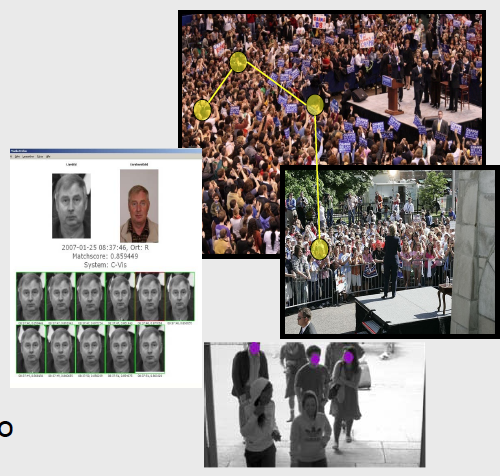
Today, EFF, along with 44 other privacy, civil liberties, and immigrants’ rights organizations, sent a letter to the FBI demanding more time to respond.

What is NGI?

NGI contains well over 100-million individual records that include multiple forms of biometric data as well as personal and biographic information. Although many people assume the FBI’s files only include fingerprints and other data associated with criminal activity, much of these records—nearly 50-million individual files—contain data collected for non-criminal purposes. For example, in some states, you’ll need to give the government your prints if you want to be a dentist, accountant, teacher, geologist, realtor, lawyer or even an optometrist. And, since 1953, all jobs with the federal government have required a fingerprint check—not just jobs requiring a security clearance, but even part-time food service workers, student interns, designers, customer service representatives, and maintenance workers.

Just last year, the FBI announced that for the first time it would combine almost all of this non-criminal data with its criminal data in NGI. This means that now, if you submit fingerprints for licensing or for a background check, they’ll most likely end up living indefinitely in NGI—to be searched thousands of times a day for any crime, no matter how minor, by over 20,000 law enforcement agencies across the country and around the world.

And while the FBI has said—for now—it’s keeping non-criminal photographs separate from criminal photos in NGI, if you’re ever arrested for any crime—even for blocking a street as part of a First Amendment-protected protest—your non-criminal photographs will be combined with your criminal record and will become fair game for the same criminal database searches as any mug shot photo. As of December 2015, over 8-million civil records were also in the criminal database.

NGI Disproportionately Impacts People of Color

NGI does not affect everyone equally. Thanks to years of well-documented racially biased police practices, the system includes a disproportionate number of African Americans, Latinos, and immigrants. Face recognition—NGI’s cornerstone biometric technology—is notoriously inaccurate across the board. (According to the FBI, NGI may produce a false match—indicating someone is a suspect for a crime they didn’t commit—at least 15% of the time). But research suggests that face recognition may also misidentify African Americans and ethnic minorities, young people, and women at higher rates than whites, older people, and men, respectively. So even though FBI says NGI’s face recognition isn’t designed to positively identify anyone (it produces a ranked list of possible candidates), there’s a very good chance that an innocent person will be put forward as a suspect for a crime just because their image is in NGI—and an even better chance this person will be a person of color.

NGI’s disparate impact is not limited to facial recognition inaccuracy because FBI records as a whole are also notoriously unreliable. At least 30 percent of people arrested are never charged with or convicted of any crime. But according to the National Employment Law Project, as much as 50 percent of the FBI’s arrest records fail to include information on the final disposition of the case—whether a person was convicted, acquitted, or if charges against them were dropped. If these arrest records aren’t updated with final disposition information, hundreds of thousands of Americans searching for jobs could be prejudiced and lose work. And due to disproportionately high arrest rates, this uniquely impacts people of color.

For Years, FBI Failed to Produce Basic Information about NGI as Required Under Federal Law

EFF and other organizations called for years for the FBI to release more information about NGI and how it impacts your privacy. But the FBI didn’t update its Privacy Impact Assessment for its face recognition program until last September—a full year after its entire “Interstate Photo System” was online and fully operational and as many as seven years after the FBI first started incorporating face recognition-compatible photos into NGI

In fact, the FBI has only this month released a “System of Records Notice” (SORN) about the NGI system as a whole. The federal Privacy Act requires all federal agencies to produce a SORN for any system that collects and uses Americans’ personal information, and this document is supposed to describe exactly how that data is being used and protected. But for years FBI skirted the Privacy Act—instead of producing a new SORN for NGI, it relied on outdated SORNs and Privacy Impact Assessments describing very different systems.

There’s Still A Lot We Don’t Know About FBI’s Plans for NGI

Although the FBI has finally produced a SORN for NGI, there’s still a lot we don’t know. For example, a request for proposals the FBI released last year indicated the agency planned to allow law enforcement officers to collect fingerprints, iris scans, and face recognition data right out in the field and submit that data directly to NGI. This directly contradicts 2012 congressional testimony where an FBI official said NGI would only include “criminal mug shot photos.” A photograph taken in the field before someone is arrested is not a “mug shot.“

The FBI may also decide to use face recognition in other ways. The Bureau indicated in a 2010 presentation that it wants to use NGI to track people’s movements to and from “critical events” like political rallies, to identify people in “public datasets,” and to identify “unknown persons of interest” from photographs. This use of NGI would clearly impact First Amendment-protected activities and would chill speech.

The database could also eventually incorporate photos from other sources like security cameras, social media, or even from state drivers license databases. While NGI is only supposed to include mug shot photos, there don’t appear to be any technical controls to prevent an officer from uploading photos from other sources.  We also know that at least 37 states use face recognition for drivers licenses, and the FBI has a whole team working with the states to get access to this data. 

What Are We Doing About This?

Despite huge delays in producing federally-mandated information to the public, the FBI now says we only have 21 business days to respond to its proposal to exempt much of NGI from the basic protections of the Privacy Act. These protections allow you to learn what data an agency has on you and require the agency to correct inaccurate data. They also allow you to sue if the agency doesn’t comply with these requirements.

Americans need more than 21 days to comment. The FBI’s SORN and proposal to exempt NGI from the Privacy Act are both complicated. This is why we’ve joined with 44 other privacy, civil liberties and immigrants’ rights organizations in a letter to the FBI requesting at least 30 additional days to respond. Only with that additional time do we think we can perform a thorough analysis of both proposals to ensure the FBI doesn’t do more to violate your civil liberties. After years of delay and stonewalling, the FBI owes it to the public to grant this request.

Joint Letter to FBI Concerning Privacy Act Exemptions for Next Generation Identification Biometrics Database


Share this: Share on Twitter Share on Facebook Share on Google+ Share on Diaspora Join EFF
28 May 17:53

The Unfalsifiability of Security Claims

by Bruce Schneier
Brindle

but what about formal methods? these guys have obviously never heard of haskell :P

Interesting research paper: Cormac Herley, "Unfalsifiability of security claims:

There is an inherent asymmetry in computer security: things can be declared insecure by observation, but not the reverse. There is no observation that allows us to declare an arbitrary system or technique secure. We show that this implies that claims of necessary conditions for security (and sufficient conditions for insecurity) are unfalsifiable. This in turn implies an asymmetry in self-correction: while the claim that countermeasures are sufficient is always subject to correction, the claim that they are necessary is not. Thus, the response to new information can only be to ratchet upward: newly observed or speculated attack capabilities can argue a countermeasure in, but no possible observation argues one out. Further, when justifications are unfalsifiable, deciding the relative importance of defensive measures reduces to a subjective comparison of assumptions. Relying on such claims is the source of two problems: once we go wrong we stay wrong and errors accumulate, and we have no systematic way to rank or prioritize measures.

This is both true and not true.

Mostly, it's true. It's true in cryptography, where we can never say that an algorithm is secure. We can either show how it's insecure, or say something like: all of these smart people have spent lots of hours trying to break it, and they can't -- but we don't know what a smarter person who spends even more hours analyzing it will come up with. It's true in things like airport security, where we can easily point out insecurities but are unable to similarly demonstrate that some measures are unnecessary. And this does lead to a ratcheting up on security, in the absence of constraints like budget or processing speed. It's easier to demand that everyone take off their shoes for special screening, or that we add another four rounds to the cipher, than to argue the reverse.

But it's not entirely true. It's difficult, but we can analyze the cost-effectiveness of different security measures. We can compare them with each other. We can make estimations and decisions and optimizations. It's just not easy, and often it's more of an art than a science. But all is not lost.

Still, a very good paper and one worth reading.

28 May 17:51

Pranksters Put Eyeglasses On Floor Of Museum, People Mistake For Art Piece, Take Pictures

glasses-art-1.jpg Twitter users @TJCruda and @k_vinnn set a pair of eyeglasses on the floor of San Francisco's Museum Of Modern Art after being underwhelmed by the rest of the art there. Then people mistook the glasses for an art piece and began studying it and taking pictures. Although who's to say the glasses aren't really art? It was at least a brief performance piece. I would have called it 'The Floors Have Eyes.' I would have also pretended like I didn't see the glasses and stepped on them to see how people would react. Then yelled NONE OF YOU SAW THAT and started waving a knife around. I'm kidding, I wouldn't have done any of those things because I don't have time to spend pranking people at museums -- I've got a life to live. Kidding again I'm so bored let's go throw sticks at each other in the woods. Keep going for several more shots of people's reactions.glasses-art-2.jpg glasses-art-3.jpg glasses-art-4.jpg glasses-art-5.jpg Thanks to DieselNuts, who prefers a plump, tasteful nude any day.
27 May 17:30

Seizures For Everyone!: Sensory Overloading Ultra-High Definition Video Of Japan's Robot Restaurant

Brindle

@brandon, this is one that I told you about.. it is pretty crazy

robot-restaurant-japan.jpg This is an ultra-high def video (make sure to crank up the HD or it'll just look like Technicolor snow) of Japan's Robot Restaurant, which puts on some sort of seizure-inducing robot parade while patrons eat. Definitely not the place to go if you're looking for a nice relaxing dinner. Personally, when I dine I like to be ULTRA relaxed. Know what I'm saying? "You like to eat in bed." My bedside table isn't a mini-fridge for no reason. Keep going for the video.
Thanks to powerless, who sounds fairly easy to beat in an arm-wrestling match.
27 May 11:42

House Budget Bill Guts Net Neutrality, Kills FCC Authority -- All Because The FCC Dared To Stand Up To Comcast & AT&T

by Karl Bode
We've noted a few times now that ever since the FCC passed net neutrality rules, loyal ISP politicians in the House and Senate have been engaged in a full-court press to punish the agency for daring to stand up to big broadband ISPs. That has involved an endless parade of taxpayer-funded hearings pretending to be about agency transparency and accountability -- but are really just about publicly shaming the agency. It has also involved a laundry list of bills that attempt to thoroughly gut FCC funding and authority under the pretense of saving the country from a power-mad FCC.

This not-so-subtle ballet continued this week, when the House passed a new budget bill that would gut the FCC's 2017 budget by $69 million, stall the FCC's attempt to bring competition to the cable box, and prevent the FCC from enforcing net neutrality violations until the industry's lawsuit is settled. In fact, like previous bills, this new budget bill uses an absurdly broad definition of "rate regulation" to effectively prevent the FCC from doing anything:
"The GOP proposals define rate regulation so broadly that Wheeler says they would prevent the FCC from enforcing key net neutrality provisions and disrupt its process for reviewing mergers. The budget bill again uses a definition of rate regulation that goes far beyond the utility rate-setting traditionally imposed on landline phone providers. The proposal would prevent the FCC from using its net neutrality rules to act against discriminatory data cap policies, among other things."
Note that this latest push comes -- not coincidentally -- as ISPs like AT&T and Comcast have started pushing usage caps harder, and the FCC has started dropping hints that it might just do something about it.

All the while, the pretense continues that this is all just the House's quest to ensure government is fiscally responsible, transparent, and accountable before the "American people." From an announcement by House Appropriations Committee Chair Hal Rogers:
"The job of this bill is two-fold: to make wise investments with taxpayer dollars in the programs and agencies that we need to grow our economy and enforce our laws, and to tightly hold the reins on the over-spending and overreach within federal bureaucracies. This bill makes great strides on all accounts – carefully investing taxpayer dollars in programs that promote opportunity, while keeping these agencies accountable to the American people."
You are, of course, supposed to ignore that Rogers received $25,000 in campaign contributions during the current election cycle from the telecom industry, and that this is all just a giant stage play designed to punish the telecom regulator for actually doing its fucking job.

Permalink | Comments | Email This Story
25 May 03:43

Utah representatives want to install porn blockers on all cell phones

by Sarah Buhr
Brindle

which the UK already does... ugh.

slack-imgs.com Utah Senator Todd Weiler has proposed a bill to rid the state of porn by adding Internet filters and anti-porn software on all cell phones and requiring citizens to opt-in before viewing porn online. It’s to save the children, he says. Weiler successfully pushed an anti-porn resolution through the state Senate earlier this year, declaring porn a “public health crisis.” He… Read More
24 May 02:52

Google made a 3D radar so tiny that it can fit into your smartphone or smartwatch [VIDEO]

by Justin Duino
Brindle

pretty sure batman did this already

Google's ATAP division has released a new video showcasing how 3rd party developers have used Project Soli in their projects.
24 May 02:39

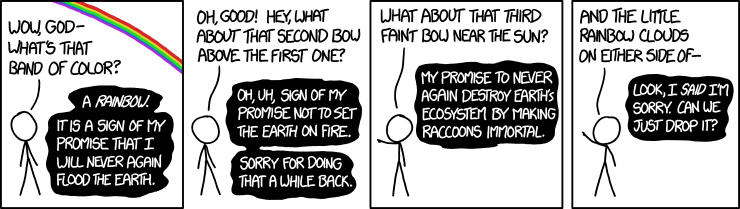
Rainbow

Brindle

omg the mouseover is so perfect

Listen, in a few thousand years you'll invent a game called 'SimCity' which has a 'disaster' button, and then you'll understand.
23 May 23:23

Teenage Mutant Ninja Turtle's Pad Recreated In New York City Apartment, Rentable On Airbnb

Brindle

Wow.

ninja-turtles-apartment-12.jpg These are a bunch of shots of the 3-bedroom Manhattan apartment that Paramount turned into the Ninja Turtles' lair to promote the upcoming Ninja Turtles movie. You can even rent the place on AirBnB with complementary pizza delivery. Is this what the Ninja Turtles' pad looks like in the most recent movie? Because I thought they lived in the sewers. Now if Paramount had gone the extra mile and actually made a place in the sewers, that would have been cool. And dangerous. But the life of a ninja turtle is dangerous, so it's appropriate. Splinter taught me that. Also how to chew through walls looking for cheese.
This high-tech dojo is fully loaded...a glow in the dark basketball court, a retro arcade, more video games with a pretty sweet tv wall...anything for hanging ninja-style. We say no to drugs and alcohol, so none of that in the Lair. But we do say yes to pizza! Just clean up your pizza crusts and don't break any of Donnie's equipment. That really gets his Bo staff in a twist. You can have a couple friends drop by to check out the Lair, but Splinter says the upstairs bedrooms are off limits. Don't even think about inviting more overnight guests! We have neighbors too so keep it chill...try not to bring the ruckus!
So no drugs or alcohol and "try not to bring the ruckus." I thought ninja turtles were all about bringing the ruckus, especially Michelangelo. These sound like some lame ass Donatello rules to me. I'm afraid I'm gonna have to rent the place under an alias as Retsam Redderhs then trash it. So -- are you with me or against me? I really hope you're with me though because I just told you my plan and don't need you ruining this for me like you did my last birthday. "How did I ruin your last birthday?" You didn't plan anything! Keep going for a bunch more shots including the sadly decorated bedrooms.ninja-turtles-apartment-11.jpg ninja-turtles-apartment-10.jpg ninja-turtles-apartment-9.jpg ninja-turtles-apartment-8.jpg ninja-turtles-apartment-7.jpg ninja-turtles-apartment-6.jpg ninja-turtles-apartment-5.jpg ninja-turtles-apartment-4.jpg ninja-turtles-apartment-3.jpg ninja-turtles-apartment-2.jpg ninja-turtles-apartment-1.jpg Thanks to Donald B, who expressed an interest in renting the place and holding a ninja competition. See? Now you're talking.
23 May 12:15

Chrome removes backspace to go back

Brindle

oh crap :\ I always use backspace to go back :\

The reason we're making this change is that users regularly lose data because they hit the backspace button thinking that a form field is focused. After years of this issue, we realize we're not going to have a better way to solve that problem. I absolutely hate this change. I deeply, deeply, deeply hate this change. This is a classic case of instead of addressing the core problem - web forms shouldn't lose their content when you navigate back and forth - you just try to hide it a little more by making navigation harder. Emblematic of software development today, especially in operating systems: instead of fixing core problems, let's just add more layers to hide the ugliness. You see it everywhere - from still relying on an operating system written for timesharing machines with punchcards, to trying to hide broken, complicated and obtuse file system layouts behind "just use convoluted cloud storage". People carrying around ugly battery packs just to get through a day of use on their devices running an outdated timesharing mainframe punchcard operating system from the '60s tells you all you need to know about the complete failure of modern software development - and this tiny little change in Chrome only underlines it. Good software does not exist.
18 May 21:37

CIA Inspector General Claims It Accidentally Deleted CIA Torture Report After Being Asked To Retain It

by Mike Masnick
The saga of the CIA torture report continues to get stranger and stranger. As we noted, last week, the appeals court shot down a FOIA lawsuit from the ACLU to get the full report released. If you remember, only the heavily redacted ~500 page executive summary of the report had been released, with another ~6,500 pages or so still locked away. And we do mean locked away. The Justice Department has basically told the entire executive branch not to open the report, and Senate Intelligence Committee boss Richard Burr has been demanding the report be sent back to the Senate so it can be destroyed. Senator Feinstein had actually distributed copies fairly widely throughout the administration, with the goal being that the full report would get read and, you know, the US government wouldn't torture people again.

Part of the reason why the DOJ instructed everyone in the executive branch not to read it was to play a game with the whole FOIA process. Only documents held by the executive branch are subject to FOIA requests. Things in Congress are exempt. So Burr has been making sure that everyone believes the report is "a Congressional record" and the DOJ is arguing that by not opening the report, the executive branch doesn't run the risk of accidentally making the document subject to FOIA requests. But, as part of that, the DOJ also told everyone in the executive branch not to destroy their copies either -- asking it to "preserve the status quo" during the course of the FOIA lawsuit.

According to a detailed report at Yahoo, the CIA's Inspector General's Office then destroyed its copy of the report, but insists it was all an accident, and they'd like another copy... to lock up and not read:
[L]ast August, a chagrined Christopher R. Sharpley, the CIA’s acting inspector general, alerted the Senate intelligence panel that his office’s copy of the report had vanished. According to sources familiar with Sharpley’s account, he explained it this way: When it received its disk, the inspector general’s office uploaded the contents onto its internal classified computer system and destroyed the disk in what Sharpley described as “the normal course of business.” Meanwhile someone in the IG office interpreted the Justice Department’s instructions not to open the file to mean it should be deleted from the server — so that both the original and the copy were gone.

At some point, it is not clear when, after being informed by CIA general counsel Caroline Krass that the Justice Department wanted all copies of the document preserved, officials in the inspector general’s office undertook a search to find its copy of the report. They discovered, “S***, we don’t have one,” said one of the sources briefed on Sharpley’s account.

Sharpley was apologetic about the destruction and promised to ask CIA director Brennan for another copy. But as of last week, he seems not to have received it; after Yahoo News began asking about the matter, he called intelligence committee staffers to ask if he could get a new copy from them.
Feinstein is apparently none too pleased about all of this and has just sent a letter to CIA director John Brennan, asking him to give the Inspector General's office a copy:
As you may be aware. the office of the CIA Inspector General has misplaced and/or accidentally destroyed its electronic copy and disk of the Senate Select Committee on lntelligence's full 6,700-page classified Study of the CIA Detention and Interrogation Program. I write to request that as Director of the CIA, you provide a new copy of the Study to the office of the CIA IG immediately.

Your prompt response will allay my concern that this was more than an "accident." The CIA IG should have a copy of the full Study because the report includes extensive information directly related to the ongoing oversight of the CIA.

Furthermore, on February 5, 2015, as part of ongoing FOIA litigation, the Department of Justice declared to a federal judge that "it can assure the Court that it will preserve the status quo regarding the Full Report absent either leave of court or resolution of this litigation in the government's favor." Therefore, providing the CIA IG with a copy of the full report immediately will also ensure that DOJ lawyers can inform federal judges that the status quo was adhered to and has been restored.
The Yahoo report also notes that the CIA and the Justice Department apparently never bothered to tell the judge that this copy had been destroyed, despite promising that it wouldn't be months earlier. The DOJ apparently told Yahoo reporter Michael Isiskoff that since the Inspector General's Office is a part of the CIA, and the CIA itself still had a copy, it felt that the status quo had been retained.

And, yes, while the Inspector General's office is a part of the CIA, it's the part that's supposed to be overseeing the rest of the organization to make sure it doesn't violate the law in this manner. As the qrticle notes:
“It’s breathtaking that this could have happened, especially in the inspector general’s office — they’re the ones that are supposed to be providing accountability within the agency itself,” said Douglas Cox, a City University of New York School of Law professor who specializes in tracking the preservation of federal records. “It makes you wonder what was going on over there?”
It certainly does make you wonder...

Meanwhile, there's also some dark irony in the fact that the only reason this report exists in the first place was as a response to the Senate's discovery that the CIA illegally destroyed videotapes detailing the CIA's torture program.

Permalink | Comments | Email This Story
18 May 21:29

IBM Wants To Patent A Printer That Won't Let You Output Unauthorized Copies

by Glyn Moody
Brindle

sweet! where can I buy this fascist printer? TAKE MY MONEY

Stories about copying turn up a lot on Techdirt. That's largely as a consequence of two factors. First, because the Internet is a copying machine -- it works by repeatedly copying bits as they move around the globe -- and the more it permeates today's world, the more it places copying at the heart of modern life. Secondly, it's because the copyright industries hate unauthorized copies of material -- which explains why they have come to hate the Internet. It also explains why they spend so much of their time lobbying for ever-more punitive laws to stop that copying. And even though they have been successful in bringing in highly-damaging laws -- of which the DMCA is probably the most pernicious -- they have failed to stop the unauthorized copies.

But if you can't stop people copying files, how about stopping them from doing anything useful with them? That seems to be the idea behind an IBM patent application spotted by TorrentFreak, which it summarizes as follows:

Simply titled "Copyright Infringement Prevention," the patent's main goal is to 'restrict' the functionality of printers, so they only process jobs when the person who’s printing them has permission to do so.

It works as follows. When a printer receives a print job, it parses the content for potential copyrighted material. If there is a match, it won't copy or print anything unless the person in question has authorization.
As with so many patents, the idea is simple to the point of triviality: only a company more concerned about the quantity of its patents, rather than their quality, would have bothered to file an application. Nonetheless, it's a troubling move, because it helps legitimize the idea that everything we do -- even printing a document -- has to be checked for possible infringements before it can be authorized and executed.

But why stop with printers? We've already seen Microsoft's Protected Media Path for video, a "feature" that was introduced with Windows Vista; it's easy to imagine something a little more active that matches the material you want to view or listen to against a database of permissions before displaying or playing it. And how about a keyboard that checks text as you type it for possible copyright infringements and for URLs that have been blocked by copyright holders?

There is a popular belief that the computer in Stanley Kubrick's "2001: A Space Odyssey" was named "HAL" after IBM, by replacing each letter in the company name with its predecessor. That's apocryphal, but with this latest patent application IBM is certainly moving squarely into HAL territory.

Follow me @glynmoody on Twitter or identi.ca, and +glynmoody on Google+


Permalink | Comments | Email This Story
18 May 21:25

Government Argues That Indefinite Solitary Confinement Perfectly Acceptable Punishment For Failing To Decrypt Devices

by Tim Cushing
Brindle

Doe’s incarceration is by his own hand - of course! lose your 5th amendment right or lose your right to not be imprisoned, your choice...

Recently, we covered the ongoing jailing of a former Philadelphia police officer for his refusal to unlock encrypted devices for investigators. "John Doe" is suspected of receiving child porn but the government apparently can't prove its case without access to hard drives and Doe's personal computer. So far, it's claiming the evidence it's still seeking is a "foregone conclusion" -- an argument the presiding judge found persuasive.

The "foregone conclusion" is based on an interview with Doe's estranged sister, who claims she once saw something resembling child porn on Doe's computer -- although she can't say for sure whether it involved the devices the government seeks access to -- and its own expert, who says it's his "best guess" that child porn can be found on the devices.

Hardly compelling, but compelling enough that Doe has spent seven months in jail to date. The government has filed its response to Doe's motion to stay the contempt order. It argues that Doe can spend the rest of his life in jail for all it cares. If he wants to be released, he just needs to unlock the encrypted devices. (via Brad Heath)

Doe faces no irreparable harm in the absence of a stay. In arguing otherwise, what he fails to recognize is that his imprisonment is conditional – it is based entirely on Doe’s continued defiance of the district court order. There can be no question that loss of liberty is a recognized harm. But Doe’s incarceration is by his own hand. His release pending an appeal is entirely avoidable through obedience to the court order.
The government goes on to point out that Doe -- once he's unlocked the devices -- can then present his arguments for evidence suppression.
Doe could choose to obey the court’s directive by unencrypting his devices, and his release would be granted. This is no way affects his appeal. He would still be able to persist in his appeal, and, if successful, the evidence the government would gain through forcing Doe to unencrypt his devices would be suppressed. The “irreparable harm” Doe complains of now is not “irreparable” in any sense, as it is entirely within Doe’s control.
As the government notes, civil contempt charges are meant to be coercive. As such, the only person keeping Doe from being released from prison is Doe himself. Of course, if the drives contain what the government claims they contain, he'd just be exchanging an indefinite sentence for a more finite one.

The added wrinkle to this case is the terms of Doe's confinement for contempt. Doe is in solitary confinement -- something the UN has declared to be torture -- supposedly for his own protection. It's generally true that the prison population has no love for child porn fans. They're not overly fond of imprisoned law enforcement officers either. And the nuances of the case -- that Doe has not actually been convicted of child porn charges but rather has been jailed for contempt of court -- will likely go unexamined by other inmates.

So, it may be that Doe's solitary confinement would be less torturous than spending time in general population, but at the end of it, we have a person jailed indefinitely in solitary confinement for nothing more than contempt charges. The government's arguments on behalf of the jailing seem to assert that it has plenty of evidence already in hand. If so, the question is why the government hasn't moved forward with prosecution, rather than pushing for Doe to decrypt his devices. Either it has a case or it doesn't. If it doesn't, then the indefinite jailing is punitive -- a punishment for the defendant not being more helpful in building a case against himself, which is the root of Fifth Amendment protections, no matter how the government chooses to phrase it.

Permalink | Comments | Email This Story
18 May 11:44

Subtle: Iraq Flips The Internet Switch For 3 Hours To Combat Cheating Students And Corrupted Teachers

by Timothy Geigner
Brindle

priorities.

We've talked about cheating in academia in the past, usually revolving around whether or not what used to be called cheating might be better thought of as collaboration. Beyond that, we've also talked about some of the strategies used to combat the modernity of "cheating", which has included the monitoring of students online activities to make sure they weren't engaged in cheating behavior.

Well, the nation of Iraq doesn't have time for all of this monitoring and sleuthing. When its students have their standardized tests, they simply shut the damned internet off completely.

For a few hours each morning, the Iraqi government keeps cutting off internet access—to keep students from cheating on their end-of-year exams. As reported by DYN research, which tracks internet blackouts around the world, the country’s access went almost entirely dead between 5 a.m. and 8 a.m. in the morning on Saturday, Sunday and again on Monday.
And this isn't the first time the Iraqi government has gone about things in this way. Last year, they pulled the same lever to shut down internet access to the country, with the same explanation that it was combatting a scourge of question and answer sharing occuring online. What's interesting about this is that the real problem appears to be the teachers, not the students. Teachers in Iraq are apparently regularly bribed by students to share the questions and answers to tests and that those leaks are then spread across the internet for other Iraqi students to see.
“What happens usually is that some teachers would be giving the exams questions to students who pay money, then [those] students would sell online questions all over country,” one Iraqi, who requested his name not be used in a story, told Vocativ. “Between 5 a.m. to 8 a.m. [is when teachers finalize questions] so this is the time when teachers [who have been paid off would] give questions to students by Facebook or Viber or Whatsapp and so on.”
Now, perhaps this move is effective in its aims. I don't know, since students looking to cheat haven't exactly always required the internet to do so. Still, even if it were, there must be another more subtle yet effective way to combat this cheating scourge. Perhaps one that doesn't interrupt internet access for, oh I don't know, everyone else in the entire country. Because the effects of this blackout aren't exactly limited to students.
Human rights groups were outraged at the outage. “We see this, especially in such a destabilized country as Iraq, as really terrible. It’s a lot of people under a media and communications blackout,” Deji Olukotun, Senior Global Advocacy Manager at the internet freedom nonprofit, told Vocativ.
Come on guys, figure this out.

Permalink | Comments | Email This Story
14 May 00:39

FBI Found To Be Harvesting Surreptitious Recordings Around Two Other California Courthouses

by Tim Cushing
Brindle

The FBI is housed in the J. Edgar Hoover Building for good reason...

Earlier this year, the FBI was catching heat for some undersupervised and overly-broad surveillance it deployed around the San Mateo courthouse in California. Hoping to catch conversations related to suspected bid-rigging during real estate auctions, the FBI scattered hidden microphones around the courthouse steps where the auctions took place.

The defendants' legal representation raised hell, claiming the surreptitious recordings violated their clients' rights. After all, the Supreme Court had declared in 1967 that closing a phone booth door was not dissimilar to holding a conversation in hushed tones, bringing a limited expectation of privacy to public places.

The FBI couldn't have felt all that confident about its secret recordings as it vowed not to enter any of the conversations it captured into evidence. That wasn't enough for the judge, however, who said he still needed to determine whether other evidence had been tainted by this questionable surveillance.

Not only was there a question about the legality under the Fourth Amendment, but there were unanswered questions about how many completely irrelevant conversations the FBI's bugs might have picked up -- like privileged discussions between lawyers and clients, both of whom are often at courthouses simultaneously.

Apparently, the FBI thought it was going to get away with this, most likely by declaring anything that happens in public to be completely stripped of privacy expectations. The surreptitious recordings in San Mateo didn't go nearly as smoothly as planned and now evidence has been produced showing the FBI targeted more than one courthouse during its bid-rigging investigation. (via Nate Cardozo)

At the Rene C. Davidson Courthouse in Oakland, the FBI planted hidden microphones inside light fixtures on the courthouse’s exterior steps to capture the conversations of people attending the foreclosure auctions. Cameras and microphones were installed in parked Alameda County vehicles next to the courthouse. The FBI even hid a microphone in the AC Transit bus stop on Fallon Street, and dropped a bugged backpack next to a statue inside the courthouse, according to a letter sent by US Justice Department attorney Kate Patchen to Marr's attorneys on March 15. The surveillance was ongoing from March 2010 to January 2011.

And:

In Martinez, the FBI planted microphones in bushes, at a bus stop, on a pole, and inside parked and roving vehicles near the auction site.
Three courthouses. At least a dozen microphones. Hundreds of hours of recordings. And for what?

Tough to say. Multiple prosecutions of suspected bid-riggers are ongoing, but the investigative groundwork is failing to pass inspection. Once again, prosecutors are promising not to use the questionable recordings in court, but they're far less likely to drop any evidence springing from those captured conversations.

In addition, defendants' lawyers in the San Mateo County case are going so far as to claim the FBI committed felonies by recording conversations, as California is a two-party consent state. They might have to settle for some suppressed evidence though, as the state law has a fairly broad "public area" exception, which would cover courthouse steps and bus stops. But that interpretation of the state's wiretap law exceptions may be subject to the government's interpretation of public spaces from its 1967 Katz decision, which would grant hushed conversations in public an expectation of privacy.

The FBI -- through its actions -- is repeatedly demonstrating it cares little for the rules that govern its investigations and intelligence gathering. It only cares when it gets caught. This is its culture, something that traces back -- with only minimal interruption -- to its inception.

Permalink | Comments | Email This Story
14 May 00:36

Local Fox Affiliate's Reaction To Brutal Police Beating Is A Dereliction Of Its Duty

by Timothy Geigner
Brindle

<3 fox news

There tends to be a great deal of talk these days about how the media influences public discourse. Most of these conversations tend towards the inane, with the dichotomy of our political affiliations directly deciding how we see the media's influence. One political side will complain that the media leans one way, while the other complains likewise. Everyone is working from a different set of "facts," causing the whole conversation to devolve into a sporting event, with each side rooting for its own team and proclaiming an underdog type of branding for their team against the horde of media others.

The reality is much more nefarious and stark. The larger media, once at least mildly interested in paying lip-service to being the "fourth estate" and holding government and public institutions accountable to the general public is today anything but. Instead, news media today is far more interested in sensationalism without substance and a plodding prostration before government over being an information source for the public. You can see this best in the media's mindframe when reporting on police activity. A wonderfully brutal recent example of this is one local Fox outlet's reporting on a police chase that should have ended when the suspect willingly stopped his vehicle and surrendered by lying on the ground. Indeed, that appears to be how the cameraman recording the event would have preferred the reporting on the story to have ended.


What you see is the suspect surrendering, exiting the vehicle, lying upon the ground as instructed, and then being pummeled for a brief moment before the camera quickly zooms out and renders the action indiscernible. Why the camera operator did so remains unanswered, but we know from other footage captured by an NBC affliate that the police spent the next half-a-minute or so beating the shit out of a man who was lying surrendered on the pavement. Were we to need to rely on the Fox footage to determine what had happened, we wouldn't have this full picture of the beating in our minds. Instead, we'd have a moment or two of the violence, which could quite possibly be excused and waived off by what would be a typical dismissal by the authorities.

Indeed, in that same local Fox affiliate's own reporting on the controversey, the public is informed:
"[Mass. State Police] will also review the apprehension of the suspect, to determine whether the level of force deployed during the arrest was appropriate," FOX25 has been told.
And quoting the District Attorney's office:
"I think anyone who looks at the video is disturbed by it, but we don't jump to conclusions," Nashua Police said. "We need to find out what happened."
The Fox affiliate's linked story, castrated by its own camera operator's perhaps subconcious choice to protect the authorities from damning footage, offers no further comment on the footage, the controversy, or the beating the man took at the hands of police. The news anchors mention that the public is calling the station about the beating the man took and say they are asking police for an explanation.

But that camera pulling back, small detail as it may seem, certainly feels emblematic of a very real problem. For a news organization covering a story about a police chase, there must be no greater need for camera footage than the culmination of that chase. It's the climax of the story. Yet, the moment the controversial actions by the police begin, the camera pans far back. I wouldn't mean to suggest that this reaction is one purposefully trying to keep the public uninformed, but it certainly is the reaction of someone not trained specifically to do the job of holding government and the authorities accountable.

That's the shift that's happened in media these past few decades. That's the bias about which you should be concerned. If the mass media no longer serves the public, it serves no purpose at all.

Permalink | Comments | Email This Story
13 May 19:02

Heart Surgery Stalled For Five Minutes Thanks To Errant Anti-Virus Scan

by Karl Bode
If you've ever had the pleasure of simply asking one medical outfit to transfer your records to another company or organization, you've probably become aware of the sorry state of medical IT. Billions are spent on medical hardware and software, yet this is a sector for which the fax machine remains the pinnacle of innovation and a cornerstone of daily business life. Meanwhile, getting systems to actually communicate with each other appears to be a bridge too far. And this hodge podge of discordant and often incompatible systems can very often have very real and troubling implications for patients.

For example, one patient recently undergoing a heart transfer had the procedure interrupted for five full minutes after a PC connected to an essential piece of monitoring equipment began a scheduled anti-virus scan:
"According to one such report filed by Merge Healthcare in February, Merge Hemo suffered a mysterious crash right in the middle of a heart procedure when the screen went black and doctors had to reboot their computer. Fortunately, the patient was sedated, and the doctors had five minutes at their disposal to wait for the computer to finish rebooting, start the Merge Hemo application again, and complete their procedure without any health risks for the patient."
Fortunate, since "death by shitty hospital IT support" doesn't sound like a particularly fun way to go. The filing with the FDA by the company in question (Merge) notes that the blame was the fault of the hospital's IT support, who ignored software instructions that state the folders being used by Merge's software should always be whitelisted from any anti-virus platforms:
"Merge investigated the issue and later reported to the FDA that the problem occurred because of the antivirus software running on the doctors' computer. The antivirus was configured to scan for viruses every hour, and the scan started right in the middle of the procedure. Merge says the antivirus froze access to crucial data acquired during the heart catheterization. Unable to access real-time data, the app crashed spectacularly."
Here's the thing: aging systems and shoddy medical IT support are the least of the medical industry's problems. The biggest problem continues to be that medical technology security remains little more than an afterthought, leaving underfunded IT support frequently outgunned. That has resulted in a major wave of ransomware attacks that in some instances have actually forced hospitals to revert to using paper only while they get sorted out (underfunded school systems have been having a dramatic uptick in similar attacks).

And as Internet of Things companies push hospitals to embrace even more sophisticated technologies, you can expect things to get worse. After all, this is a sector that can't even secure doorbells, refrigerators, thermostats or even tea kettles. What could possible go wrong as these technologies are introduced into an already marginally-competent medical IT sector?

Permalink | Comments | Email This Story
13 May 18:50

Google's Andy Rubin defends Android to jury

Brindle

The "API's are copyrightable"-ruling is one of those rulings we will look back on decades from now and point to as "that's where it all went wrong",

During hours of unrelenting cross-examination today, Andy Rubin, Google's former Android chief, was on the stand in the Oracle v. Google trial defending how he built the mobile OS. Rubin's testimony began yesterday. He's another one of the star witnesses in this second courtroom showdown between the two software giants in which Oracle has said it will seek up to $9 billion in damages for Google's use of certain Java APIs in the Android operating system. Since an appeals court decided that APIs can be copyrighted, Google's only remaining defense in this case is that its use of those APIs constitutes "fair use." The "API's are copyrightable"-ruling is one of those rulings we will look back on decades from now and point to as "that's where it all went wrong", much like how we now look back upon disastrous rulings like Citizens United or the slew of bad rulings that legitimised software patents. And we have the despicable Oracle to thank for that. As I've pointed out before, it's no coincidence that the three-pronged legal attack on Android - from Apple, Microsoft, and Oracle - all started at around the same time, and that Larry Ellison was a very close friend of Steve Jobs. When all this stuff hits the fan even harder, you know who to thank.
13 May 15:06

Court Denies Immunity To Law Enforcement Officer Who Arrested Crew Sent To Clean Out His Foreclosed House

by Tim Cushing

Lieutenant Timothy Filbeck of the Butts County Sheriff's Department found himself in a not-at-all unusual situation: his home was being foreclosed upon. Like many others who have undergone this process, Filbeck was served with a variety of notices explaining the steps of the process and warning him of the consequences of not complying.

Filbeck moved out of the doomed home and into a family member's. This would apparently be the last rational thing he would do in response to the foreclosure. The insurance company for the bank inspected the home four times before coming to the conclusion it had been abandoned by Filbeck. The utilties had been turned off and "cobwebs extended from wall to wall in every room."

When the company began preparing the house for auction, things started to get interesting. Employees spent a day cleaning the house out and removing any abandoned property inside it. At some point, Filbeck apparently decided to drop by his old house and noticed the things he had left behind were missing. He could have contacted any of the companies involved in the foreclosure proceedings. He could have done nothing after realizing that leaving a foreclosed house abandoned tends to result in the removal of property also considered abandoned. The Eleventh Circuit Court of Appeals notes that Lieutenant Filbeck chose "none of the above."

Instead, Filbeck boarded up the windows, nailed the doors shut, and placed four signs reading “KEEP OUT” on the Property. Filbeck also prepared and filed a police report using fellow deputy Kenneth Mundy’s name and submitted a claim to Liberty Mutual Insurance for the missing property.
Handwritten signs and boards on the windows aren't going to keep legally-entitled persons from accessing the property, especially when the doors are still intact.

Preparing a police report in someone else's name, however… that's a problem. Especially when the person whose name you've used finds out about it.
When Mundy later discovered the police report, he demanded that his name be removed from it and insisted that he had not prepared it, authorized it, or known anything about it at the time that it was submitted.
When MD Maintenance (the company preparing the house for auction) returned to the property, it called the property management company to report the boards and signs. The property manager told MDM's employees to report it to the police.

This, of course, led to MDM employees calling the same Sheriff's Department where Filbeck was employed. A deputy visited the property and confirmed no one was, in fact, still living there. He discussed his visit with Filbeck, which apparently motivated him to escalate his efforts.
A few weeks later, on the morning of February 22, 2011, Plaintiffs went to the Property. The “KEEP OUT” signs were still there. Because the doors remained nailed shut, Graham and Webster entered the Property through a bathroom window.
The two employees resumed the task of removing stuff Filbeck had left behind from the property. Filbeck decided to use his position as a law enforcement officer to intimidate them into leaving the property.
While Plaintiffs were working, Filbeck learned they were there and caused Lieutenant Matthew Vaughan to go to the Property and confront them. When Vaughan arrived, Plaintiffs told him that they were cleaning out a “foreclosure home.” David Carter gave Vaughan and other deputies who joined Vaughan on the scene, documentation showing that the Property had been foreclosed upon and that Plaintiffs were legally authorized to work there.
Possibly concerned that the other officers might reach the conclusion that there was no law enforcement purpose for being at Filbeck's former home, Filbeck himself arrived on the scene and "assumed control" of the "investigation."
Upon Filbeck’s arrival, Vaughn handed him a piece of documentation. David also attempted to show Filbeck an authorization letter on his phone, but Filbeck refused to review it and retorted that the authorization letter “and the rest of this paperwork don’t [sic] mean a damn thing.”
Filbeck then went on to say all the documentation was worth even less than a "damn" on the scale of profanities.
Filbeck insisted that he owned the house, that MDM had no right to be there, and that the foreclosure was “illegal.” He also rejected Plaintiffs’ documentation and the MDM Notices posted at the Property, characterizing them as not worth “shit.”
With that being said, Filbeck flexed his legal muscles.
Finally, despite Tina’s continuing attempts to reason with Filbeck, Filbeck rejoined, “Your boys are going to jail and are staying there until I get my stuff back.”   He also threatened to arrest Tina.
Filbeck then called up courthouse reps to see if there were any eviction notices pending against him. There were not, because the property had been deemed abandoned and Filbeck was obviously no longer living at the home. But those facts didn't stop Filbeck from carrying through on his threat.
After both agencies told Filbeck that no eviction notices had been filed, Filbeck ordered the arrests of Carter, Graham, and Webster for burglary. The officers handcuffed and took Plaintiffs to the Butts County Detention Center. There, they remained incarcerated for roughly 24 hours before they were released without any charges filed.
Filbeck then decided he wasn't done violating their rights.
When the officers carted Plaintiffs off to jail, the Butts County Sheriff’s Office confiscated two cameras, silverware, and $20.00 in cash.

Filbeck later admitted that he had accessed MDM’s impounded vehicle, retrieved a camera, and downloaded pictures onto his computer without a warrant or authorization while the men were stuck in jail. The cameras, silverware, and $20.00 in cash were never returned, despite demands for return of the property.
Filbeck was sued, along with the Sheriff's Department. All defendants moved for summary judgment, asserting qualified immunity. The other defendants walk away from this debacle. Filbeck, however, will have to stand on his own. Both claims of immunity raised by Filbeck have been eliminated by the court's examination of the event. And the Eleventh Circuit Appeals Court gives Filbeck a full blast of its disdain in its opening paragraph.
Defendant-Appellant Timothy Filbeck was a lieutenant with the Butts County Sheriff’s Office. When his house was foreclosed upon, he, like anyone else who has been through foreclosure, had certain options available to him. But arresting the new owner’s agents, Plaintiffs-Appellees David Carter, Clayton Graham, Jr., and Mitchell Webster (collectively, “Plaintiffs”), who were lawfully performing their jobs, was not one of them. And neither was ordering Plaintiffs handcuffed and thrown in jail overnight. We think that should go without saying. Yet Filbeck did these things, anyway. Now Filbeck tries to convince us that he is immune from suit. We are not persuaded. Being a law-enforcement officer is not a license to break the law. And it is certainly not a shield behind which Filbeck may abuse his power with impunity.
The thing is, Filbeck certainly saw his position as both: a permission slip for abusing citizens and a shield to hide behind when they complained. The court couldn't prevent the abuse, but at least it took Filbeck's unearned shield away from him.

That being said, this lawsuit seems to be doing nothing to hold back Filbeck's run for Sheriff of Benton County, AR, where he promises to "bring ethics and integrity back to the Sheriff's Office." (I assume he's having some shipped in...) Not only that, but there's no mention of this debacle in former Butts County Sheriff Gene Pope's letter of recommendation. So, while the court may have stripped away the shield of immunity, his supervisor seems all too willing to ensure Filbeck -- who's been proven to abuse power -- gets even more of it.

Permalink | Comments | Email This Story
12 May 22:33

Yum: DNA From Rats, Human Found In Veggie Burgers

Brindle

take that vegetarians :X

veggie-burger-analysis.jpg In news that shouldn't surprise anybody who's familiar with how food is made, a recent study by food analysts at Clear Labs discovered a bunch of yummy ingredients in veggie burgers that aren't supposed to be there, including rat and human DNA. But I thought that's what gives the patty it's unique flavor.
In a sample of 89 veggie burgers collected from a range of brands, Clear Labs identified several problems with "substitution, hygienic issues, and pathogenic contamination." One purported "black bean burger" was found to contain no black beans at all, according to the study, while four of the veggie burgers tested did contain pathogenic DNA that could lead to food poisoning.
Who cares? None of this is going to stop me from eating veggie burgers. I guarantee of all the things that could kill me, I'm not going out via veggie patty. Besides, they found traces of DNA, it's not like the found a whole finger or rat tail. And props to the company selling the black bean burger with no black beans in it. That is ballsy. Or maybe they're actually sold as black bean flavored burgers or black bean style burgers. There are ways to get around these things you see. If there's one thing I know it's underhandedness. Thanks to Jarod, who just watched me drop a chip with dip on the floor and pick it up and eat it without breaking eye contact.
12 May 14:02

After Nine Years Of Censorship, Canada Finally Unmuzzles Its Scientists

by Glyn Moody

Here's something we don't see enough of here on Techdirt: a long and dispiriting saga with a happy ending. Over the years, we've reported on how Canada's previous prime minister, Stephen Harper, tried to stifle dissenting voices among government scientists and librarians, all of whom were expected to self-censor, even outside their work. But as most people know by now, the new Canadian administration under Justin Trudeau has a rather different style, and fortunately that also applies to how it treats its scientists. As an article in Nature reports, things may be moving too slowly for some, but at least they are moving:

the [Canadian] government is loosening its grip on communications but the shift at some agencies has not been as swift and comprehensive as many had hoped. And with the newfound freedom to speak, the full impact of the former restrictions is finally becoming clear. Canadian scientists and government representatives are opening up about what it was like to work under the former policy and the kind of consequences it had. Some of the officials who imposed the rules are talking about how the restrictions affected the morale and careers of researchers.
As well as filling in the background to this welcome move, Nature explores some of the stories that are starting to emerge, like this one:
During the 1970s, [Ian Stirling, a prominent biologist with Environment and Climate Change Canada] had gone to meetings in Canada that were also attended by Soviet scientists. The visiting researchers would arrive, he says, "with a KGB guy, who would stand there with no smiles, a scowl on his face and arms crossed". Stirling still finds it unbelievable that the Canadian government used similar tactics at conferences. In 2012, for example, the Canadian news outlet CBC reported that media minders had shadowed scientists from Environment Canada at a meeting of the International Polar Year in Montreal.
It's important to remember that Canada is not alone in having these muzzling problems. The article notes that during the administration of President George W. Bush, US government scientists complained that inconvenient data was being altered or simply suppressed. More recently, the UK government unveiled plans to forbid its scientists from lobbying for changes in their own field. Although it has now introduced some exemptions from the controversial "gagging clause", these seem half-hearted and possibly temporary. It obviously needs to pay more attention to Justin.

Follow me @glynmoody on Twitter or identi.ca, and +glynmoody on Google+


Permalink | Comments | Email This Story
11 May 12:20

India's Proposed 'Geospatial Information Regulation Bill' Would Shut Down Most Map-Based Services There

by Glyn Moody

It's obvious that technology changes our lives, but alongside the expected developments, there are some strange and unexpected ones, too. For example, half a century ago, who would have predicted that boring old copyright would have such a massive impact on everyday life, even to the extent of redefining what ownership means? Similarly, when mobile phones first appeared, few realized later iterations that included powerful computers would elevate another dry and dusty area -- cartography -- into a key aspect of modern technology. And just as copyright already has unavoidable implications for personal agency, so cartography is beginning to impact political power. That can be clearly seen in Indian proposals for a new law, summarized here by The Next Web:

The Geospatial Information Regulation Bill (PDF), which is currently only a draft and is open to feedback until June 4, will make it illegal to publish map-related information or even share location data without a license from a government vetting agency. Those found violating its rules will face a fine of at least Rs. 10 million (roughly $150,000), going up to Rs. 1 billion (about $15 million) along with imprisonment for up to seven years.
As an Indian government official told the Economic Times, the main impulse behind the new legislation is national security, especially when foreign mapping services are involved:
"Our plea to black out sensitive installations do not yield results. This Bill is now sending a strong message that US companies cannot be running roughshod over Indian security interests."
Another key concern for the Indian government is making sure that all maps conform to its view of "correct" international boundaries where there are territorial disputes, for example in Kashmir. Those kinds of issues are nothing new; the problem here is the extremely broad reach of the proposed law. Here's the definition of the kind of mapping data that will require a license to collect and publish:
"Geospatial Information" means geospatial imagery or data acquired through space or aerial platforms such as satellite, aircrafts, airships, balloons, unmanned aerial vehicles including value addition; or graphical or digital data depicting natural or man-made physical features, phenomenon or boundaries of the earth or any information related thereto including surveys, charts, maps, terrestrial photos referenced to a co-ordinate system and having attributes
At first glance that might seem to apply only to big companies using sophisticated mapping techniques. But elsewhere the Bill says that, without a license:
no person shall acquire geospatial imagery or data including value addition of any part of India either through any space or aerial platforms such as satellite, aircrafts, airships, balloons, unmanned aerial vehicles or terrestrial vehicles, or any other means whatsoever.
That would appear to rule out even non-commercial projects like OpenStreetMap, which builds maps from information gathered by thousands of volunteers as they move around locations. It gets worse: as a post on Medianama points out, the requirement for all geospatial mapping data to be vetted by a special government security agency means that it will be impossible to offer maps that use real-time information. That would therefore exclude all the most innovative mobile services that provide information that is constantly updated. In fact, the proposal is drafted so broadly it is hard to see how any useful service can be offered if it becomes law. Mishi Choudhary, legal director at Software Freedom Law Centre in India, is quoted by the Economic Times as saying:
"On the face of it, the Bill will kill any and every use of the maps. It is also unclear if you get a licence for maps, only you can use it or others can use it, too."
Throttling innovation in this way was surely not the Indian government's intention when it wrote this draft, and it seems almost certain that the text will undergo major refinements before it begins its journey through the legislative process. A site called savethemap.in has been set up to help people submit responses to the government consultation on the proposals. Whatever the final outcome, this episode illustrates well just how important and sensitive digital maps have become -- and just how hard it will be to regulate them sensibly.

Follow me @glynmoody on Twitter or identi.ca, and +glynmoody on Google+


Permalink | Comments | Email This Story