Shared posts

01 Nov 10:01

Death Poems

by Greg Ross

https://commons.wikimedia.org/wiki/File:Akashi_Gidayu_writing_his_death_poem_before_committing_Seppuku.jpg

In Japanese culture it is traditional to write a “farewell poem to life,” or jisei, as death approaches. Zen monk Kozan Ichikyo wrote this verse on the morning of his death in 1360:

Empty-handed I entered the world
Barefoot I leave it.
My coming, my going —
Two simple happenings
That got entangled.

And monk Mumon Gensen wrote this in 1390:

Life is like a cloud of mist
Emerging from a mountain cave
And death
A floating moon
In its celestial course.
If you think too much
About the meaning they may have
You’ll be bound forever
Like an ass to a stake.

On March 17, 1945, Gen. Tadamichi Kuribayashi sent a letter to Imperial headquarters apologizing for ceding Iwo Jima to American forces. He closed with a death poem:

Unable to complete this heavy task for our country
Arrows and bullets all spent, so sad we fall.
But unless I smite the enemy,
My body cannot rot in the field.
Yea, I shall be born again seven times
And grasp the sword in my hand.
When ugly weeds cover this island,
My sole thought shall be the Imperial Land.

His body could not be identified later — it appears that prior to the final battle he removed his officer’s insignia in order to fight among his men as an ordinary soldier.

31 Oct 23:49

Os 12 problemas que Dilma tem pela frente

by João Villaverde
O quadro econômico que está diante do vencedor das eleições presidenciais é, no mínimo, desafiador. Agora reeleita, a presidente Dilma Rousseff tem diante de si ao menos 12 missões ingratas para resolver. O lado bom é que, como a própria presidente é quem criou alguns desses problemas, ela ao menos os conhece bem. O lado ruim é que mudanças profundas na política econômica nunca ocorrem de forma suave.
Será que Dilma realizará as mudanças para solucionar os 12 problemas?
Essa é a pergunta que deve começar a ser respondida nos próximos dias. Agora precisamos entender, leitor, o que está à nossa frente, quer dizer, que problemas são esses.A economia brasileira deve fechar o ano com crescimento de quase zero e, com a baixa confiança de empresários e consumidores, há poucos sinais de que, no curto prazo, uma aceleração está pela frente.
Como efeito em cascata, o fraco desempenho do Produto Interno Bruto (PIB) impede que a arrecadação de impostos aumente, tornando complexas as promessas de Dilma, de realizar um “aperto de cinto” na política fiscal a partir de 2015. O mercado é cético quanto ao que promete Dilma, que incluiu uma meta fiscal de 2% do PIB no Orçamento de 2015. A meta de 2014 é inferior e, mesmo assim, o governo está longe de atingi-la.
Por outro lado, o baixo crescimento do PIB tem “ajudado” em outras áreas sensíveis da economia brasileira. O governo federal não admite publicamente, mas fontes do Ministério da Fazenda e do próprio Palácio do Planalto reconhecem que a inflação e o consumo de energia estariam ainda mais elevados se a economia brasileira estivesse crescendo no ritmo elevado registrado durante a gestão de Luiz Inácio Lula da Silva.
O governo Dilma terminará com a terceira menor média de alta do PIB desde a proclamação da República, em 1889. Com o fraco desempenho do PIB esperado para 2014, algo como 0,3% de alta, apenas, a média de Dilma será de 1,6% ao ano. Este nível é superior apenas ao de Floriano Peixoto (1891-1894) e o de Fernando Collor (1990-1992).Mas mesmo com o PIB muito fraco, isto é, com pouca demanda das famílias e baixo ritmo de investimentos das empresas, o aumento de preços foi forte entre 2011 e 2014. No governo Dilma, a inflação, medida pelo IPCA, nunca foi menor do que 5,8%, a taxa registrada em 2012. Um ano antes fora de 6,5%. Em 2013 foi de 5,9% e agora, em 2014, está em nada menos do que 6,75% nos 12 meses acumulados em setembro. Só para lembrar, caro leitor, a meta de inflação perseguida pelo Banco Central é de 4,5%.
Nenhum dos números neste parágrafo acima sequer se aproximou desses 4,5%, não é?
O mercado financeiro vê com ceticismo a possibilidade de, em um segundo mandato de Dilma, a inflação convergir para o centro da meta. A este blog, uma fonte graduada da área econômica da campanha, chefiada por Aloizio Mercadante, afirmou no domingo que o governo buscará seguir à risca a promessa de “governo novo, ideias novas” defendida no horário eleitoral pela presidente, e que o substituto do ministro da Fazenda, Guido Mantega, há 8 anos e 7 meses no cargo, poderá “surpreender positivamente”. Como já informou o Estadão em setembro, Dilma pode efetivar um empresário na Pasta.Pois trazer a inflação para o centro da meta é uma das 12 missões na área econômica.

Citamos, até agora, leitor, as seguintes missões: 1) fazer o PIB brasileiro crescer a taxas minimamente aceitáveis; 2) melhorar drasticamente a condução da política fiscal para fazer a dívida pública cair, e não subir, como está acontecendo; 3) reduzir a taxa de inflação para patamares que ao menos se aproximem da meta de 4,5% ao ano; 4) resolver o grande pepino da energia elétrica, onde teremos problemas de oferta em 2015 se a estiagem se repetir.

Um grande temor é quanto a questão elétrica. O baixo nível dos reservatórios das hidrelétricas e a crescente dependência da oferta termelétrica indicam custos crescentes para sustentação do sistema elétrico e uma dependência cada vez maior das chuvas. A seca, que persiste no País há três anos, não ajuda.

Além da estiagem, empresários e especialistas no setor elétrico apontam para a intervenção da presidente Dilma Rousseff no setor elétrico, no fim de 2012, como central para compreender o enorme problema que está diante do Brasil a partir de 2015.
Bastidor. Aqui vai uma história de bastidor guardada por este repórter que vos fala: quando a presidente Dilma Rousseff decidiu que tocaria o projeto de reduzir a conta de luz no País, no início de 2012, duas propostas diferentes chegaram à sua mesa. A primeira delas fora fechada pela equipe de Nelson Barbosa, então secretário-executivo do Ministério da Fazenda; a segunda contava com o atual secretário do Tesouro Nacional, Arno Augustin, como cabo eleitoral. A primeira proposta consistia na redução quase integral das alíquotas do PIS e da Cofins que incidem no faturamento das empresas do setor elétrico, que imediatamente repassariam a maior parte do desconto no imposto para as tarifas de energia. A segunda proposta era mais ambiciosa: o governo deveria antecipar para 2012 o fim dos contratos de concessão das hidrelétricas e linhas de transmissão que terminariam entre 2014 e 2018, e assim entregar novos contratos, que forçariam tarifas menores – os investimentos ainda não amortizados seriam indenizados.
Na discussão interna do governo, Dilma decidiu pela segunda proposta… e o resto é história. As ações das empresas, notadamente da Eletrobras, despencaram com as condições do pacote. Nelson Barbosa começou a perder espaço internamente em sua disputa com Augustin. Muitos analistas apontam que o mau humor dos empresários e do mercado com Dilma efetivamente começou em setembro de 2012, com a Medida Provisória (MP) 579, que alterou totalmente o sistema elétrico brasileiro.

O governo ainda precisa negociar a totalidade das indenizações que pagará às empresas que aderiram ao pacote e precisa resolver as licitações das companhias que não aderiram aos novos contratos, como Cemig, Copel e Cesp, cujas concessões começam a vencer em 2015. Essas negociações serão feitas em um cenário de pressão na oferta, por conta da estiagem e dos graves problemas proporcionados pela gestão da água em São Paulo, e com demanda por energia ainda alta, o que eleva o preço no mercado.

Além disso, o governo precisa, desde já, resolver problemas de curto prazo. São eles: 5) a venda de ações do Banco do Brasil (BB) que estão no Fundo Soberano para fazer caixa e tentar ajudar a meta fiscal; 6) as regras de prorrogação do Minha Casa, Minha Vida; 7) a correção da tabela do Imposto de Renda Pessoa Física (IRPF);  8) o que fazer com o projeto que renegocia as dívidas dos Estados e municípios, que estão desesperados por uma correção prevista em texto no Congresso Nacional; 9) a mudança no ICMS para acabar com a guerra fiscal entre os Estados e a União; e 10) o pacote que unifica e simplifica dois dos tributos mais complexos do Brasil, o PIS e a Cofins.


Este último ponto já foi tratado aqui, caro leitor. Envolve nada menos do que o 35º pacote com medidas para estimular a economia brasileira. A simplificação do PIS/Cofins está pronta e quase foi anunciada antes do segundo turno, como uma forma do governo Dilma esvaziar parte do programa de Aécio Neves, que apostava na reforma tributária. A medida é defendida pela indústria, mas criticada pelo setor de serviços, que teme que a mudança acabe ampliando sua carga de impostos.


Mas o leitor atento percebeu que faltam ainda dois problemas para chegarmos aos 12, correto?

São eles: 11) o reajuste dos combustíveis; e 12) como reforçar a arrecadação federal?


No caso dos combustíveis, a decisão é urgente. Mesmo com as enormes dificuldades financeiras da Petrobras, o governo postergou um reajuste no preço da gasolina para depois das eleições. Este cenário chegou agora. Para atender o consumo dos veículos brasileiros e não elevar a inflação já alta, o governo tem segurado o preço da gasolina. Como a Petrobras não produz e/ou refina toda a gasolina necessária para atender o consumo nos postos de combustíveis, a estatal precisa importar. A gasolina é mais cara lá fora, e a Petrobras paga esse preço, sem poder reajustar aqui dentro. Agora virá o reajuste da gasolina? O momento de tomar essa decisão impopular é agora.

.


Finalmente, o governo precisa decidir um futuro para a arrecadação federal e, assim, esquematizar a nova política fiscal. É claro e evidente para qualquer um que analisa as contas públicas que do jeito que está não dá mais.

.


O governo vai descumprir pelo terceiro ano consecutivo a sua promessa de meta fiscal. Em 2012, prometeu economizar o equivalente a 3,1% do PIB para o pagamento dos juros da dívida pública, expediente conhecido como “superávit primário”. No fim do ano, entregou apenas 2,4% do PIB. Em 2013, a promessa foi de poupar 2,3% do PIB, mas ao final entregou somente 1,9% do PIB. Agora, em 2014, a promessa foi realizar na prática o mesmo resultado efetivamente obtido no ano passado, isto é, a meta de 2014 é de 1,9% do PIB. Só que até agosto o governo fez apenas 0,3% do PIB (!!).

.


Além de descumprir o prometido, o governo também tem realizado manobras na contabilidade. Essas operações, inclusive, fizeram com o que governo federal fosse investigado pelo Ministério Público Federal (MPF) e pelo Tribunal de Contas da União (TCU).

.


Para completar, a dívida está aumentando. Esse é o principal indicador de que a política fiscal não está funcionando. Em dezembro de 2013, a dívida bruta do setor público equivalia a 56,5% do PIB. Agora em agosto ela chegou a 60,1% do PIB. O pior: esse grande aumento de dívida (quase 4 pontos porcentuais, como proporção do PIB, em apenas 8 meses) não teve como contrapartida uma melhora do crescimento econômico.

.


A arrecadação está caindo e o governo precisa, para 2015, decidir se aumenta tributos – como a Cide, que está zerada desde junho de 2012 – para facilitar o cumprimento de sua meta fiscal, ou se pratica uma política séria de contenção das despesas federais, fazendo com que “os gastos caibam na receita”. Os primeiros sinais na área fiscal serão importantíssimos.

.


Agora, voltamos com a pergunta lá do início, caro leitor: Será que Dilma realizará as mudanças para endereçar os 12 problemas?

 
31 Oct 23:44

Diplomacia da transição

A diplomacia do primeiro mandato de Dilma Rousseff não teve distinção conceitual daquela implementada pelo ex-presidente Lula.

Ela manteve intactos os elementos centrais.

Primeiro, a busca de relações corretas, não antagônicas, com os Estados Unidos.

Segundo, cooperação ativa com vizinhos na tentativa de transformar a América do Sul num espaço geopolítico próprio e com orientação de esquerda.

Terceiro, o compromisso irreversível com disciplinas internacionais em livre comércio, direitos humanos, meio ambiente, finanças e não proliferação nuclear.

Quarto, ênfase em coalizões com países em desenvolvimento capazes de contestar a visão do Norte sobre governança global de forma moderada, sem rupturas.

Quinto, o alinhamento da máquina do Estado ao projeto de internacionalização do capitalismo brasileiro.

Muitos elementos desse pacote foram herdados de governos prévios ao PT. No entanto, foi com Lula e depois com Dilma que viraram projeto estratégico preciso.

Ajudou para isso a crença segundo a qual a política externa é um campo de batalha bem definido do partido na disputa contra a oposição liderada pelo PSDB.

No entanto, a interseção entre a diplomacia de Lula e a de Dilma em seu primeiro mandato começa e termina aí. Na prática, ao implementar sua política externa no dia a dia, o primeiro mandato de Dilma não representou continuidade em relação a Lula. Por quê?

Alguns dos motivos dizem respeito à política interna. Como Dilma nunca enxergou na diplomacia uma alavanca para ganhar autoridade em casa, o assunto recebeu atenção limitada.

Além disso, Celso Amorim e Marco Aurélio Garcia, os dois pesos-pesados da diplomacia lulista, ficaram no governo, mas encarregados de tocar outras coisas.

Dilma tampouco concebeu a diplomacia como combustível de baixo custo para manter a militância petista e os movimentos sociais energizados.

Em direitos humanos, agiu de olho em Belo Monte e para evitar críticas ao sistema prisional. No quesito LGBT, agiu apenas no fim do mandato, atenta à ameaça de Marina Silva.

Os principais motivos da descontinuidade do mandato de Dilma em relação a Lula foram, acima de tudo, internacionais.

Ela enfrentou um sistema menos maleável e mais hostil. Em seu governo, a crise financeira global bateu com força, o G8 recuperou o terreno perdido para o G20, a América do Sul ficou mais difícil de operar, e as crises de Líbia, Ucrânia, Síria e Estado Islâmico restauraram a agenda das grandes potências, em detrimento dos países emergentes.

O escândalo da espionagem americana e as dificuldades de reviver a OMC só pioraram a situação.

O resultado disso é que a posição relativa do Brasil no mundo em 2014 é pior do que a de 2010.

Pela primeira vez em 20 anos, um governo recém-eleito não pegará o país em trajetória internacional ascendente.

O grupo de colaboradores presidenciais que sairá vitorioso do embate interno nestas oito semanas de transição será forçado a levar essa realidade em conta.

29 Oct 21:49

Orphaned Baby Rhino Seems To Think He's A Fuzzy Little Lamb

by Sarah Barness
This orphaned rhino has made an unexpected friend.

Gertjie (aka Little G) is apparently bosom buddies with a lamb named Lammie. The two play together at the Hoedspruit Endangered Species Center, an organization that rehabilitates orphaned and injured animals.

The rhino seems to mimic the lamb's prancing as the two frolic happily on the grounds of their South African home.


Gertjie did not come from such happy beginnings, however. He was brought to the HESC after being found next to his dead mother, a victim of poachers.

According to the World Wildlife Fund, poaching has increased dramatically in the past few years, and hundreds of African rhinos are killed every year for their horns.

Fortunately, Gertjie has been thriving under the care of his human keepers, who have posted footage online to document his journey. These YouTube videos have helped make Gertjie an Internet star; they've also raised awareness about rhino poaching.

Now, watch Gertjie and Lammie run off into the sunset. Ah, bliss. Adorable, adorable bliss.


H/T Tastefully Offensive

Like Us On Facebook
Follow Us On Twitter
29 Oct 18:02

Justiça proíbe PM de usar bala de borracha em manifestação

  • Caio Guatelli - 18.mai.2000/Folha Imagem

    Fotógrafo do jornal Agora S.Paulo, Alex Silveira foi atingido no olho por bala de borracha durante protesto de funcionários da rede publica de ensino, saúde e transportes em SP

A Justiça de São Paulo concedeu na última sexta-feira (24) liminar (decisão provisória) que proíbe a PM (Polícia Militar) de utilizar armas e balas de borracha para dispersar manifestações.

Agora, a PM paulista tem 30 dias para informar publicamente um plano de ação em protestos de rua, que não inclua o uso deste tipo de equipamento, sob o risco de multa diária no valor de R$ 100 mil, que devem ser imputados ao governo do Estado em caso de descumprimento. Como a medida é liminar, há possibilidade de o governo recorrer.

De acordo com a decisão, há pontos obrigatórios que devem estar inclusos no plano de ação da PM. Além da proibição do uso balas de borracha, todos os envolvidos nas ações de policiamento deverão ter a identificação dos nomes dos policiais afixada na farda de forma visível.O plano de ação das tropas, em caso de necessidade de dispersão, deverá também indicar o nome de quem o ordenou.

A liminar foi concedida pelo juiz Valentino Aparecido de Andrade da 10ª Vara da Fazenda Pública que atendeu as medidas de ação movida pela Defensoria Pública e proposta pela Conectas, uma ONG de defesa de direitos humanos.

 "O objetivo foi reivindicar que a PM aja de forma preventiva e não repressora. Queremos que a polícia garanta esse direito de manifestação de forma inteligente", declarou o defensor público Fabrício Viana.

O documento diz, ainda, que "sprays de pimenta e gases podem eventualmente ser utilizados, mas em casos extremos".

Repercussão

"É uma decisão extremamente positiva e de importância dentro da questão dos direitos humanos. Da legitimidade do direito da manifestação pacífica, um ganho para a sociedade toda", disse o fotógrafo Sérgio Silva, vítima de uma bala de borracha no olho esquerdo, durante uma manifestação no dia 13 de junho do ano passado, em São Paulo.

Devido ao acidente, Silva perdeu o olho esquerdo e hoje usa uma prótese estética no local. "O uso desse tipo de arma tem de obedecer um tipo de regulamento, que na prática não ocorre", disse ele.

Neste ano, o fotógrafo entregou um abaixo-assinado ao secretário de Segurança Pública de São Paulo, Fernando Grella Vieira, que pedia o fim do uso desse tipo de armamento.

"As assinaturas foram recolhidas pela sociedade civil, em um momento em que eu ainda recuperava a minha saúde", disse ele, que segue fazendo acompanhamento médico.

Em nota enviada ao UOL na manhã desta quarta-feira (29), a Secretaria de Segurança Pública do Estado informou que irá recorrer da decisão. "A Polícia Militar de São Paulo atua dentro dos estritos limites da lei e segundo padrões reconhecidos internacionalmente. A decisão judicial é provisória e será enfrentada por recurso próprio", diz a nota.

Bookmarked at brandizzi Delicious' sharing tag and expanded by Delicious sharing tag expander.
29 Oct 17:57

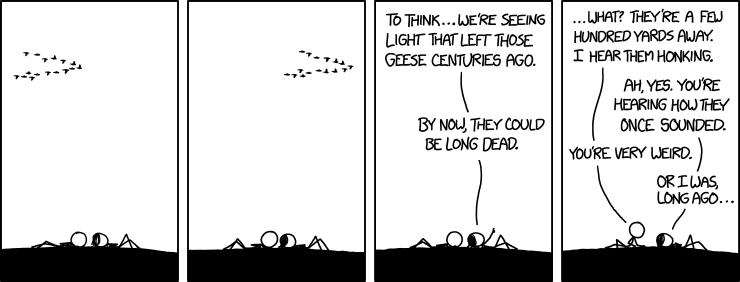
Geese

Anyway, that's a common misconception. Geese live for a long time; all the ones we can see will probably keep flying around for billions of years before they explode.
29 Oct 17:53

skt4ng: Jamie Bochert Photographed by Willy Vanderperre and...


skt4ng:

Jamie Bochert Photographed by Willy Vanderperre and styled by Charlotte Stockdale for GARAGE Magazine FALL/WINTER 2014

29 Oct 12:21

“The Goldilocks Principle Of Grading”

by Andrew Sullivan

Heidi Tworek proposes a fix for grade inflation in the US:

Why not simply have fewer grades and accept that the majority of students might receive the same mark? The United Kingdom’s system only has three classes of grades: first, second, and third (although second is split into 2:1 and 2:2). A first denotes work of outstanding quality. In 2012 to 2013, 19 percent of students graduated with a first. An overwhelming 76 percent of students received a second-class degree (51 percent earned a 2:1, 25 percent a 2:2). Only 5 percent were given a third.

The U.K. is not immune to disputes about grade inflation. But it’s telling that the most common grade by far is still a second, not a first. When employers all accept that a second-class degree already provides a stamp of quality, it removes the narcissism inherent in minor differences. There are also fewer incentives for professors to assign higher grades if students recognize that the majority of them will receive the same mark.


28 Oct 19:02

Plane, Clouds, Moon, Spots, Sun

Discover the cosmos! Each day a different image or photograph of our fascinating universe is featured, along with a brief explanation written by a professional astronomer.

2014 October 27
See Explanation.  Clicking on the picture will download
 the highest resolution version available.

Plane, Clouds, Moon, Spots, Sun
Image Credit & Copyright: Doyle Slifer

Explanation: What's that in front of the Sun? The closest object is an airplane, visible just below the Sun's center and caught purely by chance. Next out are numerous clouds in Earth's atmosphere, creating a series of darkened horizontal streaks. Farther out is Earth's Moon, seen as the large dark circular bite on the upper right. Just above the airplane and just below the Sun's surface are sunspots. The main sunspot group captured here, AR 2192, is one of the largest ever recorded and has been crackling and bursting with flares since it came around the edge of the Sun early last week. Taken last Thursday, this show of solar silhouettes was unfortunately short-lived. Within a few seconds the plane flew away. Within a few minutes the clouds drifted off. Within a few hours the partial solar eclipse of the Sun by the Moon was over. Only the sunspot group remains, but within a few more days even AR 2192 will disappear around the edge of the Sun. Fortunately, when it comes to the Sun, even unexpected alignments are surprisingly frequent.

Gallery: Last Thursday's Partial Solar Eclipse
Tomorrow's picture: mars, backwards < | Archive | Index | Search | Calendar | RSS | Education | About APOD | Discuss | >

Authors & editors: Robert Nemiroff (MTU) & Jerry Bonnell (UMCP)
NASA Official: Phillip Newman Specific rights apply.
NASA Web Privacy Policy and Important Notices
A service of: ASD at NASA / GSFC
& Michigan Tech. U.

Expanded from APOD by Feed Readabilitifier.
28 Oct 18:47

Why Women Belong On Mars

by Andrew Sullivan

dish_marspic

Last year, Kate Greene and five teammates simulated living conditions on Mars for a NASA-funded project (the experiment actually took place on a volcano in Hawaii). What she noticed while collecting and managing data:

Week in and week out, the three female crew members expended less than half the calories of the three male crew members. Less than half! We were all exercising roughly the same amount—at least 45 minutes a day for five consecutive days a week—but our metabolic furnaces were calibrated in radically different ways. During one week, the most metabolically active male burned an average of 3,450 calories per day, while the least metabolically active female expended 1,475 calories per day. It was rare for a woman on crew to burn 2,000 calories in a day and common for male crew members to exceed 3,000.

Female astronauts, Greene suggests, may simply be more cost-effective than male ones:

The more food a person needs to maintain her weight on a long space journey, the more food should launch with her. The more food launched, the heavier the payload. The heavier the payload, the more fuel required to blast it into orbit and beyond. The more fuel required, the heavier the rocket becomes, which it in turn requires more fuel to launch.

Rachel Nuwer adds:

Greene is not alone in this thinking. Alan Drysdale, a systems analyst in advanced life support and a former contractor with NASA, supports the idea of selecting for astronauts with smaller body sizes, including women. According to some figures Drysdale crunched, the smallest women in the NASA program require half the resources of the largest men, Greene reports. “There’s no reason to choose larger people for a flight crew when it’s brain power you want,” he told Greene.

(Computer-generated image of Mars at the boundary between darkness and daylight via NASA/JPL-Caltech)


28 Oct 18:32

More Madan

by Greg Ross
Adam Victor Brandizzi

haha, que singelo.

Further excerpts from the notebooks of Geoffrey Madan:

“Curious how much more room dirty clothes take up than clean ones, when you’re packing — quite out of proportion to the amount of dirt they contain.” — Claud Russell

Sworded/sordid: an absurd homonym.

“The cost of a thing is the amount of what I call life which has to be exchanged for it, immediately or in the long run.” — F.H. Bradley

Hua [French master at Eton] and Warre could neither pronounce the other’s name, but each made the same sound in the attempt.

The fascination, to a crowd, of anything going up the side of a building on a rope or lift: exceedingly primitive.

“A hamper is undoubtedly requisite under the present circumstances. It must contain several pots of superior jam.” — Lord Curzon, aged 9, writing from school

NO ROAD BEYOND THE CEMETERY — Opinion of the Slough Borough Council, placed on a notice-board near Bourne End Church

See Observations.

28 Oct 18:27

Romance Denied

by Greg Ross

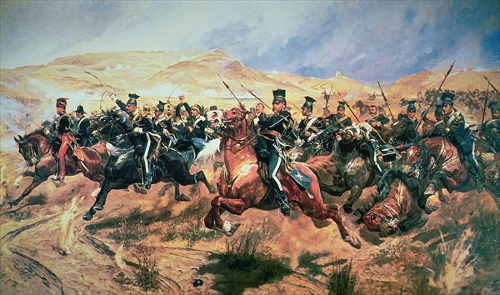
https://commons.wikimedia.org/wiki/File:Charge_of_the_Light_Brigade.jpg

James Bosworth survived the Charge of the Light Brigade in 1854 and went on to become a railway stationmaster in Southampton, England, where he died in an accident at age 70. His epitaph reads:

Though shot and shell flew around fast,
On Balaclava’s plain,
Unscathed he passed, to fall at last,
Run over by a train.

(Thanks, Doug.)

28 Oct 18:25

The big-eyed children: the extraordinary story of an epic art fraud

There’s a sweet, small suburban house in the vineyards of Napa, northern California. Inside, a family of devout Jehovah Witnesses bustles around, offering me a cheese plate. A Siamese cat weaves in and out of my legs. Everything is lovely. Sitting unobtrusively in the corner is 87-year-old Margaret Keane. “Would you like some macadamia nuts?” she asks. She hands me Jehovah Witness pamphlets too. “Jehovah looks after me every day,” she says. “I really feel it.”She is the last person you’d expect to be a participant in one of the great art frauds of the 20th century.

This story begins in Berlin in 1946. A young American named Walter Keane was in Europe to learn how to be a painter. And there he was, staring heartbroken at the big-eyed children fighting over scraps of food in the rubbish. As he would later write: “As if goaded by a kind of frantic despair, I sketched these dirty, ragged little victims of the war with their bruised, lacerated minds and bodies, their matted hair and runny noses. Here my life as a painter began in earnest.”

Fifteen years laterand Keane was an art sensation. The American suburb had just been invented and millions of people suddenly had a lot of wall space to fill. Some of them – those who wanted their homes to express upbeat whimsy – opted for paintings of dogs playing pool or dogs playing poker. But a great number of others, who wanted something more melancholic, went for Walter’s sad, big-eyed children. Some of the children held sad, big-eyed poodles in their arms. Others sat lonely in fields of flowers. They were dressed as harlequins and ballerinas. They just seemed so innocent and searching.

Walter himself was not a melancholic man. According to his biographers, Adam Parfrey and Cletus Nelson, he was a drinker and a lover – of women and of himself. This, for instance, is how he describes his first meeting with Margaret, the woman now sitting opposite me in Napa. It’s from his 1983 memoir, The World of Keane: “I love your paintings,” she told me. “You are the greatest artist I have ever seen. You are also the most handsome. The children in your paintings are so sad. It hurts my eyes to see them. Your perspective and the sadness you portray in the faces of the children make me want to touch them.”

“No,” I said. “Never touch any of my paintings.”

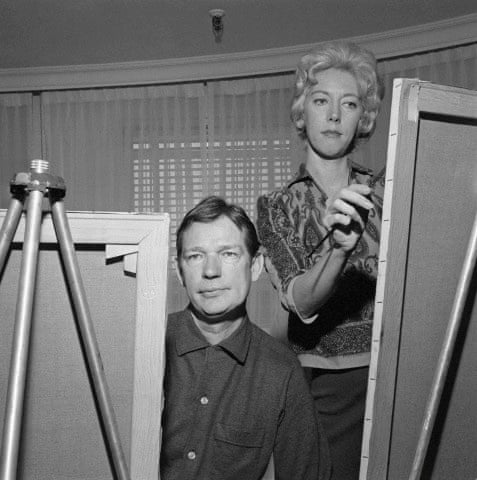
Walter and Margaret Keane work side by side in 1961. Walter and Margaret Keane work side by side in 1961. Photograph: Bettmann/Corbis

This conversation apparently took place at an outdoor art exhibition in San Francisco in 1955. Walter was still an unknown artist. He wouldn’t become a phenomenon for another few years. Later that night, his memoir continues, Margaret told him: “You are the greatest lover in the world.” They married.

Margaret’s memory of their first meeting is quite different.

The centre of Walter’s universe in the mid-1950s was a San Francisco beatnik club, The Hungry i. While comedians such as Lenny Bruce and Bill Cosby performed onstage, out at the front, Walter sold his big-eyed-children paintings. One night Margaret decided to go to the club with him.

“He had me sitting in a corner,” she tells me, “and he was over there, talking, selling paintings, when somebody walked over to me and said: ‘Do you paint too?’ And I suddenly thought – just horrible shock – ‘Is he taking credit for my paintings?’”

He was. He had been telling his patrons a giant lie. Margaret was the painter of the big eyes – every one of them. Walter might well have seen sad children in postwar Berlin, but he hadn’t painted them, because he couldn’t paint to save his life.

Margaret was furious. Back home she confronted him. She told him to stop. But something unexpected happened instead. During the decade that followed, Margaret would nod in respectful admiration as Walter told interviewers that he was the best painter of eyes since El Greco. She said nothing. Why did she go along with it? What was happening inside the Keane marriage?

Margaret takes me back to the beginning. It’s true that he charmed her at that art exhibition in 1955, she says. “He was just oozing with charm. He could charm anyone.” But the rest of the conversation didn’t happen. How could it have?

Their first two years were happy, but all that changed the night of the Hungry i. “Back home he tried to explain it away,” she says. “He said: ‘We need the money. People are more likely to buy a painting if they think they’re talking to the artist. People don’t want to think I can’t paint and need to have my wife paint. People already think I painted the big eyes and if I suddenly say it was you, it’ll be confusing and people will start suing us.’ He was telling me all these horrible problems.”

Walter offered Margaret a solution: “Teach me how to paint the big-eyed children.” So she tried. “And when he couldn’t do it, it was my fault. ‘You’re not teaching me right. I could do it if you had more patience.’ I was really trying, but it was just impossible.”

Margaret and Walter pose with a selection of paintings in 1965. Margaret and Walter pose with a selection of paintings in 1965. Photograph: Bill Ray/The LIFE Picture Collection/Gett

Margaret felt trapped. She wanted to leave, but she didn’t know how. How would she support herself and her daughter? “So finally I went along with it,” she says. “And it was just tearing me apart.”

By the early 1960s, Keane prints and postcards were selling in the millions. You couldn’t walk into a Woolworths without seeing racks of them. Luminaries including Natalie Wood, Joan Crawford, Dean Martin, Jerry Lewis and Kim Novak were buying the originals.

“Did you see any of the money?” I ask Margaret.

“No,” she says. “I just painted. But we moved to a nice house. There was a swimming pool. Gated. Servants. So I didn’t need to do anything except paint.” She smiles, ruefully. Outside in the sun, Walter was living the high life. “There was always three or four people swimming nude in the pool,” he wrote in his memoir. “Everybody was screwing everybody. Sometimes I’d be going to bed and there’d be three girls in the bed.” The Beach Boys would visit, and Maurice Chevalier, and Howard Keel. But Margaret rarely saw them, because she was painting 16 hours a day.

“Did the servants know what was going on?”

“No, the door was always locked,” she says. “The curtains closed.”

“You spent all those years with the curtains closed?”

“When he wasn’t home he’d usually call every hour to make sure I hadn’t gone out,” she says. “I was in jail.”

“Did you know about the affairs?”

She shrugged. “I didn’t care what he did by then.”

“It must have been lonely.”

“Yes, because he wouldn’t allow me to have any friends. If I tried to slip away from him, he’d follow me. We had a chihuahua and because I loved that little dog so much, he kicked it, and so finally I had to give the dog away. He was very jealous and domineering. And all along he said: ‘If you ever tell anyone I’m going to have you knocked off.’ I knew he knew a lot of mafia people. He really scared me. He tried to hit me once. But I said, ‘Where I come from men don’t hit women. If you ever do that again I’ll leave.’” She pauses. “But I let him do everything else, which was even worse probably.”

“Would he come home from his partying and demand you show him what you’d painted?” I ask.

“He was always pressuring me to do more,” she says. “‘Do one with a clown costume.’ Or: ‘Do two children on a rocking horse.’ One day he had this idea that I’d do this huge painting, his masterwork, to hang in the United Nations or somewhere. I had a month to do that.”

The “masterwork” was called Tomorrow Forever. It depicted a hundred sad-looking, big-eyed children of all creeds standing in a line that stretches to the horizon. The organisers of the 1964 World’s Fair hung it in their Pavilion of Education. Walter felt deeply proud of the achievement. He wrote in his memoir that his dead grandmother told him in a vision that “Michelangelo has put your name up for nomination as a member of our inner circle saying that your masterwork Tomorrow Forever will live in the hearts and minds of men as has his work on the Sistine chapel.”

The art critic John Canaday reviewed Tomorrow Forever for the New York Times: “This tasteless hack work contains about 100 children and hence it is about 100 times as bad as the average Keane.” Stung by the review, the World’s Fair took down the painting.

“Walter was furious,” Margaret says. “I felt hurt that they didn’t want it and were saying nasty things. When people said it was just sentimental stuff it really hurt my feelings. Some people couldn’t stand to even look at them. I don’t know why - just a violent reaction. But so many people really love them. Little children love them. Even babies. So eventually I thought: ‘I don’t care. I’m just going to paint what I want to paint.’”

If you’d asked Margaret back then about her inspiration – which you never would have, of course – she would have shrugged and said she didn’t know. The paintings just flowed out of her. But now, she says, she thinks she understands: “Those sad children were really my own deep feelings that I couldn’t express in any other way. Their eyes were searching. Asking why. Why is there so much sadness? Why do we have to get sick and die? Why do people shoot each other?”

“Why is my husband so crazy?” I suggest. “Why did I get into this mess?” Margaret nods.

After 10 years of marriage, eight of them horrific, they divorced. Margaret promised Walter that she’d keep on secretly painting for him. And she did for a while. But after she’d delivered maybe 20 or 30 big eyes to him, she suddenly thought: “No more lies. From now on, I will only ever tell the truth.”

Which is why, in October 1970, Margaret told a reporter from the UPI everything. “He wanted to learn to paint,” she revealed, “and I tried to teach him to paint when he was home, which wasn’t often. He couldn’t even learn to paint.”

And so on. Walter went on the offensive, swearing that the big eyes were his and calling Margaret a “boozing, sex-starved psychopath” who he once discovered having sex with several parking-lot attendants.

“He was really nuts,” Margaret says. “I couldn’t believe he had so much hate for me.”

Margaret became a Jehovah’s Witness. She moved to Hawaii and started painting big-eyed children swimming in azure seas with tropical fish. In these Hawaii paintings you can see small, cautious smiles begin to form on the faces of the children. Walter’s life wasn’t so happy. He moved to a fisherman’s shack in La Jolla, California, and began to drink from morning until night. He told the few reporters still interested in him that Margaret was in league with the Jehovah’s Witnesses to defraud him. One reporter, from USA Today, believed every word, and they ran a story on Walter’s plight: “Thinking he was dead [Margaret] claimed to have done some of the Keane paintings. The claim, vehemently denied by a very much alive Keane, is in litigation.”

Margaret sued Walter. The judge challenged them both to paint a child with big eyes, right there in court, in front of everyone. Margaret painted hers in 53 minutes. Walter said he couldn’t because he had a sore shoulder.

“And there it is,” she tells me. She points to a framed portrait on the wall of a little girl with absolutely huge eyes, peering out nervously from behind a fence. “I painted it in Honolulu federal court. It has the exhibit number on the back.”

In fact the walls of Margaret’s home are filled with big-eye paintings – children, poodles, kittens. There’s barely an inch of empty wall space.

“That painting is symbolic of her triumph over the lies,” Margaret’s son-in-law tells me as he walks past us towards the kitchen.

Amy Adam plays Margaret Keane in Tim Burton's film Big Eyes. Amy Adam plays Margaret Keane in Tim Burton’s film Big Eyes. Photograph: The Weinstein Company/Allstar/Allstar/The Weinstein Company

Margaret won the court case, of course. She was awarded $4m, but she never saw a penny of it because Walter had drunk his fortune away. A court psychologist diagnosed him with a rare mental condition called delusional disorder. I ask Margaret if she knows anything about delusional disorder. She shakes her head and says she can’t even remember Walter being diagnosed with it.

“It’s when a person who is otherwise completely normal has a particular delusion they’re absolutely convinced of,” I say. “Quite often it’s a jealous husband convinced his wife is cheating on him. Sometimes the person is convinced that some impostor is taking credit for their genius.”

“I didn’t know that,” Margaret says.

“If you have the disorder it means you truly believe it,” I say.

Margaret thinks. “For a long time I felt very guilty about it,” she says.

“Why guilty?” I ask.

“If I hadn’t allowed him to take credit for the paintings, he wouldn’t have got as sick as he got.”

Walter died in 2000. He gave up drinking towards the end, but you get the sense that he missed those days, writing in his memoir that sobriety was his “new awakening, away from the drinking world of exciting sexy beautiful women, parties and art buyers”. By the 1970s, the big eyes had fallen from favour. Woody Allen mocked them in Sleeper, imagining a ridiculous future where they were revered.

But now, suddenly, there is a kind of renaissance. A Tim Burton biopic, Big Eyes, is about to be released, starring Amy Adams and Christoph Waltz. Margaret has a cameo: “I’m a little old lady sitting on a park bench.”

“Was the film distressing to watch?” I ask her.

“It was really traumatic,” she says. “I really think I was in shock for a couple of days. Christoph Waltz – he looks like Walter, sounds like him, acts like him. And to see Amy going through what I went through … It’s very accurate. Then it started to dawn on me how fantastic the movie is.”

Margaret smiles, looking thrilled, and I realise that sometimes a wrong is so great it needs something as dramatic as a major biopic in which you’re the hero to heal the wounds.

Big Eyes will be released in the UK on 26 December.

Bookmarked at brandizzi Delicious' sharing tag and expanded by Delicious sharing tag expander.
28 Oct 11:21

Facebook apagando perfis de índios por causa de “nomes inventados”

by Carlos Cardoso

Screenshot - 17_10_2014 , 18_10_59

Há consenso entre historiadores: sempre que uma cultura tecnologicamente mais avançada faz contato com uma que esteja mais atrasada, ela tende a tomar no roscofe. Foi assim com os incas, astecas e os espanhóis, com nossos índios e portugueses, com os povos nativos norte-americanos e os ingleses, e com Brasil × Alemanha em 08/7/2014.

No caso dos índios americanos por mais malvados que fossem (dica: não, não eram) hoje basicamente todo mundo que não é um racista total reconhece que foram tungados. O Governo dos EUA repetidas vezes ignorou tratados de paz quando descobriam ouro em terras indígenas, e era comum e oficial oferecer recompensa por escalpos. Nesse tempo todo a única vingança dos índios tem sido mandar fuzileiros pras áreas com mais soldados japoneses, tirar dinheiro de brancos idiotas nos cassinos e não avisar aos compradores do terreno que ali havia um cemitério indígena. 

Não é de hoje que de um jeito ou de outro os índios são sacaneados no Grande Irmão do Norte. Sabe aquele comercial clássico dos Anos 70, com um índio chorando diante da poluição? É lindo, tocante, mas o tal índio se chamava Cody Olhos-De-Ferro, era um ator 100% descendente de italianos.

Agora, mais uma pequena humilhação pra esses povos outrora orgulhosos, hoje vítimas do alcoolismo: em pleno Columbus Day, um dia em que os EUA comemoram seu descobridor e os índios são forçados e ouvir calados gente celebrando um sujeito que se dividia entre estuprar meninas índias e cortar mãos de nativos que não concordavam com a primeira atividade.

Vários índios descobriram que suas contas no Facebook foram sumariamente apagadas.

50daf259b937955f33000000_8_6-1356531986

Dois deles são Shane Creepingbear e sua esposa, Jacqui. Funcionário de uma universidade local, Shane é diretor-assistente de Admissão e Recrutamento Multicultural, o que é um nome bonito pra bela causa de de facilitar o acesso à educação para minorias.

Aparentemente há gente que não gosta disso, e perseguem Shane. O problema é que o Facebook, como todo serviço online, deixa a ponta do atendimento na mão dos estagiários Ipsilon semi-aleijões, incapazes de pensamento próprio. Entre uma dose ou outra de Soma, eles respondem aos formulários em suas telas de forma totalmente mecânica.

Uma denúncia de que Shane Creepinbear não era um nome real fez com que um desses estagiários olhasse, seus 3 neurônios ativos decidiram que o nome era estranho e pronto, DELETE, adeus conta de Shane e da esposa.

Por sorte as interwebs fizeram um escarcéu, e alguns dias depois as contas deles voltaram, mas nada garante que outra bobagem dessas aconteça. As ferramentas de denúncia de abuso estão sendo sumariamente abusadas, seja por puro racismo seja por interesse político.

Uma pena que enquanto tantos Snowdens, EFFs e Assanges gritem alertando contra o Big Brother ninguém peceba que a maior ameaça aos direitos individuais na internet são os próprios internautas. O lado bom é que vendo a hagada que fez o Facebook voltou atrás e Shane Creepinbear recebeu sua conta de volta.

Hoje o próprio Governo reconhece a importância da comunidade indígena e seus serviços prestados durante a Segunda Guerra Mundial ao ceder suas línguas nativas como criptografia invulnerável aos esforços dos especialistas japoneses. Os sobreviventes e as famílias dos já falecidos foram agraciados em 2001 com a Medalha de Honra do Congresso, a maior condecoração dos EUA, entregue pessoalmente, com agradecimentos, pelo Presidente dos EUA.

1abushcodetalkers_t640

É pedir demais que o Facebook adestre seus estagiários pra pensar duas vezes antes de apagar um perfil?

Fonte: CC.

The post Facebook apagando perfis de índios por causa de “nomes inventados” appeared first on Meio Bit.


28 Oct 11:15

You’re powered by quantum mechanics. No, really…

Adam Victor Brandizzi

Sério isso?

A European robin in flight According to quantum biology, the European robin has a 'sixth sense' in the form of a protein in its eye sensitive to the orientation of the Earth's magnetic field, allowing it to 'see' which way to migrate. Photograph: Helmut Heintges/ Helmut Heintges/Corbis

Every year, around about this time, thousands of European robins escape the oncoming harsh Scandinavian winter and head south to the warmer Mediterranean coasts. How they find their way unerringly on this 2,000-mile journey is one of the true wonders of the natural world. For unlike many other species of migratory birds, marine animals and even insects, they do not rely on landmarks, ocean currents, the position of the sun or a built-in star map. Instead, they are among a select group of animals that use a remarkable navigation sense – remarkable for two reasons. The first is that they are able to detect tiny variations in the direction of the Earth’s magnetic field – astonishing in itself, given that this magnetic field is 100 times weaker than even that of a measly fridge magnet. The second is that robins seem to be able to “see” the Earth’s magnetic field via a process that even Albert Einstein referred to as “spooky”. The birds’ in-built compass appears to make use of one of the strangest features of quantum mechanics.

Over the past few years, the European robin, and its quantum “sixth sense”, has emerged as the pin-up for a new field of research, one that brings together the wonderfully complex and messy living world and the counterintuitive, ethereal but strangely orderly world of atoms and elementary particles in a collision of disciplines that is as astonishing and unexpected as it is exciting. Welcome to the new science of quantum biology.

Most people have probably heard of quantum mechanics, even if they don’t really know what it is about. Certainly, the idea that it is a baffling and difficult scientific theory understood by just a tiny minority of smart physicists and chemists has become part of popular culture. Quantum mechanics describes a reality on the tiniest scales that is, famously, very weird indeed; a world in which particles can exist in two or more places at once, spread themselves out like ghostly waves, tunnel through impenetrable barriers and even possess instantaneous connections that stretch across vast distances.

But despite this bizarre description of the basic building blocks of the universe, quantum mechanics has been part of all our lives for a century. Its mathematical formulation was completed in the mid-1920s and has given us a remarkably complete account of the world of atoms and their even smaller constituents, the fundamental particles that make up our physical reality. For example, the ability of quantum mechanics to describe the way that electrons arrange themselves within atoms underpins the whole of chemistry, material science and electronics; and is at the very heart of most of the technological advances of the past half-century. Without the success of the equations of quantum mechanics in describing how electrons move through materials such as semiconductors we would not have developed the silicon transistor and, later, the microchip and the modern computer.

However, if quantum mechanics can so beautifully and accurately describe the behaviour of atoms with all their accompanying weirdness, then why aren’t all the objects we see around us, including us – which are after all only made up of these atoms – also able to be in two place at once, pass through impenetrable barriers or communicate instantaneously across space? One obvious difference is that the quantum rules apply to single particles or systems consisting of just a handful of atoms, whereas much larger objects consist of trillions of atoms bound together in mindboggling variety and complexity. Somehow, in ways we are only now beginning to understand, most of the quantum weirdness washes away ever more quickly the bigger the system is, until we end up with the everyday objects that obey the familiar rules of what physicists call the “classical world”. In fact, when we want to detect the delicate quantum effects in everyday-size objects we have to go to extraordinary lengths to do so – freezing them to within a whisker of absolute zero and performing experiments in near-perfect vacuums.

Quantum effects were certainly not expected to play any role inside the warm, wet and messy world of living cells, so most biologists have thus far ignored quantum mechanics completely, preferring their traditional ball-and-stick models of the molecular structures of life. Meanwhile, physicists have been reluctant to venture into the messy and complex world of the living cell; why should they when they can test their theories far more cleanly in the controlled environment of the lab where they at least feel they have a chance of understanding what is going on?

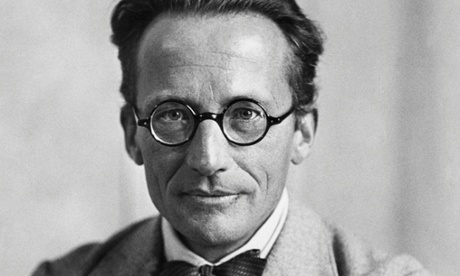
Erwin Schrödinger, whose book What is Life? suggested that the macroscopic order of life was based on order at its quantum level. Erwin Schrödinger, whose book What is Life? suggested that the macroscopic order of life was based on order at its quantum level. Photograph: Bettmann/CORBIS

Yet, 70 years ago, the Austrian Nobel prize-winning physicist and quantum pioneer, Erwin Schrödinger, suggested in his famous book, What is Life?, that, deep down, some aspects of biology must be based on the rules and orderly world of quantum mechanics. His book inspired a generation of scientists, including the discoverers of the double-helix structure of DNA, Francis Crick and James Watson. Schrödinger proposed that there was something unique about life that distinguishes it from the rest of the non-living world. He suggested that, unlike inanimate matter, living organisms can somehow reach down to the quantum domain and utilise its strange properties in order to operate the extraordinary machinery within living cells.

Schrödinger’s argument was based on the paradoxical fact that the laws of classical physics, such as those of Newtonian mechanics and thermodynamics, are ultimately based on disorder. Consider a balloon. It is filled with trillions of molecules of air all moving entirely randomly, bumping into one another and the inside wall of the balloon. Each molecule is governed by orderly quantum laws, but when you add up the random motions of all the molecules and average them out, their individual quantum behaviour washes out and you are left with the gas laws that predict, for example, that the balloon will expand by a precise amount when heated. This is because heat energy makes the air molecules move a little bit faster, so that they bump into the walls of the balloon with a bit more force, pushing the walls outward a little bit further. Schrödinger called this kind of law “order from disorder” to reflect the fact that this apparent macroscopic regularity depends on random motion at the level of individual particles.

But what about life? Schrödinger pointed out that many of life’s properties, such as heredity, depend of molecules made of comparatively few particles – certainly too few to benefit from the order-from-disorder rules of thermodynamics. But life was clearly orderly. Where did this orderliness come from? Schrödinger suggested that life was based on a novel physical principle whereby its macroscopic order is a reflection of quantum-level order, rather than the molecular disorder that characterises the inanimate world. He called this new principle “order from order”. But was he right?

Up until a decade or so ago, most biologists would have said no. But as 21st-century biology probes the dynamics of ever-smaller systems – even individual atoms and molecules inside living cells – the signs of quantum mechanical behaviour in the building blocks of life are becoming increasingly apparent. Recent research indicates that some of life’s most fundamental processes do indeed depend on weirdness welling up from the quantum undercurrent of reality. Here are a few of the most exciting examples.

Enzymes are the workhorses of life. They speed up chemical reactions so that processes that would otherwise take thousands of years proceed in seconds inside living cells. Life would be impossible without them. But how they accelerate chemical reactions by such enormous factors, often more than a trillion-fold, has been an enigma. Experiments over the past few decades, however, have shown that enzymes make use of a remarkable trick called quantum tunnelling to accelerate biochemical reactions. Essentially, the enzyme encourages electrons and protons to vanish from one position in a biomolecule and instantly rematerialise in another, without passing through the gap in between – a kind of quantum teleportation.

And before you throw your hands up in incredulity, it should be stressed that quantum tunnelling is a very familiar process in the subatomic world and is responsible for such processes as radioactive decay of atoms and even the reason the sun shines (by turning hydrogen into helium through the process of nuclear fusion). Enzymes have made every single biomolecule in your cells and every cell of every living creature on the planet, so they are essential ingredients of life. And they dip into the quantum world to help keep us alive.

Another vital process in biology is of course photosynthesis. Indeed, many would argue that it is the most important biochemical reaction on the planet, responsible for turning light, air, water and a few minerals into grass, trees, grain, apples, forests and, ultimately, the rest of us who eat either the plants or the plant-eaters.

The initiating event is the capture of light energy by a chlorophyll molecule and its conversion into chemical energy that is harnessed to fix carbon dioxide and turn it into plant matter. The process whereby this light energy is transported through the cell has long been a puzzle because it can be so efficient – close to 100% and higher than any artificial energy transport process.

Sunlight shines through chestnut tree leaves. Quantum biology can explain why photosynthesis in plants is so efficient. Sunlight shines through chestnut tree leaves. Quantum biology can explain why photosynthesis in plants is so efficient. Photograph: Getty Images/Visuals Unlimited

The first step in photosynthesis is the capture of a tiny packet of energy from sunlight that then has to hop through a forest of chlorophyll molecules to makes its way to a structure called the reaction centre where its energy is stored. The problem is understanding how the packet of energy appears to so unerringly find the quickest route through the forest. An ingenious experiment, first carried out in 2007 in Berkley, California, probed what was going on by firing short bursts of laser light at photosynthetic complexes. The research revealed that the energy packet was not hopping haphazardly about, but performing a neat quantum trick. Instead of behaving like a localised particle travelling along a single route, it behaves quantum mechanically, like a spread-out wave, and samples all possible routes at once to find the quickest way.

A third example of quantum trickery in biology – the one we introduced in our opening paragraph – is the mechanism by which birds and other animals make use of the Earth’s magnetic field for navigation. Studies of the European robin suggest that it has an internal chemical compass that utilises an astonishing quantum concept called entanglement, which Einstein dismissed as “spooky action at a distance”. This phenomenon describes how two separated particles can remain instantaneously connected via a weird quantum link. The current best guess is that this takes place inside a protein in the bird’s eye, where quantum entanglement makes a pair of electrons highly sensitive to the angle of orientation of the Earth’s magnetic field, allowing the bird to “see” which way it needs to fly.

All these quantum effects have come as a big surprise to most scientists who believed that the quantum laws only applied in the microscopic world. All delicate quantum behaviour was thought to be washed away very quickly in bigger objects, such as living cells, containing the turbulent motion of trillions of randomly moving particles. So how does life manage its quantum trickery? Recent research suggests that rather than avoiding molecular storms, life embraces them, rather like the captain of a ship who harnesses turbulent gusts and squalls to maintain his ship upright and on course.

Just as Schrödinger predicted, life seems to be balanced on the boundary between the sensible everyday world of the large and the weird and wonderful quantum world, a discovery that is opening up an exciting new field of 21st-century science.

Life on the Edge: The Coming of Age of Quantum Biology by Jim Al-Khalili and Johnjoe McFadden will be published by Bantam Press on 6 November. Click here to buy it for £15

Bookmarked at brandizzi Delicious' sharing tag and expanded by Delicious sharing tag expander.
28 Oct 01:33

thisiswander: Chelsea MunroNew ZealandCanon EOS 650D What keeps...


thisiswander:

Chelsea Munro
New Zealand
Canon EOS 650D

What keeps you motivated to capture such beautiful moments of life and travel to the places you have been, as evident in your portfolio?

My biggest inspirations/motivations are the nature Im surrounded by and the people I meet through my travels, I’m lucky enough to live in New Zealand which has a huge variety of landscapes and you can find beautiful surf beaches or rugged mountain ranges spread throughout the North and South Islands of New Zealand. The moment I really got into photography was a trip to Haast in the South Island and I took a helicopter ride over the back country into the mountains and to be able to capture those waterfalls, rivers and valleys and share them with people and show them the real New Zealand that not many people have seen was to me a privilege and the photos from there are still some of my favourite I’ve taken.

Although I’ve always wanted to travel the world, and have recently travelled to Vietnam for 3 weeks which was such a beautiful country with the warmest people I’ve met, and was an amazing place to take portraits and explore a new place with a new culture. As I get older I hope to travel more and continue to document my adventures through my photos.

Tumblr: @chelseamunro
Instagram: @chels_munro
Facebook: @ChelseaMunroPhotography

SUBMIT TO WANDER

28 Oct 01:29

The Worst Act of Terrorism in San Francisco History

A victim of San Francisco’s Preparedness Day Parade bombing; Online Archive of California

On the afternoon of July 22, 1916, thousands of San Franciscans gathered along Market Street for what was advertised as the “grandest parade of the century.”

Nearly 100,000 people from all across the western states came to see the impressive procession of 51,329 marchers, 2,134 participating organizations, and 52 bands. Giddy, balloon-clutching children jumped with joy, parents bantered about the war raging overseas, and vendors slithered through the masses, peddling commemorative pins for a nickel. As fog horns bellowed from the bay, cheers and whistles echoed down Market Street. On this Saturday afternoon, spirits were high.

Then, a bomb exploded.

Hoards of concerned citizens scrambled for safety, children shrieked -- not with joy, but terror -- and the cavalcade came to an unceremonious halt. By the time the chaos had subsided, 10 lay dead. More than 40 others were left gravely wounded, including one young girl who “had her legs blown clear off.”

The incident would prove to be the deadliest act of terrorism in San Francisco history. Unbeknownst to the city’s residents, it would also result in a decades-long miscarriage of justice by police, prosecutors, and political figureheads.

This is the story of the Preparedness Day Bombing -- a cautionary tale of not only terrorism, but the complete suspension of civil rights.

The Preparedness Movement

A U.S. Preparedness ad, 1916

Shortly after the outbreak of World War I, the United States made an effort to bolster its army. In 1915, ex-President Theodore Roosevelt launched the “Preparedness Movement,” a campaign that called for the “need to immediately build up strong naval and land forces for defensive purposes.” Backed by the nation’s most elite bankers, industrialists, and lawyers, it quickly gained steam.

On June 3, 1916 -- a mere seven weeks prior to the San Francisco bombing -- President Woodrow Wilson enacted the National Defense Act of 1916, authorizing the expansion of the Army by 175,000 men, and the National Guard by 450,000. Proponents of the act championed “economic strength and military muscle” over the myriad of national concerns that needed to be addressed; it soon became patently clear that the nation was bracing itself to enter the war.

To support these efforts and mobilize citizens, cities across the United States staged grand parades. In San Francisco, most people were anti-preparedness and isolationists (against foreign involvement); nonetheless, the city decided to participate.

In the midst of this, San Francisco also faced intense unrest. A small but potent minority of labor leaders and organizations strongly opposed the emerging war effort, and were none too pleased with the news of the parade. Throughout June of 1916, they disseminated eerily foreboding pamphlets to potential parade-goers, warning of their intentions to attack:

"We are going to use a little direct action on the 22nd [at the parade] to show that militarism can't be forced on us and our children without a violent protest." 

To combat these threats, the city’s Chamber of Commerce organized a special Law and Order Committee -- but in a time where terrorism wasn’t taken too seriously, plans for the parade moved forward.

Tragedy Strikes

Morale was high and patriotism abundant as the day of the parade approached. 

A week before the event, the San Francisco Chronicle published a full-page picture of the “Goddess of Preparedness,” including a set of unintentionally foreboding instructions; in them, it was declared that the festivities would commence with the blasting of a “bomb” (likely, just a firecracker):

“San Francisco will shout a full-throated salute during the preparedness parade when the second bomb is fired, which will be the signal for the bands to play ‘Star Spangled Banner.’ When this signal is given, every whistle in the city will open its valve and shriek patriotically.”
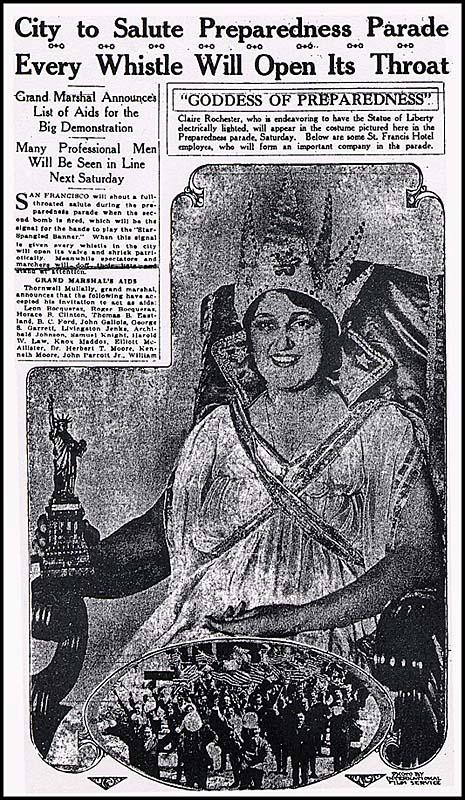
San Francisco Chronicle, June 20, 1916 (two days before the bombing); LHM

According to plan, ceremonies commenced just after the “bomb” sound, at 1:40 PM on Saturday, July 22, 1916. Set to last 3.5 hours, it was, by all accounts, the largest parade the city had ever organized -- and one of the largest in United States history. 

But at 2:06 PM -- less than 30 minutes into the parade -- an unknown assailant left a suitcase packed with timed explosives and steel slugs on the sidewalk at the intersection of Steuart and Market streets, just minutes from the city’s famous Ferry Building. 

Moments later, an actual bomb exploded.

Eight people close to the explosion were killed instantly; two more died of grave shrapnel wounds en route to the hospital. The sidewalk was “littered with bodies,” according to one recount -- some 40 lay wounded in various states. And as the masses panicked and cleared Market Street, investigators frantically embarked on a hunt for the perpetrator.
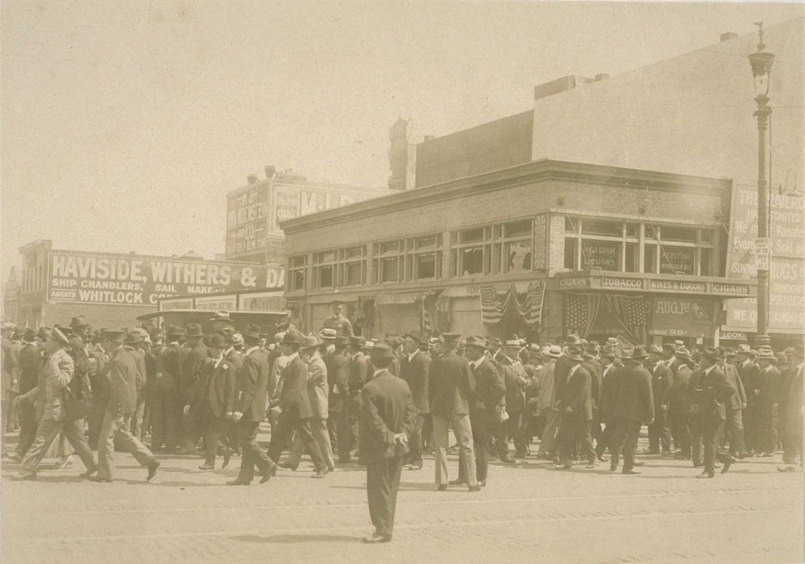
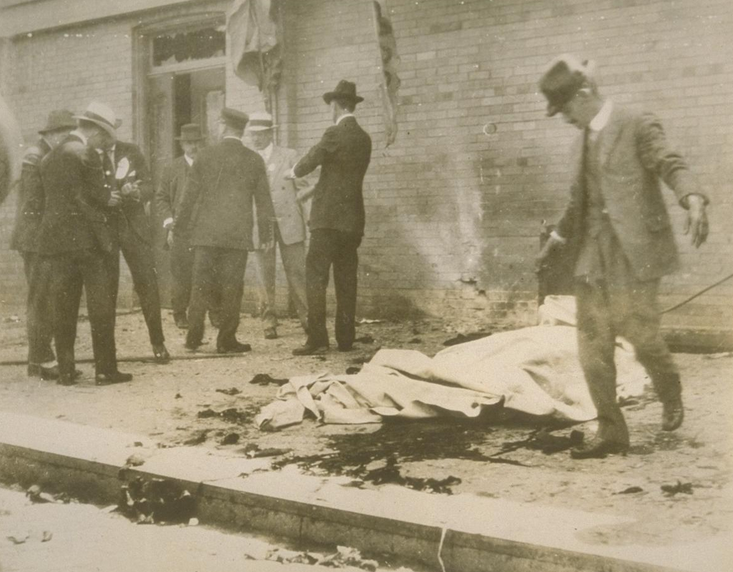
Crowds of San Franciscans gather around the site of the explosion
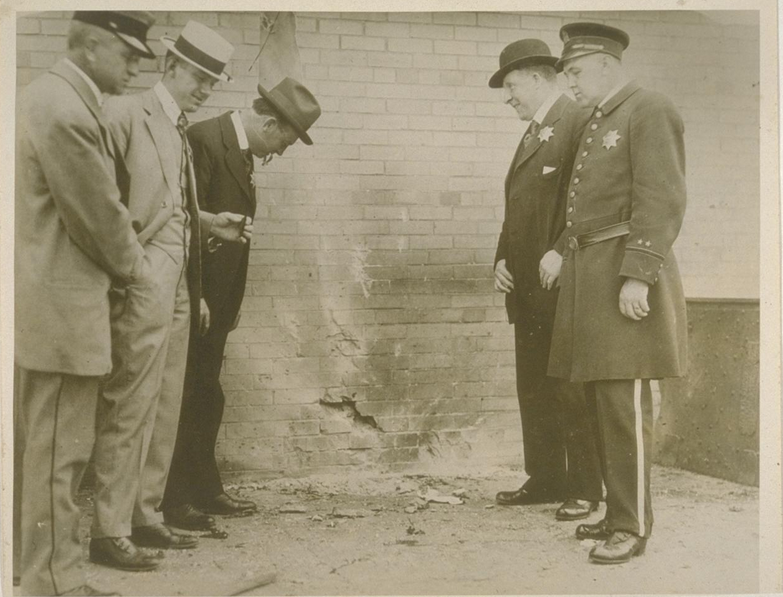
Investigators survey the scene of the bomb

Over the next four days, authorities honed their search to known San Francisco labor radicals -- those who were anti-war and championed the Marxist belief that violence may be necessary to invoke social change.

The media joined in, encouraging citizens to be on the hunt for such “socialists.” Hearst-Pathe News, which had a stronghold on San Francisco’s media at the time, produced a brief, propaganda-esque film, insinuating that anarchists or communists were to blame. “Wake up San Francisco,” it beckoned, “and save our city from further disgrace!” Interposed with images of Labor party meetings, the words “anarchy,” “sedition,” and “lawlessness” flashed across the screen:

Almost instantly, two radicals -- Thomas J. Mooney and his assistant, Warren Billings -- were targeted for questioning. Both had long been tracked by the police for their involvement in various “socialist shenanigans:” Mooney for “conspiring to dynamite power lines” at a 1913 strike, and Billings for bringing dynamite on a train. Both had previously been cleared of all charges for lack of evidence, but investigators were constantly looking for a way to imprison them. They were, as described by one publication, “San Francisco’s most hunted radicals.”

Mooney was especially hated by police. The son of Irish immigrants, had spent a few years as an industrial worker before traveling to Europe and becoming an self-proclaimed socialist and labor leader. He eventually returned, settled in San Francisco, and published The Revolt, a widely-disseminated socialist paper; soon he’d become known for his radical tendencies. By the early 1900s, The Chicago Tribune had described him as “the foremost labor radical in San Francisco -- an energetic organizer, an anarchist, a strike leader...and a militant pacifist.”

On what would turn out to be very little evidence, the city’s District Attorney, Charles Fickert, pegged them as the culprits. 

On July 26 and 27, he had Mooney and Billings arrested, along with Mooney’s wife and two fellow trade-unionists -- Israel Weinberg (a taxi driver by trade), and  Edward Nolan, then-President of the Machinists’ Lodge. 

San Francisco’s Sacco and Vanzetti

From the start, the process was horribly misconducted.

All five were arrested without warrants. Offered no explanation for their detainment, the suspects’ homes were then raided by Swanson and his task force. When a trace amount of powder was discovered in Nolan’s basement, it was instantly identified, with no ballistic testing, as saltpeter used to craft the parade bomb (later, it would be revealed that it was merely bath salt). The suspects were placed in solitary confinement, where they were denied all access to counsel for nearly a week.

Thomas Mooney, the radical labor leader, was treated to an especially hostile examination. Over the course of six days, he was interrogated relentlessly -- despite asking for his attorney some forty-one times.

Meanwhile, a lynch mob mentality permeated San Francisco. For a long while, shop owners has resented the labor unionizers, who they claimed interfered with their ability to maintain “open shop,” or freedom from unions. When they caught news that Mooney -- their worst enemy -- was a suspect, they were more than eager to go along for the ride.

Mooney and his wife, Billings, Weinberg, and Nolan were corralled to a swift sentencing on August 1, 1916. They were not permitted to “clean themselves up,” and arrived, haggard, unshaven, and foul-smelling. 

Still left without the right to counsel, they refused to testify on their own behalf.
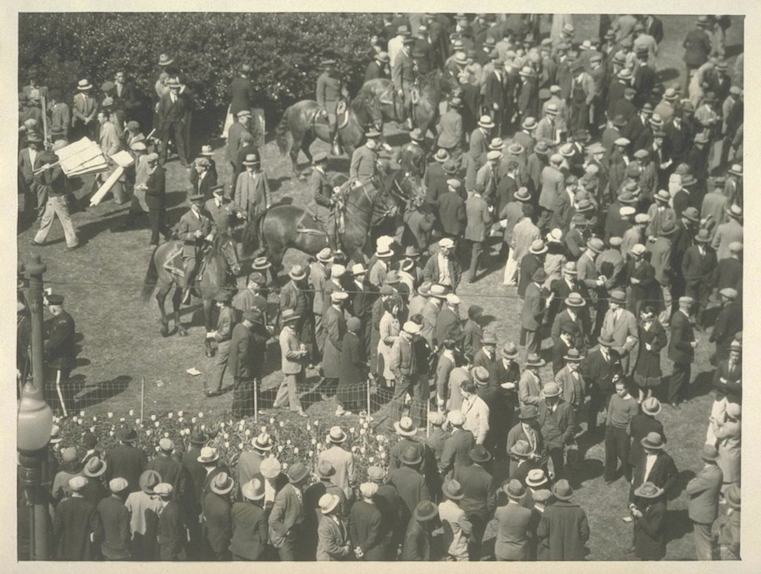
Crowds gather for Mooney's pre-trial

Though hundreds of people had been at the intersection of Steuart and Market streets when the bomb exploded, the only witness the prosecutor could conjure to speak before the Grand Jury was a “ne’er-do-well waiter and drug addict” named John McDonald, whose recollections of the event were so garbled and inaccurate that he was called off the stand after only a few questions. Somehow, this was enough to convince the Grand Jury of the suspects’ involvement: each of the five were indicted with ten counts of murder.

Soon afterward, the cases against Mooney’s wife, Weinberg, and Nolan were dismissed: it became clear that the prosecutors were solely interested in taking down Mooney and Billings.

District Attorney Fickert, who led prosecution, soon formulated a theory of the bombing’s events: Mooney and Billings had met at Mooney’s residence, 721 Market Street (nearly a mile from the scene of the crime), and initially planned to drop the bomb from the building’s roof, but had changed their minds at the last minute; they then drove to down Market Street, and planted the bomb on the sidewalk. Any testimonies from witnesses that did not fit into this unfounded sequence of events were flat out ignored or dismissed by prosecutors.

Finally provided city-appointed defense attorneys, the two proceeded to separate trials.

Billings’ trial came first. In September 1916, following a very brief deliberation by the jury, he was found guilty of murder in the second degree and sentenced to life in prison. A motion for retrial was curtly dismissed, and with little publicity, he was sent to Folsom -- the state’s most notorious prison.

Mooney’s initial trial, over the course of January and February of 1916, was a much grander affair. During the trial, many witnesses were called -- all of whom were disreputable characters: a “tramp waiter,” a felon, a prostitute, and a cattle rancher from Oregon named Frank C. Oxman. Oxman, the “star witness,” claimed to have seen Mooney at the scene of the crime; quickly, it was declared that the entire trial “hinged on his statements.” 

Though all of these testimonies were full of contradictions and didn’t seem to line up with one another, District Attorney Fickert championed them as the truth. 

Just before the trial, the prosecutors had obtained a photograph supposedly showing Mooney on his roof at the time of the crime; fearing it would discredit their argument, they attempted to hide it. When the defense team learned of the photo’s existence, the prosecutors did everything in their power to deny access. A case study from the American Civil Liberties Union elaborates:

“When the defense demanded the photo, the prosecution claimed it was unable to produce it and furnished blurred enlargements. A large jeweler’s street clock appeared in the picture, but the time could not be read from the enlargement the prosecution furnished.”
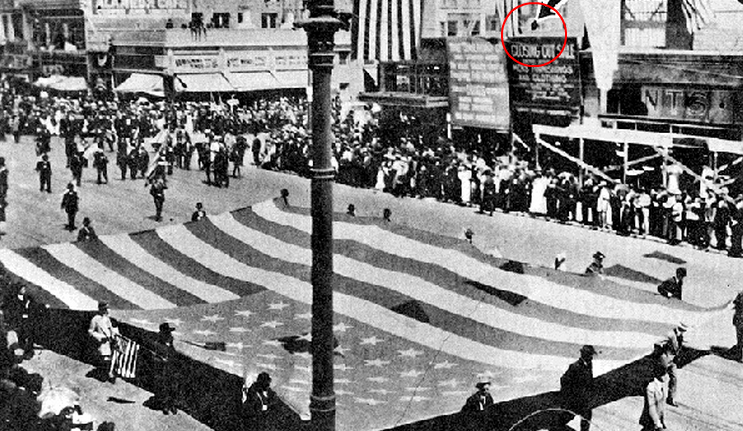
A photo showing the figure of Mooney (red circle) atop his residence at 2:10 PM -- five minutes before the bombing. The original, of much higher quality, was only released by prosecutors 30 years after the trial.

During Mooney’s trial, the photo was analyzed by experts and it was determined to have been taken at 2:01 PM -- just five minutes prior to the bombing. As Market street was clogged with traffic on the day of the parade, it would’ve been impossible for Mooney to plant the bomb and make it back to his place that quickly. In light of this evidence, the prosecutors’ witnesses began flip-flopping their testimonies, claiming they’d seen Mooney earlier than previously stated.

Despite all of these inconsistencies, Mooney was convicted with first-degree murder and sentenced to death by hanging.

When a “Star Witness” is a Perjurer

Initially, Frank Oxman, the prosecution's “star” witness, had donned the impression of a trusted witness in the courtroom, as noted by Judge Griffin, who presided over the case:

“His testimony was unshaken on cross examination, and his very appearance...was of a reputable and prosperous cattle dealer and landowner. This is no question but that he made a sound impression upon the jury and upon all those who listened to his story on the witness stand. He was the pivot around which all other evidence in the case revolved.”

But in April, two months after Mooney’s trial, it became startlingly clear that Oxman was a shady character. In a letter he’d written just before the initial proceedings, he’d bribed his friend from Illinois -- a man he hadn’t seen in some twenty years -- to travel out west and act as a witness (note: printed here in original form, including atrocious grammar and spelling):

“Cum to San Frico as a expurt wittness in a very important case. You will only hafto answer 3 or 4 questiones and I will post you on them. You will get mileage and all that a witness can draw -- probly 100 in cleare so if you will come ans me quick in care of this hotel I will manage a balance.”

When the man heeded Oxman’s call and came to California, he soon discovered that Oxman wanted him to “perjure himself to convict an innocent man.” He refused, and in turn turned the letters over the Mooney’s lawyers, he swiftly appealed the convict’s sentence and demanded a retrial. The appeal was accepted, and a new case opened -- this time to be tried before California’s Supreme Court.

Soon after, Oxman’s testimony that he’d seen Mooney commit the crime came under fire again. A couple from Sacramento, California - nearly 90 miles from San Francisco -- came forward that they’d had Oxman as a guest in their home. On the day of the explosion, he’d left the capital on a train at 2:15 PM, and hadn’t arrived in Bay Area until 5:21 PM -- three hours after the bombing. According to hospitality records, he’d then checked into a hotel at 5:30. The “star” witness apparently had never even been at the scene of the crime!
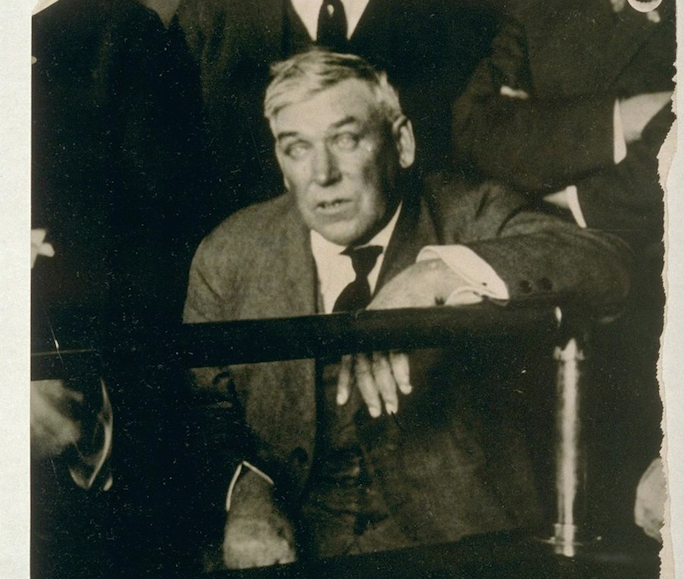
Frank C. Oxman, the prosecutors' "star witness"

When Judge Griffin (who’d presided over the initial case) learned that Oxman had not only bribed witnesses, but flat-out lied under oath, he became enraged, and sent a letter to the state Attorney General: “Had these letters been before me at the time of the trial,” he wrote, “I would have unhesitantly [exonerated] Mooney.” In turn, the Attorney General assured Griffin that “justice would be subserved.”

But the State Supreme Court, limited by technicalities, made it clear they did not agree. “Manifestly, the court has no authority to consider these matters,” they responded. “There is no provision of law by which newly discovered evidence may be presented to this court in the first instance.” Mooney’s lawyers were also tied up: “statutory restrictions” required that new evidence be presented within a “short time period” -- and that had expired.

Only the Governor could pardon Mooney, and he was wholly uninterested in doing so.

In the midst of Mooney’s legal battle, Oxman faced his own trial -- for both subordination and perjury -- and was embraced much more favorably by the court. District Attorney Fickert, who’d reigned over the Mooney trial and had commandeered Oxman and other witnesses, paid for the man’s defense. In court, Oxman argued there had been another page in the letter in which he’d told his friend not to come up unless he’d actually been at the bombing (ostensibly another lie under oath). 

By all accounts, Fickert had “whitewashed” and bribed the jury: Oxman was promptly acquitted, and Fickert himself was commended by the jury for his “exceptional ability to bring justice to light.”

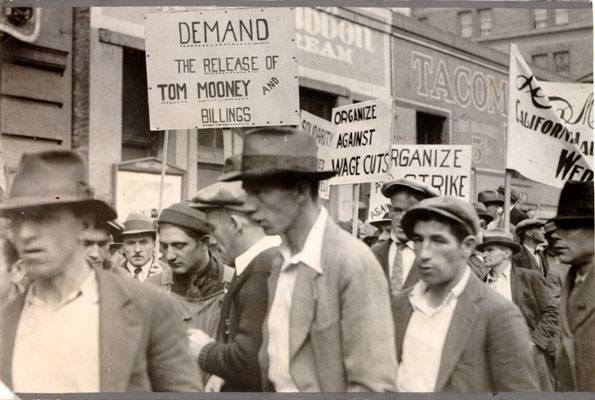
Despite evidence of a clearly tainted trial, Mooney still faced death. Labor radicals around the United States grew increasingly agitated, and organized a series of protests demanding his release:
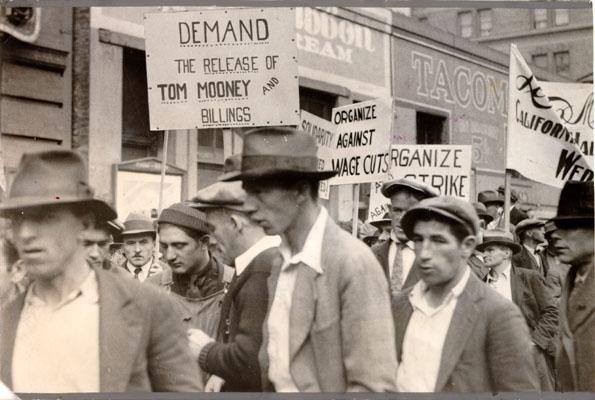
Labor protestors line the streets of San Francisco in defense of Mooney and Billings.
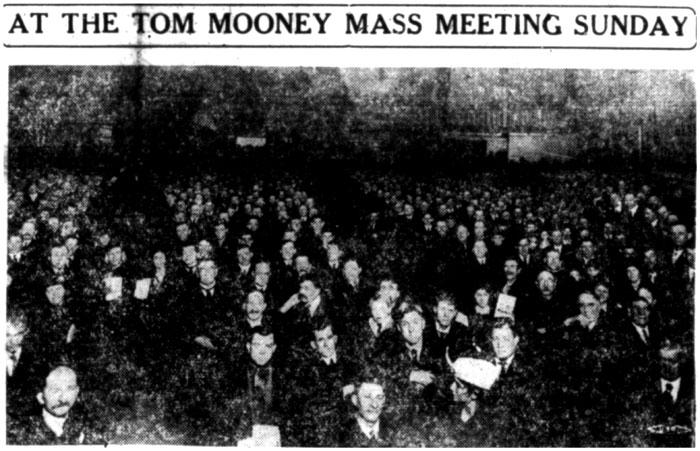
The Iron Molders’ Union of Seattle protests Mooney’s imprisonment

Throughout the summer of 1917, hundreds of mass meetings, protests were organized. Major unions -- the Machinists’ Lodge, the Iron Molders’ Association, and United Steelworkers -- chose to strike, halting a large sector of the economy. Of 240 big unions outside of industrial centers, 220 participated in Mooney’s cause.

In San Francisco, citizens became aware of District Attorney Fickert’s shady involvement -- both in the trials of Mooney and Oxman -- and began to petition for his removal from office. The efforts did not pay off; in December of 1917, Fickert was re-elected. When several non-lethal explosions were detonated in protest, Mooney delivered a directive from his San Quentin prison cell: “Bombs will NOT benefit my cause,” he told labor activists, “but hurt it beyond measure.”

The case even spread internationally. Russia, at the time going through a period of revolution under the leadership of socialist Alexander Kerensky, took great pity on Mooney’s plight. Before the Russian U.S. Embassy, mass demonstrations took place, and the case made headlines across the world.  

At this point, sensing a dangerous uprising, U.S. President Woodrow Wilson took matters into his own hands. Toward the tail end of 1917, he formed what he called a “Mediation Commission,” headed by Secretary of Labor William B. Wilson, and sent the team to San Francisco to investigate the case.

“There can be no doubt that Mooney was registered as a labor agitator of malevolence by the public officials of San Francisco,” reported Wilson, “and that they undoubtedly ‘sought’ to get him.” Wilson continued, noting “the dubious character of the witnesses,” and the overall lack of justice in the trial. In light of this report, President Wilson ordered that California’s Governor, WIlliam Stephens, postpone Mooney’s execution.

For nearly a year, Stephens dilly-dallied, and Mooney’s execution grew more imminent. Finally, on November 28, 1918, after multiple curt telegrams directly  from the President, Stephens upheld his “duty of justice” of Governor -- but Mooney’s sentence was merely commuted from death to life imprisonment, and his impending Supreme Court case was dismissed.

The Terror of Injustice
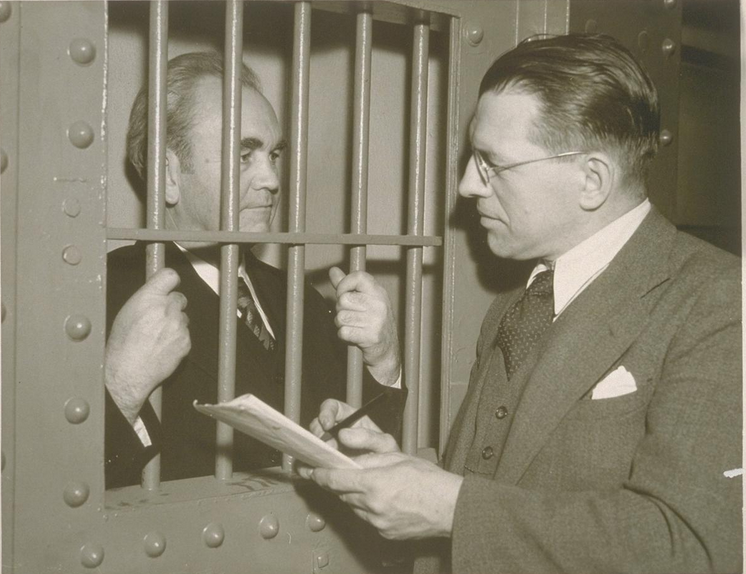
Thomas Mooney being interviewed by a reporter in a staged photo, late 1930s

For the next 22 years, Thomas Mooney and his assistant, Warren Billings -- both innocent men -- sat rotting in prison.

Over two decades, Mooney submitted dozens of petitions for a retrial, but they were of no use: under legal constraints, the only means by which he could be cleared of his sentence was a pardon from the Governor, or the President. Governor Stephens, who was reluctant to merely commute the man’s sentence in the first place -- even with orders from the POTUS -- wholly ignored his requests.

In 1919, John B. Densmore, a special agent of the Department of Labor, decided to take the case into his own hands. Without the authorities’ permission, he conducted a secret investigation of the case by placing a dictaphone (early recording device) in the office of District Attorney Fickert. What he revealed, in an interview with the Times, was appalling: 

“The plain truth is there is nothing about the case to produce a feeling of confidence that the dignity and majesty of the law have been upheld. There is nowhere anything resembling consistency...manipulation and perjury are rampant. This is a total absence of anything that looks like a genuine effort.”

The new evidence did not entice Governor Stephens to act. Friend Richardson, who succeeded Stephens in 1923, likewise had no sympathy for Mooney -- even when incredibly shady information regarding Mooney’s trial came to light.

In a 1926 report, it was revealed that another witness in the case, Mrs. Kidwell, had cut a deal with police: she’d testified against Mooney (with no knowledge of the day’s events), in exchange for a promise to release her imprisoned husband. “You know I am needed as a witness,” she’d written in a letter to her lover, “and they are helping me by getting you out.” Estelle Smith, another witness, admitted that she’d been ordered to “rehearse” her perjury by prosecutors under the threat of imprisonment for prostitution. A third witness, Mrs. Edeau,  later admitted that only her “astral,” or spiritual, body had been present at the parade; she was later deemed mentally unstable by the state.

Evidence of perjury was so abundant and obvious, that Judge Griffin, who’d presided over the initial case nearly a decade prior, called it “the worst abuse of justice” he’d ever seen. In a statement, he discredited every single witness’s testimony:

“Damned near every witness who testified [against Mooney] before me was perjurious or mistaken. Estelle Smith has admitted her testimony was false. The Edeaus were completely discredited. Oxman [the ‘star witness’] is completely out of the case. John McDonald has since sworn...that he knew nothing about the crime.”

Still, Governor Richardson did not act, and Mooney continued to serve his life sentence.

Justice -- 22 Years Late
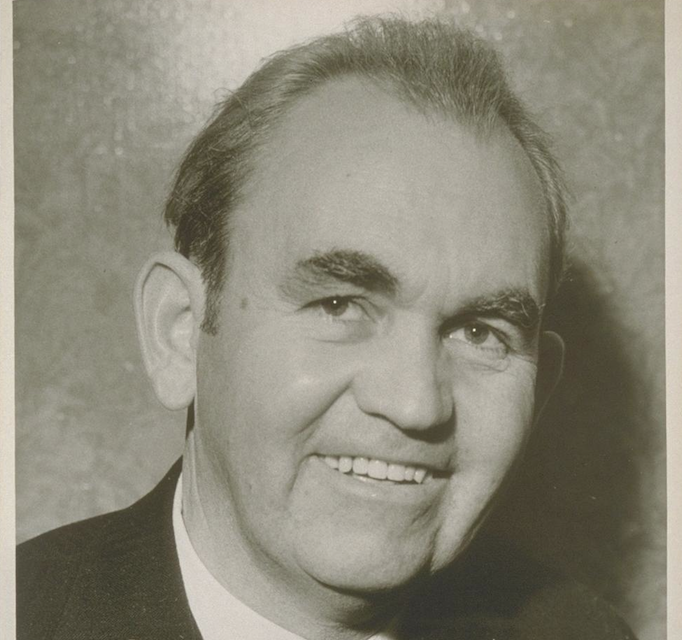
Thomas Mooney smiles upon his release

By 1937, a succession of five California Governors had refused to review Mooney’s case. He was at the end of his wits.  It was a “Dickensian nightmare,” the San Francisco Chronicle wroteof his plight, “one of the lowest points in the history of California law.” 

Finally, When Governor Culbert Olson assumed office in January 1939, Mooney was granted justice. 

“I am impressed by the fact that many thousands of Californians still believe Mooney is guilty,” Olson told reporters. “I am also impressed by the fact that five of my predecessors have not pardoned him. A hearing was ordered for Mooney’s pardon. Before a packed court of nearly 500 people, the Governor asked if anyone objected. For a full thirty seconds, he stood in silence, scanning the quieted room: no one spoke. The state officials and prosecutors who’d tirelessly -- and unjustly -- fought against Mooney for more than twenty years were nowhere to be seen. (Charles Fickert, the District Attorney who’d so inappropriately fought for Mooney’s near life-long detention, had devolved into a drunken gambler, lost his savings, and passed away in a few years prior.)
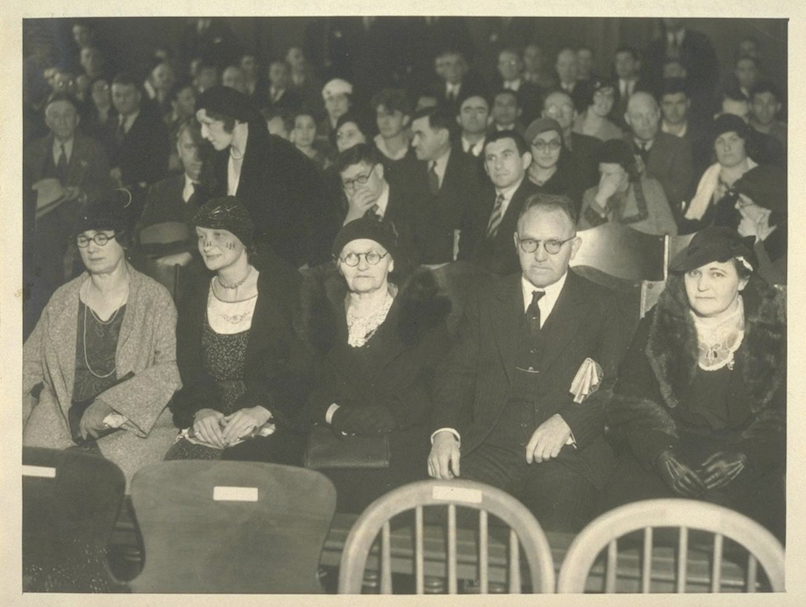
Thomas Mooney’s family and supporters await the result of his pardoning

“I now hand to you, Tom Mooney,” said the Governor, “this full pardon.” Cheers erupted: for two minutes, the room presented Mooney with a standing ovation. As flashbulbs popped, Mooney’s  wife, who’d been acquitted of the same charge decades before and had stood by her husband’s side all the while, burst into tears, and the two embraced. 

Lifting his hand to the crowd, he addressed the court:

“Governor, I shall dedicate the rest of my life to work for the common good in the bond of democracy. Dark and sinister forces of Fascist reactionism are destroying the world. The present economics system is in a state of decay -- not just here ,but throughout the world. I pledge my efforts to the work of the common good.”

Mooney, declared the New York Times, “was free at last.”

Lasting Significance
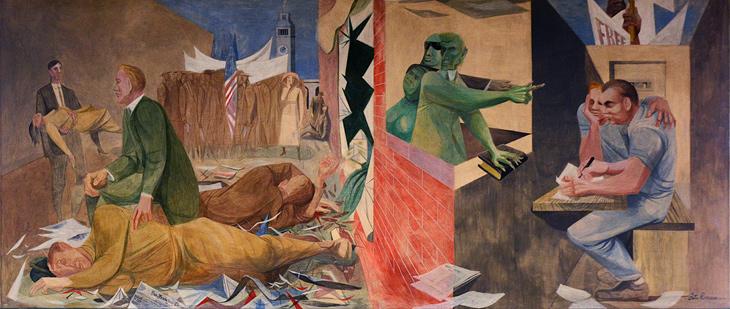
A mural at San Francisco’s Rincon Center depicts the bombing and Mooney’s unjust imprisonment (far right); painted by Anton Refregier

The first thing Thomas Mooney did was visit the grave of his mother, who’d passed away while he was imprisoned. 

Then, wasting no time, Mooney turned his efforts to freeing his friend, Warren Billings, who’d also been wrongly imprisoned the whole time, but with less attention. After 22 years of unsuccessful appeals, this proved shockingly easy: since Mooney was pardoned, there was no longer any justification for holding Billings and he was released 10 months later.

In a symbolic gesture, Mooney then organized a parade up Market Street -- the spot in San Francisco that the bombing had occurred decades before. He was accompanied by a fleet of a hundred longshoremen, as well as a troupe of labor unions; police and politicians were strictly forbidden from participating. As he trotted through the streets, he “thumbed his nose” at the Hearst building -- the media corporation that had denigrated him relentlessly at the onset of his trial. 

But Mooney’s time in prison had taken a toll on him. Now 59 years old, he suffered from jaundice, ulcers, and diabetes. While on a lecture tour around the city, he fainted and was carted to a San Francisco hospital. As his politics were too radical, the California Federation of Labor refused to raise funds for his medical bills, and he quietly passed away in March 1942, just 3 years out of prison.

***

The real culprit of the Preparedness Day Bombing is lost to time -- but many speculate that the true culprit was Alexander Berkman, a radical who’d been responsible for several prior bombings, had once laid out a plot to “blow up California,” and who’d fled to his home city of New York a day after the parade.

But one thing is certain: it wasn’t Thomas Mooney.

To many, Mooney was a martyr for social justice -- a symbol of “class persecution,” a man who constantly pursued justice. His case -- one of the first in the United States to determine that a verdict resulting from feigned evidence violates due process under the 14th Amendment -- gave other who were wrongly accused hope.

“All I wanted,” he said, just before his death, “was to lift California of its shame.”

This post was written by Zachary Crockett; you can follow him on Twitter here.

To get occasional notifications when we write blog posts, please sign up for our email list

27 Oct 18:39

Três pontos sobre as eleições

by brandizzi

Acredito que Aécio seria um presidente melhor, mas as urnas foram claras. Parabéns a Dilma e seus eleitores.

A melhor notícia foi o ótimo desempenho do PSDB. A campanha de Aécio foi excelente, as propostas ótimas. Aécio mostrou-se muito melhor que as alternativas anteriores e afastou-se dos que pregavam ódio. É dessa oposição que precisamos.

O sufoco do PT foi um aviso. O povo confia em Dilma, mas está muito descontente.Se Dilma ouvir o recado mandado via o sufoco, poderá fazer um governo melhor agora. Que assim seja.

27 Oct 18:35

Lugar mais frio do universo é enigma para astrônomos

Nebulosa de Bumerangue é uma das descobertas mais singulares da astronomia

O espaço é um lugar muito frio. A temperatura certa no vácuo e longe de qualquer astro é de cerca de -270 graus C.

Essa temperatura seria suficiente para congelar o hidrogênio na Terra - mas ainda está alguns poucos graus acima do que é considerado o "zero absoluto" - o ponto mais frio possível.

O motivo pelo qual a temperatura ainda se mantém acima deste ponto de zero absoluto é a constante presença de algo chamado radiação cósmica de fundo em micro-ondas, uma energia originada no "Big Bang" e que preenche todo o cosmo.

Por isso, em quase todo o universo, -270 é a temperatura mais baixa possível.

Mas não em todo ele.

Morte de estrelas é fenômeno comum no universo

A Nebulosa de Bumerangue fica a 5 mil anos-luz da constelação de Centaurus. Lá, uma nuvem de gás está sendo expelida por uma estrela que está morrendo.

Esta nuvem é um dos objetos mais misteriosos do universo. Os astrônomos acreditam que a temperatura cai para algo apenas meio grau acima do zero absoluto. Até onde sabemos, este é o ponto mais frio do universo.

Justamente por isso, muitos astrônomos se debruçam sobre esse tema. Alguns acreditam que ele pode ajudar a explicar várias dúvidas - como sobre a formação de galáxias e explosões cósmicas.

Morte das estrelas, nascimento da vida

A morte de estrelas é um fenômeno comum no universo. Daqui a alguns anos, o nosso Sol também vai esgotar seu combustível nuclear, se esfriar e expandir - ao ponto de absorver Mercúrio, Vênus e talvez até mesmo a Terra.

Após uma série de processos, o Sol vai virar uma anã-branca, diminuindo até atingir aproximadamente o tamanho da Terra.

A morte das estrelas tem um papel fundamental no surgimento da vida. Astrônomos já sabem há bastante tempo que elementos como carbono, oxigênio e ferro são fundidos dentro do núcleo das estrelas. Quando elas morrem, esses elementos são distribuídos pela galáxia.

Essa distribuição de elementos - sobretudo da morte de estrelas muito maiores do que o Sol - é que ajuda a formar rochas, planetas e até mesmo a vida.

Nebulosa especial

O processo acontece em vários lugares do universo. Mas a Nebulosa de Bumerangue é especial. Cientistas estão conseguindo observá-la em fase anterior ao de se tornar uma "nebulosa planetária" - que é um dos estágios da morte das estrelas.

Os astrônomos Raghvendra Sahai, da Nasa, e Lars-Ake Nyman, do telescópio ALMA, no Chile, descobriram que o gás que é liberado pela nebulosa flui a uma velocidade de 164 quilômetros por segundo - dez vezes maior do que o normal observado até hoje - e 4 mil vezes mais rápida que um trem-bala.

Essa velocidade de liberação de energia explica porque a Nebulosa de Bumerangue é tão fria.

A velocidade de liberação é tão alta que fica difícil até mesmo para a radiação cósmica de fundo de microondas conseguir esquentar um pouco o ambiente. Com a exceção de algumas condições criadas especialmente em laboratórios na Terra, não existe nenhum lugar mais frio em todo o universo.

Por que a Bumerangue libera gás tão rápido? Cientistas não entendem ainda

Sahai já havia teorizado sobre essa possibilidade antes mesmo da descoberta empírica. Ao analisar osdados da Bumerangue, ele descobriu que suas previsões feitas há 20 anos estavam se materializando.

"Fiquei todo arrepiado. Foi um dos momentos mais emocionantes da minha carreira", conta.

Mas mesmo observado o fenômeno, os astronomos ainda não sabem explicá-lo.

O que ninguém consegue explicar é o porquê da velocidade extrema de 164 quilômetros por segundo. A estrela dentro da Bumerangue não é brilhante o suficiente para produzir esta quantidade de energia.

Pontos azul mostram lugares mais frios da Nebulosa de Bumerangue

Muitos outros mistérios persistem.

Sahai e seus colegas ainda vão realizar novas observações ainda este ano. Em algumas regiões, o gás expelido flui a 35 quilometros por segundo. Os astrônomos querem mapear em detalhes por que o gás flui a velocidades diferentes em pontos distintos.

"Esses objetos não são apenas bonitos. Eles são cheios de segredos", diz Soker.

Leia a versão original desta reportagem em inglês no site BBC Earth.

Bookmarked at brandizzi Delicious' sharing tag and expanded by Delicious sharing tag expander.
27 Oct 18:35

Pirro no Capão

by Tiago de Thuin
O PT ganhou - por pouco - a eleição presidencial. Mas, além de perder cadeiras no Congresso, além de ficar cada vez mais claro que perde no imenso e crescente Brasil do agronegócio, que vai do Rio Grande do Sul ao Acre, perdeu - é verdade, também por pouco - no Capão Redondo. É difícil enfatizar o bastante o quanto esse é um resultado horrível em termos simbólicos, para o PT e para o Brasil. O Capão Redondo é um distrito da periferia de São Paulo que virou sinônimo de lugar barra-pesada, graças em parte às estatísticas criminais, mas mais ainda à produção de rappers, musical e em outras linguagens artísticas. Foi do Capão Redondo que saíram Ferréz, Mano Brown, Fuzzil, com obras que descrevem e contestam uma realidade opressora, de discriminação social e racial, de violência estatal e internecina. É um bairro cinza, apesar do nome inspirado num capão de pinheiros (os solos ácidos do rio de mesmo nome afugentam outras árvores); dos mais cinzas, abafados, e quentes de São Paulo. É, também, dos mais pobres, ocupando o 79º lugar no IDH entre os 96 distritos do município de São Paulo, e violentos, sendo o 4º distrito com mais homicídios neste ano. (Um homicídio para cada 10.000 habitantes, facilmente batendo, ainda em setembro, a média da cidade.) Se o PT perde para o partido da polícia no cenário de Negro Drama, vai mal.

Resumindo: é um lugar que é ao mesmo tempo pobre e com uma produção nativa de um discurso contestatário. É o tipo de lugar em que o PT deveria ter ganho de lavada, mas perdeu. Perdeu, também, ainda dentro da metrópole paulistana, em São Bernardo do Campo, berço do partido, cidade ainda marcada pela forte presença de operários, muitos ainda filiados a sindicatos e com tradições e identidades proletárias marcantes. De novo, por pouco, mas a questão é que o PT não poderia perder nesses lugares. Que perca acachapantemente nos Jardins, Nada mais natural (Dilma teve, no 1º turno, 8,6% de votos contra 2,8 de Luciana Genro). Mais do que a derrota do PT, o impressionante é a vitória de Aécio, com um discurso francamente de direita, por mais que preservasse nele o bolsa-família, em duas áreas que seriam consideradas por qualquer um bastiões naturais da esquerda. A pobreza politizada pelo rap, o proletariado industrial, votaram maciçamente na direita, depois de 12 anos do PT na presidência. Algo está errado.

Calma, tem mais más notícias. Dilma perdeu para Aécio entre os jovens, os eleitores com 16 a 24 anos. De novo, foi por pouco - 52 a 48%. Mas de novo, é aonde não podia perder. Afinal, como dizia (?) Churchill, quem não é de esquerda aos 20 é um insenssível, quem não é de direita aos 40 é um idiota. E isso, pra lembrar, num contexto em que os "fundamentos" econômicos e sociais deveriam dar uma vitória folgada ao PT. Desemprego baixíssimo, no ou perto do vale histórico mesmo depois de corrigido pela PEA. Aumento do número de vagas nas faculdades, diminuição da mortalidade. As contas nacionais estão cagadas, sem dúvida, mas com certeza contas nacionais não são preocupação prioritária da grande massa da população. O crescimento de renda dos 20% mais pobres foi mais que chinês na última década. Que a classe média que votava na UDN de macacão tenha abandonado o PT após as denúncias de corrupção faz sentido, mas e os pobres e trabalhadores? Será que é só o canto da sereia dos Olavos de Carvalho e outras cepas do Instituto Millenium que seduz os jovens?

Petistas gostam de invocar o poderio da mídia, ou dizer que os jovens não se lembram de como era ruim antes. As duas desculpas não deixam de ter seu quinhão de verdade. A mídia é um oligopólio, abertamente antipetista (se não assumidamente, fora o Estadão), como é amplamente reconhecido; os Repórteres Sem Fronteira, ONG internacional que advoga pela liberdade de imprensa, recomendam a sua regulamentação e quebra de monopólios; os lugares em que o PT perdeu são aqueles com maior alfabetização, o que é diferente de uma ilustração Goetheana e expõe mais as pessoas à influência de órgãos de mídia. Os tempos tucanos eram mesmo mais bicudos, e a maioria petista no Nordeste se justifica inclusive pela diferença de evolução relativa da região, como dá pra ver nessa tabelinha do crescimento da renda domiciliar per capita:

2003-2012                                                       1995-2002

Nordeste: +74,45%                                           Centro-Oeste +2,44%
Centro-Oeste: +67,09%                                     Sul +0,14%
Sul: +47,91%                                                    Nordeste -3,57%
Sudeste: +44,69%                                             Sudeste -9,79%
Norte: +44,28%                                                 Norte -18,49%


Mas quinhões de verdade não adiantam de nada quando desprovidos de ação, são apenas choro de (futuro) perdedor a gritar "ingratos! Súcia de ingratos!." De UDN de macacão a FHC de macacão... E pior: enganam quando são apresentados como a verdade inteira, tornam complacentes aqueles que neles crêem. Não explicam as situações do Capão e de São Bernardo. Pelo contrário, se houve aumento espetacular da renda das classes mais baixas, elas deveriam votar em peso no PT. O estereótipo petista de que playboys coxinhas e dentistas leitores da Veja são os únicos que votam contra o partido não funciona, a não ser que haja muito mais ricos e dentistas do que se imagina. 150.000 playboys num bairro pobre de São Paulo. Tamos bem, então. Aliás, no Centro-Oeste, que também teve aumento muito acima da média nacional na renda, o PT sofreu derrotas inequívocas; é a região mais antipetista depois de SP. 

Parte da resposta talvez seja que, ocupado na tarefa administrativa-burocrática de construir um estado de bem-estar social à européia, o PT largou mão dos fundamentos políticos que permitiram essa construção do estado de bem-estar. Sem nem tocar aqui nos fundamentos econômicos, largamente fora do controle de qualquer partido ou governo, que permitiram que ele fosse feito nos Trinta Gloriosos anos de crescimento do pós-guerra. O aumento da renda da classe trabalhadora, por exemplo, é propalado pelo PT como "ascensão à classe média." Ora, classe média não vota em partido de esquerda. Ao contrário do que muita gente pensa, o conceito de classe média em questão não é do PT, mas da ONU, foi adotado apenas por aquele. Mas é um enorme tiro no pé. Acelerou a guinada conservadora que ocorreu nos países em que foram criados estados de bem-estar em trinta, quarenta anos, para muito antes desse estado ficar pronto.  O PT deixou de ser identificado como partido dos trabalhadores pela enorme maioria dos trabalhadores. Mais pernicioso ainda do que se recusar a regulamentar a mídia, talvez, seja a recusa ou incapacidade em reforçar os movimentos de trabalhadores, preferindo antes usá-los para reforçar o governo. O "T" no nome precisa fazer mais sentido do que o "SD" que curiosamente orna nosso maior partido liberal.

Outra observação, mais palpite que qualquer outra coisa: no início do ano, fui dos muitos que viram um potencial transformador enorme nos rolezinhos dos jovens de subúrbio, que ao frequentar shoppings em massa foram vistos com pânico pelos administradores. O movimento, como se sabe, não deu em nada; antes mesmo que a esquerda tentasse cooptá-lo, com o rolezinho marcado no shopping Leblon, já tinha perdido força. O jovem de subúrbio, o jovem de classe trabalhadora e pobre, não sonha com o avanço coletivo de sua classe, ou sequer pela melhoria de suas condições materiais (que aliás são cada vez mais razoáveis). Ele sonha, numa sociedade altamente marcada pela hierarquia e pelo status, em avançar naquela grande rat race imaginária. Sonha em estar do lado de dentro, não em que não haja um muro dividindo os lados. Será? É, como disse, um palpite, sem nada que lhe respalde.

Haverá outras razões, que não consigo nem imaginar, mas uma coisa é clara: o PT tem que ganhar o Capão e São Bernardo.  Por sorte, por um triz, por uma diferença do tamanho do eleitorado da Luciana Genro, ainda tem quatro anos para tentar. Se não fizer nada de diferente, daqui a quatro anos acaba a breve experiência de esquerda no país. (E, quiçá, sonha o Department of State, na América do Sul.)


27 Oct 17:56

Eleitores da fronteira com o Uruguai votam duas vezes para presidente

FELIPE BÄCHTOLD, DE PORTO ALEGRE

Em algumas cidades do Rio Grande do Sul, o domingo de eleição tem uma importância histórica ainda maior. Em uma coincidência inédita, os eleitores do vizinho Uruguai escolhem presidente no mesmo dia do Brasil.

Com a integração da fronteira, muitos eleitores de dupla cidadania votam nos dois países hoje.

Seis municípios gaúchos são colados a cidades uruguaias e possuem população com laços estreitos com os dois lados. O maior desses municípios é Santana do Livramento (a 487 km de Porto Alegre), com 83 mil habitantes.

A localidade gaúcha é separada por uma rua da uruguaia Rivera, de 65 mil habitantes. Moradores cruzam a fronteira várias vezes por dia e muitas famílias são formadas por cidadãos brasileiros e uruguaios. Há até um apelido para quem tem dupla cidadania: “doble chapa”.

O Uruguai realiza neste domingo o primeiro turno da sucessão do presidente José Mujica. A disputa está polarizada entre o governista Tabaré Vásquez, ex-presidente, e Luis Lacalle Pou, do Partido Blanco.

Morador de Santana do Livramento, Horácio Dávila, 64, votou no Brasil hoje, pela manhã, e no Uruguai, à tarde. Ele diz que o dia da eleição é “mais alegre e mais participativo” no Uruguai porque não há proibição de propaganda de boca de urna, como no lado brasileiro.

Morador de Santana do Livramento, Horácio Dávila, 64, votou no Brasil pela manhã e no Uruguai à tarde - Divulgação

Morador de Santana do Livramento, Horácio Dávila, 64, votou no Brasil pela manhã e no Uruguai à tarde – Divulgação

“Fica muito engessado. Se você fica na calçada, a polícia passa e pergunta o que está fazendo”, diz.

Diretor de um órgão municipal e dirigente do PT no município gaúcho, Dávila nasceu em Montevidéu, mas mora no lado brasileiro da fronteira desde os anos 70 e obteve a cidadania. Não se recorda de outra situação similar a deste domingo.

“Casualmente, coincidiu o dia, e a fronteira está bem movimentada. Quando apurarem os resultados, ficará mais festiva ainda.”

Para ele, a fronteira “não existe” em Santana do Livramento e é apenas uma separação de “bairros”.

Fronteira Brasil-Uruguai nas cidades de Quaraí (RS) e Artigas (URU) -Felipe Bächtold/Folhapress

Fronteira Brasil-Uruguai nas cidades de Quaraí (RS) e Artigas (URU) -Felipe Bächtold/Folhapress

No Uruguai, a votação se dá em cédulas de papel, e a disputa pode ser definida apenas daqui a um mês, no segundo turno.

O total do eleitorado do país vizinho é de 2,6 milhões –o equivalente ao da região metropolitana de Porto Alegre.

Siga o blog Brasil no Twitter (@Folha_Brasil) e no Facebook (www.facebook.com/BlogBrasil)


27 Oct 17:33

Imagination Running Wild

by DOGHOUSE DIARIES

Imagination Running Wild

He's gotten really good at making sound effects.

26 Oct 23:40

bestrooftalkever: Two Waterfalls That Literally Can’t Even

26 Oct 23:34

adriofthedead: morganperreault: the only way I’ll wake up...


adriofthedead:

morganperreault:

the only way I’ll wake up early

japanese prank shows are on a whole other level

26 Oct 13:34

[camperjohn64]

26 Oct 13:31

Até acampamento de sem-terra vê disputa entre petistas e tucanos

ESTELITA HASS CARAZZAI, EM CAMPO GRANDE (MS)

Na estrada que segue ao sul de Campo Grande, em direção à agrícola cidade de Sidrolândia, há fazendas e mais fazendas, além de alguns acampamentos de sem-terra.

De um lado, entre os barracos de lona e madeira, uma bandeira com o número 45 balança pendurada num pedaço de bambu. Do outro, a bandeira vermelha do 13, numa disputa eleitoral que avança até sobre acampados e movimentos de trabalhadores rurais.

Mato Grosso do Sul vive um disputado segundo turno na corrida ao governo, entre Delcídio Amaral (PT) e Reinaldo Azambuja (PSDB). Os dois estão em empate técnico, segundo as últimas pesquisas.

PT e PSDB nos sem-terra

“Aqui nós fechamos com o Reinaldo”, diz o acampado Osvaldo Aoki, 57, sobre a bandeira azul e amarela em frente a um dos acampamentos, a cerca de 30 km de Campo Grande.

O “nós”, nesse caso, são os líderes do movimento, ligado à Fetagri (Federação de Trabalhadores na Agricultura) –que, por sua vez, declarou apoio oficial ao petista Delcídio. Outros dois acampamentos próximos também exibiam a bandeira do PSDB, numa visita feita pela Folha neste sábado (25).

O apoio só veio no segundo turno. Deputados e representantes do tucano foram ao local, conversaram com os líderes e prometeram diálogo em caso de eleição.

“O Reinaldo, se for eleito, disse que quem vai nomear a comissão para negociação [de desapropriações e reforma agrária] são os líderes”, conta Aoki.

Em outros dois acampamentos vizinhos, é o PT de Delcídio quem tem o monopólio das bandeiras, seguindo a orientação da Fetagri.

“Por tudo o que ele já fez pelo nosso Estado e pelas propostas que apresenta para fortalecer a agricultura familiar, não temos dúvida de que ele é a melhor opção”, discursou o presidente da Fetagri, Valdinir Nobre de Oliveira, durante ato de apoio ao petista, ainda no primeiro turno.

COISA DE LÍDER

Mesmo no “acampamento tucano”, o apoio não é unanimidade.

“Quem está apoiando é o líder. Mas nós já temos candidato: é do PT”, diz a acampada Neuza Medeiros, 53, que tem uma bandeira de Delcídio guardada em casa. Segundo ela, “a maioria” ali vota 13.

“Até o primeiro turno, era tudo PT. Acho que tem dinheiro na jogada”, diz.

Neuza não soube explicar como os líderes estariam recebendo (se como contratados na campanha ou não, se com ajuda na gasolina ou dinheiro vivo). O líder do acampamento não estava no local.

Para Aoki, cuja caminhonete está forrada de adesivos de Azambuja e do presidenciável Aécio Neves, o candidato tucano é o único que fala de reforma agrária. “Veja a Dilma. Quantos anos faz que está lá e nunca falou nisso?”

O fato de Azambuja ser fazendeiro (um dos mais ricos candidatos do país, com patrimônio declarado de R$ 37 milhões) não é demérito, para o acampado. Ele opina que o tucano irá negociar melhor com os proprietários e terá mais facilidade de criar nossos assentamentos.

Neuza discorda. “O único governador que deu terra foi o Zeca do PT [1999-2006]. Depois, acabou. Por isso que eu voto no PT.”

Mato Grosso do Sul tem cerca de 22 mil acampados, que aguardam por terras da reforma agrária, de acordo com um levantamento do início deste ano do Incra (Instituto Nacional de Colonização e Reforma Agrária).

Siga o blog Brasil no Twitter (@Folha_Brasil) e no Facebook (www.facebook.com/BlogBrasil)


25 Oct 21:23

iraffiruse: Frozach Submitted

25 Oct 02:51

catallenas: kuueater: doitsundere: lionessjenna: doitsundere: sure little guy nO

25 Oct 01:30

nevver: Marc Chagall in Milan

25 Oct 01:30

Mmm. Autobiographical.

by punchthemoon


Mmm. Autobiographical.