Cowboy Who?
Shared posts
Kellyanne Conway's teen daughter says president is 'doing badly' after coronavirus infection

Trump’s Favorite Texas Sheriff Faces Re-Election Amid a Spike in Deaths at His Jail
On May 17, a pregnant woman delivered a baby alone and locked inside her cell at the Tarrant County jail. After the Fort Worth Star-Telegram broke the story later that month, Sheriff Bill Waybourn, who manages the facility, explained in a statement that “the inmate did not immediately disclose the birth, but the baby was soon discovered by a corrections officer and immediate action was taken to protect the mother and child.” The infant died 10 days after being found in the cell. In June, a judge ruled the mother was incompetent to stand trial, dismissed the assault charge that had kept her in lockup since January, and ordered her into treatment at a state psychiatric hospital.
The unattended birth is part of a trail of recent horrors inside the Tarrant County jail as Waybourn faces re-election next month. Just days after the baby was born, state regulators found Waybourn’s facility to be out of compliance with minimum jail standards after an investigation into an inmate’s suicide in April revealed that guards weren’t conducting required cell checks. In late July, three of Waybourn’s detention officers were criminally charged after a man incarcerated inside the jail was beaten and left with a broken cheek, fractured ribs, and a collapsed lung; affidavits in the case say one officer positioned himself to block the view of a security camera, while another officer told authorities that such beatings were a “normal thing.” A climbing body count at the jail over the summer has raised even more questions about Waybourn’s ability to manage the facility; 10 people have died at the jail so far in 2020, more than in the past three years combined.
Waybourn’s race is one of several in Texas and across the country that highlight the potential role reform candidates could play in the growing movement to transform the criminal legal system. Unlike police chiefs, who are usually appointed by mayors or other city officials, sheriffs are more directly accountable to a public that can boot them from office. Like the rest of law enforcement, sheriffs now face increased calls for accountability, heating up what might have otherwise been sleepy down-ballot races that typically favor incumbents.
“He’s going on Fox News, the Dana Loesch show, Ben Shapiro, all these conservative talk shows, but they never talk about all the people dying in his jail… People are dying, people are getting beaten by guards. A baby died. The priorities are all backwards.”A Republican first elected in 2016, Waybourn was part of a wave of conservative sheriffs across the nation who parroted President Trump’s anti-immigrant rhetoric and adopted policies deputizing local officers to enforce immigration laws. In a White House briefing last year alongside Immigration and Customs Enforcement (ICE) director Matt Albence, Waybourn called migrants in his jail “drunks [who] will run over your children, and they will run over my children.” He used the same broad, menacing brush to refer to the protests for police accountability and racial justice that followed George Floyd’s killing. Waybourn, who didn’t answer questions from the Observer by the time of publication, recently told the Daily Caller that leftists were effectively to blame for the shooting of two Los Angeles County sheriff’s deputies in September, saying, “I think it’s part of the socialist movement over to the left.”
Waybourn has pursued national right-wing media stardom even as local critics accuse him of neglecting his duties at home. Last year, Tarrant County activists started a campaign to remove Waybourn from office, calling their coalition New Sheriff Now Tarrant County. Pamela Young, a local activist who helped launch the campaign, says that problems on Waybourn’s watch demonstrate the need for new leadership, transparency, and accountability at the jail. “He’s going on Fox News, the Dana Loesch show, Ben Shapiro, all these conservative talk shows, but they never talk about all the people dying in his jail or his certification getting revoked,” Young said. “People are dying, people are getting beaten by guards. A baby died. The priorities are all backwards.”
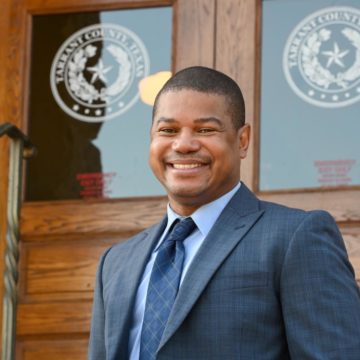
Waybourn’s Democratic opponent, Vance Keyes, has vowed to end Tarrant County’s program allowing sheriff’s deputies to act like ICE agents. Keyes, a Fort Worth police officer for 20 years, also chastised Waybourn for failing to report deaths and other problems at the jail to county leaders and to the public. Keyes says he’ll establish a community oversight body so the public can more closely monitor the sheriff’s office.
“We’re a major metropolitan area, we’re the 15th-largest county in the nation, and people deserve professional, responsive, accountable, and transparent law enforcement,” Keyes told the Observer. “And when they don’t get it, you’re going to see these protests, you’ll see this loss of legitimacy, and this loss of trust in law enforcement. That’s what leads to these calls to defund and abolish the police. It’s our fault, the onus is on law enforcement.”
In Williamson County, Republican Sheriff Robert Chody faces re-election while also being under criminal indictment for evidence tampering charges for allegedly destroying a video that showed the arrest and death of Javier Ambler, a Black man in his deputies’ custody. In Bexar County, Sheriff Javier Salazar, a Democrat, also faces re-election amid protests over his deputies killing Damian Daniels, another Black man, during a mental health crisis in August.
In Tarrant County, Keyes’ race for sheriff could help reformers gauge how much traction the movement to transform policing has among local voters, and also more generally whether the state’s last conservative urban stronghold is finally turning blue. Keyes has drawn support from some prominent Texas Democrats, including Beto O’Rourke. “There’s certainly this big debate every election cycle—whether this will remain the largest county in Texas that still votes with a majority of Republicans,” said Emily Farris, an associate professor of political science at Texas Christian University who studies sheriffs. “I think the Keyes campaign has tried to situate themselves within these larger questions of not just police accountability but also where Tarrant County’s going politically.”
If the killing of George Floyd and subsequent calls for accountability in law enforcement have started to shift society’s views on public safety, so too could the coronavirus pandemic. As lockups emerged as predictable hotspots for the virus around the country, threatening inmates and staff as well as the communities they return to, some sheriffs began pushing to lower jail populations and divert low-level defendants. Not Waybourn. “It is business as usual,” he told a conservative talk show in March. “We are not going to let things slide by.” In May, a 67-year old man jailed in Tarrant County on felony DWI charges died from COVID-19. In early September, a 36-year-old corporal assigned to the jail also died from the virus.
Compared to the movement to elect progressive prosecutors, which has seen some successes in recent years, the push for progressive sheriffs is nascent. Candidates like Keyes are largely charting a new path and without much of a template to crib from other campaigns. Still he draws inspiration from sheriffs he sees as reformers, like Ed Gonzalez in Harris County, a Democrat who took office the same year as Waybourn and is a shoo-in for re-election this year. Upon taking office, Gonzalez brought the state’s largest and long-troubled jail into compliance with state standards, advocated for bail reforms that would lower the jail population, and opened his facility to the scrutiny of reporters—even during a COVID-19 outbreak. Keyes says he admires that Gonzalez tries to humanize the people incarcerated in his jail, who he regularly refers to as “clients.”
Keyes says the scandals under Waybourn’s first term, like a mentally ill pregnant woman giving birth in a jail cell alone, are tragic reminders that people who land in lockup are often at their most vulnerable. Keyes says he hopes the incidents not only lead to reforms at the lockup, but also advance a larger conversation about who should be incarcerated in the first place. “We have to think of confinement as a public service that we provide,” he says. “I know it might sound crazy, but we have to think of people in jail as people we’re serving, that these are people we’re responsible for keeping safe.”
Update: On Tuesday, local media reported another death at the jail that the sheriff hadn’t previously disclosed, bringing the total to 10 deaths in 2020.
Read more from the Observer:
-
Erika Andiola Says Dreamers Know How to Push Biden: “All we can do is pick our opponent,” says Andiola, the chief advocacy officer for the San Antonio-based immigrant rights group RAICES Action.
-
Remembering a Jewish Upbringing in Meyerland, Texas: An excerpt from David Biespiel’s memoir A Place of Exodus.
-
State Officials Tried to Cut Women’s Health Care During a Pandemic. It’s a Clear Reflection of Priorities: The state health agency continues to propose cutting services for families while leaving fully intact a program that funds anti-abortion crisis pregnancy centers.
The post Trump’s Favorite Texas Sheriff Faces Re-Election Amid a Spike in Deaths at His Jail appeared first on The Texas Observer.
Investigation Shows Sheriff's Department Rewarded Deputies With Gift Cards For Deploying Force
A Texas Sheriff's Office with a history of questionable hiring practices and a fondness for excessive force deployment has covered itself with infamy again. The Williamson County Sheriff's Office was formerly best known for appearing on Live PD, a "Cops" knockoff that followed deputies around as they enforced the law and -- on one occasion -- tased someone to death in front of Live PD's cameras. (A&E "helpfully" destroyed the footage.)
This led to some speculation that Sheriff Robert Chody was hiring deputies that would make for must-see TV, rather than good public servants. Questionable work histories were ignored if candidates appeared willing to engage in aggressive tactics with the cameras rolling. Sheriff Chody's quest to find TV stars resulted in things like the following:
Mark Luera joined the force in November 2017, about 10 months before TV cameras began rolling on patrols in the largely suburban county north of Austin, Texas.
[...]
“A true leader,” Chody captioned a selfie of the two in June 2019. In another post, Chody called Luera a “Wilco Rock Star.”
The department’s star is also a disgraced former city of Austin police officer whom Chody hired days after the city had been set to fire him for using his special airport access to bypass security, then repeatedly lying about it.
The bad news keeps coming. An investigation into use-of-force incidents by deputies has uncovered another unseemly fact about the Sheriff's Office. A culture of violence has been carefully cultivated by Office officials -- one that appears to lead directly to incidents like the one caught on Live PD's cameras. One "good" beating equals a free meal. That's the mindset of the WCSO.
Williamson County, Texas, Sheriff’s Office leaders rewarded deputies who used force on the job with steakhouse gift cards, according to two former employees, one of whom made the admission to Texas Rangers investigating the agency’s aggressive tactics.
Among the deputies who received gift cards to places such as Logan’s Roadhouse were J.J. Johnson and Zach Camden, the officers involved in the March 2019 death of Javier Ambler. The Black 40-year-old father was Tased four times as he shouted that he had a heart condition and could not breathe.
In a recorded interview with Texas Rangers, former Deputy Christopher Pisa said Cmdr. Steve Deaton awarded deputies he considered “WilCo badass.”
This recording was given to the American-Statesman by Deputy Pisa's lawyer. This allegation was immediately denied by Sheriff Chody, who claimed he has only given out one gift card for "recovering some excellent fingerprints." This may be true. But it was apparently used by other supervisors and Chody did nothing to stop it.
Deputy Pisa's statements allege Commander Deaton handed out cards for "good uses of force." It was something mentioned during shift meetings so it wasn't exactly a secret. And it's the sort of thing you'd expect from a supervisor who left the force under his own bigoted cloud.
Deaton resigned in September 2019, months after social media posts of his surfaced with objectionable images showing dolls depicting actions, such as rape and kidnapping and the mutilation of a Black football player.
Sheriff Chody may be maintaining plausible deniability by distancing himself from this specific encouragement of bad behavior. But history shows he's as much to blame as his recently-departed commander. If you want to turn cops into badge-wearing thugs, all you have to do in most cases is just fail to discipline them. But Chody and his supervisors appear to want to accelerate that process. And for the most ridiculous of reasons: for the TV clicks. Live PD no longer shoots in Williamson County. But the damage has been done.
The Calls of Impropriety Are Coming From Inside Ken Paxton’s Office
 The equivalent of a suitcase nuke blew up in Texas politics this weekend. The latest in a string of them, actually. It’s been a year of nearly uninterrupted bad news for the Republican Party of Texas as it struggles to prepare for one of the most important elections it has faced in decades. On Saturday, the Austin American-Statesman broke the news that seven senior figures in the office of Texas attorney general Ken Paxton had accused Paxton of serious criminal wrongdoing, including abuse of office and accepting a bribe. The Statesman obtained a copy of a letter the seven sent to the AG’s human resources department on October 1 in which the crew also said that they had already recommended to federal authorities that they…View Original Post
The post The Calls of Impropriety Are Coming From Inside Ken Paxton’s Office appeared first on Texas Monthly.
Texas U.S. Attorney John Bash, tapped to investigate Obama administration for "unmasking," resigns
/https://static.texastribune.org/media/files/9d9fcf22d23bf202ce561839090c5bd1/John%20Bash%20REUTERS%20TT.jpg)
Sign up for The Brief, our daily newsletter that keeps readers up to speed on the most essential Texas news.
U.S. Attorney John Bash, who serves the Western District of Texas, will resign at the end of the week to take a position in the private sector, according to a Monday statement from the Department of Justice.
Bash was appointed to the position by President Donald Trump at the end of 2017. Bash previously worked in the department as an assistant to the solicitor general and served as associate counsel to the president.
“I tendered formal letters of resignation to both the President and the Attorney General this morning,” Bash wrote in a statement.
Bash said he accepted his new job last month.
Earlier this summer, Attorney General William Barr tapped Bash to investigate the Obama administration for allegations of "unmasking" before and after the 2016 presidential election. U.S. intelligence routinely conceals the identities of Americans whose communications are intercepted in the course of monitoring foreigners. Those names are anonymous in intelligence reports, but can be "unmasked" to provide more information for intelligence. Trump allies in Congress pledged to investigated the practice which led to the unmaking of former national security adviser Michael Flynn's identity in certain intelligence documents related to the investigation into Russian election interference.
“John has made significant contributions to the Department of Justice, including his service on the Attorney General’s Advisory Committee,” Barr said in a statement. “I appreciate his service to our nation and to the Justice Department, and I wish him the very best.”
Shortly after news of his departure, Barr named Gregg Sofer as Bash’s successor. Sofer was a counselor to Barr and worked in the Western District of Texas office for 12 years. He was also a trial attorney in the National Security Division at Main Justice and worked in the Manhattan District Attorney’s Office.
Bash’s resignation comes as his office is prosecuting the alleged gunman in the 2019 shooting in El Paso that killed 23 people and injured dozens more. Patrick Crusius, the alleged gunman, is charged federally with more than 20 counts of hate crimes resulting in death and more than 40 charges of firing a weapon in relation to the hate crimes, according to an indictment.
The El Paso County district attorney’s office is also pursuing charges against Crusius, and it’s unclear which prosecution will proceed first. Bash declined to comment on the timeline on his office’s efforts in August, when El Pasoans marked the one-year anniversary of the shooting.
“I pray for the continued healing of those who survived. My office will not relent in our pursuit of justice for the victims and our community,” he said in an email over the summer.
“I hope that I have discharged my authority wisely and have improved the safety and security of my fellow Texans,” Bash said of his departure. “I leave the Department with a profound respect for its people, its traditions, and its importance to our constitutional democracy.”
The Western District of Texas office is one of the largest in the country and “regularly prosecutes more criminal cases than any other district,” according to the Department of Justice statement.
It covers 68 counties — with offices in Alpine, Austin, Del Rio, El Paso, Midland, San Antonio and Waco — and serves about 6.5 million Texans.
Julián Aguilar contributed reporting.

Texas Attorney General Ken Paxton Says He Won’t Resign After Accusations Of Criminal Activity By Top Aides
3 Dead, 1 Hospitalized After Building Collapse In West Houston
Trump Is Giving Dangerous Advice. Being Afraid Of COVID-19 Has Helped Us Control COVID-19.
The president announced his own discharge from Walter Reed National Military Medical Center Monday afternoon, tweeting:
I will be leaving the great Walter Reed Medical Center today at 6:30 P.M. Feeling really good! Don’t be afraid of Covid. Don’t let it dominate your life. We have developed, under the Trump Administration, some really great drugs & knowledge. I feel better than I did 20 years ago!
— Donald J. Trump (@realDonaldTrump) October 5, 2020
One phrase stood out: “Don’t be afraid of Covid.” After announcing that he will be leaving the hospital following treatment for COVID-19, President Trump said not to fear the disease that has killed more than 209,000 Americans and infected more than 7 million.
There’s a long history of the president of the United States imploring his people not to give in to fear. But in this case, Trump is giving dangerous advice.
Fear is natural in the face of the most deadly pandemic in a century. It’s also useful. Fear has motivated us to understand as much as possible about how the virus spreads, and fear can drive us to take the actions necessary to stop it. If we don’t acknowledge the legitimately frightening reality of this disease, we may not be motivated to act responsibly to reduce transmission. Willfully ignoring that fear puts everyone at risk.
Early in the pandemic, much of the fear was stoked by how little we knew. The tools at our disposal for stopping its spread were limited and blunt. We knew it was a good idea to wash your hands and not touch your face, but it quickly became apparent that those simple steps weren’t enough.
By the time states’ initial lockdowns measures were starting to ease, researchers had learned a lot more about how COVID-19 spreads. Thanks to vigorous scientific investigation, we learned that people can shed the virus before they even have symptoms. We learned that tiny, airborne particles can spread the virus just like the larger, wet droplets we already knew carry it. And we discovered that masks can help reduce the number of those virus-laden particles a person expels and inhales. We also learned the virus wasn’t as deadly as initially thought, and some modes of transmission — like surfaces — weren’t as big of a threat. We were getting a handle of what to be afraid of, and what not to be.
Armed with all of this information, public health experts were able to develop recommendations for exactly what communities and individuals can do to avoid getting and spreading the virus. Keep six feet of distance between yourself and people who don’t live in the same house as you. Wear a mask whenever you’re out in public. Wash your hands (still a good idea!) and try to limit how often you’re leaving your home. These guidelines are recommended by the Centers for Disease Control and Prevention, the World Health Organization, countless local public health organizations and, yes, the White House, too.
And the best evidence we have suggests that these simple actions work. A June study published in Nature estimated as many as 60 million COVID-19 infections were avoided thanks to social distancing and lockdown efforts. And disease modelling projects that tens of thousands of lives could be spared with widespread adoption of social distancing and mask-wearing.
The president’s message not to be afraid of the virus is dangerous if it encourages Americans to reject the things they do because they’re afraid of the virus. And that has implications for all of us. Think of the grocery store worker who has to stock shelves while dozens of strangers brush past them, or the nurse who has to come in close proximity with patients daily, many of whom may have active COVID-19 infections. Without the fear of what this disease can do to you, there’s little motivation to protect them.
It’s easier to feel secure when you’re the president of the United States, of course. But that’s not a reality the rest of us live day to day. In our reality, fear is rational, and it’s what pushes us to act. By telling us there’s nothing to fear, Trump is both ignoring the experience of millions of Americans, and giving further fuel to those whose response to fear is denial. Fear on its own isn’t useful. But neither is a dismissal of reality.
You're so...
I never understood the point of commenting on somebody's height. And I wonder if any fellow average height people got comments on their height too? I personally got all of them: tall, short AND average (but maybe they were talking about my face).

CDC Acknowledges Coronavirus Can Spread Via Airborne Transmission

People with COVID-19 can infect others even if they are more than 6 feet apart. In updated guidance, the CDC acknowledges airborne transmission can occur, especially in poorly ventilated spaces.
(Image credit: VO Images/Getty Images)

Former Patent Litigator Becomes Federal Judge And Begins Advertising For Patent Trolls To Come To His Court (And They Have In Droves)
For years, you may recall that we would write about the insane nature of forum shopping for patent trolls, in which the trolls would flock to the federal courts in East Texas. Going back nearly 15 years, we wrote about how East Texas courts became grand central for patent troll cases, leading to all sorts of sketchy behavior. There are a bunch of empty office buildings setup in small Texas cities (mainly Marshall and Tyler) just to "pretend" to have offices there. Companies engaged in many patent cases started to try to suck up to residents of those small cities, in case they might be on a jury. TiVo literally bought a "Grand Champion Steer" just weeks before a jury was set to rule on a massive TiVo trolling case. Samsung threw so much money at the local "Stagecoach Days" event that it was renamed "Samsung Stagecoach Days," and built a Samsung ice rink right next to the courthouse in Marshall.
For years, people pressured Congress to fix this mess, but instead, the Supreme Court finally stepped in, with the TC Heartland ruling, and said that the proper jurisdiction should be where defendants actually are incorporated. Of course, this seemed to have the reverse effect -- as companies no longer want to be in East Texas. Apple shut down its stores there to avoid the jurisdiction.
Of course, if you thought that the judges would go quietly, you'd be wrong. It's always felt like a few judges in East Texas loved the reputation they'd built up as being super friendly to patent trolls. For a while it was Judge T. John Ward. And when he left the bench (to become a patent lawyer, natch), Judge Rodney Gilstrap stepped into the gap he left. He even tried to ignore the Supreme Court's TC Heartland decision (though the Federal Circuit appeals court was not impressed).
However, as Patent Progress notes, there's a new judge vying to be at the top of the patent troll's Christmas list, and he's in West Texas. Judge Alan Albright, a former patent litigator, was appointed to the bench in 2018 -- and he literally went on a tour to convince companies to bring patent cases in his court:
U.S. District Judge Alan Albright and attorneys who predicted last year that Waco’s federal court would become a hotbed of patent and intellectual property litigation missed their prediction just a bit.
With Albright traveling the country drumming up business and patent attorneys spreading the word that Waco’s new federal judge, a longtime patent litigator, will provide the expertise to create an efficient and welcoming environment in Waco, the response in the past year actually exceeded those predictions.
Since Albright took office in September 2018, more than 250 patent cases have been filed in the federal Western District of Texas, which includes Waco. That total eclipses the number for the previous four years combined and has made the Western District among the busiest in the country for patent cases.
It's hard to read that and not think... that's fucked up. A judge should not be "travelling the country drumming up business." There's a reason that forum shopping is a bad idea -- and this is even worse: it's forum selling. As that article notes, more and more patent law firms are now setting up business in Waco, near Albright's court, and even the troll firms in East Texas are heading just a bit west:
Waco law firm Haley & Olson announced in March it was combining forces with Mann, Tindel and Thompson, an East Texas firm that specializes in patent litigation, to capitalize on the new focus of the Waco federal court.
That should be seen as a problem, but instead, it seems to be business as usual in the federal courts of Texas.
Two law professors have now come up with a new paper delving into this troubling trend, which kicks off with a pretty telling mocked up Craigslist ad, which they say "startlingly... accurately portrays what is happening right now in the U.S. District Court for the Western District of Texas."

The two professors -- J. Jonas Anderson and Paul Gugliuzza -- lay out the problems pretty starkly:
One judge, appointed to the court less than two years ago, has been advertising his district—through presentations to patent lawyers, comments to the media, procedures in his courtroom, and decisions in patent cases—as the place to file your patent infringement lawsuit. And he has succeeded. In 2018, the Western District received only 90 patent cases—a mere 2.5% of patent suits nationwide. In 2020, the Western District is on track to receive more than 800—the most of any district in the country. Importantly, these suits are overwhelmingly filed by so-called patent trolls—entities that don’t make any products or provide services but instead exist solely to enforce patents.
The centralization of patent cases before a single judge, acting entirely on his own to seek out patent litigation, is facilitated by the Western District’s case filing system, which allows plaintiffs to choose not just the court but the specific judge who will hear their case. These dynamics—a judge advertising for patent cases and plaintiffs shopping for that judge—undermine public confidence in the impartiality of the judiciary, make the court an uneven playing field for litigants, and facilitate the nuisance suits patent trolls favor.
As they note, it seems like an easy thing to fix if Congress had the will:
Two reforms would help solve this problem: first, district judges should—by law—be randomly assigned to cases and, second, venue in patent cases should be tied to geographic divisions within a judicial district, not just the district as a whole.
The article even details how in the midst of the pandemic, both Judge Albright and Judge Gilstrap appear to be competing to rush through as many patent cases as possible, in person, so that more trolls will file in their courts:
The COVID-19 pandemic has upended American life. Millions are unemployed. Many who still have jobs—grocery store workers, delivery drivers, healthcare providers—risk their lives every day. Those of us who are privileged have learned to work entirely from home; our biggest risk is a dancing child or stray pet wandering into the background of a Zoom meeting. COVID has disrupted the practice of law, too. Even the U.S. Supreme Court has yielded, holding oral arguments by telephone and broadcasting them live for the first time. The U.S. Court of Appeals for the Federal Circuit, which hears appeals of all patent cases nationwide, has likewise suspended in-person oral arguments until further notice.
But Judge Albright appears determined to forge ahead with patent litigation as usual. Judges in other patent-heavy district courts are, too. Though some judges have compromised and held patent proceedings on Zoom, Chief Judge Rodney Gilstrap of the Eastern District of Texas, who, until last year, heard more patent cases than any judge in the country, recently denied a defendant’s motion to delay an in-person jury trial slated to begin on August 3, quoting poet Robert Frost’s idiom that “the best way out is always through.” What is going on with these judges?
They are in the midst of a vigorous competition to attract patent cases to their courtrooms. As this article shows, Judge Albright is winning. And this court competition is not good for the patent system or the court system more broadly.
As the article notes, this forum selling is the unexpected flip side of historical forum shopping. And Judge Albright seems to have figured out how to sell his court like no judge before. One of the things he'll even do is let patent holders sue in his court in Waco, transfer the case to the more convenient court in Austin... but still have Judge Albright preside over the case. Here's a simple chart of how this has played out in practice:

And again, nearly all of those are going to a single judge. If you don't see that as a problem, well, then you're probably a patent troll. Judge Albright isn't particularly shy about this either:
Immediately upon his appointment as a district judge in 2018, Judge Albright went on a media blitz, letting everyone know that his court would welcome patent litigation. The Waco Tribune-Herald reported that Judge Albright “let it be known in no uncertain terms that he would like his Waco courtroom to become a hub for IP cases.” He attended dinners for patent litigators and patent owners to extoll the virtues of trying patent cases in Waco. Judge Albright stated that he took the position in Waco because he “‘thought it was the perfect place to try and establish a serious venue for sophisticated patent litigation.’” Most tellingly, he gave a presentation at the 2019 annual meeting of the American Intellectual Property Law Association titled, “Why You should File Your Next Patent Case Across the Street from the ‘Hey Sugar,’” referring to a candy store near his Waco courthouse.
You'd think a judge would recognize just how bad this looks, but I guess not.
As the paper details, Judge Albright is the only judge in Waco, so if you file there, you're guaranteed to get him, and he's made it clear that he'll personally handle all the details of patent cases, farming out the grunt work on other cases to magistrate judges:
Secure in the knowledge that patent cases filed in Waco will be heard by Judge Albright, patent plaintiffs are even more incentivized to file in Waco because of Judge Albright’s unique assignment orders to his magistrate judge. Judge Albright assigns all cases to his magistrate to handle all non-dispositive motions—except in patent, copyright, and certain habeas corpus cases. Thus, patent plaintiffs know that Judge Albright will be personally involved in every aspect of the litigation and won’t be distracted with other, non-patent cases on his docket. That level of attention from a district judge during all stages of litigation is exceedingly rare. Delaware, for example, heavily uses magistrates in patent cases. Even the Eastern District of Texas relies on magistrates to handle important motions and pre-trial hearings, including claim construction.
For plaintiffs, choosing the Waco Division could not be simpler. Plaintiffs simply select “Waco” from a drop-down menu of divisions on the Western District’s electronic case filing system and—voila!—the case is automatically assigned to Judge Albright.
The paper goes on to detail more and more and more crazy examples of just how blatant this all is -- and why it's so problematic. At a time when there is so much else going on, I recognize that this might not seem like a priority, but it's insane. A judge is literally shopping for cases -- cases in which he's hardly an unbiased observer, having been a patent litigator before being appointed to the bench. As we've discussed at great length over the years, the closer judges are to patent lawyers, the more likely they are to support patent trolling, and not see the problems with overly broad patents, or patent trolls shaking down actual innovators.
The paper also details how Judge Albright's practices aid patent trolls (which may explain why 85% of these patent cases filed in his court are from trolls). He pushes the cases to move faster, which puts much more pressure on companies to settle to avoid the expense of litigation. And, Judge Albright is much faster than even Judge Gilstrap, whose court in Marshall was regularly called the "rocket docket" for its speed in handling patent troll cases.
And what about that TC Heartland decision that finally started pressuring Gilstrap in East Texas to transfer cases to their proper venue?
Since taking the bench, Judge Albright has likewise staunchly refused to transfer cases out of the Western District. As of July 7, 2020, he has decided thirteen motions seeking transfer away from the Western District under § 1404(a); he has denied eleven. In fact, in a recent order, Judge Albright effectively told Apple—which has been sued at least ten times in cases assigned to Judge Albright and regularly seeks to have those cases moved to the Northern District of California—to stop filing transfer motions.
They do note that the Federal Circuit recently ordered Albright to transfer one of his cases, involving Adobe, and threw some shade at his current failure to regularly transfer cases. Hopefully that means it starts pushing back on him more often.
Again, there's a lot more in the paper, and it's all crazy that this is allowed in a federal court. Congress has many things on its plate, but it should do something to fix this jurisdiction selling by Judge Albright.
AT&T kills DSL, leaves tens of millions of homes without fiber Internet
Enlarge (credit: Getty IMages | Synergee)
AT&T has deployed fiber-to-the-home Internet to less than 30 percent of the households in its 21-state territory, according to a new report that says AT&T has targeted wealthy, non-rural areas in its fiber upgrades.
The report, co-written by an AT&T workers union and an advocacy group, is timely, being issued just a few days after AT&T confirmed it will stop connecting new customers to its aging DSL network. That does not mean customers in DSL areas will get fiber, because AT&T last year said it was mostly done expanding its fiber service. AT&T said at the time that it would only expand fiber incrementally, in areas where it makes financial sense for AT&T to do so. We'll provide more detail on the DSL cutoff later in this article—in short, the fiber/copper hybrid known as AT&T Internet is still offered to new customers, but the slower product that AT&T sells under the DSL name is being discontinued except for existing customers.
Citing data that ISPs are required to submit to the Federal Communications Commission, the report issued today said that AT&T had built fiber-to-the-home to 28 percent of the households in its footprint as of June 30, 2019. The report was written by the Communications Workers of America (CWA), a union that represents AT&T employees; and the National Digital Inclusion Alliance (NDIA), an advocacy group that has been tracking AT&T's broadband deployments for years. The groups say that AT&T has left rural areas and people with low incomes with old, inadequate broadband services.
Read 28 remaining paragraphs | Comments

Stripper Polls: The Racy Voting PSA That's Actually All About The Issues

An Atlanta director says no one is engaging with Black men about the upcoming election. Her approach took politics inside the strip club with the video "Get Your Booty To The Poll."
(Image credit: Go Vote/screenshot by NPR)

Texas Attorney General Ken Paxton says he won't resign after accusations of criminal activity by top aides
/https://static.texastribune.org/media/files/3f4904fd9be4486cf87db4f5ca2752f5/01%20Ken%20Paxton%20REUTERS%20TT.jpg)
Texas Attorney General Ken Paxton, who was accused by seven of his most senior aides of bribery and abuse of office last week, will not resign his post as the state’s top lawyer, he said Monday.
“Despite the effort by rogue employees and their false allegations I will continue to seek justice in Texas and will not be resigning,” Paxton said in a statement.
The statement comes less than two days after top aides with the agency called for a criminal investigation of Paxton, writing “we have a good faith belief that the attorney general is violating federal and/or state law including prohibitions related to improper influence, abuse of office, bribery and other potential criminal offenses.”
Media reports have tied the allegations to Paxton’s relationship with Nate Paul, an Austin real estate developer and Paxton donor. According to the Houston Chronicle and Austin American-Statesman, former First Assistant Attorney General Jeff Mateer and the other officials felt compelled to act after Paxton allegedly appointed a special prosecutor to target “adversaries” of Paul.
In his limited public statements on the allegations, Paxton has pointed the finger back at the top deputies accusing him of wrongdoing. But Paxton claimed Monday that he was merely investigating a case that had been sent to the agency, as is his responsibility.
“The Texas attorney general’s office was referred a case from Travis county regarding allegations of crimes relating to the FBI, other government agencies and individuals. My obligation as attorney general is to conduct an investigation upon such referral,” Paxton said. “Because employees from my office impeded the investigation and because I knew Nate Paul I ultimately decided to hire an outside independent prosecutor to make his own independent determination.”
Paul is a controversial real estate investor whose net worth Forbes estimated at around $800 million in 2017. His assets include some of Austin’s most prime downtown properties and a smattering of self-storage facilities. But his real estate empire has shown signs of decline, with at least 18 of Paul’s companies declaring bankruptcy in the past year, according to the Austin Business Journal. And in 2019, his home and business office were the targets of an FBI raid, according to local news reports.
Even after top Republicans called the allegations concerning and U.S. Rep. Chip Roy, Paxton’s former chief deputy, called for his resignation, Paxton signaled he will charge ahead through the allegations.
Paxton announced Monday that he would appoint Brent Webster, a former criminal district attorney in Williamson County, as his new first assistant attorney general, replacing Mateer, who resigned Friday and was one of the seven top aides leveling accusations at Paxton.
Without commenting on the circumstances of Mateer’s departure, Paxton praised Webster’s “substantial real-world experience.” Webster has also worked as a civil litigator and criminal defense attorney in private practice, according to a news release from the Texas attorney general’s office.
“I am confident that he will diligently and faithfully serve the office and the people of Texas,” Paxton said in a statement.
Webster ran an unsuccessful campaign in 2016 for Texas Court of Criminal Appeals, losing in a Republican primary on a conservative platform despite endorsements from Tea Party groups. Williamson County stood to lose hundreds of thousands of dollars officials should have been able to collect in asset forfeitures after Webster failed to serve the proper citations, the Austin American-Statesman reported in 2017.
“We were short staffed,” Webster told the newspaper at the time, saying he had focused his attention on criminal cases.
Roy called on his former boss to resign from his post Monday, becoming the most high-profile Republican yet to do so.
“For the good of the people of Texas and the extraordinary public servants who serve at the Office of the Attorney General, Attorney General Ken Paxton must resign,” Roy said in a statement. “The allegations of bribery, abuse of office, and other charges levied against him by at least 7 senior leaders of the Office of the Attorney General are more than troubling on the merits.”
“But, any grace for him to resolve differences and demonstrate if the allegations are false was eliminated by his choice instead to attack the very people entrusted, by him, to lead the office — some of whom I know well and whose character are beyond reproach.”
Roy called the office of the attorney general “too critical to the state and her people to leave in chaos.”
“The Attorney General deserves his days in court, but the people of Texas deserve a fully functioning AG’s office,” he added.
Roy served as Paxton’s initial first assistant attorney general during Paxton’s first term but resigned upon Paxton’s request in a major shake-up of senior staff in 2015. He was elected to Congress as a Republican in 2018.
By Monday afternoon, Roy said he would return campaign donations from Paul, the real estate investor tied up in the allegations against Paxton.
“Upon learning of the recent news about Nate Paul and the Attorney General, we combed our financial records & found $2700 from a Nate Paul in the 2018 cycle. I do not recall meeting Mr. Paul and it shows as an online contribution,” Roy tweeted.
Lt. Gov. Dan Patrick told the American-Statesman he planned to make a donation to charity in the same amount as a one-time $10,000 contribution he received from Paul in 2018. Late Monday evening, Texas Comptroller Glenn Hegar told The Dallas Morning News he also planned to donate $5,000, which is equal to a contribution he received from Paul.
Alex Samuels and Edgar Walters contributed reporting.

Botched Excel import may have caused loss of 15,841 UK COVID-19 cases
Enlarge (credit: Ars Technica)
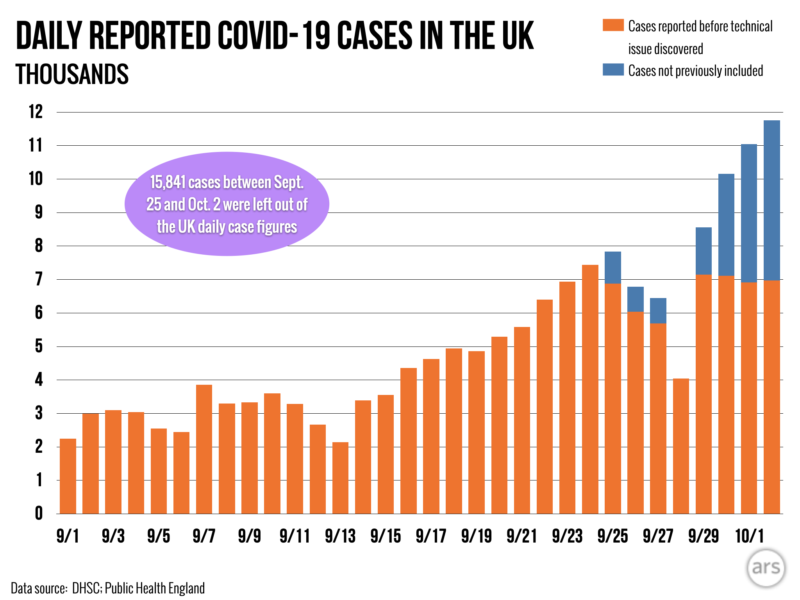
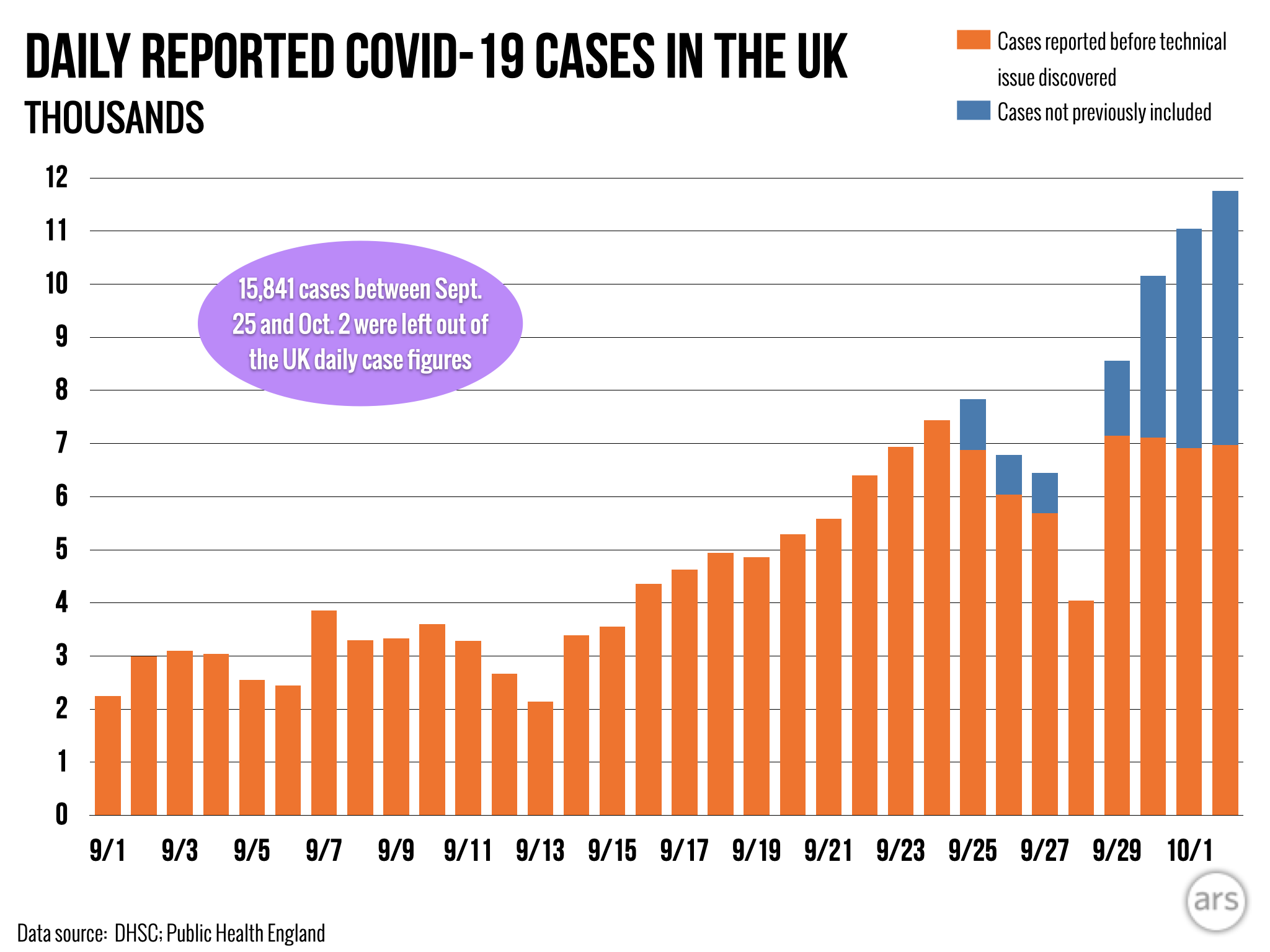
Public Health England admitted on Sunday that the agency has under-reported COVID-19 infections by 15,841 cases in recent days due to a "technical issue." The missing positive tests were conducted between September 25 and October 2 and have since been added to national statistics, the agency said.
PHE didn't explain the nature of the technical issue, but a number of British news sources have pointed the finger at Microsoft Excel. Here's how the Guardian describes the issue:
PHE was responsible for collating the test results from public and private labs, and publishing the daily updates on case count and tests performed.
In this case, the Guardian understands, one lab had sent its daily test report to PHE in the form of a CSV file – the simplest possible database format, just a list of values separated by commas. That report was then loaded into Microsoft Excel, and the new tests at the bottom were added to the main database.
But while CSV files can be any size, Microsoft Excel files can only be 1,048,576 rows long. When a CSV file longer than that is opened, the bottom rows get cut off and are no longer displayed. That means that, once the lab had performed more than a million tests, it was only a matter of time before its reports failed to be read by PHE.
The agency says it will take precautions to make sure an error like this doesn't happen in the future.
Read 3 remaining paragraphs | Comments
Trump and his staff’s refusal to wear a face mask is a catastrophe
 President Trump walks along the Colonnade with Judge Amy Coney Barrett after a news conference to announce Barrett as his nominee to the Supreme Court on September 26. | Alex Brandon/AP
A face mask might have protected Trump, his staff, and the people around them from the coronavirus.
On Monday, we learned White House press secretary Kayleigh McEnany tested positive for the coronavirus that causes Covid-19. McEnany — and others in the White House cluster — failed to follow public health guidelines and quarantine, though she had been exposed to colleagues confirmed to have Covid-19.
She also briefed reporters twice — on Friday and Sunday — without wearing a mask, putting them at risk of the virus.
— Kayleigh McEnany (@PressSec) October 5, 2020
McEnany joins a list of at least 19 people in the White House cluster — including one of McEnany’s aides, White House staff, journalists, congressmen, and others — who’ve tested positive after Trump and first lady Melania Trump announced they tested positive on Friday. White House aide Hope Hicks, who had traveled with the president earlier in the week, also tested positive and was reportedly experiencing symptoms Wednesday. The president has been receiving treatment at Walter Reed, and may be discharged Monday.
The growing outbreak at the White House is an extraordinary turn of events for Trump, whose egregious mishandling of the Covid-19 pandemic is the main reason the virus’s toll on Americans has been so severe, in terms of both cases and deaths. It’s also a reminder of how important it is for everyone to take well-established precautions to prevent infection — precautions the president and his staff have scorned, dismissed, and misconstrued over the course of the pandemic.
In particular, the president and his staff’s failure to consistently wear a face mask while in close contact with colleagues and reporters in the White House and in public settings — the guidance of his own Centers for Disease Control and Prevention — put them at higher risk for infection and of spreading the virus to others, since asymptomatic people can transmit the virus.
On Twitter, public health experts pointed out that a mask might have protected Trump when he was around Hope Hicks, an adviser who was revealed to have tested positive for the coronavirus in reporting by Bloomberg last week.
If @realDonaldTrump getting #COVID19 doesn’t solve the #facemask wearing debate once and for all, remember this- . #Masks decrease the risk of #COVID19 up to 85%, so if POTUS had worn a mask when around #HopeHicks he may have not gotten #COVID19
— Dr.Krutika Kuppalli (@KrutikaKuppalli) October 2, 2020
Let’s walk through why face masks remain one of our most important tools for fighting Covid-19 — along with hand-washing, distancing, isolation, and contact tracing — and why the president and his staff’s words and actions on face masks have been so detrimental to America’s battle with the virus.
Why face masks protect against Covid-19
Scientists have learned a lot about how SARS-CoV-2, the virus that causes Covid-19, spreads and what we can do to stop it. The first step is when a sick person exhales, laughs, sings, or coughs, they expel heavy droplets and tiny aerosols containing the virus into the air. The heavy droplets will typically fall to the ground within 6 feet of the person, but studies show that under the right indoor conditions, the virus can float in the air in small particles, like aerosols, and spread to others that way, too.
Infected people in close contact with people they know drive the majority of infections, according to contract tracing. As Muge Cevik, a physician and virology expert at the University of St. Andrews, has written, when we’re around people outside our immediate household, “the risk increases with longer and frequent exposure, close proximity, number of contacts, and group activities especially dining.” The risk goes up in indoor settings, particularly in crowded and poorly ventilated spaces.
Maintaining at least 6 feet of distance between people has been a critical piece of guidance to prevent spread via large drops. But we’ve also learned that face masks covering the nose and mouth prevent both heavy droplets and aerosols (in the case of N95 masks) from being released by an infected wearer in the first place — and from being inhaled by a non-infected wearer. It’s why the World Health Organization and the CDC for several months have recommended cloth masks for the general public.
Since the virus began spreading uncontrolled around the world, there’s been a ton of new research looking at the efficacy of masks of different materials and in different settings for preventing the spread of Covid-19. The consensus has settled around this: Face masks (including cloth masks and N95s) worn consistently in higher-risk settings, like public or social gatherings with people outside your household, significantly reduce the transmission of the coronavirus and other respiratory diseases. (Read the Mayo Clinic’s helpful tips for putting on and taking off a cloth mask.)
/cdn.vox-cdn.com/uploads/chorus_asset/file/21931978/GettyImages_1276450067.jpg) Alex Wong/Getty Images
Alex Wong/Getty Images
To be clear, masks are not 100 percent effective, and they have to be worn properly and consistently to get the most out of them. And while there’s more evidence showing that masks prevent the wearer from spreading the virus to others, there’s also new evidence that they protect the wearer from being infected — reducing risk by 65 percent, according to one study.
“If you ask me my opinion about what’s the simplest, most effective option? Mask-wearing,” Harvard T.H. Chan School of Public Health epidemiologist Michael Mina told WBUR. “I think there’s no doubt about that.”
Because of the growing evidence that masks work, 86 percent of the world’s population lives in places that have a nationwide or statewide requirement of masks in public places or universal mask use. It’s why most US states now have some kind of mask mandate, and why some cities, like New York City, are distributing masks for free and imposing fines on people who don’t wear them in public.
Trump and his staff’s refusal to wear a mask put others at risk
Trump has a long history of questioning, scorning, and mocking the practice of wearing face masks to prevent Covid-19 spread. When the CDC changed its guidance in April to recommend that all Americans wear masks when they leave home, Trump said, “You can do it. You don’t have to do it. I am choosing not to do it. Somehow, I don’t see it for myself.”
The New York Times has a helpful timeline of his other comments on masks, which reveals a confusing amalgam of statements on his own use of them and their effectiveness.
It’s hard to overstate how problematic it is for a leader like Trump to be misconstruing and undermining public health guidance like this for the general public. Consistent, clear, and evidence-based public health messaging in a pandemic is critical. And by casting doubt on face masks and failing to set an example for the country by wearing one, Trump has done the American people a terrible disservice.
His staff has also set a very poor example on masks. Chief of Staff Mark Meadows, for instance, denied the scientific evidence that they work. “I will gladly wear my mask each and every day, if that’s what makes the difference,” Meadows said in September. “And it doesn’t.”
McEnany may have thought her negative test meant she was in the clear and didn’t have to wear a mask while briefing reporters Friday and Sunday. But her positive test reveals that she was potentially infectious and may have been transmitting the virus — a risk she could have dramatically reduced by wearing a mask.
Trump has also repeatedly made fun of his opponent former Vice President Joe Biden on the campaign trail for following the guidance and wearing a mask in public:
Here's Trump mocking Biden for wearing a mask at the debate on Tuesday. He traveled to that debate with Hope Hicks, who has tested positive for coronavirus. pic.twitter.com/MvFs3HR2Z3
— Brian Tyler Cohen (@briantylercohen) October 2, 2020
The stark contrast between the two candidates’ positions on mask-wearing was also on display at the debate in how their family members showed up. According to Washington Post columnist Josh Rogin, Cleveland Clinic officials “tried to give masks to Trump’s family and guests at the Cleveland debate, but ‘they refused to put those masks on.’”
A reminder that the Trump family refused to wear masks during the debate, when the rest of the audience was pic.twitter.com/yS0kGDTLrQ
— Dan Saltzstein (@dansaltzstein) October 2, 2020
Trump’s rejection of mask-wearing is fundamentally irresponsible behavior not just because he’s put his own health at great risk.
“People who don’t wear a mask increase the risk of transmission to everyone, not just the people they come into contact with,” Dean Blumberg, chief of pediatric infectious diseases at UC Davis Children’s Hospital, said in a recent statement about his research on face masks. “It’s all the people those people will have contact with. You’re being an irresponsible member of the community if you’re not wearing a mask.”
But even after the president’s positive test, masks remained optional at the White House, with the exception of National Security Council staff who were mandated to wear masks in common areas, according to Vox’s Alex Ward.
Millions turn to Vox each month to understand what’s happening in the news, from the coronavirus crisis to a racial reckoning to what is, quite possibly, the most consequential presidential election of our lifetimes. Our mission has never been more vital than it is in this moment: to empower you through understanding. But our distinctive brand of explanatory journalism takes resources. Even when the economy and the news advertising market recovers, your support will be a critical part of sustaining our resource-intensive work. If you have already contributed, thank you. If you haven’t, please consider helping everyone make sense of an increasingly chaotic world: Contribute today from as little as $3.
White House Press Secretary Kayleigh McEnany Tests Positive For Coronavirus

McEnany said she does not have symptoms but that she will "begin the quarantine process." The news comes as President Trump continues to get treatment at Walter Reed National Military Medical Center.
(Image credit: Drew Angerer/Getty Images)

Can Van Taylor Hold off Lulu Seikaly and Democrats’ Gains in Collin County?
 For years, the tantalizing prospect of Texas becoming a “purple” battleground state has motivated Democrats—who have had their hopes dashed in election after election. However, the 2018 midterms showed cracks in the GOP’s hold on the state, with Democrats picking up congressional seats in districts that were drawn by Republican mapmakers to be easy holds. Now polling suggests that 2020 could see further gains by Democrats. While all eyes are on the presidential campaign, and, er, some eyes are on the surprisingly low-profile Senate race between GOP incumbent John Cornyn and Democratic challenger MJ Hegar, the fiercest battles in Texas are over seats in the U.S. House of Representatives. Four years ago, the state had just one competitive congressional race; this year, there are a…View Original Post
The post Can Van Taylor Hold off Lulu Seikaly and Democrats’ Gains in Collin County? appeared first on Texas Monthly.
White House press secretary Kayleigh McEnany tests positive for COVID-19
White House press secretary Kayleigh McEnany tests positive for COVID-19. She has addressed the media several times in recent days without wearing a mask.

White House Outbreak Highlights Dangers Of Test-Only Strategy To Prevent Infections

Even regular testing is no substitute for routine mask-wearing and social distancing along with quarantining for those who've been exposed to the coronavirus, experts say.
(Image credit: Spencer Platt/Getty Images)

How to be a great teen girl

Girl Talk
Douglas
1990
This is basically “how to be a girl” advice for teens. The book is divided into sections such as make-up, hair, hygiene, diets, etc. Once you get all these requirements in place, you are sure to be a successful teen girl.
The book takes an “ABC” approach to organizing topics. I really hate this kind of organization unless you are talking about ABC books, a dictionary, or an encyclopedia. In order to make this work, we have a brief articles (very brief) on topics such as “Xenophobia”, “No-No’s, and “Zest”. My personal favorite was the entry on Menopause. Obviously, this is an important topic for teen girls.
The topics are really hair, fashion, make-up, and of course, diet. In fact, diet is probably the largest section in the book. It also includes advice on vitamin supplements. The tone is pretty casual and there are no caveats to check with a doctor.
The age of the book should make this an automatic weed. Who wants to read something your mom probably read? My rule of thumb is that teen nonfiction shouldn’t be older than the teens.
Mary


The post How to be a great teen girl appeared first on Awful Library Books.
'Free Guy' trailer makes Ryan Reynolds an existential NPC
The video game movie Free Guy is still on its way, and a new trailer suggests it might be more of a thoughtful movie than you think. The clip reiterates the basic premise — a non-player character (Ryan Reynolds) realizes he’s part of a video game and becomes a hero to save it — but also makes some surprisingly philosophical statements. When you’re in a virtual world where “nothing you do matters,” it’s the connections you make with others (including Milly, the real-world player portrayed by Jodie Comer) that have meaning.
The trailer also hints that life in the physical world will also play an important role, such as arch-nemesis game developer (Taika Waititi) and even the game show Jeopardy. The virtual romance in the game even creates problems with Milly’s real-world boyfriend (Stanger Things’ Joe Keery).
Free Guy is set to premiere December 11th after being delayed from July 3rd due to the pandemic, although new theater closures and ongoing safety concerns cast doubt on whether or not it’ll hold to that date. There still aren’t any guarantees this is more than a straightforward action movie, but there are signs it might be at least slightly more ambitious than the usual popcorn fare.
Media Report On Donald Trump’s Health or Media Report On Kim Jong-un’s Health?
1. “The release of only sketchy information made it difficult for outside medical experts to assess [his] condition.”
2. “While [his] death or incapacitation could create a power struggle… it is notoriously difficult to obtain accurate information from [them] even in pre-pandemic times.”
3. “How believable are these reports?”
4. “[He] suggests McDonald’s French fries are responsible for keeping his hair from falling out.”
5. “There has been a great deal of speculation surrounding [his] health in recent years, with rumors emerging that he suffers from high blood sugar, gout, and diabetes. He is reputed to be a massive fan of Swiss cheese.”
6. “The history of illness [there] is largely one of intense secrecy, and occasionally flat-out lies.”
7. “Amid mixed messages on [his] health, photos were released of [him] working that some critics say were staged.”
8. “The regime has still not explicitly denied that [he] is in ill health, and state media has been diligently reporting that the leader is still sending and receiving letters.”
9. “Even as they publish old (or undated) statements from [him] about the economy and other topics, the gist is that there’s nothing to see here and everything is fine.”
10. “[His] absence raised global concern about how a potential leadership vacuum in a nuclear-armed state could affect regional stability.”
11. “Of course rumors… often turn out to be wrong. Media reports that [he] had fed his uncle to dogs in 2013, for example, turned out to be a misunderstanding.”
12. “You can really take almost nothing that is on the record at face value.”
13. “[He] indeed made an appearance, but it was a quick drive-by, where, inside a car, he waved to cheering supporters.”
Grindr accounts could be easily hacked with email address
Analysis: Greg Abbott’s latest retreat comes at the expense of Texas voters
/https://static.texastribune.org/media/files/7bd3a47303962cc763aa8dc215edced7/First%20Day%20Mail-In%20Ballots%20AI%20TT%2008.jpg)
Editor's note: If you'd like an email notice whenever we publish Ross Ramsey's column, click here.
If you would like to listen to the column, just click on the play button below.
(Audio unavailable. Click here to listen on texastribune.org.)
With Texans already casting absentee ballots, Gov. Greg Abbott is making it more difficult to vote by closing ballot drop-off locations.
His adversaries are calling that vote suppression — and they’re right.
Under Abbott’s new order, counties like Harris, with 12 drop-off locations, and Travis, with four, can each have just one location.
Given the opportunity to make it easier to vote in Texas’ 2020 general election, to leave the election process alone or to make it harder to vote, the governor chose the third option.
“This haphazard decision by Gov. Abbott, to change the rules of the game at the last moment, is confusing to voters, and will serve to depress Texas votes, plain and simple,” Harris County Clerk Chris Hollins said Friday at a news conference. “This decision should not stand.”
“To force hundreds of thousands of seniors and voters with disabilities here in Harris County, and millions of voters across the state of Texas to use a single drop-off facility in these massive counties is not only prejudicial, but it’s dangerous,” he said.
This isn’t Abbott’s first pandemic policy flip. The Texas governor, who wanted to close hair salons and barber shops until Shelley Luther got up in his grill, is now quailing before Allen West and the conservatives West has assembled to protest not only the governor’s business closings, but also his election concessions to the pandemic.
Abbott didn’t want to open voting by mail to everyone, though under his own interpretation of his emergency powers during the pandemic he could have. Instead, he accommodated voters by extending early voting by six days and allowing absentee voters to deliver their ballots by hand — in case they were worried about the U.S. Postal Service — any time up to Election Day. Big counties opened multiple locations to make that easier.
West and his posse, a group that includes Agriculture Commissioner Sid Miller, Houston activist Steve Hotze, a number of state legislators and others, didn’t cotton to that. They sued. They announced they’d be demonstrating next weekend in front of the Governor’s Mansion.
And Abbott responded with the same move he made when faced with Luther’s civil disobedience earlier this year. He threw his political juggernaut into reverse.
First, the governor issued the order — overriding an earlier order — that restricts voters to only one place in their county to deliver absentee ballots in person.
Abbott and West and others cried election fraud, a phrase that in their lexicon seems to mean that the other side’s voters are turning out. State Sen. Paul Bettencourt, R-Houston, tweeted that having only one location would make it easier for poll watchers to keep an eye on things. That’s putting the comfort and care of the watchers ahead of the comfort and care of the voters.
“We must take extra care to strengthen ballot security protocols throughout the state,” Abbott said Thursday in the news release revealing his latest order. “These enhanced security protocols will ensure greater transparency and will help stop attempts at illegal voting.” He didn’t cite any such attempts.
That is pure politics. A business person, in contrast, would have customers in mind, wanting to make it easy for people to get to the store, to buy the product or service, to go away happy. What would it look like if someone like that was in charge of voting?
It’s not a security issue. Bankers have security issues, but they’ll let you deposit checks with a smart phone and get cash from machines in outdoor parking lots. If people like that ran elections — or wrote election law — voting would be safe, secure and easy.
The incentives for this gang aren’t lined up that way. They’re loath to change the systems that put them in office, to encourage voters who didn’t vote for them — or to take a risk on those who have never voted.
The message coming from Republicans this year, starting with the Republican in the White House, is that the results of the upcoming election might be suspect. They offer no evidence of systemic problems to back that up, but their steady repetition — one of the fundamentals of political messaging — has made their claims ubiquitous.
It’s probably not what they’d be saying if they thought they were winning. They’d be telling us they trust the voters, the process and the results — as they’ve done in elections past.
They don’t trust voters to support them. Maybe they’d win anyway, but these are smart people, and they can see how things are going right now.
The governor is trying to change the voting rules during an election that looks much tougher for Republicans. Remember that one kid who wanted to change the rules of whatever game you were playing, whenever you were winning? Abbott isn’t exactly like that kid you remember, the one who threatened to take the basketball home if the other players wouldn’t bend.
This isn’t his basketball.
It’s ours.
